
Bloomberg

Argentina Inflation Surged to 20-Year High In March

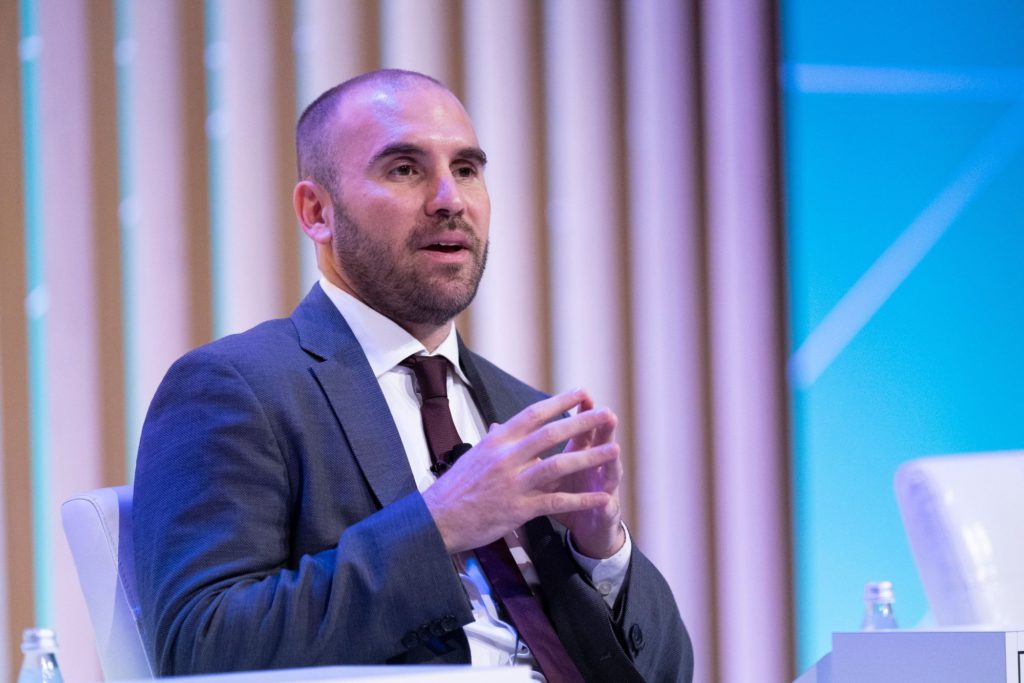
(Bloomberg) — Argentina’s inflation rate galloped to its fastest pace in March since 2002, challenging a strategy by the government to cool prices that already lacked support from within the ruling coalition. 

Consumer prices rose 6.7% last month compared to February, the highest level since Argentina was in one of its worst economic crises 20 years ago. Inflation reached 55.1% from a year ago, the highest annual level of President Alberto Fernandez’s presidency and most since June 2019. Both results were above all forecasts among economists surveyed by Bloomberg.

Prices for education, textiles, utilities and food all exceeded the headline figure in March. Core inflation accelerated to 6.4% too. 

Economy Minister Martin Guzman had already warned on Monday that price increases for March would be above at least 6%, surpassing economists’ expectations at the time. 

Many economists are now forecasting that prices may rise more than 60% annually this year, which would be the highest level since the nation tamed hyperinflation in the early 1990s. Argentine officials were accused of publishing inaccurate inflation data from 2012 to 2015, prompting a new administration in 2016 to overhaul the methodology.

Meanwhile, a rift between Fernandez and Vice President Cristina Fernandez de Kirchner is sowing public doubt over the government’s anti-inflation strategy under its $44 billion accord with the International Monetary Fund. 

Read More: Argentina Launches Two New Price Reference Baskets on Goods

Argentina’s target estimate for inflation this year in the IMF deal — between 38% to 48% — could be changed when the government holds a formal review with the Fund’s staff in May, according to a person with direct knowledge of the inflation strategy, who asked not to be named because the information isn’t public yet. 

Government officials believe that meeting the targets in the IMF program and implementing its policies will gradually help cool expectations on price increases, the person added. 

Policy makers have taken steps to curb price increases, such as raising interest rates, narrowing the fiscal deficit and reducing money printing to finance government spending. But many investors question whether Fernandez’s government has enough support from within its own coalition to continue imposing tough economic measures as inflation heats up.

Read more: Latin America Inflation Shocks Raise Prospect of More Rate Hikes

The split between Fernandez and Kirchner over the IMF deal is challenging Guzman’s ability to implement the agreed policies. Although Argentina’s congress largely approved the agreement in March, lawmakers loyal to Kirchner voted against it. 

Fractured Coalition

The deal calls on the country to take a range of conventional steps to fight inflation, such as further narrowing the fiscal deficit. But some investors doubt that the fractured ruling coalition will let Minister Guzman fully implement the plan. 

Successful inflation strategies “need governments with a lot of credibility,” said Martin Rapetti, executive director of Argentine consulting firm Equilibra, who sees inflation ending this year at 65%. “This government has low credibility because the whole world knows there’s infighting.” 

Guzman this week denied rumors that he’ll be forced to quit. But he hinted at the government’s internal divide, saying that Argentina can’t tackle inflation unless there’s widespread support for the government’s plans under the IMF agreement. 

Peso Devaluation 

Some local economists argue that the IMF plan may even make inflation worse in the short term, since it’ll raise electricity bills by removing subsidies. It also involves devaluing the official peso exchange rate at a faster pace.   

Read More: Cryptocurrencies Prove a Lifeline in Argentina’s Chaotic Economy

The IMF sees Argentina’s faster inflation last month as largely tied to price shocks from Russia’s invasion of Ukraine, according to people with direct knowledge. 

While all nations in Latin America are facing extra price rises from the European conflict, Argentina’s inflation was already above 50% when it started. Plus the government also raised fuel prices nearly 10% last month. 

And while that cocktail of factors is causing inflation to soar, Fernandez’s difficulty in getting Kirchner’s faction to support his policies is raising concerns that temporary price rises could become more lasting.  

“Everything that’s transitory in the world becomes permanent in Argentina,” said Guido Lorenzo, executive director of Argentine consulting firm LCG, who forecasts 65% inflation in Argentina this year.

(Updates with March inflation data in second, third paragraphs)

More stories like this are available on bloomberg.com

©2022 Bloomberg L.P.

Apple MacBook Shipments Delayed as China’s Lockdowns Slow Production

(Bloomberg) — Apple Inc. shoppers are facing longer wait times for the company’s flagship MacBook Pro laptops, a sign that Covid-19 lockdowns in China may be contributing to delays. 

U.S. consumers trying to order Apple’s latest high-end models are now seeing delivery estimates pushed into June. And the date range for the lower-end configuration of the 14-inch MacBook Pro was as late as May 26 as of Wednesday. Those wait times represent a jump from recent days, before supply chain snags worsened again.

The delays underscore Apple’s struggles to keep its supply chain running smoothly during the Covid era — especially as China pursues a zero-tolerance policy for outbreaks. More than 30 Taiwanese companies, including Apple laptop manufacturer Quanta Computer Inc., have halted production in China because of lockdowns. In Quanta’s case, the company shut a Shanghai plant to comply with government restrictions.

Apple, based in Cupertino, California, didn’t immediately respond to a request for comment.

Apple’s highest-end MacBook Pro configuration — a $3,499 version with additional graphics cores and memory — is seeing delivery estimates as late as June 16 in the U.S. Most of Apple’s other Macs, including the MacBook Air, 13-inch MacBook Pro, iMac and Mac mini, aren’t currently affected. Those models are either shipping with same-day delivery or promising an arrival within a few days. 

Delivery estimates for the Mac Pro, which often takes longer to ship because of its customized features, are in May. And the new Mac Studio desktop computer’s higher-end configuration isn’t arriving until the second half of June. That machine was only announced recently, however, and may be seeing strong initial demand. 

On Tuesday, Apple supplier Pegatron Corp. suspended work at its iPhone assembly campuses in Shanghai and Kunshan, but iPhone shipments don’t immediately appear to be delayed. Apple will announce its second-quarter earnings results on April 28, potentially giving investors a window into its supply challenges.

More stories like this are available on bloomberg.com

©2022 Bloomberg L.P.

Auction of Jack Dorsey Tweet NFT Comes in Millions Below Target

(Bloomberg) — The nonfungible token of Jack Dorsey’s first tweet, which sold for $2.9 million last year to Sina Estavi, failed to garner much in the way of interest when it was recently put up for resale, Coindesk reports.

The auction for the NFT closed with only seven offers ranging from just 0.0019 Ether to 0.09 ETH, or about $6 to about $280. A far cry from the $48 million sought by the owner.

Estavi has two days to accept the bid or it will expire. He told Coindesk via WhatsApp, “The deadline I set was over, but if I get a good offer, I might accept it, I might never sell it.”

Read More: Dorsey’s First Tweet Offered for $48 Million on NFT Marketplace

More stories like this are available on bloomberg.com

©2022 Bloomberg L.P.
German Authorities Impound World’s Largest Superyacht in Hamburg

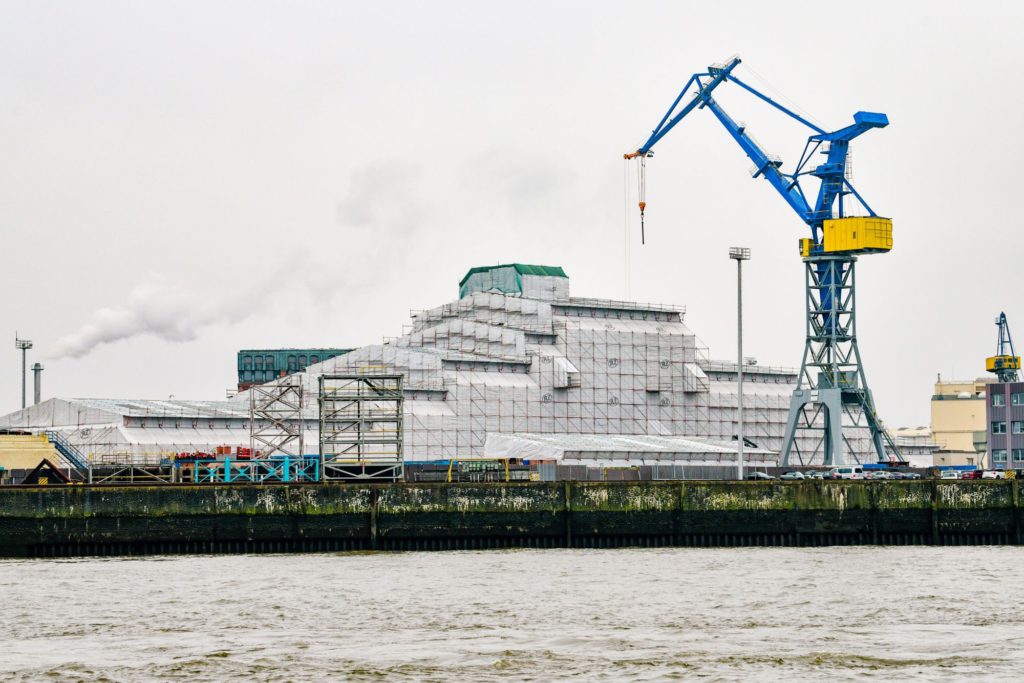
(Bloomberg) — Authorities in Hamburg impounded Russian billionaire Alisher Usmanov’s superyacht Dilbar after determining it was legally owned by his sister, who is also subject to western sanctions over the war in Ukraine.

The 156-meter (512 foot) vessel, the world’s largest by volume, had been undergoing refitting in the northern German port city. Boasting a 25-meter swimming pool and two helipads, it’s valued at $600 million to $750 million, according to the U.S. Treasury.

Germany’s federal crime office said Wednesday that despite efforts at what it called “offshore concealment,” it had determined that the yacht’s owner is Usmanov’s sister, Gulbakhor Ismailova.

“The luxury yacht Dilbar is therefore subject to sanctions law and was able to be legally impounded in Hamburg,” the BKA said in a tweet. News agency DPA quoted a BKA spokesman as saying that the yacht cannot be “sold, rented or pledged as collateral.”

The move underscores the wider impact of the penalties levied by Europe and the U.S. on ultra-rich Russians seen as having close ties to President Vladimir Putin. Superyachts and other displays of wealth among Russia’s elite have drawn especially intense scrutiny since the country’s invasion of Ukraine.

Usmanov owns a major stake in USM, a Russian investment group with holdings in Metalloinvest, one of the world’s largest iron ore producers, and telecommunications company MegaFon. He’s the sixth-richest Russian with a fortune of $19 billion, according to the Bloomberg Billionaires Index. The yacht is named for his mother.

More stories like this are available on bloomberg.com

©2022 Bloomberg L.P.

California Lawyer Quits Over Allegation Newsom Meddled in Activision Case

(Bloomberg) — A top lawyer for the state of California has resigned, accusing the governor’s office of interfering with a discrimination lawsuit against Activision Blizzard Inc. 

Melanie Proctor, the assistant chief counsel for California’s Department of Fair Employment and Housing, said in an email to staff Tuesday night that she was resigning to protest the fact that her boss at the agency, Chief Counsel Janette Wipper, had been abruptly fired by the governor. Both lawyers had already stepped down from the Activision lawsuit earlier this month without explanation. A representative for the two attorneys confirmed that Proctor had resigned and Wipper was fired.

The allegation and loss of the top two lawyers on the case raises questions about the fate of the Activision lawsuit, which accuses the Santa Monica, California-based video game publisher of sexual discrimination and misconduct. The case is currently pending in Los Angeles Superior Court. The lawsuit, which detailed Activision’s “frat boy” culture, led to employee walkouts, calls for the chief executive officer to resign, condemnation from its business partners and a stock plunge that culminated in Microsoft Corp.’s agreement earlier this year to purchase the company for $69 billion.

Proctor said in the email to staff that in recent weeks, California Governor Gavin Newsom and his office “began to interfere” with the Activision suit. “The Office of the Governor repeatedly demanded advance notice of litigation strategy and of next steps in the litigation,” Proctor wrote in the email, which was seen by Bloomberg. “As we continued to win in state court, this interference increased, mimicking the interests of Activision’s counsel.”

Erin Mellon, communications director for Newsom, said that “claims of interference by our office are categorically false” and the governor’s office “will continue to support DFEH in their efforts to fight all forms of discrimination and protect Californians.”

Proctor wrote that Wipper had “attempted to protect” the agency’s independence and was “abruptly terminated” as a result. “I hereby resign, effective April 13, 2022, in protest of the interference and Janette’s termination,” Proctor wrote.

Wipper is “evaluating all avenues of legal recourse including a claim under the California Whistleblower Protection Act,” said her spokeswoman, Alexis Ronickher.

A spokesperson for the governor’s office referred a Bloomberg request for comment to a spokesperson for the DFEH, who said they would not comment on personnel matters. “DFEH will continue to vigorously enforce California’s civil rights and fair housing laws,” a spokesperson said.

The shakeup comes just two weeks after Activision reached a settlement with the U.S. Equal Employment Opportunity Commission for $18 million over a similar lawsuit. In a series of court squabbles, California’s lawyers had attempted to block that settlement but were ultimately rejected by a federal judge.

Critics pointed out that $18 million was low for a company of Activision’s scale, and that Wipper’s department had gotten Riot Games Inc., a far smaller company, to pay $100 million last year to settle its own discrimination lawsuit. 

Wipper started at the DFEH in 2018 and was reappointed to her position last November. She cultivated a reputation as a legal bulldog, pursuing splashy cases against tech companies such as Tencent Holdings Ltd.’s Riot and Tesla Inc. One member of the department, speaking anonymously because they were not authorized to speak to the media, said that Wipper was widely respected and that she had overhauled the agency for the better. Detractors accused her of being too aggressive at a public agency rather than deferring to civil rights plaintiff’s lawyers.

Jennifer Reisch, an attorney who has worked with Wipper, praised the agency’s transformation in recent years. “For the first time in its history, the Department of Fair Employment and Housing had a strong litigator who was actually flexing the significant muscles that statute and regulations provide to protect workers in its state,” she said in an interview.

In her resignation email, Proctor slammed the governor’s office, writing that “justice should be administered equally, not favoring those with political influence.” She encouraged staff to continue working on the agency’s ongoing litigation “to the best of your abilities.”

(Updates with comments from governor’s office in the fifth paragraph.)

More stories like this are available on bloomberg.com

©2022 Bloomberg L.P.
U.S. Warns That Hackers Are Trying to Disrupt Energy Sector Technology

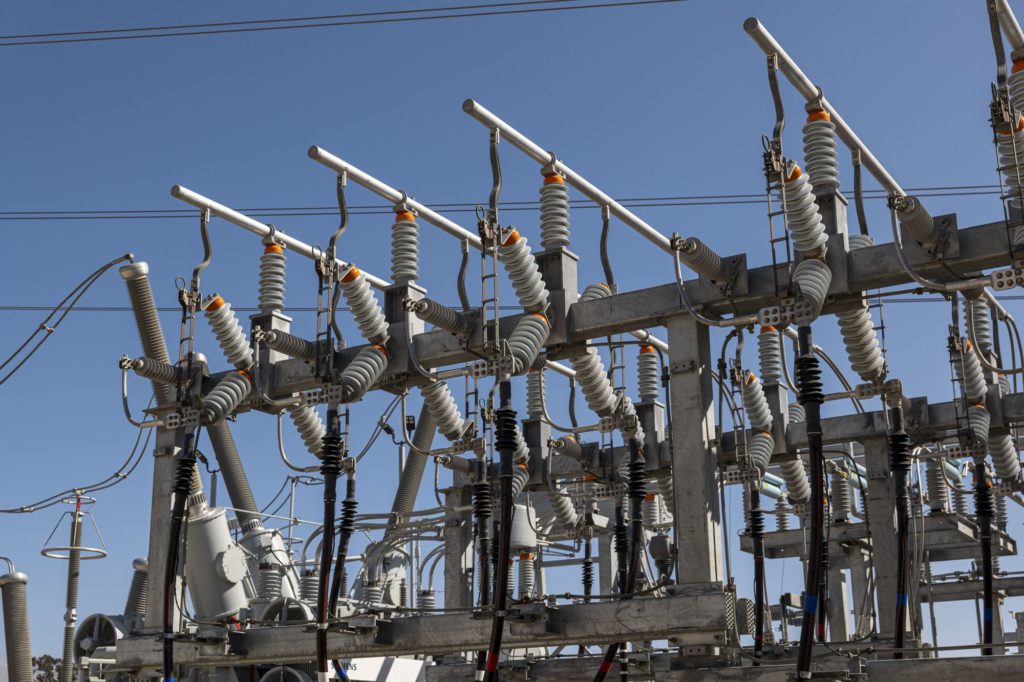
(Bloomberg) — The Biden administration is warning that hackers are attempting to access and disrupt industrial control systems, using custom-built malicious software to target organizations in the energy sector. 

A bulletin released Wednesday by the Federal Bureau of Investigation, the National Security Agency, the Department of Homeland Security and the Energy Department said so-called advanced persistent threat actors, a phrase often used to describe state-backed hackers, are able to breach industrial networks and then exploit weaknesses in devices that control those facilities. The government specifically warned about devices made by companies such as Omron Corp. and Schneider Electric, a major manufacturer of industrial control equipment, including electric utilities. 

Robert Lee, the CEO of cybersecurity firm Dragos Inc., said on Twitter the hackers’ malware is “highly capable” and worth monitoring because of a destructive capabilities. Dragos has “high confidence” that a state actor developed the malware “with the intent on deploying it to disrupt key infrastructure sites,” Lee said. 

The bulletin encouraged firms with industrial control systems to isolate their corporate computer networks and use strong passwords, among other recommendations. 

The government has recently warned of increased threats from Russia amid the war in Ukraine, although the bulletin didn’t identify any country it believes to be responsible in this case.

More stories like this are available on bloomberg.com

©2022 Bloomberg L.P.
Stellantis Investors Reject Pay Plan After CEO Tavares Draws Fire

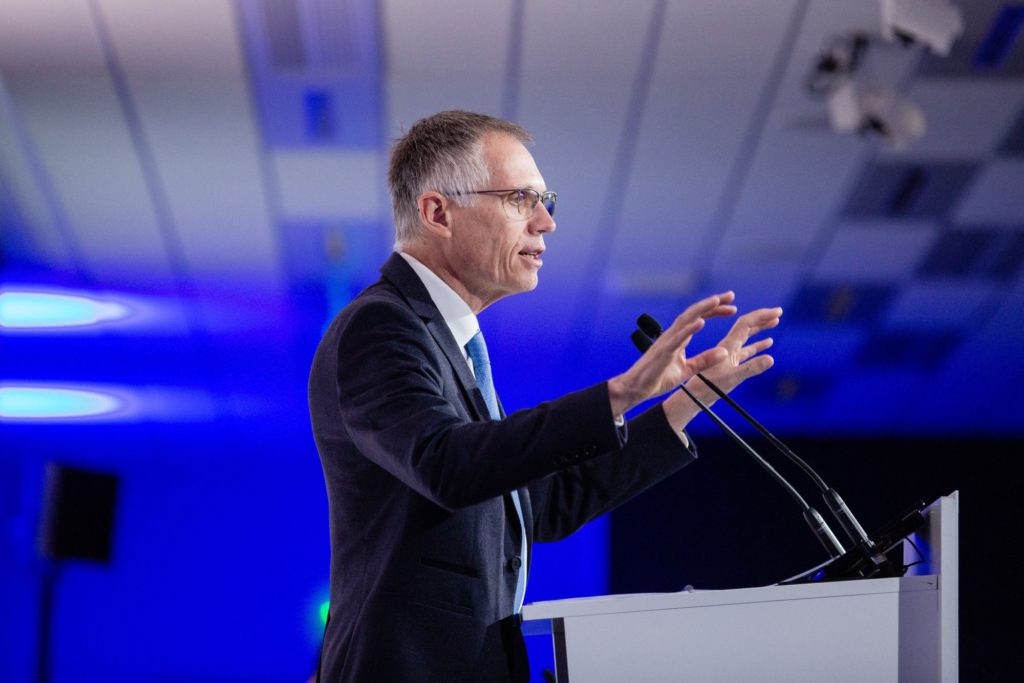
(Bloomberg) — Stellantis NV shareholders rejected the automaker’s compensation policy in a non-binding vote after Chief Executive Officer Carlos Tavares’ pay came under fire in France. 

The remuneration report was opposed by 52% of voters at an annual meeting held online Wednesday. The maker of Fiat, Jeep and Peugeot autos paid Tavares 19.2 million euros ($20.9 million) last year, according to its annual report. That doesn’t include long-term incentives.

Chairman John Elkann said the company would take the results of the vote into account. In a later statement, Stellantis said it would explain how that was done in the 2022 report.

In a response to a shareholder question, the company said the award is “consistent with Stellantis’ pay-for-performance philosophy and need to compete with peers worldwide.” Stellantis was created last year following a merger between Fiat Chrysler and PSA Group. Tavares, 63, in March set a goal to maintain double-digit returns through the end of the decade after reporting some of the strongest margins in the industry last year of 11.8%.  

Read more: Stellantis Paid Marchionne’s Estate Over $29 Million Last Year

The vote followed media scrutiny in France on Tavares’ pay, which was criticized by investor Phitrust and called “not normal,” by government spokesman Gabriel Attal.

“Is this extremely high remuneration socially justified when the group will probably have to face massive restructuring with job cuts because of production overcapacity and a doubling up after the merger,” Phitrust said. 

The investor also called out the company for not holding an in-person annual meeting that would have allowed “direct interaction with its shareholders.” Stellantis blamed Covid-19 for barring shareholders from attending.

The online event was held at the automaker’s nondescript headquarters in the Netherlands, which is roughly 350 square meters of office space on one floor of a building near the airport. Tavares was present, but Elkann attended remotely from Italy. Both questions and answers from shareholders were read out by a company official.

About 35 people are based at the headquarters as part of the company’s “asset light” approach, according to a spokesman. Stellantis has about 282,000 employees worldwide, with historic manufacturing centers in France, Italy and the U.S.

(Updates with company performance in fourth paragraph)

More stories like this are available on bloomberg.com

©2022 Bloomberg L.P.

Amazon Adds 5% Fuel and Inflation Surcharge for Its Sellers

(Bloomberg) — Amazon.com Inc. will levy a 5% fuel and inflation fee on online merchants that use its shipping services, according to documents reviewed by Bloomberg, a first for the company.

The surcharge, which will start April 28 and is the latest sign of companies grappling with rising costs, will apply to U.S. sellers who use the Fulfillment by Amazon service that stows, packs and ships products. Amazon intends to notify sellers about the fee later Wednesday, according to a person familiar with the matter who asked not to be identified because the plans are private. The fuel surcharge is on top of seller fee hikes announced in November that averaged 5.2%, which were also attributed to rising costs.

Inflation has skyrocketed in recent months, and gasoline prices have surged since Russia invaded Ukraine. Uber Technologies Inc. and Lyft Inc. each added fuel surcharges last month to offset the added costs.

In the email to be sent to Amazon sellers, the company said it has made big investments since the start of the pandemic to meet surging demand. Those include doubling capacity, adding 750,000 employees and raising the average Amazon warehouse employee wage to $18 from $15.

“Like many, we have experienced significant cost increases and absorbed them, wherever possible, to reduce the impact on our selling partners,” according to the email. “In 2022, we expected a return to normalcy as Covid-19 restrictions around the world eased, but fuel and inflation have presented further challenges. It is still unclear if these inflationary costs will go up or down, or for how long they will persist.”

For Amazon, the marketplace business represents nearly a quarter of sales. The company had seller services revenue of $30.3 billion in the quarter that ended in December.

(Updated with previous fee hike in second paragraph.)

More stories like this are available on bloomberg.com

©2022 Bloomberg L.P.

LNG Projects May Get Funding Boost From U.S. Export Bank Plan

(Bloomberg) — A new plan by the U.S. Export-Import Bank could yield a flood of financing for U.S. energy ventures, including wind and solar projects, battery manufacturing and terminals to sell LNG overseas.

While the credit agency has long provided financing and insurance to boost sales of U.S. products, the bank’s board is set to vote Thursday on a formal policy shift encouraged by the Biden administration that would extend support to manufacturing and infrastructure projects that facilitate exports.

The agency plans to prioritize financing for green projects, from renewable power ventures to clean energy manufacturing. Still, environmentalists and natural gas advocates say the initiative could also bolster a host of LNG export terminals proposed along the U.S. Gulf Coast, especially given the Biden administration’s efforts to supplant Russian energy in Europe with U.S. supplies.

Potential Ex-Im financing for LNG projects “could translate into billions of dollars” in support “and a catastrophic amount of U.S.-financed greenhouse gas emissions,” Friends of the Earth told the agency.

An Ex-Im Bank spokesman said any application the agency receives under the new initiative would be subject to existing environmental and social impact reviews. Legally, the agency is barred from discriminating against application based on sector, including liquefied natural gas, the spokesman said. 

The bank’s board of directors is expected to approve the change, after previously seeking public comments on whether to extend loans and guarantees to projects with some export connection. Key issues include what kind of domestic projects should be eligible and whether they should face additional requirements, such as the use of U.S.-flagged ships. 

The White House recommended the shift in a report last year, asserting that the change would “facilitate U.S. exports while rebuilding U.S. manufacturing capacity.”

The plan could help roughly a dozen LNG projects proposed along the Gulf Coast secure critical financing despite having no bankable credit rating, argue the LNG allies. Projects by Kinder Morgan Inc. and Tellurian Inc. are already fully permitted but still await final investment decisions.

Manufacturers and exporters also support the proposal, with its potential to benefit producers of semiconductors and biomedical products. The National Association of Manufacturers said it could provide “critical capital” enabling small- and medium-sized companies to expand facilities and upgrade machinery. 

Wind turbine maker Siemens Gamesa Renewable Energy S.A. said the plan could help lure foreign suppliers to invest in U.S. manufacturing. And Citigroup Inc. told the bank it could help combat supply chain bottlenecks.

More stories like this are available on bloomberg.com

©2022 Bloomberg L.P.

Microsoft Gets Antitrust Complaints From Aruba, Danish Firms Over Cloud

(Bloomberg) — Italian cloud provider Aruba SpA and a group of cloud providers in Denmark are part of a high-profile complaint made against Microsoft Corp. to the European Union’s antitrust watchdog.

European cloud companies have called on regulators to investigate the U.S. tech giant, arguing that Microsoft undermines competition and limits consumer choice in the cloud computing services market. The complaint was filed last year but only one of the three cloud providers who were on it was named, France’s OVH.

Microsoft customers have complained that they pay more to use its must-have programs like Windows and Office when they’re run through rival cloud-computing systems instead of Microsoft’s Azure, and the practice shows Microsoft is using its power in one market to undermine competitors in another, Bloomberg reported Tuesday.

A spokesman for Aruba confirmed to Bloomberg that it’s part of OVH’s complaint. Danish Cloud Community, a group of cloud providers in Denmark, is also part of the complaint, according to a people familiar with the matter.  

Microsoft President Brad Smith has pledged the company will talk with customers and rivals, saying in an interview on Monday that “there definitely are some valid concerns” and “it’s very important for us to learn more and then make some changes.” In particular, the company wants to improve relations with European cloud providers that it has failed to work closely enough with so far.

“Especially when it comes to the European cloud providers, we just have not been engaged in enough direct conversation with them,” Smith said. “I don’t think there’s been anything close to the level of dialogue that we need to pursue to solve this problem. One of the lessons for the future is we need as a company to prioritize at a higher level how we work with and support these European cloud providers.”

European cloud trade group CISPE said Smith’s remarks demonstrate the need for “urgent action, not only vague commitments to talk,” and called on European Union officials to hold the company to account. The group’s members include Amazon.com Inc., whose Amazon Web Services dominates the market for cloud computing, followed by Azure.

“Microsoft’s steady pattern of amendments to license terms has ratcheted up pressure on rival vendors and led to increasing costs for customers over several years,” a CISPE spokesman said in a statement. “We urge regulators to continue investigating forcefully.”

The bloc’s officials have been asking regional cloud companies about Microsoft’s practices, Bloomberg reported earlier this month.

A spokesman for Microsoft didn’t immediately reply to a request for comment on the CISPE remarks. Danish Cloud Community declined to comment.

(Adds Microsoft’s comments in sixth paragraph)

More stories like this are available on bloomberg.com

©2022 Bloomberg L.P.

Close Bitnami banner
Bitnami
