Bloomberg

Infosys Sales Forecast Trails Estimates as IT Spending Cools

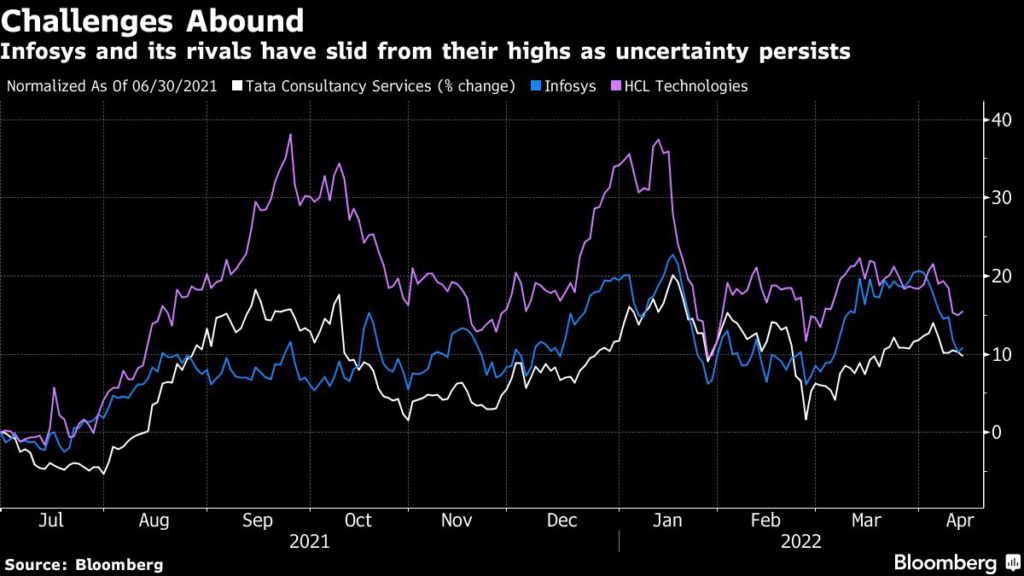
(Bloomberg) — Infosys Ltd. gave a sales forecast that trailed analyst estimates, signaling slowing demand for software and IT services as companies exit work-from-home arrangements in a post-pandemic world.

Revenue this fiscal year ending in March 2023 will increase 13% to 15% in constant currency terms, lagging the 17% growth analyst had projected on average. The stock slid more than 6% in New York. 

Infosys, a bellwether of India’s showpiece $227 billion IT sector, and rivals including Tata Consultancy Services Ltd. are facing a potentially cooling market as customer organizations’ employees return to workplaces, lessening the demand for software and services that were needed to set up remote connections. Meanwhile, uncertainty surrounding the war in Ukraine could weigh on new orders from Europe. The IT providers are also facing margin pressure as a shortage of tech talent boosts the costs to hire and retain employees.

Infosys had less than 100 people working in Russia and the company was transitioning work outside, Chief Executive Officer Salil Parekh said at a post-earnings conference call.

Profit for the fourth quarter through March rose about 12% to 56.9 billion rupees ($747 million). Analysts had expected a profit of 60 billion rupees.

Bigger rival TCS on Monday reported a 7.4% increase in fourth-quarter profit to 99.3 billion rupees, as rising employee costs partly offset higher demand.

India’s outsourcers are seeking to maintain the momentum they gathered during the pandemic as enterprises across the world scaled up their online presence, boosting demand for services ranging from cybersecurity to cloud and payments.

“In all of our discussions, clients are more and more ready to spend — much more focused on the cloud area, very much on the data analytics business, on IoT and lot of discussion on automation,” said Parekh.

(Updates with share action in second paragraph)

More stories like this are available on bloomberg.com

©2022 Bloomberg L.P.

Brookfield-Led Group Nears $2.5 Billion Uniti Takeover

(Bloomberg) — Australian fiber cabling firm Uniti Group Ltd. has agreed to a A$3.62 billion ($2.7 billion) takeover by a consortium led by HRL Morrison & Co. and Brookfield Infrastructure Partners.

The Adelaide-based residential broadband provider said Thursday it had agreed to a deal at A$5 per share, which represents a 58.7% premium to its undisturbed trading price on March 14. That’s an improvement from an earlier A$4.50 per share offer from the consortium first tabled in March. The group, MBC BidCo Pty Ltd, also includes pension fund Commonwealth Superannuation Corporation, Uniti said.

The deal marks the second-largest transaction targeting an Australian company so far this year, behind Blackstone Inc.’s A$8.9 billion acquisition of casino operator Crown Resorts Ltd. It is also the largest deal for an Australian infrastructure company in 2022 at a time when real-asset sectors are undergoing a wave of takeovers led by yield-hungry pension and sovereign funds.

The agreement follows a bidding war over Uniti that included a rival offer on March 24 from Macquarie Asset Management and PSP Investments also at A$5 each. On the same day, a unit of Brookfield Infrastructure joined Morrison in bidding. On March 29, the Morrison-Brookfield consortium boosted its offer to A$5 per share and entered into exclusive talks with Uniti.

More stories like this are available on bloomberg.com

©2022 Bloomberg L.P.

CNN+ Is Said to Surpass 100,000 Subscribers in Its First Week

(Bloomberg) — Under pressure from new owner Warner Bros. Discovery Inc. to justify its costs, CNN’s streaming service eclipsed 100,000 subscribers in its first week, according to a person familiar with the matter.

The number for CNN+ is small relative to mass-market entertainment services like Netflix and Disney+, which have been around far longer, but suggests a favorable start for a news service in a business where only a handful of players top 1 million customers. The leader is the New York Times, with almost 8 million paying customers at year-end.

CNN has spent hundreds of millions of dollars to program and market the service, which executives describe as the news organization’s most ambitious new venture since the founding of the network more than 40 years ago. CNN+ offers a mix of lifestyle shows and traditional news, including a daily interview show from Chris Wallace and a food and travel show hosted by actress Eva Longoria.

The most popular shows thus far include Wallace’s and “5 Things with Kate Bolduan,” a fast-paced countdown of the day’s big events, said the person, who asked not to be identified discussing numbers that aren’t public. CNN charges $5.99 a month for the streaming service, the same as Fox News’ paid streaming service. Fox Corp. hasn’t said how many people pay for Fox Nation.

CNN declined to comment on the subscriber number. “We continue to be happy with the launch and its progress after only two weeks of being available to customers,” a spokesperson for the network said Wednesday in an email.

The pressure on CNN+ stems in part from last week’s merger of Discovery Inc. with CNN parent WarnerMedia, creating the new Warner Bros. Discovery. The streaming service launched on March 29.

Discovery borrowed $30 billion to complete its deal with WarnerMedia, and has pledged to find $3 billion in synergies from the combined company. The projected budget for CNN+ is one likely source for cuts, according to reports in Axios and CNBC.

The streaming service was a priority for former CNN chief Jeff Zucker, who wanted to position the network for a future where most people watch TV online instead of via cable and satellite providers. Zucker left the company earlier this year due to an inappropriate relationship with one of his chief lieutenants, and Chris Licht, executive producer of the “The Late Show With Stephen Colbert,” will take over as the new head of CNN in May.

Licht was recruited by David Zaslav, who led Discovery and became chief executive officer of the new Warner Bros. Discovery when the merger was completed last week. Zaslav plans to bundle the company’s other streaming services, HBO Max and Discovery+, into a single package with a new price. Late last year, he pared high several high-cost projects from the budget of Discovery+.

The question is whether Zaslav will show patience. The New York Times Co. took four years to reach 1 million online subscribers. That was years ago, when customers were less familiar with online subscriptions. But even newer services have taken years to build large subscriber bases.

More stories like this are available on bloomberg.com

©2022 Bloomberg L.P.

Synopsys Probed on Allegations It Gave Tech to Huawei, SMIC

(Bloomberg) — Synopsys Inc., the biggest supplier of software used to design semiconductors, is under investigation by the U.S. Department of Commerce for possibly passing key technology to banned Chinese companies, according to people familiar with the matter.

Investigators are looking into allegations that Synopsys, working with affiliates in China, provided chip designs and software to Huawei Technologies Co.’s HiSilicon unit for manufacture at Semiconductor Manufacturing International Corp., said the people, who asked not to be identified because details of the process haven’t been made public. U.S. companies are barred from selling some types of technology to Huawei and SMIC because they’ve been designated as threats to national security by the Commerce Department’s Bureau of Industry and Security.

Synopsys in December disclosed it had received a subpoena from BIS relating to “transactions with certain Chinese entities,” without specifying when it received the request or providing further details. At the time, the company said it was in compliance with all regulations and was working to respond to the inquiry. Synopsys declined to comment beyond that initial disclosure.

The situation highlights the difficulties U.S. companies are facing amid the escalating rivalry between their home country and China, which is the largest and fastest-growing market for their technology. To keep investors happy, businesses need to tap that opportunity without running afoul of increasing restrictions from regulators.

In Washington, there’s a vocal lobby calling for more measures, like the U.S. Entity list, to block Beijing’s attempts to build up its domestic chip industry, and to thwart what some see as attempts by China to use illicit means and billions in government money to achieve that independence. For its part, China has threatened to impose its own measures on overseas companies that get in the way of its efforts, even when they’re doing so to comply with new rules in the U.S.


Synopsys stock declined as much as 4.6% in New York trading Wednesday, wiping out earlier gains of as much as 3.6%. The shares closed down 1.3% at $306.72, contributing to a 17% slide for 2022 so far.

Mountain View, California-based Synopsys and its rival Cadence Design Systems Inc. dominate the market for software used to design semiconductors. Their products are essential for Chinese chipmakers trying to lead Beijing’s push to make the country more self-reliant in electronic components.

Like many other U.S. companies, Synopsys has done business with Chinese customers through joint ventures in China, the world’s largest market for chips.

That type of arrangement has been thrown into the spotlight by another owner of foundational technology in semiconductors, Arm Ltd. The SoftBank Group Corp.-owned company, whose designs are at the heart of most smartphone processors, is still trying to remove the head of Arm China, more than a year after the board fired him. That’s added to concern that overseas companies risk losing control of their technology in China when working through joint ventures there.

“While the Department does not comment on the potential existence of investigations, BIS vigorously investigates allegations of violations of the Export Administration Regulations, including attempts to transfer controlled items or technologies to or among parties on the Entity List,” BIS said in a statement. “Any enforcement action resulting from an investigation is made public after that investigation has concluded.” 

Huawei, a maker of networking gear and once one of the world’s largest smartphone producers, was placed on the U.S. Entity list in May 2019. SMIC, China’s largest chip manufacturer, was placed under restrictions in December 2020. Both Chinese companies have denied any wrongdoing.

(Updates with closing share price in sixth paragraph.)

More stories like this are available on bloomberg.com

©2022 Bloomberg L.P.

Mercedes EV Breaks 1,000-Kilometer Range Barrier to Outdo Tesla

(Bloomberg) — A Mercedes-Benz AG electric car drove more than 1,000 kilometers (621 miles) from Germany to the French Riviera on a single charge, taking the fight to seize the technology limelight from Tesla Inc. to the next level.

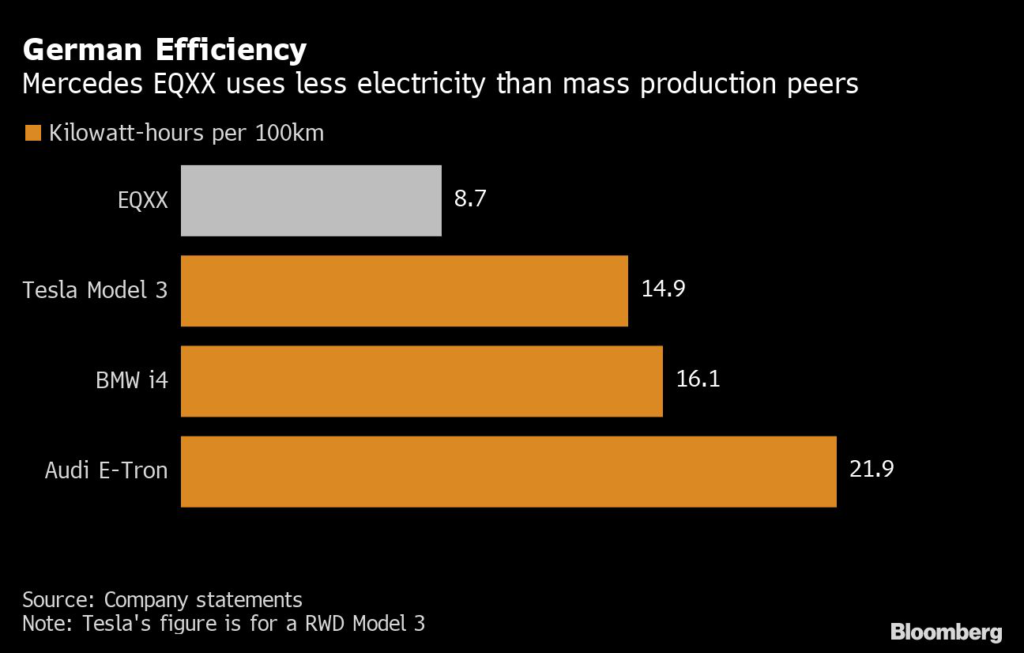
The EQXX prototype rode from Sindelfingen near Stuttgart via Switzerland and Italy to the Mediterranean coastal town of Cassis, the automaker said Thursday. The sedan’s lightweight chassis and aerodynamic profile allowed it to complete the trip with a battery half the size of Mercedes’s EQS flagship electric vehicle.

The EQXX “is the most efficient Mercedes ever built,” Chief Executive Officer Ola Kallenius said in a statement. “The technology program behind it marks a milestone in the development of electric vehicles.”

Mercedes plans to spend 60 billion euros ($65 billion) through 2026 to fend off Tesla and win back the title of the world’s best-selling luxury-car maker from its rival BMW AG. The company has a goal to sell only EVs where possible by the end of this decade and plans to set up eight battery factories with partners.

After years of criticism for being late to adopt electric cars, the storied German manufacturer last year stepped up its game with the launch of the EQS, which boasts an industry-leading driving range. Mercedes is deepening its transformational push this year with the all-electric EQE sedan and the EQB sport-utility vehicle. Yet when it comes to EV shipments, Tesla still leads the pack.

Racing Technology

With the EQXX, Mercedes is trying to show it can best the U.S company on electric technology. The prototype made the trip at speeds of as fast as 87 miles per hour and had 15% of charge left upon arrival. The car’s battery features a new chemistry developed with the help of Formula One experts from the Mercedes-AMG High Performance Powertrains division in the U.K. The plan is to deploy the cells in Mercedes compact cars from 2024.

Mercedes cut the time to develop the EQXX by 18 months to around 40 months by relying on simulations and digital design tools rather than physical tests and parts manufacturing. Modern cars need shorter lead times so they don’t look outdated once they arrive in showrooms, said Mercedes development chief Markus Schaefer.

“We need to keep up with what’s going on on the software and technology side and that’s a fast-changing industry,” Schaefer said in an interview. “We need to be fast in our developments, much faster than we were in the past.” 

More stories like this are available on bloomberg.com

©2022 Bloomberg L.P.

Amazon Fuel-Inflation Fee Has Sellers Poised to Raise Prices

(Bloomberg) — Amazon.com Inc. will levy a 5% fuel and inflation fee on online merchants that use its shipping services, according to documents reviewed by Bloomberg, putting pressure on sellers to raise prices. 

The surcharge, which is scheduled to kick in April 28, will apply to U.S. sellers who use the Fulfillment by Amazon service that stows, packs and ships products. 

In March, U.S. consumer prices surged 8.5% from a year earlier, the biggest jump since late 1981. Gasoline prices, already high, have also soared since Russia invaded Ukraine. The spiraling prices have prompted a range of companies to take action to offset rising costs. Airlines are raising ticket prices, Uber Technologies Inc. and Lyft Inc. last month added fuel surcharges, and FedEx Corp. and United Parcel Service Inc. have increased prices, mostly though surcharges that vary by package type.


Amazon merchants were already grappling with cost-related fee hikes that took effect in January and averaged 5.2%.

“Consumers will lose,” said Dan Brownsher, who runs Channel Key, a Las Vegas e-commerce consulting business with more than 50 clients selling products on Amazon. “Amazon already raised fees in January, so sellers will have to raise prices.”

In an email sent to merchants Wednesday, Amazon said it has made big investments since the start of the pandemic to meet surging demand. Those include doubling capacity, adding 750,000 employees and raising the average Amazon warehouse employee wage to $18 from $15.

“Like many, we have experienced significant cost increases and absorbed them, wherever possible, to reduce the impact on our selling partners,” according to the email. Amazon said that while it expected a return to normalcy this year as Covid restrictions eased, fuel prices and inflation presented fresh challenges.

Amazon’s relationship with merchants has been fraught in recent years. Sellers have complained to regulators that the company’s power lets it dictate terms. Besides paying Amazon to handle shipping, merchants say they are compelled to buy advertising to make their products stand out on Amazon.com.

Stacy Mitchell, co-executive director of the Institute for Local Self-Reliance, an advocacy group for small independent businesses, said the new fee “has the potential to be problematic when it comes to antitrust because Amazon locks you into using this service. It’s absolutely an antitrust vulnerability for Amazon, because that’s what monopolies do is they corner the market and raise prices.” 

The frequent Amazon critic said the company took a 34% cut of each merchant’s sale on the site in 2021, up from 19% in 2014, and that the new fuel charge will push its take even higher.

“We absolutely will need to raise prices,” said Molson Hart, whose Viahart Toy Co. sells educational toys and other products on Amazon. “Some sellers cannot because customers are not accepting the new higher prices.”

Hart said he has already had to take lower profit margins on some larger toys that are more expensive to ship because consumers wouldn’t pay the higher prices.

“In general, people reduce purchases of non-essential items when money gets tight,” he said. “Hopefully as an educational toy brand, parents will continue to view our products as essential but only time will tell.”

(Updated with potential antitrust implications.)

More stories like this are available on bloomberg.com

©2022 Bloomberg L.P.

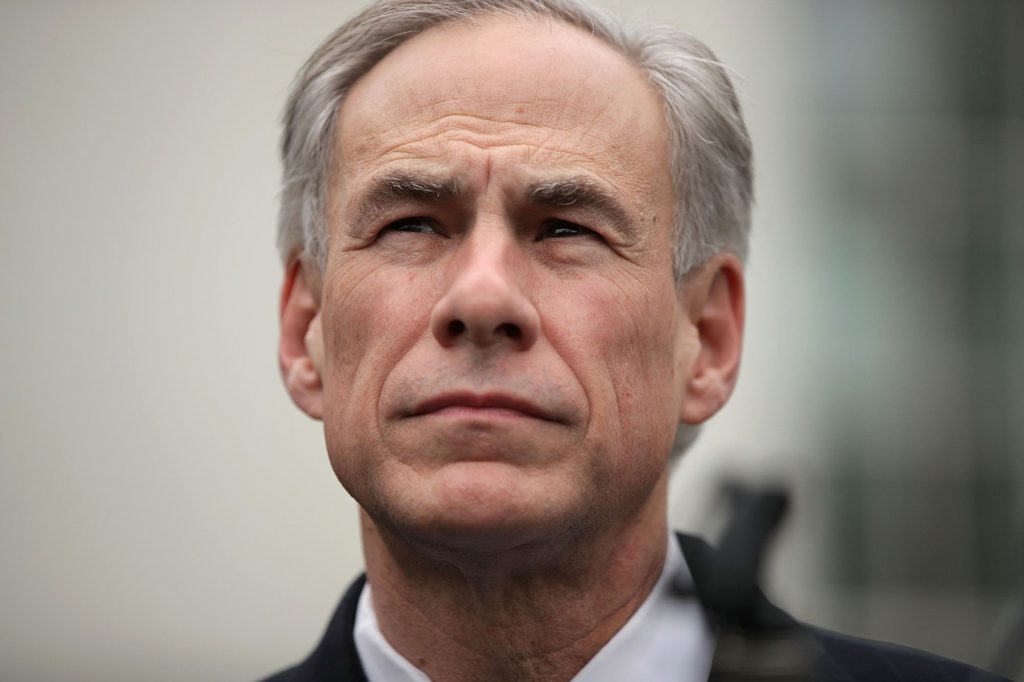
Texas Governor to Halt Some Truck Inspections on Border Snarl

(Bloomberg) — Texas will halt some vehicle inspections at the U.S.-Mexico border after Governor Greg Abbott’s crackdown provoked protests that halted crucial food and equipment shipments.

Abbott said Wednesday that the state government of Nuevo Leon in northern Mexico agreed to conduct safety inspections before U.S.-bound trucks reach the border. The inspections will continue in other sectors of the U.S.-Mexico line. Abbott said they’re needed because of what he called U.S. President Joe Biden’s failure to repel undocumented migration and drug smuggling.

“The only way to unclog the border is for Biden to do his job and secure the border,” Abbott said during a joint press conference with Nuevo Leon Governor Samuel Alejandro Garcia Sepulveda in Laredo.

Abbott said he’s been in contact with governors of other Mexican border states and plans to begin meetings with them as soon as Thursday. The leader of the second-largest U.S. state said he is open to similar deals with those states if they make provisions for vehicle inspections.

About 25% of the vehicles inspected by Texas state troopers were deemed unsafe and removed from service, “potentially saving the lives of Texans,” Abbott said. The safety violations included issues like bad brakes, he said.

‘Continuously Patrolled’ 

Garcia Sepulveda said inspections on the Mexican side of the border began on Tuesday, before later correcting himself to say the first checkpoints were erected Monday.

“Our 14-kilometer border with Texas will be continuously patrolled by our police,” he added. 

Abbott is walking back one of the cornerstones of his border-security platform just a week after its unveiling. The two-term Republican last week said he’d increase inspections of Mexican commercial vehicles to improve highway safety and combat an expected surge in undocumented immigration. 

But the inspections created hours-long delays at a border that handles more than $400 billion in trade annually, prompting Mexican truckers to block a key bridge in protest. Abbott has been criticized on both sides of the border from politicians and business groups who said the move was a political stunt with potentially serious economic consequences.

White House press secretary Jen Psaki said the safety checkpoints aren’t needed and that they were harming cross-border trade.

“The overarching view from not just us, but again, trade associations, officials and businesses is that these are unnecessary inspections and that they are impacting the economy,” she said at a briefing Wednesday.

(Adds White House comment in final paragraphs.)

More stories like this are available on bloomberg.com

©2022 Bloomberg L.P.

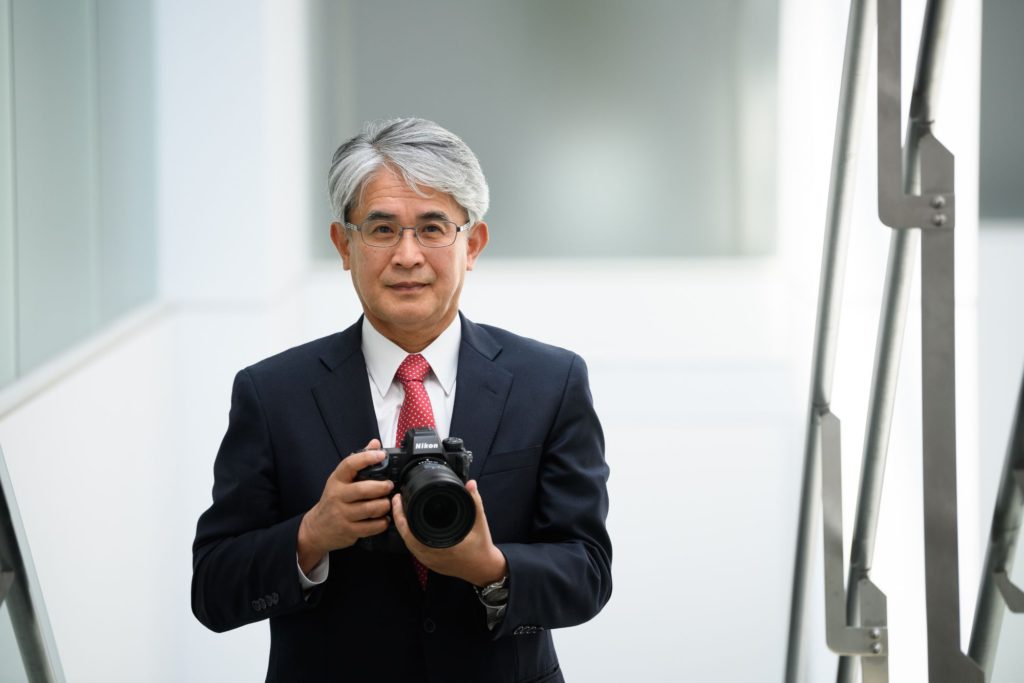
Nikon Looks Beyond Cameras to Reinvent Itself as Tech Supplier

(Bloomberg) — Nikon Corp., known for its cameras and optical equipment, is embarking on a corporate transformation that might make it less of a household name and more of a supplier of components to other businesses.

“Most people think of us as a camera company, but historically when we were founded we supplied parts for other companies,” Chief Executive Officer Toshikazu Umatate said in an interview. Now, the line between business-to-consumer and business-to-business activity “isn’t as clear anymore,” he said. 

Founded in 1917, the manufacturer almost single-handedly brought accessible high-quality cameras to the masses, joining the ranks of Sony Corp., Toyota Motor Corp. and other brands that made Japan the world’s second-biggest economy in mere decades from the rubble of war. But the rise of smartphones and more advanced chipmaking technology — where Nikon once was a leader — has taken its toll on revenue, which has shrunk by roughly 50% from a 2013 peak of 1 trillion yen ($8 billion).

To reverse that trend, Umatate, 66, is seeking to reposition Nikon as a provider of components for the chipmaking industry, advanced materials and health care products, along with related services — all while seeking to retain its presence in the digital camera market. In Nikon’s mid-term plan announced last week, the CEO targeted operating profit of 70 billion yen on sales of 700 billion yen in fiscal 2025, up from its forecasts for 47 billion yen and 550 billion yen for the fiscal year that ended March 31. 

Part of that will involve mergers and acquisitions. Umatate said he’s set aside 200 billion yen to 300 billion yen for deals, possibly involving some of more than 100 billion yen. The CEO’s plan for Nikon’s transformation doesn’t call for any job cuts. Instead, he’s seeking to retrain and refocus the company’s staff of almost 20,000. In fact, Nikon plans to double domestic hiring for the current fiscal year, to 570 employees, the most in a decade. 

“We need more people with experience, knowledge, and fresh new graduates,” Umatate said.

Light-Based Products

Booming demand for semiconductors and related chipmaking equipment is also bolstering Nikon’s growth outlook, even though it no longer offers the most advanced lithography equipment machines that etch circuits onto chips. 

While Nikon and rival Canon Inc. once competed in the market, ASML Holding NV now dominates the top end of the market. The Dutch manufacturer successfully developed machines that use a technology called extreme ultraviolet lithography, enabling Intel Corp., Samsung Electronics Co. and others to create the most advanced chips found in devices.

Even so, Nikon plans to retain a role in the EUV ecosystem by providing inspection equipment and related light-based products, according to Umatate. “Demand is much more than I had anticipated, and since last year, we have ramped up production” of EUV-related equipment, he said. 

Transitions between Nikon’s consumer-oriented and industrial equipment businesses have happened multiple times in Nikon’s history, said Umatate, who joined the company in 1980 and later led its lithography unit. “For the last 10 to 15 years, digital cameras became a large business, but before that lithography machines were more profitable in the 80s and 90s,” he said.

Nikon also has some nascent technologies that could seed future growth. One is Lasermeister, a 3-D printer that uses lasers to create titanium-alloy parts. Another is riblet processing, which creates microscopic surfaces that act like artificial shark skin to dramatically reduce friction, potentially energy-saving technology that boosts the efficiency of surfaces on car bodies or wind turbines.

Even as Nikon transitions into these areas, the common thread running through these products is that all involve the use of light in one way or another. 

“Up until now, if we were to sell a product with advanced features, then people would buy it and use it as they see fit,” Umatate said. “But now, it’s more about what you want to accomplish with the product.”

More stories like this are available on bloomberg.com

©2022 Bloomberg L.P.

Toshiba’s Talk of Privatization Leaves Some Analysts With Doubts

(Bloomberg) — The statement last week read like a possible change of direction for Toshiba Corp., sending its shares higher.

The Japanese conglomerate will set up a special committee that will, among other things, “identify the privatization offer that is best for our diverse stakeholders,” it said.

Toshiba will also halt its plan to split into two companies, temporarily suspend the sale of non-core operations, and create a new business roadmap to be announced before its shareholder meeting in June.

As investors pushed up the stock on bets the company would be sold to private equity, some analysts took a more measured stance: Yes, a privatization is now more likely, but it’s far from a sure thing.

It’s “much more realistic than earlier,” said Mio Kato, an analyst at LightStream Research in Tokyo. “It needs the government’s blessing, though, and it’s not clear yet whether it will receive that.”

Toshiba has lurched from one drama to another as management and the government face off against shareholders who have become disillusioned by years of scandals and financial mismanagement. 

While executives had sought to split the company in three, and then two, as a way forward, shareholders voted down the idea of a breakup last month. For Toshiba’s activist investors, who own a large chunk of the shares, going private appears to be the best solution, one that would presumably offer them a windfall.

Toshiba has set up a special committee to engage with potential investors and sponsors and review strategic alternatives, but no specific option, including privatization, has been decided yet, a spokeswoman said. The company will work to build trust with shareholders, she said.

But at this point, Toshiba has no easy option. Doing nothing won’t wash with its stock holders, splitting in two has been rejected, and going private comes with one big obstacle: it’s dependent on the government giving its blessing. Japan’s authorities list Toshiba, with its expertise in nuclear power, as a company of interest to national security under the Foreign Exchange and Foreign Trade Act.

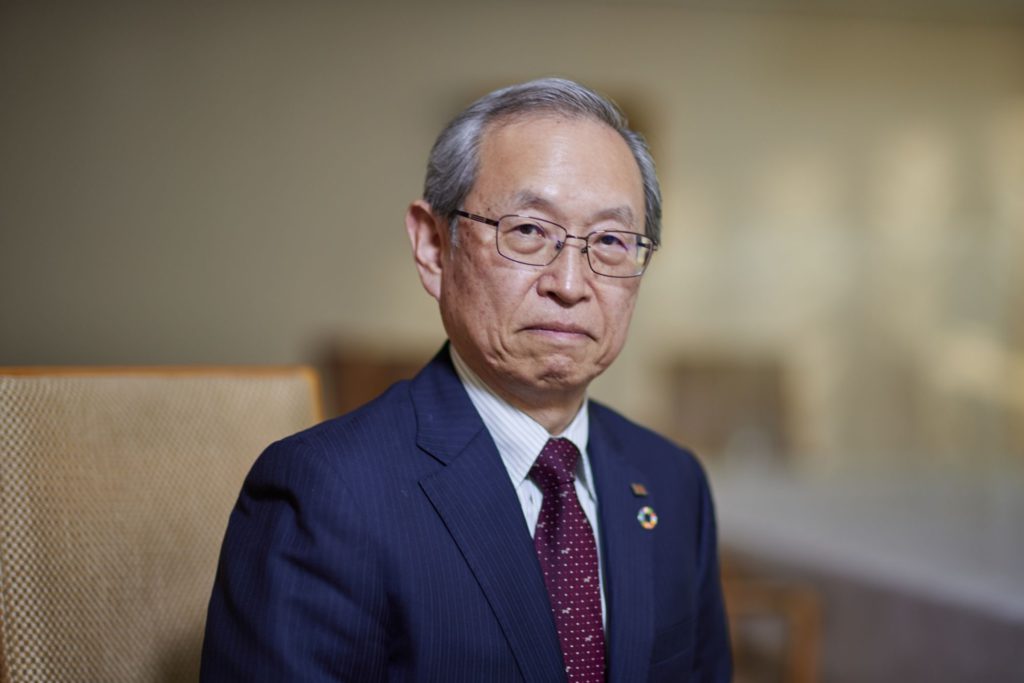
As recently as February, then-chief executive officer Satoshi Tsunakawa argued that going private would be a mistake because of the many drawbacks. For starters, Toshiba would have to sell off sensitive technology operations and would lose orders from public entities such as utilities and local governments, he said.

For Naoki Fujiwara, chief fund manager at Shinkin Asset Management Co. in Tokyo, the success of any takeover bid will ultimately depend on who is bidding.

“It’s possible for a foreign fund to team up with a Japanese fund,” Fujiwara said. “That would make things easier.”

Toshiba is in talks with financial institutions on a buyout plan that would be led by domestic investors, the Nikkei newspaper reported in late March, sending the company’s shares higher. A Toshiba spokesman said at the time that the company hadn’t made any decision yet.

Days later, another potential bidder emerged, this time from overseas. Effissimo Capital Management Pte., Toshiba’s largest shareholder with a 9.9% stake, said it had agreed to tender all its shares if Bain Capital launched a tender offer to acquire two-thirds or more of Toshiba. Bain said nothing had been decided about any tender offer.

“It will be done with a Japanese entity,” said Justin Tang, head of Asian research at United First Partners in Singapore. “The nuclear and defense assets have to be ringfenced.” 

Tang is one of the optimists on privatization. 

“It is quite clear that this is the only option on the table to turn the fortunes of the company around,” he said.

But Kato of LightStream is much less confident.

“I don’t think privatization is the most likely outcome,” he said. “I would say maybe a 30% chance.”

The divergence of opinions is a reflection of the uncertainties surrounding the company over the past seven years.

It started with an accounting scandal in 2015 that hurt its bottom line and led to a company-wide restructuring. The subsequent unraveling of a costly foray into nuclear power business in the U.S. led to a $6.3 billion writedown and saw it teeter on the edge of delisting. It was forced to sell its crown jewel memory-chip unit and offer stock that was snapped up by the activists, giving them an outsized presence on the shareholder register.

When Effissimo sought in 2020 to put one of its co-founders and other candidates on Toshiba’s board, shareholders rejected it. Suspicious about how the vote was conducted, Effissimo proposed that independent investigators be appointed to look into it, winning a landmark shareholder vote last year. The subsequent report by the investigators alleged that Toshiba management worked hand in hand with government allies to sway the outcome, findings that four Toshiba board members described as “deeply disturbing.”

In November, Toshiba floated a plan to split into three companies as part of a strategic restructuring. But it soon faced opposition from shareholders. In February, the company said it was scrapping the initial idea and would separate into two companies instead. But at an extraordinary general meeting on March 24, shareholders rejected that proposal — and a competing one from a large investor to reconsider options including a sale.

Atsushi Osanai, a professor at Waseda Business School in Tokyo, says Toshiba’s executives are improvising as they go along.

“All the proposals by management so far are clearly stopgap measures hoping shareholders would one day be satisfied,” he said. “As long as management keeps the current backward-looking attitude toward its stakeholders, no other options, including privatization, will win their approval.”

But Tang of United First Partners cautions that Toshiba’s directors no longer have any room to maneuver. Privatization, he argues, is now the only option, however difficult it may be.

“The board does not have a choice,” he said.

More stories like this are available on bloomberg.com

©2022 Bloomberg L.P.

YouTube Removes Account Tied to Brooklyn Subway Shooting Suspect

(Bloomberg) — YouTube deleted the account that appears to belong to Frank R. James, the suspect arrested in the subway shooting in Brooklyn on Tuesday that injured two dozen people. 

The NYPD had showcased screenshots of James that appeared to come from a YouTube video posted to a channel named prophetoftruth88. The account featured several videos of a man complaining about New York City’s mental health services and Mayor Eric Adams. 

One video entitled “sensible violence” displayed a montage of news clips of crime in the city, and went on to attribute the cause of this crime to “ghetto culture” and “slave culture.” Another video, called “The good ole days” showed a finger in front of people on a crowded subway train.

Police have not confirmed the YouTube channel belonged to James, who allegedly detonated two smoke canisters as a Manhattan-bound N train was pulling into the 36th Street station in Sunset Park, Brooklyn, and then fired a handgun 33 times. James, 62, now faces a federal terrorism charge.

The channel was active on Wednesday morning before coming down. A note on the page says it was removed for “violating YouTube’s Community Guidelines.” 

“Following the tragic event in New York City, our Trust and Safety team identified and terminated a YouTube channel associated with the suspect, in accordance with our creator responsibility guidelines,” said Jack Malon, a spokesperson for YouTube, part of Alphabet Inc.’s Google. “Additionally, our systems are prominently surfacing videos from authoritative sources in search and recommendations, including by surfacing our Top News shelf above related search results.”

Read More: NYC Subway Shooting Suspect Arrested, Faces Terrorism Charge 

(Updates with statement from Youtube and other details throughout.)

More stories like this are available on bloomberg.com

©2022 Bloomberg L.P.
Close Bitnami banner
Bitnami