Bloomberg

LG Faces Tougher U.S. Scrutiny After EV Battery-Fire Recalls

(Bloomberg) — U.S. regulators have opened an investigation into electric- and hybrid-vehicle batteries made by LG Energy Solution after five automakers issued recalls over fire risks.

The probe covers an estimated 138,324 vehicles that the National Highway Traffic Safety Administration said could catch fire when parked or in use, according to documents posted Tuesday on the agency’s website. NHTSA opened the probe, known as an equipment query, on April 1. 

The regulator — which can deem cars defective and order recalls — said it launched its probe after receiving complaints about cars made by Stellantis NV, Volkswagen AG, General Motors Co., Hyundai Motor Co. and Mercedes-Benz Group AG. 

The investigation underscores the technical challenges of automotive electrification as the industry spends billions to churn out new models to comply with global emissions regulations and keep up with Tesla Inc. GM recovered $1.9 billion from LG Electronics last year to cover the costs of recalling batteries in Chevrolet Bolt EVs.

NHTSA intends to contact South Korea-based LG and its customers to “notify them of this defect in any vehicles they manufactured, and to ensure thorough safety recalls are conducted where appropriate,” according to the posting.

LG said it is cooperating with the inquiry. “We understand NHTSA’s latest request is a follow-up procedure to determine if the same or similar batteries involved in the recalls were supplied” to other carmakers, the company said in a statement.

NHTSA’s LG investigation is appropriate, said Michael Brooks, acting executive director of the Center for Auto Safety, which advocates for more stringent safety rules. The probe should avoid the type of circumstance that occurred with Takata Corp. air bags, he said.

“Performing this evaluation now helps ensure that Americans won’t end up in a situation like Takata, with tens of millions of defective batteries in our garages,” Brooks said.

U.S. shares of the automakers fell between 3% and 4.5% at 12:47 p.m. amid a broad market slump, except for Hyundai, which was little changed. 

(Adds detail on other recalls in fourth paragraph)

More stories like this are available on bloomberg.com

©2022 Bloomberg L.P.

Canada to Force Google, Facebook to Pay News Publishers

(Bloomberg) — Canada is planning a bill that would force tech companies to pay local news publishers for content, the latest move by a government to help struggling media companies that have seen online advertising revenue drain away to Silicon Valley’s digital giants. 

Heritage Minister Pablo Rodriguez said he will introduce a bill called the Online News Act to ensure companies like Alphabet Inc. and Meta Platforms Inc. compensate local news organizations for their content through privately-negotiated deals. The law could benefit listed Canadian companies such as Postmedia Network Canada Corp.

“More and more Canadians are turning to digital platforms as gateways to find their news content today, and this shift online has had an incredible impact on news businesses,” Rodriguez told reporters at a news conference on Tuesday. “They continue to profit from the sharing and distribution of Canadian news content without really having to pay for it. So with this bill, we’re seeking to address this market imbalance.”

The Canadian effort follows Australian legislation last year that demanded platforms pay local news publishers, and Rodriguez said Canada studied the Australian law extensively. That law resulted in a multiyear deal between Rupert Murdoch’s News Corp. and Facebook, after the social media giant started restricting the sharing of news articles. U.S. lawmakers have also introduced similar legislation, while news publishers have lobbied in Europe for something modeled on the Australian law.

Canada’s new law would enable news businesses to bargain in groups on issues including the ways that platforms reproduce or facilitate access to news content, senior government officials said at a briefing on Tuesday. It would also require digital platforms that have a “significant bargaining imbalance” with news businesses to make fair commercial deals and is enforced by mandatory bargaining and final offer arbitration, officials said.

The proposed legislation — enforced by the Canadian Radio-television and Telecommunications Commission — is designed to help a Canadian media sector that saw 450 outlets close between 2008 and 2021, according to the government.

The bill comes two months after Rodriguez’s separate proposal to amend the country’s Broadcasting Act to require online streaming services like Netflix Inc. and Spotify Technology SA pay into local funds to support Canadian artists. The Online Streaming Act is currently under review by parliament.

(Updates with minister’s quotes in third paragraph)

More stories like this are available on bloomberg.com

©2022 Bloomberg L.P.

DJ Steve Aoki Touts Music’s Unstoppable Embrace of NFTs, Web3

(Bloomberg) — Digital assets like nonfungible tokens could help musicians build better relationships with their fans, according to Steve Aoki, a keynote panelist at last week’s NFT | LA conference in California.

The Grammy-nominated musician — known for popular remixes of songs like Kid Cudi’s “Pursuit of Happiness” — told Bloomberg he sees the decentralized world of Web3 giving artists more control of their work. In fact, he says he has made more money selling NFTs than he did in 10 years of making music. That’s partially why he’s now building his own NFT platform, Aokiverse, in collaboration with other artists such as Snoop Dog. 

Below are lightly edited highlights of Bloomberg’s conversation with Aoki.

Q: Why should artists be interested in the intersection between music and NFTs?

A: It’s like when social media came out. It’s just going to expand your connection or your reach with people. Do you have to do it? No, you don’t. There’s plenty of artists who don’t even do anything with social media. They aren’t on social media at all, but they exist. So it’s not like you have to do it, but if you want to expand your reach and connect with people in a different way … the digital imprint of how we look at our lives, how we communicate what we do, it’s actually a very large part of who we are.

It’s more about control. It’s about what you own. So I think with that philosophy in mind, it’s already clear. It doesn’t matter whether you’re a musician or you’re a creator, whatever you are. You would rather own and then go in. I think eventually when people start seeing that, then it’s going to become very normal and then we’re not going to have this conversation of what is an NFT.

It’s like, “What’s the internet?” Those were questions when it first started out. Then two years later, how do you make these relationships more meaningful? How do you make it more sustainable? Those are the questions that are going to matter later on, right? It’s first about introducing this idea: “Hey, guys you own it.” Once you want to be part of it, you own what you go into and you can dictate what that looks like. That’s where the fun begins. That’s where the ideating begins of how to build a community.

I think one of the other major differences between the way artists communicate with fans through their music, which is how we do it, versus how artists communicate with their fans through Web3 and through music, is that you’re listening to [your fans] a lot more. You’re engaged with them a lot more. It’s more of a relationship than a one-way conversation. That’s the major difference. They’re gonna have to be more participatory in all these different worlds, outside of just making the music and dropping it if they want to participate in web3. They can still be part of web2 [the Internet now] and just drop music and carry on with their lives. But I want more. I want to build more. 

Q: When you’re talking with people in the music industry about NFTs, what’s their biggest hangup?

A: For crypto-savvy people, it’s built on the blockchain, so they get it. People who aren’t even in crypto, you have to become crypto-literate to a certain extent. You have to believe in it. You have to believe in crypto, because once again, it’s decentralized. So just that alone is already like, “Well, I don’t want any crypto, I don’t even really understand it.” That’s a hurdle you have to jump first. And I always start with, it’s all based on market. Everything’s based on what people decide what it should be.

If they decide it’s worth a cheeseburger, this one is worth one cheeseburger. This one is worth a hundred grand. It’s what they decide and you let them decide, so you want to bring value. It’s different than just being a musician or artist. You have to understand the business model and understand, it’s a much bigger undertaking than just dropping music, and then people don’t listen to it. If you’re going to do it, you’re going to have to have a real conversation.

You have to bring a team in. I brought in a full-scale team to build out Aokiverse. There’s five people that are part of the Discord, three women and two men. I brought in two full-time employees to handle all the rewards and all the development of Aokiverse and what that looks like, so that the people that have invested in and been part of my membership, are getting what they want, or getting something that they’ve never gotten before. It’s much larger than a fan club. Definitely a social community, for sure.

Q: Do you think there could be an NFT-based or blockchain-based platform that replaces a streaming giant like Spotify in the future?

I don’t think it’ll replace it. You never know. I mean physical CDs were replaced by streaming, by downloads. I’m sure Spotify is smart. They’re going to think about what that looks like because there’s always an evolution. I’ve had a record label for 26 years. It was really important to have physical product. That’s how you made an income as a business and then it was all gone. So, will streaming be gone? Who knows. What’s the next thing? What does it look like? They’re going to have to be forward thinking about it. But you can’t stop web3. You can’t stop what the NFT engagement will be with music. It’s going to be the next frontier of where music is going. It just gives more options.

That’s what it’s doing. It’s opening up the palette of hey, you have streaming. This is very important. You have YouTube. You now have the NFT culture of, whether it’s royalties or the collectible side of things, where you can have scarcity and rarity on certain songs that may have emotionally affected you and you treat as art. I think the most important thing is building a broader community, which is what we’re doing with Aokiverse.

Q: Is it hard partnering up on projects with so much anonymous stuff happening in crypto?

A: It’s a little scary sometimes. You might happen into something that might rug [pull] because you don’t know what the intention is. You might see what they lay out, but then they just pull the money and run and we all make that mistake, especially people like myself that speculate a lot.

More stories like this are available on bloomberg.com

©2022 Bloomberg L.P.

Musk Gets Twitter Board Seat in Follow-Up to His Stake Surprise

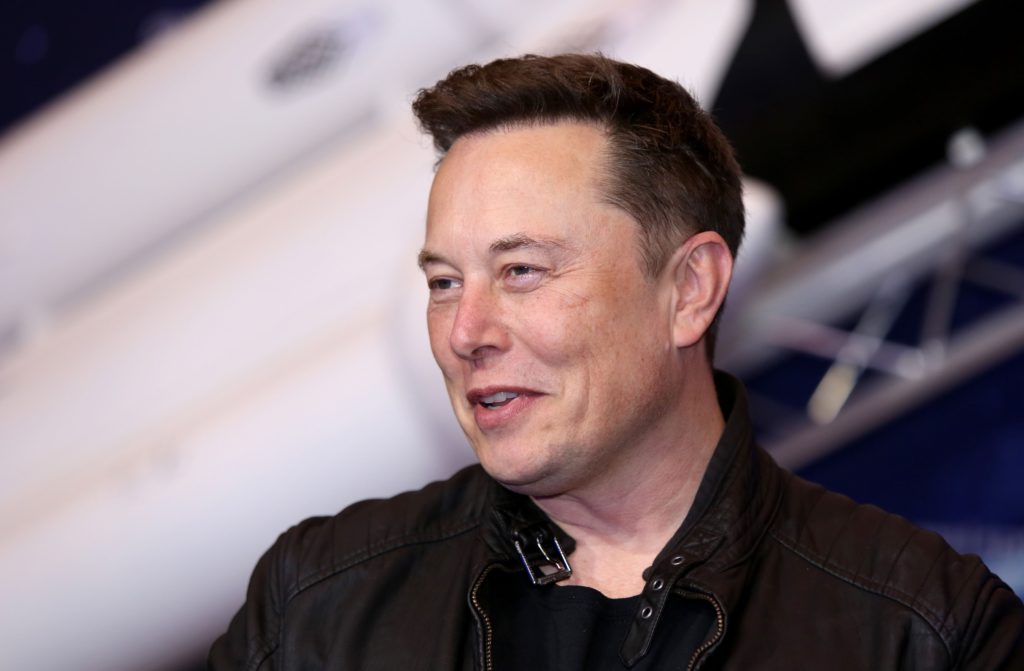
(Bloomberg) — Twitter Inc. named Elon Musk to its board a day after it was disclosed that the chief executive officer of Tesla Inc. was the social media company’s largest shareholder.

The appointment ends the possibility of Musk mounting a takeover of Twitter, capping his ownership at 14.9% during his time on the board, according to a filing with the Securities and Exchange Commission on Tuesday. He currently owns 9.2%. 

Musk is one of the biggest personalities on Twitter and has regularly run into trouble on the platform. He is currently seeking to exit a 2018 deal with the SEC that put controls in place related to his tweeting about Tesla. 

Twitter CEO Parag Agrawal said in a tweet that he’s “excited” about appointing Musk to the board. “He’s both a passionate believer and intense critic of the service which is exactly what we need on @Twitter, and in the boardroom, to make us stronger in the long-term.” 


While it’s still unclear exactly what Musk’s intentions are with Twitter, so far the result of his affiliation has only been good for the beleaguered company, whose shares have tumbled from their 2021 record as investors balked at a combination of a high valuation and potentially disappointing user growth. But the stock rose 27% yesterday as buyers bet Musk can jump-start Twitter by virtue of his clout as the biggest shareholder and as an influential user on the platform, where he has 80.4 million followers. Twitter was up 2.2% Tuesday afternoon in New York.  

“This was a friendly move by the Twitter board to embrace Musk with open arms as clearly a passive stake is just the start of his involvement in Twitter,” Dan Ives, an analyst at Wedbush Securities, wrote in a note to investors. “Musk joining Twitter will lead to a host of strategic initiatives which could include a range of near-term and long-term possibilities out of the gates for the company still struggling in a social media arms race.”

Twitter was often mocked for appointing board members who rarely tweeted. Musk is rarely far from controversy on the platform. In 2019, he called a British cave diver a “pedo guy” on Twitter, triggering a defamation lawsuit. 

On Monday evening, Musk asked Twitter users in a poll if they wanted to have an edit button. Last year, he polled Twitter users on whether he should sell 10% of his stake in Tesla, which a majority supported.

As a new board member, “Musk is in a position to influence Twitter’s potential beyond news and live events, and could help draw younger users,” said Mandeep Singh, an analyst at Bloomberg Intelligence. “Though the edit button and removal of bots are some features that Musk has openly advocated for recently, we think board and management changes are likely in the next six months if the company continues to underperform peers.”

Twitter co-founder Jack Dorsey stepped down as its chief executive last year and will leave leave the board when his term ends this year. Dorsey, who is a friend of Musk’s, said in a tweet that he is “really happy” that Musk is joining the board.

Musk’s existing board appointments include Tesla and Space Exploration Technologies Corp., the two most high-profile companies he leads. Endeavor Group Holdings Inc., the entertainment and Hollywood talent company, disclosed last month that Musk was resigning from its board.

Musk’s term on the board is set to expire at Twitter’s 2024 annual meeting. 

More stories like this are available on bloomberg.com

©2022 Bloomberg L.P.

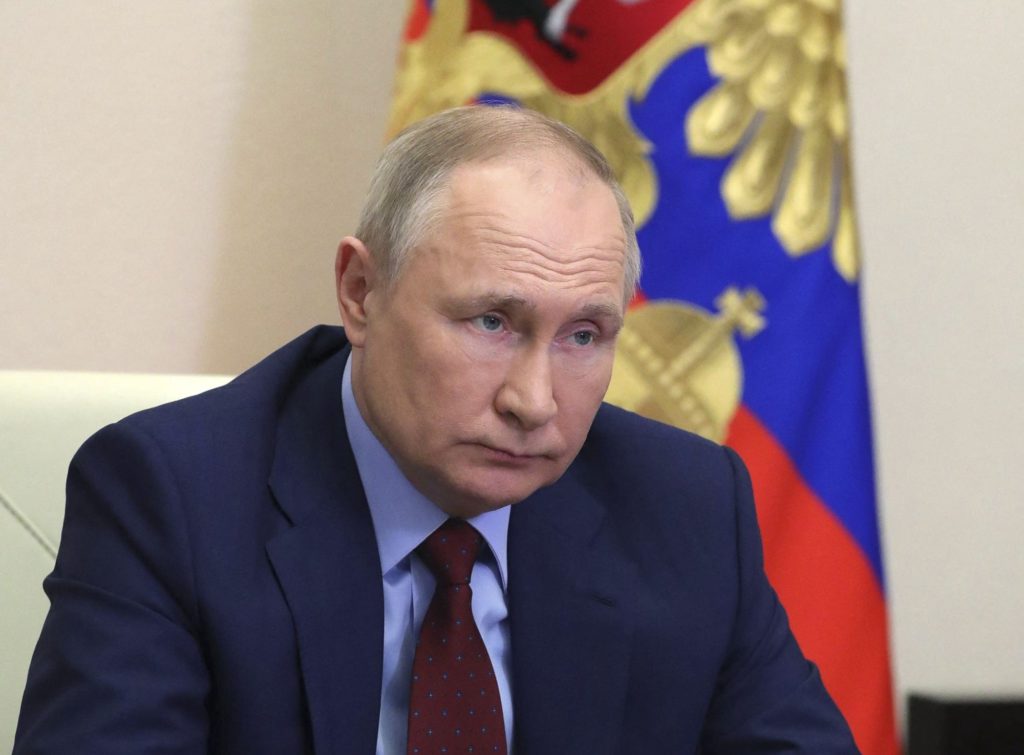
Putin’s Daughters Risk EU Sanctions Amid Outrage Over Ukraine

(Bloomberg) — The European Union is discussing sanctioning Russian President Vladimir Putin’s daughters, according to people familiar with the matter, as the bloc tries to respond to the killing of Ukrainian civilians by retreating Russian soldiers. 

The proposed list, which still needs to be approved by European governments and could change before that happens, also includes dozens of other individuals, including political figures, tycoons and their family members, and several propagandists.

Sanctioning Putin’s daughters, Katerina and Maria, is largely a symbolic move since it’s unclear they have significant assets outside of Russia, but it’s designed to get the president’s attention. His daughters’ lives are shrouded in secrecy, they have different maiden names and the Kremlin has never confirmed the names of his daughters or released photographs of them as adults.

In 2015, Putin disclosed a few details about his daughters, including that both women graduated from Russian universities and speak multiple languages.

Maria Vorontsova, his older daughter, is a co-owner of Nomenko, which is involved in Russia’s largely private investment project in health care, according to the people familiar with the matter. Katerina Tikhonova runs an artificial intelligence institute at Moscow State University. 

Kremlin spokesman Dmitry Peskov said by text message that he wasn’t aware of the proposal and would wait to see what is published officially.

The EU is also planning to target more than a dozen entities in the defense sector and four banks that had been cut off from the global payments system SWIFT but hadn’t yet been fully sanctioned, including VTB Bank PJSC. It’s also proposing a ban on Russian coal imports.

The sanctions package needs to be approved by all 27 EU members.

Read more: EU Proposes Ban on Russian Coal Imports, Ships After Atrocities

(Updates with EU procedures in final paragraph. An earlier version of the story misstated the ages of Putin’s daughters.)

More stories like this are available on bloomberg.com

©2022 Bloomberg L.P.
Google Paper Cites Research at Center of Its Staff Firestorm

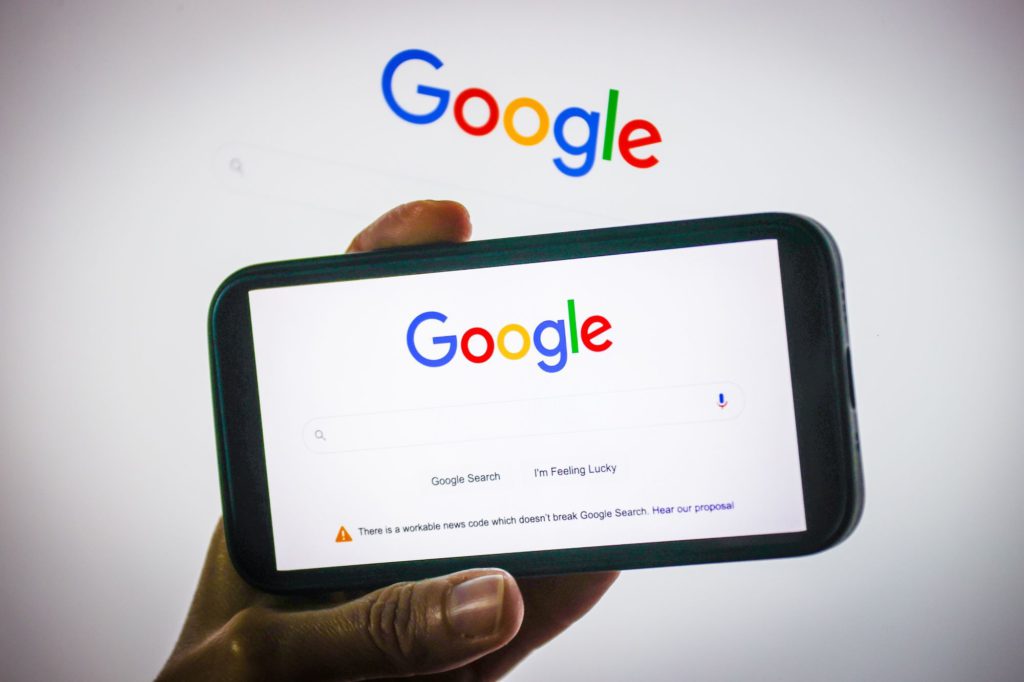
(Bloomberg) — Google in 2020 and 2021 dismissed the two co-heads of its artificial intelligence ethics team in a dispute over research that was critical of the company’s work. Now, Google Research has published another paper on the same topic that cites the original work that led to the removal of the two leaders, Timnit Gebru and Margaret Mitchell.The company dismissed Gebru—she says she was fired, while Google says she resigned—in late 2020 after she refused to either retract the paper or remove the names of the Google authors. Jeff Dean, the senior vice president of Google AI, later said in an email he shared publicly that the original paper “didn’t meet our bar for publication” and “ignored too much relevant research.” The episode stirred up a sustained controversy at the company’s research division, a key area of investment for the tech giant.

Mitchell remained at Google a few months longer until she was fired, and the paper was published with her name styled as “Shmargaret Shmitchell.” The citation in Google Research’s recent paper, shared on Twitter Monday by Dean, retains the Shmitchell nom de plume.

The new Google paper cites the 2020 research as a source. It is 83 pages and involved several dozen authors, including Dean. Like the earlier paper, it deals with large language models, AI programs that generate and predict human language by analyzing massive volumes of text. Gebru, Mitchell and co-authors from the University of Washington including Emily M. Bender had raised ethical concerns about the field in their 2020 paper.

“This shows me how little accountability these leaders have,” Gebru said. “They don’t have to think about the fact that they fired me claiming our paper was ‘sub par.’ They don’t have to think about the consequences—it’s a distant memory for them.”

Mitchell had no immediate comment on the paper.

Google referred requests for comment to Dean’s earlier email about the paper, which, while commenting on what he saw as flaws in the paper, also noted  that it “surveyed valid concerns with large language models, and in fact many teams at Google are actively working on these issues.”


More stories like this are available on bloomberg.com

©2022 Bloomberg L.P.

Top South Africa Coal Miner Extends Rally as EU Eyes Russia Ban

(Bloomberg) — Thungela Resources Ltd., South Africa’s largest exporter of coal burned in power stations, extended its share-price rally after a report that the European Union is working to end imports of the fuel from Russia. The EU plans to propose a mandatory phaseout of Russian coal supplies in response to reports that Russian forces …

Top South Africa Coal Miner Extends Rally as EU Eyes Russia Ban Read More »

Apple Developer Event to Be Online-Only for Third Year in a Row

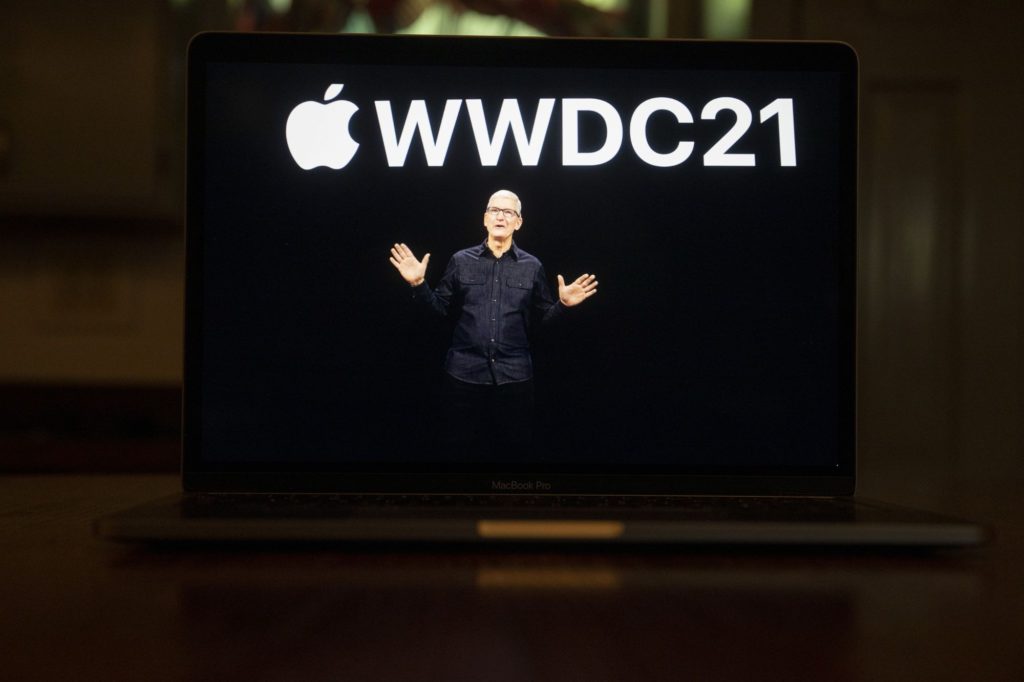
(Bloomberg) — Apple Inc. will hold its annual Worldwide Developers Conference virtually for the third year in a row, a sign that major tech events are still a ways off from returning to pre-pandemic norms. 

The show, better known as WWDC, will take place online from June 6 to June 10, Apple said in a statement Tuesday. But in a slight shift from the previous two WWDC conferences, the company will allow a “limited” number of developers and students to watch the opening day keynote videos from its Apple Park headquarters in Cupertino, California.

The conference is where Apple previews its major software updates for the iPhone, iPad, Apple TV, Mac and Apple Watch — typically a few months before they’re released. The company will hold a consumer-focused keynote event to unveil the new software on June 6, along with another presentation geared toward software developers.

The decision to allow a limited number of developers on its campus for the event is part of a broader push to adopt a hybrid approach to work. The company is asking its employees to return to offices at least part of the time this month, with the target of eventually getting to three days a week in person.

For WWDC, developers and students will need to apply to attend the in-person portion. Apple also said this year’s event will have more virtual online sessions, digital lounges and localized content to appeal to developers in more places around the world.

More stories like this are available on bloomberg.com

©2022 Bloomberg L.P.
Jason Kilar Steps Down as WarnerMedia CEO Ahead of Deal Closing

(Bloomberg) — Jason Kilar is departing as chief executive officer of WarnerMedia, days before the parent of Warner Bros. studios and HBO merges with Discovery Inc. to form a new media company.

Kilar, 50, who co-founded and led the Hulu streaming service before going on to run WarnerMedia under current owner AT&T Inc., is stepping down, according to an internal memo.

“We’re leading the industry creatively,” Kilar said in the note to staff. “We’ve elevated technology, product, and design to the highest levels in the company. We’re operating as one team, proudly and successfully going direct to consumers across the globe.”

His exits paves the way for David Zaslav, the chief executive officer of Discovery, to begin building his own management team at the soon-to-be-combined companies. AT&T, which bought the former Time Warner Inc. for $85 billion in 2018, is returning to its roots as a phone company after a failed experiment in media.

AT&T appointed Kilar to run WarnerMedia in April 2020, believing a technology executive with experience in streaming could lead the company into a new era. AT&T was on the verge of launching a streaming business, HBO Max, and viewed Kilar as the right person for the job.

He made waves in the film industry during the pandemic by releasing all of the Warner Bros. movies simultaneously in theaters and on the streaming service. That broke the old rules of distribution, which called for cinemas to have new movies exclusively for 90 days or more.

More stories like this are available on bloomberg.com

©2022 Bloomberg L.P.
Close Bitnami banner
Bitnami