Bloomberg

Rivian Boosts Electric-Vehicle Output Despite Supply-Chain Snags

(Bloomberg) — Rivian Automotive Inc. produced 2,553 vehicles in the first quarter as the maker of plug-in trucks contended with a snarled supply chain and pandemic challenges.

The company also reaffirmed its guidance to build 25,000 electric vehicles this year, Rivian said Tuesday in a statement. The figures include a combination of its R1T battery-electric pickups and R1S sport utility vehicles, along with battery-electric delivery vans for Amazon.com Inc., a major shareholder. The company delivered 1,227 vehicles in the first three months of the year.

The latest results bring the total output from Rivian’s Normal, Illinois, plant to about 3,600 EVs since production started in September. 

Rivian, often touted as a leading challenger to market leader Tesla Inc., has struggled lately with the realities of launching and ramping new EV products. The automaker has cited the war in Ukraine as adding to supply-chain and cost pressures. Rivian — whose market value briefly exceeded $150 billion after its November trading debut — has also contended with a slumping stock price and an embarrassing U-turn on vehicle pricing.

Read more: Rivian hits record low after ‘mistake’ on price hikes

Last month, the manufacturer forecast production of 25,000 vehicles this year, including 10,000 vans due to Amazon by year-end. The production goal is half what its plant is capable of, with assembly lines constrained by parts shortages.

Rivian’s shares rose less than 1% after regular trading Tuesday in New York. The stock fell 59% this year through Tuesday’s close, resulting in a market valuation of about $38 billion.

More stories like this are available on bloomberg.com

©2022 Bloomberg L.P.

Ukraine Readies NFT Sales as Crypto Donations Top $60 Million

(Bloomberg) — Ukraine is launching a web page for selling the estimated 300 nonfungible tokens it has received in donations to help in the nation’s war effort.

The NFTs include a donated CryptoPunk that is expected to fetch about $200,000, according to Alex Bornyakov, deputy minister of Digital Transformation of Ukraine. Only between 5% and 10% of the donated NFTs are valuable, he said in an interview. The Web page, which could be started within the week, will also offer 10 NFT collections created by independent companies that have pledged all the proceeds to Ukraine. 

“We just want to show how many people are doing this and how they are inspired by those events, and how they want to help Ukraine,” Bornyakov said. The sales will happen via OpenSea, the largest NFT marketplace.   

Crypto donations have been utilized by the Ukrainian government as it tries to raise funds for everything from body armor to medical supplies. The nation sold about $770,000 of what it refers to as museum NFTs, which debuted last week and show scenes from the war, Bornyakov said. The museum NFT sale could conclude as early as this week, when the digital art sales hit $1 million.

“I think it’s even more impactful” than just making crypto donations, Bornyakov said. “Then you can store a piece and it’s going to be with you until you decide to sell it. It’s still out there, it still reminds people about what happened.”

Ukraine had 32 Bitcoins valued at around $1.5 million donated yesterday, Bornyakov said. It has raised more than $60 million in digital coin donations to date.

So far, the Ukrainian government has spent about $41 million on items such as bulletproof vests, helmets and medical supplies, Bornyakov said.

Meanwhile,  another pledged donation will be used to help refugees. Within a few weeks, about 66,000 Ukrainians will get a digital wallet with $300 of crypto, thanks to a $20 million donation gathered by the Stellar Development Foundation, Bornyakov said. People with children and low-income residents will get priority, and the wallets can be used in MoneyGram locations, he said. 

The NFT sale site will be accessible through https://donate.thedigital.gov.ua/. 

More stories like this are available on bloomberg.com

©2022 Bloomberg L.P.

Largest Darknet Market Shut Down by U.S., German Authorities

(Bloomberg) — U.S. and German officials have seized what they described as the world’s largest and most prominent darknet market, which traffics in illicit goods and services.

The Hydra Market’s servers were shut down and cryptocurrency wallets containing $25 million worth of Bitcoin were confiscated by German police on Tuesday. The U.S. Department of Justice announced criminal charges against Dmitry Pavlov, a 30-year-old Russian resident, for conspiracy to distribute narcotics and conspiracy to commit money laundering in connection with his operation and administration of Hydra’s servers.

The U.S. Treasury Department, meanwhile, announced sanctions against Hydra Market, and a “ransomware-enabling” virtual currency called Garantex, which mostly operates out of Russia.

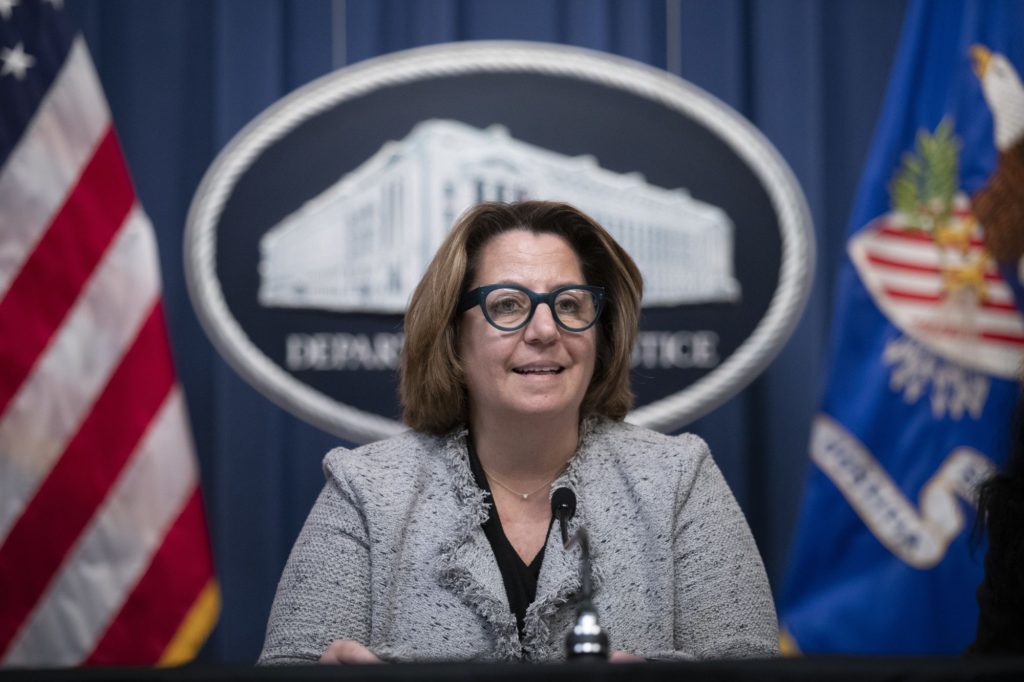
“The Department of Justice will not allow darknet markets and cryptocurrency to be a safe haven for money laundering and the sale of hacking tools and services,” said Deputy Attorney General Lisa Monaco, in prepared remarks.

Started in 2015, Hydra allegedly offered a wide variety of illegal goods and services to mainly Russian-speaking countries. Its wares included hacking software, fake IDs and illegal drugs such as heroin, cocaine and LSD, which were openly advertised on the site, according to U.S. officials. In addition, Hydra offered a “robust array” of money laundering and “cash-out” services to wash illicit proceeds, authorities said.

In 2021, Hydra accounted for about 80% of all darknet market-related cryptocurrency transactions, and since 2015, it has received approximately $5.2 billion in cryptocurrency, according to the Department of Justice. 

Garantex, the virtual currency exchange, was founded in 2019 and originally registered in Estonia. The majority of its operations are now carried out in Moscow, according to U.S. officials. More than $100 million in Garantex transactions were associated with illicit actors and darknet markets, including $6 million from the notorious Russian ransomware gang Conti and about $2.6 million from Hydra Market, the officials said.

The Treasury Department actions are the latest by the U.S. and its allies to pursue hackers and the infrastructure that helps them launder their ill-gotten profits. Last September, a cryptocurrency broker that the Biden administration considered a key cog in the ransomware epidemic, Suex OTC, become the first crypto exchange to be blacklisted by the U.S. Two months later, a virtual cryptocurrency exchange called Chatex was sanctioned.

“The global threat of cybercrime and ransomware that originates in Russia, and the ability of criminal leaders to operate there with impunity, is deeply concerning to the United States,” said Treasury Secretary Janet L. Yellen, in prepared remarks. “Our actions send a message today to criminals that you cannot hide on the darknet or their forums, and you cannot hide in Russia or anywhere else in the world.”

Darknet markets sell a variety of illegal goods, and they often accept virtual currency as payment because it is believed to be difficult to trace, according to the Treasury Department. 

Many of the hacking gangs have been traced to Russia, which U.S. officials have accused of providing safe haven for them. Garantex, for instance, operates out the same Moscow office building, Federation Tower, as Suex and Chatex, the two entities that were sanctioned last year.

More stories like this are available on bloomberg.com

©2022 Bloomberg L.P.

Black Knight Exploring a Potential Sale Following Takeover Interest

(Bloomberg) — Mortgage lending software and analytics provider Black Knight Inc. is exploring a potential sale after receiving takeover interest, according to people familiar with the matter.

Private equity firms have been weighing bids for Black Knight, said the people, who asked not to be identified because the talks were private. The company is working with advisers to assist it, the people added.

Black Knight hasn’t decided whether to pursue a sale and could still choose to remain independent, the people said. 

The company counts billionaire investor Bill Foley as chairman emeritus. He retired from the board last year, according to a statement at the time. 

Representatives for Black Knight didn’t respond to requests for comment.

Foley had a 2.2% stake in Black Knight as of a filing in December, according to data compiled by Bloomberg.

Black Knight’s shares, which had fallen 21% in the past year, rose almost 12% Tuesday for their biggest one-day since 2015. The shares closed at $66.27 in New York trading, giving the company a market value of about $10.3 billion.

Based in Jacksonville, Florida, Black Knight provides software, data and analytics to the mortgage and home equity lending and servicing and real estate industries, according to its website.

(Updates with closing share price in sixth paragraph.)

More stories like this are available on bloomberg.com

©2022 Bloomberg L.P.

Musk Gets Twitter Board Seat After Stake-Purchase Surprise

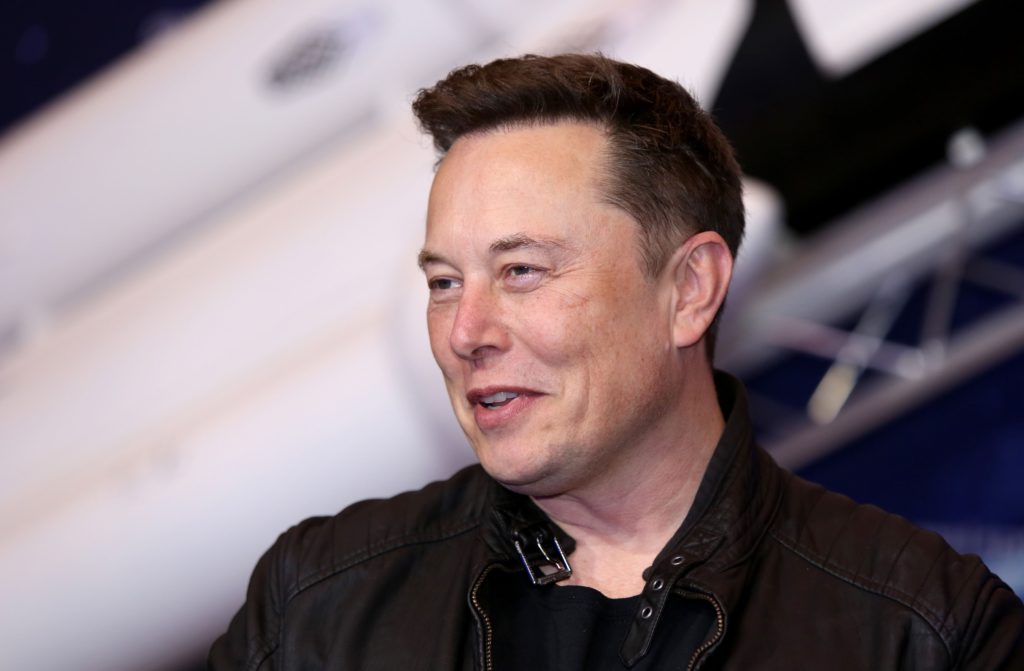
(Bloomberg) — Twitter Inc. named Elon Musk to its board a day after it was disclosed that the chief executive officer of Tesla Inc. was the social media company’s largest shareholder.

The appointment ends the possibility of Musk mounting a takeover of Twitter, capping his ownership at 14.9% during his time on the board, according to a filing with the Securities and Exchange Commission on Tuesday. He currently owns 9.2%. 

Musk is one of the biggest personalities on Twitter and has regularly run into trouble on the platform. He is currently seeking to exit a 2018 deal with the SEC that put controls in place related to his tweeting about Tesla. 

Twitter CEO Parag Agrawal said in a tweet that he’s “excited” about appointing Musk to the board. “He’s both a passionate believer and intense critic of the service which is exactly what we need on @Twitter, and in the boardroom, to make us stronger in the long-term.” 


While it’s still unclear exactly what Musk’s intentions are with Twitter, so far the result of his affiliation has only been good for the beleaguered company, whose shares have tumbled from their 2021 record as investors balked at a combination of a high valuation and potentially disappointing user growth. But the stock rose 27% yesterday as buyers bet Musk can jump-start Twitter by virtue of his clout as the biggest shareholder and as an influential user on the platform, where he has 80.4 million followers. Twitter was up 1.3% Tuesday afternoon in New York.  

“This was a friendly move by the Twitter board to embrace Musk with open arms as clearly a passive stake is just the start of his involvement in Twitter,” Dan Ives, an analyst at Wedbush Securities, wrote in a note to investors. “Musk joining Twitter will lead to a host of strategic initiatives which could include a range of near-term and long-term possibilities out of the gates for the company still struggling in a social media arms race.”

Twitter was often mocked for appointing board members who rarely tweeted. Musk is rarely far from controversy on the platform. In 2019, he called a British cave diver a “pedo guy” on Twitter, triggering a defamation lawsuit. 

On Monday evening, Musk asked Twitter users in a poll if they wanted to have an edit button. Last year, he polled Twitter users on whether he should sell 10% of his stake in Tesla, which a majority supported.

As a new board member, “Musk is in a position to influence Twitter’s potential beyond news and live events, and could help draw younger users,” said Mandeep Singh, an analyst at Bloomberg Intelligence. “Though the edit button and removal of bots are some features that Musk has openly advocated for recently, we think board and management changes are likely in the next six months if the company continues to underperform peers.”

Musk made clear his feelings about crypto spam bots a few hours after posting the edit button poll, calling them “the single most annoying problem on Twitter.” It’s an issue he’s lamented on the site previously. Twitter and other social media platforms have become inundated in recent years with bots seeking to defraud holders of cryptocurrencies through various schemes.

Twitter co-founder Jack Dorsey stepped down as its chief executive last year and will leave leave the board when his term ends this year. Dorsey, who is a friend of Musk’s, said in a tweet that he is “really happy” that Musk is joining the board.

Musk’s existing board appointments include Tesla and Space Exploration Technologies Corp., the two most high-profile companies he leads. Endeavor Group Holdings Inc., the entertainment and Hollywood talent company, disclosed last month that Musk was resigning from its board.

Musk’s term on the board is set to expire at Twitter’s 2024 annual meeting. 

(Updates with Musk’s tweet about crypto spam bots in 10th paragraph.)

More stories like this are available on bloomberg.com

©2022 Bloomberg L.P.

Goldman Plans to Expand OTC Crypto Options Trading to Ether

(Bloomberg) — Goldman Sachs Group Inc. is planning to offer over-the-counter Ether options trading and has seen growing interest from clients in the second-largest digital currency, said Andrei Kazantsev, global head of crypto trading at the bank.

The Wall Street giant is planning to launch cash-settled Ether options “in due course,” he said Tuesday during a Goldman client webinar. Last month, Goldman traded its first over-the-counter Bitcoin options. 

Options are used by crypto investors to hedge risks or boost yields, and over-the-counter transactions are typically larger trades negotiated privately. Ether has a market value of $417 billion, making it the largest coin behind Bitcoin at $876 billion. 

At Goldman, client conversations have increasingly shifted to Ether, which is now seen as “more of an investable asset class,” George Lewin-Smith, an associate on the bank’s digital-assets team, said during the panel. Goldman still doesn’t offer spot crypto trading, but it provides access to European and Canadian exchange-traded products that can be used as a proxy, according to Kazantsev.

Read more: Ethereum Enthusiasts Are Touting Inflation-Fighting Credentials

Ether’s price has surged more than 32% and outperformed Bitcoin since March 15, when it passed the last major test before a long-anticipated software update called “the Merge.” Ether’s most important technical upgrade since its inception in 2015, the Merge would reduce the blockchain’s carbon footprint and improve its efficiency and scalability. 

Several technical updates before the Merge have slowed Ether’s new supply, sending the token’s price higher. The update is set to be implemented this year.

More stories like this are available on bloomberg.com

©2022 Bloomberg L.P.

WarnerMedia’s CEO Steps Down Ahead of Discovery Deal Closing

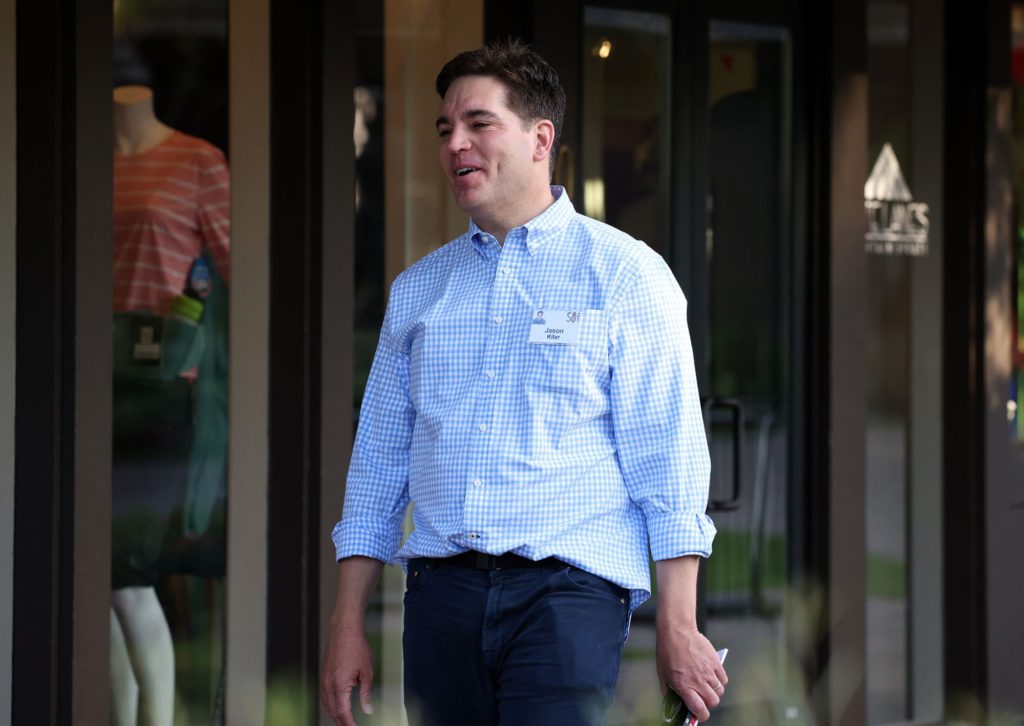
(Bloomberg) — Jason Kilar is departing as chief executive officer of WarnerMedia, days before the parent of Warner Bros. studios and HBO merges with Discovery Inc. to form a new media company.

Kilar, 50, who co-founded and led the Hulu streaming service before going on to run WarnerMedia under current owner AT&T Inc., announced his plans Tuesday in an internal memo.

His exits paves the way for David Zaslav, the CEO of Discovery, to begin building his own management team at the soon-to-be-combined companies. The merger could close as early as April 8, according to a person familiar with the matter. 

Kilar said in an interview that he hoped his legacy would be that he transformed Time Warner from a media conglomerate with separate divisions into a cohesive company “with a very clear mission and a very clearly articulated strategy to go direct to consumer and go global.”

AT&T appointed Kilar to run WarnerMedia in April 2020, betting that a technology executive with experience in streaming could lead the film and TV company into a new era. AT&T was on the verge of introducing a streaming business, HBO Max, and viewed Kilar, a former Amazon.com Inc. executive, as the right person for the job.

But a year later, AT&T decided to jettison its media business via a $43 billion merger of WarnerMedia with Discovery and return to its roots as a phone company. AT&T bought the former Time Warner for $85 billion in 2018, envisioning at the time that it could prosper by offering movies, TV shows and live sports to its phone and internet customers.

Diversity Gains

Kilar said he is proud of gains the company had made in diversity during his tenure. From the end of 2019 to the end of 2021, the number of employees of color at WarnerMedia in the U.S. increased by 3 percentage points to 41%.

Kilar made waves in the film industry during the pandemic by releasing all of the Warner Bros. movies simultaneously in theaters and on the streaming service. That broke the old rules of distribution, which called for cinemas to have new movies exclusively for 90 days or more.

While the exclusive theatrical window has now mostly settled at 45 days, Kilar predicted that, in the future, movies will take two tracks. “Imax-worthy spectacles” will continue to premiere exclusively in theaters, while movies that are “more nuanced,” like romantic comedies, will be released in theaters and on streaming services at the same time.

“Ultimately, the consumer will decide,” he said.

While Netflix Inc. and Walt Disney Co.’s Disney+ have shown signs of slowing subscriber growth recently, Kilar pointed out that “we’re not seeing that” at HBO Max. He predicted that the number of homes globally that subscribe to a streaming service will eventually top 1 billion.

What Next?

Kilar declined to say what he will do next. Asked who will replace him, he said, “David [Zaslav] is taking my job.”

Kilar was known inside WarnerMedia for his long “walk-and-talks,” taking meetings with employees while strolling the grounds of places like the Warner Bros. lot in Burbank, California.

“Word has gotten around that when Jason calls for a walk-and-talk, be sure to wear comfortable walking shoes!” he wrote in his memo staff Tuesday.

Kilar, an alum of University of North Carolina, was courtside Monday night in New Orleans when his team lost to Kansas in the NCAA men’s national championship game. While maintaining his typical upbeat attitude, Kilar lamented the loss, saying “that part is still stinging.”

(Updates with CEO interview starting in fourth paragraph.)

More stories like this are available on bloomberg.com

©2022 Bloomberg L.P.

NFT Gaming Firm Sandbox Weighs Funding Round, Acquisitions

(Bloomberg) — The Sandbox, a gaming platform that allows users to build a virtual world using nonfungible tokens, could carry out a new funding round this year as it looks to expand.

The company will move “aggressively” on hiring and acquisitions, Sebastien Borget, chief operating officer and co-founder, said at a press conference in Lisbon on the sidelines of the Non Fungible Conference. The firm currently has 200 employees, double what it had last year, he said. It could look to acquire companies that are creating compelling metaverse experiences for users, Borget added. 

The executive didn’t provide additional details about the amount of funds his company plans to raise or possible acquisition targets. The Sandbox, which is majority-owned by blockchain gaming developer Animoca Brands Corp., raised $93 million last year from investors led by Softbank’s Vision Fund 2. 

The Ethereum-based decentralized NFT gaming metaverse company has also been expanding into virtual real estate and concerts. Users can now buy and sell land on the firm’s platform with SAND, its cryptocurrency. Snoop Dogg also used the platform for his latest music video “House I Built,” which featured his digital double dancing in the metaverse. Several fashion brands are also increasing their presence on The Sandbox platform by creating virtual fashion experiences for users, Borget said. 

Despite its burgeoning popularity, the company doesn’t plan to go public soon, Borget added. 

“From what I see, most private companies went public after they had hundreds of millions of users,” he said. “We are very proud to have 2.3 to 2.4 million users right now. Let’s talk again in a few years.”

More stories like this are available on bloomberg.com

©2022 Bloomberg L.P.

Washington to Smarten Its Streetlights With LEDs and Wifi

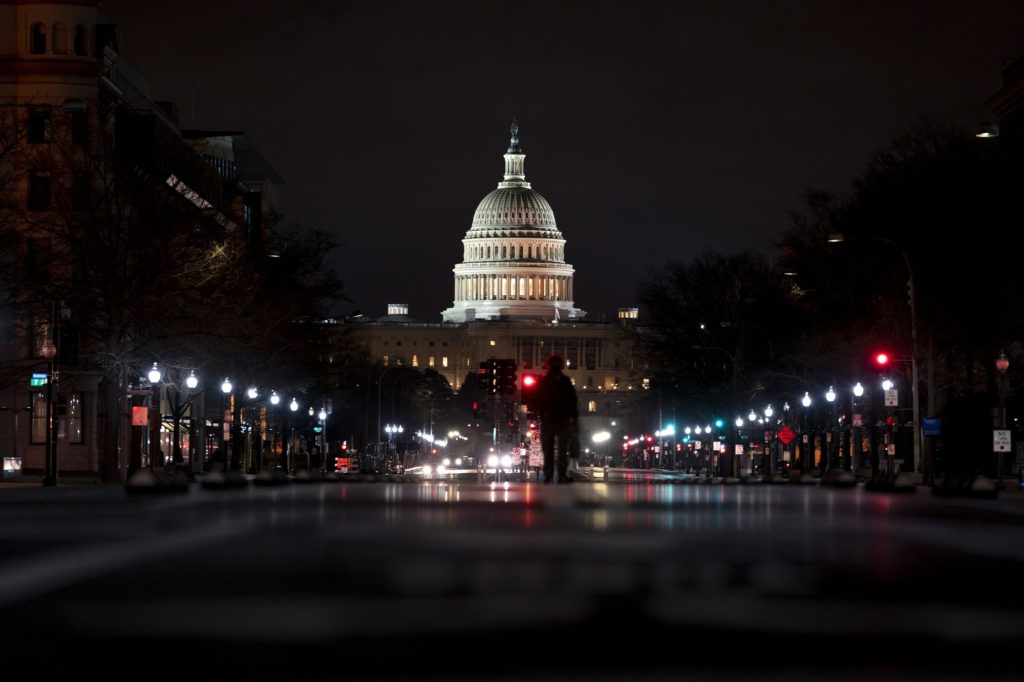
(Bloomberg) — Washington, D.C. is heading to Wall Street next week to get funding for a district-wide program to replace all its streetlights with LED technology and install wireless access points in order to expand broadband reach. 

The U.S. capital city is scheduled to sell $154.5 million of green-labeled municipal bonds April 12. It will lend the proceeds to Plenary Infrastructure DC, a division of the Plenary Group, an Australian company specializing in public infrastructure, in what will be the district’s first public-private-partnership, according to underwriter Wells Fargo & Co. 

“It’s not a transaction you see every day in the municipal-bond market,” Julie Burger, a managing director at Wells Fargo, said in an interview. 

Public-private-partnerships, or P3s, are a small but growing segment of U.S. public infrastructure financing that involves municipal governments teaming up with private companies on projects like highways, airports and parking garages. Private-activity bonds like those being sold by Washington are used to assist private ventures for the public interest by providing low-cost financing.

In Washington, the city aims to upgrade its entire street light network, replacing approximately 75,000 street and alley lights, those that shine on “Welcome to Washington, D.C.” entrance signs, and select areas of underpass, bike paths and tunnel lights with energy-efficient LEDs.

Plenary Infrastructure will design and install a remote monitoring and control system for the network that will allow it to operate much like a smart-home, with the ability to monitor and turn on and off lights from miles away.

Dan Wurst, a senior vice president at the Plenary Group, said that the deal, which has been in the works for years, is the first urban P3 street lighting project in North America where all the related infrastructure including the light heads and poles are being upgraded. He sees more cities following suit.

“There are a lot of cities in North America that haven’t retrofitted their networks,” he said. “This is a good template for cities to adopt going forward.” 

The project is expected to reduce energy consumption by more than 50% and eliminate 38,000 tons of greenhouse gas emissions each year by switching to LED lights from high-pressure sodium and incandescent bulbs, according to preliminary bond documents. 

The green-bond designation could help lure in environmentally and socially conscious investors. “We believe the green designation will help in the market,” Burger said. “We are hopeful that it will expand demand to a broader set of investors,” like funds specifically focused on environmental investments.

The sale is the latest in a surge of green debt in the $4 trillion municipal-bond market. The New York Power Authority, the largest state-owned electric utility in the U.S. sold about $600 million of tax-exempt green bonds Tuesday and Arizona State University sold two-series of green-debt last week. 

State and local governments sold about $25 billion of green-bond sales last year, a 25% increase over 2020, according to data compiled by Bloomberg. 

More stories like this are available on bloomberg.com

©2022 Bloomberg L.P.

Bergdorf Goodman Eyes Online Expansion Abroad With Farfetch Deal

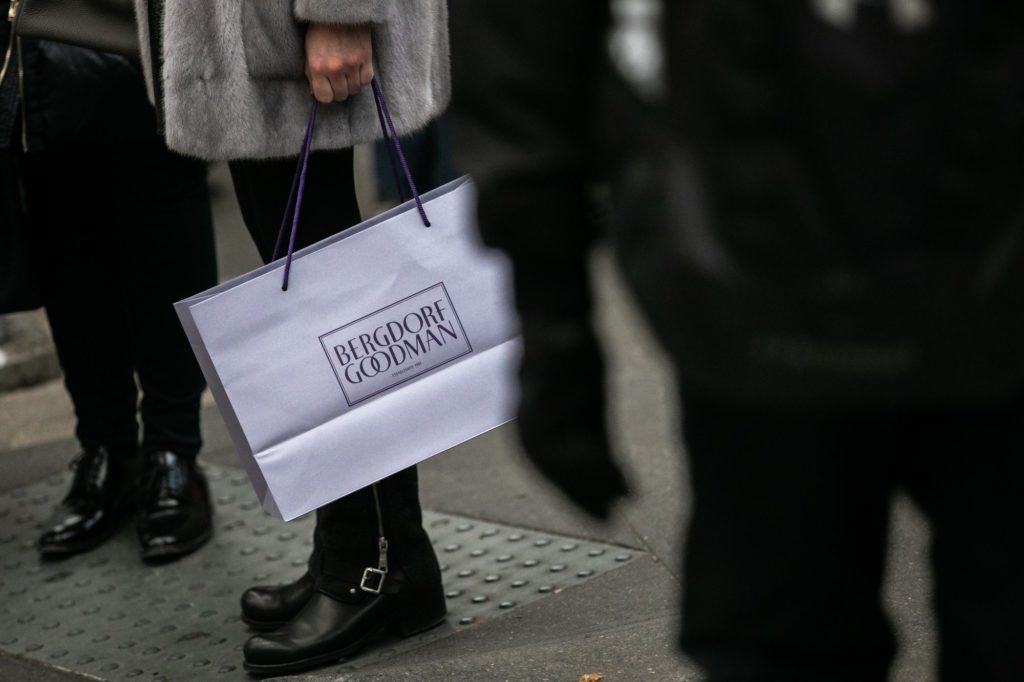
(Bloomberg) — Bergdorf Goodman, the high-end U.S. department store, plans to expand its international presence next year, the latest example of how the industry is looking to capitalize on a strong global luxury market. 

The expansion will be fueled in part by an investment of as much as $200 million in Bergdorf Goodman’s parent company, Neiman Marcus Group, by Farfetch Ltd., an online luxury retailer that also sells its e-commerce services to other retailers. 

Farfetch and Neiman Marcus executives said on Tuesday that they will work together to improve Bergdorf Goodman’s U.S. website and launch its first international websites in 2023. In an interview, Neiman Marcus Group CEO Geoffroy van Raemdonck said he couldn’t disclose which countries the company is targeting — but China is a top “consideration.” Providing websites in different countries will reduce shipping times and import expenses for shoppers to buy from Bergdorf Goodman.

“I think we will open in a lot of countries,” Van Raemdonck said. “The question is really which countries do we double down on, from an investment point of view.” 

Bergdorf Goodman and Neiman Marcus products will also be available on Farfetch’s website, which sells to customers in more than 190 countries. That’s a potential source of additional revenue for Neiman Marcus, which is looking to bounce back after filing for bankruptcy during the pandemic.

Van Raemdonck said the company considered going international on its own, but ultimately decided to partner with Farfetch because it offered speed and efficiency. 

“We are doing really well right now,” Van Raemdonck said. “We’re growing at an accelerated rate compared to pre-Covid and at a higher profitability rate.” The deal with Farfetch will further speed up growth, he added.

Van Raemdonck and Farfetch CEO Jose Neves didn’t disclose how much Neiman Marcus Group is paying Farfetch for its e-commerce services or what kind of revenue they eventually expect to generate on the new Bergdorf Goodman websites or on Farfetch’s own website. 

Farfetch shares initially rose on news of the partnership before falling 4.7% at 12:35 p.m. in New York, following a reversal in U.S. equity markets. 

Both executives said they are bullish on the U.S. luxury market, buoyed in part by strong economic growth. “It’s also growing fundamentally because there are more consumers, younger consumers who are entering the luxury market during the pandemic,” Van Raemdonck said. 

The average age of customers who spend more than $10,000 each year with Neiman Marcus Group has fallen by seven years compared with before the pandemic, he said. The men’s business is also robust. 

“A partnership of this scale with one of the U.S.’s preeminent luxury retailers is a stamp of legitimacy on Farfetch’s technology,” Wells Fargo analyst Ike Boruchow wrote in a research note on Tuesday. 

More stories like this are available on bloomberg.com

©2022 Bloomberg L.P.
Close Bitnami banner
Bitnami