Bloomberg

Substack Poaches Patreon Stars for Expanded Push Into Podcasting

(Bloomberg) — Substack, the online publisher known for hosting columnists like Robert Reich and Bari Weiss, announced a broader push into podcasting on Tuesday, including recruiting four shows from rival Patreon.

The San Francisco-based newsletter company now has dozens of podcasts, many featuring talent lured from other outlets. Substack’s pitch, according to Chief Operating Officer Hamish McKenzie, is offering creators ownership of their subscriber lists. The company has also been providing grants to podcasters who make the switch, although McKenzie declined to say how much the company’s paying. The money is worth it because the shows can be extended into other kinds of media, including print and video, he said.

“If you just think about it as a podcast, then that is only realizing a fraction of the percentage of the total potential around that community and around that relationship,” McKenzie said in an interview. “But if you start thinking of it as a Substack, which is this new media type, this new way to build an audience and connect with people … then new things become possible.”

The company is focusing on recruiting programs that are primarily interested in a subscription business rather than advertising, McKenzie said. The four shows making the switch as part of this announcement include the foreign policy program “American Prestige,” which has over 2,000 paying Patreon subscribers, and the news analysis show “The Fifth Column,” which has over 4,000. Kmele Foster, “The Fifth Column” co-host, said his team received money to make the switch and “felt comfortable enough to be making this move.” 

Doing so comes with the risk of some subscribers not following them over, Foster noted. Patreon doesn’t allow its users to maintain their subscribers when they leave, meaning shows like Foster’s have to get subscribers to sign up again on Substack. Substack uses the payment processor Stripe Inc., and allows creators to keep their subscriber data if they switch platforms. McKenzie declined to share numbers around the subscriber retention rate for the seven shows that already joined Substack in recent months. 

Foster said he and his team appreciated Substack’s “demonstrated commitment to free expression,” and hands-off approach to content moderation, which it outlined in a blog post this past December. McKenzie says the company isn’t implementing technology to moderate shows and doesn’t have plans to change its policies for podcasts.

Substack recently launched its app on Apple Inc.’s app store. Paid Substack-hosted podcasts can be listened to on any podcast player that supports private RSS feeds, a category that doesn’t include streaming giant Spotify Technology SA. 

The podcast push comes at a time when more companies see potential in subscription-based revenue rather than advertising. Apple Podcasts launched its own proprietary subscription feature last year, which organizations like National Public Radio and Malcolm Gladwell’s Pushkin Industries use to support their business. 

Spotify also introduced its own subscription feature, as well as partnerships with other platforms, such as Supporting Cast and Patreon’s Memberful, to bring their content onto the platform. Substack currently doesn’t support this technology.

Patreon has said podcasts represent the largest segment of creators on its platform and advertises having over 250,000 people using its service.

(Updates with details on shows that Substack is pursuing in fourth paragraph. An earlier version corrected McKenzie’s title and number of podcasts and clarified paid-podcast availability.)

More stories like this are available on bloomberg.com

©2022 Bloomberg L.P.

U.S. Isn’t Seeking a ‘Divorce’ From China, Trade Chief Says

(Bloomberg) — The U.S. is seeking to realign its commercial ties with China rather than seek a “divorce” between the world’s biggest economies, trade chief Katherine Tai said.

Asked whether U.S.-China tensions could lead to decoupling, Tai said the Biden administration’s policy was focused instead on “realignment in the global economy.” That includes addressing the lack of visibility, accountability and diversity in supply chains that has led to disruptions in recent years, she told Bloomberg Television’s Haslinda Amin in Singapore in an interview on Tuesday.

“I would focus really on the kinds of changes that we’re trying to bring, which are really not about stopping trade or trade divorce,” Tai said. “They’re really about bringing reform and a more strategic approach to trade.”

Tai’s remarks follow a congressional hearing last week where she said discussions with China have become “unduly difficult” and the U.S. needs new tools to stand against anti-competitive behavior by the world’s second-largest economy. She told lawmakers it was time to forget about changing China’s behavior and instead focus on rebuilding the U.S. industrial manufacturing base and making domestic investments to counter the Asian nation.

In the interview, Tai gave few details about specifics on dealing with China, simply saying her office was seeking to “create incentives for our economic actors to ensure that this relationship is one that feels balanced, that is fair.”

Tai also said that she would reserve judgment when asked whether China’s actions to remove a key sticking point in its dispute with the U.S. over audit reports for companies listed on U.S. stock exchanges is a positive sign for the nation’s flexibility with regard to negotiations.

“As a trade negotiator I know that the devil’s always in the details,” she said, while adding that she has been watching the issue very closely.

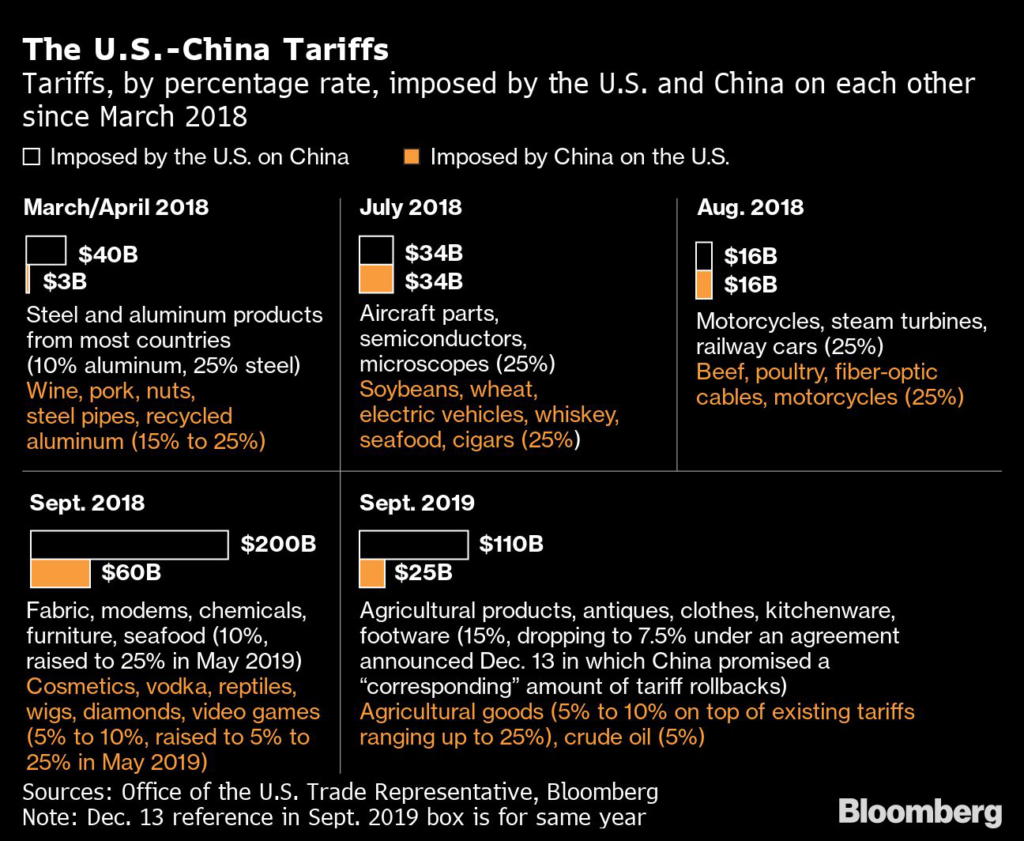
In early 2020, after a two-year tariff war, the U.S. and China agreed to the so-called phase one deal, with the U.S. reducing some duties in exchange for Beijing pledging to address intellectual-property theft and buy $200 billion in energy, farm and manufactured goods along with services through last December. China fell more than one third short of those commitments.

Tai’s office is now facing a review of the first group of tariffs on more than $300 billion in Chinese imports needed to prevent their expiration.

A U.S. federal trade court last week also ruled that the Trump administration failed to adequately justify its decision to expand tariffs on hundreds of billions of dollars worth of Chinese goods, and the Biden administration must present a fuller explanation to keep them.

Tai said she couldn’t comment on the court case but noted the China tariffs were having an impact, particularly regarding trade flows in Southeast Asia. Still, she added that it was an open question on whether the tariffs are effective “with respect to how we intend to realign our relationship with China on trade and economic matters.”

Tai is on a three-day trip to Singapore focused on strengthening the U.S. relationship and identifying areas of cooperation through the Indo-Pacific Economic Framework, which is part of President Joe Biden’s strategy to play a bigger role in Asia to counter China. The Biden administration has made clear that it doesn’t plan to rejoin the 11-nation Comprehensive and Progressive Agreement for Trans-Pacific Partnership, which was abandoned under Donald Trump. That’s left an opening for Beijing, which is vying to join it.

Countries like Singapore have urged Washington to focus on trade with Asian nations wary of being forced to pick sides in the broader competition with China, which has accused the U.S. of seeking to divide the region into blocs and create what it calls an “Indo-Pacific NATO.”

Tai said that isn’t the message being sent by the administration, but rather that the U.S. wants to use the economic framework with its partners “to collaborate on key economic issues and emerging global challenges.”

The Biden administration has said talks on the framework are focused on supply-chain resilience, including for semiconductors and technology, as well as fair trade, clean energy, taxation and anti-corruption measures. They’re also expected to include digital issues like data localization and cross-border data flows.

Asked about U.S. attention on making sure that China and other countries are not violating U.S. sanctions to provide aid to Russia over the nation’s invasion of Ukraine, Tai said that countries are “all watching each other very, very closely.”

“These decisions are going to be consequential, not just with respect to the conflict in Ukraine, but we are going to be impacting each other in terms of the values that we express through our actions,” Tai said.

U.S. lawmakers have criticized the administration for failing to include negotiations on lowering tariffs, a traditional goal of trade deals, in its plans for the framework. In the interview, Tai dismissed critics who say that U.S. policy lacks ambition.

“For the people who are criticizing our trade policy, it is either because they are not hearing us when we describe what our objectives are, which is to bring a new approach to trade that ensures that trade policy can be and is a force for good,” she said. “And I think that some of the other critics are impatient.”

The Biden administration is focused on “ensuring that trade is a tool for moving us into a better world,” Tai said.

(Updates with comments on Ukraine in 16th paragraph.)

More stories like this are available on bloomberg.com

©2022 Bloomberg L.P.

Gaming’s ‘Das Kapitalist’ Sees A Lot of Hype in NFTs, DAOs, And the Metaverse

(Bloomberg Markets) — Sam Peurifoy sits at the forefront of financial innovation, but he doesn’t move around a lot. The chemistry Ph.D. and Goldman Sachs Group Inc. alum, who turns 28 in May, spends most of his days at his computer in an apartment in Manhattan’s Financial District. He’s the chief executive officer of Playground Labs, a company that blends video gaming and cryptocurrency, and the head of inter­active for Hivemind Capital Partners, a $1.5 billion venture firm focused on crypto investments, where he leads a strategy called play-to-earn.

Peurifoy spoke with Bloomberg Markets in early March about how skeptical he is of Big Tech’s definition of the metaverse, the nonfungible token fad, and some of the groups that call themselves decentralized autonomous organizations. While he remains on guard against crypto poseurs, he does believe crypto could help reshape the world—from Russia to gaming to payday. Peurifoy, who’s known in gaming circles as “Das Kapitalist,” says he eats the same meal every day and is lucky if he plays a few hours on the weekends these days. The interview has been condensed and edited for clarity.

BLOOMBERG MARKETS: Your wife’s family is Russian. Do you see Russia’s invasion of Ukraine changing crypto?

SAM PEURIFOY: It’s going to boil down to two competing forces. Are government bodies evading sanctions using these tokens? The other force is: With a local currency that’s being devalued by the hour, almost, at what point do citizens turn to more stable digital currencies? Citizens using a more stable currency is obviously a plus, but sanctioned countries evading sanctions is obviously a minus. It’s a very difficult line to tread. Maybe we run know-your-customer on every single person who installs a crypto wallet.

BM: You left Goldman Sachs last year. When do you think bankers will warm up to crypto?

SP: When the market was superfrothy, I was having financial professionals reach out to me on a daily basis asking me how to get into crypto. And these were not people from low-ranking firms, either. They were very serious financial professionals, with genuine interest from across the board. Perhaps they feel like they’re not making enough in their current position, but I actually think that’s not really what’s going on. I think they’re genuinely just bored.

BM: Do you see a pattern among these financial professionals in terms of work history or demographics?

SP: You have managing directors to portfolio managers, vice presidents, analysts, equity analysts, investment bankers. It’s everything.

BM: What does Hivemind do?

SP: We provide capital and specific blockchain expertise to projects building in the crypto space. We aspire to being the Blackstone of crypto.

BM: How many people are there?

SP: We aim to have more than 30 employees by the end of the year. We’ve just ramped up hiring extremely substantially.

BM: What do your returns look like?

SP: The recent market downturn provided a large number of excellent buying opportunities for coins and companies. I don’t think I can give you anything more specific than that.

BM: The idea of Playground Labs, and your “Das Kapitalist” gaming identity, is that you seed other players with money. How?

SP: If they have joined with the intention of trying to play these play-to-earn games, then what happens next—assuming there’s no waitlist, because there’s usually a gigantic list of people trying to play these things—we basically issue them assets, they play the assets, and if they do a good job they can continue playing the assets and keep half of what they make. There’s no risk to the player, no capital responsibility on the player at all. There’s only upside. It’s constrained by how much cash we can deploy into it, which is partially determined by private investors and partially by the earnings of the ecosystem itself.

BM: How many hours of video games are you playing these days?

SP: I need to be playing more, because I need to go interact with my community more. If I do two to four hours generally on the weekend, I’m doing a good job.

BM: Do you network through video games?

SP: You’re playing World of Warcraft, you engage in a certain activity with other people, you realize you’ve enjoyed playing with them, probably because they’ve done a good job, you message them, you talk about the game, you talk about life, you get to be friends, you start calling, and now they’re in your Discord. And that’s the cycle of life right there.

BM : The crypto industry has been dominated by men. Is that changing?

SP : It begs the question, OK, if it’s so fair and open, why is it not more diverse? And ultimately it hasn’t reached an education ­threshold whereby most of the world could really see and know what to engage with next. We’re getting there. You’re seeing ­builders come online from all different parts of the world, but it’s not this tsunami.

BM : Besides inclusion, what are your biggest worries about the industry?

SP : I don’t think you can talk about crypto right now without bringing up NFTs, which are the elephant in the room. It is undeniable that NFTs have caused a lot of commotion. There have been a ton of scams. People poorly understand the technology. People are throwing money and FOMO-ing into things that they don’t understand. They think all pictures of monkeys are going to go to the moon. It’s not a good situation. It’s a mess.

BM: What are the use cases that excite you the most?

SP: You can reduce the friction on micropayments down to such a low amount that you can imagine streaming Netflix in real time and paying for each individual megabyte of data. That’s the level of granularity. Instead of waiting two weeks for my paycheck, maybe my salary is streamed to me in real time, and then I can immediately go down and buy a coffee.

BM: Where do you see decentralized autonomous organizations going as organization structures and fundraising mechanisms?

SP: A lot of people are coming out with DAOs that are not DAOs. There is a difference between governing a community using smart contracts vs. governing a community by using what basically is a Facebook poll. Unfortunately, the end user cannot read the smart contract and cannot vet the tokens. The issue is, people are basically being told they have control over some organization when, in truth, they don’t.

BM: Are there real use cases with wide appeal for the metaverse, in the current iteration of the internet or the decentralized version called web3?

SP: A lot of people sitting on both sides of the fence, web2 and web3, have completely different conceptions of what the metaverse will look like. The web3 side, the crypto builders, they see a metaverse as an area where economics and utility are fairly distributed among the users and the platforms are ultimately owned by the users. In web2, the core thesis is virtual reality is the metaverse. And it’s not! Virtual reality has been around for a long time. It’s not a huge game changer.

BM: You mentioned that you were recently diagnosed with Covid again and that you only went out twice during the pandemic and got sick both times. Is that true?

SP: I really don’t go outside very much. That’s not a joke. Two times is probably a little bit of an exaggeration, but I really don’t leave this desk. That’s partially because I enjoy it—I love being here. I’m attached to this screen for 16 to 18 hours a day. I do my one hour of exercise each day, and that’s it.

BM: How often do you sleep?

SP: I sleep at exactly 10:30 p.m. every single night, I wake up somewhere between 4:30 and 5:30 in the morning, and then I do take a 15-minute nap at almost exactly 12:30 almost every single day.

BM: You seem very disciplined.

SP: I eat here. I really like these chicken cordon bleus, that’s usually what I eat. I eat two chicken cordon bleus a day. They’re really good. It’s like two little logs. Don’t worry, I’m having tons of fun.

Yang covers crypto market structure and Abelson covers finance for Bloomberg News in New York.

More stories like this are available on bloomberg.com

©2022 Bloomberg L.P.

Top African Telco Taps JPMorgan to Separate Fintech Unit

(Bloomberg) — MTN Group Ltd., Africa’s largest phone company, is working with advisers at JPMorgan Chase & Co. on the planned separation of its financial technology business, people with knowledge of the matter said. 

The carrier said last month it aims to complete a carveout of the business by the end of the first half before seeking funds from outside investors later in the year. Last year, Nedbank Group Ltd. estimated the fintech arm could be worth about $6 billion.  

MTN is studying a variety of potential deals, including bringing in partners for some of its businesses as well as possibly listing certain units in the future, to unlock value and pay down debt. The carrier is also exploring options for its data center business, the people said, asking not to be identified because the information is private. 

The telecom carrier is separately working with FTI Consulting Inc. to find ways to boost revenues from its wholesale business and roaming agreements across the markets where it operates, one of the people said. 

Shares of MTN have roughly doubled in Johannesburg over the past 12 months, giving the company a valuation of about $22.3 billion. Deliberations are ongoing, and there’s no certainty they will lead to any transactions, the people said. 

Spokespeople for MTN, JPMorgan and FTI declined to comment. 

MTN said in 2020 it targets to raise 25 billion rand ($1.7 billion) from asset disposals over the medium term. It agreed in November to sell a portfolio of wireless towers in its home market of South Africa for 6.4 billion rand. MTN also has a stake in New York-listed tower owner IHS Holding Ltd. that it could sell down. 

Read more: MTN to Seek Investors for Fintech Unit to Fund Booming Division

More stories like this are available on bloomberg.com

©2022 Bloomberg L.P.

Elon Musk Opined About Buying Twitter After Babylon Bee Ban

(Bloomberg) — Seth Dillon, the CEO of the satire website The Babylon Bee, says Elon Musk reached out to the company to confirm it had been suspended from Twitter prior to his poll on free speech.

Dillon notes that Musk mused in that discussion that “he might need to buy Twitter.”

Musk’s tweets prior to the disclosure of his stake in Twitter have included “serious thought” about creating a new social media platform and multiple polls asking his followers questions about the company.

Read More: Musk to Join Twitter’s Board, Keeping Stake Below 15% (1), Elon Musk’s Money Doesn’t Just Talk, It Tweets (1)

More stories like this are available on bloomberg.com

©2022 Bloomberg L.P.
Musk to Join Twitter’s Board, Keeping Stake Below 15%

(Bloomberg) — Twitter Inc. named Elon Musk to its board a day after it was disclosed that the chief executive officer of Tesla Inc. was the social media company’s largest shareholder.

The appointment ends the possibility of Musk mounting a takeover of Twitter, capping his ownership at 14.9% during his time on the board, according to a filing with the Securities and Exchange Commission on Tuesday. He currently owns 9.2%. Twitter’s shares jumped 7% as the market opened in New York. 

Musk is one of the biggest personalities on Twitter and has regularly run into trouble on the platform. He is currently seeking to exit a 2018 deal with the SEC that put controls in place related to his tweeting about Tesla. 

Twitter CEO Parag Agrawal said in a tweet that he’s “excited” about appointing Musk to the board. “He’s both a passionate believer and intense critic of the service which is exactly what we need on @Twitter, and in the boardroom, to make us stronger in the long-term.” 


While it’s still unclear exactly what Musk’s intentions are with Twitter, so far the result of his affiliation has only been good for the beleaguered company, whose shares have tumbled from their 2021 record as investors balked at a combination of a high valuation and potentially disappointing user growth. But the shares rose 27% yesterday as buyers bet Musk can jump start Twitter by virtue of his clout as the biggest shareholder and as an influential user on the platform, where he has 80.4 million followers.

“This was a friendly move by the Twitter board to embrace Musk with open arms as clearly a passive stake is just the start of his involvement in Twitter,” Dan Ives, an analyst at Wedbush Securities, wrote in a note to investors. “Musk joining Twitter will lead to a host of strategic initiatives which could include a range of near-term and long-term possibilities out of the gates for the company still struggling in a social media arms race.”

Twitter was often mocked for appointing board members who rarely tweeted. Musk is rarely far from controversy on the platform. In 2019, he called a British cave diver a “pedo guy” on Twitter, triggering a defamation lawsuit. 

On Monday evening, Musk asked Twitter users in a poll if they wanted to have an edit button. Last year, he polled Twitter users on whether he should sell 10% of his stake in Tesla, which a majority supported.

Twitter co-founder Jack Dorsey stepped down as its chief executive last year and will leave leave the board when his term ends this year. Dorsey, who is a friend of Musk’s, said in a tweet that he is “really happy” that Musk is joining the board.

Musk’s existing board appointments include Tesla and Space Exploration Technologies Corp., the two most high-profile companies he leads. Endeavor Group Holdings Inc., the entertainment and Hollywood talent company, disclosed last month that Musk was resigning from its board.

Musk’s term on the board is set to expire at Twitter’s 2024 annual meeting. 

(Updates with Musk’s other board commitments)

More stories like this are available on bloomberg.com

©2022 Bloomberg L.P.
GM and Honda Unveil Plan to Jointly Build Millions of Small Electric Vehicles

(Bloomberg) — General Motors Co. and Honda Motor Co. will jointly develop affordable electric vehicles in major global markets, dramatically expanding a partnership that already spans gas-powered models, batteries and self-driving technology.

The automakers plan to create a new architecture based on GM’s Ultium EV battery that will be used primarily for small crossover SUVs, with the first models available in North America in 2027, they said in a statement Tuesday. The project is intended to produce EVs that will be priced below GM’s planned $30,000 Chevrolet Equinox and similar future offerings from Honda, the companies said on a call with journalists.

“GM and Honda will share our best technology, design and manufacturing strategies to deliver affordable and desirable EVs on a global scale, including our key markets in North America, South America and China,” GM Chief Executive Officer Mary Barra said in the statement.

The collaboration marks a major move toward democratizing electric vehicles, most of which are expensive and out of reach of many consumers. By joining forces, GM and Honda believe they can reduce battery costs faster and develop EVs at prices that even market-leader Tesla Inc. appears to have stopped pursuing.

With the latest move, GM and Honda are deepening ties as they aim to share development costs and increase sales. The automakers have been working together on hydrogen fuel cells since 2013 and more recently announced collaborations on EV batteries, gas-powered vehicles and self-driving technology.

GM slipped less than 1% at 9:35 a.m. in New York. The stock had tumbled 26% this year through Monday while the S&P 500 declined 3.9%. Honda’s American depositary receipts fell 1.6% Tuesday.

Last year, Honda became the first Japanese automaker to say it will stop selling gasoline-powered vehicles, setting a target to phase them out completely by 2040. GM plans to build and sell 30 EVs by 2025 and eliminate gasoline and diesel-powered vehicles a decade later.

“Honda is committed to reaching our goal of carbon neutrality on a global basis by 2050, which requires driving down the cost of electric vehicles to make EV ownership possible for the greatest number of customers,” Honda CEO Toshihiro Mibe said in Tuesday’s statement.

Read more: GM, Honda seek North America alliance to share platforms

GM and Honda have been jointly developing engines and crossover sport utility vehicles to cut costs and redirect spending toward EVs. The companies said in 2020 that they planned to cooperate in areas such as parts and materials purchasing, research activities and connected-car services as well.

The 2020 link with GM was a big step for the Japanese automaker, which long had eschewed big strategic alliances. Building on the momentum, Honda last month announced plans to join forces with tech giant Sony Group Corp. to develop battery-powered cars. 

(Updates with additional details beginning in first paragraph)

More stories like this are available on bloomberg.com

©2022 Bloomberg L.P.

Cand Honda Unveil Plan to Jointly Build Millions of Small Electric Vehicles

(Bloomberg) — General Motors Co. and Honda Motor Co. will jointly develop affordable electric vehicles in major global markets, dramatically expanding a partnership that already spans gas-powered models, batteries and self-driving technology.

The automakers plan to create a new architecture based on GM’s Ultium EV battery that will be used primarily for small crossover SUVs, with the first models available in North America in 2027, they said in a statement Tuesday. The project is intended to produce EVs that will be priced below GM’s planned $30,000 Chevrolet Equinox and similar future offerings from Honda, the companies said on a call with journalists.

“GM and Honda will share our best technology, design and manufacturing strategies to deliver affordable and desirable EVs on a global scale, including our key markets in North America, South America and China,” GM Chief Executive Officer Mary Barra said in the statement.

The collaboration marks a major move toward democratizing electric vehicles, most of which are expensive and out of reach of many consumers. By joining forces, GM and Honda believe they can reduce battery costs faster and develop EVs at prices that even market-leader Tesla Inc. appears to have stopped pursuing.

With the latest move, GM and Honda are deepening ties as they aim to share development costs and increase sales. The automakers have been working together on hydrogen fuel cells since 2013 and more recently announced collaborations on EV batteries, gas-powered vehicles and self-driving technology.

GM slipped less than 1% at 9:35 a.m. in New York. The stock had tumbled 26% this year through Monday while the S&P 500 declined 3.9%. Honda’s American depositary receipts fell 1.6% Tuesday.

Last year, Honda became the first Japanese automaker to say it will stop selling gasoline-powered vehicles, setting a target to phase them out completely by 2040. GM plans to build and sell 30 EVs by 2025 and eliminate gasoline and diesel-powered vehicles a decade later.

“Honda is committed to reaching our goal of carbon neutrality on a global basis by 2050, which requires driving down the cost of electric vehicles to make EV ownership possible for the greatest number of customers,” Honda CEO Toshihiro Mibe said in Tuesday’s statement.

Read more: GM, Honda seek North America alliance to share platforms

GM and Honda have been jointly developing engines and crossover sport utility vehicles to cut costs and redirect spending toward EVs. The companies said in 2020 that they planned to cooperate in areas such as parts and materials purchasing, research activities and connected-car services as well.

The 2020 link with GM was a big step for the Japanese automaker, which long had eschewed big strategic alliances. Building on the momentum, Honda last month announced plans to join forces with tech giant Sony Group Corp. to develop battery-powered cars. 

(Updates with additional details beginning in first paragraph)

More stories like this are available on bloomberg.com

©2022 Bloomberg L.P.
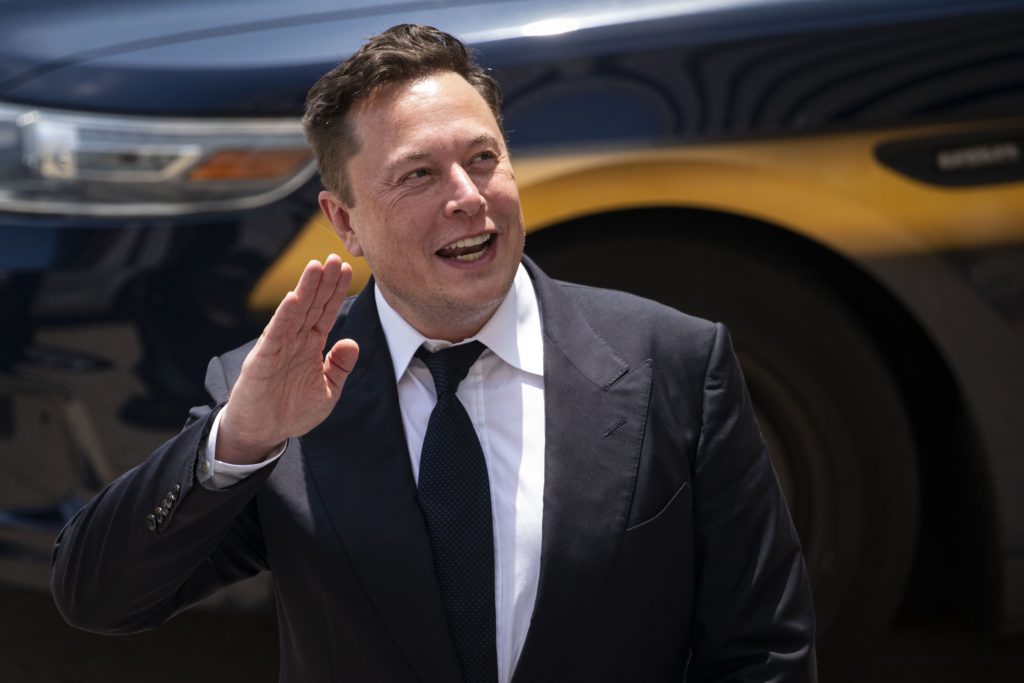
Musk’s Twitter Fans Find Value Analysts Don’t See 

(Bloomberg) — Elon Musk and an army of individual investors are now going head-to-head with Wall Street analysts in a contest over Twitter Inc.

Retail investors helped fuel record trading volume Monday for Twitter, with more than 260 million shares changing hands, after Musk disclosed a 9.2% stake in the social-media company. Twitter ranked as the most purchased stock by Fidelity Investments customers as the stock had its biggest rally since the day the company went public in 2013.

The gains continued on Tuesday, after Twitter said it would appoint Musk to its board of directors, sending shares up 8%. In a regulatory filing, Twitter also said Musk cannot own more than 14.9% of the company while he serves on the board and for three months after he vacates the position.  

Buyers are betting Tesla Inc.’s chief executive officer can jumpstart Twitter by virtue of his clout as the biggest shareholder and as an influential user on the company’s platform, where he has 80.4 million followers. For now, though, they’re buying on faith.

Analysts, in contrast, have been skeptical: They’ve slashed their aggregate price target by more than a third since October and just nine of the 42 brokerages tracked by Bloomberg that cover the stock recommend buying it. The shares have tumbled from their 2021 record as investors balked at a combination of a high valuation and potentially disappointing user growth. 

Monday’s 27% surge is “a potential over-reaction” given that it’s not clear why Musk made his investment, the stock is expensive and investors have yet to see substantial progress toward Twitter’s revenue and user targets, Brent Thill, an analyst at Jefferies, wrote in a note. Separately, MKM Partners downgraded the stock in the wake of Monday’s advance.

Before Monday, Twitter shares sat at 50 times profit projected over the next 12 months, more expensive than about 97% of the S&P 500 Index including Amazon.com Inc. and Nvidia Corp., according to data compiled by Bloomberg. 

Read more: Wood Sees Potential for Twitter Shakeup After Musk Takes Stake

Activist investors usually step in when they see a company as undervalued and seek changes that will boost the share price, brandishing the ultimate threat of a proxy fight for control of the board. Musk disclosed his stake using a form for investors who don’t plan to seek a change of control, and in any case the stock isn’t cheap, so he doesn’t seem to be following the standard activist playbook. 

But nothing stops him from sharing his opinions about how Twitter can be improved, and he’s already doing that. He’s polled users on whether they want a button that would allow editing of tweets, and Twitter CEO Parag Agrawal responded by calling it important and urging users to “vote carefully.”

Responding to a user’s post, Musk also said that crypto spam bots are the “single most annoying problem” on Twitter. 

“Musk is certainly putting a lot of focus on the stock and getting people talking, and right now people are excited,” said Jon Maier, chief investment officer at Global X, which sponsors the Global X Social Media ETF.  

Twitter stock has been a long-term underperformer, returning 8.1% a year since its initial public offering versus 20% for Facebook owner Meta Platforms Inc. For Wedbush Securities analyst Daniel Ives, it’s only a matter of time before Musk starts agitating for changes.

Musk joining the board “will lead to a host of strategic initiatives which could include a range of near-term and long-term possibilities out of the gates for the company still struggling in a social media arms race,” he wrote. “Its time to get out the popcorn.”

Tech Chart of the Day

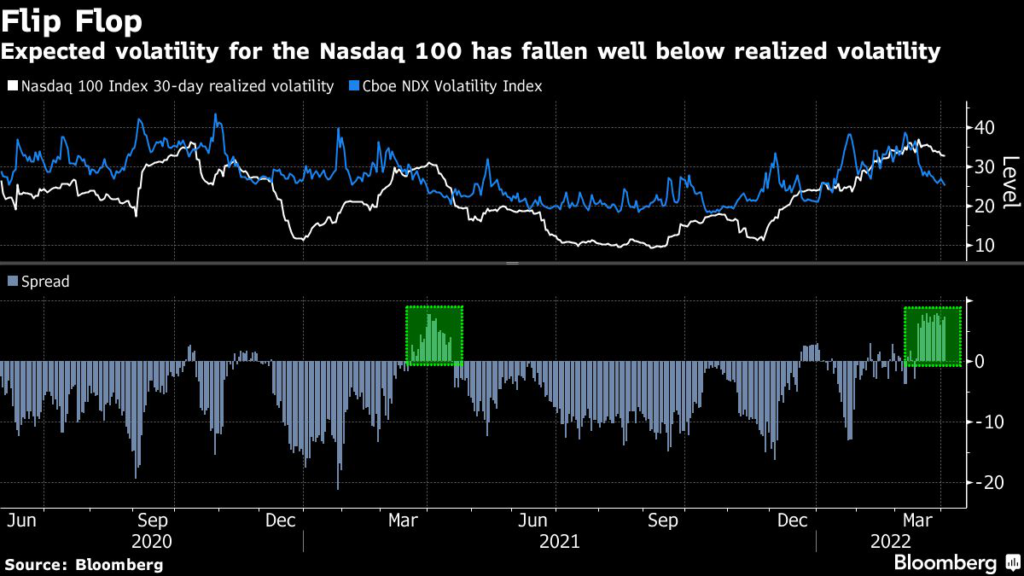
The rally in tech stocks may just be getting started. The Cboe Nasdaq 100 Volatility Index, which measures expected swings for the Nasdaq 100, has fallen to its lowest level since mid-January. Meanwhile, realized volatility for the Nasdaq 100 over the last 30 days has only just started to ease. As a result, the spread between the two — which is generally negative — has ballooned to the most positive in a year. Similar occurrences over the last three years have only seen the spread narrow again once the Nasdaq 100 experiences an extended rally.

Top Tech Stories

  • Singapore’s ride-hailing and food-delivery drivers are calling for more government protection to meet retirement and housing needs, underscoring a potential shift in the way the city-state’s policies may evolve to better safeguard gig workers
  • Intel Corp. Chief Executive Officer Pat Gelsinger is on the move, visiting customers and suppliers in Asia in an attempt to shake up an industry that’s fallen victim to a global pandemic and geopolitical ructions
  • Alphabet Inc.’s Wing is set to begin the largest drone-delivery test program so far in the U.S., starting Thursday in the Dallas suburbs
  • The email marketing company Mailchimp said its network was breached following a social engineering attack

(Updates to market open, adds MKM downgrade.)

More stories like this are available on bloomberg.com

©2022 Bloomberg L.P.
World’s Biggest Solar Firm Sees Profits Cut by Power Price Hike

(Bloomberg) — Longi Green Energy Technology Co., the world’s largest solar company, said its profits will be cut by higher power costs at one of its key manufacturing hubs in China.

Yunnan province, home to 54% of the company’s wafering capacity, canceled the preferential electricity prices it had been offering Longi since 2016, the firm said in an exchange filing Tuesday. Wafers are the ultra-thin slices of polysilicon that get wired up and assembled into solar panels, and Longi is the world’s biggest producer of them, according to BloombergNEF. 

Longi didn’t say how much higher its power bill will be now that it has to pay market rates in the province. Electricity accounts for about 12% of wafer productions costs, and Longi enjoyed a 50% discount on power prices over one of its main rivals, BNEF said in a March 2020 report. 

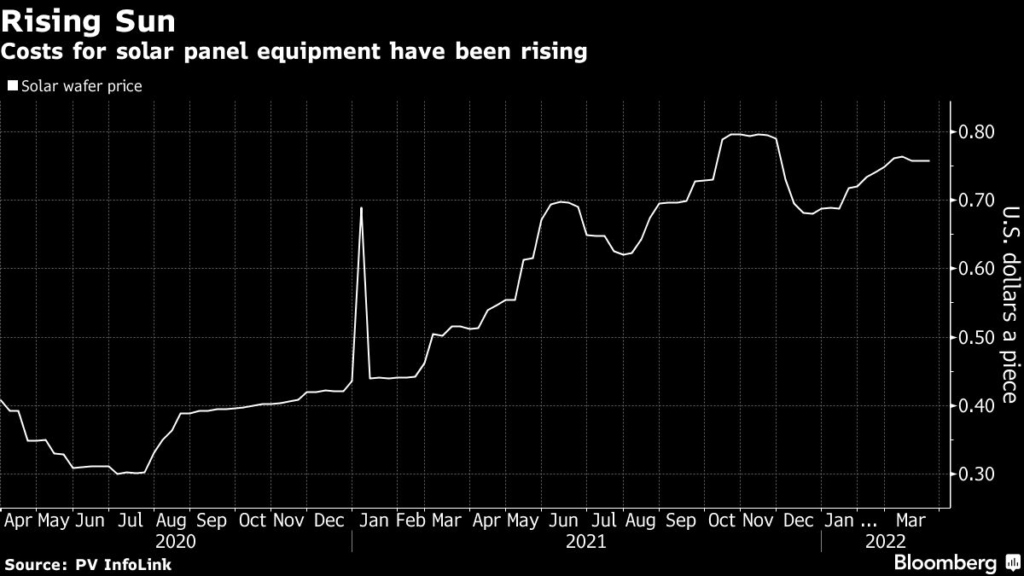
Higher costs for Longi are coming in the midst of a rare period of inflation for the solar supply chain. Wafers are about 76 cents a piece, up from 30 cents in the middle of 2020. Still, solar power cost increases have been small compared to ballooning coal and gas prices, and new solar installations in China tripled in January and February compared to last year.

Electricity prices in China have been under pressure since last year, when a shortage of coal forced grids to curtail power to industrial users throughout most of the country. The government used the crisis to push through market reforms that allows utilities to charge more to large factories when coal prices rise. 

Longi also said that Yunnan’s decision on power rates risks changing the company’s plans for expansion in the province. 

More stories like this are available on bloomberg.com

©2022 Bloomberg L.P.
Close Bitnami banner
Bitnami