Bloomberg

PLDT Said to Pick Edgepoint, Edotco for $1.5 Billion Tower Deals

(Bloomberg) — PLDT Inc., the Philippines’ biggest telecommunications and digital services provider by market value, has picked Edgepoint Infrastructure and edotco Group Sdn. as the preferred bidders for its local towers, people familiar with the matter said.

Edgepoint, backed by Digital Bridge and Abu Dhabi Investment Authority, is in exclusive talks with PLDT for a portfolio of about 3,000 towers in the greater Manila area, according to the people. Malaysia’s telecommunications tower firm Edotco has entered into exclusive discussions for another 3,000 tower outside of Manila, said the people, asking not to be identified because the matter is private. 

The two deals could be valued at about $1.5 billion and agreements could be reached as soon as in the coming days, the people said.

Talks could still fall apart and no final decision has been made, the people said. Other bidders including private equity firms and industry players remain interested in the assets, the people said. A representative for Edgepoint declined to comment, while representatives for Edotco and PLDT didn’t immediately respond to requests for comment.

PLDT has been working with an adviser to find a buyer for its phone towers in the Philippines, Bloomberg News reported last year. A transaction would involve PLDT selling the towers and then leasing them back, people familiar with the matter said at the time.

PLDT, which has a market value of about 392 billion pesos ($7.6 billion), counts Japan’s Nippon Telegraph & Telephone Corp. and Hong Kong-based investment firm First Pacific Co. among its major shareholders, according to data compiled by Bloomberg.

More stories like this are available on bloomberg.com

©2022 Bloomberg L.P.

Renault Considers Separating Electric Car Business, Finding Partner for Legacy Assets

(Bloomberg) — Renault SA is exploring a possible breakup and initial public offering of its electric vehicle assets, according to analysts, a move that would transform the French automaker laid low by its ties to Russia. 

The possibility of a transformational change was outlined in broad terms by the manufacturer in February. During a meeting last week with analysts, top managers including Chief Executive Officer Luca de Meo and Chief Financial Officer Thierry Pieton provided more details, including timing and the potential involvement of a partner. 

“The management team continues to conduct exploratory works in view to split the company into possibly two entities,” Stifel analysts including Pierre Quemener wrote in a note. A so-called New Mobility company made up of electric vehicles and assets from its Mobilize car-sharing unit would be separated from the legacy assets, they said.

“The CEO added that the latter could be combined with the ones of a potential partner,” the note said. “An IPO of New Mobility assets could be contemplated for 2023.”

A Renault spokesman declined to comment.

The possibility of a deep overhaul of Renault is emerging just as the company faces a crisis surrounding its longstanding business in Russia. Renault last month signaled a retreat from its second-largest market by halting operations at its Moscow plant and saying it’s assessing available options for its AvtoVaz venture that makes the country’s top selling Lada brand. 

A move to split the company would serve not only to deflect from a costly pullout from Russia, but also to raise funds for development of EVs and technology. Renault cut its forecasts for group operating margin and automotive operating free cash flow, citing the suspension of its business in Russia.

Renault shares fell as much as 0.9% at the start of trading Tuesday, taking losses since Russia invaded Ukraine to around 24%.

Weighing Reorganization

Less than a week before Russia invaded Ukraine that triggered wide-ranging sanctions and an exodus of foreign companies, Renault said it was considering a reorganization during an earnings presentation.

The company “is studying the opportunity to bring together its 100% electric activities and technologies within a dedicated entity in France to accelerate their growth,” it said in a Feb. 18 statement. “At the same time, Renault Group is also studying the opportunity to bring together its activities and technologies of ICE and hybrid engines and transmissions based outside of France within a dedicated entity.”

Any IPO of the EV and Mobilize assets could be led by Clotilde Delbos, deputy CEO who relinquished her role in February as chief financial officer to head Mobilize.

“All options to separate the ICE from the BEV business are on the table,” Exane BNP Paribas analysts wrote in a note, saying this could include an IPO of the EV assets or off-loading of the combustion-engine operations into a joint venture.

JPMorgan analyst Jose Asumendi also wrote about the possible split including “looking at Renault as a standalone EV entity carve out of the current group under the format of an IPO.”

Renault isn’t the only automaker to consider this type of move as a way to transition to electric vehicles with Ford Motor Co. separating its EV operations from its legacy combustion-engine business.

The new Ford Model e unit will scale up EV offerings and develop software and connected-vehicle technology and services, while Ford Blue will focus on combustion vehicles, cutting costs and simplifying operations. Ford had considered a spinoff.

Read more: Ford Reorganizes to Run EV and Engine Businesses Separately

(Adds share price move in eighth, analyst comment in 13th paragraph)

More stories like this are available on bloomberg.com

©2022 Bloomberg L.P.

SoftBank-Backed Startup Remote Nears $3 Billion Value in Funding

(Bloomberg) — Remote Technology Inc., a startup which makes it easier for businesses to hire international employees, said it raised $300 million at valuation of almost $3 billion.

The investment was led by SoftBank Vision Fund 2, with participation from existing investors including Accel, Sequoia Capital, Index Ventures and Two Sigma Ventures, according to the company. Remote has now raised a total of $495 million since it was launched in 2019. 

Remote has a human resources platform that helps businesses hire employees across more than 60 countries. Its technology helps businesses manage payroll, benefits and other relevant new-hire services. Its customers include DoorDash Inc. as well as GitLab Inc., where co-founder and Chief Executive Officer Job van der Voort used to work. 

“In the future it shouldn’t matter where you live” to be able to access good career opportunities, said van der Voort. Remote’s customers “just hire great people,” he said.

The startup grew quickly during the coronavirus pandemic as companies shifted their focus to hiring more remote employees, van der Voort said. The broader category received significant funding, with investors also pouring capital into competing startups Deel Inc. and Papaya Global. 

Remote is officially headquartered in San Francisco, but has no office because it emphasizes remote work, in line with its business objective. 

SoftBank Investment Advisers managing partner Brett Rochkind said the trend toward hiring remote employees internationally will continue and that Remote is well-positioned to excel in this category because of its early traction. He said he’s optimistic that the company will eventually go public.

More stories like this are available on bloomberg.com

©2022 Bloomberg L.P.

Advent, Centerbridge Near Improved Aareal Bank Bid

(Bloomberg) — Advent International and Centerbridge Partners are preparing a fresh bid for Aareal Bank AG at a 2 billion euros ($2.2 billion) valuation just weeks after failing to take over the German real estate lender.

The private equity firms intend to submit an improved offer of 33 euros per share, according to a statement by the bidders on Tuesday, confirming an earlier Bloomberg News report. 

Advent and Centerbridge said they have already secured about 37% of the shares after reaching deals with major investors including Petrus Advisers, Teleios Capital, Vesa Equity Investment and Talomon Capital, who have committed to accept the offer of 33 euros for their shares or sell them to the bidders outside the tender offer. Some of the bidders will partially reinvest into the bidding vehicle, giving them a long-term stake of about 20%. 

Aareal said in a separate statement the offer price includes the dividend of 1.60 euros per share previously proposed by the bank and the bidders consider a minimum acceptance level of no more than 60%. For their previous takeover attempt, Advent and Centerbridge had lowered the pass rate from 70% to 60%.

The agreements with existing shareholders are increasing the odds for a new offer to be successful, making an approval by German regulator BaFin likely. The private equity investors require approval from Aareal’s corporate bodies as well as from BaFin to overcome the statutory one-year blocking period for a renewed bid. 

Petrus, which holds a stake of 18% in Aareal through stocks and derivatives, was among shareholders that in February rejected the previous “best and final” 31 euro-per-share offer. In a statement on Tuesday, it said it deems the improved price as fair.

Aareal is considering whether to postpone the regular annual general meeting scheduled for May 18 as it examines the new situation. Shares closed up 8.1% at 31.40 euros Monday in Frankfurt after Bloomberg reported the new plans, the highest level in more than two years, giving it a market value of about 1.9 billion euros.

A key point of contention surrounding a takeover of Aareal has been the German lender’s software arm, known as Aareon AG, whose value investors said wasn’t reflected in the earlier offer price. Aareal in 2020 sold a minority stake in the unit to Advent, which then went on to make a play for all of Aareal with partners. 

After the first failed bid by Advent and Centerbridge, Wiesbaden-based Aareal revealed it had received a takeover approach from another consortium, which eventually withdrew its offer. It also said it expects operating profit to rise to as much as 250 million euros this year, up from 155 million euros in 2021, and announced the acquisition of payment service provider Collect Artificial Intelligence GmbH for an undisclosed sum.

More stories like this are available on bloomberg.com

©2022 Bloomberg L.P.

Singapore’s Gig Workers Appeal to Government for More Protection

(Bloomberg) — Singapore’s ride-hailing and food-delivery drivers are calling for more government protection to meet retirement and housing needs, underscoring a potential shift in the way the city-state’s policies may evolve to better safeguard gig workers.

More than half of the 1,200 workers surveyed voiced concerns about their national pension plan, and 55% of those people supported the idea that companies like Grab Holdings Ltd. should make mandatory contributions to their retirement funds, senior minister of state for health and manpower Koh Poh Koon said in Parliament on Tuesday. He cited statistics from a public consultation that was started last year over who does — and who doesn’t — count as an employee when it comes to benefits and protections.

Singapore runs a mandatory social security savings scheme funded by contributions from employers and employees. People can use these savings, which are part of their Central Provident Fund, to buy houses or offset hospital bills. Platform workers —  comprising about 3%, or 79,000 people, of Singapore’s resident workforce — are typically not covered under the mandatory plan.

“Platform companies already contribute CPF for their management executives and administrative staff today,” Koh said. Gig workers “asked a question: As the ones who are bringing in revenue for the companies and risking themselves on the roads, why are they not given some of these basic things that employees working for the companies in the office also enjoy?”

He pointed out that most workers who depend on platform work as their main source of income were residents 50 and over, while delivery workers were younger, with the majority below 40 years of age.

Like governments around the world, Singapore is considering legislative changes to protect gig-economy workers. Ride-hailing and food-delivery companies like Grab, Delivery Hero SE’s Foodpanda and Deliveroo Plc. — which are built on the labor of these low-wage contract workers — have flourished during the pandemic but also exacerbated social inequities.

A 59-Hour Week Is Common for Singapore Gig Workers, Study Shows

From the U.S. to Europe to China, these internet business models have drawn criticism for effectively taking advantage of labor arbitrage. Companies get the advantages of having people who work for them without taking on the traditional responsibilities of a corporate employer.

“Singaporeans have called for more to be done for this group of precarious workers. These are often forgotten heroes during the pandemic,” said Koh. “The committee aims to provide practical and sustainable recommendations and is considering an appropriate phasing period for the industry to adjust.”

More stories like this are available on bloomberg.com

©2022 Bloomberg L.P.

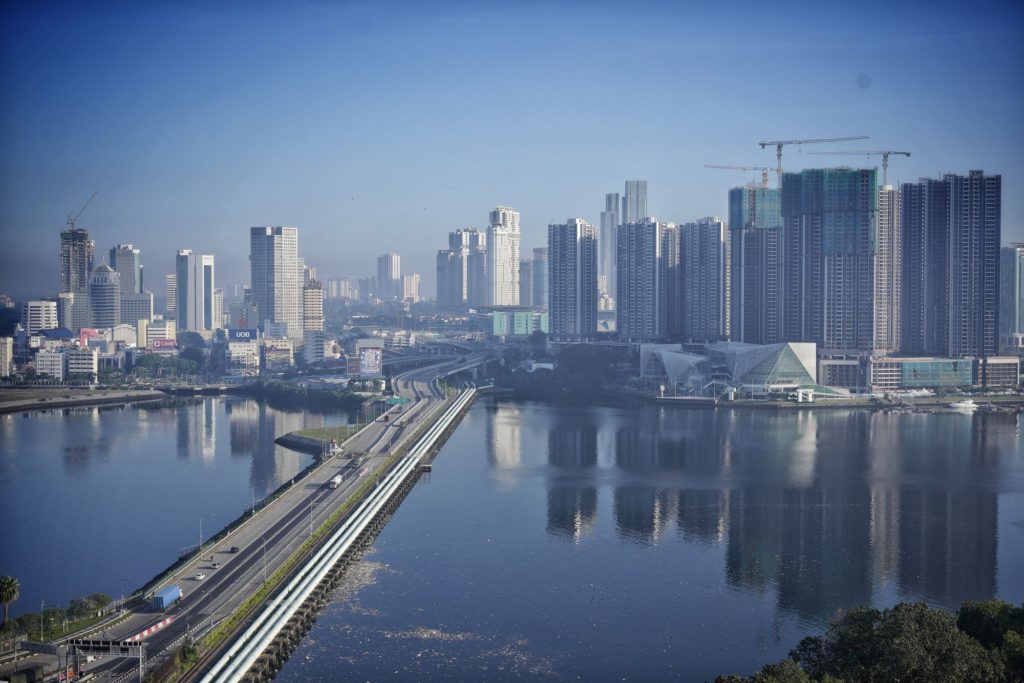
Singaporeans Filling Their Cars With Cheap Malaysian Fuel Upset Neighbor

(Bloomberg) — As people start to cross from Singapore into Malaysia and back again, an old issue is raising the ire of Malaysian authorities: Singaporean motorists sneaking out purchases of the country’s cheaper, subsidized gasoline.

Officials in Malaysia have pledged more vigilance and tougher action against retail fuel operators caught selling subsidized gas to foreign-registered vehicles, according to local news reports. Thousands of vehicles have crossed the border between Singapore and Malaysia since it was fully opened at the start of the month, ending a two-year, pandemic-forced closure.

The Johor division of Malaysia’s Ministry of Domestic Trade and Consumer Affairs said it will step up enforcement against operators caught selling the fuel to foreign-registered cars, with companies liable for fines of up to 2 million ringgit ($474,400). Former Prime Minister Najib Razak also highlighted the issue in a Facebook post, calling for increased monitoring of such sales.

Malaysia previously banned the sale of 95-RON gasoline to cars not registered locally because that grade of petrol is subsidized for residents. Singapore currently sells that oil grade at more than four times what it costs in Malaysia. Consumers’ desire for cheaper petrol comes as global oil prices surge. Singapore earlier made it mandatory for all locally-registered vehicles to have at least three-quarters of their fuel tanks filled before driving out of the country.

Read more: Costly Gasoline Spurs Tax Cuts That May Delay Demand Destruction

“It’s pure price arbitrage that happens to be illegal of course,” said Wellian Wiranto, an economist at Oversea-Chinese Banking Corp. “The Malaysian government already has the legal framework in place to target such malfeasance, so it’s probably a matter of a tougher crackdown within that framework.”

(Updates with Singapore’s 3/4 tank rule in fourth paragraph)

More stories like this are available on bloomberg.com

©2022 Bloomberg L.P.

Elon Musk Poll May Prompt a Twitter Edit Button, CEO Hints

(Bloomberg) — Twitter Inc. Chief Executive Officer Parag Agrawal has responded to a poll posted by Tesla Inc. chief Elon Musk, his company’s biggest shareholder, by calling it important and urging users to “vote carefully.”

Musk revealed this week that he’s acquired a 9.2% passive stake in Twitter, however his recent postings on the service — where he has more than 80 million followers and has filled the void left by Donald Trump as one of the most influential accounts — have actively discussed perceived shortcomings. On Monday, Musk queried if his followers wanted an edit button, offering misspelled “yes” and “no” options in his usual humorously casual style.

Elon Musk’s ‘Passive’ Stake in Twitter Belies His Big Influence

Agrawal, who succeeded Jack Dorsey as CEO in November, quote-tweeted the poll and recited words that Musk had used on an earlier post about Twitter’s adherence to free speech principles: “the consequences of this poll will be important.” The Twitter CEO may have been lightly mocking Musk’s query, though the action still shows he’s keeping a close eye on the account of the Tesla and SpaceX chief.

Twitter’s official account posted a message on April 1 saying “we are working on an edit button,” which may have been intended as an April Fool’s joke; however it collected more than 1.3 million likes, suggesting the demand for such a facility is high.

The option to edit posts after publishing has been a longstanding request of Twitter users frustrated with the inability to fix typos on published posts or correct misstatements on viral tweets. Musk’s poll had over 1.5 million votes late on Monday, split 75% for “yse” and 25% for “on.”

(Updates with latest poll figures)

More stories like this are available on bloomberg.com

©2022 Bloomberg L.P.

Singapore Passes Law to Tighten Rules for Crypto Providers

(Bloomberg) — Singapore has approved a law that will tighten rules for cryptocurrency providers in the latest sign of its tentative embrace of the industry. 

The new legislation will require virtual asset service providers in the city-state which only do business overseas to be licensed. Currently, such firms are not regulated for anti-money laundering and countering the financing of terrorism. The law was passed in parliament on Tuesday.

Singapore’s additional tightening comes on top of the financial regulator’s recent move to discourage companies in the cryptocurrency space from advertising their services to the public, underscoring the nation’s cautious approach.

The city-state is welcoming the technologies of cryptocurrency and has launched a framework for regulating the industry when other countries such as China have opted for outright bans. On the other hand, it doesn’t want citizens getting burned by speculation, and is picky about who it lets in.

Binance is the biggest player to have become disillusioned by the moves, as it in December withdrew its application for setting up a cryptocurrency bourse.

Other key items from the Financial Services and Markets Bill:

  • Gives greater powers to the Monetary Authority of Singapore to prohibit individuals who are deemed unfit from performing key roles, activities and functions in the financial industry. These will now include individuals providing payment services and conducting risk management.
  • Imposes higher maximum penalty of S$1 million ($737,050) on financial institutions if they experience cyber attacks or their services are disrupted.

More stories like this are available on bloomberg.com

©2022 Bloomberg L.P.

IBM Banks on Lingering Relevance of Mainframes With New Model

(Bloomberg) — International Business Machines Corp. has unveiled a new mainframe model, a reflection of the continued relevance of the decades-old computing systems despite the rush among many organizations to pivot to the public cloud. 

Unlike the cloud, which enables companies to store and access data over the internet, mainframes are physical hardware owned by the customer. The large, black boxes that still line the walls of some corporate data centers have long-served as the foundation for a business’s most important applications. Many financial institutions, for example, still use mainframes to support customer transactions and other high-volume operations. 

While the systems have declined in relevance as more businesses use cloud infrastructure from providers including Amazon.com Inc. and Microsoft Corp., mainframes are still an important part of a company’s information technology portfolio — and likely will be for a long time to come. At least, that’s what IBM is banking on. The company markets itself as a key player in the emerging market to support both on-premises and cloud-based data storage. 

“The cloud has definitely done great things for the industry,” said Ric Lewis, senior vice president of IBM Systems. “But mainframes are still a very strong platform in that environment. And they fit well in that hybrid cloud environment.” 

The cloud is poised to become increasingly dominant — especially for modern applications. By 2025, for example, 51% of spending on information technology will be directed to the public cloud, up from 41% in 2022, according to research firm Gartner Inc. But mainframes remain relevant. Of 500 IT professionals recently surveyed by Rocker Software, 56% say the mainframe is still a predominant part of their infrastructure. 

On Tuesday, IBM revealed z16, the latest version of its mainframe. Among the new features for customers is the ability to run predictive analytics on data directly in the machine instead of transporting it to another program, IBM said in a statement. That provides a big benefit, for example, for banks that want to run fraud detection programs in real-time as the transactions are processed, according to the Armonk, New York-based company. 

The updated model also includes new security protocols to protect against the looming rise of quantum computing, a powerful technology that is still years away from real-world practical uses, but one that could ultimately undermine the security of most software given the ability of the systems to hack encrypted data, according to Lewis. 

“Our early pipeline on z16 is better than any pre-launch pipeline that we’ve had,” he said. 

With Fujitsu Ltd. planning to end its mainframe offerings by 2031, IBM remains the only large manufacturer left. And it continues to be a cash cow for Big Blue. Alongside the cost of the hardware itself, which can range in price from $500,000 per unit and above, IBM charges for the software that runs on top of it, as well as maintenance for the systems. 

The company doesn’t break out results for its mainframe business, but hybrid infrastructure, which includes the unit, generated $2.9 billion in fourth-quarter revenue. While mainframes can run without upgrades for as long as a decade, many of those customers are likely to refurbish at least a portion of their existing systems to the new model. 

“We’ve got a growing, healthy business,” Lewis said. “The overall workload space is growing enough that, yes there are a lot of workloads growing into the cloud, but there are a ton of workloads being stacked on the new class of mainframes.” 

It’s difficult to migrate mainframe systems to the cloud, but vendors are trying to change that. Amazon Web Services offers various services to enable businesses to transfer applications running on mainframes — many that are likely written in Cobol, a dated but still widely used programming language — to its cloud infrastructure. Most companies, however, may still be hesitant to pursue such an option given the mission-critical nature of the programs. 

“The install base today that is still on a mainframe is going to stay on that mainframe,” said IDC research vice president Peter Rutten. “Many of the applications are still core to the business. They may have been around years, in some cases decades. And enterprises don’t want to change them.” 

More stories like this are available on bloomberg.com

©2022 Bloomberg L.P.

Intel CEO Visiting Taiwan and Japan in Tour of Asian Suppliers

(Bloomberg) — Intel Corp. Chief Executive Officer Pat Gelsinger is on the move visiting customers and suppliers in Asia in an attempt to shake up an industry that’s fallen victim to a global pandemic and geopolitical ructions.

Gelsinger is traveling to Japan, Taiwan and India, according to a person familiar with his itinerary. As part of the trip, he will meet with Taiwan Semiconductor Manufacturing Co., the world’s foremost contract chipmaker that now counts Intel as a client, said the person, who asked not to be named as the plans are not public. The company isn’t expected to make any significant announcements during the trip.

In addition to TSMC, Intel has other key suppliers in Taiwan and Japan. The company depends on Tokyo Electron for chipmaking equipment, while it relies on Ibiden Co. and Unimicron Technology Corp. for Ajinomoto build-up film substrates, materials required for the packaging process.

The leader of the Santa Clara, California-based chipmaker has had a busy first year in charge of the company, tasked with turning back a tide of competition that’s weighed on its stock price and earnings. Gelsinger announced two major chip manufacturing hubs, one in Ohio and another in Germany, in recent months.

He has called for greater investment from North America and Europe to expand chipmaking capacity in their regions and make a supply chain largely concentrated in Asia more resilient. Pointing to the chip crunch that’s left industries from automaking to smartphones short of crucial components, Gelsinger has urged governments to “not waste this crisis” as it’s a matter of national security as well as good economics.

Intel Urges Aid to Chipmakers: ‘Let’s Not Waste This Crisis’

“Intel CEO Pat Gelsinger and other members of the Intel team will be increasing local engagements with employees, customers, partners, suppliers and other key stakeholders in various regions around the world,” an Intel representative said. “These engagements are vital as we and others in the industry work together to drive innovation and restore balance and resilience to the global supply chain.”

More stories like this are available on bloomberg.com

©2022 Bloomberg L.P.
Close Bitnami banner
Bitnami