

Bloomberg

The Tumultuous, Awkward Quest to Become the Oscars of Podcasting

(Bloomberg) — Inside the Mayan Theater in downtown Los Angeles, journalist Sam Sanders gazed down at the trophy in his hands. “It looks like an Oscar,” he said, grinning. 

It was a Tuesday night in March, several days before the 94th Academy Awards, (year of the slap, edition) and in the shadows of Hollywood’s biggest, self-congratulatory spectacle, a lesser known gathering was trying to take root. At the outset, around 5 p.m., a crowd of some 300 guests strolled down a mini red carpet and into the kitschy theater.

The occasion was celebratory. They were there to fete and be feted at the Ambies, the podcasting industry’s latest, and likely greatest, attempt to build something akin to an Oscar’s for audio. Due to the pandemic, it was the first time the ceremony had been held in person. 

Over the course of 90 minutes, a procession of podcasters took turns on stage, accepting awards across a range of categories, including history, business, fiction, comedy and true crime. The winners gave acceptance speeches. The mood was jubilant, if a bit awkward, as a profession unaccustomed to formality found itself half-pantomiming the glossy Academy Awards, albeit with much less celebrity wattage.

After years of torrid growth, podcasts are now entering a crucial, evolutionary stage. The business has crawled out of the muck of amateurism and claimed a spot at the table of mass market, big money storytelling. Even so, as with any new medium, everyone’s status still feels somewhat in flux. 

In search of still greater cultural legitimacy—and, ultimately, more money from big brand advertisers, sponsors and investors— the industry is attempting a trick that other media industries have gotten a lot of mileage out of over the years. It’s looking to create a high-end, heavily branded awards presentation that, year after year, effectively confers greater status on its recipients. Newspapers have the Pulitzers. Magazines have the Ellies. TV has the Emmys. Movies have the Oscars. 

The podcast industry is scrambling to create something similar.  

Instead of live coverage on national television like the Oscars, the Ambies offered a live feed on Twitch. Instead of tuxedos and wildly expensive designer gowns, people wore sneakers and off-the-rack cocktail attire. Instead of a starlit Vanity Fair after party, there was a brief open bar with various desserts.

“God this is so ridiculous,” said Eli Chen, a senior editor for “Overheard at National Geographic,” during her acceptance speech.   

Despite the occasional eye-rolling, people for the most part stayed on message and played up the significance of the moment. On stage, Sanders—a former NPR host who recently decamped to Vox Media—held up his Ambie for best podcast host of the year. It was about the size of an Oscar statuette, and consisted of a human figure reaching into the sky, holding a microphone aloft with both hands, in a worshipful, yoga-like pose.  “I f—ing love it,” Sanders said.   

Whether the rest of industry will eventually share the sentiment remains to be seen. 

The Ambies are the brainchild of a new industry group called the Podcast Academy, which was founded in 2020 with a mission, in part, to “advance the cultural merit of the medium.” Its board of governors is packed with a cross section of industry heavyweights, including representatives from Apple Inc., Amazon.com Inc. and Spotify Technology SA. 

Michele Cobb, the academy’s executive director, says that so far 1,000 members have joined, typically paying $100 annually. Since last year’s awards show, which was held virtually due to the pandemic, submissions have increased from 1,100 to over 1,400. Cobb said she’d like to see the academy’s membership double. 

“Success is having a diverse and large membership over time and really pushing the medium of podcasts forward so that it’s a recognized part of the entertainment cycle,” Cobb said. “You’ve got television, you’ve got movies, you’ve got podcasts.”

To become the Oscars of the industry, however, the Podcast Academy will have to outmaneuver a handful of competitors. Recently, podcasting laurels have been proliferating with nearly the same relentlessness as podcasts. IHeartRadio has hosted an annual podcast awards show since 2019. That same year, the Webby Awards introduced new categories specifically for podcasts. Last year, the Quill Podcast Awards premiered, celebrating achievement in more than 20 categories, ranging from “Best Finance Podcast” to “Best Podcast Advertising Software.” In 2021, the Sports Podcast Awards also debuted, ensuring that tennis, rugby and cricket podcasters would no longer be overlooked on the awards circuit.

In January 2023, the crew behind the Webby Awards plans to launch the Signal Awards, dedicated entirely to podcasting. 

Amid the proliferation of prizes, skepticism of podcast judging remains rampant. In 2019, a bunch of podcasters pointed out on Twitter and in newsletters that iHeartRadio’s awards gala had nominated its own shows in nearly every category, raising concerns about fairness and self-dealing.

“A lot of people, and rightly so, say they don’t believe in awards anymore,” said Maribel Quezada Smith, the co-founder of BIPOC Podcast Creators. “We have this conversation a lot in the BIPOC community. Stuff like this, it’s always pay to play, it’s always who you’re with, who you know.”

There are also concerns about the growing costs of submissions. For the Ambies, entries cost $100 each for members or $175 for nonmembers. At the Ambies this year, the networks with the most wins were Pineapple Street Studios, which is owned by radio giant Audacy Inc., and Wondery, which is owned by Amazon—two deep-pocketed companies that can afford to spend liberally on submissions. 

Amazon, under its Wondery and Audible brands, sponsored the awards at the two highest tiers, which the Podcast Academy advertises as costing a combined $95,000. This budget meant they also could run video trailers for their podcast between a couple of award categories.

Fatima Zaidi, CEO and founder of Quill, which hosts the Quill Podcast Awards, said the Ambies feel unattainable to indie podcasters. Her awards show, now in its second year, allows people to enter for free and has received thousands of submissions. 

“We find it really inauthentic and a little bit dubious that the big corporate sponsors are the same ones winning the awards,” she said. 

Recently, Juleyka Lantigua, CEO and founder of LWC Studios, started the Podcasting, Seriously Awards Fund to raise money that independent creators, particularly BIPOC, trans and queer people, can use to submit their shows. So far, the team has raised $48,000. It aims to give away $20,000 annually.

Lantigua points out that beyond the spectacle and the intra-industry jockeying for status, award shows can wind up having a real economic impact on the individuals who participate. Podcasters who win prestigious awards and nominations are likely to get paid more, produce higher-quality work and be better positioned to extract concessions from big media companies during contract negotiations. 

“If it didn’t matter, the gatekeeping wouldn’t be so profound,” Lantigua said.

Back in Los Angeles, inside the Mayan Theater, the Ambies were winding down. Despite the best efforts of the Podcast Academy, clearly, not everyone in the industry felt the urgency, just yet, to make a night of the show.

Multiple nominees and winners opted to call in virtually, including “Serial” co-creators Sarah Koenig and Julie Snyder, who were receiving a top award in recognition of their overall contributions to the industry. Actor Paul Scheer also called in remotely to accept the award for best comedy podcast.  

Toward the end of the ceremony, the hosts announced that Pineapple Street Studios’ “9/12,” had won podcast of the year. As the crowd applauded, its creator, Dan Taberski, climbed up on stage, picked up his Ambie and looked back out wearily at the packed, darkened theater. 

“Thank you,” Taberski said, chuckling as he prepared to launch into his acceptance speech. “This is a nightmare.”

(Updates with Amazon sponsorship in 20th paragraph. In an earlier version, Quill corrected the number of submissions in the 21st paragraph.)

More stories like this are available on bloomberg.com

©2022 Bloomberg L.P.

Police Charge Two U.K. Teenagers Linked to Lapsus$ Hackers

(Bloomberg) — Two teenagers who are linked to a probe into the Lapsus$ hackers have been charged by London police in connection with an investigation into hacking.

The pair, aged 16 and 17, who can’t be identified because they are minors, appeared at a London court on Friday afternoon and were released on bail. The two teens will appear at a pretrial hearing at London’s Southwark Crown Court on April 29.

This coincides with a police investigation into the Lapsus$ hacking gang, as Bloomberg has reported. The same police force arrested seven people in connection with the alleged hackers late last month. 

One of the crimes alleged by prosecutors against both teens involved hacking into Nvidia Corp.’s systems, while another involved using BT Group Plc and EE mobile phones and SIMS for fraudulent money transfers, court documents show.

Read more: U.K. Police Arrest 7 Related to Lapsus$ Hacks on Tech Firms 

“Both teenagers have been charged with: three counts of unauthorized access to a computer with intent to impair the reliability of data; one count of fraud by false representation and one count of unauthorized access to a computer with intent to hinder access to data,” City of London detective inspector Michael O’Sullivan said in the statement.

The 16-year-old has also been charged with a count of causing a computer to perform a function to secure unauthorized access to a program. 

City of London Police declined to comment beyond their statement.

(Updates with reporting from court hearing in fourth paragraph)

More stories like this are available on bloomberg.com

©2022 Bloomberg L.P.

China Chipmaker’s White Knight Finally Completes Deal Payment

(Bloomberg) — The winning bidder for beleaguered Chinese chipmaker Tsinghua Unigroup Co. has finally completed a 60 billion yuan ($9.4 billion) takeover payment after missing an earlier deadline, people familiar with the matter said.

Unigroup’s administrators sent a notice to creditors late Friday that the JAC Capital-led consortium made full payment of the promised funds, the people said, asking not to be identified because the information is private. The investor group had initially missed a March 31 deadline to transfer the remaining 14.6 billion yuan of the agreed price tag for the chip business, Bloomberg News has reported. 

The JAC consortium was picked as the winner of an auction for China’s debt-ridden semiconductor giant, whose rescue was viewed as a national security issue. Representatives for JAC and Unigroup couldn’t immediately be reached for comment outside regular Chinese business hours. 

Beijing-based Unigroup is affiliated with the prestigious Tsinghua University, President Xi Jinping’s alma mater, and remains a linchpin in a race for technological supremacy. JAC, a state-backed semiconductor investment fund, defeated a rival consortium led by Chinese e-commerce leader Alibaba Group Holding Ltd. JAC and affiliate Wise Road Capital had offered 60 billion yuan to pay off debts to creditors.

The reorganization plan was approved by a court in January, according to an exchange filing.

Apple Inc. is testing sample NAND flash memory chips made by Unigroup’s prized Yangtze Memory Technologies Co. unit and is in discussions about a tie-up, Bloomberg News reported Thursday.

More stories like this are available on bloomberg.com

©2022 Bloomberg L.P.

Ukraine Update: Nuclear Monitors Set to Return; EU Warns China

(Bloomberg) — Negotiators from Ukraine and Russia spoke Friday via video link, even as previous talks failed to agree even a temporary cease-fire. Russian Foreign Minister Sergei Lavrov said Moscow is preparing a response to Ukraine’s proposals on ending hostilities.  

President Xi Jinping said China finds the situation in Ukraine “deeply regrettable.” Xi held a virtual summit Friday with European Union leaders, who said they expect Beijing at the very least not to interfere with sanctions imposed on Russia.

Russia said two Ukrainian helicopters made a rare strike across the border, hitting an oil tank facility in the city of Belgorod. There was no confirmation from Kyiv. The military in Ukraine said it retook several villages in the Kherson region to the south. 

(See RSAN on the Bloomberg Terminal for the Russian Sanctions Dashboard.)  

Key Developments

  • Gazprom Starts Telling Clients How to Pay for Gas in Rubles 
  • Mariupol’s Splintering Loyalties May Be Enough for Putin
  • Putin Set for $321 Billion Windfall If Oil, Gas Keep Flowing
  • There’s Now an App for Ukrainians Seeking to Remain in the U.S.
  • Chinese Buyers Given Flexibility to Pay in Yuan for Russian Oil
  • Russia Seeks New Ways to Sell Its $20-Billion-a-Year Gold Output

All times CET:

Ukraine Raises $600,000 Through Museum NFT Sales (6:20 p.m.)

The money will be used to rebuild museums, theaters and other cultural institutions. Ukrainian MetaHistory NFT-Museum sold 1,282 artworks on its first day of sales, raising 190 Ether cryptocurrency tokens for the Ministry of Digital Transformation of Ukraine, the museum said in an email.  

Sberbank’s U.K. Arm to Be Wound Down Amid Russia Sanctions (6:15 p.m.)

The U.K. arm of Russia’s biggest lender Sberbank of Russia PJSC is being wound down, London’s highest-profile financial casualty in the aftermath of the invasion of Ukraine. 

Sberbank CIB U.K. Ltd. will enter so-called special administration, a form of insolvency that ensures there’s minimal disruption to financial markets, a London judge ordered on Friday. As with many Russian financial subsidiaries in countries that have imposed sanctions, Sberbank CIB has struggled to carry on as key staff leave and counterparties walk away.

Russian Pullout from Chernobyl Opens Door for IAEA Monitors (4:44 p.m.)

International nuclear monitors are preparing to return to the stricken nuclear power plant — site of the deadly 1986 meltdown — as soon as Russian troops complete their withdrawal and Ukrainian operators resume control.

International Atomic Energy Agency monitors will be on the ground “very soon,” Director General Rafael Mariano Grossi said at a briefing in Vienna. He returned Friday from a week-long trip to Ukraine and Russia, where he worked out separate deals to boost the safety and security of nuclear sites.

EU Leaders Warn China on Russia Sanctions (4:13 p.m.)

“We expect China, if not supporting the sanctions, at least to do everything not to interfere in any kind,” European Commission President Ursula von der Leyen told reporters after the meeting with Xi. “On that point we were very clear.” She added the EU expected China to use its influence on Russia to end the war.

Chinese Premier Li Keqiang said during the summit that Beijing has been promoting peace talks on Ukraine in its own way, and is willing to play a constructive role. 

Refugees May be Able to Swap Hryvnias Into Euros (2:15 p.m.)

Ukrainian refugees in the EU may soon be able to swap some of their banknotes into euros and other currencies. The EU’s executive arm asked member states to set up facilities that allow each person to exchange up to 10,000 hryvnia ($339) free of charge at an official rate set by the Ukrainian central bank. Poland started a similar initiative in March.

Ukraine Refugees in EU Given Hope of Swapping Hryvnia Banknotes

Many of the 4 million people who’ve fled Ukraine invasion — over half of them going initially to Poland — have had trouble swapping hryvnia for local currency because banks haven’t been willing to take risks related to wild exchange-rate swings.

Russia’s Chief Negotiator Says Talks With Ukraine Have Resumed (12:55 p.m.) 

Talks between Russia and Ukraine resumed on Friday via video conference, Russia’s chief negotiator Vladimir Medinsky said on his Telegram channel, adding his country’s stance on Donbas and Crimea is unchanged. Mykhailo Podolyak, an adviser to the Ukrainian president’s chief of staff, confirmed that the discussions are continuing.

Gazprom Starts Giving Details on Ruble Payment Plan (12:35 p.m.)

Russia’s Gazprom is starting to tell clients how to pay for their gas after Putin said purchases from “unfriendly” nations including Europe would need to be settled in rubles. Germany is still going over the details before coming to any conclusions, government spokesman Wolfgang Buechner told reporters.

Meanwhile the Kremlin signaled that gas would keep flowing, and said payments for April gas weren’t due until late in the month or early May.

Lavrov Says Moscow Working on Response (11:36 a.m.)

Foreign Minister Sergei Lavrov said Russia is preparing a response to Ukraine’s proposals on security guarantees and ending the war. Lavrov made televised comments during a press briefing in New Delhi. 

Russia is ready to discuss Kyiv’s proposals on non-nuclear, neutral status, he said, adding that Ukraine has shown “more understanding” of the realities in Crimea and Donbas. Tass cited an unidentified person from the Russian side of negotiations saying talks with Ukraine would resume Friday via video. 

Russia’s Yamal-Europe Gas Pipeline Flows in Reverse (10:29 a.m.)

Russian gas flows via the Yamal-Europe pipeline reversed this morning, with fuel flowing from Germany to Poland — the opposite of the normal direction. That’s been a common occurrence for this pipeline over the past few months, and doesn’t signal a halt in Russian gas flows to Europe. In many cases, it just shows German companies are ordering less gas, while demand in Poland is higher.

Flows via Nord Stream, the direct link to Germany, were near the pipeline’s full capacity. 

Don’t Read Too Much Into Reverse Gas Via Russia Pipeline

Natural Gas Fluctuates as Traders Weigh Putin’s Demand (9:43 a.m.)

Natural gas prices in Europe fluctuated as traders weighed the potential impact on the market by Russia’s decision to shift payment for its supplies to rubles, with colder weather also set to boost demand. 

European stocks and U.S. equity futures rose slightly as investors evaluated the economic outlook amid moderating oil prices, tightening Federal Reserve monetary policy and Russia’s war in Ukraine.

Russian-Linked Containers Pile Up in Rotterdam (9:34 a.m.)

Measures taken against Russia are snarling thousands of steel shipping containers in Rotterdam as each box needs to be carefully inspected to make sure moving it won’t somehow breach sanctions, according to the CEO of the massive port. 

His comments gave unique insights into how the beating heart of Europe’s real economy is being battered by measures taken against Moscow after its invasion of Ukraine.   

Ukrainian Retakes Ground in Kherson, Chernihiv Regions (8:49 a.m.)

Eleven villages in the southern Kherson region and several others in the Chernihiv region northeast of Kyiv have been returned to Ukrainian control, according to the military’s General Staff. Shelling of towns and villages along the contact line in the east continued overnight, with civilian casualties reported after nine apartment buildings and nine private houses were shelled.

The intensity of shelling declined in Chernihiv and Kharkiv, although a missile hit the center of Kharkiv Thursday night. Fighting continues near Chernihiv, Izyum and at the border of Kherson and Mykolayiv regions to the south. 

Refugees Arriving in Poland Now Top 2.4 Million (8:45 a.m.)

Another 23,000 people arrived in Poland from Ukraine on Thursday, and another 3,500 early Friday, taking total refugees since Feb. 24 to 2.415 million, Polish border authorities said.

Over 4 million people have fled Ukraine since the start of the Russian invasion.  

Ukraine Said to Make Rare Strike in Russian Territory (8:30 a.m.)

Moscow said two Ukrainian military helicopters attacked an oil-storage facility in the Russian city of Belgorod, about 50 km (30 miles) north of the border, causing a large fire early Friday.

Tass quoted Belgorod Governor Vyacheslav Gladkov as saying the aircraft flew in at low altitude. Eight oil fuel tanks were burning and authorities said the fire might spread. Two workers were reported to have been injured and nearby residents were being evacuated.

Focused on fighting Russian troops on their own territory since Feb Ukrainian forces haven’t claimed any strikes on the other side of the border since the start of the war on Feb. 24. 

World Underestimating Impact of War, OECD Says (8:00 a.m.) 

Governments aren’t sufficiently aware of the longer-lasting economic fallout from Russia’s invasion of Ukraine, said OECD Chief Economist Laurence Boone. 

“I really believe we’re underestimating the medium-term impact of this war,” Boone told Bloomberg Television’s Francine Lacqua in Cernobbio, Italy, on Friday. “The longer the war will last, the more uncertainty we have, and the more worried we’re getting because uncertainty deters consumer purchases and business investment.”

Russia Redeploying Forces From Georgia, U.K. Says (7:45 a.m.)

Russia is redeploying as many of 2,000 troops from Georgia to reinforce its invasion of Ukraine, the U.K. defense ministry said. The forces are being reorganized into battalion tactical groups. 

“It is highly unlikely that Russia planned to generate reinforcements in this manner and it is indicative of the unexpected losses it has sustained during the invasion,” the U.K. said. 

Russia Jamming Jet Navigation, France Says (6:00 a.m.)

Russia’s military has been jamming satellite navigation systems used by commercial aircraft since the invasion of Ukraine, highlighting the need for robust alternatives, according to a French safety regulator.

Airline pilots have reported disruptions in regions around the Black Sea, eastern Finland and the Kaliningrad enclave, said Benoit Roturier, head of satellite navigation at France’s civil aviation authority DGAC. The interference appears to be caused by Russian trucks carrying jamming equipment typically used to protect troops and installations against GPS-guided missiles, he said.

Russia Is Jamming Jet Navigation, French Safety Official Says  

More stories like this are available on bloomberg.com

©2022 Bloomberg L.P.

European Regulators Raise Questions About Microsoft Cloud Practices

(Bloomberg) — European regulators are asking Microsoft Corp. partners and rivals for information related to a complaint made against the software maker alleging anti-competitive behavior in the cloud-computing services market.

The European Commission in March circulated a questionnaire, seen by Bloomberg News, focusing on how Microsoft licenses its products. The questions may lead to a formal inquiry, and follows an antitrust complaint last year from France’s OVH and two other cloud providers to the European Union’s antitrust watchdog over Microsoft’s behavior.

The questionnaire asks respondents whether they have signed agreements to be part of Microsoft programs that allow other partner and cloud providers to resell Microsoft programs, as well as questions around whether the company is making it harder or more expensive to run some of its programs on rival cloud providers networks. 

“We can confirm indeed that the commission has received the complaint,” a press officer for the European Commission said. “At this stage we cannot share any other information about this.” 

Microsoft — the maker of market-leading Office and Windows software — is also the No. 2 global seller of cloud infrastructure, renting computing power and storage delivered over the internet to customers. Amazon.com Inc. is the largest vendor of such services, and Alphabet Inc.’s Google is trying to catch Microsoft. As companies increasingly mix and match programs from the vendors, or use multiple clouds, OVH and others are claiming Microsoft’s software licensing terms put them at a disadvantage for running Microsoft products and make it easier or cheaper to pair things like Windows, Office and Windows Server with Microsoft’s own Azure cloud. 

“The cloud market is growing and European cloud providers have built successful business models using Microsoft software and services,” Microsoft said in an emailed statement. “We’re continuously evaluating how we can best support partners and make Microsoft software available to customers across all environments, including those of other cloud providers.”

Microsoft has largely escaped the global antitrust scrutiny facing other large tech companies like Meta Platforms Inc., Apple Inc., Google and Amazon. But the European Union this month hammered out a deal on a new law that paves the way for multibillion-euro fines and acquisition bans for the worst transgressors of a new Digital Markets Act. The rules target so-called gatekeeper companies with the power to control distribution in their markets. That includes Microsoft. 

The request for information asks for details on things like whether Microsoft’s cloud-based Windows and Office products are capable of running on rival’s cloud products or whether Microsoft would need to “make technical adjustments” to enable that. And it inquires if the respondent feels it needs to include certain Microsoft products or services in its own cloud infrastructure offering “in order to compete effectively.”

The companies were also asked to compare the software licensing conditions their customers receive with those Microsoft extends to its own customers under a program called Azure Hybrid Benefit Program. It gives clients a discount for running certain Microsoft products, like Windows Server, in Azure rather than another cloud provider. The companies have until April 7 to respond to the questionnaire. 

The questionnaire likely forms part of the commission’s initial fact finding exercise, said Richard Pepper, partner at Macfarlanes LLP.  “At this stage, it’s too early to meaningfully judge whether this will take action. Nevertheless, this is definitely an area of focus for the commission.”Microsoft previously faced more than a decade of antitrust disputes with the European Union that ended in 2009 with the company agreeing to give Windows users a choice among web browsers. The Redmond, Washington-based software maker also paid out 1.68 billion euros in files in EU antitrust probes prior to that date. 

(Updates with Microsoft’s statement in sixth paragraph.)

More stories like this are available on bloomberg.com

©2022 Bloomberg L.P.
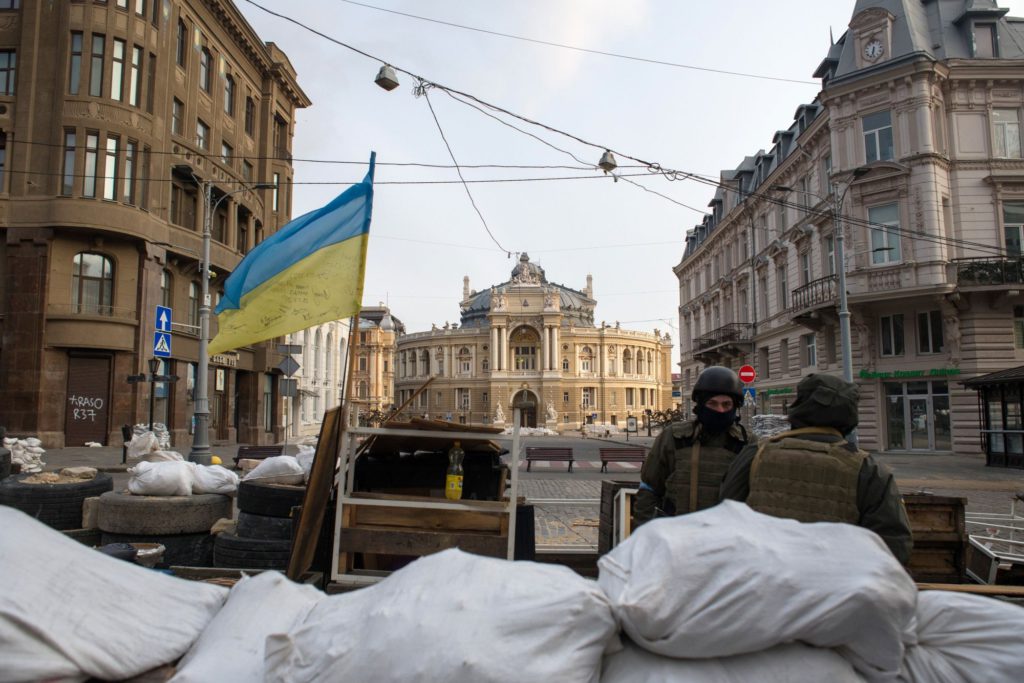
Ukraine Raises $600,000 Through Museum NFT Sales to Help Rebuild

(Bloomberg) — The Ukrainian government raised more than $600,000 through nonfungible token sales that will be used to rebuild museums, theaters and other cultural institutions destroyed since Russia’s invasion in February. 

Ukrainian MetaHistory NFT-Museum sold 1,282 artworks on its first day of sales, raising 190 Ether cryptocurrency tokens for the Ministry of Digital Transformation of Ukraine, the museum said in an email. The NFTs are meant to document the war through artwork that features rubble and destruction, Ukrainian soldiers, fires burning and the Ukrainian flag.  

The NFT sales are part of the Ukrainian government effort to raise crypto donations and funds needed to rebuild, and to finance the country’s military effort. The tokens, which combine the world of cryptocurrencies and blockchain with the realm of creative pursuits, have become fodder for both retail traders and professional investors.

The Ukrainian government has already raised about $70.2 million in crypto donations, according to its official website. Some of the money has been spent on medical supplies and protective gear for soldiers.

The museum is also preparing to auction off four artworks, which only owners of the museum NFTs will be able to bid for.

The government has also received hundreds of NFTs, which it plans to sell at a later point.


More stories like this are available on bloomberg.com

©2022 Bloomberg L.P.
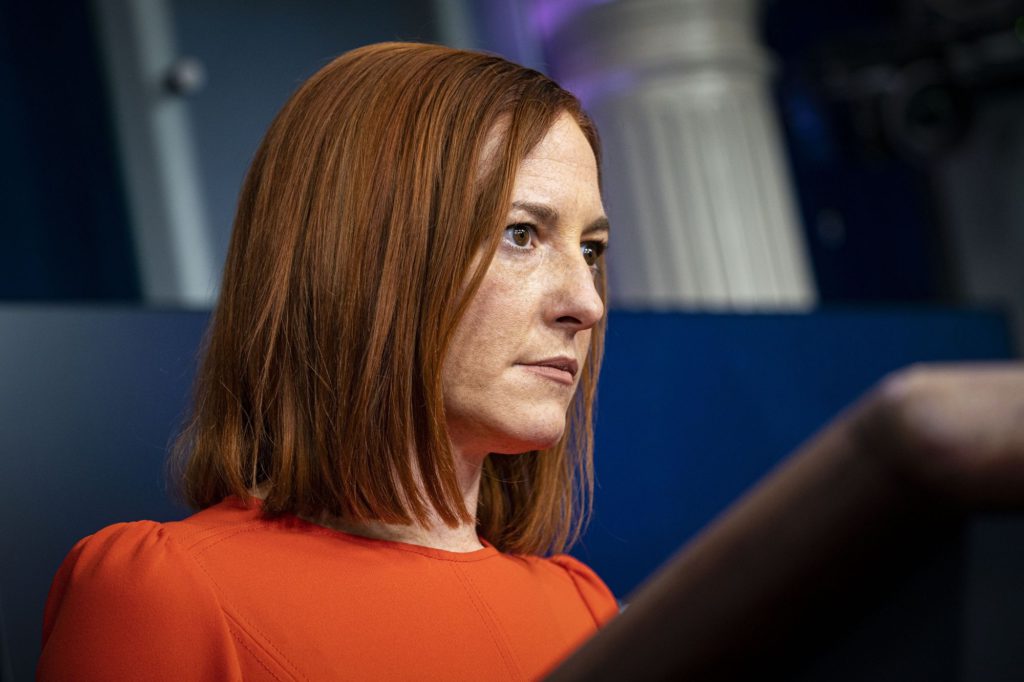
White House Press Secretary Jen Psaki Is in Talks to Join MSNBC

(Bloomberg) — White House Press Secretary Jen Psaki is in exclusive talks to join MSNBC, according to a person familiar with the matter. 

The discussions involve Psaki hosting a show on Comcast Corp.’s streaming service, Peacock, and she’d also appear on other MSNBC programs, said the person, who asked not identified. Psaki is expected to step down from the White House this spring and then formalize a deal with the network. 

A spokesperson for the White House said Psaki is focused on her current job representing the president and there were no more details available about her future plans.

The news was first reported by Axios. Both CNN and MSNBC had been trying to hire Psaki, Puck reported in February.

Psaki would be just the latest Biden administration spokesperson to join the left-leaning network. Symone Sanders, the former spokeswoman for Vice President Kamala Harris, left the White House at the end of last year. She will host a weekend show on MSNBC in May that will also stream on Peacock.

The moves are part a broader talent shakeup at MSNBC. In December, Brian Williams, who hosted an 11 p.m. show, left and is being replaced by Stephanie Ruhle. Rachel Maddow, the network’s biggest star, has been on hiatus and recently signed a new deal that would allow her to pursue other projects. She’s expected to dial back her nightly show and appear less often on the network after this year.


More stories like this are available on bloomberg.com

©2022 Bloomberg L.P.
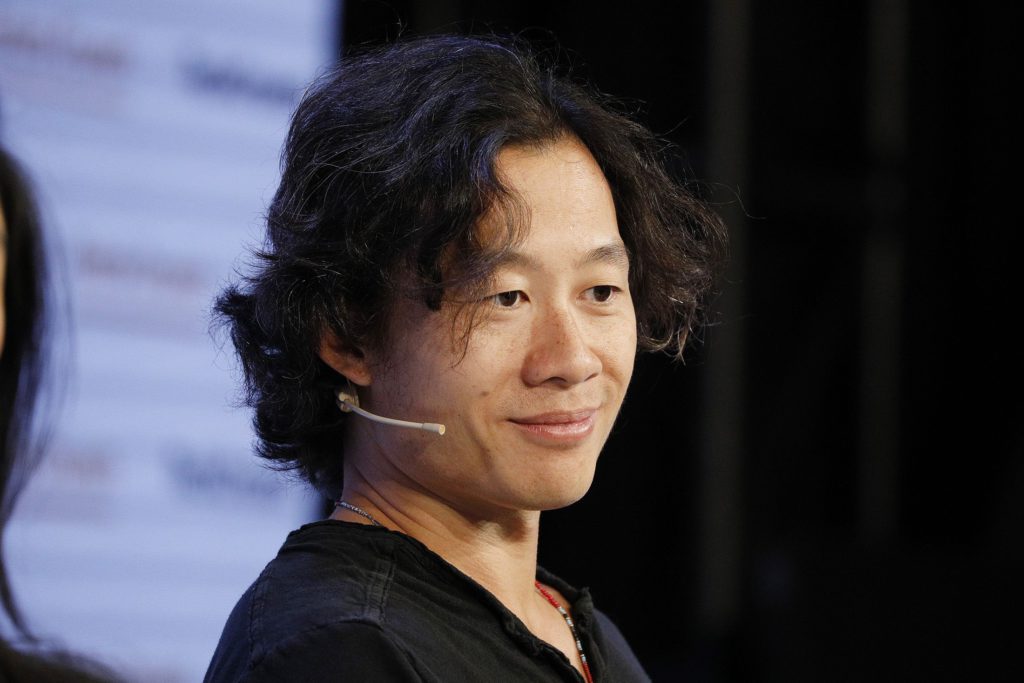
Twitch Co-Founder’s NFT Marketplace Fractal Raises $35 Million

(Bloomberg) — Gamers have a long history of disliking cryptocurrencies, nonfungible tokens and the fast-money trappings of the web3 industry. Now, they’ve lost a prominent industry figure to the other side. 

Justin Kan — co-founder of the streaming service Twitch, which exploded in popularity for broadcasting video games — has a new crypto startup that on Friday said it raised $35 million from investors including Paradigm and Multicoin Capital. 

The company, called Fractal, sells nonfungible tokens like virtual pets, weapons and avatars that are used in games based on the Solana blockchain. The remote-first company chose to specialize in gaming NFTs because blockchain technology enables people to actually own their digital assets and trade them outside of a game, Kan said in an interview.

“NFTs are heading towards having more utility,” he said. “It’s not just art.”

Gamers have pushed back against NFTs before, objecting to blockchain’s environmental impact and the idea that the technology is just another way for companies to profit off of players without making games more fun. At the Game Developers Conference last week, Ubisoft Entertainment SA, Electronic Arts Inc. and Square Enix Holdings Co. were booed after announcing interest in NFTs or introducing the tokens into games.

Gamer hostility isn’t the only problem Fractal could face. Shortly before launching in December, a scammer infiltrated Fractal’s Discord server and used its announcement bot to post a fraudulent link promising access to special NFTs. The users who clicked the link and tried to buy the fake NFTs were scammed out of a total of $150,000.

Kan said he personally paid back the stolen funds and the company has put new security measures in place, including limiting staff access to Fractal’s online communications.

More stories like this are available on bloomberg.com

©2022 Bloomberg L.P.
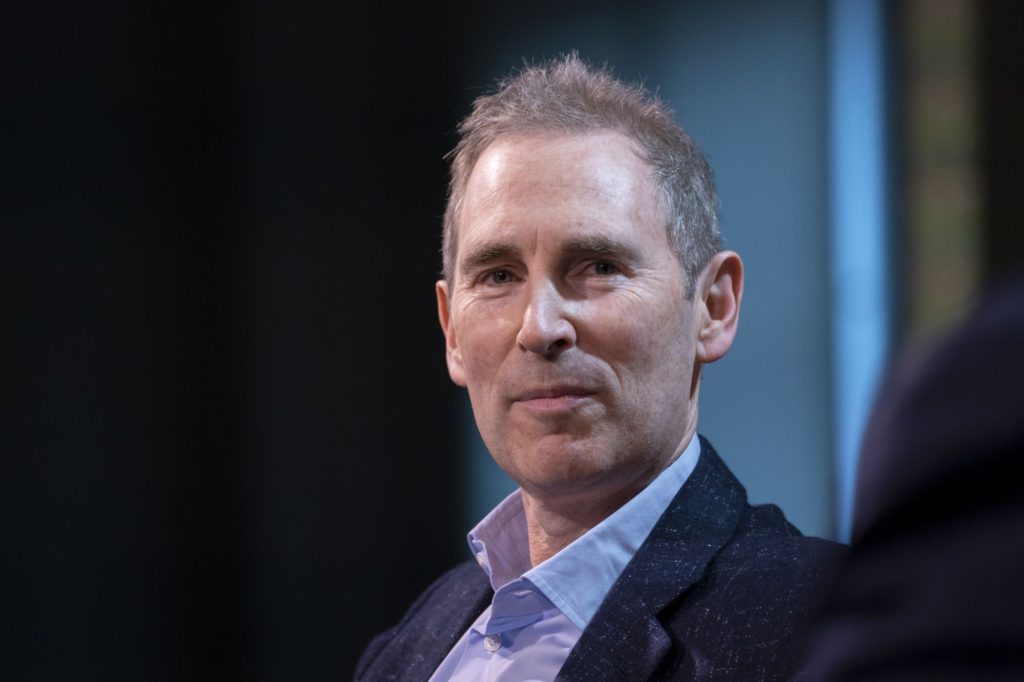
Amazon CEO Andy Jassy’s Pay Package Was $212 Million in 2021

(Bloomberg) — Amazon.com Inc. Chief Executive Officer Andy Jassy received compensation valued at about $212 million in 2021, the company said, a sum that reflects the big stock award he received after taking over the company.

Jassy, who took the reins from Amazon founder Jeff Bezos in July, was paid a base salary of $175,000, unchanged from the prior year, the online retailer said in a securities filing Friday. The vast majority of his compensation came in the form of a stock award of 61,000 shares, first disclosed last year, which vests between 2023 and 2031. That award “is expected to represent most of Mr. Jassy’s compensation for the coming years,” the Seattle company said.

Bezos, who is executive chairman, drew his custom salary of $81,840, along with $1.6 million in other compensation, which is primarily to cover the cost of his security detail.

Adam Selipsky, Jassy’s successor as the chief of the Amazon Web Services cloud computing unit, was the company’s second-highest paid executive, after Jassy. Selipsky received about $81 million. Almost all of that reflects a stock grant that vests over five years.

Dave Clark, who oversees Amazon’s retail and logistics operation as Worldwide Consumer CEO, was paid $56 million, including a stock award he received upon his promotion to that role.

Amazon’s median employee worldwide was paid $32,855 in 2021, the company said in Friday’s filing, for a ratio of 1-to-6,474 when stacked against Jassy’s pay package. In the U.S., the median full-time employee was paid $39,677.

(Updates with median employee pay in the last paragraph.)

More stories like this are available on bloomberg.com

©2022 Bloomberg L.P.

Amazon CEO Andy Jassy’s Pay Package Was $212 Million

(Bloomberg) — Amazon.com Inc. Chief Executive Officer Andy Jassy received compensation valued at about $212 million in 2021, the company said, a sum that reflects the big stock award he received after taking over the company.

Jassy, who took the reins from Amazon founder Jeff Bezos in July, was paid a base salary of $175,000, unchanged from the prior year, the online retailer said in a securities filing Friday. The vast majority of his compensation came in the form of a stock award of 61,000 shares, first disclosed last year, which vests between 2023 and 2031. That award “is expected to represent most of Mr. Jassy’s compensation for the coming years,” the Seattle company said.

Bezos, who is executive chairman, drew his custom salary of $81,840, along with $1.6 million in other compensation, which is primarily to cover the cost of his security detail.

Adam Selipsky, Jassy’s successor as the chief of the Amazon Web Services cloud computing unit, was the company’s second-highest paid executive, after Jassy. Selipsky received about $81 million. Almost all of that reflects a stock grant that vests over five years.

Dave Clark, who oversees Amazon’s retail and logistics operation as Worldwide Consumer CEO, was paid $56 million, including a stock award he received upon his promotion to that role.

Amazon’s median employee worldwide was paid $32,855 in 2021, the company said in Friday’s filing, for a ratio of 1-to-6,474 when stacked against Jassy’s pay package. In the U.S., the median full-time employee was paid $39,677.

(Updates with median employee pay in the last paragraph.)

More stories like this are available on bloomberg.com

©2022 Bloomberg L.P.

Close Bitnami banner
Bitnami