Bloomberg

Russia Demands U.K. Sell Stake in Satellite Startup OneWeb

(Bloomberg) — Russia demanded the U.K. sell its stake in satellite startup OneWeb Ltd. and threatened to cancel a launch planned for Saturday if it didn’t, retaliating against Western sanctions following the invasion of Ukraine. 

Kremlin space agency Roscosmos made the ultimatum in a statement on its official Twitter page on Wednesday and blamed “the U.K.’s hostile stance toward Russia.” It also demanded guarantees that OneWeb’s satellites wouldn’t be used for military purposes and gave a deadline of 9:30 p.m. Moscow time March 4 for answers.

OneWeb, whose headquarters are in London, was planning a launch from Kazakhstan’s Baikonur cosmodrome using a Soyuz-2.1b rocket operated by France’s Arianespace SA. Russia, which supplies the spacecraft, said it would be removed from the launch. No alternative is expected to be available quickly or without significant cost to OneWeb.

A spokesman for the satellite firm declined to comment. In a post on Twitter, U.K. Business Secretary Kwasi Kwarteng said “there’s no negotiation on OneWeb: the UK Government is not selling its share.

OneWeb was bought by the U.K. government and India’s Bharti Global in a surprise bankruptcy rescue deal in 2020. Cancellation of the launch this week would be a setback for the company’s ambition to establish an initial constellation of 648 spacecraft and win customers, including lucrative military contracts, to pay back the billions invested by shareholders.

Elon Musk, who has launched about 2,000 Starlink satellites using his own SpaceX rockets, this week donated terminals for Ukrainians to use his rival network.

There’s no indication the U.K. would back down and sell its stake, or if it did who it would offload it to if not existing shareholders. Since its rescue from bankruptcy, OneWeb has built an international consortium of owners including France’s Eutelsat SA, Japan’s Softbank Group Corp and South Korean conglomerate Hanwha. 

British opposition party lawmaker Darren Jones, who chairs the business Parliamentary committee, raised concerns about OneWeb’s Russian connections in a letter to government on Tuesday. 

More stories like this are available on bloomberg.com

©2022 Bloomberg L.P.

Fitbit Recalls Ionic Smartwatches After Burn Injuries 

(Bloomberg) — Fitbit is voluntarily recalling its Ionic smartwatch following reports of burn injuries caused by the lithium-ion battery overheating, according to the U.S. Consumer Product Safety Commission.

About 1 million of the watches, which track body metrics like heart rate, activity and sleep, were sold in the U.S. and 693,000 internationally since Fitbit introduced the Ionic in September 2017, according to the Commission. Fitbit, which is owned by Alphabet Inc.’s Google, is asking consumers to contact the company in order to ship back their devices and receive a $299 refund and a discount on other Fitbit devices.

The Ionic smartwatch caused 118 reported burn injuries worldwide. Of the injuries in the U.S., there were two reports of third-degree burns and four reports of second-degree burns. The company’s first smartwatch, the Ionic allowed contactless payments, access to music and GPS-tracking and a variety of apps. Fitbit stopped production of the Ionic in 2020.

“Customer safety is always Fitbit’s top priority and out of an abundance of caution, we are conducting a voluntary recall of Fitbit Ionic smartwatches,” a Fitbit spokesperson said in an emailed statement. “We received a very limited number of injury reports – the totals in the CPSC announcement represent less than 0.01% of units sold – of the battery in Fitbit Ionic smartwatches overheating, posing a burn hazard.” 

The company said the recall doesn’t affect other Fitbit smartwatches or trackers.

(Updates with statement from Fitbit in final paragraph)

More stories like this are available on bloomberg.com

©2022 Bloomberg L.P.
Ford Reorganizes to Run EV and Engine Businesses Separately

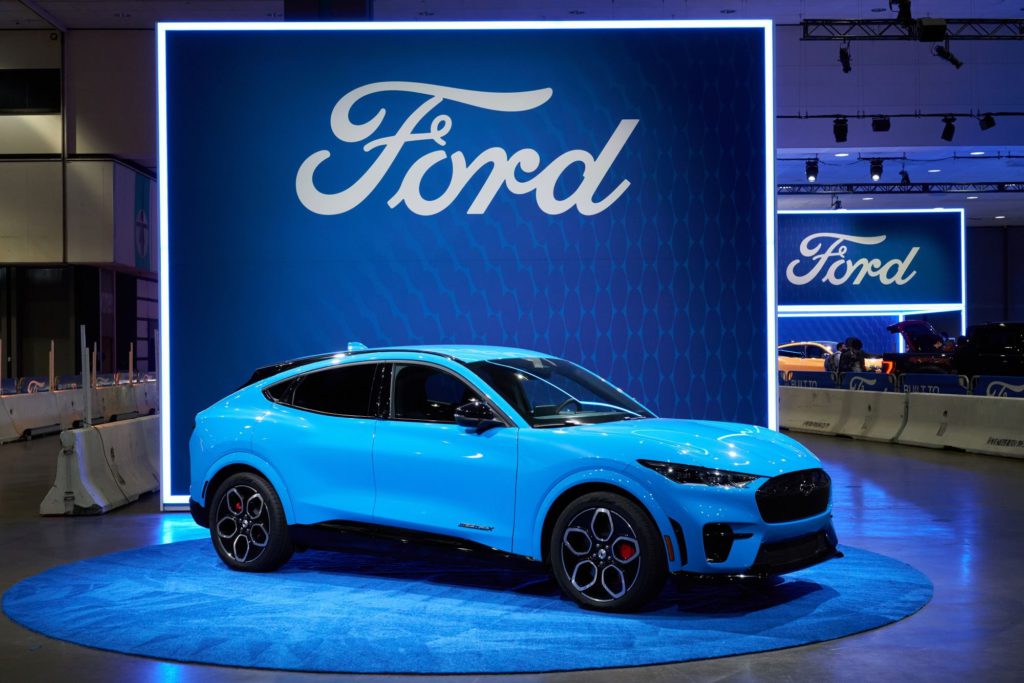
(Bloomberg) — Ford Motor Co. will separate its fast-growing electric vehicle operations from its legacy combustion engine business in a historic reorganization of the 118-year-old company.

The new Ford Model e unit will scale up the automaker’s EV offerings and develop software and connected-vehicle technology and services for all of the company. Ford Blue will focus on combustion vehicles, cutting costs and simplifying operations.

Ford’s ambition will be “to become a truly great, world-changing company again, and that requires focus,” Chief Executive Officer Jim Farley said in a statement Wednesday. “We are going all in, creating separate but complementary businesses that give us startup speed and unbridled innovation.”

See also: How Ford Wrestled ‘Sexy’ Back From Musk in Tussle Over Trademark

The automaker plans to spend $50 billion on its stepped-up EV strategy, Farley said on a call with analysts. The investment covers 2022 to 2026, after Ford had previously targeted $30 billion from 2021 to 2025.

The shake-up — along with new targets for higher EV production and overall profitability — sent Ford shares up 7.3% to $17.92 at 9:41 a.m. in New York, the biggest intraday gain in almost two months.

Ford said it plans to be able to make 2 million electric vehicles annually by 2026, a big step up from the 600,000 it’s aiming for in 2024. The automaker also is now targeting adjusted earnings before interest and taxes of 10% by 2026, up from as much as 8% expected for this year.

Ford’s split represents a “better allocation of dollar and human capital,” BofA Securities analyst John Murphy wrote in a note to clients. The move will also allow Ford to attract more EV talent and gain access to a lower cost of capital including through green bonds, said Murphy, who has a buy rating on the stock.

What Bloomberg Intelligence Says

“We assume that a potential separation wouldn’t happen until after 2026, making longer-dated issues at Ford Motor the most exposed. But Ford could consider a variety of mechanisms, including another debt tender or raising debt at the new company, as a tool eliminate longer-term debt.”

— Joel Levington, BI credit analyst

Accelerating Ford’s transition to a battery-electric future has been a major focal point for Farley. He raised the automaker’s wager on EVs months after taking over as CEO. Bloomberg News first reported last month that the company was contemplating a further increase in expenditures toward EVs, and that Farley had wanted to wall off electric operations from Ford’s internal combustion engine business.

Read more: Ford CEO Is Considering Ways to Run EV Business Separately

Farley said Wednesday that Ford “carefully” considered a spinoff as it weighed options to separate the business lines. The chosen path allows Ford to keep its combustion-engine operations as the “profit and cash engine” of the company, he said.

Implementing major structural change at Ford requires the backing of the company’s founding family, which controls the automaker through a special class of stock.

Farley has been working closely with Doug Field, the former head of Apple Inc.’s car project, on reviewing Ford’s operational and manufacturing structure to prepare for the company ramping up its EV offerings. It’s boosted output of the electric Mustang Mach-E and prepared more production capacity for the F-150 Lightning pickup going on sale this spring.

Under the new structure, Farley will also assume the role of president of Ford Model e, while Field will be the unit’s chief EV and digital systems officer. Kumar Galhotra will serve as president of the Ford Blue business.

Through Tuesday’s close, Ford shares soared 151% since Farley became CEO in October 2020. While the stock has pulled back since mid-January, its market capitalization was slightly ahead of General Motors Co.’s.

“Is this about winning? 100%,” Farley said on the call Wednesday. “We want to beat the old players. We want to beat the new players.”

(Updates with share trading, analyst comment beginning in fifth paragraph.)

More stories like this are available on bloomberg.com

©2022 Bloomberg L.P.

Russian Oligarchs’ Yachts Head for Maldives as Sanctions Levied

(Bloomberg) — A growing number of superyachts belonging to Russian tycoons have made their way to the Indian Ocean, cruising around the Maldives and Seychelles just as sanctions are imposed on their homeland following Vladimir Putin’s invasion of Ukraine.  The four biggest luxury yachts in the Maldives right now are Russian-owned, according to an analysis …

Russian Oligarchs’ Yachts Head for Maldives as Sanctions Levied Read More »

Glencore Is Reviewing Its Stakes in Two Russian Companies

(Bloomberg) — Glencore Plc, the world’s biggest commodity trader, followed some of the world’s largest companies in reviewing its business ties with Russia as the fallout from the invasion of Ukraine intensifies across global commodities markets.  While Glencore stopped short of exiting its investments, the company said it was reviewing its shareholdings in two of …

Glencore Is Reviewing Its Stakes in Two Russian Companies Read More »

LendingClub CEO Plots Path Around Crypto as Firm Builds Out Bank

(Bloomberg) — LendingClub Corp. is resisting pressure from stakeholders to jump into cryptocurrency as it completes a bank acquisition and works to introduce more traditional financial products.

“Look, the customer demand is there, but my view — our view — is if you’ve got $15,000 in credit-card debt, the thing you should do with your next $500 is not buy a speculative asset,” Chief Executive Officer Scott Sanborn said Tuesday in an interview at Bloomberg News headquarters in New York. “We recognize we could be leaving some consumer demand on the table.”

Sanborn, who took over in 2016, is laying out a new path for the peer-to-peer lender after its $185 million acquisition last year of Radius Bancorp Inc. LendingClub has been expanding offerings, including high-yield savings accounts and certificates of deposit. That doesn’t leave a lot of room for a crypto initiative, Sanborn said.

“I don’t want to get distracted,” he said. “Back half of the year, into next year, we’ll be focusing on the mobile-banking experience.” 

The San Francisco-based financial-technology firm has retained part of its marketplace that matches borrowers with institutional investors, while ditching the portion allowing retail investors to lend money. LendingClub expects to keep more loans on its balance sheet, earning three times as much as the debt it chooses to offer through the marketplace, Sanborn told Bloomberg TV.

Rival startups including Affirm Holdings Inc. and PayPal Holdings Inc.’s Venmo are either working on or already are offering crypto options. LendingClub has chosen instead to focus on its expansion, including introducing more savings products, and on the relocation of its servicing center to Utah as it continues to work through the Radius acquisition.

“We’re still digesting the bank,” Sanborn said of the firm’s appetite for M&A. “We have a really good use of our capital right now, which is putting it in the balance sheet. I know what that return is — it’s really high — and it’s really straightforward. But as we fully mature into that, we’re certainly going to be generating a lot of capital.”

More stories like this are available on bloomberg.com

©2022 Bloomberg L.P.

How Ford Wrestled ‘Sexy’ Back From Musk in Tussle Over Trademark

(Bloomberg) — Ford Motor Co.’s use of Model e as the name of its new electric-vehicle unit comes eight years after dashing Elon Musk’s hopes for a provocatively named lineup of cars from Tesla Inc.

“A friend asked me at a party, ‘What are you going to name the third-generation car?’ Well, we have the S and the X, so we might as well make it the E,” the Tesla chief executive officer told CNNMoney in 2014.

But when Tesla attempted to register the E trademark for a model, Ford stepped in to block it, according to Automotive News. The Dearborn, Michigan, automaker hauled out a 2010 agreement between the companies that prevented Tesla from using the letter for a car name. 

Even though Ford hadn’t used it for a production vehicle, the company contended that Model E sounded too similar to the original mass-market hit automobile: the Model T.

“We’re like, ‘Ford’s killing SEX,’” Musk said in 2014. “So, OK, fine we won’t use Model E.”

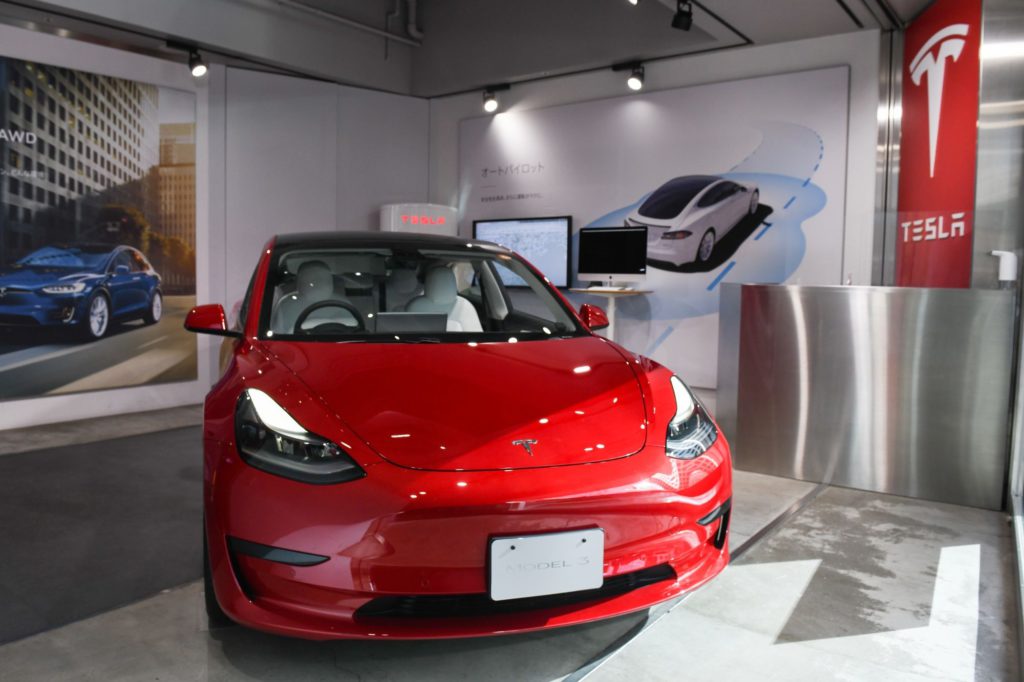
True to form, Musk found a workaround. The third vehicle in Tesla’s lineup was dubbed the Model 3 — a backward E. The carmaker subsequently added a sport utility vehicle, the Model Y.

More stories like this are available on bloomberg.com

©2022 Bloomberg L.P.
Proptech Startup OpenSpace Reaches Valuation of $902 Million

(Bloomberg) — OpenSpace, a startup that develops technology for the construction industry, raised $102 million in a new funding round that the company said gives it a valuation of $902 million.

Penny Pritzker’s PSP Growth led the round, San Francisco-based OpenSpace said. Other participating investors include BlackRock Inc., Alkeon Capital Management, Menlo Ventures and a unit of commercial real estate brokerage Jones Lang LaSalle Inc.

The startup’s technology enables builders to easily capture a visual record of a job site, simplifying an ordinarily painstaking process. Workers attach a camera to their hard hats and images are then uploaded and organized with artificial intelligence to create a complete picture. The images are stored in the cloud and can be consulted during all phases of construction.

Having a visual record that can be accessed from a desktop can save money and time for developers, according to Pritzker, a former U.S. secretary of commerce who has a long history in the real estate business.

Many construction disputes can be lengthy and expensive, involving lenders, insurers and lawyers, often with no consistent set of facts to settle the matter short of tearing down drywall to check work that’s already been done. With OpenSpace, Pritzker said, “now you know what’s behind the wall.”

The platform has been used in more than 75 countries on roughly 10,000 job sites, from renovations of small retail spaces to large-scale projects such as SoFi Stadium near Los Angeles and the Spiral, an office skyscraper rising in Manhattan’s Hudson Yards area.  

The technology can be a key solution at a time when needs for things like affordable housing and green infrastructure are increasing, but the costs are enormous and a shortage of labor is chronic, according to Jeevan Kalanithi, OpenSpace’s chief executive officer. 

“These large industries critical to people’s lives are in a crunch, and haven’t been paid attention to enough by a lot of folks, including the tech industry,” Kalanithi said. “Now is the time to make a dent for these folks.”

More stories like this are available on bloomberg.com

©2022 Bloomberg L.P.
Italy Earmarks $4.4 Billion to Boost Semiconductor Industry

(Bloomberg) — Italy will invest over 4 billion euros ($4.4 billion) to develop the domestic semiconductor industry, as it seeks to support companies transitioning to greener technologies.

Prime Minister Mario Draghi’s government approved a new fund which will allocate 150 million euros in 2022 and 500 million euros each of the following years until 2030 as part of a new decree law which goes into effect Wednesday.

The money will finance research and technology in the chip sector to promote strategic independence and could in particular benefit automotive companies looking to upgrade technology to produce more energy-efficient vehicles. 

The European Union last month announced a new Chips Act that aims to avert supply chain disruptions by reducing dependence on foreign sources. The bloc will for the first time allow its massive state aid funding program to be used for “first-of-a-kind” production sites in Europe, as part of a goal of producing 20% of the world’s semiconductors by 2030.

More stories like this are available on bloomberg.com

©2022 Bloomberg L.P.
Close Bitnami banner
Bitnami