

Bloomberg

Next Covid-19 Strain May be More Dangerous, Lab Study Shows

(Bloomberg) — A South African laboratory study using Covid-19 samples from an immunosupressed individual over six months showed that the virus evolved to become more pathogenic, indicating that a new variant could cause worse illness than the current predominant omicron strain. 

The research, conducted by the same laboratory that was to first test the omicron strain against vaccines last year, used samples from a person infected with HIV. The virus initially caused the same level of cell fusion and death as the omicron BA.1 strain, but as it evolved those levels rose to become similar to the first version of the coronavirus identified in Wuhan in China.

Led by Alex Sigal at the Africa Health Research Institute in Durban, the study indicates that the pathogen could continue to mutate and a new variant may cause more severe illness and death than the relatively mild omicron strain. The study is yet to be peer reviewed and is based solely on laboratory work on samples from one individual.

Sigal and other scientists have previously postulated that variants such as beta and omicron — both initially identified in southern Africa — may have evolved in immunosuppressed people such as those infected with HIV. The long time it takes for these individuals to shake off the disease allows it to mutate and become better at evading antibodies, they have said.

The analysis “may indicate that SARS-CoV-2 evolution in long-term infection does not have to result in attenuation,” the researchers said in their findings, which were released on Nov. 24. “It may indicate that a future variant could be more pathogenic than currently circulating omicron strains.”


There’s also concern that China, where the zero-covid policy has limited contagion to date, could spawn a new variant if infections take hold and there is a huge surge in cases, according to Christian Drosten, Germany’s most prominent virologist. China’s vaccination cover is not high among the elderly and it has exclusively used shots made domestically that haven’t proved as effective as those made by Pfizer Inc. and Moderna Inc.


–With assistance from Janice Kew.

More stories like this are available on bloomberg.com

©2022 Bloomberg L.P.
Chinese Stocks in US Fall as Citizens Defy Covid Curbs in Unrest

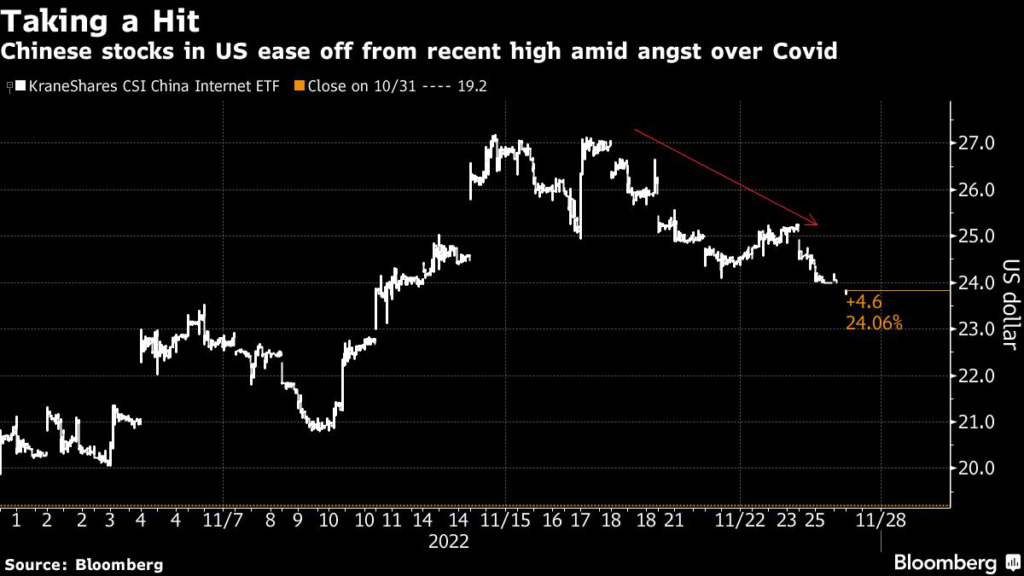
(Bloomberg) — Chinese shares listed in the US declined in premarket trading, with major internet stocks bearing the brunt of a selloff triggered by nationwide protests against Beijing’s Covid Zero policies.

The exchange-traded KraneShares CSI China Internet Fund, which holds more than 40 Chinese stocks, traded 0.8% lower. E-commerce giants Alibaba Group Holding Ltd. and JD.com Inc. slipped by 2% each. Shares of electric car makers Nio Inc. and Li Auto Inc. also fell.

Protesters took to the streets in various cities and universities across China over the weekend in a rare act of defiance against the government and its landmark Covid Zero strategy. The demonstrations were fueled by a deadly fire in a high-rise apartment block in Urumqi, with some blaming that virus restrictions hampered rescue efforts, although local officials denied.

“The path to reopening is likely to be noisy with local infections at risk of remaining high in winter months,” Citigroup Inc. economists led by Johanna Chua said in a note. While the protest and further tightening in Covid restrictions “are unlikely to bode well for sentiment, we are cautious not to interpret these as overly bearish,” they said.

The civil unrest is adding another twist to the turbulent Chinese stock market, which has been on a recovery path since Beijing loosened some Covid restrictions in a surprising policy pivot earlier this month. The MSCI China Index is on pace for its best month this century, but remains down 27% for the year as of Friday’s close, with investors still waiting for a clear signal that Beijing is softening its zero-tolerance stance toward the pandemic.

Stocks that are most sensitive to economic reopening outperformed, with online travel agency Trip.com and restaurant operator Yum China Holdings Inc. in the green before the bell. The resilience underscores optimism over a potentially quicker end to China’s Covid Zero strategy, even though Goldman Sachs Group Inc. economists said there could be a chance of a “disorderly” exit.

More stories like this are available on bloomberg.com

©2022 Bloomberg L.P.
US Bans Huawei, ZTE Telecom Equipment on Data-Security Risk

(Bloomberg) — Huawei Technologies Co. and ZTE Corp. were banned from selling electronics in the US by regulators who say they pose a security risk, continuing a years-long effort to limit the reach of Chinese telecommunications companies into US networks.

The Federal Communications Commission, in an order released Friday, also named connected-camera providers Hangzhou Hikvision Digital Technology Co. and Dahua Technology Co., as well as two-way radio maker Hytera Communications Corp.

“The FCC is committed to protecting our national security by ensuring that untrustworthy communications equipment is not authorized for use within our borders, and we are continuing that work here,” Chairwoman Jessica Rosenworcel said in a news release. “These new rules are an important part of our ongoing actions to protect the American people from national security threats involving telecommunications.”

Earlier: FCC proposes ban on Chinese surveillance cameras

In the 4-0 vote, the FCC concluded the products pose a risk to data security. Past efforts to curb Chinese access include export controls to cut off key, sophisticated equipment and software. Recently US officials have weighed restrictions on TikTok over fears Chinese authorities could access US user data via the video sharing app.

‘Culminating Action’

“This is a culminating action,” said Klon Kitchen, a senior fellow at the Washington-based American Enterprise Institute, a public-policy think tank. “Things that began under Trump are now being carried out. The Biden administration is continuing to turn the screws on these companies because the threat isn’t changing.”

In an email response, Hikvision said its video security products “present no security threat to the United States and there is no technical or legal justification for the Federal Communications Commission’s decision.” The company said the ruling will “make it more harmful and more expensive for US small businesses, local authorities, school districts, and individual consumers to protect themselves, their homes, businesses and property.”

Huawei declined to comment, while Dahua, Hytera and ZTE didn’t respond to emails sent outside normal business hours in China.

Chinese Foreign Ministry spokesman Zhao Lijian urged the US to stop what he described as an attempt to politicize and weaponize economic, trade and science technology issues. “What the US has done is another example of abusing the concept of national security, using state power to hobble Chinese companies,” Zhao told a regular news briefing Monday.  

The looming FCC move didn’t come up in the bilateral meeting between US President Joe Biden and Chinese President Xi Jinping in Indonesia last week, a US official said, speaking on condition of anonymity. Biden did discuss technology issues more broadly with Xi and was clear that the US will continue to take action to protect its national security, the official said.

“This is the death knell for all of them for their US operations,” said Conor Healy, director of government research for the Bethlehem, Pennsylvania-based surveillance research group IPVM.  “They won’t be able to introduce any new products into the US.” 

Most Exposed

Dahua and Hikvision stand to be affected most since their cameras are widely used, often by government agencies with many facilities to monitor, Healy said. Agencies including police also use handheld Hytera radios, he said.

In its order, the FCC also asked for comment on whether to revoke existing equipment authorization, Rosenworcel said in an online statement.

According to Healy, merchants could be stuck with gear that’s illegal to sell.

In 2018, Congress voted to stop federal agencies from buying gear from the five companies named by the FCC. The agency said earlier that the companies aren’t eligible to receive federal subsidies, and also has barred Chinese phone companies from doing business in the US.

The order released Friday was required under a bill Biden signed in November 2021, the agency said.

–With assistance from Josh Wingrove, Lucille Liu and Rebecca Choong Wilkins.

(Updates with Chinese government response in eighth paragraph.)

More stories like this are available on bloomberg.com

©2022 Bloomberg L.P.

Equities Drop on Unrest in China, Treasuries Climb: Markets Wrap

(Bloomberg) — Shares slid as growing unrest in China over Covid restrictions sent a shiver through global markets. The dollar steadied after strengthening in the risk-off mood while Treasuries rose. 

Europe’s equity benchmark fell, with oil companies sliding as events in China weighed on crude prices. US stock futures dropped as modest customer traffic and heavy discounting by American retailers on Black Friday added to the downbeat tone. Apple Inc. slipped in premarket trading after a Bloomberg News report that turmoil at its key Chinese manufacturing hub may cause a shortfall of close to 6 million iPhone Pro units.

The greenback was boosted by haven demand, its biggest gain among G-10 peers coming against the currency of Australia, which is heavily exposed to trade with China. The yuan weakened and Chinese equities led stock-market declines in Asia. 

The unrest in China complicates expectations of the country’s path to reopening, which — along with prospects of more moderate Federal Reserve interest-rate increases — had buoyed sentiment toward riskier assets in recent sessions. Traders also assessed the chances that China may exit its Covid Zero policy earlier than previously thought.

“Markets will respond negatively to the widespread protests and rising case numbers, which are likely to trigger new supply-chain disruptions and dampen consumption demand, at least in the short term,” said Gabriel Wildau, managing director at Teneo Holdings LLC in New York. 

Oil slumped to the lowest level since December as the developments in China punished risk assets and clouded the outlook for energy demand, adding to stresses in an already-fragile global crude market. Gold steadied after earlier declines that accompanied the strengthening dollar.

The downbeat mood emanating from China contrasts with the boost to sentiment in global markets last week after the Fed’s Nov. 1-2 meeting minutes showed most officials backing slowing the pace of interest-rate hikes. 

Fed Focus

Since the Fed’s latest meeting, investors have parsed a bevy of economic data that somewhat eased inflation concerns, further strengthening the case for smaller rate hikes.

The S&P 500 notched a weekly gain of 1.5% that took the index to the highest level since early September. The Nasdaq 100 also eked out a gain for the week.

All eyes will be on the US jobs report this week and on Fed Chair Jerome Powell and New York Fed President John Williams, who are among central bank officials scheduled to speak. 

Amid the challenges in China, the nation’s central bank on Friday cut the amount of cash lenders must hold in reserve for the second time this year, an escalation of support for an economy that’s being weighed down by Covid curbs. 

“We do not expect economic or market headwinds in China to abate significantly over the coming months,” said Mark Haefele, chief investment officer at UBS Global Wealth Management. “Policy support remains focused on stabilizing the economy, rather than spurring growth, in our view.”


Key events this week:

  • Fed’s John Williams speaks, Monday
  • Fed’s James Bullard MarketWatch interview, Monday
  • ECB’s Christine Lagarde addresses European Parliament committee, Monday
  • Euro area economic confidence, consumer confidence, Tuesday
  • US Conference Board consumer confidence, Tuesday
  • EIA crude oil inventory report, Wednesday
  • China PMI, Wednesday
  • Fed Chair Jerome Powell speech, Fed’s Michelle Bowman Lisa Cook speak, Wednesday
  • Fed releases its Beige Book, Wednesday
  • US wholesale inventories, GDP, Wednesday
  • S&P Global PMIs, Thursday
  • US construction spending, consumer income, initial jobless claims, ISM Manufacturing, Thursday
  • Fed’s Lorie Logan, Michelle Bowman, Michael Barr speak, Thursday
  • BOJ’s Haruhiko Kuroda speaks, Thursday
  • US unemployment, nonfarm payrolls, Friday
  • Fed’s Charles Evans speaks, Friday
  • ECB’s Christine Lagarde speaks, Friday

Some of the main moves in markets:

Stocks

  • The Stoxx Europe 600 fell 0.7% as of 9:16 a.m. London time
  • Futures on the S&P 500 fell 0.6%
  • Futures on the Nasdaq 100 fell 0.7%
  • Futures on the Dow Jones Industrial Average fell 0.4%
  • The MSCI Asia Pacific Index fell 0.6%
  • The MSCI Emerging Markets Index fell 1%

Currencies

  • The Bloomberg Dollar Spot Index fell 0.2%
  • The euro rose 0.5% to $1.0446
  • The Japanese yen rose 1.1% to 137.68 per dollar
  • The offshore yuan was little changed at 7.2010 per dollar
  • The British pound rose 0.2% to $1.2112

Cryptocurrencies

  • Bitcoin fell 2.1% to $16,216
  • Ether fell 3.5% to $1,172.34

Bonds

  • The yield on 10-year Treasuries declined three basis points to 3.65%
  • Germany’s 10-year yield declined two basis points to 1.96%
  • Britain’s 10-year yield declined three basis points to 3.09%

Commodities

  • Brent crude fell 2.9% to $81.24 a barrel
  • Spot gold rose 0.3% to $1,760.90 an ounce

This story was produced with the assistance of Bloomberg Automation.

–With assistance from Georgina Mckay and Jacob Gu.

More stories like this are available on bloomberg.com

©2022 Bloomberg L.P.

Coinbase Names Four New Executives to Lead Europe Expansion

(Bloomberg) — Coinbase Global Inc. has strengthened its European senior ranks to help lead its expansion plans in the region even as conditions for cryptocurrency exchanges continue to toughen globally. 

Cormac Dinan, who was a general manager at Crypto.com, has joined Coinbase as country director for Ireland, the company said in a statement. Michael Schroeder, former chief compliance and risk officer at Bittrex, will join the crypto exchange as director of controls for Germany. 

Coinbase also promoted Elke Karskens as new country director in the UK and Patrick Elyas as director of market expansion in Europe, the Middle East and Africa.

The recent hires follow the appointment last month of Daniel Seifert, a senior executive from German financial technology company Solarisbank AG, as regional managing director for EMEA. 

Coinbase’s expansion plans in the region come as cryptocurrency exchanges face a crisis of confidence following the swift collapse of Sam Bankman-Fried’s FTX.com. Shaken by FTX’s swift demise users have rushed to yank out their cryptocurrencies from exchanges, recent data show.

FTX’s unraveling and fears of further contagion have worsened conditions for cryptocurrency platforms which had already been suffering from a rout in prices since May. Coinbase laid off more than a thousand of its staff earlier this year because of a bear market and its stock has fallen around 82% since the start of the year. 

More stories like this are available on bloomberg.com

©2022 Bloomberg L.P.
BMW Sees Potential Risk From More Lockdowns in China Next Year

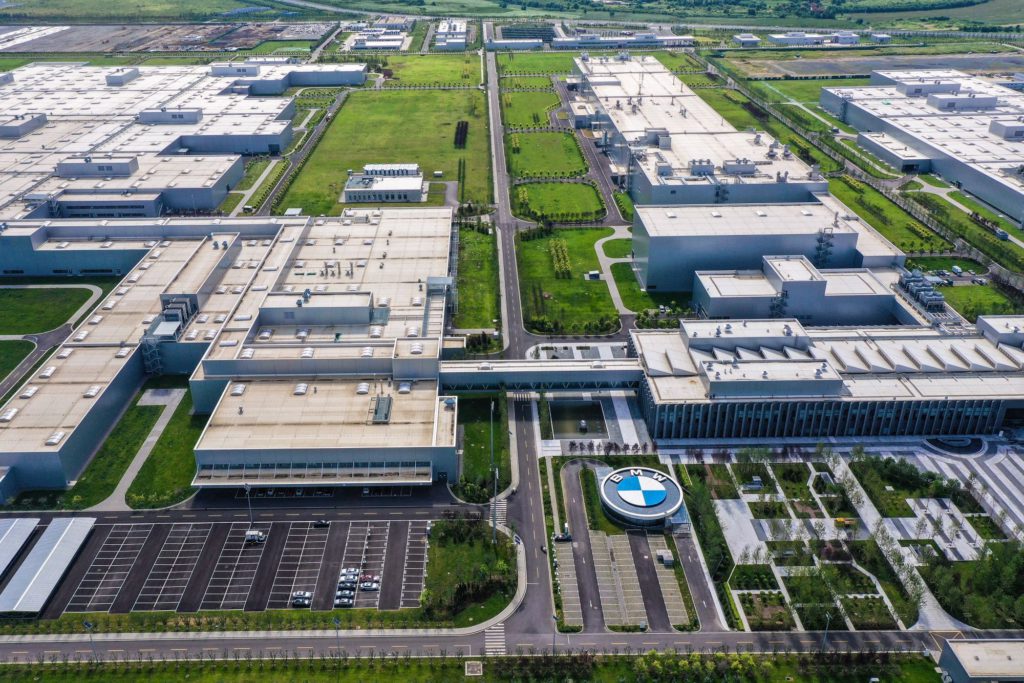
(Bloomberg) — BMW AG sees further Covid-related lockdowns in China as a risk for next year, despite healthy demand there for the carmaker’s fully-electric models and expectations of stable global sales. 

“In China, lockdowns are currently increasing, not decreasing,” Chief Executive Officer Oliver Zipse said to reporters at an event on Friday. “I am worried about how we get out of the lockdown situation in future quarters. There is no visibility that China has a solution.” 

Demand for BMW’s fully-electric models in China is still strong, Zipse said, and next year’s introduction of battery-only Mini models and the i5 should also help boost sales. 

Western vehicle manufacturers are seeing tougher competition from local competitors in China, the world’s largest car market. Tesla Inc. is changing its marketing strategy there due to uneven demand, and is now offering insurance subsidies after recent price cuts. Mercedes slashed the price for its flagship EQS electric sedan by as much as $33,000 in a move to reposition in a competitive market. 

Next year’s global sales for BMW should be at the same level as this year, Zipse indicated. “I would give a stable outlook,” he said when asked for a guidance. “There will be different developments in different parts of the world, but overall, they will compensate each other.”

For this year, BMW forecasts deliveries to be slightly below last year’s 2.5 million vehicles. It lowered the deliveries outlook in August, after previously predicting that sales would remain flat compared to 2021 despite growing supply-chain woes. At the beginning of November, the company said it sees demand normalizing from pent-up levels, especially in Europe. 

Although BMW navigated the semiconductor shortage better than its competitors at the beginning of the year, the company’s production chief Milan Nedeljkovic said in October that supply-chain issues including the chip crunch are responsible for slightly declining deliveries. 

While the German carmaker said recently that it sees itself moving past this chip-related disruption, its competitors are more cautious. Jaguar Land Rover is reducing vehicle output in the UK through March on semiconductor shortages, and Volkswagen cut its sales projection for this year on supply chain constraints.   

More stories like this are available on bloomberg.com

©2022 Bloomberg L.P.
Mark Mobius Sees Bitcoin Down at $10,000 in ‘Dangerous’ Crypto Market

(Bloomberg) — The crypto rout has room to run, according to veteran fund manager Mark Mobius. 

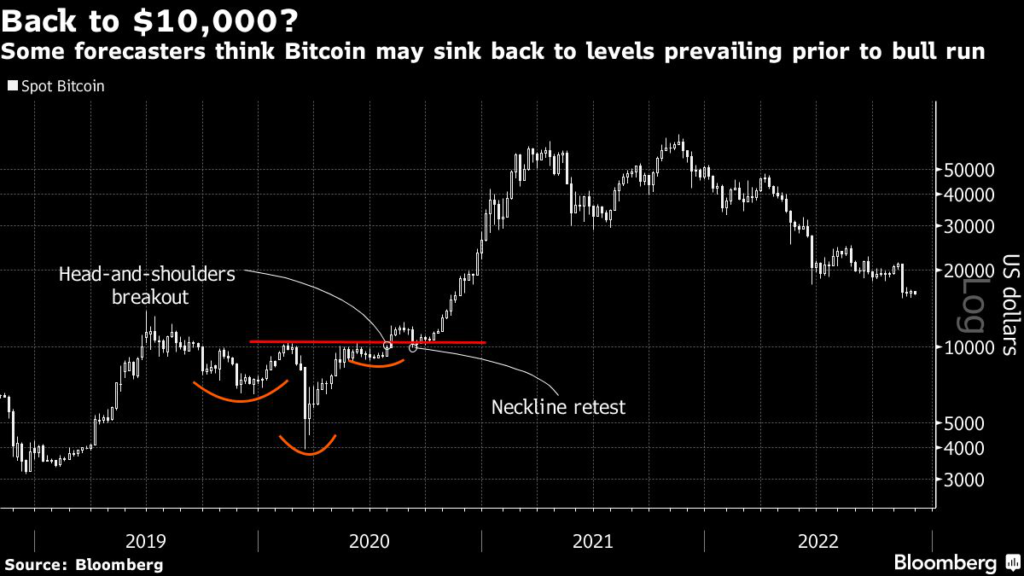
The co-founder of Mobius Capital Partners LLP said in an interview Monday in Singapore that his next target for Bitcoin is $10,000. He added he wouldn’t invest his own cash or client money in digital assets as “it’s too dangerous.”

“But crypto is here to stay as there are several investors who still have faith in it,” said Mobius, who spent more than three decades at Franklin Templeton Investments. “It’s amazing how Bitcoin prices have held up” despite the FTX fallout, he added.

The chaotic slide into bankruptcy of Sam Bankman-Fried’s FTX exchange and sister trading house Alameda Research is hanging over the digital-asset market. The worry is that contagion may topple more crypto outfits.

Some crypto commentators are homing in on a return to $10,000, would which take Bitcoin back to levels last seen in 2020 before the token’s bull run to a record of almost $69,000 by November last year.

Options data from Deribit show a high number of outstanding Bitcoin put contracts — so-called open interest — at a strike price of $10,000 for end-December expiry. The concentration of options bets suggests derivative investors anticipate that level could be tested.

Bitcoin fell as much as 3.2% Monday amid a sour mood in global markets and was trading at about $16,200 as of 7:10 a.m. in London. Digital assets ranging from Ether to meme token Dogecoin were also nursing losses. A gauge of the top 100 coins has shed about 65% this year.

For crypto market prices: CRYP; for top crypto news: TOP CRYPTO.

More stories like this are available on bloomberg.com

©2022 Bloomberg L.P.
Taiwan Stocks Sink After Ruling Party’s Local Elections Defeat

(Bloomberg) — Taiwan stocks dropped on Monday, weighed by ruling party DPP’s resounding defeat in local elections and amid a broader selloff across Asia. 

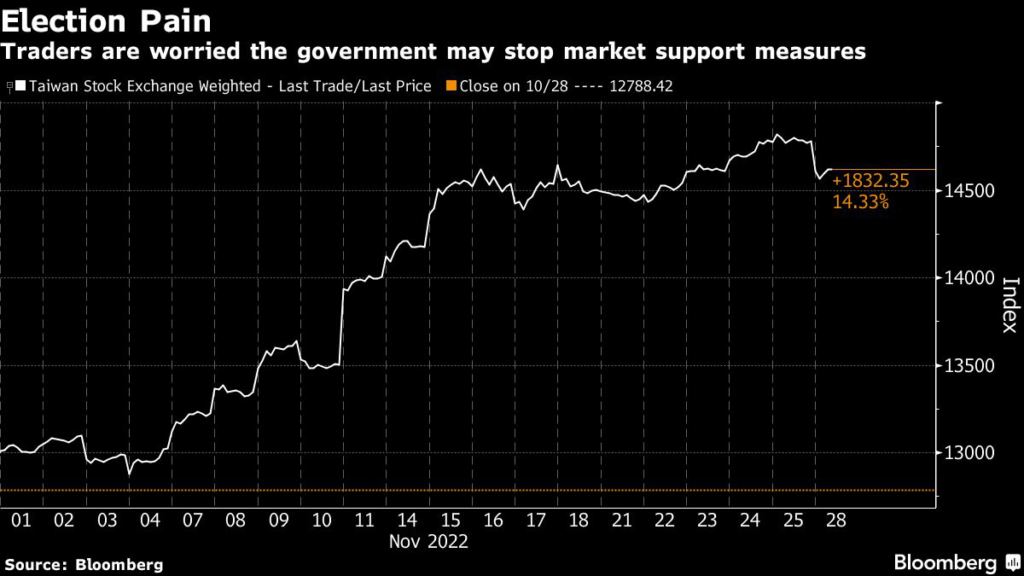
The benchmark Taiex slid 1.5%, the most since Oct. 13, as investors worried that the government may stop support measures for the market after opposition Kuomintang’s victory at the polls. The party, which favors eventual unification with China, held onto 13 seats at Saturday’s elections.

The riskoff sentiment in Taiwan was in line with a wider decline across the region as protests against China’s Covid restrictions over the weekend prompted traders to re-think investment plans after jumping back in on reopening hopes. 

Results of the local elections may only impact markets for a day, according to Li Fang-kuo, chairman at President Capital Management in Taipei. Further out, “we are still positive on the outlook of stocks as Taiex usually rises in December.”

Foreign investors have been recent buyers of local stocks, with November net inflows set for the first positive month in six and the highest since 2007, according to Bloomberg-compiled data.

Read more: Foreign Investors Pile Into Taiwan Stocks by Most in 15 Years

Li said foreign inflows have continued amid “easing concerns for inflation and Fed rate hikes.”

The Taiex index has risen 12% this month, its best in over two years, with index heavyweight Taiwan Semiconductor Manufacturing Co. advancing 23%. 

(Updates with prices)

More stories like this are available on bloomberg.com

©2022 Bloomberg L.P.
Toshiba’s Preferred Bid Delayed Amid Loan Uncertainty, Sources Say

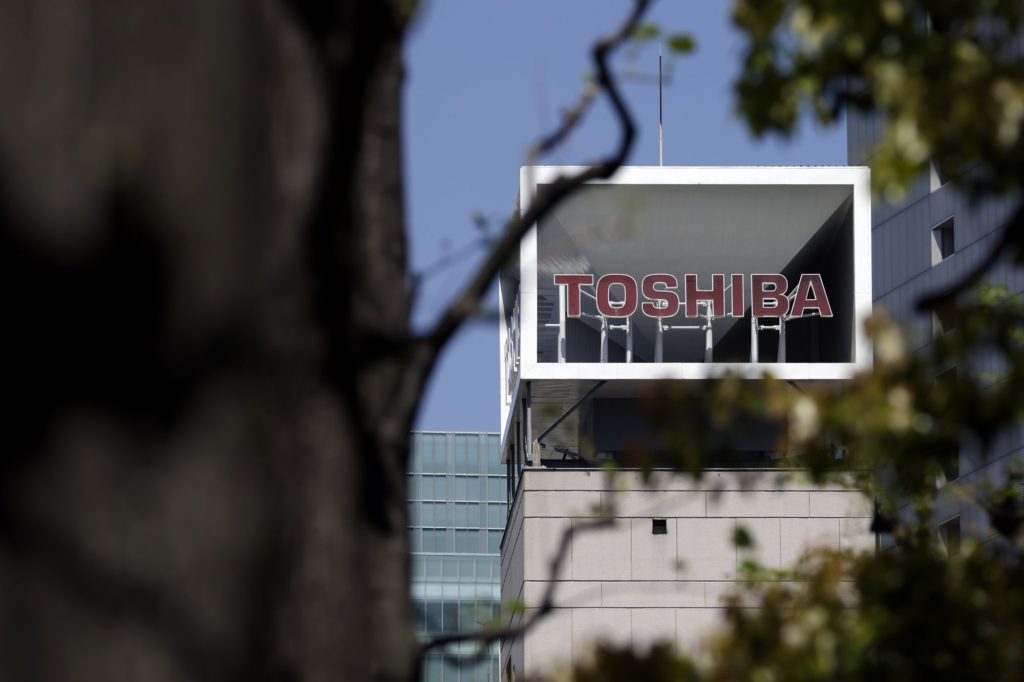
(Bloomberg) — A buyout deal to potentially take Toshiba Corp. private is taking longer than anticipated as banks haven’t yet decided whether to extend loans to the company’s preferred bidding group, according to people familiar with matter.

Banks including Sumitomo Mitsui Banking Corp. are considering issuing commitment letters for loans to a consortium led by Japan Industrial Partners Inc. and aren’t expected to make a decision until mid-December, which is later than planned, the people said. The lenders are reviewing the JIP-led group’s plans for Toshiba’s business, and to assess whether the loans will be redeemed on schedule, the people said, asking not to be identified as the information is private. 

Toshiba had previously set a deadline of Nov. 7 for the financing to be secured, Bloomberg News has reported.

JIP’s consortium, which is the preferred bidder, is in talks with banks for a takeover of Toshiba at a valuation of about 2.2 trillion yen ($15.9 billion), and is seeking about 1.2 trillion yen in syndicated loans, the people said. The consortium is seeking another 200 billion yen in commitments from banks to cover operating costs after the acquisition, they added. 

Discussions are ongoing and the banks could decide not to proceed with the loans, the people said. Representatives for JIP and SMBC declined to comment.

While the JIP-led group had initially planned on completing the deal as soon as the end of March, it scrapped that estimate given the delay in getting commitments from banks, the people said. Some members of the consortium have become hesitant about the valuation that had been proposed, people familiar with the matter have said.

The JIP-led group is in talks with about 20 potential co-investors to back its offer, Bloomberg News has reported. Those include Japanese companies such as Rohm Co., Suzuki Motor Corp. and Iwatani Corp., as well as financial services firm Orix Corp.

–With assistance from Min Jeong Lee.

More stories like this are available on bloomberg.com

©2022 Bloomberg L.P.
Equities Tumble on Unrest in China, Dollar Climbs: Markets Wrap

(Bloomberg) — Shares slid while the dollar and Treasuries rose as growing unrest in China over Covid restrictions sent a shiver through global markets.

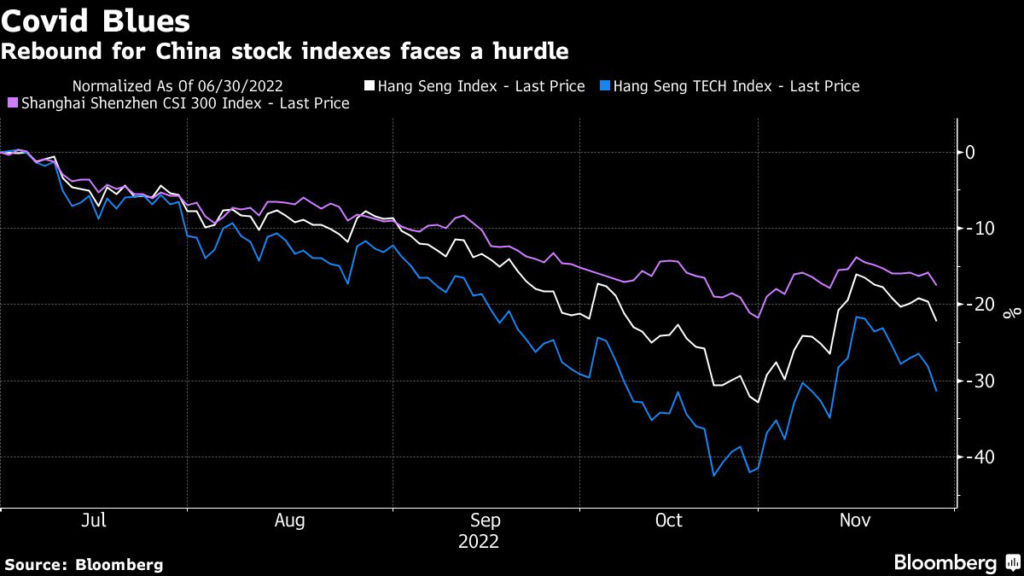
Chinese equities led stock-market declines in Asia, with weakness also evident in European futures. US contracts dropped as modest customer traffic and heavy discounting by American retailers on Black Friday added to the downbeat tone.

The greenback strengthened on haven demand, showing notable gains against the currencies of Australia and South Korea, which are heavily exposed to trade with China. The onshore yuan dropped as much as 1% before trimming its loses. 

The advance in Treasuries was accompanied by a rally in Australian and New Zealand government bonds. Meanwhile, the cost to insure Asia’s ex-Japan high-rated dollar bonds against default headed for its first increase in five days.

“Markets will respond negatively to the widespread protests and rising case numbers, which are likely to trigger new supply-chain disruptions and dampen consumption demand, at least in the short term,” said Gabriel Wildau, managing director at Teneo Holdings LLC in New York. 

Oil slumped to the lowest level since December as the developments in China punished risk assets and clouded the outlook for energy demand, adding to stresses in an already-fragile global crude market.

Gold edged lower as the dollar strengthened, placing downward pressure on the precious metal.

The downbeat mood emanating from China contrasts with the boost to sentiment in global markets last week after the Federal Reserve’s Nov. 1-2 meeting minutes showed most officials backing slowing the pace of interest-rate hikes. 

Fed Focus

Since the Fed’s latest meeting, investors have parsed a bevy of economic data that somewhat eased inflation concerns, further strengthening the case for smaller rate hikes.

The S&P 500 notched a weekly gain of 1.5% that took the index to the highest level since early September. The Nasdaq 100 also eked out a gain for the week.

All eyes will be on the US jobs report this week and on Fed Chair Jerome Powell and New York Fed President John Williams, who are among central bank officials scheduled to speak. 

Amid the challenges in China, the nation’s central bank on Friday cut the amount of cash lenders must hold in reserve for the second time this year, an escalation of support for an economy that’s being weighed down by Covid curbs. 

“Anything exposed to China is probably going to be vulnerable,” said Jessica Amir, a market strategist at Saxo Capital Markets in Sydney. “Forward earnings of Chinese exposed companies will be in question and investors will probably express that by selling.”

Key events this week:

  • Fed’s John Williams speaks, Monday
  • Fed’s James Bullard MarketWatch interview, Monday
  • ECB’s Christine Lagarde addresses European Parliament committee, Monday
  • Euro area economic confidence, consumer confidence, Tuesday
  • US Conference Board consumer confidence, Tuesday
  • EIA crude oil inventory report, Wednesday
  • China PMI, Wednesday
  • Fed Chair Jerome Powell speech, Fed’s Michelle Bowman Lisa Cook speak, Wednesday
  • Fed releases its Beige Book, Wednesday
  • US wholesale inventories, GDP, Wednesday
  • S&P Global PMIs, Thursday
  • US construction spending, consumer income, initial jobless claims, ISM Manufacturing, Thursday
  • Fed’s Lorie Logan, Michelle Bowman, Michael Barr speak, Thursday
  • BOJ’s Haruhiko Kuroda speaks, Thursday
  • US unemployment, nonfarm payrolls, Friday
  • Fed’s Charles Evans speaks, Friday
  • ECB’s Christine Lagarde speaks, Friday

Some of the main moves in markets:

Stocks

  • S&P 500 futures fell 0.6% as of 6:53 a.m. London time.
  • Nasdaq 100 futures fell 0.8%
  • Euro Stoxx 50 futures fell 0.5%
  • The Topix Index fell 0.7%
  • The Hang Seng Index fell 1.8%
  • The Shanghai Composite Index fell 0.8%

Currencies

  • The Bloomberg Dollar Spot Index rose 0.2%
  • The euro fell 0.2% to $1.0373
  • The Japanese yen rose 0.7% to 138.22 per dollar
  • The offshore yuan fell 0.3% to 7.2151 per dollar
  • The British pound fell 0.2% to $1.2073

Cryptocurrencies

  • Bitcoin fell 2.3% to $16,192.37
  • Ether fell 3.5% to $1,172.21

Bonds

  • The yield on 10-year Treasuries declined four basis points to 3.64%
  • Australia’s 10-year yield declined six basis points to 3.52%

Commodities

  • West Texas Intermediate crude fell 2.4% to $74.45 a barrel
  • Spot gold fell 0.2% to $1,752.01 an ounce

This story was produced with the assistance of Bloomberg Automation

–With assistance from Georgina Mckay and Jacob Gu.

More stories like this are available on bloomberg.com

©2022 Bloomberg L.P.

Close Bitnami banner
Bitnami
