

Bloomberg

Stocks Retreat as China Unrest Saps Risk Appetite: Markets Wrap

(Bloomberg) — Stocks started the week on a negative note on concern China may have to tighten its Covid curbs further, undermining prospects for global economic growth and sparking unrest in key cities.

The S&P 500 trimmed its monthly rally. Apple Inc. slid as Bloomberg News reported that turmoil at its key manufacturing hub of Zhengzhou is likely to result in a production shortfall of close to 6 million iPhone Pro units this year. Amazon.com Inc. drove gains in retailers, with analysts saying Cyber Monday results will paint a fuller picture of demand this holiday season. Oil hit the lowest since December.

The unrest in China complicates expectations of the country’s path to reopening, which — along with prospects of more moderate Federal Reserve interest-rate increases — had buoyed sentiment toward riskier assets in recent sessions. Chances are also growing of a messy exit from Beijing’s Covid Zero policy, analysts at Goldman Sachs Group Inc. warned.

“This is going to keep economic activity subdued in the country, and beyond,” said Fawad Razaqzada, market analyst at City Index and Forex.com. “The civil unrest is adding another layer of uncertainty over the economic situation there. It is certainly hurting investor sentiment across the financial markets.”

Just when the S&P 500 was trying to break above the highs of mid-November, sentiment turned negative, threatening the market’s recent momentum. Timing is most inconvenient here as the index approaches a crucial technical zone in the shape of both the 2022 downtrend and the 200-day moving average. Should the recent bullishness evaporate, short-term tactical bear trades might spark a bout of profit taking.

Stagflation is the key risk for the global economy in 2023, according to investors who said hopes of a rally in markets are premature following this year’s brutal selloff. Almost half of the 388 respondents to the latest MLIV Pulse survey said a scenario where growth continues to slow while inflation remains elevated will dominate globally next year. The second most likely outcome is deflationary recession, while an economic recovery with high inflation is seen as least probable.

European Central Bank President Christine Lagarde said Monday she’d be surprised if euro-zone inflation had peaked, suggesting the recent ramp-up in interest rates isn’t close to being over.

Fed Chair Jerome Powell is expected to this week cement expectations that the central bank will slow its pace of hikes next month, while reminding Americans that its fight against inflation will run into 2023. Powell is scheduled to deliver a speech, nominally focused on the labor market, at an event on Wednesday.

Key events this week:

  • Euro area economic confidence, consumer confidence, Tuesday
  • US Conference Board consumer confidence, Tuesday
  • EIA crude oil inventory report, Wednesday
  • China PMI, Wednesday
  • Fed Chair Jerome Powell speech, Wednesday
  • Fed releases its Beige Book, Wednesday
  • US wholesale inventories, GDP, Wednesday
  • S&P Global PMIs, Thursday
  • US construction spending, consumer income, initial jobless claims, ISM Manufacturing, Thursday
  • BOJ’s Haruhiko Kuroda speaks, Thursday
  • US unemployment, nonfarm payrolls, Friday
  • ECB’s Christine Lagarde speaks, Friday

Some of the main moves in markets:

Stocks

  • The S&P 500 fell 0.6% as of 9:57 a.m. New York time
  • The Nasdaq 100 fell 0.2%
  • The Dow Jones Industrial Average fell 0.4%
  • The Stoxx Europe 600 fell 0.6%
  • The MSCI World index fell 0.6%

Currencies

  • The Bloomberg Dollar Spot Index rose 0.1%
  • The euro rose 0.3% to $1.0425
  • The British pound fell 0.4% to $1.2046
  • The Japanese yen rose 0.4% to 138.59 per dollar

Cryptocurrencies

  • Bitcoin fell 2.2% to $16,203.2
  • Ether fell 4.2% to $1,164.46

Bonds

  • The yield on 10-year Treasuries was little changed at 3.68%
  • Germany’s 10-year yield advanced three basis points to 2.00%
  • Britain’s 10-year yield advanced three basis points to 3.15%

Commodities

  • West Texas Intermediate crude fell 1.5% to $75.12 a barrel
  • Gold futures fell 0.4% to $1,761.10 an ounce

This story was produced with the assistance of Bloomberg Automation.

–With assistance from Sujata Rao, John Viljoen, Vildana Hajric, Peyton Forte and Isabelle Lee.

More stories like this are available on bloomberg.com

©2022 Bloomberg L.P.
VW-Backed Battery Maker May Delay German Plant as US Woos Suppliers

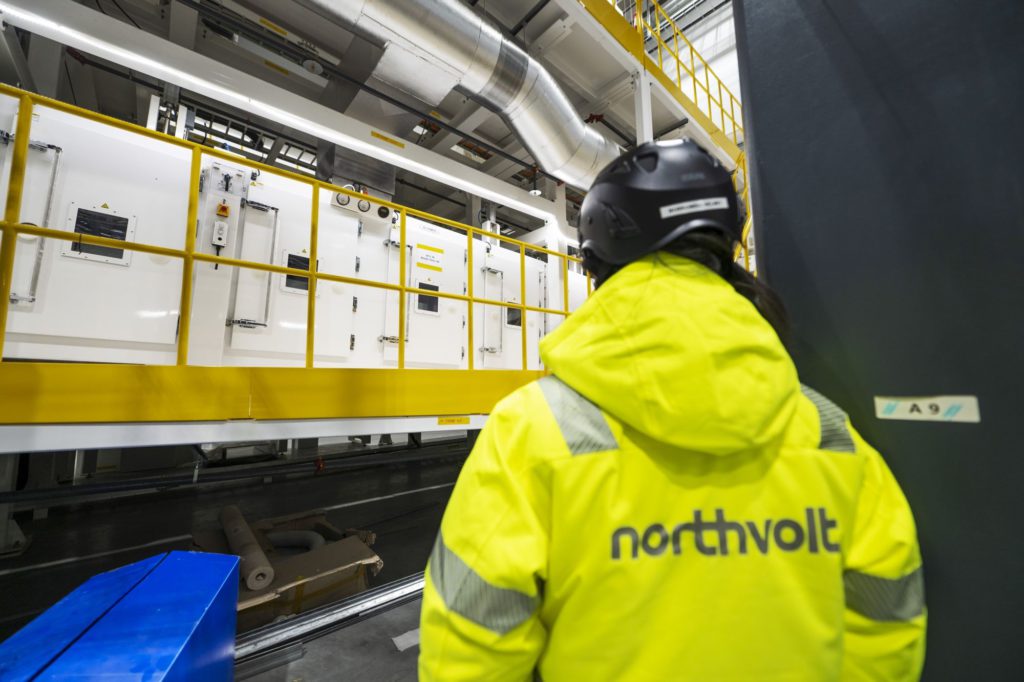
(Bloomberg) — Northvolt AB is considering postponing its planned factory in Germany as surging energy costs threaten to stall the country’s bid to build a sizable electric-vehicle supply chain.

The Swedish manufacturer will decide next year whether to build the Heide facility in northern Germany in time for production to start in late 2025 or expand first in North America, where US President Joe Biden is wooing cell manufacturers with billions of dollars in incentives.

“Given what is happening in North America and what is happening in Europe on the other hand, with energy prices not the least, we are during next year going to decide what to prioritize,” said Jesper Wigardt, a Northvolt spokesman. A decision in favor of North America might delay the German plant “a bit.”

The Heide facility is among the first EV projects in Europe’s biggest economy that may get pushed back because of runaway energy inflation. Northvolt’s deliberations also point to intensifying competition among countries trying to attract key manufacturers supplying the shift away from the combustion engine.

Germany’s industrial sector has been heavily dependent on cheap gas from Russia and has suffered severely since Moscow curtailed shipments, sending prices soaring. Producing batteries is energy intensive because of the high heat involved. Costs for logistics and construction services have also increased.

Europe’s energy crisis could render cell plants in the region “practically unviable” and production may move elsewhere as a result, the head of Volkswagen AG’s namesake brand, Thomas Schaefer, said earlier Monday. 

Read more: VW Warns Soaring EU Energy Costs Render Battery Plants Unviable

Rising costs add to pressure to respond to the Inflation Reduction Act, the US climate and tax law that aims to boost domestic EV production and reduce reliance on China for battery components and materials.

“IRA has changed the dynamics for suppliers, the entire value chain is looking at North America instead of at Europe,” Wigardt said. “European politicians on various levels need to act quickly to ensure that Europe remains attractive to invest in.”

Northvolt hasn’t made a final decision on the Heide timeline and in any case will have to expand in Europe to be a leader in that market, Wigardt said.

The Heide plant is due to produce first cells in late 2025, with commercial output starting the following year. Northvolt had announced the project in March, saying it will have an annual capacity of 60 gigawatt-hours — sufficient for roughly 1 million EVs — and benefit from abundant wind power suppliers in northern Germany.

Volkswagen, which has invested in Northvolt, plans to have six battery factories in full operation across Europe by 2030.

–With assistance from Monica Raymunt.

More stories like this are available on bloomberg.com

©2022 Bloomberg L.P.
Chinese Stocks in US Rise, Erasing Drop Triggered by Protests

(Bloomberg) — Chinese stocks listed in the US rallied Monday, erasing losses from premarket trading, amid hope that nationwide protests that roiled China will lead to a quicker shift in Beijing’s Covid Zero policies.

The exchange-traded KraneShares CSI China Internet Fund, which holds more than 40 Chinese stocks, jumped 4.7% at 9:45 a.m. in New York, erasing a decline of as much as 1% in the premarket session. E-commerce firm Pinduoduo Inc. rallied 15% after better-than-expected earnings. KE Holdings, a platform that facilitates housing transactions, jumped 6.9% as China’s securities regulator issued new measures to support listed housing developers.

Stocks that are most sensitive to economic reopening rose, including restaurant operator Yum China Holdings Inc. and online travel agency Trip.com Group Ltd. Internet giants like Alibaba Group Holding Ltd. and JD.com Inc. also rallied after slumping in Hong Kong.

Protesters took to the streets in various cities and universities across China over the weekend in a rare act of defiance against the government and its landmark strategy of lockdowns and mass testing campaigns. The demonstrations were fueled by a deadly fire in a high-rise apartment block in Urumqi, with some protesters saying virus restrictions hampered rescue efforts. Local officials denied that.

Although the social tension may help accelerate China’s reopening, “it is undeniably adding another layer of uncertainty for the Chinese market at the moment when most of the investors are re-calibrating their positions in preparation for 2023,” said Xiadong Bao, a fund manager at Edmond de Rothschild Asset Management in Paris.

The civil unrest is adding another twist to the turbulent Chinese stock market, which has been on a recovery path since Beijing loosened some Covid restrictions this month in a surprise move. The MSCI China Index is on pace for its best month this century, but remains down 27% for the year as of Friday’s close, with investors still waiting for a clear signal that Beijing is softening its zero-tolerance stance toward the pandemic.

Investors will pay close attention to how protests pan out this week. While China’s government hasn’t publicly responded to the unrest, some localities — including the capital city of Beijing — have been paring back restrictions despite surging Covid cases. A local official in the capital said movement restrictions imposed to trace the source of Covid or identify those infected generally must not exceed 24 hours. 

“We don’t expect such protests to last long or further spread given how they were triggered, and there is no organized structure behind them,” said Neo Wang, Evercore ISI managing director for China research. “Political risk in China remains very low.”

Still, Mark Mobius, founding partner at Mobius Capital Partners, said in an interview with Bloomberg Television that Chinese markets will suffer in the short term if Beijing cracks down on protesters. And with virus caseload spiking and public discontent boiling over, Goldman Sachs Group Inc. economists said China could face a “disorderly” exit from its Covid Zero policies.

“The path to reopening is likely to be noisy with local infections at risk of remaining high in winter months,” Citigroup Inc. economists led by Johanna Chua said in a note. While the protest and further tightening in Covid restrictions “are unlikely to bode well for sentiment, we are cautious not to interpret these as overly bearish,” they said.

–With assistance from Yiqin Shen.

(Updates with details and comments throughout after the market opens.)

More stories like this are available on bloomberg.com

©2022 Bloomberg L.P.
Etsy Roars Back From Bursting of Pandemic Bubble With 78% Rally

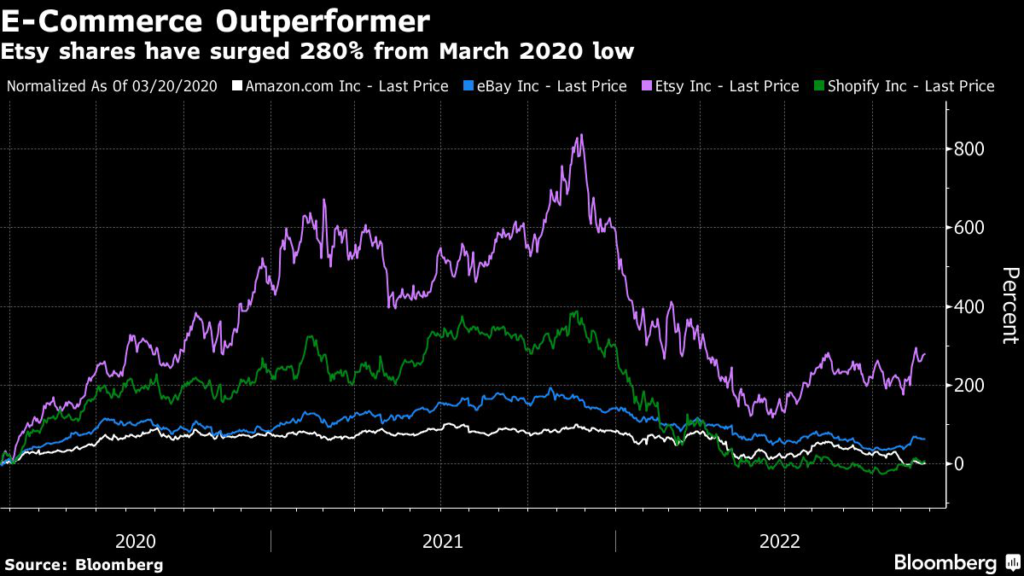
(Bloomberg) — Etsy Inc. is proving to be something of a breakout star among e-commerce stocks in the second half of the year, as the company’s business model helps it dodge much of the inflation that has pushed up costs at online merchants such as Amazon.com Inc.  

Shares of the Brooklyn-based retailer have surged 78% from their 2022 low in mid-June, far outpacing Amazon, Shopify Inc. and EBay Inc. Like most stocks in the industry, Etsy has plunged from the peak set last year, when the pandemic caused a rush into all things e-commerce, yet it’s almost quadrupled from the depths of the coronavirus outbreak in March 2020.

The stock rose 2% on Monday.

Etsy serves as a platform for artisans to sell their wares, meaning the company doesn’t have to spend big on warehouses or inventory as a traditional retailer does. And investors are looking ahead to a pickup in sales growth over the next couple of years.

“The nature of Etsy’s business model has been a large advantage for the company —- especially entering the holiday season,” said Pedro Palandrani, director of research at Global X ETFs. 

E-commerce stocks soared to eye-watering valuations during the pandemic as sales surged at an unprecedented rate when billions of home-bound consumers took to online platforms for their retail fix. Now that economies have reopened, the stock-market fallout from the bursting of that bubble has been massive. 

At the same time, rising inflation has prompted the Federal Reserve to raise interest rates, causing an investor exodus from high-valuation stocks and a pullback in consumer spending. US retailers showed modest sales growth over Black Friday weekend, using deep discounts to lure shoppers stung by the rising cost of living. Cyber Monday results will paint a fuller picture of demand this holiday season, analysts say.

Analysts predict 7.7% growth for Etsy sales this year, which pales in comparison to last year’s 35%. However, they see growth re-accelerating to 9.2% in 2023, 13% in 2024 and 15% in 2025, according to data compiled by Bloomberg.

“Marketplaces like Etsy have an advantage over brands and retailers that own inventory and fulfill their own orders as they can largely bypass the growing inflationary pressures — from warehousing to shipping,” said Poonam Goyal, an analyst at Bloomberg Intelligence. 

Because shoppers don’t go to Etsy for daily essentials, but rather for gift items, the company has benefited from an uptick in parties, weddings and other events this year, Goyal said. 

Etsy also has expanded through acquisitions, buying clothing resale site Depop last year, said Palandrani, who also oversees the Global X E-Commerce ETF. Etsy is the second-largest holding in the ETF and by far its best performing component in the second half of the year. 

The arts-and-crafts platform also benefited as investors turn their focus to costs at companies. Shoppers on Etsy buy products like handmade custom mugs or personalized Christmas ornaments from artists and sellers, eliminating the company’s need to spend on large warehouses and additional staff to run those facilities for storing inventory from third-party sellers.

“While the market chalked Etsy up as a ‘pandemic play,’ selling items like custom masks during the height of the pandemic, Esty used its buyer and seller base to expand its platform,” said Jane Edmondson, co-founder and CEO at EQM Indexes, the Amplify Online Retail ETF’s index provider. “It is the perfect example of an online retailer that has come out of the pandemic environment stronger and better, far exceeding investor expectations.”

Tech Chart of the Day

The Nasdaq Golden Dragon China Index of US-listed Chinese stocks is up 20% this month, as of its most recent close, even after a slump of almost 6% last week, and has a chance of recording its biggest-ever monthly gain. Prices may finish the month under pressure, though, given the nationwide protests in China against the Covid Zero policies. 

Top Tech Stories

  • Turmoil at Apple Inc.’s key manufacturing hub of Zhengzhou is likely to result in a production shortfall of close to 6 million iPhone Pro units this year, according to a person familiar with assembly operations.
    • Apple partner Foxconn is offering bonuses of as much as $1,800 to existing workers at its Zhengzhou facility, hoping to sustain the staff levels it needs to run the world’s largest iPhone factory.
  • A deal to take Toshiba Corp. private is taking longer than anticipated as banks haven’t yet decided whether to extend loans to the company’s preferred bidding group, according to people familiar with matter.
  • As Big Tech reels from the blow of higher interest rates and slowing growth, one top-performing hedge fund manager is going against the tide to bet on the sinking shares of Facebook-owner Meta Platforms Inc.
  • Amazon.com Inc. will wind down parts of its Indian operations, showing that even the crucial growth market with 1.4 billion consumers isn’t immune to Chief Executive Officer Andy Jassy’s cost-reduction campaign.
  • Twitter Inc. is hiring, according to slides from a company talk tweeted by owner Elon Musk, following sweeping job reductions in a cost-cutting drive since the billionaire took over the social network.
  • Activision Blizzard Inc. shares sank further away from Microsoft Corp.’s proposed takeover price as investors grow concerned that the US antitrust regulators will block the $69 billion deal.

–With assistance from Ryan Vlastelica.

(Updates to market open.)

More stories like this are available on bloomberg.com

©2022 Bloomberg L.P.
The Uber-ization of US Trucking Is Only Speeding Up

(Bloomberg) — US trucking is entering a tumultuous period that will likely reshape the $875 billion industry.

Shipping rates that spiked during disruptions caused by the pandemic have plummeted — some are now calling it a “freight recession” — as inventory gluts across the US lowered demand. That has placed the sector at a disadvantage during annual contract negotiations now in full swing, but means retailers and other customers will benefit from lower transportation costs.

There’s also a shakeout among the brokers who match trucking companies with loads that need to be shipped. Silicon Valley entered the fray a few years ago and digitized what had been a transaction done with phone calls and paper. Large and established brokers have also bolstered their technology, leaving the 17,000 smaller firms that haven’t evolved vulnerable.

“There’s going to be consolidation,” said Brett Suma, chief executive officer of Loadsmith, a startup founded in 2019 that’s projected to generate sales of $130 million this year and turn a profit. 

When Suma started his career in the truck industry a couple of decades ago, his job was to open up packets of paperwork delivered by courier to log the deliveries made by drivers for Knight-Swift Transportation Holdings Inc. Now the company he runs is trying to eliminate all that paper. 

“The haves of the technology are going to grow,” Suma said. “The have-nots of the technology will be consumed.”

Inventory Glut 

Meanwhile, uncertainty reigns. Retailers still have too much inventory, a result of consumers pulling back from apparel and other goods after splurging last year. The US might also be heading into a recession, which would put more pressure on spot market truckload rates that are down 40% from a year ago, according to KeyBanc Capital Markets.

Contracted freight tonnage that’s seasonally adjusted fell 2.3% in October from September, the largest decline since the beginning of the pandemic, according to the American Trucking Associations. Contract freight rose 2.8% in October when compared with a year ago, the lowest gain since April, the trade group said.

The brokerage battlefield is pitting legacy brokers, such as C.H. Robinson Worldwide Inc. and RXO Inc. that are expanding automated systems, against digitally native newcomers, such as Uber Technologies Inc.’s freight unit and Convoy Inc. Large trucking companies, including J.B. Hunt Transport Services Inc. and Werner Enterprises Inc., are adding more competition by building out their own digital brokerages.

The race to become the leading digital platform includes Werner’s $113 million acquisition this month of ReedTMS Logistics, a Tampa, Florida-based freight broker with $372 million in annual revenue. That came after Uber Freight’s purchase of Transplace last year for $2.25 billion.

Most brokers are asset-light, which means they don’t own trucks. Instead, they shepherd freight from origin to destination by playing matchmaker between shippers and truckers. Brokers build capacity in this fragmented industry by signing up as many of the 2 million US freighters as they can. These carriers are mostly small, with half of them being just one-truck operations. Less than 6,000 carriers own more than 100 trucks. 

The automation technology removes labor by providing a computer application for truckers to find freight and accept the price for hauling it. There’s still a lot of paperwork used in the industry. But services, including Transflo, are bridging the transition by allowing drivers to scan trip documents at truck-stop kiosks to digitalize the paperwork for fleet operators.

Uber Freight and Convoy have gobbled up market share, but struggled to make a profit. Convoy, which raised $260 million in April led by Baillie Gifford is still investing in its technology and capturing market share, CEO Dan Lewis said in an interview.

Bob Biesterfeld, CEO of C.H. Robinson, has been through several dips in the freight market and is responding by planning to cut costs by $175 million — mostly through personnel reductions — to preserve profit while also boosting spending on automation. C.H. Robinson projects the freight downturn will pressure its operating margins, but expects to come out stronger when the cycle eventually turns positive, he said.

“We want to drive profitable market share growth and deliver strong shareholder returns through the cycle,” Biesterfeld said in an interview.

Brewing Battle 

RXO, the digital freight broker spun out from XPO Logistics Inc., expects to make money during the downturn and pick up new business, according to CEO Drew Wilkerson. The company brought on Yoav Amiel, a former Uber exec, from XPO to supercharge its automation technology.

The digital startups that have scooped up customers have done so mostly by offering lower prices, which isn’t a new tactic in the industry, Wilkerson said. In the end, it’s still a relationship business because shippers depend on brokers to deliver their freight on time.

“If a customer lets you in on price, they’re going throw you out on price as well,” Wilkerson said.

Suma projects Loadsmith will generate $8 million of earnings before interest, taxes, depreciation and amortization this year and plans to fund expansion with its own cash. The company expects sales growth to slow down next year amid the downturn in freight demand. The company also will pursue an acquisition at the end of next year or beginning of 2024 to catch the upswing in the freight cycle.

“We look at ’23 as a year where we implement a bunch of new technology,” Suma said. “Then we come out of the gate swinging in ’24.”

–With assistance from Richard Clough.

More stories like this are available on bloomberg.com

©2022 Bloomberg L.P.
Meta Fined $277 Million for Leak of Half a Billion Users

(Bloomberg) — Meta Platforms Inc. was slapped with a €265 million ($277 million) fine for failing to prevent the leak of the personal data of more than half a billion users of its Facebook service.

The Irish Data Protection Commission, the main privacy watchdog for Meta in the European Union, levied the fine following a probe that found the social-media company had failed to apply strict safeguards required under the bloc’s sweeping General Data Protection Regulation. 

On top of the fine — the third-biggest under GDPR — the watchdog ordered Meta’s Irish unit to make sure its processing complies with the law, according to an emailed statement on Monday. 

The Irish authority is the lead watchdog for some of Silicon Valley’s biggest tech firms that have set up an EU base in the country, including Meta. It opened its probe following revelations that “a collated dataset of Facebook personal data” had been published on the internet. Personal information on 533 million Facebook users worldwide reemerged on a hacker website last year, including their phone numbers and email addresses. 

The investigation looked into “Facebook Search, Facebook Messenger Contact Importer and Instagram Contact Importer tools in relation to processing carried out by Meta” between May 2018 and September 2019, the data protection commission said. 

The social network has previously said the data is old and that the problem had been found and fixed in 2019.

Meta said in a statement on Monday that “protecting the privacy and security of people’s data is fundamental to how our business works” and that it had cooperated fully with regulators.

“We made changes to our systems during the time in question, including removing the ability to scrape our features in this way using phone numbers,” the company said. “Unauthorized data scraping is unacceptable and against our rules and we will continue working with our peers on this industry challenge. We are reviewing this decision carefully.”

Data watchdogs in Europe saw their powers increased overnight in May 2018, when the GDPR took effect and gave them the power to levy fines of as much as 4% of a company’s annual sales.

The biggest penalties under GDPR so far are a record €746 million fine for Amazon.com Inc. by its lead privacy watchdog in Luxembourg, followed by a €405 million fine for Meta’s Instagram, and a €225 million fine for Meta’s WhatsApp unit, both by the Irish authority.

(Updates with further company comment in eighth paragraph. A previous version of the story corrected a typo on the company name.)

More stories like this are available on bloomberg.com

©2022 Bloomberg L.P.
Equities Drop on Protests in China, Oil Slumps: Markets Wrap

(Bloomberg) — US equity futures slid and oil tumbled, undermined by the growing unrest in China over Covid restrictions. The dollar and Treasuries ceded earlier gains that were fueled by investors’ dash to safety.  

Contracts on the S&P 500 and Nasdaq 100 fell, with oil companies prominent among decliners in US premarket trading. Apple Inc. dropped after a report that turmoil at its key Chinese manufacturing hub could result in heavy production shortfalls. Chinese shares listed in the US slipped, including e-commerce giants Alibaba Group Holding Ltd. and JD.com Inc.  

Europe’s equity benchmark also fell, led by steep declines in oil stocks.

The unrest in China complicates expectations of the country’s path to reopening, which — along with prospects of more moderate Federal Reserve interest-rate increases — had buoyed sentiment toward riskier assets in recent sessions. Chances are also growing of a messy, earlier-than-expected exit from Beijing’s Covid Zero policy, analysts at Goldman Sachs Group Inc. warned. 

“We have seen small and sporadic protests against the harsh Chinese anti-covid measures for some time,” said Stuart Cole at Equiti Capital. “But the difference this time I think is that the protests are growing and become widespread across the country. This is all coming at a time when China’s role as the manufacturing engine for the global economy is spluttering.”

As the developments in China further clouded the outlook for energy demand, oil slumped to the lowest level since December. Gold rebounded after earlier declines that accompanied the strengthening dollar.

The yuan dropped as much as 1.1% before trimming losses against the dollar, while the yen and Swiss franc benefited from haven demand.

Fed Focus

The downbeat mood emanating from China contrasts with the boost to sentiment in global markets last week after the Fed’s Nov. 1-2 meeting minutes showed most officials backing slowing the pace of interest-rate hikes. 

Since the Fed’s latest meeting, investors have parsed a bevy of economic data that somewhat eased inflation concerns, further strengthening the case for smaller rate hikes.

The S&P 500 notched a weekly gain of 1.5% that took the index to the highest level since early September. The Nasdaq 100 also eked out a gain for the week.

All eyes will be on the US jobs report this week and on Fed Chair Jerome Powell and New York Fed President John Williams, who are among central bank officials scheduled to speak. 

Strategists at Goldman Sachs and Deutsche Bank said stock markets are in for a wild ride next year as they don’t yet reflect the risk of a US recession.  

The Goldman team including Christian Mueller-Glissmann and Cecilia Mariotti said their model implies a 39% probability of a US growth slowdown in the next 12 months, but risk assets are only pricing in an 11% chance. Deutsche Bank’s Binky Chadha, meanwhile, expects the S&P 500 Index to slump 19% from current levels in the third quarter as a recession begins, before rebounding in the fourth quarter.


Key events this week:

  • Fed’s John Williams speaks, Monday
  • Fed’s James Bullard MarketWatch interview, Monday
  • ECB’s Christine Lagarde addresses European Parliament committee, Monday
  • Euro area economic confidence, consumer confidence, Tuesday
  • US Conference Board consumer confidence, Tuesday
  • EIA crude oil inventory report, Wednesday
  • China PMI, Wednesday
  • Fed Chair Jerome Powell speech, Fed’s Michelle Bowman Lisa Cook speak, Wednesday
  • Fed releases its Beige Book, Wednesday
  • US wholesale inventories, GDP, Wednesday
  • S&P Global PMIs, Thursday
  • US construction spending, consumer income, initial jobless claims, ISM Manufacturing, Thursday
  • Fed’s Lorie Logan, Michelle Bowman, Michael Barr speak, Thursday
  • BOJ’s Haruhiko Kuroda speaks, Thursday
  • US unemployment, nonfarm payrolls, Friday
  • Fed’s Charles Evans speaks, Friday
  • ECB’s Christine Lagarde speaks, Friday

Some of the main moves in markets:

Stocks

  • Futures on the S&P 500 fell 0.7% as of 7:17 a.m. New York time
  • Futures on the Nasdaq 100 fell 0.7%
  • Futures on the Dow Jones Industrial Average fell 0.5%
  • The Stoxx Europe 600 fell 0.8%
  • The MSCI World index fell 0.2%

Currencies

  • The Bloomberg Dollar Spot Index fell 0.1%
  • The euro rose 0.7% to $1.0469
  • The British pound was little changed at $1.2084
  • The Japanese yen rose 0.7% to 138.17 per dollar

Cryptocurrencies

  • Bitcoin fell 2.2% to $16,212.61
  • Ether fell 3.5% to $1,172.72

Bonds

  • The yield on 10-year Treasuries was little changed at 3.67%
  • Germany’s 10-year yield advanced three basis points to 2.00%
  • Britain’s 10-year yield was little changed at 3.12%

Commodities

  • West Texas Intermediate crude fell 2.9% to $74.10 a barrel
  • Gold futures rose 0.2% to $1,772.30 an ounce

This story was produced with the assistance of Bloomberg Automation.

–With assistance from Brett Miller.

More stories like this are available on bloomberg.com

©2022 Bloomberg L.P.
Crypto Fraud Leaps in UK as Scammers Target Unwary Amateurs

(Bloomberg) — Crypto fraud has jumped by nearly a third in the UK as scammers increasingly target more inexperienced investors.

The value of UK cryptocurrency fraud leaped 32% to £226 million ($273 million) from £171 million in the year ending Sept. 20 2022, according to data from Action Fraud, the UK’s national reporting center for fraud and cyber crime. The number of reported frauds also increased by 16%. 

“Whenever times are tough, fraudsters always seek to prey on less experienced investors by promising huge returns,” Hinesh Shah, a financial crime investigator at law firm Pinsent Masons, said in a statement. “Scams involving cryptocurrencies can be especially potent for smaller investors who may be desperate to make a ‘quick buck’.”

Read More: How Serial Meltdowns Are Shaking Crypto’s Foundations: QuickTake

The surge in crypto crimes highlight a wider problem with fraud, which ramped up after the Covid-19 pandemic. UK Finance, a trade body, called the problem an “epidemic” and estimated £1.3 billion was stolen through general fraud and scams in 2021. Last week, Metropolitan Police Service arrested 100 people in the UK over a global phone number “spoofing shop” scam. 

Shah said that it’s likely that civil courts across the UK will see a rise in claims against crypto fraudsters, with the possibility of victims joining class action style lawsuits against crypto exchanges.

More stories like this are available on bloomberg.com

©2022 Bloomberg L.P.
Tesla and South Korea Might Not Be the Dream Pairing It Seems

(Bloomberg) —

Elon Musk surprised South Korea and Tesla watchers alike when he popped up last week on a video call with President Yoon Suk Yeol. Yoon’s office released details of the chat, revealing Musk had said he considered the nation a top choice for investment. Shares of battery-related companies like Samsung SDI and Posco jumped, even though Musk didn’t clearly say he actually wants to build a factory in the country.

Yoon, battling poor public opinion polls, was keen to make the pitch for why the world’s richest man may want to consider South Korea, citing the country’s high-quality engineers and auto components makers, and stable supply of electricity. Analysts also were upbeat.

“It’s possible, because Tesla is already using a lot of parts made by Korean companies,” Koh Tae-bong, a Seoul-based analyst at HI Investment & Securities, told me. “There’s no country like South Korea that has an almost full supply chain for EVs. We have a large chipmaker in Samsung Electronics, three battery-cell makers, cathode and anode materials makers, camera module makers and other smaller key component makers.”

Koh isn’t wrong. General Motors has its largest technical center outside the US in South Korea and speaks highly of its engineers there. The country has proven resilient throughout Covid, skirting large-scale lockdowns that have been common in China. Musk probably would also like South Korea’s Foreign Investment Promotion Act, which provides cash incentives and tax benefits.

The South Korean public loves Tesla, too, as I witnessed during a trip to Jeju island in May to attend the International Electric Vehicle Expo. Retail investors have  bought into Tesla stock in a big way, with individuals in South Korea holding around $9 billion of shares, according to data from the Korea Securities Depository.

South Korea also fits right into Musk’s “ hardcore” working culture. It’s one of the hardest-working countries, logging more hours than the US and any other Asian country in the OECD. Just 4.4% of some 21 million people in the country are working from home, up from only 2% in 2020, the first year of the pandemic.

On the flipside, there are reasons Musk might struggle in South Korea. There’s the obvious geopolitical risk stemming from North Korea’s nuclear activities. Strong labor laws also can manifest in frequent strikes by highly unionized workforces. There’s one going on now, as it happens, by the truckers union that’s clogged up ports and industrial complexes and hampered supply of key exports.

Musk’s opposition to unions is well-documented. He’s a vocal critic of the United Auto Workers, and the National Relations Labor Board ruled last year that Tesla had repeatedly violated US labor law.

“South Korea is known as having some of the strongest labor unions in the world,” said Choi Woongchul, a professor at Kookmin University in Seoul. “I’d put the chance of a new Tesla gigafactory in Korea at zero.”

Musk might want to read up on Kaher Kazem, the former head of GM in South Korea, who now faces a potential jail term on charges of illegally hiring contract workers. Prosecutors are seeking a 1.5-year prison sentence for Kazem, who at one stage was banned from leaving the country.

HI Investment’s Koh had a thought about how a Tesla plant in South Korea might work: “Make it 100% automated.” Musk had better get busy on his humanoid robots.

More stories like this are available on bloomberg.com

©2022 Bloomberg L.P.

Asian Crypto Regulations Diverge as Singapore, Hong Kong Change Course (Podcast)

  • Listen to Bloomberg Crypto on the iHeartRadio App
  • Listen to Bloomberg Crypto on Apple Podcasts
  • Listen to Bloomberg Crypto on Spotify  

(Bloomberg) — Ask any regulator and they’ll tell you the same thing: they have a tough job. As soon as they seem to have a grasp on whatever the last crisis was, some new thing comes along and blows up in the patch they were responsible for. But that doesn’t mean they all take the same approach to managing and preventing crises. Consider crypto: so many different vintages of debacle, so many different countries involved. 

In late 2022, Hong Kong updated its crypto regulations in a way that signaled a goal of increasing retail access to the asset class. In sharp contrast, nearby Singapore tightened regulations after big losses this year for retail investors. Korea, still dealing with the aftermath of the collapse of the Terra/Luna tokens, is currently focusing on enforcement. And India, somewhat uniquely in the region, is using tax policy to drive behavior.

Bloomberg senior editor for crypto Sunil Jagtiani joins the show to talk about how different Asian countries are approaching crypto regulation in the shadow of the FTX collapse.

Subscribe to the Bloomberg Crypto Newsletter at https://bloom.bg/cryptonewsletter 

This podcast is produced by the Bloomberg Crypto Podcast team: Supervising producer: Vicki Vergolina, Senior Producer: Janet Babin, Producers: Sharon Beriro and Muhammad Farouk, Associate Producers: Mo Andam and Ty Butler. Sound Design/Engineer:  Desta Wondirad.

More stories like this are available on bloomberg.com

©2022 Bloomberg L.P.

Close Bitnami banner
Bitnami