Bloomberg

Alibaba Faces Volatile Reaction to Earnings as Woes Mount

(Bloomberg) — Alibaba Group Holding Ltd. faces a wild ride over the next few days, with options pricing pointing to huge swings in the stock as investors brace for a drop in earnings and further regulatory scrutiny.

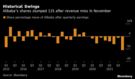
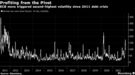
The Chinese e-commerce giant’s American depository receipts are poised to move nearly 7% after it reports an estimated 60% drop in quarterly profit drop on Thursday, Bloomberg data shows. That would be the second-sharpest earnings reaction for Alibaba since 2015, following an 11% slump on its revenue miss in November. 

Investor sentiment to Alibaba is becoming increasingly fragile, with Beijing telling the nation’s biggest state-owned firms and banks to start a fresh round of checks on their financial exposure and other links to Ant Group Co., Bloomberg reported Monday. Alibaba owns a third of Ant.

A lower profit for the three months through December would be the third straight drop for the company and its longest stretch of declines since 2015, Bloomberg data show.

Its U.S.-listed stock is down 64% from its October 2020 peak as Ant Group, in which Alibaba holds a one-third stake, was forced to scrap its initial public offering amid Beijing’s crackdowns on private enterprise. On Wednesday, the firm’s Hong Kong-listed shares advanced 0.9%, snapping three consecutive days of declines. 

The expected move is based off implied one-day volatility that uses two option market expiries closest to the earnings date.

Fresh worries over Beijing’s regulatory plans for the sector saw Chinese technology shares slip for a third straight session on Tuesday. The Hang Seng Tech Index fell 1.9% to the lowest close since its inception in 2020, with Alibaba among the biggest losers.

(Updates with Hong Kong closing price in paragraph 5)

More stories like this are available on bloomberg.com

©2022 Bloomberg L.P.

Broker FlatexDegiro Attracts Private-Equity Interest 

(Bloomberg) — flatexDEGIRO AG, the online brokerage, is attracting preliminary interest from private equity firms, according to people familiar with the matter. 

Buyout firms are studying the feasibility of a take-private of Frankfurt-listed Flatex, the people said, asking not to be identified discussing confidential information. Flatex has a market value of 2 billion euros ($2.3 billion).

Flatex is open to considering any formal takeover offers, a spokesperson for the company said, declining to comment further. Shares in Flatex jumped as much as 21% on Wednesday. 

Formerly known as FinTech Group AG, Flatex was founded by Bernd Foertsch in Kulmbach, Bavaria. It competes with firms such as Sweden’s Nordnet AB, Switzerland’s Swissquote Group Holding AG and Hargreaves Lansdown Plc in the U.K. 

The company previously considered a sale before opting to buy Amsterdam-based rival Degiro BV to create a “Charles Schwab” of Europe. Like other online brokers, Flatex saw a rise in users during the Covid-19 pandemic, with stay-at-home orders fueling a surge in retail trading. 

The firm had 1.9 million customers at the end of the third quarter of 2021, 64% more than the same period a year prior. Revenue for the quarter rose by more than a third to 88.1 million euros, according to company earnings. Despite this, Flatex’s shares have fallen 17.5% in the past year. 

(Updates with shares in third paragraph and company users, revenue in final paragraph.)

More stories like this are available on bloomberg.com

©2022 Bloomberg L.P.

Brevan Howard Had One of Its Best Trading Days on ECB Bet

(Bloomberg) — Brevan Howard Asset Management is enjoying a banner February after its traders benefited from the European Central Bank’s surprise signal that it could start raising rates as soon as this year.

The firm had one of its best-ever days of trading on Feb. 4 as complex option bets on short-term euro rates paid off, people with knowledge of the matter said. One of the notable winners was Brevan Howard’s star trader Fash Golchin who rebounded after his record annual loss last year, according to the people and an investor document seen by Bloomberg. 

Other money managers such as Louis Basger, Minal Bathwal and Alfredo Saitta as well as the firm’s multi-trader Alpha Strategies platform also gained, one of the people said.  

Traders scrambled to bet that the ECB will end years of negative interest rates in 2022 after its President Christine Lagarde declined to rule out a hike this year to contain the fastest inflation since the euro was created. The global pile of sub-zero debt shrunk by $1.5 trillion in the space of a day after her Feb. 3 statement. Macro hedge funds lost about 0.3% in January, according to Bloomberg data.

Brevan Howard’s flagship fund has risen almost 4% for the year-to-date through Feb. 11, with the vast majority coming in the first eleven days of this month, according to a letter seen by Bloomberg. Golchin, who runs his own fund and manages part of the firm’s $8.3 billion Master Fund, gained 8%.

A spokesman for the Jersey, Channel Islands-based investment firm, which managed about $18.4 billion in assets at the end of last year, declined to comment. 

Brevan Howard is rebuilding under Chief Executive Officer Aron Landy after years of mediocre returns at the firm saw its assets crash to about $6 billion from a peak of more than $40 billion. The firm, co-founded by billionaire Alan Howard, has given separate funds to its star traders and is also building a digital assets unit.  

Macro hedge funds are seeing their fortunes turn after a decade of sub-par returns as central banks move to raise rates and inject market volatility. Firms such as Haidar Capital Management, Trend Capital Management and Castle Hook Partners were some of the biggest winners in the industry last month. 

Brevan Howard’s traders had been betting on higher rates since last year. While the trades failed to fire in 2021 with the firm’s main fund ending the year up just about 2%, they have started to pay off now. Golchin, who specializes in multi-asset macro trading, made money on euro rates trading as well as U.S. rates, commodities and precious metals, one of the people said. 

The money manager, who is among Brevan Howard’s star traders, recorded a loss of about 9% last year. Golchin was key to record gains at the firm in 2020, when he made about 60%.

(Updates with macro hedge fund returns in fourth paragraph)

More stories like this are available on bloomberg.com

©2022 Bloomberg L.P.

Hong Kong Weighs Easing Listing Rules for Large Tech Firms

(Bloomberg) — Hong Kong is considering easing some listing requirements for large, advanced technology firms that are currently not eligible in an effort to help them meet capital needs for research and development, according to the city’s top financial official.

The Securities and Futures Commission and Hong Kong Exchanges & Clearing Ltd. are reviewing the Main Board listing rules, such as the profit and trading record requirements, and examine to revise them to meet the fundraising needs of “large‑scale advanced technology enterprises,” Hong Kong’s Financial Secretary Paul Chan said in his annual budget speech Wednesday. 

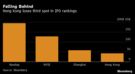
Hong Kong is no longer in the top three listing venues globally as a widening crackdown by China on a vast range of industries hit investor sentiment and share prices. Initial public offerings in the Asian financial hub raised $43 billion in 2021, behind both the Nasdaq and New York Stock Exchange as well as Shanghai, data compiled by Bloomberg show.

It marks a drop in ranking from the first half, when the city came third with $31 billion. Shanghai has since pulled ahead, with $58 billion raised in 2021, the data show. Hong Kong was among the top three IPO exchanges worldwide in 2020 after grabbing the top spot in 2019 and 2018. 

The SFC and HKEX are in the early stages of exploring whether Hong Kong’s listing regime might accommodate “sizeable pre-profit or pre-revenue companies involved in capital- intensive advanced technology R&D, recognising the risks that arise in relation to businesses which have no or limited sales,” an SFC spokesperson said. HKEX’s Chief Executive Officer Nicolas Aguzin also welcomed the proposal in an emailed statement. 

It’s unclear whether the plan, if proceeding, would accelerate listing by some of China’s largest tech firms under regulatory scrutiny. Ride hailing giant Didi Global Inc. was planning to withdraw from the New York Stock Exchange and instead seek a new listing in Hong Kong, a move aimed at allaying concerns over the potential exposure of its data to foreign powers. Didi was placed under a cybersecurity probe and its services were taken off Chinese app stores days after pulling off its $4.4 billion U.S. IPO in June against Beijing’s wishes. 

Chan also said a working group formed by HKEX, SFC and the Hong Kong Monetary Authority — the de facto central bank –has completed its feasibility study on allowing yuan-denominated stocks to be traded via the southbound Stock Connect. They will start discussion with mainland Chinese authorities and the Hong Kong government is prepared to support the scheme with measures such as waiving stamp duty on stock transfers paid by market makers to boost liquidity. 

(Updates with comments from SFC and HKEX in fifth paragraph.)

More stories like this are available on bloomberg.com

©2022 Bloomberg L.P.

Standard General’s Kim Makes Biggest Bet Yet on TV Stations

(Bloomberg) — After twice being rebuffed in his bid to compel Tegna Inc. to sell itself, Standard General’s Soo Kim can claim victory with a deal to buy the media company for $5.4 billion. 

The agreement comes on the heels of another Standard General proposal last month to acquire the remaining shares the firm didn’t already own in the casino and entertainment company, Bally’s Corp., in a deal valued at about $1.6 billion.

The back-to-back moves are helping to cement the reputation of Kim, 47, as a turnaround expert who can spot and hopefully restructure those increasingly rare gems — undervalued companies. 

His firm was a major player in the bankruptcy restructurings of American Apparel, Radio Shack and Young Broadcasting, which was later merged with Media General Inc.

Whether he’ll succeed with Tegna remains to be seen. 

Spun off from Gannett Co. in 2015, Tegna owns 64 television stations in Denver, Seattle, Minneapolis and 48 other U.S. markets, as well as media properties such as the True Crime Network. The broadcaster managed to fight off Standard General as it unsuccessfully mounted two boardroom battles aimed at pushing the company to sell.

The proxy fights grew nasty at times, with Standard General accusing Tegna of fostering a culture of racial bias at its stations. Last March, the hedge fund also called for an investigation into a 2014 incident when Tegna Chief Executive Officer Dave Lougee mistook a Black media executive for a valet at a business luncheon. Lougee later apologized.

Kim said purchases like that of Tegna is what can be expected from the hedge fund in the future. In an interview, he said his firm is focused on mature, small-to-mid-sized companies that have plenty of upside that the market is overlooking.

“People have said valuations are high in the public markets. But not in the space I look,” Kim said. “It’s an interesting scenario where valuations are reasonable — if not cheap — for companies that I understand and businesses that require some change. I actually think it’s a wonderful time to invest.”

Apollo Global Management, which is financing Standard General’s takeover of Tegna, itself was close to buying the broadcaster in early 2020 before the pandemic upended the market and its plans.

Last summer, after losing his second proxy fight at Tegna, Kim reached out to Apollo to see if they might work together on a deal. At the time, rumors were circulating that media mogul Byron Allen was also kicking the tires. Apollo and Standard General agreed to join forces.

Kim said the negotiations teetered on the brink of falling apart several times before they managed to get the deal across the line last weekend. 

The sticking points included who would assume the regulatory risk, the size of the termination fee, the deal’s structure and even who would be involved as buyers, people familiar with the matter told Bloomberg News.

Apollo’s majority ownership stake in competitor Cox Media Group gave rise to antitrust concerns if the private equity giant were to have control of both companies. As a result, the deal was structured in a way that will see Standard General hold substantially all the voting shares in the company while Apollo and its affiliates will receive preferred shares with no voting rights. 

After the deal closes, possibly in the second half of this year, Cox Media Group will acquire Tegna’s stations in Austin, Dallas and Houston, Texas.

Standard General is far from a household name. But Kim has been a rising star in the hedge fund industry since co-founding Standard General 15 years ago.

He was born in South Korea before moving to Queens, New York, with his family when he was five. He attended Princeton University and cut his teeth on Wall Street on the trading desk at Bankers Trust Co.

Kim eventually moved to Och-Ziff Capital Management, where he was part of the team that launched its fixed-income business. From there, he co-founded the credit hedge fund, Cyrus Capital Partners, in 2005 before leaving to co-found Standard General two years later.

He acknowledges the difficulties ahead for Tegna. “Tegna is running smoothly from some perspectives but the reality is that the whole business needs to change somewhat and continue to evolve because a lot fewer people get their news from television.”

Steven Cahall, an analyst with Wells Fargo Securities, said the deal should be a win-win for Apollo and Standard General. He said broadcast assets have great free cash flows, which make them attractive to both strategic and financial buyers. 

Apollo, meanwhile, was believed to be looking for a bigger station group as a partner for some of its legacy broadcast assets, Cahall said. “This deal seems to give everyone what they want.”

Deborah McDermott, Standard Media Group CEO, will become Tegna’s new CEO. She was on Standard General’s slate of director nominees during its first proxy battle with Tegna in 2020. Kim, who will become chairman, has a long history of working with McDermott dating back to her days as head of Young Broadcasting.

“Sometimes people go into acquisitions and crash and burn,” McDermott said. “We go in and look for the best out of that organization and blend the people who are there and find the best in it and fix the other stuff.”

Standard General’s offer for Tegna is a 39% premium to where the stock was trading before rumors of the deal broke last fall.

Kim’s approach at Bally’s isn’t that different. His offer to buy the casino operator’s shares came at about a 30% premium. Standard General is already Bally’s largest shareholder with a 21% stake in the company, and Kim has grown the business through acquisitions as its chairman.

Bally’s, which has a market value of roughly $1.9 billion, said Tuesday it had created a special board committee and hired financial and legal advisers to evaluate the non-binding proposal.

“Bally’s and Tegna have one very common denominator, which is their core businesses throw off a lot of earnings today. Whether it’s gaming or TV, they’re both license driven and there’s limited competition in every market,” Kim said. “But both of them face a little bit of uncertainty due to the internet.”

For Bally’s, it’s an aging customer base and online gaming, he said. For Tegna, it’s that those in the younger generation aren’t watching the 11 p.m. news the way their parents did, he said.

“So, how do these very strong but old franchises actually survive in the internet era?” Kim asked. “We think that injecting a level of technology and evolution into the business will be amazing.”

More stories like this are available on bloomberg.com

©2022 Bloomberg L.P.

Baillie Gifford’s Market Woes Expose Risk to U.K. Pension Funds

(Bloomberg) — The decline in technology shares that’s hit Baillie Gifford risks exposing a group of U.K. pension funds to volatility because they have more money tied up with the Scottish fund company than any other stock picker.

Data compiled by Bloomberg from the roughly 90 municipal retirement funds in England and Wales show 21 of them had allocated between 13% and 40% of their assets in growth strategies run by the Edinburgh-based firm. Collectively, those funds had about 11.5 billion pounds ($15.7 billion) of assets with Baillie Gifford, based on their most recent annual reports.

Baillie Gifford, which oversaw a total 336 billion pounds for clients worldwide at the end of last year, is suffering from a downturn in its bets on the stocks that run across its portfolios. About 20% of its assets is concentrated in 15 investments that made the company such a success story during the pandemic and are now dropping in an equally dramatic manner.

In January, the firm saw more than a tenth of assets wiped off its U.K.-domiciled range, mainly due to poor performance, data from research company Morningstar Inc. showed last week. Clients withdrew record sums from its retail funds during the month.

Baillie Gifford is one of the biggest investors in several technology and biotech companies, including vaccine producer Moderna Inc., Illumina Inc., Zoom Video Communications Inc., e-commerce firm Shopify Inc. and Netflix Inc., data compiled by Bloomberg show. All of those stocks have plunged between between 30% and 60% since the end of August.

Long Haul

Pension funds invest for the long term and any dips in performance are typically ironed out over years. But the declines reflect how important Baillie Gifford’s success has become for U.K. funds that pay for the retirement of people such as teachers and police officers.

Baillie Gifford said municipal pension fund clients have an investment horizon that’s in sync with the firm’s approach to the markets. “They understand that on the route to excellent long-term investment performance, inevitably there will be some periods of under-performance,” a spokesperson said by email. 

Bloomberg spoke with seven of the 21 funds that figures show have the largest positions with Baillie Gifford, all of which said they were comfortable with their exposure to tech via Baillie Gifford and that they trust the company’s stock picking. Some said that the firm had reassured them it is taking measures to address recent performance.

‘Winning Formula’

Indeed, some of the municipalities have had hefty positions with Baillie Gifford for years, while others have gained from the Scottish asset manager’s more recent success. The firm’s stellar performance before the slump increased the value of holdings within many pension funds and is now leaving them more vulnerable on the way down.

The 1.7 billion-pound Westminster pension fund in London, for example, had about 25% of its assets invested in global equities via Baillie Gifford in 2021, up from 20% in 2019 as their value increased, annual reports show. The 9 billion-pound Hampshire pension fund had 18% of its assets invested across two similar Baillie Gifford strategies, up from 11% in 2019.

“The only thing that would really worry me would be style drift, i.e. setting aside a winning formula in response to short-term events,” said Quentin Marshall, who chairs the Kensington and Chelsea pension fund investment committee. 

The Kensington fund has invested with Baillie Gifford since 1994 and 24% of its assets were managed by the company as of 2021, its latest accounts show. Marshall said the allocation has been re-balanced throughout the years to avoid it becoming “excessive.”

The data compiled by Bloomberg show the majority of stocks in Baillie Gifford’s global portfolios are with tech or biotech companies. Many of the pension funds invest in global equities via Baillie Gifford’s so-called segregated mandates, the holdings of which are not available to the public. 

More stories like this are available on bloomberg.com

©2022 Bloomberg L.P.
China Needs ‘Negative List’ After Bribery Probe Linked to Ant

(Bloomberg) — The Communist Party of Hangzhou made a public statement about how it plans to move beyond the arrest of the city’s former party chief and how it will navigate the complex relationships between public officials and private companies. 

The city’s leading cadres gathered on Feb. 15 for what was described as a “warning” conference to explain how to support the party’s priorities while avoiding corruption. Zhou Jiangyong, the former party chief, was arrested this month on suspicion of taking bribes, in a case that has been linked to Jack Ma’s Ant Group Co. 

Government officials should formulate “a positive and negative list” in establishing their relations with businesses, according to a statement about the conference on the website of China’s anti-corruption watchdog Central Commission for Discipline Inspection. Officials should establish “clean but not distant” relations with private businesses to “support and guide standardized and healthy development of capital.”

“We should build a strong ‘ideological wall’ against corruption and degeneration. We should thoroughly eliminate the adverse impact of Zhou Jiangyong’s case and purify and repair the political ecosystem,” the statement said.

Beijing began a sweeping crackdown on the private sector in 2020 by forcing Ant Group to pull its plans for what would have been the world’s largest initial public offering on record. The scrutiny has since expanded to many of the country’s largest companies, including Alibaba Group Holding Ltd. The e-commerce giant is headquartered in Hangzhou and was also co-founded by Ma.

Earlier this year, Zhou appeared in a state media documentary that claimed the former party secretary used his influence in the Chinese tech hub to help his younger brother’s businesses. One of those companies had received investment from a firm controlled by Ma’s Ant Group, according to a local media report in August.

The Hangzhou party pressed for improved reporting of personal matters and better reporting of business relationships.

“A wrong understanding of the nature of capital will inevitably lead to the trap of ‘hunting’, illegal exercise of power will inevitably be severely punished by discipline and law,” the statement said. “A lack of strict self-discipline .. will inevitably harm ourselves, others and families.”

More stories like this are available on bloomberg.com

©2022 Bloomberg L.P.

China Considers ‘Negative List’ After Bribery Probe Tied to Ant

(Bloomberg) — The Communist Party of Hangzhou made a public statement about how it plans to move beyond the arrest of the city’s former party chief and how it will navigate the complex relationships between public officials and private companies. 

The city’s leading cadres gathered on Feb. 15 for what was described as a “warning” conference to explain how to support the party’s priorities while avoiding corruption. Zhou Jiangyong, the former party chief, was arrested this month on suspicion of taking bribes, in a case that has been linked to Jack Ma’s Ant Group Co. 

Government officials should formulate “a positive and negative list” in establishing their relations with businesses, according to a statement about the conference on the website of China’s anti-corruption watchdog Central Commission for Discipline Inspection. Officials should establish “clean but not distant” relations with private businesses to “support and guide standardized and healthy development of capital.”

“We should build a strong ‘ideological wall’ against corruption and degeneration. We should thoroughly eliminate the adverse impact of Zhou Jiangyong’s case and purify and repair the political ecosystem,” the statement said.

Beijing began a sweeping crackdown on the private sector in 2020 by forcing Ant Group to pull its plans for what would have been the world’s largest initial public offering on record. The scrutiny has since expanded to many of the country’s largest companies, including Alibaba Group Holding Ltd. The e-commerce giant is headquartered in Hangzhou and was also co-founded by Ma.

Earlier this year, Zhou appeared in a state media documentary that claimed the former party secretary used his influence in the Chinese tech hub to help his younger brother’s businesses. One of those companies had received investment from a firm controlled by Ma’s Ant Group, according to a local media report in August.

The Hangzhou party pressed for improved reporting of personal matters and better reporting of business relationships.

“A wrong understanding of the nature of capital will inevitably lead to the trap of ‘hunting’, illegal exercise of power will inevitably be severely punished by discipline and law,” the statement said. “A lack of strict self-discipline .. will inevitably harm ourselves, others and families.”

More stories like this are available on bloomberg.com

©2022 Bloomberg L.P.
China Crackdown Risk Roars Back in Probe of Jack Ma’s Empire

(Bloomberg) — From Alibaba to Tencent, China’s largest companies are once again at the center of a market storm, spurred by speculation that Beijing is readying another assault on the world’s biggest internet arena.

Three of China’s most valuable businesses — Alibaba Group Holding Ltd., Tencent Holdings Ltd. and Meituan — have shed more than $100 billion in the span of three turbulent days. It’s a remarkable reversal from just a week ago, as investors like Charlie Munger spotted bargains among China Tech Inc. after a $1.5 trillion selloff in 2021. Macquarie issued a report this month headlined “peak crackdown.” 

Now, investors are frantically attempting to parse a series of events that suggest Beijing is once more preparing to rein in its giant private sector. When Alibaba reports earnings Thursday, its executives will again face questions about Beijing’s intentions for a sector subjected last year to unprecedented regulatory curbs and punishments, after Xi Jinping’s administration launched a “common prosperity” campaign to curb tech-sector excesses and force them to share the wealth.

The bloodletting began Friday, when the top state economic planner demanded Meituan and its peers lower the fees they charge restaurants in pandemic-hit regions. On Monday, a pair of unverified online posts that went viral suggested Tencent — which weathered 2021’s onslaught better than most — was facing a major regulatory crackdown, forcing its public relations chief into an unusually aggressive denial.

Later that day, Bloomberg reported that Beijing had ordered state-run firms to report their exposure to Jack Ma’s Ant Group Co. — the hardest-hit firm in a year-long government campaign against “disorderly capital.” 

“The events of the past 48 hours are a wake-up call that regulation isn’t finished,” said Michael Norris, an analyst with Shanghai-based consultancy AgencyChina. “We are going to be in a situation where the regulation and the slowdown in China’s economy happen side by side. It’s going to be challenging for businesses that rely on consumers and merchant advertising to be able to make this year’s numbers.”

Shares in Alibaba and Tencent were up less than 1% in early Hong Kong trading Wednesday.

Read more: Chinese Tech Stocks Drop to New Crackdown Lows, Led by Alibaba

While many investors were counting on an end to the relentless regulatory pressure, fundamental questions remained about the ability of China’s tech giants to resume the growth they had enjoyed during a decade of near-unfettered expansion. Alibaba and Tencent had already been expected to record their slowest pace of quarterly revenue rises since listing.

The shell-shocked industry had been expected to tread more cautiously this year than ever before — curtailing the hiring and acquisition sprees of years past, for one.  Didi Global Inc. is preparing to reduce headcount by as much as 20% ahead of its Hong Kong IPO, Bloomberg News reported last week. Twitter-like Weibo Inc. has started to readjust its businesses since the start of the year, allocating some staff to new roles before letting them go, the company said in a statement last week, in response to online posts alleging the firm is firing a wave of people.

“The golden period of Chinese internet is probably already behind us,” said Jessica Tea of BNP Paribas Asset Management. “That said, we believe the peak of the regulatory intensity is probably behind us in this cycle, as we move from policy normalization to growth normalization.”

The Message Behind China’s Big Tech Wipeout: Shuli Ren

Now, the latest demands placed on Meituan and food delivery peers like Alibaba’s Ele.me suggest they’re also getting pressed into national service, with uncertain longer-term implications. The move to cut food delivery fees shows Beijing will enlist wealthy private firms to relieve the burden of smaller businesses hard-hit by China’s economic slowdown and its Covid-Zero strategy, Goldman Sachs analysts led by Ronald Keung wrote this week.

It’s intended “to help companies in affected industries overcome the impact of COVID-related challenges by lowering their costs,” they said. While it may impact short-term profitability for Meituan and Alibaba’s loss-making Ele.me, the analysts “see no long-term impact on Meituan’s business.”

The risks to growth are especially prominent at Alibaba, which last year swallowed a record $2.8 billion fine after regulators forced it to end certain merchant exclusivity practices that allegedly helped it one-up rivals. The regulatory assault has cut the company’s market value from $858 billion in October of 2020 to roughly $310 billion.

Its outlook is already challenging. Analysts forecast that revenue rose just 11% in the December quarter, by far the slowest rate of growth since it went public in 2014. Alibaba’s operating margin has slipped from 30.4% in 2017 to 10.7% in the twelve months ended September, pressured by new competitors and softening economic growth. The firm has seen video-streaming platforms Douyin — the domestic sibling to ByteDance Ltd.’s TikTok — and Kuaishou Technology draw business away from its Taobao and Tmall marketplaces. To make matters worse, its top online influencer-merchant, Viya, got caught up in a tax evasion scandal.

What Bloomberg Intelligence Says

The dimming macroeconomic picture and overall challenging environment for global equities remain headwinds to Tencent and China internet peers seeking a rebound from 2021’s rout, but trends could brighten as 2H22 approaches. Chinese economic stimulus, along with easing year-ago comparables, could be enough to stir a pickup after June.

— Matthew Kanterman and Tiffany Tam, BI analysts

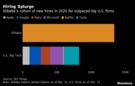
In 2020, Alibaba hired more people than Silicon Valley giants Alphabet Inc., Meta Platforms Inc., Microsoft Corp., Netflix Inc. and Tesla Inc. combined. It more than doubled its number of employees in the year ending March 2021 to 251,462, a total boosted in part by the takeover of the nationwide chain Sun Art Retail Group in October 2020. But it then added only another 7,000 in the following six months. Tencent’s most recent report in June also showed its hiring pace slowing.

The waning fortunes of China’s internet giants coincide with a re-assessment now underway in Silicon Valley, as the pandemic fades and takes the Covid-driven surge of internet activity with it. Facebook’s parent posted its first-ever decline in user numbers, while Shopify Inc. is warning of a slowdown.

At Tencent, revenue is expected to grow 9% for the fourth quarter, the slowest pace since its 2004 listing. That’s after appetite for ads was dented by stricter privacy rules and a suspension of new game approvals that has dragged on for more than six months. The company’s margins are already under pressure as the WeChat operator is now counting on overseas markets to spur gaming growth while devoting more resources into arenas like the cloud and fintech.

“Bottom line, this policy pivot is real,” said Wai Ho Leong, strategist at Modular Asset Management in Singapore, “and unlikely to soften anytime soon.”

FROM THE ARCHIVE: Why China Is Cracking Down on Its Technology Giants: QuickTake

(Updates with market action from the seventh paragraph)

More stories like this are available on bloomberg.com

©2022 Bloomberg L.P.
Banks Freeze Millions in Convoy Funds Under Trudeau Edict

(Bloomberg) — Canadian banks froze about C$7.8 million ($6.1 million) in just over 200 accounts under emergency powers meant to end protests in Ottawa and at key border crossings, a government official said Tuesday.

The new tally was revealed in testimony to lawmakers examining Prime Minister Justin Trudeau’s decision to invoke the country’s Emergencies Act to end a three-week occupation of the nation’s capital. 

Trudeau and his ministers have said the measures announced last week are meant to cut off funding to protest leaders and to pressure trucking companies to prevent their semis from being used again in blockades. Ottawa’s downtown core was cleared out over the weekend, but dozens of trucks remain gathered at encampments outside the city. 

Isabelle Jacques, an assistant deputy minister at the finance department, said it’s “possible although very unlikely” that small donors to the convoy have seen their accounts frozen, given that law enforcement agencies have focused on those directly responsible for the protests.

Banks have informed the government they’ve started to unfreeze the funds, Jacques said, adding that financial institutions are responsible for conducting their own reviews based on information from police. “I would think that the vast majority of accounts are in the process of being unfrozen,” she said.

‘Mayhem’ Makers

The emergency powers are still in place, having been approved by a majority of elected lawmakers in a vote Monday night. The government argues it still needs the powers in case the truckers attempt more blockades, which not only disrupted daily life in Ottawa but shocked the Canadian economy and supply chains by bringing key U.S. border crossings — in particular the Ambassador Bridge to Detroit — to a standstill.

Authorities believe there’s a risk of further unrest because of the encampments outside the city, according to Stephanie Carvin, a former government intelligence analyst who is now a professor at Carleton University in Ottawa. Some protesters have vowed to fight on against Covid-19 restrictions, she added, highlighting the presence of dangerous individuals within their ranks.

“There’s a determined core of people who are still in this movement, and they’re saying ‘We’re not going to end this until the mandates go away,’” she said. “There are violent extremist groups that have jumped onto this. They’re more interested in mayhem than mandates.”

Earlier Tuesday, Tamara Lich — who was the public face of the convoy and helped it crowdfund millions in donations — lost her bid for bail. An Ontario Superior Court judge concluded she was evasive during her testimony and was likely to commit more offences if released, according to multiple news outlets. Lich was arrested last Thursday and remains in detention on a charge of counseling to commit mischief.

Two other high-profile protest organizers have also been arrested over the past week. Chris Barber, a trucker, was released on bail Friday on the condition he leave Ottawa immediately and not further promote the convoy in any way. 

Pat King, who has hundreds of thousands of social media followers, was in a separate courtroom Tuesday arguing for his own release on bail. He faces four charges, including mischief, counseling to commit mischief, counseling to disobey a court order, and counseling to obstruct police. 

As of Monday, police had made a total of 196 arrests related to the Ottawa protest and laid criminal charges against 110 people. They had towed 115 vehicles.

The financial dragnet included halting transactions totaling C$3.8 million from a payment processor, as well as the freezing of 219 financial products, the disclosure of 57 entities and 253 Bitcoin addresses shared with virtual currency exchanges, according to a statement Monday from the Royal Canadian Mounted Police.

Those moves have been criticized as overreach by the opposition Conservative Party. They’ve also raised the ire of trucking companies whose rigs were involved in the protest. 

“I am extremely disappointed in our government,” Len Petkau, owner of Manitoba-based Terrain Transport, said by phone. “We’ll keep fighting for our rights as best as we can but it is very clear we’re under siege here, our freedom is.”

He had three company trucks at the Ottawa protest; one left Thursday and two departed Friday. Another owner-operator who drives for Terrain “and wanted to stay at any cost” was arrested Friday and his truck was towed, Petkau said. 

So far, Petkau’s assets are not frozen and he anticipates the driver will be able to pick up his truck as “they can’t seize a truck because of a legal protest.” He added: “I believe that across the country there is going to be massive uprisings here now because we can all see where this is going.” 

In Winnipeg, police gave protesters who’ve been blocking downtown streets until 5 p.m. local time on Wednesday to remove their vehicles, warning that they could face criminal charges if they don’t. 

(Updates with Winnipeg police warning in last paragraph)

More stories like this are available on bloomberg.com

©2022 Bloomberg L.P.

Close Bitnami banner
Bitnami