Bloomberg

Alibaba Halts Talks to Raise $1 Billion Before Lazada IPO

(Bloomberg) — Alibaba Group Holding Ltd. discussed raising at least $1 billion for Lazada before calling off negotiations with potential investors when talks bogged down over the Southeast Asian online mall’s valuation.

The Chinese e-commerce giant had aimed to secure financing for Lazada as a precursor to a spinoff of the Singapore-based company and a potential initial public offering, people familiar with the matter said. Alibaba had hoped to snag at least $1 billion but backed off after failing to secure its envisioned valuation, the people said, asking not to be identified discussing confidential deliberations.

Alibaba has mothballed the fundraising for now because it doesn’t need funds and markets remain volatile, given shrinking valuations for tech companies from New York to Hong Kong, the people said. Investors again punished Chinese tech stocks this week after speculation grew that regulators are amping up scrutiny of the industry.

Alibaba remains intent on eventually spinning off Lazada as a separate company, the people said, as competition heats up with fast-moving rivals like Sea Ltd.’s Shopee and Indonesia’s GoTo. Sea raised about $6 billion in a sale of U.S. shares and convertible bonds last year, while GoTo is raising capital to grab a larger slice of online retail in the region.

What Bloomberg Intelligence Says

Media reports of Alibaba’s attempts to raise funds for Lazada raises the likelihood that the company will invest more to combat stiff competition from its largest rival, Sea’s Shopee, outside mainland China. This may lower Alibaba’s free cash flow and delay the recovery of local retail profits through 2022. Disclosure of Alibaba’s overseas retail revenue and profit trends from this year onward should show the effectiveness of such investments in boosting its market share beyond the mainland. 

– Catherine Lim, analyst

Click here for the research.

The fundraising attempt could resume if conditions change, the people said. Representatives for Alibaba and Lazada declined to comment.

China’s biggest online retailer is looking abroad for growth as its home market cools and Beijing’s Covid Zero policy continues to depress consumption across the world’s No. 2 economy. In November, Alibaba cut its fiscal 2022 outlook after reporting sales that missed analyst estimates for a second straight quarter.

Competition is intensifying just as China grapples with the widest Covid-19 outbreak since the virus first emerged in Wuhan. Rivals like JD.com Inc. and Pinduoduo Inc. are stepping up investments to win over Alibaba’s users. Gross domestic product expanded 4% in the fourth quarter of last year, cooling further from the 4.9% growth in the previous period, with consumption stuck below pre-pandemic levels.

In December, Alibaba Chief Executive Officer Daniel Zhang and his lieutenants identified overseas business, poorer cities and cloud technology among the company’s prime growth drivers in the years ahead. 

Lazada, Alibaba’s Southeast Asian arm, Trendyol in Turkey and Daraz around South Asia have evolved into important units of the company. Alibaba outlined a long-term goal of quintupling Lazada’s gross merchandise value, the sum of transactions across its platforms, to $100 billion. It wants the business to serve more than 300 million users eventually, according to a slideshow posted on its website.

Read more: Alibaba Targets $100 Billion Southeast Asian Commerce Business

(Updates with analyst’s comment in the fifth paragraph.)

More stories like this are available on bloomberg.com

©2022 Bloomberg L.P.

Hostage Situation in Apple’s Amsterdam Store Ends With Suspect in Custody

(Bloomberg) — A hostage situation at Apple Inc.’s flagship retail store in Amsterdam ended with the suspect taken to hospital with serious injuries after getting hit by a police car. 

The suspect, a 27-year-old Amsterdam resident, contacted authorities during the incident and demanded 200 million euros ($227 million) in cryptocurrency and a safe exit from the Apple store at the bustling Leidseplein square, Amsterdam police officials said at a press conference early Wednesday. 

Earlier Tuesday, several Twitter accounts showed footage of police amassed outside the Apple store, in addition to a man being held at gunpoint inside the store. Other videos showed the suspect running out of the building after the fleeing hostage, and a police car eventually hitting the gunman.  

The suspect was in possession of both an automatic weapon and a handgun and fired at least four shots, according to the police. 

About 70 people were taken to safety by the police during and after the hostage crisis, with four of them found hiding in a closet, the police said. The National Criminal Investigation Department has launched an investigation into the incident after the suspect was overpowered by the police.

A spokesperson for Cupertino, California-based Apple didn’t respond to requests for comment. A number of Apple retail stores around the world have faced smash-and-grab robberies in the past, targeted at pricey iPhones, iPads and Mac computers. 

(Updates with details from police press conference)

More stories like this are available on bloomberg.com

©2022 Bloomberg L.P.
Stellantis Shares Soar as Pickup Sales Buttress Profit Margins

(Bloomberg) — Stellantis NV expects to deliver another year of double-digit returns in 2022 by getting past supply snarls and labor shortages with production of more profitable vehicles. 

Focusing assembly lines on higher-end models helped boost the Jeep, Ram and Peugeot maker’s adjusted operating income margin to 11.8% last year, comfortably exceeding its forecast for around 10%, Stellantis said Wednesday. The manufacturer also announced a dividend of 3.3 billion euros ($3.7 billion) for the first year of operations following the merger of PSA Group and Fiat Chrysler. 

The shares jumped as much as 6.2%, the most since Dec. 1, and were trading up 6% at 10:50 a.m. in Paris. 

The results were “a very strong beat across the board,” RBC analyst Tom Narayan wrote in a note. The North American business, where Stellantis sells the popular Ram 1500 pickup truck, brought in nearly two thirds of profit by one measure. 

Stellantis and its biggest carmaking peers have boosted margins by raising vehicle prices and selling a richer mix of higher-end models as shortages in the semiconductors needed for production roiled the global auto market. Optimism is growing that the bottlenecks are easing, with Renault raising its outlook last week, and General Motors Co. also saying supply constraints were loosening. 

At Stellantis, the expectation is for a gradual improvement in chip supplies toward the second half of 2022, Chief Financial Officer Richard Palmer said on a call with reporters.

“Clearly semiconductor availability continues to be an issue for the industry,” he said. The lack of the components led to lost output of about 1.7 million vehicles last year, or a fifth of planned production, he added. 

The continued uncertainty on chips could be a reason for Stellantis’s “vague” and conservative outlook both for itself and the industry, RBC’s Narayan wrote. He pointed to a forecast for “positive” free cash flow in 2022 compared with the 6.1 billion euros achieved last year.

Semiconductors aren’t the only challenge. Cost inflation on raw materials like steel and other metals, along with a tight labor markets in North America will also weigh on operations, Palmer said. 

“We’re still seeing some elevated levels of absenteeism, more in North America than in Europe, which is hurting our supply base to meet production,” he said. “The biggest issue for 2022 continues to be supply volatility and inflation.”

Chief Executive Officer Carlos Tavares is under pressure to achieve synergies of 5 billion euros pledged as part of the merger. Last year, the net cash benefit from synergies was 3.2 billion euros, the company said Wednesday, while adjusted operating income rose to a record 18 billion euros.

Tavares is scheduled to unveil the automaker’s longer-term strategy next week. This will come after a plan to plow 30 billion euros into electric cars and software, and partnerships to develop digital features. 


(Adds analyst comment in fourth paragraph.)

More stories like this are available on bloomberg.com

©2022 Bloomberg L.P.

Top Banks Shut H.K. Branches on Saturdays on Virus Outbreak

(Bloomberg) — Banks from HSBC Holdings Plc to Citigroup Inc. will temporarily close retail branches in Hong Kong on Saturdays from March 5 as the Asian financial hub scrambles to contain its worst outbreak of Covid.

HSBC, the city’s largest lender, will also shut 11 more outlets starting from Wednesday after several staff tested positive for Covid-19, the London-based bank said in a statement. The bank, which operates about 100 outlets in Hong Kong, last week closed some branches, including the one in its main office building in the Central district.

Citigroup shut two branches from Feb. 11, while Standard Chartered Plc will close branches and priority centers on Saturdays from Feb. 26. Bank of China (Hong Kong), meanwhile, said it will close a dozen outlets temporarily from Wednesday after employees had preliminary positive tests. 

Hong Kong has been hit by the worst outbreak since the pandemic began, with new infections now in the thousands each day. It will conduct compulsory testing of its entire 7.4 million population three times in March, deploying a key mainland China strategy in a bid to slow an outbreak that’s pushed the city’s resources to the brink. The Asian financial hub is considering imposing increasingly draconian measures, with a Hong Kong lawmaker calling for a short lockdown to rein in the outbreak. 

“This is a precautionary measure to safeguard the health and safety of the bank’s employees and customers in light of the rapidly evolving COVID-19 situation in Hong Kong,” according to the HSBC statement. 

HSBC’s chief financial officer Ewen Stevenson cautioned on Tuesday that there could be some disappointment in wealth revenues in the first quarter as the bank had to close about half of its branches in Hong Kong. 

(Adds details on Standard Chartered in third paragraph)

More stories like this are available on bloomberg.com

©2022 Bloomberg L.P.
Gold Fights Off Rising Rates, Bitcoin to Be Haven in Tough Times

(Bloomberg) —

Look no further than bullion to get a sense of how an historically unusual constellation of global risks is rippling through markets.

Prices have surged to the highest since the start of June on escalating tensions between Russia and the West over Ukraine, and a spike in U.S. inflation to the strongest in decades. At the same time, real interest rates — a key driver of gold — have jumped this year, countering the typically inverse correlation between the two. And in the battle over whether Bitcoin is a better modern-day store of value than bullion, the cryptocurrency is losing out, at least for now.

“Geopolitical risks have materialized and are escalating,” said Nicky Shiels, head of metals strategy at MKS PAMP SA, a trader and refiner of precious metals. “Gold at $2,000 is a higher probability in the near term, versus $1,800.” The metal traded around the middle of that range on Wednesday.

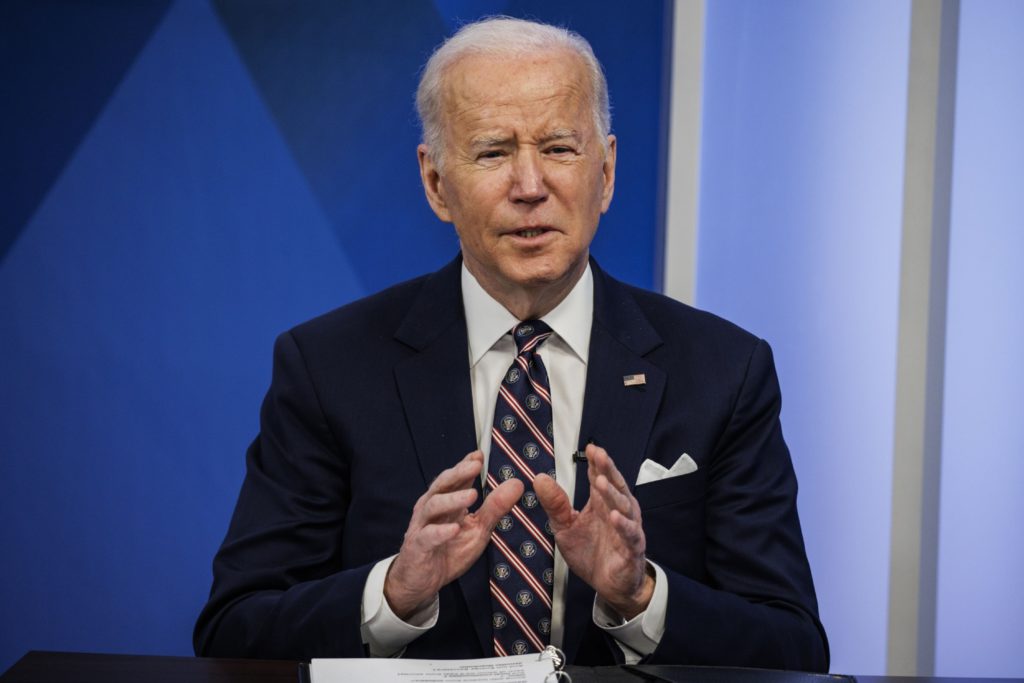
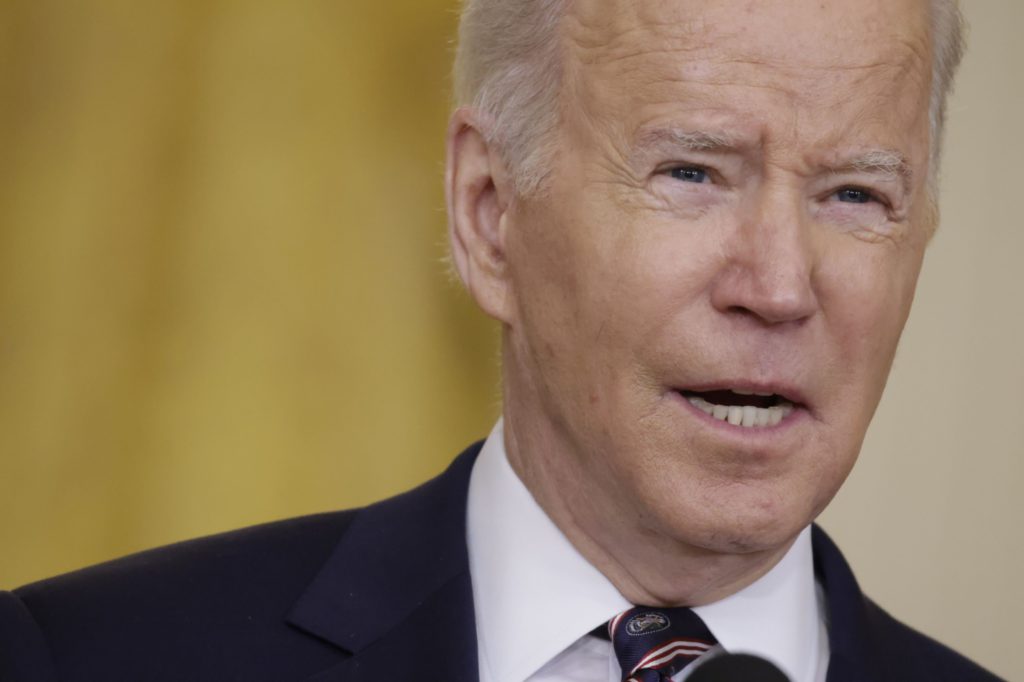
U.S. President Joe Biden unveiled sanctions this week targeting Russia’s sale of sovereign debt abroad and the country’s elites, after Vladimir Putin recognized two self-proclaimed separatist republics in eastern Ukraine as independent, a dramatic escalation in the standoff. Biden described the move as the start of Russia’s invasion of its neighbor, but Moscow has denied any plans to invade.

Before demand for a haven took off over Ukraine, bullion’s resilience had been a mystery to some observers, especially in the light of the Federal Reserve’s imminent tightening cycle. One concern was that the U.S. central bank could run the risk of triggering a recession by increasing rates more frequently and to a higher level than potentially needed to tame inflation.

“What’s really driving gold is a sense that the chances of a policy error are increasing with the Fed,” said Ross Norman, chief executive officer of Metals Daily, an information portal focusing on precious metals. “There’s a sense that the Fed is behind the curve, and when you have to play catch up, you have to put a fairly aggressive move forward in terms of rate-hiking, which a fragile economy may not be well positioned to adjust to.” 

Gold is also benefiting from some weakening in demand for cryptocurrencies, which are often seen as an alternative “fiat hedge,” according to Peter Berezin, chief global strategist at BCA Research Inc. Bullion has gained more than 3% this year, while Bitcoin has plunged 16%. 

Bullion had a largely lackluster 2021 after charging to an all-time high the year before on the back of ultra-accommodative monetary policy and pandemic support. Now, a rate liftoff is all but certain in March, and JPMorgan Chase & Co. economists estimate increases of 25 basis points at nine consecutive meetings. This could weigh on bullion, an asset that bears no interest.

“Gold traders have never lived through a rate hiking cycle amidst high inflation since the 1970s,” said Shiels from MKS PAMP. “There’s a lot of uncertainty over how this plays out: hiking cycles aren’t necessarily bearish for gold and it depends how real rates respond. At the end of the day, gold doesn’t control its own fate which is the added complexity.” 

Rising global risks have not been lost on investors who’ve piled into exchange-traded funds backed by bullion. As of Feb. 18, holdings in SPDR Gold Shares had surged by slightly more than 50 tons from a 20-month low in December. 

Other supportive drivers for bullion include physical demand from China and India and the possibility of undisclosed central bank purchases. 

The biggest consuming countries are back in full force after an abysmal 2020. Shipments to China from Switzerland, Europe’s key refining hub, jumped almost fivefold in January to a five-year high. Imports by India accelerated to the strongest level in a decade last year as jewelry sales almost doubled, with the demand outlook remaining bright, according to the World Gold Council. 

Meanwhile, central banks added 463 tons of gold to reserves last year, an increase of over 80% from a year earlier, according to the council, which added purchases will continue but at a slower pace. The central banks of Russia and China could look to buy gold in the open market and support prices when real yields spike, Citigroup Inc. said in a Feb. 17 note. “We think this has already materialized in 2022, but might not be reported in data yet,” the bank said.

Still, the question remains — can gold sustain levels around $1,900 an ounce when or if geopolitical tensions ease? UBS Group AG’s wealth management unit said in a note last week that “a break in the negative correlation between gold and U.S. real rates never really endures, and this time is no different.” 

More stories like this are available on bloomberg.com

©2022 Bloomberg L.P.

Apple Prefers Fines to Obeying Antitrust Order, Vestager Says

(Bloomberg) — Apple Inc. and other tech giants are opting to pay fines rather than comply with orders they don’t like, the European Union’s antitrust chief warned.

“Some gatekeepers may be tempted to play for time or try to circumvent the rules,” Margrethe Vestager said in an online speech at a U.S. awards ceremony. 

“Apple’s conduct in the Netherlands these days may be an example,” she said. The iPhone maker “essentially prefers paying periodic fines rather than comply” with a Dutch antitrust order to offer alternative app payments. A new EU law imposing curbs on big tech behavior should help tackle the problem, she added in the speech, delivered Tuesday.

Apple Gets Fifth Dutch Antitrust Fine Over App Payments

Apple is waging a global battle over fees for downloads and content on smartphones and tablets. The EU is separately probing Apple over curbs that hamper Spotify Technology SA and other music streaming services from taking payments outside the app store.

Apple has now been fined 25 million euros ($28 million) by Dutch antitrust regulators for not fully complying with a December order to offer payments outside the app store to dating app providers. 

The Authority for Consumers & Markets has been levying weekly fines and earlier this week criticized Apple’s offer to set up a separate payment mechanism as not serious and too difficult for developers.

Apple declined to immediately comment.

More stories like this are available on bloomberg.com

©2022 Bloomberg L.P.
Biden’s First Salvo of Russia Sanctions Hits With Thud, Not Roar

(Bloomberg) — U.S. President Joe Biden’s debut set of sanctions on Russia for its actions over disputed Ukrainian territory hit markets not with a bang, but a whimper. Instead of a sweeping package that crippled top Russian banks, cut its financial transactions off from the global economy, or personally singled out President Vladimir Putin — …

Biden’s First Salvo of Russia Sanctions Hits With Thud, Not Roar Read More »

Russia’s Richest Lose $32 Billion as Ukraine Crisis Deepens

(Bloomberg) — The fortunes of Russia’s super-rich have tumbled $32 billion this year, with the escalating conflict in Ukraine poised to make that wealth destruction much larger.  U.S. President Joe Biden on Tuesday unleashed sanctions targeting Russia’s sale of sovereign debt abroad and the country’s elites, and said he’s sending an unspecified number of additional …

Russia’s Richest Lose $32 Billion as Ukraine Crisis Deepens Read More »

Biden Ups Russia Sanctions, Calls Ukraine Invasion Underway

(Bloomberg) — U.S. President Joe Biden unveiled sanctions targeting Russia’s sale of sovereign debt abroad and the country’s elites, responding to what he described as the start of Vladimir Putin’s invasion of neighboring Ukraine. “He’s setting up a rationale to take more territory by force,” Biden said Tuesday at the White House. “This is the …

Biden Ups Russia Sanctions, Calls Ukraine Invasion Underway Read More »

Close Bitnami banner
Bitnami