Bloomberg

Tencent Quashes Talk of New Crackdown as Tech Wipeout Deepens

(Bloomberg) — Tencent Holdings Ltd. denied online speculation that it’s facing a major regulatory crackdown, issuing an unusually aggressive public response after fears of more tech-sector restrictions tanked markets on Monday. Zhang Jun, Tencent’s head of public relations, disputed a widely circulated post that suggested the company would weather another heavy blow from regulators in …

Tencent Quashes Talk of New Crackdown as Tech Wipeout Deepens Read More »

Trump’s New Social Media App Shows Errors on Launch Day

(Bloomberg) — Donald Trump’s new social media network, Truth Social, got off to a rocky start on its launch day, with some users being unable to register and others receiving error messages. 

Trump Media & Technology Group, which aims to take on big tech companies with offerings from social media to streaming, launched Truth Social to give the former U.S. President a platform after he was banned from Twitter and Facebook. 

The app, launched on Presidents’ Day and which has been reported to be tested since December, is also telling users there is a lengthy waiting list to sign up. 

Rumble, which is seen as a right-wing alternative to Google’s YouTube, is providing technology and cloud services to Trump Media & Technology Group. Rumble’s investors include well-known conservative venture capitalists J.D. Vance and Peter Thiel. Vance, author of the memoir “Hillbilly Elegy,” is also a Republican candidate for Senate in Ohio.

Read More: Trump Fans Are Making DWAC the Best-Performing SPAC of Its Kind

In October, Trump announced a plan to merge his media company with a blank-check company called Digital World Acquisition Corp., in a bid to help him regain a social media presence. 

Truth Social is available only on Apple Inc.’s iOS, with users in countries such as the U.K. being told the app is not available in their region. 

The app’s logo also caught the attention of Trailar, a small U.K.-based sustainable transport company, which told Bloomberg it’s investigating the similarities between Truth Social’s branding and its own.

“We are now seeking legal advice to understand next steps and options available to protect our brand,” a spokesperson for the British company said via email. “Trailar has no affiliation or connection with the Truth Social network site.”

(Updates with Trailar comment in final paragraph.)

More stories like this are available on bloomberg.com

©2022 Bloomberg L.P.

Ant-Backed Fintech Startup Buys E-Wallet Firm in Push Toward IPO

(Bloomberg) — M-DAQ, a fintech startup backed by Jack Ma’s Ant Group Co., agreed to buy e-wallet operator Wallex to expand its reach in Southeast Asia and pave the way for a possible public listing.

The deal marks the first in a potential series of acquisitions in the Southeast Asian payments space by the Singapore-based fintech company, said Jeremy Sng, a former head of Southeast Asia investment banking at CLSA who joined M-DAQ as its general manager in December. M-DAQ will inject over S$7 million ($5.2 million) of working capital into Wallex, said Sng, declining to disclose the total value of the deal.

M-DAQ is looking to snap up about two companies annually over the next two to three years before it guns for a listing in the U.S., London or Singapore, said Sng, who heads the company’s corporate finance and strategy. Potential targets include those with an enterprise value of $50 million to $250 million.

The acquisition will allow M-DAQ to tap thousands of Wallex’s customers — mostly small businesses and vendors on e-commerce platforms — and diversify its revenue streams. The company currently draws about two-thirds of its revenue from Ant, according to Sng.

Wallex operates an e-wallet which allows merchants to collect, convert and store money in different currencies. If the deal — subject to regulatory approvals — goes through, the combined entity is expected to process over S$15 billion in online transactions this year, Sng said. Wallex will continue as an independently operated business and brand.

M-DAQ’s technology guarantees foreign exchange rates in advance based on customer data, so that its clients — platforms like JD.com Inc. and Alibaba Group Holding Ltd.’s AliExpress — can in turn display prices of goods in local currencies for consumers. Merchants are also able to receive payments in their preferred currency. Affinity Equity Partners invested S$200 million in M-DAQ last year.

The startup is expanding its footprint as e-commerce gains ground in Southeast Asia. The region’s internet economy is set to double to $363 billion by 2025, research from Google, Temasek Holdings Pte and Bain & Co. shows.

More stories like this are available on bloomberg.com

©2022 Bloomberg L.P.

Reliance, Amazon, Disney Gird for $5 Billion Cricket Prize Fight

(Bloomberg) — Mukesh Ambani’s conglomerate is bringing together a consortium aiming to outbid entertainment giants Amazon.com Inc., Walt Disney Co. and Sony Group Corp. for the telecast rights to the Indian Premier League — a prize that could be worth $5 billion or more in the cricket-crazy nation of almost 1.4 billion people.

Helmed by Asia’s richest man, Reliance Industries Ltd. and its television partner Viacom Inc. are in talks to include James Murdoch-founded Lupa Systems LLC as well as Comcast Corp. in the consortium, according to people familiar with the development who asked not to be identified as the discussions are private. Bids are likely to exceed 400 billion rupees ($5.3 billion), the people said. 

Amazon will join the bidding war as it looks to spruce up its sports offerings for Amazon Prime, two of the people said. Walt Disney, which acquired the event’s telecast rights through 2022 with the acquisition of Star, will be in the fray while Sony is expected to bid with Zee Entertainment Enterprises Ltd. pending regulatory clearances on their proposed merger, two other people said. 

Deliberations are ongoing and details may change. The bids will be submitted to the Board of Control for Cricket in India, which will allocate the rights for five years starting 2023. A winner is likely to be announced around end-March or early April.

Sony “will evaluate bidding for both broadcast and digital rights for the upcoming IPL,” said a spokesperson for its Indian unit. Zee declined to comment. Representatives for Reliance, Comcast, Lupa, Amazon and Disney didn’t immediately reply to requests for comment. Reuters reported on Sunday that Reliance and Amazon were among those looking to bid for the broadcast rights.

The fight for the Indian Premier League or IPL — a cult event that’s considered the Super Bowl of cricket — spotlights the jostle among streaming platforms to win eyeballs in the largest consumer market that’s open to foreign firms. Last year’s edition of the IPL brought in 380 million viewers and whoever wins telecast rights will likely win millions of new subscribers in a highly competitive market that’s seen the likes of Netflix Inc. struggle.

Disney kicked off its Disney+ OTT service in India in March 2020 at the start of the IPL season, seeing it as an “opportune moment” to launch. Retaining the IPL rights are crucial to consolidate its market share in India.

Sony and Zee will be vying to bolster their SonyLIV OTT service and television channels respectively. Sony Pictures Networks India Pvt. signed a definitive pact in December to buy 50.86% equity in Zee Entertainment and is awaiting regulatory approvals. The merger, once closed, will pave the way for a joint IPL bid by Sony and Zee.

Reliance is looking to stream the tournament on its digital platforms, and other partners may join the consortium later, one of the people said. 

The IPL is a shorter version of the game, played in stadiums with tens of thousands of fans. The games feature merchandise and a carnival atmosphere, unlike the traditional, more staid format of cricket that runs over five days, and players break for tea.

More stories like this are available on bloomberg.com

©2022 Bloomberg L.P.

Italy’s Nexi in $400 Million Bid for BPER’s Payments Unit

(Bloomberg) — Nexi SpA is in advanced talks to acquire the Italian payment unit of BPER Banca SpA for about 350 million euros ($397 million), according to people with knowledge of the matter, in a deal that would add to increasing consolidation in the sector. 

The Italian payments giant began exclusive discussions with BPER earlier this month to buy its merchant acquiring business, which specializes in the management of electronic payments, said the people, asking not to be named discussing confidential information. A deal is expected to be signed by the end of March, some of the people said.

Representatives for BPER and Nexi declined to comment. 

BPER shares pared losses after the report, trading at 2.03 euros as of 3:35 p.m. in Milan. 

“It makes sense for BPER to sell a business that needs scale to remain profitable,” said Fabrizio Bernardi, an analyst at Bestinver Sociedad de Valores SA. “The bank may use the proceeds from disposal to speed up de-risking and restructuring.” 

The European payments industry is in a phase of rapid consolidation, with banks disposing of their own units and specialized players ramping up their business. The purchase is part of Nexi’s strategy to buy payment assets of its banking partners, while keeping relations and contracts in place with the banks. 

Since taking over in 2016, Nexi Chief Executive Officer Paolo Bertoluzzo has expanded the company through acquisitions, creating the Europe’s biggest payments firm by volume. 

In the last five years, Nexi has bought the merchant payment businesses of several Italian banking partners, including the units of Banca Monte dei Paschi di Siena SpA, Banca Carige SpA and Intesa Sanpaolo SpA.  In Greece, Nexi also agreed to buy the payment business of Alpha Bank SA in November, while its main peer Worldline SA has bought the merchant acquiring unit of Eurobank SA. 


(Adds BPER shares in fourth paragraph, analyst comment in fifth.)

More stories like this are available on bloomberg.com

©2022 Bloomberg L.P.
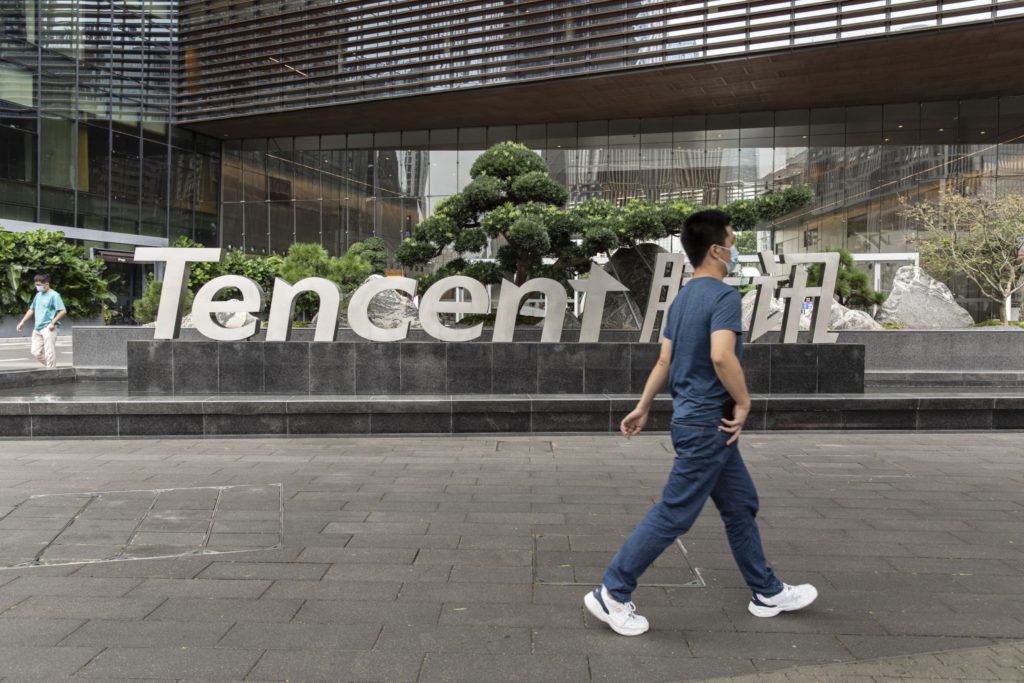
Tencent Quashes Talk of New Crackdown as Tech Wipeout Deepens

(Bloomberg) — Tencent Holdings Ltd. denied online speculation that it’s facing a major regulatory crackdown, issuing an unusually aggressive public response after fears of more tech-sector restrictions tanked markets on Monday.

Zhang Jun, Tencent’s head of public relations, disputed a widely circulated post that suggested the company would weather another heavy blow from regulators in the near future. The account carrying the rumor has since been suspended, Zhang said on his semi-public WeChat feed.

“Ask me next time, at least that’s more legit. And I’m not afraid of going on record,” Zhang said, poking fun at the post citing an anonymous Tencent employee. Before its removal, the post was widely shared on Chinese social media and stock-trading forums. It hinted at another big step in China’s internet crackdown, without providing specifics. Tencent closed 5.2% lower on the day.

Tencent Leads China Tech Selloff Amid Fears of Further Crackdown

Chinese technology shares had their worst two-day drop since July due to renewed fears Beijing may roll out more restrictions for private enterprise. Traders pointed to everything from regulatory warnings over the weekend about scams in the metaverse — a virtual-reality based social media concept — to unsubstantiated talk about more curbs on the gaming industry. Tencent is a leader in metaverse development.

On Monday, a screenshot detailing the alleged new gaming curbs made waves on China’s internet. But Wang Guanran, an analyst with Citic Securities, clarified that the content was originally posted by him last year when regulators hosted study sessions on gaming regulations.

“I didn’t post anything today,” he said on his WeChat. The screenshot flagged more oversight of violent genres and concepts like anime and religion and limits on player spending on loot boxes.

More stories like this are available on bloomberg.com

©2022 Bloomberg L.P.

FTX Enters Gaming as Backlash Grows Against Crypto’s Incursion

(Bloomberg) —

Crypto exchange FTX is launching its own gaming unit, aimed at encouraging more game publishers to embrace cryptocurrencies, blockchain networks and non-fungible tokens. 

Operating via FTX’s U.S. affiliate, FTX Gaming will debut with a “crypto-as-a-service” platform through which gaming companies can launch tokens and offer support for NFTs. The unit began hiring a fully-remote team this month, seeking software engineers with experience coding in the game engine Unity. 

The move into gaming follows FTX’s announcement in November that it would invest $100 million together with two partners to spur integration of the Solana blockchain into video games. Crypto’s push into the gaming industry has been beset by controversy, with fans and developers alike criticizing “play-to-earn” models where gamers can benefit financially from participating in blockchain-based games.

“We are launching FTX Gaming because we see games as an exciting use case for crypto,” an FTX spokesperson said in an email. “There are 2 billion+ gamers in the world who have played with and collected digital items, and can now also own them.”

Proponents of merging the crypto and gaming industries say digital tokens and NFTs provide players with more ownership over the items they earn while playing. Detractors, meanwhile, have criticized publishers for pushing games into a space rife with scams, financial crime and a hefty carbon footprint as a profit-hunting exercise, while also taking the fun out of playing by introducing a financial element.

‘Fierce Animosity’

Amy Wu, head of FTX’s $2 billion venture capital fund, has said it’s too early to know what play-to-earn might look like until more studios develop games that offer digital assets alongside quality games, rather than “making tradeoffs that actually make that content experience worse in exchange for profit.” 

“I wouldn’t have been able to predict kind of how fierce the animosity has been with some gamers against NFTs and it’s unfortunate, but it’s interesting,” Wu said on a Feb. 15 episode of Decrypt’s gm podcast.

Read More: Crypto Exchange FTX Valued at $32 Billion After Latest Round

French publisher Ubisoft Entertainment SA, which makes the game franchise Assassin’s Creed, received widespread criticism late last year for its plan to launch Ubisoft Quartz, a platform that would allow players of its Ghost Recon game to buy and sell in-game items as NFTs. It has since failed to quell that uproar, with an internal post on blockchain capabilities this month receiving hundreds of negative comments from staff.

The gaming launch is the latest effort by FTX to expand beyond its crypto-trading roots. Brett Harrison, head of FTX US, said in January the company is working on adding stock and option trading to the exchange within “a couple months,” pitting it against existing players eToro Group Ltd. and Robinhood Markets Inc.

More stories like this are available on bloomberg.com

©2022 Bloomberg L.P.

China Disputes Nasa Claim Its Space Debris Is About to Hit Moon

(Bloomberg) — China disputed Nasa’s claim that debris about to hit the moon originated with one of its exploration programs, the latest disagreement between the nations over their space programs.

Foreign Ministry spokesman Wang Wenbin said Monday at a regular press briefing in Beijing that the final rocket stage of a moon mission years ago “entered into the Earth’s atmosphere and has already been completely burned up.”

That contradicted a Nasa statement reported by the Washington Post last week that said “the object expected to impact the far side of the Moon March 4 is likely the Chinese Chang’e 5-T1 booster launched in 2014.” Nasa also said at the time that the debris wasn’t linked to a SpaceX rocket, as was earlier reported.

China “earnestly safeguards the long-term sustainability of outer space activities,” Wang said. “We are willing to carry out extensive exchanges and cooperation with all parties in this regard,” he added.

Earlier this month, China said the U.S. was avoiding responsibility for problems caused by satellites launched by the Elon Musk-backed SpaceX. The U.S. hadn’t responded to requests for information after the company’s satellites last year came what it said was dangerously close to its space station.

China told the United Nations in December that there had been “close encounters” last July and October, when satellites neared its space station. Washington responded by saying there had been no need to send notifications to Beijing because the incidents hadn’t met the threshold of established emergency collision criteria.

Officials at the Chinese space agency said in January they will sign an agreement with Russia to build a research station on the moon. The nations aim to complete basic infrastructure for the station by 2035, Wu Yanhua, a deputy director of China National Space Administration, said, including systems for energy, communication and life support.

More stories like this are available on bloomberg.com

©2022 Bloomberg L.P.

Hong Kong’s Contact Tracing App Now Flags Unvaccinated Users

(Bloomberg) — Hong Kong’s Covid contact-tracing app has begun flagging users who haven’t uploaded vaccination records, as the city struggles to contain a resurgent outbreak that’s taxing its health system.

The LeaveHomeSafe app — mandatory for entrance to many restaurants and other public venues — was updated over the weekend and now flashes a red QR code on its check-in page for users that haven’t linked to an official immunization record.

Hong Kong is battling its most severe surge of Covid infections since the start of the pandemic, testing the city’s zero-tolerance approach to the virus. The app, which has courted controversy since introduction, was updated just as Hong Kong is preparing to initiate a “vaccine pass” on Feb. 24 — when most public venues from malls to schools and restaurants begin barring patrons who haven’t had at least one shot.

Some city residents have resisted uploading their vaccination status over privacy concerns, even as pressure grows from Beijing for stronger measures in Hong Kong to control a record fifth Covid-19 wave.

The LeaveHomeSafe app is not intended to be a tracking device, Tony Wong, the city’s deputy government chief information officer, told reporters on Monday. Vaccine information stored within the app is encrypted and will only be accessible by health authorities if a confirmed case emerges at a venue the user has visited, he added.

Read more: Hong Kong Mulls Tighter Curbs as Cases Surge Past 7,500

There are no plans currently to mandate real-name registration or location tracking within the software, as that would require the app’s entire architecture be rebuilt, said Francis Fong, member of an advisory committee on technological developments for Hong Kong’s Privacy Commissioner. 

“It will take months to develop and review the whole architecture, the whole system, and I don’t think we can wait for months right now,” said Fong, who’s also the honorary president of the Hong Kong Information Technology Federation. “And there are the concerns of the privacy issues of Hong Kong citizens.”

Hong Kong reported more than 7,500 cases on Monday, as the latest surge overwhelms the city’s medical and Covid-19 testing systems. Lawmakers have previously called for a tracking function to be added to the LeaveHomeSafe app, moving a step closer to contact tracing processes used in mainland China, which is location-based and rely on real-name registration.

More stories like this are available on bloomberg.com

©2022 Bloomberg L.P.

China’s Demand for Metals Has Wavered as Inventories Pile-Up

(Bloomberg) — A pile-up of inventories suggests that China’s metals consumption remains on the back-foot after disruptions to industrial activity during the Winter Olympics and Lunar New Year. How quickly demand recovers now that the festivities are over, and whether consumers will accept relatively elevated prices, will help set the direction for markets in coming …

China’s Demand for Metals Has Wavered as Inventories Pile-Up Read More »

Close Bitnami banner
Bitnami