Bloomberg

Crypto Firm Amber Gets Temasek Funding at $3 Billion Value

(Bloomberg) — Singaporean state investment firm Temasek Holdings Pte was among investors in a funding round that valued cryptocurrency-trading platform Amber Group at $3 billion, just weeks after the city-state cracked down on marketing by crypto firms. 

Existing shareholders including Sequoia China, Pantera Capital and Tiger Global Management also took part in the $200 million financing, Singapore-based Amber said in a statement Tuesday. The company, founded in 2018 by five former Morgan Stanley traders, has seen its valuation triple since mid-2021.  

Singapore is one of Asia’s hottest markets for crypto startups, and Temasek and its subsidiaries have made several investments in the sector in the past year. Amber extended its Series B funding round, originally announced in June, specifically to bring Temasek in as an investor, said Chief Executive Officer Michael Wu. 

“They are very strategic, so we made this special effort to bring them in,” Wu said in an interview. 

Amber will use the proceeds for hiring in Europe and the Americas and expanding coverage of a mobile application it launched last year globally, according to the statement. 

Marketing Clampdown

Wu said Amber may pursue another funding round later this year ahead of an initial public offering that could take place as early as the second half of 2023, most likely in the U.S.

The deal comes as Singapore is trying to clamp down on the more speculative aspects of crypto while at the same time encouraging institutional participation. In January, the central bank told companies in the industry to sharply limit marketing geared toward the general public, citing the risk of volatile digital tokens. 

Read more: Crypto ATMs Halted in Singapore After Marketing Clampdown

Some 180 companies have applied for permits to operate a regulated cryptocurrency business in the wealthiest Southeastern Asia country; as of January, just five had gotten in-principle approvals. Amber declined to comment on whether it has applied for a license. 

Senior executives including Wu have relocated to Singapore from Hong Kong over the past few months, underscoring the city-state’s emergence as a hub for the crypto industry. In September, Amber said it hired former executives from Morgan Stanley and Goldman Sachs Group Inc. to help bolster its expansion.

Read more: Ex-Goldman, Morgan Stanley Execs Join Crypto Unicorn 


(Updates with comments from CEO starting in third paragraph.)

More stories like this are available on bloomberg.com

©2022 Bloomberg L.P.

Apple Supplier Luxshare Eyes $2 Billion For Device, EV Expansion

(Bloomberg) — Apple Inc. supplier Luxshare Precision Industry Co. is seeking to raise up to 13.5 billion yuan ($2.1 billion) through a private share placement to fund a series of projects from intelligent wearable device manufacturing upgrade to electric vehicle component production.

The Shenzhen-listed company, a primary assembler of Apple’s AirPods products, plans to issue up to 2.1 billion shares to as many as 35 investors, including mutual funds, securities firms, trusts, finance companies, insurers as well as select foreign institutional investors, according to an exchange filing.

The firm aims to invest 6.2 billion yuan of the proceeds into the construction or upgrade of facilities and technology related to production of intelligent wearable devices, the statement said. It will spend about 2 billion yuan on production of electric vehicle components. And about 3.55 billion yuan of the proceeds will be used to supplement working capital.

The new share issue, which still requires approval from shareholders and regulators, should account for no more than 30% of the firm’s total share capital ahead of the placement, the Shenzhen-based company said, adding that the new shares will be subject to a six-month lock-up period.

Luxshare Precision shares fell 1.5 percent on Monday, taking its year-to-date loss to 13% — underperforming an about 6% decline in the benchmark CSI 300 index.

More stories like this are available on bloomberg.com

©2022 Bloomberg L.P.

Mubadala Leads $500 Million Funding for Asia Data-Center Company

(Bloomberg) — Data-center operator Princeton Digital Group Pte. has pulled in over $500 million in a round led by Abu Dhabi sovereign fund Mubadala Investment Co., underscoring investor demand for the infrastructure that supports the internet.

Mubadala put in over $350 million while existing investors Warburg Pincus and Ontario Teachers’ Pension Plan Board also participated, the Singapore-based firm said in a statement Tuesday. The financing could boost Princeton Digital’s valuation to more than $2 billion and serve as a stepping stone to a potential initial public offering, Bloomberg News has reported.

Princeton Digital invests in, develops and operates data-center infrastructure in countries including China, Singapore, Japan, India and Indonesia, according to its website. It runs 20 data centers across 14 cities. Founded in 2017, the company was set up by Warburg Pincus along with Princeton Digital Chief Executive Officer Rangu Salgame and Chief Operating Officer Varoon Raghavan.

The fresh capital will help it expand into new markets and deepen its presence in the countries it operates in. The company last raised $360 million in a funding round led by Canada’s Ontario Teachers’ Pension Plan in 2020, and got $230 million in debt financing last year.

Data centers have become sought-after assets amid the rise of the digital economy, supporting everything from video streaming to online gaming.

“Asia is one of the fastest growing data center regions in the world, driven by strong market fundamentals such as a large base of internet users, the growth of digitization, high levels of data usage and an increasing tech-savvy young population,” Princeton Digital said in its statement.

More stories like this are available on bloomberg.com

©2022 Bloomberg L.P.

An Obscure Corner of Wall Street Is Making Billions Trading Inflation 

(Bloomberg) — Most of the world hates inflation. For Nikhil Choraria and a small band of traders, it’s an opportunity. 

The Goldman Sachs Group Inc. partner is a leading practitioner of the obscure art of inflation trading, a niche business that’s exploded — very lucratively — for some of the world’s major banks and hedge funds. 

Choraria, 38 and based in London, orchestrates often-complex transactions designed to profit from gyrations in inflation. Over the past year, his team picked the right side on trades underpinned by the biggest inflationary spike in decades, which convulsed the global economy and even blindsided some central bankers. They helped generate $450 million in revenue in 2021, twice what they made in previous years, according to people familiar with the bank. 

At JPMorgan Chase & Co. in New York, global head of non-linear rates Gil Holmes helped generate about $300 million from inflation trading last year, while traders at Barclays Plc and Morgan Stanley also profited, people familiar with the situation said. In all, the biggest Wall Street banks shared some $2.3 billion from the business in 2021, more than double what they made in 2019, according to data from Vali Analytics Ltd. — a welcome boost as other kinds of fixed income trading dried up.

There are outsized risks too. The sterling inflation market is known as “the widow maker,” reflecting the danger of becoming trapped in huge losses when traders can’t keep up with the many, messy factors that drive real-world prices. The U.K. market is so small and specialized that a few people moving jobs can make it tricky to find anyone who’s willing to trade. 

It’s not a market for the faint of heart, and not everyone gets it right all the time. But for those who can navigate these challenges, inflation has finally become a goldmine as rising energy costs and snarled supply chains drive up the cost of just about everything.

Trading Surge

Interest rates were left at rock-bottom after the 2008 financial crisis, removing a key factor in inflation volatility and making this business a relative backwater. “Kind of boring,” according to Tim Magnusson, chief investment officer at Garda Capital Partners, a hedge fund that’s traded inflation since about 2006. Now, investors are flocking to protect themselves or speculate on where consumer prices might go from here. 

Average daily trading in inflation-linked government bonds and derivatives is up 30% on a year ago and more than double the level in 2019, according to data from Tradeweb Markets Inc. in London.

“With fixed-income investors becoming more nervous that the zero-interest-rate environment is over, they will have to move toward these kind of investments,” said Peter Hahn, a former banker at Citigroup Inc. who is now emeritus professor at the London Institute of Banking & Finance. “And that will make Wall Street money.”The U.S. Consumer Price Index rose 7.5% in the 12 months through January, the highest annual rate since 1982 — before Choraria was born. In the U.K., one in 10 may not be able to afford consistent heat and electricity. Governments across the European Union are doling out relief packages to help citizens cope with rising bills. Households from Latin America to South Asia are also dealing with rising prices.

Central banks globally are mulling how much they should jack up interest rates to cool some of this pressure without hampering the economic recovery. Traders are trying to spot the peak. As expectations for U.K. price rises approach their highest since 2009, concerns in the U.S. and Europe have already begun to ease from last year’s level.  

“Inflation volatility has picked up significantly,” said Semin Soher Power, head of inflation trading at Bank of Ireland Group Plc in Dublin, who drew on her Turkish roots to accurately predict the price hikes last year. “With higher volatility, we also had more opportunities for inflation trades.” 

Choraria’s team profited by correctly predicting the direction of European inflation in the wake of the pandemic, said the people, who asked not to be named discussing private information. He joined Goldman Sachs in London as a trainee, earning promotion to managing director in 2012 and then six years later to partner — its most elite rung.

The team at Goldman Sachs includes Pushkar Jha and Wajih Ahmed, who was once described by a local newspaper as a “child prodigy” when he enrolled at the University of Southampton at the age of 14. They generated most of what the bank made from this business globally last year, the people said. 

Sebastian Howell, a spokesman for Goldman Sachs, declined to comment. Choraria declined requests for an interview. Barclays spokesman Matt Scully, Morgan Stanley spokesman Tom Walton and JPMorgan spokesman Richard Hillary all declined to comment. 

“Interest in inflation markets has grown beyond anything we’ve seen in the past 10 years, and we believe we are just getting started,” said Lindsay Politi, a former inflation trader who now helps oversee more than $2 billion at Greenwich, Connecticut-based One River Asset Management LLC. “Market participants have yet to truly recognize the regime that we have entered. Most market observers have been expecting inflation to revert back to normal levels for over a year now and that hasn’t played out.”

Link to the Past

Inflation-linked bonds can be traced back to 1780 when the Commonwealth of Massachusetts issued them to U.S. soldiers fighting the Revolutionary War to protect them from spiraling prices. Two centuries later, the U.K. began selling similar securities known today as “linkers” while the U.S. followed in 1997 with Treasury Inflation-Protected Securities, or TIPS. Derivatives tied to inflation, such as inflation swaps, also emerged.

One way a trader might make money on inflation nowadays is with a derivative known as a zero-coupon inflation swap. They pay a fixed rate to a seller, and in return get a floating interest rate tied to a benchmark such as the U.S. CPI after a set period of time. An investor who bought a 12-month swap a year ago would today receive a gain of more than 5%, Politi said. Traders also buy and sell the securities to exploit price swings and book short-term profits.

Prices for the derivatives hit an all-time high in November and are still trading at more than double their historical average. They jumped the most in more than a decade on Feb. 10 when the U.S. Labor Department released the unexpectedly high inflation figures, Bloomberg data show.

These assets grew up around the needs of long-term investors such as pension funds and insurance companies. With high volatility, though, comes a new generation of participants, and traders outside the big banks are also stirring the market. 

Hedge funds such as Brevan Howard Asset Management and Citadel, which use borrowed money to inflate potential gains, are behind much of the recent surge and are trading at levels not seen since before the 2008 financial crisis, according to market participants interviewed by Bloomberg. Spokespeople for the funds declined to comment.

“If there’s money to be made, hedge funds like ours and everyone else will chase the opportunity,” said Magnusson at Garda, which has $8 billion under management. “And the opportunity in inflation has been there for sure. But opportunity means you can lose money as well.”

Some investors, meanwhile, are hedging their bets elsewhere. CME Group Inc. saw a 20% increase in Bitcoin futures contracts during January compared to the previous month. Some traders see the cryptocurrency as insulated from monetary policy and a haven from price pressures, according to Tim McCourt, CME’s managing director and global head of equity products.

Intercontinental Exchange Inc. has seen a surge in futures and options linked to the Sterling Overnight Index Average, which traders use to hedge against inflation. The number of outstanding contracts reached a record high of more than 7.9 million on Feb. 15, with an estimated notional value of 1.99 trillion pounds ($2.7 trillion), a spokeswoman said.

Merry-Go-Round

Banks and hedge funds across Wall Street and London have been hiring to keep up, according to Canice Hogan, founder of recruitment firm Shadowhound Ltd. in the U.K. capital. But there are a limited number of specialists in this increasingly complicated world, he said. 

That’s especially true in the bazaar for sterling-based inflation products. Last summer, a handful of job moves in London had an impact on market liquidity, according to a senior inflation trader at one of the world’s biggest banks who requested anonymity.  

Guy Winkworth, who led European inflation trading at Morgan Stanley, left for Deutsche Bank AG. James Bucknall moved from the German bank to NatWest Group Plc, while Su Liu, who oversaw sterling rates trading at BNP Paribas SA, moved to Citigroup Inc. 

“At least half of the market was on gardening leave,” said Hogan. “With such a small pool of talent, this means that the merry-go-round of movement was more obvious.”

Widow-Maker

The London inflation scene — the market known somewhat outdatedly as “the widow maker” — has a particular propensity to inflict sudden losses, said Hogan. Any kind of “semi crisis” in the wider economic picture can scare away buyers, leaving traders with no escape route from large loss-making positions, he said.

When energy prices exploded in the U.K. last year, the market for inflation-linked bonds became “completely dysfunctional,” said Mike Riddell, who manages about $8 billion at Allianz Global Investors. Some hedge funds “blew up” in September and October while traders at banks were left holding losses, he said. 

“Dealers at banks couldn’t offload any risk they were hit with,” said Riddell. “Liquidity dried up.”

NatWest Group Plc’s inflation trading desk was caught out during that period. The British bank said in its latest earnings that market moves in sterling rates and inflation led to losses that breached its internal risk gauge, known as the value-at-risk model, on three occasions during October. The desk lost about $30 million on sterling and euro inflation trading during the second half of the year, according to one person familiar with the matter. A spokeswoman for the Edinburgh-based lender declined to comment. 

Another risk stems from obscurity. Inflation trades take place between parties, rather than through a public exchange. This model is more profitable for the banks that tailor them but also harder to value and manage.

Today’s inflation traders have little experience of the current conditions, said Hahn, the emeritus professor in London.

“It doesn’t mean they’re fools and they don’t know what they’re doing, but it’s probably a big issue for risk managers,” said Hahn. “Anybody with experience trading into an increasing rate environment is probably retired.”

More stories like this are available on bloomberg.com

©2022 Bloomberg L.P.

An Obscure Corner of Wall Street Is Making Billions Trading Inflation

(Bloomberg) — Most of the world hates inflation. For Nikhil Choraria and a small band of traders, it’s an opportunity. 

The Goldman Sachs Group Inc. partner is a leading practitioner of the obscure art of inflation trading, a niche business that’s exploded — very lucratively — for some of the world’s major banks and hedge funds. 

Choraria, 38 and based in London, orchestrates often-complex transactions designed to profit from gyrations in inflation. Over the past year, his team picked the right side on trades underpinned by the biggest inflationary spike in decades, which convulsed the global economy and even blindsided some central bankers. They helped generate $450 million in revenue in 2021, twice what they made in previous years, according to people familiar with the bank. 

At JPMorgan Chase & Co. in New York, global head of non-linear rates Gil Holmes helped generate about $300 million from inflation trading last year, while traders at Barclays Plc and Morgan Stanley also profited, people familiar with the situation said. In all, the biggest Wall Street banks shared some $2.3 billion from the business in 2021, more than double what they made in 2019, according to data from Vali Analytics Ltd. — a welcome boost as other kinds of fixed income trading dried up.

There are outsized risks too. The sterling inflation market is known as “the widow maker,” reflecting the danger of becoming trapped in huge losses when traders can’t keep up with the many, messy factors that drive real-world prices. The U.K. market is so small and specialized that a few people moving jobs can make it tricky to find anyone who’s willing to trade. 

It’s not a market for the faint of heart, and not everyone gets it right all the time. But for those who can navigate these challenges, inflation has finally become a goldmine as rising energy costs and snarled supply chains drive up the cost of just about everything.

Trading Surge

Interest rates were left at rock-bottom after the 2008 financial crisis, removing a key factor in inflation volatility and making this business a relative backwater. “Kind of boring,” according to Tim Magnusson, chief investment officer at Garda Capital Partners, a hedge fund that’s traded inflation since about 2006. Now, investors are flocking to protect themselves or speculate on where consumer prices might go from here. 

Average daily trading in inflation-linked government bonds and derivatives is up 30% on a year ago and more than double the level in 2019, according to data from Tradeweb Markets Inc. in London.

“With fixed-income investors becoming more nervous that the zero-interest-rate environment is over, they will have to move toward these kind of investments,” said Peter Hahn, a former banker at Citigroup Inc. who is now emeritus professor at the London Institute of Banking & Finance. “And that will make Wall Street money.”The U.S. Consumer Price Index rose 7.5% in the 12 months through January, the highest annual rate since 1982 — before Choraria was born. In the U.K., one in 10 may not be able to afford consistent heat and electricity. Governments across the European Union are doling out relief packages to help citizens cope with rising bills. Households from Latin America to South Asia are also dealing with rising prices.

Central banks globally are mulling how much they should jack up interest rates to cool some of this pressure without hampering the economic recovery. Traders are trying to spot the peak. As expectations for U.K. price rises approach their highest since 2009, concerns in the U.S. and Europe have already begun to ease from last year’s level.  

“Inflation volatility has picked up significantly,” said Semin Soher Power, head of inflation trading at Bank of Ireland Group Plc in Dublin, who drew on her Turkish roots to accurately predict the price hikes last year. “With higher volatility, we also had more opportunities for inflation trades.” 

Choraria’s team profited by correctly predicting the direction of European inflation in the wake of the pandemic, said the people, who asked not to be named discussing private information. He joined Goldman Sachs in London as a trainee, earning promotion to managing director in 2012 and then six years later to partner — its most elite rung.

The team at Goldman Sachs includes Pushkar Jha and Wajih Ahmed, who was once described by a local newspaper as a “child prodigy” when he enrolled at the University of Southampton at the age of 14. They generated most of what the bank made from this business globally last year, the people said. 

Sebastian Howell, a spokesman for Goldman Sachs, declined to comment. Choraria declined requests for an interview. Barclays spokesman Matt Scully, Morgan Stanley spokesman Tom Walton and JPMorgan spokesman Richard Hillary all declined to comment. 

“Interest in inflation markets has grown beyond anything we’ve seen in the past 10 years, and we believe we are just getting started,” said Lindsay Politi, a former inflation trader who now helps oversee more than $2 billion at Greenwich, Connecticut-based One River Asset Management LLC. “Market participants have yet to truly recognize the regime that we have entered. Most market observers have been expecting inflation to revert back to normal levels for over a year now and that hasn’t played out.”

Link to the Past

Inflation-linked bonds can be traced back to 1780 when the Commonwealth of Massachusetts issued them to U.S. soldiers fighting the Revolutionary War to protect them from spiraling prices. Two centuries later, the U.K. began selling similar securities known today as “linkers” while the U.S. followed in 1997 with Treasury Inflation-Protected Securities, or TIPS. Derivatives tied to inflation, such as inflation swaps, also emerged.

One way a trader might make money on inflation nowadays is with a derivative known as a zero-coupon inflation swap. They pay a fixed rate to a seller, and in return get a floating interest rate tied to a benchmark such as the U.S. CPI after a set period of time. An investor who bought a 12-month swap a year ago would today receive a gain of more than 5%, Politi said. Traders also buy and sell the securities to exploit price swings and book short-term profits.

Prices for the derivatives hit an all-time high in November and are still trading at more than double their historical average. They jumped the most in more than a decade on Feb. 10 when the U.S. Labor Department released the unexpectedly high inflation figures, Bloomberg data show.

These assets grew up around the needs of long-term investors such as pension funds and insurance companies. With high volatility, though, comes a new generation of participants, and traders outside the big banks are also stirring the market. 

Hedge funds such as Brevan Howard Asset Management and Citadel, which use borrowed money to inflate potential gains, are behind much of the recent surge and are trading at levels not seen since before the 2008 financial crisis, according to market participants interviewed by Bloomberg. Spokespeople for the funds declined to comment.

“If there’s money to be made, hedge funds like ours and everyone else will chase the opportunity,” said Magnusson at Garda, which has $8 billion under management. “And the opportunity in inflation has been there for sure. But opportunity means you can lose money as well.”

Some investors, meanwhile, are hedging their bets elsewhere. CME Group Inc. saw a 20% increase in Bitcoin futures contracts during January compared to the previous month. Some traders see the cryptocurrency as insulated from monetary policy and a haven from price pressures, according to Tim McCourt, CME’s managing director and global head of equity products.

Intercontinental Exchange Inc. has seen a surge in futures and options linked to the Sterling Overnight Index Average, which traders use to hedge against inflation. The number of outstanding contracts reached a record high of more than 7.9 million on Feb. 15, with an estimated notional value of 1.99 trillion pounds ($2.7 trillion), a spokeswoman said.

Merry-Go-Round

Banks and hedge funds across Wall Street and London have been hiring to keep up, according to Canice Hogan, founder of recruitment firm Shadowhound Ltd. in the U.K. capital. But there are a limited number of specialists in this increasingly complicated world, he said. 

That’s especially true in the bazaar for sterling-based inflation products. Last summer, a handful of job moves in London had an impact on market liquidity, according to a senior inflation trader at one of the world’s biggest banks who requested anonymity.  

Guy Winkworth, who led European inflation trading at Morgan Stanley, left for Deutsche Bank AG. James Bucknall moved from the German bank to NatWest Group Plc, while Su Liu, who oversaw sterling rates trading at BNP Paribas SA, moved to Citigroup Inc. 

“At least half of the market was on gardening leave,” said Hogan. “With such a small pool of talent, this means that the merry-go-round of movement was more obvious.”

Widow-Maker

The London inflation scene — the market known somewhat outdatedly as “the widow maker” — has a particular propensity to inflict sudden losses, said Hogan. Any kind of “semi crisis” in the wider economic picture can scare away buyers, leaving traders with no escape route from large loss-making positions, he said.

When energy prices exploded in the U.K. last year, the market for inflation-linked bonds became “completely dysfunctional,” said Mike Riddell, who manages about $8 billion at Allianz Global Investors. Some hedge funds “blew up” in September and October while traders at banks were left holding losses, he said. 

“Dealers at banks couldn’t offload any risk they were hit with,” said Riddell. “Liquidity dried up.”

NatWest Group Plc’s inflation trading desk was caught out during that period. The British bank said in its latest earnings that market moves in sterling rates and inflation led to losses that breached its internal risk gauge, known as the value-at-risk model, on three occasions during October. The desk lost about $30 million on sterling and euro inflation trading during the second half of the year, according to one person familiar with the matter. A spokeswoman for the Edinburgh-based lender declined to comment. 

Another risk stems from obscurity. Inflation trades take place between parties, rather than through a public exchange. This model is more profitable for the banks that tailor them but also harder to value and manage.

Today’s inflation traders have little experience of the current conditions, said Hahn, the emeritus professor in London.

“It doesn’t mean they’re fools and they don’t know what they’re doing, but it’s probably a big issue for risk managers,” said Hahn. “Anybody with experience trading into an increasing rate environment is probably retired.”

More stories like this are available on bloomberg.com

©2022 Bloomberg L.P.

Separatists Nod Escalates Putin’s Feud With West: Ukraine Update

(Bloomberg) — Russian President Vladimir Putin signed a degree officially recognizing two self-proclaimed separatist republics in eastern Ukraine, a move that likely torpedoes European-mediated peace talks and further escalates tensions with the West. 

Putin made the announcement in a televised address that followed a meeting on Monday of his Security Council. It comes against a backdrop of heightened concern over Russia’s sustained troop buildup near Ukraine, even as Moscow continues to deny it plans to invade. 

The diplomatic flurry continues to try and avert a potential conflict, although those efforts suffered a setback on Monday as Moscow said there were “no concrete plans” for a summit between Putin and U.S. President Joe Biden, throwing into question the fate of a French proposal publicized hours earlier. Biden is meeting with his national security team and being regularly briefed on the latest developments, a White House official said.

German Chancellor Olaf Scholz condemned the move to recognize the territories, which is in stark contrast to the push by Germany and France to implement the Minsk peace accords aimed at ending a separatist conflict that’s smoldered since 2014. U.K. Prime Minister Boris Johnson called it an “ill omen” and “flagrant violation” of the sovereignty and integrity of Ukraine.


Key Developments 

  • Kremlin Cautious on Prospect of Biden-Putin Summit Amid Tensions
  • Summit Confusion Keeps Ball in Putin’s Court: Balance of Power
  • Stocks Retreat on Ukraine Tension, Ruble Weakens: Markets Wrap
  • U.S. Warns That Russia May Target Multiple Cities in Ukraine
  • Explainer: Why Minsk Accords Are Murky Path for Ukraine Peace

All times CET:

Baltic States Sound Alarm Over Separatist Recognition (8:42 p.m.)

Leaders of three Baltic states that are NATO and EU members urged the 27-member bloc to come forward with a call for “strong sanctions” against Russia after it said it will recognize the self-proclaimed separatist republics it backs in eastern Ukraine. 

Latvia’s Foreign Minister Edgars Rinkevics said on Twitter that Putin’s speech “was a demonstration of imperialism and chauvinism.” Baltic leaders have previously raised fears that if Putin is allowed to proceed with his plans, their nations could be his next target. 

EU Warns on Russian Cyber Actions in Any Ukraine Attack (7:26 p.m.)

The European Union warned it is highly likely Russia would launch cyberattacks to interfere with electronic payments and online services systems if it launches a military attack against Ukraine.

The EU’s computer emergency response team warned the bloc’s institutions that cyberattacks could also be aimed at damaging critical infrastructure, as well as targeting and manipulating news sources. The aim of the operations would be to hamper financial transactions, impede access to key services and sow divisions among the population.

The internal document seen by Bloomberg said Russia is unlikely to attempt to take down Ukraine’s entire Internet. Moscow has denied it was behind recent cyberattacks on Ukraine.

EU Yet to Agree Potential Sanctions for Separatist Recognition (5:15 p.m.)

Several EU leaders had already called for sanctions should Putin opt to recognize the separatist territories in eastern Ukraine. Still, countries have yet to agree on what sanctions would be imposed in such circumstances, according to diplomats and officials who asked not to be identified discussing confidential matters.

The EU usually responds to violations of international rule of law and norms with strong penalties, a diplomat said when asked about the recognition issue. But the bloc is still split on what specific actions short of a full military attack on Ukraine should trigger sanctions on Russia, officials said.

“If there is an annexation, there will be sanctions,” EU foreign policy chief Josep Borrell told reporters after a meeting of foreign ministers in Brussels. “And if there is a recognition, I will put the sanctions on the table and the ministers will decide. I will certainly put on the table the sanctions package that has been prepared if such a thing happens.”

Putin Promises Decision on Donbas Recognition Monday (4:43 p.m.)

Putin said he’d make a final call later Monday after a televised meeting of the Security Council showed member after member arguing in favor of recognizing two self-proclaimed republics in eastern Ukraine’s Donbas region. Only a few suggested giving the West more time to address Russia’s security demands. 

When Sergei Naryshkin, the head of Russia’s Foreign Intelligence Service, suggested annexing the territories, Putin corrected him and said that wasn’t on the agenda, a sign they could remain frozen conflicts similar to two largely unrecognized Russian protectorates that split from Georgia after a 2008 war.

“We see the threats and blackmail from our Western colleagues, we understand what such a step entails, but we also understand the situation that has developed,” Putin said at the start of the meeting.

The leaders of the so-called Donetsk People’s Republic and Luhansk People’s Republic earlier appealed to Putin to recognize their independence from Ukraine and conclude a treaty on defense.

Damage in Eastern Ukraine as Tensions Escalate (4:23 p.m.)

A local natural gas treatment plant in the Luhansk region was damaged as cease-fire violations along the line of contact with separatist forces surge. The facility, which is not connected to a major network transiting Russian gas to Europe, was shelled by mortar fire from separatist territory and a village cut off from its gas supply, according to state-run producer UkrGasVydobuvannya JSC.

Ukraine Denies Attack on Russian Forces (3:00 p.m.)

Foreign minister Dmytro Kuleba denied Russian allegations that Kyiv sent “saboteurs” and armed personal carriers into Russia’s Rostov region early Monday.

Russia Wants Details on Any Putin-Biden Summit (2:30 p.m.)

“President Putin explained very clearly that we’re not against summits or meetings, but before getting together, especially in such a tense atmosphere, it’s important to understand what these summits would result in,” Foreign Minister Sergei Lavrov told reporters in Moscow.

Earlier, Putin’s spokesman Dmitry Peskov, said there are no “concrete plans” yet for a summit between Putin and Biden. The French and Russian leaders agreed to pursue dialogue at the level of foreign ministers, he said on a conference call with reporters.

Russia Says It Killed 5 ‘Saboteurs’ From Ukraine (2:15 p.m.)

Russian forces killed five “saboteurs” and destroyed two Ukrainian armored personnel carriers that crossed into Russian territory in the Rostov region early Monday, state-run Tass news service reported, citing a statement from the Southern Military District.

The alleged strike comes as tensions have escalated between the Ukrainian army and separatists in the two breakaway republics in the east, with both sides accusing the other of increased shelling in recent days.

Unlike the firing along the contact line between Ukraine and the separatists, Russia alleged this incident took place over the international border.

Ukraine Says Russian-Backed Separatists Shelling Villages (12:48 p.m.)

Vrubivka and Shchastya, in Ukraine’s eastern Luhansk region, are being shelled by Russian-backed separatists, regional government head Serhiy Hayday said on Facebook. Vrubivka has seen electricity and gas supplies cut while Shchastya is without power or water, he said. Meanwhile officials in Kyiv said shelling on Monday by separatists killed two troops and one civilian, and wounded four soldiers.

Separatists in turn accused Ukrainian forces of what they said were massive attacks with artillery and other weapons. Both sides have traded accusations of violence amid a surge in violations along the contact line in Ukraine’s Donbas over the past week. 

Sanctions on Russian Gas Would Increase Price Volatility: Shell  (11:59 a.m.)

If the West implements sanctions on Russian natural gas exports there will “undoubtedly be volatility” in prices, Wael Sawan, Shell’s head of integrated gas, renewables and energy solutions said on a media call.

Shell would look to supply Europe “as and when we can,” but “there is an incredibly tight supply-demand market at the moment, so those cargoes aren’t freely available,” Sawan said.

More stories like this are available on bloomberg.com

©2022 Bloomberg L.P.

Airbus Set to Work With CFM on Hydrogen Engine Technology

(Bloomberg) — Airbus SE is set to announce a partnership with engine-maker CFM International to work on hydrogen propulsion as it targets introduction of a passenger aircraft running on the fuel by 2035, according to people familiar with the matter.  

An announcement planned for Tuesday involves adapting a current-generation CFM engine to run on hydrogen, said the people, who asked not to be named prior to a press conference. Airbus said Monday that it planned “a major announcement with key engine partners” tied to its zero-emissions plans. 

The initiative with CFM, a joint venture of General Electric Co. and Safran SA, doesn’t mark a firm commitment to any one engine partner or technology, said the people, who asked not to be named prior to the announcement. Airbus has been working with other suppliers as well to assess options for emissions-free flying. 

Hydrogen technology is still under research for use in jet engines. Airbus rival Boeing Co. is testing hydrogen fuel cells on its ScanEagle3 pilotless military drone, while expressing skepticism about the 2035 target for commercial jetliners.

Safran has called hydrogen a “promising candidate” for future aircraft models. The French supplier said at its capital markets day in December that it was working with Airbus on a demonstration project adapting an existing engine to hydrogen fuel. 

Safran also said it was “developing the technological bricks” for hydrogen aircraft, including specific materials and adjustments to fuel-system technologies.

An Airbus spokesman declined to comment ahead of the Tuesday announcement. A spokeswoman for CFM couldn’t immediately be reached for comment.

New Market

Airbus is attempting to rally the aviation industry behind the ambitious hydrogen plan as it faces mounting pressure to reduce emissions that lead to global warming. With manufacturers gearing up to ultimately make the shift to zero-emission flying, enginemakers GE, Safran, Pratt & Whitney and Rolls-Royce Holdings Plc will all compete for a share of the new market. 

Rolls-Royce, which currently specializes in widebody engines, has said it is now considering a return to the single-aisle market and is speaking to both planemakers about possible opportunities. Pratt, a unit of Raytheon Technologies Corp., said Monday that it received U.S. Department of Energy funding to further its work on hydrogen propulsion.

GE and Safran have teamed up to develop new engines with an open fan architecture, with propellers instead of the more-common enclosed blades. The new engines would be compatible with conventional fuels and sustainable alternatives including hydrogen. 

Flight Global, which reported on the Safran capital markets day in December, said at the time that CFM may have an edge due to the French state’s financing of hydrogen development. France is the largest investor in Toulouse-based Airbus and in Paris-based Safran.

(Updates with other engine makers from seventh paragraph)

More stories like this are available on bloomberg.com

©2022 Bloomberg L.P.

Israel Sees No Evidence of Alleged Police Abuse of NSO’s Pegasus

(Bloomberg) — Israel said it found no evidence that police illicitly targeted civilians with spyware developed by NSO Group, contradicting a series of local reports that alleged widespread abuse of the notorious Pegasus tool including against prominent officials and business leaders.

The committee that made the findings was headed by Israel’s deputy attorney general. It used data from NSO and was aided by experts from the Mossad, Israel’s spy agency, and the Shin Bet, it’s internal security service, according to a Justice Ministry statement.

“There are no indications that the police used the Pegasus software, without a court order, against any of the people cited in the media,” the ministry wrote late Monday.

Calcalist, a Hebrew business daily, had reported over the past few weeks that law enforcement officials used Pegasus without a court order to tap into the phones of citizens ranging from a key prosecution witness in former Prime Minister Benjamin Netanyahu’s corruption trial, the former Israeli leader’s son, high-ranking government officials, and the heads of some of the country’s biggest companies.

Israel to Probe If Notorious Spyware Used Illicitly at Home

It was the latest scandal linked to the embattled Israeli firm, which has been under scrutiny for years, but the first in its home country. Pegasus, which can be remotely installed in smartphones to extract even encrypted communications, has been allegedly used to target journalists, dissidents and human rights activists by foreign governments including Mexico, the United Arab Emirates and Saudi Arabia. 

NSO is privately owned and operated, but the licensing of its software to foreign governments has to be approved by Israel’s Defense Ministry.

More stories like this are available on bloomberg.com

©2022 Bloomberg L.P.
Tencent Leads China Tech Selloff Amid Fears of Further Crackdown

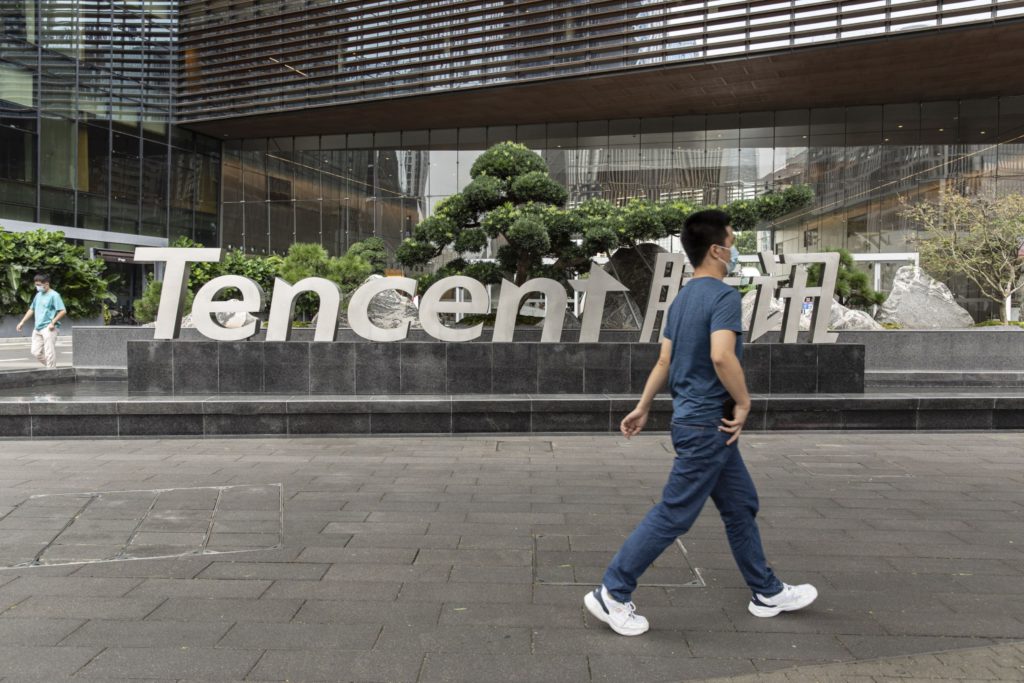
(Bloomberg) — Chinese technology shares had their worst two-day drop since July due to renewed fears Beijing may roll out more restrictions for private enterprise.  Tencent Holdings Ltd. shares sank 5.2% on Monday, pummeled by speculation about an unspecified, impending crackdown on China’s largest social media and gaming firm that company spokesman Zhang Jun later …

Tencent Leads China Tech Selloff Amid Fears of Further Crackdown Read More »

China Disputes Nasa Claim Its Space Debris Is About to Hit Moon

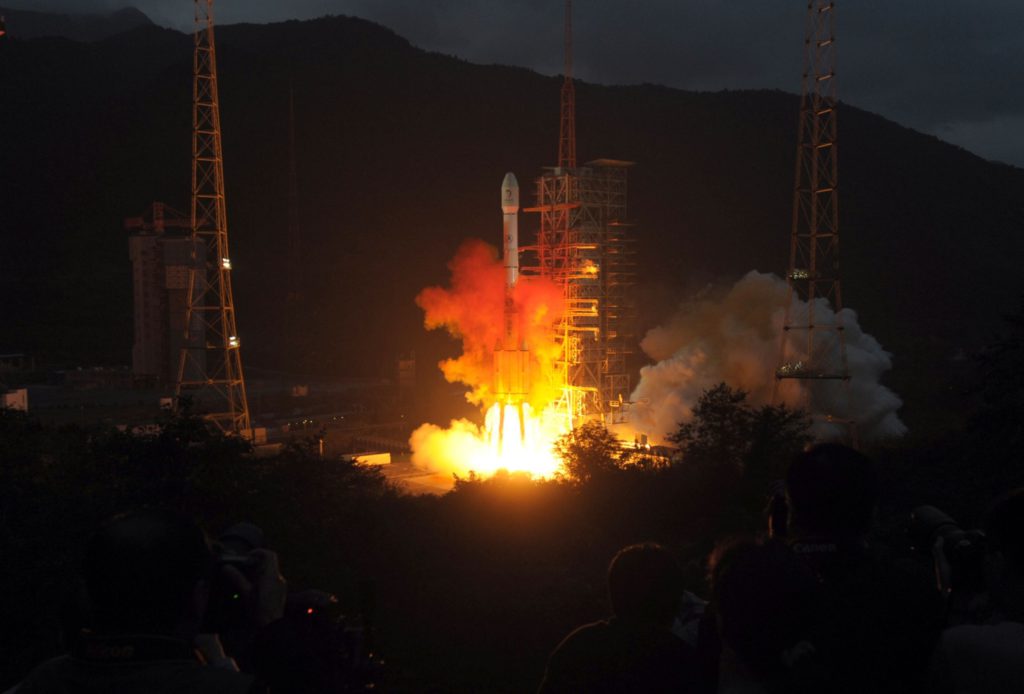
(Bloomberg) — China disputed Nasa’s claim that debris about to hit the moon originated with one of its exploration programs, the latest disagreement between the nations over their space programs. Foreign Ministry spokesman Wang Wenbin said Monday at a regular press briefing in Beijing that the final rocket stage of a moon mission years ago …

China Disputes Nasa Claim Its Space Debris Is About to Hit Moon Read More »

Close Bitnami banner
Bitnami