

Bloomberg

Korea’s Exports Are Staying Resilient Against Omicron Headwinds

(Bloomberg) — South Korea’s early trade figures offered signs that global demand remains robust in February even as the value of shipments rose by the smallest amount in almost a year.

Exports advanced 13.1% in the first 20 days of the month from the previous year, led by semiconductors and oil products, the customs office reported Monday. Overall imports rose 12.9%, resulting in a trade deficit of $1.68 billion.

While the export gain was the smallest since March, the value of average daily shipments was only slightly down at 17.2% from the corresponding January figure, indicating that after the number of working days was factored in, the trend was largely unchanged. 

That result points to the resilience of global commerce to the threat of the omicron variant of the coronavirus. Korea’s trade data are a barometer of global economic activity as the nation’s manufacturers are positioned widely across supply chains. 

The latest report supports the Bank of Korea’s assessment that exports will keep underpinning the economy this year, as the bank persists along a path to policy normalization.

While demand for South Korean goods remains solid in the face of virus concerns, inflationary pressures coupled with geopolitical risks have been squeezing the nation’s importers, who often supply the equipment and materials exporters need to assemble their products.

The pace of monthly export growth has been easing since May as a favorable base effect fades. Trade deficits have also emerged as a concern for South Korea, with the currency one of the worst performers in Asia over recent months. In January, South Korea posted its biggest trade deficit in more than three decades.

The data showed:

  • Exports to China, Korea’s largest overseas market, rose 12.4%
  • Shipments to the U.S. advanced 7%, while those to the European Union climbed 2.8%
  • Overall semiconductor shipments increased 18.1%, while sales of wireless communications devices fell 17.7%
  • Exports of oil products gained 56%

(Adds deficit figure and details)

More stories like this are available on bloomberg.com

©2022 Bloomberg L.P.

NBA Star Antetokounmpo Signs Multiyear Deal With Meta’s WhatsApp

(Bloomberg) — NBA star Giannis Antetokounmpo has signed a long-term deal with WhatsApp, the messaging service owned by Meta Platforms Inc., to promote the brand around the world.

The multiyear agreement is the first celebrity endorsement deal for WhatsApp. Executives plan to work with Antetokounmpo on content, events and community outreach, beginning at the NBA’s All-Star Game in Cleveland on Sunday evening. Financial terms weren’t disclosed.

”It’s an app I use daily,” Antetokounmpo said in an interview. “At the end of the day, I make decisions based on what makes me happy and how I can help.”

Antetokounmpo, who was born to Nigerian parents in Greece, is one of basketball’s best international players. WhatsApp, which competes with the likes of Apple Inc.’s iMessage and Google Messages, has more than 2 billion users worldwide and has established itself as the primary messaging method in countries such as India and Brazil. The service has boosted marketing in sports this year, including airing its first U.S. ads in January during the NFL playoffs.

Antetokounmpo has accumulated several major sponsors since he was drafted in 2013, promoting headphones for JBL and appearing in ads for Walt Disney Co.’s Hulu streaming service. Nike Inc. re-signed him to a long-term deal in 2017, and he has his own signature sneaker line for the world’s largest athletic-wear company.

In recent years, Antetokounmpo has also started to make some of his own investments, putting money into sports drink startup Ready Nutrition and watch marketplace WatchBox. He also became a minority owner in Milwaukee’s baseball team, the Brewers, last year. He said it’s a valuable learning process for him, as he hopes to own an NBA team one day. 

“It’s kind of hard to manage all together,” said Antetokounmpo.  “I’m getting involved in things I’d never imagined I would get involved in.”

The two-time NBA Most Valuable Player won his first championship in 2021, when he led the Milwaukee Bucks to their first title in 50 years. That on-court success has propelled the small-market franchise to national popularity, with strong merchandise sales and newfound interest from corporate sponsors. Only LeBron James and Steph Curry topped Antetokounmpo in jersey sales last season, according to data from sports-merchandise retailer Fanatics.

More stories like this are available on bloomberg.com

©2022 Bloomberg L.P.

NBA Star Antetokounmpo Signs Long-Term Deal With Meta’s WhatsApp

(Bloomberg) — NBA star Giannis Antetokounmpo has signed a long-term deal with WhatsApp, the messaging service owned by Meta Platforms Inc., to promote the brand around the world.

The agreement is the first celebrity endorsement deal for WhatsApp. Executives plan to work with Antetokounmpo on content, events and community outreach, beginning at the NBA’s All-Star Game in Cleveland on Sunday evening. Financial terms weren’t disclosed.

”It’s an app I use daily,” Antetokounmpo said in an interview. “At the end of the day, I make decisions based on what makes me happy and how I can help.”

Antetokounmpo, who was born to Nigerian parents in Greece, is one of basketball’s best international players. WhatsApp, which competes with the likes of Apple Inc.’s iMessage and Google Messages, has more than 2 billion users worldwide and has established itself as the primary messaging method in countries such as India and Brazil. The service has boosted marketing in sports this year, including airing its first U.S. ads in January during the NFL playoffs.

Antetokounmpo has accumulated several major sponsors since he was drafted in 2013, promoting headphones for JBL and appearing in ads for Walt Disney Co.’s Hulu streaming service. Nike Inc. re-signed him to a long-term deal in 2017, and he has his own signature sneaker line for the world’s largest athletic-wear company.

In recent years, Antetokounmpo has also started to make some of his own investments, putting money into sports drink startup Ready Nutrition and watch marketplace WatchBox. He also became a minority owner in Milwaukee’s baseball team, the Brewers, last year. He said it’s a valuable learning process for him, as he hopes to own an NBA team one day. 

“It’s kind of hard to manage all together,” said Antetokounmpo.  “I’m getting involved in things I’d never imagined I would get involved in.”

The two-time NBA Most Valuable Player won his first championship in 2021, when he led the Milwaukee Bucks to their first title in 50 years. That on-court success has propelled the small-market franchise to national popularity, with strong merchandise sales and newfound interest from corporate sponsors. Only LeBron James and Steph Curry topped Antetokounmpo in jersey sales last season, according to data from sports-merchandise retailer Fanatics.

More stories like this are available on bloomberg.com

©2022 Bloomberg L.P.
Ottawa Blockade Largely Dispersed As Financial Crackdown Widens

(Bloomberg) — Police said they have largely cleared downtown Ottawa of the anti-vaccine protests that have roiled Canada and its capital for the last three weeks, as a financial crackdown widened to help prevent similar disturbances. 

“The number of unlawful protesters has dramatically declined in the last 24 hours,” Ottawa’s interim police chief, Steve Bell, said in a press conference Sunday. 

“We promised that we would clear our streets and give them back to our residents,” he said. “We promised that we would return our city to a state of normalcy. With every hour we are getting closer to that goal.”

Though still facing pockets of protest, the police have made 191 arrests, with 107 people charged so far. Much of the city’s downtown is still ringed with fencing and subject to checkpoints to ensure protesters don’t return. 

By Sunday evening, a possible end seemed in sight to the three-week-long protest against Covid-19 vaccine mandates and pandemic restrictions, which saw hundreds of semi-trailer trucks and other vehicles blockade the area of downtown Ottawa around Canada’s parliament buildings. The protest inspired similar encampments at border crossings with the U.S across the country. 

To help end the crisis, Prime Minister Justin Trudeau invoked emergency powers for the first time in half a century, and those are now being used to choke off the financial flows that sustained the blockades.

Law enforcement officials said Sunday they had so far frozen 206 bank and corporate accounts related to the blockades; disclosed 56 pieces of identifying information of individuals, companies and vehicles that took part; determined the virtual addresses of 253 Bitcoin associated with the movement; and halted C$3.8 million ($3 million) that was sent through a payment processor.

With Ottawa starting to quiet down, police said they are still monitoring protesters to ensure they are not massing anywhere to attempt to return to the city. Police have pursued some protesters attempting to establish new encampments, including in the parking lot of a suburban baseball field.

Chief Bell would not say when he expected the operation to end.

More stories like this are available on bloomberg.com

©2022 Bloomberg L.P.

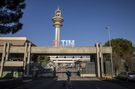
Telecom Italia Says Plan Targets Not Yet Discussed

(Bloomberg) —

Telecom Italia is still discussing its new strategy and has not yet reviewed its financial targets, the Italian company said in a statement.

The phone carrier targeted in November by KKR & Co. denied reports by local media which earlier said the company was seeing “negative growth” until 2024. Some directors are asking new Chief Executive Officer Pietro Labriola for “more ambitious targets,” Il Messaggero reported earlier on Sunday.

The company “expresses its annoyance and concern on such reconstructions, which are to be considered unfounded and harmful.” 

Telecom Italia will unveil its new business plan at a board meeting scheduled for March 2. The plan is aimed at spinning off the carrier’s landline network into a new unit focused on wholesale services, with the goal of gaining a solid revenue stream from regulated tariffs, people familiar with the matter told Bloomberg last month. The plan could also see all of the company’s commercial services spun off into a separate unit, they said.

Read more: KKR May Oppose Telecom Italia’s Grid Spinoff Plan: La Stampa

More stories like this are available on bloomberg.com

©2022 Bloomberg L.P.

Hinduja Global Wins $281 Million U.K. Test-and-Trace Contract

(Bloomberg) —

Hinduja Global Solutions Ltd’s England-based unit won a contract from Britain’s Health Security Agency to provide customer support to U.K. citizens for Covid-19 contact tracing, the company said in an exchange filing Sunday. 

The U.K. Health Security Agency is in charge of test-and-trace for Covid-19 cases for Britain’s National Health Service.   

The contract, worth 21 billion rupees ($281 million), is Hinduja Global Solutions’s “biggest-ever win in the public sector to date,” the company said in a statement Sunday. The firm added that it would employ 2,000 people for an initial period of two years to assist with Covid-19 test-and-trace operations.

“This contract will assist with future contact tracing needs for Covid-19 and other health security risks such as a large flu outbreak or new pandemic,” the company said in the statement. 

Prime Minister Boris Johnson’s government reiterated Sunday his intention to end the U.K.’s remaining Covid-19 restrictions, saying he would lay out a plan this week for “living with Covid.” Johnson earlier this month said he plans to end the legal requirement for people in England to self-isolate if they test positive.

More stories like this are available on bloomberg.com

©2022 Bloomberg L.P.

SoftBank Calls Credit Suisse Subpoena a ‘Fishing Expedition’

(Bloomberg) —

SoftBank Group Corp. urged a U.S. judge to block Credit Suisse Group AG from conducting a “fishing expedition” in a simmering dispute over the collapse of Greensill Capital.

Zurich-based Credit Suisse is seeking internal records from SoftBank as it prepares to file a lawsuit in England to recover losses from last year’s implosion of financier Lex Greensill’s supply-chain finance empire. 

The Tokyo-based holding company said in a filing late Friday in San Francisco federal court that a subpoena prepared by the Swiss bank is nothing more than a “desperate” attempt to deflect responsibility for the “embarrassing” loss of hundreds of millions of dollars in the Greensill collapse.

SoftBank claims Credit Suisse persuaded a magistrate judge in early January to allow the subpoena under the false promise that its U.K. lawsuit was to be filed imminently.

In reality, Credit Suisse’s information gathering is a “baseless fishing expedition aimed at manufacturing claims” against SoftBank, according to the filing. The subpoena should be rejected, SoftBank said, because Credit Suisse should pursue the documents it wants from the English court where it intends to file suit — and where SoftBank can fight it. 

A spokesperson for Credit Suisse declined to comment to Bloomberg. The company faces a deadline next month to respond to SoftBank’s arguments.

Credit Suisse’s “broad-based” demand for information “appears designed to try and identify potential claims, rather than provide specific information required” to start the lawsuit in England, SoftBank said.

Credit Suisse is seeking information from board meetings at Katerra Inc., a U.S.-based construction company in which SoftBank was a major investor. The bank is trying to reclaim $2.7 billion in overdue loan payments from borrowers including Katerra. It has said it invested in about $440 million worth of notes backed by the construction company.

Read More: Credit Suisse Wins Court Order for Information from SoftBank 

The Swiss bank has alleged that SoftBank “orchestrated a financial restructuring of Katerra in late 2020” in which the two companies, along with Greensill, “agreed, improperly, to cancel the Katerra receivables program and purported to forgive the amounts outstanding under that program” that were due to Credit Suisse. In exchange, Greensill received shares in a Katerra entity. 

Friday’s filing contains flow charts in which SoftBank details transactions between various entities — funds and special purpose vehicles — and how they invested in Katerra, which was incorporated in the Cayman Islands.

In 2020, as Katerra was in financial distress and at risk of default, it hired restructuring advisers, according to the filing. In November of that year, a SoftBank entity transferred $440 million to a Greensill subsidiary to shield the company’s creditors and funding sources from losses tied to Katerra and facilitate a restructuring of Katerra’s debt obligations, SoftBank said.

The purpose of the transaction was, at least in part, to shift the risk of economic loss from Credit Suisse to SoftBank, the Japanese company said. But in January 2021, SoftBank learned for the first time that as Katerra continued to falter it had not used the $440 million infusion to buy back the notes Credit Suisse purchased.

Instead, Greensill transferred the money to its various entities, including one in Germany that was under investigation. Any harm to Credit Suisse was an unintended “collateral consequence” of the transaction, SoftBank said.

Credit Suisse cut ties with SoftBank in May, deciding to no longer do any new business together, after the collapse of Greensill and amid conflict of interest allegations, people with knowledge of the decisions earlier told Bloomberg.

The Swiss bank has repaid $6.7 billion to investors in supply-chain funds affected by Greensill’s failure. 

The case is In re Ex Parte Application of Credit Suisse Virtuoso, 21-mc-80308, U.S. District Court, Northern District of California (San Francisco).

(Updates with Credit Suisse declining to comment in 6th paragraph)

More stories like this are available on bloomberg.com

©2022 Bloomberg L.P.

OpenSea Probes NFT Phishing Attack, Co-Founder Says

(Bloomberg) — The co-founder of OpenSea said the non-fungible token marketplace is investigating a “phishing attack,” which doesn’t appear to be active.

“We don’t believe it’s connected to the OpenSea website,” Devin Finzer, who is also its chief executive officer, said on Twitter. “It appears 32 users thus far have signed a malicious payload from an attacker, and some of their NFTs were stolen.”

NFTs are digital tokens that act like certificates of authenticity for, and in some cases represent ownership of, assets that range from expensive illustrations of apes to collectibles like celebrity autographs and physical goods like a case of rare whiskey.

Some of the NFTs have been returned, and there hasn’t been further malicious activity seen from the attacker’s account, Finzer said.

He also dispelled rumors of a $200 million hack, saying the attacker has $1.7 million of Ethereum in his wallet from selling some of the stolen NFTs.

More stories like this are available on bloomberg.com

©2022 Bloomberg L.P.

Congo Nears Deal With Israeli Billionaire to Recover Assets

(Bloomberg) — Democratic Republic of Congo’s government announced it is nearing a deal with Dan Gertler’s Fleurette Group to take back billions of dollars worth of its mining and oil assets in the country.

Companies owned by the Israeli billionaire, who is facing U.S. sanctions for alleged corruption in Congo, control mining and oil permits throughout the Central African nation as well as lucrative royalty streams for some of the world’s biggest copper and cobalt projects run by Glencore Plc and Eurasian Resources Group Sarl. A spokesman for Gertler declined to comment. Gertler has denied all corruption allegations and he’s never been charged. 

A Congolese government commission is close to reaching a memorandum of understanding with Fleurette Group to recover oil and mining assets valued at more than $2 billion “as well as a substantial part of the Kamoto Copper Company royalties,” according to minutes from Friday’s council of ministers meeting read on national television by Augustin Kibassa, minister for post and telecommunications.

Kamoto Copper is managed by Glencore, which declined to comment.

A consortium of Congolese and international non-governmental organizations known as Congo is Not for Sale praised the deal as a “first step” in recovering Gertler’s assets in an emailed statement Saturday. It called on the government “to make the process and results of the negotiations more transparent.”

Read More: Sanctioned Israeli Billionaire Cost Congo $2 Billion, Group Says

Gertler came to Congo to deal diamonds in the late 1990s when the country was at war. He built close ties to Joseph Kabila, who was president from 2001 to 2019. His businesses soon expanded to copper, cobalt, oil, gold and other minerals, often partnering with mining behemoths like Glencore. But his relationship to Kabila brought scrutiny from anti-corruption groups, which accused him of paying bribes and stealing money from one of the world’s poorest countries. He denies all charges.

The U.S. sanctioned Gertler in December 2017 in part to force Kabila from power after he’d postponed scheduled elections. The Treasury Department has expanded measures against Gertler’s companies and associates twice more, including in December of last year. 

Read more: U.S. Treasury Sanctions Associate of Israeli Billionaire Gertler 

Since Felix Tshisekedi took over as Congo’s president in 2019, the government’s relationship with Gertler has cooled. Tshisekedi has made it a priority to take back two oil blocks owned by Gertler’s companies along the border with Uganda, which could be worth billions.

Friday’s announcement shows Tshisekedi’s government wants to claw back even more of Gertler’s empire. 

The country’s justice minister is now examining the proposed deal with Fleurette with the hopes of concluding an agreement that would “allow the Congolese state to fully take back possession of these mining and oil assets,” Kibassa said.

(Adds no comment from Gertler spokesman in second paragraph)

More stories like this are available on bloomberg.com

©2022 Bloomberg L.P.

Ethereum Founder Buterin Says Crypto ‘Welcomes’ Another Winter

(Bloomberg) — Vitalik Buterin, co-founder of the Ethereum blockchain, says the digital-asset universe may actually benefit from the current retreat in coin prices that’s cast a chill on investors and is being referred to as another crypto winter. 

“The people who are deep into crypto, and especially building things, a lot of them welcome a bear market,” Buterin said during an interview with Bloomberg. “They welcome the bear market because when there are these long periods of prices moving up by huge amounts like it does — it does obviously make a lot of people happy — but it does also tend to invite a lot of very short-term speculative attention.”

Cryptocurrency prices have tumbled since reaching record highs in early November as investors and speculators anticipate a reduction of the massive amounts of stimulus added to economies and global markets in the wake of the Covid pandemic. The Bloomberg Galaxy Crypto Index is down about 45% from its all-time high. Ether, the native currency of the world’s most widely used blockchain, has slumped around 40% during the same period. 

Since the last “crypto winter” in 2018, the sector has boomed. The price tracking website CoinGecko lists a staggering 12,588 tokens. The large amount of money invested during the latest crypto bull run may have created many overnight millionaires or billionaires stories, but one’s gains in crypto is often also another’s losses and pain. Market manipulation schemes such as those referred to as pumps and dumps were often found in crypto applications run by people who were only in crypto for the short-term profits.

“The winters are the time when a lot of those applications fall away and you can see which projects are actually long-term sustainable, like both in their models and in their teams and their people,” the 28-year-old crypto billionaire said.

Yet Buterin, who said he’s “surprised” by how the market has moved since last year, isn’t sure whether crypto has entered another winter or the sector is just mirroring the volatility in broader markets.

“It does feel like the crypto markets kind of flip the switch from being this niche group that’s controlled by a very niche group of participants and it’s fairly disconnected to traditional markets into something that behaves more and more like it is part of the mainstream financial markets,” he said from Denver on Feb. 12.

He also added that a crypto winter can also help those who are building projects in crypto focus on improving the technology.

Buterin’s comments came not long after the popular crypto protocol Wormhole, a cross-blockchain bridge, was hacked for over $300 million. Buterin back in January warned about the risks of using cross-blockchain bridges. So-called cross-blockchain bridges often work by taking a cryptocurrency on one blockchain and locking it in a software program known as a smart contract to issue a parallel cryptocurrency on another blockchain. 

Buterin has shifted his focus to scaling Ethereum in recent years. The popular blockchain has long suffered criticism because transactions on Ethereum can be slow and expensive. Buterin’s Ethereum Foundation is leading the latest efforts dedicated to improving the blockchain’s scalability with perhaps the most important upgrades in Ethereum’s history.

“When everyone is again trying to use blockchains,” Buterin said. “We don’t want them to discover yet again that no, actually, there isn’t enough space on the chain for everyone.” 

More stories like this are available on bloomberg.com

©2022 Bloomberg L.P.

Close Bitnami banner
Bitnami