Bloomberg

Musk Says SEC Out to ‘Chill’ His Speech With ‘Endless’ Probe

(Bloomberg) — Lawyers for Elon Musk and Tesla Inc. told a judge the U.S. Securities and Exchange Commission is “targeting” the two and has failed to pay Tesla shareholders $40 million it collected in a settlement of a 2018 case over his tweets.

In a letter filed with the federal court in Manhattan Thursday, Musk’s legal team claims the SEC “seems to be targeting Mr. Musk and Tesla” because he remains “an outspoken critic of the government.” The agency is trying to “chill” his speech with “endless, unfounded” investigations, his lawyers allege.

A federal judge has also raised questions about the status of a $40 million fund established from fines paid for Musk’s controversial tweets, seeking accounting statements in a December order.

Read More: Tesla Subpoenaed by SEC About Complying With Musk Settlement

The firm appointed in May to administer distributions from the fund, set up by the SEC for harmed investors, hasn’t filed required accounting statements, U.S. District Judge Alison Nathan said in a December order. The SEC reached a settlement with Musk and Tesla in September 2018 after suing the billionaire over his tweeted claims weeks earlier that he had the funding and investor support to buy out stockholders at $420 a share. 

The SEC alleged the tweets were false, and while Musk and Tesla didn’t admit to wrongdoing as part of the accord, the agency set up a so-called Fair Fund to repay investors harmed by Musk’s statements.

In the letter Thursday, Alex Spiro, one of the lawyers representing Musk and Tesla in the case, asks Nathan for a hearing “to address why the SEC has failed to distribute these funds to shareholders but has chosen to spend its energy and resources investigating Mr. Musk’s and Tesla’s compliance with the consent decree by issuing subpoenas unilaterally, without court approval.”

Spiro claims the SEC is using the 2018 settlement to “muzzle and harass” Musk and the company while ignoring its responsibility to distribute the $40 million to shareholders.

The consulting company handling the fund has said it is awaiting transfer of the money from the SEC.

(Adds context starting in third paragraph.)

More stories like this are available on bloomberg.com

©2022 Bloomberg L.P.

Polestar Seeks Electric-Car Clout With Potshots at Musk and VW

(Bloomberg) —

During the Super Bowl, carmakers tend to rely on star power to tout their offerings. This year, BMW turned to Arnold Schwarzenegger and Salma Hayek for a Zeus-themed spot showing off the battery-powered iX sport utility vehicle. Toyota hired Tommy Lee Jones to market its Tundra pickup, while General Motors enlisted Mike Myers of “Austin Powers” fame to highlight its electric push.

One automaker did things a bit differently. Instead of signing up big names, the Sweden-based and Chinese-backed EV maker Polestar took a few jabs at big-name rivals. Its 30-second spot, “No Compromises,” featured footage of the Polestar 2 fastback and a series of pithy messages describing what the brand isn’t all about. “No dieselgate” and “No conquering Mars” were clearly aimed at Volkswagen and Elon Musk.

While Tesla’s chief executive officer responded with a laugh emoji on Twitter, the ad produced some serious attention for Polestar, which was founded five years ago by Sweden’s Volvo Car and its Chinese owner Geely. The brand saw a 580-times surge in traffic to its dedicated pages on Cars.com after the ad aired, and the Polestar 2 was the platform’s most-visited model during the Super Bowl.

“Prior to the game, Polestar had low visibility on Cars.com,” said Julie Scott, who oversees national sales for the automotive marketplace. “They really took the opportunity to step into a national spotlight.”

This year’s big game featured a record number of electric-car ads in yet another sign that competition in the space is heating up. Auto brands ran four times as many TV ads for EVs in the U.S. last year than they did in either of the previous two years and spent an estimated $248 million on spots, up from $83 million in 2019, according to marketing analytics firm EDO.

Automakers also are spending big on updating their manufacturing bases. Carmakers including GM, VW and Stellantis have announced multibillion-dollar plans to set up EV and battery plants as they try to catch up to Tesla, which is preparing to open its first European factory near Berlin.

The timing of Polestar’s Super Bowl ad is no coincidence. The company plans to go public in a $20 billion reverse merger with a blank-check firm in the first half of this year and wants to grow not just in Europe and Asia, but also in the U.S. Key to that push will be the Polestar 3, an electric SUV the company will assemble at an existing Volvo car plant in Ridgeville, South Carolina. Building that model locally will help with pricing and delivery times, both of which have been issues thus far as Polestar has been importing models from factories in China.

The company has a long way to go to lure more buyers to its brand. It delivered around 29,000 cars globally last year, a fraction relative to Tesla’s more than 936,000. Polestar aims to more than double sales this year to around 65,000 units. A spokesperson declined to give specific targets for the company’s U.S. expansion but did confirm the Super Bowl ad spurred a big increase in visits to Polestar’s website.

Now, it’s up to the company to use that buzz to keep growing sales.

More stories like this are available on bloomberg.com

©2022 Bloomberg L.P.

DoorDash Surges as Pandemic Dining Habits Boost Orders to Record

(Bloomberg) — DoorDash Inc. soared 25% in early trading on Thursday after the company reported a record number of people ordered from the food-delivery app in the fourth quarter, showing that pandemic eating habits are sticking despite Covid-19’s fading threat. 

Customers placed 369 million orders in the period, representing a 35% increase from a year earlier. People were also ordering more often and the value of those orders increased 36% to $11.2 billion. Wall Street expected $10.6 billion. 

“There was a lot of skepticism about whether people were going to keep using this product with reopenings and we’re exiting the year with a record number of users,” Chief Financial Officer Prabir Adarkar said in an interview. “The benefit of convenience is enduring.”

The pandemic supercharged consumers’ affinity for takeout when coronavirus lockdowns cut back indoor dining and was a boon for DoorDash, which went public in 2020 on the back of triple-digit growth in its core food-delivery business. DoorDash, which comprises 58% of the U.S. food-delivery sales, has parlayed its success into other categories like convenience-store items and groceries, elevating its ambitions to becoming a logistics giant. 

Revenue rose 34% in the fourth quarter to $1.3 billion, the San Francisco-based company said Wednesday in a statement. That was in line with analysts’ average projection of $1.29 billion, according to data compiled by Bloomberg. The company projected gross order value of $11.4 billion to $11.8 billion in the current quarter, based on continued growth in the U.S. restaurant marketplace as well as investment in new categories and international markets. 

“The strong outperformance, in addition to the raised guidance, reflect both the stickiness of the food delivery consumer who is becoming habituated to the service,” and “management’s conservatism in the face of uncertainty,” Truist Securities analyst Youssef Squali wrote in a note, reiterating his buy rating on the stock.

The shares rose to $118.36 in early trading in New York, putting them on course to rise back above their listing price. 

But DoorDash also cautioned investors that “significant uncertainty remains around several factors, including: the ongoing Covid pandemic and the impact of labor shortages, inflation, and other macroeconomic factors,” the company said in a letter to shareholders. 

To help hedge any slowdown in delivery demand, DoorDash has “aggressively” invested in expanding its global footprint and new services which contributed to lower-than-expected adjusted earnings before interest, tax, depreciation and amortization of $47 million. Analysts had forecast $73.8 million. “We’re focused on maximizing scale,” Adarkar said. “We’re using profits from the core U.S. restaurant business to grow new areas.” 

In November, DoorDash acquired Finnish food-delivery company Wolt Enterprises Oy for about $8.1 billion, its biggest purchase ever, in a bid to boost business outside the U.S. International orders grew “substantially faster” than domestic ones in the fourth quarter, DoorDash said. 

Though consumer demand for meal-delivery has remained largely resilient, competition in the sector has intensified, and bolstering orders in non-food categories are key to sustain growth, according to Bloomberg Intelligence analyst Mandeep Singh. DoorDash launched an ultrafast grocery delivery pilot in December to tap into the instant-commerce boom made popular by startups like Gopuff, Gorillas Technologies GmbH and Getir. The number of users placing an order in non-restaurant services has been steadily growing and reached 14% in December, Adakar said. 

The results suggest that the “company’s expansion into new delivery verticals is aiding its volume growth and traction with its DashPass subscription offering,” said Bloomberg Intelligence analyst Mandeep Singh.

DashPass reached more than 10 million users at the end of 2021, the company said. Membership services have gained traction as a way to boost customer retention and increase basket sizes with competitors like Uber Technologies Inc. and Instacart Inc. launching products of their own. 

More stories like this are available on bloomberg.com

©2022 Bloomberg L.P.

BlackRock Alums Debut First Junk ETFs Just as the Credit Cycle Turns

(Bloomberg) — BlackRock Inc. alumni bidding to shake up the world of junk-debt investing are launching their first slate of ETFs, just as money managers flee the industry’s biggest credit strategy at a record pace.

Seven exchange-traded funds from BondBloxx Investment Management that carve U.S. high-yield bonds into industries from telecom to energy begin trading on the NYSE Arca Thursday. It marks the first time investors can take bets on a whole sector in one consolidated trade — and it’s landing in the midst of a rate-spurred exodus from risk assets.

Bloomberg’s U.S. junk bond index has dropped 4.2% in 2022 so far, though losses are far from uniform. Spreads have widened between 10% for energy borrowers and 35% for technology firms. BondBloxx executives say this is exactly the kind of market dispersion their new ETFs are designed to exploit. 

“One of the reasons investors are selling out of broad-based exposures is to allocate with better precision within the asset class,” Leland Clemons, one of the firm’s co-founders, said in an interview. 

Most of the team behind Larkspur, California-based BondBloxx have at some point worked for BlackRock, the world’s largest ETF issuer. The group also includes former JPMorgan Asset Management and State Street Corp. executives. Their plan is to fill a gap between individual bond transactions and existing ETFs that offer only broad exposures.

Part of the bet is that the bond market will finally catch up with equities in terms of electronic sophistication and transparency, potentially pushing more traders to ETFs. A recent industry survey by PricewaterhouseCoopers showed most respondents see the global ETF boom continuing until 2026, with demand for fixed-income products expected to be “especially dominant” in the U.S.

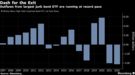
For now, corporate bond ETFs are reeling from soaring expectations the Federal Reserve will tighten policy to arrest inflation at decade highs. BlackRock’s iShares iBoxx High Yield Corporate Bond ETF (ticker HYG) — the largest of its kind — has been hit by almost $4.3 billion of outflows this year. That’s more than in any other quarter since its inception 15 years ago.

Against that backdrop, some issuers are racing to offer protection. Among other ETF launches this week is the Simplify High Yield PLUS Credit Hedge ETF (CDX), which combines junk bond exposure with a credit hedging strategy.

Still, BondBloxx is betting that investors are seeking more targeted exposure. In addition to the sector funds, the startup’s next step is to launch three ratings-focused strategies within U.S. speculative-grade debt. It may also launch credit funds with international exposures.

“Targeted exposure will help them allocate risk more effectively in an environment that’s more volatile,” said Clemons.

All seven sector funds have an annual expense ratio of 0.35%. They comprise:

  • BondBloxx US High Yield Industrial Sector ETF (XHYI)
  • US High Yield Telecom Media & Technology Sector (XHYT)
  • US High Yield Healthcare Sector (XHYH)
  • US High Yield Financial and REIT Sector (XHYF)
  • US High Yield Energy Sector (XHYE)
  • US High Yield Consumer Cyclicals Sector (XHYC)
  • US High Yield Consumer Non-Cyclicals Sector (XHYD)

More stories like this are available on bloomberg.com

©2022 Bloomberg L.P.

Americans Are Paying More for Worse Stuff, Study Finds

(Bloomberg) — Measured by consumer prices, U.S. inflation is the highest in 40 years. Look at what Americans are actually getting for their money and the rate may be even higher, according to researchers at the University of Michigan. 

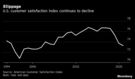
The academics publish a quarterly American Customer Satisfaction Index, which seeks to measure how happy consumers are with the goods and services they spend on. The latest edition, released earlier this week, found that there’s been a 5.2% decline in quality since 2018, with the bulk of it coming in the pandemic years.

The question of quality is an important and difficult one for statisticians trying to measure inflation. They have to account for cases where the price of a product — a laptop computer, say — hasn’t changed very much but its quality has improved, because technology allows faster processors and better screens. That means that in a sense, the computer is cheaper. And conversely, if the price is unchanged and the product has gotten worse, that effectively means it’s become more expensive.

The experts at the Bureau of Labor Statistics who calculate the headline U.S. inflation gauge, the consumer price index, try to incorporate a quality adjustment — known in the jargon as “hedonic changes.” But they do it for fewer than 40 of the 273 items whose prices they monitor, or about 13% of the CPI basket. 

The Michigan researchers attempt to measure quality across all the industries they track. Their latest findings “suggest that actual annualized inflation is probably about 10%” if prices were “fully adjusted for quality decline,” the report says. The January CPI showed consumer prices rose 7.5% from a year ago.

The dropoff in satisfaction is “most pronounced in services,” says Claes Fornell, founder of the ACSI and a professor emeritus of business administration at the University of Michigan. “Due to the pandemic, the problem has been amplified by a lack of product availability, supply issues and labor shortages.”

The ACSI report highlights a few examples of Covid effects. It found that some of the worst declines in quality came in consumer electronics, hit by supply-chain issues; at hotels, where a lack of workers means nightly room-cleaning is no longer available in some cases; and in video streaming, where system overloads occurred because more people were stuck at home trying to watch the same shows all at once.  

One caveat to the ACSI: The index is based on surveys, making it a sentiment gauge of perceived quality. The respondents’ opinions are more loosely defined than the specific characteristics associated with each item that the Bureau of Labor Statistics tracks for prices.

How people feel about a product or service may be reflected by their own personal experience with dealing with a company than in how quality has changed.

(Adds details on the index in the last paragraph.)

More stories like this are available on bloomberg.com

©2022 Bloomberg L.P.

Super Bowl Ads, Conquests and Your Next Car

(Bloomberg) —

If you watched Super Bowl LVI on Sunday, you probably noticed a slew of automobile ads. You may have noticed that several featured icons of from various generations of popular entertainment, like Arnold Schwarzenegger, Dr. Evil and Tony Soprano’s now grown-up children.

There was no missing the fact that a number of the ads were for electric vehicles. In fact, Super Bowl car commercials were almost entirely for EVs, with only a Porsche ad and Toyota’s spot for the Tundra pickup truck featuring The Joneses the exceptions. In 2018 there were 12 Super Bowl car ads, none of which featured an electric vehicle; this year, seven of nine ads featured a vehicle with a plug.

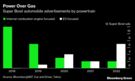
As Ira Boudway and Kyle Stock reported for Hyperdrive last month, EV advertisements have been increasing for the past two years. Data from marketing analytics startup EDO shows that EV ads were 7.5% of auto advertising spend in the U.S. in 2021, more than triple the level of 2019. At the same time, total EV ad airings increased four-fold, as did total EV ad impressions.

That is a trend, for sure—but the Super Bowl is something different. Viewing during the big game is highly social (in real life and on social media). Ads are hotly anticipated, eagerly and instantly reviewed, and, as such, are priced accordingly. Super Bowl ads are a moment to create brand awareness, or create a new concept of a familiar brand. They are a chance to create not just an impression of product lines today, but a sense of where products—and consumers—might be going.

That was especially true with this slate of EV ads. The Chevrolet Silverado spot, for instance, features a model that will not be available for more than a year, sometime in 2024. GM’s ad features a raft of new models without calling any of them out specifically; BMW’s spot for its arriving-soon iX features a certain former governor of California. These are efforts to create awareness and attention—and in that, they succeeded.

EDO crunched the data on Super Bowl LVI EV ads, and every single one of them – including Hyundai’s spot which ran before kickoff—outperformed the Super Bowl median in driving viewers to look up the brand. In the case of Polestar, it outperformed by nearly 23 times; Kia, with its robot dog ad, outperformed by a factor of 10.

Kevin Krim, the president and chief executive of EDO, said Polestar’s spot was so effective because it satisfied three rules for a smashing Super Bowl ad. First, it was truly new (Polestar is not Chevrolet, nor Tesla). Second, its creative elements were very well-executed. As Krim said, it had “striking visuals, and was both quiet and had pulse-pounding music.” Third, it “deliberately poked the eye of the celebrity complex.”

Of course, a company needs to do more than just poke eyes. It needs to deliver on its intriguing promise with a product. And just as importantly, it needs to sell it, and selling cars is about more than automaker intentions. As Krim notes, automotive advertisements come in three tiers. Tier one is the automakers themselves, and Super Bowl spots; Tier 2 is controlled by regional or multi-state dealer associations; Tier 3 is local company TV buys. Just because the Big Three want to sell EVs, doesn’t mean that every local dealer has ready buyers for them.

That said, I see reason to follow the automakers’ commitment to EVs down through dealers and to consumers. One reason is what is called “conquest marketing”—the ability to win over new consumers to your brand. Ford noted late last year that more than 70% of customers reserving its electric Mustang Mach-E and F-150 Lightning models were “new to Ford.” That’s a powerful signal to other brands to try for the same.

A 2021 survey by Alix Partners found that 19% of U.S. consumers were very likely to buy a battery-electric vehicle as their next car, up from 5% in 2019. That’s plenty of room for conquest, so to speak. Alix Partners also noted that in the U.S., 36% of those interested in EVs say that “friends and family is their biggest purchase-influencer”—the same friends and family gathered to watch the Super Bowl, and talk about it afterwards.

Two final thoughts. The first is that today’s EV buyers are exactly the demographic that automakers and dealers want to target. Half of all U.S. EV buyers in the first three quarters of 2021 are in management, professional, or technical occupations, and 60% of U.S. EV buyers are under the age of 50. That age cohort explains the stars of Super Bowl ads—be they 90s action heroes, comedic leads, or flawed-yet-compelling North Jersey families (admittedly, Schwarzenegger is a bit of an exception).

The second is that a thorough electrification of road transport—or what most car buyers will call “getting an EV”—is about more than your next car. It’s also about your next next car. It’s about a whole host of things beyond just the vehicle itself, from people’s brand impressions to their family needs to the infrastructure needed to support tens and then hundreds of millions of EVs on the road.

Chevrolet released a behind-the-scenes video alongside its Silverado spot, which could stand alone as an ad in its own right. In it, star Jamie-Lynn Sigler says “for me, personally, we’re making the transition into electric vehicles.” Sigler implies that it is a process, not just a purchase, and I think she is right.

Nathaniel Bullard is BloombergNEF’s Chief Content Officer.

More stories like this are available on bloomberg.com

©2022 Bloomberg L.P.

Crypto Tax in India Spurs Bonanza for Digital-Coin Bourses

(Bloomberg) — India’s decision to impose a 30% tax on profits from cryptocurrency trading is turning out to be a boon for the country’s digital-asset exchanges. 

Binance-owned WazirX, India’s largest crypto bourse, has seen daily sign-ups on its platform jump almost 30% since Feb. 1, when the government unveiled the levy on the transfer of digital assets in its annual budget, said co-founder Nischal Shetty. At rival CoinSwitch, the daily increase was 35%, according to founder Ashish Singhal.

While it might seem counterintuitive that a steep tax would cause people to flock to digital tokens, the step was seen as legitimizing an industry that’s been in regulatory limbo amid fierce resistance from India’s central bank. Shetty said he expects some 100 million people in the country to start investing in crypto in the next two to three years. 

“Investors are seeing a lot of clarity and visibility now with taxation announced in the budget,” Shetty said in an interview. “Earlier, people were on the sidelines wondering if cryptos were allowed or not.”

CoinSwitch’s registered users surged to 15 million as of January from 1 million a year ago, and part of the recent spike in sign-ups was due to its consumer education campaign, according to the exchange. Neither bourses disclosed how many customers they added in total since Feb. 1. 

The average new client puts about 30,000 rupees to 40,000 rupees  ($400 to $533) in their trading account, said Shetty. WazirX is also seeing more interest from companies that until now were wary of the “optics” of investing in crypto, he said. 

India has yet to introduce legislation governing digital assets, leaving its mushrooming crypto industry mired in uncertainty. At the same time, the Reserve Bank of India has been a vocal critic, with Governor Shaktikanta Das earlier this month calling cryptocurrencies a threat to stability and comparing them unfavorably to the 17th century Dutch tulip mania. 

Read more: India’s Central Bank Chief Says Crypto Is ‘Not Even a Tulip’ 

(Updates with comment from CoinSwitch in fifth paragraph.)

More stories like this are available on bloomberg.com

©2022 Bloomberg L.P.

Lebedev’s Independent Considering Media Consolidation Deals

(Bloomberg) — Independent Digital News & Media Ltd., owner of Britain’s Independent news website, is discussing a range of M&A options from consolidation with other media businesses to ecommerce acquisitions.

The potential deals would cement the former newspaper’s transformation into a digital media business after it stopped printing in 2016 to slash costs.

In an interview with Bloomberg News, Chairman John Paton said the Independent has held conversations with other media companies about consolidation-style deals, but declined to give further details. The U.K. news brand is also considering takeovers which could add new kinds of content or widen the Independent’s geographical footprint.

“To give you a range of two that we’re currently looking at, one is around the 10 million pounds ($13.6 million) mark, which is in the technology space, and there’s one that would be considerably more than that by a multiple factor, that would be in a content space,” Paton said. A technology deal may center around ecommerce platforms or sites.

The Independent’s top shareholder is Russian-British businessman Evgeny Lebedev, who Prime Minister Boris Johnson made a lifetime member of the U.K.’s upper legislature, the House of Lords. Lebedev also owns the Evening Standard, a London newspaper.

In the year to Oct. 3 2021, its operating profits more than doubled to 5.5 million pounds, while revenue increased 36% to 41.2 million pounds, the Independent said in a results statement which it expects will be published this week.

To cut the Independent’s reliance on online advertising, which is vulnerable to economic cycles and Big Tech’s algorithm changes, Paton is diversifying its income. Like British news group Reach Plc, the Independent site now encourages users to register, which gives the company first-hand customer information to fuel marketing. And similar to specialist publisher-turned-ecommerce business Future Plc, the site takes readers closer to purchases so it can win affiliate marketing income.

More stories like this are available on bloomberg.com

©2022 Bloomberg L.P.

MTN Share Sale Shows Nigeria Can Lure Young Crypto Buyers

(Bloomberg) — Nigeria’s main stock exchange plans to digitize the equity sales process so companies can attract younger buyers interested in cryptocurrencies and foreign assets rather than local public companies. 

A successful offering of 575 million shares by MTN Group Ltd.’s Nigerian unit in December was “groundbreaking,” according to Temi Popoola, chief executive officer of the Lagos-based Nigeria Exchange Ltd. The South African wireless carrier offered a stock issue to investors “end to end” electronically for the first time, he said. 

The sale was 1.2 times oversubscribed, with 85% of the investors aged under 40 years. This compares with 30% of overall equity investors, Popoola said in emailed response to questions. 

“In an age where investors’ needs are becoming increasingly sophisticated and the burgeoning youth demography are depending more on technology to transact business, our goal is to spur the next wave of growth,” he said.

While young Nigerians have shied away from trading in local equities, they are actively buying and selling crypto, accounting for the largest volumes outside the U.S., according to Paxful, a Bitcoin marketplace. Africa’s most populous country also has the largest proportion of retail users conducting transactions under $10,000, according to Chainalysis.

Still, the bourse in Africa’s largest economy may struggle to match the returns offered by crypto currencies. The Nigerian Exchange 50 Index, a gauge for the nation’s biggest equities, gained 28% in the three years to 2021. Bitcoin jumped sixfold in the same period.

Digital Apps  

MTN experimented with a digital application named PrimaryOffer administered by the Nigerian Exchange. The app enabled paperless subscription, allowing investors to access the offer on electronic devices and complete the process in less than five minutes. There was also a paper-based subscription. 

“At NGX we understand the disruption new age technology-based investments have created in the financial industry,” Popoola said. “Digital transformation is the next phase of growth for the NGX.” 

The bourse plans to automate other procedures such as access to company information, engagement of market operators and resolution of complaints, according to Popoola. It’s also looking to attract technology companies that want to raise further capital in a bid to increase opportunities for traders, he said. 

Many Nigeria and Africa-focused tech startups have attained unicorn status — a $1 billion valuation for a private company — in recent years, including Flutterwave Inc, which boosted its valuation to more $3 billion after its latest $250 million funding round.

Attracting youth to the local bourse will “create and sustain a boost” in the market as they become controllers of the economy in the future, Poopola said. “They will be primary beneficiaries of the sustainable and long-term gains that come from investing.”


(Updates with listing of technology companies in 9th paragraph)

More stories like this are available on bloomberg.com

©2022 Bloomberg L.P.
South African Welfare Recipients Surpass Number of Taxpayers

(Bloomberg) — South Africa’s extension of a monthly grant for the jobless means there’ll continue to be twice as many welfare beneficiaries as registered taxpayers, highlighting the challenge the government faces in trying to sustainably support the legions of unemployed and poor. President Cyril Ramaphosa last week extended the temporary monthly stipend of 350 rand …

South African Welfare Recipients Surpass Number of Taxpayers Read More »

Close Bitnami banner
Bitnami