
Bloomberg

IPO Mania Gets Reality Check in India After Series of Flops

(Bloomberg) — A boom in technology initial public offerings in India risks grinding to a halt after several of the country’s highest-profile startups tanked soon after listing.

A raft of prominent tech startups, including Oyo Hotels and logistics provider Delhivery, are pushing back their public debuts and preparing to reappraise target valuations, according to people familiar with the situation. The duo, both backed by SoftBank Group Corp., had been among the country’s highly anticipated offerings.

India’s burgeoning startup ecosystem faces a reckoning just weeks after it closed out a record year for IPOs. Investors have soured on new tech offerings after the calamitous public debut of fintech firm Paytm, as well as the battering received by newly listed e-commerce operators Zomato Ltd. and Nykaa. 

IPOs have gotten off to a rough start this year from New York to London and Hong Kong amid prospects of interest-rate hikes, geopolitical tensions and increased volatility. In India, the flops have smarted because 2021 was to have been the vast and vibrant startup sector’s coming-out celebration. Instead, regulators have stepped up scrutiny of IPO candidates after investors got burned, contributing to the delays. 

“Investors are no longer enamored of the household name startups; they want a path to profitability and returns, not hype and hoopla,” said Anup Jain, a managing partner at early-stage investor Orios Venture Partners. 

An Oyo spokesman said by e-mail that it is standard procedure for the regulator to ask for clarifications of a preliminary IPO filing, adding “our bankers are actively engaged with them. We can’t comment on specifics.” Delhivery declined to respond.

The owners of Delhivery have pushed back its approximately $1 billion IPO to the fiscal year starting in April, said some of the people, asking not to be named because the details are private. Delhivery is also reviewing its listing plan after the stock market regulator frowned on a planned sale of a substantial amount of shares by investors in the IPO, the people said. The logistics startup, backed by Carlyle Group Inc. as well as SoftBank, had previously planned to list by March.

Oyo, which came under scrutiny for its ownership structure and heavy losses after filing preliminary IPO documents last year, is now facing regulatory questions too. India’s watchdog has made queries about Oyo’s ongoing litigation with hostel operator Zostel Hospitality Pvt., which is claiming a stake in the company after a failed merger in 2016. 

The approval for the draft prospectus of Oyo’s planned $1.2 billion IPO has been pending for almost five months. Its investors include Sequoia Capital and Lightspeed Venture Partners, as well as SoftBank.

The management and bankers of Oyo, formally called Oravel Stays Ltd., are not in a rush, however, said one of the people. They are taking their time to respond to the regulator’s queries to slow down the listing process on purpose, the person said.

Also up in the air are the IPO timings of Pharmeasy, which goes by API Holdings Ltd., and automobile marketplace Droom Technology Ltd., which filed initial IPO documents in November. Pharmeasy’s investors include Prosus Ventures and TPG, while Droom is backed by Beenext and Lightbox Ventures.

Spokespeople for Pharmeasy and Droom declined to comment. 

India’s first-ever tech IPO rush marked a monumental year of exits for global investors in 2021. Paytm’s parent company, One 97 Communications Ltd., raised a record $2.5 billion when it went public in November. But its shares have plummeted 60% from their IPO price, infuriating investors and fueling concerns among regulators. A broader decline in tech stocks in India and beyond has only added to the gloom. 

Even the U.S. IPOs of startups Druva Inc., InMobi Pte. and Pine Labs Pvt. have been put off or deferred to the second half of 2022 or later, some of the people said. Sunnyvale, California-based software-as-a-service provider Druva, Singapore-based mobile solutions startup InMobi and fintech Pine Labs were all founded in India, where they still have the bulk of their operations.

A Druva spokesperson said by email that “the company will continue to monitor market and industry conditions and will do what best positions Druva for future growth and success.”

InMobi and Pine Labs did not respond to requests for comment.

Hanging over the Indian listings is a big unknown: the fate of the massive public share sale of state-owned Life Insurance Corp. of India, which filed its draft prospectus over the weekend. The final valuation and investor interest in what’s being called the “mother of all Indian IPOs” could dictate the course of technology companies’ listing plans, multiple people said.

Sandeep Murthy, a Mumbai-based partner at Lightbox, said concerns among public market investors are intensifying after two years of “rocketing” growth.

“Last year was all about greed and, short of an alien invasion, the market was ready to accept anything,” Murthy said. “Right now, fear is creeping up but give it some time, greed will be right back.”

(Updates with global IPO slump from the fourth paragraph)

More stories like this are available on bloomberg.com

©2022 Bloomberg L.P.

VW Warns of Output Cuts Amid Tensions Over EV Shift

(Bloomberg) —

Volkswagen AG Chief Executive Officer Herbert Diess warned the carmaker may need to cut output at its main factory in Wolfsburg amid rising tensions over how to make the world’s biggest car plant fit for the electric age.

While VW has made headway managing the global chip crisis, the situation at its German headquarters remains challenging, Diess said Wednesday during a workers assembly.

“Wolfsburg is particularly hard hit by the semiconductor situation,” the CEO said according to a prepared speech text. “Capacity adjustments are therefore necessary, also in the medium term.”

Talks over how to keep Wolfsburg competitive in the shift to battery-powered cars has seen tensions rise between Diess and union leaders. The CEO in November hinted at possible job cuts to keep pace with Tesla Inc. as the electric car leader plans to ramp up output at its first European factory near Berlin this year.

VW should should place a planned new electric-vehicle plant — which is supposed to produce about 250,000 EVs annually — at the main Wolfsburg site or at least very close to it to help protect jobs, labor leader head Daniela Cavallo said at the same event. She also called for compensating workers for the planned cuts of nearly all night shifts, which are expected to reduce the pay of some 5,000 workers.

VW’s Wolfsburg plant lost output of some 330,000 vehicles last year because of the chip crisis, in part because the group favored production of higher-priced models at other locations.

“Those were your choices, that’s your responsibility,” Cavallo said in comments addressed to top management. “That’s why you owe your colleagues compensation.”

(Corrects day to Wednesday in second paragraph.)

More stories like this are available on bloomberg.com

©2022 Bloomberg L.P.

Ericsson Shares Fall After CEO Says Firm May Have Paid ISIS

(Bloomberg) — Ericsson may have made payments to the ISIS terror organization to gain access to certain transport routes in Iraq, the company’s chief executive officer Borje Ekholm told newspaper Dagens Industri.

Shares in the Stockholm-based company fell as much as 8.5% in early trading Wednesday, the most since July.

In an interview with the business daily, the CEO said that Ericsson had identified “unusual expenses dating back to 2018” but the company hasn’t yet determined who the final recipient of the money was. “What we are seeing is that transport routes have been purchased through areas that have been controlled by terrorist organizations, including ISIS,” Ekholm added.

Ekholm’s comments follow a statement by the telecommunications equipment manufacturer late on Tuesday, in which the company said that it continues to “invest significantly” into a probe regarding compliance concerns in its Iraq-based operations.

A spokesperson for Ericsson declined to comment when contacted by Bloomberg News. 

The news of the internal investigation adds another embarrassment for the company following a long running corruption probe, including a $1 billion settlement in 2019. A unit of Ericsson AB pleaded guilty to a years-long campaign of bribery and corruption in Asia and the Middle East. In October last year, the matter resurfaced, after U.S. Department of Justice accused the company of breaching the agreement by failing to provide certain documents to the D.O.J.

The new suspect payments likely formed part of the same corruption probe, according to analysts at Handelsbanken. And while the analysts don’t expect the revelations to trigger further investigations, “it is likely to harm the stock price” when trading starts, they wrote in a client note.

Ekholm told the newspaper that Ericsson has spent “considerable resources trying to understand this as best we can. Financing terrorism is completely unacceptable and something we do not allow at all.”

(Adds background on corruption probe in sixth paragraph)

More stories like this are available on bloomberg.com

©2022 Bloomberg L.P.

Cryptoassets Threaten Financial Stability, Top Regulator Warns

(Bloomberg) —

Global financial regulators said digital assets could soon threaten global financial stability due to their scale, structural vulnerabilities and increasing interconnectedness with the traditional financial system.

Areas of concern include the use of leverage, technological fragilities and liquidity shortages, according to a report Wednesday by the Financial Stability Board. The report also noted concerns such as low levels of investor and consumer understanding of cryptoassets, plus risks of money laundering, cyber-crime and ransomware. 

The rapid evolution and international nature of such assets means authorities should consider “timely and preemptive evaluation of possible policy responses,” the report said. That includes prioritizing cross-border and cross-sectoral cooperation, including speedier information sharing in order to keep pace with crypto-asset developments.

The note of caution is an evolution from the FSB’s previous report published in 2018, which concluded at the time that cryptoassets did not “pose a material risk to global financial stability”. The FSB said then that regulators would continue to monitor the asset class on an ongoing basis given “the speed of developments and the existence of data gaps.”

The FSB is composed of representatives from authorities including the European Central Bank, Bank of England and Federal Reserve.

More stories like this are available on bloomberg.com

©2022 Bloomberg L.P.
Mainland Traders Lift Tencent, Meituan Stakes to 7-Month Highs

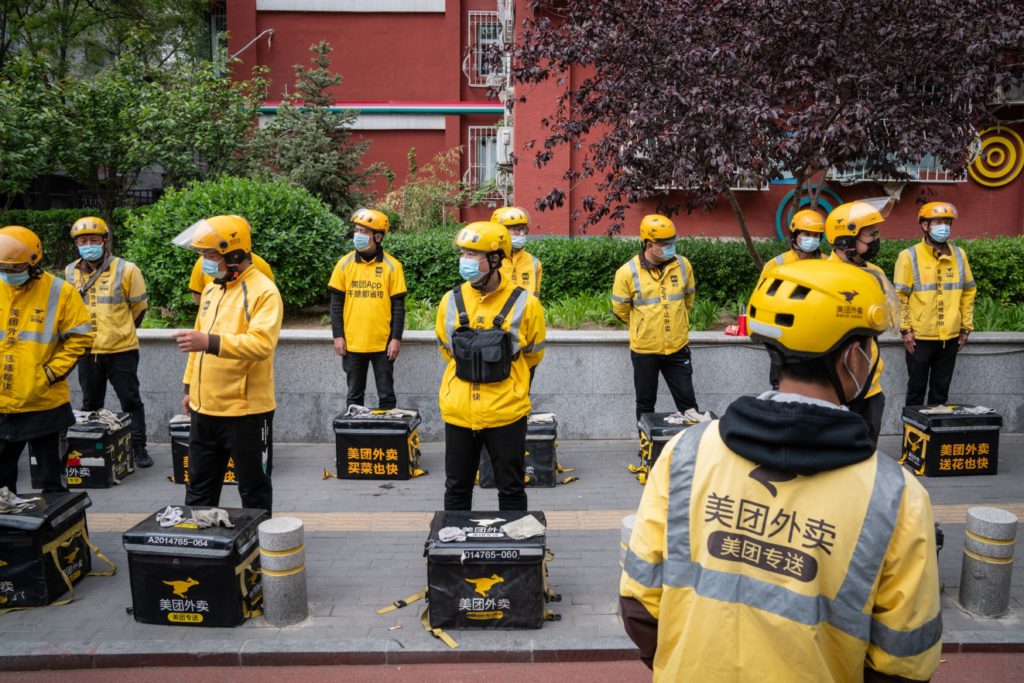
(Bloomberg) — Investors in mainland China boosted their stakes in beaten-down Tencent Holdings Ltd. and Meituan to the highest level in more than seven months, drawn by attractive valuations and easing concerns over government crackdowns.  Chinese investors net purchased about 30 million Tencent shares so far this year via trading links between the mainland and …

Mainland Traders Lift Tencent, Meituan Stakes to 7-Month Highs Read More »

Big Tech Gets New Ally as U.S. Chamber Fights Biden on Antitrust

(Bloomberg) — The U.S. Chamber of Commerce, the nation’s largest business lobby, is taking up the cause of giant technology companies facing fresh antitrust threats from the Biden administration and Congress.

The organization, whose members include industry stalwarts such as AT&T Inc. and Pfizer Inc., isn’t known as a voice for Silicon Valley. But in recent months it’s stepped into the fight against tougher antitrust enforcement, repeatedly attacking the U.S. Federal Trade Commission and its chair, Lina Khan, a fierce critic of the internet giants. 

“Any time we see a big expansion in regulatory power over industry, we’re going to get involved,” said Suzanne Clark, the chamber’s chief executive officer, in an interview with Bloomberg News Tuesday. “We didn’t choose the FTC and antitrust. That battle came to us.” 

The business group, which hasn’t previously made competition policy a priority, says it’s taking on the issue today because the traditional antitrust framework that companies have relied on for decades is being turned upside down in Washington. The change affects large and small businesses and industries beyond tech, the chamber says. 

The fixation on antitrust closely aligns the chamber with tech industry heavyweights and their advocates as the companies come under intense criticism from legislators and fight investigations and lawsuits by federal watchdogs. The chamber opposes measures proposed in Congress that target the tech platforms and is preparing a lawsuit to get access to documents related to Khan’s policy changes and any communications between the FTC and the White House. 

The FTC declined to comment on the chamber’s campaign against it.

The chamber’s stance in part reflects the stronger influence of its tech members, according to people familiar with the matter. Amazon.com Inc., for example, started donating to the chamber only a year ago, one of the people said. Meta Platforms Inc.’s Chief Privacy Officer Erin Egan recently joined the chamber’s board of directors. Egan and Clark are friends from Washington lobbying circles, according to another person.

The chamber, which spent $65 million on lobbying last year, doesn’t disclose how much its members give to the organization or even their identities, though its board of directors is listed on its website. Amazon, Alphabet Inc. and Microsoft Corp., which is also on the chamber’s board, declined to comment or didn’t respond to requests for comment. Microsoft has been at odds with its big tech peers over antitrust reforms. Last week, the company announced app store principles that it says align with legislation proposed in Congress.

Tech companies have put more muscle behind the chamber after one of their main trade groups, the Internet Association, disbanded last year following divisions among its members over proposed antitrust regulations aimed at the industry’s giants. The organization had declined to take a stand in the policy debate even as Google and Amazon expressed concern during internal conversations among members that the association wasn’t tackling what they saw as the rising threat of antitrust reform, according to another person familiar with the matter.

“The chamber is now just another tool of Google, Facebook and Amazon, and they should be ashamed for allowing themselves to be captured by the most powerful corporations,” said Barry Lynn, the director of Open Markets Institute in Washington and an ally of the FTC’s Khan.

Clark said the tech companies are bringing “an important voice” to the chamber’s work, but insisted that it’s very hard for one industry or company to determine the organization’s priorities. Clark added that other types of companies are concerned about how aggressive antitrust enforcement is making it harder to sell their businesses.

“We’re really hearing from small and medium-sized enterprises whose exits just got all screwed up,” Clark said in the interview. “It really puts their future at jeopardy.”

‘Aggressive Stance’

Clark in January devoted much of the chamber’s annual State of American Business speech to echoing tech’s message that antitrust reforms threaten innovation in the economy. She criticized President Joe Biden’s initiatives to boost competition and proposals by Democrats and Republicans to impose new rules on tech companies. Clark also took aim at the FTC for what she called its “aggressive stance” against mergers.

In November, she accused the agency of “waging a war against American businesses.” The chamber has filed more than three dozen Freedom of Information Act requests for documents about how the FTC has “manipulated its rules and procedures while potentially ceding its independent agency status to political interference.” The group is considering a lawsuit to obtain those records.  

The newfound coziness between the chamber and the tech giants follows a dramatic reshaping of debate around U.S. antitrust laws. Before Biden named her FTC chair, Khan, a former Columbia Law School professor, was at the forefront of a school of thought that says the traditional playbook for policing mergers and anticompetitive conduct has failed, leading to rising power of concentrated industries across the economy.

It’s a view Biden echoed last summer when he signed an executive order calling for agencies across the federal government to take steps to boost competition in industries they oversee. The White House argues that corporate consolidation and declining competition has led to higher prices for consumers and lower wages for workers while holding back economic growth.

Khan’s appointment spooked many business leaders and their lobbyists, who feared her arrival portended drastic policy changes that would hurt their companies. Despite these worries, there have been just two major merger lawsuits during her tenure. Still, the chamber aims to be prepared if Khan strikes.

“If you’re going to come in and overturn four decades-plus of approach to M&A and competition law, it’s going to go really high on our agenda,” Neil Bradley, the chamber’s chief policy officer, told Bloomberg.

More stories like this are available on bloomberg.com

©2022 Bloomberg L.P.

Ericsson CEO Concedes Company May Have Paid Off ISIS in Iraq

(Bloomberg) — Ericsson may have made payments to the ISIS terror organization to gain access to certain transport routes in Iraq, the company’s chief executive officer Borje Ekholm told newspaper Dagens Industri.

Speaking in an interview with the business daily, the CEO admitted that Ericsson had identified “unusual expenses dating back to 2018” but the company hasn’t yet determined who the final recipient of the money was. “But we can see that it disappeared,” he said.

His comments follow a statement by the telecommunications equipment manufacturer late on Tuesday, in which the company said that it continues to “invest significantly” into a probe regarding compliance concerns in its Iraq-based operations.

A spokesperson for Ericsson declined to comment when contacted by Bloomberg News.

The suspect payments likely formed part of a corruption probe by the U.S. Department of Justice that was concluded in 2019, according to analysts at Handelsbanken. And while the analysts don’t expect the revelations to trigger further investigations, “it is likely to harm the stock price” when trading starts, they wrote in a client note.

Ekholm told the newspaper that Ericsson has spent “considerable resources trying to understand this as best we can. Financing terrorism is completely unacceptable and something we do not allow at all.” 

More stories like this are available on bloomberg.com

©2022 Bloomberg L.P.

Zuckerberg Calls Staff ‘Metamates’ in Memo Outlining New Vision

(Bloomberg) — Mark Zuckerberg unveiled a list of principles for work at Meta Platforms Inc. in which he calls its employees “Metamates.”

The founder of Facebook, which changed its name in December to reflect a newfound focus on the so-called metaverse, laid out his vision for internal culture in an employee memo he shared on Tuesday. The familiar Move Fast motto remains, joined by Build Awesome Things, Live in the Future, Focus on Long-Term Impact and Be Direct and Respect Your Colleagues.

Meta’s chief executive officer said it is now “a distributed company” and gave a nod to its international nature by saying “we will continue hiring around the world.”

Zuckerberg mentioned the employee label in his conclusion: Meta, Metamates, Me. As explained by Meta executive Andrew Bosworth on Twitter, it’s a naval reference. “It’s about the sense of responsibility we have for our collective success and to each other as teammates,” Zuckerberg wrote. 

His post generated a mix of enthusiasm and derision online. Some social media users pointed out the slogan put the company first and the worker last. Others applauded the billionaire’s comments.

Meta has weathered a succession of hits to its public image in recent times after whistle-blower Frances Haugen ignited debate about whether the company prioritized profit over social responsibility. This month, the Facebook parent lost about $251.3 billion of market value after unveiling disappointing results, the biggest wipeout in market value for any U.S. company ever.

More stories like this are available on bloomberg.com

©2022 Bloomberg L.P.

HV Capital Raises $489 Million to Hold Startups for Longer

(Bloomberg) — German venture capital firm HV Capital is rolling out a new 430 million euro ($489 million) fund that will allow it to back portfolio companies for longer, underscoring a growing desire among tech investors to extend their bets in startups.

HV Capital’s funds typically invest within an eight to 10-year window, and its new continuation fund will take over existing holdings for an additional five years, allowing the firm to retain stakes for longer and generate more profits, General Partner David Kuczek said in an interview. 

The new fund is backed by HarbourVest as anchor investor, along with LGT Capital Partners, Pathway Capital, and additional family offices and financial institutions, according to a statement.

Venture capitalists around the world have been looking at ways to hold onto their shares in fast-growing technology companies past typical exit milestones like an initial public offering, including Sequoia Capital, which restructured its funds in October so that it can invest in and hold public stocks indefinitely. Private equity firms have also rolled over their investments in the past similar to HV’s move.

Read more: Lenders Help Private Equity Hang On to Pandemic-Hit Companies

Kuczek said the new fund will allow HV to hold onto its stakes in companies like FlixBus and Global Savings Group that will benefit from further time in private markets. The new fund — which HV says is the first such one in the German VC tech sector — will include existing investments from three HV funds between 2010 to 2015, according to the statement. Campbell Lutyens advised HV on the transaction. 

More stories like this are available on bloomberg.com

©2022 Bloomberg L.P.
Sea Becomes Bane for MSCI Trackers as Stock Keeps Tumbling

(Bloomberg) — Sea Ltd.’s sudden plunge is proving to be a burden for a benchmark MSCI Inc. index.

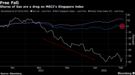
The gaming stock has fallen near 60% from an October high including a record plunge on Monday. Sea was added to the MSCI Singapore Free Index last year, and is a key reason why the gauge is trailing Singapore’s benchmark Straits Times Index by 12 percentage points. 

As Sea’s troubles deepen amid mounting competition, slowing growth and most recently, India’s ban on its most popular gaming title, so are concerns over the concentration risk for the MSCI Singapore measure. Sea has a 10% weighting, with the full inclusion set to be completed this month.

The MSCI gauge “now consistently trades at a higher volatility” compared to the Straits Times Index, analyst Brian Freitas wrote in a report on independent research website Smartkarma. “The correlation between the indices has also broken down.”   

Communication services stocks — which include Sea — and the tech sector have a combined 19% weighting on the MSCI measure compared with 7.5% on the Straits Times Index. 

Adding to risk is an upcoming inclusion of U.S. listed ride-hailing firm Grab Holdings Ltd., whose share price has nearly halved since a December trading debut. MSCI announced the change in its February quarterly review.

However, “Grab’s impact is likely to be far more subdued owing to its smaller scale and float,” Citigroup Inc. analysts wrote in a January note prior to MSCI’s announcement.  

Investors redeemed a net $51 million last quarter from the iShares MSCI Singapore ETF, the biggest passive fund that tracks the gauge, though they bought some $62 million so far this year. 

Stocks listed outside Singapore will account for 24% of the MSCI index’s weight after the full inclusions, Freitas wrote on Smartkarma. According to him, about S$108 million ($80 million) worth of existing Singapore-listed shares will be sold to fund passive flows into the additions.  

More stories like this are available on bloomberg.com

©2022 Bloomberg L.P.

Close Bitnami banner
Bitnami
