Bloomberg

Bullish Bitcoin Chart May Point to Move Toward $53,000

(Bloomberg) — Bitcoin is forming a technical pattern that suggests a brighter period lies ahead for the world’s largest cryptocurrency. The pattern, a so-called reverse head and shoulders, is often viewed as signaling a flip in a downtrend. The study suggests that a target of about $53,000 would come into play for the token — which is up some 3% on Tuesday — if it breaks the neckline of the reverse head and shoulders at about $44,600.

More stories like this are available on bloomberg.com

©2022 Bloomberg L.P.

Singapore Urges Banks to Step Up Security After Scams, Glitches

(Bloomberg) — Singapore authorities are urging banks to impose stronger security measures to prevent more phishing scams after one of the city-state’s biggest lenders was hit by a serious case of fraud.

Banks need to expand their fraud surveillance capabilities, Lawrence Wong, the finance minister and deputy chairman of the Monetary Authority of Singapore, said in parliament on Tuesday. They must also increase their ability to immediately block suspicious activity and reach out to customers to verify transactions before they’re processed, he said.

Beyond the existing measures, MAS will expect banks to develop more versatile algorithms using artificial intelligence and machine learning to detect suspicious transactions, Wong said. Authorities are also exploring whether to let customers freeze their own account without having to contact their bank if they suspect it has been compromised.

Currently, lenders are exploring expanding the use of biometric technology and accelerating the use of mobile banking apps for customer authentication, authorization and the delivery of bank notifications, which could make it harder for scammers, said Wong, who was speaking in his capacity as MAS’s deputy chairman.

Wong’s comments come after a December incident at Oversea-Chinese Banking Corp. when about 790 customers of Singapore’s second-largest bank lost a total of S$13.7 million ($10.2 million) in scams. An investigation by OCBC revealed that the victims had provided their online banking log-in credentials and one-time passwords to phishing websites, enabling the scammers to take over their accounts.

Wiped Out

Many customers shared stories with local media about their life savings being completely wiped out and expressed frustration over the bank’s slow response when they tried to call its hotline. The event also raised questions about safeguards amid Singapore’s push to position itself as a tech and digital banking hub. 

“This is by far the most serious phishing scam we have seen involving spoofed SMSes impersonating banks,” Wong said to lawmakers who put forward 39 questions about the incident. “I should add that this was not a cyber attack on OCBC, but a phishing scam on OCBC’s customers who were deceived into providing their banking credentials and OTPs at scam websites set up by the scammers. At no time was the bank’s own systems breached.”

OCBC has since made full goodwill payouts to all affected customers and tightened its security measures such as initiating transaction notifications for fund transfers through PayNow and inter-bank payments for amounts as low as one cent.

DBS Incident 

OCBC’s phishing scam is the second technical incident to hit a Singapore bank in recent months. In November, DBS Group Holdings Ltd. suffered one of its worst digital disruptions in the past decade when thousands of customers were unable to log onto its online and mobile platforms. Earlier this month, MAS said DBS Bank Ltd. needed to boost its regulatory capital by about S$930 million following the glitches.

MAS is now intensifying scrutiny of major financial institutions’ fraud surveillance mechanisms and working with the industry to create a framework to clarify how losses arising from scams can be shared among consumers and financial institutions. It plans to publish its findings for consultation within the next three months.

“Financial institutions should bear an appropriate share of losses arising from scams, but care must be taken to ensure that any compensation paid to customers does not weaken their incentive to be vigilant,” Wong said.

More stories like this are available on bloomberg.com

©2022 Bloomberg L.P.

Didi to Cut Up to 20% of Jobs Before Hong Kong Listing

(Bloomberg) — Chinese ridehailing giant Didi Global Inc. plans to reduce its overall headcount by as much as 20% as the troubled tech firm pushes ahead with plans to transfer its stock-market listing to Hong Kong, people with knowledge of the matter said.

Most of the company’s core businesses will be affected by the cuts, which are aimed at reducing expenses ahead of the Hong Kong listing, the people said, asking not to be identified as the information isn’t public. Ridehailing may see staff reductions of up to 15%, one of the people said, though drivers — gig workers who aren’t officially included in the company’s headcount — won’t be affected. 

A Didi representative didn’t immediately comment on the job reductions, which were first reported by Chinese media Late Post. The plans have not yet been finalized and could still change. The company has already pared investments in once red-hot businesses like community grocery buying, some of the people said. Some units like Didi Finance, which is expanding outside China, and its autonomous driving business will be less impacted, another person said. 

Didi, which pulled off its $4.4 billion U.S. initial public offering in June against Beijing’s wishes, has emerged as one of the biggest targets of a crackdown by Chinese authorities. Days after its listing, the company was placed under a cybersecurity probe and its services were taken off Chinese app stores. Months later, Didi announced it was planning to withdraw from the New York Stock Exchange and instead seek a new listing in Hong Kong, a move aimed at allaying concerns over the potential exposure of its data to foreign powers. 

What Bloomberg Intelligence Says:

Didi slashing up to 20% of its workforce including up to 15% in its core ride-hailing business, as reported by Bloomberg News, could lift profitability before its planned Hong Kong IPO and U.S. delisting. Margins in its domestic ride-hailing business were hit in 2021 by competitive and regulatory pressure on pricing and costs, so a narrowed cost base could right-size the business for the slower growth that’s now expected. 

— Matthew Kanterman and Tiffany Tam, analysts

Click here for the research

Shares of Didi have dropped nearly 70% from its offering price. The Beijing-based company revealed a $4.7 billion loss after revenues shrank in the September quarter following the regulatory assault against the tech firm.

Investors now await the final penalties stemming from the cybersecurity probe, as well as more details on how Didi, which is backed by SoftBank Group Corp. and Tencent Holdings Ltd., intends to transfer its shares to Hong Kong.

The market has priced in a possible penalty of 10 billion yuan ($1.6 billion) stemming from the government’s probe into Didi, Bernstein analysts led by Cherry Leung wrote in a report Monday that said “the regulatory storm is largely over.” 

The company saw order share drop only 7 points to 74% in December, compared with the No. 2 player’s 16%, and Didi is expected to invest in marketing shortly after resuming new customer acquisition, the analysts added.

But in a sign that Beijing isn’t letting up on efforts to curb its tech companies, eight government departments including the ministries of transport and public security this week pledged to tighten regulations governing the car-hailing industry. 

Rules for drivers and vehicles taking to the streets for the first time will be tightened, according to the statement published by the transport regulator. 

(Updates with analyst comment in fifth paragraph)

More stories like this are available on bloomberg.com

©2022 Bloomberg L.P.

UAE Digital Bank Zand Wins Franklin, Aditya Birla Backing

(Bloomberg) — Zand, a digital bank helmed by Dubai businessman Mohamed Alabbar, has won the backing of investors such as Franklin Templeton and Aditya Birla Group as it seeks to seize on opportunities thrown up by fintech.

The roster of investors also include Abu Dhabi’s Al Hail Holding, Al Sayyah & Sons Investments, Global Development Group, Yusuff Ali of Lulu Group, and Zand co-founder Olivier Crespin, according to a statement.

The launch of Zand, which will offer both retail and corporate banking, in the United Arab Emirates is “imminent,” according to the statement. It didn’t provide financial details of investments. 

Digital banks have taken off with the spread of finance technology in Middle East, a region with high internet penetration and a largely young population. Zand will be competing other digital platforms including Wio, backed by Abu Dhabi wealth fund ADQ and the offshoots of traditional banks such as Dubai’s Emirates NBD.

The shareholders of Zand completed the acquisition of the majority of shares in Dubai Bank from Emirates NBD in December.

(Adds Dubai Bank in fifth paragraph)

More stories like this are available on bloomberg.com

©2022 Bloomberg L.P.

Eileen Gu Wins Silver After Fall But She’s Still Golden in China

(Bloomberg) — China cheered skier Eileen Gu for winning a silver medal on Tuesday at the Beijing Winter Olympics after a tumble nearly left her off the podium.

Gu suffered a big spill in her second run in the women’s freeski slopestyle that left her sitting on the ground with only one ski on and seemingly shaken. “I was checking if my helmet broke or not, and I closed my eyes for a minute to rest,” she later told reporters.

Then a nearly flawless third attempt vaulted her into second place, and once again endeared her to millions of Chinese fans.

“She has indeed a strong heart and resilience,” one internet user wrote after the event, when half of the top 10 trending topics on China’s Twitter-like Weibo platform were about the 18-year-old skier. “She can pull off such a good third run after failure during the second. Superb!”

Another wrote that people “can alway have faith in princess’s resilience,” adding: “She didn’t stand up for a long while after her fall. It was so heartbreaking to see. I hope everyone offers more support and understanding and less doubt.”

Eileen Gu’s Message of Equality Clashes With Reality in China

Gu, who was born in the U.S. and competes for China, is the star of the Olympics, at least in the nation of 1.4 billion people. Since last week when she became the first Chinese woman to take gold in an Olympic snow event — the women’s freestyle big air — Gu has dominated Chinese state media coverage of the games.

She is also frequently featured in ads for companies such as e-retailer JD.com Inc. and the social media app Xiaohongshu, or Little Red Book. The Luckin Coffee Inc. chain has named a latte drink topped with blue powder after Gu.

Gu, who plans to attend Stanford University after the Winter games, will try for a third medal later this week in the freeski halfpipe.

“I’m glad that I have won a gold and a silver so far in the Olympics and I still got one more to go,” she said.

(Updates with comments from Eileen Gu.)

More stories like this are available on bloomberg.com

©2022 Bloomberg L.P.

China’s Property Woes Engulf London with Stalled Projects, Sales

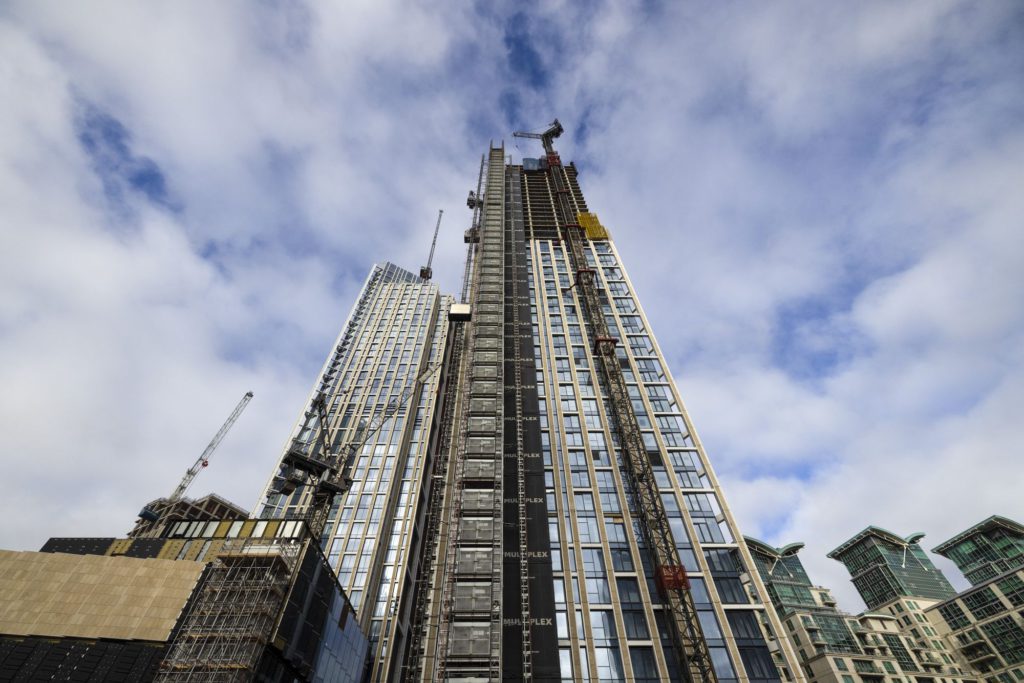
(Bloomberg) — In London’s Royal Albert Dock, almost two dozen buildings conceived of as a new Chinese Canary Wharf stand mostly empty and in the hands of lenders who have finally pulled the plug. 

About 10 miles to the west, some construction workers angry at not being paid have downed tools on Guangzhou R&F Properties Co.’s flagship development in Nine Elms. And in Paternoster Square, in the heart of the City of London, the tycoon behind embattled developer Shimao Group Holdings Ltd. is in talks to sell a prize office building previously occupied by Goldman Sachs Group Inc.

It is a sign of how ripples from China’s troubled property markets are making waves overseas. The crisis at home, coupled with a freeze in U.K-Sino relations, the introduction of capital controls and the after effects of Brexit, have seen the torrent of capital that once flowed to London from China all but dry up. 

“China’s debt-saddled private developers face growing risks of a liquidity crunch, with home buyers and bondholders’ shattered confidence raising the specter of broader financial contagion,” Bloomberg Intelligence senior analyst Patrick Wong wrote in a note last week.

U.K. real estate deals by mainland Chinese investors have plunged by almost 88% in the past five years, according to data compiled by Real Capital Analytics Inc. The drop in deals for development sites was even more pronounced, falling to just 11.3 million euros ($12.8 million) last year from a 2017 peak of 731 million euros, the data show. 

The sharp reversal is a familiar pattern in London’s boom and bust real estate market that has seen successive waves of international capital wash in and out. The global financial crisis brought an end to a surge in debt-fueled Irish investment in the U.K. capital while Japanese investors racked up huge losses two decades earlier. 

Chinese investors poured into the U.K. in the first half of the last decade as the Conservative government led by then Prime Minister David Cameron and then London Mayor Boris Johnson courted investment. The ABP project in London’s Royal Albert Dock, which saw City Hall sign over 35 acres of derelict land to little-known developer Xu Weiping was supposed to be the jewel in the crown. 

Read more: He Built It But No One Came: China Chills the Next Canary Wharf

The deal represented not just a vast investment in bricks and mortar but was also meant to provide a home for dozens of up-and-coming Chinese businesses, create thousands of jobs and strengthen Anglo-Chinese ties. Almost seven years later, what’s left is a vast swathe of empty buildings and a city that’s grown so impatient over the lack of progress that it is threatening to reclaim the land if the lenders can’t show they plan to continue. 

“The Greater London Authority has been concerned for some time by the lack of progress by the developer at Royal Albert Dock and served ABP with a final termination notice in August after the developer proved unable to meet all of its obligations under the agreement in place for delivery of this scheme,” a GLA spokesman wrote in an email. A representative for ABP said the project had been hit by factors beyond its control including Brexit, delays to London’s new cross-town rail link and the pandemic.

ABP now joins a growing list of other Chinese developers, who have run into trouble in London. Dalian Wanda Group Co. was forced to sell all of its London projects including the giant One Nine Elms development in 2018 as it rushed to pare debt and focus overseas investment on assets deemed strategically important to China. 

“There was a definite change in tone from President Xi in the past few years towards wealth and speculation,” Mat Oakley, head of commercial research at real estate broker Savills Plc said in an interview. That shift served to shut off new investment and the China Evergrande Group crisis that blew up last year is now prompting some of those that previously bought in the U.K. to sell, he said. 

The buyer that came to Dalian Wanda’s rescue in London, Guangzhou R&F, saw a 42% sales slump in January, according to China Real Estate Information Corp. data. Shimao, whose chairman is selling the Paternoster Square property, experienced a 63% drop.

Some workers on R&F’s One Nine Elms project in London have been sent home and the site is now operating with a skeleton staff, according to a worker on the site last week. The construction delays are the result of late payment issues between R&F and the site’s main contractor Multiplex, he said. Construction News reported the delays earlier. 

“R&F Properties and Multiplex are working together to deliver One Nine Elms, with a program of works continuing to take place on site, returning to full capacity shortly,” a spokesman for R&F wrote in an emailed response to questions. 

It’s one of dozens of high-priced apartment projects being packed into the narrow strip of land along the River Thames from Vauxhall to Battersea where sales have stagnated during the pandemic. 

Dalian Wanda arrived in London at a time when debt-fueled Chinese conglomerates including now collapsed HNA Group Co. were in the midst of global acquisition sprees. Laden with debt, HNA didn’t generate enough profit to cover its interest payments and was forced to sell properties at steep discounts. Sales included the former Canary Wharf headquarters of Thomson Reuters Corp. 

Read more: London’s Luxury New Home Slump Stings Asian Developers

Greenland Holdings Corp. has also partially retreated. The Chinese developer bought the site of the former Ram brewery in London’s Wandsworth district in 2014 and built out the first phase of 338 apartments and 70,000 square feet of commercial space which it continues to manage. 

In 2021, it decided not to progress with the second half of the project and has now sold the rights to build phases two and three to a unit of U.K. developer Berkeley Group Holdings Plc, a spokeswoman confirmed via email. 

While the Chinese property crisis has principally impacted developers, signs of the pressure it is putting on investors are also showing up in London’s trophy investment property market. 

Hui Wing Mau, chairman of  Shimao, is in talks to sell an office building in London’s Paternoster Square to Goldman Sachs, people familiar with the talks said. React News earlier reported on the talks. Representatives for Mau did not respond to requests for comment. A spokesman for Goldman Sachs declined to comment. 

China Vanke Co. and Fosun International Holdings Ltd. are both also in the process of selling London office properties.

“It isn’t that different from what we saw from Japanese investors a few decades ago,” Andrew Thomas, London based head of international capital markets at broker Colliers International Group Inc said in an interview. “They ended up selling properties from their international portfolios in order to help stabilize their domestic markets.”

More stories like this are available on bloomberg.com

©2022 Bloomberg L.P.

Cow-Free Cheese Startup’s ‘Holy Grail’ Quest Wins Big Backers

(Bloomberg) — A U.S. food-tech startup in the growing field of “animal-free” dairy is getting a boost from some big names in its aim to create a superior cheese. 

Upfield Group, a closely held producer of plant-based spreads that’s owned by KKR & Co.-controlled funds, and Sigma, a global food producer and distributor owned by Mexican conglomerate Alfa SAB, are both teaming up with Change Foods in a bid to shake up the dairy industry. 

While everything from faux breakfast sausages to burgers are disrupting the meat industry, vegan cheeses aren’t considered anywhere near the taste and texture of the real thing. Startup hopefuls like Change Foods say the answer is skipping the plants on which most current products are based and turning to precision fermentation, which replicates cheese without using animals at all. 

“We don’t have to wait the two to three years it takes to grow a cow,” said 40-year-old David Bucca, an engineer by training who spent more than a decade at Boeing Co. in Australia before founding Change Foods. 

As Change Foods aims to debut its animal-free cheese in the U.S. late next year, the broader race to make sustainable foods mainstream is on. Beef and dairy cattle account for about two-thirds of greenhouse-gas emissions from livestock, according to the United Nations. And as protein demand surges amid improving incomes worldwide, human population is expected to swell more than 20% to nearly 10 billion by 2050.

READ MORE: Startups Try New Fermentation Process for Cheese Without Cows

“The holy grail of alternative proteins is cheese,” Bucca said. “It’s the last thing that people give up when they go plant based for a very good reason, in fact some people can never give up cheese because what is currently out there just doesn’t cut it. There’s something very unique about dairy proteins that you can’t sufficiently replicate from the plant-based kingdom.”

Precision fermentation will not only enable a re-creation of the taste and “meltability” of cheeses, but also allow for easy customization, Bucca said. 

Along with the collaboration agreements with Upfield and Sigma, Change Foods said it raised $12 million in a new round of seed funding, bringing total investments in the firm to more than $15.3 million. 

The over-subscribed round was led by Route 66 Ventures and included Upfield and Sigma at undisclosed amounts. Other investors are Jeff Dean, head of Google artificial intelligence division, Change Foods said in a news release. 

(Corrects headline of online article to note the cheese is made without cows.)


More stories like this are available on bloomberg.com

©2022 Bloomberg L.P.
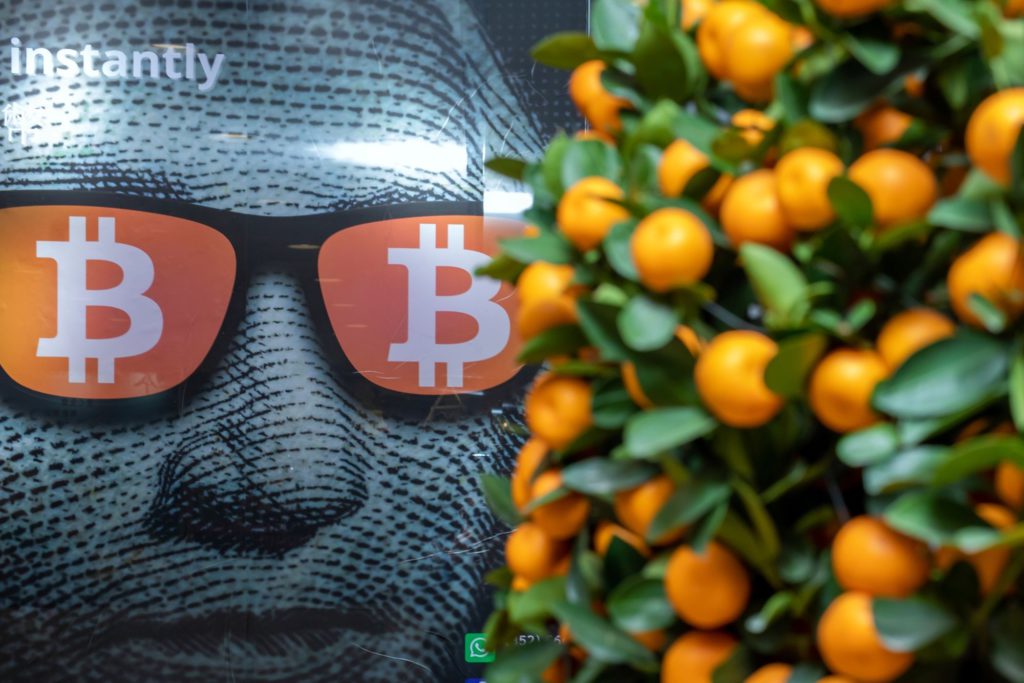
Sea’s $16 Billion Wipeout Portends Trouble Beyond India Shutout

(Bloomberg) — Sea Ltd. lost more than $16 billion of value in its biggest daily market drop after India abruptly banned its most popular mobile gaming title. Investors are growing concerned the ban may just be the start of the company’s troubles.

Singapore-based Sea went public in 2017 and quickly became the most valuable company in Southeast Asia, based on its potential to expand its offering of gaming, e-commerce and financial services beyond its home turf. New Delhi’s decision to ban Free Fire — a lucrative title for the company — highlighted Sea’s challenges from geopolitical tensions as well as mounting competition from rivals like Alibaba Group Holding Ltd.’s Lazada.

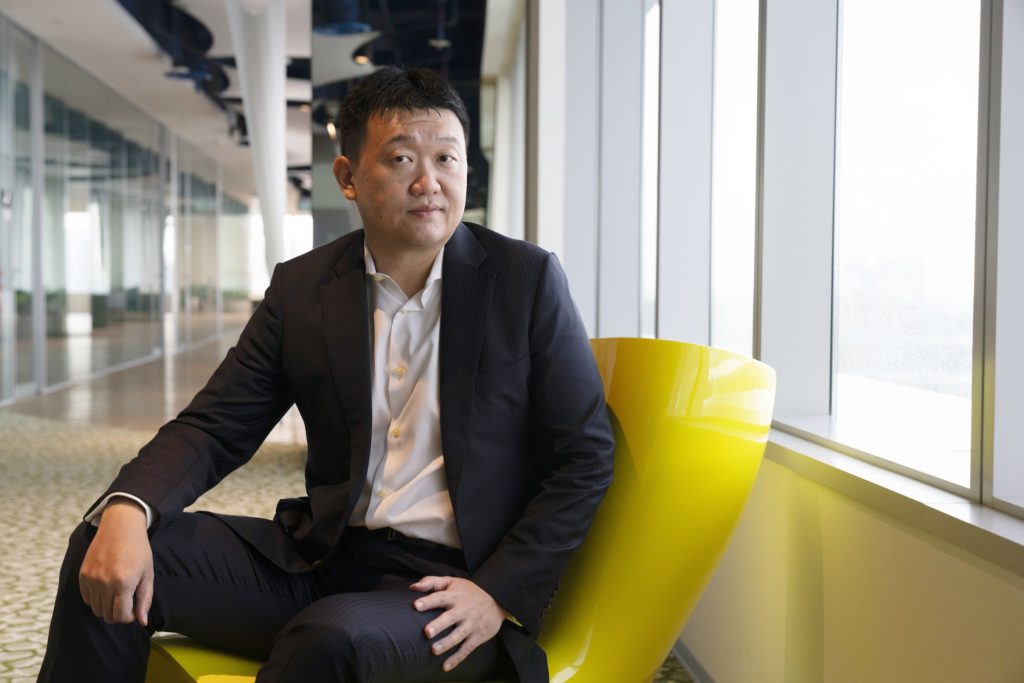
India has banned hundreds of Chinese apps over the past two years, but the expansion of that policy to Sea took management and investors by surprise. The startup was founded by Forrest Li, who was born in China but is now a Singaporean citizen. Its biggest shareholder is Tencent Holdings Ltd., the Chinese social media giant.

Read more: Cathie Wood’s Ark Bought Sea Shares as Gaming Firm Plunged

Investors worry that India could potentially also ban Shopee, the second pillar of Sea’s business, where it had about 300 employees and 20,000 local sellers as of December. On Monday, Li reassured shareholders at its annual general meeting that the company had a grip on the situation. He didn’t comment on the Free Fire ban in India.

The markets didn’t buy it. Sea’s New York stock plunged more than 18% overnight as analysts scrambled to parse India’s reasoning and reassess Sea’s growth prospects. Shares have lost almost two-thirds of their value since October. 

“Sea is a Singaporean company and we aim to partner in India’s digital economy mission,” the company said in a statement in response to queries from Bloomberg News. “We are committed to protecting the privacy and security of our users in India and globally, we comply with Indian laws and regulations, and we do not transfer to or store any data of our Indian users in China.”

The Free Fire game was the highest grossing mobile game in India in the third quarter of 2021, according to industry tracker App Annie. JPMorgan analyst Ranjan Sharma slashed his price target by about 40% to $250, citing heightened nervousness around Sea’s gaming franchise.

Sea Ltd. Sinks on Free Fire Game Ban in India: Street Wrap

Sea remains one of Southeast Asia’s biggest success stories, an online retail and entertainment empire that generates almost $10 billion of annual revenue. Some 32 of 33 analysts still maintain buy or overweight ratings on the stock. Its stable of global backers include Cathie Wood’s Ark Investment Management. The superstar fund manager bought more than 145,000 shares on Monday, according to Ark data compiled by Bloomberg.

The most immediate question is whether Sea can appeal India’s decision and reverse it — or, if it fails, whether that ban will extend to its other businesses in the world’s fastest-growing internet economy.

On the face of it, Delhi has little justification for going after the company. Sea is officially a Singaporean enterprise — it’s registered there and most of its workforce, including Li and his lieutenants, operate out of the city state. Executives have openly championed programs to aid employment and education in Singapore, among other things. 

Read more: How Singapore Nurtured Foreign Trio Who Became Billionaires

But its links to the world’s No. 2 economy remain strong. Founded in 2009 by Li, Gang Ye and David Chen, a majority of its senior executives either hail from or have strong links with China.

Tencent, Sea’s long-time backer, is undergoing a national security review in the U.S. Last month, the internet giant divulged plans to sell $3 billion of Sea stock to reduce its holding to 18.7% from more than 20%, while eventually taking its voting interest down to less than a tenth. 

Some analysts viewed that move as an effort to clear up questions about Sea’s origins and who calls the shots at the company. But apart from any attempt to assuage those concerns, Tencent’s gradual retreat is in itself a potentially significant blow to the company. 

While Tencent is Sea’s largest shareholder, it’s adopted much the same hands-off approach it takes with other investees in China. But its backing was instrumental in Sea’s ascendancy especially in past years, when it ranked among the world’s best-performing stocks. 

Leveraging Tencent’s enormous global distribution platform and business model, Free Fire rapidly garnered more than a billion downloads on Google Play, ranking it among the most popular titles in the world. Li has been candid about relying on Tencent’s expertise, particularly in Sea’s early days, and his attempt to emulate its business practices.

It’s unclear how Tencent’s sell-down would affect that relationship. Both sides have affirmed they will continue to work together. But Tencent itself is now embarking on an overseas expansion after Chinese regulators launched a crackdown on the gaming sector at home — meaning it will inevitably vie with Sea for some of the same gaming audiences — just not in India.

More stories like this are available on bloomberg.com

©2022 Bloomberg L.P.
UAE Digital Bank Zand Wins Backing From Franklin, Aditya Birla

(Bloomberg) — Zand, a digital bank helmed by Dubai businessman Mohamed Alabbar, has won the backing of investors such as Franklin Templeton and Aditya Birla Group as it seeks to seize on opportunities thrown up by fintech.

The roster of investors also include Abu Dhabi’s Al Hail Holding, Al Sayyah & Sons Investments, Global Development Group, Yusuff Ali of Lulu Group, and Zand co-founder Oliver Crespin, according to a statement.

The launch of Zand, which will offer both retail and corporate banking, in the United Arab Emirates is “imminent,” according to the statement. It didn’t provide financial details of investments. 

Digital banks have taken off with the spread of finance technology in Middle East, a region with high internet penetration and a largely young population. Zand will be competing other digital platforms including Wio, backed by Abu Dhabi wealth fund ADQ and the offshoots of traditional banks such as Dubai’s Emirates NBD.

More stories like this are available on bloomberg.com

©2022 Bloomberg L.P.
Toyota North America Plant Disruptions Drag Into Second Week

(Bloomberg) — Toyota Motor Corp.’s North America operations continue to be disrupted after protests closed off the Ambassador Bridge linking the U.S. and Canada, hurting production at several of the automaker’s plants in the region. 

Toyota plants in Ontario, which were idled last week, are likely to continue to be affected this week, a company spokeswoman said Tuesday. Output will also remain curtailed at factories in Alabama, Kentucky and West Virginia due to factors including weather and supply issues, the spokeswoman said.

The North American disruptions come on top of chip shortages and interruptions to Toyota’s operations due to the spread of the highly contagious omicron coronavirus variant in both Japan and China. 

Toyota, which has been trying to ramp up production to meet soaring demand, has been relatively resilient to the supply chain snags that have shaken the industry the past two years. Sturdy supply and inventory management systems helped it finish both 2020 and 2021 as the world’s top-selling automaker. 

Toyota has grappled with a fresh wave of disruptions. Last week, it cut its output goal for the fiscal year ending March 31 to 8.5 million vehicles from a previous target of 9 million due to disruptions from Covid and chip shortages. 

The automaker announced Monday it is seeking to produce 950,000 vehicles in March, up from the 843,393 units it assembled in the same month last year, but about 100,000 lower than a previous target.

Separately, a line at a Honda Motor Co. Canada factory that was halted due to the bridge protests resumed operating Monday, a spokesperson for the company said after police cleared demonstrators from the site. Honda is partially halting a different line at the plant this week due to chip shortages.

In addition to the persisting dearth of semiconductors, other bottlenecks are surfacing in the supply chain, Jefferies analyst Takaki Nakanishi wrote in a Feb. 9 note. 

“Toyota’s output recovery undoubtedly has been relatively fast and stable in a difficult environment,” Nakanishi wrote. However, “it is apparent, amid widening bottlenecks, that even Toyota is finding it tougher to markedly outpace the industry.”

(Updates with comment from Honda spokesperson in seventh paragraph.)

More stories like this are available on bloomberg.com

©2022 Bloomberg L.P.

Close Bitnami banner
Bitnami
