Bloomberg

China’s Foreigner-Laden Hockey Team Wins Fans After Narrow Loss

(Bloomberg) — China’s foreigner-laden hockey team won over the nation’s fans after a narrow loss to one of the world’s top squads, with social media users calling them “glorious” and “victorious” failures and questioning why the country’s much-maligned men’s football team couldn’t show the same fighting spirit.

Down by three pucks midway through Saturday night’s Olympics matchup against Germany, ranked 5th in the world, China got on the board with Canada-born Parker Foo knocking in the nation’s first-ever goal, followed shortly by another score from Tyler Wong, also a Canadian. Chinese fans, who were warned before the start of the Games not to cheer due to the coronavirus pandemic, started ignoring the directive with chants of “Jiayou.” 

Even though China lost the game 3-2, its second defeat at the Winter Games after an 8-0 loss to the U.S., social media applauded the efforts of the squad, with more than a dozen of its 25 members either Americans or Canadians from Kunlun Red Star, a team that plays in Russia’s professional hockey league. The topic and hashtag #China men’s hockey team lost to Germany# got more than 1.7 million reads on Sunday. Even state broadcaster China Central Television got in on the praise, posting: “What an intense and brilliant game! Our ice hockey will become stronger step by step, come on!”

Prior to the Games, there had been calls from hockey purists not to allow China to take part in the hockey competition amid concern they could lose by such lopsided scores that could set back efforts to develop the sport in the country. 

“I think it definitely was a bit of a statement and it was just good to see that they competed and made a game out of it,” said Jon Howse, a former professional hockey player who teaches the sport in Beijing. “It is kind of a victory in a way.”

One Weibo user couldn’t resist using the occasion to get a dig in on the national men’s soccer team, which has received unrelenting scorn after its 3-1 loss to Vietnam in a World Cup qualifier earlier this month, posting: “@China football team. Come see what’s glorious failure.”


More stories like this are available on bloomberg.com

©2022 Bloomberg L.P.

China’s Infrastructure Projects Will Likely Boost These Companies

(Bloomberg) —

Investors are betting that China’s planned infrastructure spending binge to boost its economy could mean the rally in construction and materials shares has further room to run. 

The CSI 300 Infrastructure Index rose more than 8% last week to an almost three-year high, beating the broader benchmark by a wide margin. The upswing contrasts sharply with a slump in green energy names, as rising global bond yields clobbered highly valued stocks.

Traders see more upside for construction and engineering as Beijing puts behind its once-feverish deleveraging campaign and pivots to supporting growth. This means a greater push to upgrade both old and new infrastructure, making the sector a rare bright spot in the economy amid weak private consumption fueled by Covid Zero policy and an uncertain outlook for exports.

The record bank loans data in January also bodes well for infrastructure stocks, as a pickup in lending and bond issuance suggests construction has already gotten a lift.  

“Reasonable front-loading of infrastructure investment is materializing and shows policy resolve to stabilize growth,” Cinda Securities analysts including Xie Yunliang wrote in a note Friday. Overall, companies are borrowing more to replenish capital as construction projects are “in full swing,” they wrote.  

Here are some key areas to watch: 

New Infrastructure

The government is doubling down on its bid to expand new infrastructure focused on 5G, data centers, and artificial intelligence. A 2020 masterplan shows such investment will amount to $1.4 trillion through 2025.  

New infrastructure spending is an area that can increase and even create new forms of consumption, the Shanghai Securities News said last month, citing a “high multiplier effect.” More than 13 provinces have rolled out plans to build a total of 425,000 5G base stations in 2022, according to a report in the Securities Daily Friday.

That’s a good sign for telecom firms like China Mobile Ltd., up 16% this year, and information services provider Guangdong Aofei Data Technology Co. Cloud computing firm Beijing Advanced Digital Technology Co. jumped over 30% last week. SenseTime Group in Hong Kong, Iflytek Co. and Hangzhou Hikvision Digital Technology Co. are also potential beneficiaries. 

Traditional Builders

As Chinese authorities hurry to front-load spending, many of the projects approved by local governments will still be of the old-school type — railroad, highways, and transportation hubs. 

That’s spurring traders to snap up the beneficiaries of earlier fiscal easing cycles, with contractor giants topping the list. China Communications Construction Co. is one of the winners on the CSI 300 Index this year, rising 23% even as the benchmark slumped nearly 7%. 

Chongqing Construction Engineering Group Corp. has surged over 50% last week, while CK Infrastructure Holdings Ltd. reached an almost two-year high in Hong Kong on Friday.  

Some firms are already winning major projects. China Railway Signal & Communication, China Railway Construction, and China State Construction Engineering all disclosed such deals over the past weeks.   

That’s likely to be a positive for steel and cement makers like Angang Steel and Gansu Shangfeng Cement, as well as excavation equipment makers including Sany Heavy Industry Co. 

Environment Stocks  

There is also significant room to improve China’s environmental landscape. Related shares received a boost from the state planner’s recent drive to enhance water treatment and waste disposal and modernize such facilities.

Sewage and solid waste processor Fujian Haixia Environmental Protection Group was up 19% last week, while pollution prevention firm GAD Environmental Technology also gained by a similar magnitude. 

To be sure, many of these infrastructure stocks are small cap, meaning they can whipsaw during times of volatility. Investors may also react sensitively to news flow, and policy shifts can bring price gains or falls on a whim.    

Expectations that some decrepit buildings will be demolished before new constructions have also triggered a rally in firms dealing with explosive materials. Dynamite manufacture Poly Union Chemical Holding Group Co. has gained by the 10% limit for eight consecutive sessions.   

More stories like this are available on bloomberg.com

©2022 Bloomberg L.P.

Canada Moves on Protesters; Beijing to Help H.K.: Virus Update

(Bloomberg) — Police in Ontario have begun to clear out people who’ve been blocking the Ambassador Bridge between Canada with Detroit in a protest against Covid-19 restrictions. But freight traffic remains halted there. 

Earlier Saturday, French police removed demonstrators and towed away cars during an attempt to blockade Paris by people opposing the nation’s Covid-19 pass. 

China’s central government will give full support to Hong Kong as the city’s worsening outbreak strains health-care resources and threatens its Covid-Zero strategy. Hong Kong Chief Secretary John Lee met with mainland officials to ask for urgent pandemic support.

Key Developments:

  • Virus Tracker: Cases pass 409.5 million; deaths top 5.8 million
  • Vaccine Tracker: More than 10.3 billion shots administered
  • Why China is sticking with its Covid-zero strategy: QuickTake
  • The era of pandemic restrictions is fast coming to an end
  • Mask guidelines around U.S. ease, bringing confusion and relief

Canada Police Push Back Protesters on Bridge (2:27 p.m. NY)

Police in Windsor, Ontario have begun to clear out people who’ve been blocking the Ambassador Bridge between Canada with Detroit in a protest against Covid-19 restrictions. But freight traffic remains halted there. 

Officers in yellow vests gathered in rows near the bridge in Windsor Saturday morning and marched slowly toward the group, warning them verbally they could face criminal charges if they continue to occupy roadways. 

As police slowly backed protesters up Windsor’s Huron Church Road and away from the bridge, they were also shutting down streets throughout the city in an effort to keep more vehicles from joining the demonstration. They were creating an ever-widening perimeter around downtown and the neighborhood that holds the main demonstration site.

Austria Weighs Further Easing (10:56 a.m. NY)

Austria is expected to decide on further steps to ease coronavirus restrictions at a meeting on Wednesday, to take effect Feb. 19, according to local media.

“We have always said that we will only maintain restrictions for as long as absolutely necessary. Each of us wants back the freedoms we’ve been without for so long,” Chancellor Karl Nehammer said, according to Der Kurier newspaper.

As of Saturday Austria’s retail sector is back on a 3G regime, which means anyone vaccinated, recently recovered from Covid or with a negative test can enter stores. Masks are still required in many indoor settings. Austria is still pushing ahead with a vaccine mandate, with authorities set to start imposing fines in March. Vienna saw another large protest Saturday against the mandate.

French Police Clear Protesters at Champs-Elysee (10:12 a.m. NY)

French police began removing demonstrators and towing away cars as they cracked down on attempts to blockade Paris by people inspired by Canada’s “freedom convoys.”

Despite the interception of convoys on the Paris ring road, several demonstrators avoided police controls and drove to the Champs-Elysees in the center of the capital to try to block traffic. Paris officers used tear gas to disperse them crowd, and they said in a tweet that tow trucks were removing vehicles. At least 14 people were detained.

France banned the “convois de la liberte,” or freedom convoys, protesting the country’s Covid-19 vaccine pass. That bars unvaccinated people from most social activities, including going to restaurants and cultural spaces.

Turkey Giving Merck Pill to Covid Patients: NTV (8:47 a.m. NY)

Turkey is starting to distribute Merck & Co.’s antiviral pill, molnupiravir, to people over 65 who have tested positive for Covid-19, according to NTV television channel.

The medicine was approved by the ministry of health last week. Turkey has recorded 12.8 million Covid-19 infections and about 90,000 deaths. President Recep Tayyip Erdogan recently recovered after testing positive for the omicron variant.

Hong Kong Gets Beijing’s Help (8:24 a.m. NY)

China’s central government will give full support to Hong Kong as the city’s worsening outbreak strains health-care resources and threatens its Covid-Zero strategy, Chief Secretary John Lee said after a meeting with mainland officials to ask for urgent pandemic support.

Hong Kong asked the mainland for help on several fronts, including for Chinese experts to help the city analyze virus strains, help build quarantine and isolation facilities, and supply tests kits and virus equipment to Hong Kong. The announcements came after Hong Kong reported a record 1,514 daily virus cases.

Hong Kong’s banks will suspend operations at one in every four local branches after a number of employees were infected, the South China Morning Post reported. HSBC Holdings Plc, Standard Chartered and Bank of China are among the lenders closing a total of 276 branches, the newspaper said.

But Lee said the Hong Kong government has no plans for a city-wide lockdown.

China Gives 3 Billion Doses, Approves Pfizer Pill (7:45 a.m. NY)

China has given 3.04 billion doses of Covid-19 vaccines so far, the government said. That’s almost 30% of the world total.

The tally came as the nation granted emergency approval for Pfizer Inc.’s Covid-19 pill, a sign of potentially opening up to foreign treatments for the virus. 

Paxlovid’s import registration was approved Friday, the National Medical Products Administration said. The Chinese regulator asked for further research results to be submitted in a timely manner.

It’s China’s first approval for a foreign Covid-19 drug. The mRNA Covid vaccine co-developed by Pfizer and BioNTech SE, for which China’s Shanghai Fosun Pharmaceutical Group Co. secured rights for the Greater China region, has yet to be approved in China.

Malaysia, Indonesia Infections Surge (6:55 a.m. NY)

Malaysia’s new coronavirus cases neared a level last seen in August, when the country was battling the peak of an outbreak of the delta variant. The nation reported 22,802 new infections Saturday, the most since Aug. 26.

The rising vaccination rate — nearly 80% of the population completed the regime and 56% of adults received booster shots — is keeping hospital admission rates manageable. The government has said it will avoid a repeat of last year’s lockdowns that pushed the economy into contraction for two quarters.

Neighboring Indonesia reported 55,209 new cases, the most since July.

U.K. Treasury Wants to End Free Tests: Guardian (6:10 a.m. NY)

The U.K. Treasury is pushing to end most free Covid testing as soon as next month, the Guardian reported, citing unidentified sources.

The Treasury would like most so-called PCR testing for people with symptoms of the virus to stop possibly by the end of March, the newspaper said. This would exclude people in vulnerable categories or hospital settings, while people showing virus symptoms would receive either free lateral flow tests or no testing, according to the report.

Norway Ditches Most Restrictions (6 a.m. NY)

Norway removed the remaining virus restrictions because it considers their effects more damaging than higher infection rates. Norway joins neighbors Denmark and Sweden in making those changes, expecting the coronavirus to turn endemic.

“We are well protected, and aren’t served by pushing the pandemic out in time,” Prime Minister Jonas Gahr Store said in Oslo. Face masks are no longer needed, and people no longer need to maintain a 1-meter (3-foot) distance or isolate after being infected, he said.

U.K. Travel Firms Get a Boost (1 p.m. HK)

U.K. travel firms get a much-needed boost starting this weekend as thousands of vaccinated Britons head to continental Europe for the mid-term school break, kicking off what could be a bumper year for travel.

Eurostar International Ltd. expects the biggest leap in customer numbers since October over the 10 days through Feb. 20, with more than 125,000 people booked to board its Channel Tunnel express trains, surpassing the total for the whole of January. Many of the nine daily services from London to Paris are sold out.

The U.K. arm of TUI AG, Europe’s biggest tour operator, said booking levels for its flight and hotel packages are comparable to 2019 levels.

China Has More Infections at Olympics (11:05 a.m. HK)

China reported four Covid infections among Olympic athletes and team officials. Total Covid infections among people involved with the Beijing Winter Olympics since Jan. 4 rose to 498, according to Bloomberg calculations based on official data.

Japan to Ease Border Controls: Nikkei (10:49 a.m. HK)

Japan will ease its strict border controls, beginning with foreign workers and students, the Nikkei reported. The government will start accepting more than 1,000 people a day this month and will gradually raise the cap to several thousand.

The controls, put in place in late November as the omicron variant started to spread, are by far the strictest among the Group of Seven nations. 

Thailand Keeps Curbs With Cases at 5-Month High (9:35 a.m. HK)

Thailand’s new Covid-19 infections surged to a five-month high, prompting the government to keep containment measures in Bangkok and other areas to curb the outbreak.

The number of cases rose to 16,330, the highest single-day tally since Aug. 29, according to government data. The country also reported 25 new deaths in the past 24 hours, taking total fatalities to 22,387.

Walmart Drops Mask Rule for Vaccinated Staff (8:10 a.m. HK)

Walmart no longer will require fully vaccinated employees to wear masks unless required by state or local rules. 

In addition, a policy allowing five extra days of paid time off for workers testing positive for Covid-19 will end March 31 as planned, Walmart said in a memo to employees Friday. Daily health screenings will no longer be needed for workers, except in California, New York and Virginia, which have state requirements.  

The changes by Walmart represent a step away from pandemic-era rules as governments across the U.S. lift mask mandates for indoor spaces. The Bentonville, Arkansas-based retailer is the largest U.S. private-sector employer.

JPMorgan, Goldman Drop Mask Mandates (5:05 a.m. HK)

JPMorgan Chase and Goldman Sachs dropped mask mandates amid an easing up in Covid-19 cases that’s paved the way for Wall Street staff to return to offices. 

JPMorgan said in a memo to employees that masks are now “completely voluntary” for vaccinated staff in its U.S. buildings, unless more stringent local restrictions are in place. Goldman Sachs similarly removed a mandate, a spokeswoman for the bank said.

More stories like this are available on bloomberg.com

©2022 Bloomberg L.P.

Social Media Buzz: Ukraine, Rand Paul, Inventing Anna

(Bloomberg) — What’s buzzing on social media this morning: 

U.S President Joe Biden and Russian President Vladimir Putin are set to speak Saturday as part of a new flurry of diplomatic efforts over Ukraine. The U.S. State Department ordered non-emergency U.S. employees to leave the Kyiv embassy after National Security Advisor Jake Sullivan warned late Friday that Russia could invade Ukraine as early as next week. “We are in the window when an invasion could begin at any time should Vladimir Putin decide to order it,” Sullivan said. Russia has repeatedly denied it plans to invade Ukraine. 

Rand Paul, a Republican senator from Kentucky, voiced support for Canadian truckers protesting Covid-19 vaccine mandates and their blockade of a key bridge near Detroit. “I hope the truckers do come to America,” he told the Daily Signal on Friday. “I hope they clog up cities.” Meanwhile, the Department of Homeland Security is bracing for a potential U.S. trucker protest to begin as soon as this weekend. 

Callan Chythlook-Sifsof, a former Olympic snowboarder, accused U.S. coach Peter Foley of sexual misconduct in a series of Instagram posts. One post said that Foley, who is in China for the Olympics, has “taken naked photos of female athletes for over a decade.” The social media site allegedly pulled down the original post earlier this week, but Chythlook-Sifsof reposted the accusation Thursday. Foley denies wrongdoing and U.S. Ski and Snowboard said it’s investigating the allegations, according to the New York Times.

Inventing Anna, Shonda Rhimes’s new Netflix series based on a true story about a European socialite grifter who swindled Manhattan’s elite, was released Friday to mixed social media reviews. The real Anna Delvey’s scheme unraveled in May 2019 when she was convicted of eight felonies, including grand larceny. Rhimes’s depiction chronicles the great con, and features a smorgasbord of opulence and excess. 

More stories like this are available on bloomberg.com

©2022 Bloomberg L.P.

Police Move on Protesters; Beijing Will Help H.K.: Virus Update

(Bloomberg) — French police removed demonstrators and towed away cars during an attempt to blockade Paris by people opposing the nation’s Covid-19 pass. At about the same time, Canadian officers moved in to clear out protesters blocking the Ambassador Bridge connecting to Detroit.

China’s central government will give full support to Hong Kong as the city’s worsening outbreak strains health-care resources and threatens its Covid-Zero strategy. Hong Kong Chief Secretary John Lee met with mainland officials to ask for urgent pandemic support.

Turkey is giving Merck & Co.’s antiviral pill, molnupiravir, to people over 65 who have tested positive for Covid-19, according to NTV television channel.

Key Developments:

  • Virus Tracker: Cases approach 409 million; deaths top 5.8 million
  • Vaccine Tracker: More than 10.3 billion shots administered
  • Why China is sticking with its Covid-zero strategy: QuickTake
  • The Era of Pandemic Restrictions Is Fast Coming to an End
  • Mask guidelines around U.S. ease, bringing confusion and relief

French Police Clear Protesters at Champs-Elysee (10:12 a.m. NY)

French police began removing demonstrators and towing away cars as they cracked down on attempts to blockade Paris by people inspired by Canada’s “freedom convoys.”

Despite the interception of convoys on the Paris ring road, several demonstrators avoided police controls and drove to the Champs-Elysees in the center of the capital to try to block traffic. Paris officers used tear gas to disperse them crowd, and they said in a tweet that tow trucks were removing vehicles. At least 14 people were detained.

France banned the “convois de la liberte,” or freedom convoys, protesting the country’s Covid-19 vaccine pass. That bars unvaccinated people from most social activities, including going to restaurants and cultural spaces.

Canadian Police Move on Bridge Demonstrators (9:15 a.m. NY)

Canadian police moved in to clear out protesters who’ve been blocking the Ambassador Bridge that connects Canada with Detroit since Monday.

Police gathered in rows near the bridge, where dozens of demonstrators and about 40 vehicles are part of the blockade. As the police action started, some demonstrators moved to the middle of the roadway and began singing the Canadian national anthem.

Turkey Giving Merck Pill to Covid Patients: NTV (8:47 a.m. NY)

Turkey is starting to distribute Merck & Co.’s antiviral pill, molnupiravir, to people over 65 who have tested positive for Covid-19, according to NTV television channel.

The medicine was approved by the ministry of health last week. Turkey has recorded 12.8 million Covid-19 infections and about 90,000 deaths. President Recep Tayyip Erdogan recently recovered after testing positive for the omicron variant.

Hong Kong Gets Beijing’s Help Against Outbreak (8:24 a.m. NY)

China’s central government will give full support to Hong Kong as the city’s worsening outbreak strains health-care resources and threatens its Covid-Zero strategy, Chief Secretary John Lee said after a meeting with mainland officials to ask for urgent pandemic support.

Hong Kong asked the mainland for help on several fronts, including for Chinese experts to help the city analyze virus strains, help build quarantine and isolation facilities, and supply tests kits and virus equipment to Hong Kong. The announcements came after Hong Kong reported a record 1,514 daily virus cases.

Hong Kong’s banks will suspend operations at one in every four local branches after a number of employees were infected, the South China Morning Post reported. HSBC Holdings Plc, Standard Chartered and Bank of China are among the lenders closing a total of 276 branches, the newspaper said.

But Lee said the Hong Kong government has no plans for a city-wide lockdown.

China Gives 3 Billion Doses, Approves Pfizer Pill (7:45 a.m. NY)

China has given 3.04 billion doses of Covid-19 vaccines so far, the government said. That’s almost 30% of the world total.

The tally came as the nation granted emergency approval for Pfizer Inc.’s Covid-19 pill, a sign of potentially opening up to foreign treatments for the virus. 

Paxlovid’s import registration was approved Friday, the National Medical Products Administration said. The Chinese regulator asked for further research results to be submitted in a timely manner.

It’s China’s first approval for a foreign Covid-19 drug. The mRNA Covid vaccine co-developed by Pfizer and BioNTech SE, for which China’s Shanghai Fosun Pharmaceutical Group Co. secured rights for the Greater China region, has yet to be approved in China.

Malaysia, Indonesia Infections Surge (6:55 a.m. NY)

Malaysia’s new coronavirus cases neared a level last seen in August, when the country was battling the peak of an outbreak of the delta variant. The nation reported 22,802 new infections Saturday, the most since Aug. 26.

The rising vaccination rate — nearly 80% of the population completed the regime and 56% of adults received booster shots — is keeping hospital admission rates manageable. The government has said it will avoid a repeat of last year’s lockdowns that pushed the economy into contraction for two quarters.

Neighboring Indonesia reported 55,209 new cases, the most since July.

U.K. Treasury Wants to End Free Tests: Guardian (6:10 a.m. NY)

The U.K. Treasury is pushing to end most free Covid testing as soon as next month, the Guardian reported, citing unidentified sources.

The Treasury would like most so-called PCR testing for people with symptoms of the virus to stop possibly by the end of March, the newspaper said. This would exclude people in vulnerable categories or hospital settings, while people showing virus symptoms would receive either free lateral flow tests or no testing, according to the report.

Norway Ditches Face Masks, Most Restrictions (6 a.m. NY)

Norway removed the remaining virus restrictions because it considers their effects more damaging than higher infection rates. Norway joins neighbors Denmark and Sweden in making those changes, expecting the coronavirus to turn endemic.

“We are well protected, and aren’t served by pushing the pandemic out in time,” Prime Minister Jonas Gahr Store said in Oslo. Face masks are no longer needed, and people no longer need to maintain a 1-meter (3-foot) distance or isolate after being infected, he said.

U.K. Travel Firms Get a Boost (1 p.m. HK)

U.K. travel firms get a much-needed boost starting this weekend as thousands of vaccinated Britons head to continental Europe for the mid-term school break, kicking off what could be a bumper year for travel.

Eurostar International Ltd. expects the biggest leap in customer numbers since October over the 10 days through Feb. 20, with more than 125,000 people booked to board its Channel Tunnel express trains, surpassing the total for the whole of January. Many of the nine daily services from London to Paris are sold out.

The U.K. arm of TUI AG, Europe’s biggest tour operator, said booking levels for its flight and hotel packages are comparable to 2019 levels.

China Has More Infections at Olympics (11:05 a.m. HK)

China reported four Covid infections among Olympic athletes and team officials. Total Covid infections among people involved with the Beijing Winter Olympics since Jan. 4 rose to 498, according to Bloomberg calculations based on official data.

Japan to Ease Border Controls: Nikkei (10:49 a.m. HK)

Japan will ease its strict border controls, beginning with foreign workers and students, the Nikkei reported. The government will start accepting more than 1,000 people a day this month and will gradually raise the cap to several thousand.

The controls, put in place in late November as the omicron variant started to spread, are by far the strictest among the Group of Seven nations. 

Germany Reports 209,789 New Cases (10:18 a.m. HK)

Germany reported 209,789 new Covid-19 cases, down from 240,172 the day before. New deaths associated with the virus rose by 198, bringing the total to 119,877.

Thailand Keeps Curbs With Cases at 5-Month High (9:35 a.m. HK)

Thailand’s new Covid-19 infections surged to a five-month high, prompting the government to keep containment measures in Bangkok and other areas to curb the outbreak.

The number of cases rose to 16,330, the highest single-day tally since Aug. 29, according to government data. The country also reported 25 new deaths in the past 24 hours, taking total fatalities to 22,387.

Walmart Drops Mask Rule for Vaccinated Workers (8:10 a.m. HK)

Walmart no longer will require fully vaccinated employees to wear masks unless required by state or local rules. 

In addition, a policy allowing five extra days of paid time off for workers testing positive for Covid-19 will end March 31 as planned, Walmart said in a memo to employees Friday. Daily health screenings will no longer be needed for workers, except in California, New York and Virginia, which have state requirements.  

The changes by Walmart represent a step away from pandemic-era rules as governments across the U.S. lift mask mandates for indoor spaces. The Bentonville, Arkansas-based retailer is the largest U.S. private-sector employer.

JPMorgan, Goldman Drop Mask Mandates (5:05 a.m. HK)

JPMorgan Chase and Goldman Sachs dropped mask mandates amid an easing up in Covid-19 cases that’s paved the way for Wall Street staff to return to offices. 

JPMorgan said in a memo to employees that masks are now “completely voluntary” for vaccinated staff in its U.S. buildings, unless more stringent local restrictions are in place. Goldman Sachs similarly removed a mandate, a spokeswoman for the bank said.

More stories like this are available on bloomberg.com

©2022 Bloomberg L.P.

Andreessen’s Dixon Spies Riches in Web3. Others See ‘Rubbish’

(Bloomberg) — For Andreessen Horowitz’s Chris Dixon, there are billions of dollars at stake in the blockchain-based future of the internet known as web3. But even as the venture capitalist charms his investors with dreams of what this next stage could bring, his vision relies on an untested premise — chiefly, the presumption that if you build it, everyone will come. Will they, though?

If the first version of the internet was read-only, and the second allowed us to upload our everyday lives to MySpace and Facebook, web3 is where we get to own those outcomes and take them with us. Instead of the tech giants making money from your data, proponents like Dixon believe in decentralizing their power via blockchain networks: Everyone gets a share of the prize, everyone gets a say in how it’s run, and it’s all written down publicly so nobody can quibble.

It sounds like progress, and yet even in infancy, this digital utopian plan has faced criticism for not achieving its goal. Major crypto and blockchain-based companies like Coinbase Global Inc. and OpenSea already claim massive market share, poised to become the next Meta Platforms Inc. and Alphabet Inc. Meanwhile, as Twitter Inc. co-founder and Bitcoin advocate Jack Dorsey has pointed out, a handful of venture capital firms own most of the web3 market. Andreessen, also known as a16z, is at the top of the list.

Last month, Dixon offered up an explanation for this contradictory state of affairs. Web3 isn’t actually trying to decentralize everything, he said. Instead, it’s main aim is to return control of the “network effects” of web2 to the people: a phrase here meaning the value you gain from diligently using a product over time, like building your friends list on Facebook or your painstakingly curated music library on Spotify. Right now these effects are locked to their platforms and incentivize you to stay with those providers — a key strategy for most companies in the tech sector.

“Blockchains provide a powerful new way to build networks where the network effects accrue as public goods, as they did in web1,” said Dixon in a Twitter thread. In web3, that data becomes portable, reducing the stickiness these big firms have mastered.

Again, this sounds like progress — at least from a user’s perspective. But the big ideas around web3 ignore some key concepts of commerce and even privacy. At the very least, they fail to take into account how different businesses attract new users and manage existing ones. These are proprietary models that go right to the core of modern business economics: Why would they give up the thing that’s keeping their customers from going to rivals? Where are the incentives for companies to embrace public blockchains that allow data to be transferred seamlessly? Dixon’s answer is that large platforms won’t have any other option but to be interoperable in web3. Get with the times, or become obsolete.

“This is a classic kind of technological push meeting the reality of humanity. It’s a very idealistic technology,” said Catherine Flick, who teaches computing and social responsibility at De Montfort University in the U.K. city of Leicester. “The idea is good, the theory is good, but in practice, it’s rubbish.”

Watch: Web3 Explained in Three Minutes 

So how would it work in Dixon’s world? Let’s say Twitter becomes a web3 company, and you want to put your follower list on a blockchain network. You do this because you want to move to a new social media platform, but don’t want to lose the audience you worked so hard to build. This is a key conundrum of many online creators these days, who want to get big on the hottest new app but have no control over their network effects — YouTubers largely failing to replicate follower counts on TikTok, for example. 

Once on a blockchain, you import that data into NewApp. This is also possible because in web3, users can connect their digital identities to their Twitter accounts through a product like MetaMask. Now, your Twitter followers are signed up to follow you on NewApp, you haven’t lost your audience, web3 is every creator’s dream, etc. You could also transplant this scenario to be about moving a company’s client list from one software to another, or retaining customers earned on platforms like Etsy.

Within this data transfer, though, where are the provisions on requiring users to opt in to new services — rules that have become a prominent part of pretty much all new privacy legislation? In the U.K. and Europe, for example, companies can be fined up to 4% of global annual turnover if they try to onboard new customers without consent. 

Perhaps that could be sidestepped by allowing users to opt in individually on web3 Twitter, providing passporting permission to the creators. Would this be done on an account-by-account basis? Say, as a user, that I want to give that right to Jay-Z, but not Logan Paul. How many smart contracts would that take to engineer, not to mention my own time, when I follow thousands of accounts? And who takes responsibility for this interoperability? Will all platforms contribute to the costs? These are a lot of unanswered questions and here’s one more: Who decides which blockchains are worth incorporating without a large degree of centralization? Companies like Meta make it hard for you to transfer data out of its network on purpose, and its vision for the metaverse is unlikely to be any different.

Read more:  Web3, NFTs and Crypto Aren’t Fixing Web 2.0 Anytime Soon 

But perhaps the most glaring issue of all with decentralized-but-not web3 is one that every company has struggled with over the last decade. To illustrate: So you take all your users to NewApp by blockchain, as easy as pie (relatively). But why would they follow suit? Sure, if this is like TikTok, then maybe you can rely on market effects to naturally push everyone over to the new platform given time. But what if NewApp doesn’t have the benefit of being so in demand that everyone’s already thinking of making the shift? Web3 theories like Dixon’s rely on this side of human nature being a thing of the past.

“It’s like they just got two halves of an orange and they’re trying to stick it together,” Flick said. “The whole thing is just so blinded to how people actually use the internet, and how they actually interact with other humans on the internet.”

The music royalty of Beyonce and Jay-Z offer a cautionary tale. In 2016 Beyonce limited the streaming release of her sixth album “Lemonade” to her husband’s Tidal platform. Though it remained there for three years before being released more widely, even the star power of one of the world’s best-selling recording artists couldn’t elevate Tidal to the same rank as Spotify or Apple Music, despite the former offering just as many millions of tracks.

If Beyonce fans could have moved their entire music library over to Tidal in a snap, would they have done it? I guess we’ll never know. But influencing people to join a new network is difficult because of human nature, not technological failings. It’s unlikely to be something that simply being easily transported via blockchain could fix.

Yes, web2 network effects are annoying — I barely look at my Facebook account, but I keep it to remind me of people’s birthdays. Web3 only solves this, though, when people are engaged enough to move en masse and to wholly embrace those platforms, which right now is painfully complicated. 

More stories like this are available on bloomberg.com

©2022 Bloomberg L.P.

Five Ways to Make U.S. Jobs of the Future Better Than Today’s

(Bloomberg) — Sign up for the New Economy Daily newsletter, follow us @economics and subscribe to our podcast.

Judging by the record number of people who’ve quit their jobs in the pandemic -– the so-called Great Resignation -– millions of Americans don’t really like their work.

Which doesn’t mean they’re not worried about losing out to robots — there’s an undercurrent of fear that automation is poised to displace human labor anyway. And the pandemic has triggered or heightened a whole range of other anxieties about working life, from job quality, security and mobility to the strength of social safety nets. 

In a new book titled “The Work of the Future: Building Better Jobs in an Age of Intelligent Machines,” a team of Massachusetts Institute of Technology researchers published the results of a four-year project that examined these questions and plenty more. 


Following is a summary of some of their findings and advice, illuminated by a conversation with two of the book’s authors. 

Use Technology Better

The U.S. is short of workers right now, and may face a labor squeeze well after Covid, too. That suggests the key question isn’t whether there will be enough jobs — it’s whether those jobs will be good ones.

Part of the trick will be to find better ways to use technologies that already exist. Zoom calls have been around for a while, but it took the current crisis to push corporate managers into finding the most effective ways to use them.

In many industries, from meatpacking and warehousing to health care, the pandemic has accelerated the use of robots or computerization. But there’s been hiring in those industries, too, so workers aren’t necessarily getting replaced. 

“Those things pull technologies from the future, five years closer to the present,” says David Autor, an MIT economics professor and one of the book’s co-authors. 

The economy stands to benefit by becoming more productive, but that’s not true of every kind of automation. Self-checkout counters at supermarkets are an example of the “so-so” kind. “They waste your time,” Autor says. “They’re actually shifting work onto customers.”

The U.S. could tweak the tax system so it doesn’t encourage business spending on every kind of automation, regardless of whether it helps workers or the wider economy, the authors say.

Train More People

Taxes could be deployed to encourage training instead. 

“There’s so many incentives and breaks that companies receive for investment in capital,” says Elisabeth Reynolds, who co-wrote the book as director of the MIT task force, and has served on the Biden administration’s National Economic Council since last year. “We really want them to lean in on the investment in human capital.” 

The U.S. government spends less on “active labor market policies” — which include improving job readiness and help in finding suitable work — as a share of its economy than all its developed-country peers, according to OECD data from 2017. However, American business has put more money into training since then.

More of the training needs to be geared toward helping people without college degrees to get middle-class jobs, an area where the U.S. lags behind European countries like Germany, the book argues. 

That’s something businesses are already looking at. Insurer Aon Plc, for example, dropped a degree requirement for some positions and organized its own specialized training via a local community college. International Business Machines Corp. and PwC have also relaxed their credential criteria.

Invest in Research

There’s plenty of innovation in the U.S. economy, and often it draws on past research funded by the government, whether it’s in aeronautics and computer science or medicine. But there’s less of that investment happening right now. Relative to historical levels –- and to peers or competitors, from Germany to China -– federal spending on research and development has fallen.

Those past investments “created enormous growth and opportunities,” Reynolds says. However, “the fruits of innovation, that productivity in the country, has not been shared across the board.” 

The government should be plowing cash into the kind of “long-term, fundamental” research that businesses don’t have the incentive to take on, and that addresses important social problems like health care and climate change, the book — also co-authored by MIT aeronautics professor David A. Mindell — argues. 

It should encourage technologies that augment human labor, rather than replace it, and try to spread innovation more evenly, both by geography and size of firm. In cases where public support turns into private profit -– the government lent money to Tesla Inc., now the world’s most valuable carmaker, in its early days -– an equity stake can help taxpayers enjoy some of the upside.

The Pentagon’s moonshot research arm, Darpa, is often cited as a successful incubator of innovations that turn out to be useful across the economy. The Biden administration wants to establish similar outfits for the health and construction industries. 

Strengthen Safety Nets

Training can help people move upward. Automation will replace some rote tasks. Still, for the foreseeable future, some people will be doing jobs like cooking burgers –- and in the U.S. they get a worse deal than in most of the rich world. 

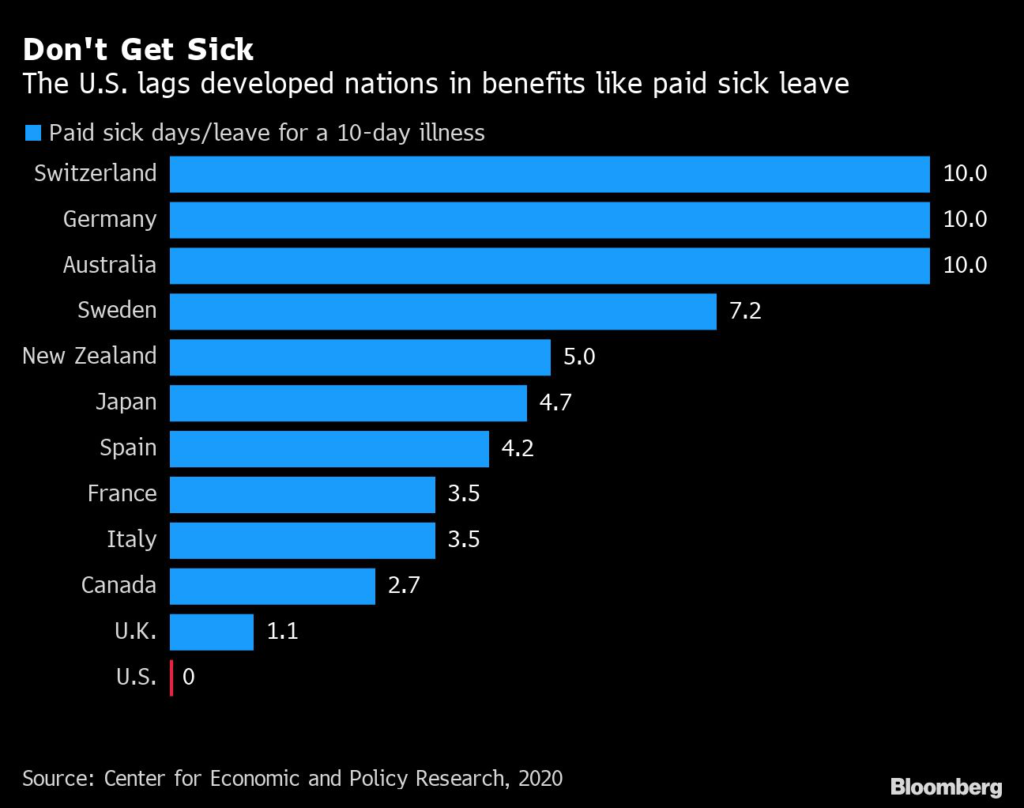
As well as raising minimum wages, the U.S. needs to overhaul its benefits system so more employees enjoy the protections that are standard elsewhere, like paid vacation and sick leave, the book argues. In the pandemic, emergency programs offered unemployment insurance and other safety-net provisions to part-time and freelance workers, but those measures have since expired. 

“We have two different employment regimes that are just night and day,” says Autor. One is built around the New Deal of the 1930s, when jobs were full-time and often stable for life; the other, which encompasses the growing gig workforce, offers Social Security but “almost no other protections.”

“What we need is a system that is more scalable than that,” he says. 

Help Workers Make Their Voice Heard

U.S. labor laws are rooted in an economy that no longer exists, the book argues. Union membership outside of the public sector has plunged, one reason why so many jobs are badly paid. 

Entire industries -– including some of the fastest-growing, like home care –- lack institutions for collective bargaining. 

That’s partly down to the traditional setup of American unions, which organize company-by-company instead of across sectors like in some other developed countries, according to Autor.

“We need to be able to open up the model of worker voice, to try out new experiments,” he says.

More stories like this are available on bloomberg.com

©2022 Bloomberg L.P.

U.K. May End Free Tests; School Break Jolts Travel: Virus Update

(Bloomberg) — The U.K. Treasury is pushing to end free PCR testing within weeks as the government starts lifting what’s left of its pandemic-related curbs. European travel firms get a business booster as nations ease restrictions and vaccinated Britons head south during a school break.

French police intercepted self-described “freedom convoys” planning to blockade the capital in protest against the national Covid-19 vaccine pass.

China granted emergency approval for Pfizer Inc.’s Covid-19 pill, a sign the country could be opening up to foreign treatments for the virus. The nation has given more than 3 billion vaccine doses, though Hong Kong reported record daily inflections.

Key Developments:

  • Virus Tracker: Cases approach 409 million; deaths top 5.8 million
  • Vaccine Tracker: More than 10.3 billion shots administered
  • The Era of Pandemic Restrictions Is Fast Coming to an End
  • Mask guidelines around U.S. ease, bringing confusion and relief
  • Why China is sticking with its Covid-zero strategy: QuickTake

China Gives 3 Billion Doses, Approves Pfizer Pill (7:45 a.m. NY)

China has given 3.04 billion doses of Covid-19 vaccines so far, the government said. That’s almost 30% of the world total.

The tally came as the nation granted emergency approval for Pfizer Inc.’s Covid-19 pill, a sign of potentially opening up to foreign treatments for the virus. 

Paxlovid’s import registration was approved Friday, the National Medical Products Administration said. The Chinese regulator asked for further research results to be submitted in a timely manner.

It’s China’s first approval for a foreign Covid-19 drug. The mRNA Covid vaccine co-developed by Pfizer and BioNTech SE, for which China’s Shanghai Fosun Pharmaceutical Group Co. secured rights for the Greater China region, has yet to be approved in China.

Malaysia, Indonesia Infections Surge (6:55 NY)

Malaysia’s new coronavirus cases neared a level last seen in August, when the country was battling the peak of an outbreak of the delta variant. The nation reported 22,802 new infections Saturday, the most since Aug. 26.

The rising vaccination rate — nearly 80% of the population completed the regime and 56% of adults received booster shots — is keeping hospital admission rates manageable. The government has said it will avoid a repeat of last year’s lockdowns that pushed the economy into contraction for two quarters.

Neighboring Indonesia reported 55,209 new cases, the most since July.

U.K. Treasury Wants to End Free Tests: Guardian (6:10 a.m. NY)

The U.K. Treasury is pushing to end most free Covid testing as soon as next month, the Guardian reported, citing unidentified sources.

The Treasury would like most so-called PCR testing for people with symptoms of the virus to stop possibly by the end of March, the newspaper said. This would exclude people in vulnerable categories or hospital settings, while people showing virus symptoms would receive either free lateral flow tests or no testing, according to the report.

Norway Ditches Face Masks, Most Restrictions (6 a.m. NY)

Norway removed the remaining virus restrictions because it considers their effects more damaging than higher infection rates. Norway joins neighbors Denmark and Sweden in making those changes, expecting the coronavirus to turn endemic.

“We are well protected, and aren’t served by pushing the pandemic out in time,” Prime Minister Jonas Gahr Store said in Oslo. Face masks are no longer needed, and people no longer need to maintain a 1-meter (3-foot) distance or isolate after being infected, he said. 

French Police Intercept Protesters (5:32 p.m. HK)

French police intervened early Saturday to prevent protesters inspired by Canada’s “freedom convoys” from blockading the capital.

Officers intercepted three convoys on the Paris ring road, including one group comprising 450 vehicles. Authorities preventively set up barricades and armored vehicles at some Paris intersections, including along the Champs-Elysees.

France banned the “convois de la liberte,” or freedom convoys, protesting the country’s Covid-19 vaccine pass. That bars unvaccinated people from most social activities, including going to restaurants and cultural spaces.

Hong Kong Reports Record Infections (4:35 p.m. HK)

Hong Kong reported a record 1,514 daily virus cases, as city officials prepare to meet mainland counterparts in China to discuss ways of combating a worsening outbreak that is straining health-care resources. The city reported 1,325 daily inflections on Friday, its previous highest tally. 

U.K. Travel Firms Get a Boost (1 p.m. HK)

U.K. travel firms get a much-needed boost starting this weekend as thousands of vaccinated Britons head to continental Europe for the mid-term school break, kicking off what could be a bumper year for travel.

Eurostar International Ltd. expects the biggest leap in customer numbers since October over the 10 days through Feb. 20, with more than 125,000 people booked to board its Channel Tunnel express trains, surpassing the total for the whole of January. Many of the nine daily services from London to Paris are sold out.

The U.K. arm of TUI AG, Europe’s biggest tour operator, said booking levels for its flight and hotel packages are comparable to 2019 levels.

Hong Kong Bank Branches Shuttered (12:12 p.m. HK)

Hong Kong’s banks will suspend operations at one in every four branches in the city after a number of employees were infected, the South China Morning Post reported.

HSBC Holdings Plc, Standard Chartered and Bank of China and another 13 major lenders will close a total of 276 branches, the newspaper said. The closures started last week and will continue Monday. 

China Has More Infections at Olympics (11:05 a.m. HK)

China reported four Covid infections among Olympic athletes and team officials. Total Covid infections among people involved with the Beijing Winter Olympics since Jan. 4 rose to 498, according to Bloomberg calculations based on official data.

Japan to Ease Border Controls: Nikkei (10:49 a.m. HK)

Japan will ease its strict border controls, beginning with foreign workers and students, the Nikkei reported. The government will start accepting more than 1,000 people a day this month and will gradually raise the cap to several thousand.

The controls, put in place in late November as the omicron variant started to spread, are by far the strictest among the Group of Seven nations. 

Germany Reports 209,789 New Cases (10:18 a.m. HK)

Germany reported 209,789 new Covid-19 cases, down from 240,172 the day before. New deaths associated with the virus rose by 198, bringing the total to 119,877.

Thailand Keeps Curbs With Cases at 5-Month High (9:35 a.m. HK)

Thailand’s new Covid-19 infections surged to a five-month high, prompting the government to keep containment measures in Bangkok and other areas to curb the outbreak.

The number of cases rose to 16,330, the highest single-day tally since Aug. 29, according to government data. The country also reported 25 new deaths in the past 24 hours, taking total fatalities to 22,387. 

Prime Minister Prayuth Chan-Ocha asked Bangkok and nine other provinces with the highest number of daily infections to take steps to contain the outbreak, Taweesilp Visanuyothin, a spokesman for the Covid panel, said yesterday. 

Walmart Drops Mask Rule for Vaccinated Workers (8:10 a.m. HK)

Walmart no longer will require fully vaccinated employees to wear masks unless required by state or local rules. 

In addition, a policy allowing five extra days of paid time off for workers testing positive for Covid-19 will end March 31 as planned, Walmart said in a memo to employees Friday. Daily health screenings will no longer be needed for workers, except in California, New York and Virginia, which have state requirements.  

The changes by Walmart represent a step away from pandemic-era rules as governments across the U.S. lift mask mandates for indoor spaces. The Bentonville, Arkansas-based retailer is the largest U.S. private-sector employer. 

Ontario Court Ruling Aims at Ending Blockade (6:20 a.m. HK)

Ontario’s Superior Court granted an injunction barring protesters from blocking the Ambassador Bridge connecting Detroit with Windsor, Ontario. The injunction that aims to end the blockade will take effect at 7 p.m. local time, Chief Justice Geoffrey B. Morawetz said in a court proceeding.

The court plans to resume late Friday to work out the details and specific wording of the injunction.

The Ambassador Bridge has been largely closed since Monday night. The conduit carries about one quarter of the commercial trade between the U.S. and Canada. 

Canada Bridge Blockade Defies Court Injunction: Protest Update

JPMorgan, Goldman Drop Mask Mandates (5:05 a.m. HK)

JPMorgan Chase and Goldman Sachs dropped mask mandates amid an easing up in Covid-19 cases that’s paved the way for Wall Street staff to return to offices. 

JPMorgan said in a memo to employees that masks are now “completely voluntary” for vaccinated staff in its U.S. buildings, unless more stringent local restrictions are in place. Goldman Sachs similarly removed a mandate, a spokeswoman for the bank said.

More stories like this are available on bloomberg.com

©2022 Bloomberg L.P.
Delivery Hero’s Slump Takes Down Another Pandemic Favorite

(Bloomberg) —

Delivery Hero SE’s share price crash this week was among the biggest one-day wipe outs recorded on Germany’s benchmark DAX index in recent years.

Shares in the Berlin-based food-delivery firm dropped 30% after it published fourth-quarter results and an outlook that missed expectations. Only scandal-hit payment processing company Wirecard AG’s 71% dive was worse. 

Delivery Hero’s precipitous tumble was the latest savaging for a pandemic-favorite stock as more governments lift coronavirus restrictions, workers abandon home offices, and leisure travel picks up. 

Shares in the fitness company Peloton Interactive and streaming video service Netflix, as well as food-delivery peers Just Eat Takeaway.com NV and Deliveroo Plc, have also been ravaged recently. 

In the case of Delivery Hero, which puts burgers, coffee, groceries and other products into the hands of buyers in dozens of countries with a few clicks, more than 5 billion euros ($5.7 billion) in value was wiped out on Thursday. 

The stock extended its drop on Friday to 39%, or 6.5 billion euros in total, marking the company’s worst two-day move since its 2017 listing, leading the slump of the broader food-delivery sector. 

A $6 Billion Wipe-out Was an Omen for Food Delivery Stocks 

When Wirecard imploded in 2019 and was subsequently kicked out of the DAX index, Delivery Hero took its place.  


Delivery Hero’s share price peaked in early 2021, when Germany was in the middle of its deadliest Covid wave and much of Europe was in lockdown. 

Heavyweights like SAP AG or Volkswagen AG have seen larger amounts of market value destroyed in a single day, even if Delivery Hero’s loss in percentage terms was higher.

Analysts covering the stock have already taken action, slashing the average price target by almost 40%. Still, 19 out of the 25 analysts tracked by Bloomberg rate the stock a buy.   

Delivery Hero’s founder and CEO Niklas Oestberg tweeted he’s “truly sorry for all shareholders” and that the company will work even harder to prove its investment strategy is going to pay off. 

“I’m in your boat,” he added.  

More stories like this are available on bloomberg.com

©2022 Bloomberg L.P.
An Alleged Startup Fraud Involving a Super Bowl Ad and David Beckham’s Underwear Nears a Trial

(Bloomberg) — On Feb. 2, 2014, Mike Fitzsimmons, the chief executive officer and founder of a “television commerce” startup called Delivery Agent, was at MetLife Stadium in East Rutherford, New Jersey, taking in the Super Bowl and tensely emailing colleagues. Fitzsimmons, unlike the 112 million people watching on television, wasn’t able to see the game’s lavishly produced commercials, but one in particular was very much on his mind. It was for a new men’s underwear collection from the Swedish retailer H&M, designed by just-retired English soccer superstar David Beckham.

Delivery Agent’s role in the commercial was visible only to the subset of the game’s audience watching on a Samsung Electronics Co. Smart TV. The startup’s technology was supposed to turn those televisions into digital vending machines: Viewers would be able to purchase the underwear directly from their sets using the remote. A menu overlay would appear at the bottom of the screen, prompting Samsung customers to click and buy as Beckham himself, in the 30-second spot, dashed parkour-style through an industrial roofscape while wearing, and creatively shedding, his eponymous bodywear.

It was the first real trial of the software. Delivery Agent could claim victory, Fitzsimmons had emailed his staff a few days earlier, if “we sell out within 6 minutes.” As the first half ended, however, and as Bruno Mars strutted through his halftime show, and as the Seattle Seahawks re-emerged from the locker room to resume throttling the Denver Broncos, the several hundred items set aside for the special promotion did not sell out.

What happened next, and in the days after, would trigger long-running litigation that is scheduled to find its way to trial only this summer. One of two investors suing the company settled with Fitzsimmons and the board this month, but the other maintains his allegations of fraud. Depending on whom you ask, it’s either business as usual in Silicon Valley or the Theranos of boxer briefs.

Read more: Startup hustle, the vegan mayonnaise edition

Founded in 2001, Delivery Agent started out helping entertainment companies sell goods featured in TV shows and movies, either through the startup’s website, through its clients’ or through a 1-800 number. The company also helped cable companies sell ads. These relatively unsexy activities were still its core businesses in early 2014, when Delivery Agent was preparing to go public. But it was also working to roll out ShopTV, a platform to enable in-TV retail. Other tech companies had tried this before. Success would allow Fitzsimmons’s company to present itself not just as a web merchant and middleman but as a developer of innovative software. “This is a game-changer for the advertising industry,” Fitzsimmons told the website Broadcasting + Cable. “With the upcoming launch of the t-commerce-enabled H&M Super Bowl XLVIII ad, we are collectively redefining the power and effectiveness of television advertising.” 

All of this added to the pressure on Super Bowl Sunday. In his Jan. 30 email to the leadership team, Fitzsimmons compared the underwear spot to a space shuttle launch. “Need each of you to triple check each detail to ensure we go smoothly,” he wrote. Around that time, the company also developed a simple, if ethically dubious, Plan B. If the underwear didn’t sell out, Delivery Agent staff would quietly buy up whatever remained. As the minutes ticked by, it became clear that the campaign was not achieving escape velocity, at least as defined by Fitzsimmons. On many Samsung Smart TVs the overlay didn’t even appear. Fitzsimmons initiated the contingency plan: “Buy every pair,” he emailed his chief operating officer, Peter Lai.

Over the next few days, the company touted the ad as, in the words of one Fitzsimmons email, “a massive success.” The company reported to H&M and to Zenith, the retailer’s ad agency, that the inventory had sold out—without mentioning how. At the same time, as a federal judge has written in a pre-trial ruling in the case, “several members of Company’s senior management, including Lai, were busy fabricating sales and viewer engagement data.” In court filings, Fitzsimmons’s attorneys point out that neither of the investigations that would follow concluded that the CEO was himself involved in the internal data manipulation efforts.

“Buy every pair”

One of the employees who was involved, however, quickly sought out the company’s chief financial officer and general counsel to express his misgivings about what he had been told to do. Less than a week after the Super Bowl, the general counsel emailed members of the company’s board asking to discuss “a matter of fraud” related to a presentation sent to partners and prospective investors. Critically, the CFO alerted the company’s auditor, Deloitte & Touche, which said it wouldn’t continue working with the company until the matter was cleared up. What followed was a standoff that consumed the two and a half years that remained of Delivery Agent’s existence as a going concern.

When an internal inquest overseen by the company’s audit committee concluded in mid-March, Deloitte was unsatisfied and demanded an independent investigation. Without a cooperating auditor, the initial public offering receded into the increasingly distant future. Investors backed out. Correspondence between Fitzsimmons and his board, submitted as evidence in the lawsuit, has the tone of an ill-fated expedition’s last dispatches. “We barely made payroll today,” Fitzsimmons wrote. The CEO squeezed existing investors to lay out more money and scrambled to find new ones. A venture capitalist named Ossama Hassanein, overseeing a pair of funds called Rising Tide, agreed to come aboard, bringing along a Florida-based investor, John Abdo, who had made his fortune in real estate and banking. Convinced that an IPO was just around the corner, the two together would eventually invest nearly $35 million in the company.

That June, the outside investigation by the law firm Bergeson LLP concluded, recommending ethics training and a reconfigured audit committee but stopping short of advocating the firing of company leadership. Deloitte pronounced this unacceptable, and Delivery Agent’s board voted unanimously to fire its auditor and hire a new one, Grant Thornton, that did not share Deloitte’s concerns. This, however, turned out to create its own problem.

Securities law requires that any firm that tries to go public within two years of parting ways with its auditor disclose what, if any, disagreement there was. Deloitte and Delivery Agent now found themselves in a new standoff over the language of that explanation, so-called Item 304. Deloitte insisted on mentioning the details of the Super Bowl ad controversy; Delivery Agent strongly preferred not to. On Aug. 19, 2015, Hassanein and Abdo finally learned those details, after months of growing increasingly perplexed about what was holding up the IPO.

The company continued to limp along for a little over a year, with new infusions of capital from, among others, Hassanein and Abdo. In 2016, Delivery Agent unveiled a partnership with the Chinese sportswear brand Anta and the Golden State Warriors basketball star Klay Thompson. In September of that year, the company filed for bankruptcy, eventually liquidating. In early 2017, Abdo and then the Rising Tide funds sued the company’s leadership and its board members, claiming to have been been defrauded.

The defense’s stance, unsurprisingly, is that they were not. In court filings, lawyers for Fitzsimmons and the board argue that, while it might have been neighborly to inform prospective investors about the disappointing results of a single technology pilot test—and, for that matter, about the impetuous decision to temporarily misrepresent those results to the outside world—the company and its directors were not legally required to do so, at least in the judgment of its lawyers at the time. On Feb. 1, two weeks before this year’s Super Bowl, Rising Tide settled its suit, and if Abdo doesn’t do the same, the case will go to trial in August.

Regardless of which side wins, it’s safe to say the fate of Delivery Agent was not decided by a David Beckham Bodywear promotion. The world has moved on from television commerce. We’re not particularly interested in buying things off TVs anymore, not when we can just do it on our phones. This year’s Super Bowl will be, for many viewers, one of the few times all year when they willingly subject themselves to TV ads at all. Mike Fitzsimmons has moved on, too. His new startup, Crosschq, promises to use machine learning to help companies speed up the hiring process. Klay Thompson is among the investors.

More stories like this are available on bloomberg.com

©2022 Bloomberg L.P.

Close Bitnami banner
Bitnami
