Bloomberg

China Developer Zhenro Plunges 66% on Bond Redemption Concern

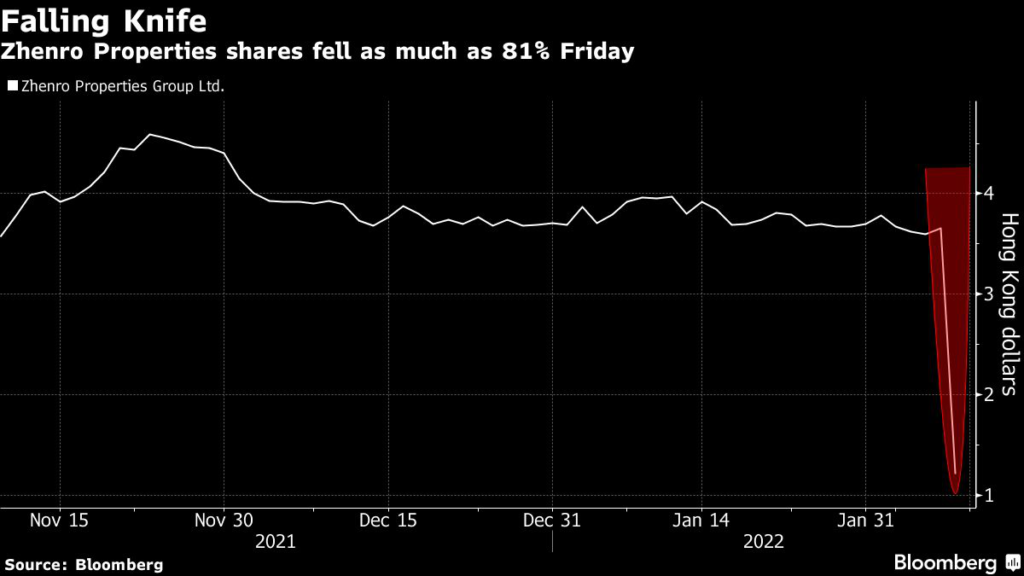
(Bloomberg) — Zhenro Properties Group Ltd.’s shares and dollar bonds plunged Friday, with traders citing concern that the Chinese builder won’t redeem a $200 million bond next month as planned.

The 10.25% perpetual note in question slumped to 35 cents on the dollar from 93 cents Thursday, according to data compiled by Bloomberg, and some other dollar bonds were on pace for record lows after falling at least 10 cents. Shares ended down a record 66% in Hong Kong and an onshore bond maturing in 2024 fell 23%, the most in over a month.

Zhenro, China’s 30th largest builder by contracted sales last year according to China Real Estate Information Corp., didn’t have an immediate comment when reached by Bloomberg.

The Shanghai-based developer said last month it would redeem the note on March 5, which boosted its price close to par. One bondholder of the firm’s other notes spoke to a company official on Friday and was told Zhenro plans to redeem the perpetual bond, the investor said, asking not to be named citing private information about their holdings.

Zhenro’s other dollar bonds trading around 40 cents indicate investors consider the company “having a high possibility of restructuring,” said Daniel Fan, a credit analyst at Bloomberg Intelligence.

Chinese developers have faced months of worries about their debt-repayment abilities, as new-home sales and many builders being unable to refinance borrowings. The sector saw a record number of defaults last year, in part on government efforts to curtail property-related debt growth.

Although the broader high-yield dollar bond market rose Friday on signs of policy loosening in pre-sales funds, concerns remain over developers’ financial health with risks such unreported debt.

Worries on Zhenro’s debt also weighed on peer Ronshine China Holdings Ltd. Some of its dollar bonds were on pace to finish at their lowest levels on record, while shares fell 7.3%. Ronshine Chairman Ou Zonghong is a brother of Ou Zongrong, who is Zhenro’s controlling shareholder, according to Hong Kong stock exchange filings and Bloomberg-compiled data. Ronshine didn’t immediately respond to Bloomberg’s request for comment on Friday.

More stories like this are available on bloomberg.com

©2022 Bloomberg L.P.

China Arrests Ex-Hangzhou Party Chief on Bribery Charges

(Bloomberg) — China has arrested the former Communist Party boss of Hangzhou city on suspicion of taking bribes, the latest development in a case that has been linked to Jack Ma’s Ant Group Co. 

The decision to arrest Zhou Jiangyong — once the highest ranking official in the eastern city where Ma’s tech company is based — was made recently, China’s top prosecutor office said Friday in a statement. His case was being further processed, it said. 

Zhou was ousted from the Communist Party last month over allegations he violated official duties, took bribes and abused his power.

“He covertly opposed central government plans, colluded with capital, supported the disorderly expansion of capital, engaged in superstitious activities and deliberately resisted probes,” the Central Commission for Discipline Inspection said in a January statement. 

That marked the first citation of “disorderly capital” in a CCDI corruption case, according to a Bloomberg News review of the body’s statements. President Xi Jinping has largely used that term in relation to the outsize growth of platform companies.

China Vows ‘No Mercy’ in Battle Against Corruption, Big Tech (1)

Earlier this year, Zhou appeared in a state media documentary that claimed the former party secretary used his influence in the Chinese tech hub to help his younger brother’s businesses. One of those companies had received investment from a firm controlled by Ma’s Ant Group, according to a local media report in August.

Over the past 17 years, Ant has grown rapidly from a PayPal-like operation into a full suite of financial services. The company now faces a regulatory overhaul and has been told to rectify its units including lending, insurance and wealth management.

China’s anti-graft authority has vowed to target the “disorderly expansion of capital” when investigating corruption in monopolistic platform companies and to “cut off the link between power and capital.” The campaign may further chill investor sentiment after a series of crackdowns last year caused hefty losses. 

More stories like this are available on bloomberg.com

©2022 Bloomberg L.P.

Musk’s Starship to Be Ready for Launch in ‘Couple of Months’

(Bloomberg) — SpaceX founder Elon Musk said the Federal Aviation Administration may grant environmental approval at the company’s south Texas site as soon as next month, paving the way for the launch of Starship this year. 

Speaking at an event in Texas, with the 394 feet (120 meters) tall spacecraft that Musk envisions will one day carry people to Mars providing a dramatic backdrop, the world’s richest person said he is “highly confident” Starship will make it to orbit this year. 

“We’re tracking to have the regulatory approval and the hardware readiness around the same time,” Musk said. “Basically, a couple of months for both.”

Musk has fallen well short of the goals he outlined at his last formal presentation, in 2019. Starship would have its first orbital test flight within months, he said at the time, and would carry people on a mission within a year. But several test launches to collect data, with no one aboard, ended in flames and it took until last May before Starship was able to take off and settle back near its launchpad without violent incident, after a 6-mile (9.6-kilometer) hop.

The Starship system is designed to carry 100 passengers or 100 metric tons of other payload to low-Earth orbit. Musk said SpaceX, formally known as Space Exploration Technologies Corp. is eventually aiming for up to three Starship flights a day, without giving a timeframe. Each flight would cost less than $10 million, he said. 

SpaceX plans to take thousands of Starlink satellites to orbit for its internet-service constellation and has sold a flight around the moon scheduled for 2023 to Japanese billionaire Yusaku Maezawa. The company also has contracted with the National Aeronautics and Space Administration to take astronauts to the moon.

Thursday evening’s presentation took place at SpaceX’s launch facility in Boca Chica, adjacent to the Gulf of Mexico and near the border with Mexico. 

“We have gotten sort of a rough indication that there may be an approval in March, but that’s all we know,” Musk said.

The FAA could not be reached for comment outside regular business hours.

Read more: SpaceX Hits Hurdle in Bid for Texas Launch

Musk didn’t provide any firm timelines for missions to the moon and Mars, but made a passionate pitch for the need to colonize other planets. 

“To be frank, civilization is looking a little fragile,” he said.  “What’s the deep meaning behind this? Why make life multi-planetary? I think this is just an incredibly important thing for the future of life itself.” 

“There’s always the chance something could wrong on earth. I’m naturally an optimist, so I think the probability of that is low, but not zero,” he said. “Eventually the sun will expand and destroy all life. So it’s very important, essential, that we become a multi-planetary species.” 

Still, creating a self-sustaining city on Mars won’t be easy, Musk said. 

“The sales pitch for going to Mars is it’s going to be cramped, dangerous and difficult,” he said. “It’s going to be very hard work, and you might die.”  

(Adds further comment from Musk in 8th paragraph.)

More stories like this are available on bloomberg.com

©2022 Bloomberg L.P.

Korea’s $200 Billion Wealth Fund Is Betting on the Metaverse and AI Startups

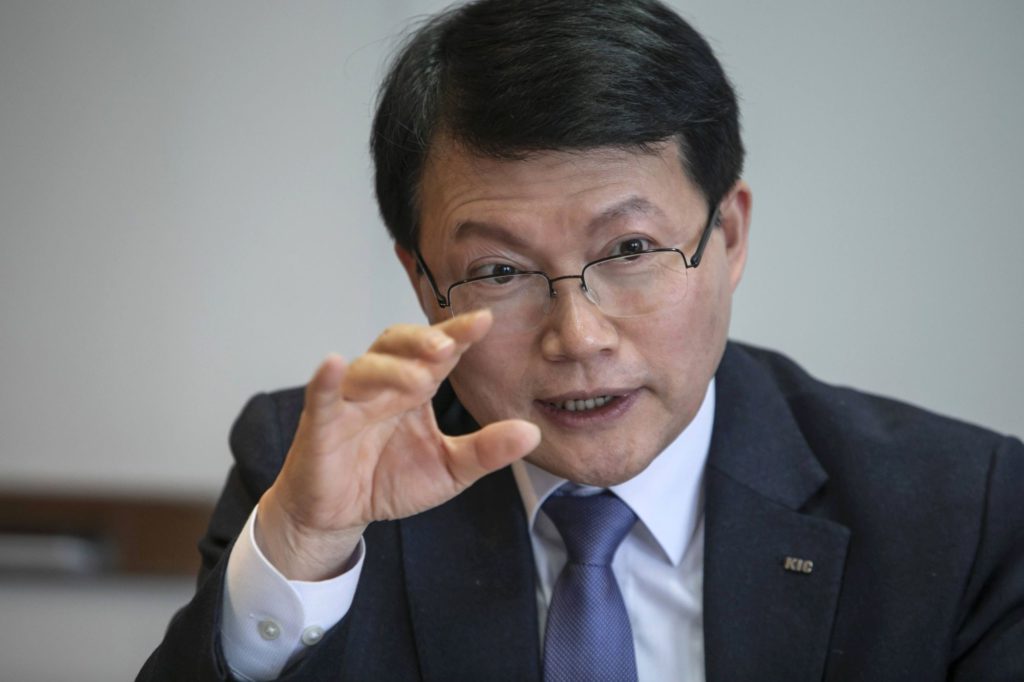
(Bloomberg) — South Korea’s $200 billion sovereign wealth fund plans to boost investments in Silicon Valley startups as it looks to the metaverse and artificial-intelligence to accelerate its expansion in alternative assets.

Seoungho Jin, who took over the reins of Korea Investment Corp. in mid 2021, also has his eyes on hotels, which he sees as a good play on the global recovery from the coronavirus pandemic.

Jin is looking beyond the recent downturn in listed technology stocks and the wider risks to the sector this year from the Federal Reserve driving interest rates higher. He sees alternative assets accounting for about 25% of KIC’s portfolio by 2025, versus around 17% last year, and assets under management eventually rising to $300 billion.

“Some investors say Silicon Valley is already saturated, which I have to concede is partly true, but it is still a source of global growth,” Jin, 59, said in an interview in Seoul. “There are still plenty of good opportunities, if you chase them eagerly.”

KIC has almost doubled in size over the past five years, after a slow start when it was created in 2005 to increase national wealth and contribute to the nation’s finance industry. The fund, which only invests outside of South Korea, has yet to release its results for 2021.

Jin expects to add to headcount in the fund’s San Francisco office in this year to explore investments in tech, health and green ventures in Silicon Valley. He didn’t offer details on any specific investments.

The metaverse concept that is dominating attention there is for an immersive version of the internet, where everyone can interact, play games and complete tasks as a digital avatar, using tools like virtual or augmented reality goggles.

KIC is also putting more money into tech shares, while evaluating opportunities in financial stocks, which may benefit from higher interest rates, he said.

In a wide-ranging interview with Bloomberg, Jin also said:

  • KIC will continue to seek investments in real estate, including hotels, which should benefit as travel increases
  • The fund’s allocation to alternative assets, including private equity and hedge funds, will increase by about 2 percentage points in 2022
  • Fixed-income assets will be trimmed by around 3 percentage points this year as global monetary policy normalizes. Equities holdings will increase slightly
  • KIC is looking at floating-rate notes or other debt products that could hedge against rising interest rates
  • Indian bonds look attractive among emerging-market debt amid relatively firm corporate earnings and a good investment environment
  • KIC has employed more quantitative strategies recently and given its expectation for market volatility it will add more staff in this area
  • It has also created a team for ESG, which is being factored into all investment decisions, and plans to increase staff in this area

Painful Memories

“We’re in the passage from childhood to adulthood — a crucial stage ahead of our coming-of-age,” said Jin, who previously worked at the finance ministry and the Presidential Committee on Balanced National Development.

As well as boosting assets, Jin wants to make risk management more sophisticated and decision-making processes more transparent.

He also sees KIC as providing South Korea with an economic buffer to ensure it never repeats the events of 1997, when it was forced to seek a loan from the International Monetary Fund. Underscoring this point, Jin noted that the $20 billion gain KIC made in 2020 was bigger than the emergency loan.

“I realized then how rough life gets for the people of a country with no financial power,” said Jin, who was taking a career break then, studying in the U.K. 

The pound surged against the won and suddenly he was struggling to pay tuition fees. “If we had a fund like KIC back then, we wouldn’t have experienced the pain.” 

(Adds bullet point on ESG)

More stories like this are available on bloomberg.com

©2022 Bloomberg L.P.

Huitongda Poised to Price Hong Kong IPO at Bottom of Range

(Bloomberg) — Huitongda Network Co., a Chinese e-commerce platform backed by Alibaba Group Holding Ltd., is set to price its Hong Kong initial public offering at the bottom of its marketed range, according to people familiar with the matter.

The company, which helps retailers in rural parts of the country to sell goods online, is offering 51.6 million new shares and had marketed them at HK$43 ($5.51) to HK$48 each. 

The potential pricing was first reported by IFR. Deliberations are ongoing and details may change, the people said, asking not to be identified as the information is private. An external representative for Huitongda declined to comment.

Huitongda had been considering an IPO that could raise as much as $1 billion as soon as last year, Bloomberg News reported. After filing in June, the company weighed putting its plans on hold amid choppy markets and China’s regulatory crackdown on IPOs, people familiar with the matter said at the time.

The listing comes as a global IPO slump leaves no market untouched, including Hong Kong. With just three IPOs in the first month of the calendar, it’s the quietest start to a year since 2009.

China International Capital Corp., China Renaissance Holdings Ltd. and Citigroup Inc. are joint sponsors of the offering. The stock is expected to start trading on Feb. 18.

More stories like this are available on bloomberg.com

©2022 Bloomberg L.P.

Top China Chipmaker Warns of Growing Shortfall as U.S. Decouples

(Bloomberg) — Manufacturers in China are increasingly looking to source chips locally because they fear the U.S. and other governments may prioritize domestic users of the semiconductors vital to national security, a senior executive at the country’s top chipmaker said Friday.

Customers are telling Semiconductor Manufacturing International Corp. they need to secure a certain amount of capacity within China itself because of concerns the industry could become more fragmented, disrupting inflows from abroad, co-Chief Executive Officer Zhao Haijun said. Companies in China, the world’s factory floor for everything from Apple Inc. iPhones to Volkswagen AG cars, have turned more and more to local component suppliers and assemblers.

“What we can make here is less than 10% of what they need. They are worried,” Zhao told analysts on an earnings call. “In the future, we may see that there is an oversupply of chips of certain nodes in some markets, but there will still be a shortage in some other markets.”

Governments from Tokyo to Washington and Brussels are racing to bolster chip ecosystems at home, wary of a heavy reliance on manufacturing in Taiwan and South Korea after a global component shortage walloped the auto and electronics industries. The U.S. has also sought to limit flows of technology to China, which it considers a geopolitical rival, especially if it ends up for military use.

Read more: Secretive Chinese Committee Draws Up List to Replace U.S. Tech

The global shortages have been particularly acute in more mature but traditionally under-invested 28nm to 40nm technologies, common in cars and machinery, spurring an aggressive buildup in those areas including in China. That in turn has spurred fears of a glut. SMIC intends to spend $5 billion on upgrades and expansion this year, much of which will go toward three giant new plants in Shanghai, Beijing and Shenzhen.

SMIC itself has been hit with U.S. sanctions, which the company said has a major impact on its advanced technology development. Zhao did not identify the customers he was referring to, though the company’s main clients include Datang Telecom Technology Co. and Qualcomm Inc., according to data compiled by Bloomberg.

Shares of China’s biggest contract chip manufacturer jumped as much as 4.3% in Hong Kong after the company reported net income of  $534 million, ahead of analysts’ estimates.

More stories like this are available on bloomberg.com

©2022 Bloomberg L.P.

Trump’s Doomed Video Phones Loom in Backdrop of His New Media Launch

(Bloomberg) — Years before he announced plans for a social media and entertainment empire, Donald Trump was promoting another big idea in mass communication.

It was pitched as revolutionary: a desktop video phone that would modernize phone calls from the C-suite to the kitchen counter. Starting around 2008, the future U.S. president endorsed the device, sold by a multilevel marketing firm called ACN Opportunity LLC, with claims that people could make easy money peddling it “without any of the risks most entrepreneurs have to take.”

“Trust me — it’s changing everything,” Trump, who was paid almost $9 million to promote ACN products from 2005 to 2015, said in a promotional video shown at investor events across the country. “The absolute truth is that this technology will be present in every home within the next several years.”

Needless to say, it didn’t work out that way. Skype was gaining ground. Video-calling became ubiquitous on smartphones. And in 2018, four recruits who lost thousands of dollars trying to sell the company’s products filed a class-action fraud suit against Trump and three of his adult children who also promoted ACN — Donald Jr., Eric and Ivanka Trump. The Trumps, who deny the claims, now face a June 29 deadline to sit for depositions.

The plaintiffs believe they can prove the Trumps lied about their faith in ACN’s products and exploited vulnerable investors for profit without disclosing that they were being paid to promote the company. If they win, damages will be at least $5 million, the judge said in her decision denying the Trumps’ motion to dismiss the complaint, but the number could go much higher if more people join the lawsuit. The lawyers have said that during relevant years ACN had about 200,000 recruits. 

The litigation is heating up just as Trump is preparing the biggest business move of his post-presidency career: Trump Media & Technology Group, which aims to take on big tech companies with offerings from social media to streaming. Its Truth Social site — which will give Trump a platform after he was banned from Twitter and Facebook — is expected to launch by the end of March, Chief Executive Officer Devin Nunes told Fox Business News last month.

Trump has said Trump Media is about “saving our country.” It’s already generating enthusiasm among retail investors betting on his name. Shares of Digital World Acquisition Corp., the special purpose acquisition company taking Trump Media public, have soared more than 700% since the deal was announced, even as details on the venture remain scant. 

It remains to be seen if Trump Media will live up to the hype or fizzle. But the ACN case is a reminder of Trump’s history of grandiose business claims gone awry, from Trump University, which paid $25 million in 2016 to settle fraud suits on behalf of thousands of former students, to Trump Mortgage, which launched not long before the housing bubble burst. Other ventures sputtered with less drama: Trump Vodka, Trump Steak, Trump Shuttle — even a Trump board game.

Trump’s core real estate business also is in legal crosshairs. The Manhattan district attorney charged the Trump Organization with tax crimes in 2021, while New York Attorney General Letitia James is pressing ahead with a 2019 civil investigation into possible bank and insurance fraud tied to asset valuations. Trump, 75, has denied wrongdoing and argued he was targeted for political purposes.

Read more on the New York attorney general’s findings in her probe 

The pattern of lawsuits, investigations and bad ideas calls into question Trump’s judgment and the value of his promotional pitches, said Roberta Kaplan, a lawyer for the former ACN recruits who claims Trump “deliberately defrauded” her clients.

The ACN investments “turned out to be worthless,” Kaplan said. “While the Trumps earned millions of risk-free dollars for themselves, our clients and thousands of other Americans like them lost what to them was a huge amount of money.”

Trump’s own lawyers in the ACN case in 2019 sought dismissal of the suit by arguing that the billionaire’s glowing claims about the video phone were “puffery” that no “reasonable investor” would have relied upon. They argued the lawsuit didn’t provide evidence of him making false statements and that his comments were opinions.

Trump Media’s press office didn’t respond to requests for comment about the ACN case, nor did Joanna Hendon, the lawyer for Trump and his children. Taylor Budowich, a spokesman for the former president, also didn’t respond to messages.

Trump Media, of course, is different from the ventures launched when Trump was known just as a billionaire real estate developer and celebrity host of “The Apprentice.” He continues to hold strong influence over the Republican Party and has hinted he may run again for president in 2024. And his huge fan base may want to join Truth Social just to hear what the formerly prolific tweeter has to say, said Matthew Tuttle, chief executive officer of Tuttle Capital Management LLC.

“There will be a lot of people who will like the ability to go somewhere where they can speak freely,” said Tuttle, whose firm is behind SPAC exchange-traded funds and the recently debuted FOMO ETF. “If you’re a Donald Trump fan, none of that other stuff matters.”

Still, there are parallels with ACN, according to Michael Cohen, Trump’s onetime lawyer and fixer who’s now a full-time critic of the former president. 

“These claims about disrupting the industry and dominating the market — they are the exact same claims that he made when he introduced Trump Mortgage, Trump University, Trump Steaks, ACN video phones and so many more — all of which failed and failed miserably,” said Cohen, who last year completed a three-year prison sentence for tax fraud, bank fraud, violations of campaign finance laws and lying to Congress.

ACN recruits paid hundreds of dollars to join and hundreds more to attend seminars and national conventions at sold-out arenas. Trump starred in promotional videos, appeared in-person at events and twice hosted ACN executives on “The Celebrity Apprentice.” He told recruits that the “tremendous” phones, which required ACN internet service to work, were doing “half-a-billion dollars’ worth of sales a year,” and that ACN was “at the forefront of innovation,” according to the complaint. The plaintiffs argue those claims were “abjectly false.”

ACN isn’t named in the lawsuit. Mark Henriques, a spokesman for the company, said the video phone was marketed from about 2008 to 2013, though sales may have winded down into 2014. He said that the product was affected by changing technology, noting that Apple Inc.’s FaceTime didn’t come along until after Trump starting promoting the products. Moreover, he said, Trump wasn’t all wrong.

“Obviously folks make predictions about how new technologies will be adopted all the time,” Henriques said in a statement. “Trump was right to predict that video communication would become ubiquitous, just not that the platform for that communication would be a physical video phone.”

Kaplan, the plaintiffs attorney, argues that while many people did indeed predict the advent of video communication, neither Trump nor anyone else believed that would happen using a clunky ACN video phone.

“Trump fraudulently convinced our clients to spend their hard-earned savings to go into business selling the functional equivalent of a Bakelite rotary dial phone, when the future was in smartphones and tablets,” she said.

Former ACN investors hope to eventually get their money back from Trump. The case could ultimately have hundreds or even thousands of plaintiffs once the lawyers get evidence showing how many investors lost money. 

Millard Williams, one of the plaintiffs in the suit, was homeless in 2014, but he was so swayed by Trump’s pitch at an ACN event that he spent hundreds of dollars — all the money he had and more that he borrowed — to start selling the company’s video phones. When his efforts didn’t pan out right away, he paid to attend more seminars to improve his sales skills.

“When Trump came on the screen, the entire arena was transfixed,” the complaint says. “Williams was again impressed by Trump’s seemingly genuine support for the company and left the convention re-inspired and reinvigorated, believing that ACN could still be a good business opportunity.”

But the renewed feelings were short lived. After a few months of meetings, Williams had zero income and stopped believing in the company.

“Williams came to realize that, contrary to what Trump had said in the promotional videos, ACN was not a good moneymaking opportunity,” the complaint says.

(Updates with lawyer’s comment)

More stories like this are available on bloomberg.com

©2022 Bloomberg L.P.

Softbank Tells U.S. Judge It Will Resist Credit Suisse Subpoena

(Bloomberg) — SoftBank Group Corp. told a judge it will resist Credit Suisse Group AG’s demand for information to lay the groundwork for a lawsuit the Zurich-based bank has said it plans to file in England stemming from the collapse of Greensill Capital.

The escalating dispute in federal court in California comes as Credit Suisse said it sent potential defendants in England a “pre-action” letter ahead of its filing of a complaint there.

The companies jointly told a San Francisco magistrate judge Thursday that the 25-page letter includes allegations relevant to Softbank’s response to a subpoena from Credit Suisse. The magistrate judge previously granted the Swiss bank’s request to serve its document demand on Softbank, but said he would entertain objections from the Japanese company to complying with it. Softbank is asking for its deadline to be extended to Feb. 18.

Read More: SoftBank Calls Credit Suisse ‘Desperate’ Over Greensill Spat 

Credit Suisse is seeking information from board meetings at Katerra Inc., a U.S.-based construction company in which SoftBank was a major investor. The bank is trying to reclaim $2.7 billion in overdue loan payments from borrowers including Katerra. It has said it invested in about $440 million worth of notes backed by the construction company.

In a memo sent to the board of Softbank’s Vision Fund in late January, and obtained by Bloomberg News, the company’s legal department said Credit Suisse will “continue with its desperate, unwarranted attempts to blame other institutions — including SoftBank — for Credit Suisse’s poor investment decisions.”

The proposed suit is simply an attempt to “placate” Credit Suisse’s own investors, Softbank Vision Fund’s lawyers wrote.

The collapse of financier Lex Greensill’s supply-chain finance empire was the first of two big hits to Credit Suisse last year, with the implosion of Archegos Capital Management coming shortly afterward. 

Credit Suisse cut ties with Softbank in May, deciding to no longer do any new business with the Japanese firm, after the collapse of Greensill and amid conflict of interest allegations, people with knowledge of the decisions earlier told Bloomberg.

The Swiss bank has repaid $6.7 billion to investors in supply-chain funds affected by Greensill’s failure.

In 2020, Credit Suisse had conducted an internal review into the Greensill funds and potential conflicts of interest involving Softbank. A number of its portfolio companies received loans via supply-chain funds at Credit Suisse, while Softbank was also an investor in the Swiss lender’s funds. In the aftermath, Softbank pulled $700 million out of them and the bank also changed its investment guidelines.

The overlapping financial relationships had raised questions whether Softbank was using the Credit Suisse funds to prop up investments in the Vision Fund, including Greensill Capital, in which it had a substantial stake.

The case is In re Ex Parte Application of Credit Suisse Virtuoso, 21-mc-80308, U.S. District Court, Northern District of California (San Francisco).

More stories like this are available on bloomberg.com

©2022 Bloomberg L.P.
Zendesk Fields Takeover Offer From Private Equity Group

(Bloomberg) — Enterprise software company Zendesk Inc. has received a takeover offer from a consortium of private equity firms that includes Hellman & Friedman, Advent International Corp. and Permira, according to people familiar with the matter.

Other potential buyers could also be interested in Zendesk, the people said, asking not to be identified because the matter is private. 

Zendesk said in a statement Thursday that it had received and rejected an unsolicited proposal from private equity firms that valued it at $127 to $132 a share, without disclosing the names of the bidders. 

The company’s board said it concluded the proposal undervalues the company and wasn’t in the best interest of shareholders. 

Zendesk shares closed at $114.18 on Thursday, giving it a market value of $13.9 billion. Its shares traded as high as $122.88 in after-hours trading following the statement.  

Representatives for Zendesk, Hellman & Friedman and Permira declined to comment. A spokesperson for Advent couldn’t be reached for comment.

The offer, first reported by the Wall Street Journal, comes at a sensitive time for Zendesk. It’s trying to get its takeover of Momentive Global Inc. approved by shareholders, many of whom oppose it. 

Zendesk agreed to buy Momentive in October in an all-stock transaction valued at roughly $4 billion at the time. The transaction was met with a dramatic sell-off in both companies as investors balked at the tie-up. With the jump in Zendesk’s share price, the value of the deal, which had fallen to about $3.4 billion, rose back to around $3.8 billion, based on data compiled by Bloomberg.

Zendesk shareholder Janus Henderson Group Plc came out against the acquisition this year. Jana Partners, an activist investor that has said it owns Zendesk shares, is also urging shareholders to reject the deal.

Momentive shares rose about 5% in after-hours trading Thursday to $17.50. 

Private equity firms have shown a seemingly endless appetite for software companies and a willingness to partner for buyouts. In a transaction announced in November, two of the firms included in the group that bid for Zendesk, Permira and Advent, teamed up to take cybersecurity company McAfee Corp. private. 

More stories like this are available on bloomberg.com

©2022 Bloomberg L.P.
Expedia Swings to Profit Even After Omicron Setbacks

(Bloomberg) — Expedia Group Inc. reported fourth-quarter profit that topped analysts’ estimates, benefiting from a holiday travel season that proved resilient despite the onset of the omicron Covid-19 variant. Shares gained in extended trading.

Net income was $276 million in the three months ended Dec. 31, compared with a loss of $412 million in the quarter a year earlier, the online travel company said Thursday in a statement. Earnings, excluding certain costs, were $1.06 a share. Revenue more than doubled to $2.28 billion, while analysts, on average, projected $2.29 billion.

“It burned bright and fast,” Expedia Chief Executive Officer Peter Kern said of omicron in an interview. “It was increasingly like a bad news, good news, story for us.” 

Expedia, which hosts reservations for traditional lodging like hotels and offers short-term rentals through its platform Vrbo, has been buffeted by the ebb and flow of the pandemic. After being pummeled initially by a near-complete halt in travel as the virus set in two years ago, Expedia saw a resurgence last year as borders and businesses opened and travel picked up, at least in some markets. 

Then, the omicron variant swooped in late last year, again shuttering businesses and prompting a massive disruption of flights and vacation plans. For the week ended Dec. 12, Expedia’s U.S. net room nights booked declined by 18% from 2019, according to market researcher YipitData. With infection rates receding, analysts expect travel will revive again this spring and summer. Those expectations have pushed Expedia shares to a record high. 

Kern expects a continued travel recovery if the course of the virus stays the same. “People, to the extent that they want to get out and live their life and see things, they’re going to do it,” he said. 

After the initial downturn in the early months of the pandemic, Expedia, like its rival Airbnb Inc., benefited as people took advantage of work-from-anywhere policies to explore other places. That strength is likely to continue this year, as short-term rental reservations across online travel agencies for the first half of 2022 are significantly higher than 2021, JMP Securities analyst Andrew Boone wrote in a note in late January.  

“It was fortunate for us that we’re in that business and we clearly leaned into its moment as much as we could, and I think we’ve been really successful at that,” Kern said. 

Expedia, based in Bellevue, Washington, said gross bookings, which represent the total retail value of transactions, including taxes and fees, were $17.5 billion in the fourth quarter, compared with estimates for $19.5 billion. 

The stock gained about 5% in extended trading after closing at $197.52 in New York. So far this year, shares of Expedia have risen 9.3%, compared with a 9.6% gain from rival Booking Holdings Inc. and a 3.3% advance in shares of Airbnb.

(Updates with comments from CEO beginning in the third paragraph.)

More stories like this are available on bloomberg.com

©2022 Bloomberg L.P.

Close Bitnami banner
Bitnami

