Bloomberg

Traffic Remains Below Pre-Covid Levels as Work Habits Change

(Bloomberg) — Nearly two years after widespread Covid-19 lockdowns began, traffic in the world’s cities still hasn’t returned to normal.

Global traffic congestion — a measure of mobility — was 10% lower in 2021 than in 2019, largely due to changes in work habits, according to a report by location technology specialist TomTom NV.

As home offices, teleconferences and flexible work hours became a standard for many companies, congestion during peak hours fell by an average 19% in 2021 compared with 2019. Still, many cities saw congestion swing from extreme lows to extreme highs as travel restrictions followed the ebb and flow of new Covid variants. 

More stories like this are available on bloomberg.com

©2022 Bloomberg L.P.

World Bank to Israel: Let Palestinians Upgrade Mobile Network

(Bloomberg) — The World Bank called on Israel to allow the upgrade of outmoded mobile communications in the West Bank and Gaza, in the interest of boosting the Palestinian economy. 

A better digital infrastructure would help to tackle soaring unemployment with higher-paying jobs, and narrow the gender divide, the Washington-based lender said in a report released Wednesday. 

Israel, which controls Palestinian frequencies and telecom infrastructure, limits mobile internet speeds in the Palestinian territories to levels that are significantly lower than in Israel and Jewish West Bank settlements. The bank urged Israel to let Palestinian cellular companies set up more advanced networks, and to ease restrictions on the import of equipment needed to build and operate them. 

Israel is rolling out fifth generation technology for its citizens, while the West Bank operates on 3G and Gaza, 2G. Israeli mobile operators don’t officially service Palestinian areas, but many Palestinians use the faster Israeli networks with SIM cards.

The Times of Israel reported in November that Israel tentatively agreed to let Palestinian operators launch 4G services. 

More stories like this are available on bloomberg.com

©2022 Bloomberg L.P.

DOJ Seizes $3.6 Billion in Bitcoin Stolen in Bitfinex Hack

(Bloomberg) — The U.S. seized about $3.6 billion in Bitcoin stolen during a 2016 hack of the Bitfinex currency exchange — the largest financial seizure ever — and arrested two people, the Justice Department said. 

Ilya Lichtenstein and his wife, Heather Morgan, were detained in the morning and by late afternoon appeared at federal court in Manhattan. The two — who appear to have had colorful social media accounts ahead of their arrests — allegedly conspired to launder 119,754 Bitcoin stolen after a hacker breached Bitfinex’s systems. 

“Today’s arrests, and the Department’s largest financial seizure ever, show that cryptocurrency is not a safe haven for criminals,” Deputy Attorney General Lisa Monaco said in a statement. “In a futile effort to maintain digital anonymity, the defendants laundered stolen funds through a labyrinth of cryptocurrency transactions.”

Bitfinex is the exchange affiliated with the world’s biggest stablecoin, Tether. At the time of the hack, the digital currency haul was estimated at about $71 million, the Justice Department said. The department said the total value of stolen Bitcoin is now worth about $4.5 billion. 

Read More: Stablecoin Tether Grows Into Crypto World’s $69 Billion Mystery

“This case and the arrests today are extraordinary,” said Ari Redbord, a former federal prosecutor who is now the  head of legal and government affairs at TRM Labs, a blockchain intelligence company. “This is further proof that the nature of the blockchain — the forever open ledger — allows investigators to follow the money in ways impossible in complex webs of shell companies and bulk cash smuggling.”

The cryptocurrency known as Unus Sed Leo, which was issued in part to recapitalize the Bitfinex exchange following the 2016 hack, surged more than 50% after the DOJ announcement. 

Dressed in casual clothes, Lichtenstein and Morgan didn’t speak at their court appearance Tuesday afternoon. Their lawyers — they have retained separate counsel — did all the talking. The government asked the judge not to allow them to be released on bail. Each of them is facing the possibility of a 20-year prison sentence, so they have the motivation to run, a prosecutor told the judge.

The trial will eventually be held in Washington, where the charged were filed. 

The defendants in Tuesday’s case weren’t accused of doing the actual hacking. A 20-page statement of facts details the complex movement of Bitcoin after the hack, but it offers no clues as to who actually stole the digital currency. Justice Department officials declined to comment when asked about who carried out the hack. 

According to DOJ, the couple used sophisticated techniques, including “using fictitious identities to set up online accounts; utilizing computer programs to automate transactions, a laundering technique that allows for many transactions to take place in a short period of time; depositing the stolen funds into accounts at a variety of virtual currency exchanges and darknet markets and then withdrawing the funds.” 

Lichtenstein, 34, and Morgan, 31, also funneled the money through AlphaBay Marketplace, which was shut down in 2017, to hide their transactions. Some of the money was cashed out through Bitcoin ATMs. Some was used to buy NFTs and gold. They even used the money to buy a Walmart gift card.

‘Crocodile of Wall Street’

Lichtenstein, who went by the nickname “Dutch,” described himself as an angel investor in technology companies, as well as an adviser to multiple startups, according to a public LinkedIn profile. A Twitter account with his name also posted frequently, weighing in on topics such as cryptocurrency trends, the technology sector and the evolution of NFTs. 

Morgan, who prosecutors say used the alias “razzlekhan,” promoted herself as a part-time rapper, entrepreneur and media personality on what appears to be her personal website. In one post, the defendant described herself as “the infamous crocodile of Wall Street” and “like Genghis Khan, but with more pizzazz.” 

A separate Instagram account that appears to be associated with the defendant included videos of Morgan, as Razzlekhan, rapping and appearing at a wedding ceremony in which she was carried on a throne by roughly eight people. 

Read more: What Are Stablecoins? Why Are Regulators After Them?: QuickTake

The details of the case date to August 2016, when Bitfinex reported a security breach and halted all trading, withdrawals and deposits. The company later disclosed in a blog post some of its users had their Bitcoin stolen, and that it had reported the theft to law enforcement. 

Bitfinex said in a statement that it has been cooperating “extensively” with the Justice Department throughout the investigation and that it will seek “to establish our rights to a return of the stolen Bitcoin.”

In a briefing for reporters, Justice Department officials said they plan to establish a court process for victims to reclaim the stolen Bitcoin.

Read more: Cryptocurrency of Hacked Exchange Surges 59% After Fund Recovery

In a phone interview after the arrests were announced, Deputy Attorney General Monaco said the Justice Department plans to focus more resources and attention on policing the cryptocurrency “ecosystem” and will be seeking as much help and support as possible from private entities like virtual currency exchanges. 

“At the end of the day, what we’re talking about here is trying to clean up the ecosystem that these criminal actors are trying to use and hide behind,” Monaco said. “If we’re going to see — as I think we will – cryptocurrency gaining more traction and gaining wider adoption, we’ve got to make sure that the ecosystem that they operate in can be trusted and frankly can be policed.”

In addition to a possible 20 years in prison for the money laundering charges, Lichtenstein and Morgan could receive an additional sentence of up to five years for conspiracy to defraud the U.S., according to a Justice Department statement. 

(Adds surge in coin’s value in sixth paragraph, court apperance in seventh paragraph and interview with deputy attorney general starting in 17th paragraph.)

More stories like this are available on bloomberg.com

©2022 Bloomberg L.P.

Canada Vaccine Protests Widen; Gates Pandemic Book: Virus Update

(Bloomberg) — Protests over vaccine mandates and Covid-19 restrictions widened across Canada, with truck blockades halting commercial traffic at critical border crossings into Detroit and in Alberta.

Hong Kong will limit gatherings on private premises for the first time, as it fights an unprecedented virus outbreak. Authorities are turning to increasingly strict measures, using a Covid Zero strategy that’s been abandoned in much of the rest of the world. 

In contrast, Europeans’ increasing confidence that the omicron wave is fading sent summer bookings at package holiday giant TUI AG surging. Sweden joined the list of nations discontinuing most Covid-related curbs, with Austria also announcing further easing.

Key Developments:

  • Virus Tracker: Cases top 399 million; deaths pass 5.75 million
  • Vaccine Tracker: More than 10.2 billion shots administered
  • Hong Kong food prices soar as Covid curbs trigger panic buying
  • Goldman’s five-day office week is the aberration now
  • Covid rebellion brews in Canada, sending warning across globe
  • Is Covid becoming endemic? What would that mean?: QuickTake

Gates Writes Book on Pandemic Prevention (2 p.m. NY)

Bill Gates, the billionaire philanthropist whose foundation has focused on efforts to fight the coronavirus, is planning a May 3 release for a book on how to ensure that the Covid-19 pandemic is the last great global plague.

“Whenever I see the suffering that Covid has created — every time I read about the latest death toll or hear about someone who lost their job or drive by a school that is closed — I can’t help but think: We don’t have to do this again,” he wrote in a blog post announcing the publication of “How to Prevent the Next Pandemic.”

The book will cover lessons learned from the pandemic, as well as tools and innovations needed to save lives and stop pathogens early. It will discuss his views on vaccines and on what it has felt like to become the target of conspiracy theories.

J&J Plant Stops Making Vaccine, NYT Says (11 a.m. NY)

A crucial Johnson & Johnson plant has stopped making its Covid vaccine, though the company says it has millions of doses in inventory, the New York Times reported.

J&J’s easy-to-deliver Covid-19 shot is the vaccine of choice for much of the developing world. Yet the U.S. company, which has already fallen far behind on its deliveries to poorer countries, late last year quietly shut down the only plant making usable batches of the vaccine, the newspaper reported, citing people familiar with the decision whom it didn’t identify.

The facility, in the Dutch city of Leiden, has instead been making an experimental but potentially more profitable vaccine to protect against an unrelated virus, according to the Times.

The halt is temporary — the Leiden plant is expected to start churning out the Covid vaccine again after a pause of a few months — and it is not clear whether it has had an impact on vaccine supplies yet, thanks to stockpiles, according to the newspaper.

Canada Vaccine Protests Widen (9:45 a.m. NY)

Protests over vaccine mandates and Covid-19 restrictions widened across Canada, with truck blockades halting commercial traffic at critical border crossings including the Ambassador Bridge into Detroit.

The structure that connects to Windsor, Ontario, was shut down in both directions late Monday. The land crossing is the most important link for goods moving between Canada and the U.S. and a crucial artery for auto parts suppliers and manufacturers. 

Another border crossing at Coutts, Alberta, which had already been partly blocked by truckers, was also completely closed for a time, the Canadian border agency said. It’s the main route for the province’s commercial vehicles bound for the U.S. and one of the busiest border posts in western Canada. 

The blockades represent a potentially dramatic escalation for protests that began in late January when a convoy of truckers moved into Ottawa, paralyzing Canada’s capital. Prime Minister Justin Trudeau warned that the demonstrators threatened to hobble the economy and undermine democracy. 

Pfizer Falls as Guidance Falls Short (9:32 a.m. NY)

Pfizer shares dropped on Tuesday after the drugmaker’s sales and guidance fell short of analysts’ estimates. Some key franchises outside of its Covid-19 vaccine and antiviral pill missed expectations.

The New York-based drugmaker sees adjusted 2022 earnings of $6.35 to $6.55 a share, according a statement Tuesday, while analysts had estimated $6.65. Revenue will top out at $102 billion, Pfizer said, compared with the average analyst estimate of $106 billion.

The disconnect between Wall Street expectations and the company forecasts showed the outsize hopes investors have for the drugmaker’s products.

Austria Further Eases Restrictions (6:17 a.m. NY)

Austria will further ease restrictions over the weekend, allowing the unvaccinated to access services, including hairdressers, with a negative virus test, and removing capacity constraints at events. A law on mandatory inoculations remains in place, with authorities starting to impose fines next month.

Malaysia Scraps Temperature Checks (6:21 p.m. H.K.)

Malaysia will scrap the need for temperature checks before entering public spaces from Feb. 11, Defense Minister Hishammuddin Hussein said on Tuesday.

The government is also removing the requirement for premises to provide record books for people to register themselves, he said.

TUI Bookings Spree on Summer Optimism (4:03 p.m. H.K.)

Package holiday giant TUI AG said the pace of bookings for the coming summer has leaped above pre-pandemic levels.

While sales are often still close to the time of travel, customer confidence is building — especially in the key U.K. market, the world’s biggest tour operator said. People are also spending more on each trip, with average summer prices up 22% from last year.

The company’s comments are the latest sign of the travel sector’s growing optimism as the removal of curbs stokes expectations for a bumper summer. Discount airlines Ryanair Holdings Plc, EasyJet Plc and Wizz Air Holdings Plc last month announced aggressive capacity hikes to tap pent-up demand.

China Sees Omicron Outbreak Spreading (3:53 p.m. HK)

An omicron outbreak in the city of Baise may further spread in Guangxi province and Guangzhou city in Guangdong, an official at the National Health Commission said. A flareup in the northeastern border town of Heihe also risks spreading further. 

An earlier Covid outbreak in Beijing and Tianjin are under control, however, according to the authorities.

Hong Kong Tightens Restrictions (3:52 p.m. HK) 

Multi-household gatherings on private premises will be limited to two families, but authorities won’t go door-to-door to check if the rule is being followed.

The city will also limit public gatherings to two people, down from four currently, and expand the list of venues included in its vaccine mandate to shopping malls, food markets and hair salons.

It remained unclear how far Hong Kong can replicate mainland China’s track record in limiting the spread of covid without similarly stringent lockdowns.

Sweden to Scrap Most Measures (3:46 p.m. HK)

Sweden’s government is not planning to extend the majority of current Covid-measures further, with most restrictions set to be lifted from Feb. 9, Finance Minister Mikael Damberg said. 

It’s time to return to “normality,” the minister said, adding that support measures for companies are to stay in place through February.

New Zealand Protesters Mimic Ottawa (12:45 p.m. HK) 

A convoy of cars and campervans blocked streets around New Zealand’s parliament in Wellington on Tuesday to protest Covid-19 restrictions, attempting to mimic the truckers who have gridlocked the Canadian city of Ottawa.

About 2,000 protesters descended on downtown Wellington from around the country, parking their vehicles in streets around parliament buildings, disrupting traffic and holding speeches on parliament grounds.

Prime Minister Jacinda Ardern said she had no intention of engaging with the protesters. “I think it would be wrong to in any way characterize what we’ve seen outside as a representation of the majority,” she told reporters inside parliament. 

(A previous version was corrected to remove a blurb that erroneously reported that the Ambassador Bridge had reopened)

More stories like this are available on bloomberg.com

©2022 Bloomberg L.P.

Lyft Slumps After Omicron Saps Ridership, With Fallout Into 2022

(Bloomberg) — Lyft Inc. reported fewer riders than analysts’ expected in the fourth quarter as omicron damped travel, sending the shares down about 7% in extended trading. 

But the riders that did hop in a Lyft generated higher revenue, due to a shortage of drivers and trips that were longer and had higher fares.

“We have great momentum but still have lots more to do with one last turn to navigate with omicron,” co-founder and President John Zimmer said in an interview.

The company reported 18.7 million active riders in the quarter, up 49% from a year earlier, though well short of the 22.9 million in 2019. Analysts were expecting 20 million. 

Lyft said it saw a significant jump in revenue per active rider, which reached an all-time high of $51.79. The increase stems largely from an improvement in the mix of shorter rides and generally pricier airport trips, which doubled from last year, Zimmer said. 

The boost in rider revenue helped push revenue in the fourth quarter up 70% from a year earlier to $969.9 million, the San Francisco-based company said. That surpassed the $940.4 million analysts were expecting, according to data compiled by Bloomberg.

“It’s hard to gauge the impact, large or small, from omicron, and the fourth and first quarter are typically seasonally unique because of weather and holidays,” Zimmer said, adding that the majority of omicron’s effect on ridership is “being felt in the first quarter.”

The ride-hailing giant has been buffeted by the effects of Covid and has struggled to match drivers with demand. When the pandemic first seized the U.S. and cities were under lockdowns, demand for rides ground nearly to a halt. Then as restrictions eased, riders were looking for cars, but many drivers stayed on the sidelines, forcing Lyft and Uber Technologies Inc. to offer costly incentives.

While Uber has been able to pivot into food delivery during the pandemic with Uber Eats, Lyft’s core business is ride sharing. Even as demand has rebounded, a persistent shortage of drivers has loomed over the companies’ recovery and has left customers waiting longer and paying more for rides. Zimmer said the number of drivers increased 34% from the previous year, with new driver activations jumping 50% in the same period.

“Investors want to see balance,” said D.A. Davidson analyst Tom White. “You can’t raise prices forever and not start to expect rider demand and volumes impact. More driver onboarding can help stem price increases.”

Adjusted earnings before tax and depreciation were $74.7 million in the quarter, lower than the $75.7 million analysts were expecting.

Lyft reported its net loss narrowed to $258.6 million, or 75 cents a share, from a loss of $458.2 million, or $1.43 a share, a year earlier. It was still wider than the $171.2 million loss analysts forecast. 

Lyft closed the year with its first annual profit on an adjusted EBITDA basis. For fiscal 2021 that measure was $92.9 million, compared with a loss of $755.2 million in fiscal 2020.

The shares are down about 3.6% so far this year, a better performance than Uber (down 8.6%) or DoorDash Inc. (down 32%).

More stories like this are available on bloomberg.com

©2022 Bloomberg L.P.
Apple to Launch Tap-to-Pay Feature in Challenge to Square

(Bloomberg) — Apple Inc. confirmed plans to release its much-anticipated Tap to Pay feature on the iPhone later this year, giving merchants an alternative to Block Inc.’s Square technology. 

The option will let sellers accept payments through Apple Pay, credit cards and digital wallets without additional hardware, the company said in a statement. The system relies on near field communication, or NFC, to securely connect. Apple’s plan, which was previously reported by Bloomberg, sent shares of Block down as much as 3.2% after it was announced Tuesday.

“Tap to Pay on iPhone will provide businesses with a secure, private and easy way to accept contactless payments and unlock new checkout experiences,” Jennifer Bailey, vice president of Apple Pay and Apple Wallet, said in the statement.

Apple has been working on the new feature since around 2020, when it paid about $100 million for a Canadian startup called Mobeewave that developed technology for smartphones to accept payments with the tap of a credit card.

The feature includes technology that will let third-party payment networks adopt the system for their own users. Stripe Inc. will be the first payment platform to offer the feature to customers, with more coming later this year, Apple said. 

“Whether you’re a salesperson at an internet-first retailer or an individual entrepreneur, you can soon accept contactless payments on a device that’s already in your pocket: your iPhone,” Billy Alvarado, Stripe’s chief business officer, said in the statement.

It’s hard to say how much the rollout could affect Square, whose equipment and services are used by many small businesses. Barclays analyst Ramsey El-Assal said Tuesday that there isn’t an immediate threat. After dipping on Tuesday, Block’s shares mostly recovered to close down less than 1% to $102.29. 

“We do not expect the inclusion of Apple’s Tap to Pay will have a material impact on current competitive dynamics,” he said.

The feature also puts the spotlight on a key antitrust argument against the iPhone maker: Apple’s grip on mobile payments. Various payment services have complained to governments for years that the tech giant reserves the iPhone’s NFC chip for its own payment system, Apple Pay. The European Union and other entities have investigated Apple over this practice. 

The new service may ease those concerns by allowing outside vendors like Stripe to access the functions. Still, some payment companies are asking for more interoperability. MagicCube Inc. Chief Executive Officer Sam Shawki, whose company makes similar technology to Apple’s new service, is hopeful he will be able to use the iPhone NFC chip for his own offering.

MagicCube’s service lets third-party apps accept tap-to-pay credit cards. So far, that system only works on Android because of the closed nature of the iPhone’s hardware.

“In payments, open solutions work,” he said. “We’d love if everyone would be open. Can you imagine if you were a merchant and your system would only work with an iPhone or Android?”

(Updates with details on the new feature starting in seventh paragraph.)

More stories like this are available on bloomberg.com

©2022 Bloomberg L.P.

Microsoft Considers Pursuing a Deal for Cybersecurity Firm Mandiant

(Bloomberg) — Microsoft Corp. is in talks to acquire cybersecurity research and incident response company Mandiant Inc., according to people familiar with the discussions, a deal that would bolster efforts to protect customers from hacks and breaches.

The deliberations may not result in an offer, said the people, who asked not to be identified because the talks are private. Mandiant and Microsoft declined to comment. Mandiant shares surged 18% in New York, bringing its market value to almost $4.3 billion. Microsoft stock gained 1.2% to $304.56.

Adding Mandiant would build up Microsoft’s arsenal of products for protecting clients and responding to cybersecurity threats. The software giant bought two smaller cybersecurity companies last year, and said last month that it had amassed $15 billion in security software sales in 2021, up almost 45% from a year earlier. The company last year named former Amazon.com Inc. cloud executive Charlie Bell to oversee its security efforts, and said it had 3,500 employees working to safeguard customers “from the chip to the cloud.”


“This would be a smart move for Microsoft,” said Bloomberg Intelligence’s Anurag Rana. “In the future, the cloud with most security features would win.” A deal would enable Microsoft to better compete with companies focused solely on security and might also push cloud rivals Amazon.com Inc. and Alphabet Inc.’s Google to pursue their own similar acquisitions, he said. 

Click here to read the research

Mandiant became a standalone company again last year when FireEye Inc. — which had acquired Mandiant in 2013 — sold its eponymous security-product business for $1.2 billion to a consortium led by Symphony Technology Group. While FireEye’s products focus on security for networks, email and cloud systems, Milpitas, California-based Mandiant’s work is primarily in incident response and cyber-intelligence cases.

The potential deal would give Microsoft even deeper insight into consequential hacks. The ubiquity of Microsoft’s Windows operating system already gives the company data on high profile breaches. That, combined with Mandiant’s consultants, who are often called upon to investigate and triage hacks by state-backed and advanced criminal actors, would give the combined companies unparalleled cybersecurity knowledge. 

Mandiant was founded almost two decades ago by Kevin Mandia, a former U.S. Air Force officer, eventually becoming known for its incident response services.

FireEye Inc. acquired Mandiant in 2013, providing cybersecurity services and notably releasing a series of threat intelligence reports detailing alleged state-sponsored hacking originating in countries such as China and Russia. (Both nations have denied any involvement in cyber espionage.)  

FireEye was involved in numerous major breach investigations, including the suspected North Korean intrusion at Sony Pictures Entertainment Inc. in 2014. Equifax Inc. also retained FireEye’s services following the 2017 breach there.

Cyberthreats have been rising in severity globally, with Microsoft’s products often in the crosshairs. In March 2021 attackers linked to China used flaws in the code of Microsoft’s Exchange software to break into tens of thousands of organizations. In a breach disclosed in December 2020, suspected Russian hackers compromised popular software from Texas-based firm SolarWinds Corp., inserting malicious code into updates for SolarWinds software, an attack that also impacted Microsoft and many of its customers.

In October, Redmond, Washington-based Microsoft said the hackers behind the SolarWinds cyberattack were engaged in a fresh campaign to compromise global networks by targeting the technology supply chain, including resellers and providers of cloud technology.


(Adds analyst’s comment in fourth paragraph.)

More stories like this are available on bloomberg.com

©2022 Bloomberg L.P.

Biden Breaks His Silence on Tesla by Touting U.S. Manufacturing

(Bloomberg) — President Joe Biden finally invoked the name of the world’s most valuable automaker — the first time he has publicly uttered the word “Tesla” since taking office.

Even though Biden says he’s a car guy and embraces electric vehicles as a way to counter climate change, he has resisted mentioning the global brand most clearly associated with EVs.

The occasion for his reversal: a Tuesday speech at the White House on domestic auto manufacturing.

“Since 2021, companies have announced investments totaling more than $200 billion in domestic manufacturing here in America — from iconic companies like GM and Ford building out new electric vehicle production to Tesla, our nation’s largest electric vehicle manufacturer, to innovative younger companies like Rivian building electric trucks or Proterra building electric buses,” Biden said. 

The comment came just a week after Tesla Inc. founder Elon Musk criticized the president online for repeatedly snubbing his company.

Musk on Tuesday tweeted a picture of Tesla vehicles in response to Biden, and replied to a Twitter clip of Biden’s comments with a smiley face with sunglasses.

At a White House briefing that followed Biden’s remarks on Tuesday, a reporter asked Press Secretary Jen Psaki whether Biden’s use of Tesla’s name marked a shift.

“We all know that Tesla is a major producer of electric vehicles,” Psaki said. “Certainly, the electric vehicle industry is one that we feel is a huge opportunity for the United States to move towards our clean energy goals and objectives and a range of automobile makers are a part of that effort.”

People familiar with Biden’s thinking say the president has preferred to highlight the work of automakers who use union labor. Autoworker unions have long supported the president’s political efforts, but Tesla employees are not unionized and Musk has publicly criticized organized labor.

Read More: Tesla, Who? Biden Can’t Bring Himself to Say It, Irking Musk

Last week, Commerce Secretary Gina Raimondo downplayed the rift and said she would be willing to consult with Musk on addressing semiconductor shortages that have impacted the auto industry. Raimondo said she was not aware of any policy within the administration that would prevent the federal government from soliciting advice from the automaker.

“None of this is personal,” Raimondo said in an interview Thursday with CNBC. “These issues are way too important for anyone to have, you know, feelings hurt. Like — let’s just do the work. And as I said, anyone who has good ideas or is willing to help us, absolutely we want the help.”

At every opportunity, Biden hails progress Ford Motor Co. and General Motors Co. have made toward fielding an electric fleet. But his ongoing and obvious snubs of Tesla — a source of mild intrigue within the administration — sparked increasingly exasperated public reactions from Musk, the world’s wealthiest person and the CEO of both Tesla and SpaceX, which has government contracts with NASA and the U.S. military. 

Musk on Twitter has called the president “a damp sock puppet in human form.” 

(Updates with Musk tweets in sixth paragraph.)

More stories like this are available on bloomberg.com

©2022 Bloomberg L.P.

Peloton’s Surprise Shake-Up Triggers Record-Setting Rally

(Bloomberg) — A surprise shake-up at Peloton Interactive Inc. sent the shares on their biggest one-day rally ever Tuesday and renewed speculation that the ailing fitness company could be a takeover target.

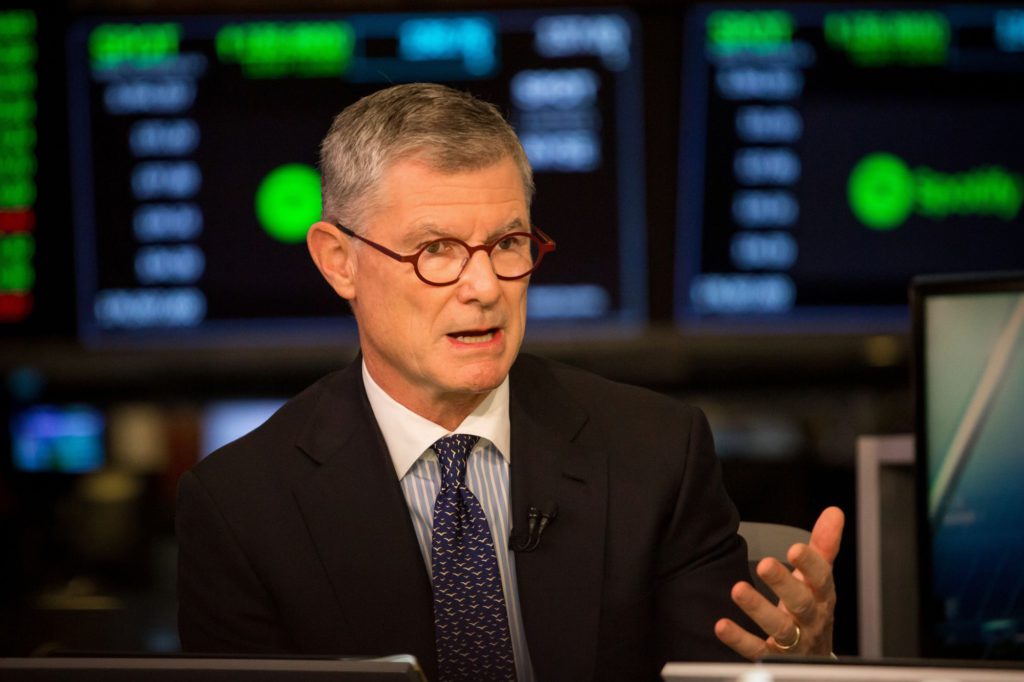
Peloton co-founder John Foley will step down as chief executive officer and become executive chairman, the company said, part of sweeping changes that include job cuts and the canceling of a proposed factory in Ohio. Barry McCarthy, former chief financial officer at Spotify Technology SA, will become CEO and president, effective Feb. 9. 

The stock surged 25% to $37.27 on the news, with investors betting that a leaner Peloton — under a new CEO — might be poised for a sale. The fitness company said Tuesday that it was open to offers, and many tech and media giants have been cited as possible suitors, including Amazon.com Inc. and Nike Inc. 

Peloton had been a highflier during the pandemic, when lockdowns sent customers scrambling to buy its stationary bikes and attend classes. With restrictions easing — and many fitness junkies returning to regular gyms — the company faced an investor backlash and had to retool its operations. Even after Tuesday’s gain, the stock has lost about three-quarters of its value over the past year.

As part of the cutbacks, Peloton plans to eliminate about 2,800 jobs globally, affecting around 20% of corporate positions. It’s scaling back its warehouse and delivery operations, and relying more on third-party providers. McCarthy will join the board of directors, and Peloton President William Lynch will become a nonexecutive director.

Activist investor Blackwells Capital LLC had campaigned for Foley’s departure, but the firm said Tuesday that the latest changes didn’t go far enough to address its concerns.

“Foley has proven he is not suited to lead Peloton, whether as CEO or executive chair, and he should not be hand-picking directors, as he appears to have done today,” Blackwells Capital Chief Investment Officer Jason Aintabi said in a statement.

Blackwells had published a presentation on Monday calling for the resignation of Chief Financial Officer Jill Woodworth and renewing demands for an immediate sale of the company. Blackwells said Peloton could fetch $75 a share in a sale to a strategic buyer such as Netflix Inc. or Spotify. That’s about twice its current share price, even with Tuesday’s run-up.

Blackwells, which has a stake of less than 5%, has decried Foley’s leadership, citing failed forecasting, inconsistent strategy and governance problems such as a lack of financial controls.

Foley, a former Barnes & Noble Inc. e-commerce executive and cycling enthusiast, founded the company after posting a video to Kickstarter in 2013. The company became an early pandemic darling with long waiting lists for its stationary bikes, but then suffered a series of missteps, including product recalls after reported accidents and a child’s death. The company’s public image also took a hit in December, when HBO Max’s “Sex and the City” reboot killed off a Peloton-riding character.

At the end of last week, Peloton was valued at just over $8 billion, based on Friday’s closing price of $24.60 a share. That’s below its September 2019 initial public offering price of $29.

Other key executives departed as part of the upheaval, including senior vice presidents in charge of hardware engineering and commercial equipment.

“I’m confident that Barry is the right leader to take the company into its next phase of growth,” Foley said in a statement. 

But the outlook is cloudy. Peloton lowered its forecasts for growth and subscribers, a sign it’s still struggling to predict demand as people gradually head back to the office. Managing Peloton’s supply chain has been a challenge as well. 

Peloton cut its expectations for full-year revenue to $3.7 billion to $3.8 billion from a previous forecast for as much as $4.8 billion. It expects to have 3 million connected fitness subscribers in the coming year, down from a previous estimate of as much as 3.45 million. Woodworth, the CFO, said that’s still up significantly from 700,000 subscribers the company had pre-Covid.

“We believe the opportunity is unchanged,” Woodworth said on a call with investors. “The fitness and wellness industry will continue to grow,” she said. 

The company will reduce capital expenditures by about $150 million this year and streamline its reporting structures. But Woodworth said it’s not paring back on marketing, which will be “critical to our success going forward.” The restructuring underway is expected to yield at least $800 million in annual savings, the company said.

Peloton reported an adjusted loss before interest, tax, depreciation and amortization of $266.5 million in the second quarter, compared with an average analyst estimate of a $288 million loss.

Analysts held mixed views on whether Foley’s departure as CEO will pave the way for a sale, or whether the cost cuts and restructuring will create a path to remain independent. 

“We are impressed and encouraged to see John Foley and the board add a highly experienced technology/media operator/investor in new CEO Barry McCarthy, and to commit to a sizable restructuring that we believe is needed,” Jonathan Komp, an analyst at Baird, said in a note to investors. 

Any chance for a sale will have to be vetted by Foley, who — along with other insiders — controls a majority of Peloton’s shares and will be key to deciding on a path for a potential deal. Still, his authority may have its limits, Wedbush analyst Dan Ives said in a note.

“While Foley has supermajority B shares and ultimately controls the fate of Peloton, we believe shareholder pressure will build to solicit bids and sell Peloton to a strategic player with potential bidders Apple, Amazon and Nike likely in the fold,” he said.

(Updates share reaction starting in third paragraph.)

More stories like this are available on bloomberg.com

©2022 Bloomberg L.P.

China Unicorns Facing IPO Freeze Tap $240 Billion Private Market

(Bloomberg) — China’s recent crackdowns on overseas listings have thrown a wrench in the works of startups looking to go public, driving them to pursue investors in Asia’s rapidly growing private capital markets. 

JPMorgan Chase & Co. estimates the fundraising amount in private capital markets for entrepreneurs in Asia surged to over $240 billion last year from about $100 billion in 2017, driven largely by Chinese firms.

For years, the private market for stakes in the hottest companies in Silicon Valley has pumped ever-increasing sums into startups, and more recently, investors such as Blackstone Inc. and Temasek Holdings Pte have swarmed toward China’s unicorns ahead of initial public offerings. Now sectors such as education and consumer technology have fallen under Beijing’s steely gaze, throwing IPO plans off course and sending cash-burning firms back to square one.

Read More: China Unveils Sweeping Rules for Foreign IPOs in Didi’s Wake

“A higher number of companies will be considering private markets as a potential fundraising avenue,” said Selina Cheung, co-head of Asia equity capital markets and head of private financing markets for Asia Pacific at UBS Group AG. “It’s getting more difficult to raise funds in the public market amid the regulatory headwinds and Sino-U.S. tensions.” 

Companies like ByteDance Ltd., which had been preparing for an IPO before the crackdown started, are not the only ones whose listing dreams are on hold. Last year’s global surge of listings has given way to a slump, as rising rates and market volatility cast a pall over high-growth companies. The situation is particularly acute in Hong Kong, which saw its worst January for IPOs in three years. Startups in Asia are hoping potential private backers will continue to focus on the opportunities for patient capital. 

“The private market provides a significant source of alpha for investors,” said Jonathan Paul, head of private capital markets for Asia Pacific at JPMorgan. They would prefer investing in startups earlier in their life cycle at a lower valuation and secure a stake in the company before they go public, he added. 

Backers Stepping Up

The availability of private funds in Asia has grown phenomenally compared with a few years ago. 

“The whole spectrum has changed,” Shubhomoy Biswas, head of equity private placement for Asia ex-Japan at Nomura Holdings Inc., said in an interview. “What was earlier largely limited to venture capital funds, is now seeing interest from a broader set of private equity funds, corporate investors, family offices and crossover investors.”

Firms such as Blackstone, PAG and TPG have stepped up in doing more pre-IPO or growth-stage investments in Asia, according to UBS’s Cheung.

Buyout firm PAG contributed the eyebrow-raising sum of about $2.8 billion to Dalian Wanda Group Co.’s commercial property management unit’s $6 billion pre-IPO funding round in Hong Kong, people with knowledge of the matter said.

Singapore state investor Temasek joined Genki Forest’s funding round last year, Bloomberg News reported in August. The Chinese beverage maker was valued before the investment at about $15 billion, people familiar with the matter said at the time.

Family offices and crossover investors are also keen to invest in pre-IPO rounds at a valuation discount to the expected public listing, JPMorgan’s Paul said. 

“We’re getting reverse inquiries from investors asking for access to some of these companies which are looking to do an IPO down the road.”

An early mover in the space, JPMorgan has had a special team for private capital markets for about six years and a dedicated Asia team for the past four. Nomura, UBS and wealth manager Julius Baer Group Ltd. are also among those staffing up in private markets.

Julius Baer set up a group to handle direct private investment about a year ago. It hired Giuseppe De Filippo, a veteran banker who worked at UBS for almost 15 years, to lead the initiative. The bank appointed Liang-chee Chong from HSBC Holdings Plc to build the business in Asia. 

“Of all the large family offices and wealthy individuals globally, direct investments into properties or companies represent more than 30% of their total asset allocation,” De Filippo, head of private investment markets at Julius Baer, said in an interview. 

Investing in private companies is an asset class in its own right, and the need for portfolio diversification will keep fueling its growth, De Filippo said.

More Opportunities

For private investors, Beijing’s tech clampdown may have increased the supply of promising companies by keeping them off the bourses for longer.

Driverless car startup Pony.ai, which had previously explored a plan to go public, is weighing a new funding round to raise $500 million to $1 billion, to finance its expansion, Bloomberg News reported in August.

The firm may have to rely on private funding for a few more years before it qualifies for an IPO in Hong Kong, a person familiar with the matter had said. 

Venture capital’s appetite for China tech has shifted in line with perceived national priorities, with backers shunning some internet businesses and pivoting instead to subsectors such as semiconductors and robotics. ByteDance is making a bigger push into enterprise software, another favored area. 

Read More: China Venture Funding Hits Record $131 Billion Despite Crackdown

The consumer sector is also a beneficiary of the crackdown, with firms making everything from cosmetics to bubble tea raising funds to become the next domestic giants. Genki Forest, alcohol delivery company Jiuxiaoer and second-hand marketplace Zhuanzhuan are among those tapping private investors in recent months.

While Chinese startups have been dominating the private fundraising universe, its counterparts in India and Southeast Asia are catching up. Indonesia’s GoTo Group raised more than $1.3 billion in a pre-IPO funding round in November from investors including Abu Dhabi Investment Authority and Temasek.  

“Public markets used to be where investors invested their money routinely but there are more opportunities in the private markets now,” Julius Baer’s De Filippo said.

More stories like this are available on bloomberg.com

©2022 Bloomberg L.P.

Close Bitnami banner
Bitnami