
Bloomberg

Biden to Announce EV Charger Plant Will Be Built in Tennessee

(Bloomberg) — President Joe Biden and Tritium DCFC Ltd. Chief Executive Officer Jane Hunter will announce Tuesday that the Australian electric vehicle charging company is planning to build its first U.S. manufacturing facility in Tennessee.

The facility in Lebanon, east of Nashville, is expected to produce as many as 30,000 electric vehicle chargers annually and create 500 jobs, the White House said.

Hunter said her company decided to invest more heavily in its American operations after seeing demand surge following the passage of the Biden administration’s infrastructure law last year. That eventually accelerated both plans to open a North American plant as well as expectations for how many chargers could be produced annually. 

The company listed on the Nasdaq exchange in January and plans to move some senior executive positions to the U.S. as part of its expanding focus.

“That was a really big step change for the company and we see that North American market getting even bigger again next year, potentially even taking over what’s traditionally been for us, in Europe, our major revenue source,” Hunter said in an interview.

Tritium evaluated a number of potential factory sites, including Texas, before ultimately deciding on Tennessee because of a combination of tax incentives, logistics advantages, and labor availability in that state, the company said. Many of the workers at the factory would only need a few weeks of training to begin building the chargers, Hunter added.

“It’s an announcement about manufacturing and what the Biden administration’s legislation has done to draw companies into the country, grow jobs onshore, grow manufacturing onshore, and I think it’s just a lovely example of that,” she said.

The White House has said its goal is to build a national network of at least half a million electric vehicle charging stations by the end of the decade. The infrastructure law includes $65 billion for upgrades to the nation’s electrical grid, $7 billion earmarked to bolster the supply chain for electric vehicles, and $7.5 billion specifically earmarked for charging stations.

The first $5 billion tranche of charging station funding is expected to be distributed over the next five days, with Transportation Secretary Pete Buttigieg and Energy Secretary Jennifer Granholm set to announce later this week how much each state will receive under the program. The federal government plans to designate corridors along the interstate highway system where drivers could be assured they would have access to charging stations.

If completed, the build-out would represent a significant increase in available chargers, which automobile companies hope will ease the anxiety expressed by consumers who are reluctant to give up on the convenience offered by gas-powered vehicles. The Department of Energy estimates that there are now about 122,000 electric vehicle chargers at around 48,000 locations nationwide.

The Tritium factory is the latest in a string of manufacturing facilities Biden has highlighted in recent weeks as he’s sought to revive his political standing. Late last month, he appeared alongside Intel Corp. CEO Pat Gelsinger to celebrate the chipmaker’s decision to establish a $20 billion semiconductor factory in Ohio.

More stories like this are available on bloomberg.com

©2022 Bloomberg L.P.
Ocado Plunges as Costly Push for Online Growth Falls Short

(Bloomberg) —

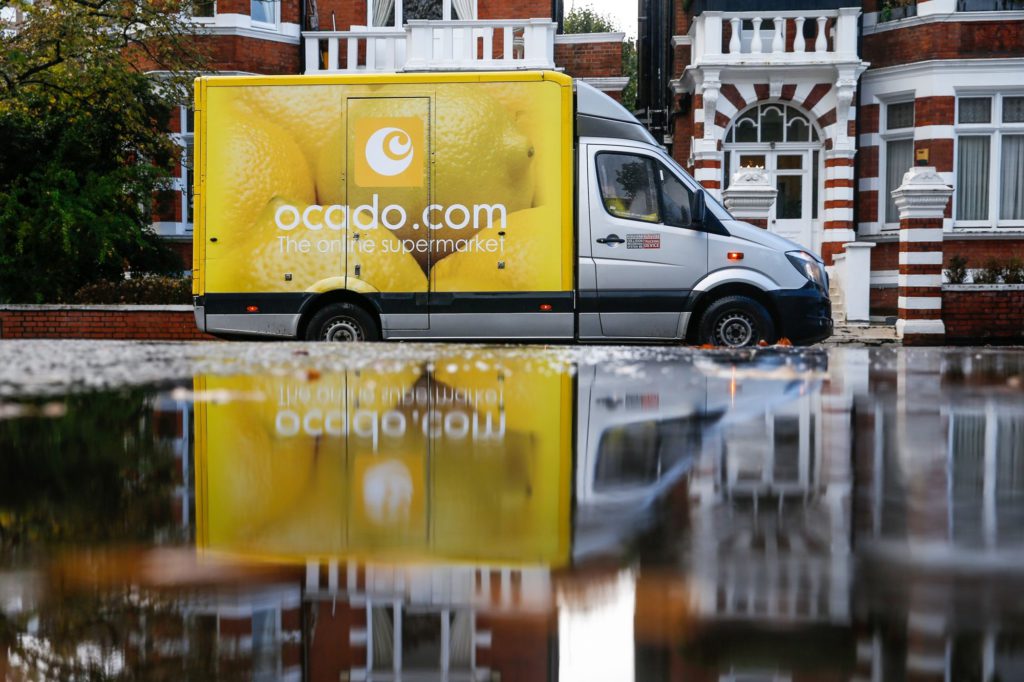
Ocado Group Plc shares plunged on concern that the unprofitable online grocery company keeps increasing spending even as sales growth is held back by labor shortages and rising competition.

Ocado said it will boost its capital expenditure to 800 million pounds ($1.1 billion) this year, up about 18% from 2021, to meet the growth of its solutions business, which helps other retailers automate their online operations. The stock fell as much as 10% Tuesday, reaching its lowest level since April 2020.

Ocado bills its robotic warehouse technology as the answer to online grocery. However, it’s failing to benefit from the biggest grocery e-commerce bonanza after the pandemic spurred many consumers to try ordering food via online for the first time. Ocado’s pretax loss more than tripled last year.

The guidance is “horrendous,” wrote Clive Black, an analyst at Shore Capital. Competition has ramped up, which “leads to a smaller pot of gold should the end of the rainbow ever be reached.”

Ocado both sells groceries in an online U.K. venture with Marks & Spencer Group Plc and also has contracts to operate e-commerce for third parties abroad. The company’s capital spending exceeds that of all other European retailers as a percentage of sales, according to Bloomberg Intelligence analyst Charles Allen.

Revenue rose 7.2% last year, which Black noted is low for a technology company. Ocado’s shares have lost half their value in the past year even as e-commerce boomed.

“We’re a growth business,” Chief Executive Officer Tim Steiner said on a call with reporters. “We see a big runway ahead of us. We’re in the very early stages of that and we will continue to invest where it makes sense.”

Ocado has struggled with capacity since the start of the pandemic, having to temporarily close its website in March 2020 because it was deluged with orders. A fire in a warehouse in July slowed sales growth at its joint venture with Marks & Spencer, and labor shortages in the U.K. also posed an obstacle. 

Short-sellers have increasingly been targeting the company, betting against about 10% of Ocado’s freely traded shares, the highest level in a year and a half, according to data from Markit Securities.

The company signaled that profitability from its U.K. venture with Marks & Spencer will be lower, though it said the margin should “rebuild” towards last year’s level.

Investors have been awaiting news of further contracts to help run automated warehouses for clients such as Kroger Co. Ocado said it’s in talks to add more clients, though any new contracts will weigh on profitability at first.

The company forecast higher sales this year, helped by expected mid-teens growth at its venture with Marks & Spencer. Ocado also said it expects a doubling of international fees from retailers that use its technology to run their online businesses.

Separately, Ocado had 29 million pounds in legal fees related to an ongoing patent dispute with Norwegian rival AutoStore Holdings Ltd. over warehouse technology.


(Updates with analyst comment in fourth paragraph)

More stories like this are available on bloomberg.com

©2022 Bloomberg L.P.
Nissan Raises Profit Outlook on High Car Prices, Weaker Yen

(Bloomberg) — Nissan Motor Co. upgraded its annual profit outlook as strong demand and rising car prices help offset chip shortage-related production losses. 

The Japanese automaker raised its forecast to an operating profit of 210 billion yen ($1.8 billion) for the fiscal year ending March 31, up from 180 billion yen announced in November and exceeding analysts’ average projection for 202 billion yen. For the October-December quarter, profit topped their prediction at 52 billion yen.

The brighter forecast highlights how robust demand and sky-high car prices are bolstering automakers’ profitability across the board. Those factors are also a tailwind for the Japanese automaker’s revival strategy which targets new model rollouts and reducing incentives to boost margins.

Nissan’s performance in the latest quarter was better than anticipated despite Covid and supply issues, Chief Operating Officer Ashwani Gupta said in a online briefing Tuesday. The company moved to upgrade its profit forecast for the year due to favorable exchange rates and profit margins on cars, in addition to lower-than-expected raw material prices and progress the company’s made with cutting costs, he said.

Net revenue per unit brought in by models such as the Rogue SUV in the U.S. increased by double digits in the recently-ended quarter from a year earlier, Gupta said. Demand is strong, he said, adding the important factor going forward is how many cars Nissan can produce. “The more semiconductors we get, more and more we can grow,” he said.

Nissan took heavy hits to production in the latest quarter, with global output declining 22% from a year earlier. Unit sales also dipped, falling 18% from a year ago, when the market was surging back from the first wave of pandemic lockdowns. Even so, the automaker kept its forecast to sell 3.8 million vehicles for the current fiscal year. 

“We are confident we’ll hit 3.8 million retail sales,” Gupta said, adding though that the situation surrounding chips and the spread of the omicron variant needs to be continuously monitored on a daily basis going forward.

In the near-term, depressed output hinders Nissan’s ability to capitalize on demand for cars, which has recovered swiftly this year in major markets such as the U.S. In the longer term, if the chip shortage and other pandemic-related disruptions drag on, this could push back Nissan’s broader recovery.

Bloomberg Intelligence anticipates Nissan’s full-fledged recovery to be delayed to the first quarter of next fiscal year beginning April — a point at which production is forecast to normalize.

Chief Executive Officer Makoto Uchida said in an interview with Bloomberg Television last month that while the chip shortage situation remains uncertain, Nissan’s production is “on a recovery track.” In the months ahead, Covid continues to present a major threat, but “we are expecting the market to recover overall,” Uchida said. 

“When you look at factors of revenue and profit-generation, Nissan is improving, or at least heading in the right direction,” said Satoru Aoyama, a senior director at Fitch Ratings, adding though that the fruits of those efforts are not fully revealed quite yet in consolidated results.

Nissan shares fell 1% on Tuesday ahead of the results. The stock is up 6.7% this year, after falling each of the past six years.

(Updates with COO comments, context throughout.)

More stories like this are available on bloomberg.com

©2022 Bloomberg L.P.
SoftBank Plans to Take Arm Public After Nvidia Abandons Deal

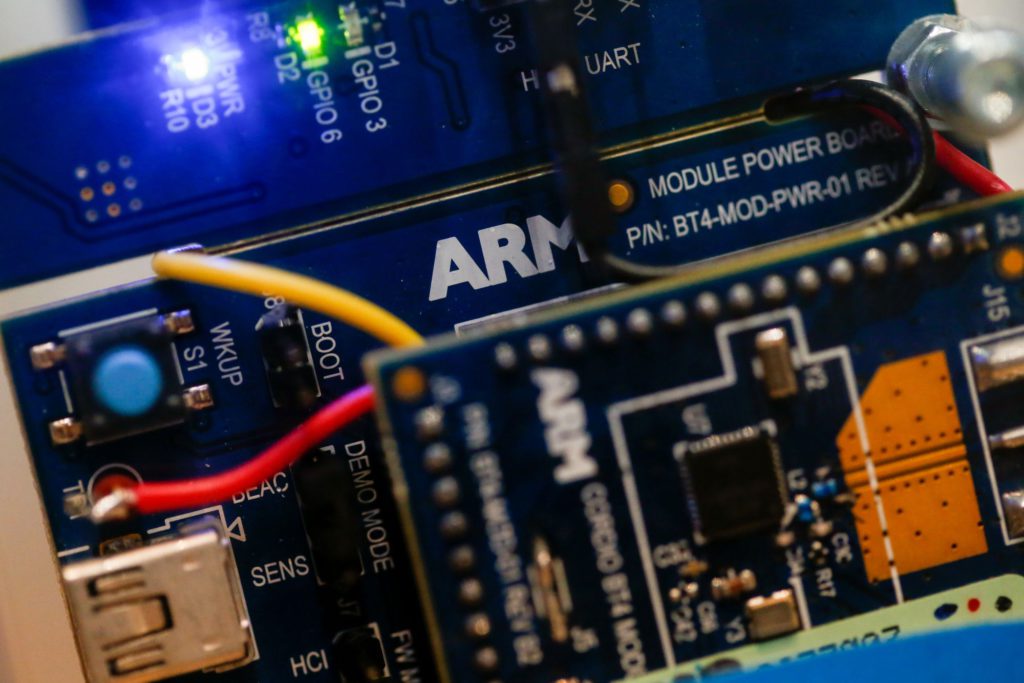
(Bloomberg) — SoftBank Group Corp. said it plans an initial public offering for Arm Ltd. after Nvidia Corp. abandoned a proposed acquisition of the chip designer in the face of fierce opposition from regulators and customers.

The Japanese company said it’s aiming for an IPO in the U.S. in the fiscal year ending in March 2023. In addition, Arm President Rene Haas is taking over the chief executive officer role from Simon Segars, who resigned. 

The Arm sale’s collapse is the latest challenge for SoftBank founder Masayoshi Son, who has been buffeted by a downturn in the technology market. The Japanese billionaire, after investing aggressively in startups, has seen the value of public holdings such as Didi Global Inc. and DoorDash Inc. tumble. SoftBank’s own shares have dropped 50% from their peak in March of last year.

Son had said in November the company was struggling through a “blizzard” that would soon clear up. It hasn’t.

“The storm has not ended,” he said in a press conference in Tokyo after results. “In fact, the storm got stronger in the U.S. and other countries.”

The net value of SoftBank’s assets — Son’s preferred measure of judging SoftBank’s performance — fell to $168 billion at the end of December, down from $187 billion three months earlier. That helped push its closely watched loan-to-value ratio to 22%, the highest it’s been since about 2018.

SoftBank’s Vision Fund did return to profitability for the quarter ended in December, earning 109 billion yen ($940 million) in the three months ended Dec. 31. That follows a record 825.1 billion yen loss in the fiscal second quarter.

The value of SoftBank’s stakes in new listings like SenseTime Group Inc. and One 97 Communications Ltd. helped mitigate the blow from declines in other holdings.

“SenseTime certainly helped the quarter although it looks like there are also unrealized gains in private investments that helped the VF to a positive result,” said Kirk Boodry, an analyst at Redex Research who publishes on Smartkarma.

The Vision Fund has been a volatile contributor of profit and loss since its creation in 2017. The unit once generated record profits from blockbuster listings by South Korean e-commerce giant Coupang Inc. and Chinese online property platform KE Holdings Inc. 

SoftBank is also grappling with the departure of Chief Operating Officer Marcelo Claure following a clash over compensation with Son. Michel Combes will take over Claure’s responsibility for SoftBank Group International and oversee SBGI’s operating and investment portfolio, the company said last month.  

A key part of Son’s troubles is a high exposure to Chinese companies, starting with Alibaba Group Holding Ltd. — the e-commerce leader at the heart of Beijing’s crackdown on the internet sector’s biggest players. In his press conference, Son said Alibaba was the biggest hit in the latest quarter. 

While Son has been emphasizing that the proportion of these firms have been reduced significantly in recent quarters, they haven’t been enough to ease investor concerns. China investments accounted for about 18% of the Vision Fund’s portfolio, Son said.

SoftBank’s shares have slid about 2% this year after a 33% drop in 2021, its worst such performance since 2006.

Nvidia announced the proposed acquisition of Arm in September 2020, aiming to take control of chip technology that’s used in everything from phones to factory equipment. But the $40 billion transaction faced opposition from the start. Arm’s own customers scorned the idea, and regulators vowed to give it close scrutiny.

The purchase was dealt its most severe blow when the U.S. Federal Trade Commission sued to block it in December, arguing that Nvidia would gain too much control over chip designs used by the world’s biggest technology companies. The agreement also needed approval in the European Union and China, as well as the U.K., where Arm is based — none of which appeared poised to clear the transaction. 

Arm’s value has always been its neutrality, something that SoftBank, which doesn’t compete with any of the technology’s customers, was able to maintain. When Nvidia announced the deal, concerns grew that either its value would be destroyed by the change in ownership or opposition would scuttle its chances of getting signoff from governments around the world.

The two sides agreed to terminate the deal because of “significant regulatory challenges preventing the consummation of the transaction, despite good faith efforts by the parties,” SoftBank said in a statement.

With the deal’s termination, SoftBank will keep a $1.25 billion breakup fee.

Son voiced optimism about the prospects for the Arm IPO. He began his Tokyo presentation by reciting the company’s accomplishments, including the shipment of 220 billion Arm-based chips.

He said he expects Arm’s debut to be “the biggest” in the history of the semiconductor industry.

Haas, the company’s incoming CEO, also spoke by video on the call, explaining that Arm’s technology is becoming more widely adopted. 

“We are now becoming the de facto standard in cars,” he said. “Some have 10 to 20 chips, some even have as many as 30 to 40 chips.”

(Updates with Arm CEO comments in last two paragraphs. A previous version of this story corrected currency for NAV and China’s proportion in the sixth paragraph)

More stories like this are available on bloomberg.com

©2022 Bloomberg L.P.

Thailand’s Central Retail to Invest $3 Billion to Double Revenue

(Bloomberg) — Thailand’s Central Retail Corp. plans to invest 100 billion baht ($3 billion) over the next five years in a bid to become a top Asian retailer and more than double its revenue and profit.

The new investment will help Central Retail grow its revenue by 2.5 times, earnings before interest, taxes, depreciation and amortization by 3.5 times, and propel its market capitalization by 2.5 times by 2026, according to Chief Executive Officer Yol Phokasub. Thailand’s largest retailer will invest in new digital technologies to expand omnichannel platforms in all its business segments and scout for acquisitions, he said.

Central Retail is controlled by the Chirathivat family, which owns a host of industries from real estate and retailing to hospitality and restaurants. The Central Group in December agreed to buy British department store operator, Selfridges in a joint venture with Austria’s Signa Holding for $5.4 billion, expanding the group’s overseas portfolio.

Digital technology will play a greater role in Central Retail’s new growth strategy after it saw online sales boom during the pandemic, Yol said. “By delivering experiences that merge online and offline worlds” Central Retail expects to boost the business of its more than 3,600 branded stores, he said.

“We have already surpassed pre-Covid sales in 2021, and this is without tourists. Once tourists return, any sales we make will only be a bonus,” Yol said, adding the company will look to leverage new technologies across all its businesses in Thailand, Vietnam and Italy to boost sales. 

Shares of Central Retail have rallied almost 16% this year on expectations that easing Thai Covid restrictions and reopening of borders to foreign tourists will help it return to profit. The company reported a net loss of 2.3 billion baht for the nine months ended Sept. 30, more than double from a year earlier. It’s yet to report full-year earnings for last year.   

More stories like this are available on bloomberg.com

©2022 Bloomberg L.P.

CPE-Backed Hotwon Seeking Funds at $1.5 Billion Valuation, Sources Say

(Bloomberg) — Hotwon Group, a closely held Chinese data-center developer, is looking to raise about $300 million in fresh funding to help fuel expansion across the country, according to people familiar with the matter.

The private round may help boost Hotwon’s valuation to about $1.5 billion, the people said, asking not to be identified because the information is private. The company is working with financial advisers to sound out prospective investors, the people said.

Considerations are still ongoing, no final decision has been made and details such as the fundraising size could change, the people said. Representatives for Hotwon didn’t immediately respond to a request for comment.

Digital infrastructure assets such as data centers help support everything from video streaming to online gaming, both of which have surged in popularity during the pandemic. Other firms seeking to raise funds amid increasing investor demand include Singapore-based investment manager GLP Pte, which is considering raising about $500 million for its Chinese data centers in exchange for a minority stake in the platform, Bloomberg News has reported.

Chinese investment managers DCP Capital Partners and CPE co-led a $300 million equity investment round in Hotwon in 2020 to help fund the company’s pipeline of data centers in China, according to DCP’s website. 

Hotwon was founded in 2015 as a cloud computing infrastructure provider focused on designing, building and operating data centers, according to a statement on DCP’s website. Its customers include other cloud, internet and financial firms as well as government enterprises.

More stories like this are available on bloomberg.com

©2022 Bloomberg L.P.

H.K. Limits Gatherings, Food Supplies Get Squeezed: Virus Update

(Bloomberg) — Hong Kong is extending gathering limits to private premises for the first time in an attempt to keep residents from socializing as it fights an unprecedented outbreak.

Authorities are turning to increasingly strict measures, using a Covid Zero strategy that’s been abandoned in much of the rest of the world. Hong Kong residents are also facing a shortage of fresh food and rising prices as controls in mainland China leave truck drivers unable to enter the city.

Canadian Prime Minister Justin Trudeau criticized a trucker protest paralyzing Ottawa, saying demonstrators denouncing restrictions are hobbling commerce and trying to undermine democracy. Protesters shut the Ambassador Bridge, a key road link between the U.S. and Canada.

Key Developments:

  • Virus Tracker: Cases top 397 million; deaths pass 5.7 million
  • Vaccine Tracker: More than 10.2 billion shots administered
  • Hong Kong Food Prices Soar as Covid Curbs Trigger Panic Buying
  • Goldman’s five-day office week is the aberration now
  • Covid rebellion brews in Canada, sending warning across globe
  • Is Covid becoming endemic? What would that mean?: QuickTake

China Sees Omicron Outbreak Spreading (3:53 p.m. HK)

An omicron outbreak in the city of Baise may further spread in Guangxi province and Guangzhou city in Guangdong, an official at the National Health Commission said. A flareup in the northeastern border town of Heihe also risks spreading further. 

An earlier Covid outbreak in Beijing and Tianjin are under control, however, according to the authorities.

Hong Kong Tightens Restrictions (3:52 p.m. HK)  

Multi-household gatherings on private premises will be limited to two families, Hong Kong Chief Executive Carrie Lam said on Tuesday.

The city will also limit public gatherings to two people, down from four currently, and expand the list of venues included in its vaccine mandate to shopping malls, food markets and hair salons.

Lam said she would stick to a Covid Zero strategy, while indicating the city would steer clear of implementing a mainland China-style lockdown. 

Sweden to Scrap Most Measures (3:46 p.m. HK)

Sweden’s government is not planning to extend the majority of current Covid-measures further, with most restrictions set to be lifted from Feb. 9, Finance Minister Mikael Damberg said. 

It’s time to return to “normality,” the minister said, adding that support measures for companies are to stay in place through February.

New Zealand Protesters Mimic Ottawa (12:45 p.m. HK) 

A convoy of cars and campervans blocked streets around New Zealand’s parliament in Wellington on Tuesday to protest Covid-19 restrictions, attempting to mimic the truckers who have gridlocked the Canadian city of Ottawa.

About 2,000 protesters descended on downtown Wellington from around the country, parking their vehicles in streets around parliament buildings, disrupting traffic and holding speeches on parliament grounds.

Prime Minister Jacinda Ardern said she had no intention of engaging with the protesters. “I think it would be wrong to in any way characterize what we’ve seen outside as a representation of the majority,” she told reporters inside parliament. 

Protesters Close Key Canada-U.S. Bridge (11:30 a.m. HK) 

Protests against vaccine mandates and Covid-19 restrictions have temporarily closed the Ambassador Bridge, the busiest land connection for trade between the U.S. and Canada. 

The bridge, the largest crossing point between Detroit and Windsor, Ontario, is closed in both directions, according to a Canadian government website.

Trudeau Criticizes Trucker Protest (9:15 a.m. HK)

Canadian Prime Minister Justin Trudeau slammed protesting truck drivers for “trying to blockade our economy, our democracy and our fellow citizens’ daily lives.” Police have so far not been able to contain the demonstrations, and the city of Ottawa has declared a state of emergency. The protesters say they won’t leave until all Covid health restrictions are dropped.

Trudeau, speaking on the floor of the legislature for the first time since the crisis began, also used the protest to criticize the rival Conservative Party. He dismissed the opposition’s contention that the columns of big rigs parked along major thoroughfares in Ottawa are emblematic of a country bitterly divided over the pandemic.

“This is a story of a country that got through this pandemic by being united, and the few people shouting and waving swastikas does not define who Canadians are,” Trudeau said, referring to images from the initial days of the protest two weekends ago showing signs and flags adorned with Nazi symbols.

More stories like this are available on bloomberg.com

©2022 Bloomberg L.P.

Activist Investor Coast Capital Builds Stake in Vodafone

(Bloomberg) — Coast Capital has built up a stake in Vodafone Group Plc, becoming at least the second activist investor to bet on the British telecommunications carrier in recent months. 

The investment firm has amassed a holding in Vodafone and is still adding to its position, Coast Capital founding partner James Rasteh said in an interview Monday. Coast Capital backs the strategy of Vodafone’s top executives but is critical of regulatory moves that have crimped the company’s profits in some areas, he said. 

“We’ve built an important position in Vodafone after conducting detailed work with leading operators in the sector,” Rasteh said. “We are long-term supportive of the management, but we have made it clear to the regulators that their overreach has been destructive and is going to dissuade institutional investors from investing in the sector.”

The latest interest in Vodafone comes as fellow activist investors — impatient for returns — increasingly target some of the U.K.’s largest companies. Those under the spotlight now include Unilever Plc, GlaxoSmithKline Plc and Shell Plc.

In January, Bloomberg News reported that Cevian Capital AB had built a stake in Vodafone and was speaking to company officials about improving its performance. Options to boost value at Vodafone could include consolidating its presence in key markets, selling some operations or pursuing stock buybacks. Iliad SA, the French carrier backed by telecom billionaire Xavier Niel, has made an offer for Vodafone’s Italian unit, people familiar with the matter said on Monday.

Coast Capital has previously taken stakes in U.K. companies like automation software Blue Prism Group Plc, where it spoke out against Vista Equity Partners’ aborted takeover bid. It also previously ran a campaign at FirstGroup Plc, pushing for a divestment of the bus operator’s U.S. business and later criticizing the way the sale process was run. 

Shares of Vodafone have risen 22% in London trading this year, giving the company a market value of about 37 billion pounds ($50 billion). 

A representative for Vodafone couldn’t immediately comment. A spokesperson for U.K. telecom watchdog Ofcom said it has a long track record of supporting investment and protecting consumers. 

Last year, Ofcom confirmed its approach for regulating the wholesale fixed-line market, which it said “unlocked billions of pounds of investment” for homes to get faster connections. Ofcom will soon set out its proposal for wireless markets, with “supporting investment and innovation a central part of our strategy,” it said in a statement Monday.

(Adds detail on Iliad offer in fifth paragraph.)

More stories like this are available on bloomberg.com

©2022 Bloomberg L.P.

Wuxi Biologics Halted After U.S. Unverified List Sparks Selloff

(Bloomberg) — Wuxi Biologics Cayman Inc. shares were suspended in Hong Kong Tuesday after its inclusion to the U.S. government’s unverified list sparked a record selloff and prompted fears of a fresh hit to Sino-American relations.

The Chinese biotech giant’s stock sank as much as 32% in Hong Kong before the halt, dragging down health-care stocks and the broader equities benchmark. The CSI 300 Health Care Index dropped 1.3% to close at its lowest in nearly two years. 

While Wuxi Biologics said it’s in compliance with all U.S. export control regulations, the Commerce Department stated in a Feb. 8 notice that it hasn’t been able to verify how items will be used by the firm. Other Chinese additions to the list included Guangdong Guanghua Sci-Tech Co. and Zhuzhou CRRC Special Equipment Technology Co.

The list comes as trade tensions are once again on the rise, with American officials expressing frustration that China hasn’t made progress on its commitments in recent months. Wuxi Biologics was also in the cross-hairs of traders in December when there was speculation the firm could face tougher U.S. sanctions. 

“I think U.S. lists and sanction are just something Chinese firms will need to learn to live with in the future if they intend to do business with the U.S.,” said Wu Xian Feng, a fund manager at Shenzhen Longteng Assets Management Co.. “But as an investor, I only need to worry about each firm’s competitive edge. If it’s hard to seek a substitute for their goods or services, the impact can be mitigated.”

The Bureau of Industry and Security, a division of the U.S. Department of Commerce, added 33 entities in total to its unverified list. While firms on the list aren’t barred from doing business in the U.S., they may need additional licenses to buy products from American entities. 

Wuxi Biologics said the list has “no impact on our business or ongoing services to global partners,” according to a statement on its official Wechat account. It added that the unverified list is different from the “entity list” or so-called blacklist.  

Changes to a range of U.S. lists on Chinese firms requiring special checks have tended to cause volatility in shares amid heightened trade tensions between the two countries. In 2019, the Commerce removed LED chipmaker Sanan Optoelectronics Co. along with seven other Chinese firms from the unverified list, triggering a jump in shares.  

“I believe this would impact the sentiment for Wuxi Biologics and the talk could last a while,” said Mia He, a analyst for Bloomberg Intelligence. “We haven’t identified how much materials are imported from U.S. in their production thus how much impact would have is difficult to gauge currently.”

(Updates with latest market prices.)

More stories like this are available on bloomberg.com

©2022 Bloomberg L.P.

Gay Hookup App Grindr Tightens Privacy for Beijing Olympians

(Bloomberg) — Grindr, the gay hookup app, has adjusted its privacy settings for the Beijing Olympics Village, a move it says is designed to protect the world’s top athletes from persecution or harassment.

People in or near the Olympic Village will be able to use Grindr to find each other during the games, but in a change from past Olympics, their profiles won’t be visible worldwide. 

“We want Grindr to be a space where all queer athletes, regardless of where they’re from, feel confident connecting with one another while they’re in the Olympic Village,” said Jack Harrison-Quintana, director of Grindr for Equality, a department of the company.

Ordinarily, Grindr users anywhere could use the “Explore” function to find Olympics participants using the app, and during past games, people from outside used the feature to out athletes on social media and, in one case, in a mainstream American news outlet. 

It’s the first time the company has done this for an Olympic games, though Grindr has disabled the “Explore” function for certain countries and regions where being gay is illegal or considered risky. China decriminalized homosexuality in 1997, but there’s little protection for LGBTQ people or recognition of queer communities. 

During the 2022 Olympics, Grindr users in and near the Olympic bubble will receive an on-screen alert that says: “Your privacy is important to us. Our Explore feature has been disabled in the Olympic Village so that people outside your immediate area can’t browse here.” It’s still possible to find users “nearby” or searching recently added profiles.

In 2020, the Chinese owner of Grindr, Beijing Kunlun Tech Co., sold the app to investors for about $600 million, after U.S. regulators required the divestment on national security grounds. Last week Grindr removed its app from Apple Inc.’s App Store, in China, citing difficulties keeping it in compliance with the country’s Personal Information Protection Law.

Headquartered in Los Angeles, Grindr says it has more than 10 million users globally.

More stories like this are available on bloomberg.com

©2022 Bloomberg L.P.

Close Bitnami banner
Bitnami