Bloomberg

Tesla Warns of Possible California Suit Over Race Harassment

(Bloomberg) — Tesla Inc. said a California agency informed the electric automaker that it has grounds for a civil complaint, following an investigation into racial harassment.

The California Department of Fair Employment and Housing issued a so-called notice of cause finding and mandatory dispute resolution to Tesla on Jan. 3, the company said Monday in a regulatory filing. The investigation involved “undisclosed allegations of race discrimination and harassment at unspecified Tesla locations.”

Tesla has faced numerous complaints and lawsuits from former workers at its auto plant in Fremont, California, about racial discrimination and sexual harassment in recent years. Many complaints never make it to court because Tesla’s full-time employees sign agreements requiring workplace disputes to be handled in closed-door arbitration. 

In October, one former worker was awarded $137 million by a federal jury in San Francisco — the largest such verdict of its kind. Tesla is now appealing the size of the award.

“It’s a very positive development that the DFEH has made this finding and is willing to pursue a civil case if they can’t reach a resolution with Tesla,” said Larry Organ, a Bay Area civil rights attorney who represents several former Black employees and contract workers.

Related: Tesla like a ‘plantation,’ says lawyer who won cases for workers

Tesla’s acting general counsel didn’t respond to a request for comment. The California fair-employment agency also didn’t respond.

The California DFEH filed a lawsuit against video game developer Activision Blizzard Inc. in July for promoting a culture of “constant sexual harassment.” The department also reached a settlement with Riot Games over sexual harassment and discrimination claims. 

Since 2014, workers have filed over 100 complaints with the DFEH alleging discrimination at Tesla on the basis of race, age, gender, disability, medical leave, pregnancy, sexual orientation or national origin, according to a synopsis provided by the agency after a California Public Records Act request. The state shares jurisdiction with the federal Equal Employment Opportunity Commission over such cases.

See also: Tesla subpoenaed by SEC about complying with Musk settlement

A notice of cause finding from the DFEH signals that the agency believes an employer has violated the California Fair Employment and Housing Act, said Catherine Fisk, a law professor at University of California, Berkeley. “It is a warning that the agency intends to sue the company unless the matter can be settled out of court.”

Tesla’s shares were little changed at 3:18 p.m. in New York.

(Updates with attorney comments, additional details beginning in fourth paragraph)

More stories like this are available on bloomberg.com

©2022 Bloomberg L.P.

Astra Space Falls After Debut Commercial Rocket Launch Aborted

(Bloomberg) — Astra Space Inc. shares tumbled after the company’s debut launch for customers was aborted at the last second, ultimately leading it to cancel Monday’s attempt to send satellites into space.

The initial halt was triggered automatically by onboard systems before the rocket left the launchpad, the National Aeronautics and Space Administration said Monday in a blog post. 

The company in a tweet said it was “standing down today due to a minor telemetry issue.” It will provide an update on the next launch opportunity soon, Astra added. 

The launch provider, based in Alameda, California, was attempting to send four “cubesats” into space for three universities and NASA. Cubesats are small satellites that typically weigh less than three pounds.

Astra’s shares sank further after the launch was called off. The stock fell as much as 19%, and was down 13% at 3:30 p.m. in New York.

(Adds details in first and second paragraphs, Astra comments in third. Updates stock move throughout.)

More stories like this are available on bloomberg.com

©2022 Bloomberg L.P.

Hong Kong Banks Close Branches, Australia Reopens: Virus Update

(Bloomberg) — HSBC Bank Plc and other banks closed retail branches in Hong Kong as the Covid outbreak there grows. The city reported a record of over 600 infections, putting pressure on the government to ramp up restrictions. Australia will allow double-vaccinated visa holders to enter the country from Feb. 21, ending about two years …

Hong Kong Banks Close Branches, Australia Reopens: Virus Update Read More »

Explosive ‘Fight Club’ Ending Restored in China After Public Ire

(Bloomberg) — Tencent Video subscribers in China can now watch the unabridged version of 1999’s “Fight Club,” after a social media furor erupted over a censored version that replaced its original ending with a line of on-screen text declaring all criminals were brought to justice. The movie’s original denouement is marked by a series of …

Explosive ‘Fight Club’ Ending Restored in China After Public Ire Read More »

Chinese Firms Pay Women’s Soccer Team Millions After Cup Victory

(Bloomberg) — Chinese companies are rewarding the nation’s women’s soccer team with cash payouts totaling some $3.6 million for an exciting championship victory that for a short time at least is overshadowing the Winter Olympics in the Asian nation. Ant Group Co.’s Alipay said on social media it was giving the players 10 million yuan …

Chinese Firms Pay Women’s Soccer Team Millions After Cup Victory Read More »

America’s Bitcoin Miners Have Georgia on Their Minds

(Bloomberg) — When Bitcoin miner CleanSpark Inc. bought a data center in the Atlanta suburb of College Park, the company had a problem: It wanted to switch to a cheaper, greener power provider but Georgia law wouldn’t let them. Enter the head of the state’s power board, who stepped in last year and approved a plan under which the old data center would continue buying power from a big utility, while 15,000 mining machines on the same piece of land would be allowed to buy cleaner power sold by a non-profit generation organization at about half the price. 

“At the end of the day, Georgia wants this business here,” Matt Schultz, CleanSpark’s executive chairman, said in an interview. “They’ve done everything in their power to grow Bitcoin in the state.”

The U.S. has become the world’s top destination for crypto miners after China banned the energy-intensive industry and as Russia considers doing the same. Now hundreds of thousands of mining machines worth billions of dollars are plugging into electrical grids across America, spawning an entirely new industry — complete with new tax revenue for local governments and big profits for many miners as well as concerns about power use and environmental impact. Some states are working to attract miners while others have taken a more cautious approach, or even pulled up the welcome mat entirely.

Among states that are welcoming the business, Georgia has emerged as a go-to for miners, according to Foundry, a cryptocurrency company that also operates Foundry USA, the world’s biggest mining pool. Miners in the state were responsible for more than 34% of the computing power in the pool as of Jan. 31, almost double its share since last year’s  third quarter.

Georgia is attracting miners with its relatively low power prices and large amount of nuclear and solar power, which allows mining companies to brand themselves as sustainable or emissions-free. Regulators in the state have also built a reputation for being friendly to miners, guiding miners toward a solar program that allows companies to offset their emissions with renewable energy credits, and giving them access to day-ahead power prices so miners have enough time to throttle back their operations when rates are set to spike. All of this helps explain why a consortium of crypto companies including Bitmain Technologies Ltd. said in September they were bringing another 56,000 miners to the state. 

Other states with the largest mining operations in Foundry’s pool are Kentucky with more than 12%, followed by New York, Texas, Nebraska and North Carolina. Foundry has about 17% of Bitcoin’s global computing power, so its figures don’t represent all U.S. miners. For example, some big Texas miners aren’t in the Foundry pool so the numbers understate that state’s share. Still, the data does provide a partial view of where miners are flocking — or where they’re avoiding, as the case may be: New York state has seen its share fall from about 20% to under 10% in the same period.

Bitcoin miners are made up of thousands of computers that run complex calculations to maintain the cryptocurrency’s network, with successful miners rewarded in the valuable and volatile virtual currency. Nobody actually goes underground and no metals are “mined” in the traditional sense. There’s also a difference between the financial and professional services that support Bitcoin, which politicians like New York City Mayor Eric Adams are eager to attract, and actual mining, which require big data centers and consume large amounts of electricity. 

Some states are pushing to attract miners with tax incentives. Kentucky passed a law last year that waives taxes on energy purchases by mining companies, while Wyoming exempted from taxes any natural gas used to power mobile mining rigs. In 2021 alone, a total of 33 states had bills supporting their cryptocurrency infrastructures and 17 enacted new laws, according to Heather Morton, a tax policy analyst at the National Conference of State Legislatures.

New York, meanwhile, has had a hot-and-cold relationship with its miners. While the state has cheap and green hydro power and dormant industrial sites make good mining locations, lawmakers are pushing a bill that would ban mining for three years, and two towns near the Canadian border temporarily outlawed any mines. The private equity-backed Greenidge Generation Holdings Inc. is waiting to see if the pollution permits that allow it to operate will be renewed, but the head of the state agency charged with the renewal gave some indication of his views with a tweet in September that read, “Greenidge has not shown compliance with NY’s climate law.” 

Foundry invested $400 million in the U.S. last year but New York’s discouraging tone towards miners meant that only 10% of that spending was there, said Kyle Schneps, the company’s director of public policy. “New York is not expanding as quickly because there’s political and regulatory ambiguity there,” he said.  “Miners are concerned about that and the possibility of a moratorium.” 

Regulations that vary by state sometimes spark miners to move their operations. Sergii Gerasymovych was excited when his crypto company sold a big mining rig to an oil and gas operator with plans to mine Bitcoin in New Mexico. But when the company started to install the mobile rig, which burns natural gas that would otherwise be flared to power about 700 miners, they learned that New Mexico strictly regulated generators like the one in the mining rig.

So the company instead trucked the rig to Texas in 2020 and set it up there instead, said Gerasymovych, the chief executive of EZ Blockchain. (New Mexico currently has no presence in the Foundry USA mining pool, while Texas is the fourth-largest.) “On the one side of the border you can use flaring to mine Bitcoin and be praised,” he said. “On the other side of the border you’re called evil because you’re sending emissions into the air.” 

Core Scientific is one of the biggest miners in the U.S. with operations in Georgia, North Carolina, Kentucky and North Dakota; it is developing another mine in Texas. Darin Feinstein co-founded the company in 2017 and looked at hundreds of sites to find the company’s first location in Marble, North Carolina, which was located in a former factory for Levi’s jeans that took advantage of cheap hydropower. 

Feinstein said that while he once operated miners in Washington state, he’s since turned down dozens of deals both there and in New York because of the unfriendly approach to mining from local politicians and utilities. “Listen, we’re not moving into vicinities that don’t want us, hard stop,” Feinstein said. “We’re not going to New York, we’re not going to areas that don’t want this industry within their borders.”Tricia Pridemore heads the Georgia Public Service Commission, which oversees electric companies and power prices in the state, and is the regulator who stepped in to make sure CleanSpark could switch to the power provider it wanted. “I don’t necessarily have an opinion on Bitcoin mining,” she said in an interview. She sees her role as talking with miners to tell them what they should know and giving them some ways to accomplish their goals. “If they consume a lot of energy and we work with the utilities, then they’re a great fit for Georgia.”

More stories like this are available on bloomberg.com

©2022 Bloomberg L.P.

Bumble Makes its First Acquisition with French Dating App Fruitz

(Bloomberg) — Bumble Inc. announced its first acquisition on Monday, making a move on French dating app Fruitz to increase its foothold in Western Europe and Canada.

Since it launched in 2017, Fruitz has expanded to countries including the Netherlands, Belgium and Spain, and is particularly popular with Gen Z, a demographic that accounts for an increasing segment of online dating. Fruitz seeks to be honest about one’s dating intentions by matching people who are looking for the same type of relationship by selecting identical fruit emojis. Bumble, which upended the traditional dating scene by giving women the first move, said Fruitz fits into its mission to promote relationships that are healthy and equitable. 

“The acquisition of Fruitz allows us to expand our product offering for consumers in line with our focus on empowering relationships,” said Chief Executive Officer Whitney Wolfe Herd. 

Like Bumble, Fruitz has a basic model that’s free and offers a paid membership with additional features. The terms of the deal weren’t disclosed. Fruitz ranked in the top five free and highest grossing iPhone lifestyle apps in France as of Feb. 3, according to data provided by App Annie.

Austin, Texas-based Bumble also owns Badoo, one of the most downloaded dating apps in Western Europe, where Badoo has seen growth as well, according to Wolfe Herd. Badoo struggled in the third quarter as users continued to face economic pressures from Covid.  

Bumble shares have tumbled about 35% since its initial public offering in February 2021. So far this year the stock is down about 18%, compared with 12% for rival Match Group Inc., owner of Tinder. 


More stories like this are available on bloomberg.com

©2022 Bloomberg L.P.

Hong Kong Banks Close Branches, Australia Reopens: Virus Update

(Bloomberg) — HSBC Bank Plc and other banks closed retail branches in Hong Kong as the Covid outbreak there grows. The city reported a record of over 600 infections, putting pressure on the government to ramp up restrictions.

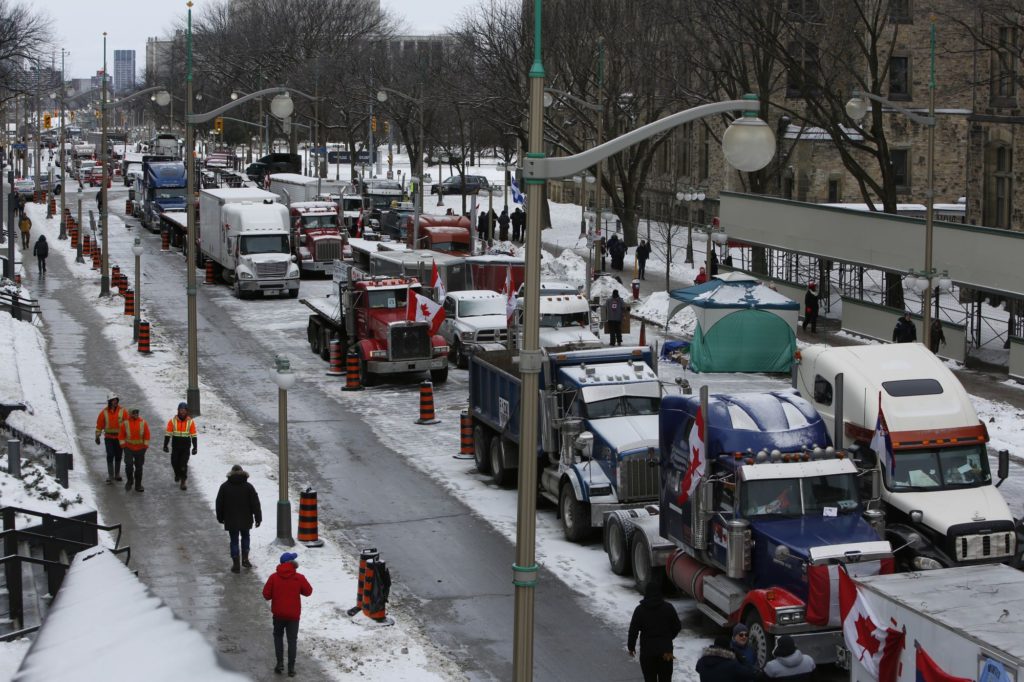
Australia will allow double-vaccinated visa holders to enter the country from Feb. 21, ending about two years of strict international border controls. Canada’s capital Ottawa declared a state of emergency as police struggled to rein in protests against vaccine mandates. 

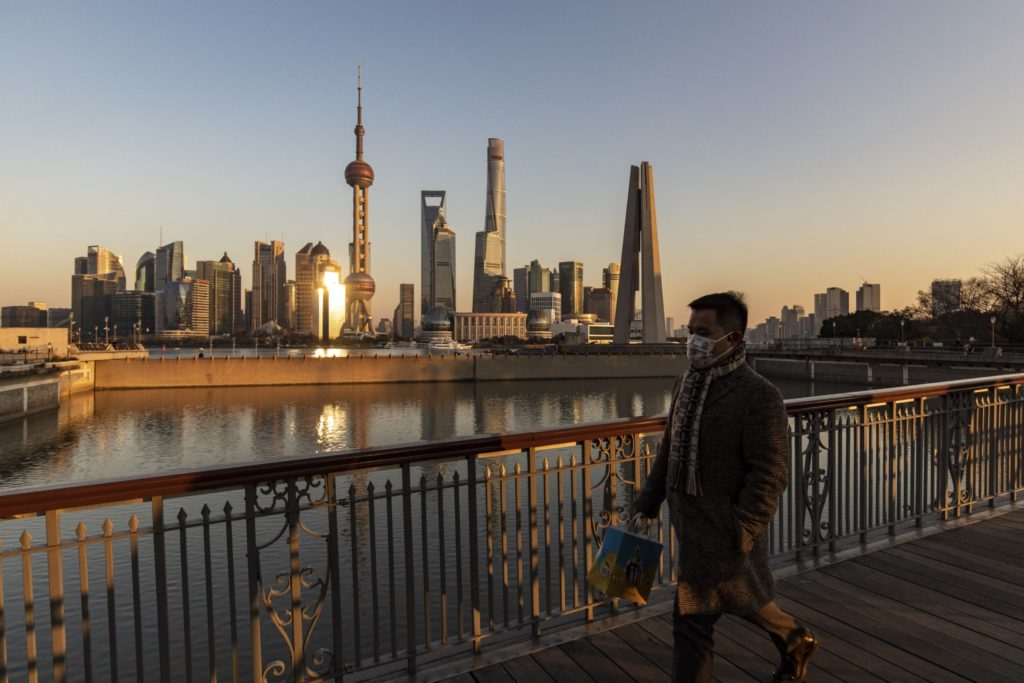
China locked down a city of 3.6 million people, and a top epidemiologist said the country has no plans to adjust its zero-Covid policy.

Key Developments:

  • Virus Tracker: Cases top 395 million; deaths pass 5.7 million
  • Vaccine Tracker: More than 10.2 billion shots administered
  • Beijing Olympics locks out omicron but internet is open
  • Covid rebellion brews in Canada, sending warning across globe
  • Is Covid becoming endemic? What would that mean?: QuickTake

More City of London Workers Return to Offices (6:41 a.m. NY)

More people are back in City of London offices than at any time since December, when the government told people to work from home to slow the spread of omicron. 

Almost 70% of staff were back in the workplace in the financial district on Thursday, according to data compiled by Google data.

In mid-December, the government advised employees to work from home if possible, and required people to wear masks in shops and on public transport. The restrictions were eased in January as cases began to fall.

Hong Kong Banks Close Branches (6:17 a.m. NY)

Major retail banks are changing operating hours and closing local branches, according to The Standard, in response to a rapidly growing Covid outbreak that has the city reeling.

Bank of China Ltd. shut more than 50 branches temporarily and reduced operating hours for its remaining stores, and Hang Seng Bank Plc closed seven branches and 11 metro station offices until further notice. HSBC, Bank of East Asia, Chong Hing Bank, OCBC Wing Hang Bank and ICBC also announced closures.

Czech Republic to Ease Restrictions (06:10 a.m. NY)

The Czech Republic had 9,060 new coronavirus cases in 24 hours through Sunday, the lowest in about three weeks. The government plans to lift some measures this week, including a ban on non-vaccinated people using restaurants and some services. The mandatory bi-weekly testing at schools and work places will also be scrapped on Feb. 18.

Hong Kong Weighs Curbs as Cases Surge (6:09 p.m. HK)

Hong Kong Chief Executive Carrie Lam is set to discuss further restrictions at an Executive Council meeting on Tuesday after a record of 614 new coronavirus infections were reported, with cases doubling every three days. 

Potential measures include limiting numbers at restaurants and placing restrictions on religious venues, according to local media reports. The government may also lower the public gathering limit to two people in a return to one of the strictest anti-virus measures.

Germany Discusses Gradual Easing (4:49 p.m. HK)

Germany’s health minister expects Covid restrictions to be eased “long before Easter.” A gradual relaxation may be discussed at a summit between the state and federal governments on Feb. 16, Karl Lauterbach said on Bild TV late Sunday. 

The “specter” of Covid may have subsided by the fall, but only if a vaccination mandate is introduced, he said. Germany’s outbreak is at record levels, with more than 1,400 infections per 100,000 people over the past seven days.

Indonesia Tightens Restrictions (1:53 p.m. HK)

Indonesia has tightened mobility restrictions in Jakarta, Bandung and Bali to the second-highest level as omicron cases continue to spread rapidly. The restrictions, which include limiting capacity at public places and reducing operating hours for cafes and restaurants, will be implemented for one week. 

Australia to Reopen for Visa Holders (11:38 a.m. HK)

Australia will allow double-vaccinated visa holders to enter the country from Feb. 21, ending around two years of strict international border controls introduced to stem the spread of Covid-19.

The announcement is the final step in a gradual unwinding of international border restrictions, which kicked off in November. Still, Western Australia remains closed to the rest of the country, after delaying its domestic border reopening. 

The decision to allow vaccinated international arrivals comes as Covid infections, hospitalizations and intensive care admissions trend down in most parts of the country. 

Chinese City Locked Down (10:58 a.m. HK)

A southwestern Chinese border city was locked down after mass testing identified nearly 100 people with Covid, yet another outbreak that’s extending the country’s protracted battle to bring infections back to zero.

A total of 98 people tested positive on Sunday in Baise, a city of 3.6 million people next to Vietnam. Travel was banned within the city and to the rest of China and all residents were asked to stay at home.

China has no plans to adjust its policy for the time being, Wu Zunyou, chief epidemiologist with the Chinese Center for Disease Control and Prevention, told the Global Times. 

Protesters Cause Chaos in Australian Capital (10:46 a.m. HK)

A group of anti-vaccination demonstrators and conspiracy theorists have blocked roads and targeted businesses in the Australian capital of Canberra ahead of the return of federal parliament on Tuesday.

Hundreds of cars and trucks waving Australian flags, military insignia and campaign banners for former U.S. President Donald Trump descended on the city over the past week to call for the end to vaccination requirements in businesses and places of employment.

Korea Cases Could Reach 170,000 (10:26 a.m. HK)

South Korea’s daily cases could increase to 130,000-170,000 at the end of February with the surge of the omicron variant, the Korea Disease Control and Prevention Agency said.

President Moon Jae-in said it’s a serious situation as it’s unclear when the wave will peak. South Korea confirmed 35,286 more cases on Monday.

Thai Ministry to Propose More Easing (9:04 a.m. HK)

Thailand’s Health Ministry will propose further easing of containment measures later this week, the Bangkok Post reported. The ministry will encourage people to live with the virus rather than cope with lockdowns, the newspaper reported. 

Ottawa Declares Emergency as Protests Intensify (5 p.m. NY)

Canada’s capital declared a state of emergency Sunday as police struggled to rein in ongoing protests against vaccine mandates.

The demonstrations started in reaction to Canadian and U.S. laws that went into effect in January, requiring truckers crossing the border to be fully vaccinated. They have since morphed into a rally against Covid restrictions more broadly.

Ottawa Mayor Jim Watson said that the increasingly rowdy demonstrations posed a “serious danger and threat to the safety and security of residents.”

More stories like this are available on bloomberg.com

©2022 Bloomberg L.P.

Close Bitnami banner
Bitnami