Bloomberg

GameStop Picks NFT Market Partner in Challenge to OpenSea

(Bloomberg) — GameStop Corp. is teaming up with Sydney-based Immutable on a new marketplace for non-fungible tokens and setting up a fund valued at about $100 million to promote NFT projects.

Under the agreement, GameStop will use Immutable’s technology for an NFT trading hub, which it plans to launch on the Ethereum blockchain by the end of the year. The Australian company, in turn, will pay GameStop up to $150 million in IMX, Immutable’s token, depending on transaction volume. The two companies will support creators for their platform with up to $100 million in IMX. 

Grapevine, Texas-based GameStop, a favorite among meme stock investors, gave its share price a fresh boost when it announced the move into NFTs in early January. It’s the latest pivot for Chairman Ryan Cohen, whose push to reinvent the brick-and-mortar games seller into a digital-first retailer sparked a fervor for the stock last year. The expansion will give the company an opportunity to capitalize on the hottest commodity in the crypto world.

GameStop is going up against the likes of OpenSea, the largest market for NFTs. The startup takes a 2.5% cut of every transaction and was valued at $13.3 billion in January.

The Immutable collaboration helps GameStop by providing the back-end for its marketplace and capital for enticing game developers and artists to join. The IMX token, released in November, was worth about $3.15 a piece on Thursday and has average daily liquidity between $50 million and $100 million. Immutable charges a 2% fee per transaction but saves users the so-called gas fees for minting and trading on Ethereum, co-founder and President Robbie Ferguson said in an interview.

Immutable, which raised $66 million in its most recent fundraising in June, plans to integrate its protocol with OpenSea as well as GameStop’s trading hub. It sees these collaborations as key to driving exposure and liquidity for assets on its platform, which is focused on gaming as the most immediate path to making NFT trading popular and accessible, said the 25-year-old Ferguson.

Immutable’s token IMX gained as much as 46% in the last 24 hours, before declining to a more modest gain, according to tracker CoinGecko. Its market cap is currently $126 million higher than it was yesterday, according to CoinGecko.

(Updates with Immutable token price in the last paragraph)

More stories like this are available on bloomberg.com

©2022 Bloomberg L.P.

Hyundai Jumps Back Into Japan With an Online-Only, All-Electric Plan

(Bloomberg) — The last time Hyundai Motor Co. sold a car in Japan was in 2009, when it pulled out after years of dismal sales. Now, South Korea’s top automaker is back, but with a twist: it’s only going to sell electric vehicles, and only online.

“We have prepared a lot, not to repeat the same mistake,” Jaehoon Chang, Hyundai’s chief executive officer, said in an interview. “We should know customers, we should know the market, with the right product and the right brand.”

Chang, 57, is counting on the push back into Japan — to be formally unveiled in Tokyo next week — to reach his goal of selling 1.7 million EVs globally in 2026, including the carmaker’s Kia and Genesis brands, a target that was recently increased from 1 million. For incumbents and new entrants, the twin forces of electrification and automation are fueling bolder moves into fresh markets that, up until now, might have seemed impenetrable.

While Hyundai hasn’t disclosed how many EVs it aims to sell in Japan, it’s definitely more than the 15,000 gasoline-engine cars sold during its prior foray. “We’ve experienced huge growth on the EV side in Korea, and we’re expecting the same thing will happen even faster in Japan,” Chang said.

Leading Hyundai’s charge back into Japan’s hyper-competitive automobile market is the Ioniq 5, a compact sports utility vehicle that debuted last year to wide acclaim. The vehicle will go head-to-head against two other battery-based EVs being rolled out this year from Japan’s top two automakers: Toyota Motor Corp.’s bZ4X and Nissan Motor Co.’s Ariya.

Even though EV uptake in Japan remains miniscule, with the bulk of the 8,600-plus registrations last year comprised of imported Tesla Inc. models, there are signs the archipelago might be on the cusp of catching up with the U.S., Europe and China.

One out of every four potential car buyers is considering an EV, a recent survey showed, while charging points are popping up around the country, even in new condominium projects.

As far as Hyundai’s CEO is concerned, the starting line is the same for every carmaker when it comes to EVs in Japan, where 4.5 million vehicles were sold last year. That gives Hyundai a chance to redefine itself as an EV manufacturer under the Ioniq marque, said Chang, who has first-hand knowledge of the market, having lived in Japan twice in the past.

If the strategy sounds familiar, that’s because Samsung Electronics Co. used a similar tactic to win over Japanese consumers with its Galaxy smartphone. During the years when Hyundai was absent, Samsung and LG Electronics Inc. proved that it’s possible for South Korean companies to break into, and even thrive, in the notoriously fickle market.

“We know this market is very sophisticated and the Japanese customer, they have higher standards for everything because they know cars,” Chang said. “What I learned from Samsung and LG is that it’s about the brand and the product strategy.”

Even so, tensions between the countries — rooted in Japan’s colonial rule over the Korean Peninsula — can flare up from time to time. Japan imposed a curb on exports of key materials needed for memory chips in 2019 during a diplomatic row. The following year, Japanese automakers saw their sales plummet in South Korea. This week saw a feud over a 400-year-old gold mine.

Still, in a country where EVs haven’t managed to reach a market share of even 1%, it’s difficult to gauge whether Japanese consumers will embrace the Ioniq 5, with its retro-futuristic design. Although it’s a compact SUV, the vehicle isn’t exactly small — a challenge for the country’s narrow roads and tight parking spots, one of the reasons cited for Hyundai’s gasoline-engine cars failing to gain traction more than a decade ago.

Moreover, Japan’s EV uptake is projected to lag behind the U.S. and Europe through 2025, with BloombergNEF predicting that plug-in hybrids and battery-based EV sales will reach 200,000 units, or just about 5% of the market.

Despite Samsung and LG’s successes, the country’s consumers might still be reluctant to buy an EV — a far more expensive purchase — from a South Korean automaker because of their preference for Japanese cars, according to Kim Jin-Woo, an analyst at Korea Investment & Securities Co. in Seoul.

“I don’t understand why Hyundai needs to sell EVs in Japan for now, because the demand from Europe and America for EVs is so high,” Kim said.

Pricing will be key. While Hyundai hasn’t disclosed how much the Ioniq 5 will cost in Japan, a comparable price to the U.S. sticker of $45,000 to $55,000 could make it competitive compared with the Ariya EV, which Nissan will sell for 5.4 million yen to 7.4 million yen ($47,000 to $65,000). Toyota hasn’t indicated a price for the bz4X.

While the Ioniq 5’s styling blends in well amidst domestic cars and European imports on the streets of Tokyo and Yokohama, the biggest challenge for the car and every other EV on the road is the lack of quick charging points. The Ioniq 5 has garnered several awards since its debut, including “German Car of the Year” for 2022.

The other big question looming over Hyundai’s move back into Japan is the decision to sell cars online. The nation’s auto dealers have been a formidable part of the domestic sales network, with car buyers accustomed to top-notch service.

“We have no legacy dealers, which means we can try something new,” Chang said. He’s betting that Japanese customers have gotten more used to shopping online due to the pandemic. Tesla has also paved the way with its online-only sales model, although Toyota and Nissan have also started to offer web-based subscription-style leasing programs.

In addition to letting car buyers customize and order their vehicles online, Hyundai also plans to offer web-based payment, insurance and registration.

There’s another twist in Hyundai’s re-entry: the automaker will also sell its Nexo fuel-cell vehicles, which have been available on a trial basis. Due in part to Toyota’s efforts to popularize the technology with its Mirai FCV, there’s already a network of 157 hydrogen fuel stations across the country. Both automakers share the same, somewhat quixotic, aspiration that fuel cells will play a role in the future of transport.

To market the Ioniq 5 and Nexo, Hyundai is teaming up Anyca, a Japanese car-sharing provider that connects vehicle owners and prospective renters. The automaker hasn’t said whether or when it plans to roll out additional Ioniq models, which include a sedan and a larger SUV.

Hyundai is building out a service center in Yokohama, the port city next to Tokyo, where potential buyers will be able to visit and test-drive cars. The facility, the first of several planned across the nation, will also handle after-market maintenance, as well make service calls to customers’ locations after the first Ioniq 5 deliveries begin from the middle of the year.

The lack of a dealer network suggests Hyundai will proceed cautiously for now, being careful not to commit too much money on the ground in a challenging market. For a proud South Korean automaker, however, it’s still a risky bet to put its reputation on the line for a second time.

“Sometimes, you need to make a bold move,” Chang said.


More stories like this are available on bloomberg.com

©2022 Bloomberg L.P.

Wormhole Rescue Shows Crypto World Can Move Fast and Fix Things

(Bloomberg) — If there’s one thing more shocking than the fact that a hacker was able to exploit a software bug and drain some $320 million worth of cryptocurrency from something called Wormhole, it’s this: Backers of the project were able to replace the pilfered tokens in a matter of hours.

In another, not-so-distant era, this was the type of coding bug that could have threatened to put a traditional financial firm out of business. In fact, that almost happened to Knight Capital Group Inc. a decade ago. The electronic market maker was driven to the brink of bankruptcy by some bad code, before a dramatic bailout among many of Wall Street’s best-known shops allowed it to avoid Chapter 11. The firm was later taken over by a rival.

In the case of Wormhole, the problem with the code turned out to be almost as disastrous as the one that forced Knight to seek a $400 million cash infusion to survive. Yet the move-fast-and-break things ethos of the crypto world was met with a startling move-fast-and-fix things response this time. Jump Trading Group, which helped develop Wormhole, put up the money to replace the 120,000 wETH, or “wrapped Ether,” that the hacker was able to create and then abscond with.

And it’s not the only example. Last month, hackers fleeced the exchange BitMart to the tune of $150 million in cryptocurrencies. BitMart, which had just closed a venture-capital funding round, used its own capital to cover the incident.

The incidents highlight just how much cash — both traditional and digital — is sloshing around the crypto world, and how quickly it can be put to work with seemingly little time spent put into thinking about the risks of throwing good money after bad. Wormhole’s savior, Jump Trading Group, has roots that lie in the same high-frequency trading and electronic market making industry where Knight operated. Its quick and expensive response suggests it sees enormous potential profits in crypto despite a nine-figure setback.

Read More: Hackers Steal $320 Million From Wormhole Crypto Project 

Development of Wormhole was originally started by a company called Certus One. Jump acquired Certus One last year and took over development of the Wormhole protocol, which is what’s known as a “bridge” that connects different blockchains, such as Ethereum and Solana, to allow tokens to trade on blockchains other than their home turf.

Such a bridge helps traders avoid the famously slow and expensive transactions on the Ethereum network, which underpins many crypto projects. In this episode, faulty code allowed a hacker to create, or “mint,” a token tracking the cryptocurrency Ether on the Solana blockchain, and then move it back over to the Ethereum network.

Jump’s participation in the project is part of its ambition to be more than just a crypto trading firm. Instead, it aspires to be a major architect and developer of the infrastructure of the next generation of the crypto market as it matures and gains more institutional acceptance. 

“I think it’s because Jump believes bridges are of paramount importance to the long-term success of the crypto ecosystem,” said Kyle Samani, co-founder of Multicoin Capital, which manages a hedge fund and venture fund in the crypto space. “Given Jump’s background in providing liquidity and HFT in traditional markets, they have a unique perspective on how to think about the importance of bridges.”

He added: “Given the size of investment they have and continue to make, and the willingness to cover 100% of this loss, I assume they intend to profit from Wormhole somehow in the long run.”  

Chicago-based Jump’s efforts in crypto partly trace their origins to a group of interns at the University of Illinois, including Kanav Kariya, the head of the company’s crypto division. In an interview last year, Kariya said Wormhole has enormous promise. “I don’t think you can think big enough,” he said.

Dave Olsen, the president of parent company Jump Trading Group, has compared the effort to the earliest American traders who met under a buttonwood tree on Wall Street in the late 1700s to hash out the structure and rules that would govern the New York Stock Exchange. “In a lot of ways, we’re getting back to first principles of trading,” he told Bloomberg Businessweek in an interview published last month.

Read More: Wall Street Traders Muscle Into the Middle of Crypto 

As its crypto project was taking shape, Jump was, to put it generously, effusive in its enthusiasm. In an essay unveiling its approach to the space, the trading firm said it was always asking how it could do more.

“The resounding answer has become a battle cry for our team: to build,” the firm wrote. “To build the plumbing and the railroads, and to build communities. The rhythm of that chant has driven us deeper into the ecosystems we’re involved in and unearth the trove of system design and engineering problems that lie between us and the promised land.”

In this case, a hacker helped them do exactly that. Yet it was a very expensive pit stop on the road to the promised land.

More stories like this are available on bloomberg.com

©2022 Bloomberg L.P.

Apple’s Grip on App Store Challeged by Senate Bill Action

(Bloomberg) — The Senate Judiciary Committee on Thursday approved legislation that, if passed into law, would force Apple Inc. to let users install apps from outside of the App Store.  

The bipartisan 21-1 vote is a strong endorsement for the bill from Connecticut Democrat Richard Blumenthal, Minnesota Democrat Amy Klobuchar, Tennessee Republican Marsha Blackburn and eight other cosponsors, but it still faces a long road to get a vote in the full Senate. 

The bill seeks to loosen the duopoly that Apple and Alphabet Inc.’s Google have over mobile app distribution, part of Congress’s push to curb the power of U.S. technology giants.

“Google and Apple own the rails of the ap economy, much as the railroad companies did at the start of the last century, said Blumenthal, who estimated the value of the app store market at about $100 billion a year.

The measure, S. 2710, would require Apple to let users install apps on their phones and other devices from sources on the web or alternative app stores, a process that’s called sideloading. 

This provision would most impact Apple. While Google offers its Play Store on mobile devices, it doesn’t bar users from downloading Android apps elsewhere. Sideloading, which Apple has said poses security risks for consumers, would allow apps to avoid Apple’s commissions, which range from 15% to 30%. 

The bill also would force app marketplaces to allow third-party app developers to communicate with customers outside the platforms about cheaper ways to subscribe and alternative ways to pay for services. Last year, Apple said it will allow this as part of a class action settlement in the U.S. with app developers. 

Read More: Apple, Google Tell Senate That Tech Bills Will Harm Privacy

The committee adopted an amendment addressing security concerns put forth by tech companies that would allow platforms to actively manage their systems to oversee cyber security and privacy. The second amendment that was adopted requires the Federal Trade Commission, Justice Department, and Government Accountability Office to submit an impact report three years after enactment of the statute.

Apple has lobbied hard against this bill, arguing that it would make the iPhone ecosystem more similar to Android, limiting consumer choice for what it calls a more secure and closed environment. 

Apple and Google urged the panel to reject the bill in separate letters obtained by Bloomberg, both sent on Wednesday to Senate Judiciary Chair Dick Durbin and ranking Republican Chuck Grassley.

Apple’s Chief Executive Officer Tim Cook personally met with several senators in December, including Klobuchar, Durbin and Grassley, about this bill and other antitrust proposals, according to a person familiar with the meetings. Cook was set to speak with Blackburn Wednesday before the committee hearing, but the meeting was re-scheduled, according to a Senate aide. 

The bill “amounts to Congress trying to artificially pick winners and losers in a highly competitive marketplace,” said Mark Isakowitz, head of Google’s government affairs and public policy. 

Companies like Spotify Technology SA, Tile and Match Group Inc. support the changes in the proposal, which they say would leave them less dependent on Apple and Google to reach customers. Microsoft has also thrown its weight behind the bill, according to a person familiar with the company’s position.

Some of the app-store practices addressed by Thursday’s bill were also challenged by Epic Games Inc. in the video game-maker’s lawsuit against Apple. The judge in that case found that Apple has engaged in some anticompetitive conduct and ordered the iPhone maker stop preventing developers from steering users to alternative payment methods. 

Apple has appealed the ruling and an appeals court stayed the decision. 

The judge in the original Epic case also found that Apple’s dominance of the market for mobile apps doesn’t violate U.S. antitrust law. Epic is appealing that part of the decision with the support of 35 states, civil society groups and Microsoft Corp. 

(Updates with Google letter to committee in ninth paragraph)

More stories like this are available on bloomberg.com

©2022 Bloomberg L.P.

Tech’s Woes Pummel U.S. Stocks; Lagarde Buoys Euro: Markets Wrap

(Bloomberg) — U.S. stocks tumbled Thursday as investors digested disappointing results from Facebook-owner Meta Platforms Inc. and concerns about persistently high inflation from the European Central Bank. 

The euro spiked higher along with global bond yields as ECB president Christine Lagarde made comments perceived as hawkish, prompting investors to bring forward bets on ECB rate hikes. They now expect the amount of tightening this year to be around 40 basis points from 25 before the latest decision.

U.S. Treasuries followed the euro zone lower and the dollar fell. Meanwhile, the S&P 500 and Nasdaq 100 halted their best run of gains since 2020 as Meta wiped more than $200 billion from its market value. 

In late afternoon trading, the S&P 500 extended losses to 1.9% and the Nasdaq 100 shed 3.3%, with traders next looking to results from Amazon.com Inc. after the bell and U.S. payrolls data Friday.

“We got hit with a one-two punch today with the big drop in Facebook and the surprising news that the ECB has become more hawkish,” said Matt Maley, chief market strategist for Miller Tabak + Co. “The stock market had rallied in the afternoon each of the last four days, so traders were hoping that could bail us out again. When the rally didn’t materialize, traders lost a lot of confidence.”

Weak numbers from U.S. tech giants including Spotify Technology SA jolted investors who had bet a strong earnings season would keep equities attractive and counter some of their lingering worries including tighter monetary policy. Markets have swung sharply and stocks are nursing losses this year as officials pare stimulus to curb inflation. 

In Europe, the Bank of England hiked its key rate and signaled it would start running down bond holdings. Meanwhile, the ECB held its interest rates and said net buying under its emergency support program will end in March. 

Lagarde said inflation would remain elevated for longer but the bank was getting “much closer” to its inflation target. Germany’s two-year yield rose to a 2015 high. The Stoxx Europe 600 fell below its 100-day moving average.

“As markets focus closely on large, developed-market monetary policy stances — and investor sentiment around the globe shifts — economic activity data releases will be key,” said Marilyn Watson, head of global fundamental fixed income strategy at BlackRock.

Growth in the U.S. services sector pulled back in January to the slowest pace in nearly a year. Meanwhile, U.S. initial jobless claims fell more than expected last week to 238,000 ahead of data on payrolls Friday. 

“Tomorrow’s jobs report is a reminder that expectations for Fed policy are the key influence on this market right now, and if economic data, especially inflation data, comes in ‘too hot’ then that will rekindle hawkish Fed concerns like in January, and we would expect at least a partial return of the January volatility,” wrote Tom Essaye, a former Merrill Lynch trader who founded “The Sevens Report” newsletter. “Bottom line, Fed policy still very much matters to this market.”

For more market analysis, read our MLIV blog.

What to watch this week:

  • Earnings are due from Amazon, Ford Motor
  • U.S. payrolls report for January, Friday
  • Winter Olympics kick off in China, Russia’s President Vladimir Putin due to attend opening ceremony, Friday

Some of the main moves in markets:

Stocks

  • The S&P 500 fell 1.9% as of 3:23 p.m. New York time
  • The Nasdaq 100 fell 3.3%
  • The Dow Jones Industrial Average fell 1%
  • The MSCI World index fell 1.4%

Currencies

  • The Bloomberg Dollar Spot Index fell 0.3%
  • The euro rose 1.1% to $1.1433
  • The British pound rose 0.1% to $1.3595
  • The Japanese yen fell 0.4% to 114.93 per dollar

Bonds

  • The yield on 10-year Treasuries advanced four basis points to 1.82%
  • Germany’s 10-year yield advanced 10 basis points to 0.14%
  • Britain’s 10-year yield advanced 11 basis points to 1.37%

Commodities

  • West Texas Intermediate crude rose 2.3% to $90.29 a barrel
  • Gold futures fell 0.2% to $1,806.70 an ounce

More stories like this are available on bloomberg.com

©2022 Bloomberg L.P.
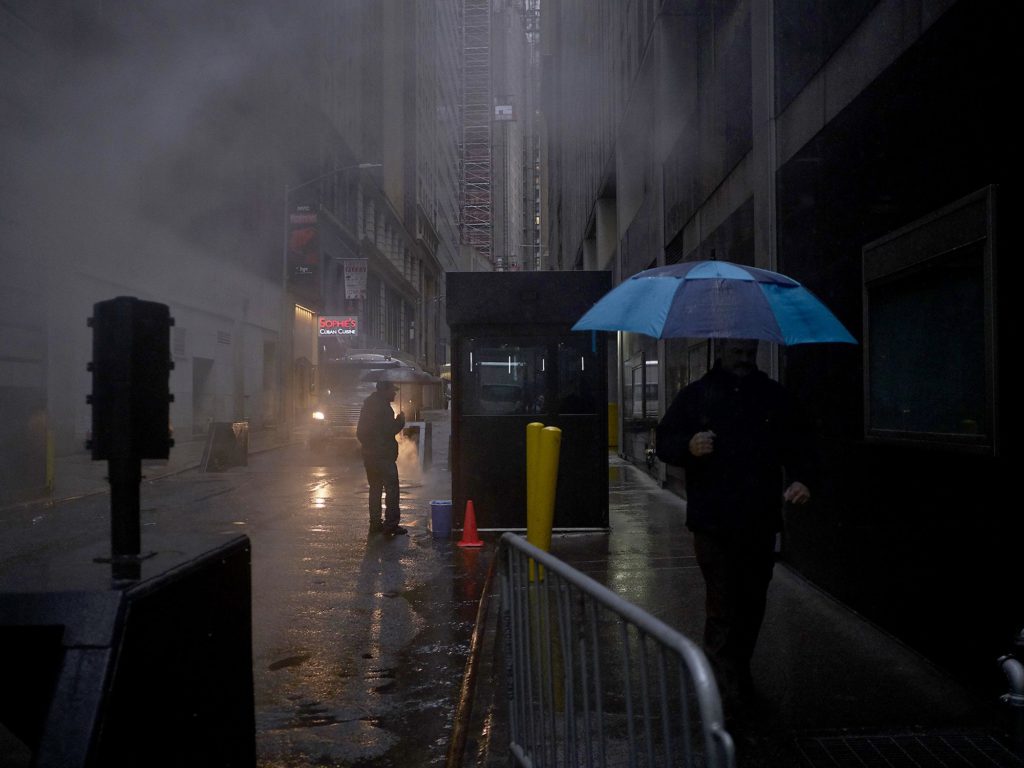
Winter Storm Descends on Texas, Stoking Fears of Blackouts

(Bloomberg) — The winter storm battering Texas is expected to intensify overnight, bringing more snow, ice and frigid temperatures nearly one year after an Arctic blast overwhelmed the state’s power grid and triggered deadly blackouts.

State officials say the electrical system will hold this time, but the big test will come Friday morning when power demand is expected to peak. So far there’s no sign of the type of system-wide failure that triggered rolling blackouts last year after power plants went down across the state. 

“The power grid is performing very well at this time,” Texas Governor Greg Abbott said during a Thursday news conference. “The Texas power grid is the most reliable and resilient it’s ever been.”

This is a crucial moment for Texas, where last year’s cold snap led to blackouts that left more than 200 people dead. This current storm is testing whether Abbott and lawmakers have done enough to bolster the electrical system, including new rules requiring generating plants to winterize. Critics, however, say the reforms didn’t do enough to ensure the natural gas-fueled system doesn’t freeze up again in the cold, choking off fuel to power plants.

See: Texas Had All Year to Prep for Cold, and It’s Not Ready  

Still, about 47,000 homes and businesses were without power at 2:30 p.m. local time, according to PowerOutage.us, which tracks outages reported on utility websites. 

“These are localized outages that are not related to system-wide reliability issues,” Peter Lake, chairman of the Public Utility Commission of Texas, said Thursday in a media briefing. “The grid remains strong, reliable, and it is performing well in this winter-weather event.”


While it’s cold in Texas now, the worst will come overnight, according to William Iwasko, a meteorologist with the National Weather Service’s Lubbock office. The Panhandle region could fall to -3 degrees Fahrenheit (-19 Celsius) and Dallas may get down to 13 degrees. However, the storm is moving through fairly quickly, and temperatures could be close to normal on Saturday. That’s a key difference from last year’s storm, which lingered for days.

“It’s obviously quite cold, but the duration of that cold won’t be very long,” Iwasko said.

Texas has been bracing for the worst in this latest storm, which is part of a massive cold front that stretches to Maine. Many schools, universities and churches across the state have closed. Grocery stores have been left depleted as residents stocked up on food this week. Even sea turtles off the Texas coast are under threat from the cold.

Winter storm warnings and advisories span almost the entire state. Temperatures in Amarillo were at 8 degrees Fahrenheit on Thursday, while Dallas was 23 degrees and Midland, the business heart of the oil- and natural gas-rich Permian Basin, was 9 degrees.

“It’s not looking like a repeat of what happened last year, but the cold temperatures will certainly have some impact on the power situation,” said Andrew Orrison, a meteorologist with the National Weather Prediction Center.

Airlines canceled almost 4,800 flights on Thursday as ice and snow advanced on a swath of the U.S. from Texas to the Northeast for a second day. About two-thirds of the flights were canceled at Dallas-Fort Worth International Airport, while more than 80% were scrubbed at Dallas Love Field and 79% in Austin, according to FlightAware.com.

Some natural gas wells have frozen in places like Texas and neighboring Oklahoma, shutting about 5% of overall domestic output during the peak demand season for the furnace and power-plant fuel, according to Jade Patterson, an analyst at BloombergNEF. The interruptions will take as long as five days to restore once temperatures moderate, he said.

The Texas Oil & Gas Association said natural gas production will continue sliding as the storm freezes wells and other equipment in the biggest gas-producing state. Early indicators “suggest production declines will increase throughout the day,” the industry group said in a Thursday statement. 

Meanwhile, wind is providing an unexpected benefit to the state’s electrical grid. Wind farms were producing about 17.5 gigawatts at 9:55 a.m. local time, well above prior forecasts, to account for about 30% of the grid’s electricity supply, according to the Electric Reliability Council of Texas. A gigawatt is enough to power about 200,000 Texas homes.

“We expected significant icing in the western part of the state,” Ercot Interim Chief Executive Officer Brad Jones said in the briefing. “That has not occurred as severely as expected.”

Ercot expects electricity demand to approach a record high on Friday morning as frigid weather spurs heating needs, with power consumption peaking at around 74.7 gigawatts.

More stories like this are available on bloomberg.com

©2022 Bloomberg L.P.

Tycoon’s ‘Netflix of Sports’ Stumbles in U.K. Football Bid

(Bloomberg) — BT Group Plc had been trying to find a buyer or partner for its pay-TV unit BT Sport for at least 10 months, with rivals including DAZN, Walt Disney Co., Amazon.com Inc. and Discovery Inc. all sizing up potential offers. 

For much of the bidding process, billionaire Len Blavatnik’s streaming service DAZN, known as the “Netflix of Sports”, was widely reported as the likely winner. 

Such was the confidence within the DAZN camp, one executive was even spotted playing Township, a farming simulation game, on his smartphone during a meeting with BT at Goldman Sachs Group Inc., according to people familiar with the matter, who asked not to be named because the discussions were private.

In the end, BT lost confidence in DAZN’s bid, the people said. After a bout of last minute negotiations, BT revealed on Thursday that it would pursue a joint venture with a rival bidder, U.S. entertainment group Discovery, which would combine it with Eurosport UK. 

Representatives for BT and DAZN declined to comment. 

Deal Breaker

Success would have won DAZN rights to the U.K. Premier League and Champions League soccer, crown jewels that would have granted a splashy entrance to the region’s biggest live sport broadcast market. It recently won major sports rights deals in Germany, Italy and Spain.

Deliberations continued until late on Wednesday, the people familiar with the matter said. Following Discovery’s offer, DAZN considered raising its bid in the final stages of negotiations, in an effort to save the deal, they said. 

Ultimately BT’s Chairman Adam Crozier, Chief Executive Officer Philip Jansen and consumer division chief Marc Allera opted for the longer-term value presented by Discovery’s proposals. 

Mike Darcey, a former COO at Sky, said an important factor in any decision would have been the level of security being demanded by the leagues that owned the sports rights being broadcast on BT Sport. The English Premier League has just signed a new three-year deal with BT.

“There are iron clad change of control clause in broadcast contracts,” he said. “Some will remember what happened to the Football League when OnDigital walked away from its contract and the EPL also had issues with Setanta. The leagues would have seen that DAZN is a significant loss-making entity and they would have presumably wanted a chunk of the three-year deal paid upfront or maybe a big guarantee from Blavatnik.”

Inside DAZN

DAZN’s Chairman Kevin Mayer, a former Disney executive and briefly TikTok CEO who also launched several blank-check companies, said the group maintained its plans for growth in the U.K., where it streams boxing rights and Champions League womens’ football, as well as sporting documentaries. 

“We remain fully committed to growing our business and investing in the U.K., as you will see in the near future,” Mayer said in an emailed statement.

In the past year or so, DAZN has shifted strategy from pursuing secondary sports rights in a handful of markets, to launching in around 200 territories and focusing on blockbuster football rights in three markets: Italy, Spain and Germany. 

DAZN’s financial accounts for the year up to 31 December 2020 are overdue, according to a note at London’s Companies House, where they have to be registered. The company’s last set of published results, for the year to 2019, show a loss of $1.3 billion for continuing operations. The directors at the time concluded that the company had sufficient funds to continue given the support of the principal shareholder, Blavatnik’s Access Industries.

(Updates paragraph 7 regarding bidding process.)

More stories like this are available on bloomberg.com

©2022 Bloomberg L.P.

Boston Fed, MIT See Value in Code With Digital-Dollar Potential

(Bloomberg) — The work of creating a possible U.S. digital dollar inched ahead Thursday with research by the Federal Reserve Bank of Boston into the code that eventually could support such a currency.

The Boston Fed, in collaboration with the Massachusetts Institute of Technology’s Digital Currency Initiative, released a 35-page white paper on the findings of its technological research, which focused on developing software to process transactions. The researchers examined two possible code bases, including one that was capable of handling 1.7 million transactions per second. 

“Both architectures met and exceeded out speed and throughput requirements,” the central bank branch said in an executive summary of the report. The researchers wanted to be able to process 100,000 transactions per second and settle them in less than 5 seconds. Both code bases beat those projections.

The joint research project is separate from the work being conducted by the Federal Reserve Board in Washington to study the possible benefits and risks of a U.S. central bank digital currency, or CBDC. The Fed, led by Chair Jerome Powell, has indicated it doesn’t plan to move forward with a government-backed coin unless it has the support of the White House and Congress. 

The MIT and Boston Fed researchers released their transaction processing software, OpenCBDC, under an open-source license, allowing anyone to inspect, modify, and enhance the code. 

“Open-source software provides an important way to collaborate, experiment, and implement,” Neha Narula, director of the MIT Digital Currency Initiative, said in a news release Thursday. 

Thursday’s release concludes the first phase of the multiyear research initiative, known as “Project Hamilton,” that was first announced in August 2020. A second phase will explore more complex capabilities and will examine key issues, such as user privacy and cybersecurity. 

Moving forward with a U.S. CBDC could help ensure the U.S. dollar’s dominance, especially as other countries like China move forward with their own digital currencies. But the Federal Reserve has also pointed out a range of potential risks, including possible runs on financial firms and a reduction in the amount of deposits in the traditional banking system. 

Strategists at Bank of America Corp. have said they think a U.S. digital dollar is inevitable, predicting that issuance would likely occur between 2025 and 2030. 

More stories like this are available on bloomberg.com

©2022 Bloomberg L.P.

Crypto Volume Slows to a Trickle, Boding Ill for Exchanges

(Bloomberg) — During the brutal cryptocurrency selloff last month, volumes also tumbled — a development that doesn’t bode well for exchanges that trade the digital tokens.

Total spot volume slumped to $1.8 trillion in January, a decline of more than 30% from the previous month, according to a report from CryptoCompare. That was the lowest turnover since the end of 2020. Even at its intra-month peak of $91 billion on Jan. 24, trading was down nearly 50% from December.

“It’s just an exceptionally quiet, fearsome and uncertain time in crypto,” said Ed Hindi, chief investment officer and co-founder of Tyr Capital. “Smart money, as they say, doesn’t sleep, it doesn’t take holidays. But three-day traders in crypto, they do take a break, especially when they get hurt,” he said, referring to an industry term for institutional and other bigger players.

The decline in trading volume will have a direct impact on revenues for Coinbase Global Inc. (ticker COIN) and Robinhood Markets Inc. (HOOD), according to Julie Chariell, a Bloomberg Intelligence analyst. Roughly 90% of COIN’s revenue and about 40% of HOOD’s are driven by crypto trading.

“HOOD already articulated expectations for softer earnings results for 1Q, partly due to the crypto slowdown,” she said. COIN hasn’t yet held its quarterly conference call, but when it does, its first-quarter outlook “will likely be soft.”

Investors in digital currencies and other riskier assets have been shaken so far in 2022, rattled by a newly hawkish Federal Reserve that’s getting set to withdraw stimulus from the system. 

Bitcoin, the largest cryptocurrency, has lost a fifth of its value this year, while some smaller coins, as well as tokens influenced by social-media sentiment, have posted even larger drops. An index tracking the largest 100 cryptocurrencies is down 26% year-to-date, while the Bloomberg Galaxy DeFi Index, which bundles some of the largest decentralized finance protocols and apps, has tumbled 31% in the same stretch.

Demand for all things crypto had skyrocketed in 2021, with crypto-asset manager Grayscale Investments finding that a majority of investors had gotten involved with the asset class during the year. That means the recent slump could be painful for anyone who got in relatively recently. In fact, a recent Glassnode analysis found that almost all of the supply held by short-term investors is underwater. 

“Ordinary mortals’ interest may take more time to heal,” James Malcolm, head of foreign exchange and crypto research at UBS, wrote in a note, noting, however, that that’s not necessarily the case in the venture-capital space. 

It doesn’t help that memories of the last “crypto winter” — a phrase endemic to the digital-asset space that refers to a sharp slump followed by months of doldrums — are renewing fears that a repeat could be playing out currently. The last such decline happened in 2018, when Bitcoin fell roughly 80% and subsequently took more than a year to reach another high.

“Even though Bitcoin has its own very significant fundamental underpinning, there is that element of just rampant speculation that plays a role,” said Jurrien Timmer, director of global macro at Fidelity Investments.

More stories like this are available on bloomberg.com

©2022 Bloomberg L.P.

CC Capital-Led Group Is in Talks to Buy Information Resources for Over $5 Billion

(Bloomberg) — A group led by CC Capital Partners, the investment firm run by former Blackstone Inc. dealmaker Chinh Chu, is in talks to acquire market-research firm Information Resources Inc., according to people with knowledge of the matter. 

A deal could value Chicago-based IRI at more than $5 billion including debt, said the people, asking not to be identified discussing information that is private. IRI is owned by private equity firms Vestar Capital Partners and New Mountain Capital. No transaction has been finalized and it’s possible talks could collapse or terms could change.

Representatives for CC Capital, IRI, New Mountain and Vestar declined to comment.

IRI provides data, analytics and other insights to companies in a variety of sectors. Led by Chief Executive Officer Kirk Perry, it has more than 5,000 clients globally and says its services helps those companies capture market share and “remain relentlessly relevant.” IRI has about $1.6 billion in outstanding debt, according to data compiled by Bloomberg.

New Mountain acquired IRI in 2011 and sold a stake to Vestar in 2018. Both firms would “jointly govern” the company, they said in a statement when Vestar made its investment.

CC Capital has led large buyouts in the past, including the take-private of Dun & Bradstreet. In that transaction, CC worked with investors including Cannae Holdings and funds affiliated with Thomas H. Lee Partners. 

More stories like this are available on bloomberg.com

©2022 Bloomberg L.P.

Close Bitnami banner
Bitnami