Bloomberg

Meta, PayPal Blindside Bullish Analysts Who Saw Only More Growth

(Bloomberg) — Big technology earnings have prompted some extreme share price moves this season, with Wall Street’s expectations seemingly misaligned with company realities.

Take Meta Platforms Inc.: before today’s 27% share price drop, which came after its revenue forecast for the first quarter missed estimates, analysts had been broadly bullish on the social-media giant. Among 62 Wall Street firms covering the Facebook owner, 52 had buy ratings, and analysts saw 18% upside to their average price targets, according to data tracked by Bloomberg. 

The sell side’s view on PayPal Holdings Inc. before it reported results was similarly bullish. The vast majority of analysts tracked by Bloomberg rated the payments company a buy before an earnings report which tanked the shares 25%. And for Netflix Inc., analysts had expected the streaming behemoth to add 6.26 million new users in the current quarter, a big mismatch with the 2.5 million in the company’s guidance.

High expectations and a history of earnings beats may be partly to blame for the share-price routs, according to Mark Stoeckle, chief executive officer and senior portfolio manager at Adams Funds.

“The sell side treated stocks like Netflix and Meta like royalty,” Stoeckle said in emailed comments. Given the rising competition and the maturity of the stocks, they are at an important inflection point, he added. “It doesn’t mean the world has passed them by, but it does mean they have headwinds that they have not seen in a very long time.”

Meta’s slump puts it on track to erase more than $200 billion from its market capitalization, which — if it closes at that level — would be the biggest one-day wipeout in market history. 

For Saxo Bank’s head of equity strategy, Peter Garnry, the misalignment between expectations and reality suggests that companies have “an apparently low visibility on their businesses driven by a lack of understanding of the post pandemic dynamics.”

At the same time, the moves “seem a bit excessive relative to the change in expectations, underscoring how sensitive and fragile the U.S. technology sector is right now,” Garnry wrote in emailed comments.

While Meta’s plunge has taken the stock below almost every analyst target in Bloomberg’s data, 49 Wall Street firms still recommend buying the shares.

More stories like this are available on bloomberg.com

©2022 Bloomberg L.P.

Tesla’s Latest U.S. Recall Is the Carmaker’s Ninth Since October

(Bloomberg) — Tesla Inc. is initiating its ninth U.S. vehicle recall in roughly three months, a spurt of safety-related fixes that’s coincided with regulators subjecting the carmaker to greater scrutiny.

The latest recall relates to a software error that may prevent the federally mandated chime that reminds drivers to buckle up from going off. Tesla will remedy the issue with an over-the-air update to more than 817,000 vehicles.

Recalls Tesla has done the last few months run the gamut of both hardware and software issues. In October and November, there were separate safety campaigns related to suspension problems affecting certain Model 3 and Y vehicles. In December, two recalls announced together pertained to potentially damaged rear-view camera cables and faulty front-trunk latches.

Other fixes had to do with Tesla’s controversial Full-Self Driving capability, a product the company has sold for years and allowed some consumers to beta test before it lives up to its name. The U.S. National Highway Traffic Safety Administration questioned Tesla’s broader rollout of FSD in October, when the regulator also grilled the company over how it carried out a software update of Autopilot, a separate suite of driver-assistance features.

“Tesla has one foot in auto-making, which is difficult, and they’re not experienced and arguably not that good at it yet,” said Kevin Tynan, a Bloomberg Intelligence analyst. “The other foot is in technology, where this is what you get when you push the envelope and the regulatory environment isn’t completely in place yet.”

The recalls have come against the backdrop of tensions between Tesla Chief Executive Officer Elon Musk and President Joe Biden. Musk — the world’s richest person, according to the Bloomberg Billionaires Index — has bristled at Biden’s unwillingness to give Tesla credit for jump-starting the auto industry’s shift to electric vehicles.

Tesla, which has disbanded its media relations department, did not respond to a request for comment.

The seat-belt chime issue that spurred Tesla’s latest recall was brought to Tesla’s attention on Jan. 6 by a testing and research institute in South Korea, according to the notice on NHTSA’s website. The company isn’t aware of any crashes, injuries or fatalities related to the problem.

More recalls could be in the offing. NHTSA said Wednesday it’s reviewing complaints about the forward-collision avoidance system in Teslas leading the cars to suddenly brake at high speeds.

In August, the agency opened a defect probe of Tesla Autopilot after repeated collisions with police cars and fire trucks. Weeks later, the company Tesla beamed an over-the-air update to its vehicles that sought to improve how Autopilot handles crash scenes. NHTSA asked the carmaker in October to justify making the software change without filing a recall.

Earlier this week, Tesla disabled an FSD setting that had enabled its vehicles to slowly roll through all-way stop intersections at low speeds when no pedestrians or other cars are present. Self-driving car advocates testifying at a House hearing on Wednesday sought to distance themselves from Tesla and the feature, telling lawmakers the company’s cars don’t qualify as fully autonomous according guidelines that have adopted by federal regulators. 

“Tesla is clearly facing more stringent regulatory oversight in recent months than it has previously been subject to,” Michael Brooks, acting executive director and chief counsel of the Center for Auto Safety, said in an email. “NHTSA needs to go one step further and seek the maximum civil penalty available for Tesla’s continued delay and attempts to play fast-and-loose with regulations intended to protect Americans from unproven and potentially unsafe vehicle features.”

More stories like this are available on bloomberg.com

©2022 Bloomberg L.P.

Novavax Files for U.K. Approval of Covid Protein Shot

(Bloomberg) —

Novavax Inc. applied for U.K. authorization of its Covid-19 vaccine, the first submission for a protein-based shot against the disease in Europe. 

The company, which lost out to rivals in the initial phase of vaccine development, said in a statement Wednesday that it completed its rolling submission — an accelerated review of trial and manufacturing data — with the Medicines and Healthcare products Regulatory Agency and filed for a conditional marketing license. Shares of Gaithersburg, Maryland-based Novavax rose as much as 16% in New York. 

Novavax’s vaccine mimics the coronavirus’s spike protein, sparking an immune response that prepares the body for a real infection. It requires two doses three weeks apart and can be stored at refrigerator temperatures, making it easier to transport than some messenger RNA shots.

Closer to Delivery

The drugmaker submitted clinical data to the regulator from a trial of 15,000 volunteers in the U.K. earlier this year. The results showed efficacy of 96.4% against the original Covid strain and 86.3% against the alpha variant that first arose in the U.K. Data from a 30,000-person trial in the U.S. and Mexico has also demonstrated 100% protection against moderate and severe disease.

“This submission brings Novavax significantly closer to delivering millions of doses of the first protein-based Covid-19 vaccine, built on a proven, well-understood vaccine platform,” said Stanley Erck, president and chief executive officer. 

The drugmaker is planning to apply for authorization in the U.S. by year-end, according to the statement. It applied to the World Health Organization for authorization last month. 

Novavax secured some of the largest funding from the U.S. government in the early stages of the pandemic, and the Trump administration agreed to buy 110 million doses. The company has lagged in the commercial development of a shot compared to rivals such as Pfizer Inc. and Moderna Inc., and its shares are down more than half since hitting highs in February.

Progress has been slowed by manufacturing problems. Last month Novavax said at least 2 billion doses of its vaccine would be available in 2022. 

Lasting Pandemic

As of Sept. 10, Novavax has a deal with the U.K. to provide up to 60 million doses and overall is committed to 400 million shots in advance purchase agreements with New Zealand, Australia, Canada, Europe and elsewhere. The company also has an agreement with Gavi, the Vaccine Alliance, trying to speed up vaccinations in developing nations where inoculations are still far behind developed nations. Overall, some 1.1 billion doses of Novavax vaccine are due to be made available to countries participating in Covax, the program set up to deliver Covid vaccines equitably worldwide.

Novavax Chief Commercial and Business Officer John Trizzino suggested last month that the pandemic would probably last into 2023 and potentially beyond. He pushed back against the notion that there won’t be enough demand for his company’s product.

“Depending upon vaccination rate assumptions, depending upon booster frequency assumptions, I think we might find ourselves still being in demand outpacing supply 12, 18, 24 months from now,” Trizzino said then. 

There are still tens of millions of people in the U.S. alone who are eligible for vaccines and haven’t received them. “There’s a long way to go, and we haven’t yet factored in boosters,” he said at a conference.

Beyond that, there’s a good argument for boosting with a different technology of Covid vaccine than people got the first time around, Trizzino said. Novavax’s recombinant protein nanoparticle-based shot — used with an immune system-helping adjuvant — could be a good fit for people who initially received mRNA shots, he said.


(Corrects to remove reference to Emergent BioSolutions in eighth paragraph)

More stories like this are available on bloomberg.com

©2022 Bloomberg L.P.

How AI is Deciding Who Gets Hired

(Bloomberg) — The job hunt has changed as artificial intelligence increasingly scores resumes, runs interviews and decides who gets access to opportunity.

On this episode of Bloomberg’s Future of Work, we explore what some worker advocates say is a crisis in hiring—one in which computers are perfecting discrimination rather than eliminating it.

Now, lawmakers and activists are pushing back on the threat of computerized bias, while others work to outsmart the machine. 

More stories like this are available on bloomberg.com

©2022 Bloomberg L.P.

Meta Faces Historic Stock Rout After Facebook Growth Stalled

(Bloomberg) — Shares of Facebook parent Meta Platforms Inc. plunged 27% in an epic rout that, in its sheer scale, is unlike anything Wall Street or Silicon Valley has ever seen.

The catalyst was startling news that for the first time ever, Facebook’s user growth seems to have hit a ceiling and its momentum is stalling. Thursday’s collapse wiped out more than $230 billion of market value in an instant — a figure unprecedented in stock-market history — and has investors asking a question that once seemed unthinkable: Are the best days over for Facebook, one of the world’s most widely held technology stocks?

This quarter’s sales forecast also disappointed Wall Street and Chief Executive Officer Mark Zuckerberg saw his personal wealth potentially plummet about $24 billion. He acknowledged that Meta is facing serious competition for user time and attention, particularly from viral video-sharing app TikTok. 

The report marks a dramatic turnaround for a company that has posted share gains in every year but one since its 2012 initial public offering, stoking concern that Meta Platforms’ flagship product and core advertising moneymaker has plateaued after years of consistent gains. 

“These cuts run deep,” wrote Michael Nathanson, an analyst at brokerage Moffett Nathanson, who titled his note “Facebook: The Beginning of the End?” The results were “a headline grabber and not in a good way.” 

Zuckerberg said Meta’s rival to TikTok, Reels, is growing quickly, but monetization has been slow. He asked investors for patience as the product ramps up.

“Over time we think that there is potential for a tremendous amount of overall engagement growth” with Reels, he said on a conference call Wednesday. “We think it’s definitely the right thing to lean into this and push as hard to grow Reels as quickly as possible and not hold on the brakes at all, even though it may create some near-term slower growth than we would have wanted.”

The misses come at a critical juncture for the company, which is fighting regulatory battles on multiple fronts and also trying to justify a costly shift in corporate strategy to bet on the metaverse, Zuckerberg’s vision for an immersive internet that may take years to realize. For the better part of a decade, it has seemed like Facebook would never stop growing. Now young users — the future consumers of its advertising — are choosing platforms like TikTok and Google’s YouTube for entertainment and community instead.

Rarely, if ever, has Meta been confronted by so many substantial threats at the same time. Aside from user growth woes and intensifying competition, Meta is also contending with a crackdown on targeted advertising by Apple Inc., which it said may trim $10 billion in revenue this year, and cutbacks by advertisers that are paring budgets because of rising costs and supply chain disruptions.

The company, which changed its name to Meta last year to indicate its future direction, also said it will be taking on the META stock ticker in the first half of the year. Shares plunged as low as $237.07 in New York. 

At those levels, it’s the biggest collapse in market value for any U.S. company. But there’s no certainty the losses will hold, especially given the recent volatility that’s whipped across technology shares. Markets have swung wildly in recent weeks, with buy-the-dip traders sometimes storming in during the final hours of the trading day. 

Other social media companies also saw their shares decline, with Snap Inc. down 21%, Pinterest Inc. down 8% and Twitter Inc. down 5.1%. 

Read more about the dilemma facing antitrust regulators looking into Meta’s market power. 

Meta’s Reality Labs division, which includes the company’s investments in the metaverse and virtual reality, reported an operating loss of $3.3 billion for the fourth quarter, as the company disclosed its contribution for the first time.

On the company’s call, Zuckerberg was asked when parts of the metaverse will begin to arrive for users. He replied that some aspects — like digital avatars — are already here. He also reminded analysts that while the metaverse will be best experienced using a virtual or augmented-reality headset, people will still be able to access the digital environment through Meta’s existing apps, like Facebook and Instagram.

Facebook reported 2.91 billion monthly users in the fourth quarter, flat compared with the prior period. The main app’s daily active users in North America — the company’s most lucrative market — declined slightly from 196 million to 195 million users.

Meta said revenue in the current period will be $27 billion to $29 billion, compared with the $30.3 billion analysts estimated on average. Changes to Apple’s mobile software that require user permission to gather data for ad tracking are significantly crimping revenue by limited targeted advertising, Meta said.

Sales are also taking a hit because Meta doesn’t make as much money from Reels video clips as it does from other products, like News Feed and Stories. Still, executives painted an optimistic picture, saying Reels will one day make as much money as those other products. 

Net income in the fourth quarter was $10.3 billion, or $3.67 a share, Meta said, falling short of the $3.84 per share analysts projected. Revenue was $33.67 billion, compared with the $33.43 billion average estimate.

Wednesday’s earnings report was the company’s first since changing its corporate name from Facebook late last year. When Meta announced the change, the move was criticized for being a distraction from the many problems Facebook has been asked by regulators to fix with its existing networks. But it’s not just branding — resources and talent within Facebook have shifted to the new focus. Meta had said in October that it would see a $10 billion reduction in operating profit for the year because of investments in Reality Labs.

It was also the first financial report since Zuckerberg declared that attracting young people — 18- to 29-year-olds — was the company’s new “North Star.” The company hasn’t said how it plans to disclose its progress toward that goal, and there was little shared Wednesday to address this new push besides a heightened focus on Reels. Young people in particular have been drawn to apps such as ByteDance Ltd.’s TikTok and Snap Inc.’s Snapchat, raising concerns within Meta. That was spotlighted by internal research and communications released by whistle-blower Frances Haugen last year, a trove of documents known as the Facebook Papers.

Meta doesn’t regularly break down users by age. It also doesn’t say how many people use Instagram or messaging service WhatsApp, or how much revenue those properties generate.

The company gets about 97% of its revenue from advertising on its social platforms. It warned again about the impact of recent changes to Apple’s iOS software for iPhones, which requires that companies like Meta ask users for explicit permission to gather data about them. Early estimates show that most users decline this tracking, which makes targeted advertising — Facebook’s main selling point to businesses — harder. 

“We believe the impact of iOS overall is a headwind on our business in 2022, on the order of $10 billion,” Chief Financial Officer David Wehner said on the conference call.

Chief Operating Officer Sheryl Sandberg said the Menlo Park, California-based company is working on ways to help advertisers target people with messages that require less personal data. 

“There are also a lot of things that small businesses and large businesses can do to take advantage of the many targeting and measurement tools we have,” Sandberg said on the call.

(Updates with shares of other social media companies in 12th paragraph. An earlier version of this story corrected the market value loss in the second paragraph.)

More stories like this are available on bloomberg.com

©2022 Bloomberg L.P.

Senate Judiciary Committee Approves App Store Antitrust Bill

(Bloomberg) — The Senate Judiciary Committee on Thursday approved legislation that, if passed into law, would force Apple Inc. to let users install apps from outside of the App Store.  

The bipartisan 21-1 vote is a strong endorsement for the bill from Connecticut Democrat Richard Blumenthal, Minnesota Democrat Amy Klobuchar, Tennessee Republican Marsha Blackburn and eight other cosponsors, but it still faces a long road to get a vote in the full Senate. 

The bill seeks to loosen the duopoly that Apple and Alphabet Inc.’s Google have over mobile app distribution, part of Congress’s push to curb the power of U.S. technology giants.

More stories like this are available on bloomberg.com

©2022 Bloomberg L.P.
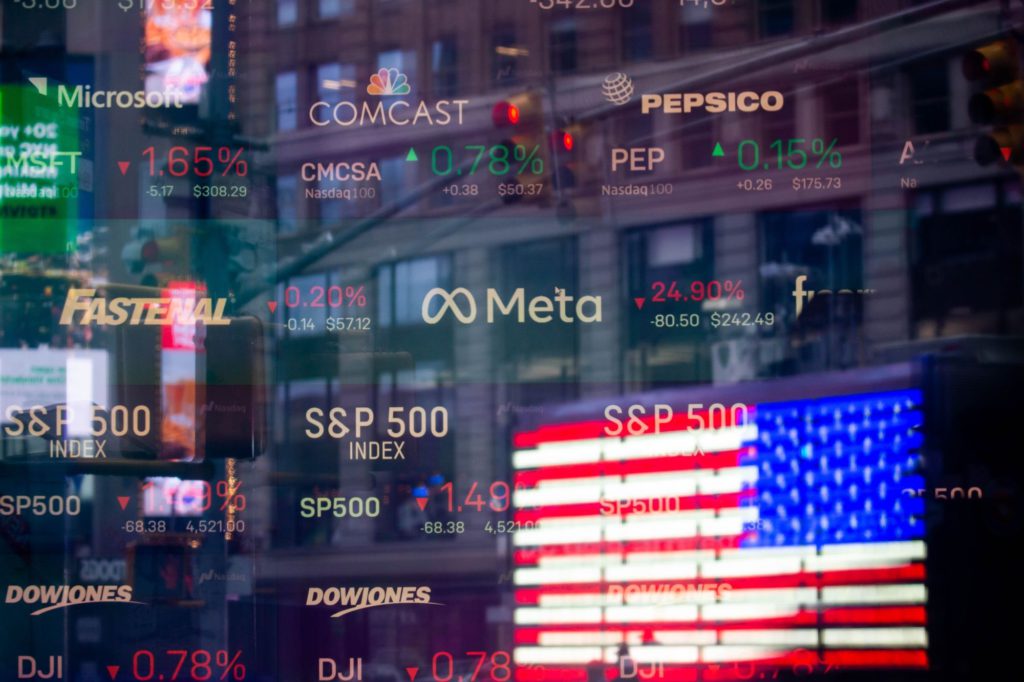
Meta, PayPal Plunges Leave Bullish Analysts on the Wrong Foot

(Bloomberg) — Big technology earnings have prompted some extreme share price moves this season, with Wall Street’s expectations seemingly misaligned with company realities.

Take Meta Platforms Inc.: before today’s 27% share price drop, which came after its revenue forecast for the first quarter missed estimates, analysts had been broadly bullish on the social-media giant. Among 62 Wall Street firms covering the Facebook owner, 52 had buy ratings, and analysts saw 18% upside to their average price targets, according to data tracked by Bloomberg. 

The sell side’s view on PayPal Holdings Inc. before it reported results was similarly bullish. The vast majority of analysts tracked by Bloomberg rated the payments company a buy before an earnings report which tanked the shares 25%. And for Netflix Inc., analysts had expected the streaming behemoth to add 6.26 million new users in the current quarter, a big mismatch with the 2.5 million in the company’s guidance.

High expectations and a history of earnings beats may be partly to blame for the share-price routs, according to Mark Stoeckle, chief executive officer and senior portfolio manager at Adams Funds.

“The sell side treated stocks like Netflix and Meta like royalty,” Stoeckle said in emailed comments. Given the rising competition and the maturity of the stocks, they are at an important inflection point, he added. “It doesn’t mean the world has passed them by, but it does mean they have headwinds that they have not seen in a very long time.”

Meta’s slump puts it on track to erase more than $200 billion from its market capitalization, which — if it closes at that level — would be the biggest one-day wipeout in market history. 

For Saxo Bank’s head of equity strategy, Peter Garnry, the misalignment between expectations and reality suggests that companies have “an apparently low visibility on their businesses driven by a lack of understanding of the post pandemic dynamics.”

At the same time, the moves “seem a bit excessive relative to the change in expectations, underscoring how sensitive and fragile the U.S. technology sector is right now,” Garnry wrote in emailed comments.

While Meta’s plunge has taken the stock below almost every analyst target in Bloomberg’s data, 49 Wall Street firms still recommend buying the shares.

More stories like this are available on bloomberg.com

©2022 Bloomberg L.P.

Tycoon’s ‘Netflix of Sports’ Stumbles in Bid for U.K. Football

(Bloomberg) — BT Group Plc had been trying to find a buyer or partner for its pay-TV unit BT Sport for at least 10 months, with rivals including DAZN, Walt Disney Co., Amazon.com Inc. and Discovery Inc. all sizing up potential offers. 

For much of the bidding process, billionaire Len Blavatnik’s streaming service DAZN, known as the “Netflix of Sports”, was widely reported as the likely winner. 

Such was the confidence within the DAZN camp, one executive was even spotted playing Township, a farming simulation game, on his smartphone during a meeting with BT at Goldman Sachs Group Inc., according to people familiar with the matter, who asked not to be named because the discussions were private.

In the end, BT lost confidence in DAZN’s bid, the people said. After a bout of last minute negotiations, BT revealed on Thursday that it would pursue a joint venture with a rival bidder, U.S. entertainment group Discovery, which would combine it with Eurosport UK. 

Representatives for BT and DAZN declined to comment. 

Deal Breaker

Success would have won DAZN rights to the U.K. Premier League and Champions League soccer, crown jewels that would have granted a splashy entrance to the region’s biggest live sport broadcast market. It recently won major sports rights deals in Germany, Italy and Spain.

Deliberations continued until late on Wednesday, the people familiar with the matter said. DAZN even raised its bid in the final stages of negotiations in an effort to save the deal, they said. 

Ultimately BT’s Chairman Adam Crozier, Chief Executive Officer Philip Jansen and consumer division chief Marc Allera opted for the longer-term value presented by Discovery’s proposals. 

Mike Darcey, a former COO at Sky, said an important factor in any decision would have been the level of security being demanded by the leagues that owned the sports rights being broadcast on BT Sport. The English Premier League has just signed a new three-year deal with BT.

“There are iron clad change of control clause in broadcast contracts,” he said. “Some will remember what happened to the Football League when OnDigital walked away from its contract and the EPL also had issues with Setanta. The leagues would have seen that DAZN is a significant loss-making entity and they would have presumably wanted a chunk of the three-year deal paid upfront or maybe a big guarantee from Blavatnik.”

Inside DAZN

DAZN’s Chairman Kevin Mayer, a former Disney executive and briefly TikTok CEO who also launched several blank-check companies, said the group maintained its plans for growth in the U.K., where it streams boxing rights and Champions League womens’ football, as well as sporting documentaries. 

“We remain fully committed to growing our business and investing in the U.K., as you will see in the near future,” Mayer said in an emailed statement.

In the past year or so, DAZN has shifted strategy from pursuing secondary sports rights in a handful of markets, to launching in around 200 territories and focusing on blockbuster football rights in three markets: Italy, Spain and Germany. 

DAZN’s financial accounts for the year up to 31 December 2020 are overdue, according to a note at London’s Companies House, where they have to be registered. The company’s last set of published results, for the year to 2019, show a loss of $1.3 billion for continuing operations. The directors at the time concluded that the company had sufficient funds to continue given the support of the principal shareholder, Blavatnik’s Access Industries.

More stories like this are available on bloomberg.com

©2022 Bloomberg L.P.

Wireless, Aviation Industries Face Off Over Chaotic 5G Launch

(Bloomberg) — A top House lawmaker called the U.S. government’s process of auctioning radio spectrum “completely broken” as wireless and aviation groups presented starkly different views of last month’s chaotic rollout of new 5G wireless service. 

Representative Peter DeFazio, the Oregon Democrat who is chairman of the Transportation and Infrastructure Committee, said in prepared remarks the Federal Communications Commission had no plan in place to deal with what he called well known safety issues. 

A panel of witnesses appearing before the committee’s Aviation Subcommittee praised ongoing technical work between the two sides, but differed markedly on the potential risks to aviation and the impacts to the aviation system from the high-speed mobile phone service introduced Jan. 19.

Leaders of aviation-industry groups said the Federal Aviation Administration’s flight precautions were placing a heavy burden on pilots, who must now sift through scores of new restrictions that can vary by different runways at the same airport. 

Pilots are forced “to perform extensive workarounds” that “we expect will be needed for the foreseeable future,” Joe DePete, president of the Air Line Pilots Association, said in prepared remarks. “This is no way to run a railroad, and it’s certainly no way to operate the world’s safest air transportation system.”

New 5G service introduced by AT&T Inc. and Verizon Communications Inc. operates on frequencies that are close to those used by aircraft devices known as radar altimeters, which show how far a plane is off the ground. 

The FAA says research shows that the 5G signals have the potential to interfere with the altimeters, which perform a wide variety of navigation and safety functions.

Meredith Attwell Baker, president and chief executive officer of the wireless industry trade group CTIA, called the evidence of interference “flawed.”

The FCC “conducted a rigorous analysis and found no harmful interference” from the C-band frequencies used for 5G, she said in her prepared remarks.

The FAA has cleared about 90% of aircraft to operate near 5G signals across the U.S., partly as a result of an agreement by the wireless companies to limit placement of cell towers near runways. At some major airports, including New York’s John F. Kennedy and New Jersey’s Newark Liberty, the percentage is only 81% because of the mix of aircraft, the agency said Wednesday. 

Faye Malarkey Black, who heads the Regional Airline Association, said the smaller aircraft used by its members haven’t received as many FAA clearances, putting them at greater risk of flight cancellations if bad weather hits. 

“Leaving dozens of airports and millions of passengers vulnerable to sweeping disruptions is unsustainable and unacceptable,” Black said in her prepared remarks. 

The awkward deployment of 5G, which was twice delayed in recent weeks, was caused by FCC’s decision to approve it without “any concrete plan in place to safely deploy these technologies without interfering with aviation,” DeFazio said in his prepared opening statement for the hearing. 

The lawmaker also revealed that the FAA had attempted to raise concerns about the potential for 5G radio interference earlier than was previously known. 

DeFazio said the FAA “was ignored” in 2019 when it raised the issue with the National Telecommunications and Information Administration, the Commerce Department branch responsible for coordinating federal airwaves policy.

In a September 2019 letter, the FAA asked the Commerce Department branch to carry its concerns about interference to the FCC, which at the time was considering rules for allocating the airwaves for 5G use. A search Wednesday of the FCC’s online record found no evidence the FAA’s point of view was relayed to the communications agency.

The letter showed the FAA raised concerns more than a year earlier than has previously been reported. 

FCC Chairwoman Jessica Rosenworcel was invited to testify but had a schedule conflict, DeFazio said. 

More stories like this are available on bloomberg.com

©2022 Bloomberg L.P.

EV Startups Are Wilting in Harsh Light of Public Eye

(Bloomberg) — Electric vehicle startups whose valuations soared after reverse mergers are facing greater scrutiny as public companies, triggering turmoil in their boardrooms.

A pair of would-be rivals to EV market leader Tesla Inc. have disclosed departures by senior executives for allegedly misleading investors. Faraday Future Intelligent Electric Inc., which went public via a blank-check company in July 2021, said late Tuesday its chairman and top lawyer would step down as a result of the findings of an internal probe into accusations of fraud. It also suspended its vice president of capital markets without pay until further notice. 

An unrelated EV startup called Electric Last Mile Solutions Inc. said the same day that its chairman and chief executive officer resigned after an internal probe discovered the pair allegedly made improper share purchases before announcing plans to go public through a special purpose acquisition company in December 2020. 

Messages to the former executives at both startups were not immediately returned. 

Shares of both companies fell Wednesday, with Faraday Future dropping 7.5% to close at $4.22 and Electric Last Mile plunging 52% to a record low of $2.71. That was well under their respective debut prices following the mergers.

Electric vehicle startups have historically struggled to drum up the funding required to become true automotive manufacturers. But a wave of cash washed into the industry over the past couple of years as Tesla put to rest doubts about its viability and grew to become the world’s highest-valued automaker. That led to a scramble on the part of some investors to seek out the next startup able to follow in the footsteps of Tesla and similar success stories such as Rivian Automotive Inc. 

Around $15 billion was raised in 2021 alone by EV-related companies that went public via SPAC, according to research from BNEF published this week.

Federal Investigations

With no revenue but big ambitions, a dozen or more startups went public via SPACs before the market cooled off in January. A handful have triggered federal investigations into how they promoted themselves ahead of their respective mergers, including Lordstown Motors Corp. and Canoo Inc.

Hydrogen trucking startup Nikola Corp. paid a $125 million civil penalty to resolve fraud claims in December, after its own founder and former CEO Trevor Milton was accused by the Securities and Exchange Commission and the Department of Justice. And almost all of the startups face purported class-action lawsuits that allege securities fraud.

Many also have been targeted by short-sellers, who can make money when stocks fall and have in some cases publicized unflattering exposes on these EV companies. Fuzzy Panda Research, a short-focused investment firm, published a report about Electric Last Mile Wednesday morning. 

The market has even soured on better-funded EV manufacturers that have shipped vehicles — a sign of investors’ shift away from higher-risk assets. Rivian’s share price has fallen 64% from its post-IPO high of $179.47 on Nov. 16, while Lucid Motors Inc. is down 50% from its high of $55.52 on that same day. 

Rivian fell 7.6% to close at $64.32 and Lucid declined 7.6% to $27.68. 

Some startups are facing questions about decisions made as private companies, long before they ever decided to go public. That has increased investor uncertainly about the wherewithal of these newly listed companies, many of which are still months or years away from building a single vehicle ready for commercial sale.

Opulent Housing

When former BMW AG executive Carsten Breitfeld moved to Los Angeles in 2019 to take over as CEO of Faraday Future, he took up residence in a multimillion-dollar mansion overlooking the Pacific Ocean, according to the founder Jia Yueting’s bankruptcy filings. 

It was one of at least three Jia purchased to be used as corporate housing, some with money borrowed from Faraday and his other companies in China, the filings show. The homes were used for parties, hosting out-of-town guests, and even as collateral for loans, The Verge has reported. 

Faraday’s use of the homes — which are owned by a limited liability company created by Jia —  was one of many decisions the company scrutinized during its investigation. The startup said Tuesday that it will “continue investigative and remedial work, including regarding whether inaccurate disclosures were made relating to its corporate housing arrangements and its related party disclosures.”

(Updates to correct the description of legal action against Nikola’s founder in ninth paragraph. An earlier version corrected the description of stock declines in the fifth paragraph.)

More stories like this are available on bloomberg.com

©2022 Bloomberg L.P.

Close Bitnami banner
Bitnami