Bloomberg

Germany’s Empty Car Showrooms Are Ramping Up Prices, Ifo Says

(Bloomberg) — Sign up for the New Economy Daily newsletter, follow us @economics and subscribe to our podcast.

German carmakers may be successfully raising prices for customers, whose demand for new vehicles is outstripping supply still beset by bottlenecks. 

That’s according to the Munich-based Ifo economics institute, which compiles the country’s most-watched business survey. It says the situation in the auto industry improved at the start of the year, even though conditions for parts manufacturers got worse.

“A possible reason for this is that automakers succeeded in getting customers on board with price increases, whereas suppliers have not,” said Oliver Falck, director of the ifo Center for Industrial Organization and New Technologies.

Evidence that carmakers are able to charge customers more could point to more inflation pressures in Europe’s largest economy. Annual price growth hit 6% at the end of last year and has eased much less than expected in recent weeks.

Germany’s manufacturing-led economy has been slower than peers to recover from the pandemic amid a global supply squeeze that left almost a fifth of employees in the car sector furloughed in December. New-car registrations there fell 10% last year to 2.6 million vehicles, a decline largely triggered by the global shortage of semiconductor chips. 

As the number of produced cars remains low and demand is high, carmakers can demand higher prices, said Falck. 

“The market for new cars has been cleaned out,” he said. “So dealerships can sell their stock to customers without offering any discounts.” 

More stories like this are available on bloomberg.com

©2022 Bloomberg L.P.

UAE Wealth Funds Behind $10 Billion Israel Plans Scout for Deals

(Bloomberg) — Major United Arab Emirates wealth funds have discussed expanding into Israel to advance up to $10 billion in investments over the next decade, according to three people familiar with the talks, in what would be the biggest cash commitment since the nations normalized ties.

The sovereign investors include the $243 billion Mubadala Investment Co. and ADQ, said two of the people, who asked not to be identified discussing confidential discussions between Israeli and UAE officials. The talks are in early stages, they said. 

Also on the agenda is the possibility that the funds could open offices in Israel to invest in local venture capital firms, businesses and public projects, according to one of the people. ADQ is looking at investing around $2 billion in total through Abu Dhabi Growth Fund, which sits in its Abu Dhabi headquarters, according to two of the people. 

It was not immediately clear which funds would make up the rest of the $10 billion total. Abu Dhabi Investment Authority, the UAE’s largest wealth fund with close to $700 billion in assets under management, is also looking to invest in Israel, two of the people said. 

Israel PM to Meet de Facto UAE Ruler Amid Tense Iran Talks 

The ADIA and Mubadala declined to comment. ADQ did not respond to a request for comment. 

By the time the UAE and Israel signed their landmark agreement in late 2020, years of quiet security cooperation had provided the bedrock for the diplomatic, defense and economic ties each sought to deepen. Shared concern over regional heavyweight Iran and its nuclear program provided much of the impetus. In January, Israel offered the UAE security and intelligence support after a deadly drone strike by Iran-backed fighters in Yemen. 

In recent months, the diplomatic arena has been busy with Israeli Prime Minister Naftali Bennett and President Isaac Herzog both visiting the UAE. The Gulf nation’s de facto leader Sheikh Mohammed Bin Zayed Al Nahyan has been invited to pay a reciprocal visit. 

Israel Offers to Help UAE After Houthis Attack on Abu Dhabi

Cross-border trade has steadily grown, capped off by Mubadala’s recent $1 billion purchase of a stake in Israel’s second-biggest natural-gas field. ADQ, one of the UAE’s newest sovereign wealth funds with an estimated $110 billion in assets under management, has already invested in the Israeli lab-grown meat company Aleph Farms. 

The figures mooted by UAE wealth funds would add to what’s been a record stretch of fundraising by Israeli technology companies, with startups alone attracting about $26 billion last year. Global investors from Soft Bank Group Corp. to Blackstone Inc. are opening local branches to better sniff out deals. 

A number of UAE-based companies and funds have opened offices in Israel, including artificial intelligence and cloud computing company G42, and the state-run Abu Dhabi Investment Office. And one of Israel’s fastest-growing technology firms, Rapyd, is opening a Dubai office to lure international talent as a way around the chronic labor shortage plaguing the industry at home.

Dubai Is Bait in War for Coder Talent Fought by Israel Firms

Other bilateral deals have stalled and some of the large investments promised have yet to materialize. Israel’s energy minister wants her country to scrap an oil pipeline deal with a group of UAE investors out of environmental concerns, casting doubt over that politically sensitive agreement, reached with the previous Israeli government. 

More stories like this are available on bloomberg.com

©2022 Bloomberg L.P.

JPMorgan, Citi See No End to Fevered Demand for Middle East IPOs

(Bloomberg) — Frenzied demand for initial public offerings in the Middle East shows no signs of slowing, providing a rare bright spot as investors shun listings from the U.S. to Europe.

Saudi digital security company Elm Co. drew $57 billion in institutional orders for its IPO this week, almost 70 times the targeted proceeds. It priced at the top of its range, as did Scientific & Medical Equipment House Co. for its Riyadh offering.

Investors in Europe and the U.S. have by contrast stayed on the sidelines during recent market turbulence. In New York, more than $4 billion of blank-check offerings have been called off this year, while lack of demand forced U.S. human resources platform Justworks Inc. and Dutch startup WeTransfer to scrap listings. German drugmaker Cheplapharm and Spanish bank Ibercaja delayed IPO plans.

Read More: IPO Delays Start to Pile Up in Europe Amid Market Turmoil

It’s not just local demand boosting share sales in the Middle East, according to Nicolas Skaff, head of emerging markets ECM at JPMorgan Chase & Co. in London. “The interest and the engagement that we’re seeing from international investors is as high as it’s ever been.”

Citigroup Inc. is doubling down on its bet that Middle East IPOs will keep coming at a record clip by beefing up its presence in the region. Saudi Arabia’s largest pharmacy retail chain, Al Nahdi Medical Co., this week kicked off the largest share sale in the kingdom since Saudi Aramco went public in 2019.

And Dubai is seeking to close the gap with regional rivals Abu Dhabi and Riyadh with a clutch of planned listings, including that of its main utility, Dubai Electricity & Water Authority.

“The GCC as a whole is a bright spot for investors especially given recent IPOs have performed very well,” said Rudy Saadi, head of ECM in the Middle East and North Africa at Citigroup, noting the strong pipeline of deals in Saudi Arabia and the United Arab Emirates.

Read More: IPOs Run Out of Steam as Selloff Rattles Global Equity Markets

Still, IPOs in the Gulf may face tougher conditions ahead, as concerns over tightening monetary policy rattle global markets, making investors less receptive to new listings. High oil prices have recently supported local equity benchmarks, but growing competition between the UAE and Saudi Arabia is creating discord at the heart of OPEC.

And the Middle East is not devoid of geopolitical risks. Yemen’s Houthi fighters have claimed several rare attacks on the UAE in recent weeks, an escalation of a conflict that is fueling tensions in the Gulf.

More stories like this are available on bloomberg.com

©2022 Bloomberg L.P.

Playtech Approached by TTB After Aristocrat Deal Collapse

(Bloomberg) — Playtech Plc says it was contacted by TTB Partners about a potential takeover, the day after investors rejected an approach from Aristocrat Leisure Ltd.

Any offer, if made, is likely to be in cash, the British provider of gambling software said in a statement Thursday. TTB is an affiliate of Hong Kong-based Gopher Investments, which withdrew its consideration for Playtech in November. Playtech shares rose as much as 11.7% in early trading.

TTB’s approach came on Wednesday afternoon, when Playtech said the shareholder vote on Aristocrat’s cash offer of 680 pence per share for the company fell short of the 75% threshold for acceptance. Australia’s Aristocrat made its bid in October, and for much of the time since the shares have held above the offer price. 

The U.K. company then attracted interest from suitors including Gopher Investments, Playtech’s second-biggest shareholder, at 4.97% of the company. Gopher withdrew its consideration in November. 

TTB is an affiliate of Gopher, and the latter’s decision to step back from Playtech triggered a six-month restriction period, in accordance with U.K. rules.

Playtech said in Thursday’s statement this restriction could be lifted on the consent of its board, and that it would be willing to consider a possible offer from TTB. There’s no guarantee an offer will be made, according to the statement.  

The interest around Playtech is part of a global deal frenzy in the gambling market. The activity was kicked off by a 2018 U.S. Supreme Court ruling striking down a law that barred commercial sports betting in most states.

Sky News first reported TTB’s approach. 

(Adds shares in second paragraph)

More stories like this are available on bloomberg.com

©2022 Bloomberg L.P.

Nintendo Cuts Switch Outlook Again on Supply, Logistics Jam

(Bloomberg) — Nintendo Co. cut its Switch sales outlook for the second quarter in a row as console makers grapple with a chronic chip shortage that is likely to continue this year.

The Kyoto-based company now expects to sell 23 million Switch units in the fiscal year ending March, down from the previous 24 million. It sold 18.95 million consoles over the past nine months, a 21% drop from the same period a year earlier, and said challenges around semiconductors and shipping may persist.

Operating profit for the quarter ended December was 252.6 billion yen ($2.2 billion), above the average analyst estimate of 212.6 billion yen. Strong software sales during the holiday period and a fast-selling entry in the Pokémon franchise prompted President Shuntaro Furukawa to raise Nintendo’s operating profit outlook for the fiscal year ending March to 560 billion yen from the previous 520 billion yen.

Console makers have been struggling at the back of the line for semiconductors since the start of the pandemic, with compatriot Sony Group Corp. cutting more than 3 million from its PlayStation 5 sales forecast when it reported earnings a day ahead of Nintendo. PS5 shipping costs have grown so high that the company is expecting higher profit because of the reduced number of sales this year, Chief Financial Officer Hiroki Totoki said when discussing its financial results on Wednesday.

Spider-Man Rescues Sony From PlayStation’s Bad Quarter

The $350 OLED model of Nintendo’s handheld-hybrid Switch, released in October, has also been hard to find at stores, suggesting the company could have sold more units if it were able to get them out to retail shelves. Component makers and logistics providers say they don’t yet see signs of the jam coming to an end this year.

“Switch is just in the middle of its lifecycle and the momentum going into this year is good,” Furukawa said on a call after the earnings report. “The Switch is ready to break a pattern of our past consoles that saw momentum weakening in their sixth year on the market and grow further.”

The Switch became the fastest home console to surpass 100 million lifetime sales during the quarter, and analysts like Tokyo-based consultant Serkan Toto now consider it a lifestyle product as much as a piece of electronics. Initially released in March 2017, the device is likely to maintain its lead this year as Microsoft Corp.’s latest Xbox generation is expected to remain supply-constrained much like Sony’s PS5.

Nintendo may face pressure from investors to join the acquisition campaign triggered by Microsoft’s planned $69 billion takeover of Activision Blizzard Inc., which was swiftly followed by Sony’s announcement that it intends to buy Bungie Inc. for $3.6 billion. But longtime watchers of the games maker like Toto don’t expect it to look for its next big hit from an external game publisher.

“I really have a hard time imagining which of the big ones they could even be interested in buying,” he said. “Nintendo will always stay Nintendo. The company has always relied on first-party games, and I don’t see any reason why they should change.”

Nintendo chief Furukawa said in November that the company plans to spend up to 100 billion yen to strengthen its game development arsenal, with a focus on promoting organic growth. On Thursday, he reiterated that Nintendo plans no change in its investment policy, though he also said that the company isn’t against acquisitions if those are necessary.

“Our brand was built upon products crafted with dedication by our employees, and having a large number of people who don’t posses Nintendo DNA in our group would not be a plus to the company,” Furukawa said.

Among the marquee Switch titles expected this year are The Legend of Zelda: Breath of the Wild 2 and Splatoon 3, and more than 10 outside developers told Bloomberg News last year that they are preparing major games for the five-year-old platform this year.

Nintendo Game Developers Miffed Over Switch’s Missing Feature

(Updates with president quotes and chart)

More stories like this are available on bloomberg.com

©2022 Bloomberg L.P.

BT’s Top Line Hit by Covid-19 and Supply Chains: The London Rush

(Bloomberg) — Here’s the key business news from London-listed companies this morning:

BT Group Plc: The telecoms company started talks with Discovery Inc. on a joint venture for its sports broadcasting business – that would bring BT together with Eurosport UK, all on Discovery’s platform and app. 

  • At a group level the company said its full-year adjusted revenue is expect to be down about 2% for this year as a result of disruption from Covid-19 and supply-chain issues

Playtech Plc: The gaming software company has received yet another approach about a possible offer for the company, this time from an investor group formed and advised by TTB Partners.

  • This is the fourth possible offer, and came on the same afternoon a group of investors voted against Aristocrat Leisure Ltd’s 2.1 billion-pound approach

Shell Plc: Higher commodity prices boosted the energy company’s earnings this quarter compared to the last, despite lower margins in chemicals and marketing.

Cranswick Plc: The meat producer says there’s still an industry-wide oversupply of pigs, where at times supply is exceeding processing capacity.

Outside The City

The U.K. will make another attempt to secure a long-awaited free-trade deal with the U.S. after the midterm elections later this year, Secretary of State for International Trade Anne-Marie Trevelyan said in an interview.

Energy bills in the U.K. are likely to rise by 50% this morning, escalating the country’s cost of living crisis, and forcing the government to roll out a multi-billion pound support package. 

Further afield, Russia said U.S. President Joe Biden’s decision to move additional troops to Europe was destructive.

Looking Ahead

The Bank of England will announce a policy decision at 12 p.m. today, where it is expected to deliver the first back-to-back interest-rate increase since 2004. The bank is also likely to take its first steps towards unwinding some of its pandemic-related stimulus.

With the bulk of this week’s earnings over, attention turns to the healthcare sector where next week we’ll hear from industry giants GSK Plc, Unilever Plc and AstraZeneca Plc. 

More stories like this are available on bloomberg.com

©2022 Bloomberg L.P.

Bitcoin Analysis Shows Prices May Bottom Soon, Fundstrat Says

(Bloomberg) —

Bitcoin stands a good chance of bottoming by the next few months, according to a technical analyst at Fundstrat.

The largest cryptocurrency has stabilized recently after falling about 50% from a record in November. According to a pricing model tracked by Fundstrat’s Mark Newton, there’s a “good likelihood” that the low for Bitcoin is coming by the spring months.

Still, he cautioned against getting bullish now. “This minor two-week bounce might still be premature in expecting a new intermediate-term rally has begun,” Newton said. 

Among key technical levels to watch, prices moving above $40,000 would be important for bulls, he added. A decline under $35,511 would set up a test of $32,950, around the Jan. 24 intraday low, he said.

Bitcoin has declined in recent weeks amid a global rout in risk assets on growing concerns about a hawkish Federal Reserve. Tokens like Bitcoin and Ether are growing more correlated with assets like stocks as more traditional investors start to jump in.

Bitcoin was steady on Thursday, trading around $37,000 as of 7:36 a.m. in London. 

Even if Newton expects a bottom sometime soon, he’s still thinking cautiously.

“Until $40,000 is exceeded on a daily close, it remains in a downward sloping pattern, and it’s tough to rule out further weakness technically speaking,” he wrote.

More stories like this are available on bloomberg.com

©2022 Bloomberg L.P.

Hong Kong Markets Are Primed for a Positive Start After Holidays

(Bloomberg) — Hong Kong’s stocks are primed to play catchup on Friday, following gains on Wall Street and in Chinese names listed in the U.S. during the Lunar New Year holiday.  

The city’s equities should benefit from signs that the Federal Reserve won’t be rushed on rate-hikes, and from a more upbeat picture of corporate earnings this week, though disappointing forecasts from the likes of Meta Platforms Inc. may temper any advance.

The Nasdaq Golden Dragon China Index — which includes many large Chinese technology companies — has jumped 8% since Hong Kong shares last traded at midday Monday, helped in part by encouraging commentary from the country’s cyberspace watchdog.

“Hong Kong stocks can do some catchup,” said Margaret Yang, a strategist at DailyFX who expects a higher open on Friday. “The medium- to long-term outlook is also improving, given that valuations are cheap and China’s regulatory policies have started easing.” 

Post-holiday jumps for equity benchmarks in Seoul, Singapore and Kuala Lumpur on Thursday have added to expectations for a positive open in Hong Kong. Mainland China markets will reopen on Monday.

Yet there are significant threats to a sustained recovery in Hong Kong and mainland stocks, even as an increasing number of global banks turn bullish on them.

Some investors continue to sell into rallies, China’s property market distress remains acute and the slowing pace of economic growth continues to weigh. Positive statements toward the technology sector have yet to undo the damage inflicted on the business models of many internet platforms over the past year.

On top of all this, the mainland’s CSI 300 Index entered a bear market last week despite Beijing’s efforts to bolster confidence going into the holiday, and the central bank’s earlier pivot to stimulus.

Hong Kong’s Hang Seng Index had fallen into a bear market much earlier, in August, and remains down more than 20% from its peak in February last year.

More stories like this are available on bloomberg.com

©2022 Bloomberg L.P.

BT in Exclusive Talks to Create Sport TV Venture With Discovery

(Bloomberg) — BT Group Plc is in exclusive talks to create a 50-50 sports joint venture with U.S. entertainment group Discovery Inc., dealing a major blow to rival suitor DAZN.

The phone and broadband carrier had been publicly exploring options for its pay-TV unit BT Sport for 10 months alongside in an effort to focus on its traditional role of telecommunications infrastructure. 

The new venture would mean BT Sport customers get access to Discovery’s sport and entertainment content, including its discovery+ app, while Discovery would get access to BT Sport’s customer base and package of rights which includes English Premier League soccer. 

BT is aiming for the new venture to be up and running by the end of the year subject to competition approvals, it said Thursday alongside third quarter results. No financial terms were disclosed. 

DAZN had been reported as one of the bidders for BT Sport. The Len Blavatnik-backed platform. whose name is pronounced “da zone,” is aiming to be a global sports streaming service. It spent quickly to acquire rights to broadcast sports including soccer, boxing and Formula 1 motor racing across Europe, Asia and the Americas. In 2019 it made a substantial operating loss and its latest accounts are overdue according to the U.K. companies registry. 

“We remain fully committed to growing our business and investing in the U.K., as you will see in the near future” said DAZN chairman Kevin Mayer in an emailed statement. “On this occasion however, the deal for BT Sport became uneconomical for DAZN. However, we respect that BT chose a different strategic path, and wish BT, BT Sport, and Discovery all the best for the future.”

London-based BT introduced its sports broadcasting service in 2013 and owns rights to European Champions League and some English Premier League soccer. The deal involves approvals from Europe’s biggest pay-TV platform, Comcast Corp.’s Sky, because it shares a cross-licensing arrangement with BT. 

Lazard Ltd. advised BT on the process.

More stories like this are available on bloomberg.com

©2022 Bloomberg L.P.
Nasdaq Futures Drop 2% on Earnings Woe; Dollar Up: Markets Wrap

(Bloomberg) — The rally in global stocks faltered Thursday following disappointing earnings from technology bellwethers and as traders await more clues on how quickly key central banks will tighten monetary policy.

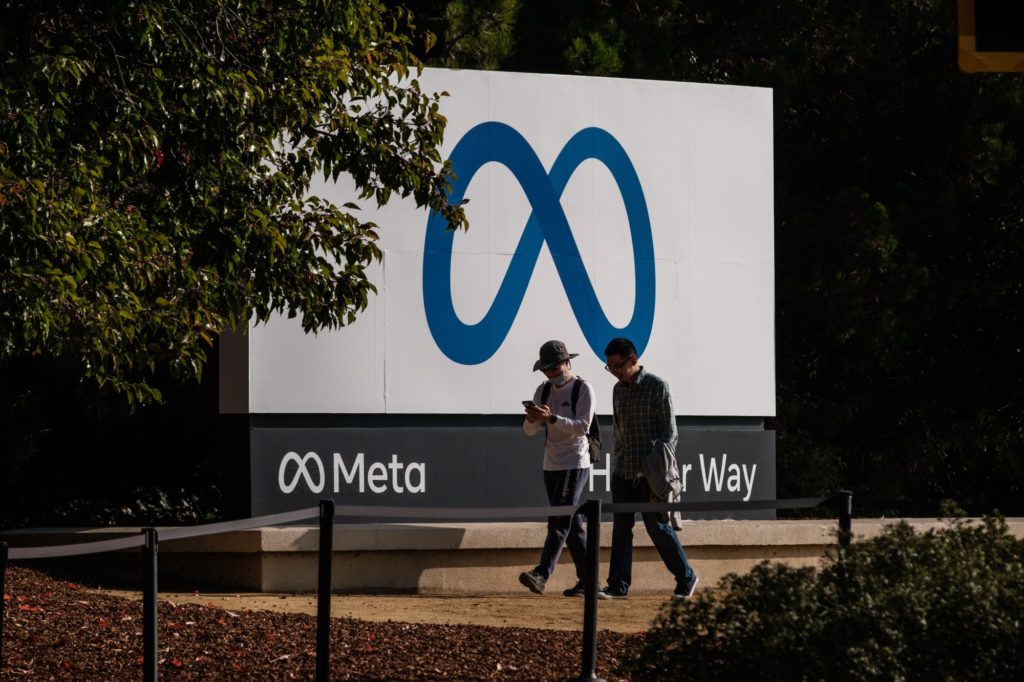
U.S. equity futures dropped, with contracts on the technology-heavy Nasdaq 100 down some 2%, after Facebook parent Meta Platforms Inc. and streaming service Spotify Technology SA plunged in late trading on soggy forecasts. 

European futures and MSCI Inc.’s Asia-Pacific index retreated. U.S. shares closed up Wednesday, taking global stocks to their best four-day advance since 2020, but the tech fallout overshadowed that winning run.

A strong regional inflation print is buttressing the euro and adding pressure on the European Central Bank to reconsider its dovish stance. Policy decisions from the ECB and the Bank of England are due Thursday.

Treasury yields dipped and a dollar gauge rose, snapping a three-day retreat. Oil eased from a seven-year high and gold was steady at around $1,806 an ounce.

The poorly received earnings reports from the U.S. tech giants are a challenge for dip buyers hoping that corporate performance will assuage worries about central bank interest-rate hikes. Markets have swung sharply and stocks are nursing losses this year as officials pare stimulus to curb inflation.

“Volatility is here to stay,” Anna Han, equity strategist at Wells Fargo Securities, said on Bloomberg Television. “Our outlook for 2022 was that we’d see more spikes in volatility. With that choppiness, with that unpredictability, investors are going to express that by compressing multiples.”

If the near-23% after-hours tumble in Meta Platforms holds on Thursday, it has the potential to erase about $200 billion in market value from the company — bigger than Netflix Inc.’s total value at current prices.

Meanwhile, ADP figures before Friday’s jobs report showed employment at U.S. firms shrank in January by the most since the early days of the pandemic. The omicron virus variant dealt a swift yet likely temporary blow to the labor market.

Markets will probably trade off average hourly earnings in the jobs report, but if the unemployment rate “surprises us and ticks up some may see it as confirmation of fears that the U.S. economy is slowing,” Steven Englander, global head of G-10 FX research at Standard Chartered Bank, wrote in a note.

Elsewhere, the U.S. gave the green light to plans to move more troops to Europe and dispatch soldiers already stationed on the continent further east, seeking to send a stronger military message alongside diplomatic efforts with Russia over Ukraine.

Western officials have warned of punishing economic sanctions if Russia invades Ukraine, which the Kremlin denies it plans to do. 

For more market analysis, read our MLIV blog.

What to watch this week:

  • Earnings are due from Amazon, Ford Motor
  • Bank of England, European Central Bank rate decisions, Thursday
  • Fed Board of Governors confirmation hearing, Thursday
  • U.S. factory orders, initial jobless claims, durable goods, Thursday
  • U.S. payrolls report for January, Friday
  • Winter Olympics kick off in China, Russia’s President Vladimir Putin due to attend opening ceremony, Friday

Some of the main moves in markets:

Stocks

  • S&P 500 futures fell 1% as of 6:56 a.m. in London. The S&P 500 rose 0.9%
  • Nasdaq 100 futures declined 2.2%. The Nasdaq 100 rose 0.8%
  • Japan’s Topix index shed 0.9%
  • South Korea’s Kospi rose 1.7%
  • Australia’s S&P/ASX 200 index lost 0.1%
  • Euro Stoxx 50 futures declined 0.5%

Currencies

  • The Bloomberg Dollar Spot Index rose 0.1%
  • The euro was at $1.1293, down 0.1%
  • The Japanese yen was at 114.54 per dollar
  • The offshore yuan was at 6.3684 per dollar, down 0.2%

Bonds

  • The yield on 10-year U.S. Treasuries declined about one basis point to 1.77%
  • Australia’s 10-year bond yield fell four basis points to 1.87%

Commodities

  • West Texas Intermediate crude fell 0.6% to reach $87.77 a barrel
  • Gold was at $1,805.39 an ounce

More stories like this are available on bloomberg.com

©2022 Bloomberg L.P.

Close Bitnami banner
Bitnami
