Bloomberg

Stocks Fluctuate Before Fed Minutes; Dollar Drops: Markets Wrap

(Bloomberg) — US stocks fluctuated as investors await the release of policy minutes from the Federal Reserve’s latest meeting for potential signs that the central bank may slow its pace of interest-rate hikes. 

The S&P 500 and the Nasdaq 100 swung between modest losses and gains. Market trading volumes are expected to be lighter, given the US Thanksgiving holiday on Thursday.  

Treasuries pared the gains it notched after weaker-than-expected purchasing managers’ index readings for November. A gauge of dollar strength dipped after data showed that US unemployment applications rose more than expected, in a sign of cooling in the labor market. Oil fell as the European Union discussed imposing a price cap on Russian oil between $65 and $70 a barrel. 

The publication of minutes from the Fed’s Nov. 1-2 meeting — due at 2 p.m. in Washington — will be studied for how united policy makers were over a higher peak for interest rates than previously signaled in their fight against inflation. However, since that meeting, investors have parsed a bevy of economic data that somewhat eased inflation concerns. 

That, along with recent rhetoric from Fed speakers, has made some investors anticipate the central bank will moderate its pace of rate hikes soon. Meeting minutes could still show Fed officials diverging over the terminal rate. 

“2022 was a year marked by extremely expensive starting valuations, resilient growth, very high inflation, and then very hawkish policy,” said Andrew Sheets, Morgan Stanley chief cross asset strategist, on Bloomberg TV. “When we think about next year, all those elements are somewhat different. Valuations have normalized. We think growth will be weaker, but inflation will be lower and policy will be a lot less hawkish.”

The “corrective price action” in the dollar, oil and Treasury yields suggests the market thinks peak inflation is behind us, says Craig Johnson, Piper Sandler’s chief market technician.

“Any slightly confirming signal from the Fed could thrust equities higher into the holiday season.”

European investors, meanwhile, digested data showing that private-sector activity in Germany and France — the euro area’s top two economies — contracted in November. This painted a bleak picture for a region that may already be in recession. A separate survey showed that the UK economy is in recession, with the downturn expected to worsen into 2023.

A gauge measuring Euro-area activity in manufacturing and services unexpectedly rose in November. It signaled that businesses see tentative signs that the region’s economic slump may be easing as record inflation cools and expectations for future production improve. 

Key events this week:

  • S&P Global PMIs: US, Wednesday
  • University of Michigan sentiment, Wednesday
  • Minutes of the Federal Reserve’s Nov. 1-2 meeting, Wednesday
  • ECB publishes account of its October policy meeting, Thursday
  • US stock and bond markets are closed for the Thanksgiving holiday, Thursday
  • US stock and bond markets close early, Friday

Some of the main moves in markets:

Stocks

  • The S&P 500 was little changed as of 1:07 p.m. New York time
  • The Nasdaq 100 rose 0.2%
  • The Dow Jones Industrial Average was little changed
  • The MSCI World index rose 1.1%

Currencies

  • The Bloomberg Dollar Spot Index fell 0.5%
  • The euro rose 0.6% to $1.0364
  • The British pound rose 1.2% to $1.2029
  • The Japanese yen rose 1% to 139.88 per dollar

Cryptocurrencies

  • Bitcoin rose 1.6% to $16,383.96
  • Ether rose 2.1% to $1,153.88

Bonds

  • The yield on 10-year Treasuries declined two basis points to 3.74%
  • Germany’s 10-year yield declined five basis points to 1.93%
  • Britain’s 10-year yield declined 13 basis points to 3.01%

Commodities

  • West Texas Intermediate crude fell 4.3% to $77.47 a barrel
  • Gold futures rose 0.3% to $1,759.20 an ounce

This story was produced with the assistance of Bloomberg Automation.

–With assistance from Vildana Hajric, Peyton Forte, Isabelle Lee, John Viljoen and Wayne Ramsey.

More stories like this are available on bloomberg.com

©2022 Bloomberg L.P.

Amazon Plans to Invest $1 Billion a Year in Movies for Theaters

(Bloomberg) — Amazon.com Inc. plans to spend more than $1 billion a year to produce movies that it will release in theaters, according to people familiar with the company’s plans, the largest commitment to cinemas by an internet company.

The world’s largest online retailer aims to make between 12 and 15 movies annually that will get a theatrical release, said the people, who asked not to be identified because the company is still sorting through its strategy. Amazon will release a smaller number of films in theaters next year and increase its output over time. That number of releases puts it on on a par with major studios such as Paramount Pictures.

Streaming services have eschewed theaters with most of their original movies, or released the titles for less time and on fewer screens than traditional movie studios. Netflix Inc. in particular has aggravated cinema chains by releasing more than a movie a week for viewers at home. The streaming giant released a sequel to Knives Out  in theaters on Wednesday. It will stay there for just one week, however, before heading to streaming next month. The original film grossed $312.9 million theatrically in 2019.

Amazon has been more open to theaters than Netflix, but has yet to invest as much money in original movies. While Netflix releases close to 100 movies a year, Amazon puts out just a couple dozen, many in languages other than English.

“Amazon.com’s plans to invest $1 billion to produce 12-15 movies a year for release in cinemas is a vote of confidence in the theatrical model,” Bloomberg Intelligence analyst Geetha Ranganathan wrote Wednesday in a note. It could “easily boost receipts by 15%-20% given Universal and Warner have roughly similar budgets.”

The news lifted shares of theater operators. AMC Entertainment Holdings Inc., the largest chain, rose as much as 9.2% to $7.99 in New York. Cinemark Holdings Inc. advanced as much as 12% to $13.78.

Even though Amazon is in a cost-cutting mode, the company is ramping up its investment in original movies following the $8.5 billion acquisition of MGM, a 98-year-old Hollywood studio that released Ben-Hur and Legally Blonde. Its franchises include Rocky and James Bond, which it releases in conjunction with the family of producer Albert Broccoli. MGM’s two top film executives, Michael DeLuca and Pam Abdy, left Amazon just a month after it acquired the company, and Amazon Studios chief Jennifer Salke has been looking for an executive to run the film business.

Salke’s boss, Mike Hopkins, met with candidates including Emma Watts, formerly of Fox and Paramount, and Sean Bailey, an executive at Walt Disney Co. But Salke has taken control of the search for the job, which will now report to her instead of Hopkins.

Amazon first got the attention of the movie business by acquiring projects at the Sundance Film Festival and releasing them in thousands of theaters for months, a cycle that resembled those of a traditional studio. It earned Academy Award nominations for The Big Sick and Manchester by the Sea. While those movies delighted critics, they were only modest successes at the box office.

Salke went on a buying spree of her own at Sundance in 2019 after taking the helm of Amazon’s Hollywood operations. But Amazon shifted its release strategy to prioritize its streaming service.

Founder Jeff Bezos has also pushed his Hollywood studio to develop and release more commercial material, which led to the recent The Lord of the Rings TV series, as well as projects like The Terminal List, a show starring Chris Pratt. All of the streaming companies, including Netflix and Apple, have invested more money in original TV before progressing to film.

Theaters will welcome the new product from Amazon, whenever it comes. US ticket sales are down more than 33% from 2019, the last full year before the pandemic closed theaters. Many of the biggest movie studios are part of companies that have started releasing original movies online to boost their streaming services.

Yet despite declining ticket sales, filmmakers, Hollywood veterans and talent representatives are all pushing for media companies to embrace theaters. They believe a big hit in theaters, such as Top Gun: Maverick, is more lucrative than even the biggest streaming movie.

(Updates with analyst’s comment)

More stories like this are available on bloomberg.com

©2022 Bloomberg L.P.

CrossTower Considers Own Crypto Fund Alongside Voyager Bid

(Bloomberg) — Crypto exchange CrossTower Inc. is considering further acquisitions beyond its bid for the assets of bankrupt crypto lender Voyager Digital, a deal revived this month after Voyager’s original buyer FTX Trading Ltd. itself filed for bankruptcy.

CrossTower is among several companies reviving or exploring new bids for Voyager. Asset manager Wave Financial is weighing up a return to the process after participating in the previous auction, a person familiar with the matter said, while the US arm of crypto exchange Binance is also said to be interested this time round, CoinDesk reported. Wave declined to comment.

FTX won a weeks-long auction to buy Voyager’s assets in September, but Voyager’s main bankruptcy attorney said the deal is no longer going ahead after FTX itself filed for Chapter 11 bankruptcy this month. The sale was valued at about $1.4 billion, of which $51 million was expected to be paid by FTX in cash.

CrossTower declined to provide details on its bid for Voyager or its funding partners, citing legal requirements involved in the process. CrossTower is much smaller than some of its global counterparts, with data from CryptoCompare showing about $21,700 in daily volume for the exchange on Nov. 23, compared to nearly $1 billion on Coinbase and $67.4 million on Bitstamp.

Voyager Scrambling to Find New Buyer After FTX Files Bankruptcy

Contagion spreading from FTX’s failure has ignited a potential dealmaking spree in crypto, with firms that remain well-capitalized eager to acquire promising businesses experiencing crises in liquidity. Binance said it would establish an industry recovery fund earlier this month, but has yet to provide details on how much it is planning to raise or set aside for the vehicle.

When asked if the current climate in crypto had altered CrossTower’s risk appetite for acquisitions, CEO Kapil Rathi said the firm’s investors are “cautious” now that the overall market sentiment has soured. CrossTower President Kristin Boggiano said the firm and several of its backers have considered setting up a rescue venture fund of their own, while Rathi said CrossTower is not currently planning to contribute to Binance’s effort.

“We’re in a great place to either acquire entities who have a good set of customers with them and a good balance sheet,” Rathi said. “So we are openly looking at different types of companies from an organic growth perspective.”

Boggiano said CrossTower itself had “minimal exposure” to FTX’s collapse, and that Voyager’s own $3 million in exposure to the exchange was not a concern compared to the potential value of its business. “Three divided by $1.3 billion is a very small number,” she added.

Transparency in company financial disclosures and storage of store customer assets is also at the forefront of industry discourse, following the revelation that billions of dollars in FTX assets have yet to be located by executives. Most major exchanges have pledged to publish proof of their reserves in recent weeks, typically in the form of a third-party audit. 

“There’s an opportunity in this market to provide a compliance focused platform and to bring the transparency and trust that people have been hoping for,” said Boggiano. In bidding for Voyager, the career histories of Rathi and herself, with several years spent at firms like the New York Stock Exchange and Guggenheim Partners, “bring to it a different perspective that some of the more inexperienced people — that have two or four years of experience — may not have have lived through,” she added.

The case is Voyager Digital Holdings Inc., 22-10943, U.S. Bankruptcy Court for the Southern District of New York (Manhattan).

More stories like this are available on bloomberg.com

©2022 Bloomberg L.P.

Russia Knocks Out the Power Keeping Millions of Ukrainians Warm

(Bloomberg) — Russia’s onslaught against Ukraine’s energy infrastructure plunged the country into wintry darkness, threatening to trigger another refugee exodus and underscoring Kyiv’s need for more air defense systems.

Temperatures dropped below zero as night fell on Wednesday with millions of Ukrainians without heat, light or water after Russian President Vladimir Putin’s forces fired scores of missiles against its neighbor’s power infrastructure.

Ukrainian authorities enacted emergency blackouts and took three nuclear plants offline after rocket attacks knocked out power lines and left the reactors nowhere to transmit electricity. Even before the latest barrage, weeks of attacks had wrought more than $1.9 billion of damage to the grid, according to the state distribution utility, that will take considerable time to repair. 

“Energy terror continues,” Andriy Yermak, the chief of staff to President Volodymyr Zelenskiy, said on Telegram. “We will withstand. They won’t break us.”

After suffering a series of battlefield defeats at the hands of Ukraine’s army, Moscow has turned to targeting the country’s energy infrastructure in a bid to crush Ukrainians’ spirit. With fighting expected to slow as winter weather makes it more difficult to cross obstacles such as muddy steppes, Ukrainians have remained defiant.

Russia’s stock of precision-guided artillery munitions “has been significantly reduced” and can’t be rapidly replenished because of trade restrictions on computer chips, US Defense Secretary Lloyd Austin said Wednesday. Ukraine’s Air Force said it shot down 51 of the latest barrage of almost 70 missiles, but they’re still having a devastating impact against Ukraine’s ability to keep the lights on and heat homes.

Even so, one analyst said it looks like a mistake from a military point of view.

“They’re essentially depleting their best missiles by targeting civilian infrastructure for something that’s not going to bear strategic or tactical significance on the front line.” said Kateryna Stepanenko, a Russia analyst at the Institute for the Study of War. “This is not a very great long-term strategic move for the Russians.”

Still, before the latest wave of rockets, the World Health Organization said that millions of lives are at risk in Ukraine this winter due to damaged infrastructure that has left 10 million people, or around one quarter of the population, without power.

Zelenskiy’s administration has set up emergency points for Ukrainians to weather blackouts, and the US and European Union governments have supplied his government with new equipment such as generators and fuel. A particular challenge is trying to source the near obsolete auto-transformers that are needed in Ukraine’s Soviet-designed electricity grid, according to a European diplomat familiar with the discussions.

Even as Ukraine’s allies scour their stockpiles, rebuilding the power infrastructure will take a long time, particularly if it’s under continual attack. 

“It’s hard to run a modern society on fancy camping equipment,” said Joseph Majkut, the director of the Center for Strategic and International Studies’ energy security program. “This is a very cruel type of warfare and it portends a hard winter in Ukraine.”

Zelenskiy’s government has repeated a plea for more weapons — particularly anti-aircraft systems — to defend against Moscow’s salvos.

The UK late last week pledged it would provide air defense equipment worth £50 million ($60 million,) and the U.S. and Germany have already delivered National Advanced Surface-to-Air Missile Systems and an IRIS-T system, respectively.

EU officials, meanwhile, have expressed concern that the devastation to the energy grid may touch off another exodus of refugees to the bloc, in addition to the millions of Ukrainians who’ve already fled abroad to escape the war.

“The Russian strategy now seems to be to make those conditions so extremely horrible that people give in and maybe start putting pressure on the Ukrainian leadership to negotiate some sort of peace,” said Elisabeth Braw, a senior fellow at the Washington-based American Enterprise Institute.

Zelenskiy has ruled out negotiations with Russia until it withdraws forces from all of the country’s territories, including Crimea. 

–With assistance from Daryna Krasnolutska.

More stories like this are available on bloomberg.com

©2022 Bloomberg L.P.

Early Crypto Investor Bo Shen Says He Lost $42 Million in Wallet Hack

(Bloomberg) — Bo Shen, the general partner at Fenbushi Capital, a blockchain-focused venture capital firm started in Shanghai that was among the earliest investors in cryptocurrencies, said he lost about $42 million through a hack of his personal digital wallet. 

The cryptocurrencies stolen include USD Coin, Tether, Ether and Bitcoin, according to blockchain security firm SlowMist, as a result of the compromise of the wallet’s recovery phrase. The recover phrase of a crypto wallet allows the wallet owner to recover the wallet in the event that the wallet is misplaced or damaged.

Shen used Trust Wallet, which was acquired by crypto exchange giant Binance in 2018.

“Trust Wallet itself has no security issues related to this theft,” SlowMist said in a Twitter thread. Shen confirmed the cause of the hack in a Twitter direct message to Bloomberg News and said he is collaborating with SlowMist.

Shen also tweeted that both the FBI and lawyers are involved in investigating the theft, adding that “civilization and justice will eventually prevail over barbarism and evil.” He told Bloomberg that the theft took place when he was in New York City.

Shen and Fenbushi are considered to be among the earliest crypto investors from China. Fenbushi was founded in Shanghai in 2015 and its website shows that Vitalik Buterin, a co-creator of Ethereum, is an adviser of the company.    

More stories like this are available on bloomberg.com

©2022 Bloomberg L.P.

Black Friday Seen Kicking Off a Bumpy Holiday Shopping Season for Retailers

(Bloomberg) — The recent wave of relief across the retail industry is giving way to a sense of foreboding ahead of Black Friday and the holiday shopping season.

Shoppers helped companies such as Macy’s Inc. avoid the worst-case scenario in the third quarter, loading up credit cards to absorb higher prices for food and household items while taking advantage of steep discounts for overstocked TVs and furniture. And while results from retailers including Abercrombie & Fitch Co. and Best Buy Co. exceeded forecasts, sales were still down — the contraction just wasn’t as bad as expected.

That’s in large part because retailers offered promotions earlier than normal this year to clear through excess inventory. But executives voiced caution and repeatedly referred to economic uncertainty. And the cost of unloading piled-up inventory, while still dealing with inflation and staffing challenges, is expected to put pressure on profits.

Add it all up and the US economy is looking at the bleakest holiday outlook in recent memory, with sales that will struggle to top the record-setting levels of the past few years. Apparel companies across the board are conservative about expectations for the fourth quarter, citing an uncertain environment and declining sales activity in late October and early November.

Read more: US Economy shows signs of slowing af Fed hikes

“Management teams will be looking at the numbers daily in the fourth quarter,” said David Shiffman, co-head of consumer retail at Solomon Partners, of retailers’ concerns about sales performance over the holidays. 

Overall spending this holiday season is seen growing 2.5% from a year ago, compared with 8.6% last year and a whopping 32% in 2020, according to data from Adobe Inc. Those figures aren’t adjusted for inflation, meaning that sales could be down by volume.

‘Real Bifurcation’

The challenges are especially acute for brands that cater to lower and middle-income consumers, who have become more cautious when it comes to spending on discretionary items. At Abercrombie & Fitch, for example, the higher-priced namesake brand reported growth in third-quarter net sales while the lower-cost Hollister brand posted a decline.

“We have been seeing a real bifurcation between our brands and the consumers that shop our brands,” Abercrombie Chief Executive Officer Fran Horowitz said in an interview. “Mid-second quarter really saw the Hollister customer stepping back. This year they were definitely pressured by inflation controlling what they’re choosing to spend on.”

On the flip side, higher-income shoppers are still spending. That trend was illustrated in results at Macy’s-owned Bloomingdale’s and Gap Inc.-owned Banana Republic that were better than those at the parent companies’ lower-cost brands. 

“Higher-income households saved more than others and are far less sensitive to rising prices,” Moody’s Investors Service analysts said in a report, noting that the top 40% of the income distribution has 4.5 times more savings than they held prior to the pandemic. “As a result of their wealth buffer, they have continued to spend, especially on services like leisure and travel.”

Falling Savings

Consumers still plan on spending: More than three-quarters of customers expect to shop as much as or more than in 2021 on the holidays, and 85% said they will do at least some of their holiday shopping over Black Friday, according to survey data from Placer.ai, a location-analytics firm that tracks foot traffic. 

But some consumers are relying more on credit and buy-now, pay-later options than they did a year ago, likely a reflection of a drop-off in the savings rate. Macy’s said last week that customers are building larger balances on credit cards.

A US recession — which an increasing number of economists have warned may be imminent as the Federal Reserve keeps raising interest rates in an effort to curb inflation — may have a wider impact on spending across the income spectrum. 

“With savings rates now well below pre-pandemic levels and volatile stock markets diminishing household wealth, the risk of a sharper slowdown in private spending will increase if inflation does not decline from current levels,” said Claire Li, vice president of credit strategy at Moody’s Investors Service.

–With assistance from Martine Paris.

More stories like this are available on bloomberg.com

©2022 Bloomberg L.P.

Microsoft Snaps Up Huge Clean Power Deal for Irish Data Hub

(Bloomberg) — Microsoft Corp. agreed to buy a massive amount of clean energy to power a data center in Ireland, making it the second biggest corporate power-purchase agreement deal so far this year.

The technology giant has signed power-purchase agreements with renewable energy companies to provide it with 900 megawatts of wind and solar energy, according to a statement Wednesday. That trails Amazon.com Inc’s 3.5 gigawatt deal in April.

Big technology firms have faced mounting pressure to clean up their energy consumption, with regulators increasingly concerned about the vast quantities of electricity sucked up by large computing operations. Companies such as Microsoft have struggled in recent months to get planning permission for certain data centers, according to a Nov. 8 report by Bloomberg Intelligence.

Statkraft AS, Europe’s largest generator of renewables, will provide Microsoft with 366 megawatts of wind and solar energy from six projects — three wind and three solar — located across the country. 

The Norwegian company will fund and manage their construction, and the power-purchase agreement will start once the projects begin operating, it said, without giving a timeframe or disclosing financial terms.

(Update on size of PPA deal in first paragraph.)

More stories like this are available on bloomberg.com

©2022 Bloomberg L.P.

Senators Warren, Whitehouse Ask DOJ to Hold Bankman-Fried Accountable for FTX Collapse

(Bloomberg) — Democratic senators Elizabeth Warren and Sheldon Whitehouse have asked the Justice Department not to pull any punches as it investigates and seeks to hold accountable the executives at FTX who contributed to the crypto company’s demise. 

FTX’s customers face potentially steep losses after former CEO Sam Bankman-Fried’s empire spiraled into bankruptcy earlier this month. An attorney representing the firm told a judge Tuesday that a “substantial amount” of the group’s assets have either been stolen or gone missing. Authorities in the US and the Bahamas are investigating the FTX turmoil, including a probe by the US Attorney’s Office for the Southern District of New York.

  • Read more: FTX Flipped Jane Street’s Risk Obsession to Disastrous Effect

“As this situation unfolds, new facts will undoubtedly shed more light on how Bankman-Fried and his associates’ deception has harmed FTX’s customers, and customers of any company that was exposed to the contagion – and may reveal that the problems with the crypto industry extend well beyond FTX,” the senators wrote in a letter sent to DOJ officials Wednesday. 

“We urge the Department to center these ‘flesh-and-blood victims’ as it investigates, and, if it deems necessary, prosecute the individuals responsible for their harm,” they said. 

Lawmakers in both the House and Senate, including Warren, have opened their own probes into FTX’s collapse. A number of key committees are also planning hearings for next month.

Warren and Democratic Senator Dick Durbin previously sent a letter to Bankman-Fried and John J. Ray III, the new CEO and chief restructuring officer who oversaw the liquidation of Enron Corp., seeking additional information on the events leading up to the crisis. “One thing is clear: the public is owed a complete and transparent accounting of the business practices and financial activities leading up to and following FTX’s collapse and the loss of billions of dollars of customer funds,” they wrote in that letter, which specified a deadline of Nov. 28 to comply with the request for information.

More stories like this are available on bloomberg.com

©2022 Bloomberg L.P.

Ukraine Latest: Ukraine Enacts Emergency Blackouts After Attacks

(Bloomberg) — A barrage of Russian missile strikes against Ukrainian energy facilities prompted the country’s grid operator to halt three nuclear power plants and enact emergency blackouts across the country.

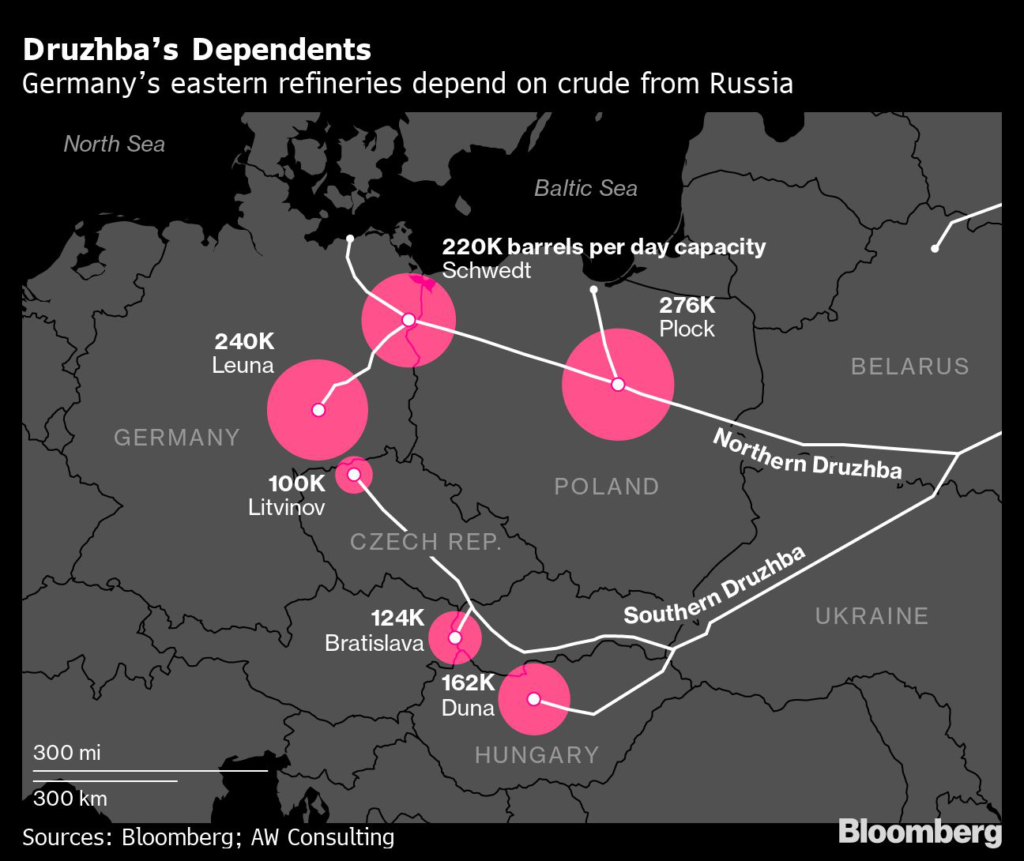
The southern leg of Russia’s giant Druzhba oil pipeline to Europe was partly halted in Ukraine, according to Transneft PJSC, which operates the system in Russia.

The European Parliament adopted a non-binding resolution to declare Russia a state sponsor of terrorism, a move that lawmakers hope will help hold leaders accountable for war crimes. 

(See RSAN on the Bloomberg Terminal for the Russian Sanctions Dashboard.)

Key Developments

  • Ukraine Rattled as Russian Attacks Hit Energy Infrastructure
  • IMF Reaches Deal With Ukraine, Paving Way for Billions in Aid
  • Russia’s Big Crude Oil Pipeline Via Ukraine Is Partly Halted
  • EU Set to Soften Russian Oil Price Cap Plan Before Approval 
  • Europe Faces the First Test of Its Winter Energy Resilience

On the Ground

Aside from the Russian attacks against energy infrastructure across Ukraine, Putin’s forces hit a maternity ward in the Zaporizhzhia region with missiles overnight, killing a newborn, Governor Oleksandr Starukh said on Telegram. Ukraine said the eastern front was at center of Russia’s attacks, especially in Bakhmut and Avdiyivka. Strikes in Kyiv and Vyshhorod, north of the capital, killed at least seven people and wounded 32, officials said.

(All times CET)

US Defense Chief Says Russia’s Short of Munitions (4:29 p.m.)

Russia’s stock of precision-guided artillery munitions “has been significantly reduced” and can’t be rapidly replenished because of trade restrictions on computer chips, US Defense Secretary Lloyd Austin told reporters who traveled with him to Cambodia.

“We’ll see if they’re able to go back on the offensive or it’s going to be a break in time before they’re able to regenerate the capability they think they need,” he said, adding that he hasn’t seen evidence of additional large-scale Russian troop mobilizations so far.

Biden Authorizes $400 Million More for Defense Aid to Ukraine (4:27 p.m.)

The US is providing up to $400 million in defense articles, military edication and training to Ukraine, the White House said in a document signed by President Joe Biden.

Moldova Restores Power After Nationwide Blackout (4:02 p.m.)

All of Moldova, including the capital Chisinau and the pro-Russia separatist territory of Transnistria, was briefly without power, according to Maciek Wozniak, a Polish adviser to the Moldovan state utility Energocom. For about two hours there was “no water and phone lines,” or working traffic lights, he said in a text message exchange.

The cause was likely a domino effect from missile Russian strikes around the Ukrainian city of Odesa that had shut down the region’s grid, according to Wozniak, including a high voltage line from Romania that since last month has carried most of Moldova’s electricity.

Ukraine Halts Nuclear Power Plants on Grid Damage (3:41 p.m.)

Ukrainian power company Energoatom said it disconnected its South Ukrainian, Rivne and Khmelnytska nuclear plants from the power grid after Russian missile strikes damaged power lines and the plants have no place to transmit power.

Energoatom said on Telegram that the units will be reconnected once the grid is back to normal.

Russia’s Big Crude Oil Pipeline Via Ukraine Is Partly Halted (3:38 p.m.)

The southern leg of Russia’s giant Druzhba oil pipeline to Europe was partly halted in Ukraine, according to Transneft PJSC, which operates the system in Russia. The leg feeds refineries in Hungary, Slovakia and the Czech Republic. 

Crude flows are for the time being continuing from Belarus to an intake point in Brody, Ukraine, but from that point there are no onward flows, Igor Dyomin, a Transneft spokesman, said by phone. If Ukraine doesn’t resume oil flows from Brody, then oil deliveries from Belarus will be halted as well, he added.

IMF and Ukrainian Authorities Reach Staff Level Pact (2:50 p.m.)

Ukraine reached a preliminary agreement with the International Monetary Fund that may open a path to a financial lifeline as the war-battered nation seeks as much as $20 billion to shore up its reserves and budget needs. 

The deal between Kyiv and the Washington-based lender is a so-called staff-level agreement aimed at establishing a full lending program to unlock billions in financing next year if the government meets conditions, according to the lender’s statement on Wednesday.

The four-month program “will provide an anchor for macroeconomic policies and catalyze donor support,” Gavin Gray, who led the IMF mission, said in a statement.

All Ukrainian Regions Have Emergency Power Cuts (2:42 p.m.)

Grid operator Ukrenergo said that emergency power cuts were being enacted in all regions after the widespread Russian attacks on infrastructure.

Ukrenergo, commenting in a statement on Facebook, said power cuts were needed to prevent further technical failures in the energy system after severe damage from repeated strikes since mid-October.

Kyiv Mayor Says Russian Missile Hit Infrastructure Facility (2 p.m.)

A missile fired by Russian forces hit a piece infrastructure in Ukraine’s capital, Kyiv Mayor Vitali Klitschko said on Telegram, without elaborating.

Following blasts in Kyiv, power momentarily shut off in part of the city before coming back on, according to eye witnesses. Emergency services were deployed to the sites, Klitschko said.

European Parliament Declares Russia State Sponsor of Terrorism (12:44 p.m.)

The European Parliament adopted a non-binding resolution to declare Russia a state sponsor of terrorism, to pave the way for President Vladimir Putin and his government to be held accountable for war crimes before an international tribunal. 

The resolution calls on EU member states to swiftly complete work on a ninth sanctions package against Moscow. 

EBRD Helps to Shore Up Critical Industries (12:35 p.m.)

The European Bank for Reconstruction and Development is giving a €50 million guarantee to back lending to critical industries in Ukraine. The lender was issuing risk-sharing instruments to three local banks and a leasing company.

EU Considers Imposing Price Cap of $65-$70 on Russian Oil (11:10 a.m.)

The EU, in coordination with G-7 nations, is discussing capping the price of Russian crude oil at between $65 and $70 a barrel, according to people familiar with the matter. 

EU Considers Imposing Price Cap of $65-$70 on Russian Oil

Kyiv May Face Worst Winter Since WWII, Mayor Says (10:41 a.m.)

Kyiv authorities may have to evacuate parts of the city if the energy crisis worsens, Mayor Vitali Klitschko told Germany’s Bild newspaper.

The capital has to prepare for the worst scenario which would involve a wide-reaching blackout when temperatures drop further, Bild cited Klitschko as saying. “We won’t just take our things and flee to the West, like Putin wants,” he said. 

Germany Pledges Support Until War Ends (9:57 a.m.)

German Chancellor Olaf Scholz said his government will support the administration in Kyiv until Russia’s war is over. 

“We will stick to this course — in solidarity with our closest allies — until this senseless, brutal, criminal war ends,” he told the lower house of parliament in Berlin. “Russia must finally stop this war!” 

UK Delivers Helicopters, Pledges Artillery Rounds (9:10 a.m.)

The UK said it completed its first delivery of helicopters to Ukraine and pledged an additional 10,000 artillery rounds, the Ministry of Defence said.

An undisclosed number of Sea King helicopters has been delivered to Ukraine to provide search and rescue capability, according to a statement from the ministry. It comes after Britain’s Royal Navy provided 10 weeks of Sea King training for 10 Ukrainian crews in the UK.

NATO Allies Test Air and Missile Defense Capabilities (9:05 a.m.)

NATO allies are testing their air and missile defense capabilities in Romania on Wednesday, simulating an attack by a fighter jet and using a French MAMBA surface-based system to repel it.

The exercise comes a week after a missile landed on Polish soil, killing two, that was likely the result of Ukrainian forces fending off a barrage of missile attacks from Russia. NATO has said the incident was likely caused by Ukrainian missile defense.

Putin Meets Fertilizer Tycoon Mazepin (8:30 a.m.)

Russian President Vladimir Putin met with Dmitry Mazepin, an investor in the Uralchem-Uralkali fertilizer group, to discuss fertilizers shipments issues, state television reported. 

Mazepin asked the president to help to re-start ammonium fertilizer shipments via Ukraine’s Odesa port as part of a grain shipment deal that was extended last week. 

More stories like this are available on bloomberg.com

©2022 Bloomberg L.P.

US Stocks Rise as Traders Await Fed Policy Clues: Markets Wrap

(Bloomberg) — US stocks rose as investors await the release of policy minutes from the Federal Reserve’s latest meeting for potential signs that the central bank may slow its pace of interest-rate hikes. 

The S&P 500 climbed after closing at its highest level since mid-September on Tuesday. The Nasdaq 100 jumped after wavering as the session started. Sentiment was boosted after latest data showed US consumers dialing back short-term inflation expectations. Market trading volumes are expected to be lighter, given the US Thanksgiving holiday on Thursday.  

Treasury yields slipped after weaker-than-expected purchasing managers’ index readings for November. A gauge of dollar strength dipped after data showed that US unemployment applications rose more than expected, in a sign of cooling in the labor market. Oil fell as the European Union discussed imposing a price cap on Russian oil between $65 and $70 a barrel. 

The publication of minutes from the Fed’s Nov. 1-2 meeting — due at 2 p.m. in Washington — will be studied for how united policy makers were over a higher peak for interest rates than previously signaled in their fight against inflation. However, since that meeting, investors have parsed economic data that showed signs of inflation cooling. That, along with recent rhetoric from Fed speakers, has made some investors anticipate the central bank will moderate its pace of rate hikes soon. 

“2022 was a year marked by extremely expensive starting valuations, resilient growth, very high inflation, and then very hawkish policy,” said Andrew Sheets, Morgan Stanley chief cross asset strategist, on Bloomberg TV. “When we think about next year, all those elements are somewhat different. Valuations have normalized. We think growth will be weaker, but inflation will be lower and policy will be a lot less hawkish.”

The “corrective price action” in the dollar, oil and Treasury yields suggests the market thinks peak inflation is behind us, says Craig Johnson, Piper Sandler’s chief market technician.

“Any slightly confirming signal from the Fed could thrust equities higher into the holiday season.”

European investors, meanwhile, digested data showing that private-sector activity in Germany and France — the euro area’s top two economies — contracted in November. This painted a bleak picture for a region that may already be in recession. A separate survey showed that the UK economy is in recession, with the downturn expected to worsen into 2023.

Meanwhile, a gauge measuring Euro-area activity in manufacturing and services unexpectedly rose in November, signaling that businesses see tentative signs that the region’s economic slump may be easing as record inflation cools and expectations for future production improve. 

Key events this week:

  • S&P Global PMIs: US, Wednesday
  • University of Michigan sentiment, Wednesday
  • Minutes of the Federal Reserve’s Nov. 1-2 meeting, Wednesday
  • ECB publishes account of its October policy meeting, Thursday
  • US stock and bond markets are closed for the Thanksgiving holiday, Thursday
  • US stock and bond markets close early, Friday

Some of the main moves in markets:

Stocks

  • The S&P 500 rose 0.5% as of 10:30 a.m. New York time
  • The Nasdaq 100 rose 0.9%
  • The Dow Jones Industrial Average rose 0.3%
  • The Stoxx Europe 600 rose 0.5%
  • The MSCI World index rose 1.1%

Currencies

  • The Bloomberg Dollar Spot Index fell 0.4%
  • The euro rose 0.5% to $1.0355
  • The British pound rose 1.2% to $1.2023
  • The Japanese yen rose 0.7% to 140.21 per dollar

Cryptocurrencies

  • Bitcoin rose 2% to $16,449.53
  • Ether rose 2.9% to $1,162.36

Bonds

  • The yield on 10-year Treasuries declined three basis points to 3.72%
  • Germany’s 10-year yield declined five basis points to 1.93%
  • Britain’s 10-year yield declined 14 basis points to 3.00%

Commodities

  • West Texas Intermediate crude fell 3.9% to $77.78 a barrel
  • Gold futures were little changed

This story was produced with the assistance of Bloomberg Automation.

–With assistance from Vildana Hajric, Peyton Forte and Isabelle Lee.

More stories like this are available on bloomberg.com

©2022 Bloomberg L.P.

Close Bitnami banner
Bitnami