
Bloomberg

iPhone Delays Weigh on Apple Ahead of Holiday Season

(Bloomberg) — Wait times for Apple Inc.’s most expensive smartphones are rising to what analysts say are record levels as the holiday shopping season kicks off, threatening to curb sales at the company’s busiest time of year and derail a rally in the stock. 

Customers in the US who placed an order Tuesday would get an iPhone 14 Pro delivered in New York on Dec. 30, after Christmas, according to Apple’s website. The wait was about 34 days as of last week, near the highest ever, according to UBS Group AG. 

The delays, resulting from Covid lockdowns around a Chinese plant run by a contract manufacturer of iPhones, could cause analysts to trim their earnings estimates for this quarter, which accounts for 35% to 40% of iPhone unit sales. That in turn could further pressure Apple’s stock price, which has been a relative haven in this year’s tech meltdown.

“This could cause some further headwinds for Apple,” said Matt Maley, chief market strategist at Miller Tabak + Co. Consumers’ finances are stretched because of rising food and energy prices, which “will almost certainly cause the consumer to pull in their horns after the holidays.  If that is the case, it’s going to be tough for Apple to make up any lost holiday sales next year.”

An Apple spokesman said he didn’t have any immediate comment on the wait times. 

If wait times don’t improve over the coming weeks, unit sales could miss estimates, resulting in iPhone revenue coming in flat year-over-year instead of rising by about 2% as expected by analysts, according to UBS’s David Vogt. 

Jefferies analyst Kyle McNealy assumes about three weeks of disruptions and estimates that each week of lockdown will cut $1 billion from revenue and 1 cent from earnings per share. Evercore ISI’s Amit Daryanani estimates that this could push out about $3 billion of iPhone revenue into the March quarter. 

For bulls, that might be the best-case outcome. “We don’t believe those will be necessarily lost orders,” said Mark Stoeckle, Adams Funds’ chief executive officer. “We think they’ll be delayed orders.” 

The disruptions forced Apple to provide a rare update only 10 days after the Cupertino, California-based company reported its fiscal fourth quarter earnings at the end of October. It said shipments of the new premium iPhones will be lower than expected because of the lockdowns. 

The timing couldn’t have been worse for Apple. 

The stock has jumped 9.7% since a Nov. 10 report showed US consumer inflation was cooling a bit. That triggered a rally across tech stocks as investors took the view that the Federal Reserve might be able to soon slow its pace of interest rate increases. Apple, which had already impressed Wall Street with its earnings, added $191 billion to its market value in a single session, the most ever by a US company.

“Apple relative to the other names still offers safety,” said Lewis Grant, senior portfolio manager at Federated Hermes Ltd. Grant said he takes solace in the fact that Apple isn’t entirely reliant on hardware, since the company can tap into a stream of recurring revenue from subscriptions to services such as Apple Music and Apple Arcade for video games.

Analysts have cut their average Apple revenue estimate for this quarter by 1.7% over the past three months, compared to reductions of 2.6% to 6.5% at peers like Microsoft Corp., Alphabet Inc. and Amazon.com Inc. 

While the iPhone remains the cash cow for the company, the company has been trying to expand sales elsewhere. To spur Mac sales, Apple launched a rare promotional deal for small businesses that buy computers in bulk, an effort to cope with a slowdown during the holiday quarter.

“As long as the issues are supply related, it’s OK, it’s manageable,” said Alec Young, chief investment strategist at MAPsignals. “If there’s any hint of weakening demand, I think the stock price would be much more vulnerable. The market tends to be forward looking. So it’s much more sensitive to demand destruction given all the concerns about a recession.”


Tech Chart of the Day

The rapid selloff in Tesla Inc. shares has left most price targets from ever-bullish Wall Street analysts seemingly obsolete. The yawning gap means Tesla shares need to rally a whopping 80% to hit the median analyst target price — the second widest in the Nasdaq 100 Index, just behind Baidu Inc. Shares of Elon Musk-led Tesla have slumped 52% this year to close Monday at $167.87, while analysts have a median 12-month target price of $302. The stock rose 1.3% at 10:25 a.m. in New York Tuesday, set to snap a four-day streak of declines if the gains hold.  

Top Tech Stories

  • Zoom Video Communications Inc. declined in premarket trading after reporting its slowest quarterly sales growth on record and slightly reducing its full-year revenue forecast.
  • Dell Technologies Inc. projected revenue in the current quarter that fell short of analysts’ estimates, saying economic uncertainty has begun to affect information technology customers.
  • JD.com Inc. is slashing salaries for about 2,000 managers by 10% to 20% and diverting some of those savings toward a $1.4 billion employee benefits fund, aligning China’s No. 2 online retailer with Xi Jinping’s “common prosperity” campaign to share the wealth.
  • Bob Iger, Walt Disney Co.’s returning chief executive officer, took his first steps toward reorganizing the entertainment giant, asking his deputies to rethink the corporate structure and announcing the departure of a top manager.
  • Elon Musk laid off more Twitter Inc. workers from the sales side of the social network’s business beginning late on Sunday, further trimming a staff that had already been decimated by cuts and resignations.
  • Kuaishou Technology’s revenue beat estimates, holding its own against a slowing Chinese economy and competition from TikTok owner ByteDance Ltd.
  • The rout in Tesla shares is accelerating as a recall and signs of China’s return to Covid Zero curbs adds to a litany of investor concerns, with Chief Executive Officer Elon Musk focused on turning around Twitter.
    • Tesla is changing its marketing approach in China as fierce competition from domestic rivals and uneven demand puts its growth plans in the world’s biggest electric-car market at risk.

–With assistance from Kit Rees and Thyagaraju Adinarayan.

(Updates stock move in 16th paragraph. A previous version of this story corrected the title in the 15th paragraph.)

More stories like this are available on bloomberg.com

©2022 Bloomberg L.P.
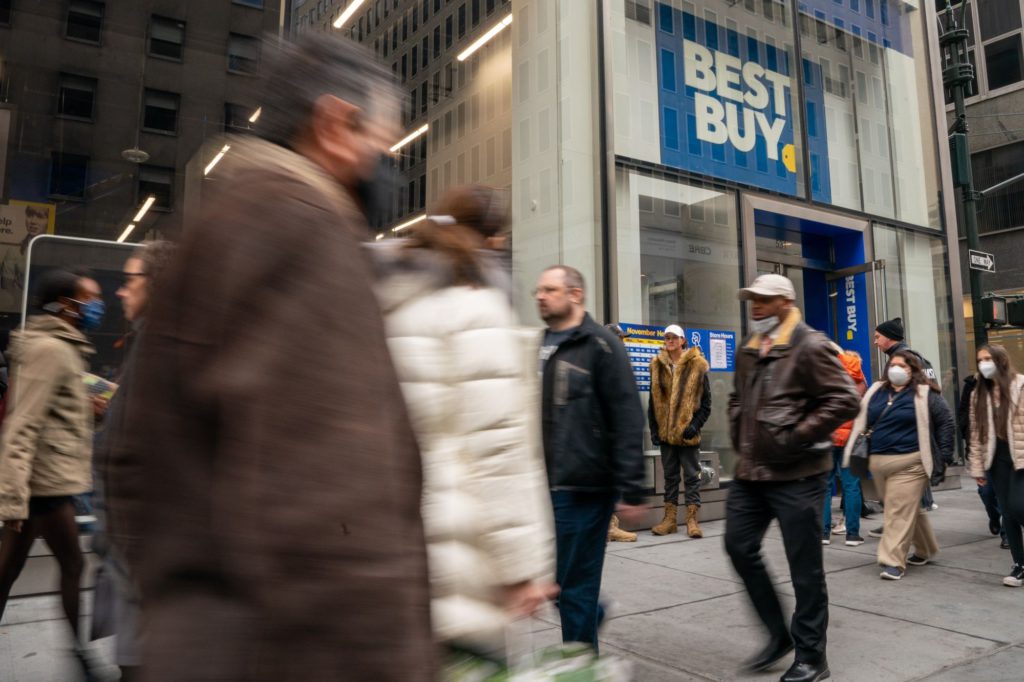
Best Buy Jumps After Tempering Gloom With Boost to Outlook

(Bloomberg) — Best Buy Co. jumped the most in eight months after modestly improving its profit forecast and signaling its recent sales slump is starting to ease. 

Adjusted operating income this year will be “slightly higher” than the previous forecast of 4% of sales, the consumer-electronics retailer said Tuesday as it reported third-quarter results. In addition, the decline in comparable sales this year won’t be quite as bad as previously feared, the company said. 

The surprisingly upbeat report “suggests that the worst of the sales declines may be behind the company,” Scot Ciccarelli, an analyst at Truist Securities, said in a report. Declining inventories also “should imply less markdown risk/pressure for the holiday selling season.”

The improved outlook bolstered confidence in Best Buy’s ability to navigate waning US demand for televisions, computers and appliances amid soaring inflation. The company has been paring jobs to cut costs as higher prices for basic goods have forced consumers to pull back on discretionary goods.

The retailer is also resuming its share repurchases, which analysts also took as a sign of confidence in the business.

The shares rose as much as 11% in New York trading, their biggest intraday gain since March 3. The stock had fallen 30% this year through Monday, compared with the 33% drop in an S&P index of consumer-discretionary companies.

Best Buy stopped short of issuing an improved outlook for the holiday season, leaving its expectations for the current quarter unchanged. It also struck a cautious tone on pricing, saying the promotional environment remains “considerably more intense” than last year, when retailers struggled to stock their stores amid supply-chain snarls. 

Holiday Sales

“We are specifically planning for a holiday that we think is going to be promotional,” Chief Executive Officer Corie Barry said in a briefing with reporters. “Last year everyone was yelling that inventory would not be there.”

The company attributed the improved annual profit forecast to better-than-expected results in the third quarter as it made progress in controlling costs. Adjusted earnings fell to $1.38 a share in the fiscal third quarter, compared with the $1.05 average of analyst estimates compiled by Bloomberg. Sales slid 11% to $10.6 billion. Analysts had predicted $10.3 billion.

Comparable sales are now expected to fall only 10% this year, Best Buy said, slightly better than the previous forecast of an 11% decline.

The outlook “may leave room for the electronics retailer to surprise again in 4Q, as guidance suggests only a slight improvement in same-store sales declines despite easier year-over-year comparisons,” Bloomberg Intelligence analyst Lindsay Dutch said. 

Best Buy incurred $26 million in restructuring charges during the quarter, mainly from employee-termination benefits connected to a streamlining program that began in the second quarter. Additional charges are expected the rest of the year, Best Buy said.

(Updates with analyst comment in third paragraph.)

More stories like this are available on bloomberg.com

©2022 Bloomberg L.P.

Meta Killed Plans for Homegrown VR Fitness App, FTC Says

(Bloomberg) — The US Federal Trade Commission said Meta Platforms Inc. stifled competition when it halted plans to build its own virtual reality fitness app and opted to buy Within Unlimited Inc. instead. But the company denied that it ever planned to move forward with a product.

“Meta itself had the intentions to enter — and thus was a reasonably probable entrant into — the VR Dedicated Fitness App market,” the agency said in a court filing Monday in its suit to block Meta’s acquisition of Within. 

The FTC is trying to persuade a federal judge to halt the deal as the agency believes it will decrease competition in the young, virtual reality fitness market and runs afoul of antitrust laws. In the filing, the agency laid out the facts key to its argument: The acquisition will keep the tech giant from entering the space through homegrown tech, therefore denying consumers the benefit of adding another competitor to the market. 

The FTC said that before the deal, Within’s team expected that Meta would try to enter the dedicated fitness app market. The tech giant had already hired Within’s head of product, so the startup developed competitive strategies for its app — called Supernatural — “with the specter of Meta’s potential entry in mind,” the FTC said.

In its own filing submitted late Monday, Meta said that the top two executives who would have needed to approve the creation of a new fitness app –- Chief Executive Officer Mark Zuckerberg and virtual reality head Andrew Bosworth –- gave sworn testimony that they never authorized the work or devoted funding to it.

“These ideas never proceeded beyond the discussion stage, never received approval from any senior manager, and were all discarded as impractical for various reasons,” the company said in its filing.

Meta already owned a VR rhythm game in which users hit targets in time to music, Beat Saber, and its founders were excited about expanding their product into a dedicated fitness app, the FTC said. In early 2021, the Beat Saber team began planning and presenting the move internally.

“Meta already has engineers with the skill set to both expand Beat Saber into fitness and to build a VR dedicated fitness app from scratch,” the FTC filing said.

As of March 2021, internal presentations were focused on transitioning Beat Saber to a dedicated fitness app, the FTC said. By June, those efforts were put on hold when Meta decided to pursue a Within acquisition instead.

On that point, Meta counters that the FTC’s version of events isn’t reflected in other documents from May 2021 where employees concluded the company didn’t have the ability to build its own fitness app. 

Meta “conclusively decided against modifying Beat Saber into a fitness app,” the company said in its filing. Those same reasons “foreclose any possibility that Meta would build its own VR fitness app if the court blocks the transaction.”

Meta revealed the Within acquisition in October, one day after announcing it would change its name from “Facebook” — a move that canonized a shift in the company’s focus from solely social media to building and commercializing a virtual world. The digital universe, or metaverse, being built by Meta is its biggest new bet and what Zuckerberg is pitching as the future of how people connect online.

The FTC sued to block the deal in July, a move in line with FTC Chair Lina Khan’s aggressive approach to antitrust enforcement. The FTC claims that Meta would eliminate future competition in a new market, often referred to as “nascent competition.” The agency rarely sues using that legal theory given the difficulty in proving a deal would tamp down the potential of a young industry. The last time the FTC brought such a case, in 2015 involving sterilization technology, the agency lost.

From 2020 through September 2022, Meta has spent $31 billion on the division working on the metaverse, Reality Labs. That includes the acquisitions of nine virtual reality app studios over the past three years. Meta already makes the most widely used virtual reality headset, Oculus, and its VR app catalogue, called the Quest Store. 

The FTC says the virtual reality fitness market already has a high barrier to entry, which is made more difficult because Meta controls the app store on the most popular headset. 

“Buying Within was not the only way Meta could have developed the production capabilities and expertise needed to create a premium VR fitness experience,” the agency said. 

The case is set to have a two-week hearing in December before US District Judge Edward Davila in San Jose, California. 

“As we approach next month’s hearing, we are confident the evidence will show that our acquisition of Within will be good for people, developers and the VR space, which is experiencing vibrant competition,” a Meta spokesman said. “As we have said from the beginning, the FTC’s case is based on ideology and speculation, not evidence. We are ready to make our case before the court.”

Davila is expected to decide by the end of the year whether to block the deal while the FTC’s in-house court considers the agency’s allegations that the merger is anticompetitive. 

After the FTC withdrew some of its claims against the company, Meta asked the judge to reject the agency’s attempt to block the acquisition, saying it hadn’t laid out the elements needed to show the deal would hurt competition in the nascent virtual reality industry. It’s up to the judge whether to rule first on Meta’s motion for dismissal of the case or the agency’s request for an injunction blocking the takeover.

The FTC filed a separate complaint against the merger in its in-house court, and an administrative judge has scheduled a trial for January.

The case is FTC v. Meta Platforms Inc., 22-cv-4325, US District Court, Northern District of California (San Jose).

(Updates with Meta responses throughout)

More stories like this are available on bloomberg.com

©2022 Bloomberg L.P.
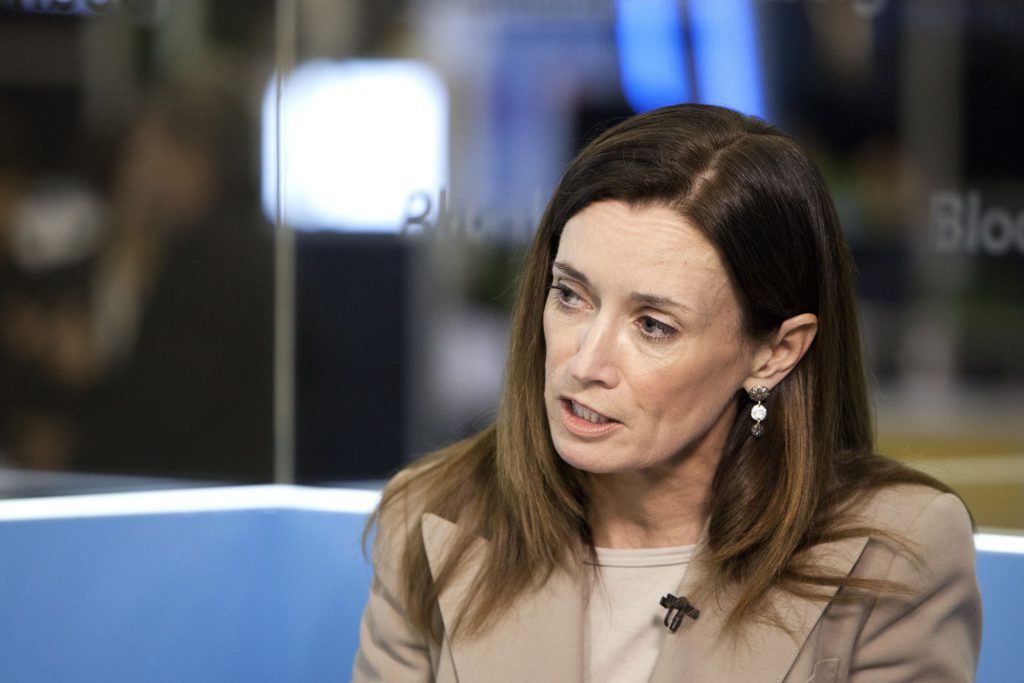
Blythe Masters’ Motive to Buy Berlin VC Embedded/Capital

(Bloomberg) — Motive Partners has agreed to acquire Berlin-based venture capital firm embedded/capital GmbH to chase opportunities in Europe’s growing startup scene.

The fintech-focused private equity firm announced the deal in a statement on Tuesday that confirmed a Bloomberg News report. Financial details were not disclosed. 

Embedded/capital specializes in investing in financial technology startups and has backed the likes of B2B payments firm Hero and broking platform getquin.

“Now valuations are coming down so it’s a good time to deploy capital,” Ramin Niroumand, embedded/capital’s founder, said in an interview. “Financial technology is what we understand. We see specialists being better equipped in today’s market.”

Germany is trying to make the country a more attractive location for tech innovators. Earlier this year, its government announced plans for a new €30 billion ($31 billion) fund to support technology-oriented startups.

Led by Managing Partner Rob Heyvaert and Chairman Jeff Yabuki, Motive manages about $4.8 billion and invests across technology enabled financial and business services in North America and Europe. Former JPMorgan Chase & Co. executive Blythe Masters is a founding partner of the firm.

“This acquisition not only adds depth and capability to our team, but provides critical strategic benefits to the rest of the firm, including innovation insights and learning, attracting top talent and enhanced sourcing networks,” Masters said in Tuesday’s statement.

(Adds detail on Motive leaders in sixth parargraph.)

More stories like this are available on bloomberg.com

©2022 Bloomberg L.P.
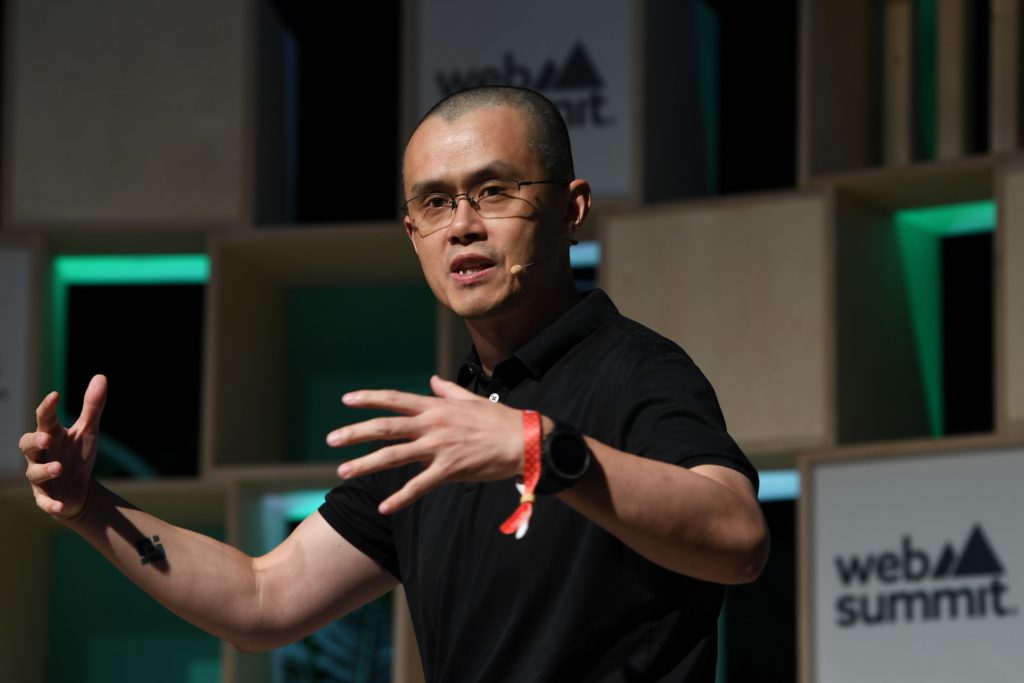
Binance CEO Zhao Seeks Middle East Cash for Crypto Recovery Fund

(Bloomberg) —

Binance Chief Executive Officer Changpeng “CZ” Zhao and several deputies met with investors in Abu Dhabi last week in an effort to raise cash for a crypto industry recovery fund, according to people familiar with the matter. 

Zhao and his team held meetings with potential backers last week, including with entities affiliated with United Arab Emirates National Security Adviser Sheikh Tahnoon Bin Zayed, who oversees a large financial empire, said the people, who spoke on the condition of anonymity because the talks were private. 

Details on the size of the fund and the projects to support are still not decided and it’s likely several weeks before the vehicle takes off, the people said.

“CZ’s meetings in Abu Dhabi were all focused on general global regulatory matters — specifically how Middle Eastern regulators could lead the globe by exploring more aggressive proof of custody requirements for crypto exchanges,” a Binance spokesperson said.

Efforts to reach Sheikh Tahnoon through the UAE Ministry of Foreign Affairs were unsuccessful. 

Zhao, who moved to Dubai last year and has built close ties with the UAE leadership, is casting himself as the crypto world’s rescuer-in-chief after the spectacular downfall of Sam Bankman-Fried. After FTX’s bankruptcy, Zhao tweeted that Binance would form a recovery fund “to help projects who are otherwise strong, but in a liquidity crisis.” 

“There are still players with very strong financials and we should band together to try to help the projects in need, especially if it’s only financial need,” he said on the sidelines of Abu Dhabi Finance Week last Wednesday.

The Binance CEO, who also spoke at the Milken Institute’s Abu Dhabi conference, had said there was significant investor interest in the industry recovery fund and that he expects to finalize commitments in the coming weeks. His conversations in the region also included proposals to engage with Middle Eastern regulators and boost crypto adoption, the people said.

A Google form gauging investor interest is circulating with Binance’s name on it, according to a copy seen by Bloomberg.

“Thank you for reaching out to Binance regarding the industry recovery fund,” the form said. “We are committed to helping the crypto industry grow stronger in the current market conditions.” 

With the crypto world facing a crisis of confidence and many Silicon Valley firms burned by FTX’s implosion, the Middle East is becoming the go-to place to seek funds to halt the contagion. 

Bankman-Fried himself spent time in the region in late October, trying to raise capital through meetings with Saudi Arabia’s sovereign wealth fund and Abu Dhabi’s Mubadala Investment Co., people familiar with the matter have said. 

The talks failed to progress after FTX began a downward spiral that threw the exchange and its roughly 130 related entities into bankruptcy. 

Crypto Contagion

Crypto lenders, meanwhile, are showing signs of distress as contagion spreads. 

Genesis, a lender owned by Digital Currency Group, hasn’t come up with the $1 billion in funding it’s seeking, including from Binance, and it’s warning potential investors that it may need to file for bankruptcy if its efforts fail, Bloomberg News reported Monday.

A Genesis representative said in an emailed statement that the “goal is to resolve the current situation consensually without the need for any bankruptcy filing.”

BlockFi Inc., another lender that FTX bailed out earlier this year, is said to be planning an imminent bankruptcy filing.

Zhao, for his part, said in a tweet last week that Binance agreed to back eight crypto projects, though added the deals were “all small amounts.” 

During the market rout earlier this year, Bankman-Fried committed some $1 billion propping up failing companies including BlockFi and Voyager Digital, the bankrupt crypto lender.

Voyager is now trying to sign a deal to sell itself to one of the bidders that lost the auction to FTX. Binance.US is preparing to make an offer, CoinDesk reported last week. 

Zhao, whose Binance is the world’s largest crypto exchange by trading volume, is the richest person in the industry, with an estimated net worth of $14.5 billion, according to the Bloomberg Billionaires Index. Still, his fortune is down by $81.3 billion since January.

He said in a CNBC interview last week that Binance would be interested in acquiring some of FTX’s assets once the bankruptcy process runs its course.

As for Bankman-Fried, he “lied to his users, his investors,” Zhao said. It was “pretty clear pretty soon that there was a misappropriation of user funds.”

–With assistance from Gillian Tan and Muyao Shen.

More stories like this are available on bloomberg.com

©2022 Bloomberg L.P.
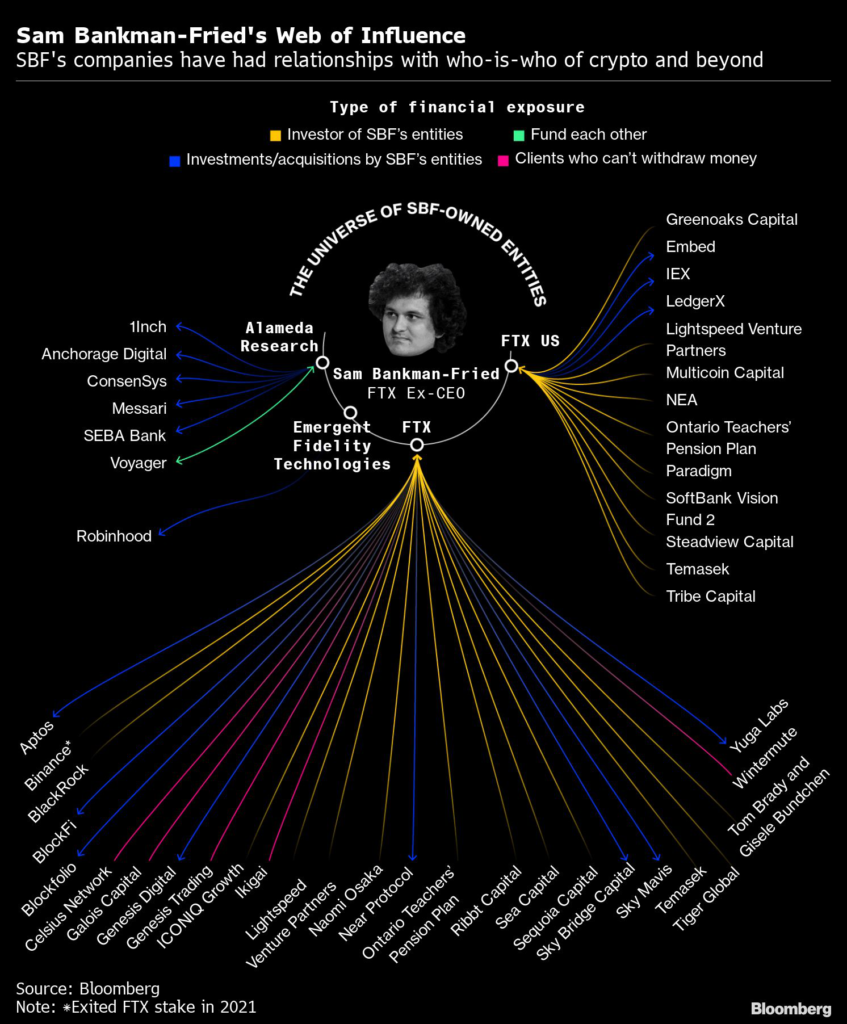
FTX Latest: Hearing Ahead; Trabucco Used Poker Tactics to Trade

(Bloomberg) — The new management of FTX Group will be at a hearing in Delaware bankruptcy court for first-day motions today.

Bloomberg Intelligence analysts expect the court appearance to address FTX’s pursuit of limited administrative relief and questions over where and how its assets will be managed. You can follow Bloomberg’s TOPLive coverage here.

A bankruptcy filing showed that the fallen cryptocurrency firm and a number of affiliates had a combined cash balance of $1.24 billion — more than debtors had identified a few days ago.

Investors are piling into bearish cryptocurrency bets, wagering that the collapse of Sam Bankman-Fried’s crypto empire will further ravage the asset class. And the former co-head of Alameda Research, Sam Trabucco, used poker and black-jack strategies to trade, according to his tweeting history.

Bitcoin rose 2.4% to trade above $16,000, after previously reaching the lowest level since November 2020.

Key stories and developments:

  • Alameda Former Co-CEO Used Poker, Blackjack Strategies to Trade
  • Investors Rush Into Short-Crypto Funds in Bet FTX Hit to Worsen
  • Fallen Hedge Fund 3AC’s Founder Says FTX Set Crypto Back Years
  • Crypto Firm Genesis Said to Warn of Bankruptcy Without New Funds

(Time references are New York unless otherwise stated.)

Alameda Former Co-CEO Used Poker, Blackjack Strategies to Trade (8 a.m.)

The former co-head of Alameda Research made it clear that poker and black-jack tables were where he honed the gambler’s instincts he applied to cryptocurrency trading. 

“I may or may not be banned from 3 casinos for this,” Sam Trabucco once tweeted about counting cards at black jack tables. Trabucco, who hasn’t publicly been accused of any wrongdoing, abruptly stepped down as co-chief executive officer in August, leaving Caroline Ellison as Alameda’s sole CEO. 

Apollo Said Unlikely to Participate in Genesis Fundraising (7:12 a.m.)

Genesis has reached out to Apollo Global Management in a bid to secure an investment, but Apollo is unlikely to commit to a deal, according to a person with direct knowledge of the matter. One option proposed by Genesis was for Apollo to buy parts of its loan book, this person said. 

Investors Rush Into Short-Crypto Funds in Bet FTX Hit to Worsen (6:43 a.m.)

Short-Ether and Bitcoin exchange-traded products dominated inflows into crypto ETPs in the past week, data compiled by Bloomberg show. At the same time, digital-asset ETPs’ total assets dropped to just under $22 billion, a two-year low. 

The flows indicate investors see no end in sight to the havoc brought on by the bankruptcy of Bankman-Fried’s FTX Group, which is already tearing through the sector.

Crypto Lender Sued for Blocking Withdrawals by Wealthy Investors (5:55 a.m.)

Cryptoasset lender, Nexo Capital, was sued in London by investors who allege they were blocked from withdrawing parts of their $126 million in assets from the exchange in March 2021, when one Bitcoin was worth more than $54,000.

Fallen Hedge Fund 3AC’s Founder Says FTX Set Crypto Back Years (4:47 a.m.)

High-profile crypto crises could set the industry back by almost a decade, according to the co-founder of Three Arrows Capital.

“Some industry leaders have said the FTX collapse set the industry back by five years,” Su Zhu said in a rare in-person interview in Abu Dhabi. “I think it’s even longer than that — seven or eight years — maybe even longer, if the underlying issues aren’t solved.”

FTX Group Bankruptcy Filing Shows Cash Balance of $1.24 Billion (1:30 p.m. HK)

An FTX bankruptcy filing showed that, as of Nov. 20, the exchange and a number of affiliates had a combined cash balance of $1.24 billion — more than the debtors identified last week.

The document from Alvarez & Marsal North America LLC, the proposed financial adviser to FTX, said trading house Alameda and related firms had a cash balance of almost $401 million.

Bahamas Agrees to Let Delaware Judge Handle Part of FTX Meltdown (8 a.m. HK)

Bahamas court officials dropped their opposition to moving one piece of FTX’s restructuring case to a US court in Delaware, according to a court filing.

Liquidators appointed in the Bahamas for one FTX affiliate agreed to move a case they filed in New York to Delaware, where more than 100 units are under the oversight of a federal judge, FTX lawyers said in papers filed in US Bankruptcy Court in Wilmington, Delaware.

Tom Brady, Steph Curry Draw Texas’ Scrutiny Over FTX Plugs (7:15 a.m. HK)

A Texas regulator is scrutinizing payments received by celebrities to endorse FTX US, along with what disclosures were made and how accessible they were to retail investors

Tampa Bay Buccaneers quarterback Tom Brady and the Golden State Warriors’ Steph Curry are among the high-profile people being investigated.

Crypto Firm Genesis Said to Warn of Bankruptcy (6 a.m. HK)

Digital-asset brokerage Genesis is struggling to raise fresh cash for its lending unit, and it’s warning potential investors that it may need to file for bankruptcy if its efforts fail, according to people with knowledge of the matter.

Genesis, which has faced a liquidity crunch in the wake of crypto exchange FTX’s bankruptcy filing this month, has spent the past several days seeking at least $1 billion in fresh capital, the people said.

US Prosecutors Opened Probe of FTX Months Before Its Collapse (4:14 p.m.)

Long before Sam Bankman-Fried’s FTX cryptocurrency empire collapsed this month, it already was on the radar of federal prosecutors in Manhattan.

The US Attorney’s Office for the Southern District of New York, led by Damian Williams, spent several months working on a sweeping examination of crypto currency platforms with US and offshore arms and had started poking into FTX’s massive exchange operations, according to people familiar with the investigation.

More stories like this are available on bloomberg.com

©2022 Bloomberg L.P.
HyperloopTT Agrees to Merge With Ex-Disney Executives’ SPAC

(Bloomberg) — Hyperloop Transportation Technologies, a technology-licensing company, has agreed to merge with blank check firm Forest Road Acquisition Corp. II, according to a statement confirming an earlier report by Bloomberg News.

The merged company will have an enterprise value of about $400 million, though this figure could climb to $565 million if HyperloopTT options and warrants are exercised. HyperloopTT doesn’t currently generate revenue, though its technology portfolio features dozens of patents and trademarks that relate to levitation, propulsion and low-pressure tube transportation.

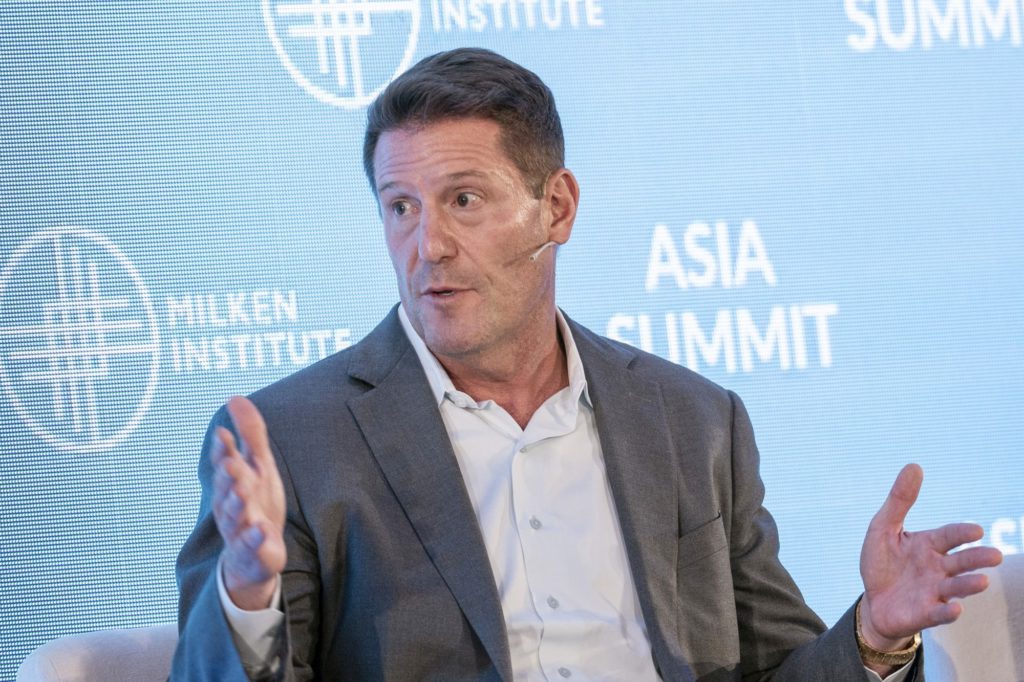
The Forest Road SPAC is led by former Walt Disney Co. executives and co-chief executive officers Kevin Mayer and Tom Staggs and chief investment officer Jeremy Tarica. It raised $350 million in a March 2021 initial public offering.

Early HyperloopTT backers including Thayer Ventures, EdgeWater Investments, Dar Al-Handasah, Hitachi Rail, Thornton Tomasetti and Lord John Browne are set to become investors in the combined entity. Collectively, existing HyperloopTT investors will own about 40% of the combined company if there are no redemptions. Should the transaction close, the combined entity is expected to trade under the ticker ‘HYPE’ on the New York Stock Exchange.

“When we were introduced to HyperloopTT we quickly saw its potential to address some of the most profound transportation challenges of our time,” Staggs and Mayer said in the statement Tuesday. “The company has a deep base of intellectual property that gives it a robust competitive advantage in this space.”

Los Angeles-based HyperloopTT was founded in 2013 following a white paper published by Elon Musk but has no affiliation to the billionaire. The company, led by Andres De Leon, intends to work with governments, infrastructure providers and transportation companies to develop and commercialize Hyperloop technology. 

Musk’s Boring Co. said earlier this year that it’s attempting to build its own version of Hyperloop, a high-speed, tube-based transportation system. Its website shows a Hyperloop trip, in pods that travel at more than 600 miles per hour, could result in a Washington, DC, to New York trip lasting fewer than 30 minutes. Another entity, Hyperloop One, has ambitions to build a freight-delivery service. The technology relies upon levitating capsules inside a partial vacuum. 

An earlier blank-check firm run by Mayer and Staggs merged with two fitness platforms to form BeachBody Co., which has tumbled more than 90% since the deal closed. Forest Road counts basketball star Shaquille O’Neal and former KKR & Co. executive Harlan Cherniak among its advisers, filings show.

(Updates with company statement from first paragraph. An earlier story corrected the company name in the first paragraph.)

More stories like this are available on bloomberg.com

©2022 Bloomberg L.P.

Africa’s National Parks Deploy Tracking Technology to Combat Poaching, Habitat Loss

(Bloomberg) — Tracking technology developed by the Allen Institute for AI, which is funded by the estate of Microsoft Corp.’s late co-founder Paul Allen, will be deployed across national parks in Africa, covering an area almost the size of the UK, in a bid to combat poaching and habitat loss.

The EarthRanger system will be installed in six game reserves in Botswana, Mozambique and Republic of Congo. It will cover areas populated by endangered wildlife ranging from elephants to gorillas and chimpanzees, according to a statement issued by the institute and the project funders and partners, which include the Global Environment Facility and Conservation International.

With wildlife tourism an important source of foreign exchange for many countries in Africa, a failure to protect endangered species could have a knock-on effect on these economies. Poachers who target animals such as rhinos and elephants are often part of organized-crime syndicates and equipped with technology to help them locate targets and quickly transport body parts such as horns or teeth, or even live animals.

The EarthRanger system collates data from sources including collars on animals and vehicle-tracking devices across a wide area, allowing a more efficient allocation of resources to prevent or react to poaching, incursions into parks and degradation of habitats. 

Offered as a free service, the tracking system was developed in 2015 as part of the Great Elephant Census, a program to measure the size of Africa’s savanna elephant population by assessing data from aerial surveys, and has since been used to combat poaching and track locust swarms.

The system “will help protected area managers, ecologists, and wildlife biologists make more informed operational decisions for wildlife conservation,” said Claude Gascon, the GEF’s manager of programs.

More stories like this are available on bloomberg.com

©2022 Bloomberg L.P.
Alameda’s Former Co-CEO Used Poker, Blackjack Strategies in Crypto Trading

(Bloomberg) — He has a degree from MIT and cut his teeth as a trader at Susquehanna International Group. Yet the former co-head of Alameda Research made it clear that poker and black-jack tables were where he honed the gambler’s instincts he applied to cryptocurrency trading. 

“I may or may not be banned from 3 casinos for this,” Sam Trabucco once tweeted about counting cards at black jack tables.

While the exact details are yet to be fleshed out, it’s now clear that Alameda’s enthusiastic embrace of risk helped lead to the firm’s demise, dragging the FTX exchange and the rest of Sam Bankman-Fried’s crypto empire down with it. Trabucco, who hasn’t publicly been accused of any wrongdoing, abruptly stepped down as co-chief executive officer in August, leaving Caroline Ellison as Alameda’s sole CEO. 

Trabucco’s own tweets are presented as a lesson in the importance of aggressiveness in gambling and trading alike. In happier times, the 30-year-old frequently revealed how much he applied what he learned at the card tables to the crypto market. 

“Bigger is Bigger (when Betting is Better),” he wrote in a Jan. 12, 2021, tweet thread explaining how gambling strategies were applied to Alameda’s trades. “Getting it in good is a poker term referring to the idea that, when your odds are best…. you wanna bet more.” It was the same series of posts in which Trabucco bragged that he may — or may not — have been banned from three casinos.

A post from July of this year showed a poker table with chips on it, with the comment: “I should stick to trading.” The next post revealed Trabucco was in Las Vegas.

Trabucco said Alameda employed Vegas-like risky bets in the firm’s business, too. Months ago, when exchange Okx paused withdrawals, Alameda aggressively started buying out positions of people wishing to reduce exposure to the exchange, Trabucco said. “Not only are we not sellers, we’re HUGE buyers — even though it’s risky — because, in fact, we can take the risk and this trade is GREAT according to what we know — was crucial, and it’s something we’re always aiming to do,” he said in a January post.

When Ripple’s XRP token plunged amid speculation over a Securities and Exchange Commission’s investigation, “we basically just bet as big as liquidity would let us on momentum on the way down, which ended up great,” he wrote in January of 2021. “We made a list of all the bad news announcements we thought were likely, and we just kinda waited for then to come out. Bittrex delisting? Hit. Grayscale removing? Hit. Etc. We got less short once these ‘seemed over’ (this was more about intuition on timing than anything).”

‘Really Don’t Tilt’

Speaking on a YouTube UpOnly episode in 2021, Trabucco talked about playing poker in college and two years afterward. “Now I really don’t tilt very much,” he said, referencing a poker term for when players let emotions overwhelm them. Trabucco said he now tries to avoid tilting, but admitted to sometimes making impulsive purchases.

“This watch, I quite literally don’t remember buying this watch,” Trabucco said on UpOnly.

Trabucco earned a degree in math with computer science from Massachusetts Institute of Technology in 2015, according to his LinkedIn profile. He was into creating crossword puzzles for a while. He even had one published in the New York Times while in college. He interned at State Street, and was a trader at Susquehanna International Group before joining Alameda in 2019, about two years after Bankman-Fried started the trading firm.

Trabucco didn’t return requests seeking comment.

Much is still unknown about the exact details of Alameda’s troubles and how its losses helped send it, FTX and more than 130 related entities into bankruptcy court. 

Alameda may have held a lot of hard-to-trade coins and had liquidity issues earlier this year, according to a report from crypto analytics provider Nansen. FTX may have bailed out Alameda with a loan using illiquid tokens as collateral, Nansen said. FTX didn’t immediately return a request for comment about the Nansen report.

In August, Trabucco announced he was stepping down from Alameda after several months of having “significantly reduced my role” — purportedly to have more normal work hours and to relax on his new boat.

Hints of Alameda’s troubles only emerged publicly in early November, when a CoinDesk story raised questions about Alameda’s solvency, which Trabucco took to Twitter to debunk.

Perhaps he was employing one of the most risky strategies in poker: the bluff.

“Bonkers how people just instantly 100% believe every shitty ‘news’ story they see,” he tweeted about the Nov. 2 article.

Less than two weeks later, almost all of Bankman-Fried’s crypto empire had filed for bankruptcy protection. Alameda tilted after all.

More stories like this are available on bloomberg.com

©2022 Bloomberg L.P.
Crypto Lender Sued for Blocking 2021 Withdrawals by Wealthy Investors

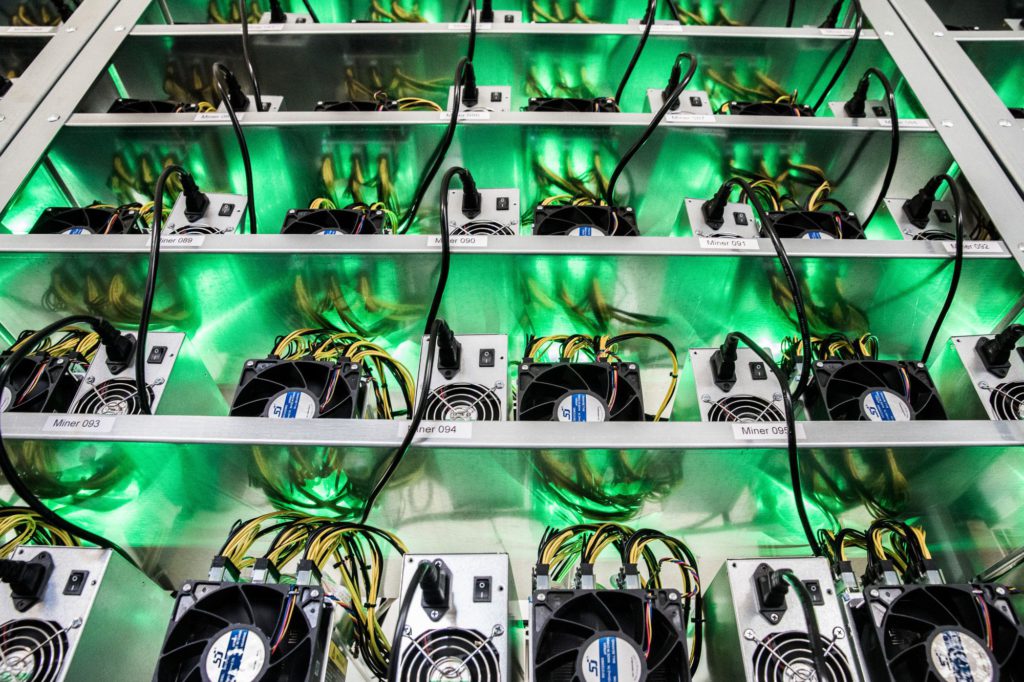
(Bloomberg) — Cryptoasset lender, Nexo Capital Inc., was sued in London by investors who allege they were blocked from withdrawing parts of their $126 million in assets from the exchange in March 2021, when one Bitcoin was worth more than $54,000.

Nexo froze the accounts of two brothers and their cousin in late March 2021 and pressurized them into selling its own token back at a heavily discounted rate, lawyers for the investors said in the lawsuit. Owen and Jason Morton, and their cousin Shane Morton said they were forced to sell the tokens at about a 60% discount of the market price, they alleged.

For its part, Nexo said the claims are opportunistic and come from a group of wealthy, sophisticated investors who made “lucrative transactions.” 

“All transactions, including the sale of their Nexo tokens, were completed in good faith, were documented and were accepted as final by the claimants at execution,” the exchange operator said in a Nov. 11 blog post. 

Nexo, founded in 2018 and managed by former Bulgarian politician Antoni Trenchev, has faced several legal challenges in 2022 as the crypto lending industry found itself at the forefront of the sector’s worst bear market in years. The firm rebuffed speculation last month that it might join former rivals Celsius Network and Voyager Digital in heading for bankruptcy, after Nexo received cease and desist orders from eight US states in September that alleged the platform was offering interest-earning accounts without registering the investment products as securities.

The Mortons purchased Nexo tokens worth millions of dollars in 2019 and 2020 and used the platform to trade other cryptocurrencies and tokens to get interest-earning benefits on the exchange, they said. 

The three investors decided to withdraw from platform in late 2020 as they were concerned about Nexo Capital’s compliance with regulations in US, UK and European Union, they said in the filing.

When Nexo used “illegitimate threat” by disabling functions to withdraw, the Mortons agreed to convert their tokens to Tether’s USDT, a stablecoin pegged to the dollar, according to the lawsuit. That same day the trio emptied their accounts that included over 350 Bitcoins, over 50 million in USDT, and millions of other tokens. They seek damages to make good the losses.

(Updates with details from lawsuit in seventh paragraph.)

More stories like this are available on bloomberg.com

©2022 Bloomberg L.P.

Close Bitnami banner
Bitnami
