
Bloomberg

Dutch Resist US Call to Ban More Chip Equipment Sales to China

(Bloomberg) — The Netherlands will defend its economic interests when it comes to the sales of chip equipment to China, a senior Dutch official said, further evidence of the country’s resistance to meekly following Washington’s attempts to cut off China from semiconductor technology.

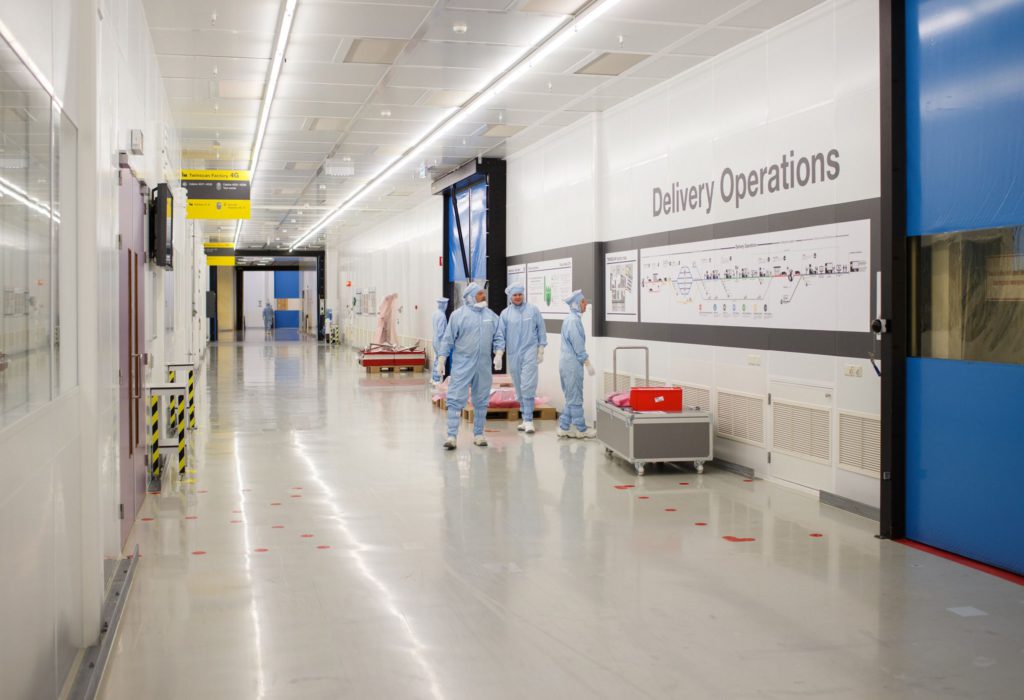
The European country is home to ASML Holding NV, which dominates the market for one-of-a-kind, cutting-edge chipmaking equipment that has become a focus of the US government’s attempts to limit China. Dutch Foreign Trade Minister Liesje Schreinemacher told lawmakers on Tuesday that the Netherlands will make its own decision regarding ASML’s chip gear sales to China amid trade rule talks with the US and other allies.

“It is important that we defend our own interests — our national safety, but also our economic interests,” Schreinemacher told lawmakers at the parliament in The Hague. “If we put that in an EU basket and negotiate with the US and in the end it turns out we give away deep ultraviolet lithography machines to the US, we are worse off.”

Deep ultraviolet systems are the second-most-advanced chip production machines that Veldhoven, Netherlands-based ASML manufactures, and the equipment is required to make a wide range of semiconductors. 

Schreinemacher’s comments appeared to indicate growing Dutch objections to the US call for the Netherlands to align with Washington on export controls to undermine Beijing’s ambition in building a chip industry at home and improve its military capabilities. The European country wants to maintain access to China as a major market. 

Last week, the Dutch minister said the US shouldn’t expect the Netherlands to unquestionably adopt its approach to China export restrictions. 

Read more: Europe Reasserts Middle Path on China, Pushing Back on Biden

While ASML hasn’t sold any of its most advanced extreme ultraviolet lithography machines to China because the Dutch government has refused to grant it a license under US pressure, the company can still sell less sophisticated chipmaking systems to the Asian country. 

However, US officials have been pressuring the Dutch government to ban the sales of immersion lithography machines, the most advanced kind of gear in ASML’s deep ultraviolet lineup, Bloomberg News has reported. The Biden administration has been working to get allies including the Netherlands and Japan to adopt the sweeping measures it unveiled in early October to ban more chip machines for China. 

The Netherlands is key to the struggle because ASML is one of a handful of companies that dominate the market for semiconductor-manufacturing equipment. Its peers include Applied Materials Inc., Lam Research Corp. and KLA Corp. in the US, and Tokyo Electron Ltd. in Japan.  

Senior US officials — including Alan Estevez, the undersecretary of commerce for industry and security — are traveling to the Netherlands this month to discuss export controls. But an immediate accord isn’t expected to come out of the talks, Bloomberg News has reported. 

EU negotiators are working on a number of contentious trade issues with Washington. Countries, most vocally France, have said the measures could damage European economies and have raised the possibility of filing a complaint with the World Trade Organization.

These issues will be a topic of conversation early next month at the Trade and Technology Council, a high-level meeting between EU and US officials.

Meanwhile, China is working to ensure other countries don’t cave to US demands. In a Group of 20 summit meeting last Tuesday, Chinese President Xi Jinping urged Dutch Prime Minister Mark Rutte to avoid disrupting global trade. 

“We must oppose the politicization of economic and trade issues and maintain the stability of the global industrial chain and supply chain,” Xi told Rutte. The Dutch leader also visited South Korea last week to discuss tech issues and deepen chip ties.

–With assistance from Cagan Koc, Debby Wu, Jillian Deutsch and Ian King.

More stories like this are available on bloomberg.com

©2022 Bloomberg L.P.
Bitcoin’s Slide Pauses in Wait for Next Domino to Fall After FTX

(Bloomberg) — Cryptocurrency prices rose as investors boost Bitcoin from a session low amid wariness of even established players in the digital-asset sector.

The largest token gained as much as 4.2% Tuesday, snapping the digital asset from its lowest price since November 2020. Ether posted a similar increase, while altcoins like Solana and Dogecoin also rose. 

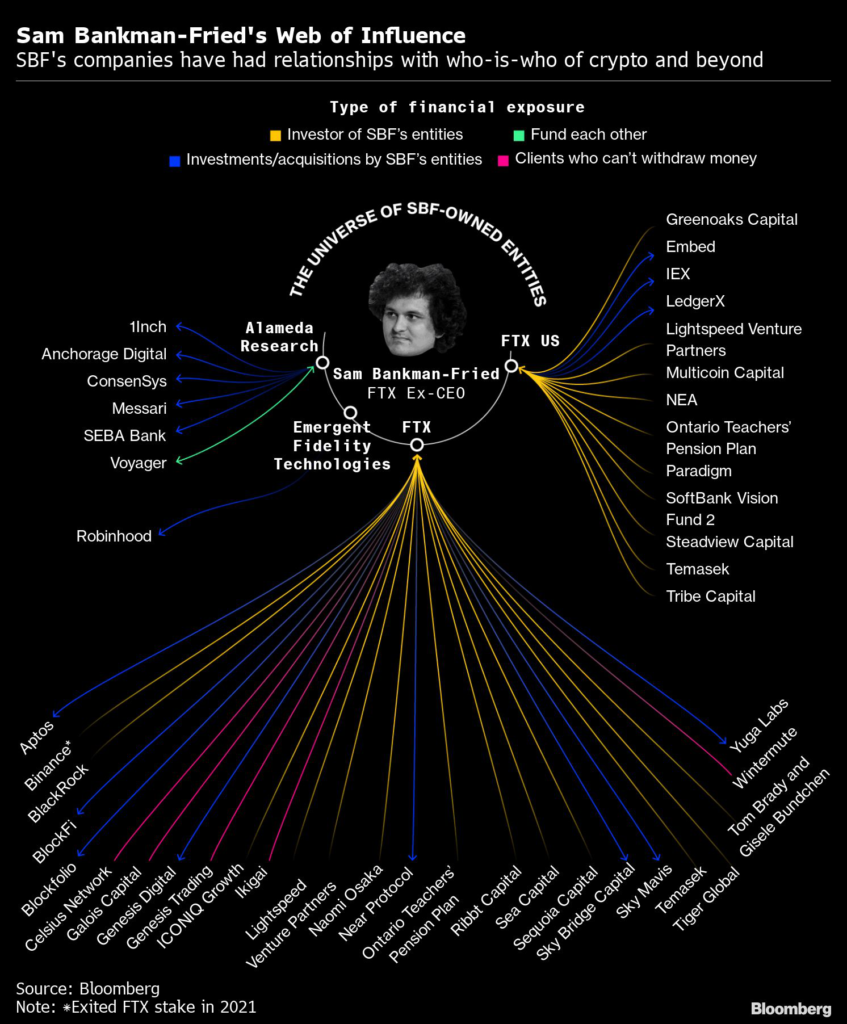
Prices plunged this month after the collapse of Sam Bankman-Fried’s FTX empire. Now, investors are watching other crypto companies to see how far the contagion might spread. Genesis, a digital-asset brokerage, warned of possible bankruptcy unless it can raise cash. Crypto lender BlockFi Inc. is also struggling to stay afloat.

“Bitcoin confirmed a breakdown last week that has bearish implications, but in the near-term it has seen an initial positive reaction to oversold conditions,” said Fairlead Strategies Senior Analyst Will Tamplin.  

Money has poured out of exchanges as investors seek the assurance of self-custody, according to a Glassnode analysis. 

“With each passing day that these trends persist, it becomes increasingly plausible that a wider scale reduction in confidence is in play,” Glassnode said in its  “The Week Onchain” newsletter. 

Administrators picking over the wreckage of FTX’s bankruptcy have discovered that $3.1 billion is owed to top creditors. The scope of the money outstanding is stoking worries that more digital-asset outfits will topple. 

For crypto market prices: CRYP; for top crypto news: TOP CRYPTO.

More stories like this are available on bloomberg.com

©2022 Bloomberg L.P.
FTX Latest: Attorney Says ‘Substantial’ Assets Stolen, Missing

(Bloomberg) — The first-day motions hearing for FTX’s Chapter 11 case is underway in Delaware bankruptcy court. A “substantial amount” of FTX Group’s assets “have either been stolen or are missing,” an attorney representing the firm told the court Tuesday. 

The collapse of Sam Bankman-Fried’s crypto empire has been swift and chaotic, leaving a group of bankruptcy experts to sift through the rubble. This hearing marks a key moment in the public reckoning. 

Bloomberg Intelligence analysts expect the court appearance to address FTX’s pursuit of limited administrative relief and questions over where and how its assets will be managed. You can follow Bloomberg’s TOPLive coverage here.

A bankruptcy filing showed that the fallen cryptocurrency firm and a number of affiliates had a combined cash balance of $1.24 billion — more than debtors had identified a few days ago.

Investors are piling into bearish cryptocurrency bets, wagering that the collapse of Bankman-Fried’s crypto empire will further ravage the asset class. And the former co-head of Alameda Research, Sam Trabucco, used poker and black-jack strategies to trade, according to his tweeting history.

Key stories and developments:

  • Crypto Diehards Brace for Family ‘I Told You So’ at Thanksgiving
  • FTX Collapse Ensnares Creditors Big and Small All Over the World
  • Alameda Former Co-CEO Used Poker, Blackjack Strategies to Trade
  • Fallen Hedge Fund 3AC’s Founder Says FTX Set Crypto Back Years
  • Crypto Firm Genesis Said to Warn of Bankruptcy Without New Funds

(Time references are New York unless otherwise stated.)

‘Substantial’ FTX Assets Are Stolen or Missing, Attorney Says (12:00 p.m.)

A “substantial amount” of FTX Group’s assets “have either been stolen or are missing,” an attorney representing the firm told a bankruptcy court Tuesday. 

“Unfortunately, the FTX debtors were not particularly well run, and that is an understatement,” James Bromley, co-head of the restructuring practice at law firm Sullivan & Cromwell, told a judge in Wilmington, Delaware.

Binance CEO Zhao Seeks Middle East Cash for Crypto Recovery Fund (9:50 a.m.)

Binance Chief Executive Officer Changpeng “CZ” Zhao and several deputies met with investors in Abu Dhabi last week in an effort to raise cash for a crypto industry recovery fund, according to people familiar with the matter. 

Zhao and his team held meetings with potential backers last week, including with entities affiliated with United Arab Emirates National Security Adviser Sheikh Tahnoon Bin Zayed, who oversees a large financial empire, said the people, who spoke on the condition of anonymity because the talks were private. 

Alameda Former Co-CEO Used Poker, Blackjack Strategies to Trade (8 a.m.)

The former co-head of Alameda Research made it clear that poker and black-jack tables were where he honed the gambler’s instincts he applied to cryptocurrency trading. 

“I may or may not be banned from 3 casinos for this,” Sam Trabucco once tweeted about counting cards at black-jack tables. Trabucco, who hasn’t publicly been accused of any wrongdoing, abruptly stepped down as co-chief executive officer in August, leaving Caroline Ellison as Alameda’s sole CEO. 

Apollo Said Unlikely to Participate in Genesis Fundraising (7:12 a.m.)

Genesis has reached out to Apollo Global Management in a bid to secure an investment, but Apollo is unlikely to commit to a deal, according to a person with direct knowledge of the matter. One option proposed by Genesis was for Apollo to buy parts of its loan book, this person said. 

Investors Rush Into Short-Crypto Funds in Bet FTX Hit to Worsen (6:43 a.m.)

Short-Ether and Bitcoin exchange-traded products dominated inflows into crypto ETPs in the past week, data compiled by Bloomberg show. At the same time, digital-asset ETPs’ total assets dropped to just under $22 billion, a two-year low. 

The flows indicate investors see no end in sight to the havoc brought on by the bankruptcy of Bankman-Fried’s FTX Group, which is already tearing through the sector.

Crypto Lender Sued for Blocking Withdrawals by Wealthy Investors (5:55 a.m.)

Cryptoasset lender Nexo Capital was sued in London by investors who allege they were blocked from withdrawing parts of their $126 million in assets from the exchange in March 2021, when one Bitcoin was worth more than $54,000.

Fallen Hedge Fund 3AC’s Founder Says FTX Set Crypto Back Years (4:47 a.m.)

High-profile crypto crises could set the industry back by almost a decade, according to the co-founder of Three Arrows Capital.

“Some industry leaders have said the FTX collapse set the industry back by five years,” Su Zhu said in a rare in-person interview in Abu Dhabi. “I think it’s even longer than that — seven or eight years — maybe even longer, if the underlying issues aren’t solved.”

FTX Group Bankruptcy Filing Shows Cash Balance of $1.24 Billion (1:30 p.m. HK)

An FTX bankruptcy filing showed that, as of Nov. 20, the exchange and a number of affiliates had a combined cash balance of $1.24 billion — more than the debtors identified last week.

The document from Alvarez & Marsal North America LLC, the proposed financial adviser to FTX, said trading house Alameda and related firms had a cash balance of almost $401 million.

Bahamas Agrees to Let Delaware Judge Handle Part of FTX Meltdown (8 a.m. HK)

Bahamas court officials dropped their opposition to moving one piece of FTX’s restructuring case to a US court in Delaware, according to a court filing.

Liquidators appointed in the Bahamas for one FTX affiliate agreed to move a case they filed in New York to Delaware, where more than 100 units are under the oversight of a federal judge, FTX lawyers said in papers filed in US Bankruptcy Court in Wilmington, Delaware.

Tom Brady, Steph Curry Draw Texas’ Scrutiny Over FTX Plugs (7:15 a.m. HK)

A Texas regulator is scrutinizing payments received by celebrities to endorse FTX US, along with what disclosures were made and how accessible they were to retail investors

Tampa Bay Buccaneers quarterback Tom Brady and the Golden State Warriors’ Steph Curry are among the high-profile people being investigated.

Crypto Firm Genesis Said to Warn of Bankruptcy (6 a.m. HK)

Digital-asset brokerage Genesis is struggling to raise fresh cash for its lending unit, and it’s warning potential investors that it may need to file for bankruptcy if its efforts fail, according to people with knowledge of the matter.

Genesis, which has faced a liquidity crunch in the wake of crypto exchange FTX’s bankruptcy filing this month, has spent the past several days seeking at least $1 billion in fresh capital, the people said.

–With assistance from Taryana Odayar.

More stories like this are available on bloomberg.com

©2022 Bloomberg L.P.

Best Buy Soars Most Since 2020 After Tempering Rocky Outlook

(Bloomberg) — Best Buy Co. jumped the most in more than two years after modestly improving its profit forecast and signaling its recent sales slump is starting to ease.

Adjusted operating income this year will be “slightly higher” than the previous forecast of 4% of sales, the consumer-electronics retailer said Tuesday as it reported third-quarter results. In addition, the decline in comparable sales this year won’t be quite as bad as previously feared, the company said. 

The surprisingly upbeat report “suggests that the worst of the sales declines may be behind the company,” Scot Ciccarelli, an analyst at Truist Securities, said in a report. Declining inventories also “should imply less markdown risk/pressure for the holiday selling season.”

The improved outlook bolsters confidence in Best Buy’s ability to navigate waning US demand for televisions, computers and appliances amid soaring inflation. The company has been paring jobs to cut costs as higher prices for basic goods take up more of shoppers’ budgets. Best Buy also resumed its share repurchases, which analysts took as a sign of confidence in the business.

The shares rose as much as 12% in New York trading, their biggest intraday gain since April 2020. The stock had fallen 30% this year through Monday, compared with the 33% drop in an S&P index of consumer-discretionary companies.

Best Buy stopped short of issuing an improved outlook for the holiday season, leaving its expectations for the current quarter unchanged. It also struck a cautious tone on pricing, saying the promotional environment remains “considerably more intense” than last year, when retailers struggled to stock their stores amid supply-chain snarls. 

Holiday Sales

“We are specifically planning for a holiday that we think is going to be promotional,” Chief Executive Officer Corie Barry said in a briefing with reporters. “Last year everyone was yelling that inventory would not be there.”

The company attributed the improved annual profit forecast to better-than-expected results in the third quarter as it made progress in controlling costs. Adjusted earnings fell to $1.38 a share in the fiscal third quarter, compared with the $1.05 average of analyst estimates compiled by Bloomberg. Sales slid 11% to $10.6 billion. Analysts had predicted $10.3 billion.

Comparable sales are now expected to fall only 10% this year, Best Buy said, slightly better than the previous forecast of an 11% decline.

The outlook “may leave room for the electronics retailer to surprise again in 4Q, as guidance suggests only a slight improvement in same-store sales declines despite easier year-over-year comparisons,” Bloomberg Intelligence analyst Lindsay Dutch said. 

Best Buy incurred $26 million in restructuring charges during the quarter, mainly from employee-termination benefits connected to a streamlining program that began in the second quarter. Additional charges are expected the rest of the year, Best Buy said.

More stories like this are available on bloomberg.com

©2022 Bloomberg L.P.
Billionaire Investor Carl Icahn Is Betting Against GameStop Shares

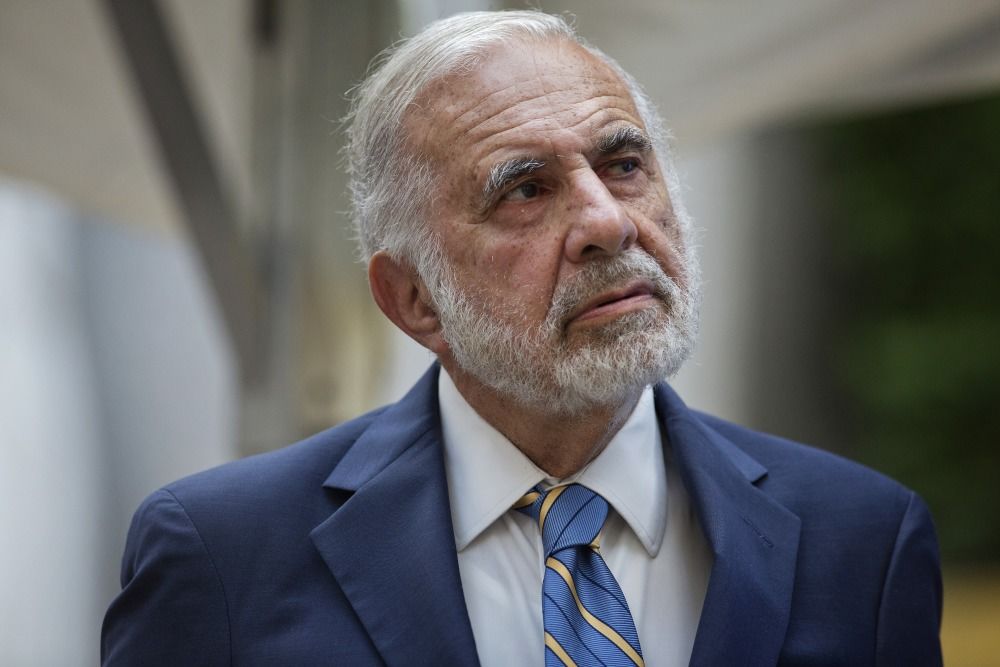
(Bloomberg) — Billionaire investor Carl Icahn began shorting GameStop Corp. during the height of the meme-stock frenzy around January 2021 and still holds a large position in the video-game retailer, according to people familiar with the matter.

Icahn started building the short when GameStop was trading near its peak of $483 per share and still holds a large bet against the retailer’s shares, said the people, asking not to be identified because the matter is private. The investor, who has added to his position from time to time, is betting that GameStop’s stock isn’t trading on its fundamentals and will continue to fall, the people said. 

The size of his position isn’t clear. 

GameStop shares rose 2.3% in trading Tuesday to $25.74 at 10:23 a.m. in New York, giving the retailer a market value of $7.9 billion. The retailer executed a four-for-one stock split this year and has lost 71% of its value from a January 2021 closing high through Monday’s close.

Representatives for Icahn and GameStop declined to comment. 


GameStop became a poster child for so-called meme stocks when retail trading took off during the coronavirus pandemic, aided by no-fee trading apps and fiscal stimulus. Individual investors, egging each other on in Reddit forums, plowed money into GameStop in a push to burn money managers who bet against the retailer. 

The effort, known as a short squeeze, led to several investors who held similar shorts to feel the pinch. That included Melvin Capital, the hedge fund run by Gabe Plotkin, which said in May it was folding due to heavy losses from its bet against GameStop.

Short Bets

Short sellers make money by betting that a stock will fall.

This marks a rare instance of Icahn betting against meme stocks. Although the legendary investor has taken sizable shorts elsewhere, including a bet on the downfall of malls through derivatives known as CMBX. 

More than one-fifth of GameStop’s shares available for trading are currently sold short, according to data compiled by S3 Partners, more than double the level seen this time last year. That compares to a peak of more than 140% in January 2021 when the retail trading crowd flooded chatrooms on Stocktwits and used memes and GIFs to pump bets on forums like Reddit’s WallStreetBets.

That mania triggered parabolic stock rallies despite gamers opting to download new titles instead of visiting stores, with the retailer saddled with more than $1 billion in debt and lease liabilities at one point. Since the craze, the company has been able to sell millions of shares in the open market, to help nearly wipe out its debt.

A large portion of investors that discuss their positions on social media platforms tout Ryan Cohen, the company’s chairman and largest investor and founder of pet retailer Chewy Inc., as the key driver in their investment.

Social Response 

The early response to Icahn’s short on social media was relatively measured. News of the wager was shared on Reddit in at least two threads, including in the popular WallStreetBets forum, garnering more than 250 comments as of 9:54 a.m. in Singapore. That pales in comparison to the thousands of responses to GameStop posts during the height of meme mania.

The stock wasn’t trending on social media platforms as it did in early September, when news emerged of its partnership with Sam Bankman-Fried’s now bankrupt FTX US cryptocurrency exchange.

–With assistance from Abhishek Vishnoi.

(Adds explanation of shorting in eighth paragraph)

More stories like this are available on bloomberg.com

©2022 Bloomberg L.P.
Fintech Giant FIS to Cut Thousands of Jobs as New CEO Targets Costs

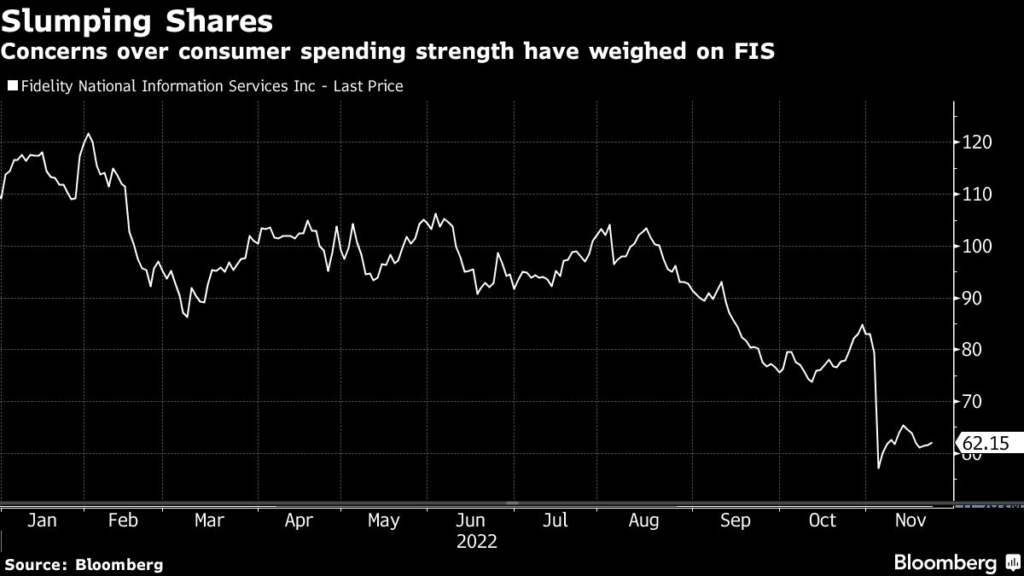
(Bloomberg) — Fidelity National Information Services Inc. plans to dismiss thousands of workers as part of incoming Chief Executive Officer Stephanie Ferris’s strategy to win back investor confidence after the fintech giant slumped 44% this year.

The cuts are expected to be gradual and may affect several thousand staffers and contractors at the payments company, according to people familiar with the matter. They’re part of Ferris’s plan to deliver at least $500 million in cost savings in coming quarters. 

Ferris, the company’s current president, is set to take the reins from longtime CEO Gary Norcross on Jan. 1. The company had more than 65,000 employees at the end of last year.

“We are focused on permanently reshaping our cost structure through both cost-reduction and containment initiatives,” Ferris told investors earlier this month. “These include actions surrounding the optimization and reduction of vendor spend, the outsourcing of non-value-added activities, and reviewing and rightsizing the current workforce.”

A spokesman for the Jacksonville, Florida-based company declined to comment on the job cuts. Shares in FIS rose more than 4% on Tuesday and traded at $63.83 at 11:36 a.m. in New York.

Headwinds 

FIS has long been known for providing banking and capital-markets technology for thousands of financial institutions. In 2019, the company completed its roughly $42 billion cash-and-stock acquisition of the payments giant Worldpay Inc., giving it a massive foothold in the business known as merchant acquiring, which involves enticing businesses around the world to agree to accept electronic payments.

That unit has faced headwinds in recent months, especially the portion of the business focused on sellers in the UK, according to Ferris. 

“The economic conditions in the UK are pretty challenging,” she said early in November. “And as we look out even over the next 60 days, it’s tough to call it. They are in a recession, their consumers are struggling and we are tied to consumer spend.”

FIS shares have plummeted this year partly on concerns about the strength of consumer spending. The stock drop has erased almost $30 billion from the company’s market capitalization. 

The merchant business has long been focused on winning share in physical stores, though Ferris said this month the company is focused on improving its e-commerce business as part of her turnaround efforts. 

Still, executives lowered their outlook for both revenue and earnings for the year. Adjusted profit per share is now expected to be as much as $6.66 in 2022, compared with the $7.10 the company had previously forecast. 

“What you will never see us do is make cuts such that we will impair the ability for the business to grow or it will impact our customers,” Ferris said. “So, I would say that enterprise transformation program is just that. It’s enterprise-wide. And we will be focusing on everything across our entire global portfolio.”

(Updates with shares in fifth paragraph.)

More stories like this are available on bloomberg.com

©2022 Bloomberg L.P.
FTX Collapse Ensnares Creditors Big and Small All Over the World

(Bloomberg) — From a German bank seeking a more than $2 million payment to a Chinese investor requesting $21,000 of lost savings. Claimants around the world who were caught up in the epic collapse of FTX Group are beginning to appear in court filings.

And unlike the very largest creditors, the claimants’ names haven’t been redacted, according to documents released recently in Delaware. They provide an insight into the sprawling nature of Sam Bankman-Fried’s crypto empire — and the daunting task faced by insolvency practitioners in figuring out who is owed what. The case involves more than a 1 million creditors and may take years to wrap up.

Creditors entangled in the meltdown of FTX, which was once one of the biggest crypto exchanges in the world, include a Frankfurt-based financial institution. Bankhaus Scheich Wertpapierspezialist AG says it’s owed $2.3 million by FTX for deposits including Bitcoin, Ethereum and dollars, according to filings. A spokesperson for the firm confirmed the claim, when contacted by Bloomberg News, and said it traded on FTX for hedging purposes and that client money was unaffected.

Creditors attached screenshots of trading accounts or emails they had received from FTX as proof of what they were owed.

“I want to know how to get my money back, after all that’s all my savings over the last few years,” said a Chinese creditor whose claim is worth just over $21,000. “I desperately need your help.”

Claimants cited in this article were contacted for comment by Bloomberg News, with several declining to comment.

FTX Fallout

A slew of claims made public come from investors based in Taiwan. And a handful are issued among those with addresses in China, the filings indicate, where crypto trading has been subject to regulatory clampdowns. Reto Stiffler, a former GAM Holding AG fund manager, also submitted a claim worth $895,000.

FTX owes its 50 biggest unsecured creditors a total of $3.1 billion, according to a filing at a Delaware court on Sunday that didn’t reveal the identity of any of the claimants. Two of the exchange’s customers are owed more than $200 million, the filing shows. The 50 largest claims are all from customers owed $21 million or more.

It remains unclear just how much money will be generated from the wind-down of FTX, and it’s possible that many creditors will receive only fractions of what they are owed, if anything. The process can take months in smaller cases and years for bigger multi-billion dollar bankruptcies. The alleged debts, which are typically unsecured, will be subject to a process designed to weed out any bogus, inflated or duplicated claims. Traders can buy up the claims — and make money holding them by waiting out for as big a payout as possible.

Meanwhile a hedge fund managed by a subsidiary of German crypto player Immutable Insight says it’s exposed to FTX’s fallout, saying it’s owed $1.6 million.

“We took swift actions to immediately reduce any exposure, and as a result of this, some initiated withdrawals were not processed,” a spokesman for the investment vehicle BlockchainFonds said in an email. “BlockchainFonds does not have any direct exposure towards Alameda Research or FTT token.”

–With assistance from Steven Church, Donal Griffin, Anna Irrera and Cindy Wang.

More stories like this are available on bloomberg.com

©2022 Bloomberg L.P.
US Stocks, Bonds Rally With Fed Policy in Focus: Markets Wrap

(Bloomberg) — US stocks rose as investors recalibrate their expectations in response to Federal Reserve officials indicating that they’ll continue to raise interest rates but are open to slowing their tempo. A batch of upbeat earnings also buoyed sentiment.

The S&P 500 and the Nasdaq 100 rose. Analog Devices Inc. climbed after giving a bullish forecast for the current period. Best Buy Co. jumped after raising its profit forecast. Abercrombie & Fitch Co. and American Eagle Outfitters Inc. also rose after reporting results that beat estimates. Retailers clearing out their inventories with a series of sales could help reduce inflation, which could ultimately make the Fed turn dovish.   

The dollar weakened against all major currencies. Treasury yields slipped. Oil rose after Saudi Arabia pushed back against reports of a potential OPEC+ production increase.

Fed officials have broadly maintained their steadfast stance to fight inflation. Yet San Francisco Fed President Mary Daly also said that officials need to be mindful of the lags in the transmission of policy changes, while her Cleveland counterpart Loretta Mester said she’s open to slowing the pace of rate hikes. On Tuesday, the Richmond Fed Manufacturing Survey came in slightly below expectations, with data confirming the peak inflation narrative. 

“We have still got a little ways to go and a lot more data to come out before the next Fed meeting. So it’s a lot of headline-driven moves that are really based off of two things: one is Fedspeak, and the other is the China zero-Covid policy changes,” Shawn Cruz, head trading strategist at TD Ameritrade, said in an interview. “Because you’re getting a lot of contradictory-type headlines coming out, it’s driving volatility in the market.”

Thanksgiving week in the US also tends to carry a “historically bullish tone” for stocks, Craig Johnson, chief market technician at Piper Sandler, said in a note. The week has started with a dip on Monday and then improves around the Thursday holiday about 68% of the time since 1950, he said. 

China’s Covid control restrictions are still weighing on investors across the globe. These restrictions now impact a fifth of China’s economy. Shutdowns can have a negative impact on supply-chain dynamics and possibly exacerbate inflation issues across economies. Chinese stocks listed in the US fell on Tuesday. In Asian trading on Tuesday, Hong Kong stocks slid as China’s daily virus infections climbed to near the highest on record. 

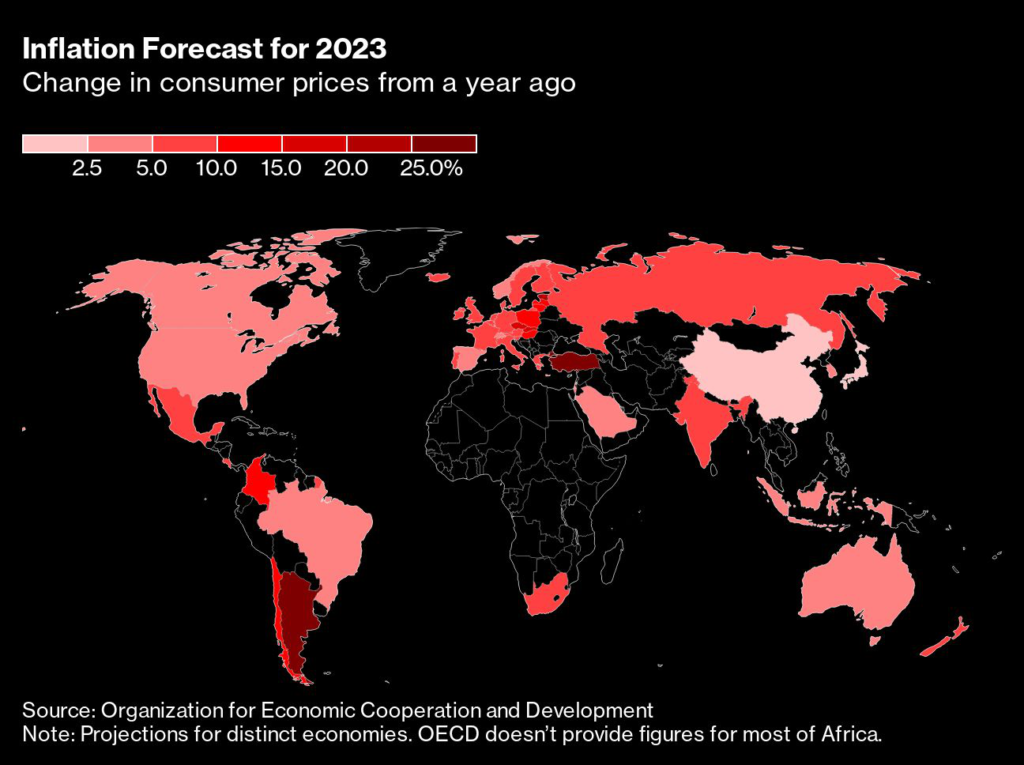
Meanwhile, the OECD said the world’s central banks must continue to raise interest rates to fight soaring and pervasive inflation, even as the global economy sinks into a significant slowdown. The unexpected surge in prices and its impact on real incomes is hurting people everywhere, creating problems that will only worsen if policy makers fail to act, the Paris-based organization said.

Key events this week:

  • OECD releases Economic Outlook, Tuesday
  • Fed’s Loretta Mester and James Bullard speak, Tuesday
  • S&P Global PMIs: US, Euro area, UK, Wednesday
  • US MBA mortgage applications, durable goods, initial jobless claims, University of Michigan sentiment, new home sales, Wednesday
  • Minutes of the Federal Reserve’s Nov. 1-2 meeting, Wednesday
  • ECB publishes account of its October policy meeting, Thursday
  • US stock and bond markets are closed for the Thanksgiving holiday, Thursday
  • US stock and bond markets close early, Friday

Some of the main moves in markets:

Stocks

  • The S&P 500 rose 0.6% as of 10:38 a.m. New York time
  • The Nasdaq 100 rose 0.2%
  • The Dow Jones Industrial Average rose 0.8%
  • The Stoxx Europe 600 rose 0.8%
  • The MSCI World index fell 0.8%

Currencies

  • The Bloomberg Dollar Spot Index fell 0.4%
  • The euro rose 0.3% to $1.0277
  • The British pound rose 0.5% to $1.1877
  • The Japanese yen rose 0.6% to 141.27 per dollar

Cryptocurrencies

  • Bitcoin rose 3.4% to $16,160.94
  • Ether rose 2.8% to $1,124.18

Bonds

  • The yield on 10-year Treasuries declined four basis points to 3.79%
  • Germany’s 10-year yield was little changed at 1.99%
  • Britain’s 10-year yield declined four basis points to 3.14%

Commodities

  • West Texas Intermediate crude rose 2% to $81.65 a barrel
  • Gold futures rose 0.3% to $1,760.20 an ounce

This story was produced with the assistance of Bloomberg Automation.

–With assistance from Isabelle Lee and Felice Maranz.

More stories like this are available on bloomberg.com

©2022 Bloomberg L.P.
Bitcoin Miner Core Scientific Has Lost $1.7 Billion This Year

(Bloomberg) — Core Scientific Inc., the largest US publicly-traded Bitcoin mining company in terms of computing power, said its loss for the first nine months of the year climbed to over $1.7 billion. 

The Austin, Texas-based company is among the hardest hit miners with low Bitcoin prices depressing mining revenue to a record low. Soaring energy costs and more competition among miners have plummeted profit margins. Core Scientific first warned in October that it may have to file for bankruptcy if the company can’t find more funding to repay its debt that amounts to over $1 billion. It had a third-quarter loss of $434 million.

The company held $32 million in cash and 62 Bitcoin as of last month, down from over 8,000 earlier this year. It sold the bulk of its Bitcoin holdings in the second quarter as the token’s prices plunged by over 60% and heat waves across the US sent power costs soaring. That has made it more difficult for the miner to raise additional liquidity from equity sales and debt financing with lenders scaling back and investors exiting the volatile market. The company’s shares have tumbled almost 99% this year to around 16 cents.

Core Scientific anticipates that existing cash resources will be depleted by the end of 2022 or sooner and failed to repay some of its debt in October. It will potentially seek relief under the applicable bankruptcy laws. The insolvency could have a broad impact on the mining industry given the company’s scale. 

The miner contributes to nearly 10% of the computing power to secure the entire Bitcoin network by validating transaction data and earning rewards in the token. It has 243,000 servers and more than 40% of them are in hosting agreements, where Core Scientific provides data center space and related services to run mining machines for its clients including other large-scale miners that do not have their own hosting sites. Some of the clients have started legal proceedings against Core Scientific this month, alleging the miner failing to make or return payments, according to the company’s third-quarter report.

More stories like this are available on bloomberg.com

©2022 Bloomberg L.P.

Glass Onion Review: Knives Out Sequel Slashes At the Rich

(Bloomberg) — Knives Out is a hard act to follow. The 2019 murder mystery set in a wealthy New England suburb was a critical and commercial success, garnering a Best Original Screenplay Oscar nomination and $311 million in box office sales on a $40 million budget. Based on those outsized returns,  Netflix Inc. paid a reported $450 million for the rights to two sequels to the film. Then it was up to director Rian Johnson to recreate his early success. 

There’s no sophomore slump here. Glass Onion: A Knives Out Mystery is a crowd-pleasing delight of a whodunit, with a few moments of genuine introspection amid some nearly too-clever dialogue. The only returning character from the first Knives Out is gentlemen detective Benoit Blanc (Daniel Craig), who sports a fabulous wardrobe and an incongruous Southern accent. (Goodbye, Mr. Bond.)

The action kicks off when Blanc is invited to a private Greek island owned by billionaire tech entrepreneur Miles Bron (Edward Norton, doing his best Elon Musk) for a murder mystery party.  The party’s mystery is written by Gone Girl scribe Gillian Flynn, because why would the ultrarich not hire out the best to do their work for them? 

Joining Blanc and Bron on the island are his ex-business partner Cassandra “Andi” Brand (a scene-stealing Janelle Monáe), NPR tote bag-carrying Connecticut Governor Claire Debella (Kathryn Hahn), scientist and conflicted Bron employee Lionel Toussaint (Leslie Odom Jr.), model and fashion designer Birdie Jay (Kate Hudson), and her long-suffering assistant Peg (Jessica Henwick). Rounding out the group are the manosphere vlogger Duke Cody (Dave Bautista) who still lives with his mom, and his younger, influencer girlfriend Whiskey (Madelyn Cline). 

There’s no reason for all these people to get along, and they don’t. Relations are frostiest with Andi, who has had big problems with Bron since he booted her out of the company they co-founded. From the moments we see her holding onto Bron’s yacht for dear life and slinking around his pool with a drink in hand, it’s obvious she has an agenda. 

Johnson, the director, again sharpens his knives the most for the wealthy, making sure not to equate success with smarts or virtue. Bron is mythologized as a genius-founder who did it all himself, but he’s standing on the hard work of others. His employee Toussaint doesn’t believe in his boss’s highly profitable “green tech,” but he knows where his bread is buttered. Bron is an environmentalist, but he ships his sexy luxury sports convertible everywhere with him, including onto islands that don’t allow vehicles. It’s not a flattering portrait of a tech billionaire, and his paradise of a hideaway doesn’t end up being paradise for anyone: The murder mystery party soon turns into a straight-up murder mystery. Luckily, the world’s greatest detective is already there.

More details would be classified as spoilers, but there is a death to investigate and (pace, Chekhov) a loaded gun in Act 1 does indeed go off. 

Glass Onion also attempts to captures life during 2020’s high-Covid era. Craig’s Blanc is stuck at home with his partner, bored and restless with Zoom quizzes before he gets brought into the Bron inner circle in Greece. Characters bump elbows to say hello instead of embracing, Birdie Jay shows up with one of those pointless, little mesh face masks that got Lana del Rey in trouble, and calls a massive house party her “pod.”

The plot zips along, complemented by a host of cameos, including Angela Lansbury in her last on-screen role. Some of the surprises in the mystery feel a little contrived—including an amusing gag about hot sauce doubling for blood— but it’s so much fun that who cares about a little thing like plausibility? 

That may be what makes it so pleasurable to watch: In reality, Elon Musk types appear to live in a world where their actions are rarely met with consequences. Watching these people in Glass Onion finally get their comeuppance is, in the end, escapism at its best.

Glass Onion will be in theaters for only one week starting Nov. 23 and will begin streaming on Netflix globally on Dec. 23. 

More stories like this are available on bloomberg.com

©2022 Bloomberg L.P.

Close Bitnami banner
Bitnami
