Bloomberg

Hong Kong’s Quantifeed Near Deal for UK Fintech Alpima, Sources Say

(Bloomberg) — Quantifeed, a Hong Kong-based fintech firm backed by HSBC Holdings Plc’s asset management arm, has acquired UK peer Alpima in a move that boosts its global footprint and product offerings.

The newly-formed business will provide services across the full portfolio management spectrum, including construction, personalization, visualization, risk analytics order management and trading, among other solutions, according to a statement on Tuesday confirming an earlier Bloomberg News report. The transaction would create a platform used to manage more than $20 billion worth of assets, people familiar with the matter have said.

“This cash and stock deal is a transformative one for us,” Quantifeed Co-Founder and Chief Executive Officer Alex Ypsilanti said in an interview. “The combined entity creates a truly global platform, offering our clients a comprehensive set of services in portfolio management.”

Bloomberg LP, the parent company of Bloomberg News, provides buy side solutions through the Bloomberg Terminal.

Founded by former banking executives with experience at Morgan Stanley, Bank of America Corp. and Deutsche Bank AG, Quantifeed’s technology powers wealth management platforms, according to its website. It provides institutional-facing, adviser-led and discretionary solutions to some of the biggest banks in Asia, including Singapore-based DBS Group Holdings Ltd. and Japan’s Mitsubishi UFJ Financial Group Inc.

Earlier this year, it announced a series C funding round led by HSBC’s asset management arm. Other investors include Franklin Templeton, Lun Partners and Daiwa PI Partners.

Customers of Alpima’s portfolio construction platform include banks, asset managers, wealth managers and consultants, among other firms in Europe, the Middle East and Africa and North America. Its clients include Spain’s Banco Bilbao Vizcaya Argentaria SA, Natixis SA’s asset management unit and Julius Baer Group Ltd.

(Updates throughout with statement announcing the deal.)

More stories like this are available on bloomberg.com

©2022 Bloomberg L.P.

China Set to Fine Ant More Than $1 Billion, Reuters Reports

(Bloomberg) — Chinese authorities are planning to impose a fine of more than $1 billion on Jack Ma’s Ant Group Co., paving the way for the ending of a regulatory overhaul of the financial technology firm, Reuters reported, citing people familiar with the matter. 

The central bank is preparing the penalty, which could land in the second quarter of next year, the news agency said, adding that the regulator has been in touch with Ant about the plans. Ant and the central bank didn’t respond to Reuters’ requests for comment. The firm also didn’t immediately respond to a request for a comment from Bloomberg News. 

A yearslong crackdown on the private sectors that included the halt of Ant’s massive initial public offering in 2020, is now showing signs of winding down. President Xi Jinping recently issued market friendly policies by relaxing inbound travel restrictions and rolling out a package of measures to support the property market. 

“It’s not a big fine, it’s more a slap on the wrist,” said Kerry Goh, chief investment officer at Kamet Capital Partners Pte. “This removes the overhang of regulatory risk and it’s just a further sign that we are closer to the end of the regulatory cycle.” 

Tencent Holdings Ltd. this month won approval for its first new major game title since China resumed licensing this year. Any signs that show regulators are intending to wrap up investigations on Ant, would add to this month’s wave of optimism in the markets. 

Ant has been restructuring its operations, including beefing up capital, curbing consumer lending and shuffling management. The company is waiting for regulators to accept its application for a financial holding license that would place it under similar restrictions as traditional banks, a necessary move to ensure its survival. 

In a filing in July, Alibaba Group Holding Ltd. reiterated that Ma “intends to reduce and thereafter limit his direct and indirect economic interest in Ant Group over time” to a percentage that doesn’t exceed 8.8%. 

Ant’s profit dropped 63% profit in the three months ended in June. 

“It’s a removal of overhang and paves the way for a revisit on IPO, and usually marks the end of the regulatory rectification,” said Vey-Sern Ling, managing director at Union Bancaire Privee.

–With assistance from John Cheng.

More stories like this are available on bloomberg.com

©2022 Bloomberg L.P.

Xi’s Common Prosperity Roars Back in JD Executive Pay Cuts

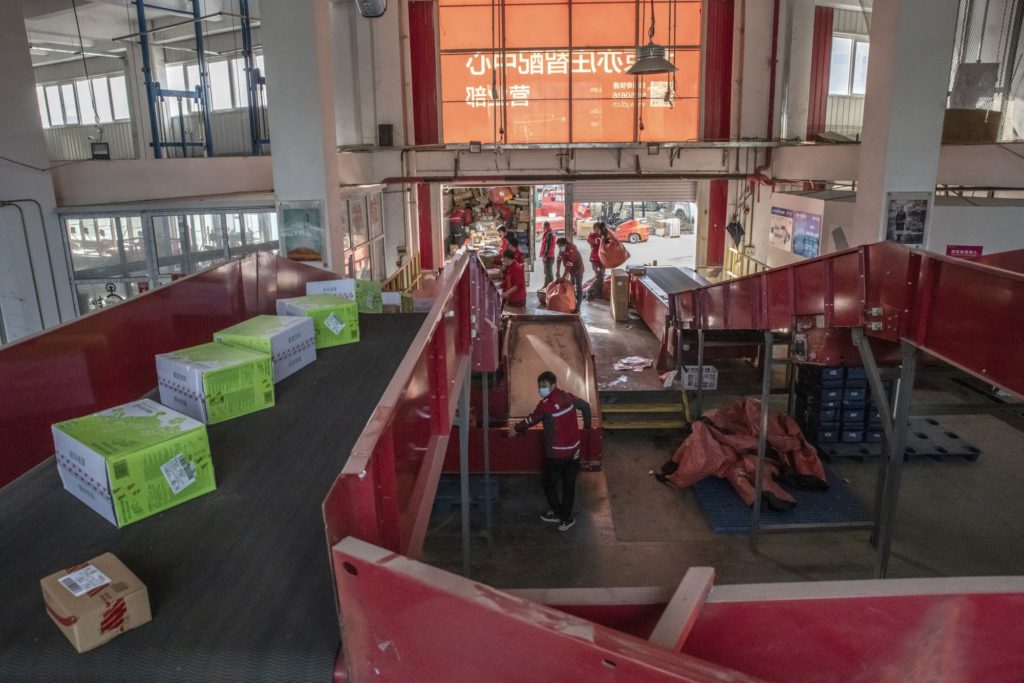
(Bloomberg) — JD.com Inc. is slashing salaries for about 2,000 managers by 10% to 20% and diverting some of those savings toward a $1.4 billion employee benefits fund, aligning China’s No. 2 online retailer with Xi Jinping’s “common prosperity” campaign to share the wealth.

Billionaire JD.com founder Richard Liu will donate 100 million yuan ($14 million) of his own money toward staff welfare, a person familiar with the matter said. China’s largest online retailer after Alibaba Group Holding Ltd. will also set up a 10 billion yuan fund to provide staff with interest-free home loans, the person added, asking not to be identified because it hasn’t been publicized.

The moves emerged weeks after Xi reiterated a drive toward common prosperity, a concept that — twinned with a sweeping crackdown on powerful internet firms — roiled markets in 2021 by pushing business leaders and cash-rich companies to explore ways to re-distribute wealth. That effort receded from public view as Beijing sought stability in the run-up to the October Party Congress, where Xi secured a precedent-busting third term.

“I hope this move can realize the dream of securing a house for all employees who have worked for more than five years, including for our courier and customer service brothers,” Liu announced in an internal memo seen by Bloomberg News.

Xi is now expected to revitalize one of his signature policies, with uncertain outcomes for investors and China’s largest corporations. Beyond JD, senior executives across China’s $58 trillion financial system are also facing additional pay cuts as firms from investment banks to mutual funds weigh options to comply with Xi’s mantra. 

JD’s shares fell more than 4% while rivals from Alibaba to Tencent Holdings Ltd. extended losses to slide more than 2% in Hong Kong.

“This corresponds with the common prosperity campaign and provides justification for management’s salary cut, as Chinese tech companies continue to cut cost to improve financials this year,” said Willer Chen, an analyst at Forsyth Barr Asia Ltd.

Read more: China Bankers Face Deeper Pay Cuts in ‘Common Prosperity’ Push

A JD.com spokesperson confirmed the contents of the memo, which was first reported by Chinese online media. 

Under the common prosperity campaign, Xi’s administration sought to rein in “disorderly expansion of capital.” In response, wealthy tech entrepreneurs like Liu began giving back.

Pinduoduo Inc., the fast-rising online commerce giant challenging Alibaba in the countryside, last year pledged its next $1.5 billion in profit to farmers’ welfare. Tencent said it will double the amount of money allocated toward social responsibility programs to about $15 billion. And Alibaba promised to commit 100 billion yuan over five years to support small companies. Meanwhile, tech billionaires from PDD’s Colin Huang to ByteDance Ltd.’s Zhang Yiming and Xiaomi Corp.’s Lei Jun donated vast sums to a plethora of causes.

JD’s salary cuts follow a wave of job and cost reductions worldwide by companies struggling with a potential recession. The Chinese firm, which like Alibaba weathered two years of strict Covid controls that precipitated a downturn, last week reported an 11% rise in quarterly revenue. It’s riding out the slowdown better than Alibaba, the target of a bruising antitrust crackdown in 2021.

“Cost-cutting measures have been a common theme for China tech profitability amid flattish sale growth and Covid impact on consumption,” Bloomberg Intelligence Strategist Marvin Chen said. “Layoffs and salary reduction may continue until there is more clarity on reopening.”

Liu stepped down this year as JD’s chief executive officer, joining other tech tycoons that exited top management roles after the internet crackdown. The entrepreneur will focus on longer-term strategies while mentoring younger management, JD said at the time. He would also contribute to the revitalization of rural China, the firm said, a priority of Xi’s.

Liu in October settled a lawsuit filed by a student in Minnesota who accused him of rape in 2018. The case, which drew international attention to gender rights in China, helped contribute to his gradual retreat from the helm of the company he founded in 1998. The donation he unveiled Tuesday will go toward a children’s relief fund, according to the memo.

Read more: JD’s Founder Steps Down as CEO of $92 Billion Empire

–With assistance from Charlotte Yang and Abhishek Vishnoi.

(Updates with analysts’ comments and share action from the sixth paragraph)

More stories like this are available on bloomberg.com

©2022 Bloomberg L.P.

Inside a Culture Clash at the Apple Store: Big Take Podcast

(Bloomberg) — Listen and subscribe on iHeart, Apple, Spotify and Terminal. 

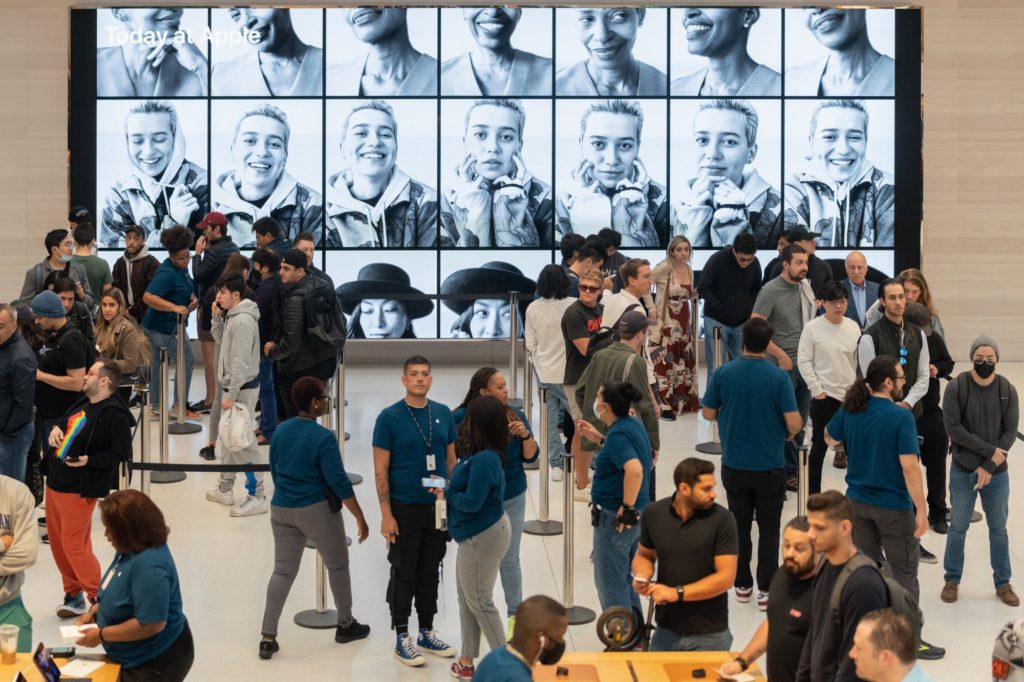
A growing number of workers at Apple Stores across the US believe the company they once loved to work for is changing–and they’re not happy about it. They say the famously low-key, no-pressure showcases for Apple’s products have turned into just another retail floor, where associates at some stores and technicians at the Genius Bar are expected to upsell customers–or encourage them to buy new devices instead of fixing their current ones. Apple retail workers at two stores have already voted to unionize, and others may follow.

Josh Eidelson, Bloomberg’s senior labor reporter, joins this episode to look at the state of play for Apple workers who are frustrated with “Big Apple” and why some see the union drive as a way to persuade the company to return to its roots.

We also zoom out to look at how Apple’s retail challenges are similar to those of other big-name US companies where workers have unionized, and how the bosses are pushing back.

Read More: How Apple Stores Went From Geek Paradise to Union Front Line

This podcast  is produced by the Big Take Podcast team: Supervising Producer: Vicki Vergolina, Senior Producer: Kathryn Fink, Producers: Mo Barrow, Rebecca Chaisson, Michael Falero and Federica Romaniello, Associate Producers: Sam Gebauer and Zaynab Siddiqui. Sound Design/Engineers: Raphael Amsili and Gilda Garcia.

More stories like this are available on bloomberg.com

©2022 Bloomberg L.P.

After FTX’s Collapse, Is Bitcoin Still Heading Into an Ice Age? (Podcast)

(Bloomberg) — Listen to Bloomberg Crypto on the iHeartRadio App, Apple Podcasts or  Spotify.

Before chaos broke out in the crypto market with the collapse of FTX, a report by digital-assets researcher CryptoCompare found that Bitcoin’s value…was still dropping. It appeared the industry wasn’t just heading into winter, but a possible “Crypto Ice Age.” 

Then the stunning downfall of crypto exchange FTX, which halted withdrawals and declared bankruptcy, and the resignation of its CEO Sam Bankman-Fried, sparked a wide-ranging market downturn with Bitcoin dropping from its previous plateau of around $20,000. 

As the digital-asset industry continues to adapt to a post-FTX reality, what will it mean for Bitcoin’s value?

Bloomberg reporters Olga Kharif and Vildana Hajric join this episode to discuss. 

Subscribe to the Bloomberg Crypto Newsletter at https://bloom.bg/cryptonewsletter 

This podcast is produced by the Bloomberg Crypto Podcast team: Supervising producer: Vicki Vergolina, Senior Producer: Janet Babin, Producers: Sharon Beriro and Muhammad Farouk, Associate Producers: Mo Andam and Ty Butler. Sound Design/Engineer:  Desta Wondirad.


More stories like this are available on bloomberg.com

©2022 Bloomberg L.P.

What If Buying Used Clothes Was as Easy as Buying New?

(Bloomberg) — Finding exactly the type of clothing you want or need secondhand can be a slog. A new company called Beni aims to make the process easier by suggesting used items while a customer is shopping online for new ones. The goal, says Beni Co-Founder and Chief Executive Officer Sarah Pinner, is to make buying resale “as easy as buying new, so buying new isn’t just the default.”Beni was founded in May 2021, and its browser extension became available for public use in the US and UK in September. The startup has raised just over $1 million, with investors that include XYZ Venture Capital and Chingona Ventures.

Users begin by downloading the Beni browser extension, currently available on mobile for Safari as well as on the desktop versions of Chrome, Safari and Brave. As they’re shopping for shoes, sweaters or watches at apparel retailers online, running the Beni extension will suggest similar or identical secondhand products in a pop-up box. A click on any of those used items leads to a secondhand marketplace, where the user can get more information and buy the item directly — in which case Beni gets a cut.

Buying used, especially online, is only becoming more popular. In 2021, the global resale market hit $35 billion, up from $11 billion in 2012, according to ThredUp’s 2022 resale report, led by growth in online shopping. An estimated 41% of consumers reported looking at secondhand options first when shopping for clothing, per ThredUp, with Gen Z and millennials leading the way. Some big draws to resale include the cost, because buying used is often cheaper than buying new, and the environmental impact from prolonging the lifespan of an item before it ends up in a landfill.

Even so, there are many people intrigued by the world of resale who don’t want to “go scroll on eBay for three hours or kind of just learn this whole new way of shopping,” says Pinner. With Beni, she adds, “people are able to shop in ways that they’re comfortable with.”Nancy Bocken, a professor of sustainable business at Maastricht University in the Netherlands, agrees that “the curation of secondhand is one of the big barriers,” because it can take more time to “find the right size or style” of a given item in a secondhand marketplace.

“It remains to be seen if technologies that make secondhand more convenient will convince those who are currently ambivalent about it,” said Elisa Niemtzow, vice president of consumer sectors and global membership at the consulting company BSR. “But as one fifth of those who haven’t bought secondhand in the last year say it’s too much work to search for them,” she adds, citing The Harris Poll’s August survey on the topic, “that means there is [a] promising opportunity to convert some shoppers.” 

Beni currently partners with more than 25 resale fashion marketplaces across the web, including eBay, the RealReal and Rent the Runway. “We can take inventory from their sites, and then use a combination of AI to surface it to the user while they’re shopping,” Pinner says. “Most brands that a user might be shopping on can use Beni.” 

Teaming up with Beni “was a no-brainer for us,” says Dori Graff, co-founder and CEO of Kidizen, an online marketplace for upscale secondhand kids clothing and toys. “We do feel very strongly that resale in general just needs more awareness.”The fashion industry’s embrace of resale is, in part, a response to a consumer backlash against the rise of fast fashion and its enormous levels of waste. While more clothing is being produced now than ever, only a tiny fraction is actually recycled. Instead, most clothes and other textiles end up in landfills. According to ThredUp’s report, “65% of those who bought their first thrifted item a year ago say they want to quit buying fast fashion” and “43% of consumers who buy fast fashion say they feel guilty for wearing or purchasing fast fashion.”These “aspirational secondhand shoppers” are exactly who Pinner hopes Beni attracts.

More stories like this are available on bloomberg.com

©2022 Bloomberg L.P.

Baidu Posts Surprise Sales Gain as Investors Eye Turnaround

(Bloomberg) — Baidu Inc. posted a surprise gain in revenue after cost cuts helped prop up the bottom line and online advertising held up better than anticipated against China’s economic downturn.

Sales rose slightly to 32.5 billion yuan ($4.6 billion) in the September quarter, beating expectations for 31.8 billion yuan. The company posted a net loss of 146 million yuan in the quarter just ended after taking a fair value loss several times that amount on its investments. But adjusted profit, which strips out exceptional items, managed to beat Wall Street’s projections.

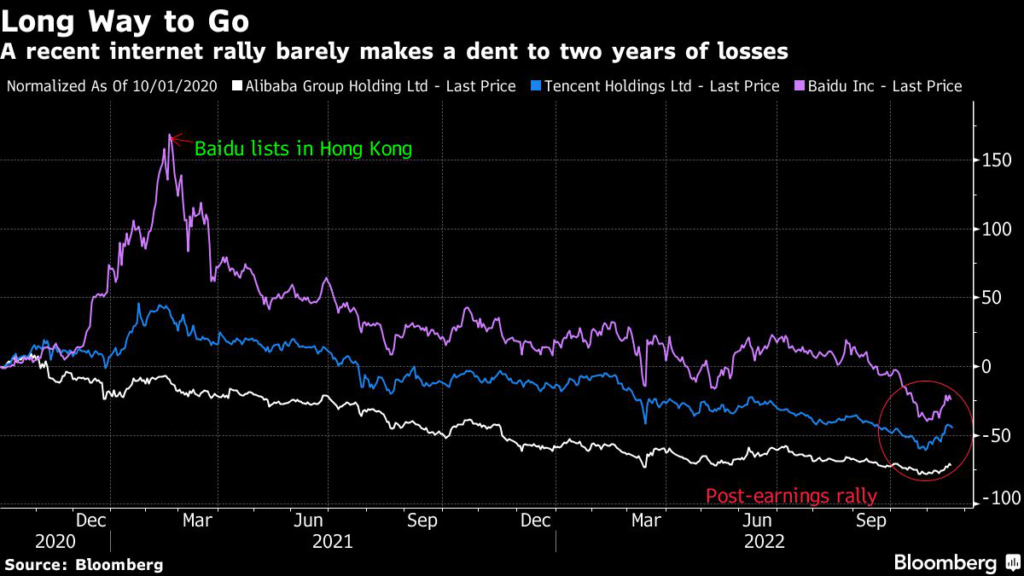
Baidu’s performance gives ammunition to investors who say China’s internet sector may be emerging from a two-year drought. Growth evaporated after Beijing launched a regulatory clampdown in 2020 on the private sector and pandemic curbs laid waste to consumer sentiment and supply chains. Baidu and rivals like Tencent Holdings Ltd. and Alibaba Group Holding Ltd. responded by reining in costly forays into new arenas and slashing costs to preserve margins.

China’s two largest internet companies posted better-than-expected net income last week, suggesting the sector’s new-found cost discipline is paying off. Analysts also expect Beijing to relax pandemic restrictions, giving the world’s No. 2 economy a much-needed lift next year. 

Baidu’s shares climbed 2.1% in pre-market trading in New York. Its Netflix-style subsidiary, iQiyi Inc., and video service Kuaishou Technology also reported better-than-expected revenue on Tuesday.

Read more: Kuaishou Revenue Beats Estimates After Fending off ByteDance

What Bloomberg Intelligence Says

Tencent and Alibaba’s bottom line beats have helped stabilize their earnings outlook, suggesting that along with China’s policy pivot, the worst may be over. While Tencent’s Meituan divestment drove some concerns for the rest of the sector, the move is in-line with tech regulatory reform and the impact on core operations should be limited.

– Marvin Chen, strategist

Click here for research.

Still, Baidu’s reliance on digital marketing leaves the Beijing-based company vulnerable to economic shocks in 2023, particularly if China’s much-anticipated re-opening progresses at a slow pace.

The company’s been trying for years to reinvent itself as a supplier of deep technology by expanding into self-driving systems, cloud computing and chips, but the economic downturn has chilled those efforts. It won approval earlier this year to deploy the first fully autonomous taxis on Chinese roads and unveiled a self-made quantum computer.

Baidu’s nascent AI cloud division is now its fastest growth engine, but it faces an uphill battle against market leaders including Alibaba and Huawei Technologies Co.

For now, Baidu continues to depend on its flagship news-search app to win advertising dollars and users from online entertainment platforms operated by Tencent and TikTok-owner ByteDance Ltd.

“We expect the recovery curve in the second half of 2022 to slow for China Internet given the ongoing rising COVID cases and mobility restrictions that impacted consumer sentiment and business activities,” Mizuho Securities analyst James Lee wrote last week.

–With assistance from Ville Heiskanen.

(Updates with details on investment losses from the second paragraph)

More stories like this are available on bloomberg.com

©2022 Bloomberg L.P.

Stocks Gain as Oil Majors Rally; Fedspeak in Focus: Markets Wrap

(Bloomberg) — European shares advanced, boosted by oil majors as crude prices recovered. US futures gained as investors parsed comments from Federal Reserve officials to assess the potential for slower interest rate hikes. 

The Stoxx Europe 600 Index climbed 0.7%, with Shell Plc and BP Plc among the biggest drivers of the gains. Contracts on the S&P 500 and the Nasdaq 100 were both higher, reversing earlier losses. In US premarket trading, Zoom Video Communications Inc. fell after reporting slower sales and trimming its full-year revenue forecast.

The dollar weakened against all major currencies and Treasury yields declined. Oil advanced after Saudi Arabia pushed back against reports of a potential OPEC+ production increase. 

Fed officials have broadly maintained their steadfast stance to fight against inflation. Yet San Francisco Fed President Mary Daly also said that officials need to be mindful of the lags in the transmission of policy changes, while her Cleveland counterpart Loretta Mester said she’s open to slowing the tempo of rate hikes. 

“In a year like this, it is so difficult and often a fool’s errand to read too much into any one speech from one Federal Reserve official,” Sarah Ponczek, financial adviser at UBS Private Wealth Management, said on Bloomberg Television. “The reality is that we do expect that the Federal Reserve is still likely going to raise interest rates again in December.” 


JPMorgan Chase & Co. strategist Marko Kolanovic, who until recently had been one of the most vocal bulls on Wall Street, said risky assets may languish until the Fed reverses course on its hawkish campaign to raise interest rates. A near-term pivot is likely not in the cards and JPMorgan expects assets to still be “rangebound with a more pronounced downside risk.”

In Asia, a gauge of the region’s equities was off its intraday highs as stocks in Hong Kong slid with China’s daily virus infections climbing to near the highest on record. Covid-control restrictions now affect a fifth of China’s economy. Chinese stocks listed in the US fell in premarket New York trading.

China’s reopening may only be a story for the second quarter of next year as the country enters the winter months, according to Dwyfor Evans, head of Asia Pacific macro strategy at State Street Global Markets. 

“To actually expect a very conservative political body to suddenly open up China and remove restrictions in November and into the most dangerous season as it were for these type of pandemic instances, we always thought that was very, very optimistic,” Evans said on Bloomberg Television.

Gold rose on the weaker dollar. Cryptocurrency prices were mixed, with investors braced for more ructions as further digital-asset sector bankruptcies loom following the demise of Sam Bankman-Fried’s FTX empire. 

Key events this week:

  • US Richmond Fed manufacturing index, Tuesday
  • OECD releases Economic Outlook, Tuesday
  • Fed’s Loretta Mester and James Bullard speak, Tuesday
  • S&P Global PMIs: US, Euro area, UK, Wednesday
  • US MBA mortgage applications, durable goods, initial jobless claims, University of Michigan sentiment, new home sales, Wednesday
  • Minutes of the Federal Reserve’s Nov. 1-2 meeting, Wednesday
  • ECB publishes account of its October policy meeting, Thursday
  • US stock and bond markets are closed for the Thanksgiving holiday, Thursday
  • US stock and bond markets close early, Friday

Some of the main moves in markets:

Stocks

  • The Stoxx Europe 600 rose 0.7% as of 9:49 a.m. London time
  • Futures on the S&P 500 rose 0.2%
  • Futures on the Nasdaq 100 rose 0.2%
  • Futures on the Dow Jones Industrial Average rose 0.2%
  • The MSCI Asia Pacific Index rose 0.4%
  • The MSCI Emerging Markets Index fell 0.3%

Currencies

  • The Bloomberg Dollar Spot Index fell 0.3%
  • The euro rose 0.3% to $1.0271
  • The Japanese yen rose 0.6% to 141.32 per dollar
  • The offshore yuan rose 0.6% to 7.1371 per dollar
  • The British pound rose 0.3% to $1.1862

Cryptocurrencies

  • Bitcoin rose 0.4% to $15,687.78
  • Ether fell 1.1% to $1,081.87

Bonds

  • The yield on 10-year Treasuries declined three basis points to 3.79%
  • Germany’s 10-year yield was little changed at 2.00%
  • Britain’s 10-year yield was little changed at 3.19%

Commodities

  • Brent crude rose 0.7% to $88.05 a barrel
  • Spot gold rose 0.6% to $1,747.97 an ounce

This story was produced with the assistance of Bloomberg Automation.

–With assistance from Tommi Utoslahti and Tassia Sipahutar.

More stories like this are available on bloomberg.com

©2022 Bloomberg L.P.

Fallen Hedge Fund Three Arrows Capital’s Founder Says FTX Set Crypto Back Years

(Bloomberg) —

A string of high-profile crypto crises could set the industry back by almost a decade, according to the co-founder of Three Arrows Capital, whose June implosion was one of the largest hedge-fund trading busts.

“Some industry leaders have said the FTX collapse set the industry back by five years,” Su Zhu said in a rare in-person interview in Abu Dhabi. “I think it’s even longer than that — seven or eight years — maybe even longer, if the underlying issues aren’t solved.”

Zhu and his co-founder Kyle Davies were among the most vociferous bulls in an industry known for extremes. They orchestrated trades turbocharged by leverage, leaving 3AC at the center of a series of implosions convulsing the crypto market this year. The crisis deepened in the past month with the crash of the exchange FTX.

READ MORE: The Collapse of Three Arrows Capital Became a Crypto Contagion

After 3AC’s collapse from more than $4 billion under management to zero, the former Credit Suisse AG trader says he spent extensive time meeting with regulators. He recently returned to the United Arab Emirates, which has emerged as a crypto hub over the past year. 

In the days after 3AC’s crash, the firm’s co-founders were criticized by court-appointed liquidators for not cooperating with legal proceedings and providing “piecemeal disclosures” while Singapore’s central bank reprimanded them over false information. 

Zhu has pushed back, accusing the liquidators of misleading the High Court of Singapore about the hedge fund’s structure.

With months to reflect on 3AC’s spectacular fall, Zhu said he’s flirted with the idea of setting up a new trading entity — perhaps an all-weather fund that invests in both crypto but also traditional assets.

“But I don’t think there’s a rush,” he said. “The dominoes are just beginning to fall. There are many more dominoes.”

–With assistance from Joanna Ossinger and Suvashree Ghosh.

More stories like this are available on bloomberg.com

©2022 Bloomberg L.P.

FTX Latest: Bankruptcy Filing Shows $1.24 Billion Cash Balance

(Bloomberg) — An FTX Group bankruptcy filing showed that the fallen cryptocurrency firm and a number of affiliates had a combined cash balance of $1.24 billion — more than debtors had identified a few days ago.

The new management of the collapsed exchange will be at a hearing in Delaware bankruptcy court for first-day motions today. You can follow Bloomberg’s TOPLive coverage here.

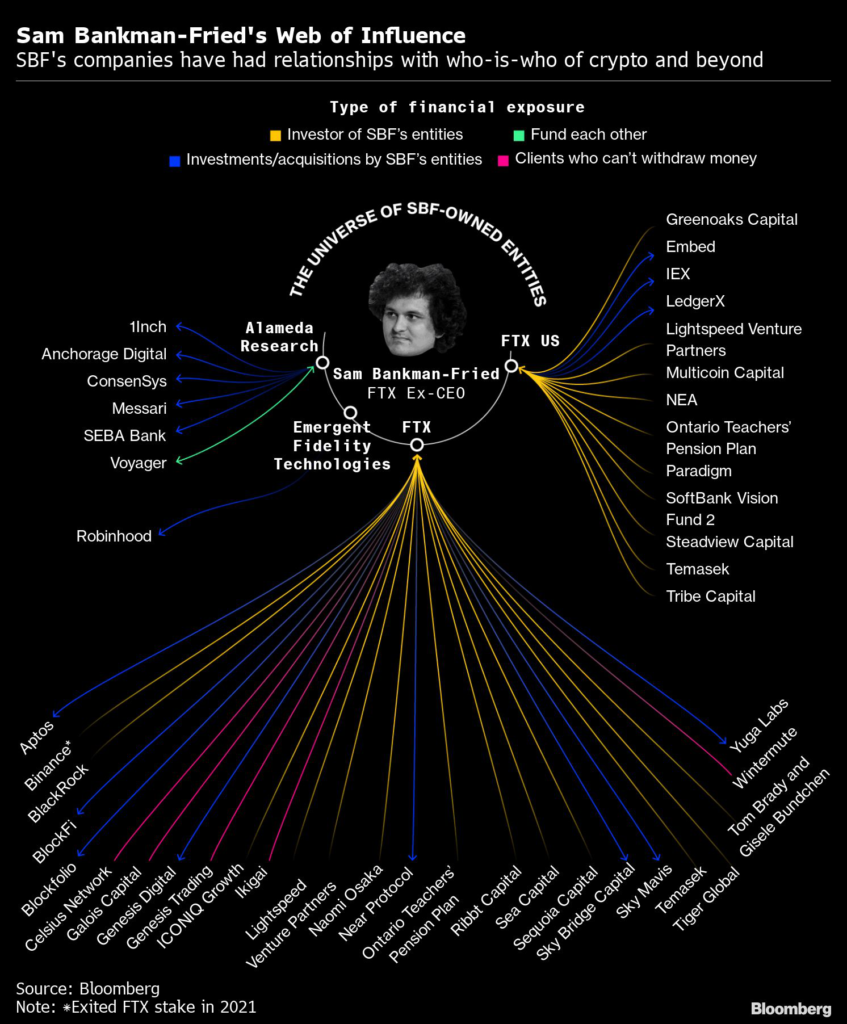
Separately, crypto brokerage Genesis warned of the risk of bankruptcy amid contagion from the rapid demise of FTX, while the fall of other parts of Sam Bankman-Fried’s empire, including trading desk Alameda Research, is contributing to reduced liquidity in crypto markets.

Tampa Bay Buccaneers quarterback Tom Brady and the Golden State Warriors’ Steph Curry are among the celebrities that a Texas regulator is investigating for potential securities-law violations tied to their promotions of FTX.

Key stories and developments:

  • Crypto Firm Genesis Said to Warn of Bankruptcy Without New Funds
  • Is Bitcoin Still Heading Into an Ice Age? (Podcast)
  • US Prosecutors Opened Probe of FTX Months Before Its Collapse
  • Tom Brady, Steph Curry Draw Texas’ Scrutiny Over FTX Plugs

(Time references are New York unless otherwise stated.)

Bitcoin Trades Near Lowest Since November 2020 (5:35 p.m. HK)

Crypto markets are under pressure on concern about the spreading fallout from the FTX crisis. Bitcoin was little changed on Tuesday, trading below $16,000 and close to the lowest level since November 2020. A gauge of the top 100 digital assets has declined more than 70% over the past year.

FTX Group Bankruptcy Filing Shows Cash Balance of $1.24 Billion (1:30 p.m. HK)

An FTX Group bankruptcy filing showed that, as of Nov. 20, the exchange and a number of affiliates had a combined cash balance of $1.24 billion — more than the debtors identified last week.

The document from Alvarez & Marsal North America LLC, the proposed financial adviser to FTX, said trading house Alameda and related firms had a cash balance of almost $401 million.

Bahamas Agrees to Let Delaware Judge Handle Part of FTX Meltdown (8 a.m. HK)

Bahamas court officials dropped their opposition to moving one piece of FTX’s restructuring case to a US court in Delaware, according to a court filing.

Liquidators appointed in the Bahamas for one FTX affiliate agreed to move a case they filed in New York to Delaware, where more than 100 units are under the oversight of a federal judge, FTX lawyers said in papers filed in US Bankruptcy Court in Wilmington, Delaware.

FalconX Says it Will Resume Use of Silvergate Payment Network (7:40 a.m. HK)

Institutional cryptocurrency platform FalconX said it will resume allowing customers to use Silvergate Capital Corp.’s payments system to transfer cash after suspending it last week.

Uncertainty around cryptocurrency market conditions in the wake of FTX’s collapse and an outage that affected Silvergate’s “wire payment network” prompted the suspension, FalconX said Monday in a memo to clients. Since then, concerns have abated, San Francisco-based FalconX said.

Tom Brady, Steph Curry Draw Texas’ Scrutiny Over FTX Plugs (7:15 a.m. HK)

A Texas regulator is scrutinizing payments received by celebrities to endorse FTX US, along with what disclosures were made and how accessible they were to retail investors

Tampa Bay Buccaneers quarterback Tom Brady and the Golden State Warriors’ Steph Curry are among the high-profile people being investigated.

Crypto Firm Genesis Said to Warn of Bankruptcy (6 a.m. HK)

Digital-asset brokerage Genesis is struggling to raise fresh cash for its lending unit, and it’s warning potential investors that it may need to file for bankruptcy if its efforts fail, according to people with knowledge of the matter.

Genesis, which has faced a liquidity crunch in the wake of crypto exchange FTX’s bankruptcy filing this month, has spent the past several days seeking at least $1 billion in fresh capital, the people said. That included talks over a potential investment from crypto exchange Binance, they said, but funding so far has failed to materialize.

US Prosecutors Opened Probe of FTX Months Before Its Collapse (4:14 p.m.)

Long before Sam Bankman-Fried’s FTX cryptocurrency empire collapsed this month, it already was on the radar of federal prosecutors in Manhattan.

The US Attorney’s Office for the Southern District of New York, led by Damian Williams, spent several months working on a sweeping examination of crypto currency platforms with US and offshore arms and had started poking into FTX’s massive exchange operations, according to people familiar with the investigation.

Fidelity Must Reconsider Bitcoin Exposure in 401(k)s: Senators (3:43 p.m.)

Democratic senators Dick Durbin, Elizabeth Warren and Tina Smith are urging Fidelity Investments to reconsider allowing 401(k) plan sponsors to offer exposure to Bitcoin. 

“The recent implosion of FTX, a cryptocurrency exchange, has made it abundantly clear the digital asset industry has serious problems,” the senators said in a letter to Fidelity CEO Abigail Johnson. 

Cathie Wood Goes on Coinbase Buying Spree as Wall Street Sours (12:21 p.m.)

Wall Street’s waning conviction in Coinbase Global Inc. has done little to deter Cathie Wood. Instead, she’s been scooping up shares of the struggling cryptocurrency exchange in the wake of the collapse of FTX.

Wood’s Ark Investment Management funds have bought more than 1.3 million shares of Coinbase since the start of November, worth about $56 million based on Monday’s trading price, according to data compiled by Bloomberg. The shopping spree, which started just as FTX’s demise began, has boosted Ark’s total holdings by roughly 19% to about 8.4 million shares. That equates to around 4.7% of Coinbase’s total outstanding shares.

‘Alameda Gap’ Seen Helping Dry Up Liquidity Across Crypto Market (11:26 a.m.)

The wipeout of Sam Bankman-Fried’s crypto empire, including its crown jewel FTX exchange and sister trading desk Alameda Research, is helping to reduce liquidity across the crypto market. 

The decline has been dubbed the “Alameda Gap” by blockchain-data firm Kaiko, named for the trading group at the center of the storm which is closing its books. 

More stories like this are available on bloomberg.com

©2022 Bloomberg L.P.

Close Bitnami banner
Bitnami