
Bloomberg

China, Japan Leaders Open Door to Mend Ties in First Meeting

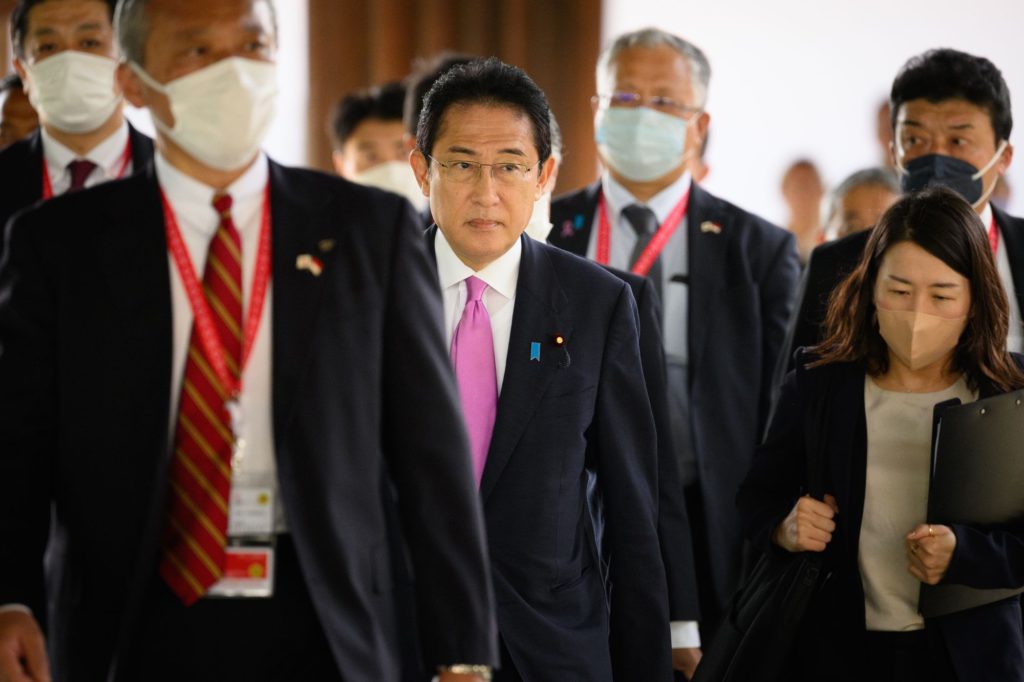
(Bloomberg) — Chinese President Xi Jinping and Japanese Prime Minister Fumio Kishida asserted their desire to improve relations and agreed to reopen lines of communication in the first meeting of the leaders of Asia’s two largest economies in three years.

Xi expressed a willingness to work with Japan to maintain a stable relationship at their summit Thursday on the sidelines of the Asia Pacific Economic Cooperation Forum in Bangkok. Kishida, for his part, said both sides had a responsibility to uphold peace and security in the world. 

“Today’s meeting was a good start to a dialogue toward a constructive and stable Japan-China relationship,” Kishida told reporters after talks he said lasted about 45 minutes. 

The meeting was among steps to thaw the diplomatic chill between China and US allies during summits in Asia this week, with Xi expected to meet New Zealand premier Jacinda Ardern on Friday. Ties between Beijing and Tokyo have frayed in recent years as Japan joined US-led efforts to counter China’s regional influence through institutions such as the Quad group including Australia and India. 

The warmer tone echoed Xi’s meeting Monday with President Joe Biden, in which both leaders agreed to restart talks stalled in the wake of US House Speaker Nancy Pelosi’s visit to Taiwan. In remarks to the APEC CEO Summit on Thursday, Xi said the “Asia-Pacific is no one’s backyard and should not become an arena for big power contest.” 

“The significance of China-Japan relations hasn’t changed, and will not change,” Xi told Kishida. “I’m willing to work with you and take responsibility as politicians to build China-Japan relations that meet the requirements of the new era.” 

A calmer atmosphere may help Kishida re-establish the “constructive and stable relations” he has said he wants with his country’s biggest trading partner. Japan, which tries to strike a balance between China and its sole security ally, the US, has also found itself in a difficult position over Biden administration efforts to counter China’s rise.

The two agreed on an early restart to a high-level economic dialog as well as other ministerial exchanges that been halted due to the pandemic, according to a statement from Japan’s foreign ministry. Foreign Minister Yoshimasa Hayashi will arrange a visit to China, according to a ministry official. Before the pandemic broke out, Xi had been due to pay a state visit to Japan in the spring of 2020.  

While Beijing tacked closer to Russia, taking part in joint military exercises near Japan, Kishida has sought stronger ties with NATO, becoming the first Japanese premier to attend the group’s summit in June. At the same time, the massive flow of Chinese tourists to Japan that helped revamp Japan’s image in China in previous years remains at a halt due to Xi’s Covid Zero policy. 

Chinese Foreign Minister Wang Yi canceled an August meeting with his Japanese counterpart over a Group of Seven statement criticizing military exercises near Taiwan after the Pelosi visit that included ballistic missiles landing close to Japan. Ships from Japan and China continue to chase one another around disputed islands in the East China Sea and Kishida accused China of infringing on his country’s sovereignty at an Association of Southeast Asian Nations meeting in Phnom Penh on Sunday.

The Japanese premier told reporters after meeting Xi that he raised concerns about stability in the Taiwan Strait as well as about China’s military moves, human rights issues and the detention of Japanese citizens during the talks. But he described the discussions as making progress toward better ties.

The two agreed to swiftly begin operations of an air and maritime hotline and to strengthen communications via a Japan-China national security dialogue, according to Japan’s foreign ministry.

“Japan and China both have great responsibility for the peace and prosperity of the region and the world,” Kishida told Xi at the start of their meeting. 

–With assistance from Takashi Hirokawa, Colum Murphy and Ocean Hou.

(Updates with details throughout.)

More stories like this are available on bloomberg.com

©2022 Bloomberg L.P.
Tencent Wins First Major Game Approval as Crackdown Eases

(Bloomberg) — Tencent Holdings Ltd. won approval for its first new major game title since Chinese regulators resumed licensing this year, in a sign that Beijing’s crackdown on the mobile entertainment industry is easing.

Its game “Metal Slug: Awakening” was among 70 domestic titles approved for November by the National Press and Publication Administration, the latest batch of licenses granted since regulators resumed the approval in April. Shares increased as much as 3.7% in Hong Kong trading. 

Tencent did win approval in September for a minor health-education title under the name of an operator Nanjing Wangdian Technology. In a notable step forward this month, the tech giant has a major game listed under its name.  In an analyst call earlier this week, a Tencent executive expressed confidence in winning approval to release its major games soon.

Beijing’s tech crackdown, which ensnared sectors from e-commerce to fintech and even education over a tumultuous year, spread to online gaming in August 2021. Regulators introduced stringent measures on the sector, such as capping play time for minors to a mere three hours a week and imposed other requirements aimed at curbing addiction. 

China’s media watchdog halted licensing and has since been more carefully reviewing new titles to determine whether they meet stricter criteria on content and child protection, slowing rollouts, Bloomberg News has reported.

NetEase Inc. also won approval for its title “Journey to the West” for November. Its stock rose as much as 8% in Hong Kong on Friday. The Hang Seng Tech index rose as much as 4.4%.

Shares of the Hangzhou-based firm plummeted Thursday as Blizzard Entertainment Inc. announced that both parties would end their 14-year partnership after January, depriving the Chinese firm of a slice of revenue and suspending service for some of the country’s most popular games.  

–With assistance from Zheping Huang.

(Updates with shares from the second paragraph)

More stories like this are available on bloomberg.com

©2022 Bloomberg L.P.
Foreign Investors Are Computing Their Own Forex Rate in Nigeria

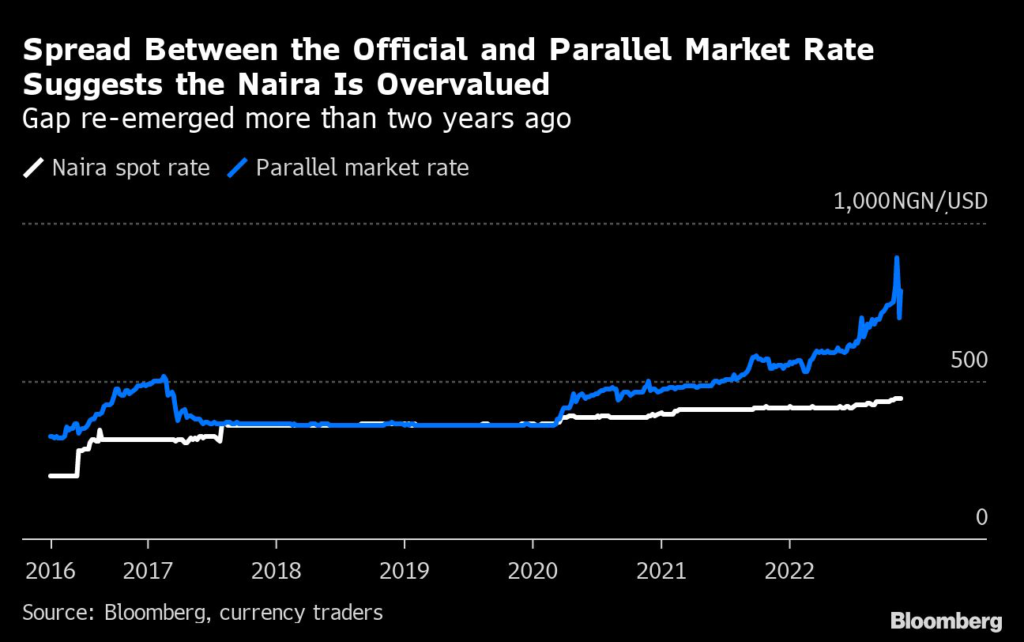
(Bloomberg) — While the naira trades at an official and a vastly weaker parallel rate due to a chronic dollar shortage, foreign investors are using their own calculations to value their trapped Nigerian assets.

One alternative level is derived from pricing for two stocks listed in both Lagos and London — Airtel Africa Plc and Seplat Energy Plc. The result provides a realistic valuation for the potential sale of holdings on the Nigerian Stock Exchange, said Jenni Chamberlain, a portfolio manager at Altree Capital Ltd.

“We mark our portfolio at an implied exchange rate obtained by using the average implied exchange rate from Airtel and Seplat prices in London and on the NSE,” Chamberlain said in an emailed response to questions. “This rate trades closer to the black market rate, but I know we can realize this valuation if required.” 

While the naira has officially weakened by only about 4% against the dollar this year, that rate is inaccessible to many foreign portfolio managers seeking to repatriate funds from Nigeria due to a lack of hard currency. The International Monetary Fund has estimated that as much as $1.7 billion of investor funds could be trapped in Africa’s largest economy. 

Many businesses and investors are more likely to get their dollars from the parallel market, where the greenback is freely traded but at a premium of almost 80% to the official spot rate. While the naira traded just below 444 a dollar on Thursday, the parallel-market rate was 793 per dollar.

Airtel closed at 116.2p in London on Wednesday, compared with 1,270 naira in Lagos — equivalent to £2.41 at the official rate. For Seplat, the levels were 96.2p against 1,089 naira — or £2.07.

Altree, incorporated in Bermuda, utilizes the Seplat-Airtel derived rate “as we believe it is a fair reflection of where we would be able to realize our Nigerian exposure today should we require the liquidity,” Chamberlain said.

The Nigerian situation has echoes of one in Zimbabwe, where analysts used to assess how out of sync Zimbabwean equities were due to rampant inflation by measuring the difference between the London and Harare stock of insurer Old Mutual Ltd., Africa’s largest insurer. Old Mutual’s Harare shares were suspended in 2020 after authorities blamed moves in the stock for fueling a collapse in the local currency.

Nigeria’s parallel-market naira rate is “certainly” much closer to a fair level than the official one, “which is very overvalued,” said Kevin Daly, a portfolio manager at abrdn in London. The firm sold its Nigeria assets in 2020 because of capital control concerns and will only return after the currency is weakened and bond rates are higher, Daly said.

Eleven out of 13 participants in a Bloomberg poll predict the central bank will devalue the naira in 2023 after allowing it to weaken three times since March 2020.

Read more: Biggest Devaluation in Six Years May Be on the Cards for Nigeria

More stories like this are available on bloomberg.com

©2022 Bloomberg L.P.
This Is the Memo Twitter Sent Telling Staff Offices Were Closed

(Bloomberg) — Twitter Inc. on Thursday announced it was temporarily closing its offices after Elon Musk issued employees an ultimatum: Stay with the company “working long hours at high intensity” or quit with three months’ severance pay.

The closure until Monday came after more workers than expected opted for the latter option, according to people familiar with the situation, causing confusion over who should still be allowed access to Twitter premises.Read More: Musk’s ‘Hardcore’ Ultimatum Spurs Exodus, With Twitter at Risk 

It’s a fresh blow for Musk, who laid off half the company’s workforce upon taking over, before having to ask some of them to return in order to build the platform he envisaged.

As Twitter’s internal communication channels filled with staff announcing their departure, Musk softened his earlier edict against working remotely. “All that is required for approval is that your manager takes responsibility for ensuring that you are making an excellent contribution,” he wrote in an email Thursday.

Topics related to the company trended in the US after the news, including #RIPTwitter, Twitter HQ, Apparently Twitter, and $44 billion, which was the price Musk paid for the social network business.

Below is the memo the company sent out to staff announcing the office closure: 

Hi,Effective immediately, we are temporarily closing our office buildings and all badge access will be suspended. Offices will reopen on Monday, November 21st.

Thank you for your flexibility. Please continue to comply with company policy by refraining from discussing confidential company information on social media, with the press or elsewhere.

We look forward to working with you on Twitter’s exciting future.

Twitter.


More stories like this are available on bloomberg.com

©2022 Bloomberg L.P.

Moody’s Risk-Management Unit Closes China Operations, Cuts Staff

(Bloomberg) — Moody’s Corp. has shuttered the China operations of its risk management division, laying off about 100 people, according to people familiar with the matter.

Moody’s Analytics closed its offices in Beijing, Shanghai and Shenzhen following discussions about operating efficiency and profitability, the people said, requesting not to be named because the matter is private. Moody’s credit ratings business will continue, they said.

The division’s retreat comes as Wall Street struggles with China’s strict Covid Zero policy, volatile markets and state interference. Morningstar Inc. slashed its workforce in China earlier in the year. 

“As announced during our most recent earnings call, Moody’s is taking steps to align our global workforce with current and anticipated economic conditions,” a spokesperson said in response to Bloomberg queries. “Moody’s continues to maintain a strong presence in China and contribute constructively to China’s sustainable growth and the further development of its domestic markets.”

Moody’s Analytics also provides financial intelligence.

–With assistance from Jun Luo and Zheng Li.

More stories like this are available on bloomberg.com

©2022 Bloomberg L.P.
Trudeau Team Feared Trucker Protest Would Harm US Trade Ties

(Bloomberg) — Canada’s government was worried about the hit to its reputation from trucker-convoy trade disruptions as it negotiated with the US on electric-vehicle incentives.

Michael Sabia, the top civil servant in the finance department, told a public inquiry into Prime Minister Justin Trudeau’s invocation of emergency powers that border blockades came at an especially bad time for Canada, which was already battling US protectionist measures.

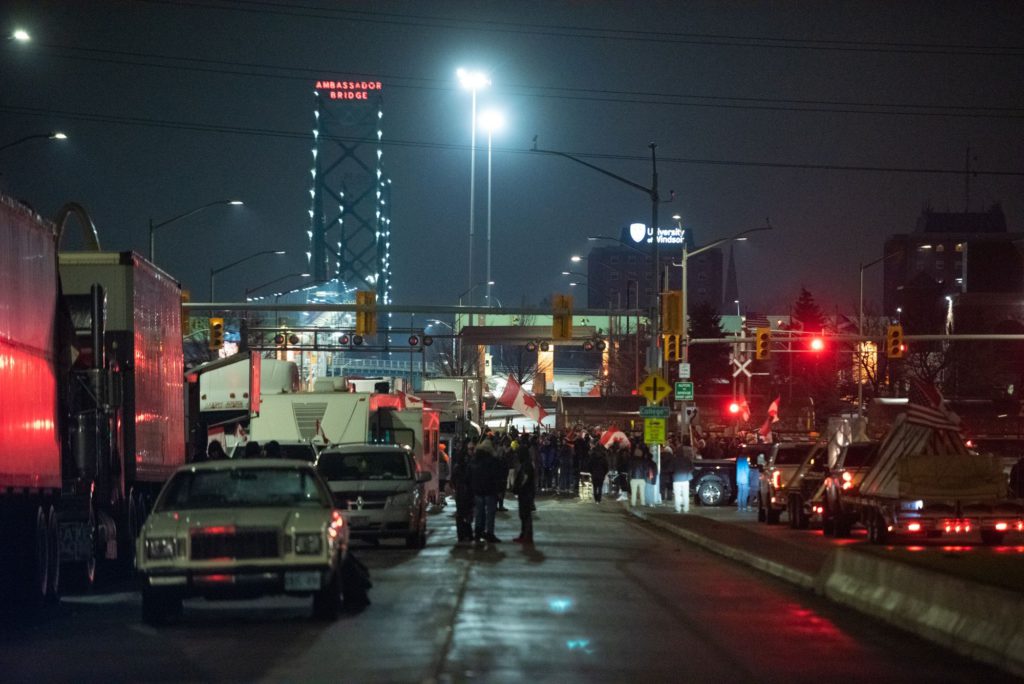
Convoy protesters shut down multiple border crossings in mid-February, including the Ambassador Bridge into Detroit that is Canada’s busiest trade corridor with the US and a vital link for the auto manufacturing sector. They also gridlocked downtown Ottawa for nearly a month, denouncing Trudeau and federal Covid-19 restrictions that included vaccine mandates.

If the border blockades “were to continue for a period of time and became an even more significant threat to the American perception of Canada as a reliable trading partner, that was something with very severe long-term consequences,” Sabia told the inquiry Thursday morning.

At least six auto plants near the US-Canada border were forced to slash production as the standoff at the bridge intensified. Toyota Motor Corp., General Motors Co., Ford Motor Co. and Stellantis NV all either idled plants or reduced capacity. Economists, meanwhile, were warning that the disruptions threatened Canada with an economic contraction while fueling inflation.

“There was concern within the American federal government, within the White House, about this issue,” Sabia said. Trudeau and President Joe Biden discussed the protests during a phone call on Feb. 11. 

The bridge blockade also came amid Canada’s push against proposed Buy American tax incentives for EVs that would have favored vehicles made by unionized US workers, potentially in violation of the overhauled continental free-trade with the US and Mexico. 

“There was no doubt that these disruptions, coming when they did in that process, brought with them the risk that we would not be able to get the North American treatment that we were eventually able to negotiate,” Sabia said.

The government, including the finance department, became focused on how to end the blockades as quickly as possible, he said. Aside from the direct impact of blocking goods from crossing the border, the government feared there would also be a cascading effect on the economy as supply chains for various sectors were interrupted.

“Duration is everything here in terms of its disruptive impact on the Canadian economy,” said Sabia, who before joining government did stints as chief executive at both Canada’s second-biggest pension fund and its biggest telecommunications firm.

That led finance officials to begin examining what tools they had under Canadian legislation to cut off the flow of funding to the convoy and pressure people to end their participation in the blockades.

Sabia said he and Finance Minister Chrystia Freeland had discussions with chief executives of major banks to gage their views on the blockades and what could be done to end them.

But the government had the problem that “pretty much anything that we could do would require a legislative change, and legislative changes by their nature take an extended period of time,” Sabia said.

Trudeau eventually decided to invoke the Emergencies Act on Feb. 14, which included giving banks the power to freeze the accounts of people deemed to be participating in or funding the convoy blockades.

Sabia and one of his deputies told the inquiry that the government wasn’t involved in deciding which specific accounts should be frozen. Instead, banks were instructed to take those decisions on their own, often on the basis of information provided by Canadian police.

Ultimately, the inquiry heard that the economic impact of the convoy was relatively small because the border blockades — particularly at the Ambassador Bridge — were not allowed to linger.

“It’s fair to say that the economic impact was limited, but it was limited because the duration of the blockades was limited,” said Rhys Mendes, a Bank of Canada official who is on secondment to the finance department. 

The six-week inquiry began Oct. 13 and has heard from police officers, government officials, municipal politicians, and the convoy organizers themselves. 

Later Thursday, the inquiry heard from Trudeau’s national security adviser, Jody Thomas, who said she told cabinet that invoking emergency powers was necessary to end the blockades.

However, Thomas also said that the legislation’s definition of what constitutes a threat to national security is too narrow and should be “modernized to reflect the reality of the nature of threats that are occurring in 2022.”

Trudeau, Freeland and other cabinet ministers are scheduled to testify before the inquiry wraps up at the end of next week.

(Updates with testimony from Trudeau’s national security adviser. An earlier version corrected the day of the week in the 4th paragraph.)

More stories like this are available on bloomberg.com

©2022 Bloomberg L.P.
Musk’s Twitter Deal Remains in Focus for US Data-Security Review

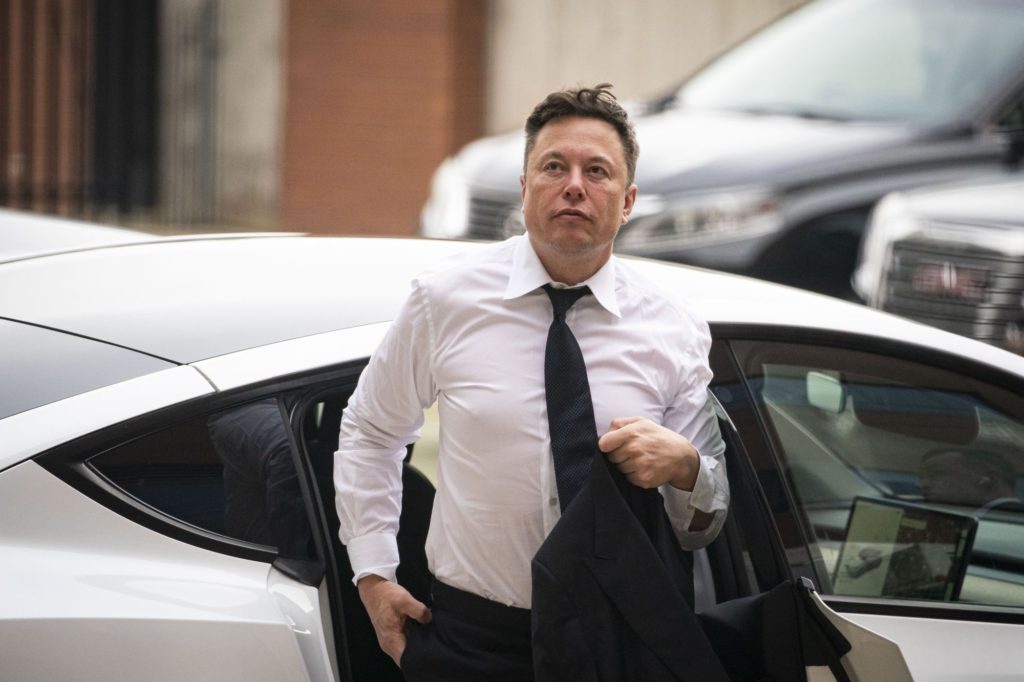
(Bloomberg) — Elon Musk’s $44 billion takeover of Twitter Inc. is still facing US government scrutiny over national-security concerns that his foreign partners may be able to access user data, people familiar with the matter said. 

The US government continues to seek information on confidential agreements that Musk made with foreign investors who hold stakes in Twitter after he bought it, and whether those deals allow them to access users’ personal data, said one of the people, who asked not to be identified discussing sensitive deliberations. 

Musk’s successful takeover and de-listing of Twitter has been in the spotlight as criticism mounts from US lawmakers over the participation of investors from Saudi Arabia and Qatar. 

The Twitter deal appeared in the clear earlier this week when Treasury Secretary Janet Yellen said she saw no need for an investigation. Yellen’s Treasury Department leads the Committee on Foreign Investment in the US, or Cfius, which looks into such deals for potential national-security risks. 

Her comments came only days after President Joe Biden had said Musk’s business interests and links to foreign governments warranted review. 

Musk and Twitter didn’t immediately respond to requests for comment. Treasury Department spokesman Michael Gwin said Cfius doesn’t comment on transactions it may or may not be reviewing, adding that the panel is committed to safeguarding national security.

This week, Musk presented Twitter employees with an ultimatum: Either commit to the company’s new “hardcore” work environment or leave. Many more workers declined to sign on than he expected, potentially putting Twitter’s operations at risk, according to people familiar with the matter. 

So many employees decided to take severance that it created a cloud of confusion over which people should still have access to company property. Twitter closed its offices until Monday, according to a memo viewed by Bloomberg.

Musk tried, in the final hours before his deadline, to convince people to stay. 

Security Concerns

The potential for action by Cfius emerged amid rising concerns over how Musk’s various business interests overlap with top US national security priorities. Musk’s Starlink satellite internet network, for instance, has been used in Ukraine to maintain communications during its fight to repel Russia’s invasion, a service he briefly threatened to cut off in October. 

Two Democratic senators, Mark Warner of Virginia, who leads the Senate Intelligence Committee, and Chris Murphy of Connecticut have called for greater scrutiny of the Twitter deal given the ownership stakes held by some foreigners, including Saudi Arabian billionaire Prince Alwaleed Bin Talal, who rolled over his existing stake in Twitter into Musk’s deal, and Qatar’s sovereign wealth fund. Tesla Inc.’s manufacturing site near Shanghai has also been raised as a potential leverage point by Beijing. 

“I don’t understand this decision,” Murphy tweeted Tuesday after Yellen’s comments, which were reported by CBS News. “Cfius is designed to review transactions like this.”

–With assistance from Sarah Frier, Ed Ludlow, Jef Feeley, Kurt Wagner and Davey Alba.

(Updates with more details about Twitter, starting in eighth paragraph.)

More stories like this are available on bloomberg.com

©2022 Bloomberg L.P.
Alibaba Shares Surge With Buyback, Signs of Covid Easing

(Bloomberg) — Alibaba Group Holding Ltd. shares rose after the Chinese e-commerce giant unveiled a new buyback plan and suggested Covid-19 restrictions are beginning to ease enough to benefit its business.

The stock was up as much as 6.4% in Hong Kong trading on Friday morning.

Alibaba reported a surprise net loss for the quarter as it marked down investment holdings, but it offered investors support on other fronts. The company approved a $15 billion expansion to an existing $25 billion buyback program while extending the duration to 2025. Executives also expressed optimism about the eventual lifting of pandemic restrictions.

“With the introduction of the 20-point pandemic measures from the state authorities, that can be expected to have a positive impact. We certainly do note still some disruption to logistics in certain regions of the country,” Chief Executive Officer Daniel Zhang told analysts on a post-earnings conference call. “But overall we do expect things to continue to improve in a positive direction.”

China’s e-commerce leader reported a net loss of 20.6 billion yuan ($2.9 billion) versus projections for a profit of almost the same amount, after it marked down the value of investments across a portfolio that includes Didi Global Inc. and Indonesia’s GoTo. Adjusted Ebitda did rise 24% for the quarter, a metric analysts at Jefferies highlighted as a sign of progress.

“We consider it is in a sweet spot to embrace the reopening story ahead, thanks to its huge and engaging user base with the pursuit of successful customer segmentation strategies coupled with wide product selections,” the analysts at Jefferies wrote.

Alibaba Seen as Recovery Story Despite Revenue Miss: Street Wrap

Revenue rose a slightly less-than-expected 3% to 207.2 billion yuan in the September quarter, after cloud sales — the company’s biggest growth driver in recent times — notched its slowest-ever pace.

Still, investors point to signs Xi Jinping’s administration is retreating from its Covid Zero framework and growing supportive of tech firms. While it’s early, there are steps that suggest a renewed focus on unshackling the private sector and reviving the world’s No. 2 economy.

“We believe that Covid will ultimately pass, that our society, our economy, and our lives will eventually return to normal, and that the massive potential of China as the world’s second-largest economy will be further unleashed,” Zhang said.

Analysts at Bernstein including Robin Zhu summoned up Shakespeare to capture the drama of Beijing’s Covid policies. “All the world’s a reopening play?” they wondered in a report after Alibaba’s earnings.

“All the China ADRs are a reopening play, all the local governments merely players; they have their exits and their entrances; and one man in his time plays many parts…,” they wrote.

More stories like this are available on bloomberg.com

©2022 Bloomberg L.P.
Ontario Teachers Writes Off FTX Stake, Citing Possible Fraud

(Bloomberg) — Ontario Teachers’ Pension Plan said it will write down its stake in FTX to zero, taking a $95 million loss barely a year after making its first investment in Sam Bankman-Fried’s now-bankrupt cryptocurrency exchange. 

Teachers said the writedown will have only a “limited impact” because it’s less than 0.05% of the C$242.5 billion ($182 billion) pension fund. “However, we are disappointed with the outcome of this investment, take all losses seriously and will use this experience to further strengthen our approach,” it said in a statement Thursday. 

The Toronto-based pension manager put $75 million into FTX’s international and US divisions in October 2021 through its venture capital arm, known as Teachers’ Venture Growth, and invested $20 million more in FTX.US in January. 

Ontario Teachers said it worked closely with advisers and FTX to understand commercial, regulatory, tax, financial and technical aspects of the business. The fund had a 0.4% stake in FTX International and 0.5% of FTX.US when Bankman-Fried’s empire collapsed last week and filed for Chapter 11.

FTX’s new chief executive officer, John J. Ray III, laid out a shocking list of allegations in a bankruptcy court filing, including misuse of client funds and non-existent oversight by a leadership team that consisted of “a small group of inexperienced, unsophisticated and potentially compromised individuals.”

It was a “complete failure of corporate controls” accompanied by “a complete absence of trustworthy financial information,” Ray said.  

Read more: FTX’s New Boss Reveals Chaos Left Behind by Bankman-Fried

“Recent reports suggest potential fraud conducted at FTX which is deeply concerning for all parties,” Teachers said. “We fully support the efforts of regulators and others to review the risks and causes of failure for this business.” 

It’s the second time in three months that a major Canadian pension manager has been forced to write off completely a crypto investment it only recently made. In August, the Caisse de Depot et Placement du Quebec marked its $150 million stake in Celsius Network LLC to zero after the cryptocurrency lender failed. 

Ontario Teachers launched the venture division in 2019 under the direction of Olivia Steedman, a veteran of the fund who previously had worked in its infrastructure and natural resources unit. Last year, the venture group reported a 39% return on its portfolio, which includes some larger companies such as Elon Musk’s Space Exporation Technologies Corp., better known as SpaceX. 

“As a global, technology-driven innovator in the financial sector, FTX fits well with our mandate,” Steedman said in a news release announcing last October’s $420.69 million investment round, which included Sequoia Capital, Lightspeed Venture Partners and Tiger Global Management. Sequoia wrote down its $214 million investment in FTX last week. 

(Updates with additional information on bankruptcy court filing and Teachers’ venture investments.)

More stories like this are available on bloomberg.com

©2022 Bloomberg L.P.
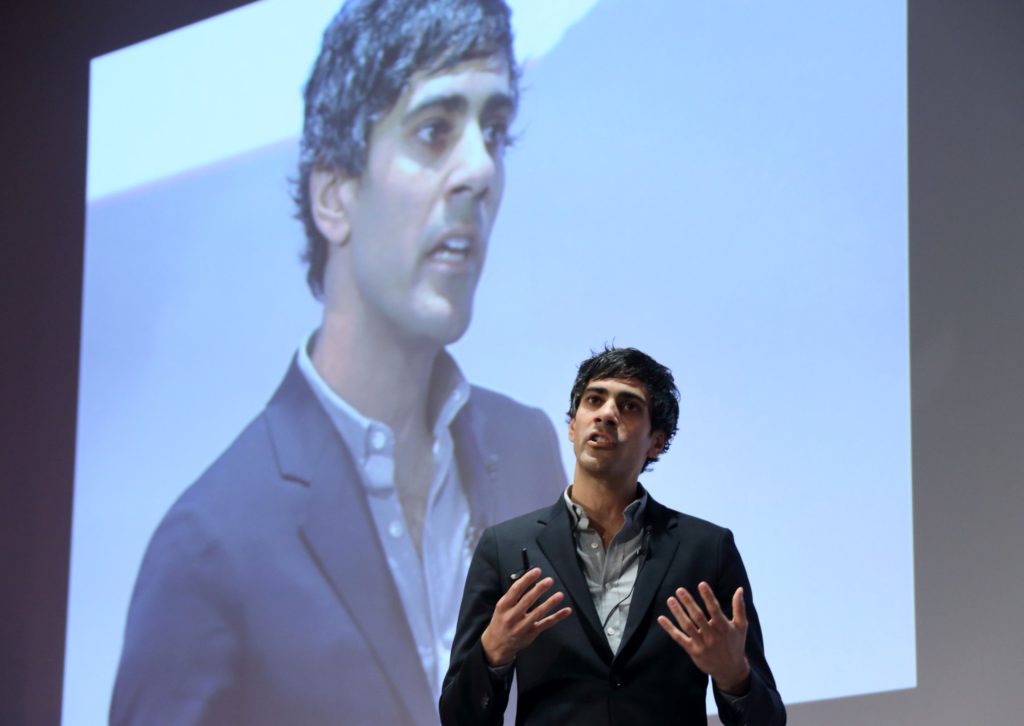
Yelp CEO and Tech Execs Lobby White House to Urge Antitrust Push

(Bloomberg) — Nearly a dozen White House officials on Thursday met with a small group of Silicon Valley startup executives and venture capitalists, including Yelp Chief Executive Officer Jeremy Stoppelman, to discuss cracking down on the technology giants. 

The meeting took place after the White House earlier this month pledged to make a priority of legislation intended to diminish the power of Alphabet Inc.’s Google, Amazon.com Inc., Apple Inc. and Meta Platforms Inc. The meeting, which included the White House’s director of legislative affairs, Louisa Terrell, and Tim Wu, an antitrust adviser with the National Economic Council, largely focused on a pair of measures that have stalled in Congress. 

Those bills, the American Innovation and Choice Online Act and the Open App Markets Act, would prevent the big tech companies from using their platforms to freeze out competitors. Senate Majority Leader Chuck Schumer has said he supports the legislation, but does not believe the bills have enough votes in the upper chamber at this point. 

During the Thursday meeting, one senior White House official said they believed the bills have enough votes to pass, according to Garry Tan, the incoming CEO of startup fund Y Combinator, who attended the gathering.

“They believe that there are 60 votes,” Tan told Bloomberg News. He declined to name the White House official. 

Advocates for the legislation, including Stoppelman and Tan, are pushing for Congress to pass the measures during the so-called “lame duck” period before Republicans take control of the House next year.

“The White House is committed to moving tech antitrust legislation,” Wu tweeted. 

Tan, Stoppelman, along with Eric Migicovsky of Beeper and Angela Hoover of Andi, who also were at the White House, spoke at a Capitol Hill briefing about the bills earlier Thursday. 

The clock is running out for the legislation as Democrats stare down a crowded lame duck session, which will also involve crafting must-pass spending and defense bills. Schumer has not said publicly whether he intends to put the bills on the floor for a vote.

More stories like this are available on bloomberg.com

©2022 Bloomberg L.P.

Close Bitnami banner
Bitnami
