
Bloomberg

The Pandemic Made Ketamine More Accessible, For Better or Worse

(Bloomberg) — A controversial depression treatment that boomed during the pandemic could become far less accessible by next year — potentially leaving patients high and dry and the internet upstarts that supply them looking for a contingency plan. Covid-era measures that allowed doctors to remotely prescribe ketamine, an often-abused drug increasingly popular for treatment-resistant depression, could unwind this spring. That could spell trouble for companies such as Mindbloom and Nue Life that will be forced to rethink their businesses amid concerns that at-home access has increased abuse of the drugs.

“I tell these folks, ‘There’s going to be a reckoning coming, and when that reckoning comes, you probably will lose everything,’” said Anthony Coulson, a retired DEA regional head who now consults for startups about controlled substances.  

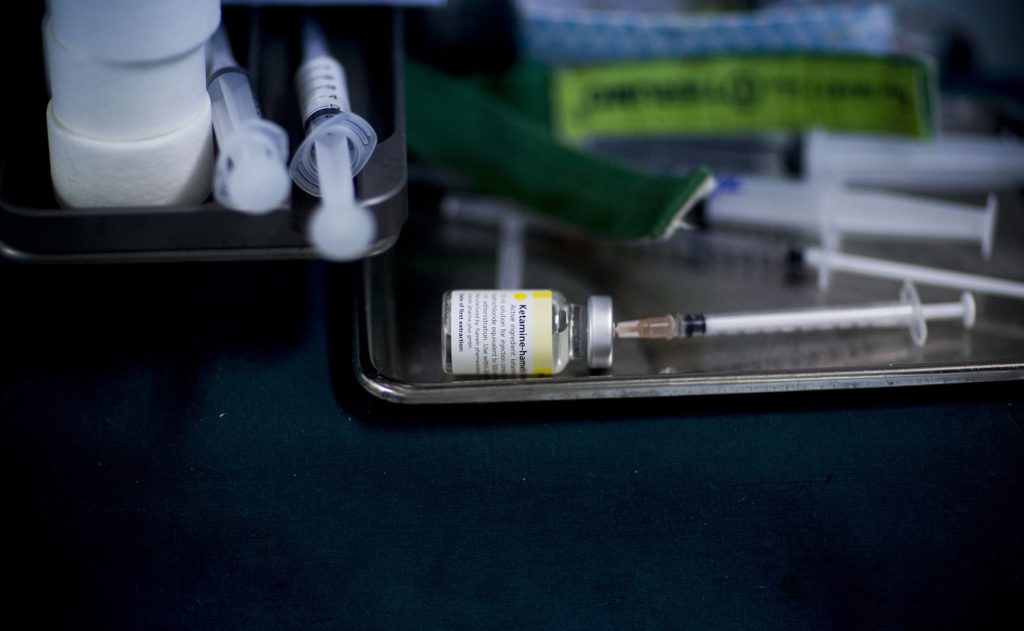
For the past three years, the public health emergency has temporarily suspended a 2008 law called the Ryan Haight Act that forbids the prescription of controlled substances via telemedicine. That allowed patients with depression to access ketamine — a drug originally designed as an anesthetic that also has hallucinogenic effects — without leaving their homes.

But whether the Biden administration will renew the emergency status yet again when it expires in the spring remains to be seen. Republican lawmakers including Washington congresswoman Cathy McMorris Rodgers have been actively pushing against it. If that happens, mail-order businesses might be required to make drastic changes to their business models, such as requiring patients to attend at least some in-person visits.

Making ketamine available via telehealth has had two major effects that may ultimately influence the fate of these companies. It is now wildly more accessible, with companies like Mindbloom advertising mail-order treatments to millennials via Instagram. Some companies offer sessions for as little as $167. It is also far more vulnerable to abuse: People who want to use the drug recreationally for its mind-bending effects or because they have become dependent on it can now get it more easily.

“One of the big concerns about ketamine is about its abuse liability,” said John Krystal, a pioneering Yale researcher who helped define the drug’s therapeutic potential. “If people are getting many doses at home, then the potential for abuse goes up significantly.”

One ketamine startup, Mindbloom, opened its first in-person clinic in Manhattan with much fanfare in early March 2020, promising a “spa-like setting” with zero-gravity chairs, weighted blankets and aromatherapy. Then, within weeks, the world shut down. Mindbloom had already tested at-home ketamine options, so it pivoted fully to virtual treatment, and business boomed. Mindbloom is now available in 35 states and Washington DC.

While there are still plenty of in-person ketamine clinics, the virtual business is what has caught the attention of venture capitalists. Shipping ketamine through the mail offers better profit margins and the possibility of quickly scaling. Instead of paying rent for an office, you can use software and virtual calls to guide patients through the experience. Mindbloom, which offers at-home options, charges roughly $200 per treatment. Meanwhile Polaris, a well-known San Francisco clinic, can cost up to $1250 for a three-hour session including talk therapy.

Unlike in-person patients, a patient doing at-home treatment could take more in one sitting than is prescribed, or could give the drugs away to someone else. And supervision over teleconference is less rigorous. At Mindbloom, for example, patients must do a video call ahead of their first session, but subsequent sessions are “self-led.” The patients are told they must have a monitor in the house – like a friend or family member – during a session, but Mindbloom declined to specify how that request was enforced.

Leonardo Vando, Mindbloom’s medical director, said in a statement that the concerns about at-home ketamine therapy are “speculative” and have been “raised by people whose businesses compete with telehealth.” He added that data indicates remote ketamine therapy can be effective and safe, and that “it’s important to make lower-cost, more-accessible treatment options like this available if we’re going to turn the tide of the mental health crisis.”

Julia Mirer, a physician who’s now a psychedelics consultant, including to some of Mindbloom’s competitors, said she was taught in medical school that doctors should never assume patients are taking drugs correctly. Ketamine, she’s observed, is no different. “I’ve talked to people who said, ‘My doctor sent me three sessions. It was really great, but after the second time, my wife and I took some to have fun,’” Mirer said. At its worst, ketamine can be treated like “a dependable escape,” she added. “It becomes too easy to enjoy the ketaverse.”

Often, patients start with an online appointment with a prescribing clinician. If approved, the drugs are administered virtually by often-unlicensed ketamine guides, who videoconference with patients before, after, or sometimes during their session. Mindbloom’s guides, for example, are hourly contract workers who are not required to be licensed in any way, though many of them have coaching experience. Providers are also still refining the best doses and treatment schedules for the virtual environment. And virtual clinics also face many of the same complications and criticisms as other upstarts launched to prescribe specific drugs, like Hims and Roman. With this business model, typically the company makes money if a doctor is able to treat a patient with the specific drugs the company offers. Mindbloom, for example, offers ketamine therapy, not generalized treatment for depression. 

Coulson, the retired DEA agent, said that companies selling ketamine via telehealth may not be thinking of the health of their patients first. “The concerns are making money,” he said. 

All of these factors mean that when the public health emergency ends — and it will, eventually — things may get complicated for businesses built around prescribing ketamine at home. Mindbloom, for one, said it is prepared to re-introduce in-person exams if needed by using partnerships with other clinics, in-home exams, or their own spaces. The company said it is also betting that telehealth waivers may remain even if the public health emergency ends. For now, the US government is extending the deadline three months at a time, with calls to end it only growing louder. Whenever regulations change, it’ll likely mean patients will have to be seen in person at least once — and that an already-tangled web of state licenses will get even knottier.

That uncertainty has left some investors wary. Dustin Robinson invests in psychedelic startups, but his firm hasn’t invested in any that depend on telehealth, he said: “I’m probably too familiar with the risks involved of what could happen.”

–With assistance from Riley Griffin.

More stories like this are available on bloomberg.com

©2022 Bloomberg L.P.
US Futures Wilt Against Fed Caution, Rising Yields: Markets Wrap

(Bloomberg) — US stock futures declined Monday and Treasury yields rose as a cautious tone from a Fed speaker tempered some of the ebullience that inflation may have peaked.

Contracts on the tech-heavy Nasdaq 100, typically more sensitive to interest rates, slipped 0.6% while those on the S&P 500 dropped 0.4%. Losses in New York premarket trading were concentrated in tech names, with Tesla Inc., chipmakers Nvidia Corp., Intel Corp. and Micron Technology Inc. shedding as much as 1.5%. Europe’s Stoxx 600 benchmark rose to a near three-month high, and Chinese shares rallied for a second day on hopes the country’s Covid zero isolation would soon end.

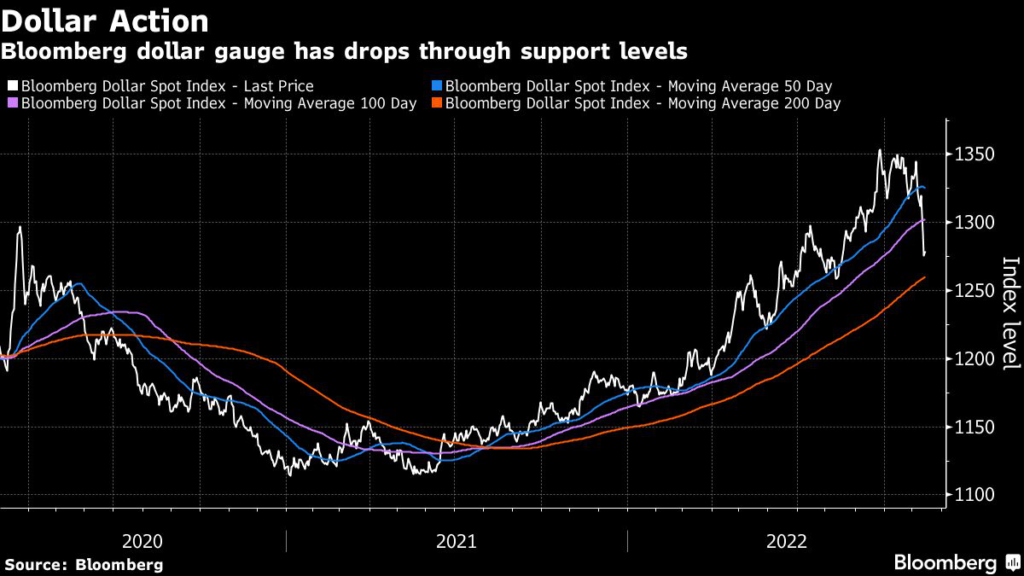
The dollar turned higher after weekend comments from Federal Reserve Governor Christopher Waller that policymakers had “a ways to go” before ending interest-rate hikes. His comments also helped lift 10-year Treasury yields by 9 basis points.

While signs of cooling in US inflation and the prospects of a dovish tilt by the Fed had propelled the S&P 500 to its best week since June, some of the world’s largest money managers are clinging to risk-off positioning against the threat of entrenched inflation. JPMorgan Asset Management has a record allocation in cash in at least one of its strategies while a hedge fund solutions team at UBS Group AG is staying defensive.

“Markets have been reading too much into one data print, US inflation has slowed but it’s not slow,” said Salman Ahmed, chief investment strategist at Fidelity International. “The Fed will need more data to reassess the end point for rates.”

Read more: Wall Street Managers Are Pushing Back on Easing Inflation Hopes

The University of Michigan’s preliminary November survey on Friday showed US consumer inflation expectations increased in the short and long run, while sentiment retreated. The dollar climbed 0.6% against a basket of currencies after losing almost 4% this month.

To be sure, while Waller said the hiking cycle would continue for some time, he noted that the Fed could start considering a downshift to a 50 basis-point move at the next meeting in December or the one after that.

Meanwhile, Chinese developers’ stocks and bonds soared, driven by Beijing’s property rescue measures and as easing Covid controls raise hopes that the worst may be over.  Real estate firm Country Garden rose as much as 46% in Hong Kong, while the offshore-traded yuan strengthened 1% versus the dollar at one point. 

“There are still a lot of risks but it seems like some of the tail risk has been clipped,” Stephen Chang, managing director and portfolio manager at Pimco Asia Ltd., said in an interview with Bloomberg TV. 

Investors will also keep a wary eye on the Group of 20 summit in Indonesia, where US President Joe Biden and Chinese leader Xi are expected to meet. Biden’s hand has been strengthened by the Democrats defying political forecasts and historical trends to keep control of the Senate.

Cryptocurrencies swung higher on plans by Binance Holdings Ltd. to set up a recovery fund to stabilize the industry after FTX’s bankruptcy sparked market-wide losses of around $200 billion in the past week. 

Oil dipped after a two-day rally, as a stronger dollar offset optimism around the outlook for improved Chinese demand. 

Key events this week:

  • US President Joe Biden plans to meet Chinese President Xi Jinping on the sidelines of the G-20, Monday
  • Fed’s John Williams moderates panel, Monday
  • China retail sales, industrial production, surveyed jobless, Tuesday
  • Former US President Donald Trump plans to make an announcement, Tuesday
  • US empire manufacturing, PPI, Tuesday
  • US business inventories, cross-border investment, retail sales, industrial production, Wednesday
  • Fed’s John Williams, Lael Brainard and SEC Chair Gary Gensler speak, Wednesday
  • ECB President Christine Lagarde speaks, Wednesday
  • Eurozone CPI, Thursday
  • US housing starts, initial jobless claims, Thursday
  • Fed’s Neel Kashkari, Loretta Mester speak, Thursday
  • US Conference Board leading index, existing home sales, Friday

Some of the main moves in markets:

Stocks

  • Futures on the S&P 500 fell 0.4% as of 7:16 a.m. New York time
  • Futures on the Nasdaq 100 fell 0.6%
  • Futures on the Dow Jones Industrial Average fell 0.2%
  • The Stoxx Europe 600 rose 0.2%
  • The MSCI World index fell 0.1%

Currencies

  • The Bloomberg Dollar Spot Index rose 0.6%
  • The euro fell 0.7% to $1.0277
  • The British pound fell 0.6% to $1.1758
  • The Japanese yen fell 1.3% to 140.57 per dollar

Cryptocurrencies

  • Bitcoin rose 1.9% to $16,676.09
  • Ether rose 2.9% to $1,252.05

Bonds

  • The yield on 10-year Treasuries advanced nine basis points to 3.90%
  • Germany’s 10-year yield declined three basis points to 2.13%
  • Britain’s 10-year yield declined six basis points to 3.30%

Commodities

  • West Texas Intermediate crude fell 1.4% to $87.73 a barrel
  • Gold futures fell 0.6% to $1,759.40 an ounce

This story was produced with the assistance of Bloomberg Automation.

–With assistance from Tassia Sipahutar.

More stories like this are available on bloomberg.com

©2022 Bloomberg L.P.

Crypto.com’s Sinking Token Stirs Fresh Anxiety After FTX Wipeout

(Bloomberg) —

The one constant in digital assets right now is fear and its latest object is Crypto.com, an exchange whose sponsorship of sports like Formula One racing and the soccer World Cup have popularized its brand.

The anxiety stems from a question that barreled out of the disorderly collapse into bankruptcy of Sam Bankman-Fried’s crypto exchange FTX: namely, who is really safe? Such worries, well-founded or not, contributed to a $1 billion slide in Crypto.com’s native token Cronos in the past week.

The platform’s Chief Executive Officer Kris Marszalek took pains Monday to reassure customers, saying in a live-streamed briefing that its balance sheet is “very strong” and reserves cover all client assets.

“People are depositing, people are withdrawing, people are trading,” he said. “There is pretty much normal activity, just at a heightened level.”

Hanging over the event was the revelation that the exchange in October accidentally transferred and then recovered almost $400 million of the token Ether. Earlier in the year, Crypto.com sent about A$10.5 million ($7 million) to a woman in Melbourne by mistake and is seeking to get the funds back.

Such twists are harder to stomach when the crypto sector is asking whether retail and institutional investors alike will desert in droves following the chaotic toppling of FTX and its sister trading house Alameda Research.

“Crypto.com appears to be experiencing a high volume of withdrawals, which it is handling without any issues,” said Hayden Hughes, chief executive of social-trading platform Alpha Impact. He added that in the wake of FTX many people are looking to take custody of their own funds.

No Loans

Marszalek reiterated that Crypto.com has 70 million users and less than $10 million exposure to FTX. He also said that the Cronos token is never used as collateral for loans. The coin climbed in the wake of the briefing, pushing it to a gain of about 4% in the past 24 hours as of 11:30 a.m. in London, based on CoinGecko data.

The coin is the eponymously named utility token on the Cronos blockchain. Holders of the token enjoy loyalty and usage bonuses like discounted trading fees. Its market value has plunged to less than $2 billion from a peak of more than $22 billion at the height of the digital-asset craze in November last year, according CoinGecko.

Crypto.com, like many other exchanges and investors operating in the sector, has been buffeted this year’s deep rout in virtual coins and is among companies that have reduced their workforce.

The exchange, whose app is available in a range of countries, shot to popularity after an advertising campaign fronted by Matt Damon. Apart from sponsoring motor racing and the FIFA soccer World Cup in Qatar, it also acquired the naming rights for the Staples Center — home to the Los Angeles Lakers and Clippers — and restyled it as the Crypto.com Arena.

Marszalek has previously said that he expects to release an audited “proof of reserves” in coming days to show that customer assets are intact. Pledges of such releases are multiplying among crypto platforms in an effort to assuage the doubts plaguing the industry.

For crypto market prices: CRYP; for top crypto news: TOP CRYPTO.

More stories like this are available on bloomberg.com

©2022 Bloomberg L.P.

Fintech Startup Stash Adds NEA Partner Landsman to Its Board

(Bloomberg) — Financial-technology startup Stash, which focuses on banking and investing for the masses, named former Jet.com president Liza Landsman to its board.

“Liza understands the vast population of American consumers and the tools they need to improve their lives,” Brandon Krieg, co-founder and chief executive officer of Stash, said in an emailed statement. “Her experience across tech, finance, and retail, and commitment to keeping customers’ needs front-and-center, will help guide us on our mission as we support Americans on their journeys to stronger financial futures.”

Landsman, a general partner at venture capital firm NEA, joins former Lyft Inc. executive Jon McNeill as Stash’s second independent director. Before Jet.com, she held roles at Citigroup Inc., BlackRock Inc. and E*Trade Financial, among other organizations. 

“Stash shifts the way millions of Americans think about and interact with money,” she said in a statement.

Stash says it has more than 2 million active subscribers who are regularly contributing an average of $30 toward their savings. The company recently surpassed $125 million in annualized recurring revenue, it said. 

The startup, which said last month that crypto investments were available on its platform, separately named Kate Ring, a former LPL Financial executive, as chief compliance officer. 

Last year, the company explored options for going public, Bloomberg News has reported. Stash counts Todd Boehly’s Eldridge Industries, LendingTree, Coatue Management and funds advised by T. Rowe Price Group Inc. among its investors. 

More stories like this are available on bloomberg.com

©2022 Bloomberg L.P.

Vodacom Plans to Roll Out Alibaba Super App to New Egypt Market

(Bloomberg) — Vodacom Group Ltd. plans to roll out financial-services products in its new market of Egypt, using the super app the wireless carrier is developing alongside China’s Alibaba Group Holdings Ltd. 

The Johannesburg-based company has received approvals to buy the Egypt business from its parent, Vodafone Group Plc, for $2.7 billion, Chief Executive Officer Shameel Joosub said in an interview. Vodacom is also negotiating the terms of a mobile-money license in Ethiopia, where it will likely use the M-Pesa platform of Kenyan partner Safaricom Ltd., he said.

“We see double-digit growth in financial services for the foreseeable future,” Joosub said by phone after Vodacom reported first-half earnings that missed analyst estimates. “In Egypt, we want to start the full Alipay platform soon, and we expect to start our mobile-money services in Ethiopia by early next year.”

Africa-focused telecom operators have invested heavily in financial-technology products to boost revenue on a continent that lacks physical banking infrastructure. Vodacom’s Johannesburg-based rival, MTN Group Ltd., is working on a deal to bring strategic partners into its financial services unit. Vodacom may consider a fintech carve out, Joosub said, though no decision has been taken.

Vodacom and Alibaba’s super app, called Vodapay, enables subscribers to access a broad range of services including taking out loans, shopping online and making standard mobile payments, similar to Tencent Holding Ltd.’s WeChat. 

Vodacom shares fell as much as 6.5% on Monday, the most since March 2020, after the earnings miss and a decision to cut the interim dividend. Vodacom is more than 60% owned by the U.K.’s Vodafone.

More stories like this are available on bloomberg.com

©2022 Bloomberg L.P.
Britain Develops a Lead in Scrapping Cash in Everyday Payments

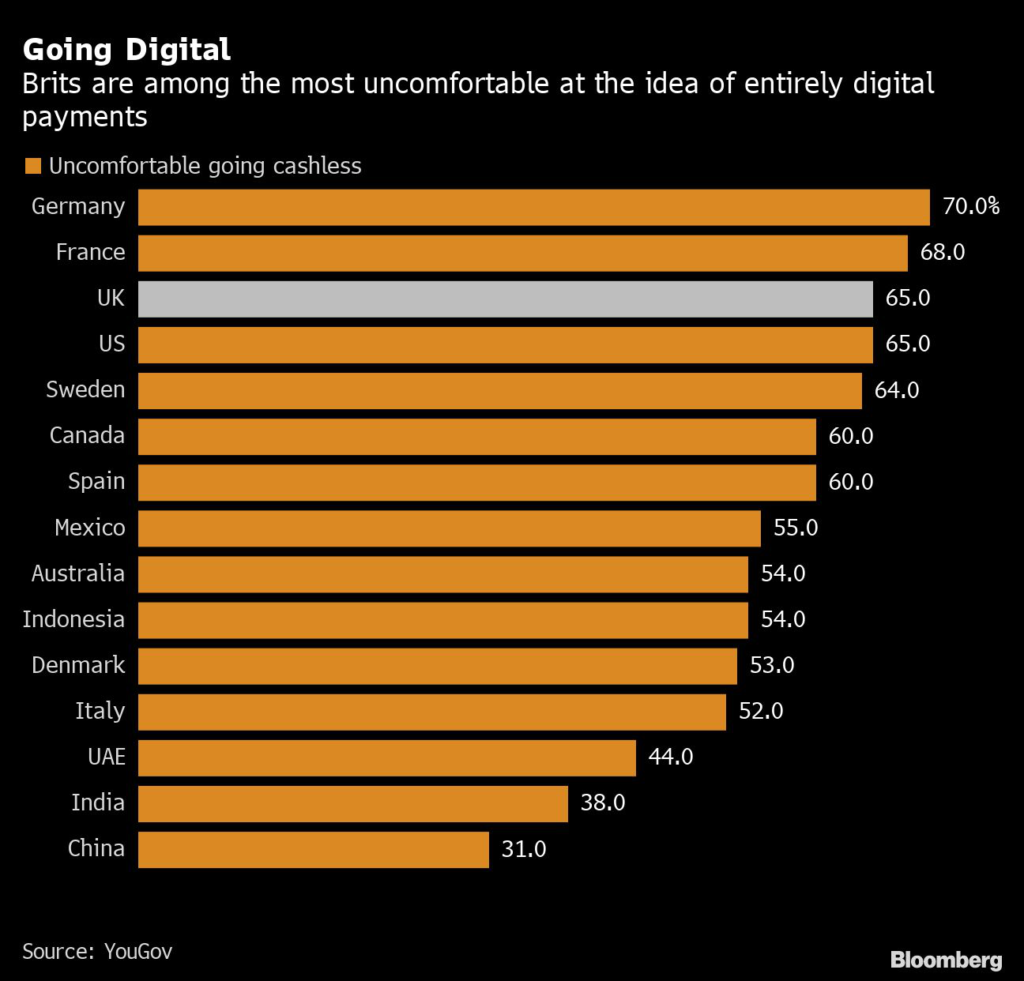
(Bloomberg) — Britain is taking the lead among major developed economies in moving away from cash in everyday payments, but more than two-thirds of people surveyed remain reluctant to go fully digital.

That’s the conclusion of a survey by YouGov Plc for Bloomberg, which showed 57% of people in the UK rarely or never use cash in transactions. Even so, more than two-thirds of Britons don’t want to lose access to cash altogether.

The results feed into a debate central banks are having about the forms of money consumers will use in the future, as more spending shifts online, credit and debit cards displace banknotes, and some businesses embrace crypto currencies as a payment method.

The figures also indicate a split developing in society, with some people embracing digital systems and others sticking with traditional forms of money. The Bank of England is working on a digital pound designed to reduce friction with online payments but is also determined to support those wanting to use cash.  

The YouGov survey suggests that people are most reluctant to part with cash in Germany, France, the US and UK where the currency is long established and trusted. That’s a contrast with China, where 59% of people said they’d be comfortable if the country stopped using cash.

Britain’s embrace of card payments trails China and the Nordic nations such as Sweden and Denmark, where more than two-thirds of people say they rarely or never use cash, but is ahead of France, Canada and the US, where those levels range between 41% and 55%. Germany and Spain ranked the highest among European countries for cash use, with 50% and 49% of citizens respectively reporting they pay with cash all or most of the time.

The UK also showed itself a laggard in crypto currency take-up, trailing only France and Italy in the rankings. In Britain, 65% of those surveyed said they had never bought crypto assets, nor knew anyone who had. Only 31% of people in China said the same thing, suggesting that culture is more open to the idea of digital currencies.

It also suggests a split opening in society about how to handle money. While crypto currencies and online bank accounts have gained popularity in recent years, some younger people in the US have embraced “cash stuffing” — putting banknotes into envelopes to help budget. 

The Bank of England last month reported a 17% rise in cash in circulation since before the pandemic, indicating that more people are hoarding notes and coins as a way of storing value. That’s even though they use cash less in daily transactions.

More stories like this are available on bloomberg.com

©2022 Bloomberg L.P.
FTX Fiasco Sparks Billions of Dollars of Outflows From Exchanges

(Bloomberg) — Sign up for our Crypto newsletter and follow @crypto Twitter for the latest news.

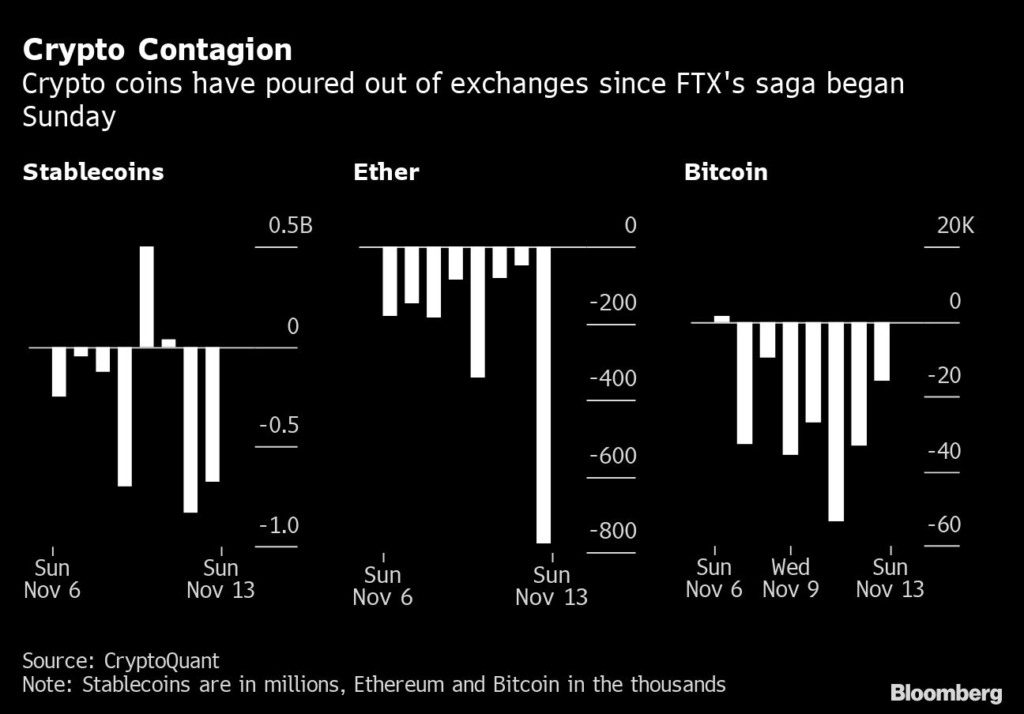
The spectacular collapse of 30-year-old Sam Bankman-Fried’s crypto empire has fueled a spike in outflows across global crypto exchanges. Users yanked a net $3.7 billion worth of Bitcoin and $2.5 billion of Ether in the week from Sunday, Nov. 6 to Sunday, Nov. 13, according to data provider CryptoQuant. 

They withdrew more than $2 billion worth of many of the largest stablecoins over the same timeframe, according to CryptoQuant, which tracks data from most major exchanges. 

The past week has “undoubtedly been one of the darkest in the history of cryptocurrency,” said Sasha Ivanov, founder of blockchain platform Waves, in a statement. “It’s disheartening to see the value of this fundamental technology diminished due to the collapse of what many felt was a leading exchange.”

The fall of Bahamas-based FTX, which just recently was widely perceived as among the most dependable names in the sector, has sparked fresh concerns over the loosely-regulated nature of crypto companies and what guardrails are in place to safely oversee clients’ assets. FTX is the latest in a long list of large crypto businesses to come undone this year, including hedge fund Three Arrows Capital, crypto lender Celsius Network and broker Voyager Digital. 

The saga started on Sunday, Nov. 6 when a tweet from Binance’s “CZ” cast doubt on the strength of Alameda Research, the trading firm affiliated with Bankman-Fried’s exchange. The ensuing panic among FTX.com’s investors became so intense that they collectively pulled $430 million worth of Bitcoin from the three-year-old exchange in just four days. The company had held more than 20,000 Bitcoin going into Nov. 6, CryptoQuant data shows. That sank to nearly zero by Wednesday, Nov. 9 as customers fled over worries about FTX’s financial health.

Binance proposing a tentative takeover of the exchange and then backtracking on the offer during this time didn’t help matters. On Thursday, Bankman-Fried tweeted that Alameda Research would be shuttered and by Friday, FTX Group had begun bankruptcy proceedings. 

The leveling of another centralized crypto player in 2022 is emboldening calls for users to hold their own assets, rather than entrusting them to third-parties. 

“This is the latest and biggest failure of a centralized entity in crypto and it could mark the bitter end of their existence,” stated Ivanov. “The foundation of cryptocurrency is decentralized blockchain technology and I expect this downturn to result in the industry switching focus back to those core values.” 

Since last week, crypto exchanges like OKX, KuCoin, Poloniex and Huobi have vowed to increase transparency and share their so-called “proof of reserves.” Binance published a list of some of its wallets and holdings on Thursday. 

Cryptocurrency prices erased losses on Monday morning in London after Binance Holdings Ltd.’s Chief Executive Changpeng Zhao said his exchange plans to set up an industry recovery fund. Trading has been extremely volatile since FTX’s unraveling began, erasing $244 billion of value since last Sunday, CoinGecko data shows.

For Terminal Subscribers: Find the latest crypto market prices at CRYP and the biggest crypto news at TOP CRYPTO.

More stories like this are available on bloomberg.com

©2022 Bloomberg L.P.
FTX Latest: Binance CEO Plans Recovery Fund, Laments Bad Actors

(Bloomberg) — Cryptocurrency prices rallied Monday after Binance Holdings Ltd.’s Chief Executive Officer Changpeng Zhao announced plans to launch a crypto recovery fund to help industry players facing a liquidity crunch. Bitcoin edged towards $17,000 following Zhao’s announcement. 

Zhao said the fund is intended to prop up investor confidence following the dramatic collapse of Sam Bankman-Fried’s FTX crypto exchange, which wiped out about $200 billion in crypto market value. Zhao has not announced any details.

Meanwhile, there were growing signs that customers of the bankrupt digital-asset exchange have little chance of recovering much of their deposits. FTX Trading International held just $900 million in liquid assets on Thursday — the day before it filed for Chapter 11 bankruptcy — against $9 billion of liabilities, according to sources familiar with the matter. 

Bankman-Fried was questioned by Bahamian police and regulators Saturday. Local authorities in the Bahamas are investigating whether there was any criminal misconduct in FTX’s collapse. 

Key stories and developments:

  • FTX’s Balance Sheet, Hack Paint Dim Picture for User Recovery
  • Bankman-Fried: From Crypto King to King of Tech Bubble’s Losers
  • Big Investors Are Giving Up on Crypto Markets Going Mainstream
  • Summers Says FTX Meltdown Has ‘Whiffs’ of Enron-Like Scandal (1)
  • ‘It’s All Gone’: FTX Bankruptcy Is Worst Fear for Retail Traders

(All time references are New York unless otherwise stated.)

Binance CEO: ‘No One Can Protect a Bad Player’ (6:06 p.m. Hong Kong) 

Speaking at the B20 Summit in Indonesia, Binance Holdings Ltd Chief Executive Officer Changpeng “CZ” Zhao pledged to launch a fund to help crypto markets recover from FTX’s collapse. He singled out people he described as bad actors in the crypto space who “try to cut corners to grow quickly,” and called on industry leaders to “set strong standards” in volatile digital markets. 

Zhao, who briefly entertained plans to buy the struggling exchange before backing out a day later, exhorted his crypto counterparts to behave better. “No one can protect a bad player,” he said.    

FTX’s Japan Branch Assesses Client Damage (5:33 p.m. Hong Kong) 

FTX Japan K.K., the Japanese subsidiary of Sam Bankman-Fried’s failed digital asset exchange, is investigating whether its parent company’s bankruptcy will affect its ability to return crypto holdings to regional clients. Last week, the unit was ordered to suspend some of its operations as regulators assessed the wreckage of the FTX collapse. 

A company spokesman said that FTX Japan will make a statement once the situation is clearer. As of Nov. 10, FTX Japan held about 19.6 billion yen ($140 million) in cash and deposits. 

Singapore Central Bank Says FTX Wasn’t Licensed in the City-State (2:40 p.m. Hong Kong)

Singapore’s central bank said that while bankrupt crypto exchange FTX doesn’t have a license to operate in the city-state, it’s not possible to prevent local users from “directly accessing” overseas service providers. 

As a result, FTX was “able to onboard Singapore users,” a spokesperson at the Monetary Authority of Singapore said in an emailed statement to Bloomberg News on Monday. “MAS has consistently reminded the public of the risks of dealing with unlicensed entities,” the spokesperson said in the statement. 

Bank of Japan Chief Calls for Stepped Up Crypto Regulation Push (1 p.m. Hong Kong)

Bank of Japan Governor Haruhiko Kuroda called for an accelerated effort, in line with G-7 recommendations, to regulate the crypto market in a question-and-answer session after a speech on the wider macroeconomic outlook. Japan has been planning to further loosen crypto rules by making it easier to list virtual coins, but that was before the FTX collapse. The crisis has raised fresh questions about how regulators should approach the volatile sector.

Crypto Markets Retreat in Wake of Ongoing FTX Fallout (10:30 a.m. Hong Kong)

Cryptocurrency markets began the week in Asia on the back foot. Bitcoin retreated almost 3% at one point to drop below $16,000. Ether also suffered losses. Solana, one of the tokens associated with Bankman-Fried’s failed digital-asset empire, was down about 10% and has plunged over 60% this month.

Digital-Asset Exchange Huobi Has $18.1 Million on FTX’s Platform (10:20 a.m. in Hong Kong)

Crypto exchange Huobi’s wholly owned subsidiary Hbit Ltd. has $18.1 million in tokens deposited on FTX, according to a filing. Some $13.2 million comprises client assets about $4.9 million are Hbit assets. 

Controlling shareholder Li Lin will provide an unsecured facility up to $14 million to the group “for the purpose of covering client asset liability” if needed, according to the statement. The group’s financial performance might be “materially and adversely affected” in the event the funds are stuck at FTX, it said, adding that other assets and liabilities of the group are not affected.

Huobi Technology Holdings’s shares slid 14.1% in Hong Kong. The company in the filing also said it’s now called New Huo Technology Holdings.

Crypto Exchange AAX Suspends Withdrawals (10 a.m. Hong Kong)

Crypto exchange AAX has suspended withdrawals, citing complications with a system upgrade and blaming failures at a third-party partner.

“To prevent further risks, the technical team has had to manually proofread and restore the system to ensure maximum accuracy of all users’ holdings,” the exchange said in a notice posted online. “AAX will continue our best efforts to resume regular operations for all users within 7-10 days to ensure the utmost accuracy. In this light, withdrawals have been suspended to avoid fraud and exploitation.”

FTX’s Serum Project Is in Distress (1:05 p.m.)

Tokens issued by Serum, a liquidity infrastructure hub built by FTX and used by market makers and lending protocols on Solana, tumbled more than 23% on Sunday alone, pricing data from CoinGecko showed. FTX owned more than $2.2 billion worth of the token as of Thursday, the Financial Times reported, citing investor materials.

Developers attached to Serum split off the project’s code in a so-called fork amid concern that an upgrade key controlling the program could be compromised, a Solana spokesperson said. 

Galois Confirms $40 Million Exposure (12:26 p.m.)

Crypto hedge fund Galois Capital is the latest company to confirm its exposure to the collapsed FTX cryptocurrency exchange. In a direct message to Bloomberg News, Galois said its exposure was between $40 million to $45 million. On Friday, Galois said on Twitter that it had “significant” funds in FTX. Galois was an early critic of the now failed Terra blockchain and its TerraUSD algorithmic stablecoin.

Bahamian Police Look Into Criminal Probe (11:53 a.m.)

A team from the Financial Crimes Investigation Branch is working with the Bahamas Securities Commission to investigate if any criminal misconduct occurred in the collapse of FTX.

Binance Stops Deposits of FTX’s Token FTT (3:30 a.m. Sunday)

Binance halted deposits of FTT, FTX’s token, “to prevent potential of questionable additional supplies affecting the market,” Binance CEO Changpeng “CZ” Zhao said on Twitter. Zhao said that he would encourage other exchanges to do the same thing. Justin Sun said Huobi Global would echo Zhao’s advice.

Zhao added that FTT contract deployers moved all remaining FTT supplies worth $400 million, “which should be unlocked in batches.” Binance followed up to say it had noticed a “suspicious movement” of a large amount of FTT by the token’s contract deployers.

Matrixport Says 79 Clients Affected by FTX, ‘No Risk of Insolvency’ (11:38 p.m. Saturday)

Crypto financial-services platform Matrixport “continues to operate normally and the company has no risk of insolvency with respect to the developments at FTX and Alameda,” according to Ross Gan, head of public relations.

Matrixport had 79 clients that incurred losses via exposure to three products on its platform that were linked to FTX, Gan said.

Kraken Freezes Accounts Possibly Related to FTX (11:33 p.m.)

Crypto exchange Kraken said it has frozen Kraken account access to certain funds it suspects to be associated with “fraud, negligence or misconduct” related to FTX. Kraken said in a tweet it’s in contact with law enforcement and plans to resolve each account on a case-by-case basis.

Bankman-Fried Interviewed by Police in Bahamas (9:42 p.m.) 

Former crypto mogul Sam Bankman-Fried was interviewed by Bahamian police and regulators on Saturday, according to a person familiar with the matter. Bankman-Fried didn’t immediately respond to a request for comment.

The inquiries from Bahamian authorities add to the mounting legal pressure that Bankman-Fried is facing since his FTX empire crumbled over the past week. In the US, he is facing scrutiny from the Securities and Exchange Commission over whether he broke securities rules.

Bahamas Says it Didn’t Authorize Local Withdrawals by FTX Exchange (9 p.m.)

Bankrupt crypto exchange FTX’s move to allow withdrawals in the Bahamas was questioned by the nation’s securities regulator.

The Securities Commission of the Bahamas in a statement Saturday said that it hadn’t “directed, authorized or suggested” the prioritization of local withdrawals to FTX Digital Markets Ltd.

It added that such withdrawals could be clawed back.

Jump Crypto Says It Remains Well Capitalized After FTX Exposure (5:59 p.m.)

Jump Crypto, a cryptocurrency trading firm, told customers on Saturday it remains “well capitalized” after exposure to FTX. In a series of tweets, Jump said its exposure was “managed in accordance with our risk framework.” The company did not specify the exact nature of its exposure.

Liabilities Dwarfed Liquid Assets: FT (1:13 p.m.)

FTX Trading held $900 million in liquid assets against $9 billion of liabilities the day before the bankruptcy filing, the Financial Times reported, citing investment materials and a spreadsheet the newspaper had seen. Most of the recorded assets are either illiquid venture capital investments or crypto tokens that are not widely traded. The biggest asset as of Thursday was listed as $2.2 billion worth of a cryptocurrency called Serum.


More stories like this are available on bloomberg.com

©2022 Bloomberg L.P.

Toyota to Unveil New Prius as Hybrids Lose Luster to Battery EVs

(Bloomberg) —

Toyota Motor Corp. is about to take the wraps off a revamped Prius, the latest iteration of a car that normalized the idea of owning an environmentally conscious vehicle more than two decades ago.

Leonardo de Caprio drove one. Owning a Prius was cool, even a status symbol, and the less-frequent and cheaper trips that owners made to the gas pump were revelatory. Over the years, hybrid drivetrains found their way into other Toyota products. Other carmakers rolled out the technology, making it a routine aspect of driving for millions.

Even though the gas-sipping hatchback — with its combined combustion engine, electric motor and battery powertrain — paved the way for Teslas and other fully electric vehicles, it’s the less-hip option these days.

Prius sales have tapered off during the past few years. After peaking in 2010, when more than 500,000 units were sold worldwide, there’s been a gradual slide. Customers bought just short of 86,000 Priuses last year. Other Toyota hybrids, such as the RAV4, do more volume.

But consider this: Toyota has sold 4.75 million Priuses to date. That’s no easy feat. Tesla only just passed the 3 million mark for cumulative production of all its vehicles: the Roadster, Model S, X, 3 and Y.

Toyota will unveil the new Prius on Wednesday at an event in Tokyo. Official tweets from the carmaker, as well as other images floating around, suggest a sportier look. The tagline “Hybrid Reborn” is being used. Motor Trend even asks: “Is the Next-Gen Toyota Prius Actually Kind of Hot?”

To a certain extent, it probably doesn’t matter whether the new Prius becomes a top-selling model again. Sure, Toyota would like that, but hybrid technology is now spread across its product line, including the Lexus brand.

And EVs have become the next hot thing. Upstarts and legacy OEMs have taken control of the narrative, whipping up expectations that the fully electric era is now upon us.

While almost everyone agrees that EVs are the future, the big question is when. Some argue it’s already here. Others, including Toyota, have been penalized, in terms of public opinion and the stock market, for saying that it’s probably still a ways off. But keep in mind that of the 70.6 million vehicles sold worldwide in 2021, only 4.5 million were battery-electric, according to data compiled by BloombergNEF.

Meanwhile, Toyota is still tweaking with the hybrid formula, one that it believes will be an important bridge to an all-EV future. The Crown, a higher-end model that’s being introduced to the US market after selling for decades in Japan, features what the carmaker is calling Hybrid Max. The new drivetrain combines an turbo-equipped engine, two electric motors and a six-speed transmission. It’s a hybrid that feels like a muscle car.

Will the new Prius have the same technology? Maybe. Will Toyota continue to bet on the Prius and hybrids? Definitely.

More stories like this are available on bloomberg.com

©2022 Bloomberg L.P.

Klarna Offers Price Comparison Tool in Bid to Expand Revenue

(Bloomberg) — Klarna has rolled out a search and compare tool in the UK and Nordics as the fintech looks to diversify its revenue away from buy-now, pay-later, which is under increasing scrutiny. 

It follows the product’s launch in the US last month and comes a year after the Swedish firm bought price comparison service PriceRunner for $1 billion, making it Klarna’s largest acquisition to date. The deal was finalized in the first quarter of 2022.   

“For Klarna, today’s launch is a major milestone in our evolution from a payment network to a single shopping destination,” Chief Executive Officer Sebastian Siemiatkowski said in a statement. 

Klarna is handling about 2 million transactions a day, at roughly the same total value compared to a year ago, as increasingly downbeat consumers switch to cheaper goods, Siemiatkowski said in an interview with Bloomberg TV on Monday.

He also said the “fairly scary” collapse of crypto platform FTX.com could lead to tighter regulation across the finance industry and make it harder for fintech firms to compete against traditional lenders “to the disadvantage of consumers.” 

Klarna, the former darling of European fintech, suffered a steep valuation cut earlier this year but Siemiatkowski said in October its “painful” restructuring was largely complete.

The new offering intends to provide retailers with an alternative to Alphabet Inc.’s Google and Amazon.com Inc. and supply Klarna with an additional revenue stream. Klarna’s affiliate marketing business generates 600 million leads a year for its retail partners, according to the company.

(Updates with CEO comments on Bloomberg TV from fourth paragraph.)

More stories like this are available on bloomberg.com

©2022 Bloomberg L.P.

Close Bitnami banner
Bitnami
