Bloomberg

Crypto Entrepreneur Sun’s Token Spikes After He Offers FTX Help

(Bloomberg) — FTX said it reached an agreement with Justin Sun’s Tron that will allow users to withdraw some tokens from the troubled exchange. 

Tron is in fundraising talks with Sam Bankman-Fried’s FTX, Sun told Bloomberg News. Sun declined to comment on an amount.

As part of this agreement, initially $13 million of assets will be deployed to facilitate such swaps. Information on future capital injections will be shared on a weekly basis. 

Holders of TRX, BTT, JST, SUN and HT tokens will be allowed to swap those assets on a one-to-one basis to external wallets.

The price of the native token used on the Tron blockchain surged earlier on the embattled platform after Sun disclosed the preliminary talks. 

Tron jumped to $2.50 from around 6 cents on FTX on Thursday. The token traded much lower on other platforms, and was trading recently around 6 cents, according to pricing date on Bloomberg. 

“Justin Sun’s offer to help FTX users withdraw funds seems nice enough, but it is unclear how it would work,” Kunal Goel, a research analyst at digital-asset firm Messari, said before the official announcement. “FTX has thin liquidity for the Tron ecosystem tokens that can be redeemed, and market makers are unlikely to deposit more funds to balance the prices with the broader market. As such, prices have been highly volatile for these markets on FTX.”

The exchange was catapulted into a crisis after Changpeng “CZ” Zhao, founder of rival Binance Holdings Ltd., announced plans to sell some $530 million worth of FTX’s utility token FTT, citing “recent revelations.” Binance had received the tokens when it sold a stake in FTX last year. FTT plunged soon after. 

–With assistance from Carly Wanna, David Pan and Sidhartha Shukla.

(Adds information in TRX token trading.)

More stories like this are available on bloomberg.com

©2022 Bloomberg L.P.

FTX Latest: US Exchange Says Trading May Be Halted in a Few Days

(Bloomberg) — Crypto markets have been roiled by the saga involving FTX.com, which until just a few days ago was seen as one of the top crypto exchanges, while its charismatic founder Sam Bankman-Fried was considered crypto’s version of John Pierpont Morgan. 

The exchange was catapulted into a crisis after Changpeng “CZ” Zhao, founder of rival Binance Holdings Ltd., announced plans to sell some $530 million worth of FTX’s utility token FTT, citing “recent revelations.” Binance had received the tokens when it sold a stake in FTX last year. FTT plunged soon after. 

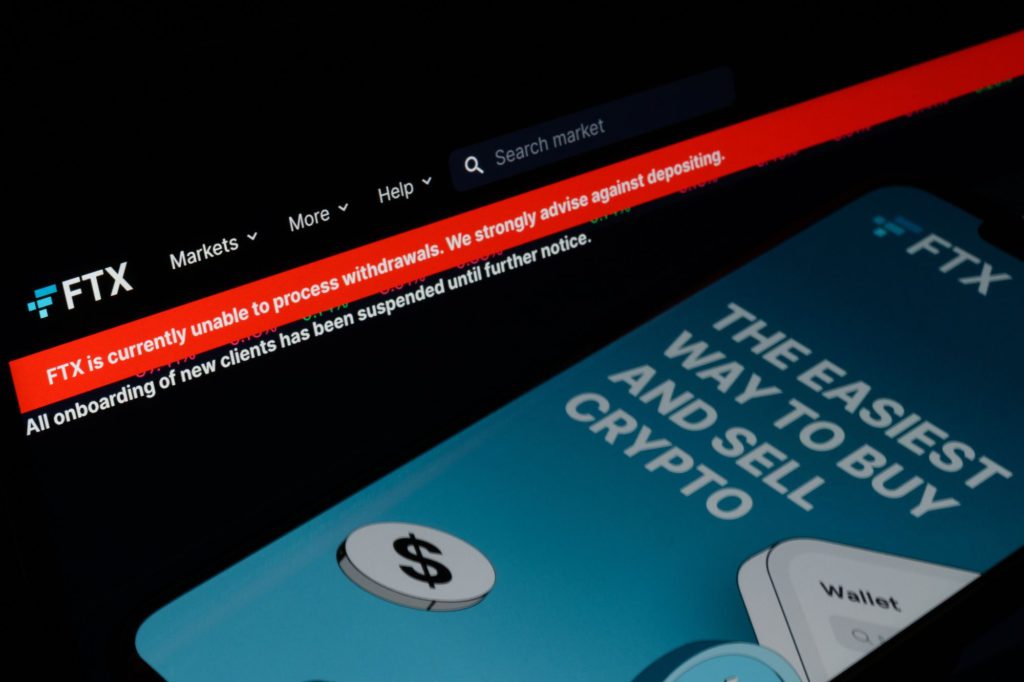
FTX suffered about $5 billion of withdrawals on Sunday, according to Bankman-Fried. It was then forced into a hastily-arranged rescue by rival Binance, which backed out of the deal on Wednesday. US authorities are now investigating FTX’s dealings, Bloomberg News has reported.

On Thursday, Bankman-Fried said he’s closing down Alameda Research, the trading house at the center of speculation about whether FTX mishandled customer funds. 


Bloomberg News will capture the news flow here. 

Key stories and developments:

  • Crypto Markets Stabilize on Hopes for Muted Impact From FTX Rout
  • FTX Hurtles Toward Bankruptcy With $8 Billion Hole, US Probe
  • Sequoia Capital Writes Down Entire Value of Its FTX Stake 

For crypto market prices: CRYP; for top crypto news: TOP CRYPTO

(All times are US Eastern Standard)

FTX US Says Trading May Be Halted in A Few Days (1:31 p.m.)

FTX US, the American entity of Bankman-Fried’s crypto exchange, said trading may be halted on it in a few days. FTX.com and FTX US are separate entities with separate management personnel, tech infrastructure, and licensing, but have similar owners and investors, representatives for the firms have said in the past.

FTX Reaches Pact With Tron to Let Users Withdraw Some Tokens (1:10 p.m.)

FTX said it reached an agreement with Justin Sun’s Tron that will allow users to withdraw some tokens from the troubled exchange.

Japan Cracks Down on Local FTX Unit; Freezes Exchange Activity (12:52 p.m.)

Japan’s government has ordered FTX.com’s local subsidiary to suspend some of its operations, saying it has no structure in place to properly offer cryptocurrency exchange services to users.

Crypto Entrepreneur Sun’s Token Jumps After Offer of Help to FTX (12:37 p.m.)

Tron founder Justin Sun said on Twitter early Thursday that his firm is working with FTX at address its liquidity crunch, without providing specific details. The price of the native token used on the Tron blockchain surged on the embattled platform.

FTX Resumes Withdrawals After Two-Day Pause (12:28 p.m.)

FTX.com has resumed withdrawals on the platform, according to blockchain data, after halting such activities on Tuesday. Nansen and Kaiko, another blockchain data firm, both confirmed the resumed activities. FTX processed $8 million worth of withdrawals in an hour on Thursday, Nansen said.

Bankman-Fried Shuts Down Trading Firm (11:40 a.m.)

Bankman-Fried is shutting down Alameda Research, the trading house at the heart of his digital-asset empire, as he seeks last-ditch financing to save his troubled crypto exchange FTX.

More stories like this are available on bloomberg.com

©2022 Bloomberg L.P.

FTX’s US Crypto Exchange Says Trading May Be Halted in a Few Days

(Bloomberg) — FTX US, the American entity of Sam Bankman-Fried’s crypto exchange, said trading may be halted on FTX US in a few days. 

“Please close down any positions you want to close down. Withdrawals are and will remain open. We will give updates as we have them,” according to a notice on its website. 

Withdrawals are and will remain open, the company said. 

FTX Resumes Withdrawals After Two-Day Pause, Data Firms Say

FTX.com and FTX US are separate entities with separate management personnel, tech infrastructure, and licensing, but have similar owners and investors, representatives for the firms have said in the past.

In recent days, the Securities and Exchange Commission and the Commodity Futures Trading Commission have asked for details about the ownership structure of FTX US and FTX.com, Bloomberg News has reported.

Regulators are interested in any overlap between management and board structures, and the financial relationship between the two entities. The agencies have also asked for details on whether customer accounts were properly segregated and the composition of the investor base at FTX.com.

More stories like this are available on bloomberg.com

©2022 Bloomberg L.P.

Ukraine Latest: Kyiv Troops Press South; Russia’s Cash Inflow

(Bloomberg) — Ukrainian forces moved deeper into Russian-occupied areas of the southern Kherson region, a day after the Kremlin ordered a withdrawal ahead of the winter months.

Kyiv’s troops have advanced 7 kilometers (4 miles) in two directions in Kherson in the last 24 hours, liberating 12 towns, according to the commander-in-chief of Ukraine’s armed forces, Valeriy Zaluzhnyi. 

Even as the Kremlin continues to contend with sanctions, Russia’s current account surplus showed signs of growing again in October after three months of decline. For the first 10 months of the year, the surplus reached a record $215 billion, according to central bank data.

(See RSAN on the Bloomberg Terminal for the Russian Sanctions Dashboard.)

Key Developments

  • Ukraine Cautious Over Russia’s Kherson Exit as Army Advances 
  • Russia to Ease Child-Labor Rules as War Squeezes Worker Supply
  • Food Prices Add to Agony for Ukrainians as Russia’s War Rages On
  • Ukraine Wants Russia to Pay for Climate Damage Wreaked by War
  • Russia Quietly Checks Its Bomb Shelters as War Fears Spread

On the Ground

Russian troops shelled the Nikopol district in the Dnipropetrovsk region overnight, local authorities said on Telegram. Over the past day forces also struck areas in the Donetsk, Luhansk, Zaporizhzhia, Mykolaiv, Sumy and Kherson regions, Ukraine’s General Staff said in a morning update. Ukrainian troops repelled attacks near 12 settlements in Donbas and shot down 8 Russian drones, according to the statement. 

(All times CET)

Russian Bank in Luxembourg Lays Off Half of Workforce (5:33 p.m.)

East West United Bank will cut about half its workforce amid “unprecedented challenges” after the Kremlin-led invasion of Ukraine, but reached an accord to help protect remaining staff and keep operating, Luxembourg’s main trade unions said in a joint statement.

East West, owned by conglomerate Sistema PJSC, provides wealth management and transaction services to Russian-speaking clients in and around Luxembourg, a European Union member state and financial hub. Between 32 to 44 of the bank’s 80 employees will be let go.

Read more: Russian Bank in Heart of EU Lays Off Half of Workforce

Russia Quietly Checks Its Bomb Shelters as War Fears Spread (4:28 p.m.) 

Bomb shelters across Russia are being brought back to life after more than three decades of neglect since the end of the Cold War. State workers are quietly checking basements and other protected facilities, repairing and cleaning installations not used since the Soviet era, according to people familiar with the efforts. 

The moves are part of a broader push by authorities to make sure civil-defense infrastructure is ready in case of a wider conflict, people familiar with the situation said, speaking on condition of anonymity to discuss matters that aren’t public.  

Russia’s Cash Inflow Recovers as Current-Account Surplus Widens (3:52 p.m.)

Russia’s current account surplus for the first 10 months of the year reached a record $215 billion, according to preliminary data released by the central bank. 

While the Bank of Russia doesn’t disclose monthly figures, they can be estimated by subtracting previous cumulative statistics. On that basis, October’s surplus widened to $17 billion, the first month-on-month increase since June.  

Food Prices Add to Agony for Ukrainians (2:57 p.m.) 

The prices of eggs, vegetables and fruit spurred inflation to a six-year-high in Ukraine, while companies predicted a gloomy future for businesses hurt by Russia’s war. Inflation in October climbed to 26.6%, beating economists’ estimates. Egg producers and farmers say the destruction brought by Russia’s invasion may further increase prices.

Still, the central bank said last month that inflation remains below its expectations and is “quite moderate” given the war, which has killed tens of thousands of people, crippled the economy and damaged more than a third of the nation’s power infrastructure. 

Ukraine Says Russia-Backed Cyber Attacks Are Increasing (12:45 p.m.)

Cyber attacks against state information resources and critical infrastructure have been rising since the start of Russia’s war, with incidents having almost doubled in the third quarter, Ukraine’s State Service of Special Communication and Information Protection said on its website. 

The “absolute majority of cyber incidents are linked to hacker groups financed by the Russian government,” according to the statement. “Hackers resort to cyber espionage, disruption of state information services and even destruction of information systems by so called program wipers.”

European Commission Unveils Crisis Response Proposal (12:40 p.m.)

The European Commission, the bloc’s executive body, proposed plans to help European armed forces more speedily respond to a crisis by improving transport and other infrastructure within the EU. 

The proposal aims to ensure the EU’s bridges, trains and roads can support heavy duty vehicles and military trucks, allowing them to move seamlessly across the bloc’s countries. It also aims to design a fuel supply chain, ensuring forces have fuel as they travel. 

“When crisis hits, we need to make sure that member states’ military can move quickly,” Executive Vice President Margrethe Vestager told reporters. 

Estonian Premier Says Russia Losing Momentum in Ukraine (12:30 p.m.)

Kaja Kallas said Russia should not be given a chance to “pause” and regain the initiative after suffering setbacks in the fighting in Ukraine.

“Maybe I am overly optimistic, but I would like to hope that the moment is near where Russia sees that there is no point in continuing this war,” Kallas said at a news conference in Tallinn on Thursday.

Kallas praised the arrival in Ukraine of air defense weapons from Norway, Spain and the US in recent days. 

Russia to Ease Child-Labor Rules as War Squeezes Worker Supply (12:18 p.m.) 

Russia is planning to ease restrictions on child labor, removing rules that had made it hard for teenagers to get jobs as the economy struggles under sanctions and the impact of the mobilization of 300,000 reservists for the war in Ukraine.

Citing the need to boost the supply of labor amid “sanctions pressure from unfriendly countries,” legislators from the ruling United Russia party proposed legal amendments to make it easier for teenagers from 14 years old to get part-time jobs. “A teenager’s income also would be additional financial support for families and help instill a sense of responsibility,” the proposal said.

Ukraine Wants Russia to Pay for Climate Damage Wreaked by War (12 p.m.) 

Ukraine is taking its fight to repel the Russian invasion to the climate arena with demands that aggressors be forced to pay for greenhouse gas emissions caused by war. 

Weapons manufacturing and military vehicles running on fossil fuels generate significant emissions of planet-warming gas, even in times of peace. Missiles and bombs kill people but also disrupt power generation, destroy infrastructure and contribute to the warming of the atmosphere, while Russia’s decision to cut gas supplies into Europe has prompted a scramble for fossil fuels.

Baerbock Warns Hungary Over Ukraine Funds (11:30 a.m.)

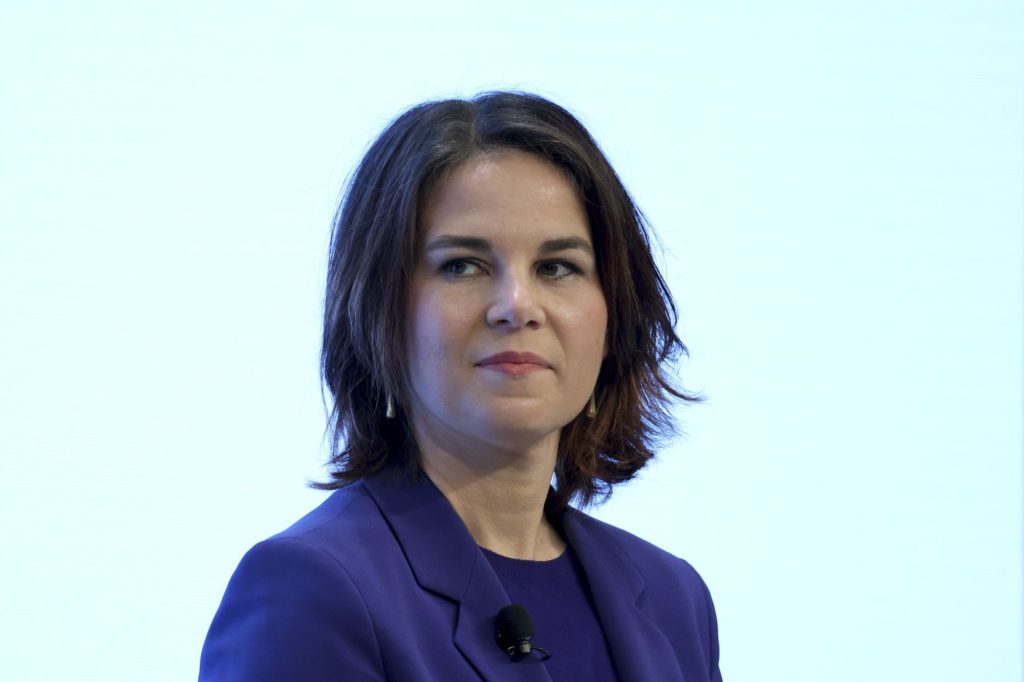
German Foreign Minister Annalena Baerbock cautioned Hungary over its threat to block EU financial aid for Ukraine amid a dispute with the bloc over rule of law and Budapest’s access to recovery funds. 

Russia’s “deliberate destruction” of energy infrastructure in Ukraine is putting lives at risk this winter and EU funds will help prevent more deaths, Baerbock said at a news conference in Berlin, when asked about Hungary’s position.

“This is not some run-of-the-mill European issue where you can haggle over money,” Baerbock said. “This European financial support saves lives every day and so I believe and expect that everyone is aware, and should be aware, of that in these such difficult times.”

UK Has Frozen More Than £18 Billion in Russian Assets (10:55 a.m.) 

The UK has frozen £18.4 billion ($20.9 billion) in Russian assets since sanctions were imposed on the country following its invasion of Ukraine.

The Office of Financial Sanctions Implementation said Thursday that represents about £6 billion more than held against all other sanctioned regimes. In conjunction with its allies, the UK has penalized more than 1,200 people and 120 businesses, it said in its annual review.

Amnesty International Accuses Russia of Crimes Against Humanity (8:52 a.m.) 

Amnesty International accused Russian forces of deporting Ukrainian civilians from occupied areas, according to a report. The actions amount to war crimes and crimes against humanity, the group said.

Amnesty said children were separated from their families and people were held in overcrowded conditions, denied food or water, tortured and threatened with execution, according to the report. 

Milley Says 100,000 Russians Dead or Wounded (7:43 a.m.)

Chairman of the US Joint Chiefs of Staff, General Mark Milley, speaking at the Economic Club of New York on Wednesday night, put the toll of Russian forces killed or injured since the war began in February at “well over 100,000,” according to the Associated Press. He added that about the same number of Ukrainian forces have been killed or wounded.

He said that the pending Russian retreat from Kherson and a potential standoff over the winter could provide a chance for negotiations to end the war, according to the AP report.  

100,000 Russian Troops Killed Or Injured in Ukraine, US Says

More stories like this are available on bloomberg.com

©2022 Bloomberg L.P.

Montreal Tech Workers See Slowing Demand With Sector in a Funk

(Bloomberg) — Montreal, a hotbed of technology hiring in recent years, is feeling a chill from the sector’s big slump.

Fewer employees are hopping from one job to another and some companies are trimming headcount or leaving vacant jobs unfilled, according to executives in Canada’s second-largest city.

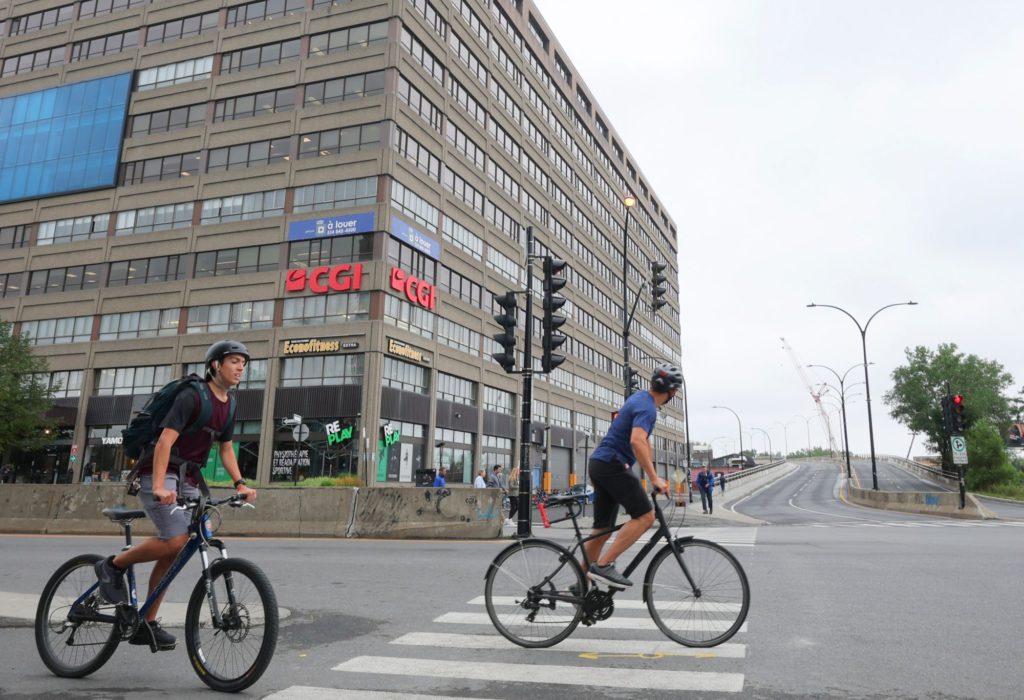
The chief executive officer of IT consulting firm CGI Inc. said turnover of employees has noticeably slowed. “We will adjust our hiring appropriately,” George Schindler, whose company reached 90,000 employees last year, told analysts.

Stingray Group Inc. CEO Eric Boyko said in an interview he’s also seeing a major shift in the market: “Since September, we have close to zero rollover” in staff.

The Montreal tech scene has grown rapidly in recent years as companies including Nuvei Corp., Lightspeed Commerce Inc. and Dialogue Health Technologies Inc. expanded and went public. An artificial intelligence hub has also emerged, attracting companies such as Alphabet Inc.’s Google, which recently opened new offices in the city to house as many as 1,000 employees.

But a number of startups and smaller firms have been cutting back or eliminating jobs recently. 

Stingray, a digital entertainment-services and media company, has cut its global headcount by 8% from last year’s level, to 920 employees. Most of the job cuts were done by attrition in Canada, the US, Europe and Israel as workers left the firm voluntarily. Stingray’s decision to limit work-from-home arrangements was a factor in some departures, Boyko said. 

“We have implemented a three-day policy at the office and some people wanted to stay virtual,” the CEO said. “They did leave for that, which is OK because it’s not in our values.” Some unprofitable projects were also eliminated.

RenoRun Inc., an e-commerce company that serves the construction industry and is backed by Tiger Global Management, has cut more than 40% of its staff since July, the Globe and Mail newspaper reported last month. Video game publisher Embracer Group recently shut down a Montreal studio, a move that affected 200 employees. 

More stories like this are available on bloomberg.com

©2022 Bloomberg L.P.

Amazon’s New Warehouse Robot Could One Day Replace Humans

(Bloomberg) — Amazon.com Inc. has developed a robot capable of identifying and handling individual items, a milestone in the e-commerce giant’s efforts to reduce its reliance on the human order pickers who currently play a key role in getting products from warehouse shelves to customers’ doorsteps. 

The robotic arm, tipped by a set of retractable suction devices, is called Sparrow. In demonstrations on Thursday, the machine autonomously grabbed items of different sizes and textures from a plastic tote and placed them in other receptacles. Amazon said the bot is capable of handling millions of different products. 

Automating such tasks may look simple but has stumped Amazon roboticists for years. Machines at the company’s facilities have long lifted pallets, arranged tightly packed shelves and shuttled packages on conveyor belts. But Amazon also employs hundreds of thousands of warehouse workers, whose dexterity and intuition currently let them pick and pack items more quickly and more reliably than existing machines.

“You would think that’s incremental, but it’s not,” said Joe Quinlivan, a vice president who oversees teams working on robotics and fulfillment technologies, at a press event unveiling the device. “It’s a major leap in technology challenge, and technology development.” Quinlivan said the most challenging jobs at Amazon are repetitive-motion jobs, some of which the robot may someday perform. 

If widely deployed, robots like Sparrow could eventually render large portions of Amazon’s workforce unnecessary, shifting the emphasis from employees who perform simple tasks that require little training, to a likely smaller cadre of technicians who supervise and maintain robotic systems. Amazon is the second-largest private employer in the US behind Walmart Inc., and has 1.54 million workers worldwide.

Amazon has for years been criticized for pushing its workers too hard in a relentless effort to get packages to customers quickly. Warehouse injuries exceed Amazon’s logistics peers, drawing the scrutiny of workplace regulators looking to ensure the company isn’t putting employees in harm’s way. Groups seeking to unionize these facilities are also pushing for improved safety and working conditions, along with higher pay. 

“Working with our employees, Sparrow will take on repetitive tasks, enabling our employees to focus their time and energy on other things, while also advancing safety,” the company said in a blog post. “At the same time, Sparrow will help us drive efficiency by automating a critical part of our fulfillment process so we can continue to deliver for customers.”

It wasn’t immediately clear how quickly or widely Sparrow would be deployed. The robot’s use could require a redesign of Amazon’s main warehouses, called fulfillment centers. They currently store most types of products on racks of mesh shelving that are likely incompatible with robotic arms like Sparrow.

Amazon has long aspired to mostly automate its warehouses. But the company has been sensitive to the perception that it plans to eliminate jobs. During a media event at an Amazon robotics research and manufacturing facility outside Boston, executives focused on the new types of roles increasingly automated facilities would require and said many frontline workers would be retrained for these higher-skilled jobs. 

In another step toward automation for faster, more efficient deliveries, Amazon also unveiled a new delivery drone on Thursday. The model, dubbed the MK30, is smaller than Amazon’s prior testing models, makes less noise and can fly through light rain. The craft is the latest effort in founder Jeff Bezos’ vision of deploying autonomous drones that can deliver a package weighing less than 5 pounds as little as 30 minutes after a customer places an order. Beyond speeding delivery times, drones could significantly cut the cost of delivery which still mostly requires a person driving a vehicle to someone’s home.

(Updates with executive comment and detail of new delivery drone.)

More stories like this are available on bloomberg.com

©2022 Bloomberg L.P.

Stocks Spike by Most in Two Years on CPI Relief: Markets Wrap

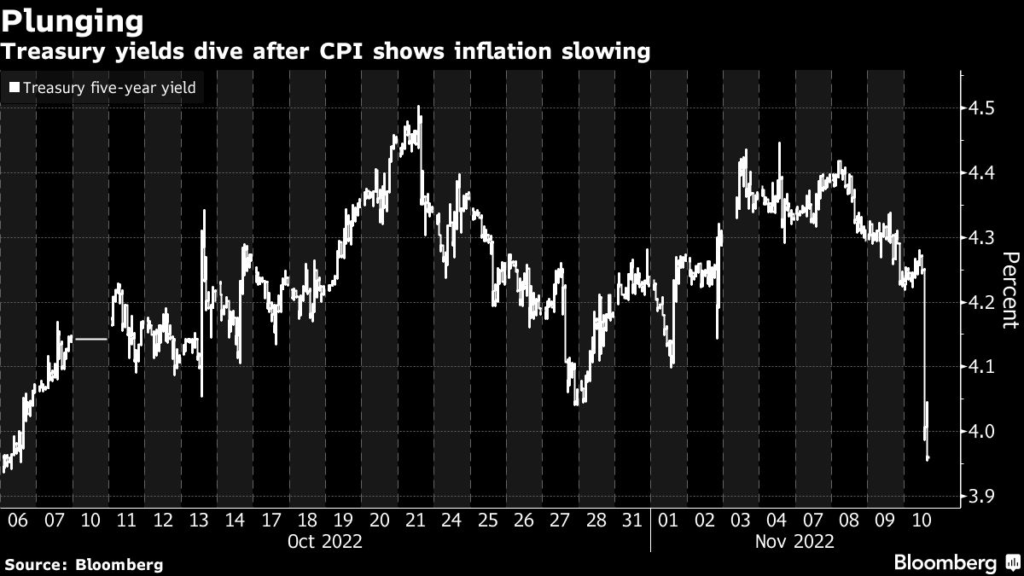
(Bloomberg) — Stocks are headed for the best post-inflation day rally in more than a decade as slower-than-projected price growth sparked bets the Federal Reserve can downshift its aggressive rate-hike path.

More than 90% of stocks in the S&P 500 were swept up in the rally that left the benchmark poised for the best first-day reaction to a CPI report since 2008. The tech-heavy Nasdaq 100 surged the most intraday since April 2020. The relief rally helped crypto markets stabilize despite the turmoil surrounding crypto exchange FTX.

Treasuries soared across the board, sending the rate on two-year notes, more sensitive to monetary policy, down 28 basis points. Rates traders pared bets on Fed hikes, with swaps indicating now that a 50-basis-point increase in December is far more likely than a 75-basis-point move.

Headline inflation came in at 7.7%, the lowest since January, before Russia’s war in Ukraine pushed up commodity prices. More important for the Fed, the core measure that excludes food and energy slowed more anticipated.

“The first downside surprise in inflation in several months will inevitably be received by an equity market ovation,” Seema Shah, chief global strategist at Principal Asset Management, wrote. “A 0.5% hike, rather than 0.75%, in December is clearly on the cards but, until we have had a run of these types of CPI reports, a pause is still some way out.”

Fed officials appeared to back a downshift in rate hikes after a stretch of four jumbo-sized increases. They also stressed the need for policy to remain tight. 

Dallas Fed President Lorie Logan said it may soon be appropriated to slow the pace to better assess economic conditions. San Francisco’s Mary Daly said the moderation was “good news,” but noted “one month of data does not a victory make.” She also said “pausing is not the discussion, the discussion is stepping down.”

Swaps markets pulled back bets on a peak rate to slightly less than 4.9% in the first half of next year, from more 5% before the CPI data. 

More reaction to CPI report

Rick Rieder, chief investment officer of global fixed income at BlackRock Financial Management Inc.:

“Today’s CPI report showed some moderate improvement as some of the previously elevated excessively high inflation-drivers, such as used cars, started to decline at a faster pace.”

Michael Landsberg, chief investment officer, Landsberg Bennett Private Wealth Management:

“We are preparing for an environment where interest rates remain higher for longer. Investors should be more concerned with the effect that rising rates into a decelerating economy has on their portfolio values rather than the current level of inflation.”

Max Gokhman, chief investment officer for AlphaTrAI:

“We expected that there would be deceleration of core goods prices, but seeing services slump too was a bigger bonus than any banker will get this year. That said, this won’t budge the Fed to rethink a 50bp hike in December, so traders curb their initial enthusiasm.”

Ipek Ozkardeskaya, senior analyst at Swissquote Bank: 

“Hallelujah! We finally saw a strong beat in terms of inflation in the US. Both the headline and the core figures came lower than expected. And that helped softening the hawkish Fed expectations, pull the US dollar and the yields lower. The soft inflation has been a puff of fresh air for the entire market.”

Guillermo Hernandez Sampere, head of trading at asset manager MPPM GmbH:

“Pivot Party to start right now, short squeeze will ignite the rally. If the remaining cash comes to work we’ve seen the lows for a while.”

James Athey, investment director at Aberdeen Asset Management:

“Equities will love this and are likely to pick up the baton and keep running. Of course that may make the Fed uncomfortable at this early stage in the disinflation process and so watch out for Fedspeak if equities get too frothy.”

Key events this week:

  • US University of Michigan consumer sentiment, Friday

Some of the main moves in markets:

Stocks

  • The S&P 500 rose 4.2% as of 1:02 p.m. New York time
  • The Nasdaq 100 rose 5.7%
  • The Dow Jones Industrial Average rose 2.5%
  • The MSCI World index rose 3.5%

Currencies

  • The Bloomberg Dollar Spot Index fell 1.6%
  • The euro rose 1.4% to $1.0151
  • The British pound rose 2.6% to $1.1658
  • The Japanese yen rose 3.1% to 141.96 per dollar

Cryptocurrencies

  • Bitcoin rose 9.9% to $17,287.93
  • Ether rose 14% to $1,263.44

Bonds

  • The yield on 10-year Treasuries declined 25 basis points to 3.84%
  • Germany’s 10-year yield declined 16 basis points to 2.01%
  • Britain’s 10-year yield declined 16 basis points to 3.29%

Commodities

  • West Texas Intermediate crude rose 1% to $86.67 a barrel
  • Gold futures rose 2.2% to $1,751.80 an ounce

This story was produced with the assistance of Bloomberg Automation.

–With assistance from Macarena Muñoz, Farah Elbahrawy, Emily Graffeo, Lu Wang, Richard Henderson, Srinivasan Sivabalan, Isabelle Lee, Vildana Hajric, Peyton Forte and Sagarika Jaisinghani.

More stories like this are available on bloomberg.com

©2022 Bloomberg L.P.
FTC Aims to Clamp Down on Companies Engaged in Unfair Competition

(Bloomberg) — The US Federal Trade Commission plans to make wider use of its 1914 founding statute to police anticompetitive behavior by companies in the internet age.

The Democratic-led commission on Thursday issued a new policy statement that empowers the agency to prevent “unfair methods of competition.” 

FTC Chair Lina Khan said the policy, which re-affirms Section 5 of the FTC Act, will effectively reactivate the FTC’s authority to police conduct, especially in online markets.

“In the digital economy, we’ve seen time and time again, there’s a real premium for businesses to capture the market as quickly as they can,” Khan told reporters in a briefing Wednesday. That “can lead businesses to play fast and loose with the rules.”

The move comes under an aggressive push by the Biden administration to rein in corporate dominance and reinvigorate dormant antitrust powers.

The guidance will allow the agency to tackle behavior that traditional antitrust laws have had trouble addressing, for example when a series of acquisitions, each of which would appear fine on its own, represent an anticompetitive consolidation when combined. The agency has also used the statute to sue companies under its mandate to protect consumers from fraud, scams and misleading business practices. 

The new policy, which was approved 3-1, says the commission doesn’t need to demonstrate harm solely from unfair activities, but can focus on “negative consequences” such as reduced choice. 

The agency’s only Republican Commissioner Christine Wilson dissented on the new policy statement. 

The new statement “resembles the work of an academic or a think tank fellow who dreams of banning unpopular conduct and remaking the economy,” Wilson wrote in a dissent. It “abandons bedrock principles of antitrust that long have been accepted by the Commission, the courts, the business community, and enforcers.”

The commission said that, unlike other competition laws, Section 5 doesn’t require showing a company’s power in a given market. Enforcers simply need to show a negative impact on competitive conditions. 

When drafting the FTC Act, Congress intentionally used language that allowed the commission’s authority to evolve with changing market realities, Khan has said. That was a recognition that the agency has the authority to promote competition beyond traditional antitrust statues, although with more limited remedies, according to the FTC policy statement. 

Khan said the FTC reviewed 180 legal decisions to “give teeth” to the new guidance and protect it from legal challenges. That’s unlikely to sway the agency’s conservative critics, who have lambasted the FTC for arguing its authority is open-ended.

After facing scrutiny in Congress in the 1970s over its interpretation of Section 5, the FTC adopted bipartisan policy statements outlining its views on deception and unfairness. But for years, the FTC declined to spell out how it viewed unfair methods of competition.

That ended in 2015, when the agency under former president Barack Obama voted 4-1 to adopt a policy that limited how it would use Section 5 to bring antitrust cases. Antitrust advocates criticized the 2015 statement, saying it curbed the FTC’s authority.

Last year under Khan, the FTC revoked the 2015 statement in a 3-2 vote, with both the agency’s Republican commissioners voting against its withdrawal. 

The new policy serves as a framework for how the FTC sees violations and future enforcement, Khan said, sending a signal to businesses before the commission moves in court or issues rules on specific practices.

Business groups like the US Chamber of Congress and tech advocates condemned the statement as a power grab by the FTC.

Replacing the bipartisan 2015 statement “with a partisan one without limiting principles may have symbolic value to Chair Khan and her supporters but will hurt more than help the FTC in court,” said Joshua Wright, a former FTC commissioner who authored the earlier statement and now heads George Mason University’s Global Antitrust Institute. “I predict it will generate much more bark than it will bite.” 

(Updates to add dissent, reaction starting in graph ninth graph)

More stories like this are available on bloomberg.com

©2022 Bloomberg L.P.
Amazon Unveils Smaller Delivery Drone That Can Fly in Rain

(Bloomberg) — Amazon.com Inc. unveiled a new delivery drone design on Thursday that’s smaller, makes less noise and can fly through light rain, the latest effort to get the troubled and long-developing project off the ground. 

The company has spent nearly a decade pursuing founder Jeff Bezos’ vision of autonomous drones that can deliver a package weighing less than 5 pounds as little as 30 minutes after a customer places an order. Beyond speeding delivery times, drones could significantly cut the cost of delivery which still mostly requires a person driving a vehicle to someone’s home.

The new drone, dubbed MK30, will go into service in 2024 and replace the existing MK27-2, the model that will be used to make deliveries in Lockeford, California, and College Station, Texas, this year. The new unit has a longer range, can fly in a wider range of temperatures and has new safety features, Amazon said.

It will be years before the Federal Aviation Administration approves commercial drone deliveries, although the agency is letting companies conduct test flights in increasingly populated areas so long as they don’t pose significant safety risks. Amazon’s drone program has been beset by delays, crashes and high turnover, a Bloomberg investigation found. The company is competing with Alphabet Inc., Walmart Inc., United Parcel Service Inc. and various startups to convince federal regulators that drone deliveries can be conducted safely.

Amazon introduced the new drone during a press event at a robotics research and manufacturing facility outside of Boston. Earlier on Thursday, the company announced a new robotic arm capable of identifying and grabbing single items, potentially a major milestone in its effort to build more automated warehouses and reduce its reliance on human workers.

More stories like this are available on bloomberg.com

©2022 Bloomberg L.P.
Twitter’s Cybersecurity Chief Is Leaving the Social-Media Company

(Bloomberg) — Three of Twitter Inc.’s top privacy and security officials said they’re leaving, heightening concerns about the company’s ability to keep its platform secure and comply with regulatory rules.

Lea Kissner, Twitter’s former chief information security officer, announced that they were leaving Thursday. Damien Kieran, the chief privacy officer, and Marianne Fogarty, chief compliance officer, also resigned from the company on Wednesday night, according to an internal message reviewed by Bloomberg News.

“I’ve made the hard decision to leave Twitter,” Kissner, who uses the pronoun they, wrote Thursday in a tweet. “I’ve had the opportunity to work with amazing people and I’m so proud of the privacy, security, and IT teams and the work we’ve done.”

Under another tweet from Kissner saying they were “fiercely proud of the privacy, security and IT teams at Twitter, Kieran wrote, “There is nothing else to say.”

Kieran nor Kissner didn’t respond to requests for comment. Twitter also didn’t respond. Fogarty couldn’t immediately be reached; her LinkedIn account had disabled all communications.

The departures, which were previously reported by the Verge, came about a week after Twitter’s new owner, Elon Musk, announced sweeping firings at the company and hours after Twitter began providing a verification badge to users who paid the company a monthly $8 fee. 

Kissner, who previously held roles at Apple Inc. and Alphabet Inc.’s Google, took over the job of CISO in January 2022, according to their LinkedIn. Their elevation to the top information security job came after Peiter Zatko, also known as Mudge, left the role after a little more than one year of working at the company. 

Twitter is currently bound by a consent decree with the Federal Trade Commission that regulates how the company handles user data. In July, Zatko filed an 84-page whistleblower complaint with multiple U.S. government agencies, alleging that the company had violated the terms of its agreement with the FTC. Zatko also said the security lapses at Twitter were so grave that they threatened national security. 

“All of this is extremely dangerous for our users,” a Twitter employee said in a Slack message viewed by Bloomberg. Their identity is not known to Bloomberg. “Also, given that the FTC can (and will!) fine Twitter BILLIONS of dollars pursuant to the FTC Consent Order, extremely detrimental to Twitter’s longevity as a platform. Our users deserve so much better than this.”

In a statement, the FTC wrote it was tracking recent developments at Twitter with “deep concern.” The agency added that no CEO or company is “above the law,” and companies must follow consent decrees.

After announcing their departure, Twitter users thanked Kissner for their work on security at Twitter. 

“I’m always here to help,” Kissner replied. “I just have to go do it somewhere else, unfortunately.”

(Updates with additional departures in the second paragraph.)

More stories like this are available on bloomberg.com

©2022 Bloomberg L.P.

Close Bitnami banner
Bitnami