
Bloomberg

FTX Hurtles Toward Bankruptcy With $8 Billion Hole, US Probe

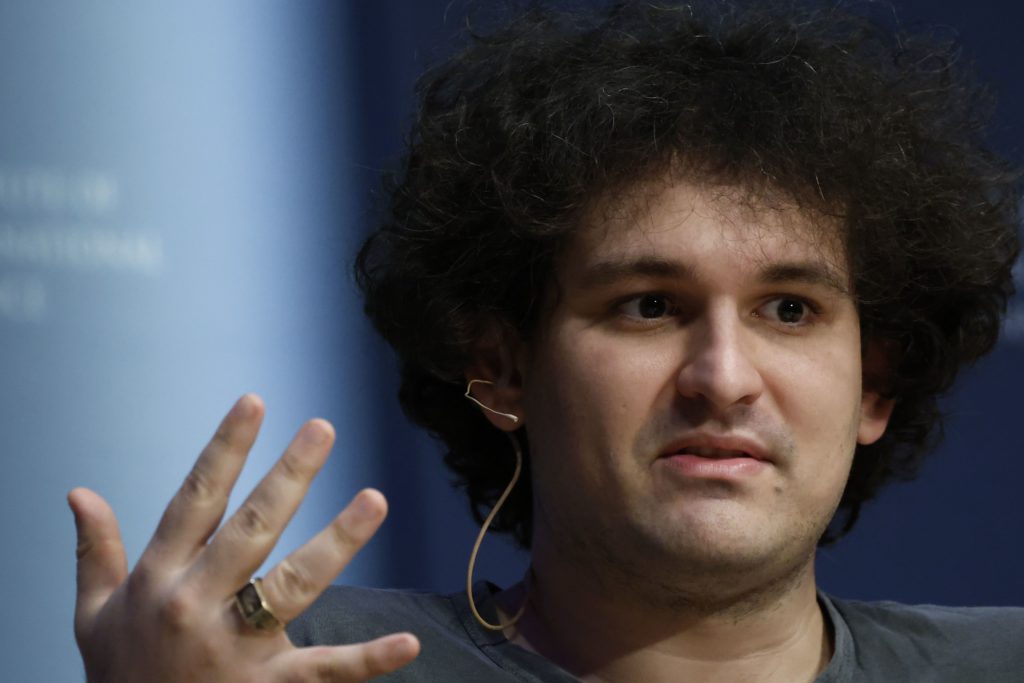
(Bloomberg) — The crisis engulfing Sam Bankman-Fried’s FTX.com is rapidly worsening, with the onetime crypto wunderkind warning of bankruptcy if his firm can’t secure funds to cover a shortfall of as much as $8 billion.

Bankman-Fried informed investors of the gap on Wednesday, shortly before rival exchange Binance abruptly scrapped a takeover offer. He said FTX.com needed $4 billion to remain solvent and is attempting to raise rescue financing in the form of debt, equity, or a combination of the two, according to a person with direct knowledge of the matter.

“I f—ed up,” Bankman-Fried told investors on the call, according to people with knowledge of the conversation. He said he would be “incredibly, unbelievably grateful” if investors could help.

An FTX representative declined to comment.

The acknowledgment of his firm’s deepening troubles and limited options is a stunning turn for Bankman-Fried, who was once worth $26 billion and likened to John Pierpont Morgan. It also underscores the uncertainty hanging over FTX, its clients and cryptocurrency markets.

US authorities are investigating FTX, the vast bulk of Bankman-Fried’s wealth has evaporated and rivals are benefiting from his woes. Robinhood Markets Inc. has seen its biggest crypto inflows ever in the last two days, Chief Executive Officer Vlad Tenev said Thursday. Binance and Coinbase Global Inc. have also seen large inflows, data from CryptoQuant show. 

Investor Sequoia Capital wrote down the full value of its holdings in FTX.com and FTX.us, an indication that the firm sees no clear path to recouping its investment.

Big-Name Backers

Hanging in the balance as the exchange teeters is not just the fate of its investors and lenders but anyone who has been unable to retrieve customer assets since it halted some withdrawals earlier in the week. The failure of crypto firms Celsius and Voyager saw billions in client money tied up in bankruptcy proceedings.

FTX has a prominent list of backers such as Sequoia Capital, BlackRock Inc., Tiger Global Management and SoftBank Group Corp. 

Still, Bankman-Fried remained defiant during a hectic period of roughly 24 hours that included mounting speculation that Binance wouldn’t go through with the deal. 

He repeatedly told investors during the conference call on Wednesday afternoon that it was simply not true that Changpeng Zhao was walking away from the takeover, the person said. 

About an hour later, Binance said it was indeed backing out.

Read more: Binance Backs Out of FTX Rescue, Citing Finances, Investigations

“Our hope was to be able to support FTX’s customers to provide liquidity, but the issues are beyond our control or ability to help,” Binance, the crypto exchange founded by Zhao, said in a statement.

In addition to the financial strains, FTX is drawing attention from US authorities. 

The Securities and Exchange Commission and the Commodity Futures Trading Commission are investigating whether the firm properly handled customer funds, as well as its relationship with other parts of Bankman-Fried’s crypto empire, including his trading house Alameda Research, Bloomberg News reported Wednesday. Officials from the Justice Department also are working with SEC attorneys, one of the people said. 

Zhao said in a memo earlier on Wednesday that there was no “master plan” to take over FTX, and that “user confidence is severely shaken.”

The renewed concern about contagion risk is showing up in the plunging prices of digital assets. Bitcoin fell below $16,000, the lowest in two years, after Binance’s announcement. 

Coinbase Chief Executive Officer Brian Armstrong said Tuesday in a Bloomberg TV interview that if the deal with Binance fell through, it would likely mean FTX customers would take losses.

“That’s a not a good thing for anybody,” he said.

For crypto market prices: {CRYP}; for top crypto news: {TOP CRYPTO}.

–With assistance from Yueqi Yang, Hannah Miller and Tanzeel Akhtar.

More stories like this are available on bloomberg.com

©2022 Bloomberg L.P.

Crypto Survey Finds Majority of Investors Welcome Regulation

(Bloomberg) — ​​​

  • Listen to Bloomberg Crypto on the iHeartRadio App
  • Listen to Bloomberg Crypto on Apple Podcast
  • Listen to Bloomberg Crypto on Spotify  

One of the core fundamentals that personifies the Bloomberg newsroom is its commitment to data. As part of that commitment, the Markets Live team conducts a weekly survey of readers, asking questions about different elements of the financial markets. It’s called the MLIV Pulse survey because it’s the Markets Live team taking the pulse of investors. In October, the team asked readers for their opinions about crypto and more regulation. 

On this episode, Bloomberg senior editor Kasia Klimasinska with the Markets Live team explains the survey’s results, joined by Bloomberg reporter Vildana Hajric.

Follow us on Twitter @crypto, and subscribe to the Bloomberg Crypto Newsletter at  https://bloom.bg/cryptonewsletter

This  podcast  is produced by the Bloomberg  Crypto  Podcast  team: Supervising producer: Vicki Vergolina, Senior Producer: Janet Babin, Producers: Sharon Beriro and Muhammad Farouk, Associate Producers: Mo Andam and Ty Butler. Sound Design/Engineer: Desta Wondirad.

More stories like this are available on bloomberg.com

©2022 Bloomberg L.P.

Meta Job Cuts Seen Saving Only a Small Fraction of Metaverse Losses

(Bloomberg) — Meta Platforms Inc.’s first major job cuts won’t be nearly enough to get the company back to being as profitable as it was just two years ago, according to analysts.

Meta laid off 11,000 workers on Wednesday. Chief Executive Officer Mark Zuckerberg said he bore responsibility for growing the company too quickly, on a failed bet that the increase in social media activity and online shopping during the pandemic would continue. “I got this wrong,” he said.

But at the end of a difficult day for thousands of employees, the company — parent to social media giants Facebook, Instagram and WhatsApp — is still facing many of the same problems it did a week ago, now with 13% fewer people. 

Meta is under intense scrutiny after posting its first two quarters of revenue declines compared to the same periods last year. At the same time, spending forecasts for next year to keep its social media apps relevant and pursue its long-term bet on virtual reality ballooned, surprising analysts and driving the stock down to levels not seen in seven years.

“Although this is an encouraging start of being disciplined on spending and investments, we believe the company has more room to go,” James Lee, managing director at Mizuho Securities, wrote in a note to clients after the news of the layoffs.

Meta’s profitability has fallen to a two-year low. Its operating margin has been sliding for several quarters to 20.4% at the end of September — half of what it was at the end of 2020. While lowering the business’s headcount will reduce spending, it may have to be one piece of a broader turnaround story, Lee said.

The job cuts will save the company $1.5 billion, Lee said, which is equal to just 1 point of operating margin. Compare that to the $13 billion the Reality Labs division is expected to spend this year, dragging down operating margin 11 points, he said. Even with the cuts, Meta continues to expect losses in the Reality Labs division, which houses metaverse investments, will grow “significantly” year-over-year in 2023, the company said in a filing Wednesday. 

Zuckerberg has directed Meta to spending heavily on the far-afield future he renamed the business after, a VR environment called the metaverse. It’s a vision he defended in a recent earnings call with investors, even as the multibillion-dollar spending has prompted a flood of skepticism.

Meta “created self-inflicted wounds when it began to invest heavily in the promise of the metaverse,” said Debra Williamson, principal analyst at Insider Intelligence. “It sank billions of dollars – and will sink billions more – into building for this future vision, and in the process it took its eye off of what was happening with its platforms today.”

Advertisers have been spending less on Meta’s platforms, rattled by economic uncertainty and a change to Apple Inc.’s privacy rules that made Meta’s ads less effective on iPhones. In the fourth quarter, which includes the important holiday spending period, analysts expect Meta revenue to decline from the same time a year ago yet again. “That’s historic,” Williamson said.

Meanwhile, Meta has been directing more users to short-form videos on Instagram called Reels, where it doesn’t make money as easily. That change in user attention is costing potential revenue in the short term. Users also increasingly expect content suggestions based on their interests and that requires complex artificial intelligence technology the company has to invest in, Zuckerberg has said.

On Wednesday, Zuckerberg reaffirmed that the company would narrow its focus to “priority growth areas — like our AI discovery engine, our ads business platforms, and our long-term vision for the metaverse.” Improvements in those areas won’t necessarily bring expenses in line with revenue growth, he said in his message to employees.

Keeping users entertained by Meta’s social apps is a valid priority, Williamson said. “But Mark has also realized that the advertising is literally what pays the bills, and they do need to focus on that more than they have.”

Meta’s stock rose 5.2% Wednesday, a small vote of confidence after shares had tumbled 70% this year. Now the company will need to prove it can do more with less.

More stories like this are available on bloomberg.com

©2022 Bloomberg L.P.
Musk’s First Email to Twitter Staff Ends Remote Work

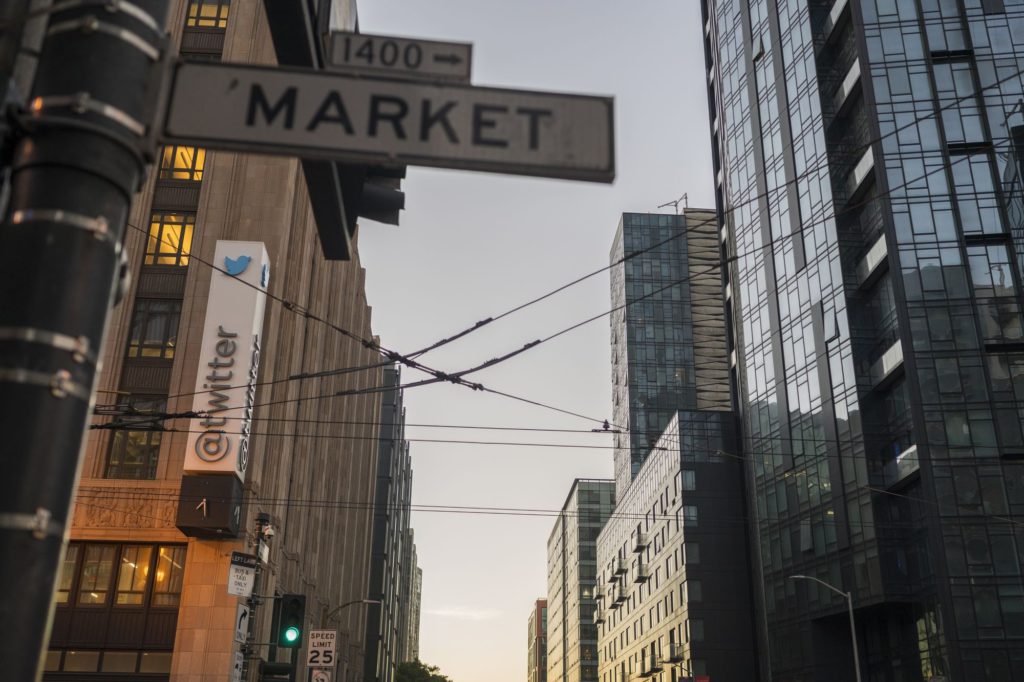
(Bloomberg) — New Twitter Inc. owner Elon Musk emailed his workers for the first time late Wednesday to prepare them for “difficult times ahead” and ban remote work unless he personally approved it.

Musk said there was “no way to sugarcoat the message” about the economic outlook and how it will affect an advertising-dependent company like Twitter, according to the email reviewed by Bloomberg News. The new rules, which kick in immediately, will expect employees to be in the office for at least 40 hours per week, he added.

Twitter has been under Musk’s leadership for close to two weeks, in which time he has dismissed roughly half its workforce and most of its executive suite. The new boss has upped the price for the Twitter Blue subscription to $8 and attached user verification to it. Musk told workers in the email that he wants to see subscriptions account for half of Twitter’s revenue.

Prior to Musk’s arrival, Twitter had established a permanent work-from-anywhere arrangement for its workers, many of whom had initially been pushed into remote work by the pandemic. It was one of the first topics in an all-hands call Musk held with Twitter staff after announcing the deal to buy the company earlier in the year. He said then that he’s against remote work and would only grant exceptions on a case-by-case basis, as he’s doing now.

He has also eliminated “days of rest” from Twitter staff calendars, Bloomberg News reported this month, which was a monthly, companywide day off introduced during the pandemic period. Its expiration gave another sign of Musk’s impatience with Twitter’s existing work culture.

“The road ahead is arduous and will require intense work to succeed,” Musk wrote in his missive to employees. In a separate email, he added that “over the next few days, the absolute top priority is finding and suspending any verified bots/trolls/spam.”

(Updates with more details of Musk’s tenure at Twitter)

More stories like this are available on bloomberg.com

©2022 Bloomberg L.P.
Biden Vows to Stand Firm With Xi as Breakthrough Remains Elusive

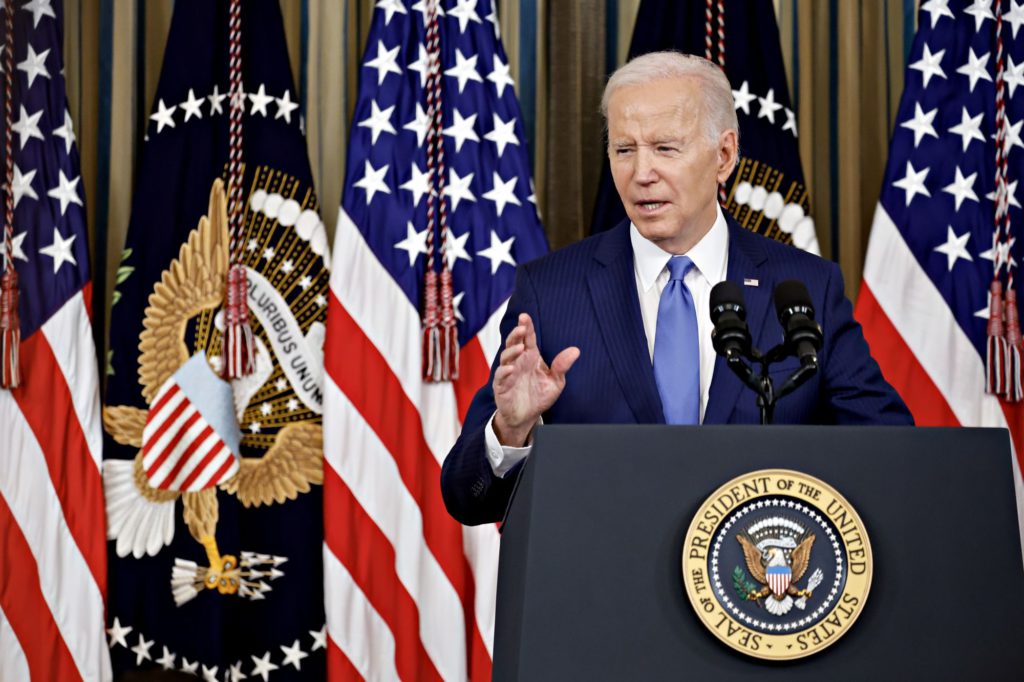
(Bloomberg) — US President Joe Biden vowed to make no “fundamental concessions” in his first in-person summit with China’s Xi Jinping, reinforcing already low expectations for any major breakthrough in strained ties between the world’s two largest economies. 

The two presidents are expected to meet next week on the sidelines of the Group of 20 summit in Bali, Indonesia. Xi’s last meeting with a US leader came in June 2019, when he reached a truce with Donald Trump that led to a trade deal six months later — right before relations fell into a downward spiral as Covid-19 spread around the globe.

Biden said he expects to discuss contentious issues such as trade and Taiwan, which China has put under increased military pressure since US House Speaker Nancy Pelosi visited Taipei in August. His administration also imposed sweeping curbs on the sale of advanced chips to China, a move designed to maintain the US’s technological edge over Beijing.

“I’m not willing to make any fundamental concessions,” Biden told a White House news conference Wednesday. “I’m looking for competition, not conflict.”

The US and China have veered toward confrontation over the past few years even as they face greater calls to cooperate on trade and pressing issues like climate change, Covid-19 and Russia’s war in Ukraine. Both are increasingly suspicious of each other’s intentions: The National Security Strategy released by Biden last month cast China as trying to supplant the US as the world’s dominant power, while a defiant Xi declared that the “rejuvenation of the Chinese nation is now on an irreversible historical course.”

With relations between the two nations at their lowest point in decades, both presidents have put some domestic uncertainty behind them in recent weeks. Xi has secured a precedent-breaking third term as leader and stacked the Communist Party’s leadership with proven loyalists. Biden emerged stronger than expected from US midterm elections, telling reporters Wednesday that he plans to run for re-election in 2024, though he has yet to make a formal announcement. 

Previous calls between the two presidents — who met several times when Biden was vice president — have helped steady relations during periods of discord. In recent days, Xi said he was willing to work with the US while senior diplomats between the two sides have held calls and in-person meetings. 

“The two sides don’t want to normalize the bilateral relationship so much as stabilize it,” said Richard McGregor, senior fellow for East Asia at the Lowy Institute in Sydney. “Whether that allows for any significant cooperation on issues like climate change and pandemics and the like is yet to be seen.”

‘Win-Win Cooperation’

China so far hasn’t confirmed the Xi-Biden meeting, with Foreign Ministry spokesman Zhao Lijian saying Thursday that Beijing took the US proposal “seriously” and the two sides were in communication.

Beijing was “committed to realizing mutual respect, peaceful coexistence and win-win cooperation with the US,” he added.

If the Republicans secure control over the US House, as now seems likely, that could set up another showdown between Washington and Beijing. House Minority Leader Kevin McCarthy told reporters in July that he would “love to” lead a delegation to Taiwan if he replaces Pelosi as speaker.

The main outcome from the meeting could be reopening communication channels after Beijing cut off military talks and climate change cooperation in retaliation over Pelosi’s becoming the first US speaker to visit Taiwan in 25 years. They might seek to ease some of the pressures over issues including Beijing’s military threats against Taiwan and Washington’s curbs on Chinese chipmakers, although a truce on par with the one Xi reached with Trump at the G-20 summit in 2019 appears elusive. 

As the pandemic shut down the world in a US election year, Trump dubbed Covid the “China virus,” the US accused Beijing of carrying out genocide against Muslims in Xinjiang and both sides traded sanctions. China responded to Pelosi’s recent trip with its most provocative military exercises near the island in decades, including firing ballistic missiles over Taipei. 

‘Hawkish Attacks’

“For three years, we have only had hawkish attacks on each other,” said Henry Wang Huiyao, founder of the Center for China and Globalization, a policy research group in Beijing. “We need a bottom for this deterioration. I think at least that this meeting can probably find that and gradually stabilize, if not improve, the relationship.”

The Bali meeting is one of a series of summits, including Association of Southeast Asian Nations meetings in Phnom Penh and the Asia-Pacific Economic Cooperation forum in Bangkok, that both sides will use to press their competing visions for the world. Biden is expected to meet with regional leaders such as Japanese premier Fumio Kishida and Indonesian President Joko Widodo during his trip to Asia. 

Russian President Vladimir Putin’s expected absence from the summits might help lower the temperature on differences between Washington and Beijing over the war in Ukraine. While Xi has refused to criticize Putin’s invasion, he has recently expressed concerns about the conflict and reaffirmed his opposition to the use of nuclear weapons. 

Xi has ramped up diplomatic efforts after self-imposed isolation during the pandemic. He met with Putin at a regional security summit in Uzbekistan in September and hosted German Chancellor Olaf Scholz in Beijing last week. 

‘Show Respect’

A good outcome for China would be for Biden “to show respect,” said Yun Sun, a senior fellow and director of the China Program at the Washington-based Stimson Center. 

“China will take it as a victory if Biden shows a few things that he wants China to cooperate on, because it implies that US is willing to reciprocate on issues China sees as important,” she said. 

Taiwan is likely to loom large after Biden’s previous assurances to defend the island in the event of a Chinese attack, despite the US’s longstanding One China policy of maintaining “strategic ambiguity” about its commitment to intervene militarily. Biden said Wednesday he was “going to have that conversation” with Xi, adding that US policy toward Taiwan “has not changed at all.” 

China considers democratically ruled Taiwan as part of its territory, even though it has never controlled the island, and has repeatedly reaffirmed its willingness to use force to prevent its formal independence. During Xi’s previous calls with Biden, including their most recent one in July, he has warned the US against “playing with fire” on Taiwan. 

“What I want to do with him when we talk is lay out what each of our red lines are — understand what he believes to be in the critical national interests of China, what I know to be the critical interests of the United States and determine whether or not they conflict with one another,” Biden said. “And if they do, how to resolve, and how to work it out.”

–With assistance from Jennifer Jacobs, Justin Sink, Colum Murphy, Zibang Xiao, Rebecca Choong Wilkins, Philip Glamann and Dan Murtaugh.

(Updates throughout)

More stories like this are available on bloomberg.com

©2022 Bloomberg L.P.

Continental Defies Downturn, Sees Strong Parts Orders Continuing

(Bloomberg) — Continental AG sees solid demand for auto parts continuing even as inflation and rising interest rates hit the industry.

The manufacturer’s third-quarter operating earnings jumped after it won more orders from auto manufacturers and raised prices to offset rising costs for energy and raw materials.

“We don’t see any severe issues in our order book coming up,” Chief Financial Officer Katja Duerrfeld said in an interview with Bloomberg Television, adding that Continental will continue to address cost issues with auto customers.

The auto industry is navigating cost pressures and rising rates, but demand has been relatively resilient so far. That’s partly due to backed-up order books as manufacturers struggle to secure enough chips. Continental last month won more than €2 billion in display orders from carmakers as the industry accelerates a shift to electric vehicles.

Continental rose as much as 5.4% in Frankfurt. The shares are down some 38% this year.

Cost Cuts

Suppliers have increased cost-cutting efforts. Continental has achieved around 50% of the headcount reductions targeted in its 10-year program, Duerrfeld said, in part by retraining employees or shifting them to different roles. While the company has no plans to expand the program, it will “take measures as needed” depending on how the economy develops, she said.

Continental warned that geopolitical uncertainties, supply-chain issues and energy inflation are weighing on business.

The manufacturer also cautioned that third-quarter results were not in line with its medium-term financial targets. It reported a net loss and negative adjusted free cash flow in the period.

Continental has had to deal with a few setbacks recently, including having to halt production of industrial hoses over quality-control issues. Earlier this week, the company confirmed that data was stolen in an August cyberattack.

–With assistance from Tom Mackenzie.

(Updates with CFO comment in third paragraph.)

More stories like this are available on bloomberg.com

©2022 Bloomberg L.P.
As FTX Melts, Analysts Race to Calculate SoftBank’s Exposure

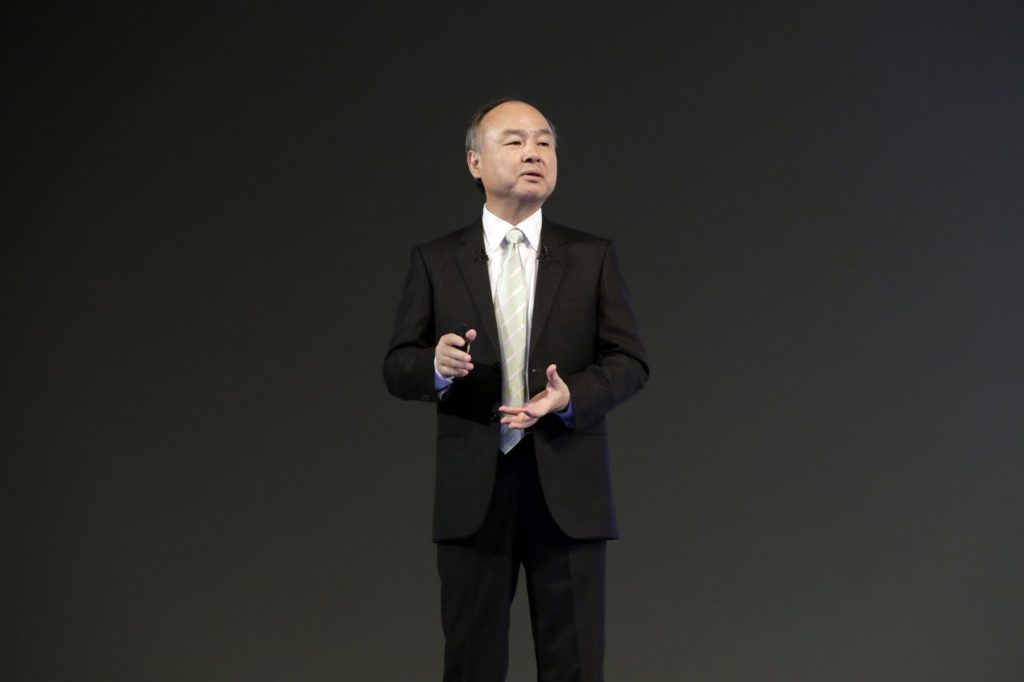
(Bloomberg) — How much will SoftBank Group Corp. lose on the spectacular meltdown of crypto exchange FTX.com?

Investors and analysts raced to answer that question Thursday after co-founder Sam Bankman-Fried warned that without a cash injection the company would need to file for bankruptcy. Sequoia Capital, one of FTX’s primary backers, swiftly put out a statement reassuring investors its exposure was limited and saying it wrote down the full value.

SoftBank and founder Masayoshi Son offered no such comfort, despite the company’s unfortunate track record with fiascoes like WeWork Inc. The company declined to comment on its exposure to FTX.

SoftBank hasn’t detailed how much money it put into FTX or where it valued the stake in recent quarters. SoftBank participated in a $900 million series B funding round last year and another $400 million this year, according to statements released by FTX. Multiple investors put down money in the two rounds, including Sequoia and Coinbase Ventures, and no breakdown was provided. 

Amir Anvarzadeh of Asymmetric Advisors, who has repeatedly advocated investors sell SoftBank shares short, reiterated his opinion in a research note. 

“This is yet another major blow to Softbank’s private investments,” said Anvarzadeh. He estimates SoftBank’s stake in FTX to have been worth billions of dollars. 

Mio Kato of LightStream Research estimates SoftBank’s exposure to FTX to be under $100 million in total. But the news is a reminder of how sharply such private valuations can fall in the current environment, he said.

The startup stakes SoftBank holds “could easily be down another 50-60-70%,” he said. 

Tiger Global Management, another aggressive investor in startups, has lost about 55% through October, while Ark Innovation ETF is down more than 60% year to date.

“It is not unthinkable for SoftBank Vision Fund’s private holdings’ underlying value to be similarly discounted,” Kato said.  

The average size of SoftBank’s Vision Fund 2 investments stood at about $100 million to $200 million as of June, compared with around $900 million for Vision Fund 1. 

Sequoia said in its statement it had put about $214 million last year in FTX’s international and US businesses. Coinbase released a statement saying that while the crypto exchange operator has $15 million worth of deposits on FTX to facilitate business operations and client trades, its exposure is minimal. 

SoftBank’s core Vision Fund unit is expected to log billions of dollars in losses due to the rout in tech stocks when it reports earnings on Friday. 

More stories like this are available on bloomberg.com

©2022 Bloomberg L.P.
Crypto Firm Plans First Buyback in Three Years as Shares Plunge

(Bloomberg) — A Japanese crypto-exchange operator announced its first stock buyback in over three years after a selloff of its shares amid ongoing turmoil in the digital-currency market.

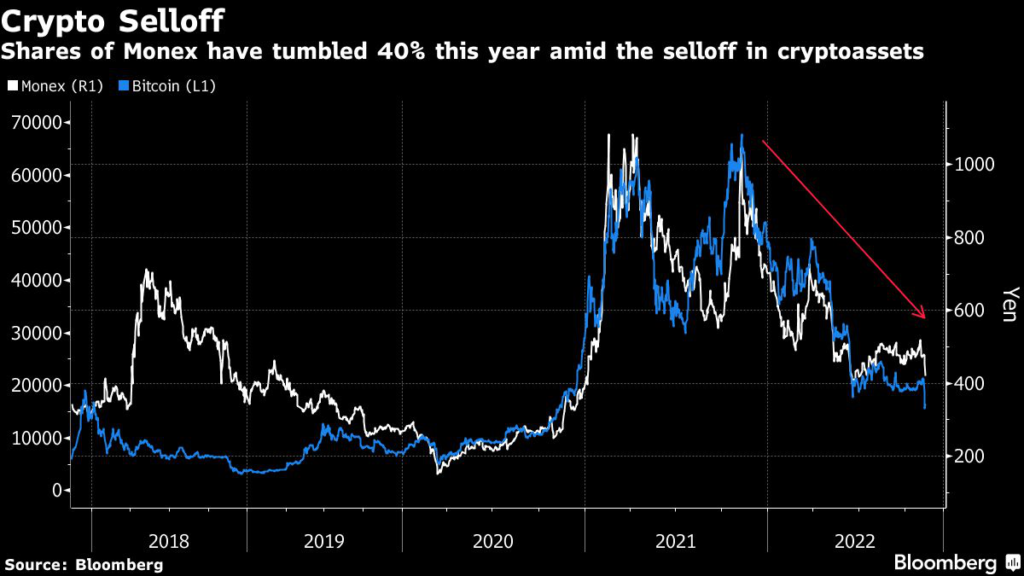
Monex Group Inc. said it will repurchase up to 4.67% of its shares outstanding for a total of up to 5 billion yen ($34 million). Its last buyback was announced in August 2019.

The company’s stock slid 7.3% Thursday, the biggest drop since June 13, as the crypto-related selloff sparked by Binance’s pulled bid for FTX.com swept into Asia. Shares of Monex have dropped 40% so far in 2022 after more than doubling over the previous two years when cryptoassets surged.

READ: JPMorgan Team Says Crypto Faces ‘Cascade’ of Margin Calls

In a press release on Wednesday, Monex said that it and its subsidiaries Coincheck and TradeStation “have no position or exposure with respect to FTT, FTX, or Alameda Research.”

More stories like this are available on bloomberg.com

©2022 Bloomberg L.P.
Wheat Grown Indoors Offers Promise for Global Food Security

(Bloomberg) — Vertical farmers, known for growing herbs and salads indoors, have made a breakthrough in the quest for global food security: cultivating wheat in the same controlled environment. 

Amsterdam-based startup Infarm grew wheat without using soil or chemical pesticides, and with far less water than conventional farming. The first indoor farming company to grow a staple crop is a milestone for a nascent industry that’s attracted venture capital funding on a promise that its technology can help feed the planet. 

“To continue to feed the world’s growing population, we need to achieve higher crop yields which we have now proven to be possible for wheat,” said Guy Galonska, chief technology officer and the co-founder of Infarm. “We are confident that wheat can be grown successfully at scale indoors as a climate-resilient alternative.”

So far, indoor farmers have delivered premium foods such as herbs, salads and occasional fruit. They’ve also faced questions over their relatively high production costs, energy usage and the ability to scale. 

If delivered at scale, growing a staple crop indoors has the potential to be a game changer. Supplies have increasingly been challenged by climate change and logistical issues, with the war in Ukraine highlighting the world’s dependence on few breadbaskets. So having alternative sources of crops could offer a buffer for any future supply disruptions.

Infarm said that its first trials show projected annual wheat yields of 117 tons a hectare. That compares with average 2022 yields of 5.6 tons a hectare in the European Union and 3.1 tons in the US, which are some of the world’s biggest exporters, according to estimates from the US Department of Agriculture. 

The company achieved those stellar yields thanks to six growing cycles per year, compared with just one in open-field farming, said Pádraic Flood, team lead for crop genetics at Infarm. Pampered by the right amounts of light, humidity, temperature and nutrients, indoor plants perform to their full capacity in the absence of stress or disease, he said.

But in real life, the challenges remain huge. Achieving scale and keeping costs low to compete in commodity markets will be crucial and there is a big question mark over access to energy to power indoor farms, potentially creating new vulnerabilities.

A lot of land will also be required to produce the staple. Wheat cultivation takes more than 216 million hectares of land, more than any other crop. To satisfy current needs at Infarm’s projected yields would require indoor farms exceeding the area under wheat in France. 

Infarm, which is co-hosting a food systems pavilion at COP27 in Sharm el-Sheikh this month, said it could potentially increase its yield by a further 50% in the coming years thanks to better technology.

–With assistance from Megan Durisin.

(Updates with growing conditions in seventh paragraph.)

More stories like this are available on bloomberg.com

©2022 Bloomberg L.P.

China Stocks Slide as Covid Curbs Temper Reopening Hopes

(Bloomberg) — Chinese stocks dropped as the nation increased Covid restrictions in some of its biggest cities, dampening hopes of a reopening that triggered a rally earlier this month.

The Hang Seng China Enterprises Index slid 2.1% Thursday, taking its three-day drop to almost 4%. A gauge of Chinese tech stocks in Hong Kong lost 3.3%, with heavyweights Tencent Holdings Ltd. and Alibaba Group Holding Ltd. sliding ahead of their earnings next week.

The market surge that began last week with wild rumors over China’s potential Covid Zero exit is fading as health officials stick to the stringent policy amid rising virus cases. Volatility has been running high as shares tied to reopening, tech and property have seen outsized upswings in recent days. 

Thursday’s selloff is also part of a global risk-off swoon, as cryptocurrencies remain under pressure and caution runs high before a crucial US inflation report. The Nasdaq Golden Dragon Index of Chinese stocks listed in the US plunged almost 7% overnight.

“The market can continue to be choppy as investors respond to signals that emerge on China’s policy and economic direction,” said Vey-Sern Ling, managing director at Union Bancaire Privee. “It is normal to see some consolidation after the strong rebound last week.”

The southern manufacturing powerhouse of Guangzhou is at the center of China’s most significant virus outbreak. That raises the risk of more stringent action from authorities in the factory hub, home to many garment manufacturers as well as automakers like EV company XPeng Inc. 

XPeng’s shares plunged more than 9% in a third day of losses on Thursday.

The megacity of Chongqing is also grappling with its worst outbreak in more than a year with cases climbing to 753 on Wednesday from just nine at the start of the month. Schools and non-essential businesses in two districts have been shut. 

Reopening is seen as the most important factor for investors to turn more positive on China, said Winnie Wu, China equity strategist at BofA Securities, citing the outcome of a survey last week. “Only a fourth of investors expect to see reopening before the second quarter of 2023.”

READ: China Stock Traders Are Clinging to Every Sign of Hope They See

Most markets in Asia fell Thursday ahead of the US inflation report, which will offer clues on the pace of the Federal Reserve’s tightening. The turmoil in crypto market dented sentiment across other assets, even as Bitcoin regained some ground after tumbling to the lowest levels in two years.

“I believe weak sentiment from the US and crypto is spilling over into Asia today with broad regional declines,” said Marvin Chen, a Bloomberg Intelligence strategist. “We expect volatility to continue until we get a catalyst on policy direction, which may be coming as attention turns to 2023.”

READ: US Inflation to Cool Only Slightly, Keeping Big Fed Hike in Play

–With assistance from Abhishek Vishnoi and Charlotte Yang.

(Updates with market closing prices)

More stories like this are available on bloomberg.com

©2022 Bloomberg L.P.

Close Bitnami banner
Bitnami