Bloomberg

Air-Taxi Maker Joby Scores First in Race for Certification

(Bloomberg) — US aviation regulators proposed standards for an air taxi made by Joby Aviation Inc., paving the way for the first official certification of the novel electric aircraft.

The Federal Aviation Administration on Monday revealed “airworthiness criteria” for Joby’s JAS4-1, a four-passenger craft designed to lift off like a helicopter and then fly horizontally like a plane. The action, which gives the public and industry 30 days to comment, lays out the steps Joby would take to get agency approval.

The announcement is a significant milestone for Joby and could become a template for other air-taxi manufacturers trying to create a new form of urban transportation. Multiple hurdles remain before Joby can begin carrying passengers for hire as it attempts to become an airline and the government creates new regulations to oversee such operations. 

The FAA, which was criticized by some companies earlier this year after changing how it planned to review new flight technologies, said the Joby action shows it is “using existing regulations” to assess the new designs.

Delta Air Lines Inc. agreed last month to invest at least $60 million in Joby, which plans to fly people to airports in New York and Los Angeles. Toyota Motor Corp. is also an investor. 

Joby’s shares fell 1.3% at 9:32 a.m. in New York. The stock declined 37% this year through Friday’s close.

–With assistance from Thomas Black.

More stories like this are available on bloomberg.com

©2022 Bloomberg L.P.

Feds Score $3 Billion Crypto Seizure From Silk Road Scammer

(Bloomberg) — Manhattan prosecutors say they seized almost $3.4 billion in Bitcoin from a property developer who scammed the dark web marketplace Silk Road over a decade ago.  

In what’s now the second-largest crypto seizure for the Department of Justice, investigators discovered more than 50,000 Bitcoin in the home of Georgia resident James Zhong in a raid carried out in November 2021. Zhong, a 32-year-old computer science graduate, was arrested and pleaded guilty to wire fraud last week.

The raid was carried out as part of an investigation led by the US Attorney’s office in Manhattan into the whereabouts of thousands of missing coins traceable to Silk Road founder Ross Ulbricht. At the time of the seizure, Bitcoin traded at over $60,000, boosting the value of the loot for prosecutors by billions of dollars. The digital currency now trades at about $21,000.

Surge in Crypto Seizures Has Cops Hunting for USBs, Passwords

Zhong’s offenses date back to 2012 when he defrauded Silk Road, an online marketplace notorious for the trading of drugs and cryptocurrency, out of more than 53,000 Bitcoin. He created a string of Silk Road accounts to conceal his identity and triggered 140 transactions in quick succession to trick the platform into releasing Bitcoin into those accounts, according to court filings. Zhong then transferred the digital currency into other accounts under his control. 

“For almost ten years, the whereabouts of this massive chunk of missing Bitcoin had ballooned into an over $3.3 billion mystery,” Damian Williams, US Attorney for the Southern District of New York, said in a statement. “Thanks to state-of-the-art cryptocurrency tracing and good old-fashioned police work, law enforcement located and recovered this impressive cache of crime proceeds.”

Prosecutors say 50,000 Bitcoin were found in an underground safe and a single-board computer in a popcorn tin under a pile of blankets in Zhong’s bathroom closet. He has subsequently surrendered over 1,000 more Bitcoin, and has agreed to help prosecutors access the remaining coins and provide the technical assistance to do so.

Zhong’s attorney Michael Bachner said his client had returned “virtually all of the Bitcoin he improperly acquired.”

“Mr.  Zhong pleaded guilty to conduct that occurred over 10 years ago when he was just 22 years old,” Bachner said in a statement. “Given the increase in Bitcoin value over the last decade, the value of the Bitcoin he returned exponentially exceeded the value of the Bitcoin he took.”

The coins he stole were proceeds stemming from Ulbricht’s crimes, so there’s no victim restitution for Zhong to pay, according to Zhong’s plea agreement. Customers of Silk Road, which was shut down by US agents in 2013, used Bitcoin to openly traffic drugs, wash dirty money and purchase hacking tools. Ulbricht was convicted in 2015 of seven criminal counts and is serving life in prison. 

The sting to take down Ulbricht and his cyber-bazaar was seen as a major win for law enforcement at a time when it was just beginning to grapple with the convergence of cryptocurrency and crime. While the US seized 175,000 Bitcoins from Ulbricht’s Silk Road, prosecutors suspected tens of thousands of digital coins that the site commissioned were still missing. They scored a win in 2020 with a billion-dollar seizure of 69,000 Bitcoins from a hacker who had stolen from Silk Road before Ulbricht’s arrest. 

Court records show Zhong studied computer science at the University of Georgia before starting a real estate business, RE&D Investments, with Memphis developer Clayton Kemker in 2019. In an interview, Kemker said that Zhong told him he’d amassed his Bitcoin fortune through “ground-floor mining” just as the digital currency began to take off.

“This is definitely a surprise to me because I thought he just was one of the Bitcoin guys who got in early and got lucky,” Kemker said by phone. He said that Zhong owned 80% of their business while Kemker, who held the remaining share, provided sweat equity. 

Construction was underway on one of their developments when Zhong called Kemker last year to tell him law enforcement had raided his home. “He said they seized all of his crypto so he was insolvent and at the time he was covering the operating costs months to month,” Kemker said. “He just kept saying ‘I can’t talk about it.’”

Kemker said he offered to buy Zhong out of the business twice in the past year in a bid to keep the projects going, but that his attorneys wouldn’t agree because they didn’t know how the case would play out in court. In September, a group of creditors, including building contractors and Kemker’s father, a construction consultant, filed involuntary bankruptcy proceedings against RE&D Investments in federal court, claiming the company owed them $1.8 million for unpaid work.

As part of Zhong’s plea agreement for the Silk Road fraud, he signed over his 80% stake in the company to the government. Prosecutors also seized $661,900 in cash and 25 Casascius coins worth 174 Bitcoin, according to the forfeiture order. Zhong was released on $310,000 bond on Friday. 

The case is USA v. James Zhong, 22-cr-00606, US District Court, Southern District of New York (Manhattan). 

More stories like this are available on bloomberg.com

©2022 Bloomberg L.P.

Silicon Valley Job Cuts Are No Cure-All for Tech’s Falling Stock Prices

(Bloomberg) — Companies such as Meta Platforms Inc. are waking up to investor demands that they cut costs in the face of a looming recession, but shareholders looking for relief from the relentless tech-stock selloff can only take so much comfort from that. 

Facebook parent Meta plans to cut thousands of jobs beginning this week, the Wall Street Journal reported. That comes after Apple Inc., Alphabet Inc.’s Google and Microsoft Corp. either froze hiring or said they’re re-evaluating staffing needs as the breakneck growth that the tech industry has enjoyed fades in the face of inflation and rising interest rates.

While layoffs bring economic pain to households, investors tend to look favorably on them because they mean lower costs and higher profits. Still, the environment that’s dragged the Nasdaq 100 Index down by 33% this year shows no sign of improving.

“Layoffs will stabilize things and improve sentiment in technology stocks, but interest rates will still go higher next year and the economy will likely flirt with a recession, lowering growth expectations,” said Peter Garnry, head of equity strategy at Saxo Bank. There are “still many forces playing against technology companies.”

About 100,000 tech jobs at have been cut this year, according to Layoffs.fyi, which tracks the industry. 

Companies including Intel Corp., Apple and Amazon pledged cost controls in announcing earnings over the past few weeks, while Lyft Inc., Stripe Inc. and Opendoor Technologies Inc. said they will reduce employment by at least 13%. 

Meta rose 3.7% after the report and the Nasdaq 100 was up 0.6% on Monday. The company has reported a sharp slowdown in growth at the same time that Chief Executive Officer Mark Zuckerberg is investing billions in developing the metaverse, an immersive virtual world. Its shares have fallen 73% this year. 

While companies are cutting costs, and stock prices are beginning to reflect the slowdown in the economy and earnings, valuations in tech still aren’t wildly cheap, arguing against a big rally at this point. The Nasdaq 100 is priced at about 19.5 times estimated earnings, below its average of 20.4 for the past decade but well above the 10-year low of 13.3.  

Businesses may be reluctant to make even deeper cuts, since they struggled to fill roles in the economic rebound from the pandemic. Twitter Inc., no longer a listed company after Elon Musk acquired it for $44 billion, cut almost 3,700 jobs last week, but now is reaching out to dozens of employees who lost their jobs and asking them to return.

“Companies will choose to reduce headcount by less than expected, given how challenging it was for companies to hire people in the first place,” Chris Shipley, chief investment strategist for North America at Northern Trust Asset Management, said last week. “We’re hearing about hiring freezes in tech, more, I think, than layoffs. I expect that will continue.”


Tech Chart of the Day

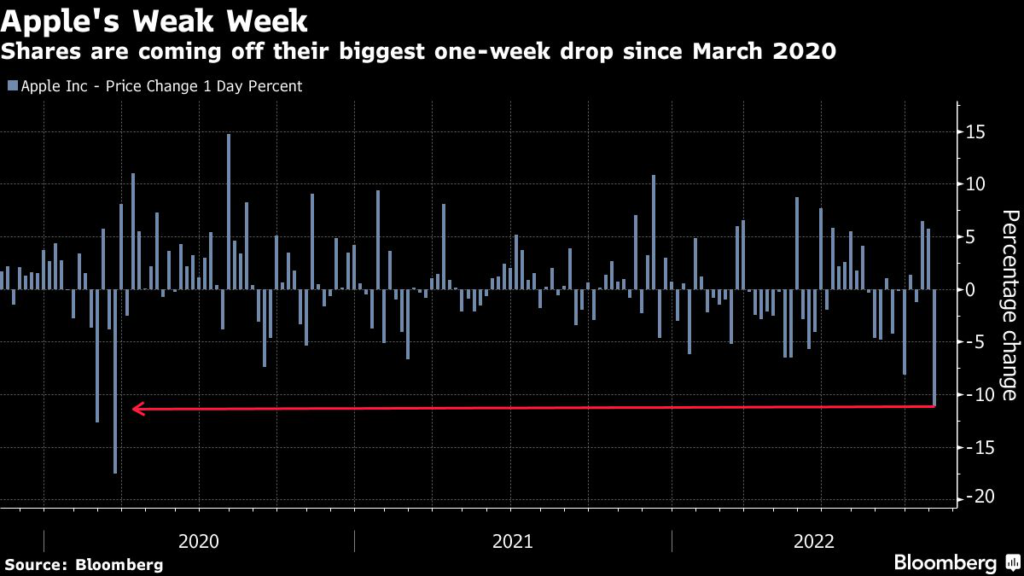
Apple shares fell 11% last week, the biggest weekly drop for the iPhone maker since the start of the pandemic in March 2020. The stock was pressured by the Federal Reserve decision on interest rates. The shares are down 22% this year, compared with a decline of 33% for the Nasdaq 100 Index, and they’re falling again Monday on a report that the company is paring its production plan for iPhone 14 handsets.

Top Tech Stories

  • Apple expects to produce at least 3 million fewer iPhone 14 handsets than originally anticipated this year, according to people familiar with its plans.
  • Meta Platforms is planning to begin layoffs that will affect thousands of workers from this week, the Wall Street Journal reported, citing people with knowledge of the matter.
  • Twitter is heading into its second full workweek under Elon Musk with half its workforce, mounting losses and a couple of unexpected reversals to its plans.
    • Twitter fired more than 90% of its staff in India over the weekend — part of Musk’s global reductions — severely depleting its engineering and product staff in a potential growth market.
  • China’s largest artificial intelligence company, SenseTime Group Inc., surged in Hong Kong trading after the nation’s government announced measures to support the development of augmented reality.

–With assistance from Ryan Vlastelica.

(Updates stock moves.)

More stories like this are available on bloomberg.com

©2022 Bloomberg L.P.

S&P Sees Economic Slowdown in Qatar After Soccer World Cup

(Bloomberg) —

Qatar is expected to see a slowdown in economic activity after the soccer World Cup, according to S&P Global Ratings.

“Oversupply in the hospitality and real estate sectors could somewhat moderate their performance, although we don’t expect this to materially affect banking sector asset quality,” analysts including Trevor Cullinan wrote in a report. 

Qatar has been preparing to host the soccer event for 12 years and has estimated the influx of 1.2 million visitors will add $17 billion to its economy. Amid concerns of an accommodation crunch, organizers have leased two cruise ships and will pitch more than 1,000 tents in the desert. A regional shuttle flight service will connect Doha with cities including Dubai, Muscat, Riyadh, Jeddah and Kuwait City.

  • Read more: Get Ready for This Month’s 2022 Soccer World Cup in Qatar: Q&A

The arrival of than a million visitors will see Qatar enjoy “a potential near-term economic gains” and will also highlight the logistics challenges of hosting such an event, which will have a positive impact on neighboring Gulf countries, according to S&P.

“We expect Dubai to be the main beneficiary outside of Qatar, given its geographical proximity and its already well-established tourism offering, airline connections, and multiple-entry tourist visas for World Cup ticket holders,” the report said.

More stories like this are available on bloomberg.com

©2022 Bloomberg L.P.

Equities Lead Risk-On Lunge as Midterm Week Begins: Markets Wrap

(Bloomberg) — U.S. equity-index futures rose and most Treasuries advanced as some investors bet a period of disinflation has already begun and the midterm election results will be favorable to markets.

Contracts on the S&P 500 and Nasdaq 100 indexes added at least 0.4% each. The 10-year Treasury yield slid for the first time in four days, while the two-year rate rose. The dollar traded lower. Facebook parent Meta Platforms Inc. advanced in New York premarket trading on plans for job cuts.

Monday’s appetite for risk may signal a temporary win for bulls even as sentiment remains fragile ahead of US midterm elections and inflation report. JPMorgan Chase & Co. strategists said a potential peak in bond yields and “very downbeat” sentiment may support stocks. Investors can look forward to positive catalysts from the elections, Morgan Stanley said.

The bout of optimism outweighs, for the moment, the Federal Reserve’s resolute campaign against price surges, signs of stress in US corporate performance and China’s announcement it will “unswervingly” adhere to current Covid Zero policy. 


Monday’s partial gains in Treasuries were underpinned by a 4-basis point drop in the 10-year yield. The two-year rate, more sensitive to monetary policy, remained higher around the 4.68% level. Europe’s equity benchmark, the Stoxx 600, rose for a second successive day and traded above its 100-day moving average.

Oil resumed losses as traders fretted that China’s Zero Covid policy will delay an economic recovery and undercut demand.

US data Friday — showing strong hiring and wage increases along with higher unemployment — offered a mixed picture for Fed officials debating how long to extend their campaign to curb elevated inflation.

Meanwhile, Apple Inc. said it expected to produce at least three million fewer iPhone 14 handsets than originally anticipated this year, according to people familiar with its plans. Of the 430 companies in the S&P 500 that have reported quarterly earnings so far, almost a quarter have missed estimates.

Meta rallied 3.6% in early trading after a Wall Street Journal report that the company will fire thousands of workers. Software firm Okta Inc. advanced 3.3% after Guggenheim Securities upgraded the stock.


Markets will watch the latest US inflation reading on Thursday after the core consumer price index rose more than forecast to a 40-year high in September. Even if prices begin to moderate, the CPI is far above the Fed’s comfort zone.

Key events this week:

  • Fed officials Susan Collins, Loretta Mester and Tom Barkin speak at events, Monday
  • Euro zone retail sales, Tuesday
  • US midterm elections, Tuesday
  • EIA oil inventory report, Wednesday
  • China aggregate financing, PPI, CPI, money supply, new yuan loans, Wednesday
  • US wholesale inventories, MBA mortgage applications, Wednesday
  • Fed officials John Williams, Tom Barkin speak at events, Wednesday
  • US CPI, US initial jobless claims, Thursday
  • Fed officials Lorie Logan, Esther George, Loretta Mester speak at events, Thursday
  • US University of Michigan consumer sentiment, Friday

Some of the main moves in markets:

Stocks

  • Futures on the S&P 500 rose 0.5% as of 7:28 a.m. New York time
  • Futures on the Nasdaq 100 rose 0.4%
  • Futures on the Dow Jones Industrial Average rose 0.5%
  • The Stoxx Europe 600 rose 0.6%
  • The MSCI World index rose 0.5%

Currencies

  • The Bloomberg Dollar Spot Index was little changed
  • The euro rose 0.1% to $0.9969
  • The British pound rose 0.5% to $1.1431
  • The Japanese yen was little changed at 146.70 per dollar

Cryptocurrencies

  • Bitcoin fell 2% to $20,713.24
  • Ether fell 1.6% to $1,577.89

Bonds

  • The yield on 10-year Treasuries declined four basis points to 4.12%
  • Germany’s 10-year yield declined two basis points to 2.27%
  • Britain’s 10-year yield was little changed at 3.53%

Commodities

  • West Texas Intermediate crude fell 0.9% to $91.74 a barrel
  • Gold futures rose 0.1% to $1,678.30 an ounce

–With assistance from Michael G. Wilson and Tassia Sipahutar.

More stories like this are available on bloomberg.com

©2022 Bloomberg L.P.

Elon Musk Walks Back on Twitter Job Cuts, Blue Checks in Second Week

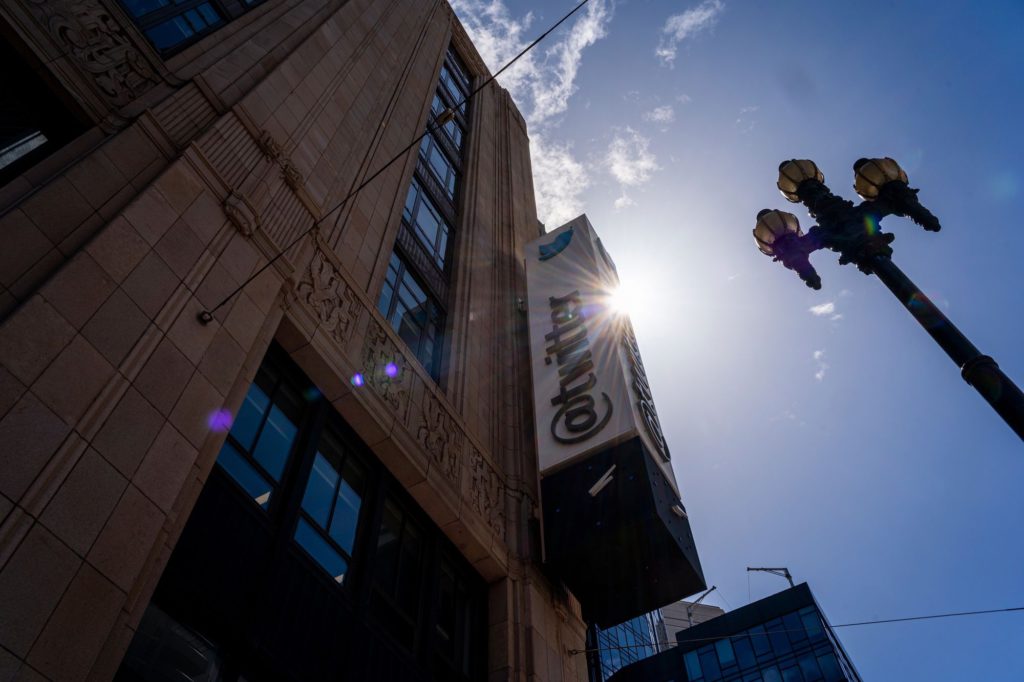
(Bloomberg) — Twitter Inc. is heading into its second full workweek under Elon Musk with half its workforce, mounting losses and a couple of unexpected reversals to its plans.

The social-media company laid off close to 3,700 people on Friday, only to reach out soon thereafter to dozens of employees who it decided were either fired in error or too essential to the changes the billionaire businessman wants to make. 

Another of Musk’s key early goals — adding verification check marks for members of its monthly subscription service — is being delayed until Wednesday to avoid potential chaos during the US midterm elections.

The whiplash events, as described by people familiar with the situation or in an internal company memo posted on Slack, follow Musk’s own acknowledgment in a tweet that the company he and well-heeled partners bought for $44 billion is losing $4 million a day.

Twitter lopped its workforce as a way to trim costs following Musk’s acquisition, which closed in late October. Many employees learned they lost their job after their access to companywide systems, like email and Slack, were suddenly suspended. The requests for employees to return demonstrate how rushed and chaotic the process was.

A Twitter spokesperson didn’t reply to a request for comment. Twitter’s plan to hire back workers was previously reported by Platformer.

“Regarding Twitter’s reduction in force, unfortunately there is no choice when the company is losing over $4M/day,” Musk tweeted on Friday.

Some regions were hit harder than others. The company fired more than 90% of its staff in India over the weekend, severely depleting its engineering and product staff, people familiar with the matter said. The cuts left the company with about a dozen staff in the growth market, they said. 

Read More: Twitter Fires More Than 90% of India Staff, Leaving Just a Dozen

Meta Platforms Inc., which is also struggling to contain costs after investing heavily in its metaverse project, may announce significant job cuts this week, the Wall Street Journal reported, citing unidentified people with knowledge of the plans. Layoffs at the Facebook owner, which are expected to affect thousands of workers, could begin as soon as Wednesday, the newspaper reported. 

Twitter has close to 3,700 employees remaining, according to people familiar with the matter. Musk is pushing those who remain at the company to move quickly in shipping new features, and in some cases, employees have even slept at the office to meet new deadlines.

Twitter has said it’s rolling out new features to its Twitter Blue subscription plan, offering a verification check mark for any user who pays the monthly fee. The company also said it will soon be launching other features, including half the ads, the ability to post longer videos and get priority ranking in replies, mentions and searches.

Twitter will issue the new blue verification check marks to users who pay $7.99 a month for the service starting on Nov. 9, according to an internal company message that was posted on Slack. The company had previously planned to roll out the subscription feature Nov. 7, the day before the election. 

“Widespread verification will democratize journalism and empower the voice of the people,” Musk said in a Tweet. 

The company received internal and external feedback that the verification process for its Twitter Blue program could be ripe for abuse, according to one of the people, who asked not to be identified. That raised concerns that candidates and other political actors might be impersonated on the site in the days before the US election. 

Late Sunday, Musk said Twitter would ban accounts that impersonate others, after several high-profile users changed their names and pictures to match the billionaire. Any name change at all will cause a temporary loss of a verified check mark.

–With assistance from Sankalp Phartiyal.

(Updates with Musk tweet on verification in 13th paragraph)

More stories like this are available on bloomberg.com

©2022 Bloomberg L.P.

New York’s Kathy Hochul Vies to Be More Than ‘Placeholder Governor’ in Tight Race

(Bloomberg) — In a referendum on Democratic Governor Kathy Hochul’s short time in office, New Yorkers will vote on Tuesday in a race that’s dramatically narrowed as Republican Lee Zeldin has gone after his opponent over crime and inflation.

Just months ago Hochul was considered to have a lock on the governor’s mansion in a state that hasn’t had a Republican governor in 16 years. But her tendency to avoid conflict, paired with scant campaigning until the final weeks before the election, means many voters may not know enough about her or where she stands on key issues to give her a full term. 

Hochul has tried to prove that she’s not a “placeholder governor” since assuming office in 2021 after former Governor Andrew Cuomo resigned over sexual harassment allegations, said Christina Greer, associate professor of political science at Fordham University. Cuomo denies the allegations.

Just days after being named New York’s first female governor, the Buffalo native declared she’d run for a full term in November. After taking office, she pushed through the state’s largest-ever budget. Along with the state Legislature, she helped usher in bills to strengthen gun and abortion laws and spur economic development with investments in areas like chip manufacturing. 

But hundreds of bills still remain on her desk unsigned. She’s also faced criticism over the $600 million in taxpayer dollars she committed to keep the Buffalo Bills football team in New York, campaign donations from companies that do business with the state, the resignation of her first lieutenant governor who was arrested on federal corruption charges, and her inaction over controversial topics like a proposed crypto mining ban and the influx of migrants that have flooded into New York. 

Meanwhile, both the perception and reality of crime, especially high-profile incidents in New York City, has added to her woes.

“In many ways she’s steadied the ship,” Greer said. “But as far as outsize policy successes, I don’t know that she’s had enough time to really have those.”

Tightening Race

Early on, Hochul enjoyed a double-digit lead against Zeldin, a Long Island Congressman and Donald Trump supporter who voted to overturn the 2020 election results and block the commission to investigate the Jan. 6 insurrection. 

Hochul pounced on Trump’s unpopularity in many parts of New York. She zeroed in on reproductive rights and social issues like legal recreational pot sales, which Zeldin is against but polls suggest are widely supported by New Yorkers.

Her campaign also handily out-raised Zeldin, who took in $20 million to Hochul’s $51 million in donations, according to state filings.

But Zeldin hit the campaign trail early and aggressively. He positioned himself as the anti-crime candidate and emphasized economic issues like inflation, which helped him gain momentum. As October approached and ad spending ramped up, Zeldin advanced in the polls — including in one Oct. 18 survey that showed him just four percentage points behind Hochul.

Read More: NY’s Crime Rate Dominates Only Debate in Narrowing Governor’s Race

Hochul failed to shift her messaging fast enough to defend her record on crime, which Zeldin and Republican candidates across the country have seized in the final weeks ahead of the midterm elections. In a last-ditch effort to show she was tough on crime, Hochul released TV ads that highlighted her efforts to improve public safety and announced a surge of police officers into the state-run subway system in New York City.

While Zeldin leaned into the brash and blustery, Hochul maintained an even-keeled demeanor that can be relatively unusual in New York politics. 

“You’re poorer and less safe because of Kathy Hochul,” Zeldin said in opening remarks at the one debate the candidates participated in late October. “This is your opportunity to save New York.” 

Hochul replied, “well nice to see you too.”

The governor also kept a light campaign schedule until the final stretch, when she tapped Vice President Kamala Harris, President Joe Biden and other Democratic heavyweights to stump for her.

“Hochul campaigned like an incumbent, but — having only been in office 14 months — arrived without a concrete record or established profile, and lacking deep ties to communities responsible for electing Democrats — primarily African-American voters in New York City,” wrote Melissa DeRosa, former secretary to Cuomo and a Democrat strategist, in a Nov. 3 editorial in the Daily News. 

Read More: Biden Assails Zeldin on Crime as Republican Gains Ground in NY

‘I Should Have an Answer’

New York, where Democrats make up about half of the 12 million active voters, has elected just one Republican governor in nearly half a century. And while the state is known for its progressive politics and agenda-setting policy changes, like legalizing recreational marijuana and same-sex marriage, Hochul’s 14-month tenure has lacked similarly bold accomplishments.

Meanwhile, she irked some fiscal conservatives by increasing the state’s budget to $224 billion to fund programs pushed by the more progressive arm of the state Legislature largely by relying on ephemeral funding sources like larger-than-anticipated tax collections and some of the $12.7 billion New York got in federal Covid stimulus aid.

“She spent a lot,” said E.J. McMahon, founding senior fellow at the Empire Center for Public Policy. 

Now, McMahon says, the question is what will the state do as federal aid runs out, a possible recession impacts tax revenue, and the $5 billion Hochul added to the state’s reserves isn’t enough to cushion New York for long.

Hochul tried to balance the needs of her moderate, upstate base, while also appealing to politically powerful New York City, said Na’ilah Amaru, a Democratic strategist and former executive director of the New York City Council’s Black, Latino, and Asian Caucus.

The problem is, that “if you belong to everyone then you don’t belong to anyone and that is a liability in politics,” Amaru said. 

Some voters say they are casting their ballots for Hochul anyway. 

Judy Kleiner, a 65-year-old retiree who used to work on Wall Street and lives in Manhattan said that she opposes Zeldin’s stance on abortion and his votes against certifying election results in some states. But when asked about particular policies or issues that drew her to Hochul, Kleiner said she was at a loss.

“I should have an answer for that, but I don’t,” she said.

Meanwhile, some voters say Zeldin’s promise to reign in crime is more important than whether they disagree with his stances on social issues.

“While I may not know or represent every single one of his views on every single issue I think the really important thing right now in New York City is crime,” said Anne Yoakam, an artist who lives on the Upper East Side who joined a Zeldin rally in Manhattan on Friday.

“I don’t want to say anything negative about the current governor, who has stepped up to the plate,” she said. “But I think, at this point, vote Lee Zeldin.”

–With assistance from Christian Richey.

More stories like this are available on bloomberg.com

©2022 Bloomberg L.P.

Stanford Alum Bags North Africa’s Biggest Tech Funding Round

(Bloomberg) — Startup Yassir secured $150 million from global investors in North Africa’s largest fundraising as the tech firm seeks to roll out its super app overseas.   

Yassir, which started in Algeria, offers on-demand services for ride hailing, banking, food and grocery delivery. It raised the money from backers led by San Francisco-based technology investment firm BOND, with participation from DN Capital, Dorsal Capital, Quiet Capital, Stanford Alumni Ventures and Y Combinator, according to a statement.

Since it was launched by Stanford University alumnus Noureddine Tayebi in 2017, Yassir has raised $193 million. Yassir’s most recent round is the largest ever tech investment round in North Africa, according to Dubai-based Magnitt. 

Super apps bring together multiple services onto one online platform. Dubai-based Careem is trying to raise hundreds of millions of dollars from sovereign wealth funds and other investors to develop its offering beyond ride-hailing. 

The funds will be used to expand beyond its core markets in the so-called Maghreb countries — Algeria, Morocco and Tunisia — and to parts of Africa and other regions, according to Yassir’s Tayebi. With many Africans lacking bank accounts, digital platforms like Yassir target consumers who want to conduct business via mobile phones.

“We believe technology will foundationally rearchitect consumers’ relationship with daily needs — transportation, food, financial services — not just in developed countries, but in every corner of the world,” says Daegwon Chae, general partner at BOND. “This investment is an extension of that belief in an underserved but dynamic, rapidly growing region.” 

More stories like this are available on bloomberg.com

©2022 Bloomberg L.P.

Lithium Frenzy Sees China Ceramics Hub Refocus on Battery Metals

(Bloomberg) —

Here’s another sign of the world’s lithium frenzy: Chinese factories that typically make ceramics for bathroom tiles are switching to supply the electric-vehicle battery material instead.

Lithium has become super-expensive this year as car and battery manufacturers scour the planet for scarce supplies, and as the industry has hit limits on capacity to refine raw materials into specialist chemicals. That means fatter earnings for producers and — as often happens in runaway commodities markets — some unconventional entrants seeking to make a profit.

The ceramics producers of Gao’an city in China’s Jiangxi province are a prime example. About 15% of the city’s plants have switched from churning out their traditional products to making lithium briquettes that can be further processed into chemicals used in battery production, according to Albert Li, an analyst at Benchmark Mineral Intelligence.

In part, the change reflects the sector’s struggles with overcapacity amid a deep malaise in China’s property market and the impact of higher fuel prices. Yet it’s also an illustration of how the battery supply chain is scouring every available corner to find new sources of lithium raw materials.

Prices of lithium carbonate, a refined material, have more than doubled from the start of the year in China and rose to a new record of 587,500 yuan ($81,349) a ton on Friday. Ganfeng Lithium Group Co. and Tianqi Lithium Corp. — China’s top two lithium producers — both posted major gains in quarterly profits last month.

Lithium has long been used to help bolster the strength of ceramics and to produce more vivid colors in glazes. Ceramics and glass still account for about 14% of all lithium demand, though that’s about halved in the past decade as requirements in the battery sector have surged, according to the US Geological Survey.

Ceramics factories in Gao’an typically take the sludgy by-product of chemicals production from local lithium refineries and use that in their items. Yet with prices of the battery metal trading at a record, even that refinery waste has jumped in value. That’s prompted the companies to reprocess it into lithium-containing bricks and sell them back to the refineries as raw material.

While the volume of lithium supply being added from the converted ceramics lines will be limited, it’s a shift that illustrates the ongoing strength of demand in the world’s key hub of electric-car batteries, according to Benchmark’s Li.

Another factor in the hunt for new sources of supply is that the material being produced in Gao’an is derived from lepidolite, a lithium-bearing mineral that’s often been overlooked as a lower-quality source of the metal. The mineral is under new focus in battery supply chains, and companies including top battery maker Contemporary Amperex Technology Co. and Gotion High-Tech Co. have invested in lepidolite resources. 

More stories like this are available on bloomberg.com

©2022 Bloomberg L.P.
Supreme Court Aims Anti-Regulatory Campaign at a Pair of Federal Watchdogs

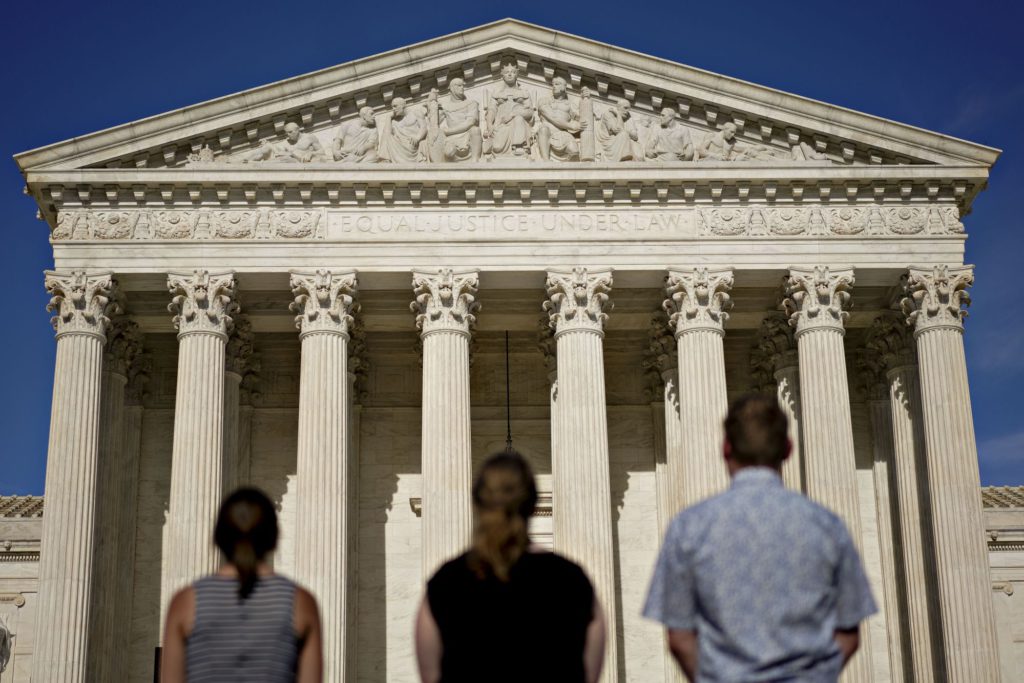
(Bloomberg) — The US Supreme Court is turning its anti-regulatory campaign toward the federal agencies that are scrutinizing Wall Street banks and seeking to break up Meta Platforms Inc., taking up cases that could defang two powerful market regulators.

The justices on Monday will consider whether those facing complaints from the Securities and Exchange Commission or the Federal Trade Commission can go straight to federal court with constitutional challenges to their cases. Most lower courts have said those challenges must wait for an in-house process that can take years — and arguably give the agency an unfair advantage.

A ruling against the government could undercut two of the most potent federal regulators. The SEC filed more than 700 enforcement actions in the last fiscal year and won judgments and orders worth $6.4 billion, including from investment banks. The FTC, which is also investigating Amazon.com Inc., returned $2.4 billion to consumers last year.

Such a ruling would extend a line of Supreme Court decisions that are chipping away at the federal administrative state. In June, the court and its 6-3 conservative majority slashed the Environmental Protection Agency’s climate change authority, curbing the ability of agencies across the government to tackle issues that carry major political or economic ramifications.

“The power of agencies to make rules, their enforcement powers and their power to adjudicate are all potentially subject to narrowing by this court,” said Jill Fisch, a securities law scholar and professor at the University of Pennsylvania Law School.

The latest cases center on lawyerly issues that could have big practical effects. The key question is whether federal district courts have jurisdiction to consider a broadside against the agencies’ system of using in-house administrative law judges, known as ALJs, to handle many of their cases.

Job Protections

The challengers — accountant Michelle Cochran in the SEC case and body-camera manufacturer Axon Enterprises Inc. in the FTC case — say the system violates the Constitution because the job protections afforded to ALJs insulate them too much from presidential control. Cochran and Axon point to a 2010 Supreme Court ruling that invalidated similar protections for members of the Public Company Accounting Oversight Board.

The Biden administration says Cochran and Axon can make those arguments — but only after they go through each commission’s proceedings and challenge its final decision in a federal appeals court. In Cochran’s case, that means finishing an SEC battle that started in 2016, when the commission first accused her of engaging in improper professional conduct.

“It’s actually insane,” said Margaret Little, senior litigation counsel at the New Civil Liberties Alliance and one of Cochran’s attorneys. “It makes no sense whatsoever to put people through years of protracted proceedings that are destined to be set aside because of their unconstitutionality.”

But US Solicitor General Elizabeth Prelogar, the administration’s top Supreme Court lawyer, says that’s what Congress required when it passed the agencies’ respective governing statutes. In court papers, she argued that Cochran and Axon are trying to “short-circuit” the system lawmakers established and “would subvert congressional policy choices.”

Axon is battling the FTC’s effort to unwind the company’s acquisition of a rival. In addition to challenging the tenure protections for the commission’s lone ALJ, the company seeks to challenge the process by which the FTC and the Justice Department decide which agency will review a deal. Unlike the FTC, DOJ litigates only in federal court.

A Supreme Court defeat for the commissions could reduce their use of ALJs — something that already started to happen at the SEC after a 2018 Supreme Court ruling found constitutional problems with the way the judges were appointed. Critics say fewer in-house proceedings would be a good thing, given the home-field advantage the agencies enjoy. 

“The ultimate goal is to get agency enforcement out of their in-house courts, which rule for them 100% of the time and back into federal courts, where people have their constitutional protections,” Little said.

The Biden administration disputes the characterization of in-house courts as one-sided tribunals, saying studies show the agencies lose a significant percentage of those cases.

But Elyse Dorsey, a lawyer with Kirkland & Ellis, said the FTC rarely loses in its own court, in comparison to the DOJ, which has had difficulties persuading courts in a number of recent cases.

“If you are looking at the disparity between what happens when the agencies go to federal court versus when the FTC takes it internally, you see a bit of a disconnect,” said Dorsey, who worked at both the FTC and DOJ during the Trump administration.

More Challenges

More broadly, a Supreme Court defeat for the agencies could make them more vulnerable to new court fights, legal experts said.

The Axon case “could really open up the possibility of other types of challenges to FTC authority,” said Andrew Gavil, a professor at Howard University Law School. The FTC recently began an online-privacy rulemaking that has already come under fire from business groups as exceeding the agency’s power. 

“It’s not a good moment in light of the direction of this Supreme Court on administrative law to be flexing your authority to the max,” Gavil said.

The Supreme Court last year reduced the FTC’s ability to seek monetary awards, a tool it had used for decades to force companies to reimburse consumers for fraud or other illegal conduct. Congress has struggled over a fix amid criticism by Republicans and business groups of the agency’s direction under Biden’s progressive chair, Lina Khan.

The SEC is already operating under the shadow of the Supreme Court’s EPA decision, which could bolster anticipated legal challenges to the agency’s proposal to require publicly-traded companies to disclose the climate risks they face. And a federal appeals court in May said the SEC’s in-house proceedings violated a hedge-fund manager’s constitutional right to a jury trial.

The Supreme Court’s display of unease with how administrative agencies function has “empowered companies and individuals to challenge agency action on a wide array of bases,” said Harold Krent, a professor at the Chicago-Kent College of Law at the Illinois Institute of Technology. Cases in the pipeline could “change the legal landscape incredibly,” he said. 

“The conservative majority thinks a smaller government is a better government,” said Jack Yoskowitz, a securities-law defense attorney at Seward & Kissel LLP in New York. “They’re not going to rely on ‘experts’ at these agencies anymore.”

More stories like this are available on bloomberg.com

©2022 Bloomberg L.P.
Close Bitnami banner
Bitnami