
Bloomberg

Morgan Stanley’s Wilson Says Broader Layoffs Would Be Bull Sign for Stocks

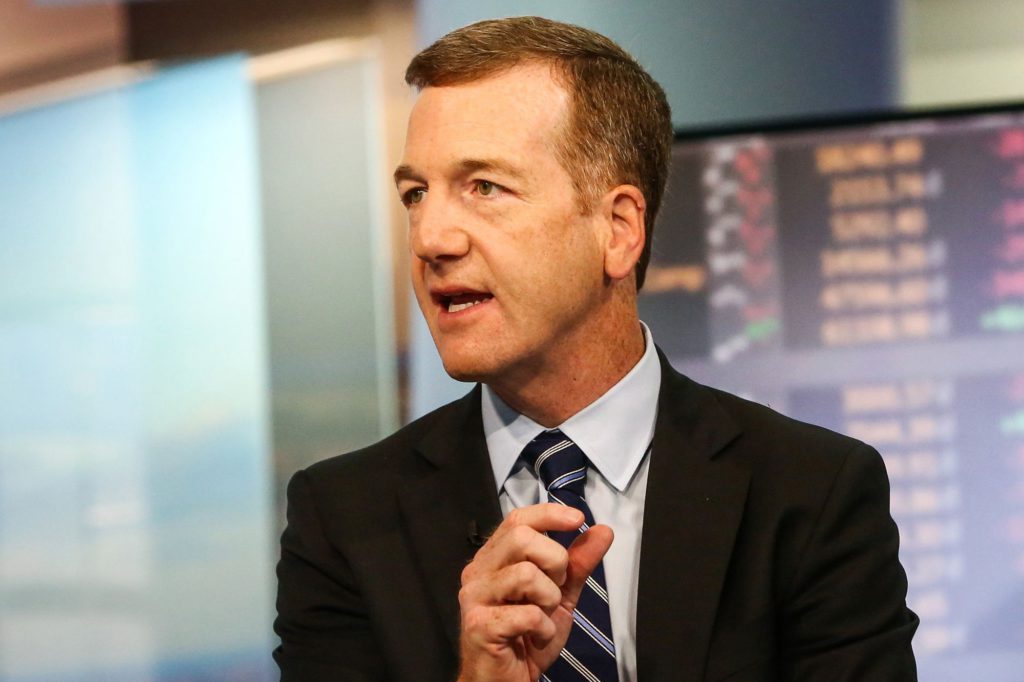
(Bloomberg) — Morgan Stanley’s Michael Wilson says companies will need to aggressively bring down expenses before he becomes more optimistic on US equities. 

“When that layoff cycle picks up in earnest that will actually be one of the keys for us to get bullish because that means the bleeding will stop on the operating leverage,” the top-rated strategist told Bloomberg TV on Monday.

Major technology companies have announced about 100,000 jobs cut this year, according to Layoffs.fyi, as companies attempt to control ballooning expenses. Meta Platforms Inc., is reportedly expected to cut thousands of jobs as early as Wednesday. The Facebook parent announced plans for a headcount reduction for the first time in September.

Other companies that have also reduced their workforce or announced plans to do so include ride-hailing firm Lyft Inc. and hard-drive maker Seagate Technology Holdings Plc. 

Tech companies have grown too far and too fast during the pandemic as people throughout the world became more dependent on their services to maintain productivity or stave off boredom. But as recession risks loom, inflation continues to surge and people’s behavior returns to pre-pandemic norms, the mounting expenses have been difficult to manage.

Still, Wilson, the strategist who correctly predicted this year’s slump in stocks, does not think the sector is dead. He expects a possible leadership change will occur next year when the US economy expands. 

Plenty of good tech stocks will be fine, he said, adding that there are many great opportunities in single stocks without giving specifics. “The reality is there are too many of them and they got overvalued. So it’s not that technology is dead in terms of the spending trend, we are very bullish on technology spending.”

US equities are nearing the bottom of the bear market, he said. US stocks edged higher on Monday with the S&P 500 and the tech-heavy Nasdaq 100 recouping some early losses. 

“What you want to try to figure out is what outperforms in the last leg down, because that will tell you what is going to outperform in the next leg up,” he said. “And that’s been industrials, financials and and some of the commodity complex, and that makes perfect sense.”

More stories like this are available on bloomberg.com

©2022 Bloomberg L.P.

Troubled Bitcoin Miner Core Scientific Says Reserve Dropped in October

(Bloomberg) — Core Scientific Inc., the Bitcoin miner that warned last month that it might seek bankruptcy protection, said its reserve of the digital token has dwindled to 62 coins as of October from more than 8,000 earlier this year. 

The Austin, Texas-based firm has by far the largest Bitcoin mining operation in the US with more than 243,000 servers across several states in the country. Its operations contribute to nearly 10% of the current computing power for the entire Bitcoin network to secure the blockchain by validating transaction data. 

Core Scientific sold 2,285 Bitcoin in October at an average price of $19,639 for total proceeds of about $44.8 million, according to an operational update. In addition to the 62 Bitcoin, valued at about $1.24 million at current prices, the company had about $32 million in cash.

Low Bitcoin prices, soaring energy costs and fierce competition among miners have battered Bitcoin miners who took out billions of loans to fund their expansions during the bull run starting from last November. Other miners, such as Argo Blockchain PLC and Iris Energy, are also struggling to repay debt. Core warned earlier it could run out of cash by year-end.

Shares of Core Scientific have fallen by about 98% this year. Bitcoin’s prices has slumped 55% since December.

More stories like this are available on bloomberg.com

©2022 Bloomberg L.P.
US Stocks Claw Back Some Losses; Dollar Falls: Markets Wrap

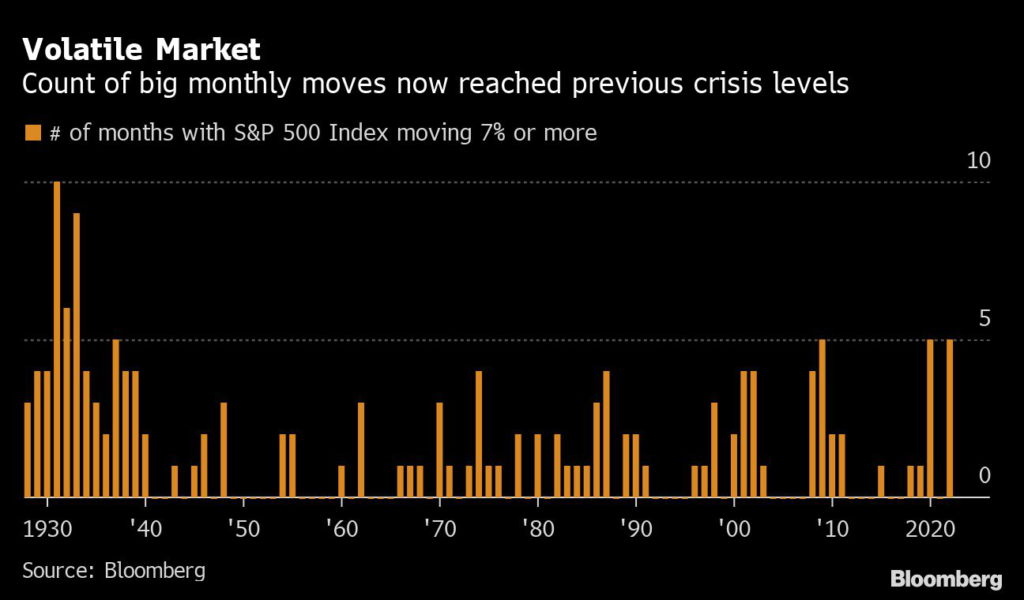
(Bloomberg) — US stocks edged higher in choppy trading at the start of a week with midterm elections and the latest inflation readings in focus.

The S&P 500 held modest gains, while the tech-heavy Nasdaq 100 struggled to get traction as Apple Inc. extended declines for a sixth day. Higher Treasury yields also posed headwinds for growth stocks. Still, the dollar traded lower.

Apple fell after a report saying it expected to produce at least three million fewer iPhone 14 handsets than originally anticipated this year. Facebook parent Meta Platforms Inc. advanced on plans for job cuts. 

Appetite for risk assets remained upbeat ahead of US midterms. Morgan Stanley’s Michael Wilson said polls pointing to Republicans winning at least one chamber of Congress provide a potential catalyst for lower bond yields and higher equity prices. 

That bout of optimism outweighs, for the moment, the Federal Reserve’s resolute campaign against price surges, signs of stress in US corporate performance and China’s announcement it will “unswervingly” adhere to current Covid Zero policy. 

Stocks gained on Friday, paring the biggest weekly drop since September, after data showed strong hiring and wage increases along with higher unemployment. That offered a mixed picture for Federa officials debating how long to extend their campaign to curb elevated inflation.

The latest US inflation reading due Thursday will be closely watched after the core consumer price index rose more than forecast to a 40-year high in September. Even if prices begin to moderate, the CPI is far above the Fed’s comfort zone.

Key events this week:

  • Fed officials Susan Collins, Loretta Mester and Tom Barkin speak at events, Monday
  • Euro-zone retail sales, Tuesday
  • US midterm elections, Tuesday
  • EIA oil inventory report, Wednesday
  • China aggregate financing, PPI, CPI, money supply, new yuan loans, Wednesday
  • US wholesale inventories, MBA mortgage applications, Wednesday
  • Fed officials John Williams, Tom Barkin speak at events, Wednesday
  • US CPI, US initial jobless claims, Thursday
  • Fed officials Lorie Logan, Esther George, Loretta Mester speak at events, Thursday
  • US University of Michigan consumer sentiment, Friday

Some of the main moves in markets:

Stocks

  • The S&P 500 rose 0.2% as of 10:37 a.m. New York time
  • The Nasdaq 100 was little changed
  • The Dow Jones Industrial Average rose 0.5%
  • The Stoxx Europe 600 rose 0.2%
  • The MSCI World index rose 0.5%

Currencies

  • The Bloomberg Dollar Spot Index fell 0.2%
  • The euro rose 0.3% to $0.9990
  • The British pound rose 0.7% to $1.1457
  • The Japanese yen was little changed at 146.55 per dollar

Cryptocurrencies

  • Bitcoin fell 1.9% to $20,726.12
  • Ether fell 1.3% to $1,583.22

Bonds

  • The yield on 10-year Treasuries advanced five basis points to 4.21%
  • Germany’s 10-year yield advanced three basis points to 2.33%
  • Britain’s 10-year yield advanced eight basis points to 3.62%

Commodities

  • West Texas Intermediate crude rose 0.3% to $92.90 a barrel
  • Gold futures rose 0.1% to $1,678.40 an ounce

–With assistance from Michael G. Wilson, Tassia Sipahutar and Srinivasan Sivabalan.

More stories like this are available on bloomberg.com

©2022 Bloomberg L.P.

Uruguayan Tech Pioneer Sees Software, Payments Ripe for Funding

(Bloomberg) — Sergio Fogel, a co-founder of Uruguayan fintech unicorn DLocal, sees opportunities to invest in Latin American startups providing business software and payments services even as capital becomes scarcer and more demanding. 

While there is a lot less capital available for B and pre-IPO funding rounds, investors are still providing early stage funding but want to see revenues within three years and a clear path to profits, Fogel said in an interview in Punta del Este.

“There’s no patience for things that have an uncertain revenue date,” he said.

One area of the startup landscape in the region that has particularly fallen out of favor is crypto, he said, as the price of crypto assets tumbled along with trading volumes.   

A serial entrepreneur, Fogel has invested in about 15 tech startups with a focus on young, talented founders. Uruguayan open banking platform Datanomik, which received $6 million in a funding round led by venture capital firm Andreessen Horowitz this year, currently absorbs a lot of his time as a hands on angel investor who likes to get directly involved in his companies.

“I have great expectations for Datanomik,” he said. “We started in Uruguay and Brazil and the idea is to expand to all of Latin America.”

His first and only unicorn to date, emerging markets payments provider dLocal, hasn’t been immune to the sell off in global tech stocks this year. After more than tripling in price to a record $69 per share after listing on Nasdaq in June 2021, dLocal’s stock now trades at about $20.50, down 43% this year, with a market capitalization of $6 billion. Fogel put his current stake in the company at around 15%.

Uruguay Gets Its First Billionaires With U.S. Fintech IPO

“I think the drop is consistent with the drop in the stock market and the size of the company,” he said. The Nasdaq has fallen about 33% in 2022.

Uruguay’s next unicorn will probably be a software firm providing services such as automation or cyber security to businesses, Fogel said.

Fogel is also working with several Uruguayan scientists to found a biotech company accelerator in a bet that life sciences — a field that encompasses everything from gene editing to lab cultured meat — will enjoy a boom like the tech industry did in recent years.

Billionaire Refuge

Uruguay, a country of 3.5 million people wedged between Argentina and Brazil, has become at least a temporary home to a growing number of Latin American tech billionaires including Globant’s Martin Migoya, MercadoLibre’s Marcos Galperin and Nu Holding’s David Velez.

Fogel thinks the trend will continue as fear of crime, confiscatory taxes and a lack of legal guarantees in other countries spur more of the region’s ultra-rich entrepreneurs to decamp for Uruguay.

“20% is due to the merits of Uruguay and 80% problems in the countries” they come from, he said. “Uruguay has been stable for many years.”


More stories like this are available on bloomberg.com

©2022 Bloomberg L.P.
Peloton’s Founders Have a New Startup Selling Rugs Online

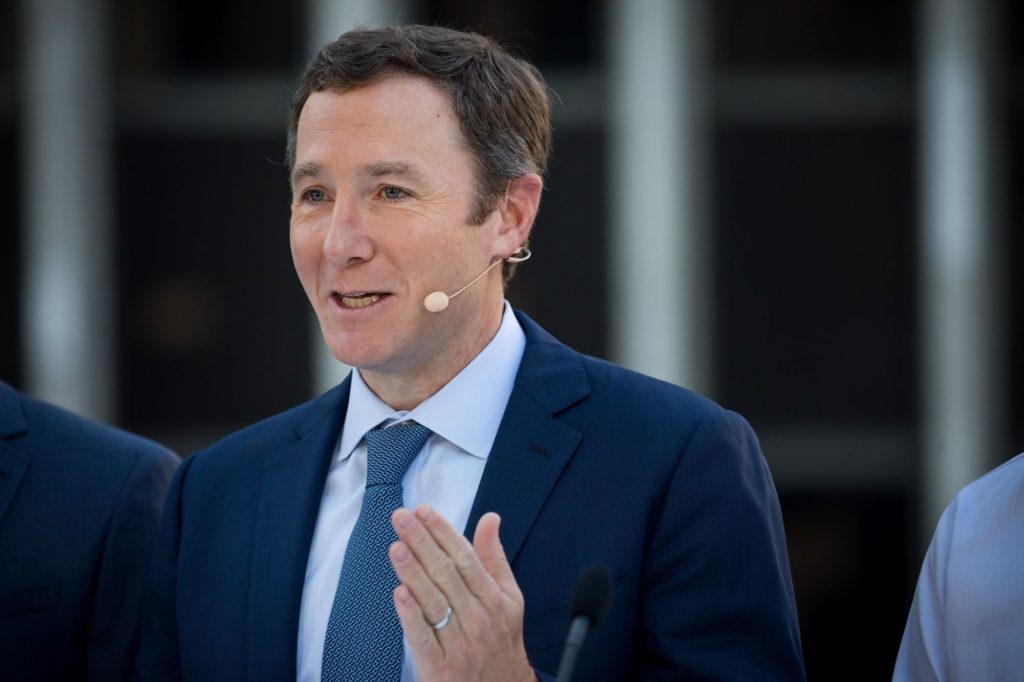
(Bloomberg) — A group of Peloton Interactive Inc. co-founders, including former Chief Executive Officer John Foley, have started a new business to sell custom rugs over the internet. 

Peloton’s former chief legal officer, Hisao Kushi, and ex-Chief Technology Officer Yony Feng have joined Foley to launch Ernesta, which will let people buy custom designed and cut rugs at roughly the same price as a standard store-bought product, with fast delivery. The company just completed a $25 million Series A funding round, it said in a statement Monday.

Foley stepped down as CEO of Peloton in February, and relinquished his executive chairman role in September. The former pandemic darling is trying to pull out of a slump that has sent the shares down about 75% this year. 

Foley will serve as New York-based Ernesta’s CEO, with Kushi and Feng reprising their roles as CLO and CTO respectively. They’re joined by a number of other Peloton alums. 

Ernesta will be available to US customers in the spring of 2023. 

More stories like this are available on bloomberg.com

©2022 Bloomberg L.P.

Mexico’s Mendel Raises $50 Million in Debt, Extends Series A

(Bloomberg) — Mendel, a Mexico-based fintech that offers financial management products for companies, raised debt financing and extended its Series A round as it looks to support software development and growth.

Victory Park Capital led the $50 million debt financing, while the company also extended its Series A round by $10 million, Chief Product Officer Helena Polyblank said in an interview. 

“All our operation is currently focused on Mexico”, said Polyblank, who helped found the company, adding that Colombia and Brazil are possible markets for expansion in the region at a later date.

Mendel plans to double its client base to 600 by the end of 2023, said co-founder Alejandro Zecler. FEMSA, MercadoLibre, Petco, and Bafar are among current customers in Mexico. 

With a staff of 74 people in Mexico and Argentina, 45% of which are women, Mendel helps companies manage corporate credit cards, spending, invoices and tax deductions, among other services. 

Industry Ventures and Infinity Ventures participated in the Series A extension. 


–With assistance from Paola Vega Torre.

More stories like this are available on bloomberg.com

©2022 Bloomberg L.P.
UK Packaging Strike to Squeeze Amazon, Says Labor Union

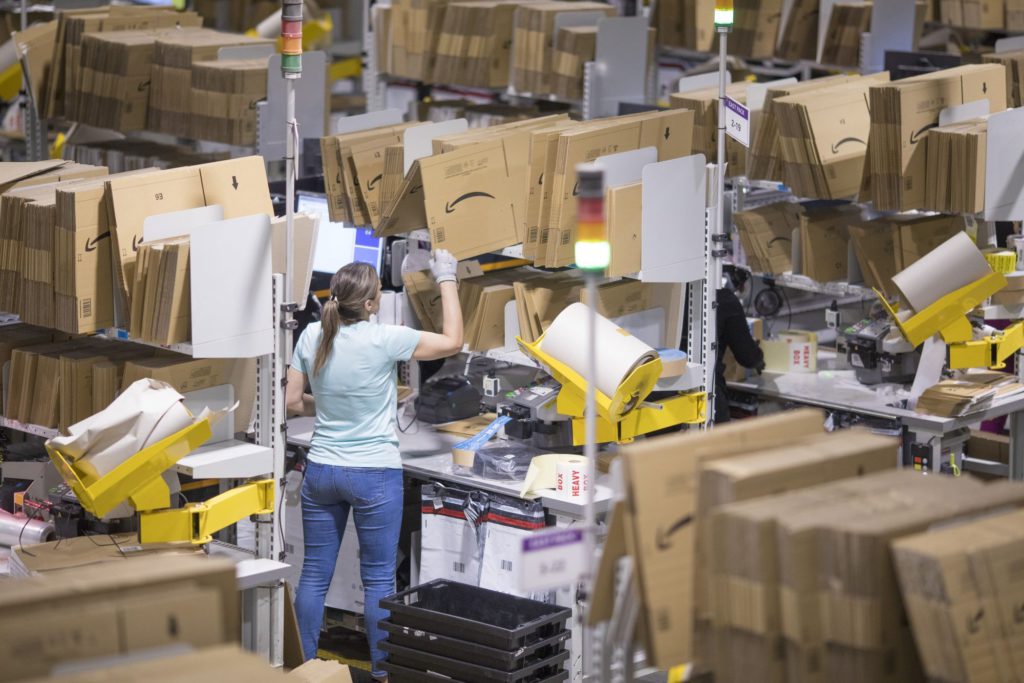
(Bloomberg) — Almost 1,000 staff at packaging producer DS Smith voted to strike over pay in a move their union said will affect clients of the UK firm including Amazon.com Inc. at one of the busiest times for retail purchases.

Employees at five DS Smith sites across Britain could walk out before the end of this month, according to an emailed statement from the GMB union, which said that 93% of members had backed industrial action.

Amazon may face a shortage of packaging when fulfilling orders from the Black Friday shopping period as a result of the dispute, the GMB said. Other DS Smith customers include drinks giants PepsiCo Inc. and Diageo Plc, McVities biscuits and KP snacks, it said.

“A strike at DS Smith could have serious implications across a range of household names, not least Amazon, which gets packaging from the company,” GMB National Officer Eamon O’Hearn said in the release.

The strike ballot was held after DS Smith proposed a 3% salary increase plus a £760 payment for 2022-2023, according to the union, which says the offer represents a “massive real terms pay cut” with UK inflation in double figures.

A spokesperson for DS Smith said the company was “disappointed” with the strike threat especially as it came at a “crucial time” for customers. DS Smith added that contingency plans were in place and that negotiations were ongoing.

Amazon didn’t immediately respond to requests for comment.

(Adds DS Smith’s response in sixth paragraph.)

More stories like this are available on bloomberg.com

©2022 Bloomberg L.P.

Meta to Lay Off Thousands of Staff From This Week, WSJ Says

(Bloomberg) — Meta Platforms Inc. is planning to begin layoffs that will affect thousands of workers from this week, Wall Street Journal reported, citing people with knowledge of the matter. 

The job cuts could come as early as Wednesday, the newspaper said. The company has already told employees to cancel non-essential travel from this week, according to the report.

Meta shares rose 3.8% to $94.20 as trading got underway in New York on Monday. The stock has declined about 73% for the year through Friday.

Read more about how the Silicon Valley job cuts are no panacea for stock prices

Chief Executive Officer Mark Zuckerberg in September outlined plans to reorganize teams and reduce headcount for the first time, following a sharp slowdown in growth at the parent of Facebook and Instagram. Zuckerberg said then that Meta will likely be smaller in 2023 than it was this year. 

The layoffs come as Meta struggles with growing losses and as it invests heavily in developing its metaverse business.


“Meta may seek at least $3 billion to $4 billion in opex reductions through layoffs and fixed-cost cuts to bring its view closer to the lower end of its expense guidance of $96 billion to $101 billion,” Bloomberg Intelligence Analyst Mandeep Singh wrote in a note on Monday.

The cuts will add to already mounting job losses in Silicon Valley. Twitter Inc. last week slashed nearly 3,700 positions after Elon Musk completed his $44 billion takeover of the social media platform. Other companies that have also reduced their workforce or announced plans to include ridehailing firm Lyft Inc. and hard drive maker Seagate Technology Holdings Plc. 

A spokesman for Meta declined to comment to the WSJ. 

(Updates shares in third paragraph)

More stories like this are available on bloomberg.com

©2022 Bloomberg L.P.

Apple Trims New iPhone Output by 3 Million Units as Demand Cools

(Bloomberg) — Apple Inc. expects to produce at least 3 million fewer iPhone 14 handsets than originally anticipated this year, according to people familiar with its plans.

The company and its suppliers now aim to make 87 million devices or fewer, compared with a target of 90 million units earlier, the people said, asking not to be named discussing private information. The reduction is primarily due to softer demand for the iPhone 14 and 14 Plus models, cheaper alternatives to the high-end Pro offerings. 

That comes in addition to supply problems in places like Zhengzhou, which is home to the main iPhone assembly site and is under a weeklong Covid-19 lockdown. Apple’s shares slid 1.5% to $136.3 as trading got underway in New York.

Read more: Apple Cuts Outlook for IPhone Shipments on China Lockdowns

Sales of the iPhone 14 and Plus have rapidly cooled since their launch and the slowdown is deepening in China, according to a Jefferies analysis of the world’s biggest smartphone market. Apple previously cancelled plans to increase production of its new iPhones this year after an anticipated surge in demand failed to materialize, Bloomberg News has reported. 

Still, Apple said on Sunday that demand for its iPhone 14 Pro and Pro Max devices remains strong, though production of those handsets will be clipped by the lockdown in Zhengzhou. It declined to provide specific figures.

SMBC Nikko analysts led by Ryosuke Katsura on Friday lowered their overall forecast for Apple’s 2022 output to 85 million new iPhones from 91 million units. Their revised forecast actually raises expected production of iPhone Pro models, but cuts the standard editions by a bigger margin.

“Some firms have begun to factor in the potential impact of these changes in their earnings outlooks,” Katsura and colleagues wrote. They revised their outlook after “confirmation this week of production and sales corrections in China and emerging signs of production cutbacks at some materials makers.”

Apple declined to comment beyond a statement earlier about supply from Zhengzhou.

Apple Falls After Cut to IPhone Shipment Outlook: Street Wrap

The Zhengzhou facility, operated by Foxconn Technology Group and also known as iPhone City, is Apple’s main production hub for assembling Pro editions of its iPhones. It’s been the site of worker dissatisfaction and an exodus over the way Foxconn managed a coronavirus outbreak at the plant. The Taiwanese assembler has raised wages and put additional measures in place to improve worker welfare, which Apple has said is its top priority.

The Chinese government’s lockdown of Zhengzhou, effective for a week until Nov. 9, followed and now Foxconn says it’s working closely with the government to stamp out the pandemic and minimize the disruption.

Hon Hai Precision Industry Co., Foxconn’s main listed unit, has traded relatively flat over the past week while Apple’s shares are on a five-day losing streak amid wider skepticism about the prospects for tech and consumer businesses.

Apple’s bigger problem in the coming weeks may be the slump in iPhone demand rather than supply. China’s rigid Covid Zero policy has led to sudden lockdowns across the country, stymieing economic activity. Daily Covid-19 cases just hit a six-month high, leading officials to declare that the nation will stick to its strict virus controls.

Read more:  IPhone China Sales Slow Down and Discounts Deepen as Demand Ebbs

–With assistance from Mark Gurman.

(Updates with shares third paragraph)

More stories like this are available on bloomberg.com

©2022 Bloomberg L.P.

Joby’s Air Taxi Takes Step Toward Approval With FAA Proposal

(Bloomberg) — US aviation regulators proposed standards for an air taxi made by Joby Aviation Inc., paving the way for the first official certification of the novel electric aircraft.

The Federal Aviation Administration on Monday revealed “airworthiness criteria” for Joby’s JAS4-1, a four-passenger craft designed to lift off like a helicopter and then fly horizontally like a plane. The action, which gives the public and industry 30 days to comment, lays out the steps Joby would take to get agency approval.

The announcement is a significant milestone for Joby and could become a template for other air-taxi manufacturers trying to create a new form of urban transportation. Multiple hurdles remain before Joby can begin carrying passengers for hire as it attempts to become an airline and the government creates new regulations to oversee such operations. 

The FAA, which was criticized by some companies earlier this year after changing how it planned to review new flight technologies, said the Joby action shows it is “using existing regulations” to assess the new designs.

Delta Air Lines Inc. agreed last month to invest at least $60 million in Joby, which plans to fly people to airports in New York and Los Angeles. Toyota Motor Corp. is also an investor. 

Joby’s shares fell 1.3% at 9:32 a.m. in New York. The stock declined 37% this year through Friday’s close.

–With assistance from Thomas Black.

More stories like this are available on bloomberg.com

©2022 Bloomberg L.P.

Close Bitnami banner
Bitnami