Bloomberg

UK Discusses Blackout Planning With Data Center Operators

(Bloomberg) —

UK government officials held detailed discussions with some of the biggest data center operators about ways to keep those businesses running through any potential power shortages in coming months, according to people familiar with the matter.

The talks focused on allocating diesel for backup generators if Britain’s energy infrastructure operator, National Grid Plc, needed to cut power, the people said, asking not to be named because the discussions are private. The sides also discussed whether data centers should be considered critical national infrastructure.

There are between 400 and 600 commercial data centers in Britain, and they account for about 2.5% of the country’s electricity demand, according to the National Grid. Operators often have their own backup generators that can run for as many as 72 hours, but businesses and officials have discussed the security of supplies in scenarios where disruptions worsen. Slough, west of London, is one of Europe’s biggest hubs for server farms and would need more fuel for backup than other areas.

“Our members have taken all necessary precautions by filling up their reserves, but we need to see government take necessary measures to ensure a continuous supply in the unlikely event of prolonged blackouts,” said Matthew Evans, markets director at technology industry group techUK.

Civil servants with the Department for Digital, Culture, Media and Sport held a roundtable meeting in recent weeks with center operators. Draft plans are in place, but more work is needed, the people said. Contingencies could involve other government agencies, including the Department for Business, Energy and Industrial Strategy, and the specialized Civil Contingencies Secretariat.

DCMS has been meeting regularly with the industry to understand resilience risks.

Amazon.com Inc. and Microsoft Corp. run data centers in the UK, as do more specialized companies such as Equinix Inc. and Digital Realty Trust Inc. Some government data is likely handled by these centers.

The National Grid warned earlier this month that some customers face the risk of three-hour power cuts on cold, calm days. The government has planned for organized blackouts in a reasonable worst-case scenario where gas exports from the continent are reduced, Bloomberg reported in August.

Companies also asked the Environment Agency to relax a rule so data centers could start up diesel generators 15 minutes before an expected blackout, instead of as it begins, the people said. The operators argued this would allow safer phasing from one power supply to another.

They also are looking at staggering the times at which they shift energy demand off and back onto the grid to avoid dramatic spikes.

The Environment Agency didn’t respond to requests for comment.

Designation as critical national infrastructure, or CNI, wouldn’t offer formal protections, but it is official recognition within government of how important a sector is.

More stories like this are available on bloomberg.com

©2022 Bloomberg L.P.

UK Holds Talks on How to Avoid Blackouts at Major Data Centers

(Bloomberg) —

UK government officials held detailed discussions with some of the biggest data center operators about ways to keep those businesses running through any potential power shortages in coming months, according to people familiar with the matter.

The talks focused on allocating diesel for backup generators if Britain’s energy infrastructure operator, National Grid Plc, needed to cut power, the people said, asking not to be named because the discussions are private. The sides also discussed whether data centers should be considered critical national infrastructure.

There are between 400 and 600 commercial data centers in Britain, and they account for about 2.5% of the country’s electricity demand, according to the National Grid. Operators often have their own backup generators that can run for as many as 72 hours, but businesses and officials have discussed the security of supplies in scenarios where disruptions worsen. Slough, west of London, is one of Europe’s biggest hubs for server farms and would need more fuel for backup than other areas.

“Our members have taken all necessary precautions by filling up their reserves, but we need to see government take necessary measures to ensure a continuous supply in the unlikely event of prolonged blackouts,” said Matthew Evans, markets director at technology industry group techUK.

Civil servants with the Department for Digital, Culture, Media and Sport held a roundtable meeting in recent weeks with center operators. Draft plans are in place, but more work is needed, the people said. Contingencies could involve other government agencies, including the Department for Business, Energy and Industrial Strategy, and the specialized Civil Contingencies Secretariat.

DCMS has been meeting regularly with the industry to understand resilience risks.

Amazon.com Inc. and Microsoft Corp. run data centers in the UK, as do more specialized companies such as Equinix Inc. and Digital Realty Trust Inc. Some government data is likely handled by these centers.

The National Grid warned earlier this month that some customers face the risk of three-hour power cuts on cold, calm days. The government has planned for organized blackouts in a reasonable worst-case scenario where gas exports from the continent are reduced, Bloomberg reported in August.

Companies also asked the Environment Agency to relax a rule so data centers could start up diesel generators 15 minutes before an expected blackout, instead of as it begins, the people said. The operators argued this would allow safer phasing from one power supply to another.

They also are looking at staggering the times at which they shift energy demand off and back onto the grid to avoid dramatic spikes.

The Environment Agency didn’t respond to requests for comment.

Designation as critical national infrastructure, or CNI, wouldn’t offer formal protections, but it is official recognition within government of how important a sector is.

More stories like this are available on bloomberg.com

©2022 Bloomberg L.P.

Ethiopia Signals Escalation in War With Plan to Seize Airports

(Bloomberg) — Ethiopia said it plans to seize airports and other federal facilities in the northern Tigray region, signaling fighting will intensify after the US and African Union appealed for a cease-fire.

The Ethiopian authorities also warned civilians and humanitarian groups to stay away from military assets controlled by the dissident Tigray People’s Liberation Front, according to a statement posted on the Government Communication Service’s Twitter account on Monday. The measures are necessary because of repeated attacks by the TPLF and its “active collusion” with unidentified foreign powers, it said.

“It is thus imperative that the government of Ethiopia assumes immediate control of all airports, other federal facilities and installations in the region,” the government said. “This is necessary to protect Ethiopia’s sovereignty and territorial integrity.”

The conflict in Tigray has escalated since the resumption of hostilities in August ended a five-month humanitarian cease-fire. The war has pitted Ethiopian Prime Minister Abiy Ahmed’s federal forces against rebels loyal to the TPLF. Neighboring Eritrea has backed Abiy since the violence first erupted in November 2020, while the fighting has also spilled over into Sudan, where thousands of refugees have fled the fighting.

US Secretary of State Antony Blinken at the weekend urged “the governments of Ethiopia and Eritrea to cease their joint offensive and on Tigrayan authorities to cease provocative actions.” 

“It is time for the government of Ethiopia and Tigray regional authorities to pursue peace,” he said in a statement on Twitter.

Air Strikes

In recent weeks, air strikes and drones have hit civilian targets. Peace talks scheduled to take place on Oct. 8 in South Africa have been put on hold indefinitely.

African Union Commission Chairman Moussa Faki Mahamat echoed the appeal, calling for an “immediate, unconditional cease-fire and the resumption of humanitarian services.”

Fighting has been particularly intense around Shire in northwestern Tigray, where the United Nations World Food Programme confirmed on Saturday that an air strike hit International Rescue Committee workers distributing food. One staffer died along with two other civilians.

“We are ready to abide by an immediate cessation of hostilities,” the Tigray regional government said in a statement Sunday. “We also call on the international community to compel the Eritrean army to withdraw from Tigray.”

Ethiopia’s government said it remains “committed to the peaceful resolution of the conflict” through African Union-led peace talks.

More stories like this are available on bloomberg.com

©2022 Bloomberg L.P.

Digital Media Firm Stability AI Raises Funds at $1 Billion Value

(Bloomberg) — The parent company of Stable Diffusion, an artificial intelligence tool that makes digital art, has reached unicorn status after raising funds from some top names in venture capital.

Stability AI Ltd. raised $101 million in a seed round led by Coatue Management and Lightspeed Venture Partners, according to a statement reviewed by Bloomberg News.

The round values London-based Stability AI at around $1 billion, according to a person familiar with the matter who asked to not be identified because the details are private. A representative for Stability AI declined to comment on the valuation. 

Stable Diffusion is among a handful of upstart A.I. models with the potential to upend the visual arts, along with DALL-E 2. The way it works is people type in a description of an image — say an astronaut riding a horse — and the program spits out a realistic or surrealistic picture.

What sets Stable Diffusion apart from competitors is that its open-source software is available to the public. Users can build on its code to produce applications related to design, film, augmented reality, video games, advertising and even e-commerce. It also works on small devices. 

Its web application DreamStudio has more than 1.5 million users and Stable Diffusion has more than 10 million daily users across all channels, according to Emad Mostaque, chief executive officer of Stability AI. 

Practical uses range from designing applications in the metaverse to creating PowerPoint presentations, he said. 

“Every creative company in the world is testing this out right now because it allows for instant creation of any image in any style, especially when fine-tuned,” Mostaque said in an interview. “There’s been this promise of interactive personalized content for many years. This is the first technology that can deliver it.” 

Stability AI plans to use the funding to deploy custom versions of the model for users at a larger scale and to invest in more supercomputing power. It will also be hiring more people, with Mostaque saying he expects to grow to about 300 employees from 100 over the next year. 

Coatue and Lightspeed have prior investments in the machine-learning and artificial intelligence spaces, with Lightspeed having backed video game maker Epic Games Inc. and Coatue investing in Scale AI Inc., a data platform. 

Stability AI has the potential to take a lot of “inefficiency” out of content creation, according to Gaurav Gupta, a partner at Lightspeed. 

“It fundamentally empowers people to do more,” Gupta said in an interview. “Stability has done what many people thought would be impossible.”

More stories like this are available on bloomberg.com

©2022 Bloomberg L.P.

Zimbabwe’s Currency Crackdown Spurs Wider Use of US Dollars

(Bloomberg) — A crackdown by authorities in Zimbabwe to support the local currency and fight inflation has increased the use of US dollars in the economy, according to the country’s oldest brokerage.

“Ironically the authorities’ clampdown on Zimbabwe dollar payments created such a squeeze that it has had the unintended consequence of driving dollarization at a faster pace,” Imara Asset Management Chief Executive Officer John Legat said in the Harare-based company’s latest quarterly investment notes to clients. 

Banks are now offering US dollar loans and listed companies carry out more transactions in the greenback, as they reel from a shortage of Zimbabwe dollars. “Even government is increasingly using US dollars for their own payments,” he said.

Read: Black Market Rates Fall Spurs Zimbabwe Retailers to Woo Shoppers

Authorities adopted a series of measures since May including raising the benchmark interest rate to 200%, introducing gold coins, imposing taxes on capital markets and halting payments to government contractors and suppliers to try reduce money supply. Those actions dried up excess liquidity and succeeded in bringing the official local currency rate in line with the parallel rate.

The government of the southern African nation has struggled to successfully reintroduce its own currency into the economy after abandoning its unit for more than a decade because of hyperinflation in the late 2010s. 

Fewer Transactions

Zimbabwe dollar transactions have nearly halved in volume and value terms since the end of last year on banking and mobile-banking platforms, according to data from the central bank. 

The total value processed by the National Payments System was $1.9 billion from 36 million transactions in September. That compares with a monthly average of $4.2 billion last year, from about 120 million monthly transactions. 

An increase in the use of US dollars in the economy does, however, mean that companies have sufficient foreign exchange to import capital equipment without using the central bank auction, alleviating an obstacle to trade that other countries have faced because of a strong US currency. 

More stories like this are available on bloomberg.com

©2022 Bloomberg L.P.

Murdoch Plan to Reunite Fox With News Corp. Finds Few Fans

(Bloomberg) — Rupert Murdoch’s plan to combine News Corp. and Fox Corp., recreating the conservative-leaning media goliath that he split apart nine years ago, is drawing mixed reactions on Wall Street.

The 91-year-old patriarch of the global media empire is seeking to reunite the parent of Fox News with that of the Wall Street Journal and the New York Post, the companies said on Friday. His family trust holds about 40% of the voting stock of each company, and recombining them would save corporate expenses and allow the bigger entity to more easily promote new businesses, such as sports betting, across multiple media outlets.

Several analysts said the potential recombination is unlikely to solve one of the key problems facing Fox and News Corp. — low valuations relative to their peers. Fox’s Class A shares fell 7%, the most intraday since March 2021, at 9:55 a.m. in New York. News Corp. rose 6.4%, the most since Aug. 9.

For Fox, the benefit of “greater scale and modest cost synergies is in our view largely offset by increased complexity,” Benjamin Swinburne wrote at Morgan Stanley. As for News Corp., colleague Andrew McLeod said there is “strategic merit in a potential merger” but that the timing of any asset sales or spinoffs would be critical. 

So far no one from the Murdoch clan, which includes Rupert’s six children, has spoken publicly about the deal. The move would likely consolidate power in the hands of his son Lachlan Murdoch, 51, currently the chief executive officer of Fox. Son James Murdoch, a former executive at the family media empire, resigned from the News Corp. board in 2020, citing disagreements over news judgment and strategy.

Rupert Murdoch and his family trust proposed the combination to their respective boards. A majority of the non-family shareholders would have to approve, and that could give an opportunity for anyone opposed to the deal to speak out. Special committees of independent directors will explore possible terms and there’s no certainty a deal will be made.

Lachlan is the favorite to eventually control the entire Murdoch empire. James, whatever misgivings he may have about the organization’s politics, wouldn’t be able to do much to stop the consolidation if he wanted to. But as a prominent family member, his opinion could carry weight with shareholders. James Murdoch declined to comment. 

Kannan Venkateshwar, an analyst with Barclays Plc, said in a research note Sunday that he found the proposal a “head-scratcher.” Neither company has businesses that are all that complementary to each other and the deal is unlikely to change what has been an historical discount placed on the Murdoch media empire, relative to peers, he wrote. Both companies are trading at a bit more than six times their 2023 earnings before interest, taxes, depreciation and amortization.

Separately, Irenic Capital Management favors a break up of News Corp.’s media and real estate listings businesses, according to a person familiar with the matter, confirming a report in the New York Times on Sunday evening. The activist fund holds a $150 million stake in the company and is one of the 10 largest holders of its class B shares, which include voting rights.

Irenic and its partners have engaged with the Murdoch family and believe that splitting up News Corp. could unlock value, contending that the company is trading at a significant discount to a sum-of-the-parts valuation that should be about $34 a share, the person said. Irenic is prepared to oppose a transaction that undervalues News Corp., the person added. 

Potential Benefits

While combining Fox and News Corp. is “not an overly obvious transaction,” analysts at Wells Fargo & Co. said merging the companies could deliver synergies in content and programming. UBS Group AG also noted that News Corp.’s US divisions such as Dow Jones and the New York Post may benefit from cross promotion with Fox’s television businesses, while there could be potential synergies with Fox’s cable network division. 

“If we’ve learned one thing from analyzing Murdoch assets historically, it’s that the family looks to maximize value and is not emotionally tied to any properties,” Wells Fargo analysts including Steven Cahall and Wojtek Majerczak wrote in a note Sunday. 

Rupert Murdoch usually gets his way in the business he began building seven decades ago. He serves as chairman of Fox and executive chairman of News Corp. He also has the biggest share of votes on the family trust, which includes a say for his four eldest children: Lachlan; James; and two daughters, Prudence and Elisabeth.

Family Dynamics

The family’s internal squabbles, which served as inspiration for the HBO series “Succession,” have been well chronicled.

James, 49, and his wife, Kathryn, have been critical of the media empire’s coverage of issues such as climate change. Kathryn sits on the board of the 19th, a news organization devoted to women’s issues and public policy, and they’ve helped fund the Bulwark, an anti-Trump conservative news outlet. They are also big donors to Democratic candidates.

Lachlan, meanwhile, defended the split-up of the two companies in a 2019 presentation to investors. He said the spit allowed the company to return to its roots as an “agile, imaginative, entrepreneurial, sometimes contrarian company.” He even went so far to say as he “could see no logic in reversing the benefits of those defining actions.”

His thinking has changed, according to people familiar with the company’s plans. The media landscape has shifted with more consumers viewing content online. Fox and News Corp. have both grown their digital offerings in recent years and Lachlan has the view that he can use both the traditional and new media to launch and promote businesses in the future.

(Updates shares.)

More stories like this are available on bloomberg.com

©2022 Bloomberg L.P.

Netflix’s Ad Plan Not Enough to Halt Roku’s 78% Stock Rout

(Bloomberg) — Optimism about an ad-supported subscriber tier at Netflix Inc. has recently lifted shares of the video-streaming company off multiyear lows, but that hasn’t translated to Roku Inc.

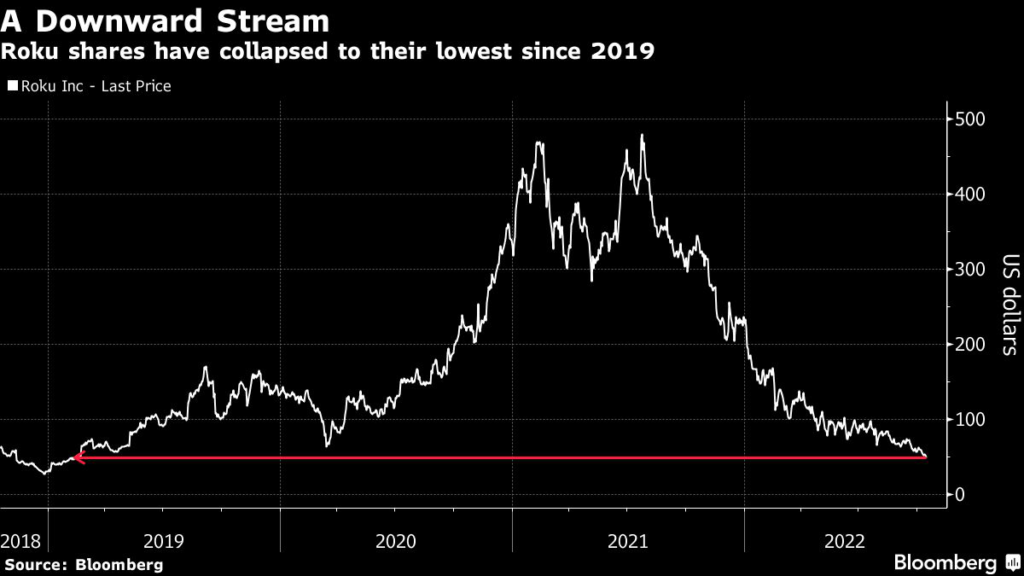
Shares in the platform for streaming services on Friday closed at their lowest level since February 2019 and have lost more than three quarters of their value since the start of 2022, the 12th-biggest drop in the Russell 1000 Index. While Netflix is up 36% since the market low in mid-June, Roku has lost about the same amount since then.

Roku shares rose 4.7% on Monday, participating in a broad rally for equities. Netflix shares advanced 3.1%. 

Netflix, which reports third-quarter results Tuesday, said last week it would charge subscribers $7 a month for the new ad-supported product, starting Nov. 3. The company’s standard service, without ads, costs $15.49 a month in the US. The move will give Netflix a new chunk of paying subscribers, plus a revenue source, advertising, that it previously had shunned.

Roku devices allow users to manage streaming services such as Netflix and Hulu. The company sells ads for its own Roku Channel and splits some ad inventory with other services. However, even if Netflix accelerates the shift to streaming as a destination for marketers, investors are skeptical it will be a meaningful catalyst for Roku.

“There’s an idea Roku could ride the coattails and see growth from ads on Netflix, but I don’t think this will have much impact on them,” said Jim Worden, chief investment officer of Wealth Consulting Group, which owns Netflix and Walt Disney Co. but sees the headwinds facing Roku as too severe for the stock to be attractive. 

“Even though it is trading well below where it was, it isn’t a screaming buy. This is a difficult market for any advertiser, and there are significant challenges facing Roku at a time when the environment has become much harder for unprofitable stocks.” 

The prospects for the highly cyclical ad market have weakened with the economy, a factor that has contributed to declines in bigger players like Alphabet Inc. and Meta Platforms Inc. Last quarter, Roku cited a slowdown in TV advertising when it gave a revenue forecast that sparked the biggest drop in the stock’s history.

It has also struggled as the Federal Reserve hikes interest rates to combat inflation, a change from the accommodative policies that drove a frenzy in high-growth stocks during the pandemic. Roku’s valuation has gone from a peak above $60 billion to $6.8 billion as investors dump unprofitable stocks in favor of cheap or dividend-paying companies. Roku closed Friday with a triple-digit multiple in terms of forward earnings, though with a multiple of 1.9 times estimated sales, compared with its five-year average of 8.7.

“Rates have become too appetizing to take a risk on a name like this, which might not be profitable for years and years,” said Brian Frank, chief investment officer of Frank Funds. “Roku didn’t have any business trading where it was, and if you think it is going back to those levels anytime soon, I think you’ll be unpleasantly surprised.”

Sentiment has soured dramatically. Analysts estimate Roku will report a loss of $3.06 a share this year, more than twice as wide as was expected three months. The consensus for revenue has come down 15% over the same period.

However, Roku continues to have a high-profile fan in Cathie Wood. Her ARK Investment Management is the second-largest holder of Roku shares, behind Vanguard, with the firm holding 8.4% of outstanding shares. 

According to the firm’s most recent research, ARK believes Roku shares could approach $605 during the next five years; it closed below $50 on Friday.

“Video advertising revenue is likely to be the most significant contributor to the company’s growth during the next five years,” it wrote, estimating that Roku’s revenue will increase 39% at an annual rate to reach $14 billion in 2026. 

Tech Chart of the Day

Tesla Inc. shares fell 7.6% on Friday, contributing to a selloff that has erased half the electric-vehicle company’s market value. The 50% drop from the record set in November represents the biggest drawdown for the shares since 2020. The stock is down 40% this year, compared with a 33% decline in the Nasdaq 100 Index. It rose 3.6% on Monday.

Top Tech Stories

  • The labor movement is gaining momentum at big tech companies, with an Apple Inc. store voting to unionize Friday and unrest spreading through Amazon.com Inc. distribution sites in Southern California. Organizers say it’s just the beginning.
    • Apple retail workers at a store in Oklahoma City voted to unionize, expanding labor’s foothold at the world’s most valuable company and raising the prospect of further gains in other cities.
    • Dozens of Amazon workers at a Southern California air hub walked off the job Friday demanding raises of $5 per hour and better working conditions, the latest sign of employee unrest for the online retailer.
  • Ye, formerly known as Kanye West, has agreed to buy Parler, a social media platform that has been embraced by conservatives who departed Twitter over allegations of political censorship.
  • Rupert Murdoch is exploring options to recombine his Fox Corp. and News Corp. businesses, putting back together a media empire that he split in 2013. The move would likely consolidate power in the hands of his son Lachlan, the chief executive officer of Fox.
  • Tesla Inc. says a retrial in a high-profile racial discrimination case should start from scratch with an ex-worker required to prove he was subject to abusive slurs at a company factory.
  • As Americans grapple with inflation, media companies are seeing steep increases in the cost of a valuable commodity: sports rights.
  • German drone developer Quantum-Systems GmbH has received $17.5 million in new funding from investors including US billionaire Peter Thiel and German firms Project A Ventures and Sanno Capital.

(Updates to include price moves through market open)

More stories like this are available on bloomberg.com

©2022 Bloomberg L.P.

Ye to Buy Controversial Social Networking App Parler

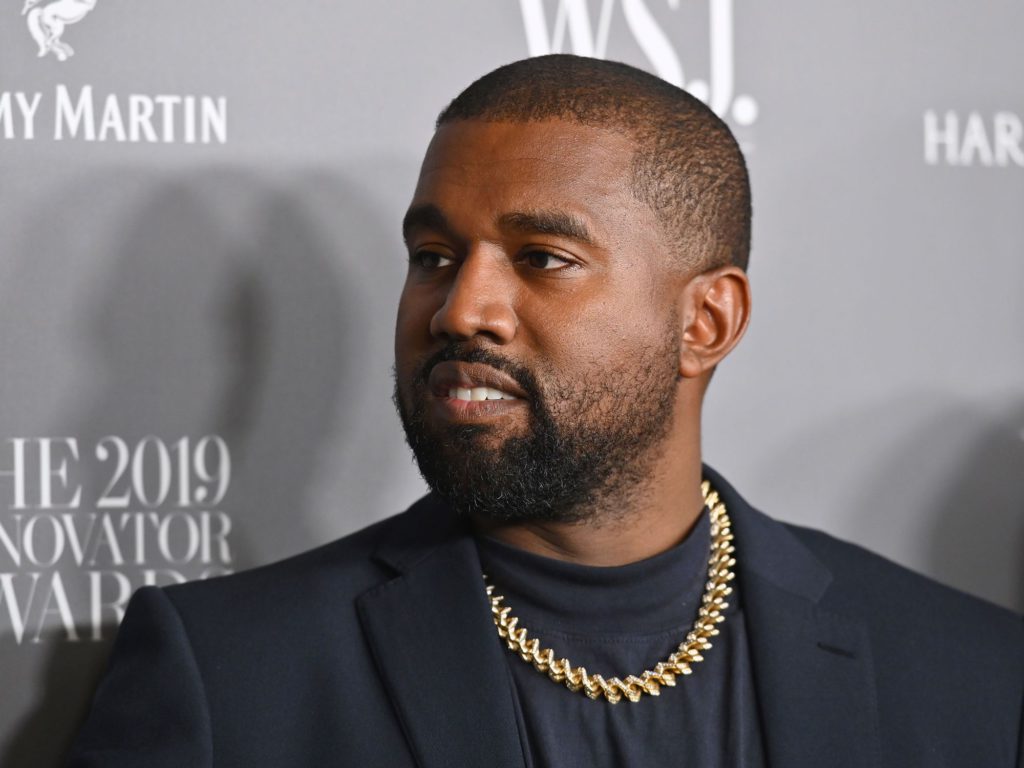
(Bloomberg) — Ye, formerly known as Kanye West, has agreed to buy Parler, a social media platform that has been embraced by conservatives who departed Twitter over allegations of political censorship.

Parlement Technologies, the parent company behind Parler, announced Monday that it plans to sell the social media platform to the hip-hop icon for an undisclosed amount. The deal would include technical support from Parlement, such as cloud services. 

Ye is buying his own social media platform at a time when the biggest tech firms are struggling with how to control and manage some of their largest users, and marks the continuing development of alternative social media sites.

“In a world where conservative opinions are considered to be controversial we have to make sure we have the right to freely express ourselves,” Ye said in a statement on Monday.

Ye has recently faced restrictions from the major social media platforms for breaking content policies. Twitter removed an antisemitic tweet from Ye last week and locked his accounts, just a day after he returned to the platform for the first time in nearly two years. Instagram has also deleted posts. 

Parler was also banned from the app stores of both Google and Apple Inc after violating their policies in January 2021 following the US Capitol insurrection. The app returned to the Apple platform in May 2021, but only returned to Google’s main app store last month.

Parler is among a growing group of so-called alt-media sites that aim to give conservatives a forum to share views they feel are silenced on mainstream outlets. But the platforms have struggled at times to fulfill their users’ expansive definition of free speech while complying with app store policies.

Last month, Rumble Inc., the conservative video network backed by billionaire Peter Thiel and venture capitalist and Republican Senate candidate J.D. Vance, became a publicly traded company through a deal with a blank-check firm. The shares rose as much as 40% during the company’s first day of trading and it is now worth $2.6 billion.

Tesla Inc. Chief Executive Officer Elon Musk, who welcomed the rapper back to Twitter just hours before Ye’s account was locked, has decided to proceed with his offer to purchase Twitter after months of back-and-forth negotiations. Musk has said he will prioritize free speech on Twitter and criticized its decision to ban individuals such as former President Donald Trump for violating its rules. 

Trump’s rival platform Truth Social has been available in the Apple App Store since February but has yet to launch in the Google Play store. 

Parler Chief Executive Officer George Farmer is married to Candace Owens, a conservative influencer, and is the son of Michael Farmer, who is the founder of metal trader Red Kite Capital Management, a member of the U.K’s House of Lords and former treasurer of the Conservative Party.

It is hard to gauge the early success of the alt-tech rivals to Instagram and Twitter. Parler was downloaded about 100,000 times according to data from Sensor Towner. In comparison, Instagram was downloaded about 57 million times. 

It is also unclear how Ye intends to finance the deal. An unaudited balance sheet of his finances reviewed by Bloomberg last year showed that he had $122 million in cash and stock, with billions more in other assets such as Yeezy. His Yeezy business made $191 million in royalties from a sneaker deal with Adidas in 2020, Bloomberg previously reported. 

However, the artist has also launched high profile fights via Instagram with his corporate partners, including Adidas and Gap. Ye has also recently caused controversy after wearing a shirt at Paris fashion week that said “White Lives Matter.”

Ye’s user profile on Parler, linked from the press release announcing the deal, was created on Monday and as of 11:30 BST had 91 followers.


(Additional context throughout)

More stories like this are available on bloomberg.com

©2022 Bloomberg L.P.

Stock Futures Signal S&P 500 Will Bounce From Rout: Markets Wrap

(Bloomberg) — Stock futures climbed after the S&P 500 breached a long-term technical level that has triggered rallies in the past, with investors sifting through corporate earnings and economic data.

In premarket trading, contracts signaled the US equity gauge would bounce back, following a close below the 200-week moving average. Bank of America Corp. gained after reporting its highest quarterly net interest income in at least a decade. Treasury yields dropped with the dollar. The pound and UK bonds rose as more of Prime Minister Liz Truss’s unfunded tax cuts were reversed.

Morgan Stanley’s long-time equities bear says US stocks are ripe for a short-term rally in the absence of an earnings capitulation or an official recession. A 25% slump in the S&P 500 this year has left it testing a “serious floor of support,” which could lead to a technical recovery, strategist Michael J. Wilson wrote.

A measure of New York state manufacturing contracted for a third month in October, and a larger share of factories were more downbeat about business conditions in early 2023. 

Key events this week:

  • US industrial production, NAHB housing market index, Tuesday
  • Fed’s Neel Kashkari speaks, Tuesday
  • Euro area CPI, Wednesday
  • EIA crude oil inventory report, Wednesday
  • US MBA mortgage applications, building permits, housing starts, Fed Beige Book, Wednesday
  • Fed’s Neel Kashkari, Charles Evans, James Bullard speak, Wednesday
  • US existing home sales, initial jobless claims, Conference Board leading index, Thursday
  • Euro area consumer confidence, Friday

Some of the main moves in markets:

Stocks

  • Futures on the S&P 500 rose 1.4% as of 8:53 a.m. New York time
  • Futures on the Nasdaq 100 rose 1.8%
  • Futures on the Dow Jones Industrial Average rose 1.1%
  • The Stoxx Europe 600 rose 1.4%
  • The MSCI World index rose 0.2%

Currencies

  • The Bloomberg Dollar Spot Index fell 0.5%
  • The euro rose 0.6% to $0.9779
  • The British pound rose 1.5% to $1.1340
  • The Japanese yen was little changed at 148.65 per dollar

Cryptocurrencies

  • Bitcoin rose 1.1% to $19,548.42
  • Ether rose 0.8% to $1,320.73

Bonds

  • The yield on 10-year Treasuries declined 10 basis points to 3.92%
  • Germany’s 10-year yield declined 11 basis points to 2.24%
  • Britain’s 10-year yield declined 40 basis points to 3.93%

Commodities

  • West Texas Intermediate crude rose 0.6% to $86.13 a barrel
  • Gold futures rose 1.4% to $1,672.50 an ounce

More stories like this are available on bloomberg.com

©2022 Bloomberg L.P.

Ukraine Latest: Kamikaze Drones Hit Kyiv; EU Ministers Meet

(Bloomberg) — Russia attacked Kyiv for the second time since last Monday, striking the city center with Iranian-made drones laden with explosives. Four people were killed and residential buildings damaged, local authorities said.

Foreign ministers of the European Union agreed to provide around 15,000 Ukrainians with training, including for combat, as soon as mid-November and signed off on an additional €500 million ($487 million) in weapons financing. They were due to discuss reports about Iran’s military support for Russia’s invasion, the bloc’s policy chief Josep Borrell said.

Russian President Vladimir Putin plans a security council meeting this week, state media reported. The group last met on Oct. 10, the day Moscow launched dozens of missile strikes across Ukraine. 

(See RSAN on the Bloomberg Terminal for the Russian Sanctions Dashboard.) 

Key Developments

  • Russia Hits Ukrainian Capital Kyiv With Kamikaze Drones
  • How Russian Ships Are Laundering Grain Stolen From Occupied Ukraine
  • Europe to Propose Dynamic Price Cap on Its Biggest Gas Exchange
  • Europe Gas Drops to 3-Month Low as EU Plans More Crisis Measures
  • Elon Musk’s Ego Muddies the War Effort: Lionel Laurent

On the Ground

Apart from the attack on Kyiv, an X-59 missile was fired from a Russian Su-35 aircraft from the direction of the Black Sea and hit an infrastructure facility in the Odesa region, Southern operational command said on Facebook. On Sunday, 14 Ukrainian civilians were killed by Russian attacks and another 15 were injured, Tymoshenko said on Telegram. Russia attacked the Mykolaiv region with explosive-laden drones late Sunday, hitting industrial infrastructure and a pharmaceutical warehouse, Ukraine’s southern operational command said on Facebook. 

(All times CET)

State-TV Journalist Who Protested War Left Russia, Lawyer Says

Marina Ovsyannikova, the state-TV journalist who gained international prominence by staging an anti-war protest on the country’s top news program, has left Russia with her daughter after fleeing house arrest, her lawyer said.

Ovsyannikova is “under the protection of a European country,” Dmitry Zkhvatov said, declining to specify where.

Put on Russia’s wanted list earlier this month, Ovsyannikova faced criminal charges under Russia’s new ‘fake news’ law for an anti-war protest held near the Kremlin over the summer. She had been fighting a custody battle with her ex-husband over their daughter. A Moscow court Monday ruled in favor of the husband in the case.

EU to Train Thousands of Ukrainians for Combat (2:20 p.m.)

The bloc will train around 12,000 Ukrainian personnel as well as conduct specialized training for another 2,800 Ukrainians as soon as mid-November. The mission’s mandate will initially last two years with a budget of more than 100 million euros, according to an EU statement.

Some of the training will take place in Poland, according to the EU’s foreign policy chief, Josep Borrell. The mission “is clear proof that the EU will stand by Ukraine for as long as is needed,” he said.

Georgia Questions Visa-Free Policy for Russians (2:10 p.m.)

The flow of Russians into Georgia is a “challenge” and may require a review of the visa-free regime, Georgian President Salome Zourabichvili said at a news conference in Moldova, where she held talks with Moldovan counterpart Maia Sandu.

“We may have to revise the visa regime, which is quite liberal in the current situation and may be less acceptable in the circumstances of this aggression” by Russia against Ukraine, though it’s for the government to decide policy, said Zourabichvili, whose role is largely ceremonial.

Nearly 70,000 Russians fled to Georgia last month after Putin announced a partial mobilization Sept. 21 to bolster his forces in Ukraine. Tens of thousands had already left Russia for Georgia in the weeks following Moscow’s Feb. 24 invasion.

Polish Company Helps Rebuild Infrastructure (12:45 p.m.)

Polish digital terrestrial television provider Emitel provided an additional 50 transmitters to Ukraine to help rebuild infrastructure damaged by Russian shelling, according to a company statement. Since May, Emitel, owned by U.K. fund Cordiant, is running a logistics point in eastern Ukraine where it helps to prepare equipment necessary to maintain broadcasting of TV and radio signals.

‘Partial Mobilization’ Completed in Moscow, Mayor Says (12:20 p.m.)

Sergey Sobyanin, the mayor of Moscow, said on his website Monday that a “partial mobilization” had been completed in Russia’s largest city, and that collection points for the drafted would be closed at 2 p.m. local time.

Putin ordered the call up Sept. 21, which aimed to draw 300,000 reservists. The mobilization has spurred an exodus of draft-age men from the country. Last Friday, Putin sought to reassure Russians by saying that the mobilization effort would wrap up in a couple of weeks and wouldn’t be extended. Several Russian regions have recently reported the first losses among the mobilized.

Ukraine Says Blackouts Happening as Power Targeted in Attacks (12:15 p.m.)

Electricity infrastructure in central and northern Ukraine was damaged by Russian attacks, national power grid operator Ukrenergo said in a statement on Facebook. The situation was currently under control and repairs were being made, but Ukrenergo did not rule out planned rolling blackouts.

Power supply in Lviv in western Ukraine is subject to rolling blackouts, regional governor Maksym Kozytskyi said on Telegram. Power consumption must be limited to avoid emergency blackouts. The Lviv region has cut consumption by 10% Oct. 12, Kozytskyi said.

Russian Drones Hit Sunflower Oil Terminal in Mykolayiv (11:54 a.m.)

Russian drones damaged two huge tanks each containing 7,500 tons of sunflower oil, with oil leaking onto the street, Ukrayinska Pravda reported citing local news site Novyny-N and the Mykolayiv region’s spokesperson Dmytro Pletenchuk. The terminal handled almost 17% of the world’s oil export, Pletenchuk said without giving details about ownership of the reservoirs.

Iran Becoming ‘Accomplice’ in War, Lithuanian Minister Says (11:26 a.m.) 

“Iran, with its drones and missiles, is becoming an accomplice in the war, in a similar fashion as Belarus,” Lithuanian foreign minister Gabrielius Landsbergis told reporters in Luxembourg, as his EU counterparts weigh whether to impose more sanctions on Iran after reports on alleged arms deliveries to Russia. Iran’s foreign ministry has denied exporting any weapons for use in the war in Ukraine.

EU Backs New Iran Sanctions Amid Worries Tehran Is Aiding Russia

Nuclear Plant Again Disconnected From Power Grid (10:57 a.m.)

Russian shelling of critical infrastructure facilities Monday damaged the last line connecting the Zaporizhzhia nuclear power plant to Ukraine’s power grid, Ukraine’s Energoatom reported on Telegram. “The back-up transformer used for the ZapNPP’s own needs turned off and the diesel generators started,” the regulator said. Fuel for the generators was delivered to the station last week.

“Such nuclear blackmail by a terrorist country should not go unanswered by the world community! Ukraine needs protection of the sky above its energy facilities!” Energy Minister Herman Halushchenko said on Facebook.

German Intelligence Expects More Russian Espionage (10:55 a.m.)

German intelligence services expect the fighting in Ukraine to continue next year and also warn of increasing Russian activities in Germany. “Putin feels threatened by the attractiveness of the Western social model of freedom and democracy in Ukraine and its neighboring countries,” Bruno Kahl, the head of the Foreign Intelligence Service BND, told a public hearing in Berlin. Putin will therefore continue to enforce his goals by military means. 

Intelligence experts also expect an increase in Russian espionage and subversive activities in Germany, said Thomas Haldenwang, the head of the domestic intelligence service BfV.

Iran Denies Exporting Any Weapons for Use in Ukraine War (10:10 a.m.)

Iran is not a party in Russia’s war on Ukraine and has made efforts to end the conflict, Foreign Ministry spokesman Nasser Kanaani tells reporters in Tehran.

EU Ministers to Back More Funding for Ukraine Weapons (10 a.m.)

EU foreign ministers are set to sign off on an additional 500 million euros in financing for weapons sent to Ukraine, bringing the total support under the so-called European Peace Facility up to 3.1 billion euros.

German Foreign Minister Annalena Baerbock told reporters before a meeting in Luxembourg it was important that ministers “are not just making clear that they’re standing with Ukraine, but that for all these measures we also bring the financial means.” She added they would agree on another 500 million euros through the facility and make sure Ukrainian soldiers get training.

Ukraine Shoots Down 37 Iranian Shahed Drones, Ministry Says (9:45 a.m.)

Ukrainian defense forces shot down 37 Iranian Shahed-136 drones and three cruise missiles launched by Russia in the past 13 hours, the Ukrainian defense ministry said on Twitter. Drone attacks on Monday, including on the capital Kyiv, were made from the south, Air Force Command said in statement on Facebook. Between 75% and 80% of all drones launched are downed, Air Force spokesman Yuriy Ihnat said on television.

“The enemy can attack our cities, but it won’t be able to break us,” Ukrainian President Volodymyr ZelenskiyThe occupiers will get only fair punishment and condemnation of future generations. And we will get victory.”

EU Foreign Ministers To Discuss Reports of Iran Support, Borrell Says (9:30 a.m.)

The EU’s foreign policy chief Borrell said the bloc’s foreign ministers would discuss reports about Iran’s military support for Russia in its war in Ukraine at their meeting in Luxembourg.

The ministers are set to sign off on sanctions against Iran over its violent crackdown on demonstrators protesting the death of a young Iranian women. Asked about Iran reportedly sending missiles, in addition to drones, to Russia and whether these warrant added sanctions, Borrell said “this is something that will be discussed.” He told reporters that “we will look for concrete evidence of the participation that Iran in the strongest possible terms denies.”

Jean Asselborn, Luxembourg’s foreign minister, said ahead of the meeting that the bloc may need to take measures against Iran over its deliveries to Russia but that “we’re not there yet” as the EU still needs to analyze the information.

Germany Doesn’t Expect Winter Lull in Fighting (9 a.m.)

German Defense Minister Christine Lambrecht said she’s not hopeful that the onset of winter will lead to a lull in the fighting in Ukraine.

“We mustn’t entertain the hope that calm will come,” Lambrecht said in an interview with public broadcaster ZDF. “We are seeing how Russia has changed its strategy in a very calculated way and is now attacking infrastructure and civilian targets,” she added. She promised Germany will supply Ukraine’s armed forces with equipment to help them cope with the colder conditions, including tents and power generators.


More stories like this are available on bloomberg.com

©2022 Bloomberg L.P.

Close Bitnami banner
Bitnami