Bloomberg

Verizon to Sell New Prepaid Wireless Internet Service at Walmart

(Bloomberg) — Verizon Communications Inc. enlisted Walmart Inc. to sell a pay-as-you-go home wireless internet service for $45 a month, marking the company’s second big product for the prepaid market in as many months.

The service will be sold under the Straight Talk Home Internet brand exclusively at Walmart stores in the coming weeks, according to a company announcement. The connection speeds will be capped at 100 Mbps and customers will need to purchase a $99 in-home router. 

As Bloomberg first reported, Verizon’s prepaid service will rival T-Mobile US Inc.’s $50-a-month Metro broadband that launched in March. The new offer will give cord-cutters and so-called cord-nevers another cheap way to access the internet at home without landlines. 

For years, Verizon largely ignored the prepaid market, but having fallen to the back of the three-carrier pack on traditional mobile-subscriber growth this year, the company has changed its approach. Verizon is now targeting customers with little or no credit history, like renters, students and people without bank accounts. 

Verizon became the largest prepaid mobile phone provider in the US last year when it bought Tracfone for $6.6 billion. Last month, in its first big push since that deal, Verizon unveiled Total, a prepaid brand to compete with Metro from T-Mobile and Cricket by AT&T Inc. 

More stories like this are available on bloomberg.com

©2022 Bloomberg L.P.

Mastercard Debuts Service Offering Crypto-Trading Tied to Bank Accounts

(Bloomberg) — Mastercard Inc. debuted a service that will let consumers buy and sell digital assets through their bank accounts, potentially paving the way for thousands of finance firms to offer crypto trading for the first time.

The product, called Crypto Source, will start in the US, Israel and Brazil early next year through a pilot program, Ajay Bhalla, Mastercard’s president of cyber and intelligence, said in an interview. He declined to say which banks would be the first to participate.

While banks have been warming up to crypto over the past few years, the vast majority have shied away from holding virtual currencies and offering them to their retail clients because of regulatory concerns. But with thousands of bank partners, Mastercard’s service could help cryptocurrencies gain more mainstream adoption. 

Being able to buy crypto “from your own bank where you have your bank account is a very big need from the market and something consumers want,” Bhalla said. 

Crypto Source will be offered through a partnership with digital-asset company Paxos Trust Co., which will provide virtual currency trading and custody services on behalf of the banks. That means lenders won’t be holding the assets on their balance sheets.

A rout in cryptocurrency markets has triggered a series of bankruptcies, layoffs and failures in the sector. The crash has wiped out almost $2 trillion from the market value of crypto, but hasn’t yet deterred large financial firms from offering products and services in the space. Late last month, for example, exchange operator Nasdaq Inc. said it would start offering digital assets custody services to its clients.

The new product is only Mastercard’s latest foray into cryptocurrencies. The company said in February it would hire more than 500 people this year as it expands its data and services unit, an effort that will include launching a consulting practice focused on crypto. 

Last year, the Purchase, New York-based company made it easier for banks to offer cryptocurrency rewards on their credit and debit cards by inking a deal with Bakkt. Mastercard also began allowing startups focused on crypto and digital assets to join its Start Path program, which gives fledgling companies access to the network’s executives and technology to help them grow. 

More stories like this are available on bloomberg.com

©2022 Bloomberg L.P.

Renault and Nissan Hold Daily Discussions as EVs Reshape Their Alliance

(Bloomberg) — Renault SA’s chairman said he’s bullish about the carmaker’s alliance with Japan’s Nissan Motor Co. as negotiations intensify on reshaping the two-decade partnership that’s been strained by an imbalanced ownership structure.

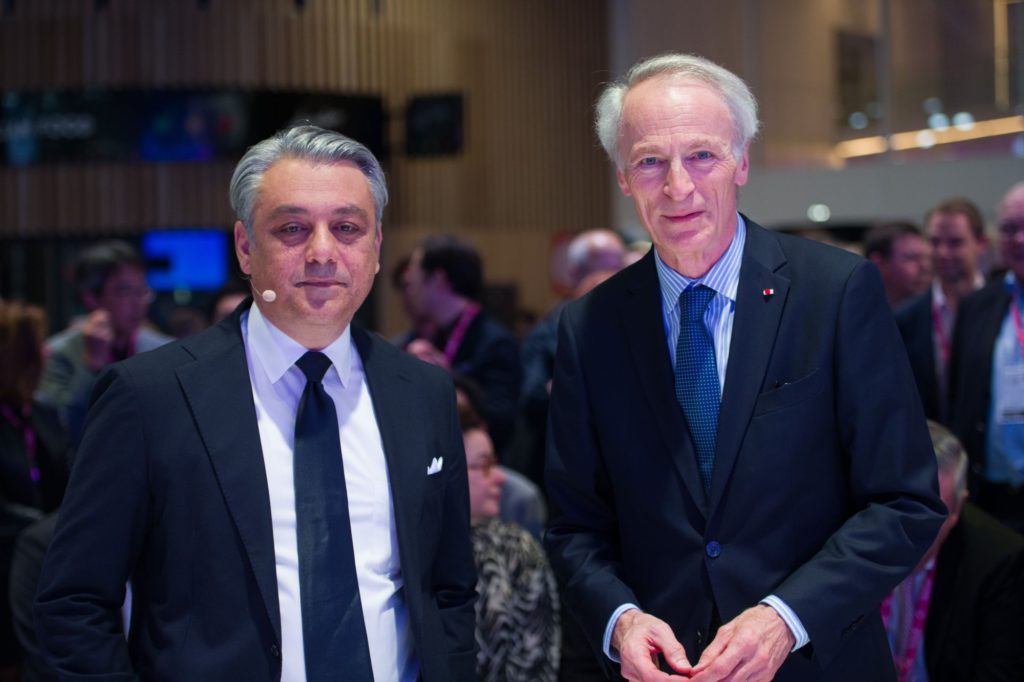
“We talk every day,” Jean-Dominique Senard said at the Paris car show on Monday, adding that representatives from Nissan and smaller partner Mitsubishi Motors Corp. currently are in France. “We have an incredibly close relationship.”

Renault’s push to carve out its electric-vehicle and combustion-engine businesses — a plan that requires Nissan’s nod — has sparked bargaining on common projects. The bid has also opened the door for updating the alliance’s cross-shareholding structure, a move that could alleviate an imbalance that’s been a source of friction for years.

READ: Renault and Nissan Inch Closer to a Power Imbalance Resolution

Nissan is willing to invest as much as $750 million in Renault’s EV business, Bloomberg reported last week. In exchange, the French manufacturer is open to paring its ownership of Nissan to 15% over time. Renault currently has a 43% stake in its bigger partner, with voting rights, while Nissan holds 15% of Renault and has no voting rights.

Renault rose 3.4% as of 1:34 p.m. in Paris. 

Talks have intensified in recent weeks as Renault gets closer to a Nov. 8 capital markets day, where Chief Executive Officer Luca de Meo is due to brief investors on strategy. Executives have discussed Renault’s carve-out plan and the future of the alliance during meetings in France and Japan since February. Representatives from Renault will soon travel to Japan again, Senard said.

Renault, Nissan and Mitsubishi presented a €23 billion ($22.4 billion) electrification plan in January that indicated the partnership may have staying power in the face of their costly and complicated transitions away from the internal combustion engine.

Any decision Renault makes also will have to be approved by the French government, which owns about 15% in the carmaker.

“We are extremely close and transparent with the French government” about the alliance talks, Senard told reporters.

(Updates with shares in fifth paragraph.)

More stories like this are available on bloomberg.com

©2022 Bloomberg L.P.

Lachlan Murdoch Would Consolidate Power in News Corp. Deal

(Bloomberg) — Rupert Murdoch wants to combine News Corp. and Fox Corp., recreating the conservative-leaning media goliath that he split apart nine years ago. The move would likely consolidate power in the hands of his son Lachlan, currently the chief executive officer of Fox.

So far none of the Murdoch clan, which includes Rupert’s six children, have spoken publicly about the deal, which the companies acknowledged was in the works on Friday. Rupert’s son James Murdoch, a former executive at the family media empire, resigned from the News Corp. board in 2020, citing disagreements over news judgment and strategy.

The proposed recombination would reunite the parent of Fox News with that of the Wall Street Journal and the New York Post, saving the Murdochs money by not having to run two separate companies. It also would allow the bigger entity to more easily promote new businesses, such as sports betting, across multiple media outlets, according to people familiar with Rupert and Lachlan’s thinking. 

Rupert Murdoch and his family trust, which controls about 40% of the voting stock at both companies, proposed the combination to their respective boards. A majority of the non-family shareholders would have to approve, and that could give an opportunity for anyone opposed to the deal to speak out.

Rupert Murdoch wants to put media empire back together

Lachlan is the favorite to eventually control the entire Murdoch empire. James, whatever misgivings he may have about the organization’s politics, wouldn’t be able to do much to stop the consolidation if he wanted to. But as a prominent family member, his opinion could carry weight with shareholders. James Murdoch declined to comment. 

Deal Skepticism

Not everyone thinks reuniting the companies is a great idea. Kannan Venkateshwar, an analyst with Barclays Plc., said in a research note Sunday that he found the proposal a “head-scratcher.” Neither company has businesses that are all that complementary to each other, he wrote.

Plus, the deal is unlikely to change what has been an historical discount placed on the Murdoch media empire, relative to peers, he wrote. Both companies are trading at a bit more than six times their 2023 earnings before interest, taxes, depreciation and amortization.

Separately, Irenic Capital Management favors a break up of News Corp.’s media and real estate listings businesses, according to a person familiar with the matter, confirming a report in the New York Times Sunday evening. The activist fund holds a $150 million stake in the company and is one of the 10 largest holders of its Class B shares.

Irenic and its partners have engaged with the Murdoch family and believe that splitting up News Corp. could unlock value, contending that the company is trading at a significant discount to a sum-of-the-parts valuation that should be about $34 a share, the person said. 

Fox’s Class A shares slipped 4.1% to $30.25 as of 7:30 a.m. in New York trading. They had fallen 15% for the year through Oct. 14, while News Corp. had dropped 30% to $15.60.

Irenic is prepared to oppose a transaction that undervalues News Corp., the person added. 

Venkateshwar at Barclays compared the transaction to the Redstone family’s remerger of Viacom Inc. and CBS Corp., which he said hasn’t added much value.

“There is likely to be some investor consternation about the thought process behind any combination of the two companies and the knee-jerk investor reaction is likely to be negative,” Venkateshwar wrote.

At MoffettNathanson, analysts Robert Fishman and Michael Nathanson said they too were left “scratching our head” by the plan. “We do not believe in sum-of-the-parts stories and combining Fox with News Corp.’s assortment of assets likely won’t lead to any reset valuation and will even more likely complicate the narrative for investors,” they wrote Sunday. Fox as a standalone asset has a clear focus, they wrote.

While combining the two is “not an overly obvious transaction,” analysts at Wells Fargo & Co. said merging the two companies could deliver synergies in content and programming. UBS Group AG also noted that News Corp.’s US divisions such as Dow Jones and the New York Post may benefit from cross promotion with Fox’s television businesses, while there could be potential synergies with Fox’s cable network division. 

“If we’ve learned one thing from analyzing Murdoch assets historically, it’s that the family looks to maximize value and is not emotionally tied to any properties,” Wells Fargo analysts including Steven Cahall and Wojtek Majerczak wrote in a note Sunday. 

Patriarch’s Power

Rupert Murdoch, 91, usually gets his way in the business he began building seven decades ago. He serves as chairman of Fox and executive chairman of News Corp. He also has the biggest share of votes on the family trust, which includes a say for his four eldest children, Lachlan; James; and two daughters, Prudence and Elisabeth.

Special committees of independent directors will explore possible terms and there’s no certainty a deal will be made.

The family’s internal squabbles, which served as inspiration for the HBO series “Succession,” have been well chronicled.

James and his wife, Kathryn, have been critical of the media empire’s coverage of issues such as climate change. Kathryn sits on the board of the 19th, a news organization devoted to women’s issues and public policy, and they’ve helped fund the Bulwark, an anti-Trump conservative news outlet. They are also big donors to Democratic candidates.

Lachlan, meanwhile, defended the split-up of the two companies in a 2019 presentation to investors. He said the spit allowed the company to return to its roots as an “agile, imaginative, entrepreneurial, sometimes contrarian company.” He even went so far to say as he “could see no logic in reversing the benefits of those defining actions.”

His thinking has changed, according to people familiar with the company’s plans. The media landscape has shifted with more consumers viewing content online. Fox and News Corp. have both grown their digital offerings in recent years and Lachlan has the view that he can use both the traditional and new media to launch and promote businesses in the future.

(Updates with premarket trading in 10th paragraph.)

More stories like this are available on bloomberg.com

©2022 Bloomberg L.P.

Divisive Startup Kingpin Doubles Down on EVs to Undercut Musk

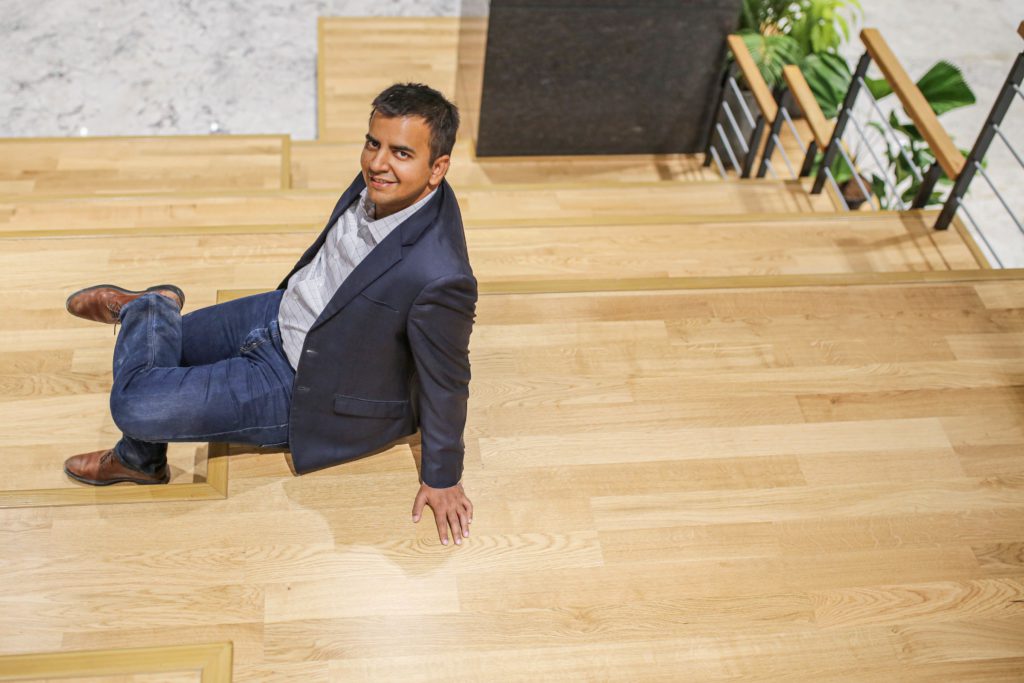
(Bloomberg) — When Bhavish Aggarwal arrived for a recent visit at the Ola Futurefactory, marketed as the world’s largest electric two-wheeler plant, the company’s founder was quick to spot a shuttered entryway that should have been left open. He immediately summoned a custodial manager, people who were present said, and meted out a punishment: run three laps around the several-acre-large plant.

Such an unsparing attitude has made Aggarwal, 37, one of India’s most determined entrepreneurs but also one of its most divisive. In his twenties, the founder of India’s largest ride-sharing company held off deep-pocketed rival Uber to remain the country’s top brand. Now, Aggarwal wants his Ola Electric Mobility Pvt Ltd to displace Elon Musk’s Tesla Inc and China’s BYD Co. as the industry leader for electric vehicles by carving out a niche in lower cost designs.

But Aggarwal’s relentless pace and management style have vexed some managers and board members at Ola Electric, raising concerns about safety and the business model, according to interviews with more than two dozen former and current employees, who asked for anonymity out of concern for reprisals. Supply chain problems have delayed two-wheelers. Sales have slowed. Some customers complain that scooters catch on fire, have faulty batteries or accident-causing software, spurring product recalls and apologies on Twitter. Around three dozen senior executives working across Aggarwal’s two billion-dollar companies — Ola Electric and ANI Technologies Pvt, which runs Ola’s ride-hailing operations — have quit within a year or two of joining, a higher turnover rate than peers.

Late last year, as internal challenges mounted and the global investment climate cooled, Aggarwal paused an initial public offering plan for ANI Technologies, which was last valued at $7.5 billion according to researcher CB Insights. Now, as question marks hang over Ola Electric, multiple current and past executives said in interviews that the company and its risk-taking founder are at a crossroads: Aggarwal could become India’s answer to Elon Musk or he could collapse under the weight of his own ambitious vision.

“Passions and emotions run high and we are not on an easy journey,” Aggarwal said in an interview last month at Ola Electric’s swanky headquarters in Bengaluru, occasionally petting the three office dogs: Happy, Husky and Fatty. “But I don’t want to choose an easier journey for myself or for Ola. My anger, my frustration — that’s me as a whole.”

Aggarwal’s mission has promise. India is already the world’s largest manufacturer of two-wheelers and the biggest global market. With blue-chip investors and sovereign funds looking for alternatives to China, the country’s success in building affordable vehicles could provide a model for how developing economies can scrap combustion engines and lower emissions without costly electric cars. In India, government subsidies and inexpensive labor are helping make EVs as cheap as or cheaper than internal-combustion-engine models. 

“The cheapest Tesla costs $50,000, which most of the world cannot afford,” Aggarwal said. “We’ve a chance to lead the EV revolution with a different set of options priced between $1,000 and $50,000.”

India’s EV market is expected to reach more than $150 billion by the end of the decade, or roughly 400 times its current size, according to Research and Markets. Just a few months after Ola’s electric two-wheeler hit the market last December, Aggarwal started tweeting teasing glimpses of the company’s car design and a new battery innovation center. He has zealously pushed to upend India’s tradition-bound automobile industry, which for decades has been dominated by conglomerates like Tata and Mahindra. 

“By seeking to pull off something big in the EV industry, Bhavish Aggarwal aspires for the world stage,” said Neha Singh, co-founder of Tracxn Technologies, a Bengaluru-based firm that tracks startups. However, after some initial success, “Ola still has to cover a huge distance to make electric vehicles a mass market in India.”

In the Bloomberg interview, Aggarwal said he wants to build companies with lasting impact, even if that means rubbing some people the wrong way. He said India can surpass rivals not just by making cheaper EVs, but also by cultivating a global footprint in 5G, green energy and sustainable mobility. Progress in achieving those goals, he said, is “the yardstick the world should judge us by.”

“There’s no major success without sweat and tears,” he said.

A ‘Quick Learner’

Aggarwal started his business career more than a decade ago in ride-sharing.

After completing an engineering degree and a stint at Microsoft Corp., he founded Ola in 2010 with Ankit Bhati, a classmate at the premier Indian Institute of Technology Mumbai. The company, incorporated as ANI Technologies Pvt, originally provided cabs for tour groups, but soon pivoted to ride-hailing. At that time, most Indians relied on spotty neighborhood cab services.

TVG Krishnamurthy, 78, a board member of ANI Technologies, called Aggarwal a “quick learner” with the unique ability to “focus at once on the grass growing on the ground and the flowers at the top of the tree.”

“One Sunday, we were chatting and he asked, ‘What would Ola’s share be in all of mobility in India?’” Krishnamurthy said, recalling a decade-old conversation with Aggarwal. “He started marking the percentage share on the back of his bathroom door.”

Business flourished as urban Indians quickly adopted the service for commuting or running errands. When global rival Uber Technologies Inc. started operations in India in 2013, Aggarwal encouraged Ola’s workers to try to outsmart the Silicon Valley company on every front — prioritizing outreach to government officials, public relations blitzes and support services for drivers.

Former employees said the startup was an exciting place to work at that time. Ola enlisted more than a million drivers and expanded to dozens of cities. At the end of 2014, Uber’s India operation was set back by a gruesome crime in which a driver was arrested and later convicted of raping a passenger. At the same time, Ola steadily grew its market share. The company attracted investors from Temasek and Warburg Pincus and expanded internationally to the UK, Australia and New Zealand.

But by that point, a rift was widening within Ola, executives said in interviews. In 2017, Aggarwal founded Ola Electric and began exploring the capital-intensive business of making EVs. While he used the Ola brand for his new venture, the business was completely separate. Co-founder Bhati and nearly all early investors in ANI Technologies weren’t part of the new company.

“I thought it isn’t fair to burden others when we’re going into a very different business with capital intensity, debt profile and capability,” Aggarwal said in the Bloomberg interview. “That’s why investors were given a chance to opt-out. Whoever felt they wanted to invest has invested.”

Building the Futurefactory

By 2020, Aggarwal was spending much of his time building Ola Electric. Typically, EV companies take at least a few years to make. Aggarwal wanted to cut that timetable to compete against local rivals such as the Bengaluru-based Ather Energy, which spent several years developing a battery and months making quality checks on 100 initial scooters before mass-producing its design.

Aggarwal devised a much shorter schedule. In March 2021, he stood on a barren stretch of land three hours outside Bengaluru, describing at a media gathering dreams to build a $330 million two-wheeler plant with a capacity of two million electric scooters in a matter of months. Aggarwal planned for ten lines with an annual capacity of 10 million scooters over two years. He hoped to export the vehicles to Europe and Latin America.

Six months later, the Futurefactory opened. By the end of 2021, the company’s first scooter hit the market.

Rather than employing a dealership model, Ola Electric reached buyers through social media, a tactic no automaker had attempted before. Ola Electric’s manufacturing process used innovative technology, including ultrasonic friction-welding to forge hundreds of connections between cells in each battery pack. During tours of the factory, Aggarwal liked to show off the noise-free assembly lines and robots that painted the scooters.

But it didn’t take long for complaints to pile up on social media. Aggarwal and Ola Electric’s Twitter feeds are filled with buyers upset about delivery delays, overheating batteries and scooters that catch fire. When Aggarwal recently asked his Twitter followers what cool scooter accessories they wanted, one responded, “Fire extinguisher.”

Inside Ola Electric, employees said the culture has turned hostile over the last couple of years. In meetings, Aggarwal ripped up presentations because of a missing page number, directed Punjabi epithets at staff and called teams “useless,” according to current and former employees. Executives said in interviews that meetings scheduled for an hour often lasted 10 minutes because Aggarwal would lose patience over a superfluous sentence in a memo, a crooked paper clip or the quality of printing paper.

Retention was a problem, particularly at the C-suite level. Some executives, including Zilingo’s former chief financial officer Ramesh Bafna, decided not to join Ola Electric days after formally accepting employment offers. One business head, who has since departed the company, likened expectations at Ola Electric to “having to run a marathon like Usain Bolt,” the world’s greatest sprinter.

“Not everybody is a fit for our culture,” Aggarwal said when asked about his management style. “There’s no world standard on an even, sterile work environment.”

Bafna declined to comment.

Taking on the ‘Big Boys Club’

So far, the boards of both companies, which comprise the likes of SoftBank Group Corp., have said little in meetings about Aggarwal’s approach to governance. But in interviews, some top executives who’ve since departed raised concerns about the ethics of a share-swap deal with a startup founded by Aggarwal’s younger brother, Ankush, who now heads Ola Electric’s financial services unit.

There are also questions about valuation. Last year, as ANI Technologies prepared for an IPO, investors Warburg Pincus and Temasek Pte partook in a secondary transaction, causing the valuation to fall from around $6 billion to $3 billion, according to three people aware of the matter. They said early investors felt cheated. But only a few months later, after the company pulled together a series of deals for a primary round with investors including Edelweiss, ANI Technologies’ valuation soared to $7.3 billion.

Ola didn’t respond to questions about the acquisition or valuation swings. In the Bloomberg interview, Aggarwal didn’t directly address either issue but attributed some of the scrutiny to jealous rivals.

“The incumbents in the auto industry are the Big Boys Club,” he said. “They left the door open for an upstart like me. My question back to them is, ‘What were they doing? Why is India not leading electrification of vehicles?’”

Ola Electric’s business challenges have become clearer in recent months. Scooter sales have yet to take off. Vehicle registrations fell 35% in July compared with June, according to Business Standard newspaper. Ola Electric sold a little over 45,000 units by July of this year based on vehicle registration data — far less than what the factory can produce and below the 1 million reservations received when booking opened last December.

Ola’s ride-hailing unit added food delivery and quick commerce businesses, among others, only to shut the last of them down in recent months and shed hundreds of workers.

Still, after supply chain disruptions and maintenance issues, Aggarwal said production is now rising at the Futurefactory. He pointed to Ola Electric’s unique advantages, including an end-to-end play in ride-sharing, auto retail financing and insurance of vehicles. At a company event in mid-August to unveil its electric car, Ola Electric branded itself “India’s largest” EV company making the “world’s best” electric scooter.

Whether Ola Electric succeeds or not, Aggarwal’s admirers seem to agree that he has turbo-charged the EV market, pulling in millions of investment dollars. Despite the risks, Aggarwal said he prefers to take the long view and push ahead with a lofty goal: to build millions of affordable vehicles for India and, eventually, the world.

“Growing up, we constantly heard that India is a developing country,” he said. “It’s our generation’s destiny to change this and now is the time. I take both the responsibility and the opportunity seriously.”

(Updates with details about Ola’s business operations.)

More stories like this are available on bloomberg.com

©2022 Bloomberg L.P.

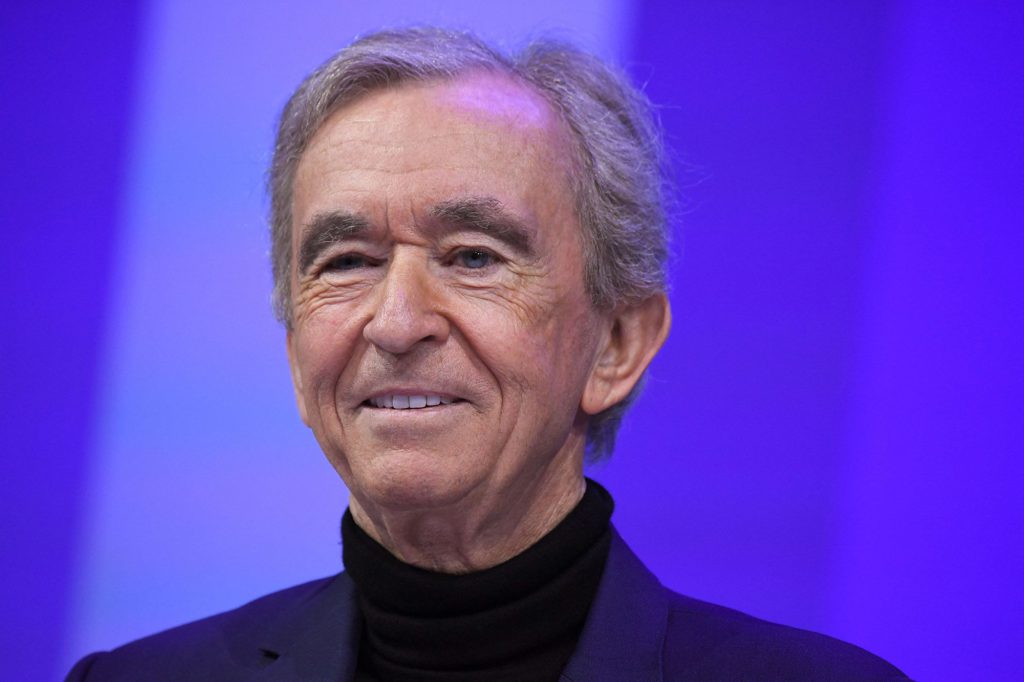
Bernard Arnault Flies Below Twitter Radar After Private Jet Sale

(Bloomberg) — The world’s second-richest man has had enough of the Twitterverse tracking his every move in his private plane. 

Bernard Arnault’s luxury-goods company LVMH sold its private jet, he said Monday on Radio Classique. Accounts such as I Fly Bernard and Bernard’s Airplane had sprung up on Twitter to track the planes of French billionaires and to point out the pollution they cause. The subject became a hot topic in France over the summer, with some politicians proposing to ban or tax private jets.

One of the Twitter accounts bemoaned the fact that the LVMH jet had ceased to be registered in France. 

“Still no word from either Bernard Arnault or LVMH on the subject of private jets,” Bernard’s Airplane wrote on Sept. 10. “So Bernard, are you hiding?”

“Indeed, with all these stories, the group had a plane and we sold it,” Arnault said on the LVMH-owned radio station. “The result now is that no one can see where I go because I rent planes when I use private planes.”

Arnault has a net worth of almost $133 billion, surpassing Amazon.com Inc.’s Jeff Bezos as the world’s second-richest man, according to the Bloomberg Billionaires Index.

His son, Antoine Arnault, defended the use of private jets on a television show last week. “This plane is a work tool,” he said on France 5’s C à Vous. “Our industry is hyper-competitive,” and a private plane gives executives an edge in the race to be first to a new product or deal, he said. LVMH sold its plane over the summer, he said.

In the radio interview Monday alongside his father, the younger Arnault said there’s another business reason for keeping the company’s travels secret.

“It’s not very good that our competitors can know where we are at any moment,” he said. “That can give ideas, it can also give leads, clues.”

More stories like this are available on bloomberg.com

©2022 Bloomberg L.P.
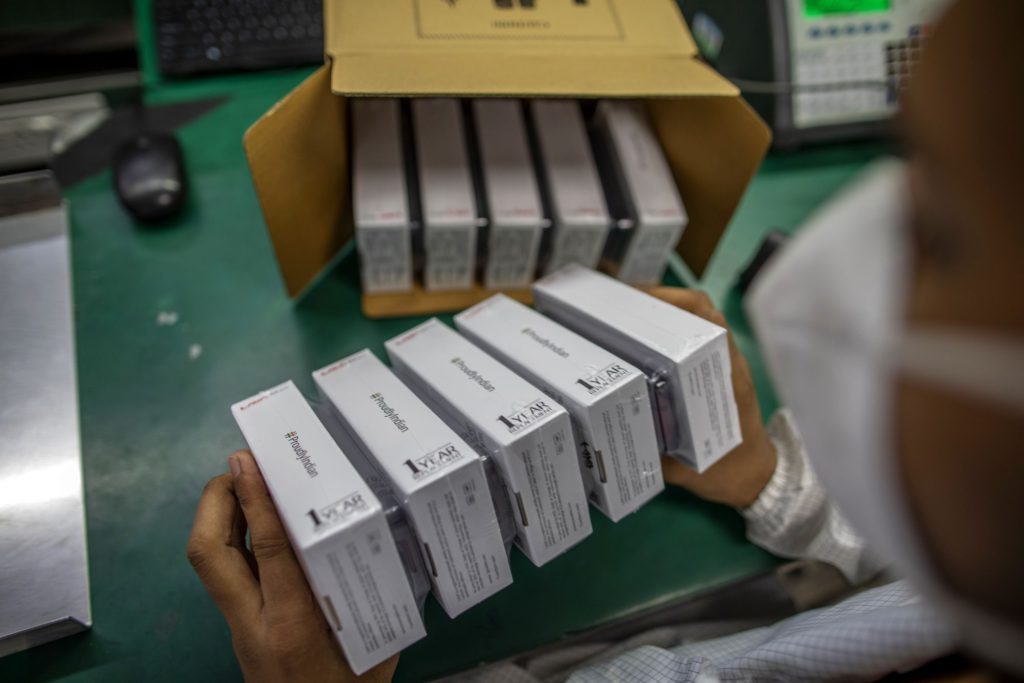
Smartphone Maker Lava Eyes India Venture With Chinese Partner

(Bloomberg) — Indian smartphone maker Lava International Ltd. is in advanced talks with China’s Huaqin Technology Co. to create an electronics manufacturing venture in the South Asian nation.

The venture would aim to win contracts from US and Chinese customers for research and development, design, and manufacturing of electronics products, according to a letter from Lava to India’s technology ministry seen by Bloomberg News. Talks for the partnership are close to being completed, according to the letter.

The pact would give the closely held companies heft as they seek to take on rivals such as Foxconn Technology Group. The Taiwanese giant, which assembles phones for Apple Inc., is among electronics companies that have built out production capacity in India to diversify beyond China and take advantage of incentives that are part of Prime Minister Narendra Modi’s aspirations to make India a manufacturing hub.

Shanghai-based Huaqin, with more than 33,000 employees and sales topping $13 billion last year, designs and makes smartphones, laptops, tablets and smartwatches for customers including Vivo, Xiaomi Corp., Samsung Electronics Co., Lenovo Group Ltd., Amazon.com Inc. and Acer Inc. A partnership with Lava would give Huaqin deeper access to one of the world’s fastest-growing major electronics markets that has an abundance of labor cheaper than that in China. For Lava, the pact would bring in much-needed capital and expertise as the company seeks to become a formidable electronics player.

The venture would employ more than 100,000 people and “put India on the global map for design, supply chain and manufacturing,” Lava said in the letter. “It would help bring the supply chain ecosystem & much needed skills and technology to India.”

Representatives for Lava, Huaqin and the Indian technology ministry didn’t respond to emails seeking comment.

A partnership agreement hasn’t been completed as details such as shareholdings are being finalized, people familiar with the matter said, asking not to be named as the plan isn’t public. While the venture will be closely scrutinized by the Indian government, it is likely to win approval because it would elevate the country’s status as an electronics manufacturing hub and doesn’t threaten national security, the people said.

A bloody skirmish between India and China on a disputed Himalayan border in 2020 has led to a frosty relationship between the two nuclear-armed neighbors. New Delhi has subjected Chinese firms operating in the country, such as Xiaomi and rivals Oppo and Vivo, to close scrutiny of their finances, which has led to tax demands and money laundering allegations.

The government has also used unofficial means to ban Huawei Technologies Co. and ZTE Corp. telecom equipment. While there’s no official policy prohibiting Chinese networking gear, wireless carriers are encouraged to purchase alternatives. India is also seeking to restrict Chinese smartphone makers from selling devices cheaper than 12,000 rupees ($146) to kickstart its faltering domestic industry, people familiar with the matter have said.

The Lava-Huaqin venture would have an advantage over other Chinese manufacturers by its association with a domestic producer.

More stories like this are available on bloomberg.com

©2022 Bloomberg L.P.
Ethiopia Plans to Take Control of Tigray Airports, Federal Sites

(Bloomberg) — Ethiopia’s government said it plans to take control of aiports and other federal government facilities in the northern Tigray region to safeguard the nation’s territorial integrity.

The government also warned civilians and humanitarian organizations to stay away from Tigray People’s Liberation Front military assets in the region, according to a statement posted on the Government Communication Service’s Twitter account on Monday.

More stories like this are available on bloomberg.com

©2022 Bloomberg L.P.
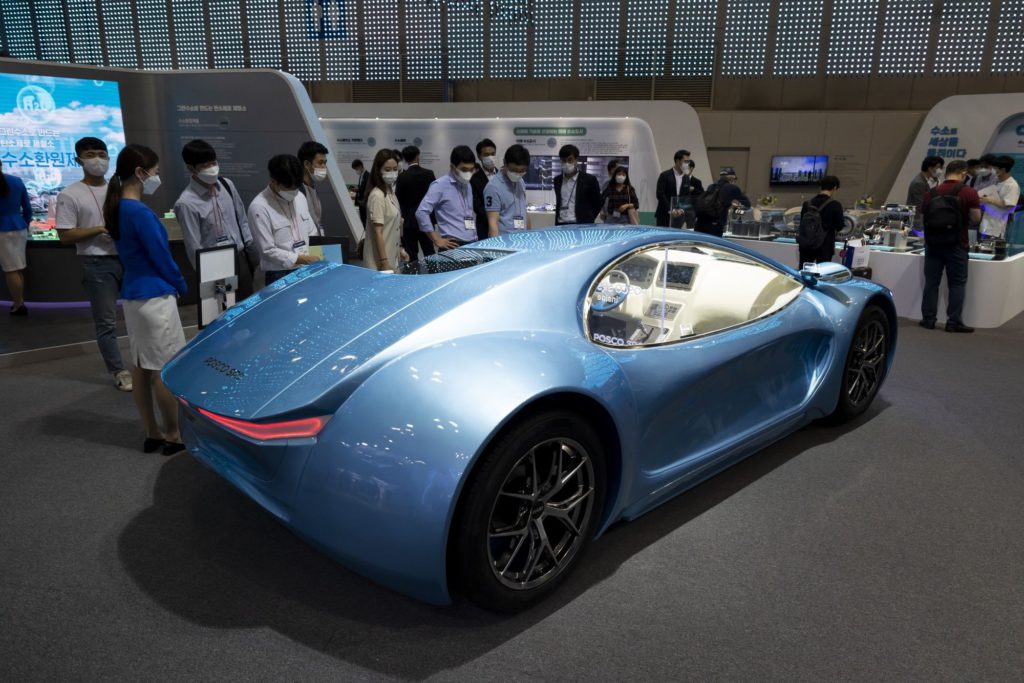
Posco’s Bold Battery Materials Push Dimmed by New US Energy Bill

(Bloomberg) — It’s almost two years since South Korea’s Posco Group began expanding in earnest into the battery raw materials business as part of plan to play a greater role in the supply chain for cleaner cars.

By 2030, the Seoul-based steel giant forecasts it will have production capacity of around 605,000 tons for cathode-active materials, 322,000 tons for anode materials, 300,000 tons for lithium and 220,000 tons for nickel.

To that end, it’s made some bold investments, including building a nickel refinery at home, buying mining rights to a salt lake with lithium deposits in Argentina, constructing a battery recycling plant in Poland and snapping up a stake in a graphite mine in Tanzania.

Bloomberg sat down with the vice president of Posco’s lithium business strategy, Park Kwang-Seok, who said the company was looking extensively for lithium reserves in US, “even the low-grade ones we didn’t glance at previously.”

President Joe Biden’s Inflation Reduction Act, which requires EV makers secure battery minerals from countries with free trade agreements with the US in order to be eligible for a $7,500-a-car subsidy, is also high on Park’s mind. Here’s an edited transcript of the interview.

What is Posco’s overriding strategy when it comes to battery materials?

We have a goal to build a full value chain in mining and upstream for EV battery minerals, from securing the rocks to manufacturing cathode-active and anode materials and then onto battery recycling. We believe we’re the only company in the world to have such an ecosystem.

What’s your technology around lithium refining? 

We focus on extracting lithium from rocks or lakes at higher yields than rivals can. In terms of ESG, we use less water when extracting lithium from lakes. Using less water is important because many of these lithium lakes are located in high mountainous areas where local residents need that water. 

Posco bought a lithium lake in Argentina but the country doesn’t have a free trade agreement with the US. Is this a concern for you?

We don’t think the IRA is fixed yet. We expect more details to come in November or December and we might need to revise our strategy after that. One thing we’re considering to meet the current requirements would be bringing lithium from Argentina to Korea, producing lithium hydroxide there and then exporting it to the US, because Korea has a free trade agreement with the US.

One thing we are worried about the IRA is that most of the countries that have natural resources don’t have FTAs with the US. It’s only Australia, Chile and Canada. Chile imposes an up to 20% royalty on mining, compared to about 3% in Argentina. However companies are making a lot of suggestions and I think the US will listen to them and make a wise decision. Depending on the details, the IRA can be an opportunity for us. 

Do you think the IRA will have an impact on your joint ventures with Chinese companies, like Huayou Cobalt? (Posco last year outlined plans to set up a recycling business for lithium-ion batteries with Huayou Cobalt. The pair already have a 65:35 JV called Posco Hy Clean Metal.)

Huayou is a private company in China, not a state-run firm, and I’m not sure the IRA will affect private firms. 

What’s the most difficult thing about being in the battery minerals business?

Securing minerals. It’s not something you can do with only money, or technology. You need support from your government and industry players that are reliable. We have Zoom meetings with mining companies every day, day and night. As a steelmaker, Posco has a pretty good reputation, everyone knows we don’t suddenly delay or scrap deals. But the competition is pretty tough and mining companies want deals on better terms for them. We’re also hoping South Korea signs an FTA with [South American trade bloc] Mercosur, which would be a great opportunity for Posco.

 What’s your forecast for lithium prices? 

Prices can climb further to around $80,000 per ton, but they won’t go higher as more supply will come online. Posco is looking at low-grade lithium sources, which we haven’t before. Battery recycling can also cover about 20% to 30% of the demand for lithium by end of this decade, when we expect lithium prices to fall to around $30,000. 

Do high inflation and a weaker Korean won hinder your investment plans in the US and abroad at all? 

We always have to think about the economics and cost efficiencies of our projects. We’re preparing hedging plans around the weak won because our overseas investments are made in US dollars.

More stories like this are available on bloomberg.com

©2022 Bloomberg L.P.

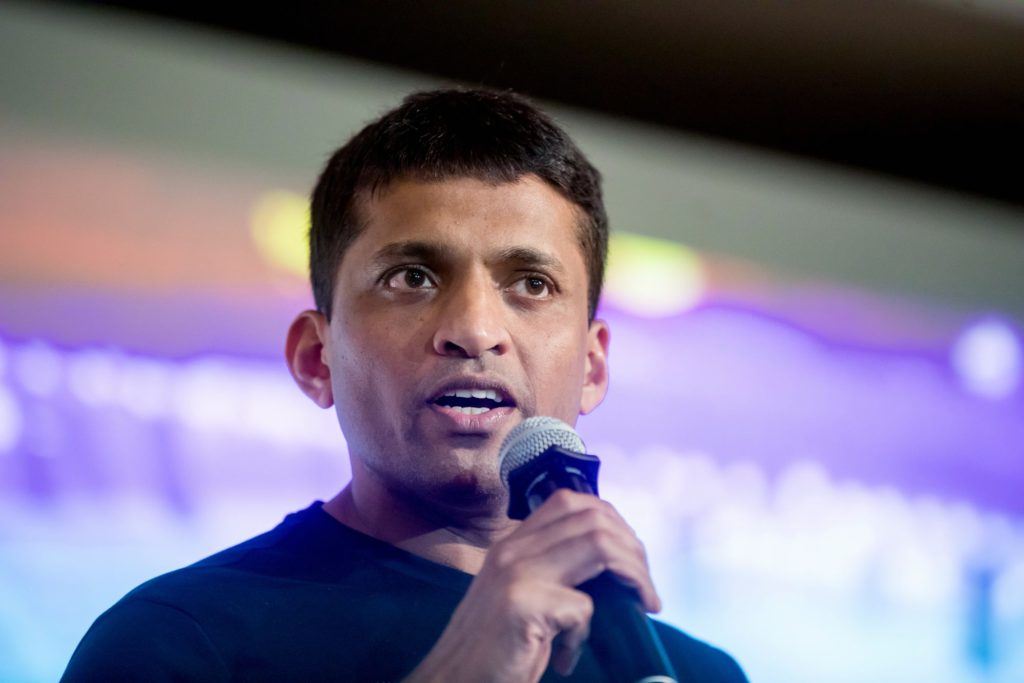
Byju’s Raises $250 Million From Backers to Aid Restructuring

(Bloomberg) — Indian edtech Byju’s said it has raised $250 million from existing investors led by the sovereign wealth fund Qatar Investment Authority, days after announcing job cuts in a bid to slash costs. 

The fundraising keeps Byju’s valuation of $22 billion and its status as India’s most valuable startup, with the bulk of the capital coming from the Qatar fund, a person familiar with the deal said on Monday, asking not to be named as those details are private.

Backed by the Chan Zuckerberg Initiative, General Atlantic and Tiger Global, Byju’s — formally known as Think & Learn Pvt — has raised billions of dollars in capital to finance a global acquisition spree in the face of a tech downturn worldwide. The company, which has 150 million users, has since been plagued by challenges including a long-delayed filing of audited financial statements and a truncated fundraising this year.

The company last month filed its audited financial results for the year ending March 2021 showing steep losses. Last week, the company said it would shed 2,500 workers or about 5% of its total workforce and lower its marketing and sales costs, pledging to become profitable by March. 

The company will use the fresh capital to help it become profitable, founder Byju Raveendran said in a statement. “Regardless of the adverse macroeconomic conditions, 2022-23 is set to be our best year in terms of revenue, growth and profitability.” 

More stories like this are available on bloomberg.com

©2022 Bloomberg L.P.
Close Bitnami banner
Bitnami