Bloomberg

Bankman-Fried’s FTX Is Drawing Intense Scrutiny From Key US Senators

(Bloomberg) — US lawmakers don’t need to reinvent the wheel as they consider legislation after the collapse of Sam Bankman-Fried’s FTX crypto empire, the head of the Senate Banking Committee said.

The panel’s hearing on Wednesday is the second this week by Congress to scrutinize the fallout of FTX’s bankruptcy. The company imploded in November, sending shock waves across the industry and fanning criticism of Washington’s weak oversight. Bankman-Fried was arrested in the Bahamas on Monday after the US government filed criminal charges amid multiple probes into his possible misconduct.

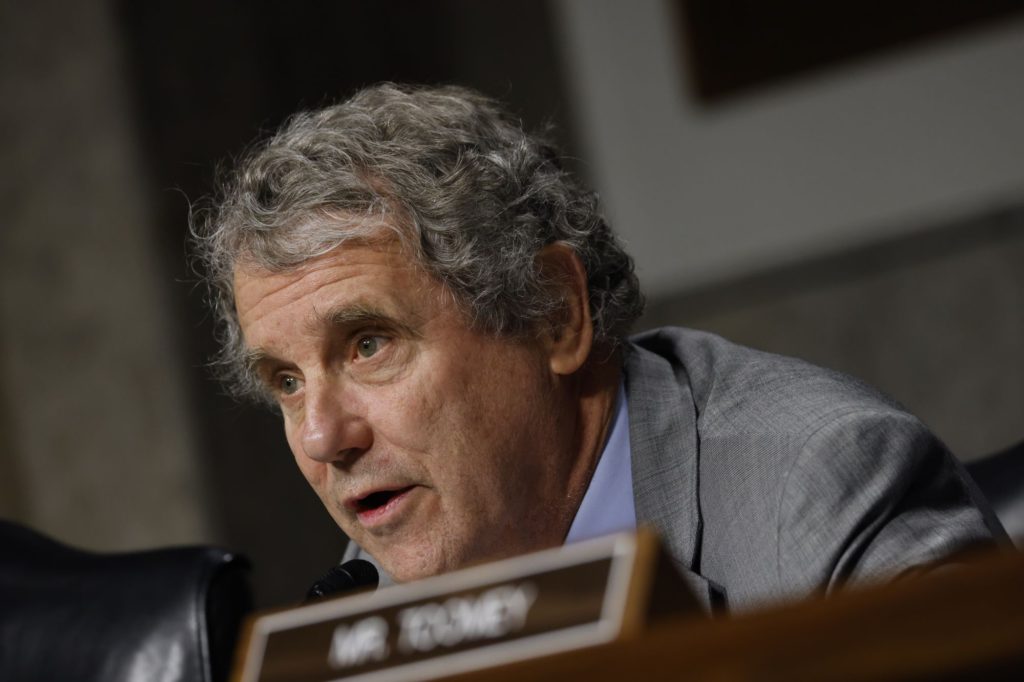
“If we are going to learn from FTX’s meltdown, we must look closely at the risks from conflicts at crypto platforms that combine multiple functions,” said Sherrod Brown, the committee’s chairman. “It means thinking about the kinds of disclosure that consumers and investors really need to understand how a token or crypto platform works.”

Brown said in remarks before the hearing that lawmakers can look at existing banking and securities laws for time-tested approaches as a way of overseeing crypto businesses.

Separately, senators Elizabeth Warren, a Democrat, and Republican Roger Marshall said Wednesday they are introducing a bill to address the national-security risks posed by cryptocurrencies and other digital assets. The proposed legislation would close loopholes in anti-money-laundering rules and help counter terrorism financing, they said in a statement. 

“Crypto has become the preferred tool for terrorists, for ransomware gangs, for drug dealers and for rogue states that want to launder money,” Warren said at the Senate hearing. 

Crypto Industry

Other policymakers pushed back on the harsh criticisms levied against crypto, saying the entire industry shouldn’t be punished for the alleged crimes of Bankman-Fried and his companies. 

The panel’s top Republican, Pat Toomey, asked colleagues to separate that potentially fraudulent activity from the legitimate innovations in the digital-asset markets. “The code committed no crime,” he said. 

Republican Senator Cynthia Lummis underscored Toomey’s point.

“Digital assets are not on trial. Fraud and organizations are on trial,” she said. Lummis and Senator Kirsten Gillibrand, a Democrat from New York, plan to reintroduce their wide-ranging bill next year to overhaul how the digital-asset industry is regulated. 

Neither John J. Ray III, FTX’s current chief executive officer, nor Bankman-Fried were scheduled to participate in Wednesday’s hearing. Charges against Bankman-Fried were unsealed Tuesday and include wire fraud for allegedly misusing billions of dollars in customers’ funds.

The Senate committee’s witness list includes law professor Hilary Allen, investor Kevin O’Leary, the Cato Institute’s Jennifer Schulp, and Ben McKenzie Schenkkan, an actor and critic of cryptocurrencies. Prior to his arrest, Bankman-Fried had agreed to testify virtually at Tuesday’s hearing before the House Financial Services Committee but refused to appear at Wednesday’s Senate hearing — drawing the ire of that panel’s leaders.

–With assistance from Se Young Lee.

(Updates with comments from senators beginning in sixth paragraph.)

More stories like this are available on bloomberg.com

©2022 Bloomberg L.P.
FTX Bankruptcy Standoff Heats Up as Bahamas Challenges US Case

(Bloomberg) — Bahamian court officials scuffled with US-based bankruptcy lawyers over the remains of Sam Bankman-Fried’s crypto empire Wednesday, exacerbating a key tension hanging over the downfall of FTX.

The American legal team has refused to give liquidators appointed by a Bahamian court access to FTX computer systems, claiming securities regulators in the Bahamas cannot be trusted. The lawyers say the Bahamas colluded with Bankman-Fried and his co-founder, Gary Wang, to wrongly access FTX’s system last month and mint new digital coins worth hundreds of millions of dollars.


“This is dangerous information,” FTX attorney James Bromley said in a court hearing Wednesday. “We do not trust the Bahamian government.”

A lawyer for the liquidator denied that the Bahamas securities regulator worked with Bankman-Fried, who who was arrested in Nassau on Monday. The liquidator has information “which belies this notion,” Christopher Shore, a lawyer for the liquidator, said during the hearing.

The two sides are so far apart that US Bankruptcy Judge John Dorsey said he will probably need to hold a mini-trial next month. The FTX team will put forth evidence proving liquidators violated a US bankruptcy court order when accessing the system last month, Bromley said. 

The sides have traded jabs in recent days through a series of unusually colorful court filings about who can access sensitive FTX data. Bahamian liquidators argued they’re entitled to access to the computer network so they can clean up a locally based subsidiary.

The conflict intensified Monday as Bahamas court officials demanded that millions of dollars of company-owned real estate on the island nation be removed from oversight by a US judge. That effort, if successful, could give the liquidators control of millions of dollars more in assets. 

“The Bahamian courts that have jurisdiction over the real estate cannot recognize this court’s orders,” the liquidators argued, citing local law. They want the holding company that owns the real estate — which includes the company’s headquarters and a smattering of residences — to be removed from the US bankruptcy, according to court papers.

Each side has previously argued that it should be leading the hunt for FTX assets to repay creditors. The Americans, on Monday, accused the Bahamas of meddling in their efforts by asking Bankman-Fried and Wong to mint new digital coins and turn them over to Bahamian regulators — all while FTX was imploding.

Delaware Scuffle

Dorsey held an emergency hearing on the dispute over access to FTX data on Wednesday. A fight over whether to remove the property holding company from the US bankruptcy case is likely to come before the judge early next year. Dorsey is overseeing all of the US-based FTX insolvency cases, about 100 units in total.

The liquidators want immediate access to FTX data controlled by their American counterparts. The US FTX team says that would allow Wang to regain access just weeks after his alleged breach that resulted in a new batch of crypto coins going out the door. Bankman-Fried is in jail in the Bahamas awaiting extradition to the US on fraud charges.

The liquidators control a single FTX entity, called FTX Digital, which is being supervised by a court in the Bahamas. The American team controls nearly all the rest of Bankman-Fried’s former empire, which filed for Chapter 11 protection in Wilmington, Delaware, on Nov. 11. That means most of the assets, wherever they are located, are likely under the authority of Dorsey, the bankruptcy judge in Delaware.

But in their court filing Monday, the liquidators demanded the property-owning unit be dismissed from bankruptcy and sold for parts in the Bahamas. 

Among other things, they say the real estate should be liquidated in the Bahamas because the unit that owns it has no connection to the US — not even a bank account. They also claim that two signatures were required to put property-holding unit into bankruptcy in the US., but that only Bankman-Fried authorized the filing, so it is illegal.

The case is FTX Trading Ltd., 22-11068, US. Bankruptcy Court for the District of Delaware. 

(Updates with comments from a court hearing beginning in the second paragraph. A previous version of this story corrected timing of arrest in second paragraph.)

More stories like this are available on bloomberg.com

©2022 Bloomberg L.P.
Nuclear Fusion Breakthrough Set to Send Billions of Dollars Flowing to Atomic Startups

(Bloomberg) — The breakthrough in nuclear fusion is likely to spark investment in the technology that could transform the global energy landscape with nearly limitless clean energy. 

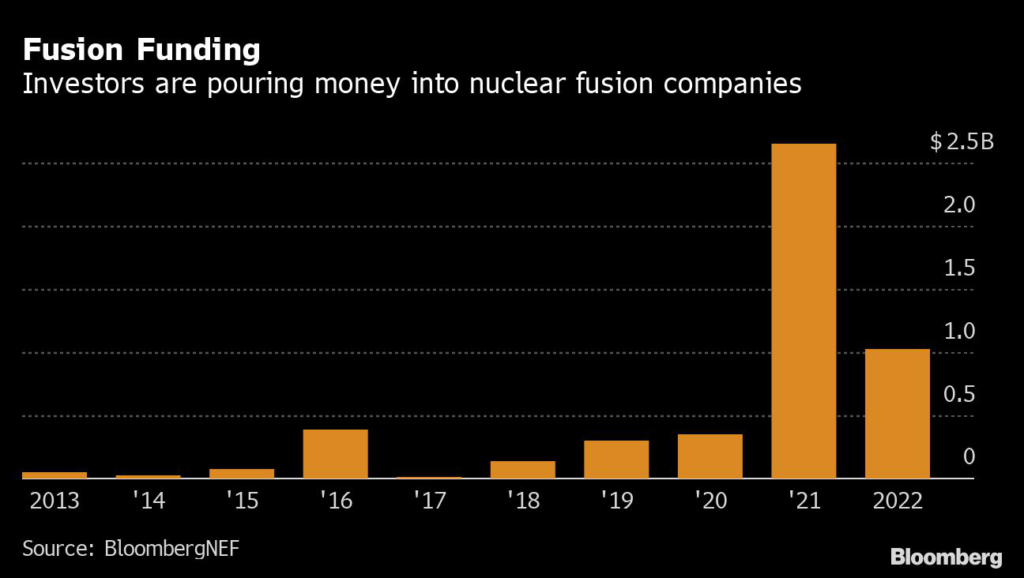
Investors are on track to pour more than $1 billion into the technology this year. While that’s down from 2021, a boom year when spending exceeded $2.6 billion, it’s almost triple the amount from 2020 and the trend is clearly increasing, according to Chris Gadomski, chief nuclear analyst for BloombergNEF. 

That momentum will continue after US scientists for the first time were able to trigger a fusion reaction that generated more energy than it consumed. The crucial step forward shows that it may eventually be possible to build a commercial fusion power plant.

“This is putting fusion on the map,” Gadomski said. 

There are still significant technological and engineering hurdles before this week’s achievement can be commercialized, and at least a dozen companies are pursuing fusion energy. Commonwealth Fusion Systems, TAE Technologies Inc. and Helion Energy Inc. were among the companies that attracted significant funding last year. 

Other fusion companies that have landed significant backing include Marvel Fusion GmbH, General Fusion, Tokamak Energy Ltd. and Zap Energy Inc., according to BNEF. 

The US is also increasing support for fusion technology, with a $50 million program to fund research, announced in September. Conventional nuclear power plants use fission, which involves splitting large atoms to generate power, and fusion replicates the reaction within stars when small atoms release energy when they fuse together. 

The companies are using several different designs, and it’s still unclear which technology may eventually turn out to be the most viable.  

“The fact that there’s a diversity of approaches is a sign of health in the industry,” Gadomski said. 

More stories like this are available on bloomberg.com

©2022 Bloomberg L.P.
New York’s Uber and Lyft Drivers Aren’t Getting a Pay Raise This Holiday Season 

(Bloomberg) — A judge temporarily blocked wage increases for Uber and Lyft drivers imposed by the New York City Taxi & Limousine Commission, dealing a blow to workers ahead of the holidays. 

The increase was supposed to go into effect on Dec. 19 but will be put on hold until a Jan. 31 hearing on Uber’s bid to suspend the rule while the case is being litigated, according to a filing. 

The decision is a partial victory for Uber Technologies Inc., which sued the NYC TLC last week to block an increase in rates per-mile and per-minute that the agency approved in November. Uber called the increase “dramatic, unprecedented and unsupported,” and said the rate hike would result in additional expenses of $21 million to $23 million a month and higher fares for customers.

“We are disappointed for the tens of thousands of drivers who are once again being made to bear the rising costs of inflation all on their own, with no help from the multi-billion-dollar company they work under,” TLC Commissioner David Do said in a statement. “We will aggressively defend this important standard for our drivers.” 

The TLC regulates all ride-sharing in the city, across taxis and app-based platforms. Wage increases for taxi drivers will kick in as planned.

Pay rates for Uber and Lyft Inc. drivers were set to increase by 7% per minute and 24% per mile, according to the TLC, with a sample trip of 30 minutes and 7.5 miles requiring a minimum payment of $27.15. Uber said the city’s calculation of the per mile rate increase is misleading and is actually 16%, taking into account mandated annual adjustments implemented in 2020 and 2022. 

“Drivers do critical work and deserve to be paid fairly, but rates should be calculated in a way that is transparent, consistent and predictable,” an Uber spokesman said in a statement.

The latest decision is a disappointment for the more than 85,000 ride-share drivers in New York who have grappled with soaring inflation and higher gas prices this year.

“This is a nasty stunt for Uber to pull on its drivers— especially right before the holidays,” said Brendan Sexton, president of the Independent Drivers Guild, in a statement. “Even this would make Scrooge blush.” 

–With assistance from Chris Dolmetsch and Skylar Woodhouse.

More stories like this are available on bloomberg.com

©2022 Bloomberg L.P.

Stocks Advance Ahead of Fed Meeting; Dollar Falls: Markets Wrap

(Bloomberg) — US stocks advanced and short-term Treasuries gained as investors await the Federal Reserve’s rate decision and commentary from Chair Jerome Powell for further policy clues. 

The S&P 500 and the tech-heavy Nasdaq 100 rose. The policy-sensitive two-year Treasury yield dropped, hovering around 4.18%. The dollar slipped for a second day. 

The Fed is largely expected to raise rates by 50 basis points, validated further by Tuesday’s softer US consumer price index reading. The central bank’s decision will be announced at 2 p.m. in Washington and Powell will hold a press conference 30 minutes later. Traders remain on the edge over what signals he may offer on when the hikes will stop and whether a rate cut is possible next year. Powell is likely to emphasize the Fed will remain steadfast in battling inflation.

“The whole concept that the Fed is going to pivot to us is way overdone,” said David Spika, president and chief investment officer of GuideStone Capital Management. “The bottom line is that inflation is still running over 7%, the Fed is going to have to continue to raise interest rates — Powell is going to make that very clear today.” 

If Powell highlights how perplexed he is that markets have eased since the last meeting, that would be interpreted as a hawkish signal, George Goncalves, head of US macro strategy at MUFG Securities Americas Inc., said in a note. 

“Markets are priced to a dovish outcome,” he said. “Anything short of it could still end up viewed as disappointing.”

In the UK, two-year gilts advanced. Inflation in the country fell from a 41-year high in November, raising the possibility that the worst of the cost-of-living squeeze is over.

Europe’s equity benchmark fell after posting the biggest single-day advance since Nov. 10 as caution prevailed over Fed’s messaging later in the day as well as expectations for rate hikes by the European Central Bank and Bank of England on Thursday.

West Texas Intermediate contracts rose for a third day and traded around $76 a barrel. Traders also weighed the demand outlook amid a rapid relaxation of Covid restrictions in China against the effect of new cases on economic activity in the country.

Key events this week:

  • FOMC rate decision and Fed Chair news conference, Wednesday
  • China medium-term lending, property investment, retail sales, industrial production, surveyed jobless, Thursday
  • ECB rate decision and ECB President Lagarde briefing, Thursday
  • Rate decisions for UK BOE, Mexico, Norway, Philippines, Switzerland, Taiwan, Thursday
  • US cross-border investment, business inventories, empire manufacturing, retail sales, initial jobless claims, industrial production, Thursday
  • Eurozone S&P Global PMI, CPI, Friday

Some of the main moves in markets:

Stocks

  • The S&P 500 rose 0.6% as of 11:14 a.m. New York time
  • The Nasdaq 100 rose 0.6%
  • The Dow Jones Industrial Average rose 0.6%
  • The Stoxx Europe 600 was little changed
  • The MSCI World index rose 1.1%

Currencies

  • The Bloomberg Dollar Spot Index fell 0.2%
  • The euro rose 0.2% to $1.0649
  • The British pound rose 0.3% to $1.2409
  • The Japanese yen rose 0.5% to 134.87 per dollar

Cryptocurrencies

  • Bitcoin rose 1.8% to $18,082.13
  • Ether rose 1.2% to $1,336.01

Bonds

  • The yield on 10-year Treasuries declined two basis points to 3.48%
  • Germany’s 10-year yield was little changed at 1.93%
  • Britain’s 10-year yield advanced three basis points to 3.33%

Commodities

  • West Texas Intermediate crude rose 1.9% to $76.86 a barrel
  • Gold futures fell 0.1% to $1,823.30 an ounce

This story was produced with the assistance of Bloomberg Automation.

–With assistance from Srinivasan Sivabalan and Isabelle Lee.

More stories like this are available on bloomberg.com

©2022 Bloomberg L.P.

Sam Bankman-Fried Sits in Bahamas Jail After Lightning-Fast US Probe

(Bloomberg) — US prosecutors usually grind away in obscurity for months or years before unveiling a criminal indictment. Their case against FTX founder Sam Bankman-Fried came together in a matter of weeks.

Speed was of the essence for Manhattan US Attorney Damian Williams, who unveiled criminal charges against the disgraced entrepreneur just over a month after FTX filed for bankruptcy. Bankman-Fried is now in jail in the Bahamas, where a judge denied him bail because of concerns that he is a flight risk.

By comparison, Enron Corp. Chief Executive Officer Jeffrey Skilling, who was ultimately convicted of fraud and other counts, wasn’t charged until more than two years after that company’s 2001 collapse. 


Read More: Fast Bankman-Fried Indictment Points to ‘Avalanche of Evidence’

Bankman-Fried’s swift arrest shows the urgency of a high-profile case involving a founder who has courted the news media and flouted the conventional wisdom for handling a corporate unraveling. Prosecutors were likely spurred into action by several factors, including public and political pressure for an indictment, as well as concerns that Bankman-Fried might flee to a jurisdiction from which it would be more difficult to extradite him to the US.

“They grabbed him as quickly as they could before he went to some other place,” said Edward M. Robbins Jr., a former federal prosecutor who isn’t involved in the case. “That’s just common sense.”

FTX and scores of related companies declared bankruptcy last month after three years of frenetic growth. At its peak, the exchange was worth $32 billion. Bankman-Fried, its former chief executive, was celebrated as the crypto savant who would lead the industry to untold riches. His arrest appeared to be a surprise to many — he had been expected to testify before the House Financial Services Committee on Tuesday in hearings on FTX’s downfall.

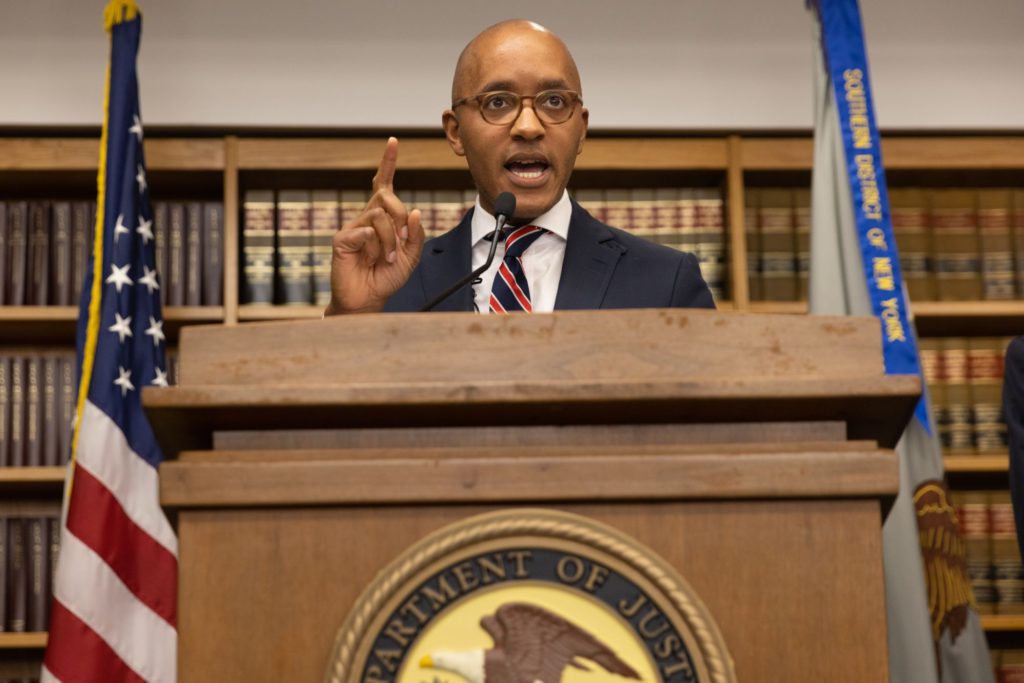
In a news conference Tuesday, Williams claimed that Bankman-Fried scammed FTX customers and venture-capital backers out of billions of dollars in “one of the biggest financial frauds in American history.” The prosecutor has brought other large crypto cases, overseeing the seizure in November 2021 of stolen Bitcoin valued at $3.36 billion. A Georgia man, James Zhong, pleaded guilty last month to wire fraud charges related to the theft.

“You’re right, this is very, very fast,” Williams said of the Bankman-Fried probe. “Whether we are going to bring charges against anyone else, I can only say this clearly — we are not done.”

Regulators at the US Securities and Exchange Commission and the Commodity Futures Trading Commission have sued Bankman-Fried as well. 

His lawyer said he would fight plans to send him to the US to face charges. The judge at his arraignment Tuesday set a Feb. 8 extradition hearing.

Dressed in a blue suit and white shirt for the proceedings, Bankman-Fried at times appeared shaky and fidgety. His parents were present in the courtroom as their son was frequently referred to as a “fugitive.” He was allowed 15 minutes with his parents before he was to be taken away by authorities. 

Bankman-Fried’s recent words and actions may have given prosecutors enough ammunition to move so quickly. The 30-year-old publicly tried to explain away his culpability and apologize for losing $8 billion in customer funds. 

He acknowledged he’d commingled funds between FTX customers and Alameda Research, a trading operation he controlled. Those transactions were central to wire fraud charges against him in the eight-count indictment.  

“SBF making admissions on TV his lawyers did not want him to talk about is like happy hour for federal prosecutors,” said Michael Weinstein of Cole Schotz P.C.

Read More: Bankman-Fried Balks at Extradition as US Sketches Fraud Case

Complex fraud cases usually take far longer to investigate as prosecutors and federal agents sift through documents, interview witnesses and present evidence to grand juries. But FTX’s bankruptcy-appointed Chief Executive Officer John J. Ray III, who also oversaw Enron’s liquidation, testified before Congress on Tuesday that he believed the fraud at the cryptocurrency exchange wasn’t particularly complex.

“The FTX Group’s collapse appears to stem from the absolute concentration of control in the hands of a very small group of grossly inexperienced and unsophisticated individuals,” Ray testified. He called the alleged misuse of FTX customer funds by Bankman-Fried’s inner circle straightforward embezzlement.

Ray has spent the past month poring over the company’s financial records, saying poor controls and malfeasance are to blame for the collapse. He is working with a wide cast of investigators and ex-prosecutors to unravel the FTX fraud. That spadework also helped the government move fast. 

The judge at Tuesday’s arraignment said Bankman-Fried would be taken to the Bahamas Department of Correctional Services facility, which is commonly known as Fox Hill and is the government’s only prison. 

Although it’s unclear whether he will be held among the general population, a 2020 report from the US State Department painted a grim picture of the place. The facility’s conditions were harsh due to overcrowding and poor ventilation, among other issues.

Read More: Sam Bankman-Fried’s Bid for Bail Denied by Bahamas Judge 

The criminal case is US v. Bankman-Fried, 22-cr-673, US District Court, Southern District of New York (Manhattan),

–With assistance from Greg Farrell, Patricia Hurtado and Katanga Johnson.

More stories like this are available on bloomberg.com

©2022 Bloomberg L.P.

Sam Bankman-Fried’s Path to Jail Took Just Weeks in Speedy US Probe

(Bloomberg) — US prosecutors usually grind away in obscurity for months or years before unveiling a criminal indictment. Their case against FTX founder Sam Bankman-Fried came together in a matter of weeks.

Speed was of the essence for Manhattan US Attorney Damian Williams, who unveiled criminal charges against the disgraced entrepreneur just over a month after FTX filed for bankruptcy. Bankman-Fried is now in jail in the Bahamas, where a judge denied him bail because of concerns that he is a flight risk.

By comparison, Enron Corp. Chief Executive Officer Jeffrey Skilling, who was ultimately convicted of fraud and other counts, wasn’t charged until more than two years after that company’s 2001 collapse. 


Read More: Fast Bankman-Fried Indictment Points to ‘Avalanche of Evidence’

Bankman-Fried’s swift arrest shows the urgency of a high-profile case involving a founder who has courted the news media and flouted the conventional wisdom for handling a corporate unraveling. Prosecutors were likely spurred into action by several factors, including public and political pressure for an indictment, as well as concerns that Bankman-Fried might flee to a jurisdiction from which it would be more difficult to extradite him to the US.

“They grabbed him as quickly as they could before he went to some other place,” said Edward M. Robbins Jr., a former federal prosecutor who isn’t involved in the case. “That’s just common sense.”

FTX and scores of related companies declared bankruptcy last month after three years of frenetic growth. At its peak, the exchange was worth $32 billion. Bankman-Fried, its former chief executive, was celebrated as the crypto savant who would lead the industry to untold riches. His arrest appeared to be a surprise to many — he had been expected to testify before the House Financial Services Committee on Tuesday in hearings on FTX’s downfall.

In a news conference Tuesday, Williams claimed that Bankman-Fried scammed FTX customers and venture-capital backers out of billions of dollars in “one of the biggest financial frauds in American history.” The prosecutor has brought other large crypto cases, overseeing the seizure in November 2021 of stolen Bitcoin valued at $3.36 billion. A Georgia man, James Zhong, pleaded guilty last month to wire fraud charges related to the theft.

“You’re right, this is very, very fast,” Williams said of the Bankman-Fried probe. “Whether we are going to bring charges against anyone else, I can only say this clearly — we are not done.”

Regulators at the US Securities and Exchange Commission and the Commodity Futures Trading Commission have sued Bankman-Fried as well. 

His lawyer said he would fight plans to send him to the US to face charges. The judge at his arraignment Tuesday set a Feb. 8 extradition hearing.

Dressed in a blue suit and white shirt for the proceedings, Bankman-Fried at times appeared shaky and fidgety. His parents were present in the courtroom as their son was frequently referred to as a “fugitive.” He was allowed 15 minutes with his parents before he was to be taken away by authorities. 

Bankman-Fried’s recent words and actions may have given prosecutors enough ammunition to move so quickly. The 30-year-old publicly tried to explain away his culpability and apologize for losing $8 billion in customer funds. 

He acknowledged he’d commingled funds between FTX customers and Alameda Research, a trading operation he controlled. Those transactions were central to wire fraud charges against him in the eight-count indictment.  

“SBF making admissions on TV his lawyers did not want him to talk about is like happy hour for federal prosecutors,” said Michael Weinstein of Cole Schotz P.C.

Read More: Bankman-Fried Balks at Extradition as US Sketches Fraud Case

Complex fraud cases usually take far longer to investigate as prosecutors and federal agents sift through documents, interview witnesses and present evidence to grand juries. But FTX’s bankruptcy-appointed Chief Executive Officer John J. Ray III, who also oversaw Enron’s liquidation, testified before Congress on Tuesday that he believed the fraud at the cryptocurrency exchange wasn’t particularly complex.

“The FTX Group’s collapse appears to stem from the absolute concentration of control in the hands of a very small group of grossly inexperienced and unsophisticated individuals,” Ray testified. He called the alleged misuse of FTX customer funds by Bankman-Fried’s inner circle straightforward embezzlement.

Ray has spent the past month poring over the company’s financial records, saying poor controls and malfeasance are to blame for the collapse. He is working with a wide cast of investigators and ex-prosecutors to unravel the FTX fraud. That spadework also helped the government move fast. 

The judge at Tuesday’s arraignment said Bankman-Fried would be taken to the Bahamas Department of Correctional Services facility, which is commonly known as Fox Hill and is the government’s only prison. 

Although it’s unclear whether he will be held among the general population, a 2020 report from the US State Department painted a grim picture of the place. The facility’s conditions were harsh due to overcrowding and poor ventilation, among other issues.

Read More: Sam Bankman-Fried’s Bid for Bail Denied by Bahamas Judge 

The criminal case is US v. Bankman-Fried, 22-cr-673, US District Court, Southern District of New York (Manhattan),

–With assistance from Greg Farrell, Patricia Hurtado and Katanga Johnson.

More stories like this are available on bloomberg.com

©2022 Bloomberg L.P.

Twitter Suspends Account Tracking Elon Musk’s Private Jet

(Bloomberg) — A Twitter Inc. account tracking the movements of Elon Musk’s private jet has been suspended from the social media platform.

As of early Wednesday morning in New York, the @elonjet page showed a message that read “account suspended” with an explanation that Twitter suspends accounts that violate the platform’s rules. Musk bought Twitter for $44 billion in late October.

Musk and representatives for Twitter did not immediately respond to requests for comment. 

Jack Sweeney, who has run the account since June 2020, told Bloomberg News that, upon logging into the account, his Twitter platform stated: “Your account is permanently suspended. After careful review we determined your account broke the Twitter rules. Your account is permanently in read-only mode.” 

Sweeney, a student at the University of Central Florida, said he hasn’t received any other notices from Twitter via email or other mediums.

“Musk literally said he wouldn’t do anything because he protects free speech, but this is the exact opposite,” Sweeney said by phone. 

The account tracks the movements of Musk’s private jet using publicly available flight data and gives automated alerts.

Sweeney, 20, turned down a $5,000 offer from the Tesla CEO in 2021 to shut down his bot account and countered with a demand to boost the payout to $50,000. Musk made multiple attempts to contact him to ask to shut it down, Sweeney has said.

Read More: Teen Tracking Musk’s Jet on Twitter Is Making Contingency Plans

Last month, Musk said in a tweet that his commitment to free speech “extends even to not banning the account following my plane, even though that is a direct personal safety risk.”

Sweeney operates other automated accounts through a business called Ground Control, including accounts that follow celebrity jets and one that purports to track planes used by Russian President Vladimir Putin and other government officials. 

(Updates with quote in sixth paragraph.)

More stories like this are available on bloomberg.com

©2022 Bloomberg L.P.
Bitcoin Hits $18,000 for First Time Since Before FTX Bankruptcy

(Bloomberg) — Bitcoin spiked to $18,000 for the first time since the exchange FTX slid into a chaotic bankruptcy last month, with the world’s largest digital currency also getting a boost from bets on a Federal Reserve downshift.

Binance Holdings Ltd. Chief Executive Officer Changpeng Zhao said in a tweet on Wednesday, “things seem to have stabilized” and warned colleagues in a memo to expect tough months ahead explaining the industry for digital assets is going through “a historic moment” and that Binance is in a strong financial position and “will survive any crypto winter.”

“Crypto breathed a sigh of relief as outflows from Binance appear to have stabilized,” said Martha Reyes, head of research at BeQuant, crypto exchange and prime broker. 

Last week, Binance released a proof of reserves report. The document, based on a snapshot review by accounting firm Mazars, showed the exchange having sufficient crypto assets to balance its total platform liabilities.

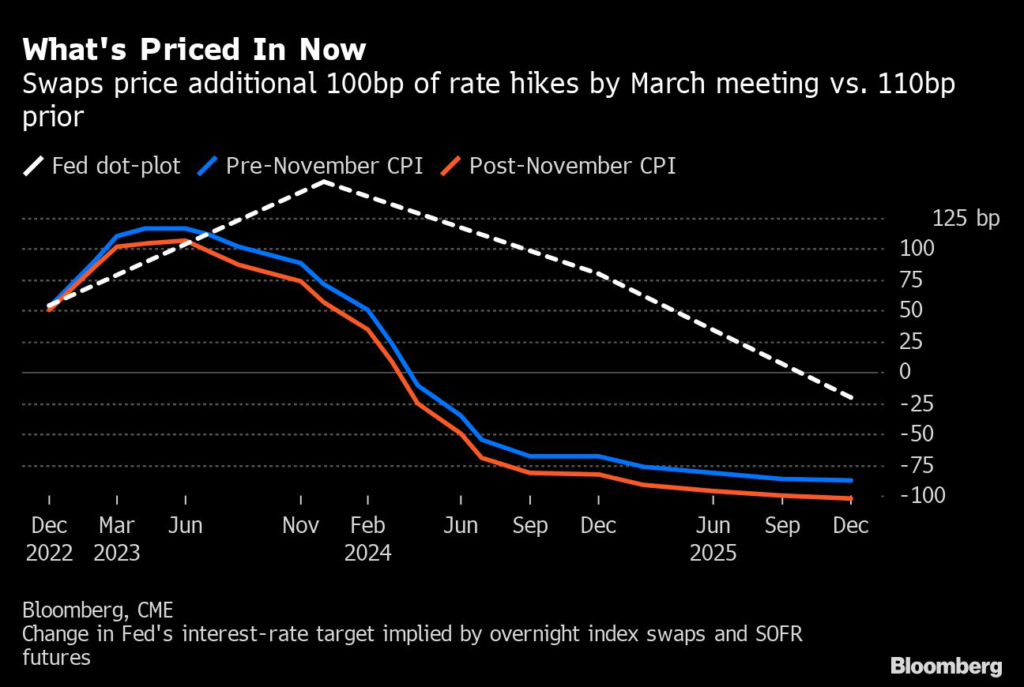
A second month of weaker-than-expected inflation data also boosted crypto alongside risk assets on the premise that would pave the way for slower Fed hikes. 

The central bank is seen raising it benchmark rate Wednesday by 50 basis points following four consecutive 75 basis-point moves.


More stories like this are available on bloomberg.com

©2022 Bloomberg L.P.
Mask Mandate Is Back at This New York College

(Bloomberg) — Purchase College, part of the State University of New York system, mandated masking indoors as respiratory viruses have been spreading rapidly in the state and around the country.

The college, in suburban Westchester County, raised its alert level for Covid transmission to orange, triggering the change. Other educational systems in the area, including the New York City school district, began encouraging masks indoors this week without requiring them. The New York City Department of Health and Mental Hygiene recommends masking in public indoor settings and crowded outdoor settings.

Mask mandates have long been controversial in some parts of the US but were widely followed in New York City, one of the hardest-hit areas of the country in the early part of the pandemic. But public-health officials across the country have been reluctant to reinstate requirements on masking, preferring to make recommendations so that people won’t tune them out as they try to readjust to normal life. US Centers for Disease Control and Prevention Director Rochelle Walensky said earlier this month that people didn’t need to wait for her agency to weigh in before putting on a mask, and to wear masks during the respiratory season and in places of high spread. 

“Due to the high levels of virus in our area and on campus we must reinstitute the campus indoor masking policy,” SUNY Purchase said in a campuswide email. “It is our intent to have everyone complete their finals and return home healthy for the winter break.”

Other schools in the SUNY system didn’t have any change to a mask mandate on their websites on Wednesday morning. Each campus determines its own masking policy. 

At this point in the flu season, hospitalizations are at their highest rate in more than a decade, according to the CDC. The agency has also reported 21 pediatric deaths so far this season. New York has had “high” or “very high” levels of influenza activity for five consecutive weeks ending December 3, the CDC influenza tracker says.

It’s not just the flu that’s been surging this season. Covid-19 is on the rise, and respiratory syncytial virus, or RSV, has been circulating as well. Together, these three respiratory viruses have been dubbed the “tripledemic,” and are worrying public health experts.

“It starts with protecting yourself. Vaccination and boosters are critical but so are common sense precautions like masking when indoors or among crowds and staying home if you don’t feel well,” Ashwin Vasan, the city health commissioner, said this week.

More stories like this are available on bloomberg.com

©2022 Bloomberg L.P.
Close Bitnami banner
Bitnami