Bloomberg

Baring Private Equity Asia Approaches DXC Technology on Takeover

(Bloomberg) — Baring Private Equity Asia Ltd., the pan-Asian buyout firm that’s merging with EQT AB, has made a takeover approach to US information-technology services provider DXC Technology Co., according to people familiar with the matter. 

Talks between BPEA and DXC are ongoing, though they may not lead to an agreement, the people said, asking to not be identified because the matter isn’t public. DXC has been working with advisers after receiving interest, Bloomberg News reported last month, without identifying the suitor.

Takeover speculation has been rife around the Ashburn, Virginia-based company, which rose 9% to $28.45 at 1:43 p.m. in New York trading Tuesday, giving it a market value of about $6.5 billion.

DXC confirmed that “management has been approached by a financial sponsor regarding a potential acquisition of the company,” according to a statement. 

“Management remains focused on the company’s transformation journey,” the company said. “Consistent with its fiduciary responsibility to maximize shareholder value, the company is engaged in preliminary discussions and is sharing information.” 

A representative for BPEA couldn’t immediately be reached for comment.

Tech Deals

Technology dealmaking has held steady this year amid the broader slump in mergers and acquisitions. Part of that has been driven by private equity firms, which like the sector and are taking advantage of a market dip to go shopping. Vista Equity Partners offered to buy software-security firm KnowBe4 Inc. in September. 

That said, several tech take-privates have collapsed in recent weeks, including GTCR’s bid for UK software firm GB Group Plc, amid tough financing markets and challenging economic environment.

DXC, which provides analytics and business-process services to insurance and aerospace companies, has been a takeover target before. French technology services provider Atos SE approached it about a combination last year before walking away after DXC described its offer as inadequate. 

BPEA, founded by Jean Eric Salata, is seeking to expand its cross-border dealmaking capability after Sweden’s EQT agreed to acquire the firm for about $7.5 billion earlier this year. The Asian firm gathered $11.2 billion for its biggest pool of capital in the firm’s history, it said last month. 

(Updates with statement in fourth paragraph.)

More stories like this are available on bloomberg.com

©2022 Bloomberg L.P.

Tesla Shares Give Up Gains on Renewed Prospect of Musk Buying Twitter

(Bloomberg) — Tesla Inc. tumbled after news that Chief Executive Officer Elon Musk proposed to buy Twitter Inc. at the original offer price, raising the possibility that he will sell more of the electric-car maker’s stock.

Musk unloaded billions of dollars in Tesla shares over the summer to accumulate the cash needed to fund his portion of the deal. He subsequently attempted to back out, prompting legal action by Twitter, before offering to continue with the original transaction, Bloomberg reported Tuesday.

Read more: Musk Proposes to Proceed With Twitter Deal at $54.20 a Share

It wasn’t immediately clear if Musk will need to sell additional Tesla shares to finance the deal. The billionaire didn’t respond to a request for comment.

Tesla’s shares pared gains of as much as 6.2%, briefly turning negative before rebounding slightly. They were trading up 2% at 1:55 p.m. in New York. Twitter rose as much as 18% before trading was halted.

If Musk succeeds in buying the social-media giant, it raises the prospect that Tesla’s leader, who already oversees companies including SpaceX, would be spread even more thinly as the automaker attempts to ramp production globally and fend off competition in the EV market. Tesla, which has just three named executive officers, fell the most in the S&P 500 Index on Monday after reporting disappointing quarterly deliveries.

More stories like this are available on bloomberg.com

©2022 Bloomberg L.P.

McKinsey Hires Microsoft Executive as Its First Chief Technology Officer

(Bloomberg) — McKinsey & Co. has hired a senior Microsoft Corp. executive to be its first-ever chief technology and platform officer, a role that underscores the management consultant’s increased focus on digital initiatives.

Jacky Wright, who previously served as Microsoft’s chief digital officer, will join the firm later this year and report to global managing partner Bob Sternfels, according to a statement. Wright has spent more than two decades in technology, including senior executive roles at BP Plc, General Electric Co. and inside the UK government. The London native was named the “most powerful Black Briton” by the UK’s Powerlist last year, ahead of soccer player Marcus Rashford.    

“Jacky will strengthen how we use technology both to help clients scale new ideas and tackle challenges, and to transform the way our more than 40,000 people work together across our global firm,” Sternfels said in the statement.

McKinsey, which said that half of its consultants are “digital practitioners” without defining what that means, has acquired more than 20 tech-related companies in recent years and established alliances with Salesforce Inc. and other industry players. In addition to helping McKinsey use technology in its client work, Wright will lead the firm’s internal technology team, which spans 66 countries. 

According to the National Center for Women & Information Technology, a nonprofit focused on improving representation in computing, 13% of US chief technology officer positions were held by women in 2020. Black or African-American women made up just 3% of the computing workforce in 2021, the nonprofit found. 

Along with Wright, the small cadre of Black women who hold senior technology executive roles in Corporate America includes Gail Evans, chief digital and technology officer for Walt Disney Co.’s parks, experiences and products division, and Sabina Ewing, the global chief information officer at Abbott Laboratories Inc. A few prominent Black female executives have recently stepped back from the c-suite to serve as corporate directors, like Microsoft’s former Chief Technology Officer Gina Loften and Joy Brown, who was Verizon Media’s chief data officer.

(Corrects source of “most powerful Black Briton” award in second paragraph of story originally published Sept. 21.)

More stories like this are available on bloomberg.com

©2022 Bloomberg L.P.

Cannabis Fund Seeks Global Expansion After Crypto Fundraising

(Bloomberg) — Global Cannabis Holdings is investing in pot companies outside of its home market of Latin America after it raised $500,000 from retail investors through security token offerings that valued the company at $25 million.

The Luxembourg-based company, known as GCH, has acquired small stakes in two US pot companies as it seeks to more than double its portfolio of 33 companies with a focus on Europe, Asia and the Americas, Chief Executive Officer and co-founder Andres Israel said.

“By the end of next year we are going to be close to 75 companies,” he said in an interview in Montevideo, Uruguay, where the company has its main office. “The idea is to have a big presence in Asia — more presence in the US. We’re looking at companies in Switzerland.”

GCH, previously named Global Cannabis Capital, eschewed a traditional IPO this year and instead created 100,000 tokens on the Ethereum blockchain platform that represent its equity. The fund sold 2,000 tokens for $250 each to 122 retail investors through private placements in June and August. Dupont Partners, Posadas, Posadas y Vecinos and Tokeny Solutions structured the offerings.

The fund plans to sell 1,000 tokens next March to expand its portfolio with a focus on startups developing branded cannabis products for consumer, medical and pet care markets. GCH hasn’t shut the door on receiving venture capital funding, Israel said.

GCH is also swapping its tokens for minority stakes in larger consumer-oriented cannabis companies such as Papa & Barkley and Acronym Investment in the US as it seeks to build strategic alliances globally, he added.

“The idea is to do 10 mores swaps in the course of the next six months,” Israel said.

Other key points in the interview:

  • GCH could break even as soon as this year as companies in its portfolio become profitable
  • The US is emerging as a major buyer of Uruguay’s CBD flowers because their psychoactive components are below US regulatory limits
    • “It’s a huge opportunity because the prices in the US are much more competitive than what they are in Switzerland. That really increases the margins of growers in Uruguay,” Israel said
    • US investors are evaluating growing CBD flowers for export in Uruguay thanks to the lower cost of land, labor and power compared to some US states.


More stories like this are available on bloomberg.com

©2022 Bloomberg L.P.

Activision Blizzard’s Overwatch 2 Launches in Boost to Video Game Lineup

(Bloomberg) — Activision Blizzard Inc.’s sequel to the critically acclaimed Overwatch video game launches on Tuesday, providing the US game publisher a boost to an otherwise slow year of new releases.

The changes in Overwatch 2 are more about ways to monetize the free-to-play game rather than the gameplay itself. The original Overwatch, which was released six years ago, remains one of the most celebrated games of all-time — an obsession-worthy hero shooter for all skill levels set in a Utopian, multicultural vision for the future. In both games, two teams of diversely-designed heroes compete to claim objectives by eliminating opponents and team strategy.

For the 60 million people who purchased Overwatch for as much as $60, the new Overwatch 2 is a free upgrade that promises steadier content releases than its predecessor, addressing one of fans’ major complaints. To new players, Overwatch 2 is as charming as it is difficult to put down, and comes at a time when the previous title’s unique spin on the genre has lost its novelty. 

“We wanted to broaden the reach of the franchise, and one way to do so is bring down financial barriers to accessing the game,” said Walter Kong, Overwatch general manager. “We also wanted to address the demands of existing players. We had heard for years that content flow is important to engagement. With Overwatch 2, one of our large goals was to make sure our organization could be sustained in the long-term to keep that going.” 

Activision Blizzard is counting on Overwatch 2 to buoy dwindling excitement about subsidiary Blizzard Entertainment’s original games and an overall post-pandemic slump in gaming. Introduced in 2016, Overwatch was the developer’s last big release aside from 2022’s Diablo Immortal, a smartphone iteration of its horror role-playing franchise developed with NetEase Inc. Activision’s annual installation in the highly successful Call of Duty franchise comes out Oct. 28, but it will skip 2023, putting pressure on Overwatch 2 to breathe life into the publisher’s anemic calendar. Santa Monica, California-based Activision Blizzard also funds an expensive, international Overwatch League esports franchise that has lost mainstream interest over its four-year lifespan. 

Overwatch became a $1 billion franchise within a year of its debut. Hardcore gamers were drawn to its innovative spin on shooter and strategy mechanics. The game’s cast of lovable heroes, ranging from a Swiss medic with angel wings to a Chinese climatologist with an ice blaster, appealed to people who had never touched a digital gun in their lives. 

But a steady stream of new content was necessary to keep Overwatch relevant in an increasingly competitive multiplayer gaming space. Although its gameplay loop is uniquely satisfying, players in recent years have said Overwatch’s content release rate was too slow and unpurposeful. Some complained that Blizzard never really delivered a cohesive story for the game.

More of a continuation than a whole new game, Overwatch 2’s innovations include shrinking teams to five from six players and introducing a new competitive mode in the style of tug-of-war. Its most meaningful deviation from the original — cooperative game missions called player-versus-environment — was delayed until sometime next year. In Overwatch 2, some of the story falls by the wayside. Game Director Aaron Keller said it was too hard to to launch the new player-vs.-environment mode simultaneously with the updated competitive mode on top of a commitment to new content.

Overwatch 2 feels less like a sequel than an answer to fans’ requests for a fresher-smelling Overwatch. The original game discontinued service ahead of Overwatch 2’s release, rolling players’ cosmetics and stats into the new version. The new characters are winningly charismatic and riotously fun to play. The new game encourages more action and less standing behind a shield. Most of all, Blizzard says it will be more regularly updated, providing a steadier rate of hype-generating characters, outfits, maps, modes and stories. Players will experience the new content through the game’s “battle pass” — a monetization model popularized by Epic Games Inc.’s smash hit Fortnite in 2017. 

The battle pass will allow players to forego paying for the game up front and instead opt into a system — either a free basic version or premium for $10 — that awards them predetermined content for playing a lot or completing challenges. The game launches with three additional characters, but new players will need to play 100 matches before unlocking old characters from the original game, a twist players have griped about online. 

“The original game was released as one big box. The majority of the revenue came early on. We want to develop a model that caters to what our players are asking for, which is to continuously be developing new content for the game over a frequent and consistent and long lasting period of time,” said Keller, citing the fact that the team is now working on content that will release in 18 months. 

Keeping cosmetic upgrades, such as character weapons or costumes, behind a battle pass could keep players hooked on Overwatch 2 while encouraging them to spend money within the game. It’s unlclear how Overwatch 2’s gameplay will stay balanced if not every player has access to every character from the beginning, however games like Riot Games Inc.’s League of Legends have managed it with more than four times the number of champions.

“If we do a good job with driving engagement, then we can look forward to sustained revenue with that,” Kong said. “It’s going to be our job to make sure that there is enough excitement and enough novelty of content and experience to keep players passionate and engaged.”

It worked for Fortnite. According to analytics firm NewZoo, every time Epic Games releases a new season of content with an accompanying battle pass, “there is a massive increase of (mostly returning) players. We also see an increase in the average daily playtime for the month following a new season release,” said NewZoo analyst Richard Hordijk. 

Most top online competitive games are free with some form of paid, opt-in monetization system like a battle pass or loot boxes. It’s emblematic of games’ shift from completed products to “sales platforms,” said David Zendle, a University of York lecturer in computer science who studies video game monetization. Game publishers like Activision pursue predictable revenue. “It’s still possible to make huge amounts of cash from the sale of a game as a product, but you can see how newer approaches–typically associated with live service games–help manage risk and therefore appeal to people investing in the sector.”

Activision Blizzard is in the process of being acquired by Microsoft Corp. for $69 billion. Its latest quarterly earnings report showed sales declined 15% from a year earlier and adjusted earnings per share were almost 50% lower. The company’s main bread-winner, Call of Duty, disappointed fans with the latest release last fall, receiving negative reviews and facing stiff competition from new entries in the popular Halo and Battlefield series. Overwatch 2 has faced its share of hurdles too. Its launch was delayed, to give the team “the extra time they need to deliver the experiences that their communities deserve,” Activision said in its annual report.  

There has also been turbulence within the creative team. In the last 18 months, Overwatch lost its previous game director, Jeff Kaplan, as well as a lead character artist, executive producer and lead hero designer. Now, Overwatch has 16 times the number of external developers working on the game than it had on the original development team, according to Keller.

Overwatch 2 gives players what they’ve been asking for: more lovable characters, faster gameplay, another mode, and more cosmetics to gawk over. Blizzard’s strategy to get there is what may prove controversial. 

(Updates with release date for next Call of Duty in fifth paragraph)

More stories like this are available on bloomberg.com

©2022 Bloomberg L.P.

Ford Climbs on Surging Demand for F-150 Lightning Pickup, Other EVs

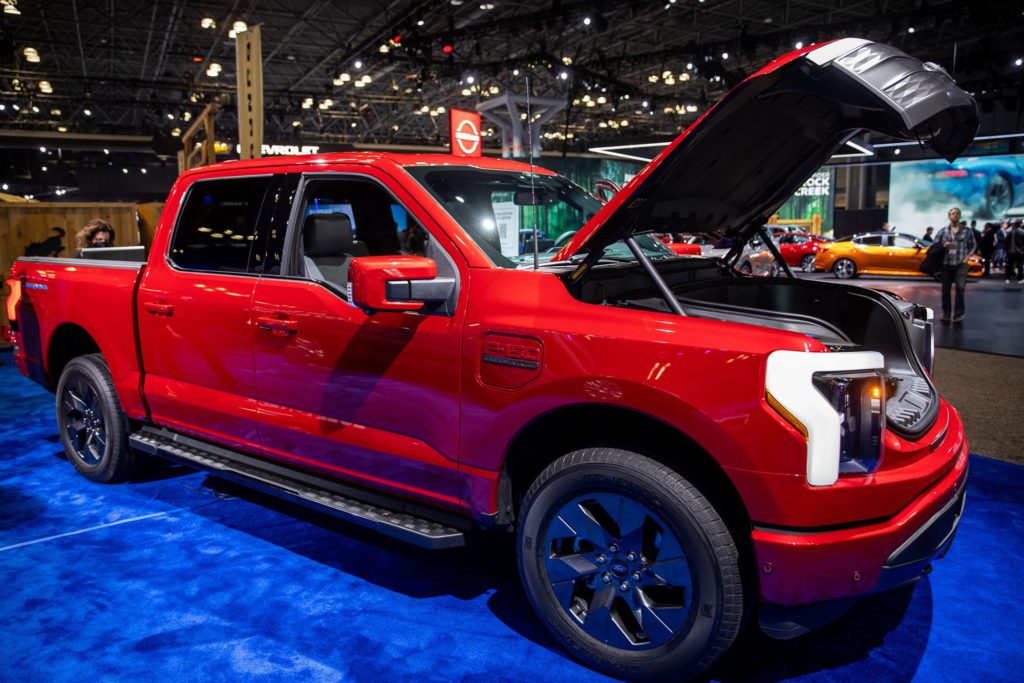
(Bloomberg) — Ford Motor Co. rose after the carmaker’s latest quarterly sales results showed growing demand for its lineup of electric vehicles, including the flagship F-150 Lightning plug-in pickup.

EV sales tripled in September as its overall deliveries gained 16% in the latest quarter, the company reported Tuesday. Ford said inventory of the new Lightning truck stays an average of only eight days on dealer lots before being snapped up. Sales of its electric Mustang Mach-E jumped 47.3%.

“Demand remains strong with new retail orders rapidly expanding,” Andrew Frick, Ford’s US sales chief, said in a statement.

Shares of the automaker advanced 6.1% at 12:10 p.m. in New York after an earlier gain of 7.3%, the most intraday since May 13. General Motors Co. also climbed 7% after it posted a 24% gain in third-quarter sales on Monday. 

In the latest tally, Ford is beating GM in the electric vehicle race. The Mustang Mach-E sold more than 28,000 units as of Sept. 30, outselling the Chevy Bolt and small numbers of Hummer and Cadillac EVs so far this year by about 5,000. Add in the 8,760 electric Lightning pickups Ford has sold since June and the automaker is solidly in second place in the EV race, behind market leader Tesla Inc. 

Ford’s gasoline-electric hybrid models, led by the F-150 hybrid and Maverick compact pickup, also are in high demand, with the manufacturer’s hybrid sales up 22.6% so far this year. Ford said it received 86,000 orders for Maverick last month when order banks were only open for one week, selling out the new truck for the 2023 model year.

Ford said more than 80% of Maverick buyers are purchasing their first truck. The top competitive trade-ins from Maverick buyers are Honda CR-V, Toyota RAV4 and Honda Civic, according to Ford.

The EV momentum is an early sign that Chief Executive Officer Jim Farley’s $50 billion bet on electrifying Ford’s lineup is starting to pay off. He has accelerated the automaker’s switch to battery-powered vehicles and has pledged to be building 2 million EVs a year by the end of 2026.

Shares in the automaker have been volatile lately, plunging the most in 11 years last month after it revealed supply-chain shortages would add $1 billion to costs in the third quarter. Ford’s stock is down about 41% this year.

More stories like this are available on bloomberg.com

©2022 Bloomberg L.P.
OnlyFans’s French Rival Taps DJ Snake to Expand Beyond Porn

(Bloomberg) — MYM, a French rival to OnlyFans Ltd., is expanding its focus beyond the adult entertainment as it looks to attract outside investors for the first time, in a round set to kick off next year. 

The company has struck a deal with DJ Snake, the stage-name for French musician William Grigahcine, who co-wrote hits including Turn Down for What and Lean On. MYM has 350,000 creators on its platform, who distribute exclusive photos and videos to paying subscribers. 

Grigahcine said he’ll offer exclusive updates to his subscribers for 5.99 euros ($5.95) a month. MYM keeps a 20% cut of subscriber fees, similar to OnlyFans. He also plans to live-stream DJ sets and tease his future singles on MYM, but he won’t upload entire songs, whose rights are owned by Universal Music Group.

“I will share my daily life with my community, and make them win exclusive experiences, like traveling with me, following me on tour,” said Grigahcine, who has 10 million Instagram followers, in an interview.

The company is looking for outside investment for the first time next year after being bootstrapped, its founders said, declining to elaborate on how much they plan to raise. While about 25% of the content published on MYM could be described as “not safe for work,” it’s working to diversify into areas including online learning, fitness training and music, according to its founders. The company also aims to expand outside of France, where 75% of its users are based, into US and the rest of Europe. 

Its push for more safe-for-work content reflects a similar effort from OnlyFans, which has also promoted its cooking classes, musicians and fitness-focused accounts as it works to add users. OnlyFans posted pretax profit of $433 million for 2022, seven times more than it earned in the previous year. It said it has 220 million users worldwide.

“In the history of every new market, there is always adult content coming first, because that field understands before the others how to make money,” MYM Co-Founder Gaspard Hafner said in an interview. 

Bootstrapped in 2019 by co-founders Pierre Garonnaire, 37 and Hafner, 35, MYM will also use money from the fundraising round to target ads to gain new users and creators. MYM had sales of 60 million euros last year, and projects it can earn 100 million euros in 2022 and 250 million euros in 2023. 

More stories like this are available on bloomberg.com

©2022 Bloomberg L.P.
NYC’s Migrant Crisis Needs ‘Federal Solution,’ Hochul Says

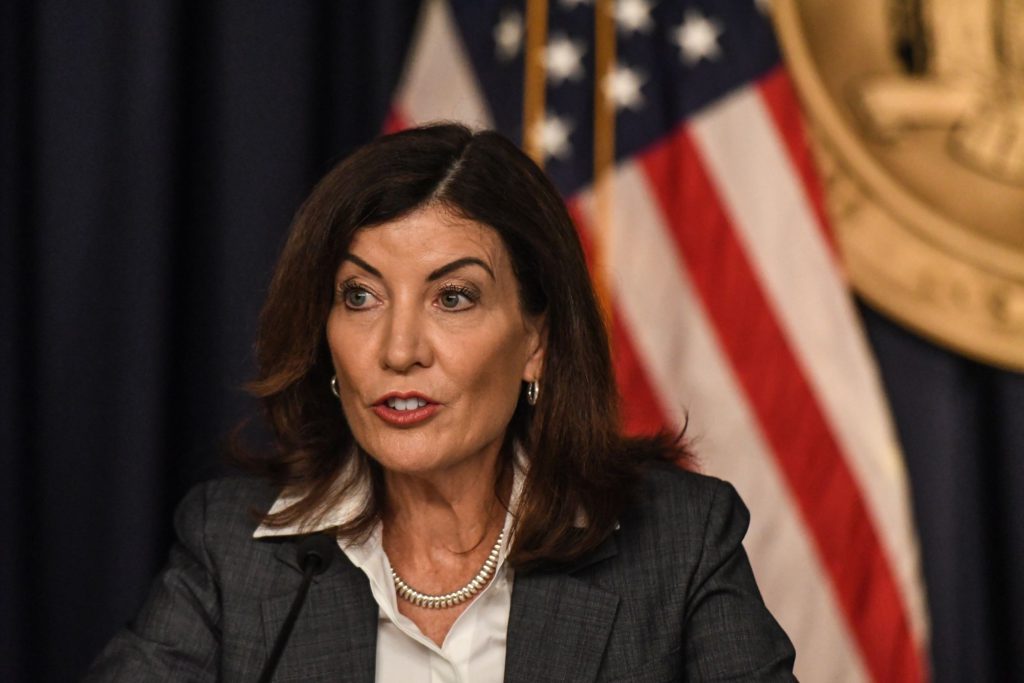
(Bloomberg) — New York Governor Kathy Hochul called on the Biden administration to present a “federal solution” to the influx of thousands of migrants that are being bused from border states, saying the state can only do so much.

“I’ve raised this with the White House,” she said during an interview Tuesday with Bloomberg Television’s David Westin. “Let’s look at federal facilities, federal staff to help supplement the city.” 

Hochul said she has been working “almost hourly” with New York City since the migrants began arriving to make sure the issue doesn’t “get out of control.” 

New York City Mayor Eric Adams on Monday night said the city had to abruptly halt the building of an emergency tent in the Bronx aimed to house recently arrived migrants before it even opened. Citing the risk of flooding, Adams said the city would open a tent on Randall’s Island after a weekend of storms that led advocates to raise fresh concerns about the original location.


Hochul is roughly a month away from November’s gubernatorial election, where she’s leading the polls against her Republican challenger, US Representative Lee Zeldin. With 54% to Zeldin’s 37% in the latest Siena College poll, Hochul is ahead but spending millions of dollars in advertisements to fend off Zeldin. 

Read More: NYC Is Must-Win Prize for Buffalo’s Hochul in NY Governor Race

The Buffalo, New York, native took over as governor last year after former Governor Andrew Cuomo resigned over sexual harassment allegations. Back then, the state’s economic picture was rosier, tax collections were higher than anticipated, and New York passed the largest ever state spending plan. Now, Hochul and other public officials are girding for a downturn. 

Hochul said the state was positioned well for a potential recession. “Even though the skies were sunny last January when we did our budget, I also knew we had to be prepared for a rainy day,” she said, citing reserves of as much as 15% that can be used to help stabilize the state’s finances should the economy falter.

She also pledged not to raise taxes, continue to fight a pandemic-induced spike in crime, and to keep positioning the state as a business-friendly destination, citing a $100 billion chip factory announced on Tuesday by Micron Technology Inc.

Read More: Micron Plans to Invest Up to $100 Billion in NY Chip Factory

More stories like this are available on bloomberg.com

©2022 Bloomberg L.P.
Micron Plans Investment of Up to $100 Billion in New York Chip Factory

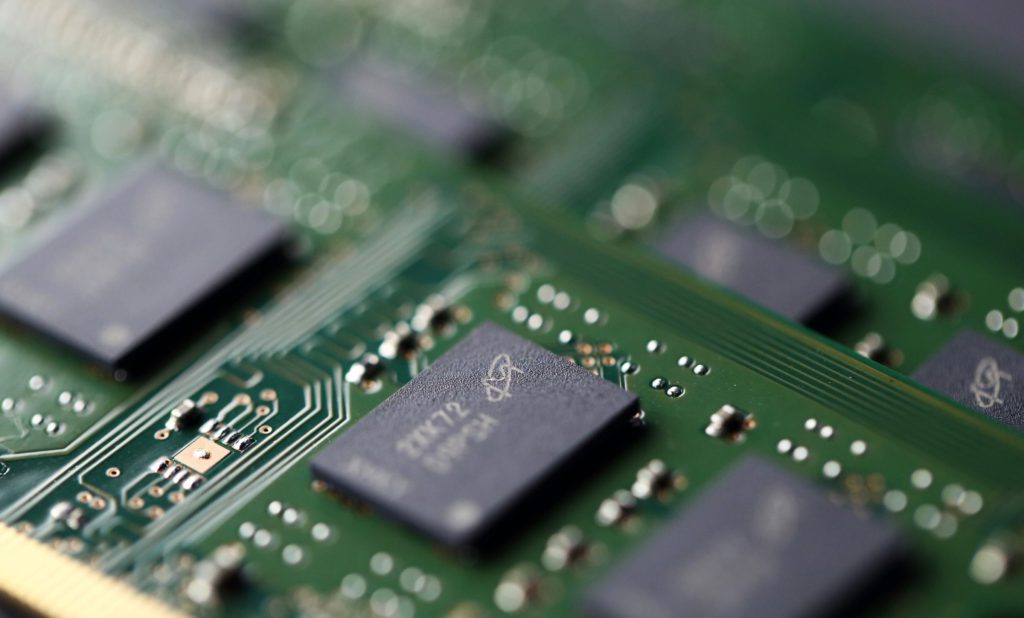
(Bloomberg) — Micron Technology Inc. said it plans to invest as much as $100 billion over the next 20 years to build a factory in upstate New York to boost US production of memory chips. 

The announcement on Tuesday represents the largest private investment in New York state history, Boise, Idaho-based Micron said. The company said the first phase investment of $20 billion, in Clay, New York, is planned by the end of this decade and that it will be the largest semiconductor facility built in the US. The chips will supply mobile devices, data centers and electric vehicles.

The New York site, which will generate about 50,000 jobs in the state, including about 9,000 high-paying Micron positions, adds to the company’s previously announced manufacturing facility in Boise. In return, the company said it expects to get $5.5 billion in incentives from the state of New York over the course of the project.

“As the first upstate governor in 100 years, this was a personal quest and failure was not an option,” said Governor Kathy Hochul at an event commemorating the announcement held at Syracuse University, which is near the proposed factory site. “We’re doing this for generations to come.”

The so-called megafab chip factory complex is part of Micron’s strategy to increase DRAM production to 40% of the company’s global output over the next decade.

CHIPS Act

Micron’s commitment comes after the US government passed the CHIPS and Science Act in August, providing $52 billion to boost domestic semiconductor research and development. The bill is at the center of the Biden administration’s effort to reduce dependence on Asian suppliers like Taiwan and South Korea, whose homegrown companies are leading the market, and to address supply-chain disruptions and resulting price hikes for certain goods containing semiconductors. 

The bill’s signing spurred US chip companies to plan billions of dollars in new investments. For example, Qualcomm Inc. is partnering with GlobalFoundries Inc., which also has a facility in New York state, in a $4.2 billion agreement to manufacture chips.

“We will bring these jobs back to our shores and end our dependence on foreign-made chips,” said Senate Majority Leader Chuck Schumer. “This massive project will be built with union labor and high-paying jobs.” 

Micron Chief Executive Officer Sanjay Mehrotra said he was “deeply appreciative” of President Biden and his administration for making the CHIPS and Science Act a priority.

“Today only 2% of the world’s memory is made here in the US, but we are going to change that,” Mehrotra said, outlining plans to help grow the US market share to 10% of the global supply in the next decade.

Biden, in a statement, called the plant “another win for America” and pledged to build “an economy from the bottom up and the middle out, where we lower costs for our families and make it right here in America.”

New York Investment

Site preparation work for the chip factory will start next year and construction will begin in 2024. Production output will increase in the latter half of the decade, gradually increasing in line with industry demand, according to the statement from Micron. 

The site, near Syracuse, New York, could eventually include four 600,000 square foot cleanrooms, accounting for a total of 2.4 million square feet of cleanroom space – the size of about 40 US football fields.

Hochul, in an interview with Bloomberg Television, said the $5.5 billion in state tax incentives wasn’t a “blank check, you know, a hope, a wing and a prayer” and that tax credits would only be doled out after jobs are created. 

She said Micron’s investment “telegraphs that New York State is open for business” and will also draw further businesses across the chip supply chain. “This is a wise investment for New York because we’re in competition with every other state in the nation.”

(Updates throughout with comment from Schumer, Hochul)

More stories like this are available on bloomberg.com

©2022 Bloomberg L.P.

T-Mobile Follows Verizon Playbook in Asset-Backed Bond Sale

(Bloomberg) — T-Mobile US Inc. sold its first-ever bond backed by customers’ phone loans, a move that helps diversify its funding sources as the company digests its 2020 purchase of rival Sprint Corp.

The telecommunications giant on Tuesday priced its sale of $842 million of asset-backed securities. It issued $750 million to investors at a spread of 90 basis points above the US Treasury interpolated-curve, while the remainder was not offered. 

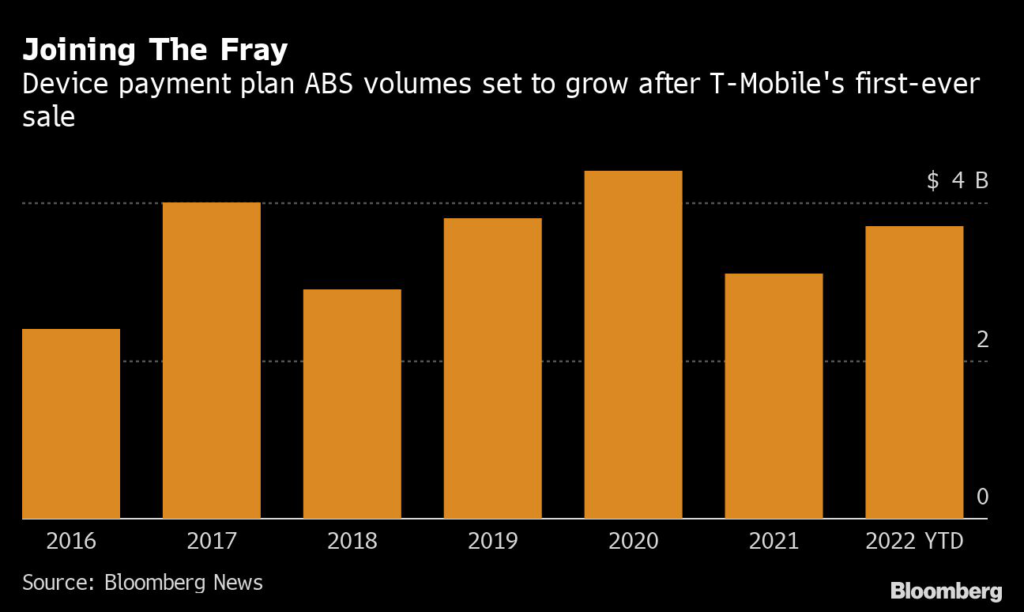
With the bond sale, the wireless network operator is following a path created by competitor Verizon Communications Inc., which started issuing similar securities backed by device payment plans in 2016. Until now, Verizon’s ABS bonds had comprised the entire market for such securities, according to data compiled by Bloomberg News. 

The market for phone plan-backed bonds is on track for a record this year. Issuance stands at $3.7 billion so far — not including T-Mobile’s sale — compared to $4.4 billion for all of 2020. T-Mobile’s issuance would bring the tally to about $4.5 billion. 

“Verizon has been able to grow the maturity of this sector, with stable performance over time and I think that has really helped develop this niche consumer ABS sector into something that’s a bit more open to investors,” said Ian Rasmussen, managing director of asset-backed securities at Fitch Ratings, in an interview.

Fitch and Moody’s Investors Service are rating the T-Mobile transaction, and expect to award an ‘AAA’ grade to the largest tranche. RBC Capital Markets led the bond sale, along with Barclays Plc and Mitsubishi UFJ Financial Group. 

The money raised will help T-Mobile diversify its funding sources after taking on a large debt load to pay for its April 2020 acquisition of Sprint as well as its purchase of spectrum rights. Spectrum is crucial to building out wireless networks. 

Representatives for T-Mobile and the banks arranging the transaction declined to comment.

T-Mobile has been on a hot streak lately. Subscriber growth has been rising even after its purchase of Sprint put it firmly among the top three US mobile providers. Its stock price has been on a tear even as rivals Verizon and AT&T Inc. struggle, helping make the company a hedge fund favorite. 

The firm has also been recently upgraded to investment grade by S&P Global Ratings, with Moody’s having given it a blue-chip rating earlier in the summer. Fitch also rates the company BBB-.

AT&T said in July that more of its customers were falling behind on their bills, a risk for a telecom company when economic growth is slowing. If T-Mobile were to face earnings pressure and possible corporate credit ratings downgrades, this securitization could be hurt, Fitch said in its presale report dated Sept. 27, in which it examined the transaction.

The collateral looks safe for now. The loans, or “equipment installment plan sale contracts,” that back the securitization are originated by T-Mobile, and have an average FICO score of 706, according to the report.

A Priority

Despite the risks of a looming recession and the fact that households can now no longer count on the support of government stimulus payments, consumer finances are still in relatively good shape. Even if households begin to run low on cash, it’s likely to take a lot for them to stop making payments on their phones, analysts said. 

“The payment priority of your phone plan has increased over the years, and the pandemic has pushed that even further along,” said Rasmussen.

(Updates to show the deal priced.)

More stories like this are available on bloomberg.com

©2022 Bloomberg L.P.

Close Bitnami banner
Bitnami