Bloomberg

Apple Will Be Forced to Use New Charger After EU Votes for USB-C

(Bloomberg) — Members of the European Parliament voted to force companies such as Apple Inc. to adapt products that don’t already feature a standard USB-C charger to use one. This would include iPhones, in Apple’s case.

A total of 602 lawmakers voted for the plan on Tuesday, with 13 against, and eight abstaining.

The deal, provisionally agreed in June between the commission and the European Union’s 27 countries, still needs to get the final sign-off from the EU member states. The rules are likely to be written into law at the beginning of 2023.

Alex Agius Saliba, the lead negotiator in the European Parliament, held up a pile of power adapters when debating the final proposal in Strasbourg on Tuesday. “We are replacing this pile of chargers,” he said of the bundle, “with just this,” holding up a single USB-C cable. 

The proposal originally angered Apple, which said it would reduce innovation. But the company is currently testing future iPhone models that replace its proprietary Lightning charging port with standard USB-C connector, Bloomberg reported in May. Current Apple laptops and iPad Pro models already use them, as do most popular Android smartphones.

Read more: Apple Plans Shift to USB-C Charging on IPhone to Meet New EU Law

Under the proposed rules, all phones and tablets sold in Europe will have to comply by the fall of 2024. Laptops will have longer to make the switch. The commission will also be able to set standards for wireless charging in the future.

The proposal was first made last year by the European Commission. It’s meant to cut down on environmental waste and save consumers an estimated €250 million ($247 million) a year as they will no longer need to buy a different charger for each device, Commission Executive Vice President Margrethe Vestager told the parliament on Tuesday.

“The common charger will simplify the lives of Europeans,” said Vestager. “No more obsolete chargers piling up in drawers, reducing costs for European citizens.”

More stories like this are available on bloomberg.com

©2022 Bloomberg L.P.

Goodwill Launches Resale Site Featuring Luxury Brands Like Gucci and Prada

(Bloomberg) — Goodwill is making its first big push online with GoodwillFinds, a curated marketplace of donated goods that seeks to compete with Poshmark and The RealReal, secondhand sites where resale has become sport to shoppers hunting luxury brands to flip for profit.

Launching with more than 100,000 items that typically fill the racks and shelves of brick-and-mortar Goodwill stores including clothes, toys and housewares, the site is also chock full of unique high-end finds like a retro red patent leather Gucci bag selling for $499.99, black suede Prada shoes priced at $220.00 and a Burberry sapphire crystal Swiss watch up for grabs at $230.85. 

The charity, founded over a century ago, made more than $5.4 billion in donated goods retail revenue across the US and Canada last year. It uses the net proceeds to help over 100,000 people get trained and placed in full-time jobs each year, GoodwillFinds Chief Executive Officer Matthew Kaness said in an interview.

There’s an added benefit to the planet as well.

“Goodwill is not just the OG of thrifting, it’s also one of the pioneers of the circular economy,” he said. (“OG” is a term that signifies a person or group is a well-respected originator in a category or industry.) “Last year, three billion pounds of items were diverted from landfills with the resale of donations made at Goodwill’s 3,300 stores across US and Canada.”

Although the amount of merchandise from big luxury labels has yet to be determined, the site is expected to have over a quarter million items by the beginning of next year, Kaness said, and a loyalty membership program catering to collectors seeking early access to the newest releases is in the works. On the marketing front, they are also planning to collaborate with social media influencers to promote their favorite finds to fans.

“To date, 90% of sales have been through non-digital selling channels, primarily by third party marketplaces like Amazon and eBay that individual local Goodwills have spun up over the years, but this is the first modern marketplace with national scale and reach,” Kaness said. The vision for it came from a consortium of Goodwill members from across the country, including six who sit on the board and are piloting the e-commerce platform. Kaness, who is a retail veteran from Walmart, Urban Outfitters and Modcloth, has as his goal to get all of the Goodwill stores across US and Canada online with the platform.

Growth in the resale market, which has outpaced traditional retail apparel and personal luxury nearly three-fold since 2012, is expected to outpace retail by three times through 2031, according to Morningstar. ThredUp’s 2022 Resale Report says the secondhand market should double by 2026, reaching $82 billion.

“Watching the rise of these secondhand marketplaces and the success they’ve been having with customers moving online has served as a major impetus,” Kaness said. “I feel this is a revolution that’s happening in retail right now where secondhand has finally crossed over and is seen as a force for good and not just a good deal — and we’re the sleeping giant that has woken up and is taking our rightful place.”

More stories like this are available on bloomberg.com

©2022 Bloomberg L.P.

Trio Shares Physics Nobel for Work on Quantum Mechanics

(Bloomberg) — Three scientists were awarded the Nobel Prize in physics for their work on quantum mechanics, laying the groundwork for quantum computing.

Alain Aspect from France, John F. Clauser from the US and Anton Zeilinger from Austria will share a 10 million-krona ($900,000) award, the Royal Swedish Academy of Sciences said in a statement on Tuesday. They are awarded the prize “for experiments with entangled photons, establishing the violation of Bell inequalities and pioneering quantum information science,” the academy said.

Their work on the development of experimental tools has “laid the foundation for a new era of quantum technology,” according to the award committee. “Being able to manipulate and manage quantum states and all their layers of properties gives us access to tools with unexpected potential.”

(Updates with comment from academy)

More stories like this are available on bloomberg.com

©2022 Bloomberg L.P.

Crypto Nomads’ Wandering Ways Face a Bear-Market Reality

  • Listen to Bloomberg Crypto on the iHeartRadio App
  • Listen to Bloomberg Crypto on Apple Podcasts
  • Listen to Bloomberg Crypto on Spotify

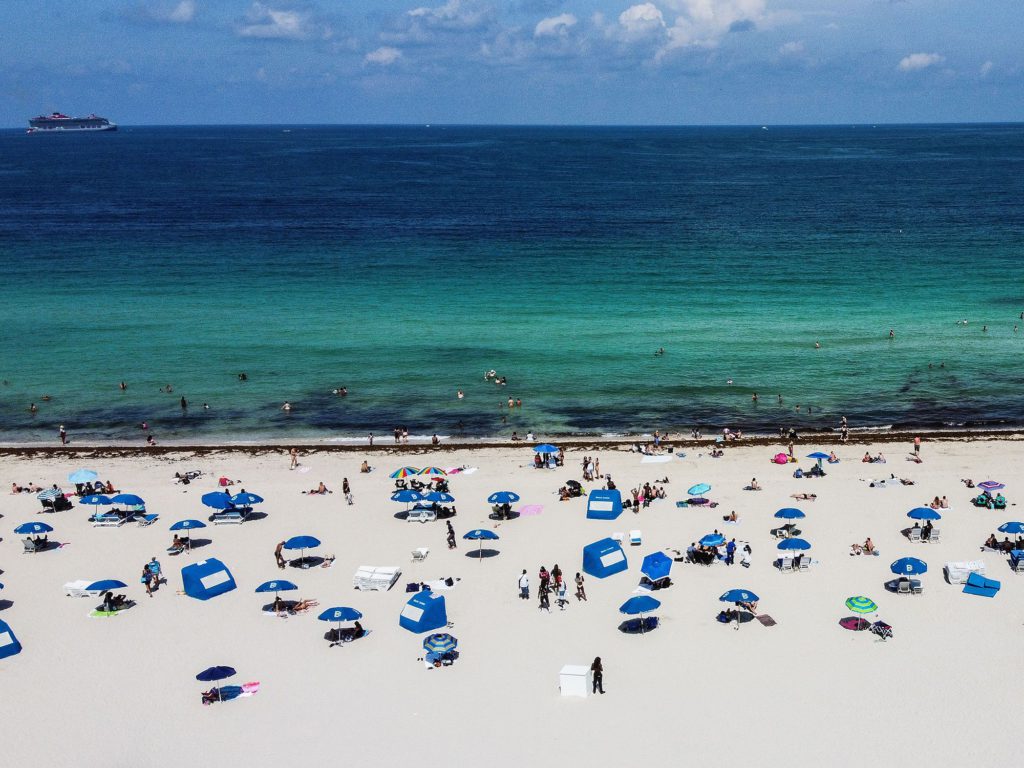
(Bloomberg) — For many of us, the pandemic meant getting to know what it’s like to work remotely and in most cases from home. But in crypto, remote working had already been the norm for some time, with many of its ranks roaming the world year-round and logging in from dreamy locations like the sandy beaches of the Caribbean or the palm-lined promenades of Miami Beach.

When crypto prices were high, these roving crypto upstarts enjoyed the benefits of being a digital nomad, moving from country to country in an attempt to leave behind the stress, expense and bustle that’s often associated with large financial centers. 

But now that the market isn’t quite as sunny, many of these nomads have started trickling back to the financial hubs of the world. Bloomberg reporter Tanzeel Ahktar and Panther Protocol CEO Oliver Gale join this episode to explore the crypto nomad lifestyle and explain why, for the time being, some have decided to give it up. 

Follow us on Twitter @crypto, and subscribe to the Bloomberg Crypto Newsletter at https://bloom.bg/cryptonewsletter

More stories like this are available on bloomberg.com

©2022 Bloomberg L.P.

Nord Stream Leak Is a Climate Disaster That Oil and Gas Repeat Daily

(Bloomberg) — Planet-warming methane that’s bubbled up from the ruptured Nord Stream gas pipelines at the bottom of the Baltic Sea into the atmosphere is a climate disaster. But it’s one that’s repeated across the globe roughly every 1.5 days. The oil and gas industry emits an estimated 80 million metric tons of methane each year during production, processing and transport of the fuels, according to the International Energy Agency’s Methane Tracker. That works out to about 220,000 tons each day — slightly less than the 300,000 tons the German government estimated last week would enter the atmosphere from the ruptured pipes.

“As massive as the Nord Stream methane release may be — and it does seem to set a new record — these emissions are dwarfed by what the oil and gas industry routinely releases,’’ said Antoine Halff, co-founder and chief analyst at Kayrros SAS, a geoanalytics company. 

For decades leaks and intentional releases of the odorless and invisible gas from pipelines, wellheads and processing facilities escaped public scrutiny. Now, a new wave of satellites that use infrared cameras to track the releases are exposing fossil fuel operators who still routinely vent methane directly into the atmosphere despite approaches that can limit those emissions by as much as 90%. 

To assess the impact of methane on the climate, scientists typically convert the gas into CO2 equivalent using  short-term and long-term multipliers. Because methane degrades quickly after its first couple of decades in the atmosphere its impact is front-loaded, and curbing emissions of the gas is one of the cheapest and easiest ways to curb global warming.

Converting the German government estimate shows the leaked gas will have the same warming impact as roughly 25.2 million tons of CO2 over the next two decades. Even though that impact may be short-lived, it can still trigger irreparable damage through higher temperatures that contribute to melting icecaps and glaciers and warmer seas, which disrupt key water cycles.Two of the three releases occurred in Denmark’s exclusive economic zone and authorities there said the emissions would be equal to about 32% of the country’s annual greenhouse gas discharges.  Danish authorities said on Sunday that the Nord Stream 1 pipeline was no longer leaking, a day after officials said the release on Nord Stream 2 had also stopped. Russia’s Gazprom, which supplies the gas, confirmed in a statement Monday that the leaks had ended. Here are some activities whose emissions are roughly similar or otherwise comparable to the Nord Stream leaks. The calculations don’t take into account CO2 emissions from the gas had it been combusted to generate heat or power. 

EVs

Electric vehicles are set to avert about 63.3 million tons of CO2 emissions this year, according to the International Energy Agency’s Global EV Outlook published last year. One way to think about the short-term climate impact of the Nord Stream leaks is that they effectively wipe out 40% of those gains.

Crypto

Bitcoin mining generates in excess of 70 million tons of CO2 per year, according to Digiconimist, a website that calculates the energy consumed from mining crypto. The amount of the digital currency that could have been generated with electricity produced from 25.2 million tons of CO2 is approximately 117,000 coins, according to Alex de Vries, founder of the website and a researcher at Vrije University of Amsterdam.

Hail Creek Coal Mine

Glencore Plc’s Hail Creek coal mine spewed between 123,000 and 263,000 tons of methane last year based on concentrations of the super-potent greenhouse gas detected by satellite, according to researchers with SRON Netherlands Institute for Space Research, who analyzed satellite data. The short term impact of those emissions equate to between 10.3 million and 22 million tons of CO2. 

Beef

About 480 million pounds of beef would produce the same climate footprint as the Nord Stream leaks, according to a calculation from the non-profit Environmental Defense Fund. That’s enough meat to supply Israel for one year. 

Coal Plants

Six coal-fired power plants operating for a year would generate roughly the same amount of planet warming pollution as the Nord Stream emissions, according to the EDF calculator. 

Internal Combustion Engine Cars

The climate impact from the Nord Stream leaks is equivalent to the annual emissions from 5.2 million US cars, according to a calculation by Bloomberg based on Environmental Protection Agency figures about vehicle efficiency. 

(Changes tons to pounds in twelfth paragraph.)

More stories like this are available on bloomberg.com

©2022 Bloomberg L.P.

Stocks, Bonds Rally as Peak-Rate Wagers Surge: Markets Wrap

(Bloomberg) — A rally in global markets extended into a second day, lifting US index futures and European stocks, as investors wagered central banks will have to slow the pace of monetary tightening.

Futures on the S&P 500 and Nasdaq 100 jumped at least 1.5% each after the underlying indexes posted a strong start to the quarter on Monday. Europe’s Stoxx 600 gauge rose for a third day. The Australian dollar traded weaker after policymakers raised interest rates by less than forecast. Oil advanced on expectations the OPEC+ alliance will deliver a substantial supply cut. The dollar and Treasury yields declined for a second day.

Investors see weaker-than-estimated US manufacturing data supporting a dovish tilt at the Federal Reserve after 3 percentage points of hikes began to tell on the economy. Money markets now see the Fed Funds Rate peaking below 4.5% by March. Speculation is growing that the global wave of disruptive monetary tightening is nearing its end, after the Reserve Bank of Australia raised rates by half as much as expected. 

“While the more rational approach outlined by the RBA does not bring forward rate cuts, it offers the possibility of stepping back from the more extreme hawkishness of recent weeks,” Stephen Innes, managing partner at SPI Asset Management, wrote in a note. “That implies bull steepening in bond markets and should provide some support for equity markets if other central banks follow suit.”


Money markets signal the Fed will hike rates a further 125 basis points at most by March compared with as much as 165 basis points seen following the third three-quarter point increase last month. These pared expectations spurred a rally in Treasuries across the curve on Tuesday. The 10-year rate shed 6 basis points Tuesday, while the two-year yield briefly slid below the 4% mark.

The dollar headed for the lowest level since Sept. 22, with a rebounding British pound acting as the biggest drag. The UK’s withdrawal of a tax-cut plan soothed nerves about the government’s fiscal health, though doubts remained about the outlook for the currency.

In Europe, the equity benchmark jumped by the most in three weeks as travel, technology and retail companies posted some of the biggest gains. The MSCI Asia Pacific Index rallied 2.2%, the most since March. Japan’s Topix stock benchmark jumped more than 3%, boosted by technology shares.

Electric-vehicle makers rose in New York premarket trading. Rivian Automotive Inc. soared 7% after reaffirming its goal to build 25,000 EVs this year. Tesla Inc. advanced 3.1% on a report that Cathie Wood’s Ark Investment Management LLC bought the shares.

West Texas Intermediate rose near $84 a barrel after rallying by more than 5% on Monday. The Organization of Petroleum Exporting Countries and its allies including Russia will consider reducing output by more than 1 million barrels a day when they meet on Wednesday, according to delegates.


China’s onshore markets will remain shut this week for holidays, while the Hong Kong exchange is closed Tuesday for the Chung Yeung Festival.

Key events this week:

  • Eurozone PPI, Tuesday
  • US factory orders, durable goods, Tuesday
  • Fed’s John Williams, Lorie Logan, Loretta Mester, Mary Daly speak at events, Tuesday
  • Eurozone services PMIs, Wednesday
  • OPEC+ meeting begins, Wednesday
  • Fed’s Raphael Bostic speaks, Wednesday
  • The Reserve Bank of New Zealand meets, Wednesday
  • Eurozone retail sales, Thursday
  • US initial jobless claims, Thursday
  • Fed’s Charles Evans, Lisa Cook, Loretta Mester speak at events, Thursday
  • US unemployment, wholesale inventories, nonfarm payrolls, Friday
  • BOE Deputy Governor Dave Ramsden speaks at event, Friday
  • Fed’s John Williams speaks at event, Friday

Will earnings disappoint and push equities to new lows? This week’s MLIV Pulse survey asks about corporate earnings. It’s brief and we don’t collect your name or any contact information. Please click here to share your views.

Some of the main moves in markets:

Stocks

  • The Stoxx Europe 600 rose 2.1% as of 9:39 a.m. London time
  • Futures on the S&P 500 rose 1.5%
  • Futures on the Nasdaq 100 rose 1.8%
  • Futures on the Dow Jones Industrial Average rose 1.3%
  • The MSCI Asia Pacific Index rose 2.2%
  • The MSCI Emerging Markets Index rose 1.6%

Currencies

  • The Bloomberg Dollar Spot Index fell 0.3%
  • The euro rose 0.5% to $0.9872
  • The Japanese yen fell 0.1% to 144.75 per dollar
  • The offshore yuan rose 0.6% to 7.0649 per dollar
  • The British pound rose 0.5% to $1.1374

Cryptocurrencies

  • Bitcoin rose 1.8% to $19,940.47
  • Ether rose 1.9% to $1,349.14

Bonds

  • The yield on 10-year Treasuries declined six basis points to 3.58%
  • Germany’s 10-year yield declined 10 basis points to 1.82%
  • Britain’s 10-year yield declined 10 basis points to 3.87%

Commodities

  • Brent crude rose 0.6% to $89.39 a barrel
  • Spot gold rose 0.4% to $1,707.31 an ounce

More stories like this are available on bloomberg.com

©2022 Bloomberg L.P.

Elon Musk’s Antics Turn Owners and Would-Be Buyers Against Tesla

(Bloomberg) — This story was originally published on July 30. On Monday, Elon Musk infuriated Ukrainians when he suggested that the country seek a negotiated solution to the invasion by Russia and cede Crimea for good.

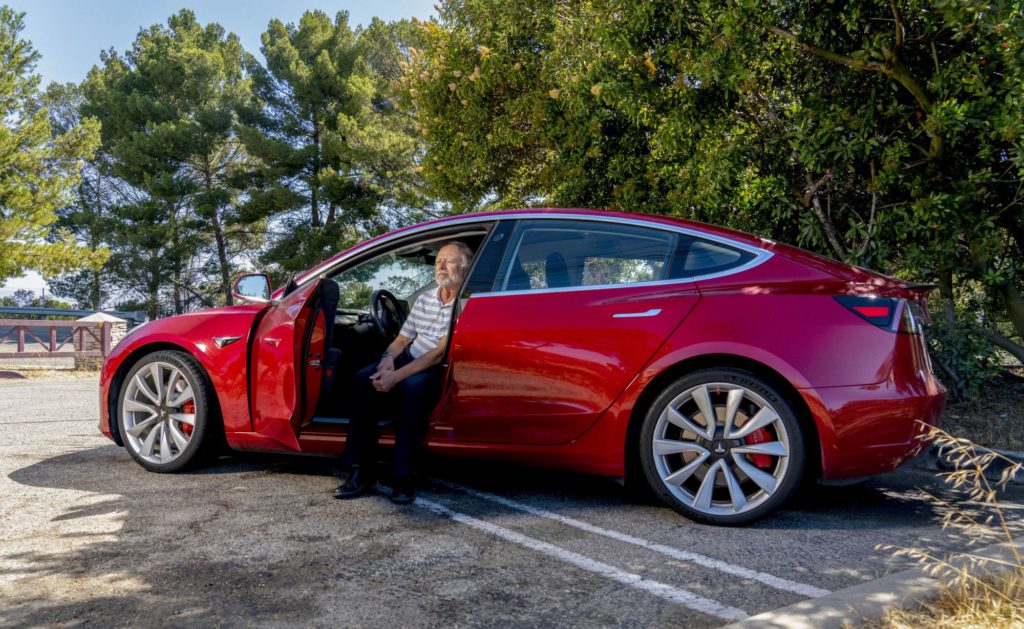
Dennis Levitt got his first Tesla, a blue Model S, in 2013, and loved it. “It was so much better than any car I’ve ever driven,” the 73-year-old self-storage company executive says.

He bought into the brand as well as Elon Musk, Tesla Inc.’s charismatic chief executive officer, purchasing another Model S the following year and driving the first one across the country. In 2016, he stood in line at a showroom near his suburban Los Angeles home to be one of the first to order two Model 3s — one for himself, the other for his wife.

“I was a total Musk fanboy,” Levitt says.

Was, because while Levitt still loves his Teslas, he’s soured on Musk. “Over time, his public statements have really come to bother me,” Levitt said, citing the CEO’s spats with US President Joe Biden, among others. “He acts like a seven-year-old.”

Before it was reported Musk had an affair with Sergey Brin’s wife, which he’s denied; before his slipshod deal, then no-deal, to acquire Twitter Inc.; before the revelation he fathered twins with an executive at his brain-interface startup Neuralink; before SpaceX fired employees who called him “a frequent source of distraction and embarrassment”; before his daughter changed her name and legal gender after his history of mocking pronouns; before an article said SpaceX paid an employee $250,000 to settle a claim he sexually harassed her, allegations he’s called untrue; Musk’s behavior was putting off prospective customers and perturbing some Tesla owners.

The trends have shown up in one consumer survey and market research report after another: Tesla commands high brand awareness, consideration and loyalty, and customers are mostly delighted by its cars. Musk’s antics, on the other hand? They could do without.

Creative Strategies, a California-based customer-experience measurer, mentioned owner frustration with Musk in a study it published in April. A year earlier, research firm Escalent found Musk was the most negative aspect of the Tesla brand among electric-vehicle owners surveyed.

“We hear from Tesla owners who will say, ‘Look, I love my vehicle, but I really wish I didn’t have to respond to my friends and family about his latest tweet,’” says Mike Dovorany, who spoke with thousands of EV owners and potential buyers during his two years working in Escalent’s automotive and mobility group.


Tesla has so far had no trouble growing its way through Musk’s many controversies. The dip in vehicle deliveries the company reported last quarter was its first sequential decline since early 2020 and largely had to do with Covid lockdowns in Shanghai forcing its most productive factory to shut for weeks. Competitors that have been chasing the company for a decade may still be years away from catching up in the EV sales ranks.

Musk’s star power, built in no small part by his activity on Twitter — the same forum where he’s become such a lightning rod — has contributed immensely to Tesla, especially since it’s shunned traditional advertising. His steady stream of online banter, punctuated with the occasional grandiose announcement or stunt (see: shooting a Roadster into space) keeps Tesla in the headlines. During the company’s earlier days, the trolling and glib comments were a feature, not a bug. They allowed Musk to shape media coverage and made him the ringleader for Tesla’s legion of very-online fans.

But after making Tesla and himself so synonymous with one another, Musk has waded into political conflicts, attempted to buy one of the world’s most influential social media platforms and struggled to bat back unflattering coverage of his personal life, putting the company’s increasingly valuable brand at risk.

Stay on top of the electric car revolution by signing up to our Hyperdrive newsletter here.

Jerry James Stone, a 48-year-old chef in Sacramento, California, who teaches his 219,000 YouTube channel subscribers how to make vegan and vegetarian meals, drives a Volkswagen Beetle convertible and plans to go electric with his next car. He isn’t sure yet which model, but certain it won’t be a Tesla.

“Elon has just soiled that brand for me so much that I don’t even think I would take one if I won one,” Stone says. “You have this guy who’s the richest dude in the world, who has this huge megaphone, and he uses it to call somebody a pedophile who’s not, or to fat-shame people, all these things that are just kind of gross.”

According to Strategic Vision, a US research firm that consults auto companies, some 39% of car buyers say they wouldn’t consider a Tesla. That’s not necessarily out of the ordinary — almost half of respondents say they won’t consider German luxury brands. But Tesla does lag more mass-market brands: Toyota, for example, is only off the shopping list for 23% of drivers.

Emma Sirr, a 28-year-old worker in cloud computing who lives in Bozeman, Montana, gets around with her partner and their two dogs in a 2004 Nissan Frontier. They’ve been researching EVs for about three years and until recently considered Teslas the only viable option, given their range and the charging infrastructure the company has built in their area. But they refused to buy one because of Musk, their main gripes being his politics, staff turnover at the company and its cavalier approach to autonomous-driving technology.

“We took Tesla off the table from the get-go,” Sirr says. She and her partner have their eyes on the Kia Niro and Chevrolet Bolt as possible alternatives. “As consumers, our power is what we buy. I think younger generations in particular vote with their wallets, and I feel like that might come back to bite.”

Read more: Hyundai Quietly Climbs the EV Sales Charts, and Elon Musk Notices

For much of the past decade, Tesla lacked competitors that matched its models’ battery range and other measures of performance. Consumers put off by Musk’s mischief had few EVs to turn to. As legacy automakers introduce more capable electric models, Tesla won’t have as much leeway.

“We’ve seen among the early adopters more of a willingness to take risks or to put up with things that are out of the ordinary,” says Dovorany, who left Escalent for an automotive tech startup earlier this year. “We’re not seeing that as much with incoming buyers.” To win this cohort, automakers need to check every box, and for some, that includes employing a CEO who doesn’t share Hitler memes on social media.

Levitt, the self-described former Musk fanboy, took a test ride last month in a Lucid. He wasn’t sold on it, partly he says because it didn’t have enough cargo space for his golf gear. He’s still waiting for another automaker to steal him away from Tesla and considering models from Audi, Mercedes and BMW.

“If you take Mr. Musk and his antics out of the equation, I’m about 98% certain that my next car would be a Tesla,” Levitt says. “His antics put me in play.”

(This story was originally published on July 30. On Monday, Elon Muskinfuriated Ukrainians when he suggested that the country seek a negotiated solution to the invasion by Russia and cede Crimea for good.)

More stories like this are available on bloomberg.com

©2022 Bloomberg L.P.

STC to Spend $1 Billion to Make Saudi Arabia Regional Data Hub

(Bloomberg) — Sign up for our Middle East newsletter and follow us @middleeast for news on the region.

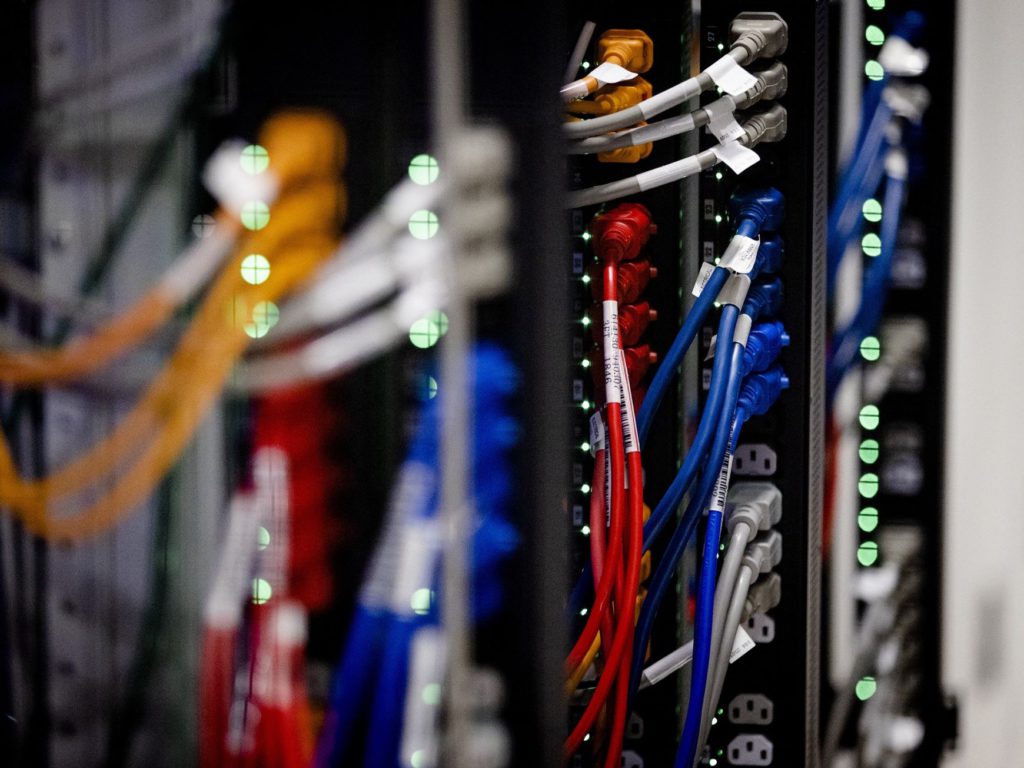
Saudi Telecom Co., the Middle East’s most profitable mobile operator, plans to spend about $1 billion to transform the kingdom into a regional data hub, and may sell a stake in its Center3 business to finance the plans.

The investment over the next five years by Center3, as the data unit is known, would help Saudi Arabia host more media, gaming and corporate data, according to Mohammed Alabbadi, STC’s chief carrier and wholesale officer and chairman of Center3. It would also follow an initial investment of $1 billion on building data centers and submarine data cables.

STC, which wholly owns Center3, may consider a stake sale in the future.

“We have already had talks with potential investors,” Alabbadi said. “Whether it’s direct equity share or an IPO, those things will be analysed in due course.”

STC is expanding into a range of services beyond its core telephone network business. In the past few years, its digital payments arm has grown to be worth more than $1 billion and the company has listed a stake in its Internet services arm.

“The region, and Saudi Arabia specifically, is still a consumer of data when it comes to how we connect to other hubs — whether thats cloud content, media or gaming.” said Alabbadi. “With the growing demand there’s a rising need to host that content locally.”

More stories like this are available on bloomberg.com

©2022 Bloomberg L.P.

Facebook Post Spurs Police Grilling of Sierra Leone Mayor

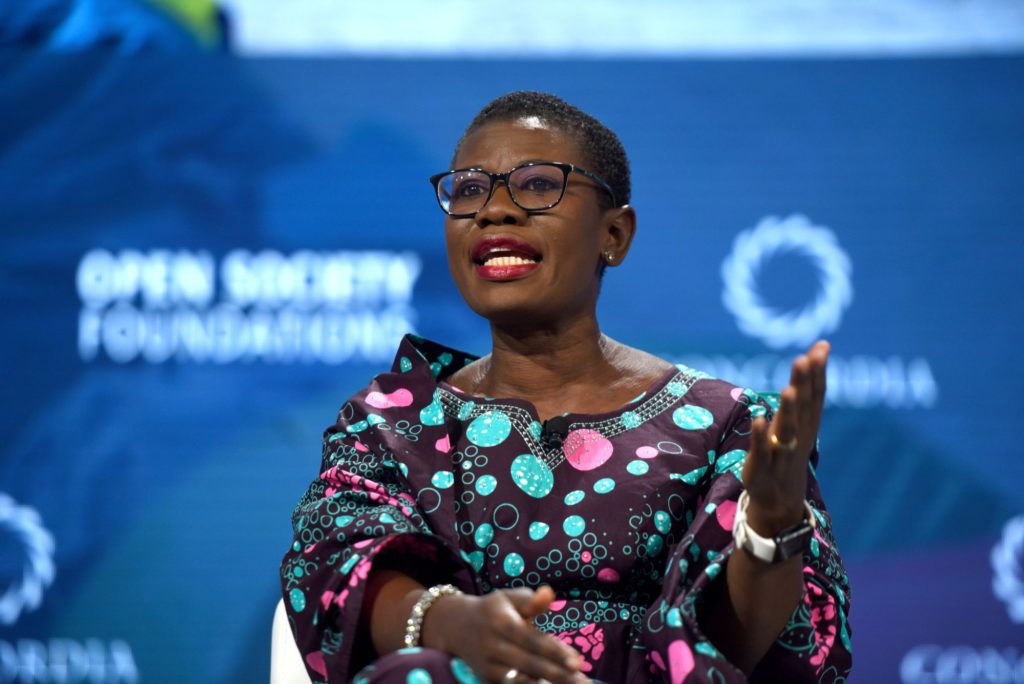
(Bloomberg) — Police in Sierra Leone questioned the mayor of Freetown, the West African nation’s capital, for eight hours over a Facebook post protesting the arrest of one of her councilors.

Mayor Yvonne Aki-Sawyerr complained in a live video filmed in front of police about the arrest of Councilor Sheku Turay, who was detained for allegedly inciting deadly violence earlier this year.

Turay and Aki-Sawyerr were about to board a flight to New York to attend the Bill & Melinda Gates Foundation’s Goalkeepers event last month when he was apprehended. Police then invited Aki-Sawyerr to answer questions on “an alleged case of obstruction of police duties and disorderly behavior,” a police notice shows.

Aki-Sawyerr arrived at the police Crime Investigation Department in Freetown Monday at 10 a.m. and was questioned until about 6 p.m., she said in a text response to questions. She will return to the police office Tuesday morning for further interrogation, she said.

A police spokesperson didn’t immediately respond to a call and message seeking comment.

There have been simmering tensions between the ruling Sierra Leone People’s Party and Aki-Sawyerr’s opposition All People’s Congress party as the nation heads toward an election in 2023.  

President Julius Maada Bio blamed the opposition — including the mayor– for deadly protests in August against the rising cost of living. Inflation accelerated to 29.5% in July, and the government’s high debt burden limited its ability to help subsidize costs for the nation’s 8 million people. Aki-Sawyerr has denied any involvement in the protests that led to the deaths of at least 20 people. 

The mayor was among 15 winners of Bloomberg Philanthropies’ Global Mayors Challenge this year for her proposal to tackle deforestation by using digital technologies to support tree maintenance in Freetown. Winners get a $1 million grant to implement the projects over three years. 

Bloomberg Philanthropies founder Michael Bloomberg is the majority owner of Bloomberg LP, the parent of Bloomberg News.

Local media have touted Aki-Sawyerr as a likely All People’s Congress vice-presidential candidate in next year’s election. Aki-Sawyerr said she’s keen to run for mayor again.

(Updates with mayor’s response in fifth paragraph.)

More stories like this are available on bloomberg.com

©2022 Bloomberg L.P.
Naver Sinks 9% on Announcing $1.2 Billion Poshmark Deal

(Bloomberg) — Shares of South Korean internet giant Naver Corp. logged their biggest drop in seven years after the company announced it had agreed to buy online second-hand fashion marketplace Poshmark Inc. in a deal worth about $1.2 billion. 

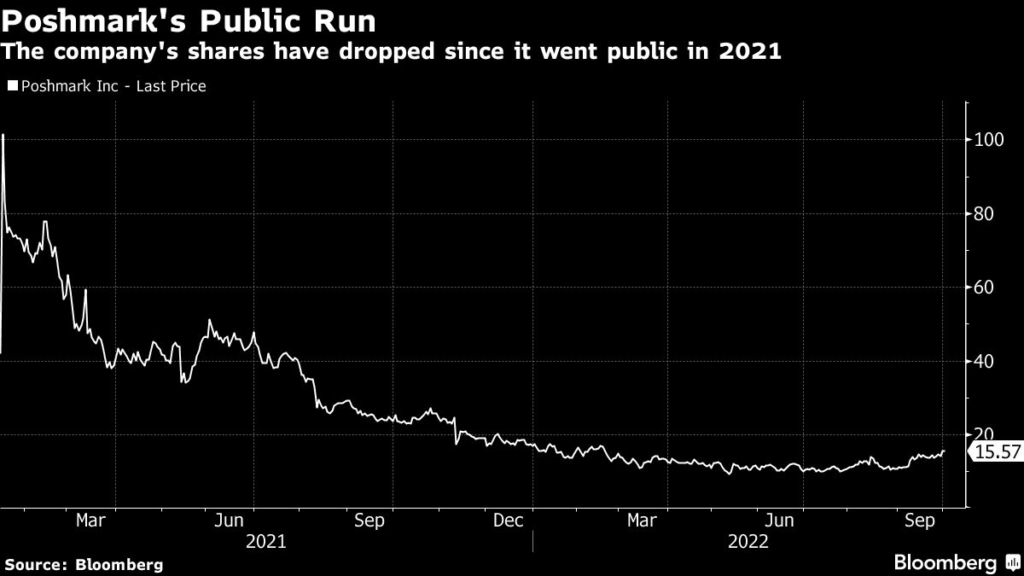
Naver will buy all of Poshmark’s shares for $17.90 each, a 15% premium to Monday’s closing price of $15.57. Trading of Poshmark shares, which fell 0.6% on Monday, was halted on the news. After the deal is completed, Poshmark would become a standalone US subsidiary of Naver, and would continue to be led by Chief Executive Officer Manish Chandra and his management team, the companies said.

Naver shares sank 8.8% in Seoul Tuesday, hitting their lowest point since April 2020. Citi analysts had earlier downgraded the stock to a sell rating, saying its price-to-earnings ratio was hard to justify when compared to other internet firms.

“I think the market was surprised at the size of the deal,” Naver Chief Executive Officer Choi Soo-Yeon said in an interview, noting that this is the company’s biggest acquisition to date and first foray into Silicon Valley. “We will explain to investors about how we can maximize synergy through strengthening the combination of commerce businesses and communities.”

With the transaction, Poshmark, which has sought to expand internationally even as its stock steadily declined over the past year and a half, will get access to Naver’s extensive e-commerce experience. Naver obtains a US brand that has grown rapidly in recent years. 

Naver is one of the leading internet players in South Korea, combining search and cloud services with online shopping. The Poshmark deal is aimed at creating a global player in online fashion, using the target’s social shopping technology.

“Poshmark will become a foothold in the North America market to expand our business in the region,” Choi said. “We will try out our technology through Poshmark’s services popular among the younger generation.”

Poshmark has a community of more than 80 million registered users, across 90% of zip codes in the US, the companies said. 

The boards of both companies have approved the deal, which is expected to close by the first quarter of 2023, according to the statement.

Poshmark, which Chandra founded in 2011, is an online marketplace where users post photos of items they are selling and set their own prices, then ship goods once they are purchased. The company, which doesn’t hold any inventory, gets paid when users make a sale.

Share Drop

Poshmark’s closing price Monday is barely a third of that in its January 2021 initial public offering, in which it raised $319 million, including so-called greenshoe shares. The shares soared 142% from their $42 offer price in their first day of trading to $101.50, briefly giving the company a market value of more than $7 billion.

Other online resellers have experienced even sharper share drops since going public. Shares of RealReal Inc. are down 93% from its 2019 IPO, while ThredUp Inc., which went public two months after Poshmark, has fallen 87%.

LionTree Partners is working as Naver’s financial adviser, while Kirkland & Ellis is acting as Naver’s legal counsel. Goldman Sachs Group Inc. is serving as financial adviser to Poshmark, and Goodwin Procter is legal counsel.

(Updates with share reaction)

More stories like this are available on bloomberg.com

©2022 Bloomberg L.P.
Close Bitnami banner
Bitnami