
Bloomberg

Citadel’s Griffin Sues IRS for Failing to Protect His Financial Data

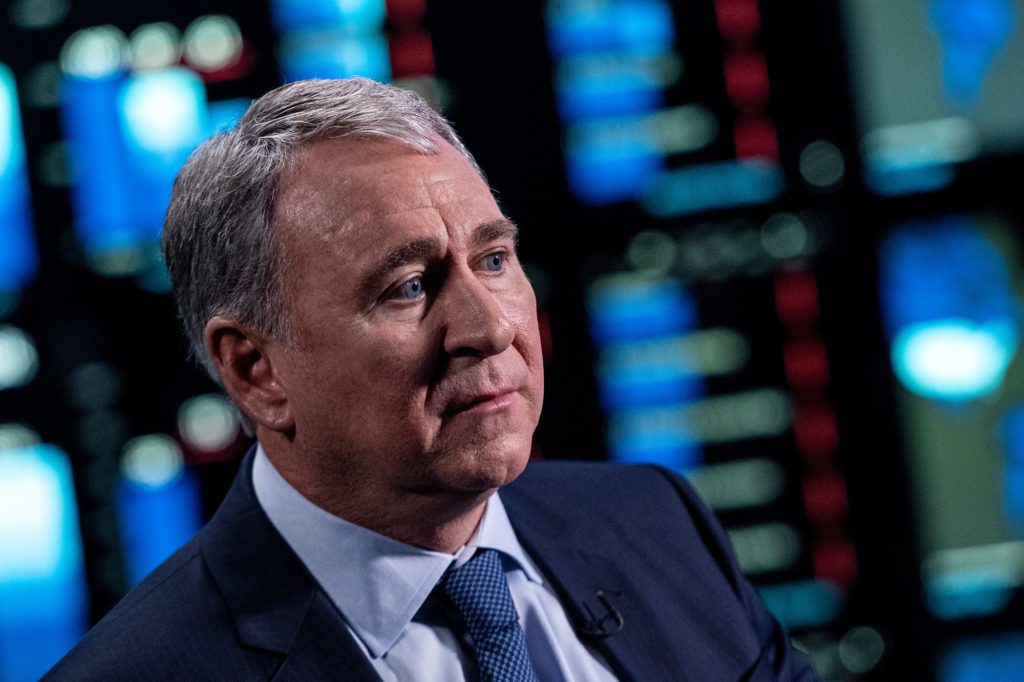
(Bloomberg) — Billionaire hedge fund manager Ken Griffin sued the US Internal Revenue Service, claiming it failed to protect his confidential financial information. 

The Citadel founder is seeking financial damages over a data breach that resulted in ProPublica’s publication of information on a number of the wealthiest people in the US. He accused the IRS of “willful and intentional failure to establish appropriate administrative, technical, and/or physical safeguards.”

The lawsuit, filed Tuesday in federal court in Florida, also names as a defendant the US Treasury Department, which includes the IRS. The IRS didn’t respond to a request for comment on the suit. 


“IRS employees deliberately stole the confidential tax returns of several hundred successful American business leaders,” Griffin said in a statement in response to a request for comment. “It is unacceptable that government officials have failed to thoroughly investigate this unlawful theft of confidential and personal information. Americans expect our government to uphold the laws of our nation when it comes to our private and personal information — whether it be tax returns or health care records.”

Read More: Thiel Gets Tax Edge With $5 Billion in Roth IRA, ProPublica Says

Republicans, who won control of the House of Representatives in last month’s election, have pledged to use their newfound power to investigate the breach and the IRS response. Government officials who have expressed concern about the leak include Treasury Secretary Janet Yellen, who referred to it as “criminal activity” and vowed to work with federal investigators to find the source. 

The ProPublica report said billionaires including Jeff Bezos and Elon Musk had in some years paid minimal or no income tax even as their fortunes soared. It outlined the tax strategies available to the top 0.1%. 

Griffin reported an average annual income of almost $1.7 billion between 2013 and 2018 and paid an average federal tax rate of 29.2% during that time, ProPublica reported. 

Griffin, 54, has a net worth of $29 billion, according to the Bloomberg Billionaires Index.

Michael Bloomberg, majority owner of Bloomberg News parent Bloomberg LP, was also among those included in the reporting.

In his lawsuit, Griffin says he requested that the IRS and Treasury demand ProPublica return or destroy confidential IRS data and provide him with information about the disclosure of his tax data, and hasn’t seen “any meaningful response.” He asked the court to order the defendants to produce documents related to the disclosure of his tax information, as well as for the monetary damages.

The case is Griffin v. Internal Revenue Service, 22-cv-24023, US District Court, Southern District of Florida.

–With assistance from Laura Davison.

(Adds information in fifth paragraph about government reaction and in seventh and ninth paragraphs about Griffin’s taxes and his allegations.)

More stories like this are available on bloomberg.com

©2022 Bloomberg L.P.
New FTX CEO Says It’s Impossible to Recoup All Client Losses

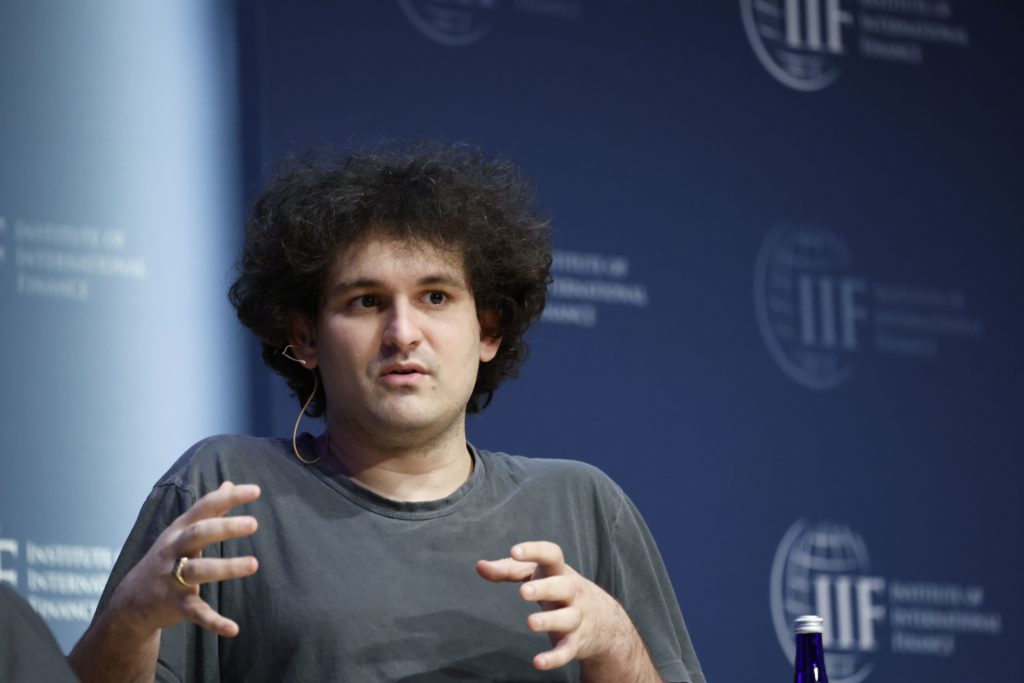
(Bloomberg) — The man currently running FTX has bad news for former customers: many of you won’t get back funds lost following the company’s spiral into bankruptcy.  

“At the end of the day, we’re not going to be able to recover all of the losses here,” said John J. Ray III, who’s handling FTX’s restructuring and was the sole witness at a Tuesday hearing before the House Financial Services Committee.

Ray expects international customers to fare worse than US customers. He noted that the number of clients and the volume of trading on the US exchange of FTX was much smaller than on FTX.com. He also said there are more assets they might find that could be attributed to the American company.

FTX founder Sam Bankman-Fried had been scheduled to appear at the hearing. But the former crypto billionaire was arrested in the Bahamas on Monday after the US government filed criminal charges amid multiple probes into his possible misconduct. The charges, unsealed in New York on Tuesday just before the congressional hearing, included conspiracy and wire fraud for allegedly misusing billions of dollars in customers’ funds.

The Securities and Exchange Commission in the morning accused Bankman-Fried of defrauding investors, and the Commodity Futures Trading Commission sued him, along with FTX and the company’s sister trading firm, Alameda Research, for commodity-law violations. 

Tuesday’s hearing marks the most direct involvement yet by Congress in the sprawling, tangled fallout from FTX’s bankruptcy. The onetime shining star of crypto imploded in November, sending shock waves across the industry and returning the spotlight to the lack of oversight in Washington.

Lawmakers are weighing whether to crack down on the Wild West of crypto after a wave of high-profile collapses. Bankman-Fried had portrayed his company as an ethical actor, while encouraging more scrutiny of competitors like Binance. His abrupt downfall has shattered that image and put the entire industry in the crosshairs.

At the hearing, Representative Maxine Waters, chairwoman of the House Financial Services Committee, said she was “deeply troubled to learn how common it was for Bankman-Fried and other employees to steal from the cookie jar.”

Alameda Loan

Without their star witness, lawmakers relied on Ray’s testimony for insights on what led to the crypto exchange’s collapse. 

He told lawmakers that customer funds from FTX were commingled with assets from Alameda — and that there was no separation between the companies. They were “operated as one company,” he said.

Ray answered questions about a $1 billion loan Bankman-Fried received from Alameda that was disclosed in a bankruptcy filing. The former crypto billionaire had received numerous loans and in one case signed as both the issuer and the recipient, Ray said.

“We have no information, at this time, as to what the purpose or the use of those funds were — and that is part of our investigation,” he said.

Ray accused Bahamian government officials of working with Bankman-Fried to transfer $100 million to about 1,500 customers in the country before the bankruptcy was filed in the US.

The parents of Bankman-Fried are also under scrutiny for their involvement in his companies, Ray testified. He said the family had received payments. 

Ray hasn’t minced words when referring to Bankman-Fried and his former top lieutenants. 

“The FTX Group’s collapse appears to stem from the absolute concentration of control in the hands of a very small group of grossly inexperienced and unsophisticated individuals,” Ray testified Tuesday.

Some of the unacceptable practices at FTX included the use of computer infrastructure that gave senior managers access to systems that stored customer assets and lacked controls to prevent funds from being redirected, he said. Others are the lack of audited financial statements, the commingling of assets and the ability of Alameda to borrow funds for its own trading or investments.

‘Paperless Bankruptcy’

Ray said FTX is one of the worst cases he’s seen, in terms of lack of documentation. “We’re dealing with literally a paperless bankruptcy,” he said. That makes it difficult to track and trace assets, he said.

He also revealed that he’s brought on Ernst & Young to look into whether FTX properly filled out tax returns.

Bankman-Fried, in remarks prepared for the hearing that were obtained prior to his arrest, took jabs back at Ray, saying the current leader of FTX had rebuffed his offers to help sift through the wreckage of his failed crypto empire and recover customers’ money. FTX and more than 100 related companies were forced to file for bankruptcy last month. 

Bankman-Fried has largely blamed FTX’s downfall on Changpeng “CZ” Zhao, chief executive officer of Binance, saying the executive sparked the run on the exchange when he announced plans to dump holdings in FTX’s native token FTT. But Ray said that, based on what’s seen, he doesn’t believe the company was solvent even before that event.

In media interviews following FTX’s collapse, Bankman-Fried has denied trying to commit fraud or break the law, though he has owned up to grievous managerial errors at FTX.

Bankman-Fried hadn’t agreed to testify at another hearing on Wednesday before the Senate Banking Committee, drawing the ire of the panel’s top Democrat and Republican. Senators Sherrod Brown and Pat Toomey said in a statement Monday that they offered Bankman-Fried two different dates to testify but he refused. 

“He owes the American people an explanation,” the senators said before Bankman-Fried’s arrest. 

–With assistance from Gillian Tan, Max Chafkin and Bob Van Voris.

(Updates throughout with comments from John J. Ray III.)

More stories like this are available on bloomberg.com

©2022 Bloomberg L.P.

Volatility Grips Stocks With Fed Set to Hike Rates: Markets Wrap

(Bloomberg) — Volatility gripped US stocks on Tuesday as investors mulled whether latest data showing prices rose less than forecast last month would prompt the Federal Reserve to alter its aggressive approach to battling inflation.

The S&P 500 and the Nasdaq 100 are up less than 1% after surging earlier in the session. While Treasuries rallied after a key gauge of US consumer prices posted the smallest monthly advance in more than a year, they are now trading at a lower volume as traders await Fed policy clues. 

The Fed is largely expected to raise rates by half a percentage point Wednesday, slowing the pace of increases, further validated by Tuesday’s data. Investors will focus on what officials are projecting for the future of the Fed funds rate and any commentary on how they view the policy path for the next meeting in February. 

“I don’t think Powell wants a rally,” said Chris Murphy, co-head of derivatives strategy at Susquehanna International Group. It “remains to be seen how much damage to the economy and earnings he has already done, so it’s hard to see much extreme upside yet.”

Swap markets are now favoring a quarter-point hike as early as the Fed’s February meeting. But some investors are cautious about celebrating the latest consumer price index data.

“While the war against inflation is turning, we are a long way off declaring victory and the Fed will keep its hawkish stance for a while longer, even if it does potentially force a recession,” said Richard Carter, head of fixed interest research at Quilter Cheviot.

Following the Fed, the European Central Bank will announce its rate decision Thursday. Markets will also contend with decisions from the Bank of England and monetary authorities in Mexico, Norway, the Philippines, Switzerland and Taiwan.

Key events this week:

  • FOMC rate decision and Fed Chair news conference, Wednesday
  • China medium-term lending, property investment, retail sales, industrial production, surveyed jobless, Thursday
  • ECB rate decision and ECB President Lagarde briefing, Thursday
  • Rate decisions for UK BOE, Mexico, Norway, Philippines, Switzerland, Taiwan, Thursday
  • US cross-border investment, business inventories, empire manufacturing, retail sales, initial jobless claims, industrial production, Thursday
  • Eurozone S&P Global PMI, CPI, Friday

Some of the main moves in markets:

Stocks

  • The S&P 500 rose 0.7% as of 1:29 p.m. New York time
  • The Nasdaq 100 rose 1%
  • The Dow Jones Industrial Average rose 0.3%
  • The MSCI World index rose 0.5%

Currencies

  • The Bloomberg Dollar Spot Index fell 1%
  • The euro rose 0.8% to $1.0623
  • The British pound rose 0.9% to $1.2376
  • The Japanese yen rose 1.7% to 135.33 per dollar

Cryptocurrencies

  • Bitcoin rose 3% to $17,698.79
  • Ether rose 3.3% to $1,316.68

Bonds

  • The yield on 10-year Treasuries declined 12 basis points to 3.49%
  • Germany’s 10-year yield declined one basis point to 1.93%
  • Britain’s 10-year yield advanced 10 basis points to 3.30%

Commodities

  • West Texas Intermediate crude rose 3.6% to $75.79 a barrel
  • Gold futures rose 1.7% to $1,822.80 an ounce

This story was produced with the assistance of Bloomberg Automation.

–With assistance from Natalia Kniazhevich, Michael Msika, Sagarika Jaisinghani and Lu Wang.

More stories like this are available on bloomberg.com

©2022 Bloomberg L.P.
After FTX Fall, These Crypto Entities Are Grabbing the Spotlight

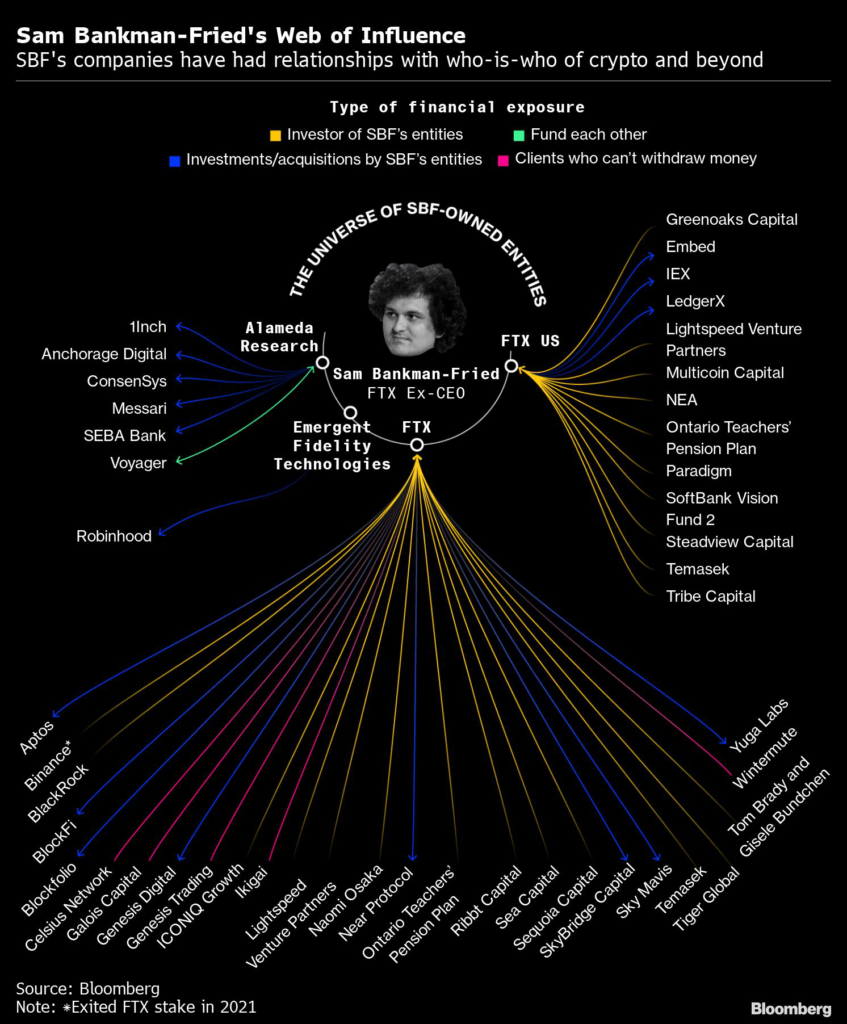
(Bloomberg) — Sam Bankman-Fried’s arrest in the Bahamas pending a possible extradition to the US opens a fresh chapter in efforts to untangle whether his crypto empire was built using fraudulent methods. 

Regardless of the outcome, the demise of his digital-asset exchange FTX continues to shake the wider crypto market’s foundations. 

Skittish investors are pulling money out of rival exchanges, fearful of having their assets stuck should any of those venues collapse. At least one major crypto firm has filed for bankruptcy in the wake of FTX’s unraveling, while two others were forced to suspend some withdrawals. A decentralized lending project has been rocked by a large default.   

Read more: Sam Bankman-Fried Arrested in Bahamas After US Files Charges

Below is a list of crypto companies and projects that are grabbing the spotlight as investors try to assess where vulnerabilities in the roughly decade-old industry could appear next. 

Binance 

With FTX gone and Bankman-Fried in a cell, Binance — personified by outspoken CEO Changpeng “CZ” Zhao — looms as the giant of the crypto industry. The exchange, which has licenses to operate in jurisdictions around the world but no formal headquarters, boosted its market share to more than 52% in spot trading, according to data from CryptoCompare. But while it’s benefited from some extent from FTX’s implosion, Binance has also been affected by the overall hit to investor confidence. Withdrawals totaled some $1.14 billion “today,” according to a tweet from Zhao posted Tuesday morning, New York time. Data from research firm Nansen, compiled earlier that same day, found that net outflows of digital assets from Binance amounted to roughly $3.7 billion over the past week. Nansen estimates that Binance has around $60 billion in assets. 

Tether

Tether’s stablecoin USDT is a key pillar of the crypto architecture, enabling traders to move money onto and off crypto exchanges and serving as a safe haven among volatile digital assets. It’s market value of almost $67 billion is comfortably ahead of main competitors USDC and BUSD, a Binance-branded stablecoin. After FTX imploded in early November, users rushed to redeem USDT, briefly knocking the token from its dollar peg. Circulation has since bounced back slightly in the weeks since, now standing at around $65.8 billion according to data from CoinMarketCap.com. 

Solana

Solana’s token was associated with Bankman-Fried, who supported the coin and its crypto ecosystem. The token has plunged around 60% since early November, compared to Bitcoin’s decline of closer to 15%. Bankman-Fried had pledged to support Solana projects, including a pledge of $100 million in gaming projects on its blockchain as part of a consortium of venture capital firms. Since early November, gaming tokens in Solana’s crypto ecosystem have plunged in value.

Digital Currency Group

Trouble has rippled through Digital Currency Group’s vast empire, beginning with Genesis. The crypto broker’s balance sheet revealed $2.8 billion in outstanding loans, with 30% of lending made to related parties including DCG, its parent company. Genesis is said to have warned of bankruptcy if it fails to raise sufficient funds, while its creditors have begun to organize and consult with restructuring lawyers. Gemini Trust Co., a key partner of the broker, said customer withdrawals were delayed on its Earn product in response to Genesis’s suspension of withdrawals. Meanwhile, a hedge fund is suing Grayscale Investments, also owned by Barry Silbert’s DCG, for information to investigate possible conflicts of interest and mismanagement of its Bitcoin fund.

Jump Crypto

Jump Crypto, a unit of the Chicago-based trading firm Jump Trading, is a major crypto market maker and a key backer of the Solana blockchain ecosystem. The company hasn’t disclosed a figure for its exposure to FTX’s collapse. Jump has tweeted its “exposure to FTX was managed in accordance with our risk framework,” and it is “well capitalized” and actively investing and trading. Jump also joined Binance’s Industry Recovery Initiative, contributing $25 million in initial commitment.

Signature Bank

Signature Bank, where FTX has bank accounts, said deposits from FTX represented less than 0.1% of the bank’s overall deposits. It does not lend crypto or provide crypto custody. As part of its plan to pullback from the crypto sector, Signature plans to shed as much as $10 billion in deposits from digital asset clients.

Silvergate

Silvergate, a crypto-friendly bank based in La Jolla, California, held deposits for FTX units and Alameda Research. US Senators are questioning Silvergate’s control, given findings that FTX received customer deposits through Alameda’s bank accounts. Silvergate CEO Alan Lane said the bank had conducted “significant due diligence” on both entities, and FTX represented less than 10% of its total deposits from digital asset customers. After BlockFi filed for bankruptcy, Silvergate disclosed that the crypto lender held less than $20 million in deposits at the bank.

–With assistance from Emily Nicolle.

More stories like this are available on bloomberg.com

©2022 Bloomberg L.P.
Fusion Breakthrough at Weapons Lab Offers US a Nuclear Edge

(Bloomberg) — The most immediate winner from the Department of Energy’s fusion breakthrough fusion breakthrough is likely to be the military, which will get a new way to evaluate the US nuclear-weapons stockpile.

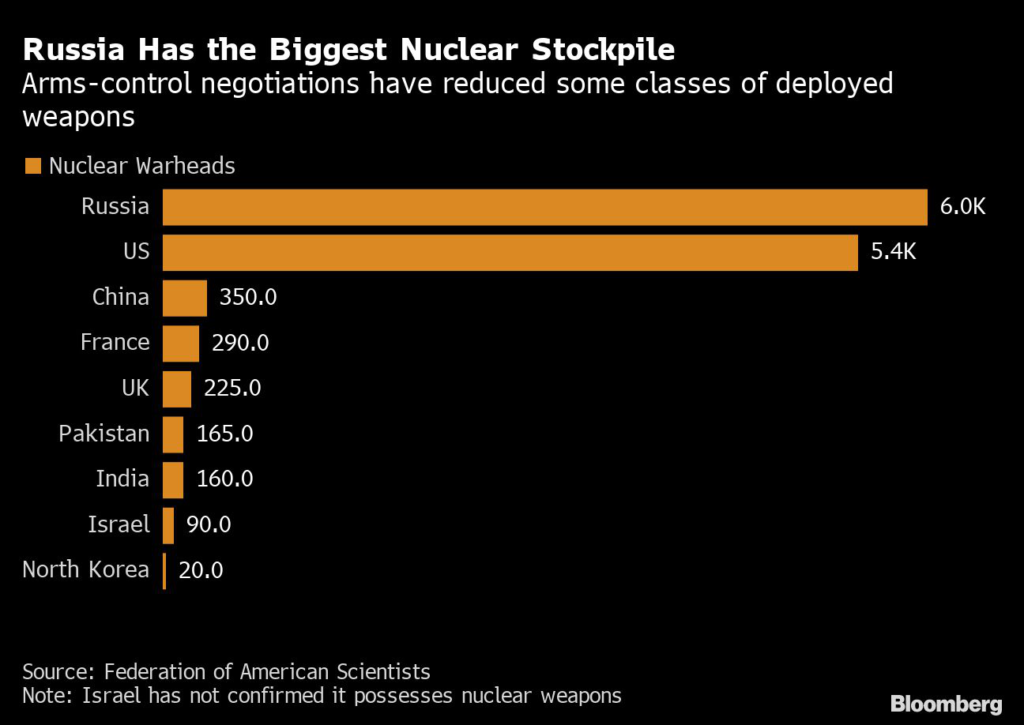
The Lawrence Livermore National Laboratory, where the experiment took place, is one of the Department of Energy’s preeminent nuclear-weapons research centers. The data yielded by the fusion test will allow scientists to model what happens during a thermonuclear explosion. That helps to ensure the nation’s more-than-5,000 aging warheads can be deployed — effectively creating a new way to gauge the arms’ shelf life. 

“Fusion is an essential process in modern nuclear weapons,” said Marvin Adams, the deputy administration of defense programs at the National Nuclear Security Administration. “This achievement will advance our national security. It will lead to laboratory experiments that help NNSA defense programs continue to maintain confidence in our deterrent without nuclear explosive testing.”

The fusion breakthrough, which occurred Dec. 5 and was announced by the Biden administration Tuesday, follows months of nuclear saber rattling from the Kremlin. President Vladimir Putin in September fueled concern over nuclear escalation with warnings that Russia would use all means available to defend the parts of Ukraine it had illegally annexed. Last week, he said Moscow might adopt a first-strike nuclear doctrine. 

The latest US fusion findings “underpin the credibility of our deterrent by demonstrating world-leading expertise in weapons-relevant technologies,” Adams said. “That is, we know what we are doing. 

The Department of Energy is administering a $1 trillion program to maintain and modernize US nuclear arms and the Lawrence Livermore lab located outside of San Francisco plays a key role in that effort. The US hasn’t tested a nuclear weapon in more than thirty years, imposing a voluntary moratorium made possible because of laboratory breakthroughs like the latest fusion experiment. 

More stories like this are available on bloomberg.com

©2022 Bloomberg L.P.
Biden Wants Fusion Power by 2032. It’s Likely to Take Far Longer.

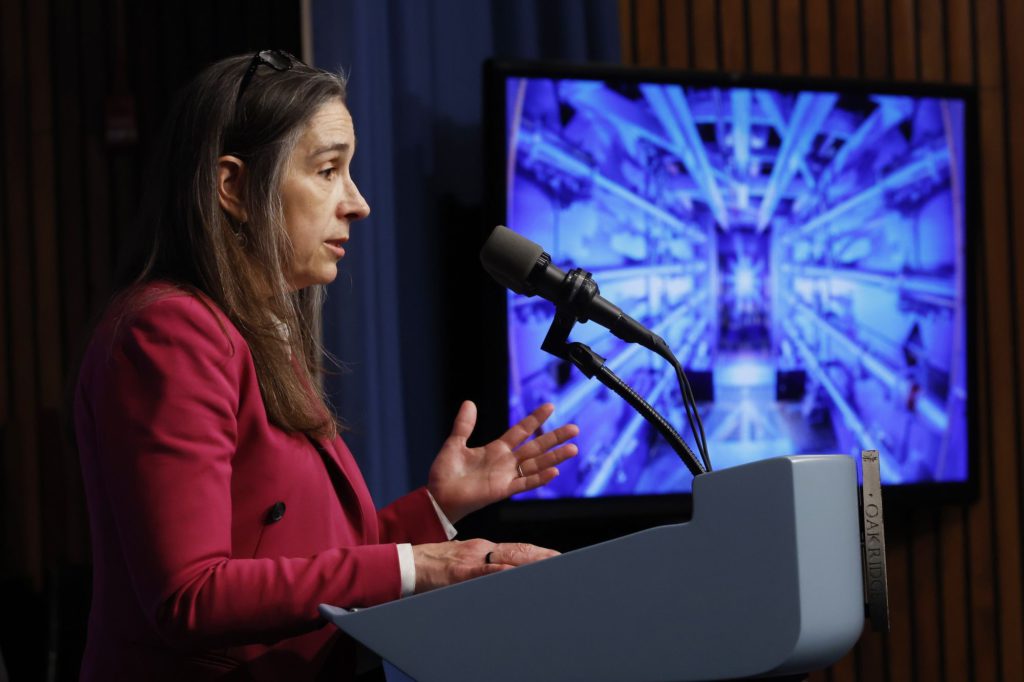
(Bloomberg) — A remarkable nuclear fusion milestone announced in Washington shows it may be possible to use the technology to build a commercial power plant — it just may take longer than the White House expects.

“The president has a decadal vision, to get to a commercial fusion reactor within 10 years,” US Energy Secretary Jennifer Granholm said Tuesday during an event disclosing the breakthrough. “This shows that it can be done.”

That schedule may be overly optimistic, according to the director of the laboratory where the experiment took place. While the achievement brings the world closer to commercial fusion, it will still probably take “decades” to shift the technology from the lab to a real power plant, said Kim Budil of the Lawrence Livermore National Laboratory.

“There are very significant hurdles, not just in the science, but in technology,” Budil said at the event. “A few decades of research on the underlying technologies could put us in a position to build a power plant.”

Still, the excitement generated by the achievement will generate momentum in the fusion industry — and that may accelerate the timeline. 

“With real investment and real focus, that timescale can move closer,” Budil said.

More stories like this are available on bloomberg.com

©2022 Bloomberg L.P.
FTX Is ‘Lehman of the Crypto Industry’ With Damage Contained to Sector

(Bloomberg) — The collapse of crypto exchange FTX can be compared to the bankruptcy of Lehman Brothers that shook Wall Street 14 years ago, according to former Lehman restructuring head Mark J. Shapiro. 

“FTX is the Lehman of the crypto industry,” as the resulting damage is still contained to the sector, Shapiro said in the latest episode of Bloomberg Intelligence’s FICC Focus State of Distressed Debt podcast. “This is a crypto blizzard and not a crypto winter, because there’s no spillover yet.” 

Shapiro, who was the head of restructuring at Lehman Brothers when it collapsed in 2008, is a financial restructuring and insolvency partner at Shearman & Sterling in New York. He discussed overseeing the sale of Lehman’s U.S. assets in Chapter 11 and predicted a sophisticated and detailed examination of the FTX books will be necessary to determine what value remains. 

In a way, “it’s apples and oranges,” to compare the FTX case to that of Lehman, which ultimately returned around 45 cents on the dollar to many creditors, Shapiro said, because “Lehman had a real asset base,” he said, whereas that of FTX is ephemeral.  

Some traders are nevertheless making bets regarding the eventual return on FTX claims — though they have pegged their value much lower, at between five and eight cents on the dollar. 

Ultimately, the pain spreading through crypto after FTX filed for bankruptcy Nov. 11 will separate winners from losers within the industry, Shapiro said. 

“The weak ones will ultimately go away and the strongest will survive – people like Coinbase and Galaxy that seem to have strong balance sheets and much tighter compliance and regulatory frameworks than FTX, for example,” he said.  

Shapiro’s assessment echoed a similar one provided to Congress on Tuesday by John J. Ray, who took over as chief executive officer at FTX when Samuel Bankman-Fried resigned last month. Ray’s job is to restructure FTX and determine how it lost billions of dollars and whether investors will receive any compensation, a role he took on at Enron Corp. after the energy firm’s spectacular 2001 collapse.

Ray told a House committee today that the issues at FTX were “old-fashioned embezzlement” compared to the “sophisticated” crimes at Enron.

More stories like this are available on bloomberg.com

©2022 Bloomberg L.P.

Bankman-Fried’s Arrest on Eve of FTX Hearing Steals Thunder From Lawmakers

(Bloomberg) — US House lawmakers were supposed to get their chance to grill FTX founder Sam Bankman-Fried at a hearing Tuesday morning on the collapse of his digital-asset empire.

Federal authorities beat them to it.

The former crypto billionaire was arrested in the Bahamas on Monday after the US government filed criminal charges amid multiple probes into his possible misconduct. The charges, unsealed in New York on Tuesday just before the congressional hearing, included conspiracy and wire fraud for allegedly misusing billions of dollars in customers’ funds. 

Two US regulators piled on. The Securities and Exchange Commission in the morning accused Bankman-Fried of defrauding investors, and the Commodity Futures Trading Commission sued him, along with FTX and the company’s sister trading firm, Alameda Research, for commodity-law violations. 

Representative Maxine Waters, chairwoman of the House Financial Services Committee, wasn’t pleased by the timing of the arrest, saying before the hearing that Americans deserved a chance to hear from Bankman-Fried. At the hearing, she said she was “deeply troubled to learn how common it was for Bankman-Fried and other employees to steal from the cookie jar.”

The hearing marks the most direct involvement yet by Congress in the sprawling, tangled fallout from FTX’s bankruptcy. The onetime shining star of crypto imploded in November, sending shock waves across the industry and returning the spotlight to the lack of oversight in Washington.

The charges against Bankman-Fried show what’s at stake as lawmakers weigh whether to crack down on the Wild West of crypto after a wave of high-profile collapses. Bankman-Fried had portrayed his company as an ethical actor, while encouraging more scrutiny of competitors like Binance. His abrupt downfall has shattered that image and put the entire industry in the crosshairs.

Alameda Loan

Without their star witness, lawmakers relied on the testimony of John J. Ray III, the current FTX chief executive officer handling the company’s restructuring, for insights on what led to the crypto exchange’s collapse.

He told lawmakers that customer funds from FTX were commingled with assets from Alameda — and that there was no separation between the companies. They were “operated as one company,” he said.

Ray answered questions about a $1 billion loan Bankman-Fried received from Alameda that was disclosed in a bankruptcy filing. The former crypto billionaire had received numerous loans and in one case signed as both the issuer and the recipient, Ray said.

“We have no information, at this time, as to what the purpose or the use of those funds were — and that is part of our investigation,” he said.

The parents of Bankman-Fried are also under scrutiny for their involvement in his companies, Ray testified. He said the family had received payments. 


‘Grossly Inexperienced’

Ray hasn’t minced words when referring to Bankman-Fried and his former top lieutenants. 

“The FTX Group’s collapse appears to stem from the absolute concentration of control in the hands of a very small group of grossly inexperienced and unsophisticated individuals,” Ray testified Tuesday.

Some of the unacceptable practices at FTX included the use of computer infrastructure that gave senior managers access to systems that stored customer assets and lacked controls to prevent funds from being redirected, he said. Others are the lack of audited financial statements, the commingling of assets and the ability of Alameda to borrow funds for its own trading or investments.

Ray said FTX is one of the worst cases he’s seen, in terms of lack of documentation. “We’re dealing with literally a paperless bankruptcy,” he said. That makes it difficult to track and trace assets, he said.

He also revealed that he’s brought on Ernst & Young to look into whether FTX properly filled out tax returns.

Bankman-Fried, in remarks prepared for the hearing that were obtained prior to his arrest, took jabs back at Ray, saying the current leader of FTX had rebuffed his offers to help sift through the wreckage of his failed crypto empire and recover customers’ money. FTX and more than 100 related companies were forced to file for bankruptcy last month. 

In media interviews following FTX’s collapse, Bankman-Fried has denied trying to commit fraud or break the law, though he has owned up to grievous managerial errors at FTX.

Senate Snub

Bankman-Fried hadn’t agreed to testify at another hearing on Wednesday before the Senate Banking Committee, drawing the ire of the panel’s top Democrat and Republican. Senators Sherrod Brown and Pat Toomey said in a statement Monday that they offered Bankman-Fried two different dates to testify but he refused. 

“He owes the American people an explanation,” the senators said before Bankman-Fried’s arrest. 

–With assistance from Gillian Tan, Max Chafkin and Bob Van Voris.

(Updates starting in third paragraph with criminal charges unsealed, comments from lawmakers and Ray.)

More stories like this are available on bloomberg.com

©2022 Bloomberg L.P.
US Hails Fusion Breakthrough as Energy Dream Takes Shape

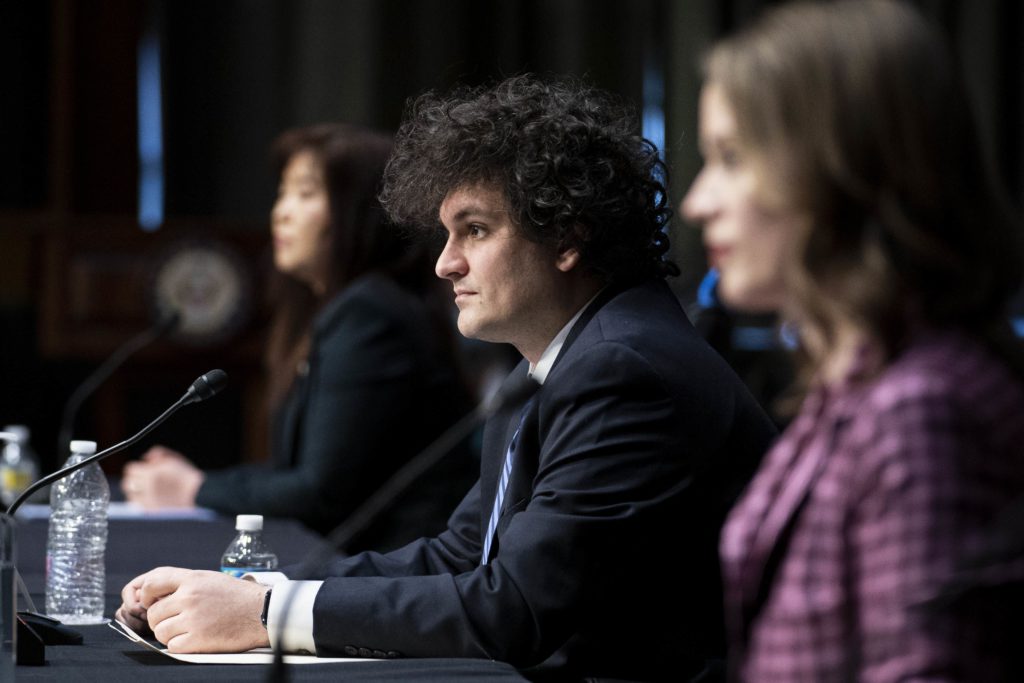
(Bloomberg) — After more than 50 years of false starts, nuclear fusion is finally taking a resolute step closer to becoming the world’s newest energy source.

The US Department of Energy said Tuesday that scientists at a laboratory in California managed for the first time to generate more energy from a fusion reaction than they needed to trigger it. The milestone raises the prospect that some day — perhaps decades from now — the global economy will be run on carbon-free electricity generated by the very process that powers the sun.

“The fusion breakthrough will go down in history,” US Secretary of Energy Jennifer Granholm said during a press conference. “This is what it looks like for America to lead.” 

Researchers at the Energy Department’s Lawrence Livermore National Laboratory used lasers to bombard hydrogen isotopes held in a superheated plasma state to fuse them into helium, releasing neutrons and carbon-free energy in the process. It’s a stunning moment for a technology that has failed for nearly half a century, and comes as leaders of the world’s 10 biggest economies — and dozens of smaller nations — have pledged to shift to clean energy sources.

The most immediate impact of the US experiment will be felt by engineers in charge of maintaining the US nuclear-weapons stockpile. They’ll be able to use the data to model how warheads are aging and eliminate the need to conduct new atomic testing. The Energy Department is administering a $1 trillion program to maintain and modernize US nuclear arms and the Lawrence Livermore National Laboratory plays a key role in that effort.

Officials stressed that the main purpose of the facility where the breakthrough took place was to study the behavior of thermonuclear weapons as part of the “stockpile stewardship” program. To do that, it needed to achieve ignition.

Read more: Transforming the global energy landscape — a QuickTake on fusion 

Scientists used 192 high-powered lasers to blast a peppercorn-sized target of deuterium and tritium, two isotopes of hydrogen, in the Dec. 5 experiment. The lasers delivered 2.05 megajoules of energy, and when the target ignited, the fusion reaction produced 3.15 megajoules, lab officials said Tuesday.

“The energy production took less time than it takes light to travel one inch — kind of fast,” said Marvin Adams, deputy administrator for defense programs at the National Nuclear Security Administration.

The milestone created a net energy gain that scientists have been trying for decades to achieve. It could lead to the development of a commercial fusion power plant in several decades — not the 50 years or longer that researchers once feared, said the lab’s director, Kimberly Budil.

“There are very significant hurdles, not just in the science but the technology — this is igniting one capsule, one time,” she said. “A few decades of research into the underlying technologies can put us in the position of building a power plant.”

Power Source of Stars

Fusion energy is produced by melding together atoms and is the power source of stars, whose immense gravity crushes together atoms of hydrogen to form helium. With fusion, there’s no long-lived radioactive waste — that’s a stark contrast to the fission technology currently used at nuclear reactors to generate electricity. 

Fusion is unlikely to help boost faltering progress toward net-zero emissions, at least not without work that most experts think will take decades of additional development. That means this breakthrough probably won’t help displace traditional fossil fuels when the world is facing an entrenched energy supply crunch and greenhouse gas levels are still rising.

“We have to take a positive but skeptical approach,” said Andrew Sowder, a senior technical executive at the independent, non-profit EPRI, formerly known as Electric Power Research Institute. “You are going to have to demonstrate you can take the energy and turn it into something useful.”

To move this technology out of the lab, a fusion system would need to be affordable and easy to build. However, the Lawrence Livermore test uses some of the most powerful lasers ever built: They’re big, costly and not readily available for mass deployment. That would make it difficult to convert this technical accomplishment into a successful business.

“The fact that you have net energy gain does not mean you’ll have a commercial device on the market,” said Chris Gadomski, head nuclear analyst for BloombergNEF. “Yes, we have fusion, but at what cost?”

Still, the announcement should unleash funding and support for a civilian technology development program, said Stephen Dean, president of Fusion Power Associates, a non-profit public benefit corporation. 

Startups including Commonwealth Fusion Systems LLC and Helion Energy Inc. attracted $2.3 billion in support in 2021, and backers will likely direct more than $1 billion to the field this year, according to BloombergNEF. Other notable companies include Marvel Fusion, TAE Technologies, General Fusion, Tokamak Energy and Zap Energy.

(Updates with details of experiment. An earlier version corrected energy type.)

More stories like this are available on bloomberg.com

©2022 Bloomberg L.P.

Sam Bankman-Fried’s Written Testimony Is Called ‘Absolutely Insulting’ at House Hearing

(Bloomberg) — Sam Bankman-Fried’s arrest before a hearing dedicated to the collapse of his FTX empire deprived lawmakers of an opportunity to question the disgraced crypto founder.

Even his prepared testimony, a draft of which was obtained by Bloomberg News prior to his arrest, raised eyebrows. Bankman-Fried would have opened his statement with: “I would like to start by formally stating, under oath: I f—ed up.”

Current FTX Chief Executive John J. Ray III, who did appear at the hearing, fielded questions about the testimony. Emanuel Cleaver, a Democrat from Missouri, called it “so disrespectful” and “absolutely insulting.” Ray said he had not read the remarks.

Follow the hearing live.

Read the full draft of his remarks here:


More stories like this are available on bloomberg.com

©2022 Bloomberg L.P.

Close Bitnami banner
Bitnami