

Bloomberg

Activant Capital Is Seeking at Least $500 Million For New Fund

(Bloomberg) — Activant Capital is seeking to raise at least $500 million for a new growth-equity fund, according to a person with knowledge of the matter.

The firm has begun early-stage discussions with investors ahead of a formal launch of Activant Capital V LP, and is targeting a first close by January, said the person, who requested anonymity as the talks are private. 

Greenwich, Connecticut-based Activant has told investors it sees “compelling opportunities” amid a softening in consumer spending, hiring freezes and layoffs in the technology sectors and beyond, lowering of earnings targets, and down-rounds or increased structure in financing of closely held companies.

Founded in 2015, the firm, which has offices in New York, Berlin and Cape Town, is led by founder Steve Sarracino. Through funds which have a 15-year life, it seeks to make bets on fast-growing technology companies, focusing on sectors including commerce, supply chain, financial technology and workflow, its website shows. 

Activant, which targets annualized net internal rates of return of 30%, posted returns of 35% and 80% as of June 30 for vehicles raised in 2017 and 2019, according to an investor presentation reviewed by Bloomberg. Its $400 million fourth vehicle, which was raised in 2021 and is still being invested, delivered a net IRR of 6% as of June 30.

An Activant representative declined to comment. 

The firm has backed companies including software-maker Celonis; fraud, identity, and payments infrastructure platform Sardine; one-click checkout commerce startups Bolt and Deuna; South Korean agriculture and food trading platform Tridge; and mortgage lender Better. Deliverr, one of Activant’s portfolio companies, was acquired by Shopify Inc., while another, Turvo, was bought by Lineage Logistics. 

Investors in prior Activant funds include the State of Wisconsin Investment Board, according to data compiled by Bloomberg. 

Watch: Activant Capital’s Sarracino on Bloomberg US TV

More stories like this are available on bloomberg.com

©2022 Bloomberg L.P.
Goldman, HSBC in Talks With Pemex on $1 Billion ESG Financing

(Bloomberg) — Petroleos Mexicanos is seeking financing from HSBC and Goldman Sachs Group Inc. in a deal that will tie funds to reducing greenhouse gas emissions.

The banks have reached a preliminary agreement to provide financing to Pemex linked to carbon emissions reduction goals as the Mexican state producer struggles under a liquidity crunch and faces increasing pressure from investors to improve its environmental track record, according to people with knowledge of the situation. The banks will provide about $1 billion, one of the people said. 

The deal has yet to be finalized, the people said. Pemex and Goldman Sachs did not respond to a request for comment. HSBC declined to comment.

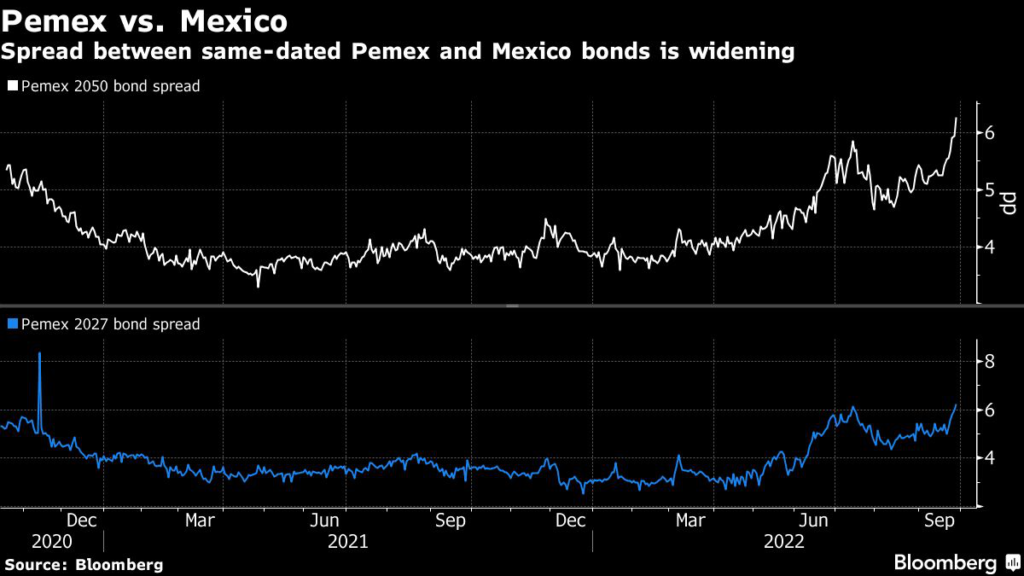
Andres Manuel Lopez Obrador’s government has stopped paying for the company’s debt service so far this year amid the spike in crude prices. Investors demand an extra 6.3 percentage points to hold Pemex dollar bonds due in 2050 over similarly dated Mexican sovereign debt. 

The spread is the highest since the company issued the notes two years ago. The company is still struggling to pay suppliers after the sale of new notes from a debt swap flopped, underscoring concerns about its liquidity.

Pemex said in an earnings call in late July that it would invest $2 billion from its own resources and international credits to reduce methane emissions by 2% by 2024. Pemex’s gas flaring, which results in C02 emissions, rose 9.7% in the second quarter compared to the previous one. Last year, its scope 1 carbon emissions — those directly generated by the company — climbed 8% from a year earlier.

Pemex Sees $6.5 Billion Profit Surge Despite Weak Output Growth

Researchers at the Polytechnic University of Valencia in Spain have discovered two enormous methane leaks — the second biggest contributor to global warming after carbon dioxide — from a Pemex offshore oil platform. The leaks, in December and August, each contributed about 40,000 tons of methane released into the atmosphere, making them some of the largest emissions ever detected by new satellite technology, according to Itziar Irakulis-Loitxate, the lead researcher on the studies.

Pemex downplayed the size of the December methane leak, noting in a statement that the study’s authors misinterpreted nitrogen as methane gas, and said the gases were escaping for several hours, rather than several weeks. Irakulis-Loitxate told Bloomberg in an interview Pemex’s statement “had no basis” because the satellite technology specifically detects methane and would not confuse it with another substance such as nitrogen. 

Pemex Confirms Methane Plume Release From Gulf of Mexico Field

Pemex has struggled to take advantage of crude prices to meet its capital spending needs. A commercial debt swap with suppliers for new notes in July was considered a flop, with Pemex raising less than it planned. A refinery project with a price tag that has topped $18 billion is also weighing on the company’s bonds.

In July, Moody’s Investors Service cut Pemex’s credit rating by a notch to four levels below investment grade. The company fell into junk after downgrades from major rating agencies in 2020 and 2019.

Pemex’s debt is the highest of any oil company, at $108.1 billion at the end of June. Since the start of Lopez Obrador’s presidency in 2018, Pemex has received more than $20 billion in capital injections and tax breaks. 

More stories like this are available on bloomberg.com

©2022 Bloomberg L.P.
Liquidity Dash Spurs Biggest Spike in ETF Trading Since 2018

(Bloomberg) — Trading of Wall Street’s most-liquid tools is surging as investors look to navigate the latest wave of volatility across assets. 

Exchange-traded fund volumes in the US soared to 29% of total equity transactions on Tuesday, the highest proportion since December 2018, according to data from Susquehanna International Group. The spike came as the S&P 500 fell to a fresh bear-market low and the Cboe Volatility Index rose to its highest level in three months.

Activity in ETFs tends to jump at times of turmoil because they’re easy to trade — investors can quickly pare risky positions, shift into safety or place directional bets.

While such increases correspond to periods of macro-induced market stress, they also usually precede a rebound in prices, according to Amy Wu Silverman of RBC Capital Markets.

“I don’t think we are quite there yet but these are the hallmarks of what folks are looking for so we can ultimately say ‘this is capitulation’,” she said.

Volatility is rippling through currency and bond markets amid global central bank tightening, fueling downward pressure in equities as well. Some of the tension eased on Wednesday after the Bank of England said it would resume buying gilts to aid market functioning. US stocks welcomed the move, with the S&P 500 climbing more than 1% after six straight days of losses.

“This increase in ETF volume as a percentage of overall volume is a clear indication that the focus right now is squarely on the macro environment, on finding liquidity and on playing momentum,” said Chris Murphy, co-head of derivatives strategy at Susquehanna. 

Meanwhile, the volume of trading in inverse ETFs hit a high versus that of leveraged long funds on Monday, according to Bloomberg Intelligence data that tracks back to 2020. That could mark a peak in pessimism and be a sign of a near-term bottom, according to BI’s Athanasios Psarofagis.

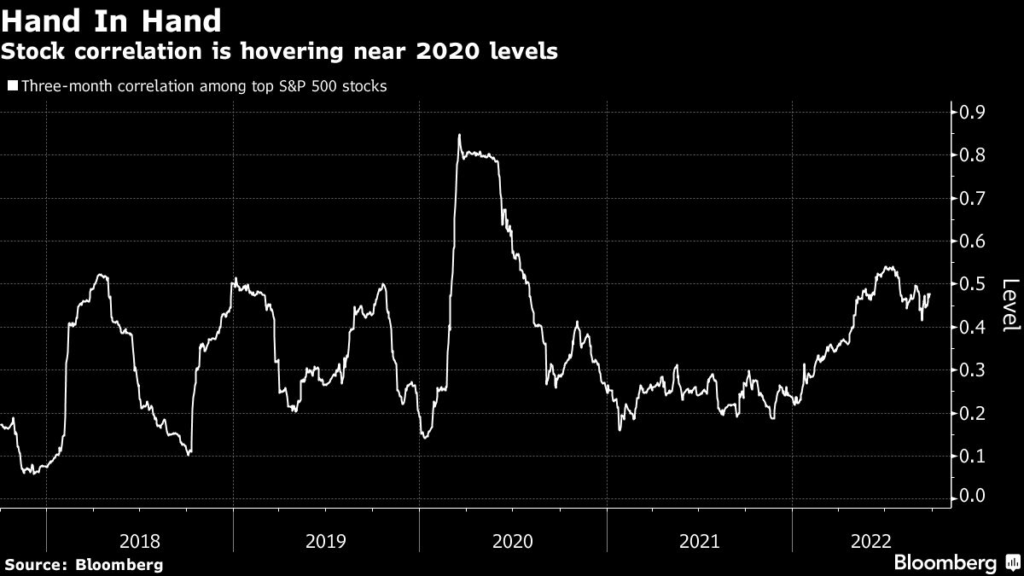
As long as stress lingers in markets, ETF activity could stay elevated. One of the byproducts of rising volatility is that stocks are increasingly moving in lockstep. In that environment, traders tend to gravitate toward ETFs where the market is dominated by large index-hugging funds.

“Stock selection becomes both more difficult and potentially less effective,” said Steve Sosnick, chief strategist at Interactive Brokers. “ETFs that allow one to invest in a broad index or an industry group as a whole become a much more viable methodology.”

More stories like this are available on bloomberg.com

©2022 Bloomberg L.P.

Verizon to Add Home Broadband in Pay-as-You-Go Expansion

(Bloomberg) — Verizon Communications Inc. is preparing to launch a pay-as-you-go home wireless internet service next month aimed at bargain hunters, doubling efforts to find growth in the prepaid market as regular subscriber gains prove challenging.

Through a partnership with a major US retailer, Verizon will sell customers an in-home router to connect to an outside wireless network, spreading a Wi-Fi signal throughout the house, according to people familiar with the company’s plan who asked not be identified because the product hasn’t been announced publicly.

Unlike regular subscribers who pay for service at the end of the month, prepaid customers will have to pay in advance for each month of service. Verizon’s prepaid service will rival T-Mobile US Inc.’s $50-a-month Metro broadband that launched in March. The new entry will give cordcutters and so-called cordnevers another cheap way to access the internet at home without landlines. 

The wireless broadband alternative arrives at a time of economic uncertainty as US consumers face rising prices and the prospect of a recession. 

“There is always a market for prepaid offerings, and times of economic disruption make them even more appealing to budget-conscious shoppers or those whose credit histories keep them from qualifying for postpaid service,” said Tammy Parker, an analyst with GlobalData.

After years of ambivalence about the prepaid market, Verizon is now targeting customers with little or no credit history, like home renters, students and people without bank accounts, as an area of growth. Verizon became the largest prepaid mobile phone service in the US last year when it bought Tracfone for $6.6 billion. Last week, in its first big push since the deal, Verizon unveiled Total, a prepaid brand to compete with Metro from T-Mobile and Cricket by AT&T Inc. 

With this latest move, Verizon will be able to offer its Total customers a package of prepaid wireless home broadband and mobile service with discounts or perks to boost subscriber gains. The company has fallen to the back of the three carrier pack on postpaid customer growth this year.

Another broadband alternative entering the market adds to the ongoing woes for the cable industry. Cable giants like Comcast Corp., Charter Communications Inc. and Altice USA Inc., have been losing TV customers for years. Since the arrival of wireless broadband alternatives, cable’s internet subscriber gains have all but stopped. 

Goldman Sachs Group Inc. analyst Brett Feldman expects broadband subscribers to be down 25,000 in the third quarter for the big three cable giants, according to his note this week. On the flip side, Feldman predicts that T-Mobile and Verizon will capture all the broadband growth in the quarter fueled by home wireless internet service offers.

More stories like this are available on bloomberg.com

©2022 Bloomberg L.P.

Apple Oklahoma City Store Staff to Vote Next Month on Unionizing

(Bloomberg) — Apple Inc. retail workers in Oklahoma City are slated to vote next month on whether to make their store the company’s second unionized US location.

The employees will vote Oct. 13 and Oct. 14 on whether to join the Communications Workers of America, National Labor Relations Board spokesperson Kayla Blado said Wednesday. Under an agreement between the union and the company, the vote will be conducted in person.

Workers at the store petitioned on Sept. 1 for an election, saying they had signed up roughly 70% of the site’s eligible workers. If a majority of voters cast ballots in favor of the union — and the federal agency certifies the result — the company would be legally obligated to collectively bargain over working conditions at the store.

“I’m extremely confident about this vote,” Oklahoma City Apple employee Patrick Hart, a member of the union’s organizing committee, said Wednesday. “It’s time for us, the people who really drive this company, its workforce, to truly have a voice.”

Apple, based in Cupertino, California, didn’t immediately respond to a request for comment. 

Retail staff at an Apple store in Towson, Maryland, voted in June to unionize with the International Association of Machinists, marking one of several recent landmark labor wins at prominent US companies, including Amazon.com Inc., Starbucks Corp., Trader Joe’s and Chipotle Mexican Grill Inc.

CWA, which won elections this year among Verizon Communications Inc. retail employees, Activision Blizzard Inc. quality-assurance testers and subcontracted Google Fiber staff, has said it’s been hearing from numerous Apple workers around the country.

The union petitioned in April to represent Apple store employees in Atlanta, but withdrew that request the week before a planned vote. In scrapping the election, it cited alleged illegal union busting by Apple, as well as Covid-19 safety concerns about in-person voting.

When asked about labor efforts and union-busting allegations, the comany has previously said that it is “pleased to offer very strong compensation and benefits for full-time and part-time employees, including health care, tuition reimbursement, new parental leave, paid family leave, annual stock grants and many other benefits.”

More stories like this are available on bloomberg.com

©2022 Bloomberg L.P.
Democrats Unveil Bill to Restrict Trading by Lawmakers, Presidents

(Bloomberg) — A House proposal to restrict stock ownership and trading by members of Congress, the president and vice president, Supreme Court justices and other high-ranking government officials is mired in Democratic in-fighting, threatening supporters’ hopes for a pre-election victory. 

The bill’s sponsors planned to introduce the legislation on Wednesday, but multiple House officials familiar with Democrats’ discussions said any floor action on the bill almost certainly is shelved, at least for now. Lawmakers are scheduled to leave Washington this week until after the November election.

A spokesperson for Majority Leader Steny Hoyer said late Tuesday that more details on the stock trading bill would be released as they become available.

Other officials, who did not want to be identified in discussing private conversations, described deep divisions among top party leaders over details of the bill, which was not released until late Tuesday night. Democrats in competitive races, meanwhile, oppose parts of the legislation and don’t want to take a politically difficult vote just weeks before the election, the officials said. A group of senators is drafting their own legislation, but it hasn’t been unveiled and the Senate doesn’t have any immediate plans to take up the bill.

But other Democrats are urging Speaker Nancy Pelosi and her lieutenants to act before the midterm elections on good-governance legislation taking aim at conflicts of interest at the highest levels of the government. Forcing a vote now has the added bonus of putting Republicans on the spot, they said.

Top Democrats plan to gather Wednesday in a meeting that could decide the path forward.

The bill’s trade and ownership restrictions cover commodities, futures, cryptocurrency or other digital assets as well as stocks. Also covered are interests acquired through derivatives, including options.

The legislation would require public officials to divest current holdings or put them in a blind trust. It would also tighten disclosure requirements and increase penalties for violations.

The bill would apply to the spouses and dependent children of the listed officials, as indicated last week to lawmakers in an outline by House Administration Chair Zoe Lofgren, a California Democrat. 

That has been a point of contention, with some attention falling on Pelosi’s husband, Paul Pelosi. Some of his recent transactions, while legal, helped to draw renewed attention to the current law governing lawmakers’ trades that critics say should be changed.  A Pelosi spokesperson didn’t immediately respond to requests for comment on the bill.

According to the bill’s text, the “supervising ethics office” for each government branch would be called on to issue regulations implementing the the bill’s provisions within 180 days of the bill’s enactment.

Congressional leaders have faced intensifying calls in the past year to adopt new rules governing lawmakers’ financial activities. A New York Times analysis of disclosure forms published earlier this month found that from 2019 to 2021, almost 100 senators and representatives reported that they or an immediate family member traded a stock or other financial asset that had some overlap with issues before congressional committees on which they served.

More stories like this are available on bloomberg.com

©2022 Bloomberg L.P.

Google Adds Visual, Local Flair to Search and Maps to Draw Youth

(Bloomberg) — Alphabet Inc.’s Google introduced a series of changes to its search and maps products, aiming to appeal to a younger and more visually inclined generation of users.

Google Maps is adding a feature called “neighborhood vibe” — a way to select a neighborhood anywhere in the world and see popular spots nearby — that is scheduled to roll out globally in the coming months, the company said at its “Search On” event Wednesday. The search giant said the tool will use its artificial intelligence technology to pick out the neighborhood highlights, as well as photos, reviews and other contributions from its community of millions of Maps users globally. Within a year, maps will include the ability to explore content associated with a certain place from creators on the open web.

The company also gave an update on timing for features it announced at its I/O developer conference in May. Its photorealistic “immersive view,” which will allow users to explore places like Oracle Park or the Eiffel Tower and look inside, as well as its “live view,” which will let people use their live camera to find what’s around them, like an ATM, will be available in the next few months. 

Also in the coming months, Google said it will add the ability to take a screenshot of a dish or an item and find it nearby. It will also let people use their phone’s camera to view translated text overlaid on the camera’s live view — of a menu in a different language — for example, while preserving the images underneath.

More stories like this are available on bloomberg.com

©2022 Bloomberg L.P.

Druckenmiller Says He’ll Be ‘Stunned’ If There’s No Recession Next Year

(Bloomberg) — Stan Druckenmiller expects a recession in 2023, followed by markets that may stagnate for the following decade.

“I would be stunned if we didn’t have a recession in ‘23,” Druckenmiller, who runs Duquesne Family Office, said Wednesday at CNBC’s Delivering Alpha conference in New York, adding that he wasn’t ruling out “something really bad.”  

The problem, he said, was the $30 trillion of quantitative easing that went on for 10 years and led to the current environment, adding that the Federal Reserve should have stopped easy monetary policy long ago. “When you have free money and bond buying for that period of time, it creates bad behavior,” he said.

Federal Reserve policymakers “have put themselves and the country, and most importantly the people of the country, in a terrible position,” Druckenmiller said in a subsequent interview with Bloomberg. “Inflation is a killer. To maximize employment over the longer term, you need to have stable prices.”

It’s unclear how high rates need to go to fix the problem, he added. 

Tackling inflation is trickier now than it was in the 1980s, when Fed Chairman Paul Volcker pushed up rates to curb it, because “the economy wasn’t nearly as leveraged and we had not been through an asset bubble,” he said.

The S&P 500 has dropped more than 20% this year, as have many indexes in Europe and Asia. The dollar has strengthened against most major currencies, with the British pound at record lows against the US currency.   

Druckenmiller said he’s been shorting stocks, running a portfolio that has been from 0% to 20% short since Jan. 5. He’s also made some money in currencies and in U.S., U.K. and European rates. 

He predicted that the stock market would be at a relatively similar level in a decade to what it is now. Even so, money can be made, he said. 

He’s bullish on biotechnology and said he’s long Eli Lilly & Co. because of its new diabetes and Alzheimer’s drug. He also said cryptocurrencies might benefit if distrust in central banks swells.

His big fear is that the Fed won’t complete its mission of cutting inflation. “I hope they finish the job,” he said. “You have to slay the dragon.”

In a separate discussion, Pimco Chief Investment Officer Dan Ivascyn said his base case is a “mild recession” and that he thinks a soft landing is still possible.

Elsewhere at the event, Rockefeller University Chief Investment Officer Paula Volent expressed caution about the global macro environment. The endowment has been shifting its bets accordingly, she said.

Volent said the endowment has become more concerned about Europe and more interested in Latin America, where investors could benefit from rising commodity prices. It’s become more bearish on China too.

The investment committee has called for the endowment to cut back on China amid geopolitical risks, she said.

She’s has been accumulating cash on hand to make new bets in unsettled markets. 

“Right now I have much more cash than I have ever had,” she said.

Venture funds launching in the next two years or so will prosper given that company valuations slumping, she added.


(Updates with Dan Ivascyn comments in 12th paragraph)

More stories like this are available on bloomberg.com

©2022 Bloomberg L.P.
UK Homes May Delay Winter Heating, Energy Supplier Ovo Says

(Bloomberg) — The boss of Ovo Energy Ltd., the UK’s third-largest household energy supplier, says expecting British people to start heating their homes later this winter, recommending smart home tech as a way to help use energy more efficiently and lower bills. 

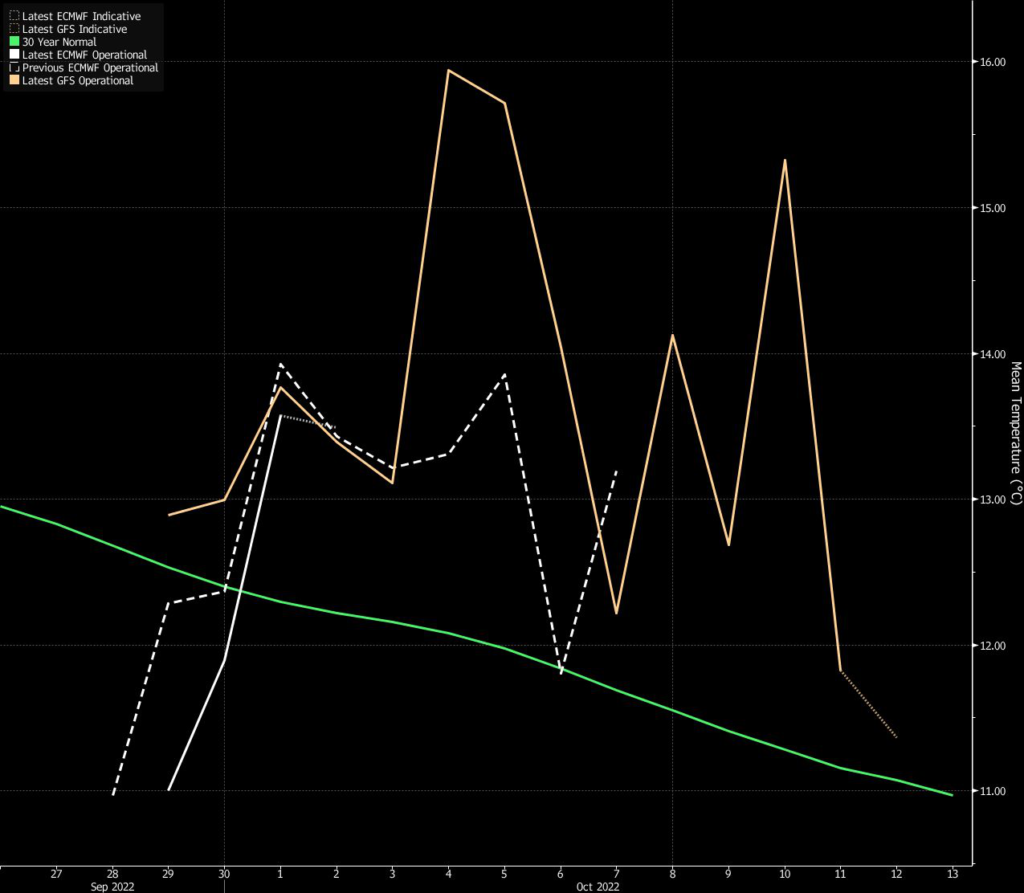
“People will be more mindful” about energy use, Ovo Chief Executive Officer Raman Bhatia said at the Bloomberg Technology Summit in London on Wednesday. On the sidelines of the event he said he expects people to hold off switching their heating on until later in October because of mild weather, delaying the most common start of the UK heating season later than Oct. 1.

Cost is also a driver for people to use heating systems less. An informal poll of audience members conducted during the interview showed a majority plan to respond to soaring energy tariffs simply by minimizing their energy use whenever they can. A smaller number said they would do nothing differently, while a tiny minority said their smart home would optimize everything. 

While governments are releasing billions of euros to support consumers struggling with surging energy costs, the hope is that many people will keep their thermostats turned down even in colder months. 

The most effective way to minimize energy use during colder months is improving insulation, Bhatia said, noting the average UK home loses heat three times faster than in Germany or Sweden. Ovo is training customer service agents to offer more advice and even audit homes, he said. 

Read More: Europe’s First Cold Snap Is Early Test for Continent in Crisis

Beyond that, though, Ovo wants to help customers hook up smart meters to smart variable tariffs to draw on the grid in a more efficient way, saving them money while smoothing out peaks in grid demand during the day, Bhatia said. 

“The opportunity presented by smart meters, smart thermostats, linking all of this data together, is the opportunity to go after right away,” Bhatia said, meaning users can pick their moments to use the most demanding applications. “The grid is pretty dirty and expensive between 4pm and 7pm, for instance. So maybe do not use your tumble drier if you have one at that point.” 

(Adds weather chart after second paragraph.)

More stories like this are available on bloomberg.com

©2022 Bloomberg L.P.

What Happened to WHO Renaming the Monkeypox Virus?

(Bloomberg) — More than three months after the World Health Organization said it would combat the stigma and racism around the monkeypox virus with a new name, no decision has been made. 

In August, the group began allowing people to submit new name ideas through an online portal. Since then, there have been over 99 proposals — including Rodentpox-70, Mpox, Human mediumpox, Bonopox and MOVID-22 —  but no new news about whether any of them have been chosen or short-listed. A spokesman for the WHO said in an email it expects to receive reports from experts on new names “soon.”

The process is moving too slowly for some. Jeremy Faust, an emergency medicine physician at Brigham and Women’s Hospital, supports changing the monkeypox name and applauded the WHO for identifying it as an issue. He even submitted his own suggestion on Aug. 12, and said he was in touch with WHO experts and was encouraged by positive feedback. 

“We know they’re paying attention, the question is when are they going to take action,” Faust said. “The frustration for me is I’m still seeing patients, and the stigma is a barrier for them to get tested, which contributes to the spread of the virus.”

Faust’s proposal, Opoxid-22, follows the Covid-19 naming framework: an abbreviation of the disease name, coronavirus disease, and the year it was discovered, 2019. He believes new and existing diseases should be named as scientifically and plainly as possible to reflect only what is known about them.

“With monkeypox, we know it’s caused by the orthopoxvirus — that’s not going to change whether it came from a monkey or squirrel,” Faust said. “When I tell patients they may have monkeypox, they look at me like I’m crazy, you can feel the stigma with those interactions. It sounds like they have some sort of animal disease.”

Monkeypox has long been seen in a range of mammals, with cases sometimes spreading to people, mainly in central and western Africa. In May, the virus began spreading more widely, particularly among men who have sex with men. As of Sept. 14, more than 66,500 cases have been recorded globally, according to the CDC. While monkeys are susceptible to the virus, previous outbreaks are associated with rodents. Monkeypox symptoms include a rash and flulike symptoms.

The WHO’s International Classification of Diseases unit has consulted on the name with expert and national advisory groups in recent weeks, spokesperson Tarik Jasarevic said. “WHO is expecting their report and recommendations soon, which will also cover the options of additional names,” he said.

“The process for exploring new or additional names for existing diseases has been greatly accelerated,” Jasarevic said. “This normally occurs over the course of one or more annual cycles of review.”

The controversy over monkeypox’s nomenclature is not an anomaly. In 1981, gay-related immune deficiency was renamed to acquired immunodeficiency syndrome, or AIDS, a year after the first case was identified to reduce stigma. The monkeypox name hasn’t changed since the first human case was identified in 1970, before naming guidelines were adopted. When the WHO released a best-practices document for naming new human infectious diseases in 2015, it advised against using species or class of animals or food, specifically calling out “monkey pox” as an example of what to avoid.

“There’s a precedent, so it’s necessary and achievable,” Faust said. “Renaming the virus the right direction. In fact, healthcare is getting better at acknowledging these problems and trying to be more welcoming.”

More stories like this are available on bloomberg.com

©2022 Bloomberg L.P.

Close Bitnami banner
Bitnami
