

Bloomberg

Last Chance for Antitrust Bill to Curb Big Tech Now Hangs on Lame Duck Vote

(Bloomberg) — Supporters of a landmark antitrust bill gathered over beer and soft pretzels at Cafe Berlin on Capitol Hill last week to muster energy for one last push to rein in the dominance of giant technology companies.

Recognizing that the measure won’t come up for a vote before the Nov. 8 midterms, the group set its sights on how to try and jam the legislation through the brief “lame duck” period after the elections. That’s a tight window before January, when a new Congress convenes that will likely be hostile to the effort.

The invitation to the Oktoberfest-themed event was hosted by groups funded by eBay Inc. founder and tech critic Pierre Omidyar’s foundation, and billed it as “an opportunity to gather strength for one final legislative push.”

“Election year or not, there’s no reason this can’t get done over the coming months,” said Matt Fossen, a lobbyist who didn’t attend the Cafe Berlin function but works for Proton Mail, an email service that’s advocating for the bill. “Getting these proposals over the finish line will continue to be our priority.”  

The bill seeks to restrict internet giants like Amazon.com Inc., Apple Inc., Alphabet Inc.’s Google and Meta Platforms Inc. from favoring their own products, so that competitors who depend on these platforms to reach consumers wouldn’t be at a disadvantage. That could impact the design of Google Maps, the display of Apple Music on an iPhone or the prominence of Amazon Basics on the company’s e-commerce site.

During the Cafe Berlin get-together, Senator Elizabeth Warren, a Democrat from Massachusetts who supports the bill, held court on the sidewalk, according to several attendees who asked not to be identified discussing details of the private event. Federal Trade Commission Chair Lina Khan and Assistant Attorney General Jonathan Kanter — the government’s top antitrust enforcers — stopped by after testifying in the Senate that day. Dozens of other officials and activists were also there.

The legislation, which grew out of a House antitrust investigation of the companies led by Rhode Island Democrat David Cicilline, has advanced further than any other effort to address the market power of some of the world’s richest companies. 

Killing the bill, named the American Innovation and Choice Online Act, is a top priority for opponents. Amazon, Apple, Google, Meta and their trade groups have poured almost $95 million into lobbying since 2021, much of it focused on the measure. 

The bill has been approved by the House and Senate Judiciary Committees with bipartisan votes, but Democratic leaders in both chambers have resisted pressure to bring it to a vote. Senate Majority Leader Chuck Schumer told donors in July that he doesn’t think the measure has enough votes to pass, although the bill’s sponsors insist that it does.

At a White House briefing on Wednesday, Press Secretary Karine Jean-Pierre declined to say if President Joe Biden is pushing Schumer to schedule a vote. But, she said, he has made clear his concern about “the power larger social-media platforms have over everyday lives.”

“I don’t have anything specific on that particular legislation,” she said.

Supporters of the bill, including companies such as digital streaming device maker Roku Inc., have held meetings in recent weeks with lawmakers and their staffs to shore up backing for the measure. 

Lobbyists for the technology giants argue that the measure would weaken privacy, threaten national security and degrade products that consumers enjoy. 

If the legislation doesn’t pass by the end of this Congress, it’s unlikely to make it to the floor for several years, particularly if there’s a new GOP majority in the House, as polls have predicted. House Minority Leader Kevin McCarthy, a Republican from California who is in line to become speaker should his party win control, has vehemently opposed the bill, calling it partisan overreach.  

So that leaves one final — and unlikely — shot for the bill’s supporters. Lame duck is not typically the time when major legislation gets passed, but it can happen. In 2018, after Democrats won control of the House but before their new majority was sworn in, Congress passed bipartisan criminal justice reform. 

One of the lead cheerleaders for that project, Iowa Senator Chuck Grassley, a Republican, is also an original co-sponsor of the tech bill. 

Grassley earlier this year said he had as many as 20 fellow Republicans who would vote for the legislation — more than enough to get to the necessary 60 votes, even if a half-dozen of Democrats’ 50 senators vote against it. 

But several Democrats, concerned that the measure would make it more difficult for the tech platforms to take down hate speech and misinformation, have insisted on amendments that could threaten that delicate equation. And Grassley hasn’t given a recent estimate for the level of Republican support.

Other sponsors, including the bill’s champion, Democratic Senator Amy Klobuchar of Minnesota, have insisted that they have enough votes to pass the measure. 

Klobuchar and Cicilline didn’t respond to requests for comment for this story. At an industry conference earlier this month, Klobuchar blamed the bill’s delay on tech industry lobbying. 

“There has been an incredible amount of money that I’m up against,” Klobuchar said on Sept. 7. “But I wouldn’t count us out for a minute.” 

(Updates with White House comment beginning in 10th paragraph)

More stories like this are available on bloomberg.com

©2022 Bloomberg L.P.

Software Firm Workiva Draws Thoma Bravo, TPG Interest

(Bloomberg) — Workiva Inc., a maker of software for regulatory, financial and environmental, social and governance reporting, has drawn takeover interest from private equity firms, according to people with knowledge of the matter. 

Thoma Bravo and TPG are among firms that have held financing discussions with direct lenders to support a potential transaction, said the people, who requested anonymity as the information is private. A transaction has yet to be agreed and it’s possible talks could collapse. 

Representatives for Thoma Bravo, TPG and Workiva declined to comment.

Ames, Iowa-based Workiva, led by Chief Executive Officer Martin Vanderploeg, had a market valuation of about $3.5 billion before Bloomberg reported on the takeover interest. Its shares on Wednesday jumped as much as 23%, the most ever, and their highest since May 5.

This year, buyout firms have agreed to take private a slew of software companies with the help of financing from private credit firms, including Anaplan, Avalara Inc. and Zendesk Inc. 

Read more: Tech Buyout Titan Bravo Sees Mega-Buyouts Squeezed as Rates Rise


(Updates with share price move in fourth paragraph.)

More stories like this are available on bloomberg.com

©2022 Bloomberg L.P.
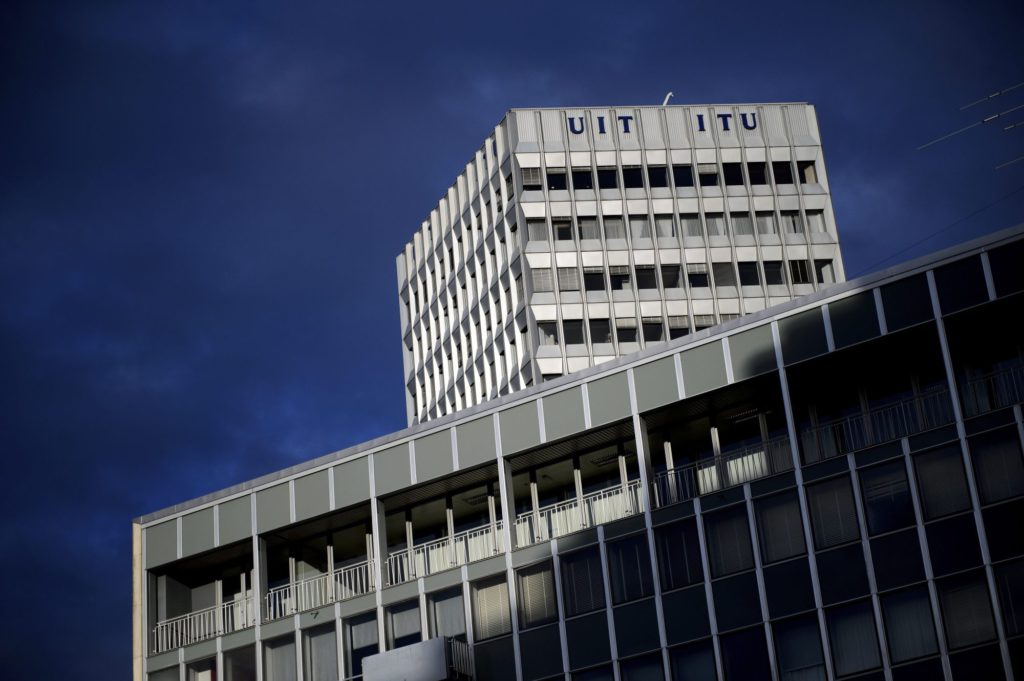
US and Russia Face Off in UN Telecom Agency Leadership Vote

(Bloomberg) — An upcoming vote for leadership of a little-known United Nations agency that develops global standards for mobile phones, internet connectivity and satellite technology could impact the future of the internet.

That’s because the choice for the next secretary-general of the International Telecommunication Union boils down to candidates from the US and Russia, two nations with starkly different visions of the internet. The vote is being held Thursday by secret ballot in Bucharest, Romania.

The agency has taken on a more high-profile role during nearly eight years of Chinese leadership, amid the rising specter of a “splinternet” –- a global division between a free-flowing internet in the West and a more restricted one in authoritarian nations. 

Nonprofit groups based in the US now determine much of how the internet runs. US experts fear that authoritarian governments such as China and Russia could use the ITU as a method to push for more government control over the internet, a scenario that some fear would be more likely if Russia takes control of the body. Rising state control and censorship of the internet could hasten the splinternet’s arrival, and Russian leadership at the ITU might more immediately favor Russian and Chinese companies, US experts said.

“If the American candidate wins, that’s good news for a global and open internet,” said Justin Sherman, a fellow at the Atlantic Council’s Cyber Statecraft Initiative. 

“But if the Russian candidate wins, that means Russia had enough votes to overcome the open-internet bloc–and it means Moscow will begin pushing through, with Beijing’s help, a bunch of ITU proposals that try to increase state control of the internet around the world,” he said. 

Moscow and Beijing have long wanted to change the global internet governance structure to give the ITU–and its member governments, rather than bodies comprising industry and citizen-activists–a greater role over the internet, Sherman said.

The Biden administration has recently ramped up efforts to secure a US victory, with President Joe Biden issuing a statement last week in support of the US candidate, Doreen Bogdan-Martin, a qualified amateur radio operator who’s worked with the ITU for 28 years. The US campaign is stressing her individual expertise rather than focusing on the geopolitical showdown between Washington and Moscow that has been heightened by Russia’s invasion of Ukraine.

Bogdan-Martin also wants the ITU to focus on engaging businesses, civil society, academia and experts in its discussions on radiofrequency spectrum, standards development in equipment and network technologies and advancing broadband infrastructure.

Russia’s candidate, Rashid Ismailov, a telecommunications veteran at Ericsson Inc. and Nokia who was also the first non-Chinese vice president at Huawei Technologies Co Ltd. and a deputy minister in Russia, has urged a stronger role for the ITU on topics ranging from taxes and regulation to artificial intelligence. He argues the body should establish “unified international rules regulating the use of drones” regarding both technical regulations and ethical codes.

Both candidates emphasized the need to connect the remaining 2.7 billion people globally, most in the developing world, who aren’t online. The voting intentions of some countries of the Global South, including India and some African countries, “are very much up in the air,” according to Sherman. In April, developing countries such as India, Brazil, Indonesia, Mexico, Nigeria, Pakistan and South Africa failed to sign on to a non-binding US declaration in favor of a free and open internet, despite reports of Russia’s internet crackdown as part of its war in Ukraine

The candidates are vying to succeed China’s Houlin Zhao, who won the leadership unopposed in both 2014 and 2018.

Under Houlin’s leadership, China increased its influence over ITU study groups that make standards recommendations, in addition to increasing the number of Chinese staff at the UN agency, according to a March report from the Heritage Foundation, a conservative US think tank. The ITU became a “critical component of China’s effort to dominate standard setting” in order to favor Chinese companies, especially Huawei, according to the report.

Two US-based groups essentially dominate how the internet is run at the moment, rather than the ITU. The Internet Corporation for Assigned Names and Numbers, a non-profit organization, allocates domain names and IP addresses with the aim of securing a “borderless” internet for all. The Internet Engineering Task Force, whose membership is open to all individuals, develops open standards by “rough consensus” and specifies internet protocols that underpin email and routing among others.


(Updated to include context on possible ITU positions in the future in ninth paragraph. A previous version incorrectly spelled Houlin Zhao’s name.)

More stories like this are available on bloomberg.com

©2022 Bloomberg L.P.
EU Plans Russia Import Bans, Tech Curbs Over Putin Land Grab

(Bloomberg) — The European Union proposed a new package of sanctions on Moscow that would ban European companies from shipping Russian oil to third countries above an internationally set price cap. 

European Commission President Ursula von der Leyen said the EU will propose a “sweeping” new import ban on Russian products that would cost Moscow 7 billion euros ($6.7 billion) in revenue, as well prohibit the sale of key technologies that could benefit its military. 

“We are determined to make the Kremlin pay for this further escalation,” she said.

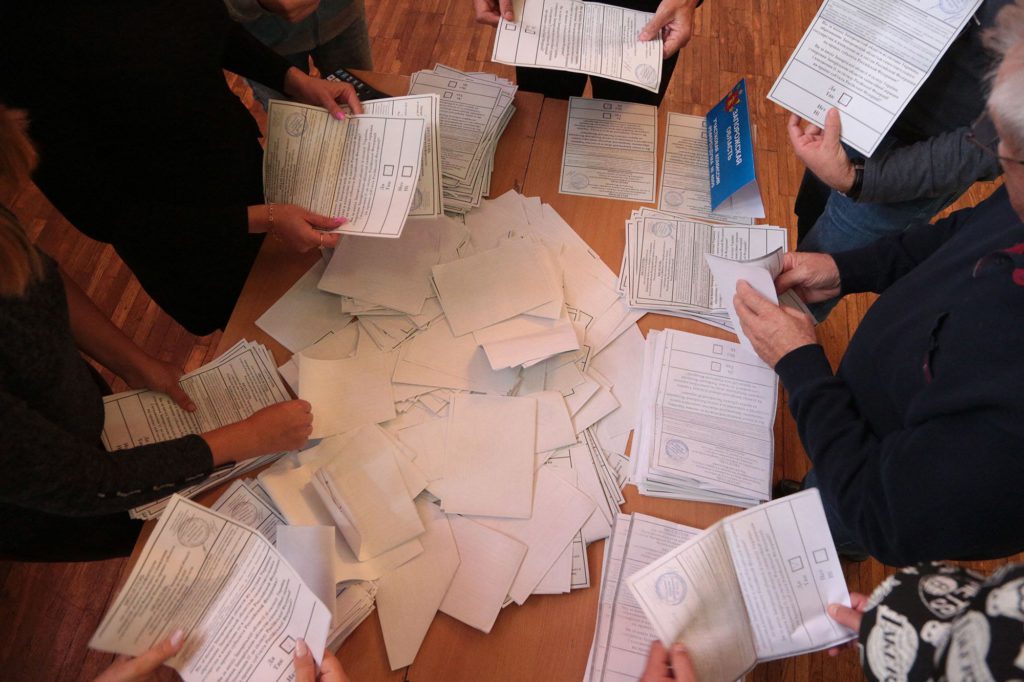
The announcement came after Russia announced a partial mobilization and staged widely condemned referendums on annexation in Ukrainian territory it’s occupying.

Von der Leyen said the bloc aims to ban EU nationals from holding high-paying roles in Russian state-owned companies. While no specific individuals would be targeted, the measure, if backed by member states, would likely impact former German Chancellor Gerhard Schroeder. The erstwhile German leader is the chairman of the shareholders’ committee of Nord Stream AG, a joint project to transport Russian gas via pipeline which is majority-owned by the energy giant Gazprom PJSC, according to German media.

The EU is proposing to sanction a range of individuals and entities, including senior Russian ministry officials and individuals involved in staging the recent referendums, the bloc’s top diplomat, Josep Borrell, said. 

The commission plan aimed to restrict access to aviation items, electronic components and specific chemical substances to “deprive the Kremlin’s military complex of key technologies.”

In her recent State of the Union speech in September, von der Leyen pointed to the bloc’s sanctions as part of the reason Russia’s military was under strain to take semiconductors from ordinary household appliances to fix their military hardware.

The bloc has imposed multiple rounds of sanctions on Russia, including parts of its energy sector, since Moscow’s invasion of Ukraine. Sanctions need to be approved unanimously by the EU’s 27 member states.

The new sanctions also would work to restrict the transfer of Russian wealth via digital assets like Bitcoin, prohibiting European firms from providing crypto wallet, account or custody services to Russian nationals and entities established in Russia, according to a person familiar with the matter. 

The package would also extend the ban on steel products as well as paper, jewelry and precious stones, said the person, who asked not to be identified because the proposal is private. 

Price Cap

The new package would add a ban on shipping Russian oil, but carve out an exemption for oil priced at or under a level set by a coalition of the Group of Seven and other countries, according to the person. 

To allow for an oil price cap, the bloc will have to change its current legislation. In June, EU nations agreed to a full ban on insurance and financial services for seaborne oil, while shipping was spared from the restrictions. Most of those prohibitions are due to kick in Dec. 5 alongside a ban on EU purchases of Russian crude.

“We are laying the legal basis for this oil price cap,” von der Leyen said.

The G-7, which endorsed a cap earlier this month, has said it wants an agreement in place before that date.

“The oil price cap will lead to lower prices for Russian oil,” Andrzej Sados, Poland’s ambassador to the EU, told reporters. “The sheer threat of such a move has already caused a drop.”

The EU also said it plans to crack down on people who try to circumvent sanctions. 

“We will be able to list individuals if they circumvent our sanctions,” von der Leyen said. “So for example, if they buy goods in the European Union, bring them to third countries and then to Russia — this would be a circumvention of our sanctions, and those individuals could be listed. I think this will have a major deterring effect.”

(Updates with crypto measures in the 10th paragraph.)

More stories like this are available on bloomberg.com

©2022 Bloomberg L.P.
US Stocks Rally; Treasuries Jump After BOE’s Plan: Markets Wrap

(Bloomberg) — US stocks and Treasuries rallied on Wednesday after the Bank of England’s decision to stage a market intervention boosted UK bonds.

The S&P 500 climbed as much as 1.8%, rising for the first time since the Federal Reserve boosted rates and turned ever-more hawkish a week ago. The 10-year US Treasury yield dropped toward 3.70% after piercing 4% earlier. The yield on 30-year UK gilts plunged more than one percentage point. Oil advanced with metals. Orange juice futures spiked as Hurricane Ian heads for Florida’s gulf coast and rapidly gains strength. 

Global markets enjoyed a respite from the brutal selloff that has gripped them since the Fed embarked on the most aggressive path of interest-rate hikes by since the 1980s. The Bank of England calmed nerves after it said it would buy long-dated government bonds in whatever quantities were needed to end the chaos caused by the government’s plans to slash taxes. 

Fed officials remained diligent in warning that more rate-hike pain is yet to come, with Atlanta Fed President Raphael Bostic reinforcing the hawkish stance his colleagues have been hammering home all week.

“All eyes are on inflation and interest rates, and this renewed hawkishness or more aggressive hawkishness from the Fed has certainly sent equity markets into a period of concern here,” said Josh Emanuel, chief investment officer of investment management at Wilshire. “From this point forward, equities are really going to take their cues from bond market. So if you see bond yields move lower, that is a good sign for equities.”

Stocks may also be rising because the markets have priced in the Fed’s hawkishness, according to Adrian Helfert, chief investment officer of multi-asset strategies at Westwood Holdings Group.

“It’s harder for the central bank and the speakers to say much more — short of saying that they’re going to start hiking by a hundred basis points for the next several meetings,” he said. “Maybe the market is at least now believing what the Fed is saying.”

But economists are still worried that the central bank is committing another error after being too slow to respond to inflation, since a series of jumbo hikes mean officials are not weighing the impact their actions are having on the economy.

Geopolitical tensions also continued to simmer. Natural gas prices in Europe surged after Russia said it may cut off supplies via Ukraine and the German Navy was deployed to investigate the suspected sabotage to the Nord Stream pipelines. While the European Union proposed a new round of sanctions on Russia, the growing exodus of Russians fleeing President Vladimir Putin’s mobilization order is creating turmoil at the borders with neighboring states and stirring fears about potential instability. 

The dollar dropped on Wednesday. But its recent rally brought losses to other currencies, including the euro and onshore yuan, which tumbled to its weakest level since 2008. A regulatory body guided by the People’s Bank of China urged banks to protect the authority of the yuan fixing.

How much damage is a strong dollar causing? That’s the theme of this week’s MLIV Pulse survey. It’s brief and we don’t collect your name or any contact information. Please click here to share your views.

Key events this week:

  • Euro zone economic confidence, consumer confidence, Germany CPI, Thursday
  • US initial jobless claims, GDP, Thursday
  • Fed’s Loretta Mester, Mary Daly speak at events, Thursday
  • China PMI, Friday
  • Euro zone CPI, unemployment, Friday
  • US consumer income , University of Michigan consumer sentiment, Friday
  • Fed’s Lael Brainard and John Williams speak, Friday

Some of the main moves in markets:

Stocks

  • The S&P 500 rose 1.7% as of 2:58 p.m. New York time
  • The Nasdaq 100 rose 1.6%
  • The Dow Jones Industrial Average rose 1.6%
  • The MSCI World index fell 0.1%

Currencies

  • The Bloomberg Dollar Spot Index fell 1.1%
  • The euro rose 1.5% to $0.9742
  • The British pound rose 1.6% to $1.0902
  • The Japanese yen rose 0.6% to 143.96 per dollar

Cryptocurrencies

  • Bitcoin rose 2.5% to $19,552.09
  • Ether rose 0.7% to $1,333.43

Bonds

  • The yield on 10-year Treasuries declined 24 basis points to 3.70%
  • Germany’s 10-year yield declined 11 basis points to 2.12%
  • Britain’s 10-year yield declined 49 basis points to 4.01%

Commodities

  • West Texas Intermediate crude rose 4.3% to $81.91 a barrel
  • Gold futures rose 2% to $1,669.10 an ounce

More stories like this are available on bloomberg.com

©2022 Bloomberg L.P.

Cartier Plans US Store Expansion on Strong Demand for Luxury

(Bloomberg) — Cartier, the French maker of upscale watches and jewelry, plans to open as many as 10 stores in the US in the coming years — another sign that European luxury brands are betting American demand will remain robust. 

The company, owned by luxury conglomerate Richemont, is likely to turn a temporary shop in Palm Beach, Florida, into a permanent one, Cartier’s North America Chief Executive Officer Mercedes Abramo said during an interview. It’s considering permanent stores in other cities, such as Seattle, Austin, Texas, and Troy, Michigan, and may add second or third locations in cities where it already operates. For example, it’s opening a new store in New York’s SoHo district in early 2023. 

“We need more square footage because the traffic is so high,” Cartier Chief Executive Officer Cyrille Vigneron said during the interview, which was held in Cartier’s recently renovated New York City flagship store. Cartier currently has 30 US stores, and Vigneron said the luxury house could have as many as 40 within the next half decade or so. 

A US surge in demand for luxury handbags, watches and other goods during the pandemic has led European luxury firms to pay more attention to the country’s consumers. Previously, brands had mostly focused on key cities such as New York, Chicago and Los Angeles. That’s now changing as the pandemic sparks population shifts and US hedge funds and tech firms migrate to Texas and Florida. 

In the past two to three years, Cartier has seen “a growing appetite from American customers for high-end products,” Vigneron said. The company has grown quickly and “we have to adjust to that size and probably continue to expand.” 

Worldwide Expansion

The US expansion is part of Cartier’s bigger move to increase its 270 stores around the world by about 10% during the next five years. The company is opening new stores and taking over locations operated by franchisees while also refreshing the look of existing stores. 

The pandemic, which sparked rapid shifts in consumer behavior, has also bolstered online sales for luxury brands. US e-commerce now represents 10% of Cartier’s revenue in the country — making it the company’s largest market for online sales. Globally, e-commerce represents about 8% of Cartier revenue, up from just 1% in 2019. 

A recent deal between Richemont and online luxury retailer and technology firm Farfetch Ltd. will help to boost online sales further and improve inventory management, Vigneron said. Farfetch’s e-commerce platform will make it easier for Cartier to offer options such as in-store pickup for online orders, for example. 

Holiday Outlook

While US demand is robust, economic uncertainty makes it difficult to project what the upcoming holiday season will look like, Vigneron said. “The prospect doesn’t seem to be a full recession, it’s more a deceleration of growth,” he said. “Even if it happened, I think it will not last very long.” US consumers tend to bounce back quickly, he added. 

More stories like this are available on bloomberg.com

©2022 Bloomberg L.P.

Amazon Urges Call Center Staff to Work From Home, Plans Closings

(Bloomberg) — Amazon.com Inc. is encouraging customer service employees at some US call centers to work from home, signaling the company’s preference for remote work in certain roles that would help save money on real estate, according to people familiar with the matter.

The shift is part of a plan to close multiple call centers around the country, including one that opened in 2005 in Kennewick, Washington, said one of the people, who asked not to be named because they weren’t authorized to speak about the plans.

An Amazon spokesman declined to comment about planned closures, but confirmed the shift to remote work.

“We’re offering additional members of our customer service team the increased flexibility that comes with working virtually,” Amazon spokesman Brad Glasser said in an email. “We’re working with employees to make sure their transition is seamless while continuing to prioritize best-in-class support for customers.”

The pandemic forced companies to embrace remote work for customer service roles and many employees are resisting efforts to return to offices. Before the pandemic, as many as 90% of some 3 million US customer service representatives commuted to call centers. Post-pandemic, about half of them are expected to work from home and half commute to offices, according to Jeff Christofis, who oversees staffing giant Kelly Services’ contact center unit.

Offering remote work will help Amazon recruit employees in an industry with high turnover. In addition to providing workers flexibility, Amazon won’t be locked into specific cities from which to fill positions. It can also save on real estate if it shifts enough staffers to work-from-home and closes existing facilities.

Amazon started letting customer service representatives work from home before the pandemic. Its cloud computing division sells Amazon Connect software that helps companies create remote customer service networks. Amazon has call centers around the US, including in Kennewick and Phoenix that each employ hundreds of workers. Still, call center employees make up a small fraction of the company’s more than 1.5 million workers.

More stories like this are available on bloomberg.com

©2022 Bloomberg L.P.

Amazon’s Latest Devices Push It Deeper Into Wellness, Cars

(Bloomberg) — Amazon.com Inc.’s annual device event Wednesday showed the e-commerce giant pushing further into wellness, security and the auto industry, underscoring an effort to weave its technology into every part of consumers’ lives. 

The lineup unveiled at the presentation includes a bedside device called Halo Rise and an upgraded array of Echo smart speakers, as well as a new Kindle and enhanced security technology from Amazon’s Ring division.

Though Amazon remains in the shadow of companies like Apple Inc. in hardware technology, it’s rapidly spreading its reach. New wellness products complement a broader expansion into the health-care industry that already includes an online pharmacy, a wearable wellness device and a range of experiments in applying data analysis tools to medical science.

The company announced plans in July to buy One Medical in a deal valued at $3.49 billion. That company, whose parent is called 1Life Healthcare Inc., operates 182 medical offices in 25 markets in the US. 

The circular bedside device, with a ring-shaped light and digital clock face, is a combination sleep tracker, lamp and alarm clock. It will be available later this year for $140, Amazon said. 

The gadget uses low-power radar to analyze the person sleeping closest to it, the Seattle-based company said at the event. Unlike many of Amazon’s home electronics, it has neither a speaker nor microphone. Halo Rise can determine a user’s respiratory rate and has environmental sensors to determine temperature. The product also integrates with the Alexa voice assistant and the Echo smart speaker to play music and take commands such as dimming the lights.

Wednesday’s event ranged from relatively minor upgrades to more ambitious plans, such as a pilot program to turn Amazon’s Astro robot into a security guard for businesses. The shares gained as much as 2.8% to $117.63.

The announcements included: 

  • An updated Echo Studio with improved 3D audio, known as spatial audio. The device also has enhanced bass and better overall sound quality, Amazon said. Some of these changes will come for free via software update to existing Echo Studios. The new model will cost $200 and ship this year.
  • New Echo Dot and Echo Dot with Clock models that add improved speakers and twice as much as bass without increasing the size of the device. The new Dot with Clock has an improved screen that can show song information. Both new products also have sensors to determine the room’s temperature. More significantly, the new products have Eero technology built in, allowing them to serve as Wi-Fi router extenders and eliminating dead zones. The Dot will cost $50, and the Dot with Clock will be $60.
  • A new Echo Dot Kids in owl and dragon versions for $60. These have custom greetings and jokes through Alexa.
  • An updated $55 Echo Auto device with a smaller design, allowing customers to add Alexa integration to their cars. The device can help users control their music and handle text messages. There’s also a new feature for requesting roadside assistance. The first device was criticized for bugs and limited functionality after launch, and has among the lowest customer reviews of Amazon-built electronic devices.
  • Amazon and BMW also announced that the carmaker is working on a new version of its voice control system that is built upon Alexa. The company in recent years has worked to extend the reach of its voice assistant by offering its underlying building blocks to other companies to create their own custom software.
  • A new Fire TV Cube can convert high-definition content into 4K with a much faster processor. The device also has an updated microphone array for improved voice input and a fabric-wrapped design. It has dedicated Ethernet and USB ports for connecting to other devices and an HDMI input control. That lets customers use voice control with other parts of a TV, such as their cable service.
  • Amazon also announced a new Alexa Voice Remote that has a backlight and a feature that lets users find the product if it gets lost in the couch. It’s launching in November for $35.
  • And there’s a new QLED Fire TV physical display, starting at $800, in 65-inch and 75-inch sizes.

Amazon doesn’t disclose revenue from its devices group, but the business is thought to be a relatively small part of the company’s sales, which are mostly fueled by e-commerce orders, third-party seller services and cloud offerings. But the products can help keep customers loyal to the company, and the purchase of one device often spurs the purchase of another.

With the new sleep tracker, users can view reports — such as how much deep sleep they got — via an Amazon Echo Show, the company’s speaker with a screen. In 2020, Amazon introduced the Halo Band, an activity tracker that it paired with a subscription wellness service.

(Updates with Amazon shares in seventh paragraph.)

More stories like this are available on bloomberg.com

©2022 Bloomberg L.P.

Ukraine Latest: US Is Sending More Rockets, Armored Vehicles

(Bloomberg) — The Biden administration announced a $1.1 billion package of additional weapons and equipment to Ukraine, including 18 more High Mobility Artillery Rocket Systems.

European Commission President Ursula von der Leyen announced an eighth package of sanctions that will target Russia over its attempt to annex more territory in Ukraine. The measures will include a price cap on Russian oil exports. “We intend to make the Kremlin pay” for this further escalation, she said. 

Separately, European allies were considering how to respond to a disruption of the Nord Stream natural gas pipeline as Russia threatened to cut off the last gas supplies to them via Ukraine. Jens Stoltenberg, secretary general of the NATO military alliance, said after meeting Danish Defense Minister Morten Bodskov that they discussed “the protection of critical infrastructure.”


(See RSAN on the Bloomberg Terminal for the Russian Sanctions Dashboard.)

Key Developments

  • Ukraine’s Plea for Tanks Bogs Down as US, Germany Confront Risks
  • Russia Declares Victory in Sham Ukraine ‘Referendums’
  • Putin Raises Gas Pressure as He Moves to Annex Ukraine Lands
  • Global Gas Scramble to Intensify After European Pipeline Blasts
  • Iran’s Drones Are Cheap, Plentiful and Helping Russia in Ukraine
  • EU Eyes Ban on Nationals in Top Jobs at Russia State Enterprises

On the Ground

Russia pounded Ukraine’s second largest city Kharkiv Tuesday evening, the regional governor Oleh Synyehubov said on Telegram, adding that there were no casualties according to preliminary information. Air-defense forces shot down Russian missiles in the Mykolaiv, Odesa and Dnipropetrovsk regions, Ukrainian military’s southern command said on Facebook. Ukrainian troops repelled Russian attacks near eight settlements, Ukraine’s General Staff reported in its morning update. The Washington-based Institute for the Study of War said in its latest report that Ukrainian forces consolidated positions on the eastern bank of the Oskil river and advanced further on the outskirts of Lyman in the Donetsk region, while continuing to target Russian supply lines as part of a southern counter-offensive.

All times CET:

EU Says Gas Price Cap Alone Risks Aggravating Energy Crisis (8:32 p.m.)

The European Union needs to rely on a combination of tools rather than market intervention alone to limit the effects of an energy crunch that has companies and households reeling from record power and gas bills, the bloc’s executive arm told governments on Wednesday.

Capping natural gas prices, a move urged by more than a half of member states seeking to quickly contain the crisis, risks increasing demand for the fuel rather than addressing its scarcity if imposed in isolation, the European Commission said in a document seen by Bloomberg News. The 27-member bloc is grappling to limit soaring energy costs after Russia cut supplies of natural gas following President Vladimir Putin’s decision to invade Ukraine.

Read the full story here.

US Sending HIMARS Rockets, Armored Vehicles in $1.1 Billion Package (8:03 p.m.)

The Biden administration announced a $1.1 billion package of additional weapons and equipment to Ukraine.

White House Press Secretary Karine Jean-Pierre told reporters that it includes 18 new High Mobility Artillery Rocket Systems, beyond the 16 already committed. She said “it also includes hundreds of armored vehicles, radars and counter drone systems.”

Jean-Pierre also said sham referendums conducted by Russia in occupied areas of Ukraine “were straight from the Kremlin playbook. They were manufactured and manipulated. Ukrainian civilians were forced to cast ballots under the watch of armed guards.”

Putin’s Approval Rating Falls Amid Partial Mobilization (7:51 p.m.)

Approval ratings for Putin fell to 77% in September from 83% in August, according to the latest poll by the independent Levada Center. The first drop in approval since April comes days after Putin ordered a partial mobilization last week. The poll found 21% of respondents don’t approve Putin’s actions as his nation’s leader, the highest since February, when Russia invaded Ukraine.

Finland Says Only a State Actor Capable of Nord Stream Sabotage (7:45 p.m.)

The rupture of the Nord Stream natural-gas pipelines in the Baltic Sea can only have been carried out by a state actor, Finland’s Foreign Minister Pekka Haavisto said.

“We’ve known that sabotage against critical infrastructure has been a realistic threat,” Haavisto told reporters in Helsinki on Wednesday. The acts appear to have been “deliberate” and “may have been intended to destabilize the Baltic Sea area,” Prime Minister Sanna Marin said at the same news conference.

Even so, the three leaks in international waters in the exclusive economic zones of Denmark and Sweden indicate no military threat against Finland, said Antti Kaikkonen, the defense minister. The military situation in Finland’s vicinity is stable and calm, he said.

Putin’s Draft Order Sparks Exodus of Russians (5:12 p.m.) 

At least 200,000 Russians left the country after President Vladimir Putin’s mobilization order in a dash for safety that’s causing turmoil at the borders and stirring fears in neighboring states about potential instability from the influx.

While Russia hasn’t released official data, statistics from Georgia, Kazakhstan and the European Union showed the scale of the departures amid fears among conscription-age men that the Kremlin may close the border for them. The total is likely an underestimate as other nearby countries popular with Russians including Armenia, Azerbaijan and Turkey haven’t disclosed arrival figures.

Scholz Rejects Russia’s ‘Pretend Referenda’ (5:03 p.m.)

German Chancellor Olaf Scholz held another telephone call with Ukrainian President Volodymyr Zelenskiy and reiterated that the government in Berlin will “never recognize” the results of what he called “pretend referenda” in Russian occupied areas of Ukraine.

Scholz “stressed that Germany would not stop providing concrete political, financial and humanitarian support to Ukraine, as well as in the defense of its sovereignty and territorial integrity, including with weapons supplies,” according to an emailed statement from his spokesman.

EU Announces New Sanctions Package (4:16 p.m.) 

The European Union proposed a new round of sanctions targeting Russia after Moscow announced a partial mobilization and staged widely condemned referendums on annexations in Ukrainian territory it’s occupying.

In addition to imposing a price cap on Russian oil, the measures will include an import ban on Russian products that will deprive Moscow of 7 billion euros ($6.7 billion) in revenue as well as export restrictions on aviation products, electronic components and chemical substances, von der Leyen told reporters in Brussels. 

Sanctions need to be approved unanimously by the EU’s 27 member states before they can be imposed.

Read more: EU Plans New Russia Import Bans, Tech Curbs Over Putin Land Grab

Lithuania to Mull Further Security Measures For Infrastructure (12:40 a.m.)

Lithuania, which stepped up security for its strategic energy infrastructure in February when Russia invaded Ukraine, said the government will discuss whether additional measures are needed following the Nord Stream disruption. Energy Minister Dainius Kreivys said consultations will be held with the defense ministry and army officials. 

Kremlin Rejects Claims Russia Sabotaged Nord Stream (11:50 a.m.)

Spokesman Peskov said it’s necessary to wait for an investigation to show whether “it was an explosion or a rupture.” He said Putin plans to meet with leaders of the occupied regions of Ukraine following the annexation votes, but declined to say when this would happen.

Zelenskiy Wants Preventive Measures Against Annexation, Nuclear Blackmail (11:10 a.m.)

Ukrainian President Volodymyr Zelenskiy, speaking to Harvard University students via videolink, called for “preventive actions” – primarily sanctions – against Russia for its invasion of Ukraine, attempts to annex territories and nuclear blackmail. 

“Russian propagandists say that they expect strikes and annexations not only in Ukraine, but also in other countries – from Kazakhstan to the Baltic states, from Georgia to Moldova and Poland,” Zelenskiy said. “The Russian President is again saying that he wants to break the grain initiative, which provides food security for tens of millions of people,” Zelenskiy said, adding that Russia is doing all this because it sees a lack of preventive measures. 

Finland Considers Building Fence on Russian Border (10:40 a.m.)

Finland’s Border Guard called for a fence to be built to secure the riskiest spots along the 1,300-kilometer border with Russia.

Finland should build as much as 260 kilometers of fence to help prevent potential uncontrolled mass-scale entry from the east, the Border Guard said in a press release. A physical barrier is “necessary” to slow and control any crowds, it said. The fence could cost “hundreds of millions of euros” with a final decision on funding resting with the government.

More stories like this are available on bloomberg.com

©2022 Bloomberg L.P.

EU Plans New Russia Import Bans, Tech Curbs Over Putin Land Grab

(Bloomberg) — The European Union proposed a new package of sanctions on Moscow that would ban European companies from shipping Russian oil to third countries above an internationally set price cap. 

European Commission President Ursula von der Leyen said the EU will propose a “sweeping” new import ban on Russian products that would cost Moscow 7 billion euros ($6.7 billion) in revenues, as well prohibit the sale of key technologies that could benefit its military. 

“We are determined to make the Kremlin pay for this further escalation,” she said.

The announcement came after Russia announced a partial mobilization and staged widely condemned referendums on annexation in Ukrainian territory it’s occupying.

Von der Leyen said the bloc aims to ban EU nationals from holding high-paying roles in Russian state-owned companies. While no specific individuals would be targeted, the measure, if backed by member states, would likely impact former German Chancellor Gerhard Schroeder. The erstwhile German leader is the chairman of the shareholders’ committee of Nord Stream AG, a joint project to transport Russian gas via pipeline which is majority-owned by the energy giant Gazprom PJSC, according to German media.

The EU is proposing to sanction a range of individuals and entities, including senior Russian ministry officials and individuals involved in staging the recent referendums, the bloc’s top diplomat, Josep Borrell, said. 

The European Commission plan aimed to restrict access to aviation items, electronic components and specific chemical substances to “deprive the Kremlin’s military complex of key technologies.”

In her recent State of the Union speech in September, von der Leyen pointed to the bloc’s sanctions as part of the reason Russia’s military was under strain to take semiconductors from ordinary household appliances to fix their military hardware.

The bloc has imposed multiple rounds of sanctions on Russia, including parts of its energy sector, since Moscow’s invasion of Ukraine. Sanctions need to be approved unanimously by the EU’s 27 member states before they can be imposed.

Price Cap

The new package would add a ban on shipping Russian oil, but carve out an exemption for oil priced at or under a level set by a coalition of the Group of Seven and other countries, according to a person familiar with the matter. 

To allow for an oil price cap, the bloc will have to change its current legislation. In June, EU nations agreed to a full ban on insurance and financial services for seaborne oil, while shipping was spared from the restrictions. Most of those prohibitions are due to kick in Dec. 5 alongside a ban on EU purchases of Russian crude.

“We are laying the legal basis for this oil price cap,” von der Leyen said.

The G-7, which endorsed a cap earlier this month, has said it wants an agreement in place before that date.

“The oil price cap will lead to lower prices for Russian oil,” Andrzej Sados, Poland’s ambassador to the EU, told reporters. “The sheer threat of such a move has already caused a drop.”

The EU also said it plans to crack down on people who try to circumvent sanctions. 

“We will be able to list individuals if they circumvent our sanctions,” von der Leyen said. “So for example, if they buy goods in the European Union, bring them to third countries and then to Russia — this would be a circumvention of our sanctions, and those individuals could be listed. I think this will have a major deterring effect.”

More stories like this are available on bloomberg.com

©2022 Bloomberg L.P.

Close Bitnami banner
Bitnami