
Bloomberg

Hurricane Ian Makes Landfall in Cuba as It Churns Toward Florida

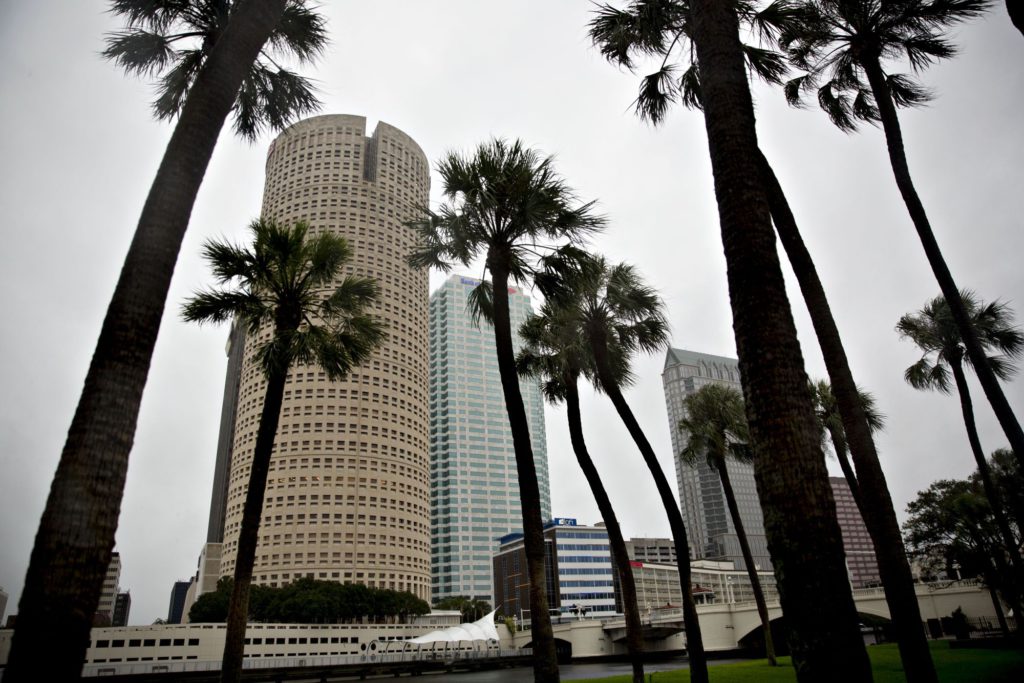
(Bloomberg) — Ian made landfall over western Cuba as a major Category 3 hurricane, while churning toward Florida in what could be the worst storm to hit Tampa in over a century.

Ian’s winds jumped to 125 miles (205 kilometers) an hour as it neared the city of Pinar Del Rio, Cuba, according to an advisory from the U.S. National Hurricane Center at 5 a.m. New York time. It was still about 175 miles from Florida’s Dry Tortugas.

The Tampa area is now at the center of the probability track forecasts as the storm moves northward. Hurricane and storm surge warnings are in effect along Florida’s west coast, including Tampa Bay. More than 300,000 people are expected to evacuate.

“This is a life threatening situation,” the Brad Reinhart, a hurricane specialist at the center, said in his analysis. “Promptly follow evacuation and other instructions from local officials.” 

Tropical storm winds could reach Florida Tuesday, with hurricane conditions arriving Wednesday morning, bringing the potential for significant river flooding across central parts of the state.

Hurricanes reach “major” or Category 3 status on the Saffir-Simpson scale when their maximum sustained winds hit 111 miles per hour.

Parts of western Cuba are set to receive as much as 16 inches (41 centimeters) of rain through Thursday, according to the hurricane center. Flash flooding and mudslides could occur. Cuban President Miguel Diaz-Canel warned the nation Monday that it would be facing a “challenging week.” 

Ian will ride up Florida’s west coast. The state will very likely see widespread surge, wave and rain impacts no matter where it hits, Ryan Truchelut, president of WeatherTiger, said in an email.

Its winds are forecast to peak at 140 mph late Tuesday through Wednesday, before dropping to 120 mph on Thursday, the center said. The storm will encounter wind shear in 36 to 48 hours, which will hold it back from gaining even more strength.

Still, Hurricane Ian could be the worst storm to hit Tampa in 101 years, according to Chuck Watson, a disaster modeler with Enki Research. The area has had many close calls in recent years, but the last devastating strike on the Tampa-St. Petersburg area was a 1921 storm that would have cost $30 billion today.

On its current track, Ian could bring tropical-storm strength winds to more than half the orange-growing acreage in the state, Watson said.

Fuel and Fertilizer

Demand for diesel for generators in Florida has soared by more than 10 times the norm, said Eliot Vancil, president of Fuel Logic, a distributor in the state. Requests are coming from nursing homes, grocery stores, hospitals and the like, with demand heavily focused in Tampa, he said in a phone interview. There is no shortage of fuel in the state yet, but “there is a shortage of time to get it done” before the storm, he said.

Fertilizer producer Mosaic Co. said it’s finishing storm preparations at its phosphate mining and production facilities in Florida and sites in Louisiana. Employees at its headquarters in downtown Tampa and other Florida locations are working remotely.

Ian is expected to miss most of the energy infrastructure in the Gulf of Mexico, though Chevron Corp. and BP Plc said they’ve shut some offshore oil production platforms in the region and evacuated employees ahead of the storm.

It’s forecast to be a major hurricane off Hillsborough County, which includes Tampa, and could push a storm surge of 15 feet into the shoreline, Tim Dudley, county emergency management director, said in a YouTube post. Mandatory and voluntary evacuation orders have been issued and the county is opening shelters, Bonnie Wise, the county administrator, said in a briefing posted on YouTube. The county expects to evacuate more than 300,000 people, she said.

Tampa Electric said Monday it may proactively cut power to a part of downtown Tampa early Wednesday to avoid serious damage to its equipment from an expected saltwater storm surge.

Tampa International Airport will suspend operations at 5 p.m. Tuesday, and American Airlines Group Inc. issued a travel alert for 20 airports in the western Caribbean and Florida. Tampa tourist attraction Busch Gardens will close Tuesday and Wednesday, and the Tampa Bay Buccaneers football team will use the practice facility of their cross-state rivals, the Miami Dolphins. 

President Joe Biden approved an emergency declaration for Florida on Saturday, freeing federal disaster aid to the state. He also postponed a scheduled trip on Tuesday to the state that included a Democratic National Committee rally in Orlando. Governor Ron DeSantis declared a state of emergency across Florida and warned residents to prepare.

Ian is the second destructive hurricane to rip across the Atlantic in less than a week, following Hurricane Fiona. Fiona struck Atlantic Canada over the weekend, causing extensive damage, power outages and flooding across Nova Scotia and Prince Edward Island. Damages to the region are estimated at $3.5 billion, though secondary factors and rain may push costs above $4.5 billion, according to Enki Research’s Watson.

(Updates with landfall, hurricane warnings in first three paragraphs.)

More stories like this are available on bloomberg.com

©2022 Bloomberg L.P.
China Warns Waning Global Demand Is Top Threat to Trade

(Bloomberg) — Overseas demand for goods from China is weakening as the global economy slows, warned a senior Chinese commerce ministry official, though the country still expects foreign trade to grow in the second half of this year. 

“The slowdown in external demand is the biggest uncertainty faced by China’s trade,” said Vice Commerce Minister Wang Shouwen during a press conference Tuesday in Beijing. “Our companies are reporting falling orders, as the demand from major markets is declining.”

An export boom that has propelled China’s economy during the pandemic is showing signs of waning as soaring inflation and other headwinds elsewhere suppress global demand. Exports in US dollar terms expanded 7.1% last month, the weakest pace of growth since April when a lockdown in Shanghai disrupted ports and snarled trade. 

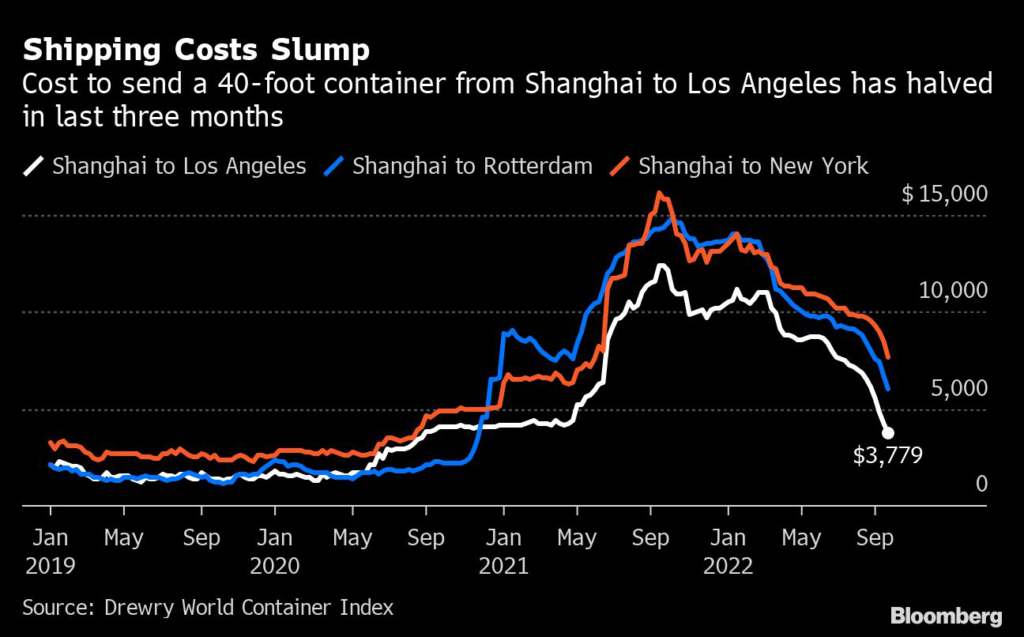
Meanwhile, the cost of shipping goods from China has slumped to the lowest level in more than two years as the world economy stumbles.

Much of the growth in the value of trade now is due to rising prices, not to an increase in the amount of goods actually being put on ships. Shanghai’s port processed 8.4% less cargo in August than a year earlier, the port said earlier this month.

While Wang said China is confident it will achieve growth in foreign trade in the last six months of 2022, he cautioned that the economic slowdown in the US and Europe is a major headwind. 

Elevated inflation among major economies has squeezed the consumption of goods in those places, while many overseas companies have been left with high inventories they still need to offload — thus hurting new orders, Wang said. He added that the demand for work-from-home equipment spurred by the pandemic is declining.

The Chinese government has rolled out several measures to stabilize trade, Wang said, such as last month’s big stimulus package and support for cross-border e-commerce firms to build overseas warehouses, among other measures. He noted that rapid growth in some sectors, such as cars and solar batteries, has also demonstrated the country’s good foundation in trade.

More stories like this are available on bloomberg.com

©2022 Bloomberg L.P.
Grab Sees Slower Growth While It Pursues 2024 Profitability

(Bloomberg) — Grab Holdings Ltd. expects revenue to slow sharply as the Southeast Asian internet giant targets profitability in 2024, speeding up efforts to reverse years of losses.

The ride-sharing and delivery provider gave the forecast for a 45% to 55% increase at its first investor day, trying to reassure shareholders it’s on the rebound. Analysts were projecting 49% growth for 2023 on average. The company backed by SoftBank Group Corp. also said it anticipates breaking even in the second half of 2024 on a conditional basis, and excluding one-time items. The shares climbed more than 3% in pre-market trading.

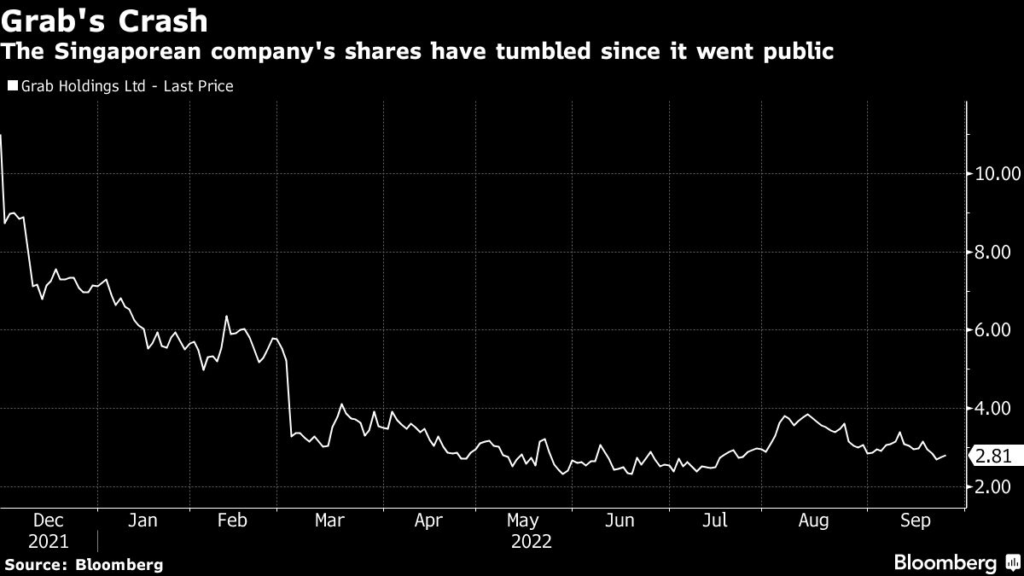
Grab, long considered one of the rising stars of Southeast Asia, has struggled since it went public through a merger with a special purpose acquisition company in December. Shares have tumbled more than 70% as the company wracked up losses in the post-Covid era and the stock market soured on unprofitable tech ventures. Grab, which went public by merging with Altimeter Capital Management’s SPAC in what was originally a $40 billion deal, is now worth about $10.8 billion.

“Looking ahead, we’re firing on all cylinders to improve our profitability trajectory,” Chief Executive Officer Anthony Tan said at the event in Singapore on Tuesday. “Grab is trying to achieve this by growing our top line in a sustainable manner.”

Grab, which counts Japan’s SoftBank and Uber Technologies Inc. as two biggest shareholders, expects losses to narrow to $380 million on an adjusted basis in 2022’s second half.

Executives said it now aims to break even by the latter half of 2024 on an adjusted earnings basis before interest, taxes, depreciation and amortization. That excludes as many as a dozen exceptional items, from fair value losses in investments to “restructuring costs.”

“It’s the right strategy, although the market is less patient now,” said Sachin Mittal, an analyst at DBS Group Holdings Ltd., who rates Grab a hold. He had estimated revenue growth of 77% for 2023 and adjusted Ebitda breakeven in 2025.

In the meantime, the company said it has about $6 billion of cash and liquid items on hand, giving it time to turn its on-demand and fintech services around.

Tan’s vision of creating a so-called superapp for Southeast Asia was aggressive, but led to extensive losses. Grab lost $3.4 billion in 2021 and has piled up almost $1 billion of losses in the first two quarters of this year. Revenue this year is set to roughly double to as much as $1.3 billion, Grab said last month.

The company started out focused on the ride-hailing business and competed effectively against Uber. The US company ended up selling Grab its business in Southeast Asia in return for a stake in its Singaporean rival. Grab then launched an ambitious — and expensive — campaign to expand into adjacent businesses, including food delivery and finance. It also added everything from hotel bookings and health services to gifts and entertainment experiences to its app.

Alex Hungate, who joined Grab as chief operating officer in January after heading SATS Ltd. and HSBC Singapore, said the firm will now have a more defined strategy. He outlined an effort to make the company “Southeast Asia’s largest and most efficient on-demand platform that enables local commerce and mobility.”

“This is not just a bunch of words on a page,” Hungate, 56, said during his presentation. “This defines our strategy in a more focused way than we’ve ever defined before.”

In a separate interview, he said Grab aims to focus on product efficiency, such as just-in-time allocation of orders so its drivers can handle more of them. 


Grab also plans to expand its monthly subscription program, where users pay a flat fee for deals across mobility, food and parcel delivery services on its app. It will also focus on corporate customers, groceries and advertising and fintech services to boost profitability.

The company is counting on turning around its loss-making delivery and financial-services businesses to hit its profit target. It’s previously forecast its deliveries division will get into the black by the second quarter of next year, when it should have margins of at least 3%. Grab expects its digital bank operation in the region, run with Singapore Telecommunications Ltd., to break even only by 2026.

“It’s sharpening of focus,” Hungate said in the interview. “Because superapp could be interpreted as being all things to all people; that’s not what we intend to do. We are very clear about what we want to focus on.”

(Updates with shares in the second paragraph. A previous version was corrected to amend analysts’ estimates and COO’s former company.)

More stories like this are available on bloomberg.com

©2022 Bloomberg L.P.

Sam Bankman-Fried’s Alameda Research Draws Increasing Attention

  • Listen to Bloomberg Crypto on the iHeartRadio App
  • Listen to Bloomberg Crypto on Apple Podcasts
  • Listen to Bloomberg Crypto on Spotify  

(Bloomberg) — You may have heard of cryptocurrency exchange FTX and you may have heard of its CEO and Founder, Sam Bankman-Fried. But have you ever heard of Alameda Research? 

No, it’s not a Silicon Valley robotics lab. It’s one of the largest and most influential crypto trading firms in the world. Alameda was founded by Sam Bankman-Fried, or SBF as he’s known. The trading firm operates out of the Bahamas along with the rest of his empire. 

With a modest team of only 30 employees, Alameda pocketed over $1 billion dollars in profit last year.  The firm and its employees have, for the most part, preferred not to draw too much attention. In recent months though, it’s gotten harder for Alameda to fly under the radar, as the collapse of crypto has revealed a tangle of connections between Alameda, FTX and the broader virtual currency markets.  As Alameda’s influence spreads and connections emerge, so have concerns over potential conflicts of interests.

Bloomberg reporter Hannah Miller joins guest host and Bloomberg crypto senior editor Anna Irrera in this episode to untangle these connections.

Follow us on Twitter @crypto, and subscribe to the Bloomberg Crypto Newsletter at https://bloom.bg/cryptonewsletter


More stories like this are available on bloomberg.com

©2022 Bloomberg L.P.

South Korea Moves to Freeze Bitcoin Tied to Do Kwon

(Bloomberg) — South Korean prosecutors are moving to freeze assets linked to Do Kwon, the crypto entrepreneur they are seeking to arrest on suspicion of breaking securities laws. 

Prosecutors sent requests to crypto exchanges KuCoin and OKX to freeze a total of 3,313 Bitcoins, worth about $67 million at current prices, that had been moved to the venues from a wallet linked to Kwon’s Luna Foundation Guard, CoinDesk reported on Tuesday. An official at the Seoul Southern District Prosecutors’ Office confirmed the CoinDesk story while declining to comment further. 

Representatives for KuCoin and OKX didn’t immediately respond to requests for comment. 

South Korea has sought help from Interpol to locate Kwon, whose Terra stablecoin ecosystem collapsed in May, wiping out an estimated $60 billion. Kwon’s whereabouts are unknown after Singapore’s government earlier this month said he’s no longer there. 

On Monday, 31-year-old Kwon took to Twitter to say that he’s “making zero effort to hide,” adding “I go on walks and malls,” without disclosing his current location. 

According to researcher CryptoQuant, a new wallet address believed to belong to the LFG was created on Sept. 15. After that, a total of 3,310 Bitcoins were moved from the wallet to KuCoin and OKX, CryptoQuant said. South Korean prosecutors on Sept. 14 said a court had issued a warrant for Kwon’s arrest. 

“CryptoQuant specified new Bitcoin addresses owned by LFG based on transaction patterns, adjacent flows and material non-public information,” the researcher said in an emailed statement. 

The TerraUSD stablecoin’s peg to the US dollar was mainly maintained through a complex mix of algorithms and trader incentives involving its sister token Luna. Earlier in the year, Kwon had set up the LFG as an additional safeguard, accumulating a reserve of crypto that could be deployed in times of stress.

Between January and March, the LFG bought $3.5 billion of Bitcoin, according to blockchain forensics firm Elliptic. Those measures ultimately proved useless in early May, with Kwon and the LFG both saying they’d spent nearly all of the reserve to try to stabilize TerraUSD and Luna.

More stories like this are available on bloomberg.com

©2022 Bloomberg L.P.
India Mulls $2.5 Billion Aid to Manufacture Grid-Scale Batteries

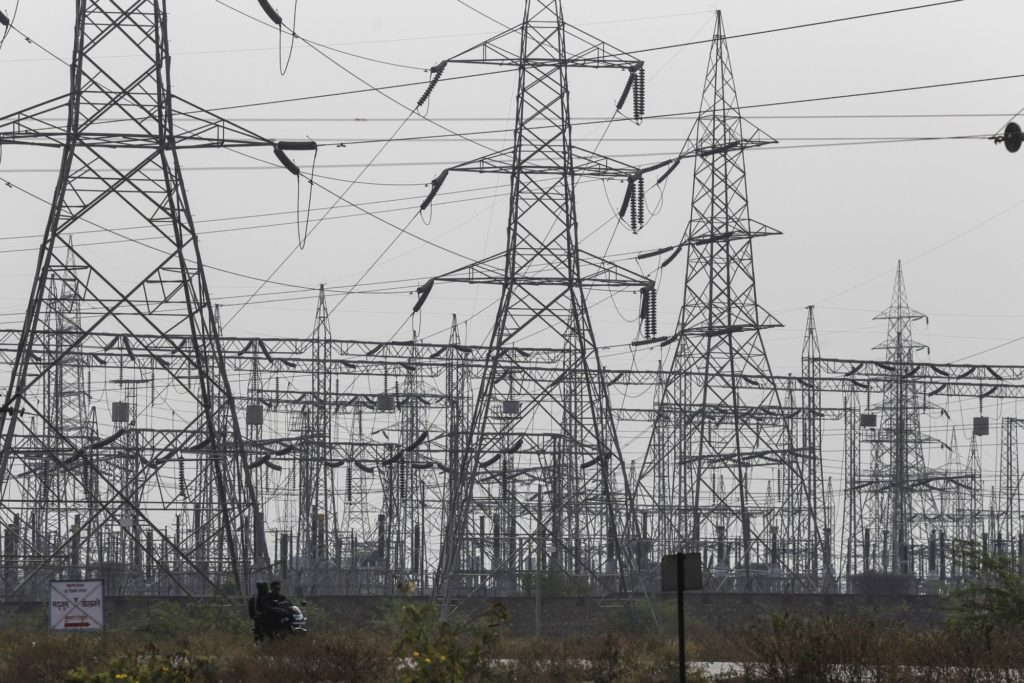
(Bloomberg) — India’s power ministry is proposing a nearly $2.5 billion incentive plan to encourage domestic manufacturing of grid-scale batteries, aiming at bringing down the cost of energy storage to speed up its energy transition.

There are early-stage discussions in the government about offering incentives to manufacturers for batteries they produce over a certain time period, power minister Raj Kumar Singh said in an interview last week. The total payout could be in the realm of 200 billion rupees, he said. 

Worried over rival China’s dominance in lithium, the nation is in talks with countries including Australia to secure supplies of the battery metal, he said. India also plans to promote other battery technologies.

Lower storage costs will be key to providing around-the-clock renewable power supplies from intermittent renewable sources like wind and solar. Until that happens, India is prioritizing energy security, with plans to expand its coal power fleet by a quarter through 2030 unless cheaper storage becomes available. 

Large Indian conglomerates, including the Adani Group and Reliance Industries Ltd., have committed to investing billions of dollars in energy storage. The government plans to make developers bundle energy storage with future wind and solar projects to add capacity. 

“I’m adding storage capacity because that will bring down costs. When enough volumes start getting added, the costs will come down,” Singh said. “I’m not going to compromise on the availability of energy for our people and for the growth of our economy.”

The battery plan would follow the blueprint of Prime Minister Narendra Modi’s Make In India initiative. The government has offered financial incentives to spur domestic manufacturing of everything from solar panels to car batteries and electronics goods, in order to reduce dependence on imports and create local jobs.

More stories like this are available on bloomberg.com

©2022 Bloomberg L.P.

Geely’s EV Truck Brand Farizon Seeks $300 Million Funding Round, Sources Say

(Bloomberg) — Farizon Auto, a brand owned by Zhejiang Geely Holding Group Co., is seeking to raise about $300 million in new capital, according to people with knowledge of the matter.

GLP Pte, the Singapore-based logistics and real estate giant, is set to be the lead investor in the clean-energy commercial vehicle maker’s debut funding round, said the people, who asked not to be identified as the information is private.

Citic Ltd.-backed CPE, South Korea’s Mirae Asset and GLy Capital Management — a Hong Kong-based investment firm backed by Geely Group and SK Inc. — are also considering joining the round, according to the people.

Deliberations are ongoing and details may change, the people said. A representative for Geely Holding said the company does not comment on internal business. A spokesperson for GLP declined to comment, a Mirae Asset representative couldn’t immediately comment and CPE and GLy Capital didn’t immediately respond to requests.

A global push toward decarbonization has drawn investment into the electric vehicle sector in recent years, growing beyond just cars. Rivian Automotive Inc., an electric truck maker, raised more than $13.7 billion in its US initial public offering last year.

Established in 2016, Farizon Auto makes commercial vehicles, urban buses and coaches, according to Geely Holding’s website. It launched a methanol-fueled heavy truck in 2019, and two years later debuted a new engine that cuts average annual fuel cost by 18% compared to diesel heavy trucks, Geely Holding’s 2021 sustainability report shows. Geely New Energy Commercial Vehicle Group, the division which includes Farizon, is considering an IPO in three to five years, its chief executive officer Mike Fan told Bloomberg News last year.

More stories like this are available on bloomberg.com

©2022 Bloomberg L.P.

Harris Vows to Work With South Korea on Electric Vehicle Dispute

(Bloomberg) — US Vice President Kamala Harris vowed to work with South Korea to resolve a trade dispute stemming from the Inflation Reduction Act, as the longtime allies reaffirmed their defense ties in the Indo-Pacific theater. 

Harris, who is visiting Tokyo to attend former Japanese leader Shinzo Abe’s funeral, told South Korean Prime Minister Han Duck-soo Tuesday that she “understood” his countries concerns about tax incentives for electric vehicles under the law, according to a US readout. “They pledged to continue to consult as the law is implemented,” it added.

The comments come just weeks after South Korea strongly protested the Inflation Reduction Act signed last month by President Joe Biden. Provisions including tax credits of as much as $7,500 for purchases of electric vehicles made in North America threaten to disadvantage major South Korean brands like Hyundai and Kia. 

The US law requires carmakers to assemble their EVs in North America to receive subsidies, but Hyundai Motor Co. doesn’t yet have any operational electric car plants there. All three of South Korea’s main battery makers — LG Energy Solution Ltd., SK On Co. and Samsung SDI Co. — import most of their critical minerals from China, another obstacle in the law for the nation’s automakers.

The disadvantage risks hurting Hyundai’s performance in the US, where this year it’s second in EV market share after Tesla Inc. South Korea invested $27.6 billion to the US last year, and Hyundai is planning to spend $5.5 billion building EV and battery facilities in Georgia. 

The friction risks Biden’s efforts to build a tighter network of partners to counter China’s rising influence. South Korea is key in initiatives such as the Indo-Pacific Economic Framework and the so-called Chip 4 Alliance of major semiconductor manufacturing nations. The EV dispute has clouded Yoon’s campaign promise to bolster ties with the US on economic issues, as well as security. 

In the meeting, the allies agreed to work together for the establishment of “peace, stability, and prosperity in the Indo-Pacific and around the world,” the statement said. Harris also “welcomed steps to broaden the alliance to take on the defining challenges of our time,” it added.

More stories like this are available on bloomberg.com

©2022 Bloomberg L.P.
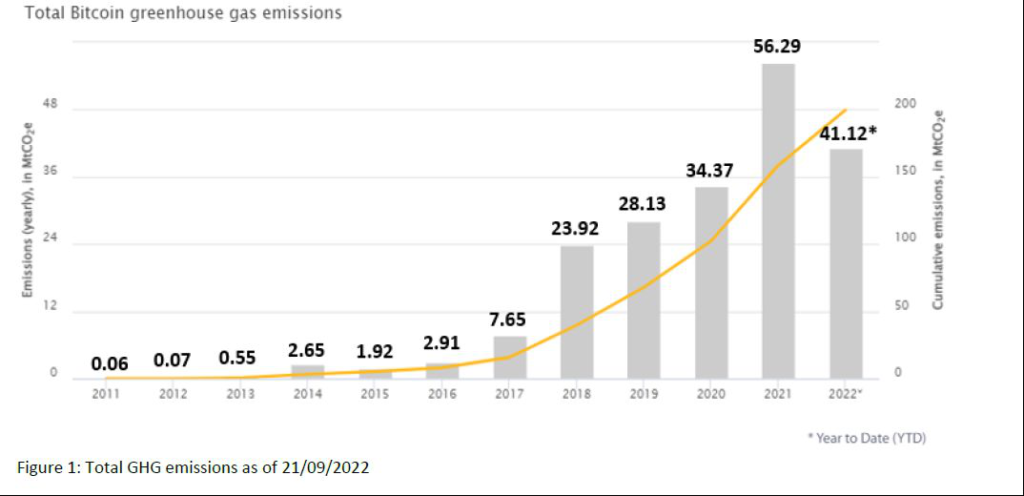
Bitcoin Mining Emissions Drop as Slump Spurs Rush to More Efficient Rigs

(Bloomberg) — Greenhouse gas emissions from the Bitcoin mining industry are on the decline this year as dwindling profit margins drive miners to operate more efficient machines. 

Bitcoin miners’ emissions are estimated to be 14.1% lower this year than in 2021, according to annualized data in a new report released Tuesday from the Cambridge Center for Alternative Finance. That represents about 0.1% of the global emissions, or about half of what gold miners generate. Fossil fuels account for almost two-thirds of the total electricity used by the industry, with coal being the largest of such energy sources, the report said. 

Bitcoin miners use energy-intensive computers to validate the transaction data encrypted by the blockchain of the world’s biggest cryptocurrenncy. They earn rewards in the form of the token. More efficient mining machines have pushed the computing power for the entire network to a record high, while reducing energy consumption. Older generations of rigs have ceased to be profitable, with electricity costs outweighing mining revenue due to low Bitcoin prices and high energy prices. 

“Given the recent sharp decline in mining revenue per unit of computing power provided, a shift to more efficient hardware occurs, which leads to the, at least temporary, retirement of older, less efficient hardware,” the report said. 

Estimating Bitcoin’s environmental footprint is based on a theoretical model that uses publicly available data rather than actual observation, according to the report. Some Bitcoin miners run their mining facilities off-grid, which makes it hard to monitor their energy consumption. 

The new data comes from CCFA’s new index tool. The updated version provides daily estimates of the annualized and total greenhouse gas emissions related to Bitcoin and a breakdown of the electricity mix. Launched in 2019, the index tool has been one of the most commonly used data sources to measure Bitcoin’s energy consumption. 

More stories like this are available on bloomberg.com

©2022 Bloomberg L.P.

Ian Threatens to Become Worst Hurricane to Hit Tampa in Century

(Bloomberg) — Hurricane Ian is gaining power as it nears Cuba on a path toward Florida, threatening to become the worst storm to hit Tampa in over a century.

Ian’s winds jumped to 110 miles (177 kilometers) an hour as it churned in the Caribbean about 85 miles east of the western tip of Cuba, the US National Hurricane Center said in an advisory at 2 a.m. New York time. It started Monday at 75 mph. 

The storm’s path has shifted slightly east and the Tampa area is now at the center of the probability track forecasts. A hurricane watch and storm surge warning is in effect along Florida’s west coast, including Tampa Bay. More than 300,000 people are expected to evacuate.

“This is a life threatening situation,” the Brad Reinhart, a hurricane specialist at the center, said in his analysis. “Promptly follow evacuation and other instructions from local officials.” 

The eyewall of the storm was nearing the coast of western Cuba early Tuesday, the NHC said. Tropical storm winds could reach Florida late Tuesday, with hurricane conditions arriving Wednesday morning, bringing the potential for significant river flooding across central parts of the state.

Ian’s center is set to pass over western Cuba, where the storm surge could raise water levels by as much as 14 feet (4 meters) above normal, according to the hurricane center. Rains could produce flash flooding and mudslides in parts of Cuba.

Cuban President Miguel Diaz-Canel warned the Communist nation Monday that it would be facing a “challenging week.” Hurricane alerts were issued for seven western provinces including the capital, Havana.

Ian will ride up Florida’s west coast, dragging its most powerful side along the coastline before making landfall by the end of the week. The state will very likely see widespread surge, wave and rain impacts no matter where it hits, Ryan Truchelut, president of WeatherTiger, said in an email.

Its winds are forecast to peak at 140 mph late Tuesday through Wednesday, before dropping to 120 mph on Thursday, the center said. The storm will encounter wind shear in 36 to 48 hours, which will hold it back from gaining even more strength.

Still, Hurricane Ian could be the worst storm to hit Tampa in 101 years, according to Chuck Watson, a disaster modeler with Enki Research. The area has had many close calls in recent years, but the last devastating strike on the Tampa-St. Petersburg area was a 1921 storm that would have caused $30 billion today.

On its current track, Ian could bring tropical-storm strength winds to more than half the orange-growing acreage in the state, Watson said.

Fuel and Fertilizer

Demand for diesel for generators in Florida has soared by more than 10 times the norm, said Eliot Vancil, president of Fuel Logic, a distributor in the state. Requests are coming from nursing homes, grocery stores, hospitals and the like, with demand heavily focused in Tampa, he said in a phone interview. There is no shortage of fuel in the state yet, but “there is a shortage of time to get it done” before the storm, he said.

Fertilizer producer Mosaic Co. said it’s finishing storm preparations at its phosphate mining and production facilities in Florida and sites in Louisiana. Employees at its headquarters in downtown Tampa and other Florida locations are working remotely.

Ian is expected to miss most of the energy infrastructure in the Gulf of Mexico, though Chevron Corp. and BP Plc said they’ve shut some offshore oil production platforms in the region and evacuated employees ahead of the storm.

It’s forecast to be a Category 4 hurricane off Hillsborough County, which includes Tampa, and could push a storm surge of 15 feet into the shoreline, Tim Dudley, county emergency management director, said in a YouTube post. Mandatory and voluntary evacuation orders have been issued and the county is opening shelters, Bonnie Wise, the county administrator, said in a briefing posted on YouTube. The county expects to evacuate more than 300,000 people, she said.

Tampa Electric said Monday it may proactively cut power to a part of downtown Tampa early Wednesday to avoid serious damage to its equipment from an expected saltwater storm surge.

Tampa International Airport will suspend operations at 5 p.m. Tuesday, and American Airlines Group Inc. issued a travel alert for 20 airports in the western Caribbean and Florida. Tampa tourist attraction Busch Gardens will close Tuesday and Wednesday, and the Tampa Bay Buccaneers football team will use the practice facility of their cross-state rivals, the Miami Dolphins. 

President Joe Biden approved an emergency declaration for Florida on Saturday, freeing federal disaster aid to the state. He also postponed a scheduled trip on Tuesday to the state that included a Democratic National Committee rally in Orlando. Governor Ron DeSantis declared a state of emergency across Florida and warned residents to prepare.

Ian is the second destructive hurricane to rip across the Atlantic in less than a week, following Hurricane Fiona. Fiona struck Atlantic Canada over the weekend, causing extensive damage, power outages and flooding across Nova Scotia and Prince Edward Island. Damages to the region are estimated at $3.5 billion, though secondary factors and rain may push costs above $4.5 billion, according to Enki Research’s Watson.

(Updates intensity and location in second paragraph.)

More stories like this are available on bloomberg.com

©2022 Bloomberg L.P.

Close Bitnami banner
Bitnami