

Bloomberg

Crypto Tycoon’s Bitdeer Debuts Fund Targeting Distressed Miners

(Bloomberg) — Chinese crypto billionaire Jihan Wu is setting up a $250 million fund to buy distressed assets from Bitcoin miners, as the industry reels from this year’s steep drop in digital-asset prices. 

Wu’s Bitdeer Technologies Holding Co. plans to invest $50 million as part of a junior tranche, meaning the firm’s investment will be first at risk if the fund loses money. It aims to raise another $200 million from outside investors such as family offices, venture capital firms, alternative investment funds and other mining companies, a representative from Bitdeer told Bloomberg News. 

Bitcoin miners are under pressure as depressed token prices, high energy costs and fierce competition all take a toll, driving a closely watched gauge of mining-industry revenue to a two-year low. Compute North, a major data-center provider for crypto mining, filed for bankruptcy last week, while the three largest US publicly traded Bitcoin miners suffered combined losses of more than $1 billion in the second quarter alone. 

“There are opportunities in every cycle,” Matt Kong, chief executive officer of Bitdeer, said. “If you can time the market and enter at the bottom, come out at the top, then you will make money. It works especially well for mining.” 

With the industry in a slump, highly leveraged miners are selling assets such as mining rigs at a steep discount to better-capitalized peers. Prices for certain types of mining machines have dropped more than 50%. In one recent example, Bitcoin miner CleanSpark Inc acquired a mining Georgia mining facility as well as thousands of rigs from another miner, Mawson Infrastructure Group Inc. 

“We can buy the cheaper machines and run them in our existing facilities with stable and cost-effective power power purchase agreements,” Bitdeer’s Kong said. “You’ll have the cash flow.”    

Wu co-founded the largest Bitcoin mining-machine manufacturer Bitmain Technologies Ltd, which generated as much as $5.6 billion in revenue last year. He exited the Beijing-based company in January 2021, and now controls Bitmain’s Bitcoin-mining spinoff Bitdeer and crypto-finance venture firm Matrixport, which has more than $10 billion of client assets under management and custody. 

Read more: Chinese Crypto Tycoon-Backed Bitdeer Buys Asia’s ‘Fort Knox’

Singapore-based Bitdeer has emerged as a major Bitcoin miner, with facilities across the US and Norway. Last November, the firm filed with the US Securities and Exchange Commission to go public through a $4 billion “blank-check” SPAC agreement, which was originally set to be completed on June 14. The deal has since been pushed back, with Bitdeer filing this month for a second extension that would delay the closing until Dec. 14.  

More stories like this are available on bloomberg.com

©2022 Bloomberg L.P.
Futures Rise, Pound Gains as Global Selloff Pauses: Markets Wrap

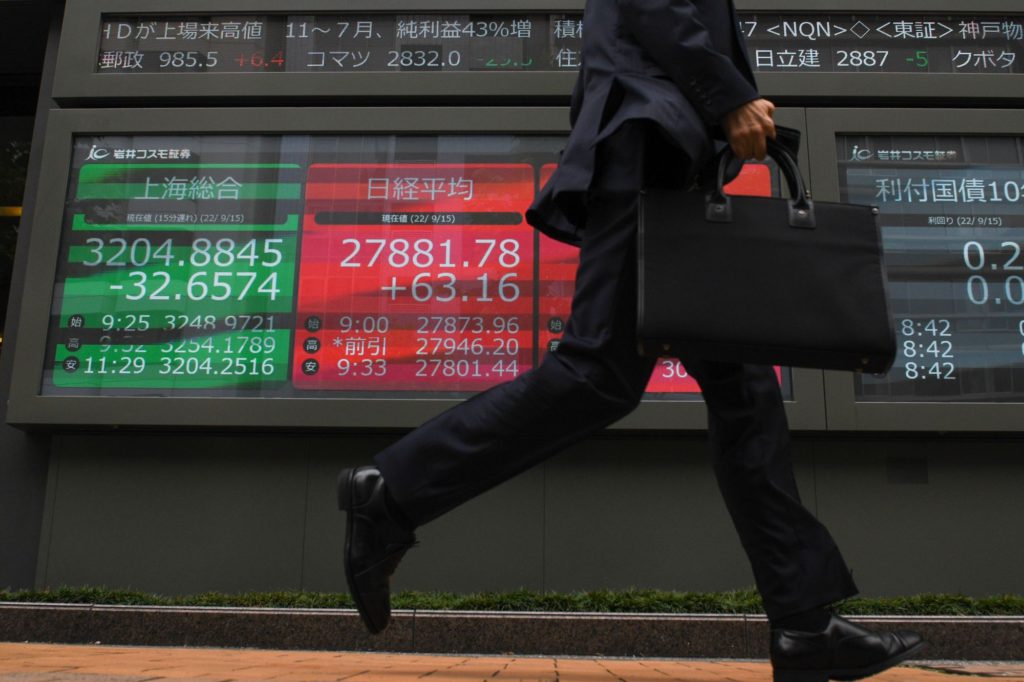
(Bloomberg) — Global markets remained on edge Tuesday as investors braced for a heightened risk of global recession, even as dip buyers emerged.

Most stocks rose as Goldman Sachs Group Inc. and BlackRock Inc. soured on equities for the short term and Citigroup Inc. said bearish positioning continues to rise. Tech giants including Apple Inc., Amazon.com Inc. and Alphabet Inc. advanced in premarket trading as US index futures rebounded with Europe’s Stoxx 600. 

Pressure on bonds eased after the worst selloff in decades, with the benchmark 10-year Treasury yield retreating from the highest level since 2010. The dollar gauge held near a record high set Monday, when Federal Reserve officials repeated hawkish comments on policy. 

UK markets clawed back some losses even after Chancellor of the Exchequer Kwasi Kwarteng vowed to stay the course on his economic strategy that triggered the market meltdown late last week. Gilt yields slipped following the biggest-ever surge and the pound rose about 1% after falling to a record low. 

Still, the country’s stock and bond markets have lost at least $500 billion in combined value since Liz Truss took over as Prime Minister and traders remained wary of the risk that the currency could slump to parity with the dollar after the Bank of England indicated it may not act before November to stem the rout.

Read More: Everything-Selloff on Wall Street Deepens on 98% Recession Odds

Volatility across markets was also reflected by the risk of future price swings, which reached the highest since the beginning of the pandemic, as shown by a Bank of America index.

Meanwhile, Germany suspects the damage to the Nord Stream pipeline system used to transport Russian gas to Europe was the result of sabotage. Benchmark European gas prices climbed as much as 12% on Tuesday, after four days of losses. Oil and gold also rose.

The turmoil in markets shows little sign of turning Fed officials away from hawkish rhetoric. Boston Fed President Susan Collins and her Cleveland counterpart Loretta Mester said additional tightening is needed to rein in stubbornly high inflation and Atlanta Fed President Raphael Bostic also said the central bank still has a ways to go to control inflation.

The latest data showed US durable goods orders fell 0.2% in August. 

Read More: Fed Officials Say That Tackling Inflation Is Their No. 1 Job

“The market is pricing in some Fed increases, but we’re a bit worried that it might not be pricing in everything,” Laila Pence, president of Pence Wealth Management, said on Bloomberg Television. “Everyone is nervous.”

How much damage is a strong dollar causing? That’s the theme of this week’s MLIV Pulse survey. It’s brief and we don’t collect your name or any contact information. Please click here to share your views.

Key events this week:

  • US new home sales, Conference Board consumer confidence, durable goods, Tuesday
  • Fed Chair Jerome Powell and Charles Evans speak at events, Tuesday
  • Fed’s Mary Daly, Rafael Bostic, Charles Evans and ECB President Christine Lagarde speak at events, Wednesday
  • Euro zone economic confidence, consumer confidence, Germany CPI, Thursday
  • US initial jobless claims, GDP, Thursday
  • Fed’s Loretta Mester, Mary Daly speak at events, Thursday
  • China PMI, Friday
  • Euro zone CPI, unemployment, Friday
  • US consumer income , University of Michigan consumer sentiment, Friday
  • Fed’s Lael Brainard and John Williams speak, Friday

Some of the main moves in markets:

Stocks

  • Futures on the S&P 500 rose 1.3% as of 8:32 a.m. New York time
  • Futures on the Nasdaq 100 rose 1.5%
  • Futures on the Dow Jones Industrial Average rose 1%
  • The Stoxx Europe 600 rose 0.8%
  • The MSCI World index fell 1.3%

Currencies

  • The Bloomberg Dollar Spot Index fell 0.4%
  • The euro rose 0.3% to $0.9641
  • The British pound rose 1% to $1.0801
  • The Japanese yen rose 0.2% to 144.48 per dollar

Cryptocurrencies

  • Bitcoin rose 6.1% to $20,283
  • Ether rose 5.1% to $1,392.82

Bonds

  • The yield on 10-year Treasuries declined 11 basis points to 3.82%
  • Germany’s 10-year yield declined three basis points to 2.09%
  • Britain’s 10-year yield declined five basis points to 4.20%

Commodities

  • West Texas Intermediate crude rose 1.3% to $77.70 a barrel
  • Gold futures rose 0.8% to $1,646.30 an ounce

More stories like this are available on bloomberg.com

©2022 Bloomberg L.P.
Harris to Visit DMZ Thursday as Tensions Rattle Region

(Bloomberg) — Vice President Kamala Harris is planning a trip to the Demilitarized Zone dividing the Republic of Korea and North Korea, in a high-stakes visit that comes as the US is confronting fresh provocations from Pyongyang while seeking to reassure regional allies concerned by deteriorating relations between Washington and Beijing.

The trip on Thursday will focus the world’s attention on the vice president, who has sought to burnish both US influence — and her own foreign policy credentials — with a trip through Asia emphasizing the Biden administration’s commitment to the region’s security.

Harris will become the first senior White House official to visit the DMZ during Biden’s tenure, and the visit comes as the White House has struggled to engage North Korean leader Kim Jong-un on talks over his country’s nuclear program, and as Pyongyang has launched a series of ballistic missile tests.


The trip will follow meetings in Tokyo, where Harris and allies — including Japanese Prime Minister Fumio Kishida and Australian Prime Minister Anthony Albanese — discussed the security situation in Taiwan. China has said it views the island as part of its territory that it plans to unify with the mainland, and has engaged in a series of military exercises in the Taiwan Strait.

The visit is a high-profile opportunity for Harris, who stumbled in her first year as vice president with controversies over her handling of immigration issues stemming from the Northern Triangle in Central America and a series of high-profile staffing departures. But she has assumed a larger role in the administration in recent months, serving as the face of the White House’s efforts to address a Supreme Court decision reversing abortion rights.

On Wednesday, Harris will meet with Japanese chief executive officers in the semiconductor industry for a discussion of the CHIPS and Science Act. The companies that will be represented include: Tokyo Electron, Nikon, Advantest, Shinetsu Kagaku (Shin-Etsu Chemical) and Fujitsu Ltd. among others. 

In Asia, Harris’s trip will set the stage for President Joe Biden’s trip to the region later this autumn, where he’s expected to meet with Chinese President Xi Jinping and speak with allies about both efforts to denuclearize the Korean Peninsula and address the rising tensions over Taiwan.

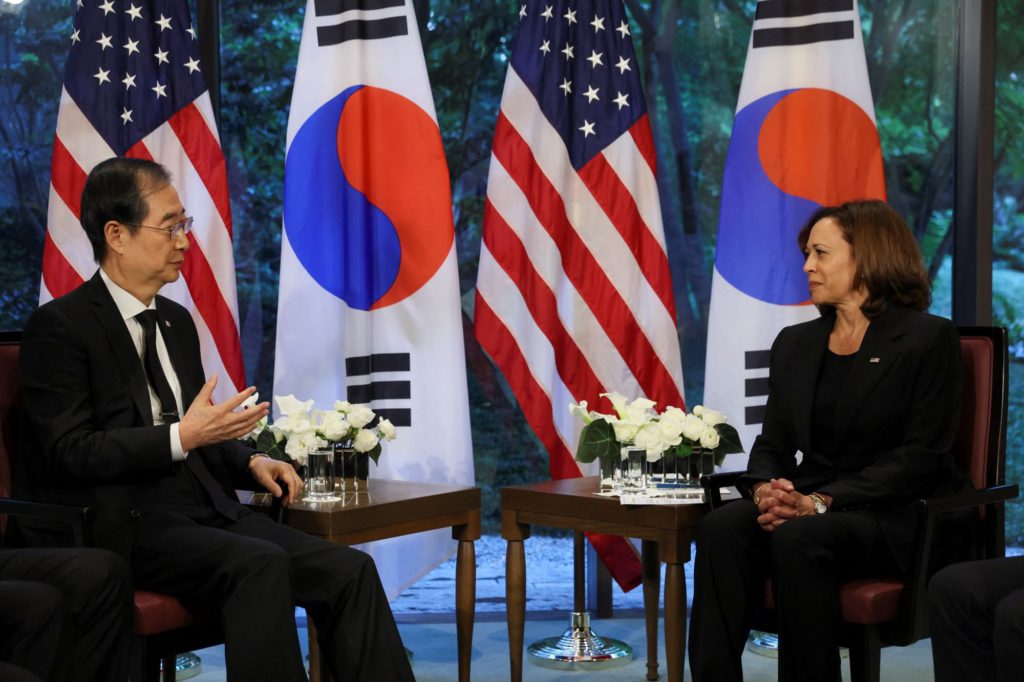
“I think your visit to DMZ and Seoul will be very symbolic demonstrations of your strong commitments to the security and peace to Korean Peninsula and we are working with you and US in dealing with North Korea,” South Korea’s Prime Minister Han Duck-soo told Harris on Tuesday in Japan.

Harris is visiting the region to attend the state funeral of former Japanese Prime Minister Shinzo Abe, who was assassinated in July. Her trip to the DMZ was subsequently confirmed by a senior US official; Biden did not make the trip when he traveled to South Korea and Japan in May.

The US official said Harris’s trip was intended to honor the legacy of Abe, while re-affirming the existing alliances and economic ties within the region. 

Harris was scheduled to spend just one day in Seoul, holding a bilateral meeting with South Korean President Yoon Suk Yeol to discuss the threat posed by North Korea as well as the importance of peace across the Taiwan Strait. Leading up to her visit, senior Biden officials deflected any questions about a potential DMZ visit.

In August, House Speaker Nancy Pelosi went to the Panmunjom truce village in the Demilitarized Zone. The place where soldiers from the two sides stare down each other is a symbol of military tensions that have simmered since the US came to South Korea’s defense in 1950 after North Korea invaded and started the Korean War. 

Explainer: How Kim Jong Un Keeps Advancing His Nuclear Program

(Adds meeting with CEOs on Wednesday in sixth paragraph)

More stories like this are available on bloomberg.com

©2022 Bloomberg L.P.
Fed’s Powell Says There’s ‘Real Need’ for Better Crypto Regulation

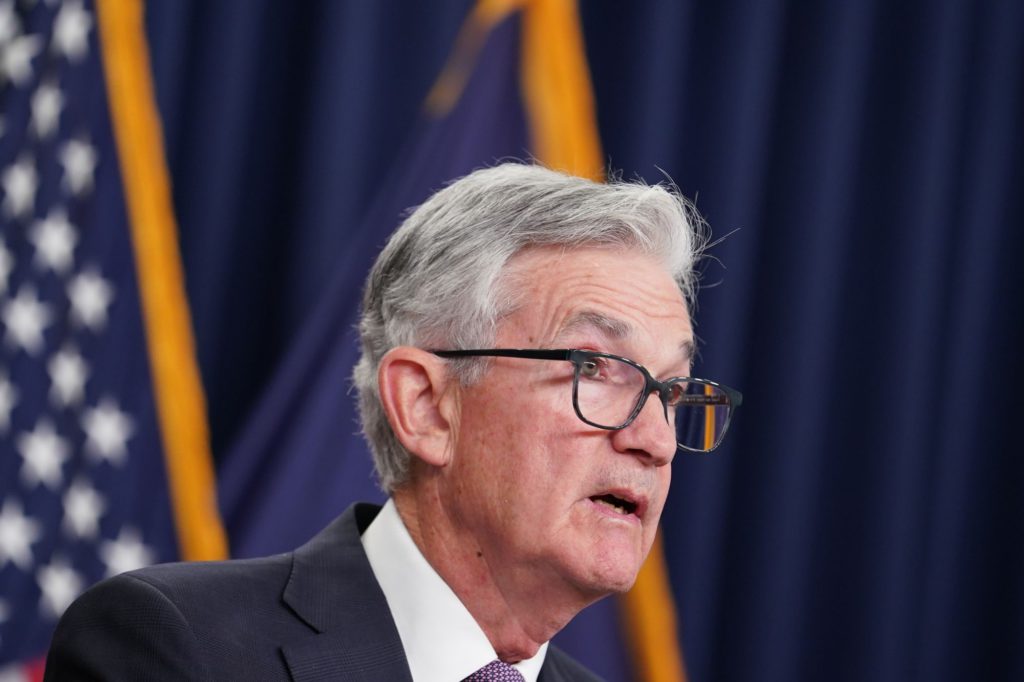
(Bloomberg) — Federal Reserve Chair Jerome Powell called for better regulation of cryptocurrencies and said the fact that the industry’s shakeout failed to cause broader financial turmoil may not be the case in the future.

Global increases in interest rates exposed “significant structural issues in the DeFi ecosystem,” Powell said Tuesday during a panel discussion on digital finance hosted by the Banque de France, referring to decentralized finance. “The good news, I suppose,  is that the interaction — from a financial stability standpoint — the interaction between the DeFi ecosystem and the traditional banking system and traditional financial system is not that large at this point.”

“That situation will not persist indefinitely,” he said via video. “There’s a real need for more appropriate regulation, so that as DeFi expands and starts to touch more retail customers and that sort of thing, so that appropriate regulation is in place.”

Powell reiterated that the Fed is still deliberating on the idea of a digital currency and doesn’t expect to decide on the issue for some time.

“At the end of the day, we will need approval from both the executive branch and Congress to move ahead with a central bank digital currency,” he said. “So, we see this as a process of at least a couple of years, where we’re doing work and building public confidence in our analysis and in our ultimate conclusions, which as I say, we certainly haven’t reached yet.”

He has stopped short of endorsing a digital dollar, though Fed officials in January released a discussion paper on digital currency. Powell told the Cato Institute Sept. 8 that the Fed is continuing to study the matter but would likely not move without support from the White House and the Congress, “ideally in the form of a specific authorizing law.”

In the comments earlier this month, Powell said the Fed’s thinking has been guided by four ideas: A digital dollar would have to protect privacy; go through intermediaries in the financial system, such as banks; be widely transferable; and use identity verification to combat money laundering, similar to the way bank accounts have verifiable owners.

Regarding stablecoins, Powell said Tuesday those also need regulation to help ensure that they have sufficient reserves to meet their typical 1:1 redemptions. “One of the most fundamental roles” for a central bank is to anchor a nation’s currency, he said.

(Updates with more Powell comment from fifth paragraph.)

More stories like this are available on bloomberg.com

©2022 Bloomberg L.P.
ECB’s Villeroy Says Crypto Winter Shouldn’t Slow Regulation

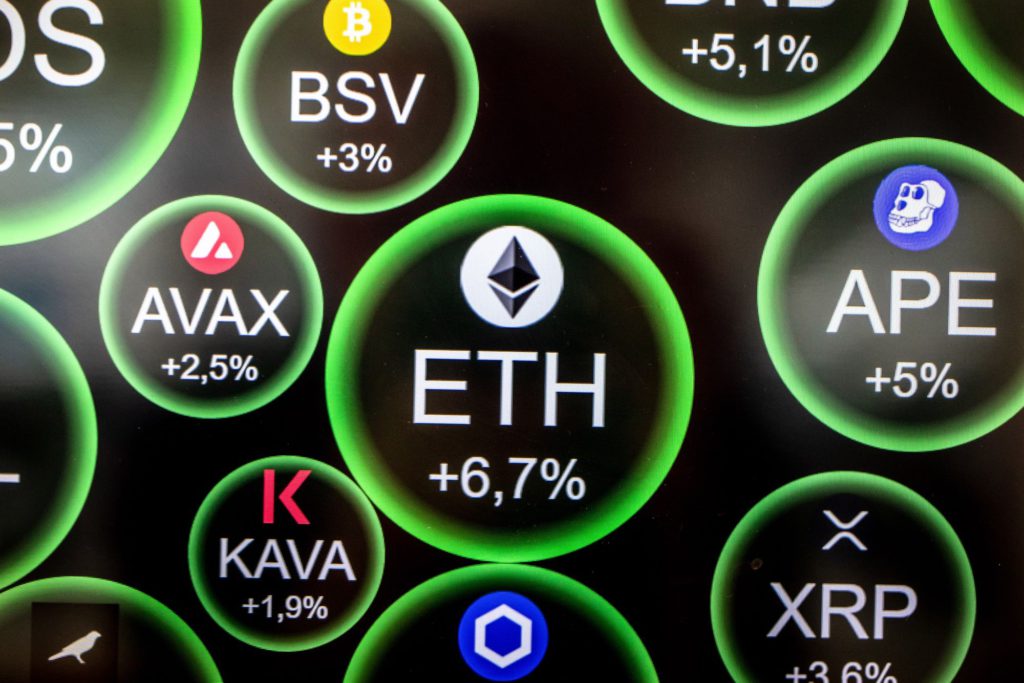
(Bloomberg) — The plunging appetite for cryptocurrencies doesn’t mean authorities should drag their feet on regulating them, according to European Central Bank Governing Council member Francois Villeroy de Galhau.

“The so-called ‘crypto-winter’ is no reason for complacency or inaction,” the official said Tuesday in Paris. While Europe “has been a pioneer” in designing its own regulatory framework know as MiCA — Markets in Crypto Assets — legislation, “other major jurisdictions are less advanced in a similar process.”

Crypto assets have experienced a dramatic slump this year as global central banks respond to soaring inflation by tightening monetary policy. While European regulators are getting closer to finalizing unified rules for the market, Villeroy’s comments suggest there’s a risk that other efforts could be stalled by the decline.

Crypto players typically operate globally, and even their place of establishment is sometimes difficult to determine, he cautioned.

“We should be extremely mindful to avoid adopting diverging or contradictory regulations, or regulating too late,” Villeroy said. “To do so would be to create an uneven playing field, risking arbitrage and cherry picking.” 

Digital Money

ECB President Christine Lagarde later told a panel chaired by Villeroy that there’s clearly more desire for digital payments than in the past. “We have to respond to the demand for those digital payments in order to maintain the role of anchor we have been playing,” she said.

The ECB is one of the first advanced-economy central banks to have made significant progress on exploring the issuance of its own digital currency, and is working with private-sector companies on developing a prototype for a digital euro.

Villeroy shared the view that there’s a role for central banks in modernizing payments, including for infrastructures used by financial institutions. The Bank of France will launch three new experiments related to wholesale central-bank money, including one to issue and distribute tokenized bonds on a blockchain — the same technology that underlies Bitcoin.

(Updates with Lagarde comments in sixth paragraph.)

More stories like this are available on bloomberg.com

©2022 Bloomberg L.P.
Meta Blocks ‘Inauthentic’ Pages, Groups From Russia and China

(Bloomberg) — Meta Platforms Inc. has blocked thousands of “inauthentic” accounts, pages and groups from Facebook and Instagram that originated in Russia and spread propaganda about that country’s war with Ukraine.

The network of accounts, which started in May, “criticized Ukraine and Ukrainian refugees, praised Russia and argued that Western sanctions on Russia would backfire,” the social media giant said Tuesday. The group behind the accounts created 60 websites “carefully impersonating legitimate news organizations in Europe,” Meta said.

The move represents Meta’s latest attempt to beat back propaganda and misinformation on its services. The company, known as Facebook until a name change last year, has more than 3.6 billion users across its social media and messaging platforms — a lineup that also includes WhatsApp.

The Russian group blocked by Meta had spread news articles online and — in some instances — paid Facebook or Instagram to promote them. The company made around $105,000 in advertising revenue from the ads, executives say. That money won’t be returned, but instead be used to pay for Meta’s growing security teams.

The company also removed a much smaller network of accounts originating in China. That group targeted US users, people in the Czech Republic, and some other Chinese- and French-speaking audiences. The campaign had far less scope — fewer than 100 total accounts, pages and groups — and persuaded fewer than 300 total users to follow them. 

The accounts posted content that touched on both sides of the political spectrum in the US. “This was the first Chinese network we disrupted that focused on US domestic politics ahead of the midterm elections,” the company said. 

As a policy, Meta blocks networks of accounts that are meant to mislead users about the true identity of the people operating them.

More stories like this are available on bloomberg.com

©2022 Bloomberg L.P.
Software Makers’ Restrictive License Rules Targeted by New Group

(Bloomberg) — A group of more than a dozen companies launched an organization to advocate for less-restrictive software licensing rules, targeting cloud providers like Microsoft Corp., whose contract policies have been under fire from rivals, customers and lawmakers.

The Coalition for Fair Software Licensing argues that software agreements need to be more flexible and predictable for customers, including allowing the use of cloud services and programs from different providers.

“Cloud customers around the world have long been subjected to repeated financial harm as a result of legacy providers’ restrictive software licensing practices,” said Ryan Triplette, executive director of the new association, which was announced on Tuesday. The group’s member companies, coming from industries including health care, financial services and technology, are remaining anonymous for now due to fear of retaliation, she said in an interview.

Microsoft, Oracle Corp. and other software giants have been criticized by competitors and clients for limiting the interoperability of products and services, sometimes making it more expensive to use them with rival offerings or prohibiting it entirely. Earlier this month, Bloomberg reported that US Senator Gary Peters, the Michigan Democrat who chairs the Homeland Security and Government Affairs Committee, is drafting legislation that would overhaul how the federal government buys software, potentially forcing providers to make their systems less restrictive. 

Read more: Microsoft Customers Decry Cloud Contracts That Sideline Rivals

A survey of 250 technology executives and directors showed 90% support for the group’s principles, the coalition said. Nearly 70% of those surveyed said that licensing terms have limited their ability to release new features or products, while a third responded that they’d experienced unexpected changes to license terms.

Other tech trade associations — such as the Cloud Infrastructure Services Providers in Europe, big tech-backed NetChoice and the Computer & Communications Industry Association — have expressed support for the new coalition. Rival cloud providers Amazon.com Inc. and Google parent Alphabet Inc. have publicly criticized Microsoft’s licensing practices.

More stories like this are available on bloomberg.com

©2022 Bloomberg L.P.

Chinese Carmakers Pour Into One of the Next EV Growth Markets

(Bloomberg) —

An intense competitive battle is starting to take shape in Southeast Asia’s electric vehicle market between incumbent Japanese automakers and new entrants from China, Korea and domestic players in the region.

With a population of about 675 million, this is a prize worth fighting over. Annual passenger vehicle sales in the region are expected to more than double by 2040 to about 5 million as the population and these economies grow.

Today, affordable cars from Japanese brands including Toyota, Honda, Mitsubishi, Daihatsu and Mazda dominate the passenger vehicle market. About 78% of all cars and SUVs sold in 2019 in Indonesia — the largest auto market in the region — were priced below $20,000.

The passenger EV market in Southeast Asia is still small. Fewer than 16,000 EVs were sold in the region last year out of the 6.6 million delivered worldwide. However, the shift to EVs is opening opportunities for companies like SAIC, Wuling, Great Wall, BYD, Hyundai and VinFast to expand in this growing region as their Japanese counterparts still hold back on offering more battery-electric vehicles to consumers.

Until last year, governments in the region didn’t have attractive subsidies or stringent fuel economy regulations that have helped support EV adoption in Europe and elsewhere. That meant dominant players like Toyota and Honda didn’t aggressively pursue EVs in the region. Indeed, almost no global automakers today offer EVs at price points that can appeal to the mass market and achieve sufficient economies of scale in the region.

That may be about to change. Chinese automakers have several affordable EV models that they manufacture and sell in China, and they’re beginning to bring many of these to Southeast Asia. Great Wall Motor and SAIC’s MG Motor have introduced three EVs in Thailand that are priced between $20,000 and $30,000. Wuling, another Chinese automaker known at home for its very successful Hongguang Mini EV, introduced a small EV priced from $16,000 in Indonesia. Many of these models are already popular among consumers and have long wait times for delivery.

The geopolitical tension between China and some Western economies also makes Southeast Asia a relatively more attractive overseas manufacturing hub for Chinese automakers looking to expand abroad. The incentives from Southeast Asian governments for companies investing in local manufacturing of EVs and lithium batteries sweeten the deal, leading to a flurry of investments from China and Korea into the region. Automakers from these countries including BYD, Great Wall Motor, Hyundai, MG Motor and Wuling have chosen either Indonesia or Thailand as their regional manufacturing base for EVs in the region.

This technology transition is also enabling a new set of companies from within the region to enter the industry. VinFast, backed by Vietnam’s largest private conglomerate, started selling its locally manufactured EVs in the country last year. The company aims to ship its first batch of BEVs to Europe late this year and start manufacturing EVs in the US in 2024.

Governments in Indonesia and Thailand are also backing their state-owned energy companies PTT and Pertamina to invest across the EV value chain to boost local manufacturing capacity and create national champions that can compete globally in this emerging industry.

These new players are now well-positioned to capture most of the EV market growth in Southeast Asia over the next three years. BloombergNEF expects annual EV sales in the region to rise from 16,000 units in 2021 to almost 81,000 in 2025. That’s still modest by global standards, but as it stands right now, Japanese incumbents would lose out on much of this growth unless they accelerate their roll-out of new EV models in Southeast Asia.

Of course, it’s unlikely going to be all smooth sailing for these newer companies. Consumers still have high confidence in existing Japanese auto brands, which can be a big hurdle for some of these entrants. The Japanese automakers also have well-established sales and service networks they can use to reach more markets and consumers when they decide to scale up. The new players are offering smarter features like interactive digital assistants, app-based connectivity features and over-the-air updates to attract young customers and bridge the brand-equity gap as they compete for the long-term prize.

More stories like this are available on bloomberg.com

©2022 Bloomberg L.P.

Permira, TA Associates Are Bidding for Rothschild’s A2Mac1

(Bloomberg) — Private equity firms Permira and TA Associates are among bidders for automotive software company A2Mac1, according to people familiar with the matter.

Astorg, Eurazeo and Hg are also interested in the digital technology firm backed by Rothschild & Co.’s private equity arm, said the people, who asked not to be identified because discussions are private. Any potential deal for the firm would be valued at the higher end of a range of $1 billion to $1.5 billion, the people said.

Representatives for Permira, TA Associates, Astorg and Rothschild declined to comment. Representatives for A2Mac1, Eurazeo and Hg didn’t respond to requests for comment.

Founded in the 1990s, A2Mac1 develops technology that decodes data for automotive benchmarking used by original equipment manufacturers and suppliers. The company, headquartered in France, has more than 600 employees in 14 countries including the US.

Five Arrows Principal Investments, Rothschild’s European private investment business, is running the auction. A potential winner is expected to shake out over the next month, one of the people said. 

A2Mac1 was acquired by Five Arrows in 2017. The private equity firm is based in London, Paris and Luxembourg and has about 2.8 billion euros ($2.7 billion) in assets under management, according to its website.

More stories like this are available on bloomberg.com

©2022 Bloomberg L.P.

Stocks Mixed, Pound Gains as Global Selloff Pauses: Markets Wrap

(Bloomberg) — Global markets remained on edge Tuesday as investors braced for a heightened risk of global recession, even as dip buyers emerged.

Stocks were mixed as Goldman Sachs Group Inc. and BlackRock Inc. soured on equities for the short term and Citigroup Inc. said bearish positioning continues to rise. US futures rebounded with Europe’s Stoxx 600, while Asian shares fell. 

Bonds remained under pressure from the worst selloff in decades, with the benchmark 10-year Treasury yield holding near the highest level since 2010. The dollar gauge slipped back from a record high Monday, when Federal Reserve officials repeated hawkish comments on policy. 

UK markets clawed back some losses after a meltdown triggered by the government’s fiscal plan late last week. Gilt yields slid following the biggest-ever surge and the pound rose 1.1% after falling to a record low. Traders remained wary of the risk that the currency could slump to parity with the dollar after the Bank of England indicated it may not act before November to stem the rout.

Read More: Everything-Selloff on Wall Street Deepens on 98% Recession Odds

Volatility across markets was also reflected by the risk of future price swings, which reached the highest since the beginning of the pandemic, as shown by a Bank of America index.

The turmoil in markets shows little sign of turning Fed officials away from hawkish rhetoric. Boston Fed President Susan Collins and her Cleveland counterpart Loretta Mester said additional tightening is needed to rein in stubbornly high inflation and Atlanta Fed President Raphael Bostic also said the central bank still has a ways to go to control inflation.

Read More: Fed Officials Say That Tackling Inflation Is Their No. 1 Job

“The market is pricing in some Fed increases, but we’re a bit worried that it might not be pricing in everything,” Laila Pence, president of Pence Wealth Management, said on Bloomberg Television. “Everyone is nervous.”

How much damage is a strong dollar causing? That’s the theme of this week’s MLIV Pulse survey. It’s brief and we don’t collect your name or any contact information. Please click here to share your views.

Key events this week:

  • US new home sales, Conference Board consumer confidence, durable goods, Tuesday
  • Fed Chair Jerome Powell and Charles Evans speak at events, Tuesday
  • Fed’s Mary Daly, Rafael Bostic, Charles Evans and ECB President Christine Lagarde speak at events, Wednesday
  • Euro zone economic confidence, consumer confidence, Germany CPI, Thursday
  • US initial jobless claims, GDP, Thursday
  • Fed’s Loretta Mester, Mary Daly speak at events, Thursday
  • China PMI, Friday
  • Euro zone CPI, unemployment, Friday
  • US consumer income , University of Michigan consumer sentiment, Friday
  • Fed’s Lael Brainard and John Williams speak, Friday

Some of the main moves in markets:

Stocks

  • Futures on the S&P 500 rose 0.9% as of 5:45 a.m. New York time
  • Futures on the Nasdaq 100 rose 1.1%
  • Futures on the Dow Jones Industrial Average rose 0.7%
  • The Stoxx Europe 600 rose 0.4%
  • The MSCI World index fell 1.3%

Currencies

  • The Bloomberg Dollar Spot Index fell 0.3%
  • The euro rose 0.2% to $0.9624
  • The British pound rose 1.1% to $1.0808
  • The Japanese yen rose 0.2% to 144.41 per dollar

Cryptocurrencies

  • Bitcoin rose 5.6% to $20,192.6
  • Ether rose 4.6% to $1,385.43

Bonds

  • The yield on 10-year Treasuries declined nine basis points to 3.84%
  • Germany’s 10-year yield was little changed at 2.11%
  • Britain’s 10-year yield declined 16 basis points to 4.09%

Commodities

  • West Texas Intermediate crude rose 1.1% to $77.53 a barrel
  • Gold futures rose 0.4% to $1,640.20 an ounce

More stories like this are available on bloomberg.com

©2022 Bloomberg L.P.

Close Bitnami banner
Bitnami