

Bloomberg

Salesforce’s Carbon Market Meets Companies Where They Are

(Bloomberg) —

While Climate Week was getting under way i n New York City, on the other side of the continent, thousands attended Dreamforce, Salesforce Inc.’s annual software and developer conference in San Francisco. That’s where the software giant revealed plans for a new  carbon offsets marketplace .

This could be significant because today’s carbon markets — where projects capable of eliminating greenhouse gas by planting trees or removing carbon from the atmosphere sell credits measured in tons of carbon to companies responsible for planet-warming pollution — are structurally limited in key ways. 

First off, there is no global requirement to price carbon, which means that in many places carbon markets are entirely voluntary. And within voluntary markets there are a number of factors that limit their growth, including the availability of projects that can generate carbon offsets at sufficient scale for global demand and the liquidity of existing markets — the ease with which companies can buy and sell credits. Plus, there’s the obstacle that many smaller companies without specialized sustainability staff will lack familiarity with carbon accounting and trading to begin with.

Another big issue is the quality of carbon offsets that current and future projects generate. A business-to-business marketplace like Salesforce’s is unlikely to answer the troubling quality problem with offsets. It doesn’t eliminate meaningless offsets from the market or  absolve companies of responsibility for their emissions.

But liquidity and familiarity are like sunlight: an effective form of disinfectant. It will be harder for bogus offsets to persist in a much larger market, when more people include carbon offsets in their own business operations. Each new report on  flawed offsets will matter more, because it means something to more businesses.

Without solving for all of these, voluntary carbon markets will remain restricted in scope. Increasing liquidity and especially familiarity will be critical to their expansion. To see why, consider two hypothetical companies, each committed to reducing its emissions.

Company A is a global industrial firm active in multiple sectors. It’s published its commitment to certain emissions cuts on a set timeline, and has a high-level strategy group that will set the path for the next two decades. Company A has a plan for switching fuels, rotating capital stock toward lower-emission technologies, purchasing zero-carbon electricity and purchasing carbon offsets. It sees upsides in this strategy (and not just because the CEO promised it at the World Economic Forum). 

It will have no trouble standing up whatever it needs to hit its goals. It might even increase profits in doing so. 

Then there’s Company B, a regional wholesaler with a new CEO mandate to reduce the company’s carbon footprint in the next decade. Company B doesn’t have the capital to immediately switch out its boilers, climate control systems, or medium-duty vehicles. It’s not large enough to force supply chain changes through purchasing power. It can’t hire dedicated staff to create a strategic carbon plan or engage expensive consultants to do the same, or build its own sophisticated carbon offset trading operation. 

Sincere about emissions reductions though it may be, Company B is structurally constrained.

But one thing that Company A and Company B may well have in common is that they are both Salesforce customers, since Salesforce has the world’s most used customer resource management platform. A Salesforce marketplace for carbon offsets is nice for Company A, which is big enough to engage in carbon accounting on its own, but it could be a crucial way into the process for Company B.

Rather than setting up new accounts in order to access ratings, or research individual offset projects one by one, it can see them all — and pay for them, via Stripe — in one place. A strategic imperative that previously might have required a dedicated team can now operate at the level of a purchasing manager. 

There could be millions of smaller businesses that care about carbon today, or that will care about it in the future. They would like a carbon strategy but their own size, budget, and capabilities are inherently limiting. Today, these companies must make sincere efforts to bring themselves to the carbon market. Tomorrow, big business marketplaces might just bring the carbon market to them. 

Nat Bullard is a senior contributor to BloombergNEF and Bloomberg Green. He is a venture partner at Voyager, an early-stage climate technology investor. 

More stories like this are available on bloomberg.com

©2022 Bloomberg L.P.
Hong Kong’s Mad Rush to Book Flights Jams Airline Websites

(Bloomberg) — Cathay Pacific Airways Ltd.’s website and that of its low-cost unit buckled under a rush of flight searches Friday as the Hong Kong government announced that mandatory quarantine and other pandemic travel restrictions will be scrapped next week.

“We are currently experiencing high traffic on our website,” Cathay said. “We have set up a virtual waiting room to better manage customer traffic to our site. You are in a queue at the moment, but you’ll be put through soon.”

The airline advised visitors to keep the web page open and said they would have 30 minutes to book a ticket after entering the site.

Travel agency Trip.com said as of 2.30 p.m. Friday, flight searches surged 95 times from the same time last week and bookings jumped 50% on its website. Tokyo and Bangkok led with jumps of 650% and 200%.

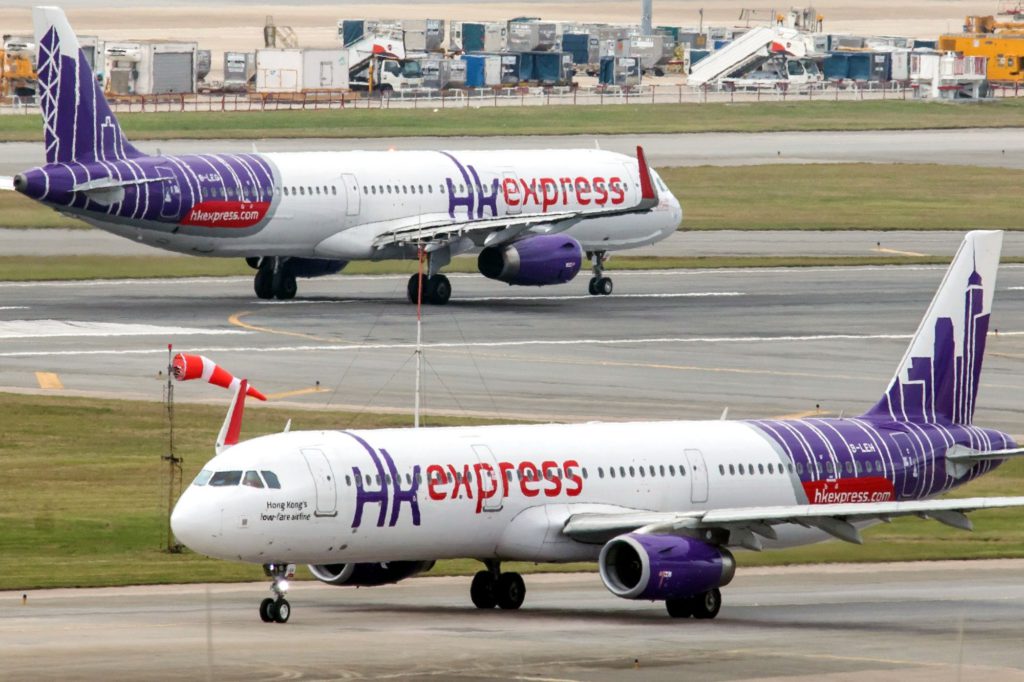
Earlier Friday, Cathay’s budget unit HK Express was also inundated with flight searches as wannabe travelers rushed to take advantage of the easing of pandemic travel restrictions across parts of Asia.

“Our website is busy due to the high traffic, which may cause longer time in flight search, booking, or receiving itinerary emails,” HK Express said in a pop-up message on the site. A spokeswoman for the airline said the notice was posted after Japan announced it would abolish Covid border controls. 

Prime Minister Fumio Kishida told reporters in New York on Thursday that Japan will end its cap on daily arrivals and allow tourists to enter without visas from Oct. 11. Japan is typically HK Express’s biggest market. Pre-pandemic, the carrier served 14 airports across the country.

Cathay plans to resume daily flights to Tokyo’s Haneda Airport from Nov. 1 and four weekly flights to Sapporo from Dec. 1. The carrier intends to add more than 200 pairs of long-haul and regional passenger flights next month, raising frequencies to Tokyo Narita and Osaka to 43 pairs and 50 pairs, respectively. 

“We are fully committed to rebuilding the connectivity of the Hong Kong aviation hub,” Cathay said in a statement. “While we will continue to add back more flights as quickly as is feasible, it will take time to rebuild our capacity gradually.”

Cathay shares rose about 1% Friday, having earlier climbed as much as 3.6%. 

In addition to ending hotel quarantine, Hong Kong will do away with the requirement for a pre-flight PCR test. Travelers will be allowed to go home or to their hotel after arrival, but they will be banned from venues such as bars and restaurants for three days. 

(Updates with information from Cathay, Trip.com.)

More stories like this are available on bloomberg.com

©2022 Bloomberg L.P.

Stocks, Futures Drop as Global Growth Fears Spread: Markets Wrap

(Bloomberg) — Stocks and US equity futures extended declines at the end of a week that underscored expectations for tighter monetary policy and a slowing global economy. A dollar gauge rose to yet another record as 10-year Treasury yields held near the highest in a decade.

Europe’s Stoxx 600 Index dropped to the lowest level since January 2021 and was poised to join US and regional peers in a bear market. Energy shares led the decline as oil fell, while Credit Suisse Group AG plunged to a record after denying a report that it’s considering exiting the US. Asian shares dropped and US benchmarks were set to open lower.

Goldman Sachs Group Inc. slashed its year-end target for the S&P 500 Index to 3,600 from 4,300, citing a higher interest-rate path from the Federal Reserve, while strategists gave up on a year-end rally for European stocks as private-sector activity in the region continued to contract. 

UK bond yields surged and the pound fell as Chancellor of the Exchequer Kwasi Kwarteng unveiled the country’s economic growth plan and the Debt Office announced it would sell more gilts than planned. The economy has probably already entered into recession, a survey of purchasing managers showed.

While the dollar continued its relentless advance on expectations for higher rates, a surprise cut by Turkey’s central bank sent the lira to a fresh all-time low and its longest weekly losing streak in 23 years. The yen fluctuated as traders braced for more action after Japan intervened to prop up the ailing currency for the first time since 1998. 

The Fed has given its clearest signal yet that it’s willing to tolerate a recession as the necessary trade-off for regaining control of inflation, with officials forecasting a further 1.25 percentage points of tightening before year-end. Rate hikes across Europe and Asia on Thursday also damped market sentiment. 

Investors are flocking to cash and shunning almost every other asset class as they turn the most pessimistic since the global financial crisis, according to Bank of America Corp. strategists.

Elsewhere in markets, gold edged toward a two-year low.

The energy market faces a very volatile last quarter of the year, Amrita Sen, co-founder and research director of Energy Aspects Ltd. said on Bloomberg Television. “It’s just too many different and contradictory factors driving prices right now,” she said, citing demand concerns from recessionary fears and supply constraints relating to Iran and Russia, as well as a lack of spare capacity from OPEC.

Will the Nasdaq 100 Stock Index hit 10,000 or 14,000 first? This week’s MLIV Pulse survey focuses on technology. It’s brief and we don’t collect your name or any contact information. Please click here to share your views.

Here are some of the main moves in markets:

Stocks

  • The Stoxx Europe 600 fell 1% as of 10:25 a.m. London time
  • Futures on the S&P 500 fell 0.7%
  • Futures on the Nasdaq 100 fell 0.8%
  • Futures on the Dow Jones Industrial Average fell 0.6%
  • The MSCI Asia Pacific Index fell 0.5%
  • The MSCI Emerging Markets Index fell 1%

Currencies

  • The Bloomberg Dollar Spot Index rose 0.6%
  • The euro fell 0.8% to $0.9755
  • The Japanese yen fell 0.4% to 142.90 per dollar
  • The offshore yuan fell 0.6% to 7.1278 per dollar
  • The British pound fell 0.6% to $1.1188

Bonds

  • The yield on 10-year Treasuries was little changed at 3.72%
  • Germany’s 10-year yield advanced two basis points to 1.98%
  • Britain’s 10-year yield advanced 17 basis points to 3.66%

Commodities

  • Brent crude fell 1.8% to $88.79 a barrel
  • Spot gold fell 0.6% to $1,661.69 an ounce

More stories like this are available on bloomberg.com

©2022 Bloomberg L.P.

Assessing China’s Crypto Ban One Year Later

  • Listen to Bloomberg Crypto on the iHeartRadio App
  • Listen to Bloomberg Crypto on Apple Podcasts
  • Listen to Bloomberg Crypto on Spotify  

(Bloomberg) — This September marks the one-year anniversary of China declaring that crypto transactions were effectively illegal. At the time, the decision triggered sharp declines in crypto markets, even though it wasn’t entirely unexpected. It wasn’t the first time that China had sought to crack down on crypto — that’s been happening in one form or another in the country since at least 2013. 

Still, the 2021 declaration prompted some pretty swift and significant changes. Among the biggest of these changes was the effect on Bitcoin miners, who left China in droves. Many of them set up shop in the US, in states like Texas. 

To better understand China’s crypto crackdown, this episode features Bloomberg reporters Yueqi Yang and David Pan, as well as Winston Ma, a Managing Partner & Co-Founder at CloudTree Ventures, who’s also an NYU Adjunct Professor in the global digital economy.

Follow us on Twitter @crypto, and subscribe to the Bloomberg Crypto Newsletter at https://bloom.bg/cryptonewsletter

More stories like this are available on bloomberg.com

©2022 Bloomberg L.P.
Thailand to Lift Emergency as Covid Declared Not Dangerous

(Bloomberg) — Thailand will end a nationwide state of emergency declared in the wake of Covid outbreak after the Southeast Asian nation downgraded the virus from a “dangerous” communicable disease to one that only requires surveillance.

The Center for Covid-19 Situation Administration on Friday agreed to let a state decree enforcing the emergency to expire on Sept. 30, Deputy Health Minister Sathit Pitutecha told reporters.

The emergency, which allowed the government to streamline disease-control plans without multiple approvals from various agencies, had been in place since March 2020.

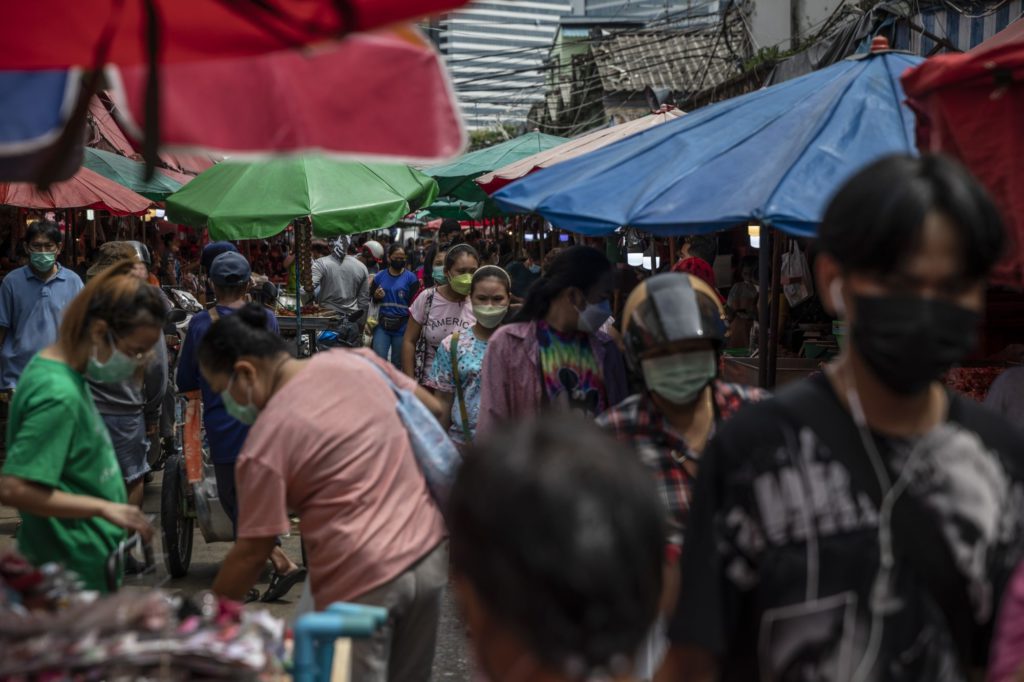
Thailand has moved to end most pandemic-era restrictions on travel and businesses following a steady decline in new Covid cases and pickup in vaccination rate. The lifting of controls have helped the tourism-reliant nation to lure back foreign visitors in large numbers in recent months.

The country has also axed Covid-19 from the same category as plague and smallpox to the same level as influenza and dengue to reflect the easing outbreak globally and higher rate of vaccination. The move will also boost tourism, seen as key to sustaining an economic recovery, according to officials.

Travelers to Thailand will no longer be required to provide proof of vaccination or Covid test results to enter the country from next month, Natapanu Nopakul, a deputy spokesman for the foreign affairs ministry, told a briefing on Friday. 

People who test positive for Covid with mild or no symptoms will also not be required to isolate themselves but wear masks in crowded areas and follow other health measures, Natapanu said.

With more than 77% of Thai population having received at least two doses of vaccines and 46% boosters, new Covid cases and fatalities have declined steadily in recent months, according to the virus panel. 

Thailand has seen a rush in tourist arrivals since the scrapping of a pre-arrival registration requirement and insurance in July. Arrivals were estimated at 5.26 million between Jan. 1 and Sept. 21 this year, up from just 427,869 tourists in 2021, official data show. 

Before the pandemic, the overall tourism-related sector accounted for about a fifth of Thailand’s economy and jobs, with nearly 40 million overseas visitors arriving in 2019, who generated more than $60 billion in revenue, according to the central bank.

(Updates with details on waiver on isolation in eighth paragraph.)

More stories like this are available on bloomberg.com

©2022 Bloomberg L.P.
Stocks, US Futures Fall on Global Slowdown Fears: Markets Wrap

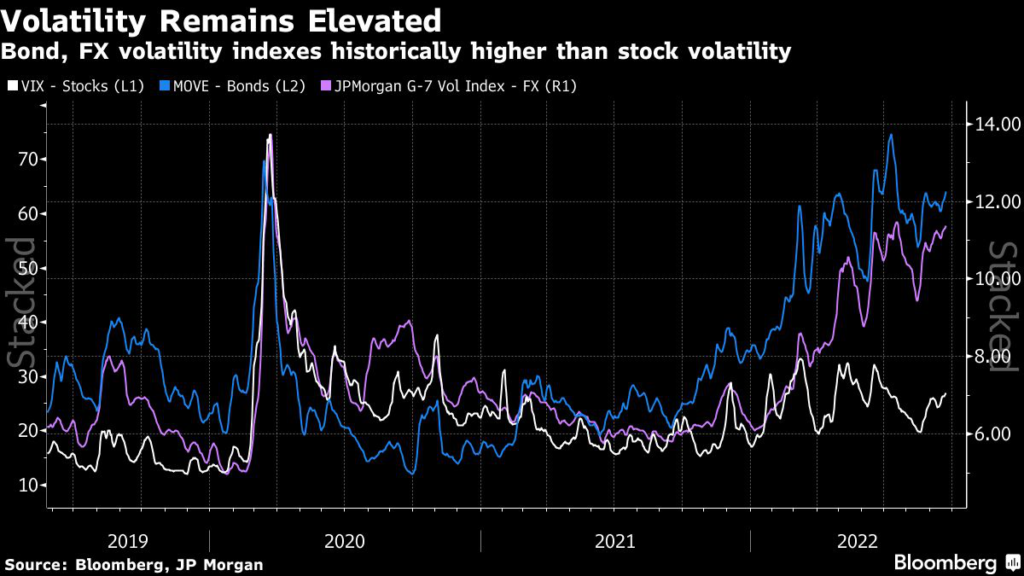
(Bloomberg) — Asian stocks and US equity futures extended declines following another day of losses for US shares and surging Treasury yields that underscore expectations for tighter monetary policy and a slowing global economy. 

The MSCI Asia Pacific Index posted deeper losses on Friday and was headed for a sixth weekly decline, the longest streak since May. Equities fell in Hong Kong, Australia and South Korea after the S&P 500 Index closed at the lowest level since June.

Goldman Sachs Group Inc. slashed its year-end target for the S&P 500 to 3,600 from 4,300, arguing that a dramatic shift in the outlook for interest rates moving higher will weigh on valuations for US equities.

A dollar gauge held near a record high after a day of dramatic moves in currency markets that saw Japan intervene to prop up the ailing yen for the first time since 1998. The yen strengthened for a second day on Friday as traders brace for more action.

The offshore yuan weakened in the face of efforts to slow its depreciation, with the People’s Bank of China setting the daily reference rate stronger than expected for a 22nd day.

The 10-year Treasury yield was steady at around 3.7%, its highest in a decade. Yields in Asia pushed higher, led by a jump of more than 20 basis points in Australia as trading resumed there after a holiday.

There is no trading of cash Treasuries in Asian hours with markets closed in Japan for Autumnal Equinox Day. 

Japan’s intervention hasn’t addressed the underlying cause of yen weakness — the yawning gap between Japan’s ultra-loose monetary policy and rising rates in other countries — leaving the currency vulnerable.

“There is value in slowing the decline of yen. It gives companies and people more time to react in more time to adjust contracts, processes, et cetera,” James Sullivan, head of Asia Pacific equity research at JPMorgan Chase & Co., said on Bloomberg Television. “Ultimately fundamentals will determine the value of the yen and the fundamentals are significant in rising rate differentials.”

Rate hikes in the UK, Switzerland and Norway, along with increases Thursday in Asia in the Philippines, Indonesia and Taiwan, damped market sentiment. 

The Federal Reserve has given its clearest signal yet that it’s willing to tolerate a recession as the necessary trade-off for regaining control of inflation, with officials forecasting a further 1.25 percentage points of tightening before year-end.

Elsewhere in markets, gold edged toward a two-year low and Bitcoin pushed higher, extending gains to a second day, while remaining below $20,000. Oil slid as it headed toward a fourth weekly loss.

The energy market faces a very volatile last quarter of the year, Amrita Sen, co-founder and research director of Energy Aspects Ltd. said on Bloomberg Television. “It’s just too many different and contradictory factors driving prices right now,” she said, citing demand concerns from recessionary fears and supply constraints relating to Iran and Russia, as well as a lack of spare capacity from OPEC.

Will the Nasdaq 100 Stock Index hit 10,000 or 14,000 first? This week’s MLIV Pulse survey focuses on technology. It’s brief and we don’t collect your name or any contact information. Please click here to share your views.

Here are some of the main moves in markets:

Stocks

  • S&P 500 futures lost 0.1% as of 7:05 a.m. in London. The S&P 500 fell 0.8%
  • Nasdaq 100 futures dropped 0.2%. The Nasdaq 100 dropped 1.2%
  • Hong Kong’s Hang Seng Index fell 0.7%
  • China’s Shanghai Composite Index slipped 0.6%
  • South Korea’s Kospi index tumbled 1.8%
  • Australia’s S&P/ASX 200 Index retreated 1.9%
  • Euro Stoxx 50 futures were up 0.1%

Currencies

  • The Bloomberg Dollar Spot Index was up 0.5%
  • The euro was down 0.1% to $0.9835
  • The Japanese yen strengthened 0.2% at 142.13 per dollar
  • The offshore yuan weakened 0.2% to 7.0985 versus the dollar

Bonds

  • The yield on 10-year Treasuries was at 3.72%
  • Australia’s 10-year yield jumped more than 25 basis points to 3.92%

Commodities

  • West Texas Intermediate crude fell 0.2% to $83.35 a barrel
  • Gold was up 0.1% to $1,673.10 an ounce

More stories like this are available on bloomberg.com

©2022 Bloomberg L.P.

Volkswagen May Move Production Out of Eastern Europe If Gas Shortage Continues

(Bloomberg) — Volkswagen AG could shift production out of Germany and eastern Europe if a shortage of natural gas persists, the latest sign that the energy crisis unleashed by Russia’s invasion of Ukraine threatens to upend Europe’s industrial landscape.

Volkswagen, Europe’s biggest carmaker, said Thursday that moving production was one of the options available for it in the medium-term if gas shortages last much beyond this winter. The carmaker has major factories in Germany, the Czech Republic and Slovakia, which are among the European countries most reliant on Russian gas. 

“As mid-term alternatives, we are focusing on greater localization, relocation of manufacturing capacity, or technical alternatives, similar to what is already common practice in the context of challenges related to semiconductor shortages and other recent supply chain disruptions,” Geng Wu, Volkswagen’s head of purchasing, said in a statement. 

Russia’s decision to throttle gas supplies to Europe has raised concerns that Germany might be forced to ration its fuel. Recent news that gas storage levels hit 90% ahead of schedule has soothed fears of acute shortages this winter, but Germany faces a challenge in replenishing depleted reserves next summer without contributions from Russia.

German plastics maker Covestro AG isn’t expecting a gas shortage this winter but at the same time won’t make investments to grow in Europe because of the region’s high energy costs, according to Chief Executive Officer Markus Steilemann. Growth markets are mainly in Asia, where prices are significantly lower, he said Thursday at a climate conference in Berlin.

Southwestern Europe or coastal zones of northern Europe, both of which have better access to seaborne liquefied natural gas cargoes, could be the beneficiaries of any production shift, a Volkswagen spokesman said by phone. The Volkswagen group already operates car factories in Portugal, Spain and Belgium, countries that host LNG terminals.

While saying it had made the “best possible” preparations for gas shortages for this winter, Volkswagen said it was concerned about the effect high gas prices could have on suppliers. 

“Politicians must also curb the currently uncontrolled explosion in gas and electricity prices,” Thomas Steg, the company’s head of external relations, said. “Otherwise small and medium-sized energy-intensive companies in particular will have major problems in the supply chain and will have to reduce or stop production.”

(Updates with Covestro CEO comments in fifth paragraph.)

More stories like this are available on bloomberg.com

©2022 Bloomberg L.P.

Shareholders in Bankrupt Crypto Lender Celsius Seek ‘Fiduciary’

(Bloomberg) — Shareholders in cryptocurrency lender Celsius Network Ltd. filed a motion to set up a committee to ensure they are adequately represented in the company’s bankruptcy proceedings.

Series B preferred shareholders “urgently require their own fiduciary,” according to the filing Thursday by lawyers for a group of equity owners.

Celsius filed for bankruptcy in July, a high profile casualty of this year’s meltdown in digital assets that also brought down the likes of crypto platform Voyager Digital Holdings Inc. and hedge fund Three Arrows Capital.

Currently, a committee of unsecured creditors is “laser focused on maximizing value for the customers” but “there is no stakeholder presently at the table advocating for the interests of the equity holders,” the filing said.

It added that appointing a committee will ensure equity holders are on equal footing with other major stakeholders, “particularly where the debtors have abandoned any pretext of acting in the interests of the equity holders.”

The hearing on the matter is scheduled for Oct. 6. Earlier this month, Celsius Network in an update on Twitter said it expects to soon begin its claims process and hopes to advance talks on withdrawals at its Oct. 7 hearing.


More stories like this are available on bloomberg.com

©2022 Bloomberg L.P.

Thailand to Lift Covid Emergency as Virus Declared Not Dangerous

(Bloomberg) — Thailand will end a nationwide state of emergency declared in the wake of Covid outbreak after the Southeast Asian nation downgraded the virus from a “dangerous” communicable disease to one that only requires surveillance.

The Center for Covid-19 Situation Administration on Friday agreed to let a state decree enforcing the emergency to expire on Sept. 30, Deputy Health Minister Sathit Pitutecha told reporters.

The emergency decree, which allowed the government to streamline disease-control plans without multiple approvals from various agencies, had been in place since March 2020.

Thailand has moved to end most pandemic-era restrictions on travel and businesses following a steady decline in new Covid cases and pickup in vaccination rate. The lifting of controls have helped the tourism-reliant nation to lure back foreign visitors in large numbers in recent months.

The country has also removed Covid-19 from the same category as plague and smallpox to the same level as influenza and dengue to reflect the easing outbreak globally and higher rate of vaccination. The move will also boost tourism, seen as key to sustaining an economic recovery, according to officials.

Travelers to Thailand will no longer require a proof of vaccination to enter the country from next month, Taweesilp Visanuyothin, a spokesman for the Covid panel, told a briefing on Friday. 

Thailand has seen foreign tourist arrivals gather momentum since the scrapping of a pre-arrival registration requirement, Covid testing and insurance in July. Arrivals were estimated at 5.26 million between Jan. 1 and Sept. 21 this year, he said. That’s up from just 427,869 tourists in 2021, official data show. 

Before the pandemic, the overall tourism-related sector accounted for about a fifth of Thailand’s economy and jobs, with nearly 40 million overseas visitors arriving in 2019, who generated more than $60 billion in revenue, according to the central bank.

More stories like this are available on bloomberg.com

©2022 Bloomberg L.P.

Rush to Book Flights Jams Hong Kong Budget Airline’s Website

(Bloomberg) — The website of Cathay Pacific Airways Ltd.’s low-cost airline was inundated with flight searches Friday, as wannabe travelers rushed to take advantage of an easing of pandemic travel restrictions across parts of Asia.

“Our website is busy due to the high traffic, which may cause longer time in flight search, booking, or receiving itinerary emails,” HK Express said in a pop-up message on the site. A spokeswoman for the airline said the notice was posted after Japan announced it would abolish Covid border controls. 

Cathay Heads for Highest Since February 2020 on HK Hopes: Chart

Japan plans to ease restrictions on tourists entering the country, while Hong Kong is expected to make an announcement on its contentious quarantine regime later Friday. 

Japan is typically HK Express’s biggest market. Pre-pandemic, the carrier served 14 airports across the country.

Prime Minister Fumio Kishida told reporters in New York on Thursday that Japan will end its cap on daily arrivals and allow tourists to enter without visas from Oct. 11. 

Hong Kong Chief Executive John Lee is expected to announce an end to mandatory hotel quarantine at Friday’s briefing, sparking another rush for flights after months of incrementally dialing back border curbs. 

Hong Kong Airfares Skyrocket With Hotel Quarantine Set to End

More stories like this are available on bloomberg.com

©2022 Bloomberg L.P.

Close Bitnami banner
Bitnami