Bloomberg

Wall Street Hit by Wild Swings After Hawkish Fed: Markets Wrap

(Bloomberg) — Stocks saw some crazy gyrations, with traders overwhelmed by the many headlines that followed the Federal Reserve decision and ended up signaling at least one thing: policy will remain aggressively tight — making the odds of a soft landing look elusive.

The S&P 500 extended its plunge from a January record to more than 20%. The gauge whipsawed after the Fed announcement, climbing 1.3% at one point. Two-year US yields topped 4% for the first time since 2007. Another key portion of the Treasury curve inverted, with 10-year rates exceeding those on 30-year bonds in a time-tested harbinger of a recession. The dollar rallied.

Jerome Powell vowed officials would crush inflation after lifting rates by 75 basis points for a third straight time and signaling even more aggressive hikes than investors had envisioned. He said the main message was that officials were “strongly resolved” to bring inflation down to the Fed’s 2% goal and added that “we will keep at it until the job is done.” The phrase invoked the title of former Fed chief Paul Volcker’s memoir “Keeping at It.”

Officials forecast that rates would reach 4.4% by the end of this year and 4.6% in 2023, a more hawkish shift in their so-called dot plot than expected. That implies a fourth-straight 75-basis-point hike could be on the table for the next gathering in November — about a week before the US midterm elections.

“Jerome Powell almost channeled his inner Paul Volcker today, talking about the forceful and rapid steps the Fed has taken, and is likely to continue taking, as it attempts to stamp out painful inflation pressures and ward off an even worse scenario later down the line,” said Seema Shah, chief global strategist at Principal Global Investors. “With the new rate projections, the Fed is engineering a hard landing — a soft landing is almost out of the question.”

More Comments:

  • “We do think that markets, and consequently the economy, will become ‘Fed up’ with too much tightening, if growth (and employment) are tangibly slowing alongside of these tighter policy moves,” said Rick Rieder, BlackRock’s chief investment officer of global fixed income.
  • “Fed officials appear increasingly supportive of moving policy further into restrictive territory to prevent high inflation becoming entrenched,” wrote Gurpreet Gill, macro strategist of global fixed income at Goldman Sachs Asset Management. “Since the Second World War, 11 out of 14 Fed tightening cycles have been followed by a recession within two years.”
  • “Today’s Fed action, combined with ongoing rollercoaster-like market volatility, underscore the unease of investors amid the magnified economic and market uncertainties driven by high inflation, corporate earnings warnings, geopolitical concerns and other factors weighing heavily on both Wall Street and Main Street,” said Greg Bassuk, chief executive officer at AXS Investments.
  • “They have a brief window to act aggressively, and they seem eager to use it,” said Jan Szilagyi, co-founder of Toggle AI, an investment research firm.
  • “The first set of Fed releases from the September meeting are unambiguously hawkish,” said Krishna Guha, vice chairman of Evercore ISI. “The macro projections signal increased risk of a harder landing.”
  • “The Fed was late to recognize inflation, late to start raising interest rates, and late to start unwinding bond purchases,” said Greg McBride, chief financial analyst at Bankrate. “They’ve been playing catch-up ever since. And they’re not done yet.”

Key events this week:

  • Bank of Japan monetary policy decision, Thursday
  • The Bank of England interest rate decision, Thursday
  • US Conference Board leading index, initial jobless claims, Thursday

Will the Nasdaq 100 Stock Index hit 10,000 or 14,000 first? This week’s MLIV Pulse survey focuses on technology. It’s brief and we don’t collect your name or any contact information. Please click here to share your views.

Here are some of the main moves in markets:

Stocks

  • The S&P 500 fell 1.7% as of 4 p.m. New York time
  • The Nasdaq 100 fell 1.8%
  • The Dow Jones Industrial Average fell 1.7%
  • The MSCI World index fell 1.5%

Currencies

  • The Bloomberg Dollar Spot Index rose 0.7%
  • The euro fell 1.2% to $0.9847
  • The British pound fell 0.9% to $1.1281
  • The Japanese yen was little changed at 143.88 per dollar

Bonds

  • The yield on 10-year Treasuries declined six basis points to 3.51%
  • Germany’s 10-year yield declined three basis points to 1.89%
  • Britain’s 10-year yield advanced two basis points to 3.31%

Commodities

  • West Texas Intermediate crude fell 0.7% to $83.34 a barrel
  • Gold futures rose 0.6% to $1,681.40 an ounce

More stories like this are available on bloomberg.com

©2022 Bloomberg L.P.

NASA Says Artemis Fueling Test Met Objectives Despite Leaks

(Bloomberg) — NASA, hoping to launch its new Space Launch System rocket moonward later this month, completed a tank fueling test Wednesday after grappling with two leaks and technical issues. 

“All of the objectives that we set out to do, we were able to accomplish today,” said Charlie Blackwell-Thompson, launch director for Artemis I.

Still, Blackwell-Thompson did not confirm a launch date for the agency’s Atemis I mission, which will mark the debut of the massive SLS. The earliest NASA could launch is Sept. 27.

“I don’t like to get ahead of the data. And so I’d like the team to have the opportunity to go look at it to see if there are changes we need to make to our loading procedure, our timelines,” she said.

A NASA spokesman characterized the first leak as “very manageable” after remediation steps were taken but said the malfunction still had “a lot of folks scratching their heads.” Later in the day, a second leak appeared but NASA was able to complete the test. 

Early during the test, a hydrogen leak sprung up around 10:05 a.m. Eastern time, as engineers loaded the SLS rocket with propellant. They were able to get the leak under control after pausing hydrogen fueling and doing some troubleshooting by tweaking pressures and temperatures. A second leak also cropped up but eventually the team was able to full load the rocket with propellant. The agency later announced it had completed fueling.

The leaks may still pose concerns for NASA’s engineers. If today had been a launch attempt, NASA would not have been able to fly. The leaks periodically increased and decreased throughout the test, and it was not immediately clear what caused the fluctuations.

Wednesday’s test filled the SLS with super cold propellant, simulating fueling the rocket the day of a launch. The first hydrogen leak that arose today was similar to the one that caused the cancellation of NASA’s second launch attempt of SLS on Sept. 3.

Following that scrubbed launch, NASA opted to replace the components that caused the leak while the SLS remained on the launchpad, rather than send it back to its hangar, which would have resulted in a longer delay.

NASA isn’t completely sure what caused the original leak, but while investigating the hardware, engineers found signs that debris from an unknown foreign object may have been to blame. For Wednesday’s test, NASA also used what its officials referred to as a “kinder, gentler” approach to loading propellants, which entailed slowly raising hydrogen pressure during the start of the procedure.

The Space Launch System, once cleared for launch, will send an uncrewed Orion capsule around the moon. It’s the first major launch in NASA’s Artemis program, which aims to send the first woman and the first person of color to the moon as early as 2025. The SLS will be the primary vehicle that will send people to the vicinity of the moon in the future, riding inside the Orion crew capsule. Artemis I is meant to show that SLS and Orion work as intended.

More stories like this are available on bloomberg.com

©2022 Bloomberg L.P.

FDA Says Don’t Try The NyQuil Chicken Trend You Saw on TikTok

(Bloomberg) — US health regulators are warning about the dangers of a new TikTok challenge that has teens cooking chicken with the cold medication NyQuil.

The so-called “sleepy chicken” trend involves cooking chicken breasts, marinated in NyQuil, in a pan. Nyquil contains acetaminophen, dextromethorphan and doxylamine, and boiling medication can change the concentration and properties of the ingredients, the FDA warned.

“Even if you don’t eat the chicken, inhaling the medication’s vapors while cooking could cause high levels of the drugs to enter your body,” the statement explains. 

The trend is the latest example of how the power of social media can influence people to eat unsafe products, following fads that had some children eating Tide Pods or consuming large quantities of Benadryl to get a high. The FDA, concerned about the increase in dangerous health outcomes from online challenges, released an advisory last week urging parents to keep even over-the-counter medications away from kids and educate them on the consequences of following social media advice. 

“The FDA actively monitors social media trends in efforts to combat the spread of online misinformation,” an FDA official said in an email, urging consumers and health professionals to report any incidents. “The agency will continue to prioritize the safety of consumers and regulated products.”


Inhaling NyQuil fumes could cause breathing issues, hallucinations, loss of consciousness or even seizures, said Bill Sullivan, professor of Pharmacology & Toxicology at the Indiana University School of Medicine.

“The vapors that are created as the NyQuil heats up also carry many drug molecules, which can get into the body through inhalation,” he said. “Inhaling these fumes can irritate the lungs and expose the individual to high doses of the drugs, which can alter brain chemistry.”

Andy Hirneisen, senior food safety educator at Penn State extension, warned that undercooking meat is already a danger for consumers. 

“We always follow the label, and this is definitely an off-label trend that’s happening,” he said. “There’s already a microbiological risk and adding in this medicine would be adding a chemical risks as well.”

Social media challenges can be particularly dangerous for young people because they are fueled by peer pressure, the FDA said. 

For its part, TikTok has previously banned certain hashtags associated with dangerous fads. Search results for “NyQuil chicken” have been deleted on TikTok. Instead, users see a safety warning that reads, “Some online challenges can be dangerous, disturbing or even fabricated.” Searches for “sleepy chicken” or a misspelled version of chicken do still produce results.

“Content that promotes dangerous behavior has no place on TikTok,” a company spokesperson said in an email. “This is not trending on our platform, but we will remove content if found and strongly discourage anyone from engaging in behavior that may be harmful to themselves or others.”

(Updates with possible health impacts in sixth paragraph.)

More stories like this are available on bloomberg.com

©2022 Bloomberg L.P.

Jamie Dimon Slams Crypto Tokens as ‘Decentralized Ponzi Schemes’

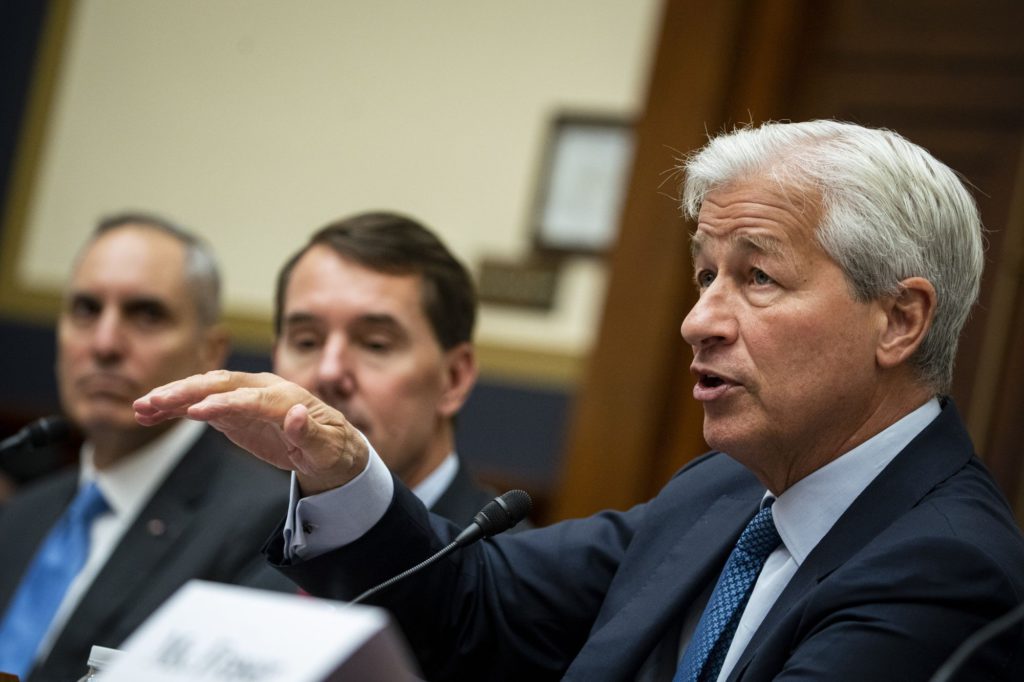
(Bloomberg) — Jamie Dimon didn’t mince words when a US lawmaker mentioned the executive’s history of criticizing cryptocurrencies.

“I’m a major skeptic on crypto tokens, which you call currency, like Bitcoin,” the JPMorgan Chase & Co. chief executive officer said in congressional testimony Wednesday. “They are decentralized Ponzi schemes.”

Stablecoins — digital assets tied to the value of the US dollar or other currencies — wouldn’t be problematic with the proper regulation, and JPMorgan is active in blockchain, Dimon said.

The comments represent the latest criticism leveled against digital currencies by Dimon, who once called Bitcoin “a fraud” before eventually saying he regretted the comments.

House Financial Services Committee Chairwoman Maxine Waters and Ranking Member Patrick McHenry have been working to reach an agreement on stablecoin legislation. Under the latest version of the bill, it would be illegal to issue or create new “endogenously collateralized stablecoins” such as those similar to TerraUSD, the algorithmic stablecoin that collapsed earlier this year, according to a copy obtained by Bloomberg. 

While Dimon has been a vocal critic of Bitcoin, the firm has been focused on using blockchain for financial services. JPMorgan uses its custom blockchain and token, JPM Coin, to conduct intraday repurchase agreements, which allows other financial institutions to take out short-term loans using high-quality collateral. JPMorgan was also the first Wall Street bank to launch a presence in the metaverse in February. 

Dimon deemed Bitcoin a fraud in 2017, comments he later said he regretted. In October, he said it was worthless but that he’d follow clients and recently acknowledged that decentralized finance — where banks are replaced by algorithms — is “real.”

EXPLAINER: What Are Stablecoins? 

(Adds details on stablecoin legislation and JPMorgan’s blockchain efforts, beginning in the fifth paragraph.)

More stories like this are available on bloomberg.com

©2022 Bloomberg L.P.

Gates Touts Green Hydrogen for Industries: Earthshot Update

(Bloomberg) — Climate change is the focus of dozens of events in New York City this week, as world leaders, corporate executives, activists and artists all converge for both the United Nations General Assembly and Climate Week.

That includes the Race to Zero and Resilience Forum Wednesday, organized by the UN Climate Action High-level Champions and Michael Bloomberg, majority owner of Bloomberg LP, the parent of Bloomberg News. The event has connected government leaders and environmental activists, with the goal of delivering capital globally to groups working to reduce emissions without exacerbating debt in vulnerable communities. Speakers including California Governor Gavin Newsom and renowned naturalist Jane Goodall are discussing significant achievements that have been made and also key next steps that are required.

More information about the event can be found online and on the Bloomberg Terminal.

Colombian President Questions Whether Market Can Stop Crisis (3:20 p.m.)

Gustavo Petro, who took office as Colombia’s first leftist president this year, questioned whether markets have the ability to arrest climate change, chiding leaders for following capitalism as a solution. 

“We have to wonder whether capitalism can overcome this climate crisis or lead to the destruction of society,” Petro said.  “If you want to solve the climate crisis, that means a total change of technology of consumption. That means we have to look at it from another lens, which isn’t the market.” 

In a 25-minute speech that meandered into political theory, lessons from the Covid-19 pandemic and the impact of a fossil fuel-based economy, Petro urged world leaders to act to save the planet from the point of no return. “We play ostrich with our heads in the sand and go from COP to COP to COP until time runs out,” he said. 

The former mayor and senator took office as president in August, pledging a transition to sustainable energy for the oil and coal exporter.

California’s Newsom Slams Texas Energy Policies (3:45 p.m.)

California Governor Gavin Newsom talked up his state’s investment in green technologies while criticizing Republican politicians for not taking similar stances.

An extreme heat wave earlier this month pushed California’s power grid to the brink of failure, but Newsom said the state was able to avoid widespread power outages because it has invested heavily in big batteries. In contrast, he said, Texas has clung to fossil-fuel generation after a winter storm last year left much the state in the dark for days. 

“Look what happened in Texas last year. They doubled down on stupid,” he said at the forum. “Why the hell are they doubling down on the policies that created those conditions?”

Newsom praised climate efforts from President Joe Biden, but was also critical of the White House. Notably, he compared the size of California’s electric infrastructure package with national investments.

As the talk was concluding, Newsom was asked whether he would run for president. “No, I want to do something for a living,” he said. “I like being governor of California. I can get stuff done.”

Standards Needed to ‘Match Ambition With Action’ (3:12 p.m.)

Stronger standards are vital to ensuring emission-cutting pledges and programs translate into real action on the ground, former Canadian environmental minister Catherine McKenna said at the event, telegraphing an upcoming UN report on the issue.

The UN secretary-general’s High-Level Expert Group on Net-Zero Commitments, which McKenna chairs, is set to release its analysis before the COP27 climate summit in November in Egypt.

The effort comes amid a wave of national and corporate net-zero commitments. And it’s driven by concern regarding greenwashing and the need to “match ambition with action,” McKenna said.

“There’s a limit to voluntary initiatives,” she said. Many communities and corporations simply aren’t part of those voluntary programs — and even those that are may not face consequences for failing to hit their targets.

“You need some consequences,” McKenna said, and the issue will be “a big part of the report.”

Carney Says Some Race-To-Zero Bank Guidance Went Too Far (3 p.m.)

Mark Carney, co-chair of the Glasgow Financial Alliance for Net Zero, said some of the climate group’s guidance for banks went too far and has been amended.

Carney, who is also vice chair of Brookfield Asset Management, was responding to reports that financial giants including JPMorgan Chase & Co. and Morgan Stanley are considering leaving GFANZ because they’re concerned the organization’s strict requirements for decarbonization may make them legally vulnerable. Carney didn’t mention any financial companies in his presentation at the event.

Also See: Banks May Leave Mark Carney’s Climate Group on Legal Risks 

Race to Zero, the body behind the criteria that underpins GFANZ, issued a clarification Friday, updating its guidance around fossil fuels and new coal projects. It said it was aware “there may be cause for legal concern” around these areas while reaffirming its members have always been required to phase out coal and align to the goal of limiting warming to 1.5 degrees Celsius.

Wealthy Nations Must Address Trust ‘Deficiency,’ Shoukry Says (2:30 p.m.)

Rich nations must work to overcome lingering distrust over their failure to fulfill climate finance pledges, according to Sameh Shoukry, president-designate of COP27, underscoring a source of tension that threatens to undermine upcoming negotiations in Egypt.

“There is a deficiency in trust, and we must regain that confidence,” Shoukry, Egypt’s foreign affairs minister, said at the forum.

Wealthy nations have yet to satisfy their promise of providing $100 billion in annual funding to help poor countries address climate change — a shortfall that still needs to be filled. A plan for after 2025 also is still being developed.

Although the upcoming COP27 climate summit is meant to focus on implementation, Shoukry’s comments emphasize the extent to which other concerns may intrude. Climate-vulnerable countries are pushing for the establishment of a loss and damage program that can help nations deal with devastating floods, droughts and other consequences of the warming planet.

On loss and damage, “it’s still a question whether it’s going to be sufficiently addressed,” Shoukry said.

Countries Must Boost Climate Ambitions, Stiell Says (1:55 p.m.)

Simon Stiell, executive secretary of the UN Framework Convention on Climate Change, stressed the importance of corporate action to buttress national emissions-cutting commitments, even as he urged nations to boost their ambitions.

“Paris, Glasgow and a host of other conferences proved that climate change has slowly moved to the center of the international agenda, but it’s time to move it to the center of each national agenda,” Stiell said at the event.

His comments come about six weeks before the next UN climate summit in Egypt, and days before countries are due to submit any new or revised emissions-cutting pledges under the Paris Agreement.

Initiatives around transparency and accountability are also critical, he said. “The commitments made must be commitments delivered.”

Nordic Real Estate Partners Pushes to Make Cities More Walkable (1:20 p.m.)

Nordic Real Estate Partners A/S is partnering with a group of about 100 mayors around the world to promote making cities less dependent on cars as part of the fight against climate change. 

The collaboration announced Wednesday between the Copenhagen-based firm and the group, C40 Cities, will promote the so-called “15-minute cities” concept — the idea that cities should be designed to have everything residents need within a 15-minute walk, bike ride or public transit ride. The effort will begin with pilot programs in several cities, which have not yet been announced.

Claus Mathisen, NREP’s chief executive officer, did not disclose how much money the firm is committing to the initiative but said it made a “significant financial contribution.” Nordic Real Estate Partners has 18 billion euros ($17.8 billion)in assets under management, he said.

“Dense, multi-purpose neighborhoods see a reduction in emissions,” Mark Watts, the executive director of C40, said during a press conference. The concept helps to reduce carbon emissions and “reclaims space in cities from polluting vehicles back to people,” he added.

Bloomberg Targets Growth of Petrochemical Plants (12:30 NY time)

Bloomberg Philanthropies announced an $85 million program to slow the expansion of the petrochemical industry, building on past initiatives that pushed to close coal plants and reduce greenhouse gas emissions.

The effort announced Wednesday will target 120 new or proposed oil, gas and petrochemical plants across at least five states, from the US Gulf Coast to the growing gas hub of the Ohio River Valley.

“The world is transitioning to renewable energy,” but oil and gas companies are turning to plastics and petrochemicals as a lifeline, Abigail Dillen, president of Earthjustice, said. “We can’t afford a new investment in fossil fuels.”

Funding could help arm front-line communities already battling plastics and chemical plants, including in Louisiana’s infamous “Cancer Alley.” Those activists are like David fighting Goliath, Rev. Lennox Yearwood Jr., chair of the Beyond Petrochemicals Campaign, said. “It’s time to give David some new stones for his slingshot.”

Cheap Hydrogen Offers ‘Magic’ Path to Clean Industrial Processes: Gates (12:10 p.m. NY time) 

Hydrogen has the potential to significantly reduce emissions from industrial processes, if it can be produced at a low-enough cost, according to billionaire Bill Gates. 

Industrial processes for products like steel and cement are significant sources of emissions. While there are new ways to produce them, high costs remains a barrier. Technologies to produce hydrogen can help address these challenges, Gates said during the event. 

“If you get the hydrogen cheap enough, you get the super-magic thing, which is that the green product doesn’t cost more,” Gates said.

Innovation Key to Climate Fight, New Zealand’s Ardern Says 

Fostering new technologies and new environmental policies will be a key element of the global fight against climate change, New Zealand Prime Minister Jacinda Ardern said at the Earthshot Prize Innovation Summit. 

Her comments reflect the growing awareness that limiting global warming is a monumental challenge that will require significant backing from governments and businesses.

While New Zealand has historically contributed a small portion of the air pollution that’s driving climate change, Ardern has won praise for her aggressive stance on curbing emissions, making her a leading voice in the environmental debate.

“We cannot expect environmental innovation to happen in a vacuum,” Ardern said. “As governments, we have a responsibility to create the incentives and the space for you to flourish.”

More stories like this are available on bloomberg.com

©2022 Bloomberg L.P.

Crypto Agitator Jesse Powell Steps Down as CEO of Kraken

(Bloomberg) — Jesse Powell, the outspoken and often controversial co-founder of the Kraken cryptocurrency exchange, said he’s stepping down as chief executive officer to spend more time on the company’s products and broader industry advocacy.

Powell, 42, who is being succeeded by Chief Operating Officer Dave Ripley, 45, will become chairman of the board. The transition is expected to take place over the next few months once a new COO is selected. 

“As the company has gotten bigger, it’s just gotten to be more draining on me, less fun,” Powell said in a video interview on Tuesday. “I still plan to stay very engaged with the company” as the largest shareholder and member of the board. 

Powell earlier this year encouraged any “woke” employees who can’t align with the company’s culture and values to leave. In July, the New York Times reported that Kraken is under a US Treasury investigation for suspected violations of Iran sanctions. Powell earlier declined to comment on the report.    

Powell said he informed the board of his decision more than a year ago, and the firm picked Ripley after considering outside candidates. Ripley, who worked with Powell to shape Kraken’s culture and strategy, said he expects to continue the company’s mission. 

Arjun Sethi, co-founder and partner at Tribe Capital and a Kraken board member, said in an emailed statement that he has “absolute faith in Dave’s continued leadership and evolved role as CEO, and I look forward to continue working with Jesse in his role on the board.”

Kraken’s leadership shuffle comes as a series of crypto firms made C-suite changes in the aftermath of crypto markets’ meltdown. Last month, crypto brokerage Genesis’s chief executive officer, Michael Moro, and Alameda Research co-CEO Sam Trabucco stepped down. MicroStrategy Inc’s long-time CEO Michael Saylor gave up his title, after the software maker reported more than $1 billion quarterly loss related to the plunge in Bitcoin price. 

A Bitcoin pioneer and a philosophy major at California State University, Powell formed Kraken in 2011 with the goal of creating a safe exchange, an idea that took off after then-industry leader Mt. Gox was hacked several years later. 

Shrinking Share

Over the years, Kraken grew to be one of the largest US crypto exchanges and was ranked fourth among global spot exchanges as of Wednesday, according to data from CoinMarketCap. Still, the current “crypto winter” has weighed on the industry as a whole. Kraken’s global market share among the top 15 exchanges has dropped by about 32% since the start of the year, according to data provider CryptoCompare.

A remote-first company, Kraken shut down its San Francisco headquarters this year. The firm has over 3,300 staff globally. 

“My style is always to be very transparent and authentic,” Powell said. “I think it’s worked out really well. We’ve had people who were not a great fit at the company, who were distraction, who are gone now. And then we’ve also attracted a lot of other people.” 

Backed by major crypto venture capital firms like Tribe Capital and Electric Capital, Kraken had developed plans to go public. The company was in talks last year to raise funds at a more than $10 billion valuation. Powell told Bloomberg on Tuesday that the company is positioning itself to have the option of going public, but couldn’t provide a specific timeline for when that would happen. It currently has no active plans for fundraising, Ripley added. 

Last year, the company was fined $1.25 million by the Commodity Futures Trading Commission for offering illegal crypto margin products to US residents. 

(Adds statement by board member. An earlier version was corrected to fix the spelling of the COO’s name in trhe subheadline.)

More stories like this are available on bloomberg.com

©2022 Bloomberg L.P.

Stocks Climb in Volatile Federal Reserve Day: Markets Wrap

(Bloomberg) — Stocks rose as investors digested the latest Federal Reserve rate increase and a “slightly hawkish surprise” in officials’ projection for where rates will stand at the end of this year.

The S&P 500 erased losses that approached 1%. The two-year yield topped 4% while the dollar remained higher. 

Fed Chair Jerome Powell said officials were “strongly committed” to curbing inflation after they raised interest rates by 75 basis points for a third straight time and signaled more hikes are coming. “We are moving our policy stance purposefully to a level that will be sufficiently restrictive to return inflation to 2%,” he told a press conference in Washington on Wednesday.

The “dot plot”, which the central bank uses to signal its outlook for the path of interest rates, shows the median year-end projection for the federal funds rate rose to 4.4%. The estimate for the end of 2023 was boosted to 4.6%.

Comments:

  • “It seems like the market is wrestling with the possibility of higher rates at year-end on the one hand, and possibly getting the bulk of the rate hike cycle done sooner on the other hand. I think it’s fair to say this was a slightly hawkish surprise, but markets were expecting them to err on the hawkish side,” said Sameer Samana, Wells Fargo Investment Institute senior global market strategist.
  • “They have a brief window to act aggressively, and they seem eager to use it,” said Jan Szilagyi, co-founder of Toggle AI, an investment research firm.
  • “The first set of Fed releases from the September meeting are unambiguously hawkish,” said Krishna Guha at Evercore. “The macro projections signal increased risk of a harder landing.”
  • “The initial market reaction – with equities down, rates up and euro down – reflects this “high for longer” mantra that spurs from the FOMC’s projections: rates could remain as high as today throughout 2023, and that is not what markets were pricing in,” said Florian Ielpo, head of macro of the multi asset group at Lombard Odier Asset Management.
  • “The Fed was late to recognize inflation, late to start raising interest rates, and late to start unwinding bond purchases,” said Greg McBride, chief financial analyst at Bankrate. “They’ve been playing catch-up ever since. And they’re not done yet.”
  • “The market seems to have hoped beyond hope that they would hear some reference to an end to rate hikes on the horizon, but that’s certainly not what we got today,” said Mike Loewengart, head of model portfolio construction at Morgan Stanley Global Investment Office. “It’s important to keep in mind that Fed policy operates on a lag, so it may be some time before we see inflation come down close to the Fed’s target.

Read: Fed Delivers Third-Straight Big Hike, Sees More Increases Ahead

Key events this week:

  • Bank of Japan monetary policy decision, Thursday
  • The Bank of England interest rate decision, Thursday
  • US Conference Board leading index, initial jobless claims, Thursday

Will the Nasdaq 100 Stock Index hit 10,000 or 14,000 first? This week’s MLIV Pulse survey focuses on technology. It’s brief and we don’t collect your name or any contact information. Please click here to share your views.

Here are some of the main moves in markets:

Stocks

  • The S&P 500 rose 0.7% as of 2:57 p.m. New York time
  • The Nasdaq 100 rose 1%
  • The Dow Jones Industrial Average rose 0.5%
  • The MSCI World index rose 0.2%

Currencies

  • The Bloomberg Dollar Spot Index rose 0.3%
  • The euro fell 0.7% to $0.9897
  • The British pound fell 0.4% to $1.1338
  • The Japanese yen was little changed at 143.62 per dollar

Bonds

  • The yield on 10-year Treasuries declined five basis points to 3.51%
  • Germany’s 10-year yield declined three basis points to 1.89%
  • Britain’s 10-year yield advanced two basis points to 3.31%

Commodities

  • West Texas Intermediate crude rose 0.3% to $84.16 a barrel
  • Gold futures rose 1.3% to $1,693 an ounce

More stories like this are available on bloomberg.com

©2022 Bloomberg L.P.

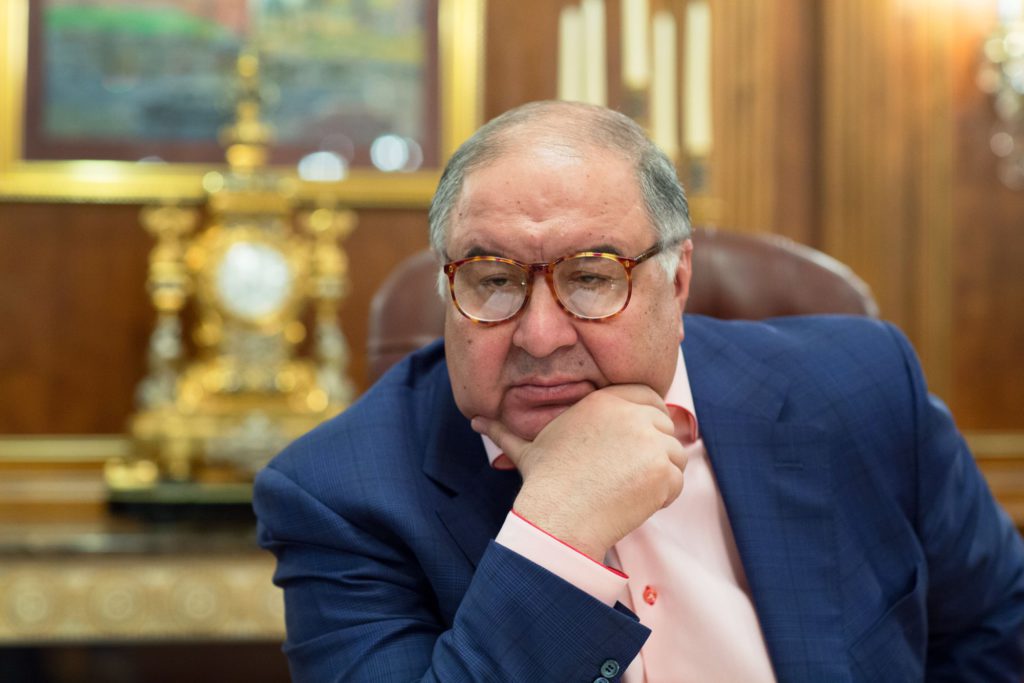
Germany Raids Properties Linked to Russian Oligarch Usmanov

(Bloomberg) — German authorities are conducting nationwide raids of properties linked to Alisher Usmanov as part of a probe against the sanctioned Russian billionaire.

Two dozen sites in Bavaria, Baden-Wuerttemberg, Schleswig-Holstein and Hamburg are being searched, Munich prosecutors said in statement. They’re probing a Russian citizen who is on the sanctions list. While no names where disclosed, the target is Usmanov, a person familiar with the matter said. Hundreds of officers from various tax and police departments are involved.

German news media reported that Usmanov was targeted for tax evasion.

“The fact that these claims have only now emerged raises the legitimate question regarding the reason for such an attack against a law-abiding taxpayer,” a spokesperson for Usmanov said. “Any allegations of tax evasion by Mr. Usmanov are unfounded, false and damaging to his honour, dignity and reputation, which Mr. Usmanov will defend by all disposable legal means.”

Der Spiegel reported the raids earlier. 

Usmanov is being investigated for sanctions violation because he allegedly kept and paid security staff to look after a luxury compound in Bavaria, according to the statement. The staffers are also being investigated.

Usmanov, 69, owns a major stake in USM, a Russian investment group with holdings in Metalloinvest, one of the world’s largest iron ore producers, and telecommunications company MegaFon. He has a fortune of $17.8 billion, according to the Bloomberg Billionaires Index.    

German authorities previously impounded Usmanov’s superyacht Dilbar after determining it was legally owned by his sister, Gulbakhor Ismailova, who is also subject to western sanctions over the war in Ukraine. He has appealed the European Union sanctions at the EU’s General court in April. 

A different sister of the metals tycoon, Saodat Narzieva, was removed from the bloc’s sanctions list following a legal challenge. 

Separately Frankfurt prosecutors said they raided a 71-year-old Russian over money laundering allegations without identifying the man.


(Adds comment from Usmanov spokesperson in fourth paragraph.)

More stories like this are available on bloomberg.com

©2022 Bloomberg L.P.

Microsoft Won’t Label Fake News as False in an Attempt to Avoid ‘Censorship’ Cries

(Bloomberg) — Microsoft Corp. won’t label social media posts that appear to be false in order to avoid the appearance that the company is trying to censor speech online, President Brad Smith said in an interview with Bloomberg News, hinting that the company is taking a different approach than other technology firms in dealing with disinformation. 

“I don’t think that people want governments to tell them what’s true or false,” Smith said when asked about Microsoft’s role in defining disinformation. “And I don’t think they’re really interested in having tech companies tell them either.” 

The comments are Smith’s strongest indication yet that Microsoft is taking a unique path to tracking and disrupting digital propaganda efforts. 

Meta Platforms Inc.’s Facebook and Twitter Inc. have experienced a backlash over their attempts to flag and remove inaccurate and misleading posts on their websites and apps. The debate over truth has become a politicized topic, with US lawmakers alleging that social media companies stifle right-wing voices. The US Department of Homeland Security, meanwhile, shuttered its own disinformation bureau earlier this year after public outcry. 

Microsoft, which operates the Bing search engine and LinkedIn social network, has recently invested in information operation analysts and tools to track propaganda campaigns. These specialists are working alongside Microsoft’s cybersecurity teams, which have helped the company disrupt suspected Russian, Iranian, Chinese and North Korean state hackers by dismantling the infrastructure needed to keep the malicious software active.  

“We’ll be investigating how can we do that in the context of influence operations,” said Tom Burt, corporate vice president for customer security and trust. 

For now, Microsoft is focused on tracking disinformation campaigns that target their private and public sector customers and publicize their existence. Its primary goal is to be “transparent,” Smith said, though exact details of the approach are still evolving.

Much like it already does with its cybersecurity incident reports, Microsoft’s policy team will share its propaganda-related findings with international governments, with the aim of lobbying politicians to agree on a set of rules for nation-state conduct in cyberspace. 

“It turns out that if you tell people what’s going on, then that knowledge inspires both action and conversation about the steps that global governments need to take to address these issues,” Burt said.

This year, Microsoft published a report on Russian cyber-espionage against targets in Ukraine, alleging that intruders conducted the hacks in tandem with disinformation operations and military attacks. In one example, it alleged that hackers stole data from nuclear sector organizations to assist the military and state-run media to push disinformation that Ukraine was creating chemical and biological weapons and justify soldiers capturing nuclear power plants. 

The company also said it would reduce the visibility of state-sponsored Russian media outlets by removing the app for RT from its Windows app store, and only return links from RT and Sputnik “when a user clearly intends to navigate to those pages.”

Smith said Microsoft wanted to provide the public with more information about who is speaking, what they are saying and allow them to come to their own judgment about whether content was true. 

“We have to be very thoughtful and careful because—and this is also true of every democratic government—fundamentally, people quite rightly want to make up their own mind and they should,” he said. 

“Our whole approach needs to be to provide people with more information, not less and we cannot trip over and use what others might consider censorship as a tactic.”

Microsoft announced in June that it was buying Miburo, a disinformation and cyber-threat analysis company headed by Clint Watts, a former FBI agent and counterterrorism expert. The acquisition will help Microsoft understand how threat actors use information operations in tandem with hacking to further their goals against the company’s customers, Microsoft said at the time. 

More stories like this are available on bloomberg.com

©2022 Bloomberg L.P.
Bitcoin Fluctuates Near Three-Month Low After Fed Rate Increase

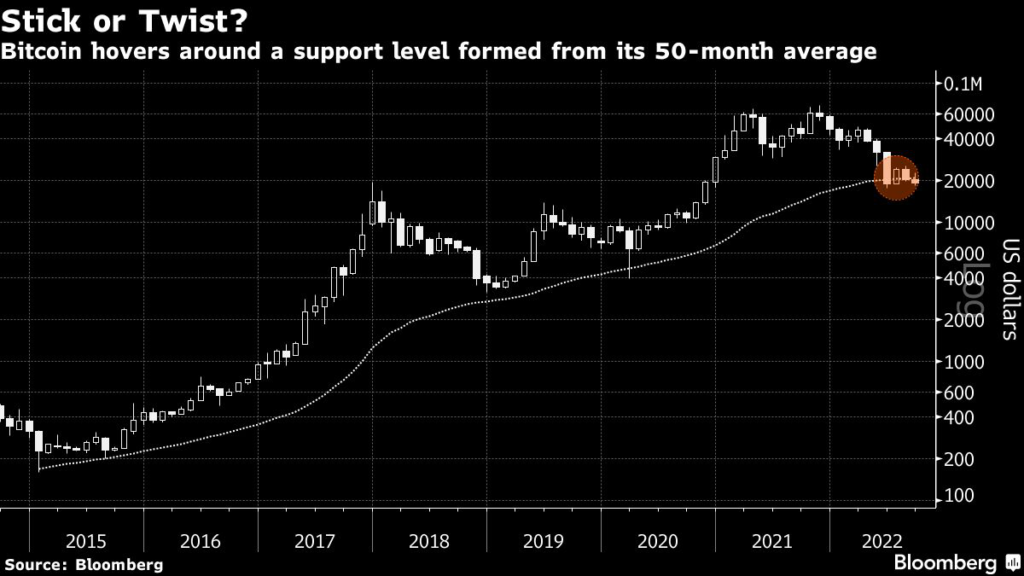
(Bloomberg) — Cryptocurrencies were mostly little changed after Federal Reserve officials raised interest rates by 75 basis points for the third consecutive meeting. 

Bitcoin, the largest token by market value, traded at about $19,000 as of 2:09 p.m. in New York on Wednesday, while other major coins like Ether, Solana and Avalanche were also little changed. 

The MVIS CryptoCompare Digital Assets 100 Index is down this week, taking its losses for 2022 to about 60% compared with 21% for global stocks. The correlation between equities and Bitcoin is elevated and close to a record, a sign of how assets are being tossed around by common macro factors.

More stories like this are available on bloomberg.com

©2022 Bloomberg L.P.

Close Bitnami banner
Bitnami