Bloomberg

Bitcoin Hovers Near Three-Month Low Ahead of Fed Rate Decision

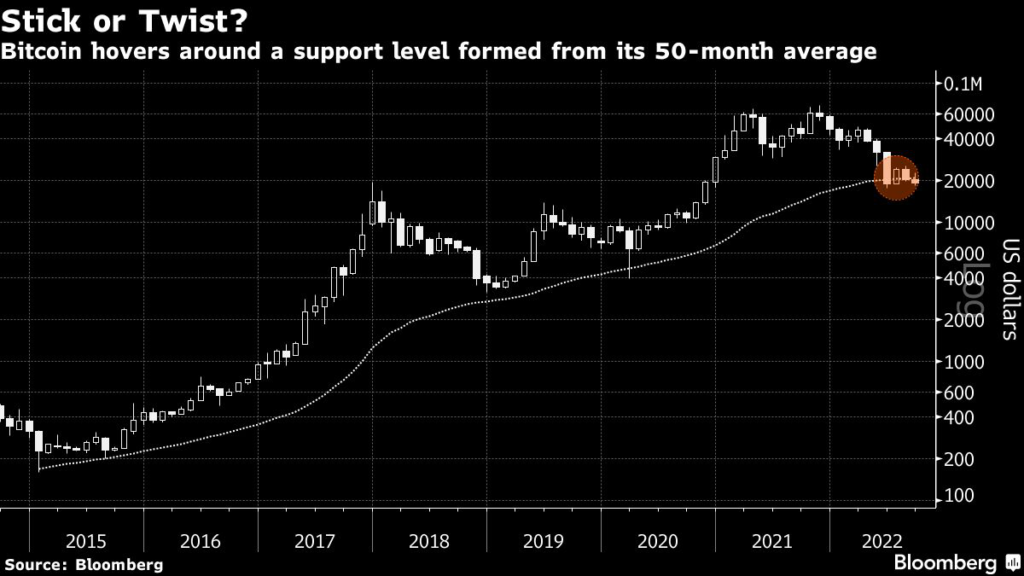
(Bloomberg) — Cryptocurrencies were mostly little changed as investors await a Federal Reserve policy decision that likely holds the key to whether Bitcoin can avert a drop to levels last seen when the pandemic was raging globally.

The largest token rose less than 2% to $19,306 as of 9:46 a.m. in New York on Wednesday, while other major coins like Ether, Solana and Avalanche were also steady. A drop of more than 7% in Bitcoin — something that can happen in a few seconds in digital assets — would send it back to 2020 prices. 

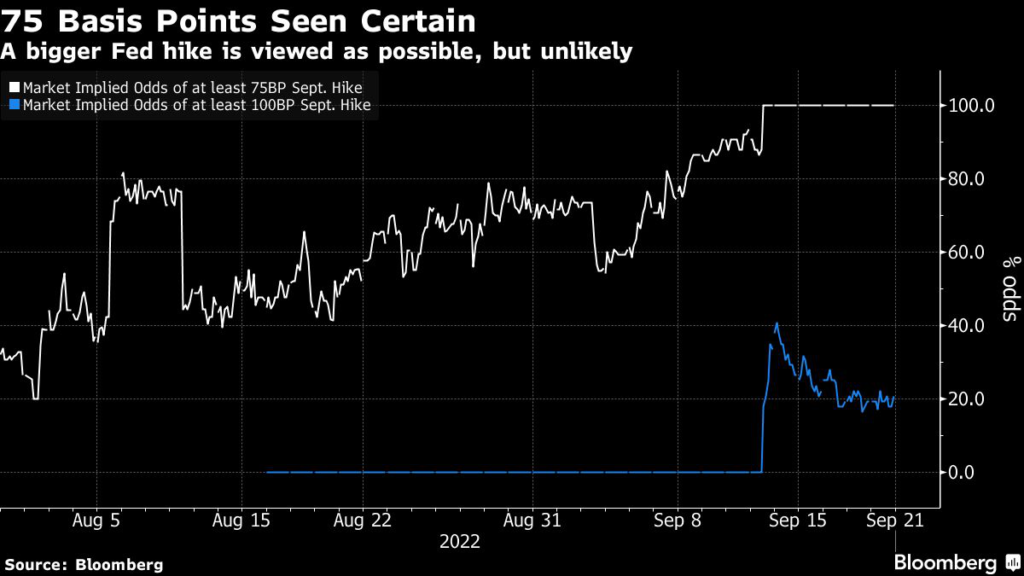
Markets could breathe a temporary sigh of relief if the Fed raises borrowing costs by three-quarters of a percentage point again as expected and avoids becoming even more hawkish. But a bigger, one-percentage-point increase to fight inflation might heap pressure on riskier assets by imperiling liquidity.

“If the FOMC delivers less than a 100 basis points hike, it would make sense to see a small relief rally — this could be quite large if the FOMC were to deliver less than a 75 basis points increase, although this seems highly unlikely,” said John Toro, head of trading at digital-asset exchange Independent Reserve.

The MVIS CryptoCompare Digital Assets 100 Index is down this week, taking its losses for 2022 to about 60% compared with 21% for global stocks. The correlation between equities and Bitcoin is elevated and close to a record, a sign of how assets are being tossed around by common macro factors.

“If we do end up seeing 100 basis points, we might see quite the volatility” in virtual coins following the Fed announcement, Laura Vidiella del Blanco, vice president of business development and strategy at LedgerPrime, said on Bloomberg Television.

More stories like this are available on bloomberg.com

©2022 Bloomberg L.P.

Six Killed in Iran Protests Sparked by Woman’s Death in Custody

(Bloomberg) — Sign up for our Middle East newsletter and follow us @middleeast for news on the region.

The death toll in protests that have roiled towns and cities across Iran rose to six, state media reported, as anger sparked by the case of a young woman who died in police custody spreads. 

Two people were killed in the predominantly Kurdish western city of Kermanshah, reports said on Wednesday, while a “police assistant” died and four officers were injured in clashes in the southern city of Shiraz. On Tuesday, state media said three people died in protests in western Kurdistan province, where Mahsa Amini, 22, was buried on Saturday. 

She’d been detained by so-called “morality police” for breaking the Islamic Republic’s rules on what women can wear in public. By Tuesday night, protests had spread to multiple cities, according to a government statement, including Karaj, Tabriz, Shiraz, Mashhad, Kish Island, Kerman, Yazd, Esfahan and Hamedan.

Iran’s state media, which is closely aligned with the country’s ruling hardliners, said “anti-revolutionary” agents and “rioters” were responsible for the deaths and weapons used weren’t the same as those carried by police. Iranian authorities frequently refer to protesters as seditionists, anti-revolutionaries or terrorists, and police are rarely blamed for the deaths of protesters in state media. 

Protests Erupt in Iran Over Woman’s Death, Three Killed

The violence has gripped Iran since the weekend and it’s the biggest public backlash against the country’s dress code for women since the 1979 revolution that ushered in the laws. It’s also the most widespread unrest since November 2019 protests over fuel prices. 

Those demonstrations were brutally shut down by authorities with rights groups, including London-based Amnesty International, saying more than 320 people were killed by security forces.

On Wednesday, Supreme Leader Ayatollah Ali Khamenei, who’s been singled out in some of the slogans heard in protest footage posted to social media, made a live appearance on state TV but didn’t directly address the unrest. Nor did he appear to give any signals to security forces on how to respond, leaving a question mark over whether the state will crack down on the dissent. 

Internet disruptions

After internet restrictions were reported in various cities over the weekend, some hacking groups said on Twitter on Tuesday that they had launched operations targeting government websites. 

The Central Bank of Iran said on Wednesday that its website had been subjected to a malicious “distributed denial-of-service attack,” but that the problem had been resolved. However, repeated attempts to load the site and the government’s main web domain from inside and outside Iran failed around 12 p.m. in London. 

It’s common for authorities in Iran to limit or shut down the internet during protests. On Wednesday, Iran’s minister of information and communications technology confirmed that access had been terminated temporarily in some areas but was later running at normal speeds, the semi-official Mehr news agency reported. 

The latest unrest coincides with Iranian President Ebrahim Raisi’s first in-person appearance at the United Nations General Assembly in New York. He’s expected to address the summit later on Wednesday but his speech, and any efforts to revive the ailing nuclear talks on the sidelines, are likely to be heavily overshadowed by the protests. 

(Updates with reports of website hacks and appearance by Supreme Leader Khamenei.)

More stories like this are available on bloomberg.com

©2022 Bloomberg L.P.

Stocks Head Higher on Fed Day; Haven Bid Lingers: Markets Wrap

(Bloomberg) — Markets were muted Wednesday with investors mostly staying on the sidelines before another expected rate hike from the Federal Reserve. Treasuries and the dollar gained on haven flows after Russian President Vladimir Putin stepped up his war against Ukraine.

US equity futures pointed to a recovery from Tuesday’s slide in the S&P 500 on anxiety policy makers are risking recession in their zeal to subdue price pressures. Benchmark Treasury yields slipped four basis points to 3.53%. Officials are widely expected to boost rates by 75 basis points for the third time in a row, according to the vast majority of analysts surveyed by Bloomberg. Only two project a 100 basis points move. 

European equities also swung higher after posting early losses in the run-up to the Fed meeting. Euro-area bonds advanced, with the German 10-year yield dropping four basis points to 1.9%.

“There’s been so much speculation about the Fed’s next step that finally having a decision should provide some much needed relief for investors,” said Danni Hewson, an analyst at AJ Bell Plc. “If it sticks to script and delivers another 75 basis point hike markets are likely to rally somewhat, partly because the specter of a full percentage point rise didn’t come to pass.”

The dollar headed for a fresh record while the euro fell as investors reacted to Putin’s announcement of a “partial mobilization” as he pledged to annex the territories his forces have already occupied, vowing to use all means necessary to defend Russia. Crude oil rallied.

Putin’s land grab and military escalation comes after a Ukrainian counteroffensive in the last few weeks dealt his troops their worst defeats since the early months of the conflict, retaking more than 10% of the territory that Russia held. 

“We believe the USD will continue to benefit as the US is isolated from a geographic perspective and more resilient due to the make-up of its economy,” said Ales Koutny, portfolio manager at Janus Henderson Investors. 

History suggests US markets may be due a relief rally after the Fed decision, following retreats in the S&P 500 and the Nasdaq 100 Indexes of 6.2% and 7% respectively over the past six days.

Read more: S&P 500 History Points to a Sharp Bounce After Fed Meeting 

“It is a case of ‘travel and arrive’ or ‘buy the rumor sell the fact,”’ said Victoria Scholar, head of investment at Interactive Investor. “Traders have been bearishly positioned in anticipation of tonight’s announcement from the Fed and today those short positions are being unwound to avoid any event risk tonight.”

Key events this week:

  • Federal Reserve decision, followed by a news conference with Chair Jerome Powell, Wednesday
  • Big-bank CEOs testify before US Congress in a pair of hearings on Wednesday and Thursday
  • US existing home sales, Wednesday
  • EIA crude oil inventory report, Wednesday
  • Bank of Japan monetary policy decision, Thursday
  • The Bank of England interest rate decision, Thursday
  • US Conference Board leading index, initial jobless claims, Thursday

Will the Nasdaq 100 Stock Index hit 10,000 or 14,000 first? This week’s MLIV Pulse survey focuses on technology. It’s brief and we don’t collect your name or any contact information. Please click here to share your views.

Some of the main moves in markets:

Stocks

  • Futures on the S&P 500 rose 0.3% as of 8:21 a.m. New York time
  • Futures on the Nasdaq 100 rose 0.1%
  • Futures on the Dow Jones Industrial Average rose 0.3%
  • The Stoxx Europe 600 rose 0.3%
  • The MSCI World index fell 0.4%

Currencies

  • The Bloomberg Dollar Spot Index rose 0.4%
  • The euro fell 0.7% to $0.9901
  • The British pound fell 0.4% to $1.1335
  • The Japanese yen fell 0.2% to 144.04 per dollar

Bonds

  • The yield on 10-year Treasuries declined four basis points to 3.53%
  • Germany’s 10-year yield declined four basis points to 1.89%
  • Britain’s 10-year yield advanced four basis points to 3.33%

Commodities

  • West Texas Intermediate crude rose 1.8% to $85.49 a barrel
  • Gold futures rose 0.7% to $1,682.70 an ounce

More stories like this are available on bloomberg.com

©2022 Bloomberg L.P.

SoftBank’s Son Plans to Discuss Arm Partnership With Samsung

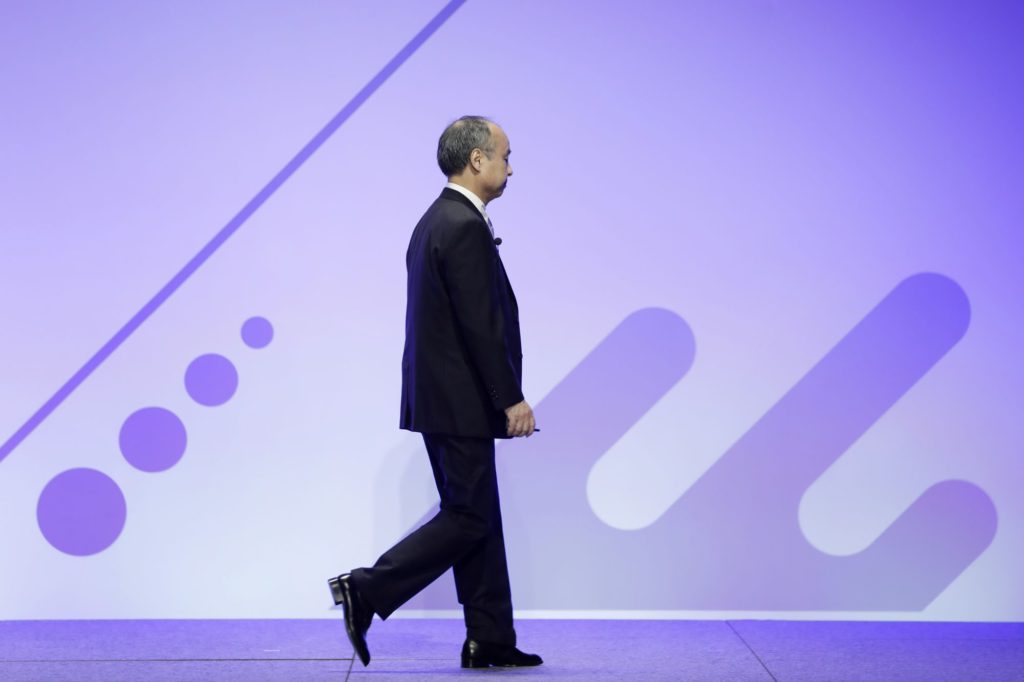
(Bloomberg) — SoftBank Group Corp.’s Masayoshi Son plans to visit Seoul for the first time in three years and discuss a potential partnership between Arm Ltd. and Samsung Electronics Co.

“I’m looking forward to the trip,” Son said, according to a SoftBank spokesperson. “I want to discuss a strategic alliance for Arm with Samsung.” 

Son has repeatedly said his primary focus is to take Arm public in the US, after the planned $40 billion sale to Nvidia fell apart following an outcry from Arm’s customers. 

The UK firm sells and licenses semiconductor technology that’s found in everything from smartphones to supercomputers. The company’s pervasiveness across the $550 billion chip industry is built on the understanding that no one would get privileged access to its technology.

Samsung Electronics Vice Chairman Jay Y. Lee told reporters in Seoul that Son may visit Seoul next month to discuss ARM, Edaily reported earlier Wednesday, without further details.

More stories like this are available on bloomberg.com

©2022 Bloomberg L.P.

Intel Executive With Chip Industry’s Toughest Job Plots Comeback

(Bloomberg) — Intel Corp. executive Sandra Rivera has what once would have been the most coveted job in the semiconductor industry: head of the company’s hugely lucrative data center division. Nowadays, it’s the toughest.

Rivera, who has been at Intel for more than 20 years, became general manager of the unit 14 months ago — shortly after Pat Gelsinger returned to the company as chief executive office. The business had clearly been losing market share and its technological edge, but Rivera said she underestimated how big of a turnaround job her new role would be.

“Of course, I knew that we had a number of execution issues which had been years in the making,” she said in an interview from her office at Intel’s headquarters. “I probably under-called just how much work we had to do.”

The business of providing the microprocessors that run the internet and corporate networks had long been the crown jewel of what was the world’s largest chipmaker. The company’s total dominance of the market — where components can sell for more than $10,000 each — helped bring in huge profits for Santa Clara, California-based Intel. 

But more recently, Rivera’s unit has come to represent Intel’s struggles. Data center revenue dropped 16% last quarter from a year earlier, and the business’s operating margin collapsed to 5% from 38%. Intel missed its overall projections for the quarter and slashed its annual forecast.

Rivals such as Advanced Micro Devices Inc. and Nvidia Corp., meanwhile, have been snatching away customers. And Intel’s shares are down 44% in 2022, an even worse rout than the rest of the chip industry suffered this year.

One of the root causes of Intel’s weak performance, highlighted by Gelsinger on an earnings conference call, is the delay in a new chip for the data center market.

The setbacks stem largely from past design choices, Rivera said. Intel was overly ambitious in trying to develop too many new technologies and features. That resulted in delays, preventing customers from receiving a product that they should have gotten by now, she said.

Before her current role, Rivera served as Intel’s chief people officer under Gelsinger’s predecessor, Bob Swan. And prior to that, she was responsible for the company’s attempt to get into networking. The executive, in her 50s, holds an electrical engineering degree from Pennsylvania State University.

Rivera oversaw HR during a chaotic time for the company. Swan had taken the top job on an interim basis after CEO Brian Krzanich left over revelations of an affair with a subordinate. The stand-in CEO, whose position was later made permanent, tasked her with repairing Intel’s culture.

That may still be a work in progress. The problem, Rivera says, was a fundamental change in the way Intel approaches innovation — a shift away from empowering engineers at all levels have a say in key decisions. 

It takes years to design and manufacture chips. Deciding how best to array billions of microscopic transistors — in a way which that anticipates the needs of computing years in the future — is extremely complex. Often the hardest part is deciding what to leave out. Intel was famous under its founders for being a place where, armed with convincing data, even lower-level engineers were heard, particularly when highlighting problems.

According to Rivera, that practice withered and the company became a place where it required too much courage and perseverance to speak up. The old guard, which Gelsinger replaced, had become too secure in its own beliefs. Executives knew the way technology was headed and didn’t want to hear otherwise, she said. Just as bad, Intel wasn’t listening to its customers and adapting fast enough to changes in computing technology, Rivera said.

“It cannot take heroes to bring that forward, to drive an organization of the size and scale and complexity of Intel,” she said. 

Gelsinger, a former chip designer himself, is detailed-obsessed. And the company has adopted mechanisms to reward those who speak up, Rivera said. It’s also established benchmarks for judging whether programs are on track and whether they’re going to result in technology that customers want. That means their fate is less subject to the whims or hunches of leaders, she said.

Rivera’s former responsibility — networking — is now a bright spot for the company. Intel has a growing foothold in markets such as mobile phone equipment, where it previously had little presence. That unit, run these days by Nick McKeown, posted sales of $2.3 billion in its most recent quarter. That was a gain of 11%.

Tapping new opportunities is something Rivera is attempting with the data center business as well. But Intel knows it has to fix more fundamental issues and win back the trust of its current customers, Rivera said. 

“I don’t think we get permission to talk about other things until we get the core franchise healthy,” she said. 

Intel has coughed up market share to AMD and seen giant customers such as Amazon.com Inc.’s AWS switch to their own chips. Nvidia, meanwhile, has taken a lead role in the exploding area of artificial intelligence computing.

But Intel is still the biggest force in computer processors, even if it’s not the utterly dominant company it once was. The chipmaker’s share of the market for servers running on PC processors was 86% at the end of the second quarter.

Intel’s outsize role in the chip business is one reason its product delays were so painful. Customers and much of the rest of the industry had become accustomed to timing their own products and plans around Intel’s schedules. When Intel proved unreliable, more customers began defecting. 

And the suffering isn’t over. Delays with Intel’s latest processor model will likely cost it more market share, Gelsinger warned in July.

Gelsinger, an Intel veteran who left for 11 years to lead VMware Inc., is trying to run a tighter ship. He frequently holds senior management meetings on Saturday and Sunday mornings, and is doing what he can to get Intel back on schedule, Rivera said.

But advanced microprocessors have a lengthy birthing process, and current executives will spend years dealing with mistakes from the past. Products scheduled for release next year and the year after will have to arrive on time before Intel can expect to regain trust, she said.

“The good news is that we are in a large and growing market,” Rivera said. “The amount of data that continues to be generated in the world — that needs to be processed, needs to be moved, stored, encrypted, compressed, delivered — continues to grow.” Intel just needs to show up on time.

More stories like this are available on bloomberg.com

©2022 Bloomberg L.P.

RBC Merges Technology Banking, Ventures Groups Under RBCx Name

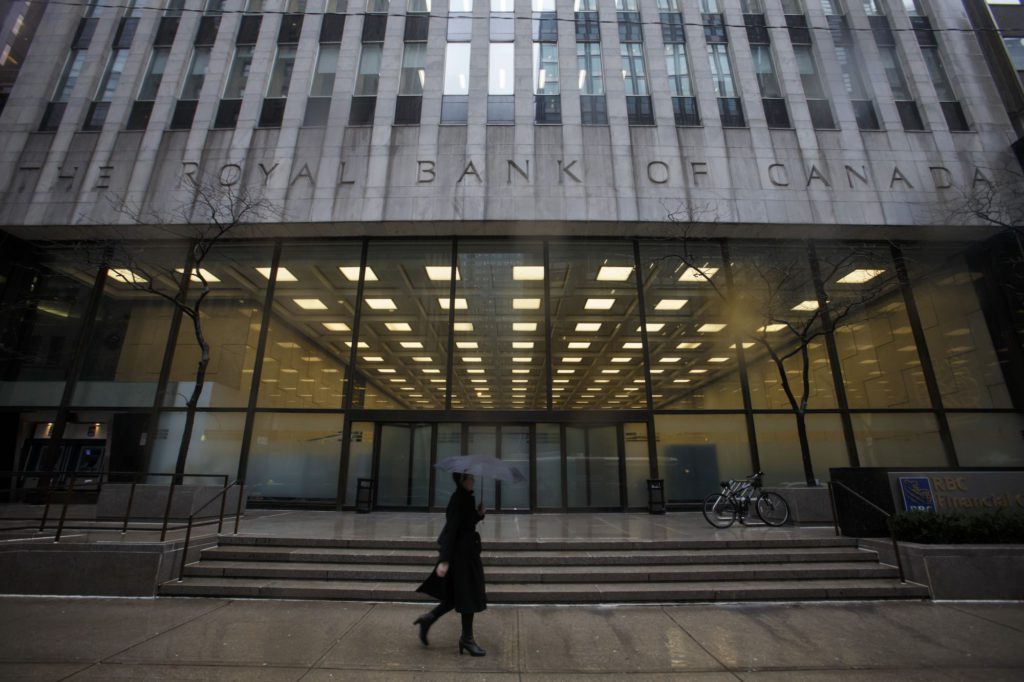
(Bloomberg) — Royal Bank of Canada is merging its RBC Ventures partnership group with its RBCx technology banking and innovation arm in a bid to capture more business from entrepreneurs at all stages of their startups’ growth.

Sid Paquette, who has led both RBCx and Ventures since April, will head the combined business, the Toronto-based bank said in a statement Wednesday. The new RBCx will remain part of Royal Bank’s personal and commercial banking business, headed by Neil McLaughlin.

The merger creates a single entity that can provide startups with everything from banking services and assistance from a group of specialists and technologists who can help them scale their businesses to access to capital including venture investments and even outright acquisitions. RBCx has about 4,000 technology clients across Canada, and RBC Ventures has supported startups including the Dr.Bill medical-billing software, the Ownr business-launching service and the Mydoh money-management app for kids.

“This is really the first time that these sorts of skills have been integrated into one practice,” Paquette said in an interview. 

RBCx, through partnerships and investments, provides Royal Bank with new technologies that can assist its other businesses, and helps it reach broader pools of customers to whom it can cross-sell other products, the bank has said.

Canada’s tech industry is likely to continue to grow because of the country’s educational institutions and large base of talent, Paquette said. Royal Bank isn’t phased by the drop in valuations many tech companies have experienced in recent months and is in the business for the long term, he said.

“Most of us in the ecosystem, we’ve seen the writing on the wall for a very, very long time,” Paquette said. “We’ve had inflated valuations, and we’re kind of getting a reset on valuations. It doesn’t mean that there’s not really good tech companies out there.”

More stories like this are available on bloomberg.com

©2022 Bloomberg L.P.
TikTok Bans Political Accounts From Fundraising, Making Money

(Bloomberg) — TikTok, the social media app owned by ByteDance Ltd., is banning fundraising and all other moneymaking opportunities for politicians and government accounts on the platform.

The short-video network already prohibits political ads, including any paid-for posts by influencers. The new policies will additionally bar requests for donations, e-commerce capabilities and accepting gifts from users. Political accounts will automatically be ineligible for making money through TikTok’s Creator Fund, according to a statement from the company’s president of global business solutions, Blake Chandlee.

Read more: TikTok Bans Paid Political Influencer Videos Ahead of Midterms

The move is in anticipation of the US midterm elections, which will provide a fresh test for social media companies and their ability to maintain a neutral stance as debates — and potentially coordinated influence campaigns — rage on their services. TikTok is starting a trial of mandatory verification for accounts belonging to governments, politicians and parties that will last until the midterms, the company said. 

“By prohibiting campaign fundraising and limiting access to our monetization features and verifying accounts, we’re aiming to strike a balance between enabling people to discuss the issues that are relevant to their lives while also protecting the creative, entertaining platform that our community wants,” Chandlee said in the statement.

TikTok, which has sought to distance itself from its parent company, is back in the regulatory spotlight in the US, now facing questions from senators about access to its user data by China-based staff. Concern about China’s influence on TikTok’s Beijing-based owner also extends to potential propaganda campaigns. A government entity responsible for public relations attempted to open a stealth account on TikTok targeting Western audiences in 2020, which the company pushed back against.

Read more: Chinese Government Asked TikTok for Stealth Propaganda Account

More stories like this are available on bloomberg.com

©2022 Bloomberg L.P.

Tencent Music Rises in H.K. After Debut Without Fresh Funds

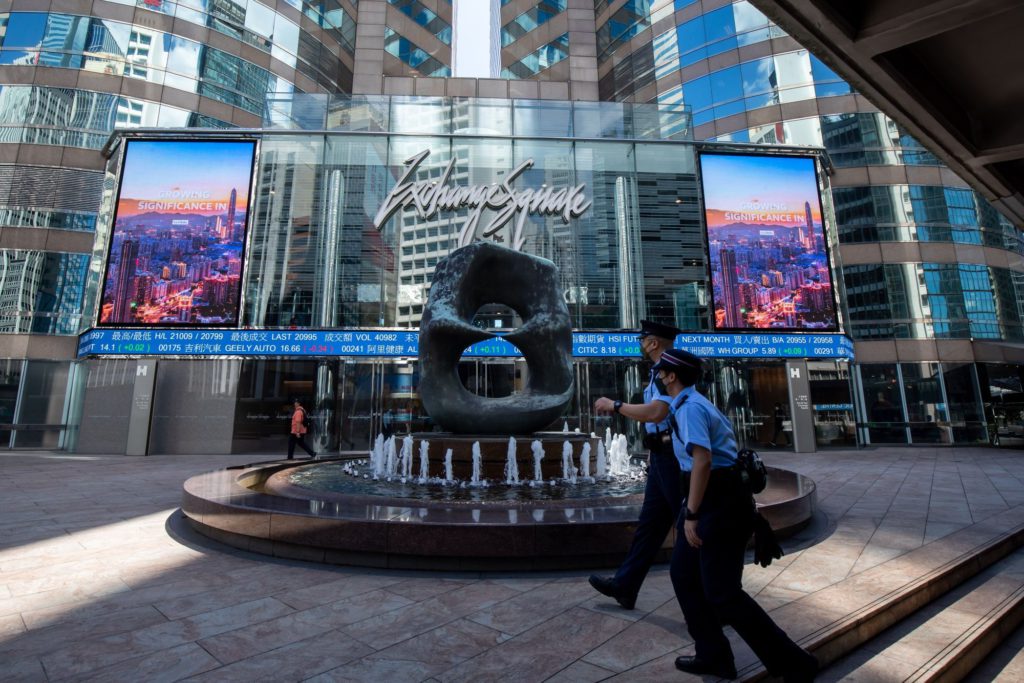
(Bloomberg) — Tencent Music Entertainment Group traded higher in Hong Kong’s exchange on Wednesday after a listing that didn’t involve selling new shares or raising funds.

The stock closed at HK$18.22 on Wednesday, having started at HK$18. Two class A shares in Hong Kong are equivalent to one American depository receipt in New York. The ADRs closed at $4.58 (HK$35.95) on Tuesday.

The Shenzhen-based company chose to debut in the Asian financial hub by way of introduction, a quicker and easier route for firms already listed elsewhere. The firm controlled by tech giant Tencent Holdings Ltd. is part of a growing group of Chinese firms choosing the method to list closer to home as escalating Sino-US tensions fuel delisting risks stateside. 

According to terms of the listing, holders of ADRs will have the option to cancel their ADRs and receive equivalent class A shares in Hong Kong.

Volatile equity markets, high inflation and surging interest rates capped valuations worldwide for companies seeking to go public this year through traditional initial public offerings. As a consequence, there’s been a slump in proceeds raised in venues including New York, London and Hong Kong. 

Tencent Music Is Latest Cashless Debut Coming to Asia: ECM Watch

Electric-vehicles producer Nio Inc. debuted in Hong Kong in March using the same process, and later began trading in Singapore via the method. US-listed platform for housing transactions and services KE Holdings Inc. and software-as-a-service firm OneConnect Financial Technology Co. took the same path earlier this year. 

Tencent Music raised some $1.07 billion through a new share sale in New York four years ago, with the shares now trading about two-thirds below their listing price. 

(Updates with closing price in second paragraph.)

More stories like this are available on bloomberg.com

©2022 Bloomberg L.P.
Tesla Is Crushing The Competition on Electric-Car Charger Costs

(Bloomberg) — Hi everyone, BloombergNEF’s Ryan Fisher here.The cost of setting up an electric-car charging station can vary greatly, according to our latest Commercial EV Charger Price Survey that looks at how hardware and installation costs are shaping up.The 7-22 kilowatt AC chargers — which are found at locations such as hotels and take several hours to juice a battery — can be priced as low as $238 and as high as $10,000, with a larger, fast-charging 150 kilowatt DC unit costing between $16,335 and $135,000.

As hurdles to charging remain front and center to power the EV revolution, there are huge differences across the world with vastly different outcomes on price.

Geography plays a role — the cheapest chargers are produced in Asia, where there are differing certification standards, quality and production volumes. Reliability is also a huge concern, so the software and maintenance offering and the ability for a supplier to help navigate local installation complexities comes into play. Often, companies charge thousands of dollars more for similar products because of successful marketing, making prices in the top end look increasingly unsustainable.

While average AC charger prices have remained relatively stable since our survey two years ago, average DC charger prices have dropped by as much as 28%. Even as the industry struggles with inflation, supply-chain shortages and installation issues, some companies are finalizing projects at a fraction of the cost of what their competition is paying. That means there’s significant potential for long-term efficiency gains across the industry.

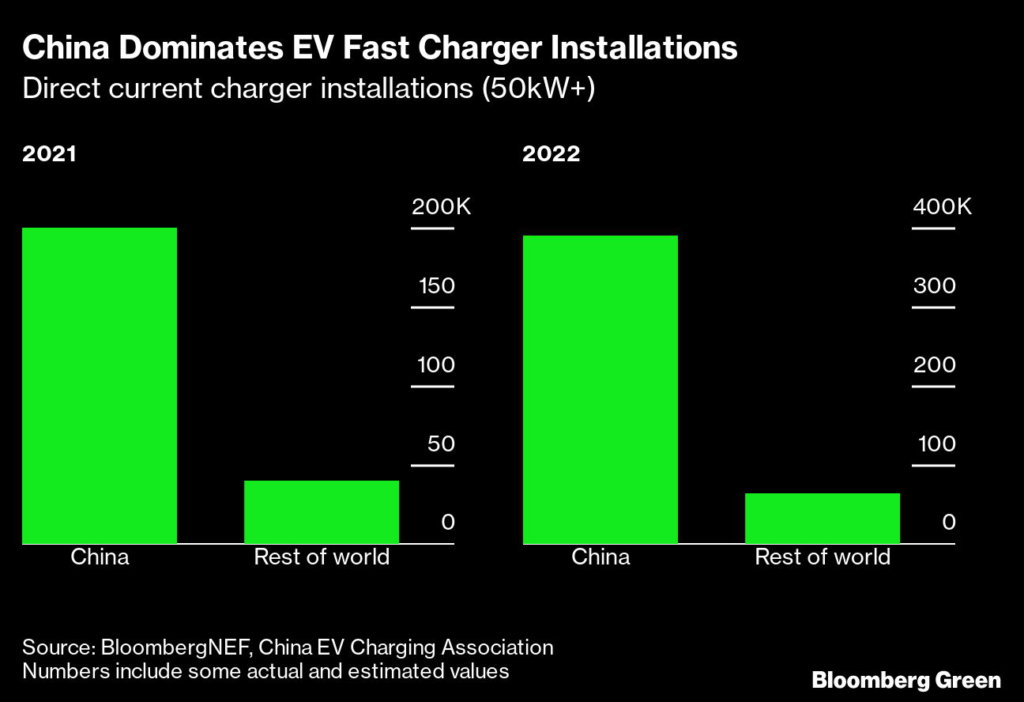
Thanks to healthy demand for home chargers in Europe, the region’s AC charger manufacturers have built up a similar scale than their rivals in Asia. In the DC market, however, Chinese suppliers are producing far more than peers in any other region. BNEF expects the world’s biggest car market to add more than 390,000 DC charges this year — that’s six times the projected installations in the rest of the world. Chinese companies are looking to expand abroad, so their growth could squeeze suppliers elsewhere.

The US is trying to protect its interests with the introduction of a “Built in America” mandate. The new rules require chargers to be assembled in the US starting next year and contain 55% locally-made parts by 2024 to qualify for federal aid. There is ongoing discussion about waiving certain requirements in the short-term to avoid slowing infrastructure projects as suppliers may not be able to meet the mandate. But the rules have also resulted in manufacturers including Wallbox, Flo, Tritium announcing plans to set up factories in the US. Last week, Swiss engineering giant ABB said it would erect a plant in Columbia, South Carolina with a capacity to make 10,000 chargers a year.

The adverse effect of the mandate could be that charger prices in the US rise above those in other regions, hurting charging operators and slowing EV adoption. But politicians backing the regulation insist that America’s bolstered scale will eventually help bring down charger and project prices.

The thing is, government funding isn’t always great for efficiency gains. Some 60-85% of applications for grant programs in the US and Canada analyzed by BNEF hit the maximum allowed costs per connector. A better process, such as auctions, may breed more competition.

Tesla is already showing how to keep expenses low, with one of its Texas grant applications containing project costs of as little as $42,000 per connector. This compares with $100,000 to $250,000 per connector across competitors in the European Union and North America.

The company is benefiting from its experience, manufacturing synergies and scale. It installed around 11,000 Superchargers last year, with an average of around 10 units per station and some with over 50, dwarfing most competitors. The chargers are bereft of screens and payment terminals, cutting down costs and complexity, and the carmaker is leading on simplifying installation. Tesla earlier this year posted a video on Twitter how it deployed 12 Superchargers at a Florida site in eight days with chargers pre-fabricated in concrete.

Still, it would be naïve to think the logistics and installation issues that are raging in the construction industry aren’t also affecting charger roll-outs. In fact, installation times increased on average from two years ago, with delays in permitting and utility connections cited as key stumbling blocks.

With annual charger installations expected to climb between five and twenty-fold over the next decade depending on the country, authorities don’t have long to solve the issues. That means costs in the EV charging space will continue to be in flux for some time.

More stories like this are available on bloomberg.com

©2022 Bloomberg L.P.
Pie Raises $315 Million in Round Led by Centerbridge, Allianz

(Bloomberg) — Pie Insurance Services Inc. raised $315 million in equity funding from backers led by Centerbridge Partners LP and Allianz SE’s venture-capital arm, even as many early stage investors pull back from financial-technology startups.

Pie, which has executive offices in Denver and Washington, focuses on selling insurance to small businesses, and partners with SiriusPoint to issue its policies. The capital generated in the series D funding round will help the company bring policy issuance fully in-house, Pie said in a statement Monday.

The spigot of venture-capital funding that supercharged fintechs in 2021 has largely dried up in this year’s bear market. A July report from analytics firm CB Insights showed that funding for fintechs in the second quarter fell 46% from the same time last year to $20.4 billion.

“It’s no secret that growth-stage startups, and specifically insurtechs, are facing a challenging fundraising environment,” Pie co-founder and Chief Executive Officer John Swigart said in the statement.

In an interview, the CEO said the capital injection from new and existing investors “is a testament and a validation of our approach that we’ve had from the beginning.”

More stories like this are available on bloomberg.com

©2022 Bloomberg L.P.

Close Bitnami banner
Bitnami