

Bloomberg

Chinese Crypto Tycoon-Backed Bitdeer Buys Asia’s ‘Fort Knox’

(Bloomberg) — Chinese crypto billionaire Jihan Wu is expanding into the physical asset space. 

Wu’s Bitdeer Technologies Holding Co. spent S$40 million ($28.4 million) buying Le Freeport, a maximum-security vault in Singapore, according to people with knowledge of the matter who asked not to be identified because the transaction was private. Dubbed Asia’s Fort Knox, Wu acquired the repository for fine art, precious gems, and gold and silver bars, from shareholders led by Swiss art dealer and founder Yves Bouvier, the people said. 

A representative for Bouvier declined to comment. Wu confirmed the transaction in a text message in response to queries from Bloomberg News. The purchase took place in July, according to records with the accounting regulator.

Wu’s acquisition ends years of Bouvier’s troubled attempts to sell Freeport which is located near Changi Airport. Wu is considered one of the most influential people in cryptocurrency markets, having co-founded the world’s largest miner Bitmain Technologies Ltd. Wu, who has long-term residency in Singapore, relinquished control of the Beijing-based company early last year. 

‘Fully Committed’

The price Wu paid represents a sharp discount to the S$100 million it cost to build the facility. Freeport opened in 2010 to fanfare as part of Singapore’s push to lure luxury collectors, wealth managers and bullion-trading banks including JPMorgan Chase & Co. and UBS Group AG. 

The low, flat building was designed by Swiss architects Benedicte Montant and Carmelo Stendardo and includes energy-saving features such as thermal insulation and vegetation-covered walls to help maintain the precise temperatures and humidity levels inside. A 38 meter-long sculpture of polished steel by Israeli artist Ron Arad greets visitors at the lobby once they’ve passed security checks and a body scan.

About three quarters of the total price went to creditors including DBS Group Holdings Ltd., according to one of the people. After repaying debt and costs, Bouvier, who held 70% of Freeport, got about S$5 million from the sale, together with other shareholders. 

The new owners are “fully committed” to supporting the Freeport Group with a view to expanding and improving the facilities and services, according to a letter signed by Freeport’s Chief Executive Officer Lincoln Ng to reassure tenants that there would no disruptions. 

Bitdeer is the sole shareholder of Straitdeer Pte., which in turn owns Asia Freeport Holdings Pte., the entity controlling Le Freeport, according to records with the accounting regulator. Asia Freeport reported a loss of S$14.3 million in 2018, based on the latest publicly available financial statement.

Wu, who turns 36 this year, controls Bitdeer, a cloud-mining service that was spun off from Bitmain. It operates proprietary mining data centers in the U.S. and Norway, and was seeking a US listing in a SPAC deal. 

(updates with more details on facility in sixth paragraph and Wu in last paragraph.)

More stories like this are available on bloomberg.com

©2022 Bloomberg L.P.
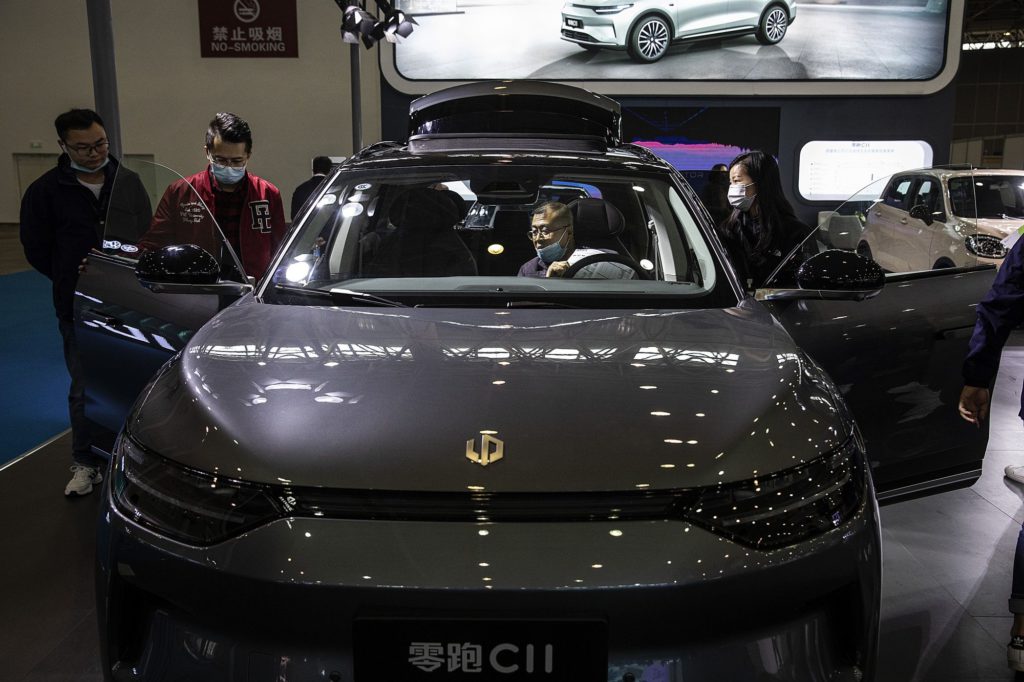
China EV Maker Leapmotor Seeks Up to $1 Billion in H.K. IPO

(Bloomberg) — Chinese electric-vehicle maker Zhejiang Leapmotor Technology Co. is looking to raise as much as HK$8.1 billion ($1 billion) in an initial public offering in Hong Kong.

Leapmotor, founded in 2015, is offering about 131 million shares at between HK$48 and HK$62 apiece, according to the prospectus on the Hong Kong stock exchange website. Five cornerstone investors, including Zhejiang Industrial Fund and Jinhua Industrial Fund, agreed to purchase around $308.5 million of stock, confirming an earlier Bloomberg News report.

The offer should give an indication of investor appetite for an industry seen as largely unscathed by the scrutiny of Chinese regulators that has hobbled the nation’s broader technology sector. EV makers are considered an important component of the country’s push toward electrification and clean energy.

Read more: China’s EV Startups Put a Dent in Legacy Automaker Market Share

The IPO follows so-called “homecoming” deals by US-listed Chinese EV makers XPeng Inc. and Nio Inc. since last year amid an ongoing dispute between regulators in the two nations. Other Chinese EV firms considering Hong Kong listings include Zeekr Intelligent Technology Ltd. and Hozon New Energy Automobile Co.

Read more: Onewo Kicks Off Biggest Week for H.K. IPOs This Year: ECM Watch

Leapmotor is planning to use the money for business expansion and brand awareness promotion, according to the terms of the deal. Its main focus is on the mid to high-end EV market, with a price range of 150,000 to 300,000 yuan ($21,400-$42,800), a segment that is forecast to show the fastest growth by 2023, according to the offering’s prospectus, citing Frost & Sullivan.

The company plans to price the share sale on Friday with trading slated to start Sept. 29. China International Capital Corp., Citigroup Inc., JPMorgan Chase & Co. and CCB International Holdings are joint sponsors of Leapmotor’s IPO.

(Adds pricing date in sixth paragraph.)

More stories like this are available on bloomberg.com

©2022 Bloomberg L.P.
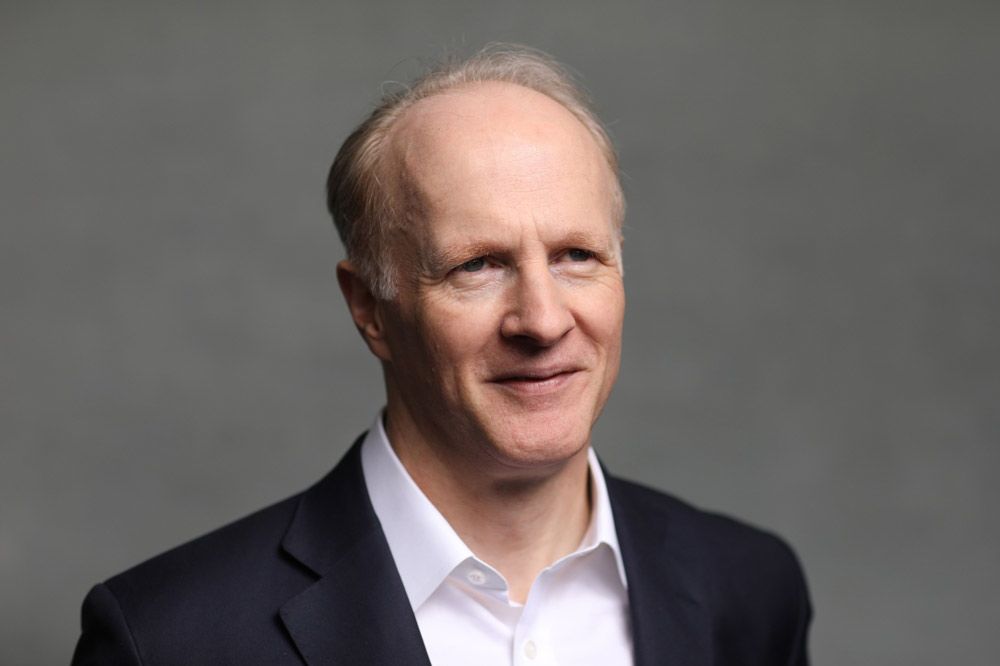
Ex-CPPIB Boss’s Opto Valued at $475 Million in Tiger-Led Round

(Bloomberg) — Opto Investments, the newly launched private capital platform led by investment veteran Mark Machin and Palantir Technologies Inc. co-founder Joe Lonsdale, has raised $145 million in a Series A funding round, according to a statement reviewed by Bloomberg News.

Opto is valued at $475 million after the round, said people familiar with the matter, who asked not to be identified because it was private.

The financing was led by Tiger Global Management LLC with participation from venture capital firms including 8VC, FinVC and HOF Capital, among others.

Machin, who last year stepped down from his post as head of the Canada Pension Plan Investment Board after almost a decade with the fund, will lead Opto as chief executive officer. He said this year’s unraveling of public equities markets creates an opportunity for launching Opto, which intends to give registered investment advisers access to high-end private funds. 

“I don’t think there’s ever been a more important time for investors to have exposure to private markets and alternatives because the days of easily riding cheap index returns are probably over for quite a while,” Machin said in an interview. “We think that the access to alternatives for the average, independent RIA is still broken and that’s something that we want to fix.”

Machin met tech investor Lonsdale years ago during a “social weekend” in Quebec City. After keeping in touch since then, Machin was approached by Lonsdale about an idea for a company and it “tickled” his interest. 

“And so I dived in,” Machin said. “I became co-founder, invested a bunch of money and said, ‘Look, I’ll roll up my sleeves and be the CEO.’”

Opto’s leadership ranks include veterans spanning the investment and private capital sectors from firms such as BlackRock Inc. and a16z.

More stories like this are available on bloomberg.com

©2022 Bloomberg L.P.

Instagram Influencers Are Trampling Australia’s Canola Crops

(Bloomberg) — The bright yellow fields of blooming canola across Australia’s western grain belt are attracting selfie-obsessed tourists, sparking fears of plants getting trampled and diseases spreading. 

It’s hardly the first time that the yellow blossoms have drawn crowds, but this year there’s urgency to ensure that the Australian harvest meets expectations to help replenish global stockpiles. Increased moisture this season has also multiplied the risk of diseases spreading by about “tenfold,” said Western Australia Farmers Federation chief executive officer Trevor Whittington.

With Western Australia’s borders now open after nearly two years due to the Covid-19 pandemic, the return of frolicking tourists could be a threat to the agricultural industry. Authorities earlier this month issued a public warning about the spread of “potentially devastating” impact of weeds and pests on the valuable oilseed that’s used in everything from salad dressings to deep-frying.

“Suddenly you’ve got people running around canola paddocks, driving up the laneway to get the best shot — some of the shots are absolutely magnificent,” Whittington said. “The end result is we’re getting mud on boots and mud on tyres,” he added. “We’re becoming increasingly concerned.”

It’s difficult to track how widespread the selfie-mania is, but Whittington said farmers are wondering where the “tip of the iceberg” is as tourist numbers are expected to go through the roof leading into summer. “It’s all about social media in how these things explode,” he added.

So far this year, wet conditions across Australia have given many reasons for optimism, despite the risk of diseases. Output is expected at 6.6 million tons, the second-largest ever. It’s been especially buoyant in Western Australia, where just under 50% of the nation’s canola crop is grown this season.

While farmers are facing a scourge of tourists putting crops at risk for a perfect social media shot, there are far more pressing issues at the moment. 

“Is it going to rain? Or is the price of canola going to go up or down? What is the exchange rate? They are far bigger concerns — as well as fertilizer for next year,” Whittington said. “But it is one of those new challenges that the industry just has to be aware of.”

More stories like this are available on bloomberg.com

©2022 Bloomberg L.P.

China’s $1.2 Trillion Wealth Fund Loses Two More Team Leaders

(Bloomberg) — ​China’s $1.2 trillion sovereign wealth fund lost two more team leaders after merging its direct investment arm with the main overseas operations, extending a talent exodus. ​

Sheng Fuxin, who headed one of the infrastructure teams at China Investment Corp. resigned recently to seek other opportunities, according to people familiar with the matter. Winston Chen, a team leader for technology, media and telecommunications investments, has left, the people said, declining to be identified discussing private information. 

The latest departures come after the CIC Capital unit, which oversees billions of dollars in private equity and infrastructure investments, was re-aligned to bolster efficiency following persistent talent losses, and as offshore investing becomes more complex.

​CIC said in a statement that personnel turnover is a “normal phenomenon for enterprises,” and that the fund is committed to building a “first-class team.” Chen and Sheng didn’t reply to requests seeking comment.

​Including those two departures, at least 11 senior managers have exited CIC Capital in recent years, including former Executive Vice President Zhang Qing, who left in early 2019, and Winston Ma Wenyan, a managing director and former head of the Toronto office, who quit in 2018. They were part of a broader exodus that prompted the fund to set up a leadership group for high-end recruitment in 2020 to replenish its talent pool. 

​CIC Capital, created in 2015, was a key part of the fund’s goal to raise the share of direct and alternative investments to 50% of the fund’s overseas portfolio by the end of this year. The company has met that target, according to a statement in August.

More stories like this are available on bloomberg.com

©2022 Bloomberg L.P.

Four-Day Week Pilot Findings: Successful for Most Firms, But Not All

(Bloomberg) — The four-day workweek is … working.

That’s the message emerging from the closely watched companies shifting to four-day workweeks in pilot programs run by the nonprofit 4 Day Week Global. A survey out Tuesday finds that 78% of leaders at the more than 70 UK companies that shifted to four-day schedules say their transition was good or “seamless.” Only 2% found it challenging. Most (88%) say that four-day schedules are working well.

The idea of a four-day workweek is no joke. California lawmakers recently considered, and then shelved, plans for a statewide four-day workweek for some employees. A survey by Gartner Inc. found a shorter week to be a favored recruitment and retention strategy.

Six-month pilot programs with over 180 companies are currently underway in a half-dozen countries. Employers typically transition to four-day, 32-hour schedules (with variations depending on role and industry), with no reduction in pay. In the UK pilot, executives at companies with a total of 3,300 employees were surveyed at the halfway point. The program is operated in conjunction with the 4 Day Week Campaign and the think tank Autonomy, along with a data-collection partnership of researchers at Boston College, Cambridge University and Oxford University.

Nearly all of the participating UK organizations (86%) said they’ll likely keep four-day schedules after the pilots finish in November. Almost half, 49%, said that productivity had improved, while 46% said it has remained stable.

“It’s extremely encouraging to see that,” said Joe O’Connor, chief executive officer of 4 Day Week Global, who had expected organizations to show steadier output. “We would see it as a big productivity success if productivity stayed the same.”

Pilot studies are continuing in the UK, US, New Zealand, Australia, Ireland and Canada.

Not all of the organizations that begin the trials complete them, O’Connor said. Roughly 1 in 5 employers drop out, more than half during the pre-planning stage. Executives who have undertaken the pilot studies say that they face the dual challenge of overcoming staff and industry five-day norms alongside the tricky task of removing of improving work processes to get the same output in in four days.

When companies drop out in the planning phase, “The primary reason is the leadership overthinking it and getting cold feet,” O’Connor said. “They start trying to fix every possible problem or issue before they actually run their trial, which is impossible, because a lot of the productivity gains and process improvements are ground up and led by teams.”

He also reports difficulties among companies with cultures of mistrust between leaders and employees.

“They think they’ve got an open, bottom-up style of decision-making, but in practice, that might not be so,” he said.

Growing pains are part of the process.

“It wasn’t a walk in the park at the start, but no major change ever is,” said Nicci Russell, managing director of Waterwise, a nonprofit focused on reducing water consumption. “We have all had to work at it—things like annual leave can make it harder to fit everything in. But the team are pretty happy, and we certainly all love the extra day out of the office.”

Once on four-day schedules, the companies that struggle are often very small and in fields that necessitate five- or seven-day shift coverage, which requires precise scheduling among small numbers of staff. The gift company Bookishly, for example, continues to tinker with staffing during busy times.

Organizations also abandon truncated schedule efforts when hit with unexpected changes, such as new leadership or financial changes. The UK trial participants range across sectors, such as education, media, hospitality and health care, and include Charity Bank, the supply-chain transparency company Everledger, the customer-communication platform Secure Digital Exchange, and the Royal Society of Biology.

O’Connor has learned that when companies don’t need him anymore, things are going well.

“They really need us in the early stages,” he said. “When the demand for contact with us slides, it means they’re well on the road to making this work.”

More stories like this are available on bloomberg.com

©2022 Bloomberg L.P.

Amazon’s Thursday NFL Broadcast Attracts Record Numbers to Prime

(Bloomberg) — Amazon.com Inc.’s broadcast of “Thursday Night Football” attracted a record number of new Prime subscriptions for a three-hour period, even beating out events like Cyber Monday and Prime Day, according to an email reviewed by Bloomberg.

“By every measure, ‘Thursday Night Football’ on Prime Video was a resounding success,” Jay Marine, Amazon’s vice president in charge of the streaming service, said in the email.

Amazon has exclusive rights to broadcast Thursday night NFL games for 11 years, a $13 billion bet that sports coverage can broaden the appeal of Prime, which offers both streaming video and lower shipping rates for e-commerce goods. The first game also drew a record prime-time audience to Prime Video, according to Marine’s email.

“While we’re still waiting for official Nielsen ratings, our measurement shows that the audience numbers exceeded all of our expectations for viewership,” he said.

This is a big year for Amazon’s streaming service. In addition to getting exclusive rights to Thursday night NFL matches, the company launched a new series based on the popular “Lord of the Rings” fantasy books.

More stories like this are available on bloomberg.com

©2022 Bloomberg L.P.
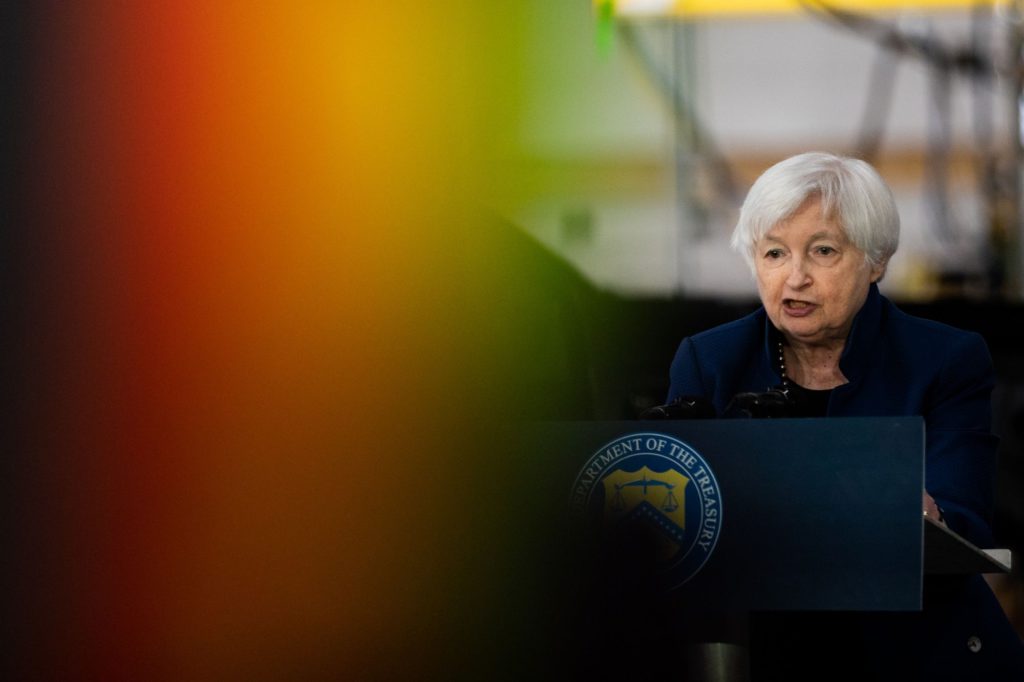
Yellen Is Pressed on TikTok’s China Connections by GOP’s Hawley

(Bloomberg) — The US government should force a separation between TikTok Inc. and its parent company over concerns about Chinese government access to US user data, a Republican senator told Treasury Secretary Janet Yellen in a letter following testimony from the company’s chief operating officer.

Senator Josh Hawley of Missouri, a member of the Homeland Security and Governmental Affairs Committee, wrote to Yellen urging her to require TikTok to cut all ties with Chinese companies and to force Beijing-based ByteDance Ltd. to divest the popular video-sharing app.

Hawley cited testimony to the committee by TikTok Chief Operating Officer Vanessa Pappas in his letter to Yellen, saying Pappas’s acknowledgment that the company’s employees based in China can access US user data demands action. 

He said Pappas told the panel last week “that the company has taken no measures to ensure that the employees in China accessing this data are not members of the Chinese Communist Party.” 

“The Committee on Foreign Investment in the United States (Cfius), which you chair, should require TikTok to sever all ties to Chinese companies. TikTok should be entirely divested from ByteDance,” Hawley added in the letter to Yellen.

Cfius, which screens foreign investment in the US for national security concerns, began reviewing the merger of TikTok parent ByteDance and Music.ly during the Trump administration. Attempts to ban the app by former President Donald Trump were unsuccessful and blocked by legal action in some cases. The Biden administration has continued the review, which has stretched for several years, in an effort to address concerns about how the app safeguards US user data.

Pappas told the Senate committee that TikTok was negotiating with federal regulators on restricting access to user data for employees in China but declined to commit to a total cutoff. “Our final agreement to the US government will satisfy all national security concerns,” Pappas testified.

The Treasury Department said Monday evening that Cfius remained committed to its role as a defender of US national security interests, but that it did not comment on deals in the reviewing process.

(Updates with Treasury response, in final paragraph.)

More stories like this are available on bloomberg.com

©2022 Bloomberg L.P.
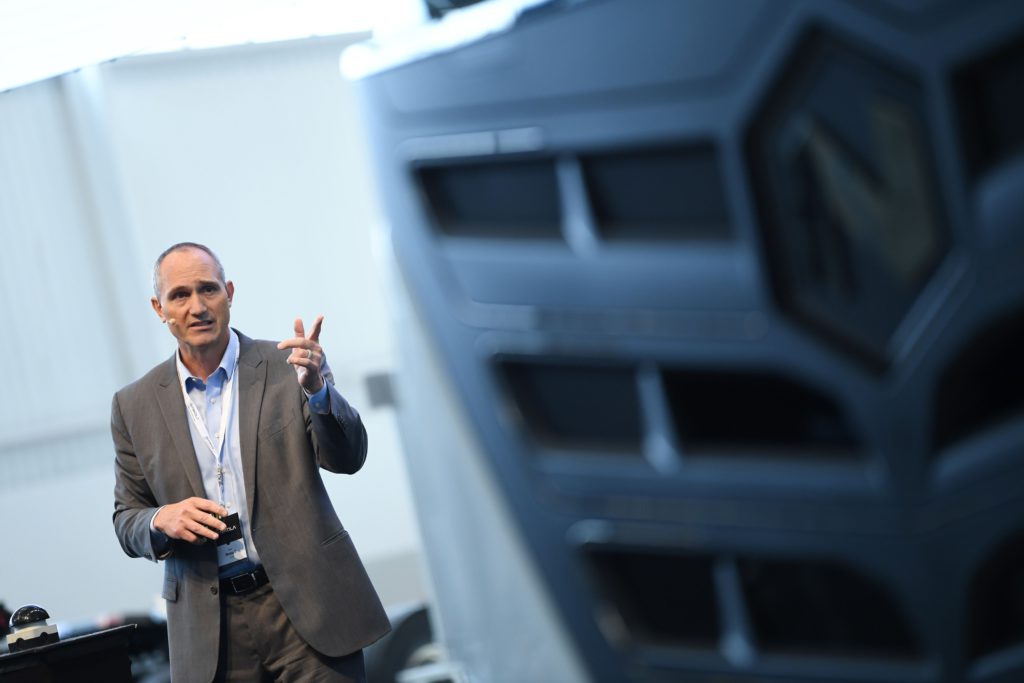
Nikola CEO Says He Learned Debut Truck Lacked Power After He Joined

(Bloomberg) — Nikola Corp.’s chief executive officer told a jury he learned only after joining the company that its debut electric truck had neither a gas-powered turbine nor a fuel cell when founder Trevor Milton unveiled it.

Milton, who is on trial for allegedly lying to investors about Nikola’s progress, was prone to exaggerate, CEO Mark Russell told the jurors Monday in federal court in Manhattan as he described the December 2016 unveiling.

Under questioning by the prosecution, Russell said he warned Milton that as the top executive he “should be careful” with his remarks and promises. He told the court that the two agreed Russell would come aboard, initially as president, only if he became chief executive when Nikola went public. 

Russell joined the company in 2019 and was quickly promoted, just before Nikola’s 2020 listing. But in what he called a breach of his understanding with Milton, the founder became executive chairman, with final say over critical decisions.

A Warning

After the listing, Russell testified, Milton “would say or do something that I would see and I would have concerns about,” and Russell would remind him that “his public statements would equate to a press release or securities filing.” 

Despite Milton’s tendency toward hype, Russell thought his plans were the best he had seen in his career, he told the court, but the two had a fundamental difference of perspectives on Nikola’s future.

“He was very focused on the stock price day to day and was excited when it went up, and that concerned me,” Russell said. “I felt the most important thing we could do is build value for the long term.”

Russell testified that he and Chief Financial Officer Kim Brady advised Milton not to attend meetings with institutional investors. He also said Nikola “had no business” pursuing a clean-energy pickup truck, the Badger, and that he warned Milton it would take more money to develop than the company had raised at that point.

Read More: Nikola Cannibalized a Ford for Electric Pickup, Jury Told 

In the end, as scrutiny of the company intensified, Milton resigned in September 2020, a little over three months after Nikola’s reverse merger.  

The testimony of the outgoing CEO, who is due to step down himself by Jan. 1, came in the second week of Milton’s trial on securities and wire fraud charges. Accused of duping investors by making inoperable products look fully functional and of lying about the company’s technology and partnerships, Milton faces a maximum prison term of 25 years if convicted of the most serious charge. 

The defense has called the case “a prosecution by distortion,” arguing Milton was just following the company’s marketing plan and never said anything he didn’t believe to be true.

Odd Bedfellows

Russell joined Nikola’s management team six months after stepping down as president and chief operating officer of steel products manufacturer and automotive supplier Worthington Industries Inc. Before he made the move, he told the jury on Monday, he met with Milton several times — hence his surprise at Milton’s leapfrogging the new CEO as executive chairman. 

Russell, who announced his retirement last month, will be succeeded by industry veteran Michael Lohscheller, who has served as Nikola’s president since February.

Read More: Nikola Whistle-Blower Made Money Off Short Report 

Despite the conflict between them, Russell and Milton are linked by a quirky circumstance. Milton holds Nikola stock partly through an entity called T&M Residual that he owns jointly with Russell. T&M holds about 9% of Nikola’s shares, according to data compiled by Bloomberg. Nikola has said Russell manages the T&M shares independently of the company.

Russell’s joining Nikola was something of a reunion with Milton. The two had worked together briefly at Worthington, which had acquired one of Milton’s earlier startups. Russell testified that Milton had resigned from Worthington, telling him that corporate life wasn’t for him and that he was going to start a venture to build the truck of the future. It was Russell’s understanding that Milton had been working on a natural-gas turbine truck, he told the jury, explaining that it was only upon joining Nikola that he discovered the debut semi was missing crucial parts.

Bad Look

At one point, prosecutors had Russell read out portions of an early 2020 email thread including Milton, then-director Jeff Ubben and current chairman Steve Girsky, who was also CEO of the special purpose acquisition company, or SPAC, that took Nikola public. In the exchange, Ubben and Girsky stressed to Milton the importance to investors of an independent board. Russell testified he joined them in that effort.

One problem they called out: It wouldn’t be a good look for Milton’s father, a director at the time, to remain on the board if Nikola went public. 

Milton pushed back against changes to the board. In one email presented by the government, he emphasized one of his goals.

“The most important,” he said in the email, “is that I fully control the board at all times and have people that work well with my personality.”

The case is US v. Milton, 21-cr-478, US District Court, Southern District of New York (Manhattan).

Read More

  • Nikola Contractor Couldn’t Believe His Eyes When He Saw Video
  • Nikola Founder Just Wanted to Make Money, Engineer Tells Jury
  • Nikola Founder Milton Faces Jury in His Toughest Sales Job 

(Adds further testimony about Milton’s views in second section, background on T&M Residual in third and conflicts over the board in fourth.)

More stories like this are available on bloomberg.com

©2022 Bloomberg L.P.
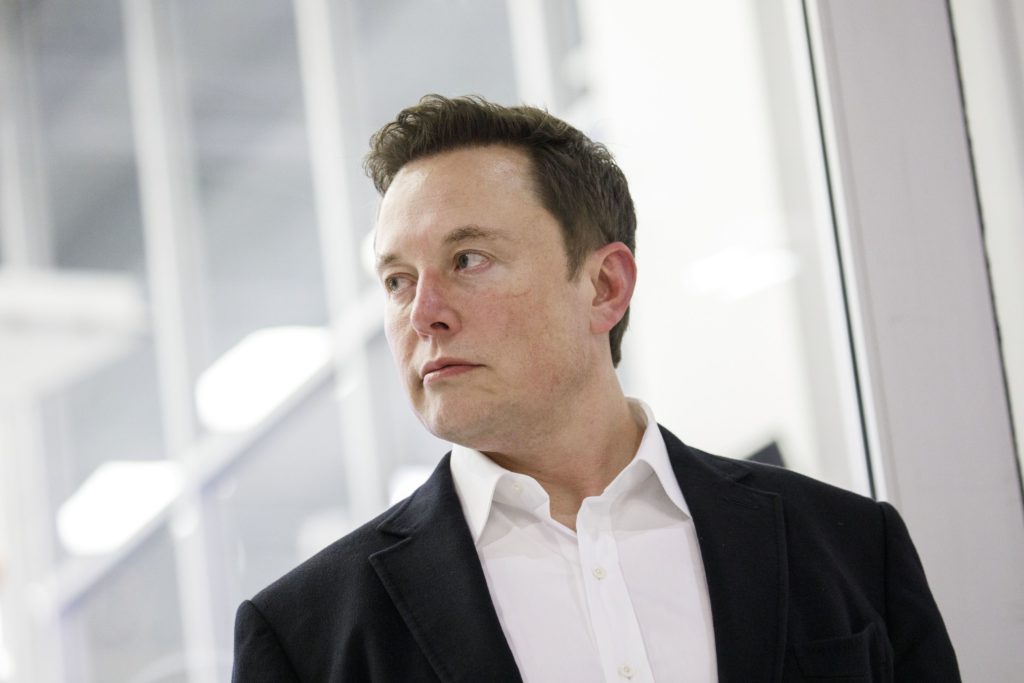
Starlink Will Seek Exemption From Iran Sanctions, Musk Says

(Bloomberg) — Starlink will seek to be exempted from international sanctions on Iran in order to be able to provide Internet services to the nation’s population, SpaceX Chief Executive Elon Musk said in a tweet. 

Musk was responding to a Twitter user asking if the Starlink satellite system operated by SpaceX would be able to provide Internet to people in Iran. Earlier, Musk had said in a tweet that Starlink is active on all continents, including Antarctica.

Protests have erupted in Tehran after a 22-year-old woman died last week while in police custody for allegedly violating religious laws on how women dress.   

To view the source of this information click here

More stories like this are available on bloomberg.com

©2022 Bloomberg L.P.

Close Bitnami banner
Bitnami
